
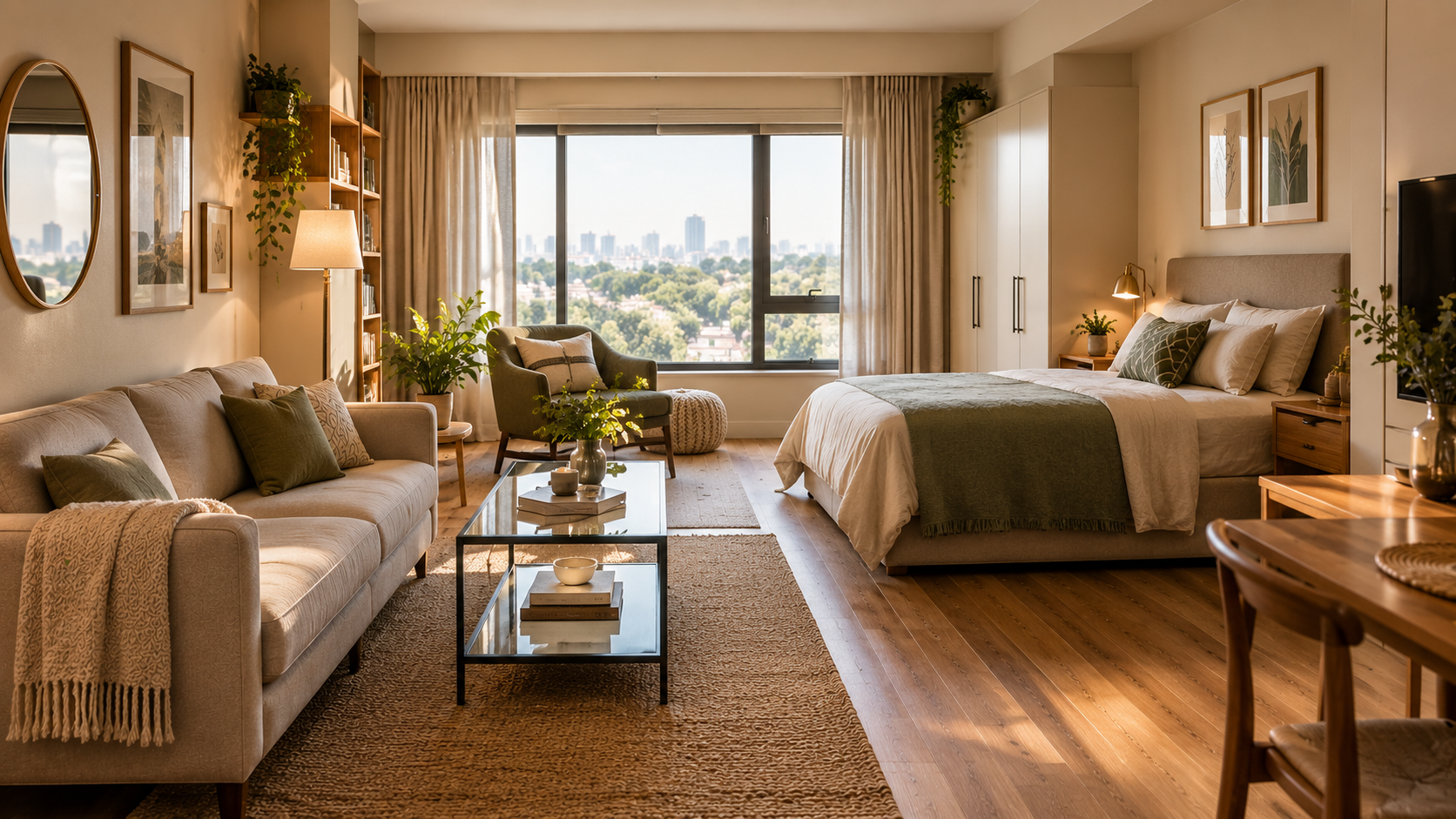
A sofa fits in a studio when its placement does double duty — dividing the room and anchoring the living zone at the same time. The fastest fix is putting the sofa directly opposite the bed or perpendicular to it, so its back becomes the boundary between sleeping and living without a single wall. Below are 15 real layouts that make a sofa and a bed coexist in a small footprint.
Quick reference: which sofa layout fits your studio
| Layout | Best for | Divider used |
|---|---|---|
| Sofa opposite the bed | Simple rectangular studios | None — layout alone |
| Sofa perpendicular to bed | Using the sofa back as a boundary | Sofa itself |
| Bookshelf + sofa beside it | Wanting real visual separation | Open shelf |
| Tonal sofa and bed | Making the room feel like one space | None |
| Angled “conversation” sofa | Studios with architectural detail | Rug |
| Sofa across from a TV console | Studios used for work and TV | None |
| Sofa at the foot of the bed | Narrow, rectangular studios | None |
| Color-matched sofa and curtains | Tying sleep and living zones together | Shag rug |
| Sofa parallel to the bed | Almost any studio shape | Rug |
| Ceiling-track curtain divider | Renters who want closable privacy | Curtain track |
| Curved sofa | Maximizing flow in tight footprints | None |
| Boho layered sofa | Studios that want a lived-in look | Textiles |
| Pallet bed + invest-in sofa | Tight budgets | None |
| Bold color sofa zone | Distracting from small square footage | Rug |
| Monochrome sofa and bed | Making a studio feel twice as big | None |
Before you buy anything, get the sofa itself right — see how to choose a couch for a studio apartment for sizing and shape guidance that applies to every layout below.
1. Push the Sofa Against the Opposite Wall
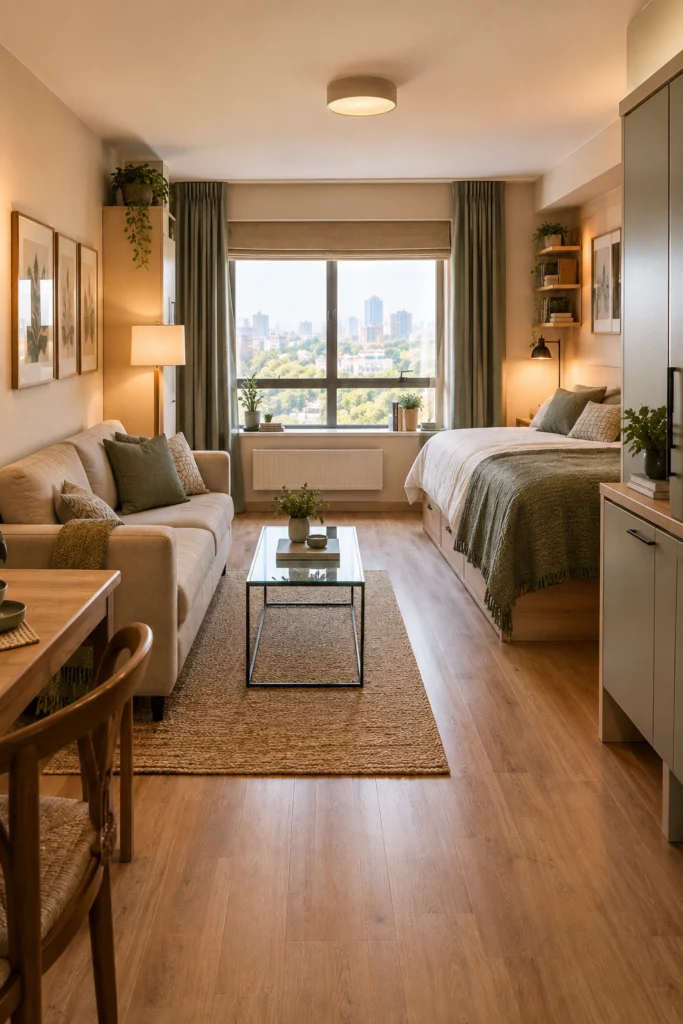
Bed on one side, sofa directly across from it — this is the simplest layout in a studio and it works in almost any shape of room. It creates a natural walkway down the middle and gives each zone its own identity without a single divider. A small glass coffee table keeps the center open, and the sofa doesn’t need to be large; a compact two-seater with a couple of accent pillows does the job.
2. Use the Sofa as a Visual Room Divider
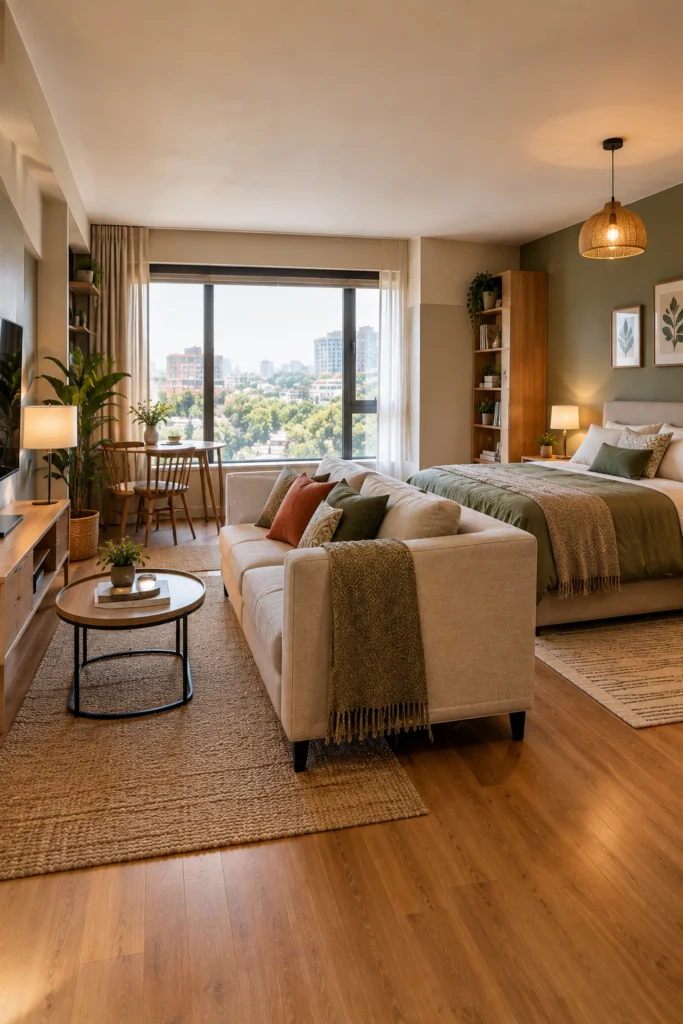
Turning the sofa perpendicular to the bed lets its backrest act as a soft boundary between sleeping and living, without blocking light or shrinking the room. This works especially well when the bed sits against the far wall. Add a coffee table in front of the sofa and the living side reads as its own room, carved out of one open space.
3. Let a Bookshelf Divide, Sofa Beside It
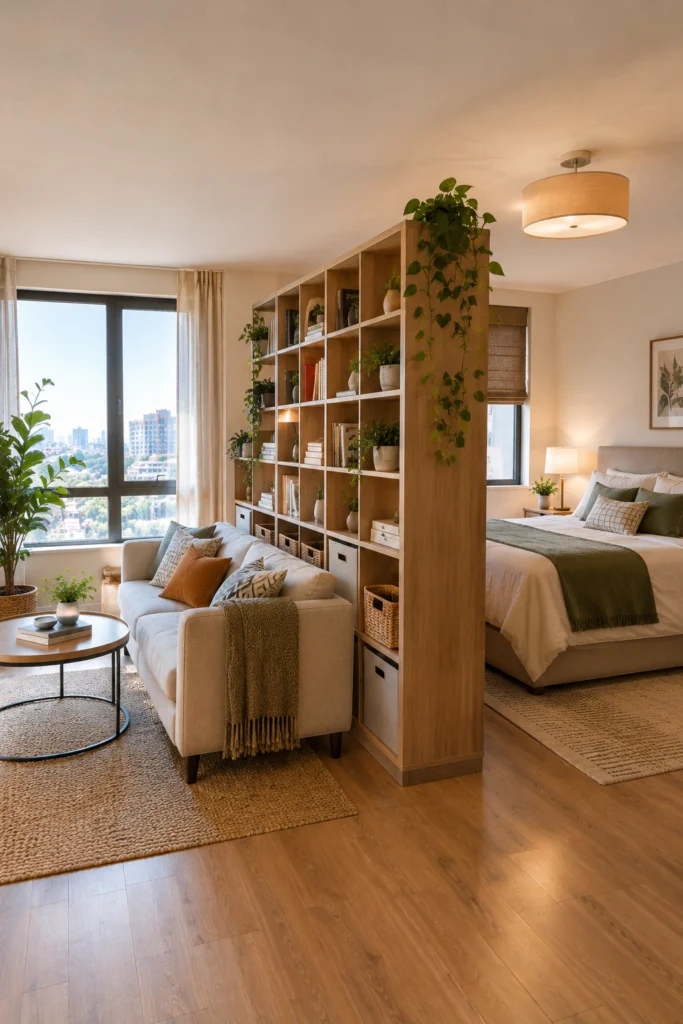
A tall open shelving unit placed between the bed and the sofa gives you real separation without sacrificing light — the sofa lives on the living-room side, the bed sits behind the shelf, and storage bins in a few cubbies keep clutter out of sight. It’s one of the most reliable studio layouts because it costs little and actually works. For more on getting the shelf itself right, see studio apartment open shelf divider ideas.
4. Go Tonal — Sofa and Bed in the Same Palette
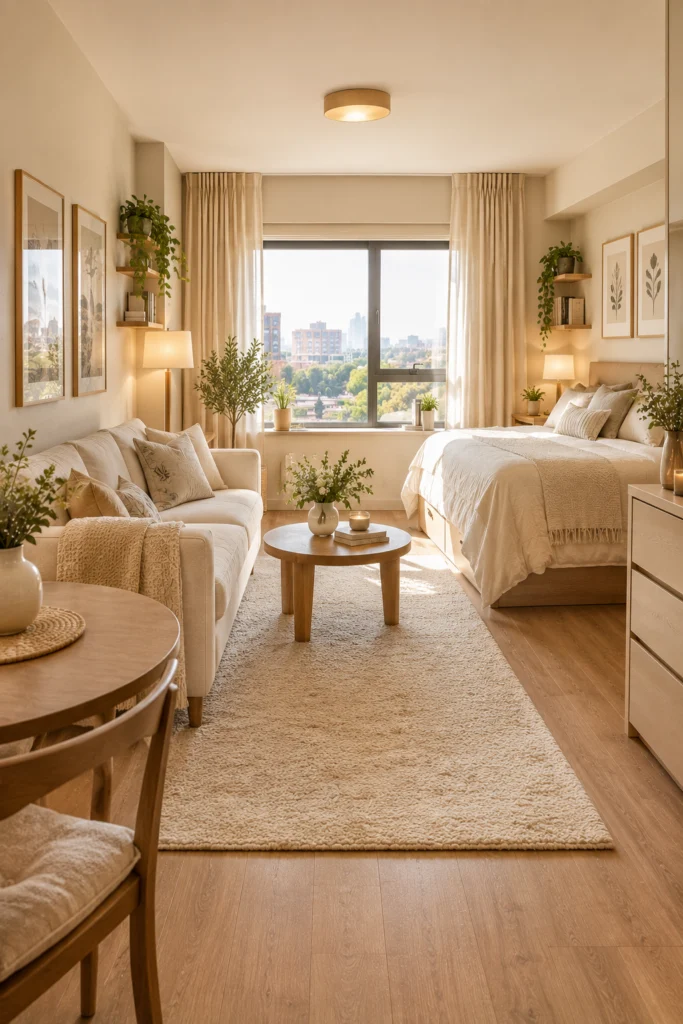
When the sofa and bed share the same warm color family, the room reads as one cohesive space instead of a cramped room stuffed with furniture. Keep the sofa, bedding, rug, and curtains in the same neutral range and the whole studio feels calm and intentional rather than divided into competing pieces. A round wood coffee table adds warmth without sharp edges cutting into the walkway. If picking that palette feels like the hard part, these sofa color ideas for a studio apartment narrow it down.
5. Angle the Sofa to Create a Conversation Corner
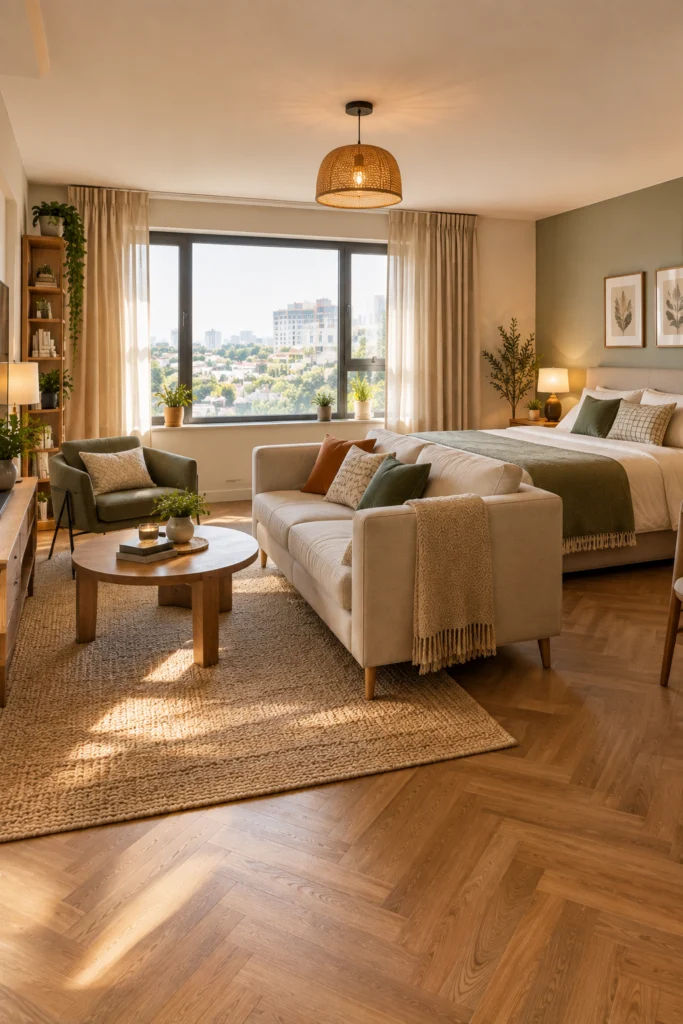
A compact sofa angled slightly away from the bed creates a conversation corner that feels separate from the sleeping zone, even without a physical divider. A rug underneath anchors the space as its own area. This works particularly well in studios with real architectural detail, like herringbone floors, that deserve to stay visible instead of hidden under furniture.
6. Place the Sofa Across from a Media Console
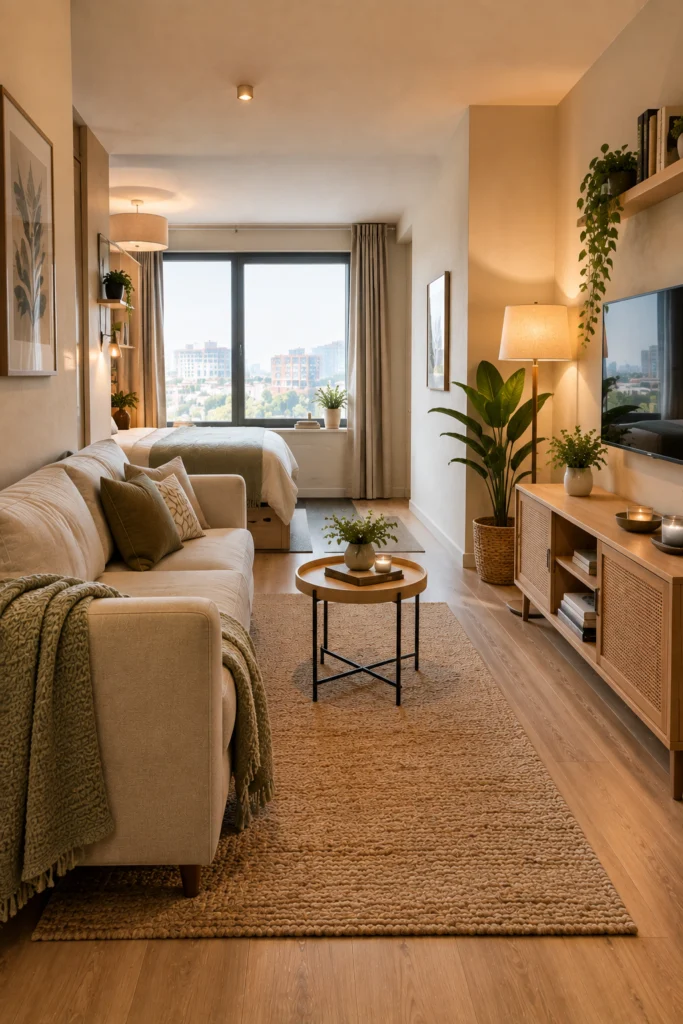
If you watch TV or work from the sofa, position it directly across from your media setup, with the bed tucked against an adjacent wall and out of the sofa’s sightline. A small round tray table replaces a bulky coffee table — it holds a mug and moves in seconds when you need the floor space back. For more on getting this sightline right, see TV placement ideas for a studio apartment.
7. Tuck the Sofa at the Foot of the Bed
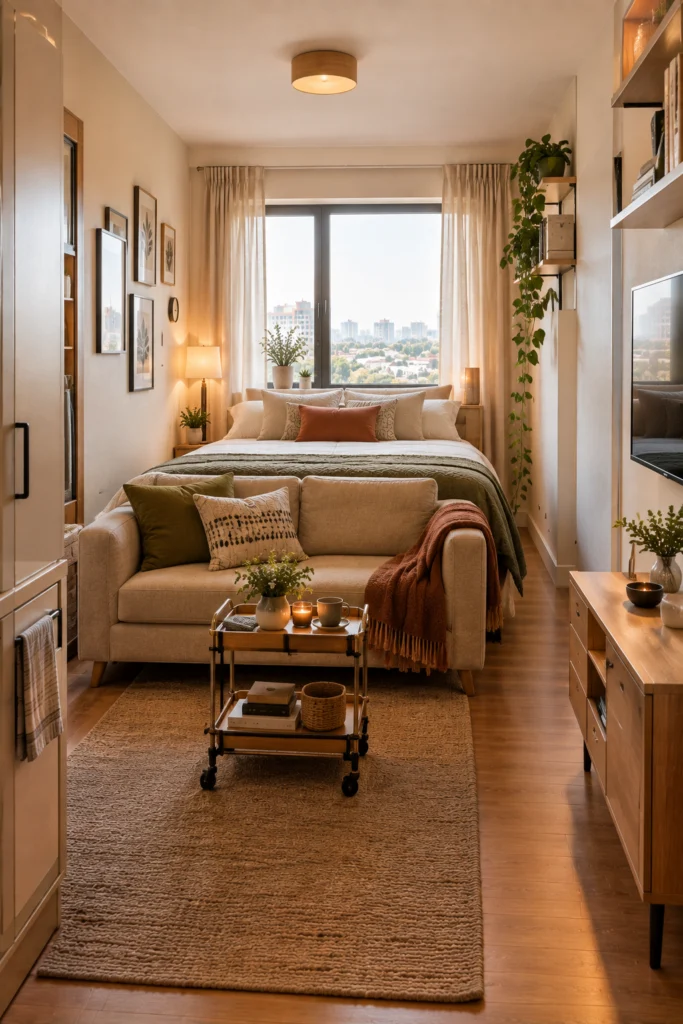
When floor space is truly limited, the foot of the bed is the sofa’s best spot — it works like a bench-meets-loveseat, somewhere to sit or host a guest without needing a separate zone. Keep a small coffee table or side cart in front for drinks and remotes. This layout suits narrow, rectangular studios where wall space is already spoken for.
8. Match the Sofa to Your Curtains for a Unified Look
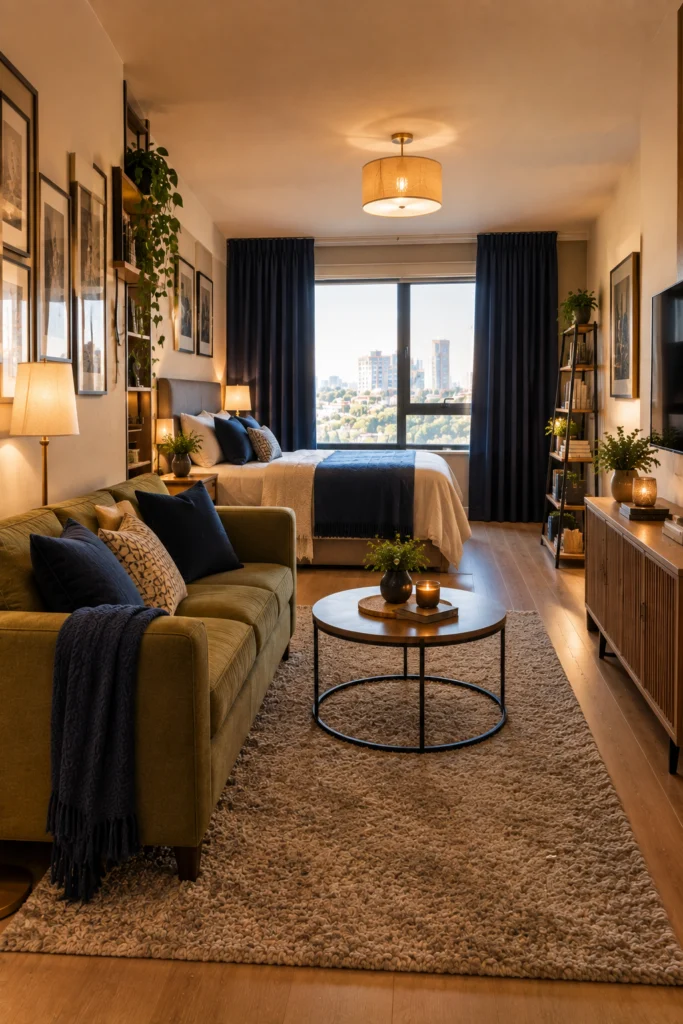
Matching sofa cushions or throw pillows to the curtain color threads the sleeping and living sides of the room together visually, so the studio feels designed rather than default. A shag rug between the two zones softens the floor and gives the sofa area its own footprint without adding a physical divider.
9. Keep It Classic — Sofa Parallel to the Bed
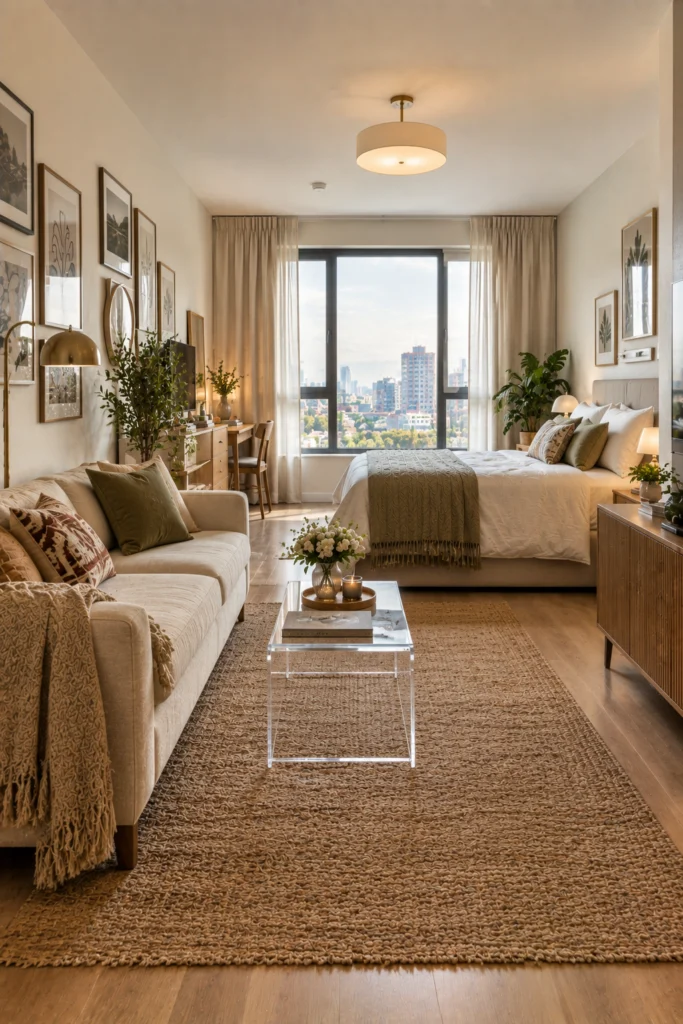
Sofa on one side, bed on the other, with a rug defining the living area — this is the most straightforward layout and it works in nearly every studio shape and size. A jute or sisal rug keeps the space grounded without adding visual noise. Skip an oversized coffee table in favor of a slim acrylic or lucite one so sightlines across the room stay open.
10. Use a Ceiling-Track Curtain to Separate Sofa and Bed
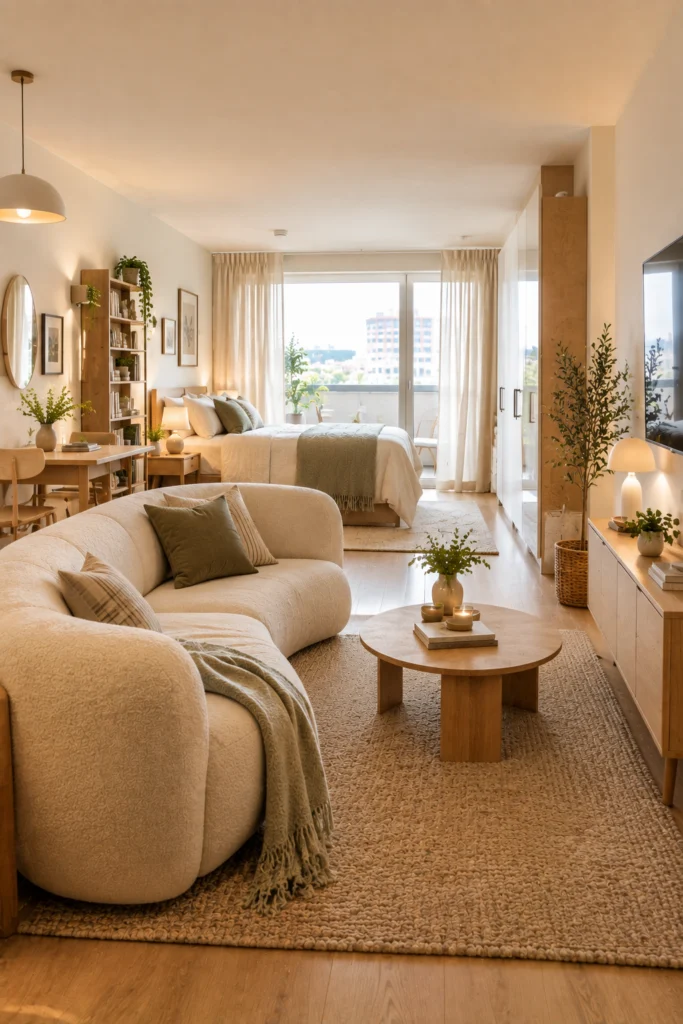
A ceiling-mounted curtain track is one of the most flexible studio dividers available, and most versions are renter-friendly since they don’t require altering walls. Close the curtain and the sofa area becomes a proper enclosed living room; open it and the studio breathes again. This setup works especially well with a full-size sofa, since the curtain gives each zone privacy without the visual weight of a permanent wall. For more closable, no-drill divider options, see studio apartment curtain divider ideas.
11. Choose a Curved Sofa to Save Floor Space
A curved or rounded sofa takes up less visual space than a boxy one and softens the whole room — fewer sharp corners to navigate around means a layout that flows better in a tight footprint. Pair it with a round coffee table to keep the organic shapes consistent. This kind of setup proves a studio can feel spacious and stylish without wasting a single inch.
12. Go Bohemian — Sofa as Part of a Layered, Lived-In Look
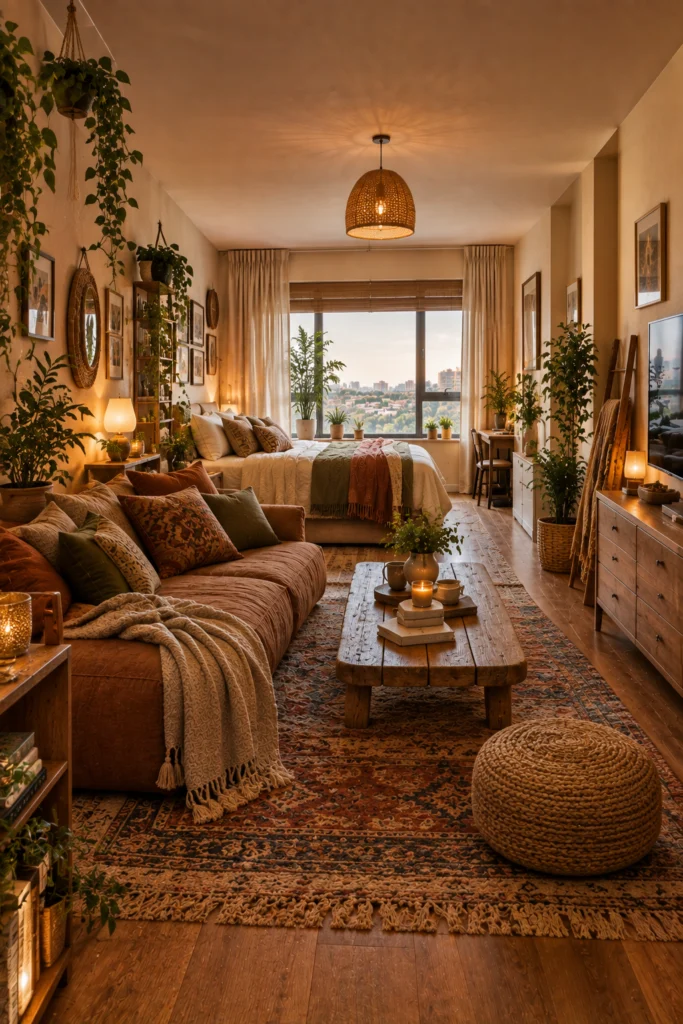
In a boho studio, the sofa isn’t just seating, it’s part of the scenery. A low-profile sofa in earthy tones blends with layered textiles, hanging plants, and warm wood furniture, and the zones overlap naturally instead of being forced apart. A reclaimed wood coffee table and a gallery wall pull the whole look together.
13. DIY the Bed, Invest in the Sofa
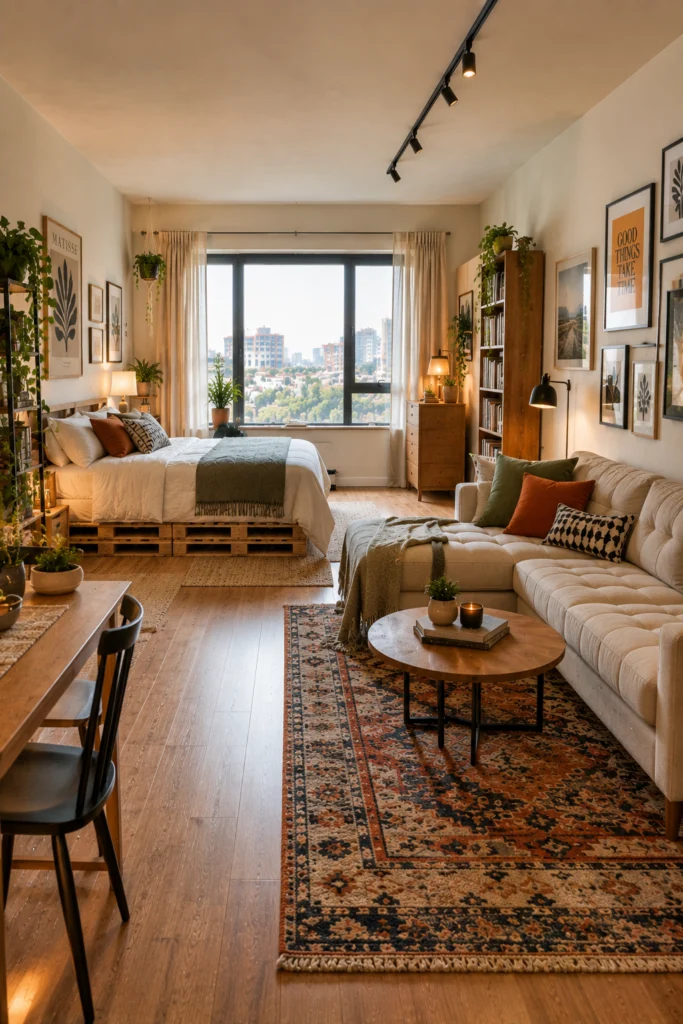
A budget move that actually pays off: build the bed frame from pallets and put the saved money into a genuinely comfortable sofa, since most waking hours in a studio happen on the sofa, not the bed. A compact tufted sectional gives lounging room and guest seating in one piece, and a bold patterned rug under it defines the living area without needing a separate divider. If the sofa itself is the harder decision, these best couches for studio apartments that save space are worth checking before the bed frame.
14. Go Bold with Color to Distract from the Small Footprint
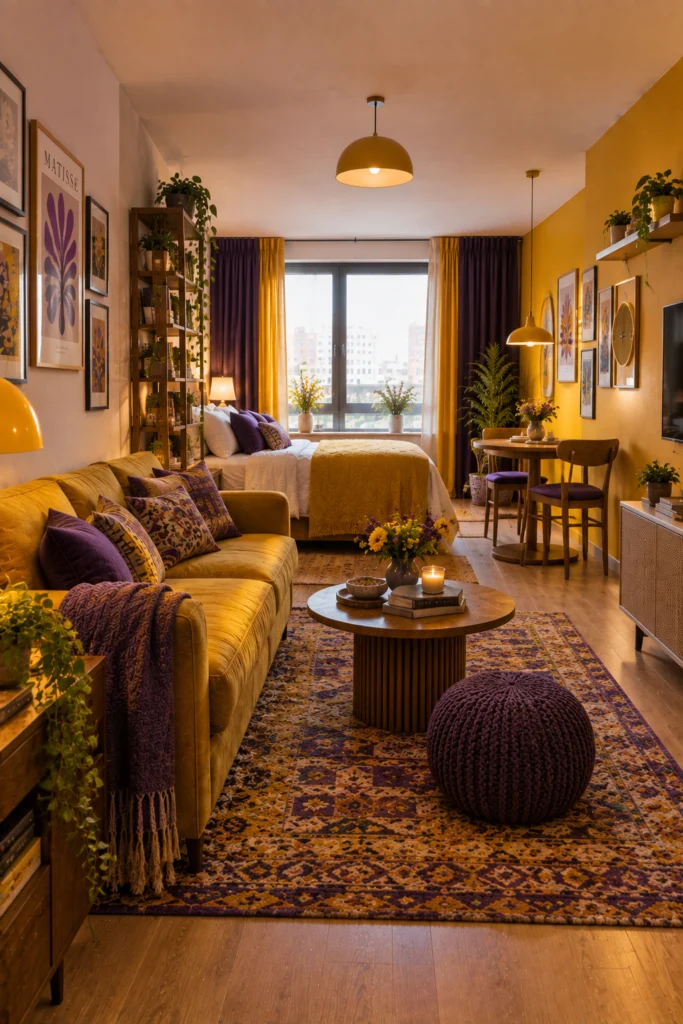
In a small room, leaning into color works better than fighting it — a bright, warm palette draws the eye to the decor instead of the square footage. Let the sofa blend into the warm tones while a bold rug anchors the living zone underneath it. A small dining set against the wall proves everything can fit without the room feeling chaotic.
15. Commit to Monochrome — Sofa and Bed in One Crisp Palette
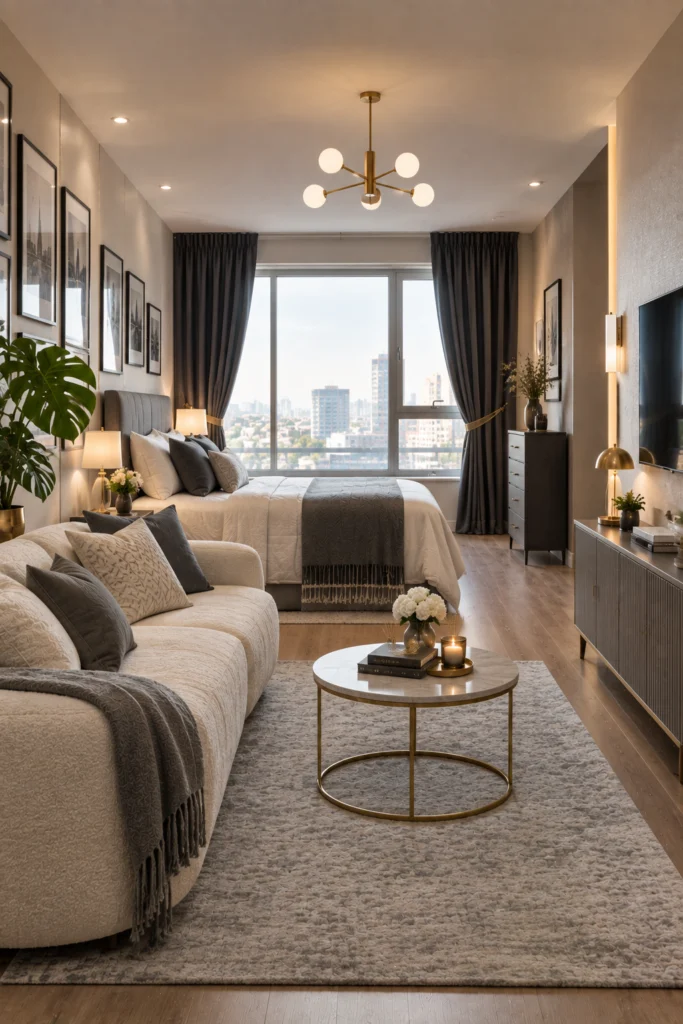
A monochrome palette — all greys, all whites, all creams — makes a studio feel nearly twice its size, because the eye doesn’t stop and start between competing colors. Keep the sofa, bed, curtains, and rug in the same tonal range, and add one subtle luxury detail, like charcoal curtains with gold tiebacks, plus one plant for a single pop of life. For more on picking that single unifying tone, see rug color ideas for a studio apartment.
Common sofa-in-a-studio mistakes
- Buying the sofa before measuring the walkway. A sofa that looks compact in a showroom can still block the only path between the bed and the door — measure the clearance first, then shop.
- Skipping a rug under the sofa. Without a rug boundary, a sofa reads as “furniture floating in a room” instead of its own zone — even a small rug fixes this.
- Matching sofa and bed colors by accident instead of on purpose. A near-match in the wrong undertone reads as a mistake, not a palette — go fully tonal or clearly distinct, not almost the same.
Why this works in a real studio
My first studio had a sofa pushed against the same wall as the TV, angled toward nothing in particular, and it never felt like a real seating area. Turning it to face the media console — the layout in idea six — was the one change that made the living side of the room function like an actual living room instead of a couch someone forgot to arrange. Start with where you sit most, then build the layout around that.
Quick answers
Can a studio apartment really fit both a bed and a sofa?
Yes — the key is placement, not size. A sofa positioned opposite or perpendicular to the bed creates two distinct zones in the same open room without needing a wall.
What’s the best sofa shape for a small studio?
A compact two-seater or a curved sofa, since both take up less visual space than a boxy sectional and leave more room for a clear walkway.
Do I need a coffee table if my studio is tiny?
Not a full-size one — a slim acrylic, round tray, or side cart gives you surface space without blocking sightlines across the room.
How do I separate a sofa from a bed without building a wall?
A tall open bookshelf, a ceiling-mounted curtain track, or simply the back of the sofa itself, angled or placed perpendicular to the bed, all create separation without construction.
Should the sofa match the bed’s color scheme?
Either fully match for a cohesive, spacious look, or clearly contrast on purpose — a near-match in a slightly different undertone tends to read as a mistake rather than a style choice.
What size sofa works in a studio apartment?
A two-seater or loveseat around 60 to 72 inches wide is typically the largest that leaves a comfortable walkway in most studio layouts.
Is a sectional ever a good idea in a studio?
Only a compact one — a small L-shaped or tufted mini-sectional can work if it’s placed against a wall or at the foot of the bed, but a full-size sectional usually overwhelms the room.