
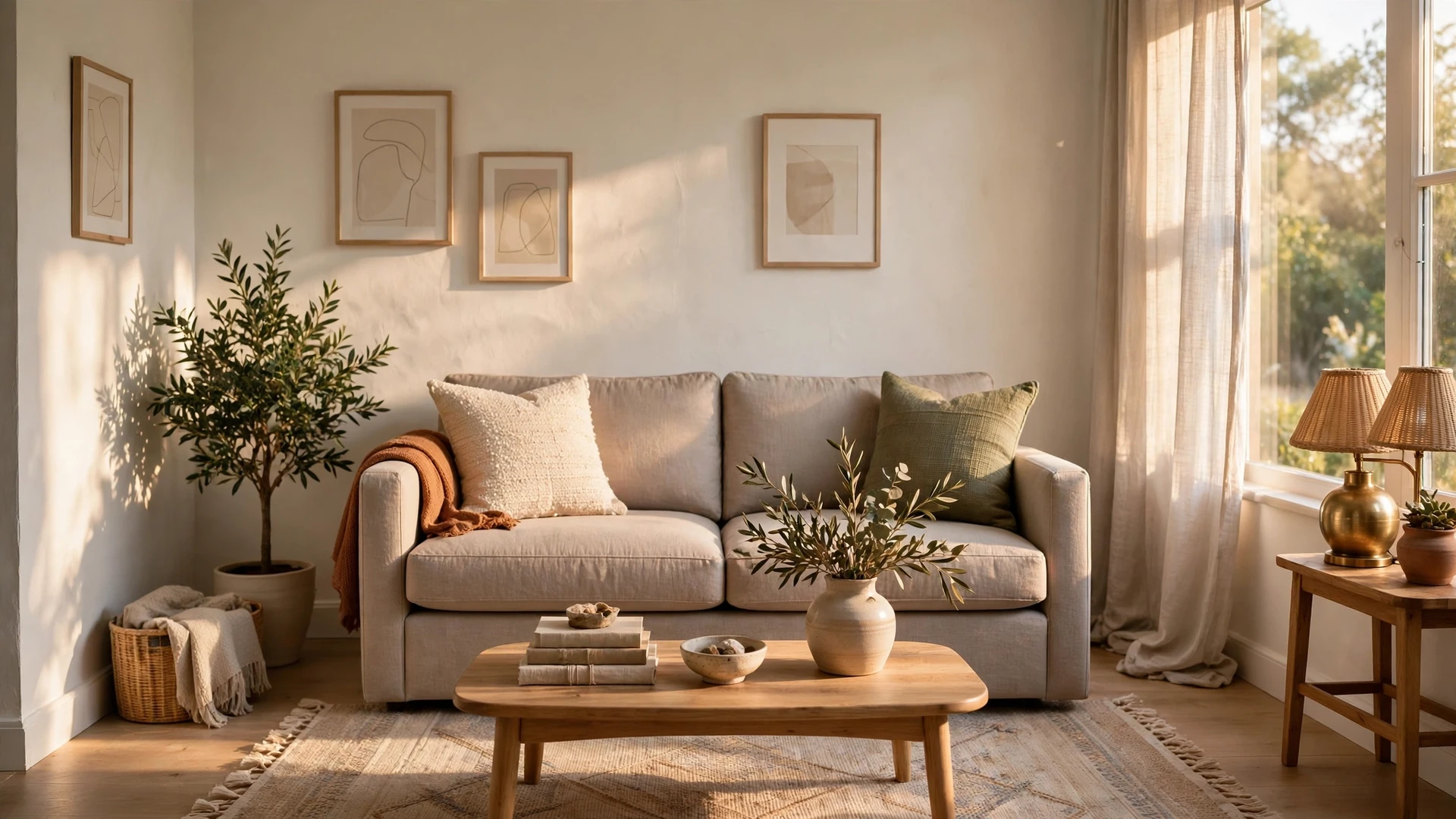
A sofa is the biggest thing in most small living rooms, and it is the one piece you cannot hide if you get it wrong. Choose well and the whole room feels bigger, calmer, and easier to live in. Choose badly and every other decision in the room has to work around it. This guide walks through the decisions in the order that matters: measure first, size second, fabric and color third, layout last.
Measure the Room and the Door (the Two Numbers People Forget)

Everyone measures the wall where the sofa will go. Almost nobody measures the door it has to come through, and that is the measurement that causes the most returns.
Start with the wall. Measure its full length, then subtract what the room needs around the sofa: at least 75 cm of walking space on any side people pass through, and 40 to 45 cm between the sofa and the coffee table. What is left is the maximum width your sofa can be — in most small living rooms, 150 to 200 cm.
Now measure the delivery path, and measure the narrowest point, not the widest. The front door, the hallway, any turn, the stairwell, and the lift door if there is one. Write down the smallest width and the smallest height on that whole route. A sofa that fits your wall but not your hallway is a sofa that goes back on the truck.
I recommend taping the sofa's outline on the floor with painter's tape and living with it for a day. Walk around it and open the doors near it. You will find out in an evening what a tape measure cannot tell you.
Sofa Sizes That Actually Fit Small Rooms
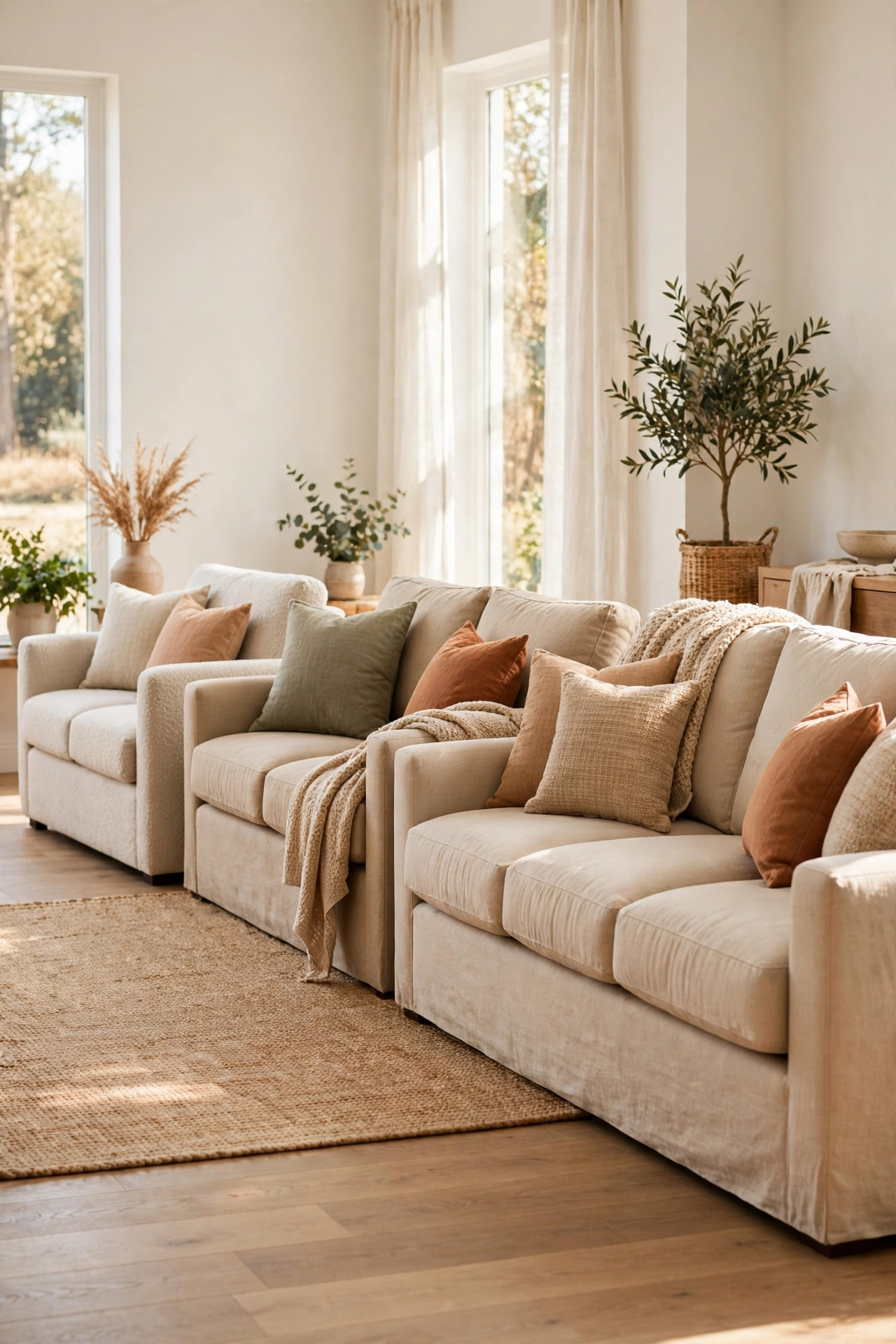
Sofa sizes are not standardised, so ignore the name on the label and read the width, the depth, and the seat height.
| Sofa type | Width | Depth | Seats | Best for |
|---|---|---|---|---|
| Loveseat | 120–160 cm | 85–95 cm | 2 | Very small rooms |
| Apartment sofa | 170–200 cm | 85–95 cm | 2–3 | Most small rooms |
| Standard three-seater | 200–230 cm | 90–100 cm | 3 | Walls of 260 cm or more |
| Compact sectional | 220–260 cm | 90–100 cm | 3–4 | Open-plan corners |
For a small living room, the apartment sofa is usually the right answer: it seats three without dominating the wall, and leaves room for a side table and a lamp.
Seat depth matters as much as width. A standard depth of 55 to 60 cm suits most people; deeper seats, 65 cm and beyond, feel like lounging but eat floor space you may not have, and shorter people end up with their feet dangling. Seat height is usually 45 to 50 cm: lower looks sleek but makes getting up hard work.
Leave the sofa at least 10 cm shorter than the wall on each side if you can — a sofa that runs wall to wall makes the room feel like a corridor. For more on fitting a sofa into a tight space, see 15 Ways to Fit a Sofa in a Tiny Studio.
Fabric Guide: What Survives Kids, Pets and Sun
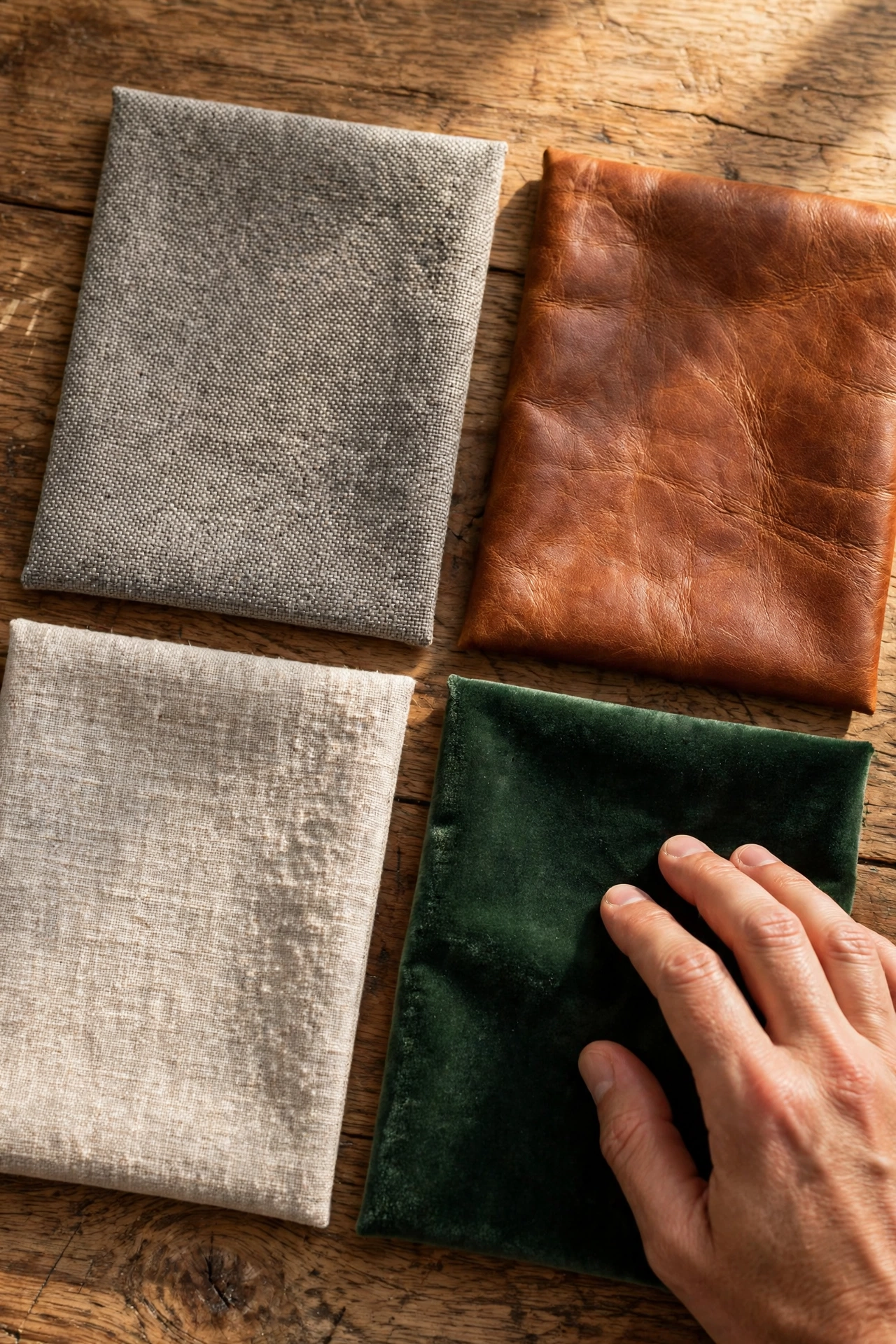
Fabric is where a small-room sofa earns its money or costs you twice. The wrong fabric shows every mark, and in a small room there is nowhere to hide it.
Start with the weave. A tight, flat weave resists snagging and is the safest choice with a cat or a dog; loose weaves and chunky knits look soft in the shop and catch claws within a week. Run your fingernail across the sample — if it catches, it will catch on claws too.
Leather is the most forgiving option for spills and pets, and it ages well because it does not hold dust. It needs care in sunlight, though: direct sun dries and fades it, so keep it out of the strongest afternoon light. Faux leather is cheaper but peels after a few years, especially on the seat cushions.
Linen looks relaxed and suits pale, airy rooms, but it wrinkles and stains easily. I recommend it only with removable, washable covers. For a sunny room, check lightfastness first — south-facing windows can fade a rich fabric noticeably within a year.
Velvet is the surprise performer in small rooms: it looks rich, hides dust better than flat cotton, and bounces light that warms the room. The trade-off is pressure marks where people sit, and pet hair clings to it — brush it once a week.
Whatever fabric you choose, ask for a large sample and take it home. Put it on the sofa spot, look at it in daylight and under your lamps, spill a little water on it, and try to rub the mark out. Ten minutes at home beats an hour in the shop. For rooms where the rug matters as much as the sofa, see 15 Mini Studio Apartment Rug Ideas.
Color: When to Go Neutral and When a Color Works

A neutral sofa is the safe choice, and in a small room it is usually the right one. Grey, beige, warm cream, and soft greige all recede, which makes the walls feel further away. A neutral sofa also lets you change the room with cushions and a throw instead of buying new furniture.
A colored sofa works when three things are true: the room gets good natural light, the rest of the room is calm — pale walls, a plain rug, simple curtains — and you are sure about the color. A green, navy, or rust sofa is a commitment, much harder to change than a cushion.
If you are torn, try a mid-tone sofa in a muted color: sage green, dusty blue, or warm terracotta all read as color without shouting. Avoid very dark sofas in dim rooms — a charcoal or espresso sofa turns into a black hole that swallows the wall behind it.
Before you commit, hold the fabric sample against your wall color in the evening, under your normal lamps — a grey that looked warm in the shop can turn cold blue at home. For ideas on building a room around a colored sofa, see Sage Green Living Room Decor Ideas and Cozy Living Room Ideas.
Layouts: Against the Wall, Floating, or Facing the Window

Where the sofa goes decides how the whole room works. In a small room there are really only three options.
Against the wall is the default, and for a narrow room usually the best: it leaves the maximum open floor and keeps walkways simple. The mistake is pushing it hard against the wall and filling every other wall too, which makes the room feel like a waiting area. Leave a few centimetres behind it, and keep one wall mostly empty.
Floating the sofa — pulling it away from the wall into the middle of the room — works in open-plan spaces where it needs to define the living zone. The cost is floor space: you need 75 to 90 cm behind it for a comfortable walkway, and in a room under 12 square meters that is often space you do not have. A console table behind it makes it look intentional.
Facing the window is the prettiest option and the least practical. Morning light is lovely, but a sofa facing the window usually means the TV faces it too, and glare makes it unwatchable in the afternoon. Angle the sofa slightly instead: you keep most of the light and the view, and the TV goes on a side wall out of the sun.
Whichever layout you choose, anchor the sofa with a rug large enough that the front legs sit on it, with at least 20 cm showing on each side. A rug that stops short makes the arrangement look unfinished — the most common layout mistake I see in small rooms.
What to Check Before You Pay
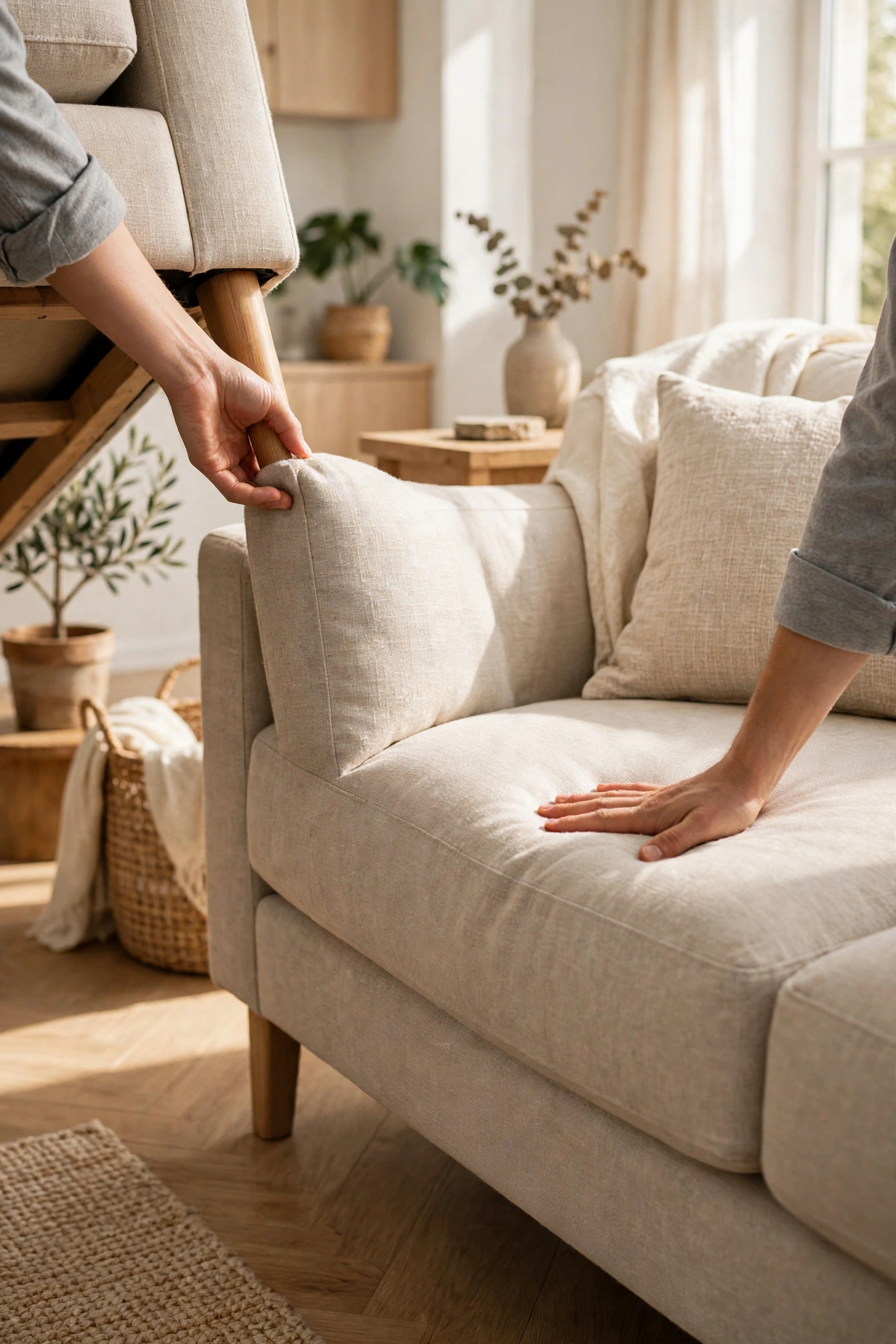
A sofa is one of the most expensive things in the room, and the quality is hidden inside it. Spend ten minutes checking before you pay.
Start with the frame. Lift one front corner about 15 cm: if the other front leg lifts too, the frame is solid; if it stays put and the sofa twists, the frame is weak. Kiln-dried hardwood lasts longest; staples and glue will not.
Next, the springs and cushions. Sit down firmly in the middle of the seat, then in the corner: you should feel even support, not a hard edge or a sagging spot. High-resilience foam holds its shape for years; cheap foam softens within months, and down-blend needs regular plumping. Unzip a cushion cover if you can — neat stitching and a proper inner cover are good signs; loose filling and frayed seams are not.
Sit on it the way you actually sit at home, for at least ten minutes. Lean back, put your feet up if that is how you watch television, and check the arm height: too high and the sofa feels like a box, too low and it gives you nothing to lean on. Check the back height too — ending at mid-shoulder looks modern but gives no support for reading.
Finally, the practical questions: are the legs removable, which matters for delivery through a narrow door? What is the return policy — does it cover a sofa that does not fit through your door? How long is the frame warranty? A long warranty is the clearest sign a maker trusts its own product. For more on making a small room feel expensive once the sofa is in, see How to Make Your Studio Apartment Look Expensive.
4 Mistakes That Make a Small Room Feel Smaller

1. Buying a sofa that is too deep. A deep, lounging sofa is wonderful in a big room; in a small room it eats the walkway, pushes you too close to the TV, and makes the coffee table impossible to reach. If your room is under 3.5 meters deep, stay at or under 60 cm of seat depth.
2. Pushing every piece of furniture against a wall. It feels like the way to save space, but a room with furniture on every wall and nothing in the middle reads as a corridor. Pull the sofa a few centimetres off the wall and leave one wall empty.
3. Matching everything. A sofa, two chairs, and curtains all in the same color and fabric do not look coordinated; they look like a set, and a set makes a small room feel like a showroom. Mix one contrast in: a different chair fabric or cushions in a color the sofa does not have.
4. Choosing a sofa with no visible legs. A sofa that sits flat on the floor hides the floor underneath it, and the eye reads the room as smaller. Slim, tapered legs lift the sofa visually and show a strip of floor beneath it — in a small room, that strip is worth more than it sounds.
Quick Answers
What size sofa fits a 3 by 3.5 meter living room? An apartment sofa of 170 to 190 cm wide is the safest fit: it leaves room for a side table and a walkway, and seats three people. A full three-seater of 210 cm or more fills the wall and leaves no breathing room.
Is a sectional a good idea in a small room? Only a compact one. A small L-shaped sectional of 220 to 240 cm can work in a corner, replacing a sofa and a chair. A large U-shaped sectional will swallow a small room whole, so measure the corner and tape the outline first.
Which fabric is best if I have pets? A tight, flat weave or leather — both resist claws and clean easily. Avoid loose bouclé, open weaves, and velvet if your pet sheds a lot: hair clings to velvet, claws catch on loose fibres.
Should the sofa match the wall color? No. A sofa one or two shades darker or lighter than the wall looks intentional; an exact match makes it disappear. Contrast, even a small one, gives the room depth.
How much space do I need behind a floating sofa? 75 to 90 cm for a comfortable walkway. Less than 60 cm and people will turn sideways to pass, which means the layout is not working — if you cannot spare that much, keep the sofa against the wall.
Final Thoughts
The right sofa for a small living room is almost never the biggest one you can fit, and almost never the cheapest one either. Measure the room and the door, choose a size that leaves walkways and breathing room, pick a fabric that survives your actual life, and check the frame before you pay. Get those four things right and the sofa will make the room feel bigger than it is, every day you use it.

Hi, I'm Wasif — welcome to The Homes Decors. I write about home decor: the ideas, choices, and small details that make a space feel considered rather than accidental. If you've ever wondered why a room works, not just what's in it, you're in the right place.
1 thought on “How to Choose a Sofa for a Small Living Room”