
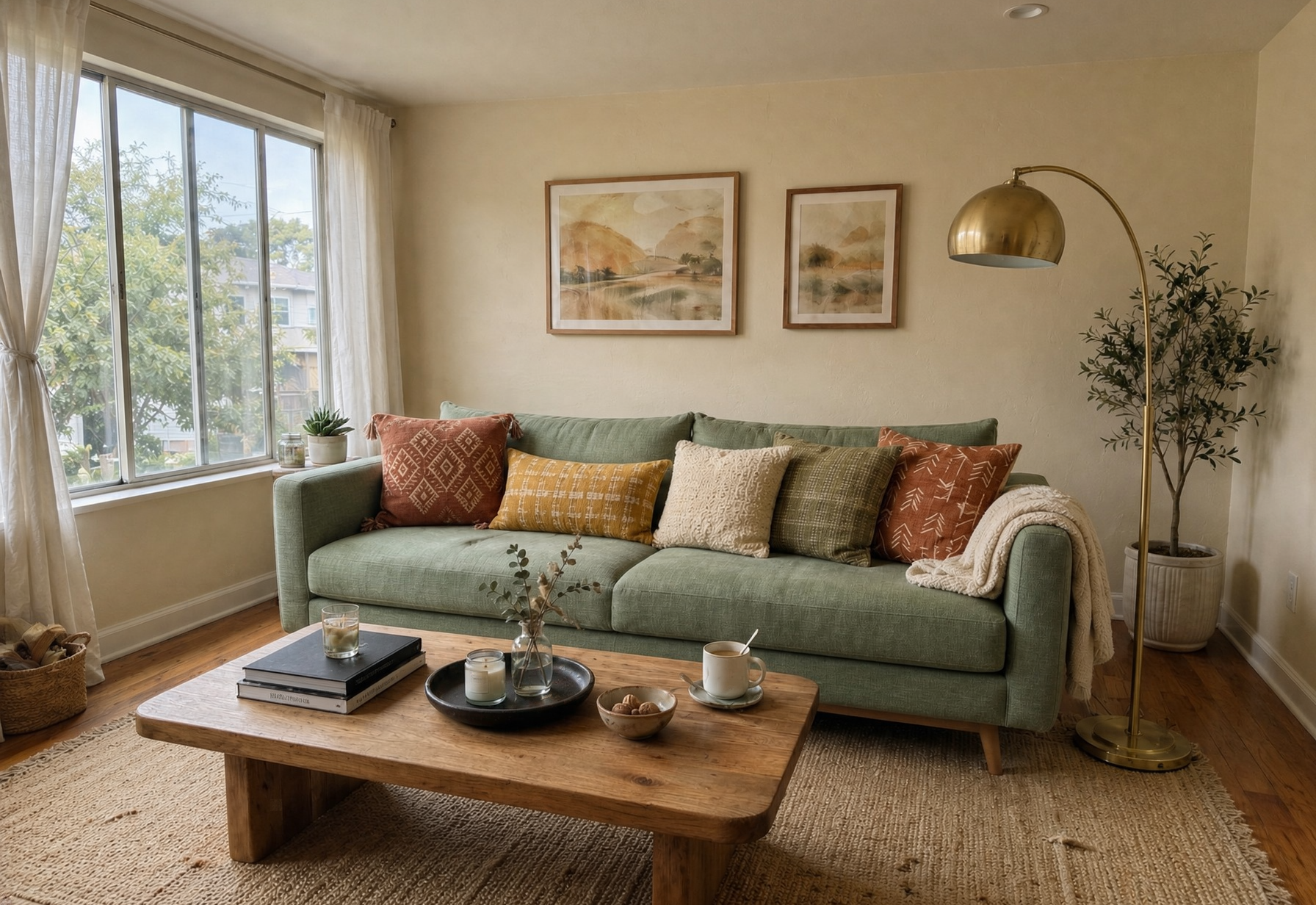
Sage green behaves more like a soft neutral than a bold color, which is exactly why it works so easily with warm wood, brass, and natural textures. Here are 10 ways to bring it into your living room without overthinking the palette.
Wall colors and backdrops
1. Warm white walls
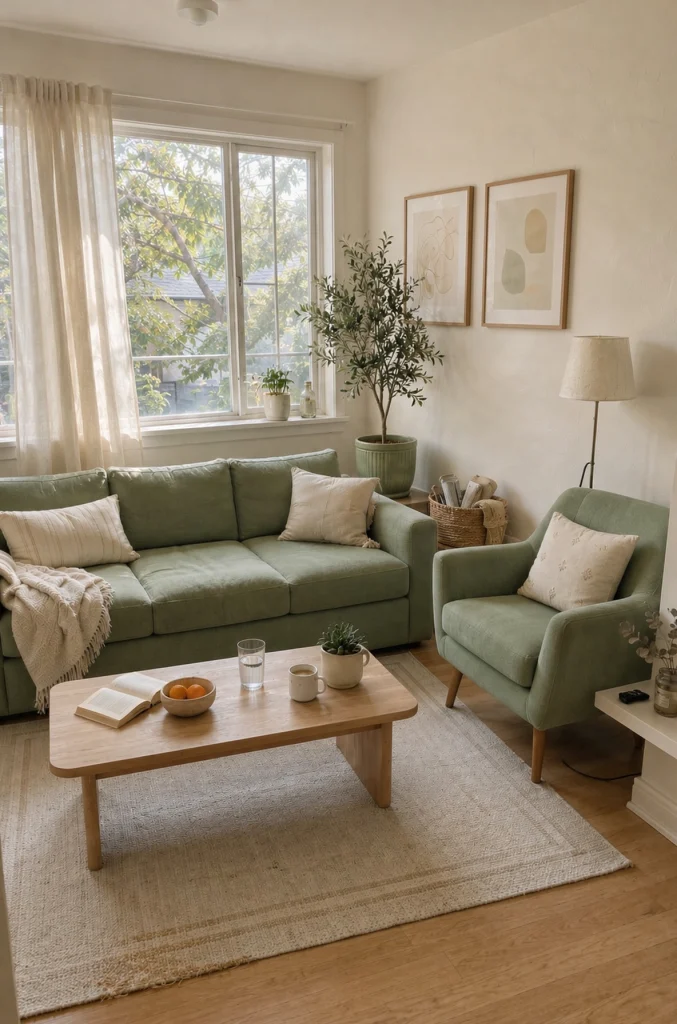
Pro tip: Test the white on the wall that gets the least natural light first — if it looks warm there, it will look warm everywhere.
The easiest, most reliable pairing. White keeps the room bright and lets sage green furniture or decor stay the visual focus instead of fighting the wall color, similar to the light-first approach in our light color living room ideas guide. Choose a warm white with a faint yellow or pink undertone, since stark blue-white can make sage look washed out and cold. Paint a large test swatch next to the sofa and check it in daylight and under evening lamps before committing to a full wall. A satin or eggshell finish reflects more light than flat paint, which helps in rooms with small windows. Keep the ceiling the same warm white so the space feels seamless rather than boxed in.
2. Cream or beige walls
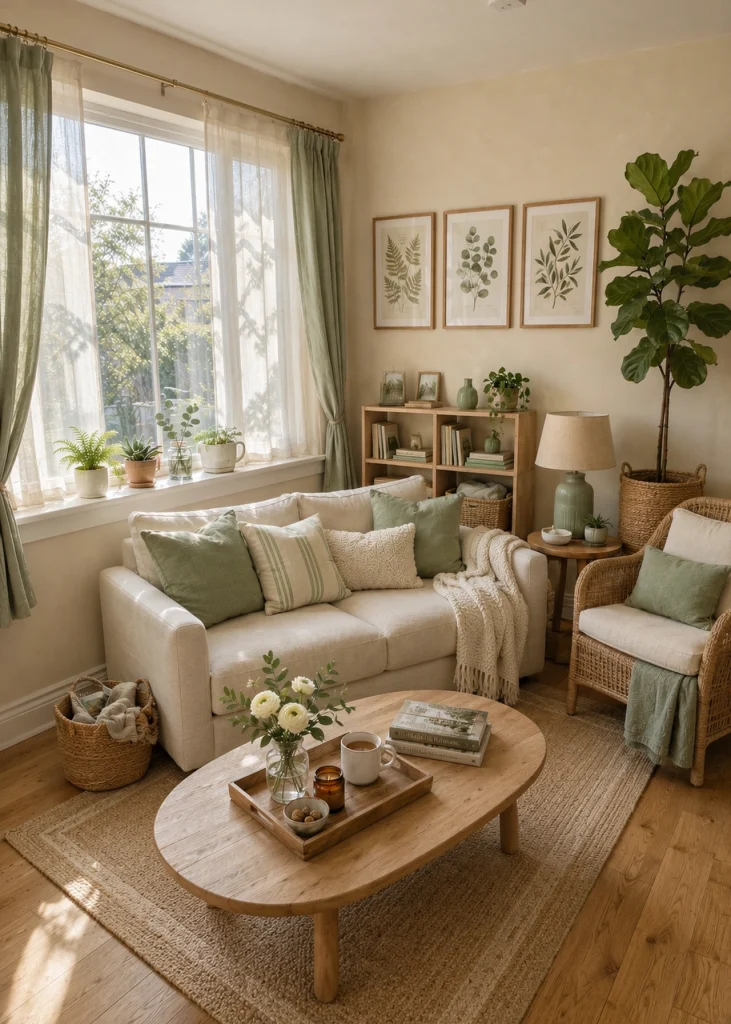
Pro tip: Hold a cream swatch against the sage fabric in natural light — if the two look like they belong to the same family, the pairing will work.
A warmer alternative to white that pairs just as easily with sage. This is a good choice if the rest of your home already leans warm, similar to the base we cover in our beige living room ideas guide. Cream walls work best when they sit one or two shades lighter than the sofa, so the furniture still stands out instead of blending into the background. Avoid creams with a strong yellow cast, which can turn muddy next to sage; a soft, milky cream is safer. This pairing suits open-plan spaces well, since the warmth carries through to adjoining rooms without a hard color break. A washable matte finish is a practical choice if the walls get scuffed by kids or pets.
Furniture and material pairing
3. A warm wood coffee table
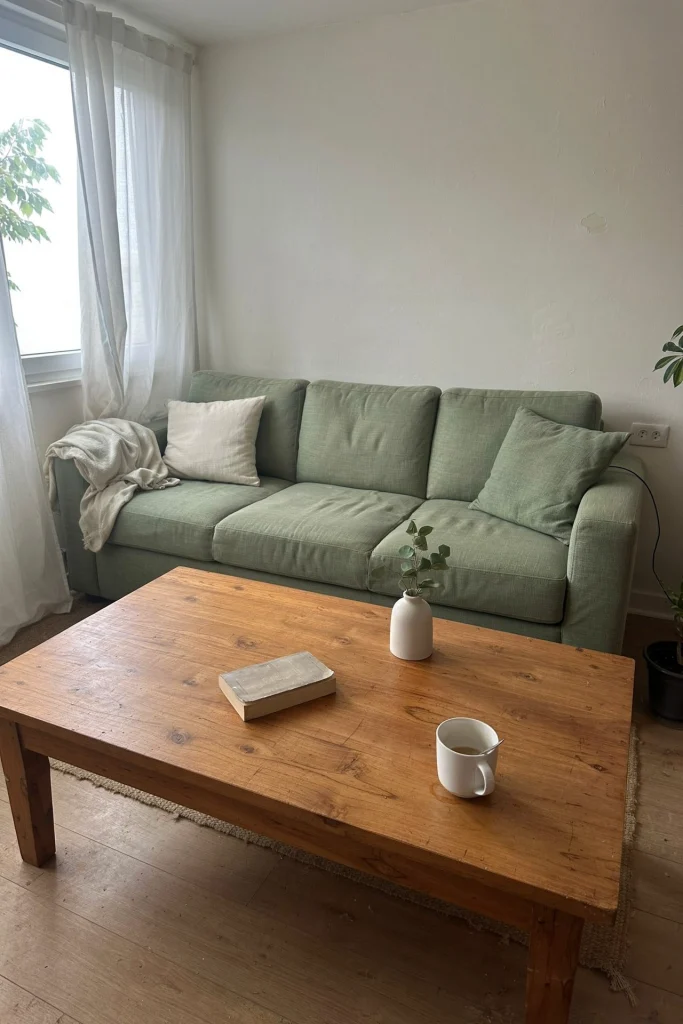
Pro tip: If the table looks too plain, style it with a small stack of books and a ceramic vase in cream or rust — two items are enough.
Wood grounds sage green the same way it grounds most muted colors. A mid-tone oak or ash keeps the room feeling light and connected, an idea we also lean on in our modern earthy living room ideas guide. Mid-tone oak, ash, or walnut all work, but avoid very dark walnut unless the room has plenty of light, since it can overpower a soft sage sofa. A table about two-thirds the length of the sofa keeps the proportions balanced, and rounded corners are a safer pick in small rooms or homes with children. Leave at least 40 cm between the table and the sofa so legs have room to move. A lower shelf or drawer adds hidden storage for remotes and magazines.
4. Rattan or cane accent chairs
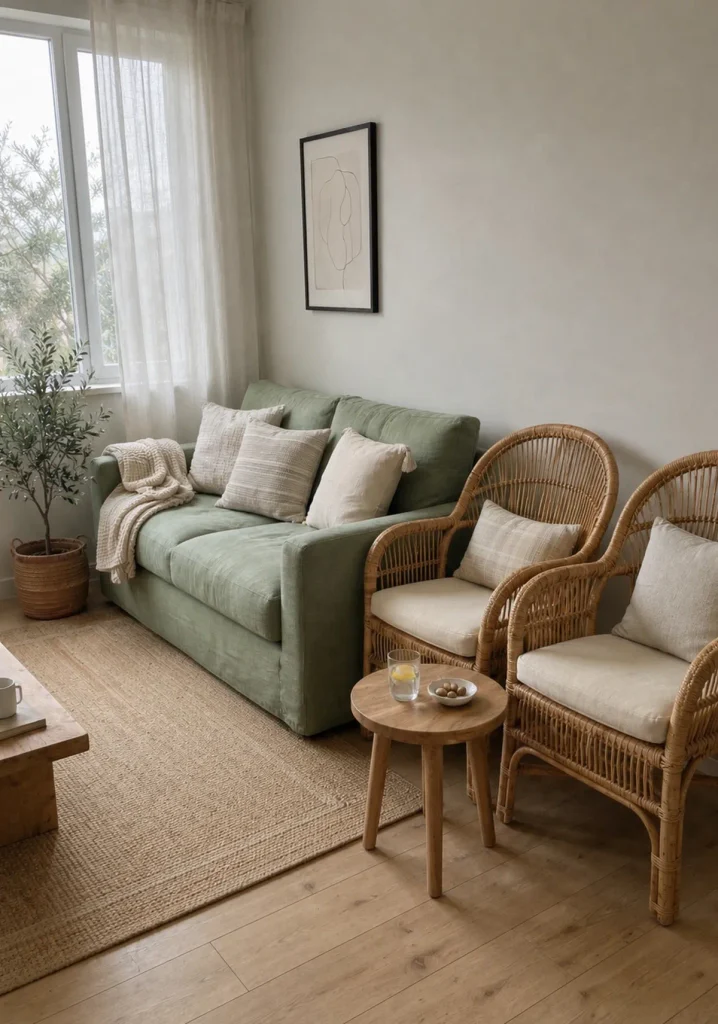
Pro tip: Place a small side table between the rattan chair and the sofa so the chair becomes a real reading spot, not just a decorative piece.
Woven texture pairs naturally with sage’s soft, organic tone and keeps the room from feeling too formal or matched, the same relaxed pairing used in our scandinavian living room ideas guide. A single rattan chair is enough to add texture; a matching pair works best angled toward the sofa rather than placed side by side. Look for a tight, even weave and a sturdy frame, since loose cane sags over time and is hard to repair. Add a seat cushion in linen or cotton, cream or muted rust, so the chair is comfortable for more than a few minutes. Keep the chairs out of direct, harsh sunlight to prevent the cane from drying out and cracking.
Rugs and textiles
5. A light, neutral jute rug
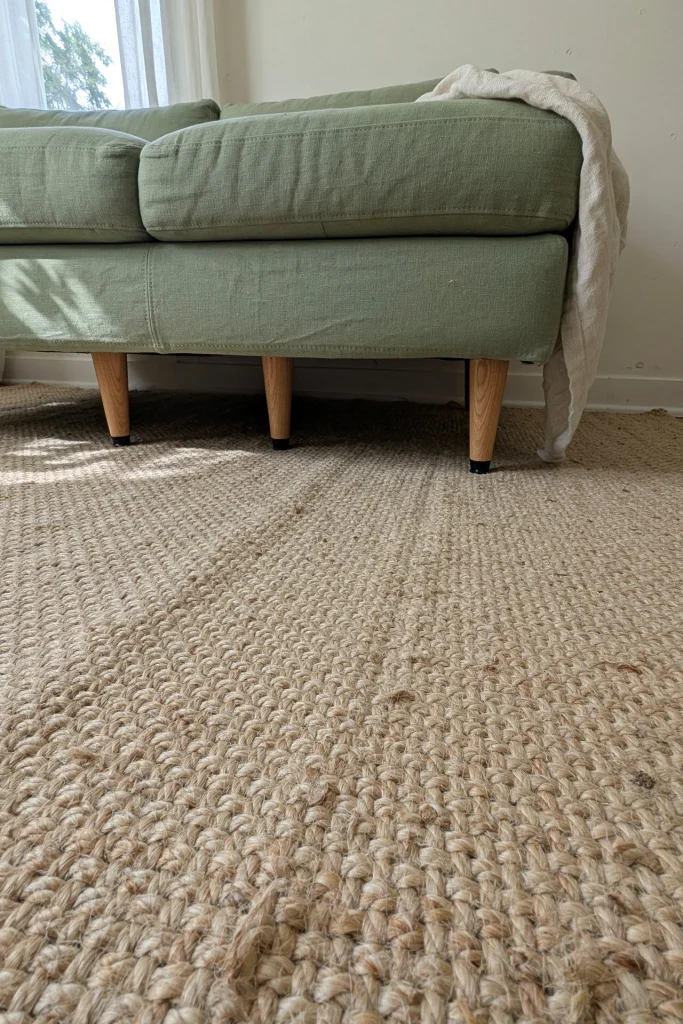
Pro tip: If the jute feels too rough barefoot, layer a smaller, softer cotton or wool rug on top for the area where feet actually land.
Keeps the room from feeling too saturated and gives the eye somewhere calm to land, especially useful in a small living room where every surface matters more. Choose a rug large enough that the front legs of the sofa and chairs sit on it, usually at least 20 cm of rug beyond the furniture on each side. A flat-weave jute rug sheds less than a chunky braided one and is easier to vacuum. Jute stains easily, so keep it out of high-traffic snack zones or treat it with a fabric protector when new. A rug pad underneath stops slipping and adds a little cushioning underfoot.
6. Mixed-texture pillows in earthy tones
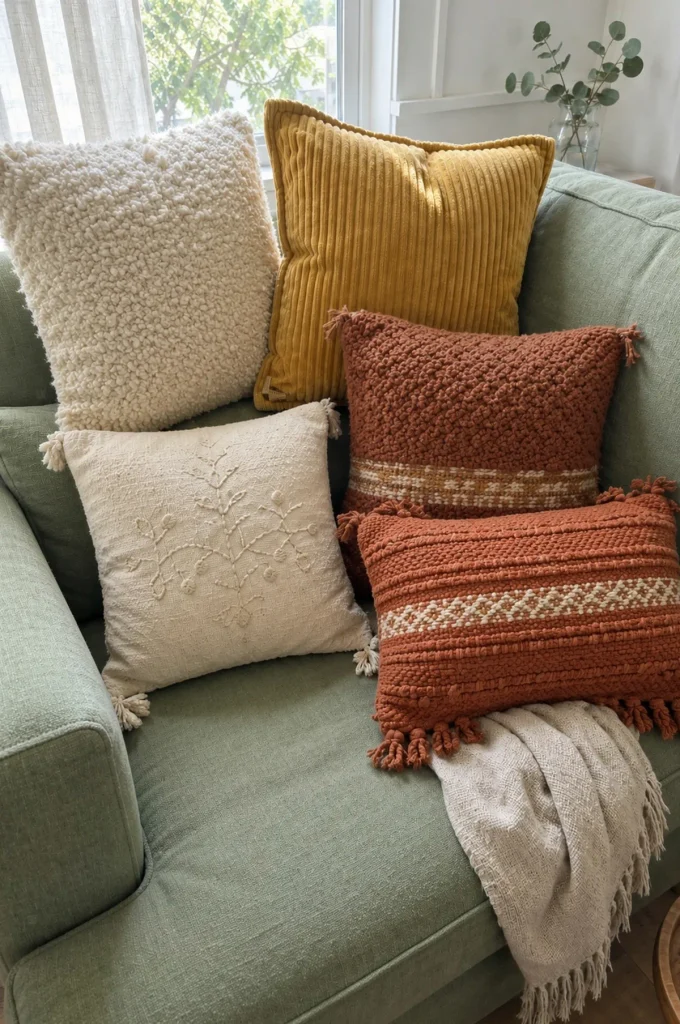
Cream, mustard, and rust build out the palette without competing with the green. Skip bright, cool colors like blue or purple in the same grouping, a clash covered more in our purple living room ideas guide. Three pillows in different textures, linen, bouclé, and a woven stripe, look more intentional than five in the same fabric. Stick to two or three colors from the earthy family, cream, mustard, and rust, and keep one pillow plain so the grouping does not feel busy. Down or feather-blend inserts hold their shape better than cheap polyester fill and can be fluffed back into form. Rotate pillow covers seasonally if you want a change without buying new inserts.
Pro tip: Place the largest pillow at the outer corner of the sofa and work inward with smaller ones — the arrangement reads as deliberate, not thrown together.
Lighting and metal accents
7. Brass accents
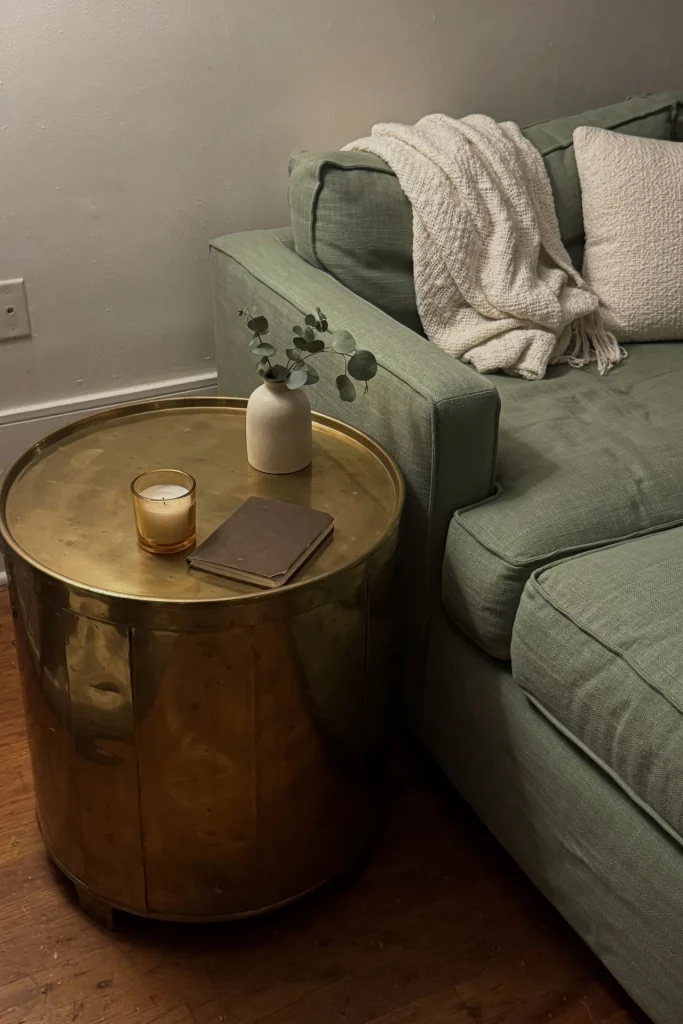
Pro tip: If brass feels too formal, pair it with wood or rattan nearby — the natural materials soften the shine immediately.
A lamp base, a side table, or a few small brass touches add warmth and a bit of shine against the muted green, the same warm-metal pairing covered in our chocolate brown sofa living room ideas guide. A little brass goes a long way: one lamp base, a small side table, or a few picture frames is enough, and mixing in too much can turn the room brassy. Unlacquered brass develops a soft patina over time, which suits the relaxed sage palette better than a mirror-polished finish. Keep brass pieces at different heights around the room so the shine is spread out rather than clustered in one spot. Wipe them with a dry cloth regularly, since fingerprints show easily on metal.
8. Layered lighting across the room
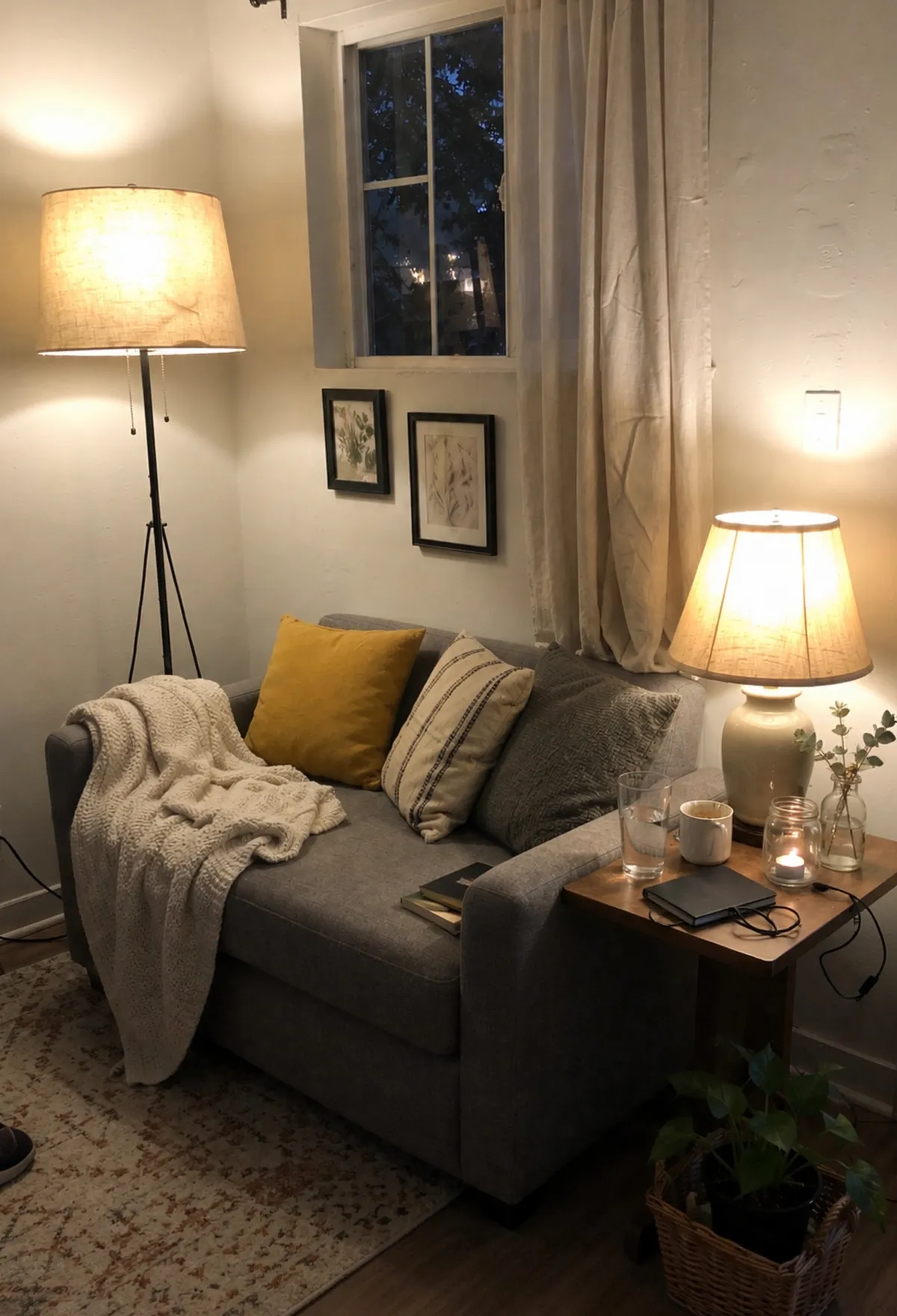
Pro tip: Put the floor lamp on the opposite side of the room from the main window — it balances the light when the sun goes down.
A single overhead light flattens a muted color like sage. A floor lamp and table lamp with warm bulbs (2700K–3000K) bring out the richness in the evening, a detail we go into further in our cozy living room ideas guide. Aim for three light sources at different heights: an overhead fixture, a floor lamp beside the sofa, and a table lamp on a side table or console. Warm bulbs in the 2700K–3000K range keep sage looking soft and rich after dark; cooler bulbs flatten it. Dimmable bulbs are worth the small extra cost, since they let you lower the light for evenings without changing the color temperature. Keep lamp shades in cream or linen so the light stays warm as it passes through.
Styling and finishing touches
9. A gallery wall in muted, earthy tones
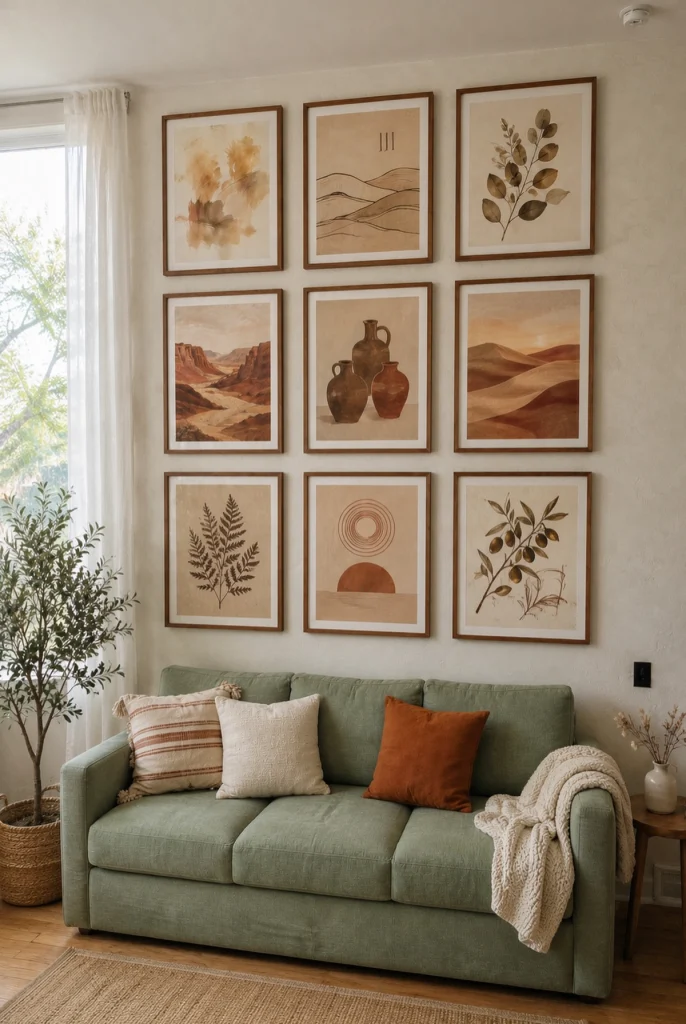
Pro tip: Leave one frame slightly different in size or shape — a perfectly uniform grid can look stiff, while one odd piece makes the wall feel collected, not bought as a set.
Botanical prints or black-and-white photos in wood frames tie back to the sofa’s softness without matching it exactly. Layout tips in our black and white living room ideas guide apply well here too. Start with one larger piece in the center and build outward with smaller frames, keeping the gaps between frames even, about 5 to 8 cm. Wood frames in oak or walnut tie into the room’s warm wood, while thin black frames add a little definition without competing. Botanical prints and black-and-white photos work best; avoid glossy or highly saturated art that fights the muted palette. Lay the arrangement out on the floor first, or tape paper templates to the wall, before hammering any nails.
10. Plants and greenery
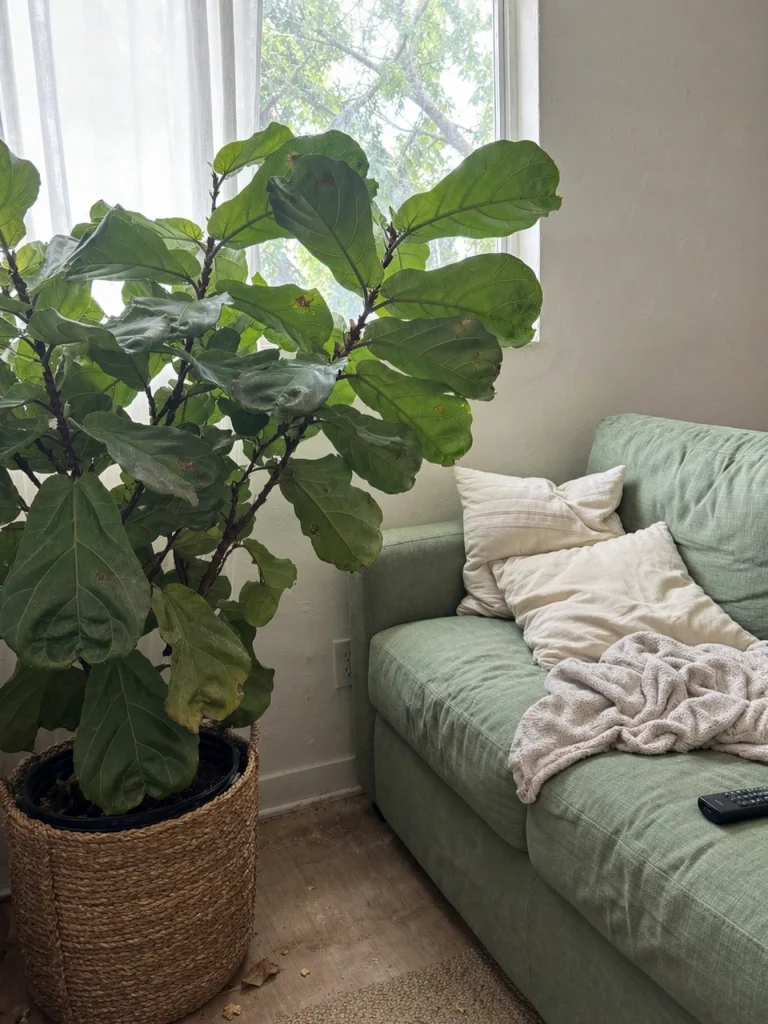
Pro tip: Put the tallest plant in a corner that otherwise feels empty — it fills dead space and makes the whole room feel finished.
Since sage is already a soft green, plants read as a natural extension of the palette rather than an accent, tying the whole room together with very little effort, the same layered-green idea we cover in our green living room ideas guide. Two or three plants at different heights, one tall floor plant, one on a side table, and a trailing plant on a shelf, give the room more life than a cluster of small pots in one spot. Low-maintenance choices like pothos, snake plants, or a fiddle-leaf fig suit most living rooms and tolerate the indirect light sage rooms often have. Match the pots to the palette: terracotta, cream ceramic, or woven baskets all work. Water sparingly and check the soil before watering again, since overwatering kills more houseplants than neglect.
Common mistakes to avoid
- Pairing sage with cool, stark white. It can look slightly washed out. A warmer white or cream brings out the color better.
- Adding too many other bold colors. Sage works best as a quiet anchor, not one of several competing statement colors.
- Skipping warm lighting. Cool white bulbs can make sage look dull rather than soft and rich.
- Matching every green tone exactly. A little variation between pieces, sofa, pillows, plants, looks more natural than a perfectly matched set.
Why sage works so well in almost any room
I’ve used sage green in two different apartments now, and both times it ended up being the easiest color decision I made. It never competed with the rest of the room, it just quietly tied everything together, wood, brass, cream textiles, all of it. That’s really the appeal, it does a lot of work without asking for much in return.
Quick answers
Does sage green work with grey walls? Yes, though a warmer, softer grey pairs more naturally than a cool, blue-toned one.
What rug color goes best with sage green? A light, neutral rug in cream or oatmeal. It keeps the room from feeling too saturated.
Is sage green a trend that will fade quickly? It behaves more like a neutral than a trend color, so it tends to hold up better over time than brighter, more saturated greens.
What metal finish works best with sage green? Brass or warm gold complements sage nicely. Black metal also works for a more modern, grounded look.
Can I use sage green in a small living room? Yes, as long as the walls and rug stay light so the room doesn’t feel too saturated.
About
I write thehomesdecors.com from actual rooms I’ve decorated, rented, repainted, and occasionally regretted, not a showroom or a brand deck. If something here didn’t work in my own place, I’ll tell you.

Hi, I'm Wasif — welcome to The Homes Decors. I write about home decor: the ideas, choices, and small details that make a space feel considered rather than accidental. If you've ever wondered why a room works, not just what's in it, you're in the right place.
3 thoughts on “10 Sage Green Living Room Decor Ideas to Try”