
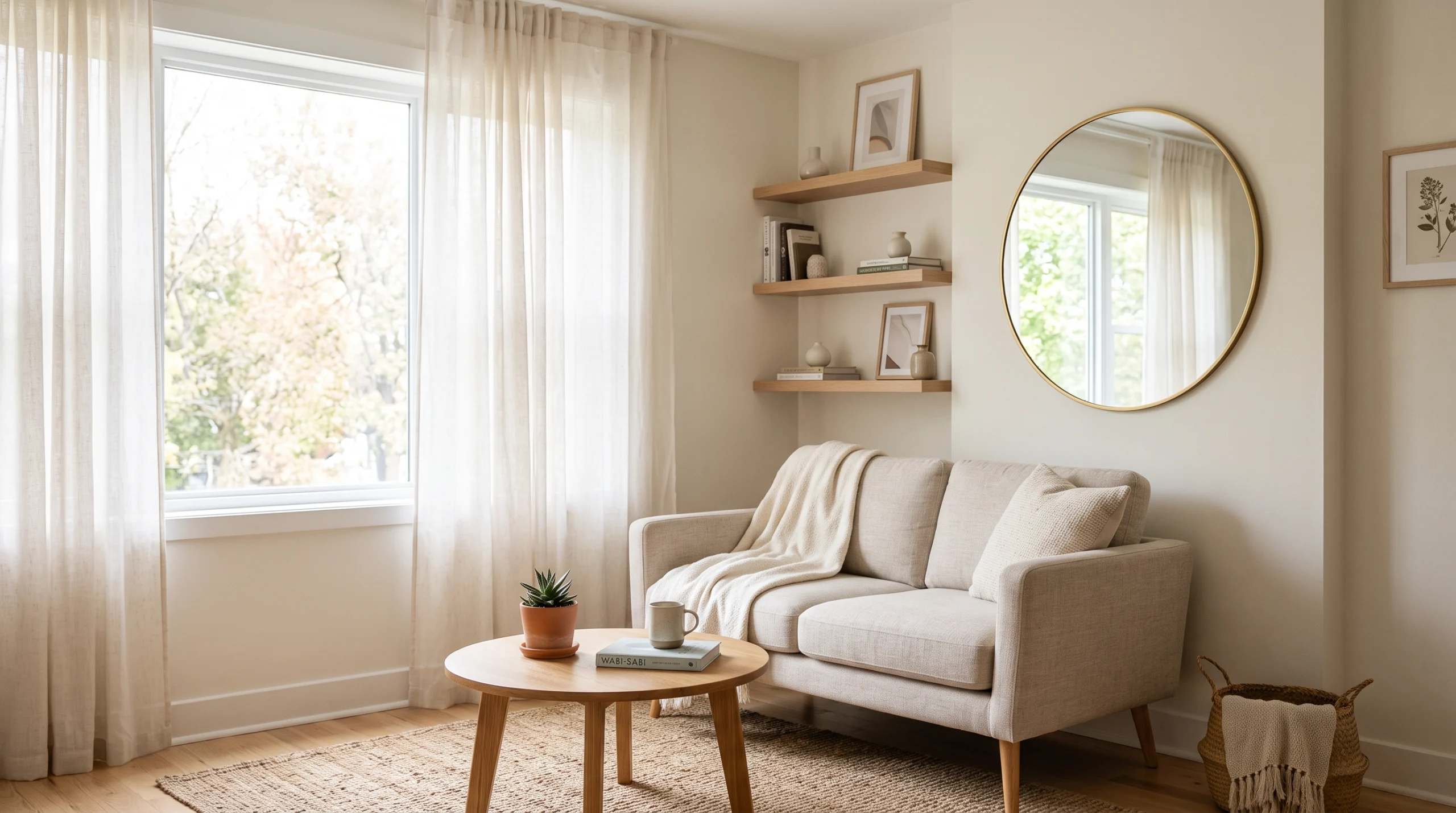
A small living room feels bigger when the furniture has visible legs, the walls stay light, and there’s fewer, larger pieces instead of many small ones filling every gap. Below are 15 specific ways to do that, from furniture swaps you can make this weekend to layout fixes that cost nothing at all.
Furniture swaps that make the biggest difference
| Instead of | Try | Why it helps |
|---|---|---|
| A large sectional | A loveseat plus one accent chair | Leaves floor space visible around the seating instead of one solid block |
| A solid bookcase | Floating shelves | Wall stays visible behind the shelf, reads lighter |
| A rectangular coffee table | A round or oval table | No sharp corners to navigate around in a tight walkway |
| Floor lamps in multiple corners | Wall-mounted sconces | Frees up floor space that a lamp base and cord would otherwise take |
| Heavy blackout drapes | Sheer or light linen curtains | Lets more daylight bounce around the room |
15 small living room ideas
1. Choose furniture with visible legs
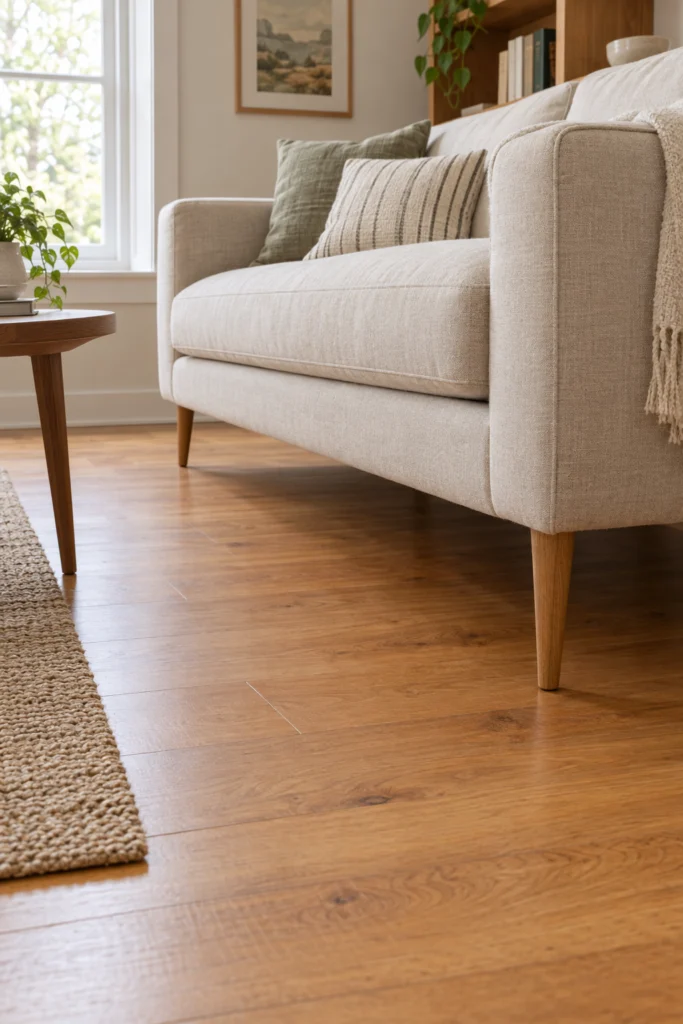
A sofa or chair that sits on slim wood or metal legs lets you see the floor underneath it, which reads as more open space than a piece with a solid skirt all the way to the ground.
This is one of the highest-impact, lowest-cost changes on this list if you’re shopping for new furniture anyway, since it doesn’t cost more to pick a leg style.
2. Keep walls light and reflective
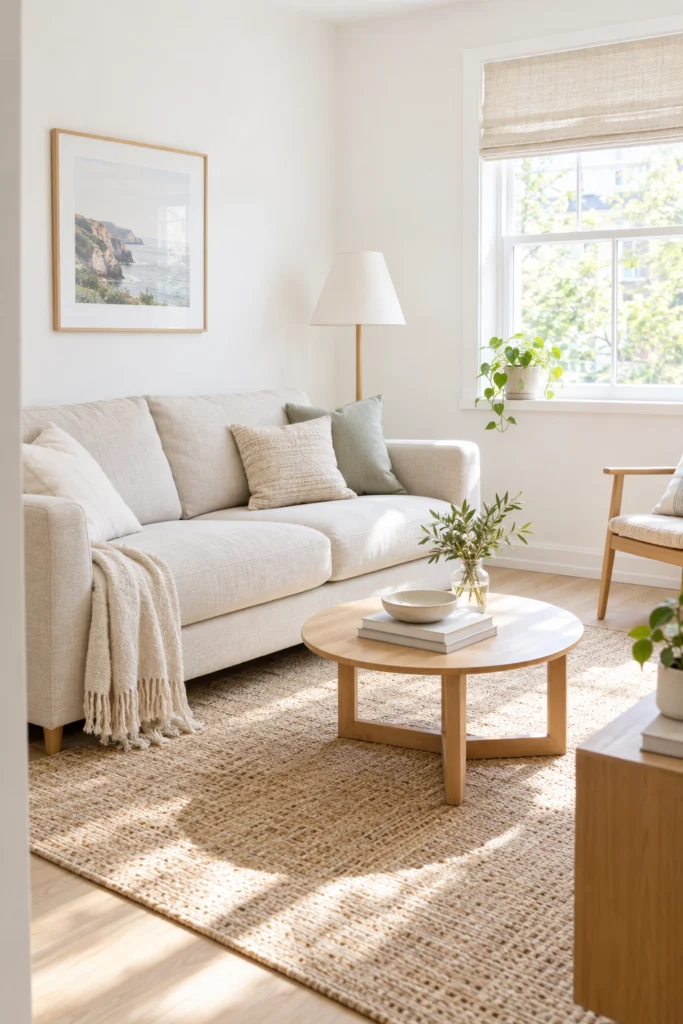
A pale wall color (soft white, light beige, pale grey) bounces more natural light around a small room than a dark or saturated color does, which makes the room feel larger even though the actual square footage hasn’t changed.
If you love a bolder color, save it for one accent wall rather than all four. For more direction on this specifically, the light color living room ideas guide has more pale palette options.
3. Hang a large mirror opposite the window
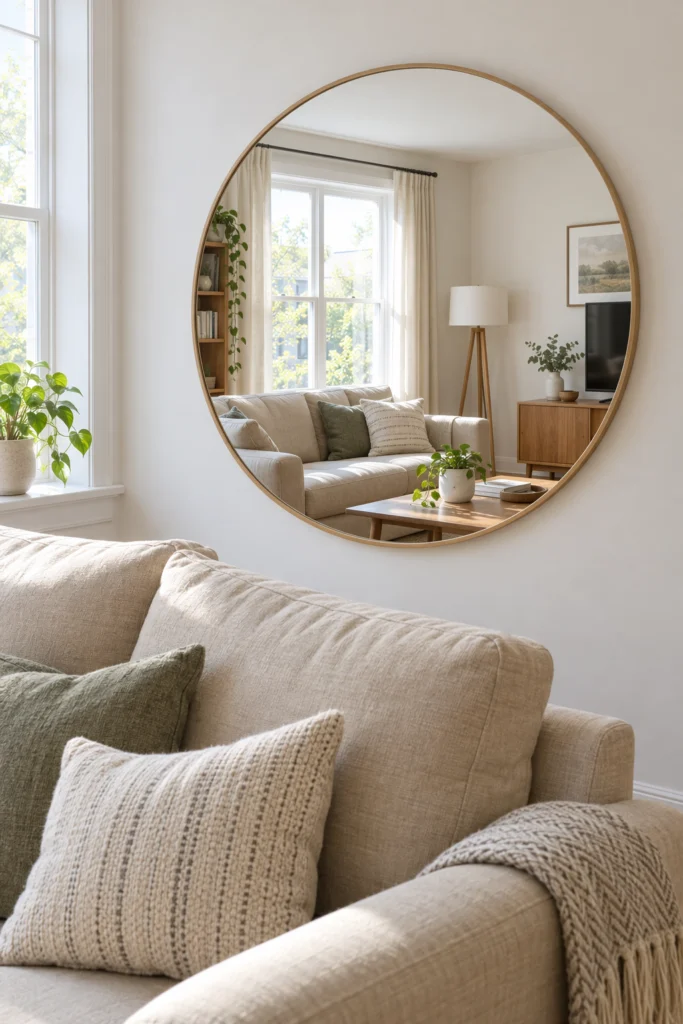
A mirror positioned directly across from your main window reflects daylight back into the room, doubling the sense of light and depth without adding any actual square footage.
Use a properly rated wall anchor sized for the mirror’s weight, since a large mirror is heavier than it looks and a standard picture hook usually isn’t rated for it.
4. Use vertical storage instead of floor-level storage
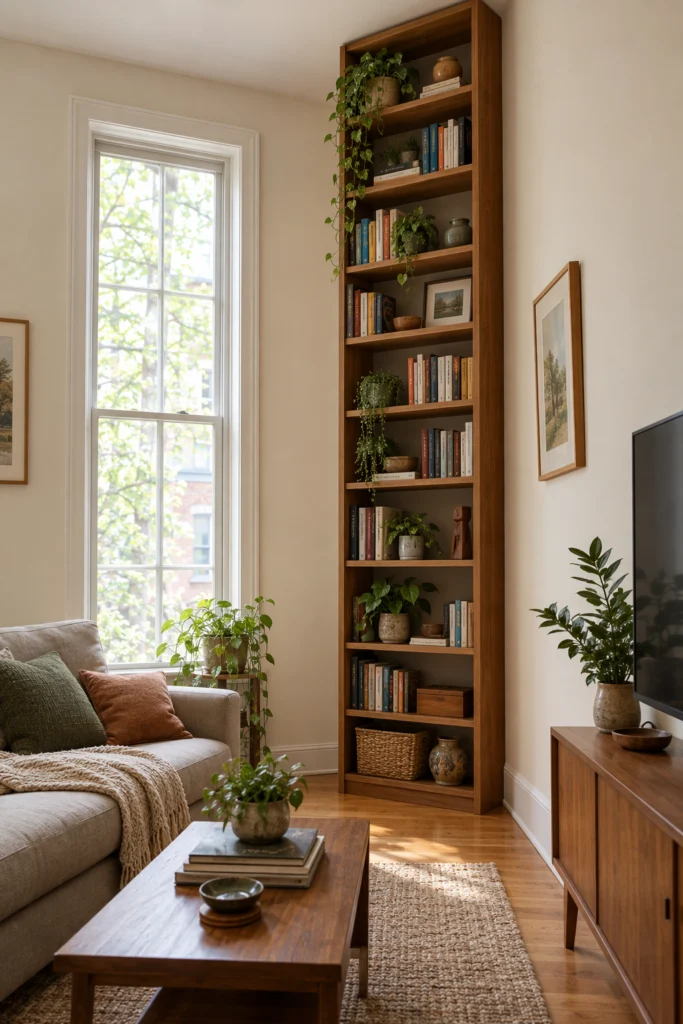
Tall, narrow shelving that goes up toward the ceiling uses wall space you’re not otherwise using, instead of eating into your already-limited floor footprint.
This also draws the eye upward, which makes the ceiling feel higher and the room feel larger than a room with only low, floor-level furniture.
5. Hang curtains high and wide
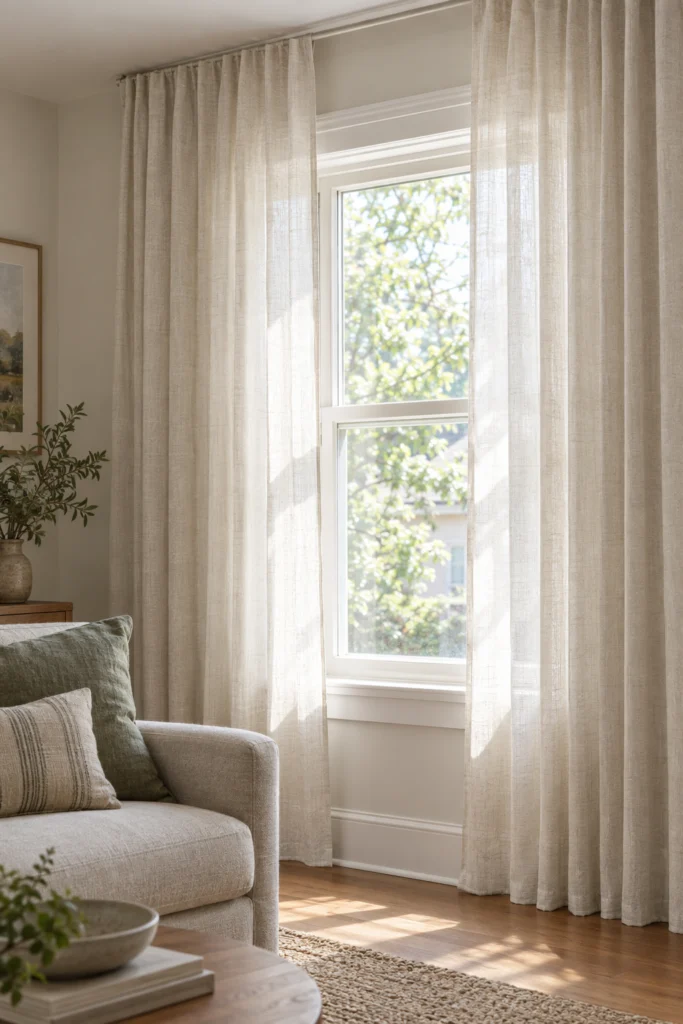
Mount the curtain rod a few inches below the ceiling rather than directly above the window frame, and extend it a few inches past the window on each side.
This makes the window itself look taller and wider than it actually is, which tricks the eye into reading the whole wall, and by extension the room, as more spacious.
6. Size furniture down, not just up
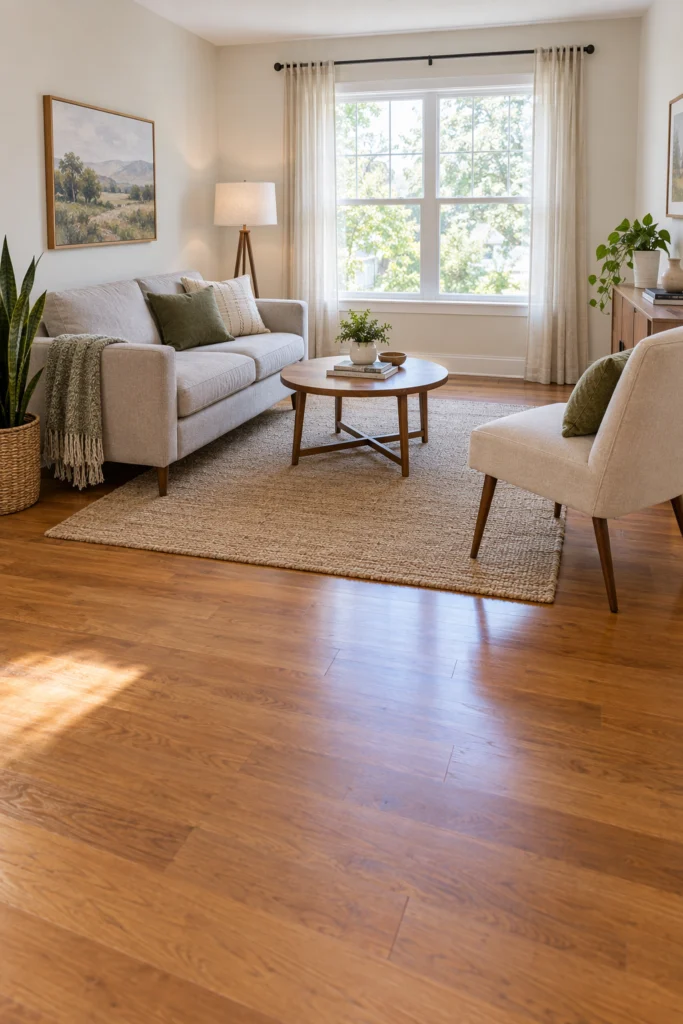
A loveseat instead of a full three-seat sofa, or a slim accent chair instead of a bulky armchair, leaves actual walking space around the furniture instead of furniture that technically fits but leaves no room to move.
Measure your walkway space (aim for at least 30 inches of clearance) before buying anything, not just the wall length.
7. Swap a rectangular coffee table for round or oval
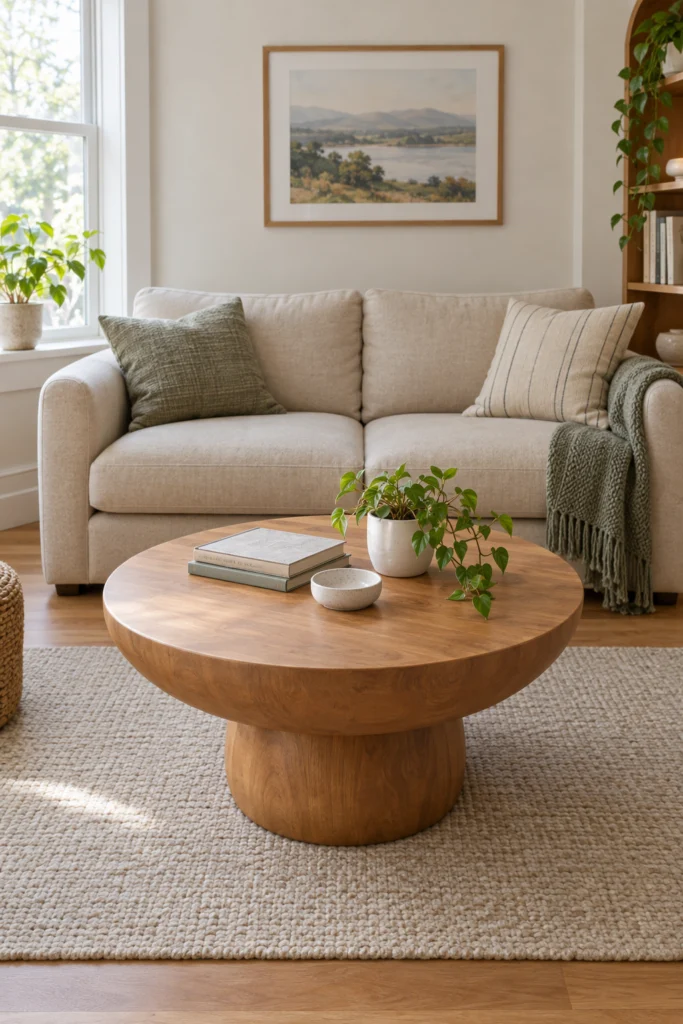
A round or oval coffee table has no sharp corners jutting into a walkway, which matters more in a small room where furniture sits closer together to begin with.|
It also visually softens a room full of otherwise rectangular furniture (sofa, TV console, rug), breaking up the boxy sightlines.
8. Replace a bulky bookcase with floating shelves
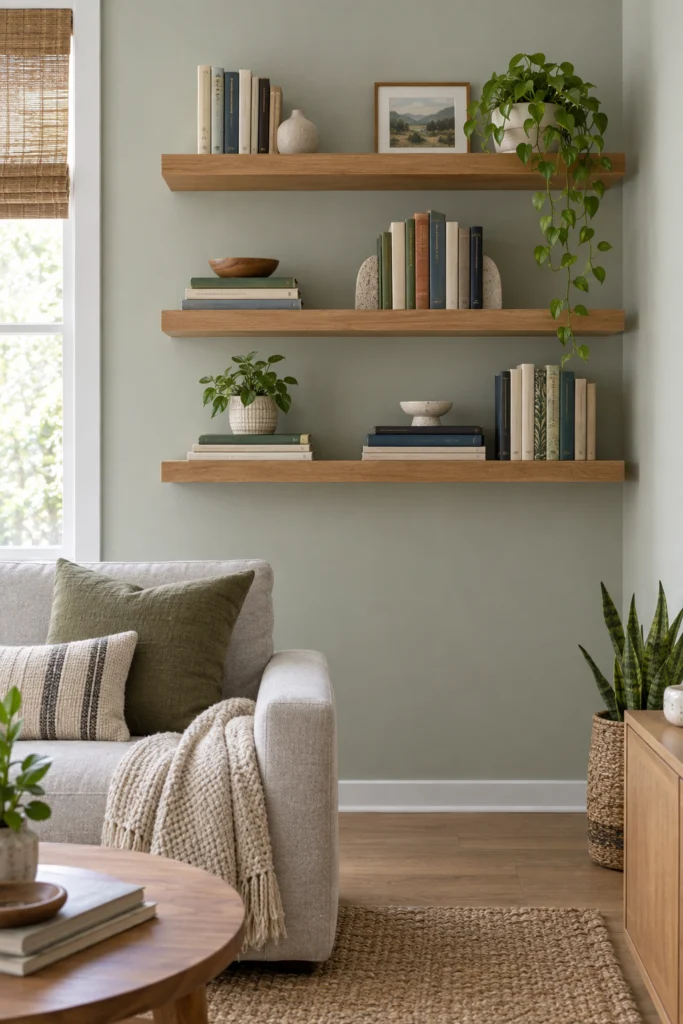
Floating shelves mounted directly to the wall show the wall color behind and underneath them, which reads lighter than a solid bookcase that sits on the floor and blocks the wall entirely.
Use a stud finder before mounting, and if a shelf will hold heavy books, anchor into a stud rather than drywall alone.
9. Stick to one statement rug, not several
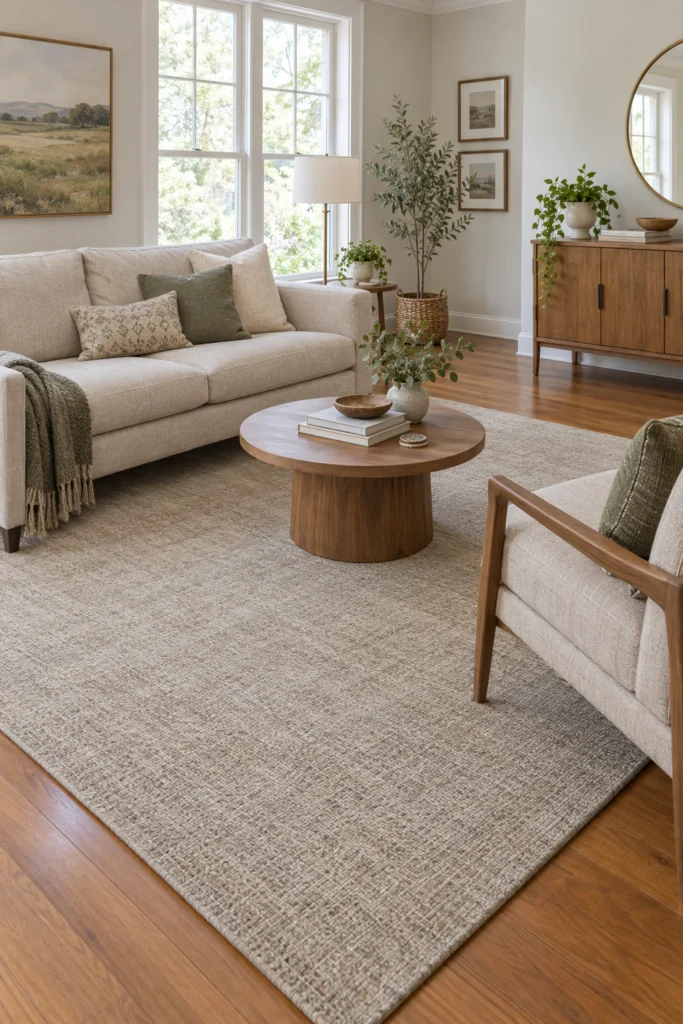
A single well-sized rug under the seating area reads as one cohesive floor plane, while multiple smaller rugs scattered around chop the floor into visual segments that make a small room feel busier and, counterintuitively, smaller.|
Size the rug so at least the front legs of your sofa and chairs sit on it.
10. Use nesting tables instead of one large table
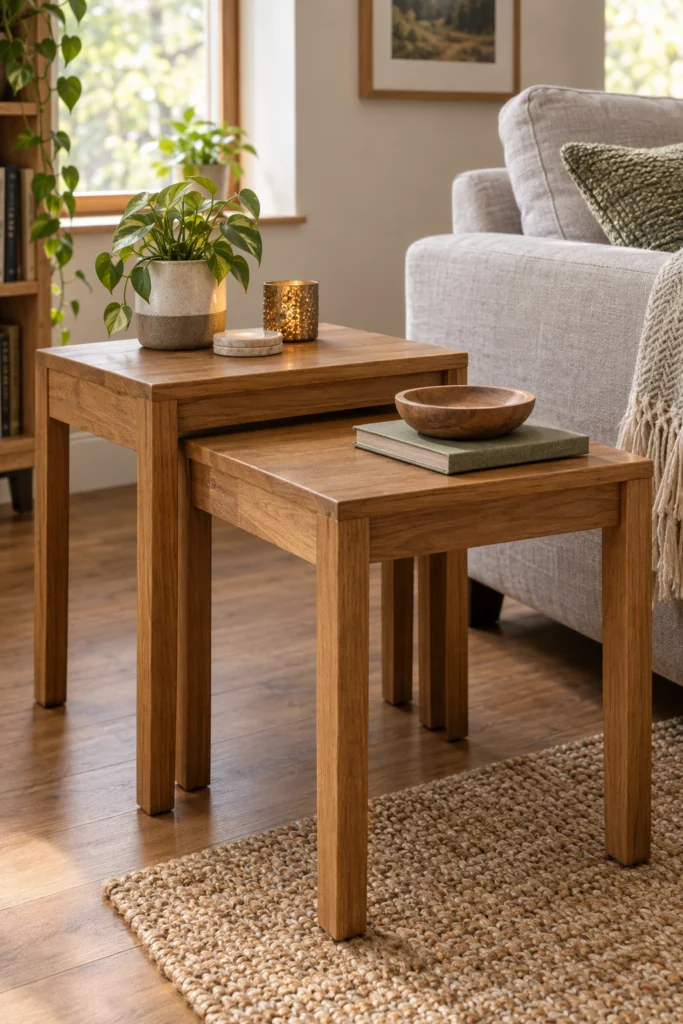
A set of two or three nesting tables can be pulled apart when you need extra surface space and pushed back together the rest of the time, which uses less permanent floor footprint than one large coffee table sized for the “just in case” scenario.
This is especially useful if you host occasionally but don’t need the extra surface daily.
11. Wall-mount the TV and lighting
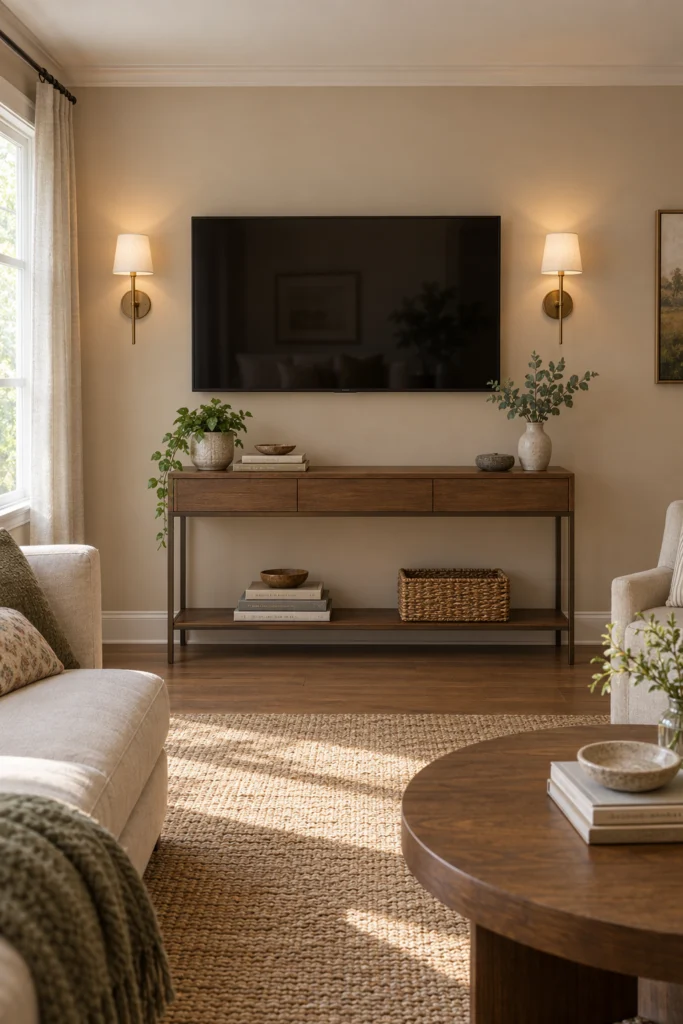
Mounting the TV to the wall instead of setting it on a console frees up an entire piece of furniture’s worth of floor space, and wall sconces do the same job as floor or table lamps without a base or cord taking up room.
Wall-mounting a TV involves finding studs and rated hardware for the bracket, and if you’re not confident locating studs accurately, it’s worth having someone experienced check the mount before you hang the full weight of the television on it.
12. Limit your color palette to two or three tones
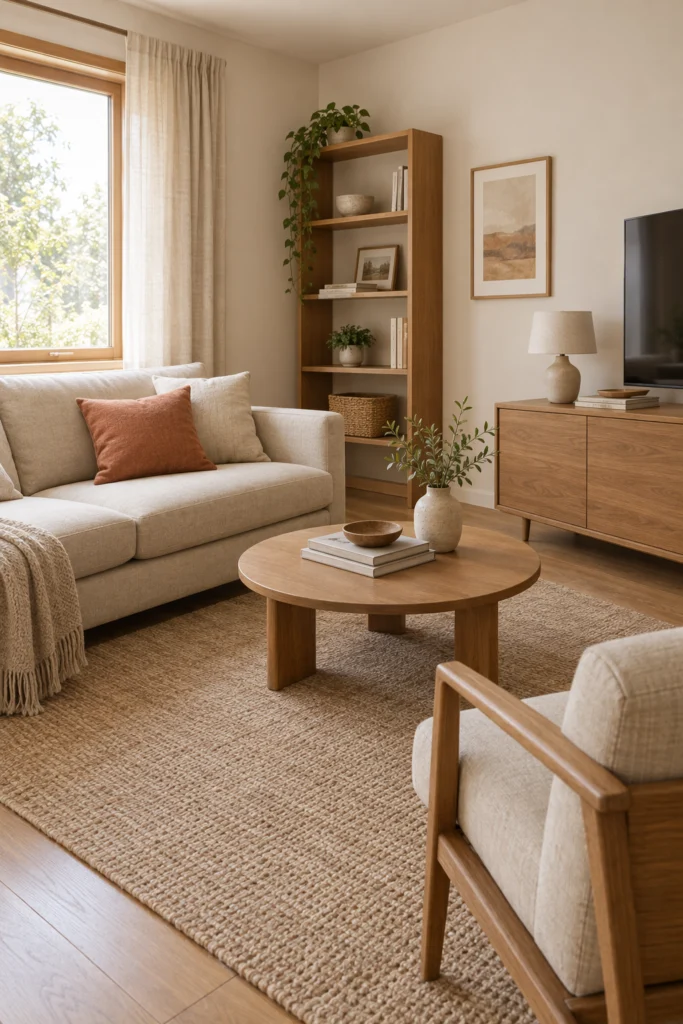
A small room with too many competing colors and patterns reads busier and therefore smaller than one built around two or three tones that repeat throughout (a wall color, a wood tone, and one accent color).
This doesn’t mean the room has to be boring, just consistent enough that the eye isn’t working overtime to process it.
13. Float furniture slightly off the wall
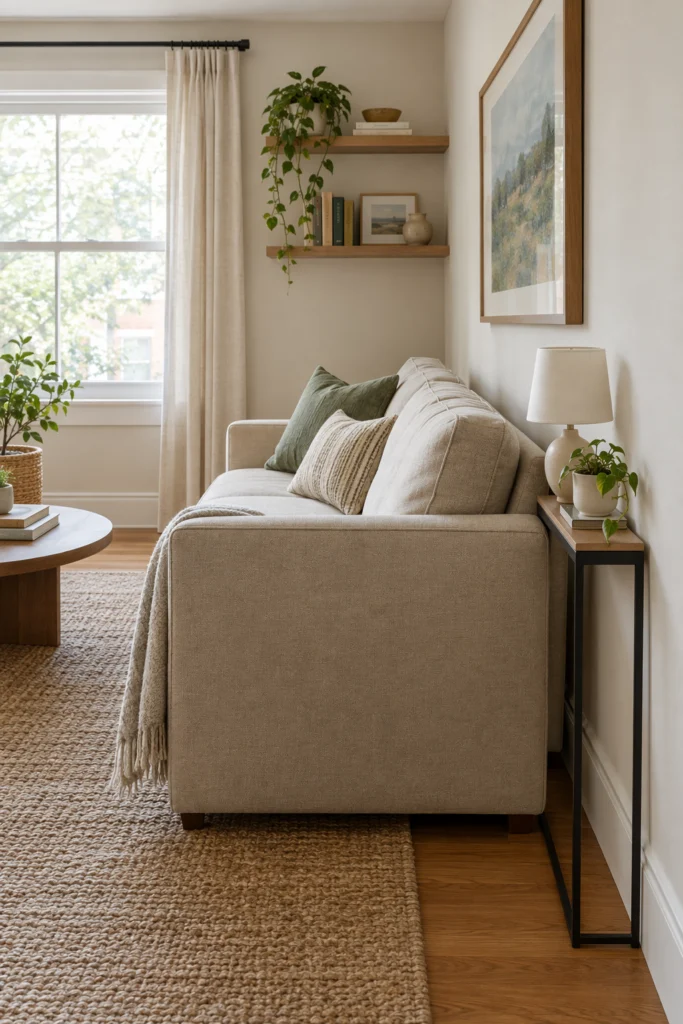
Pulling a sofa even six inches away from the wall, rather than pushing every piece flush against it, can actually make a small room feel more intentionally arranged instead of like everything got shoved to the perimeter.
This works best when there’s a walkway on at least one other side of the room to justify the small gap.
14. Choose a storage ottoman over a coffee table
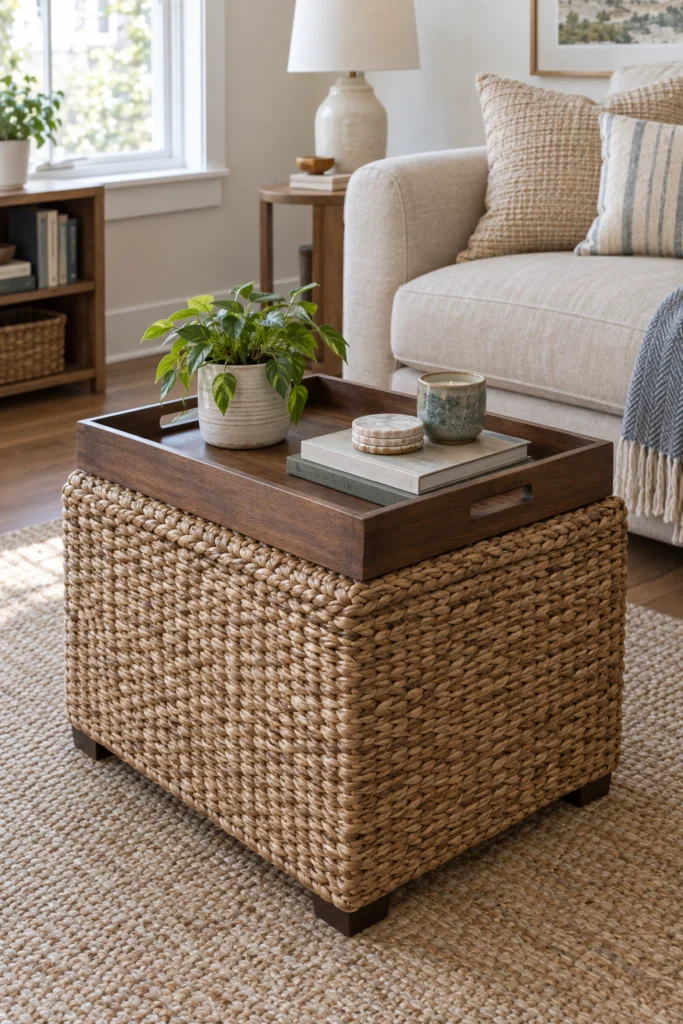
A storage ottoman with a removable tray top works as a coffee table, extra seating, and hidden storage all in one piece, which matters more in a small room where every piece of furniture needs to earn its footprint by doing more than one job.
This is one of the most functional single swaps on this list for anyone short on both surface space and storage.
15. Edit decor down to fewer, larger pieces
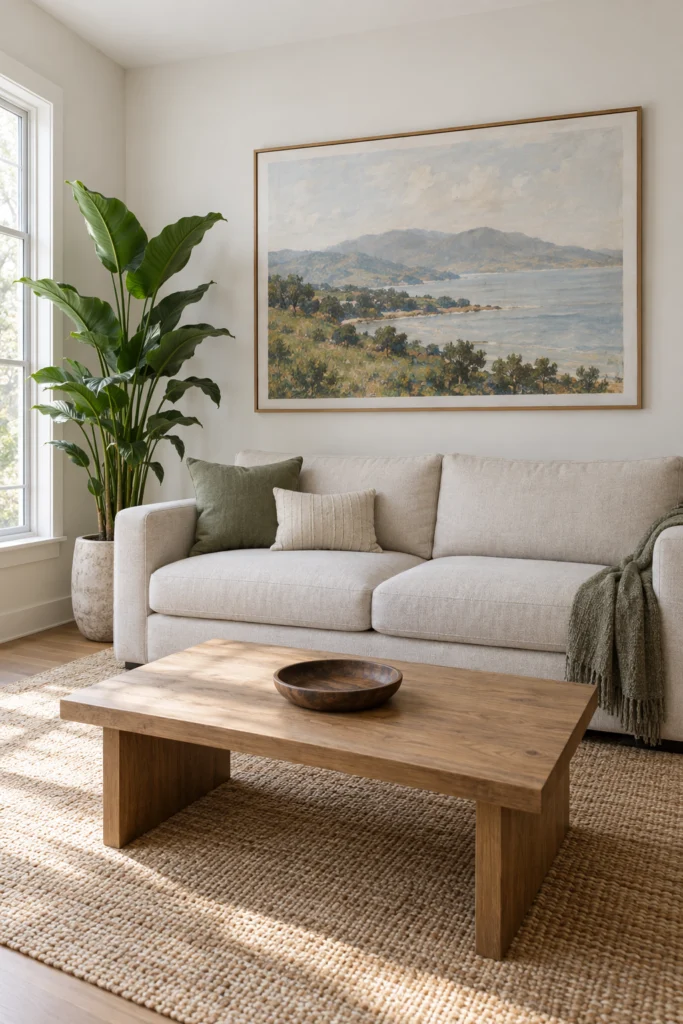
One large piece of art or one substantial plant reads more intentional and less cluttered than five small decorative objects scattered across the same surface.
In a small room, every extra object competes for visual attention, so removing rather than adding is often the fix that actually opens the space up.
How to arrange furniture in a small living room
- Measure the room and your walkways first. Note the total floor dimensions and aim for at least 30 inches of clear walking space around any seating arrangement before you buy or move anything.
- Pick one focal point. A window, a TV, or a fireplace, and arrange seating to face it rather than splitting attention across multiple directions.
- Keep the tallest furniture against the wall. A bookcase or tall shelving unit against the perimeter keeps the center of the room open for movement.
- Test the layout with tape before committing. Mark furniture footprints on the floor with painter’s tape and walk through the space for a day before moving anything heavy, so you catch a cramped walkway before it’s a hauling problem.
Common mistakes in a small living room
- Buying furniture sized for a showroom, not your room. A sectional that looked reasonable in a large store display can eat an entire small living room’s walkway space.
- Pushing every piece flush against the walls. This can leave an awkward, unused dead zone in the middle of the room instead of a usable layout.
- Using multiple small rugs instead of one larger one. This chops the floor into visual segments and makes the room read choppier and smaller.
- Overcrowding shelves and surfaces with small objects. A cluttered shelf photographs and feels busier than an edited one, even at the exact same room size.
- Skipping vertical space entirely. Furniture that stays low the whole way around a room wastes the wall space above it that could be doing storage or display work.
Why I did this in my own living room
My first apartment living room was barely 10 by 11 feet, and the biggest single change wasn’t a product, it was swapping a full sofa for a loveseat and one chair, which freed up an actual walkway I hadn’t realized I was missing until it existed. Everything else on this list (the mirror, the floating shelves, the round table) mattered, but none of it fixed the room the way just having somewhere to actually walk did. The lesson that stuck: fix the layout before you fix the decor.
Quick answers
What’s the single biggest thing that makes a small living room feel bigger? Furniture with visible legs and a light wall color together do more than any single decor item, since both let more of the actual floor and wall surface stay visible instead of covered.
Should I use a large rug or a small rug in a small living room? One larger rug that at least the front legs of your furniture sit on. A rug that’s too small floats in the middle of the room and makes the space read choppier, not bigger.
Does a sectional ever work in a small living room? It can, but usually only in a room with an unusual layout where a sectional actually uses a corner more efficiently than two separate pieces would. Measure your actual walkway space before assuming a sectional fits just because the wall length technically allows it.
Is it better to mount the TV or use a console? Mounting frees up floor space that a console would otherwise take. If you’re not confident locating wall studs accurately, have the mount checked by someone experienced before hanging the full weight of the television.
How many pieces of furniture should a small living room have? There’s no fixed number, but fewer, larger, multi-functional pieces (a storage ottoman instead of a coffee table plus a separate storage bin) generally work better than many small single-purpose items.
Does a dark accent wall work in a small living room? It can, if it’s just one wall and the room has good natural light or a secondary light source. A dark color on every wall in a small, low-light room tends to feel smaller rather than cozier.
About this guide
This list comes from actually living in small rentals and apartments, not a staged showroom floor plan. If you want more direction on keeping the palette light while you’re at it, the light color living room ideas guide pairs well with a lot of these layout tips. For a minimal, uncluttered style that naturally suits smaller spaces, the scandinavian living room ideas post is worth a look, and if a light sofa color is part of your plan, the white couch living room ideas guide has more on keeping that piece looking fresh in daily use.
15 thoughts on “15 Small Living Room Ideas to Maximize Your Space”