
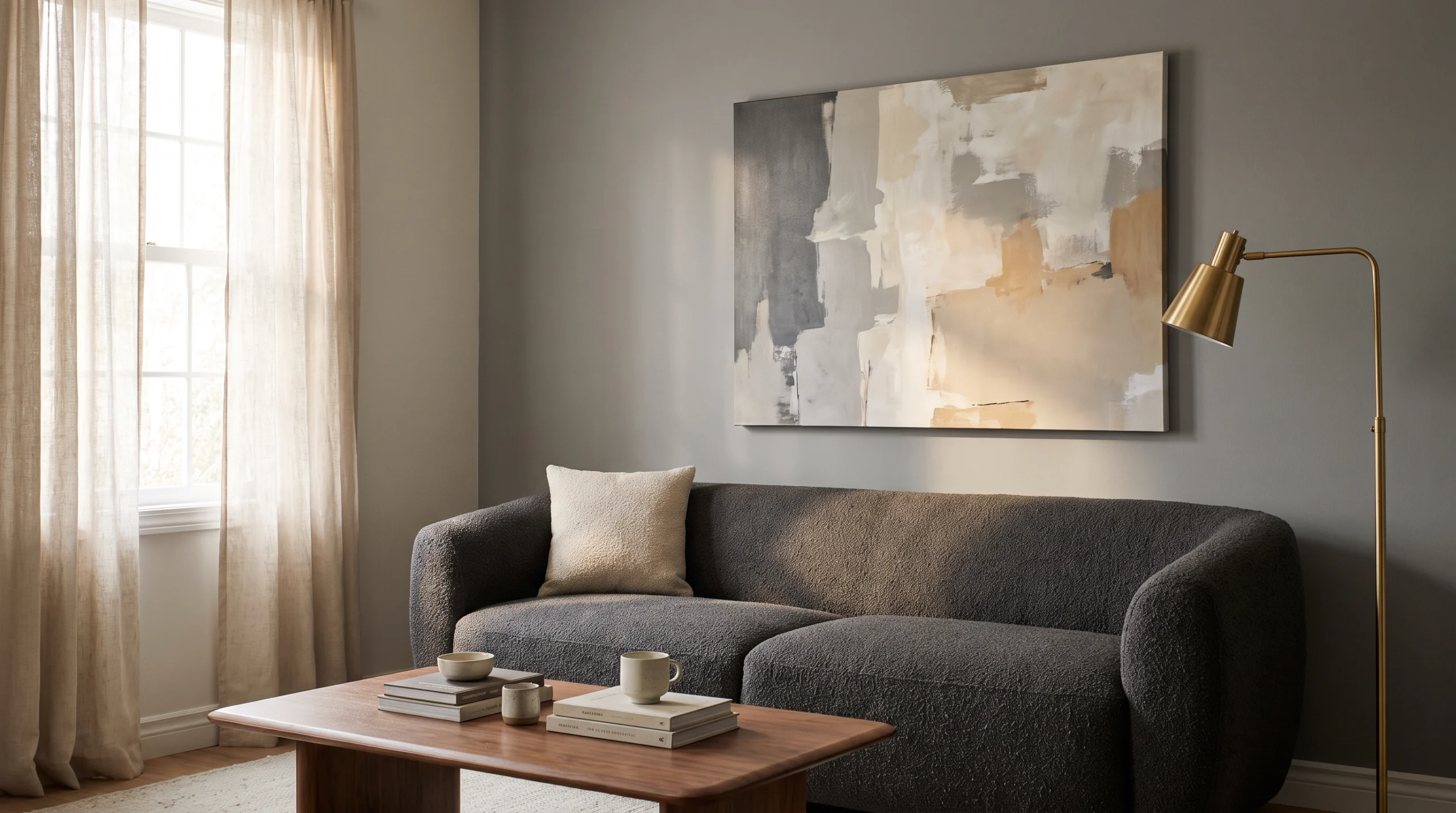
Grey works as a living room base because it reads chic without picking a side, warmer greys lean toward beige and cozy, cooler greys lean toward modern and crisp, so you can shift the whole room’s mood just by choosing the right undertone.
Below are 24 ways to use it, from full paint commitments down to small, swappable pieces that work in a rental.
Cool grey, warm grey, or charcoal: which fits your room?
| Grey type | Undertone | Best for | Mood |
|---|---|---|---|
| Cool grey | Blue or green base | Bright, south-facing rooms | Crisp, modern |
| Warm grey (greige) | Beige or taupe base | North-facing or low-light rooms | Cozy, versatile |
| Charcoal | Deep, near-black | One wall or a sofa, not full room | Bold, grounded |
| Dove grey | Soft, light, slightly warm | Small or airy rooms | Calm, gentle |
| Taupe-grey | Warm, brownish-grey | Rooms with a lot of wood | Earthy, grounded |
If you’re not sure which way to go, test a sample in your actual room first. A cool grey chip that looks great in a bright showroom can read flat or cold in a room with less natural light.
24 grey living room ideas
1. Paint one wall in warm greige
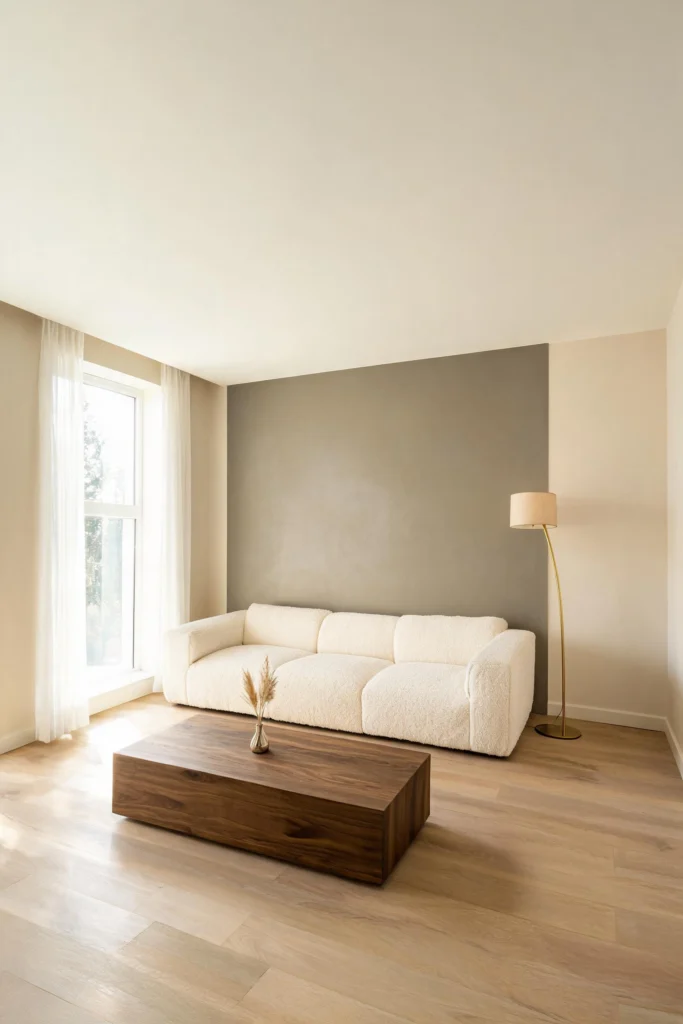
Pick the wall behind the sofa or the one you see first entering the room, and paint just that one wall a warm, beige-leaning grey while the rest stay a lighter neutral.
Greige is the most forgiving starting point for grey because it pairs with almost any wood tone or metal finish you already own, and it doesn’t read cold the way a true cool grey can in a dim room.
2. Anchor the room with a charcoal grey sofa
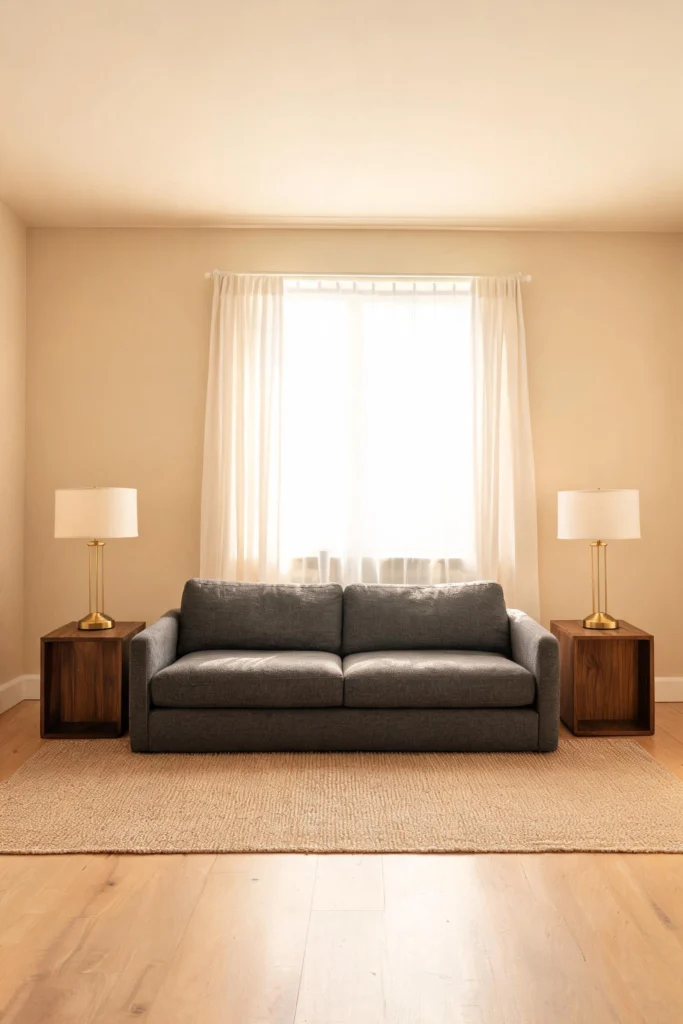
A charcoal sofa against lighter walls gives you the drama of dark grey without repainting anything, and it’s far easier to swap out later if your taste changes than a whole room of dark paint would be.
Keep the rug and walls neutral so the sofa stays the clear focal point instead of competing with other color.
3. Try a grey and white two-tone paint split
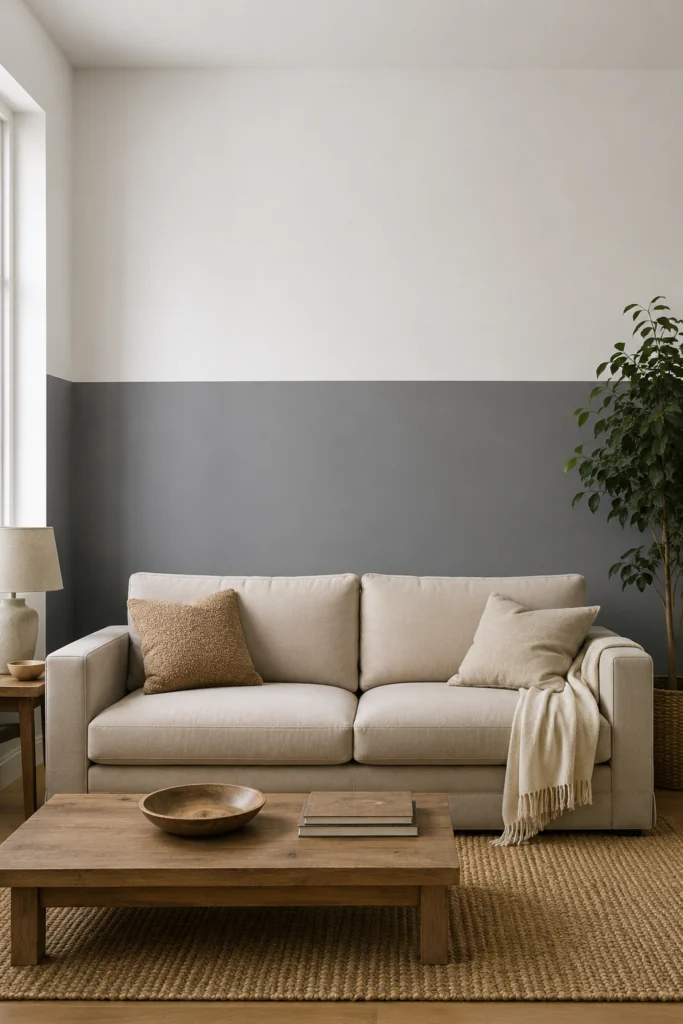
Paint the lower half of the wall (below a chair rail or a painter’s-tape line) in mid-grey and the upper half in white, which adds architectural interest to a plain wall without any actual molding installation.
This works especially well in older homes with higher ceilings, where a single flat color on a tall wall can feel a bit blank.
4. Try color drenching in dove grey
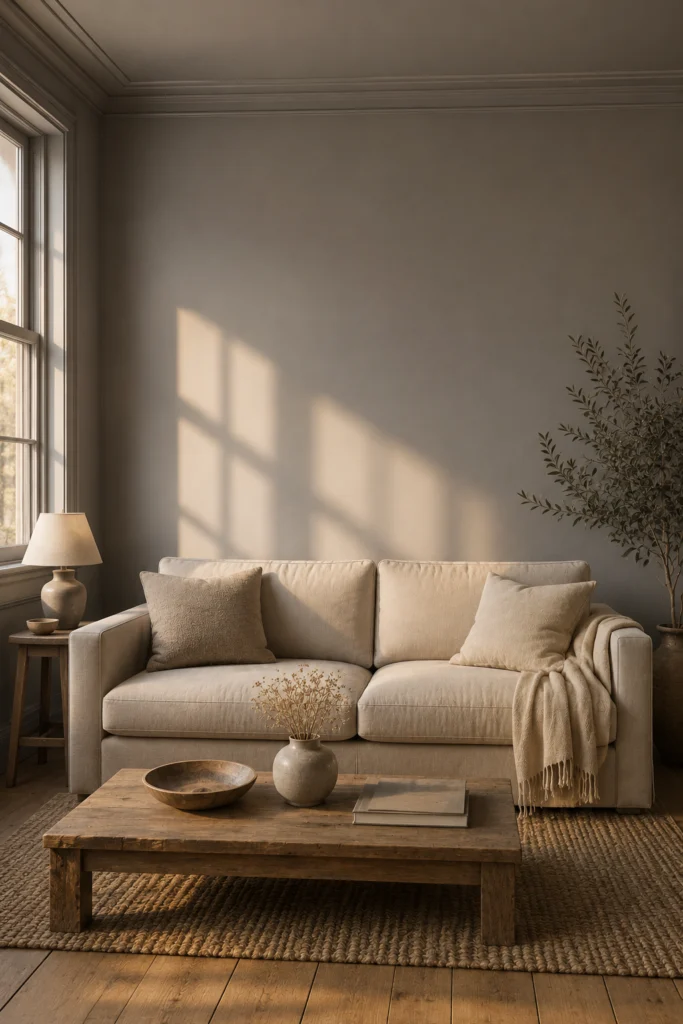
Paint the walls, trim, and ceiling all in the same soft dove grey for a fully enveloping look with no white trim breaking up the color.
This works best in a room with good natural light and warm wood furniture; in a dim, north-facing room, a fully drenched grey can read flat rather than soothing by late afternoon.
5. Choose grey boucle furniture for texture
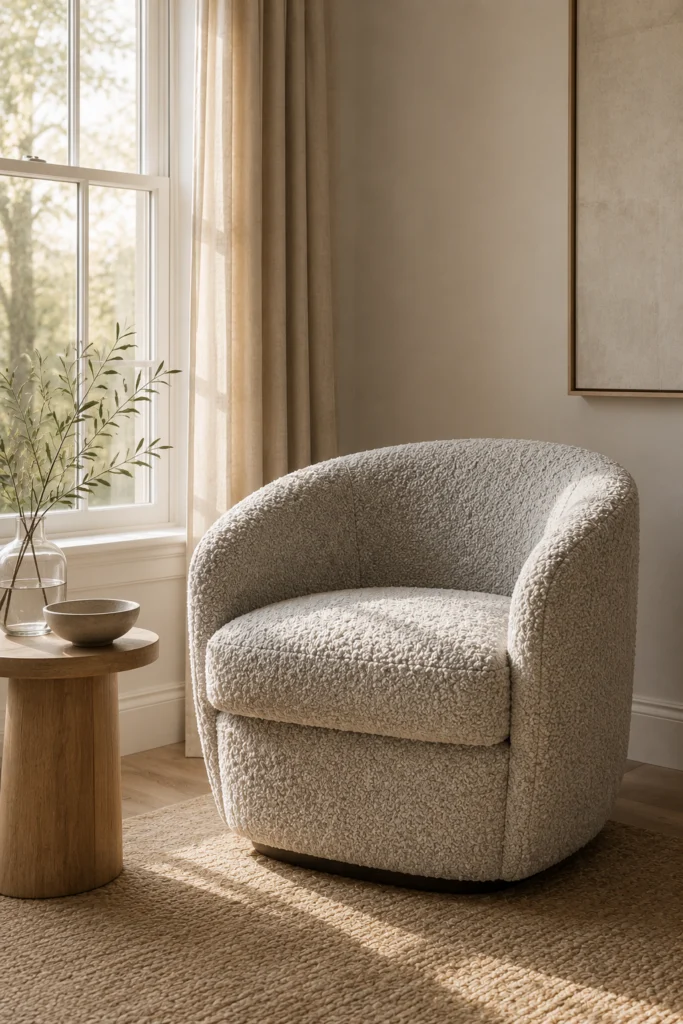
A light or mid-grey boucle chair or ottoman brings color and texture together, since the nubby fabric already reads soft and tactile before the color even factors in.
This pairs especially well with warm wood tones and brass hardware, and it photographs well for Pinterest since the texture reads clearly even at a small image size.
6. Hang grey velvet curtains
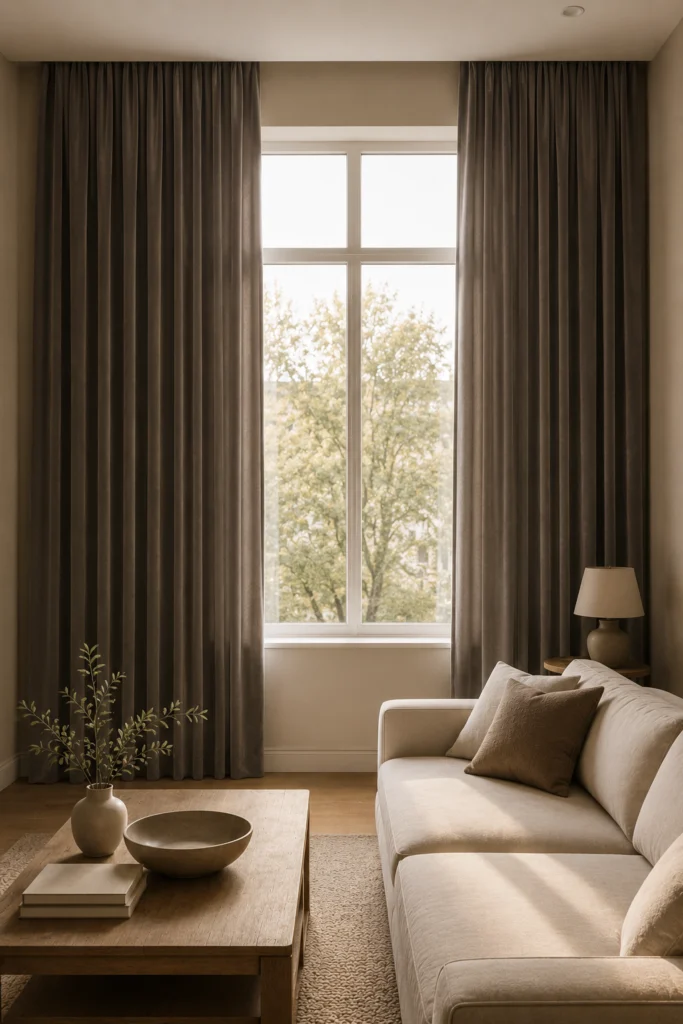
Floor-length mid-grey velvet curtains add a slightly formal texture at the windows without touching the walls or furniture, and curtains are one of the easiest things to change later if the color doesn’t work out.
Hang the rod close to the ceiling so the curtains read tall and finished rather than stopping short of the floor.
7. Mix in grey and brass accents
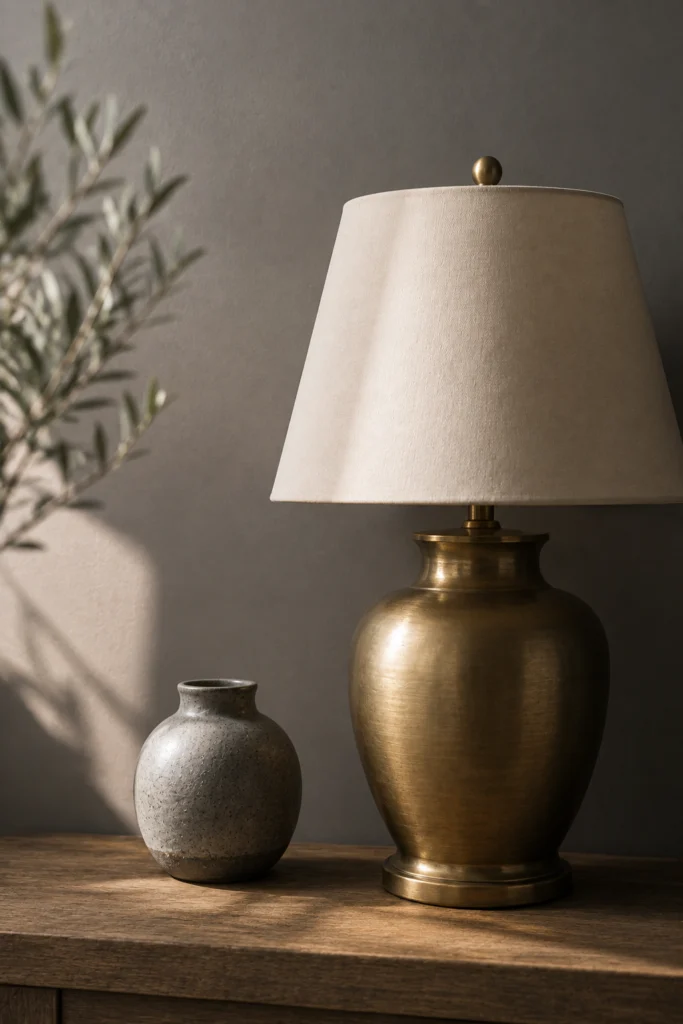
Grey paired with warm brass (a lamp base, curtain rod, or picture frame) keeps the color from reading flat or cold, since the metal warms up whatever shade of grey you’re using.
This pairing has stayed reliable for years because the warm metal works with almost any other neutral you add later.
8. Frame the fireplace in grey stone
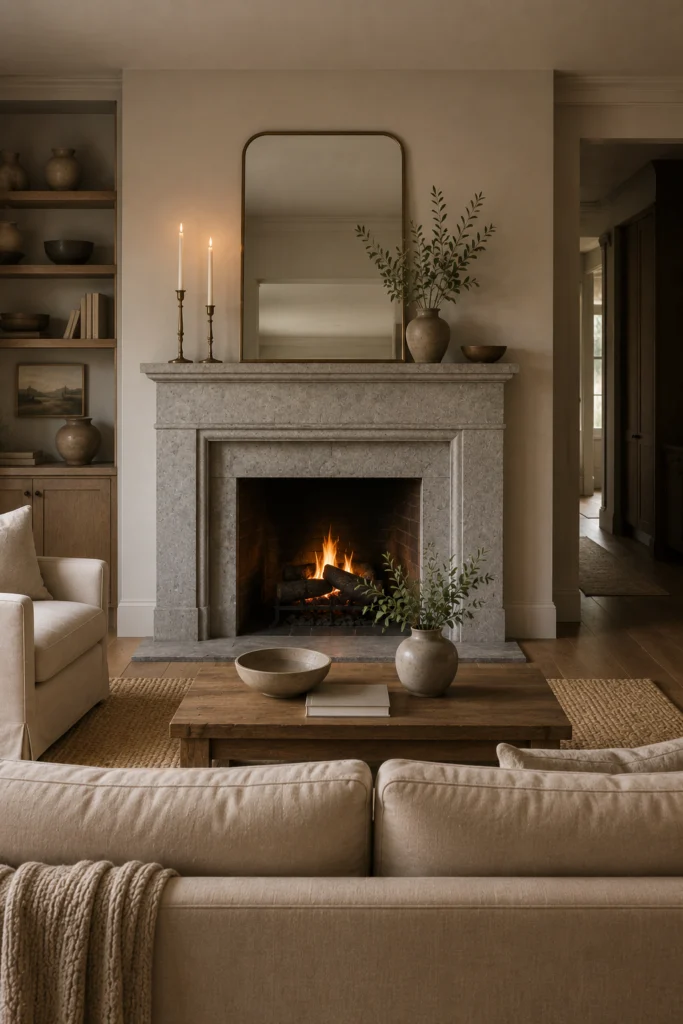
A grey stone fireplace surround, whether a soft dove grey or a deeper charcoal, becomes the natural anchor of the room, especially against lighter walls.
If you’re installing new stone over an existing surround, check that the material near the actual firebox opening is rated for heat, and call a contractor if you’re unsure where that clearance line falls.
9. Paint built-in shelving charcoal
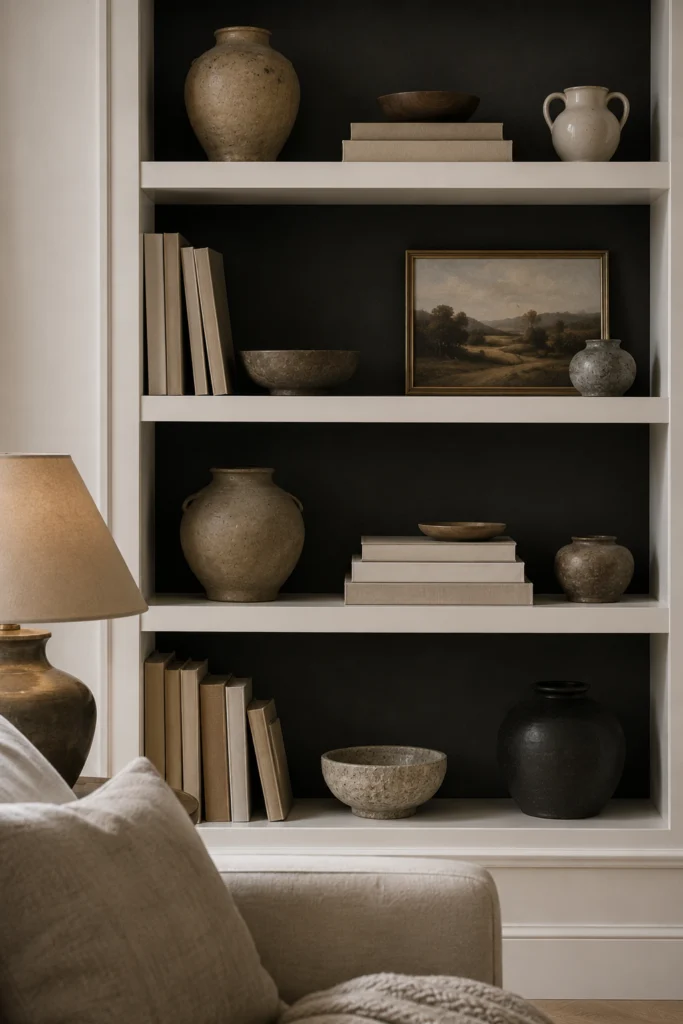
If you already have built-in cabinetry or shelving, painting just the interior back panels a deep charcoal (while keeping the frame white or wood) creates a framed contrast every time you look at what’s displayed.
This is a smaller, contained project than a full wall and works well if you’re not ready to commit dark color to a large surface.
10. Layer a grey rug over a jute base
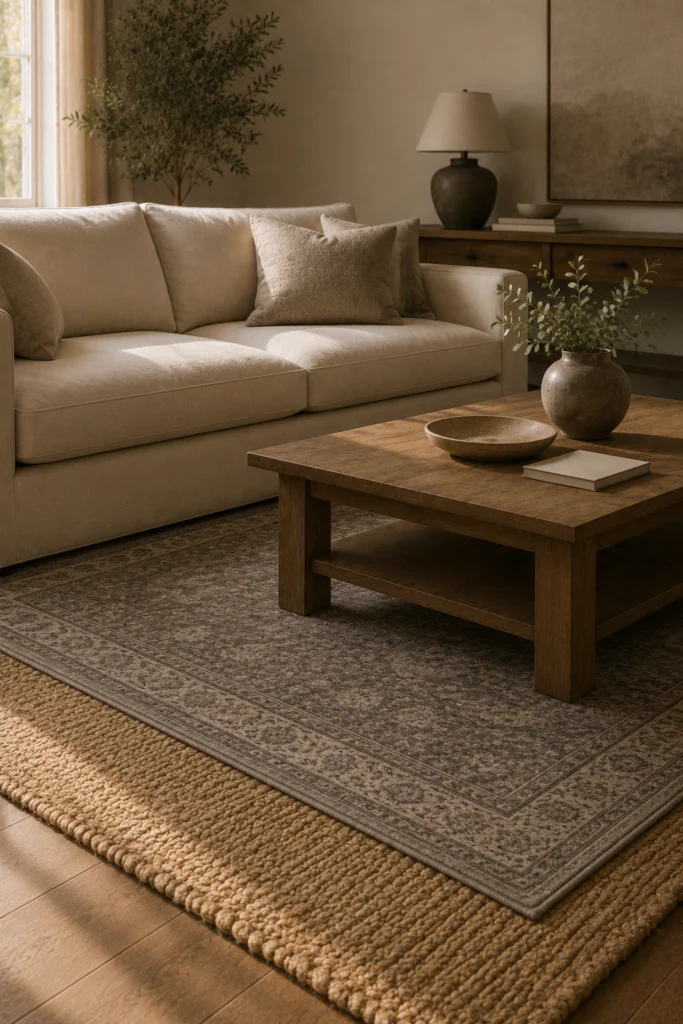
A jute or sisal rug covers the floor in warm beige texture, and a smaller patterned grey rug layered on top adds color at ground level without committing to a full room-size grey rug, which gets expensive fast and shows stains more visibly.
This layered-rug trick also works well in an oddly sized room where no single rug quite fits.
11. Paint window trim and frames charcoal
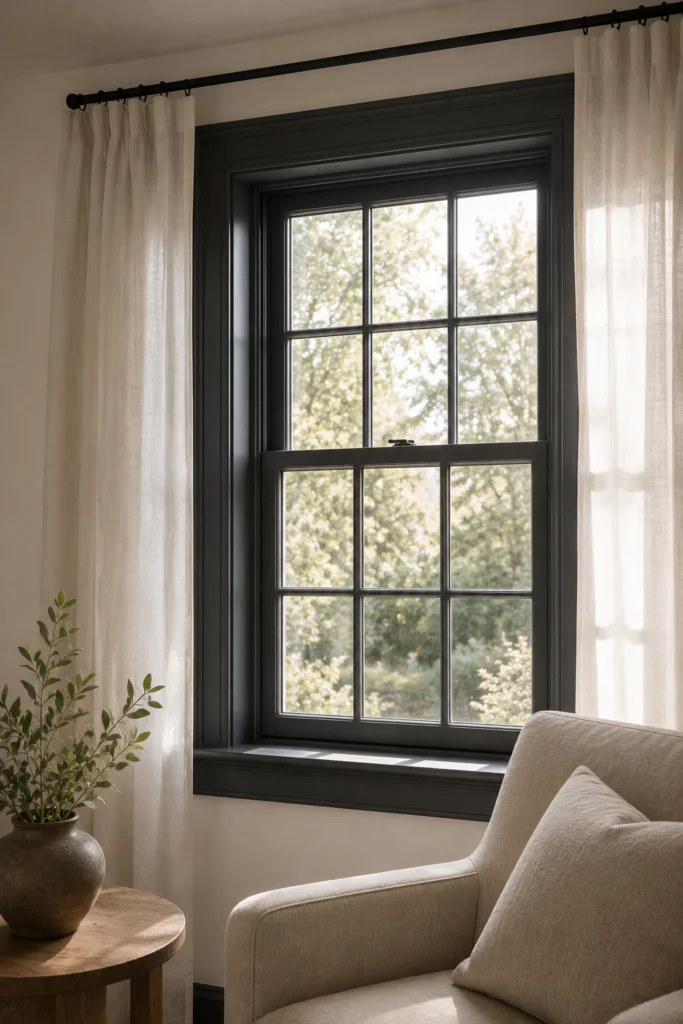
Swapping white window trim and frames for charcoal grey is a fast, contained way to add contrast and definition around a window without a full wall commitment.
This works in almost any room size, and it’s a manageable weekend project with painter’s tape and trim paint. Check with your landlord first if the trim is original woodwork you’re not sure you’re allowed to repaint permanently.
12. Pair grey with beige for a soft, warm balance
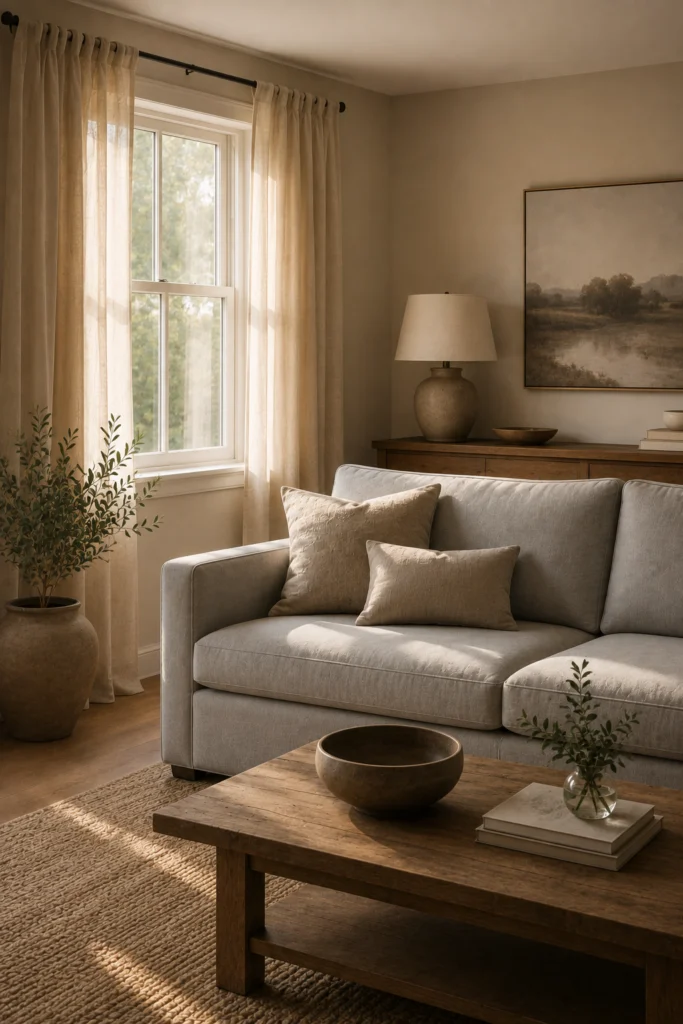
Grey walls or furniture against a beige base keeps the room from feeling cold, even with a cool-toned grey in the mix, and it’s one of the most forgiving combinations to get right since beige rarely clashes with any shade of grey.
The gray and beige living room ideas guide covers this pairing specifically if you want more direction on the ratio.
13. Combine grey with sage green for a cooler, calm look
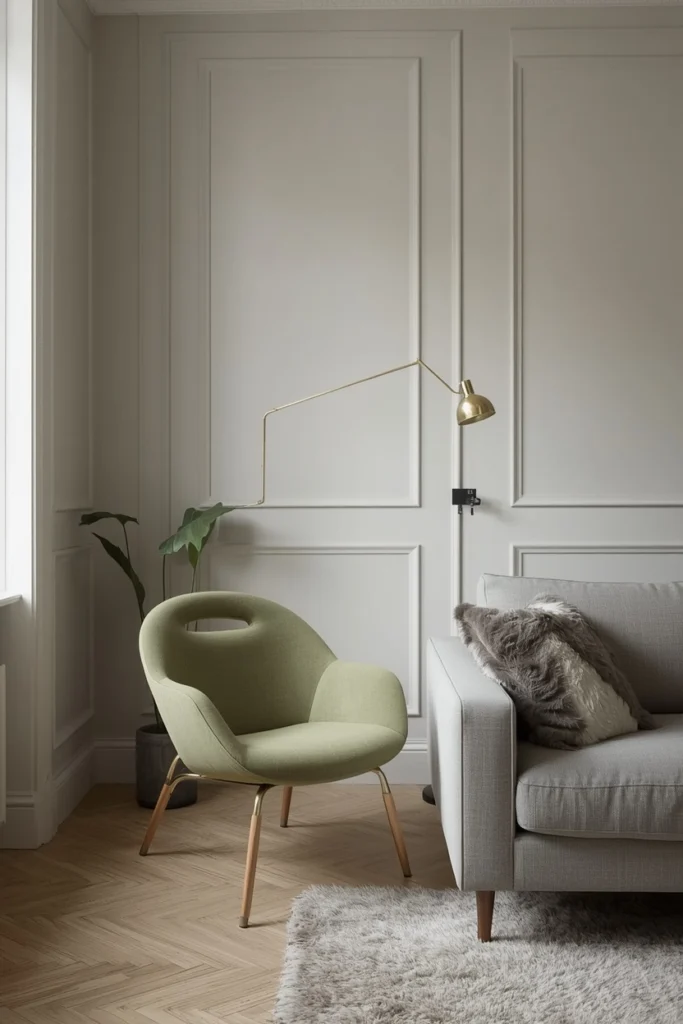
A grey wall or sofa paired with sage green accents (a chair, pillows, or a plant-forward corner) reads calm and contemporary without the room feeling monochrome.
This combination works especially well with cool natural light or a room facing north. If this pairing interests you, the green and grey living room guide goes further into this specific combination.
14. Pair grey with navy for a formal, layered look
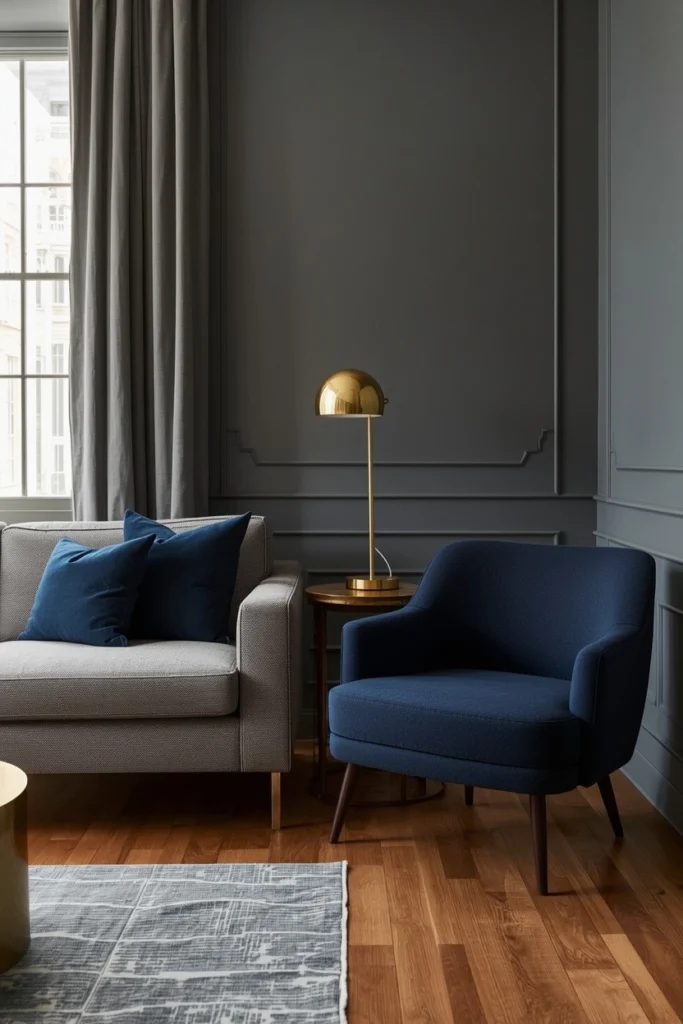
Grey walls or a grey sofa against navy accents (a chair, curtains, or throw pillows) reads more formal and layered than grey on its own, since the navy adds depth without introducing a warm color into the mix.
The navy blue and grey living room ideas guide has more direction on this exact combination if it’s the one you want to build around.
15. Add red accents to a grey base for warmth and contrast
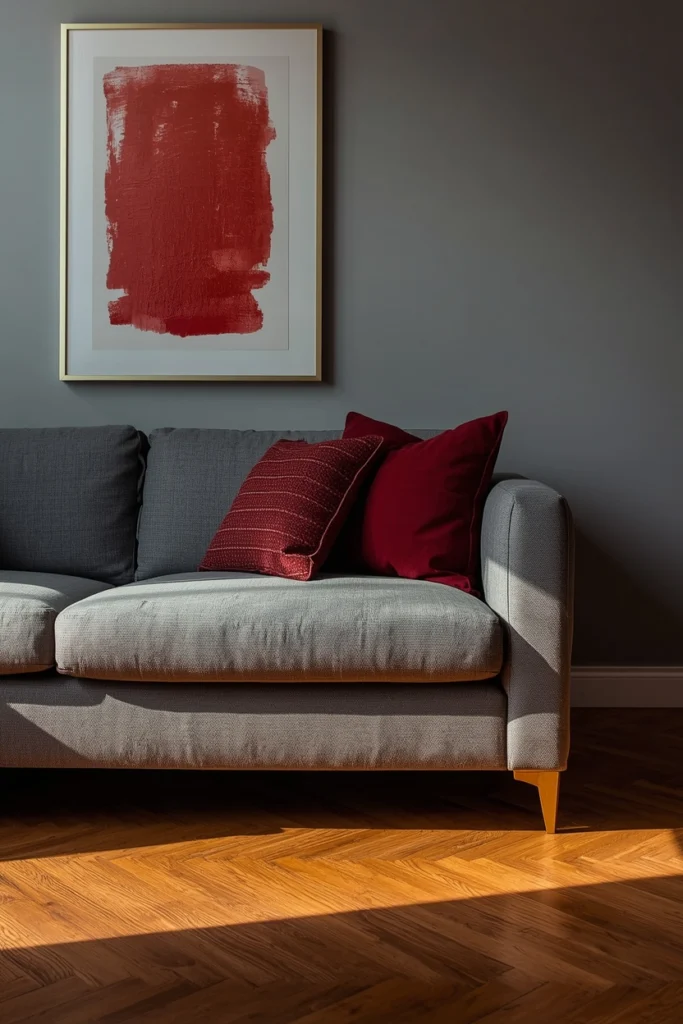
A grey sofa or wall paired with deep red accents (a throw pillow, a piece of art, a lamp shade) gives the room a warm counterpoint that keeps an all-grey space from feeling cold or clinical.
Keep red to one or two smaller pieces rather than a full red sofa against a grey wall, which can tip the balance into feeling more like a red room with grey trim. The red and grey living room ideas guide covers this pairing in more depth.
16. Add a textured wood-slat wall painted grey
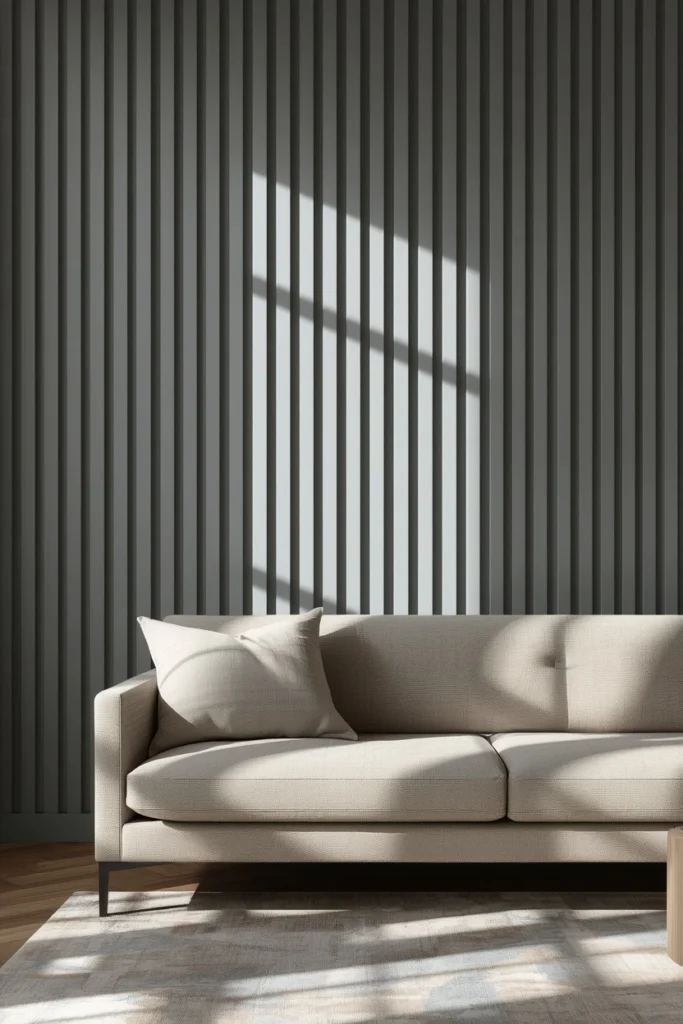
Vertical wood slats mounted on a wall and painted a uniform grey add dimension and shadow play that a flat painted wall doesn’t have, and the texture reads more architectural than a plain accent color.
This is a more involved DIY project than paint alone, so measure and level carefully before mounting, and use appropriate wall anchors if you’re not hitting studs across the full width.
17. Add a grey-veined marble coffee table
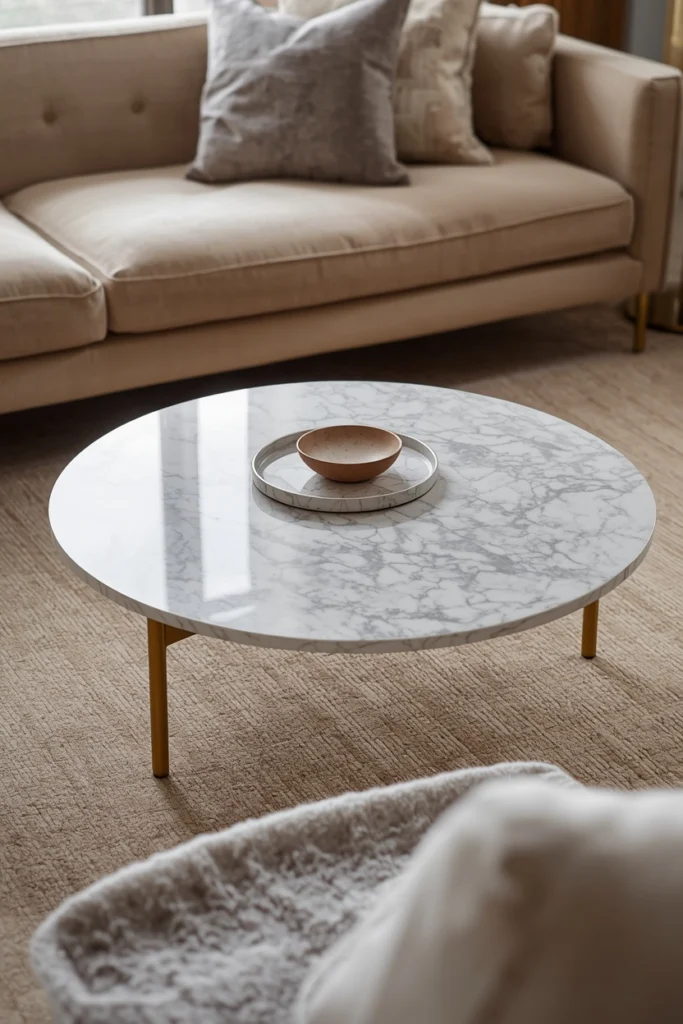
A coffee table with grey-veined marble (or a marble-look laminate if real stone is out of budget) gives you a hard-surface, chic moment instead of another textile.
Real marble needs sealing and can etch from acidic spills like wine or citrus, so a marble-look quartz or laminate top is the lower-maintenance option with nearly the same look.
18. Try a grey ceiling, the fifth wall
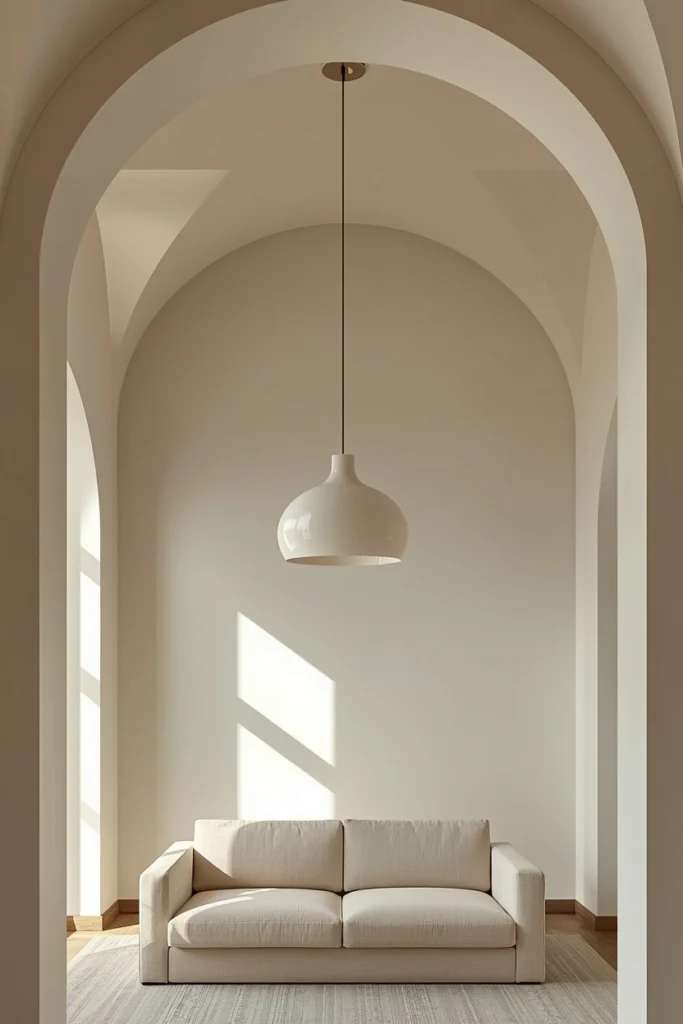
Painting only the ceiling a soft dove grey while the walls stay lighter adds subtle depth overhead without darkening the walls’ reflected light.
This works best in rooms with ceilings 9 feet or higher; in a standard 8-foot room, a painted ceiling can feel lower than it actually is.
19. Try removable grey wallpaper for renters
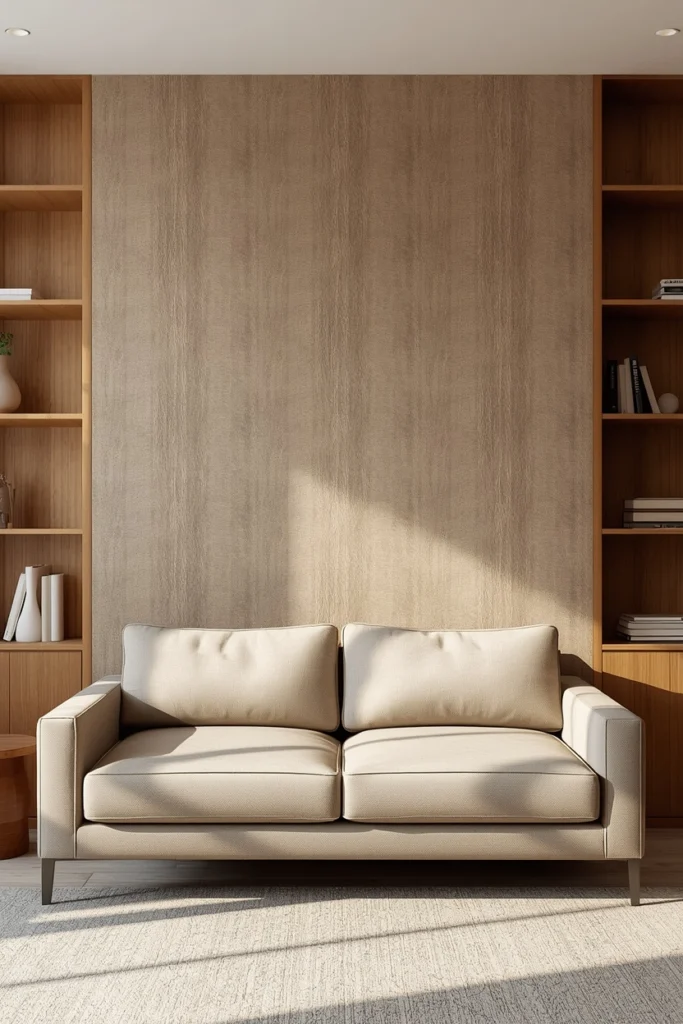
Peel-and-stick wallpaper in a solid warm grey or a subtle textured pattern gets you the accent-wall look without paint or a lease violation, and it comes off clean with a low-tack adhesive version.
This is the direct renter-safe substitute for idea #1 on this list, so start here if you’re not allowed to paint.
20. Layer light to dark grey tones in the same room
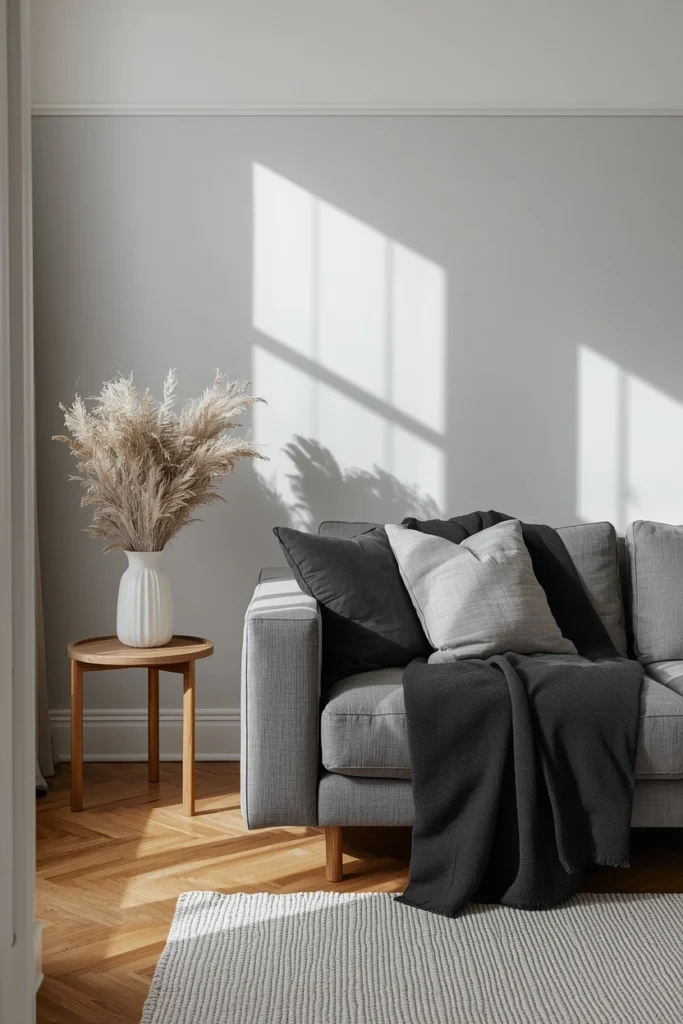
Instead of picking one shade of grey, use a range, a pale grey wall, a mid-grey sofa, and a charcoal throw or lamp base, so the room reads intentionally tonal rather than one flat color repeated everywhere.
This approach gives depth to an all-grey room without introducing any other hue at all.
21. Pair grey with warm wood tones
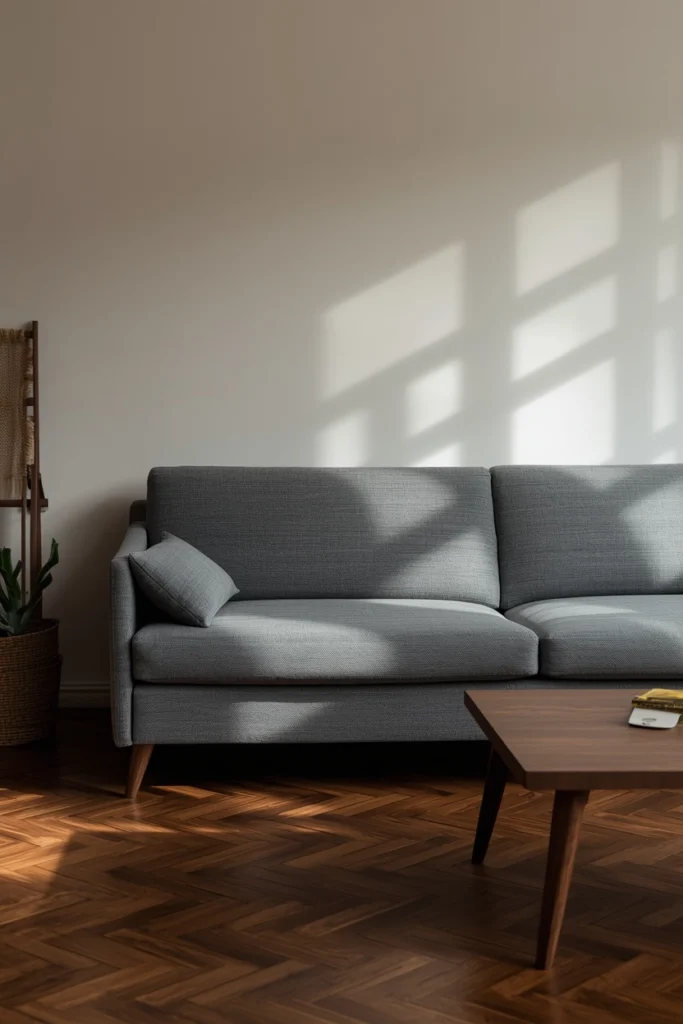
Grey furniture or walls against warm walnut or oak flooring keeps the room from feeling cold or stark, which is the most common complaint about all-grey rooms.
This combination is one of the most forgiving on this list because wood tones do most of the warming work automatically.
22. Go moody with a charcoal accent wall
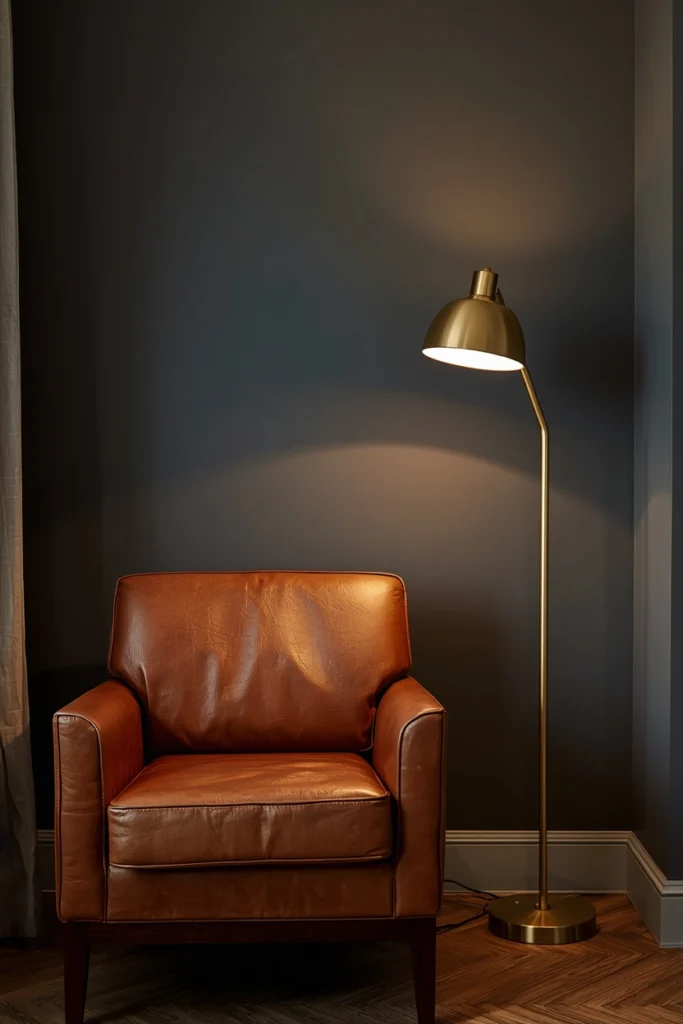
A single charcoal accent wall pushes grey into a darker, more dramatic direction than a mid-tone grey would.
This works best with a secondary light source in the room, since charcoal absorbs more light than a lighter grey and can feel heavy without a lamp to balance it.
For more on this darker direction generally, the moody living room ideas guide has more ways to work with deep, saturated color.
23. Swap in grey lamp shades
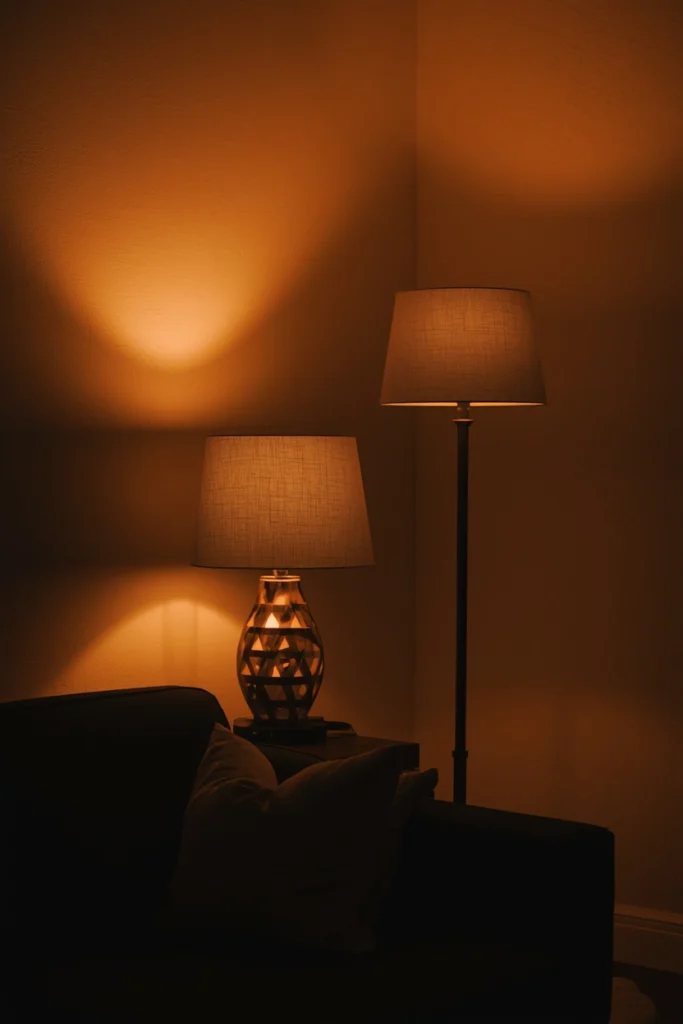
Table and floor lamps with light grey fabric shades cast a soft, cool-tinted glow at night, changing how the whole room feels after sunset for the cost of one or two lamp shades.
This is one of the cheapest updates on this list, usually under $40 per shade, and it’s fully reversible.
24. Keep it small-space friendly: light grey, low furniture
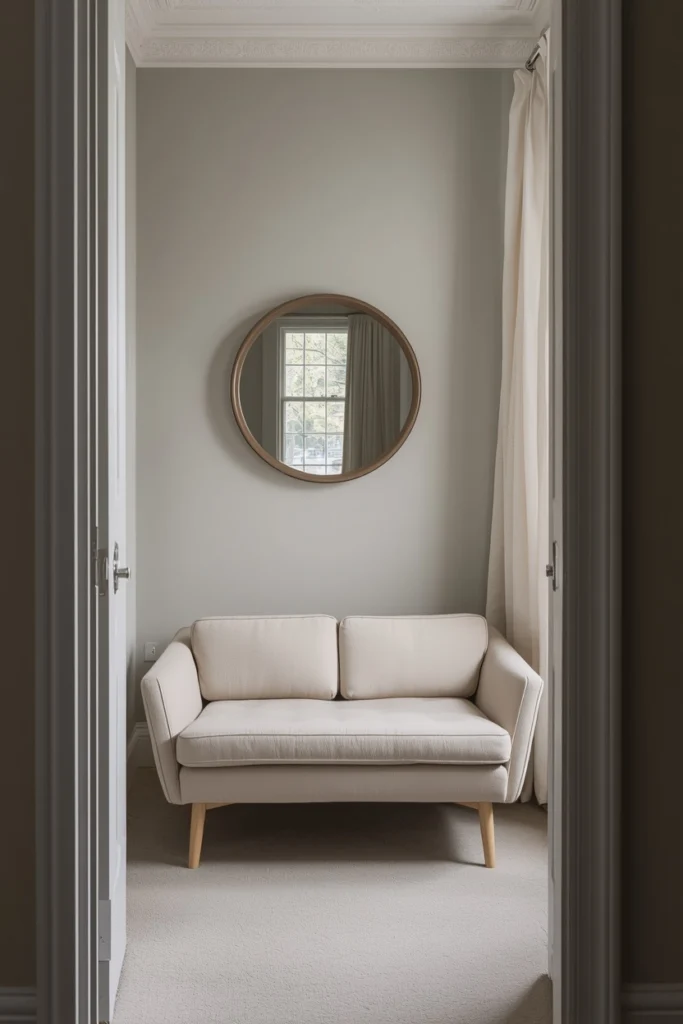
In a small living room, stick to pale dove grey tones and low-profile furniture with visible legs so the room stays open instead of feeling boxed in.
A mirror positioned across from the window helps bounce light around, which matters more in a small grey room than a neutral one since color absorbs more light than plain white walls would. For more layout-specific advice, the small living room ideas guide covers furniture scale in more depth.
How to pick the right grey for your room’s light
- Check your room’s light direction. South and west-facing rooms get warm afternoon light and can handle cooler, truer greys without them reading flat. North and east-facing rooms usually look better in warm greige, which stays cozy rather than turning cold.
- Test a sample on the actual wall, not just a chip. Paint a 2-foot square in two spots (near the window and away from it) and check it morning and evening, since grey shifts undertone more than almost any other neutral depending on the light.
- Decide if grey is the wall or the furniture. Pick one dominant surface for the color rather than both a grey wall and a grey sofa, or the room can start to feel flat.
- Add one warm material. Brass, warm wood, or a leather accent keeps a cooler grey from feeling clinical.
Common mistakes in a grey living room
- Skipping the light test before painting a full wall. A grey that looked warm on a paint chip can turn cool or purple-tinted once it’s on all four walls under your room’s actual light.
- Pairing a cool grey with warm wood tones without a bridging element. The mismatch reads as slightly off even when people can’t say exactly why. A brass accent or a warm textile helps tie the two together.
- Going all-grey with no warm material anywhere in the room. All-grey with no wood, brass, or leather tends to read cold and showroom-like instead of lived-in.
- Using charcoal on every wall in a small, low-light room. Deep grey can make a small room with limited natural light feel smaller instead of richer.
- Hanging heavy grey-framed art or mirrors on drywall alone. Use a stud or a properly rated drywall anchor for anything over a few pounds.
Why I did this in my own living room
I painted my first apartment’s main wall a grey I picked from a chip in a bright hardware store, and it went noticeably cooler and flatter once it was actually on the wall under my apartment’s dimmer north-facing light.
I ended up repainting it in a warmer greige a few months later, which is the exact mistake the light-test step above is meant to prevent. The lesson that stuck: grey is the neutral most likely to surprise you once it’s actually on the wall.
Quick answers
Does grey work in a small living room? Yes, especially in pale shades like dove grey. Stick to light grey and low-profile furniture so the room stays open instead of feeling boxed in.
What grey pairs best with a beige living room? Warm greige has enough beige undertone to blend rather than compete, while a true cool grey can feel like it’s fighting the warmth of the beige around it.
Is a dark charcoal accent wall too much for a shared living room? Not if it’s kept to one wall or one large piece of furniture rather than the entire room, and paired with a secondary light source like a lamp for evening use.
Can renters do a grey living room without painting? Yes. A grey sofa, curtains, a rug, throw pillows, and lamp shades can carry the whole look, and removable wallpaper covers the accent-wall option if the lease allows it.
What color pillows go with a grey couch? A mix of cream, red, or a deeper shade of grey works well. Avoid matching pillows exactly to the sofa color, or the seating reads as one flat block instead of layered.
Does grey living room decor date quickly? Warm greige and dove grey have held up as steady, classic choices for years. Very cool, blue-toned greys shifted in and out of style faster over the last decade, which is why testing the undertone in your own light matters before committing to a full room.
What wood tone goes with grey? Warm woods like oak and walnut generally pair better than very cool, grey-washed wood, which can make a cool-toned grey feel colder still.
How much grey is too much in a neutral room? As a rough guide, keep grey to about 50 to 60 percent of the room if it’s your dominant color, and balance the rest with warm wood, brass, and one accent color so the space doesn’t read flat.
About this guide
This list comes from actual grey pairings I’ve tested in rented and owned spaces, not a paint brand catalog. If a dark grey sofa specifically is what you’re after regardless of wall color, the dark grey sofa living room ideas guide covers that one piece in more depth.
For a cleaner, more minimal take on grey, the contemporary living room ideas post has more on pairing neutral color with simple furniture shapes, and the scandinavian living room ideas guide leans into a similarly pale, calm palette if that’s the direction you want.
5 thoughts on “24 Grey Living Room Ideas for a Chic Home”