
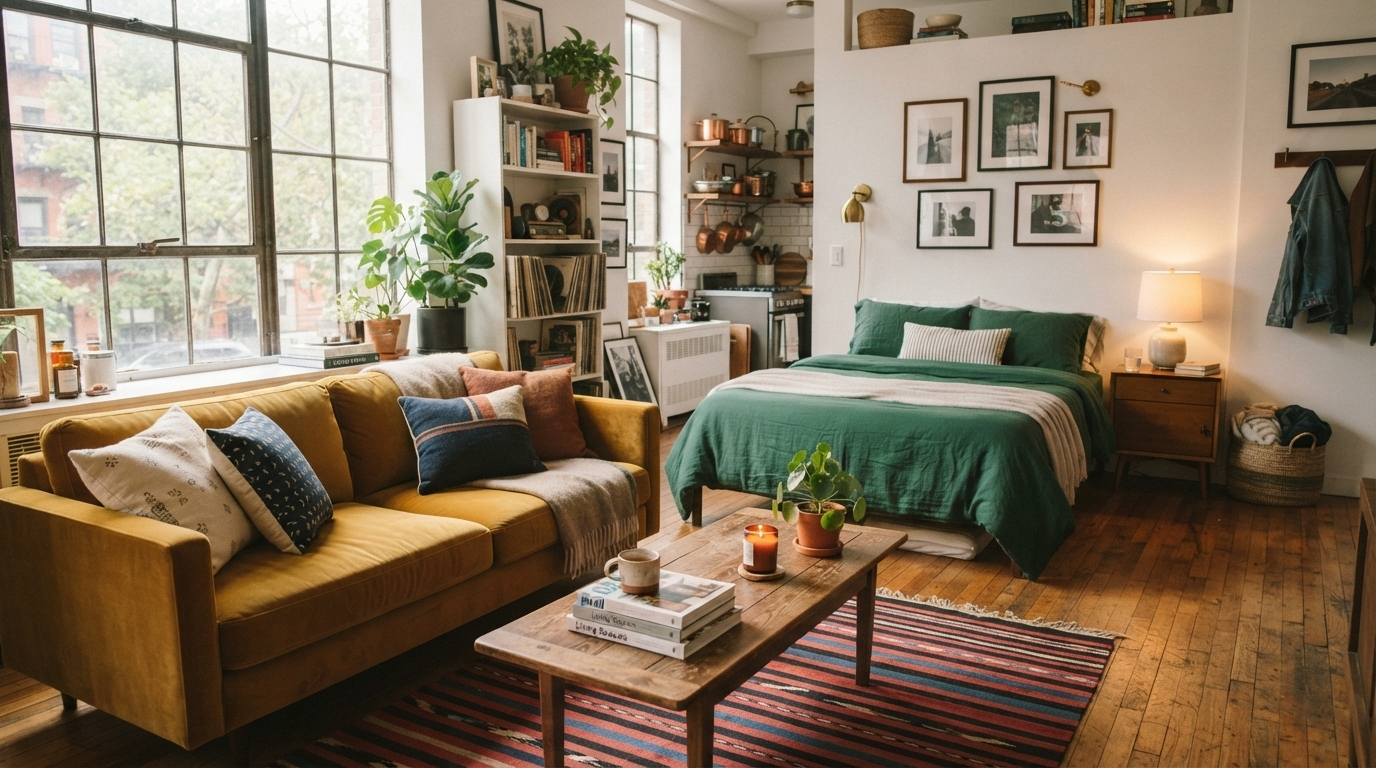
A studio that balances beauty and function doesn’t choose between minimal and colorful, it makes every piece earn its place. Here are 17 real layouts that do exactly that.
1. Commit to a Bold Color Story
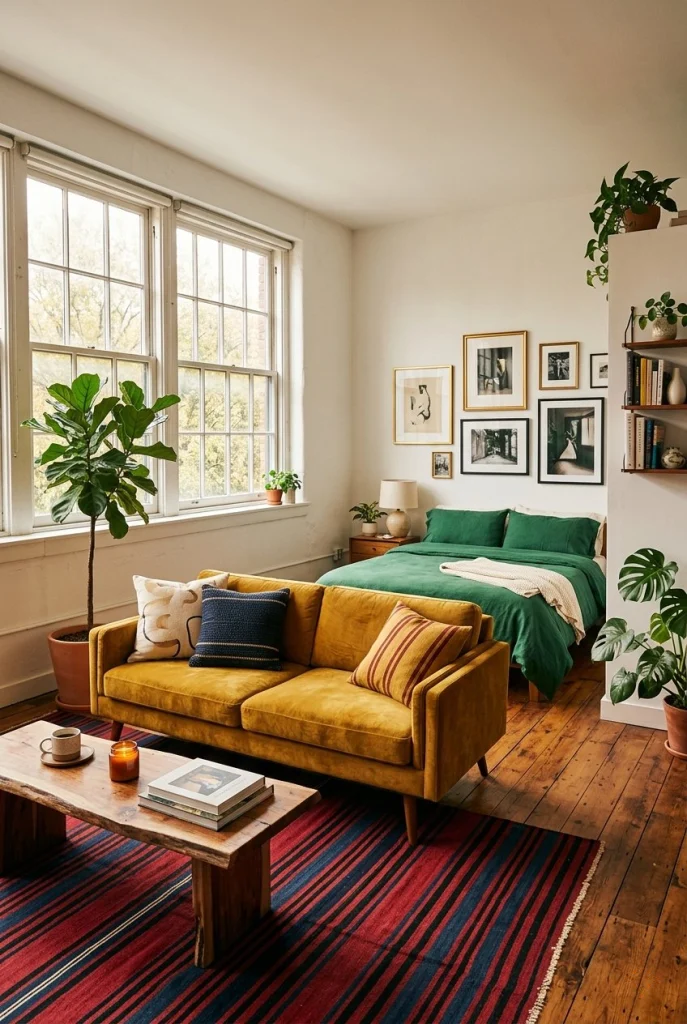
Beige can feel suffocating when an entire life happens in one room. A mustard yellow sofa, a bold striped rug in red, blue, and black, and emerald green bedding work together because every color choice connects to two or three anchor hues repeated across the textiles. The result reads as curated, not chaotic.
Tip: Keep the walls white or off-white, which gives full permission to go bold everywhere else without the room closing in.
2. Use Floating Shelves as a Decor Zone
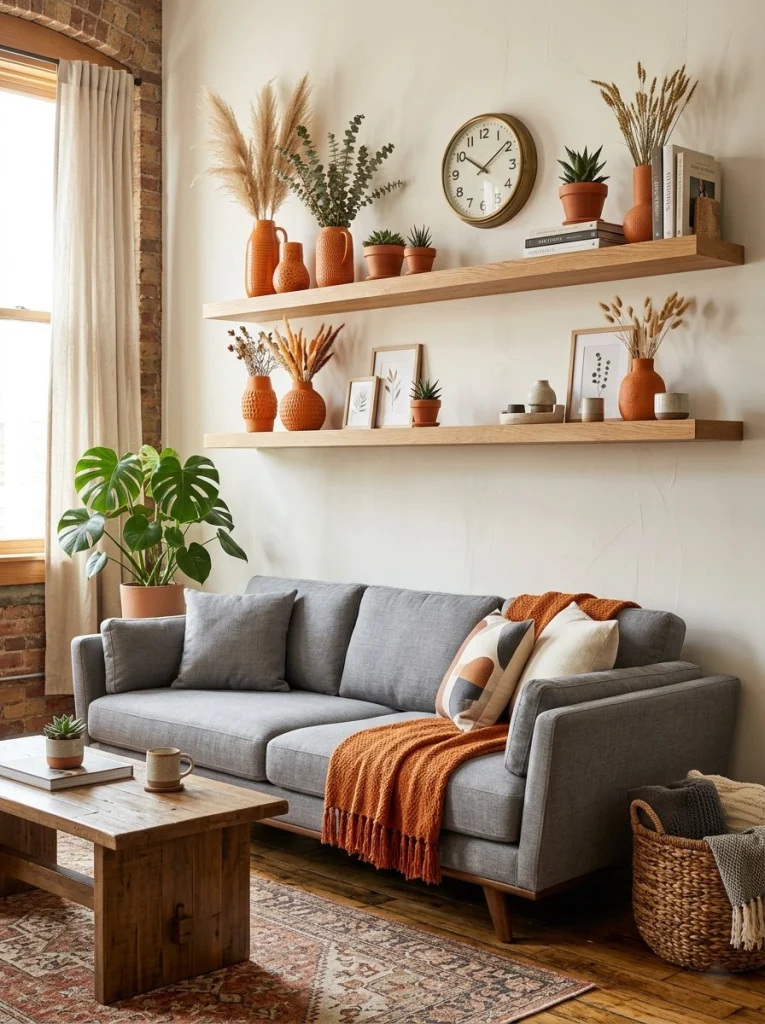
Floating shelves are the unsung hero of studio decorating — two long shelves above a sofa holding vases, dried botanicals, small succulents, and a wall clock deliver gallery-level personality without using any floor space. Styling them in odd numbers and varying the heights keeps the shelf from reading as a straight lineup.
Tip: Dust floating shelves every two weeks, since cluttered, dusty shelves undo the whole effect faster than expected.
3. Layer Warm Wood Tones Throughout
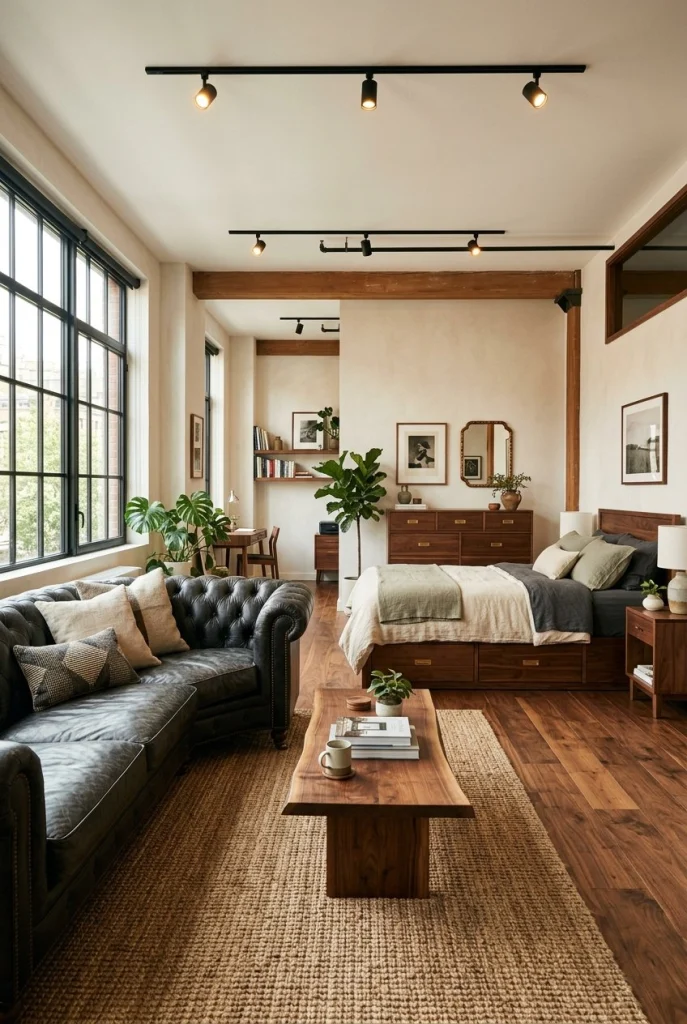
A walnut storage bed, a matching dresser, and a dark leather sofa feel pulled together because every wood tone sits in the same warm family, anchoring both the sleep zone and the living zone so the room reads as one space instead of two mismatched halves. A jute rug ties the floor together underneath it all.
Tip: A walnut-finish contact paper on a basic side table bridges the gap cheaply if swapping furniture isn’t an option.
4. Let Your Sofa Define the Living Zone
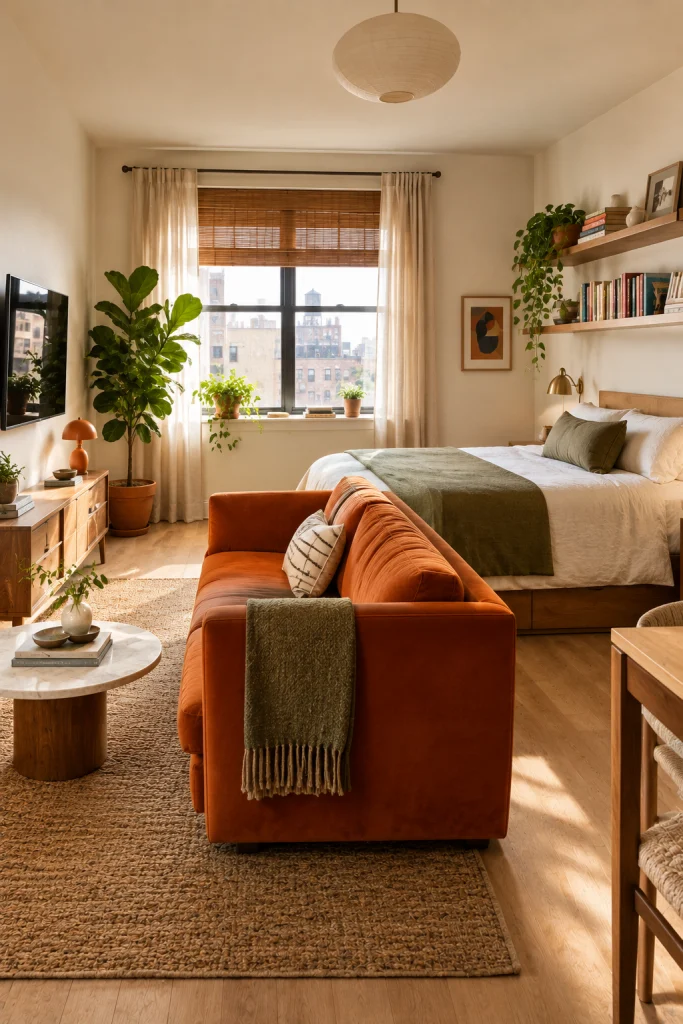
An orange velvet sofa placed parallel to the bed signals “this side is the living room” with no wall and no curtain, just intentional furniture placement doing the heavy work. A small floating shelf above the bed holds books and a plant, and a wall-mounted TV anchors the media zone without extra furniture.
Tip: Facing the sofa away from the bed whenever possible creates the psychological sense of two separate rooms.
5. Build a Gallery Wall That Does Double Duty
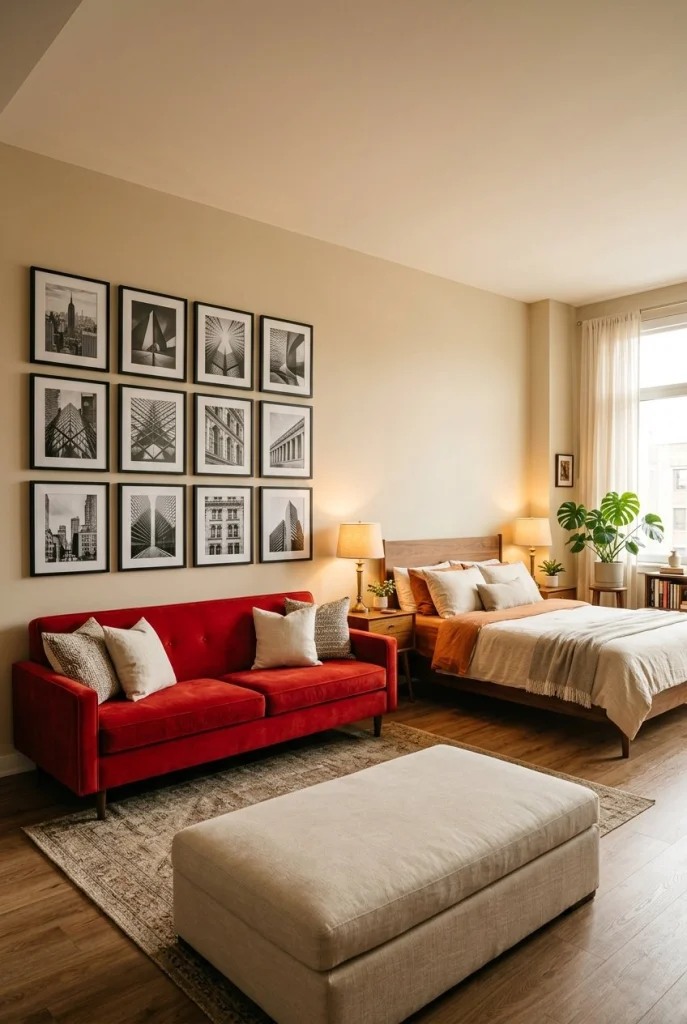
A grid of black-and-white architectural prints above a red sofa fills the wall and creates a visual anchor that makes the sofa feel intentionally placed. Matching table lamps on either side of the bed add symmetry that makes the sleep zone feel like a proper bedroom instead of an afterthought.
Tip: Printing personal photos in black-and-white and framing them identically gives a high-end look on a very low budget.
6. Use Colorful Box Shelves Instead of a Bookcase
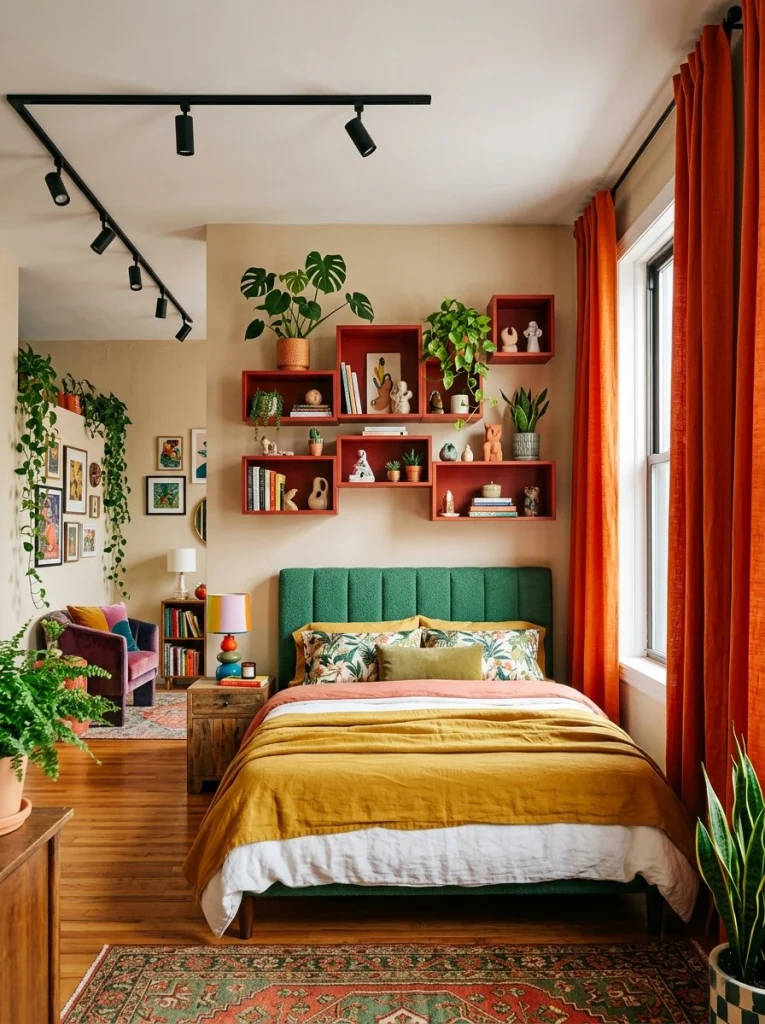
Staggered box shelves mounted on the wall hold plants, frames, and small objects without ever touching the floor, which matters in a room where standard bookcases eat up footprint fast. A green upholstered headboard and bold orange curtains keep the energy high, while track lighting handles the practical work of actually lighting the room.
Tip: Treat each box shelf cube as its own small vignette, one plant, one object, one photo, since more than that starts reading as clutter.
7. Create Three Distinct Zones in One Room
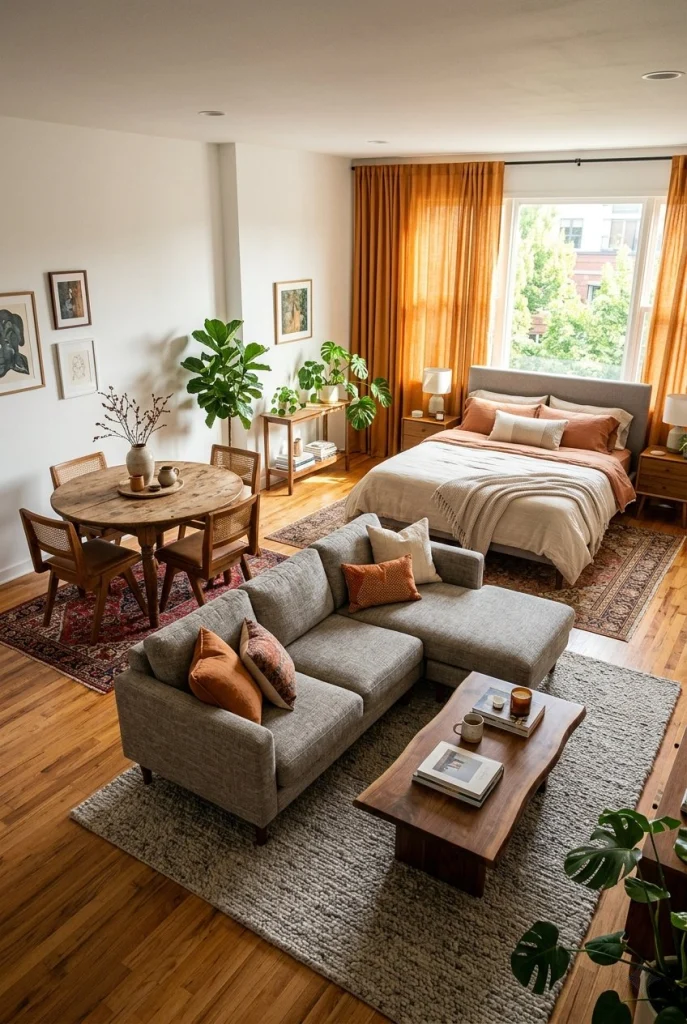
A wooden dining table in one corner, a sectional with a coffee table forming the lounge zone, and the bed anchoring the sleeping area all stay distinct through rug placement and furniture orientation rather than walls. Orange curtains pull warmth together across every zone, tying three separate areas into one open room.
Tip: Using a different rug under each zone is the easiest way to define spaces without building anything.
8. Anchor the Room With Statement Art Above the Bed
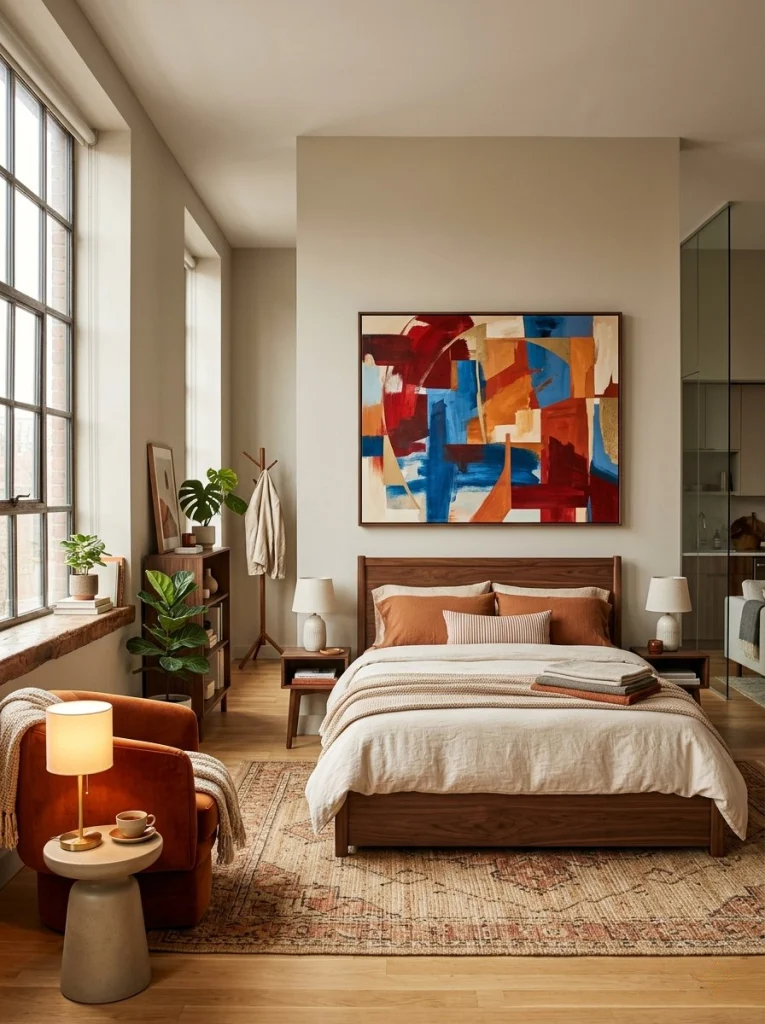
A large abstract canvas in red, blue, and orange centered above a walnut storage bed becomes the room’s focal point immediately. A matching orange armchair in the corner echoes the painting’s palette without copying it directly, turning the bed into a fully considered part of the room rather than furniture shoved against a wall.
Tip: A storage bed with under-frame drawers holds bedding or off-season clothes that would otherwise have no home.
9. Go Grand With a Chandelier and Oversized Art
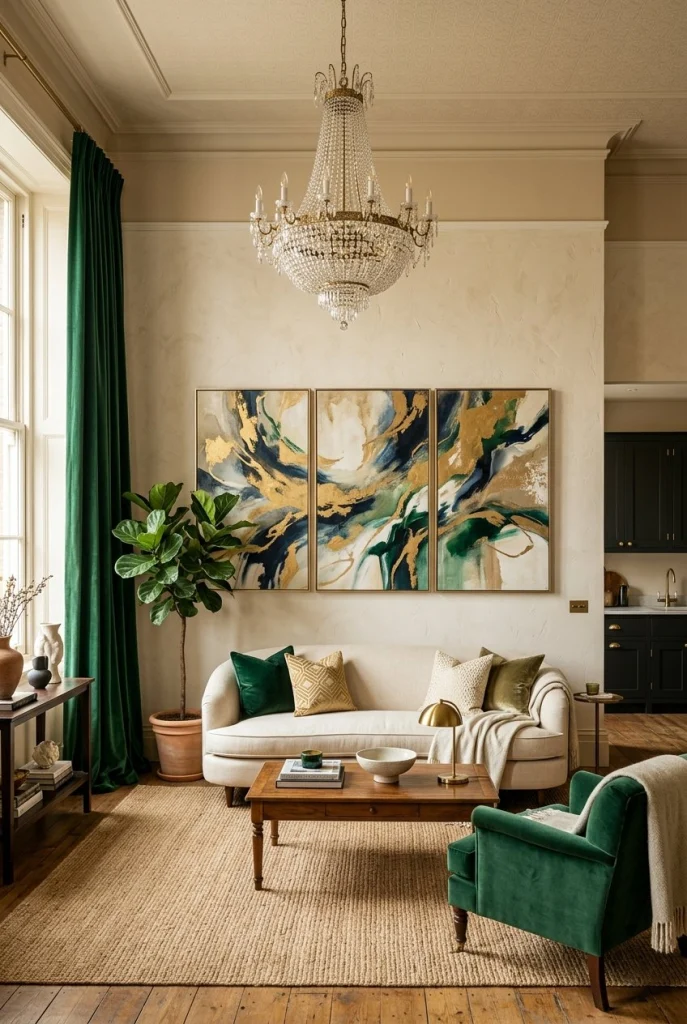
A crystal chandelier, a three-panel abstract artwork spanning nearly half the wall, emerald green curtains, and a lush jute rug layer up with real confidence, while a cream sofa keeps the room from tipping into excess. One statement piece per zone, then a deliberate pullback, is the rule holding it all together.
Tip: Scale up with art in a studio. One large piece makes more impact than five small ones competing for attention.
10. Let Plants Be Your Primary Decor
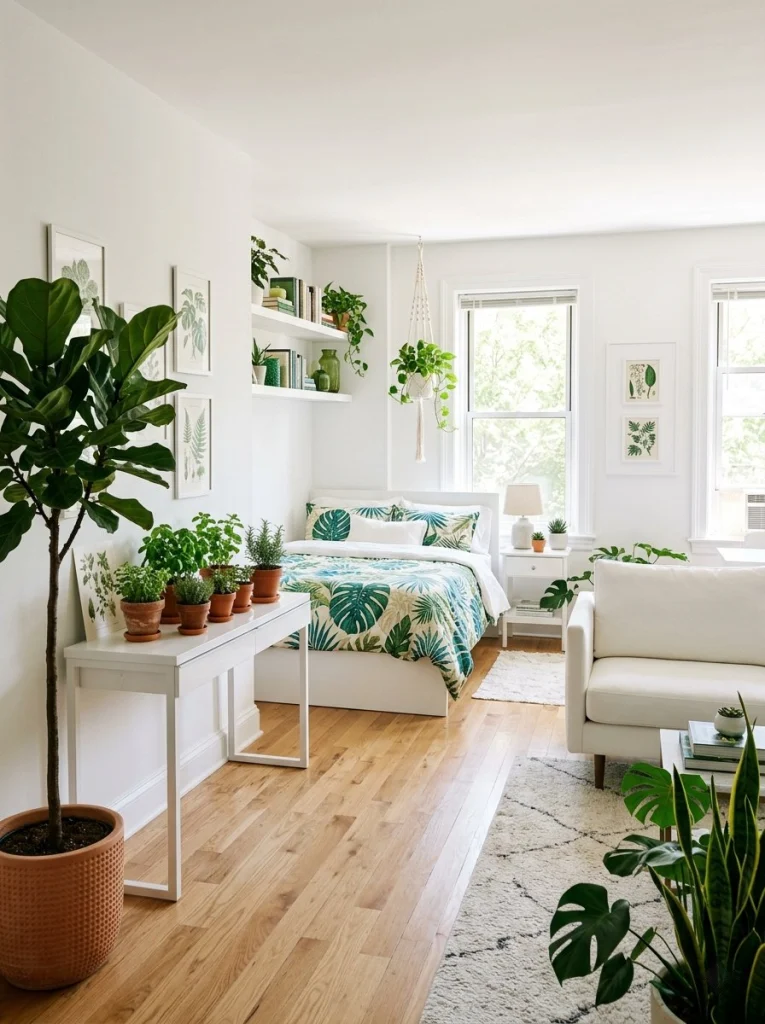
A fiddle leaf fig in the corner, a row of small herb pots on a console table, and leafy tropical bedding prints turn botanicals into the entire design language of this studio. An all-white furniture base keeps the plants popping against the background no matter the season.
Tip: Realistic faux plants work well for anyone without a green thumb, since they’re indistinguishable from real ones at a short distance and need no sunlight.
11. Paint One Accent Wall to Anchor the Bedroom Zone
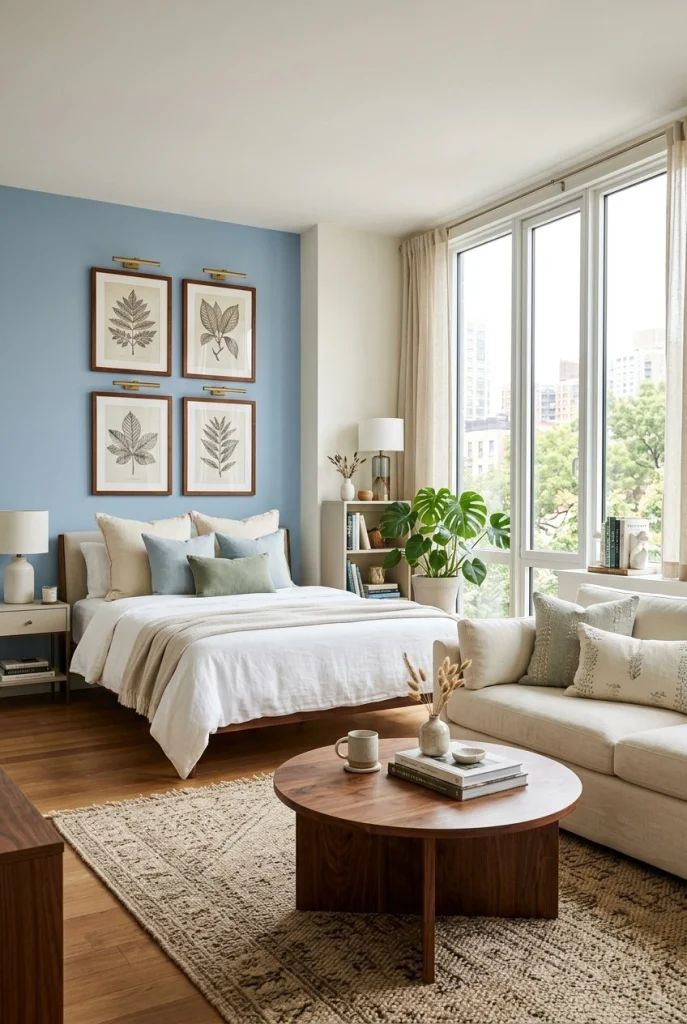
A single powder blue accent wall behind the bed makes the sleeping area feel like its own defined room, with no partition required. Three matching botanical prints in warm frames tie the color story together, and a round walnut coffee table in the living zone adds mid-century contrast while floor-to-ceiling windows flood the space with light.
Tip: Many landlords allow a single accent wall if the tenant agrees to repaint before moving out, so it’s worth checking the lease.
12. Use Curves to Soften a Square Space
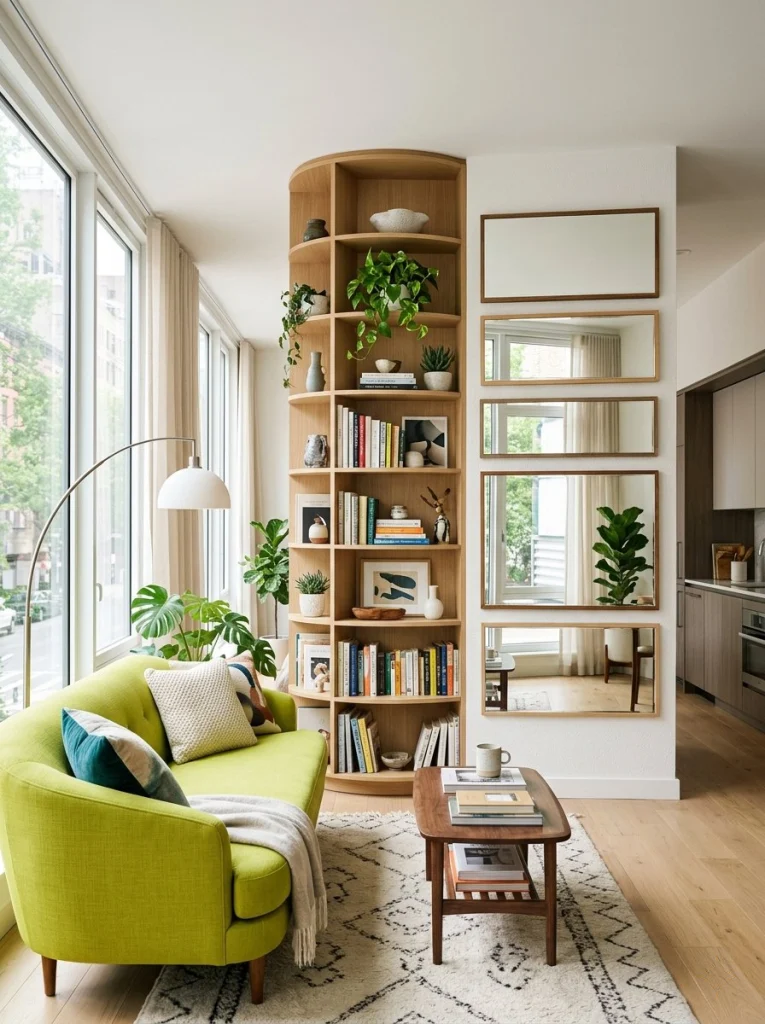
Straight lines dominate most studios, but a curved tower bookshelf softens the room’s geometry immediately. Stacked horizontal mirrors bounce natural light around the space, and a lime green sofa brings real energy, proving shape matters just as much as color in a small room.
13. Make a Statement With Art Poster Pairings
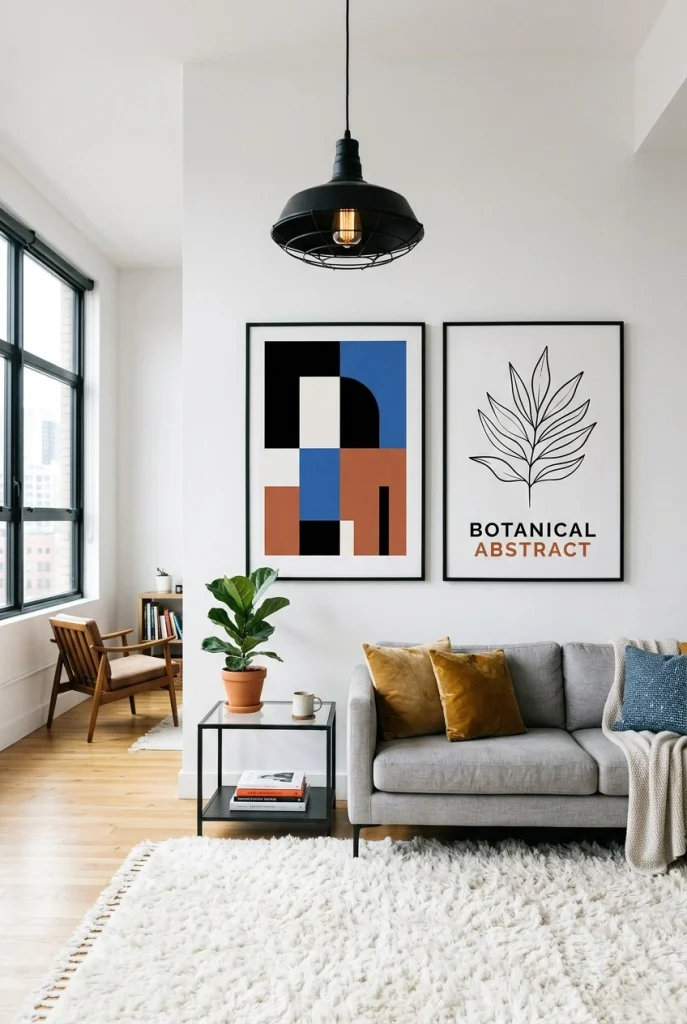
Two large framed posters hung side by side on a white wall create instant personality without any renovation. An industrial black pendant light overhead and a fluffy white shag rug below add real texture contrast, turning a rental into a home that feels chosen on purpose.
Tip: Posters from exhibition shops, matched in identical black frames, give a gallery-quality look on a modest budget.
14. Commit to a Bold Accent Wall Color
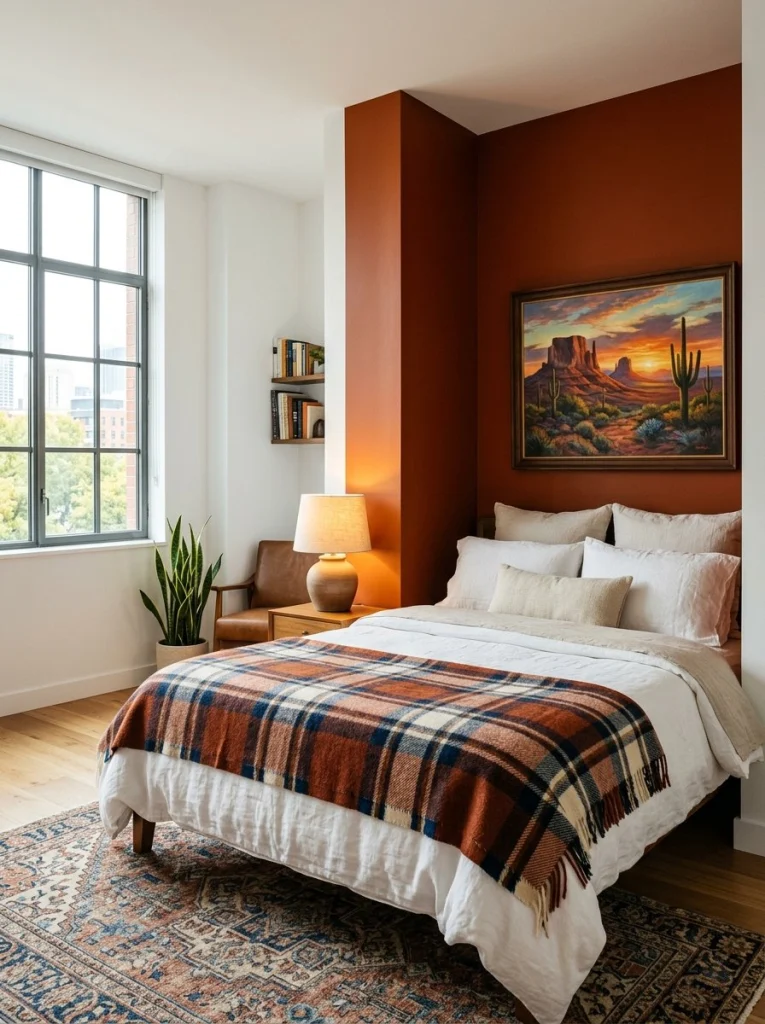
A deep burnt orange accent wall wraps the bedroom corner while the rest of the walls stay crisp white, so the color energizes the room without overwhelming it. A southwestern landscape painting, a plaid throw, and a warm lamp keep the mood intentional and cohesive. For more bold color pairings like this, see beautiful studio apartment color schemes.
Tip: Burnt orange pairs well with charcoal grey, warm wood, and cream, all neutrals most people already own.
15. Mix Lighting Types for Maximum Function
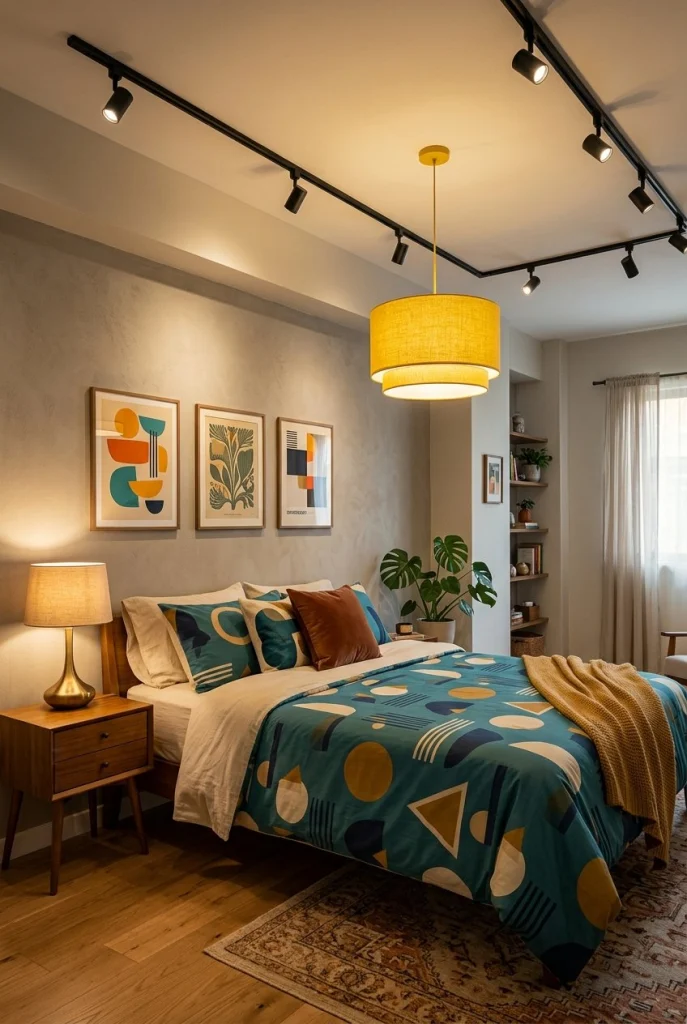
Three types of lighting running at once, a yellow drum pendant for ambient glow, black track lighting for directed task light, and a small bedside lamp, mean every corner of the room stays usable regardless of the time of day. Bold retro art prints and a teal geometric duvet make the visual side equally considered. For more on layering light like this, see studio apartment lighting decor ideas.
Tip: Warm 2700K bulbs in the pendant and slightly cooler 3000K bulbs in the track lights flatter every corner of the room.
16. Build a True Multifunctional Layout With a Dining Nook
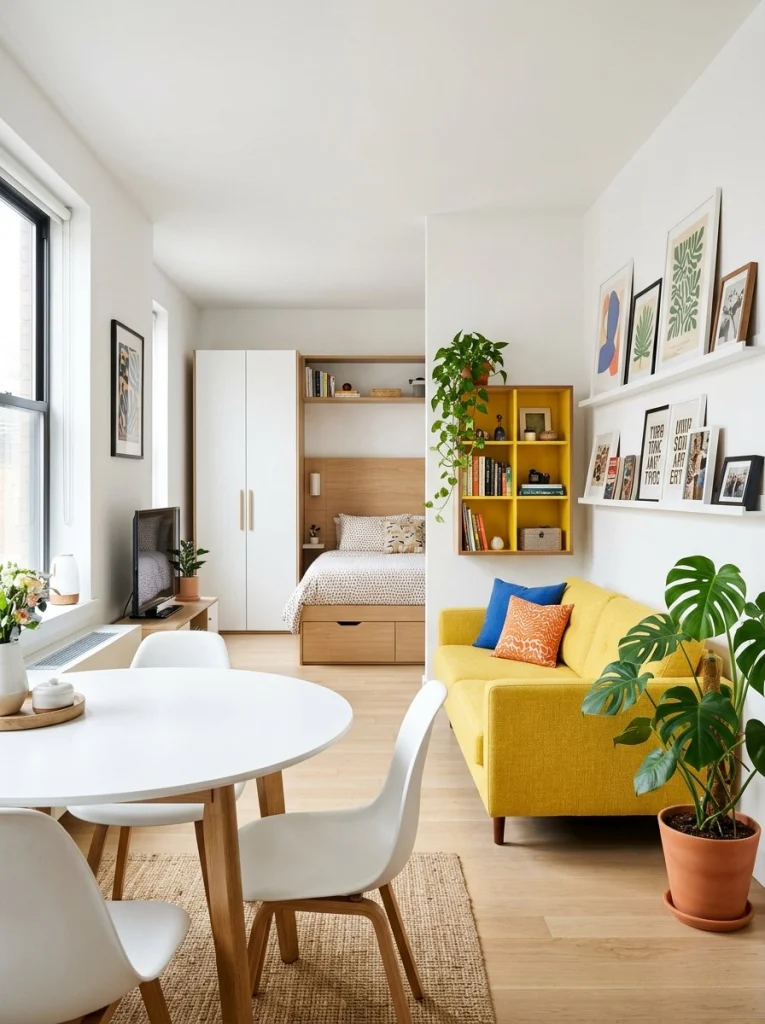
A dedicated dining nook with a round white table, a lounge zone with a yellow sofa, a sleeping area with a storage bed, a wardrobe, and a wall cubby for books make this the most ambitious layout of the group. A monstera plant anchors one corner, and a picture rail holds leaning frames without a single nail hole.
Tip: A round dining table fits two to four people, takes up less visual space than a rectangle, and tucks into corners cleanly.
17. Master Full Zone Separation Without Walls
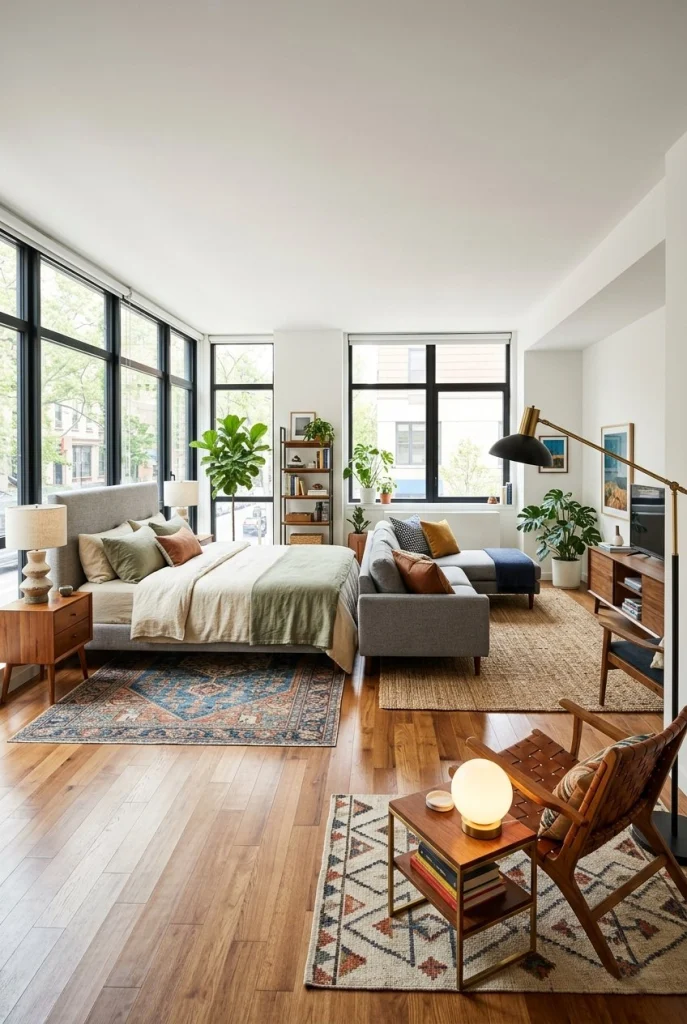
The bed faces the window wall, a sectional defines the living area perpendicular to it, and a woven wood armchair creates a separate reading corner, all without a single divider. Each zone has its own rug, its own lighting, and its own clear reason to exist within the same open room.
Tip: A reading chair is one of the most underrated studio additions, since it creates a third zone and somewhere to go that isn’t the bed or the sofa.
Common beauty-and-function mistakes
- Choosing color without connecting it across the room. Bold choices read as intentional only when two or three anchor hues repeat across textiles; one-off bold pieces read as random.
- Letting furniture orientation default to “against the wall.” Rotating a sofa to face away from the bed, or placing it perpendicular instead of flush, does more zoning work than most people expect.
- Skipping a distinct rug per zone. One rug spanning the whole room doesn’t separate anything; a different rug under each zone does.
Quick answers
How many zones can a studio apartment realistically hold?
Three is achievable in most layouts, typically sleeping, living, and either dining or a workspace, each defined by its own rug, lighting, or furniture orientation.
Does a bold accent wall work in every studio?
It works best confined to one wall or one corner, like behind the bed, with the rest of the room staying neutral to keep the color from overwhelming the space.
What’s the easiest way to separate a sofa from a bed without a wall?
Rotating the sofa to face away from the bed or placing it perpendicular, combined with a different rug underneath it, creates a clear visual boundary.
Can floating shelves really replace a bookcase in a small studio?
Yes, staggered or linear floating shelves hold the same books, plants, and decor as a bookcase while leaving the floor completely clear.
How do I mix lighting types without it looking mismatched?
Keep the bulb temperature consistent within a similar warm range across fixtures, even if the fixture styles differ, like a pendant, track lighting, and a lamp.
Is a round or rectangular dining table better for a studio?
A round table usually works better, since it seats the same two to four people while taking up less visual space and fitting into corners more easily.
What’s an underused way to add a third distinct zone to a studio?
A single reading chair with its own rug and lamp creates a legitimate third zone beyond the bed and sofa, without needing extra square footage.
Final Thoughts
A studio apartment doesn’t have to feel like a compromise when the choices around color, zoning, and lighting are deliberate rather than accidental. Pick two or three ideas from this list that actually match the room, not all 17, and start with the one that solves the problem bothering you most right now.