
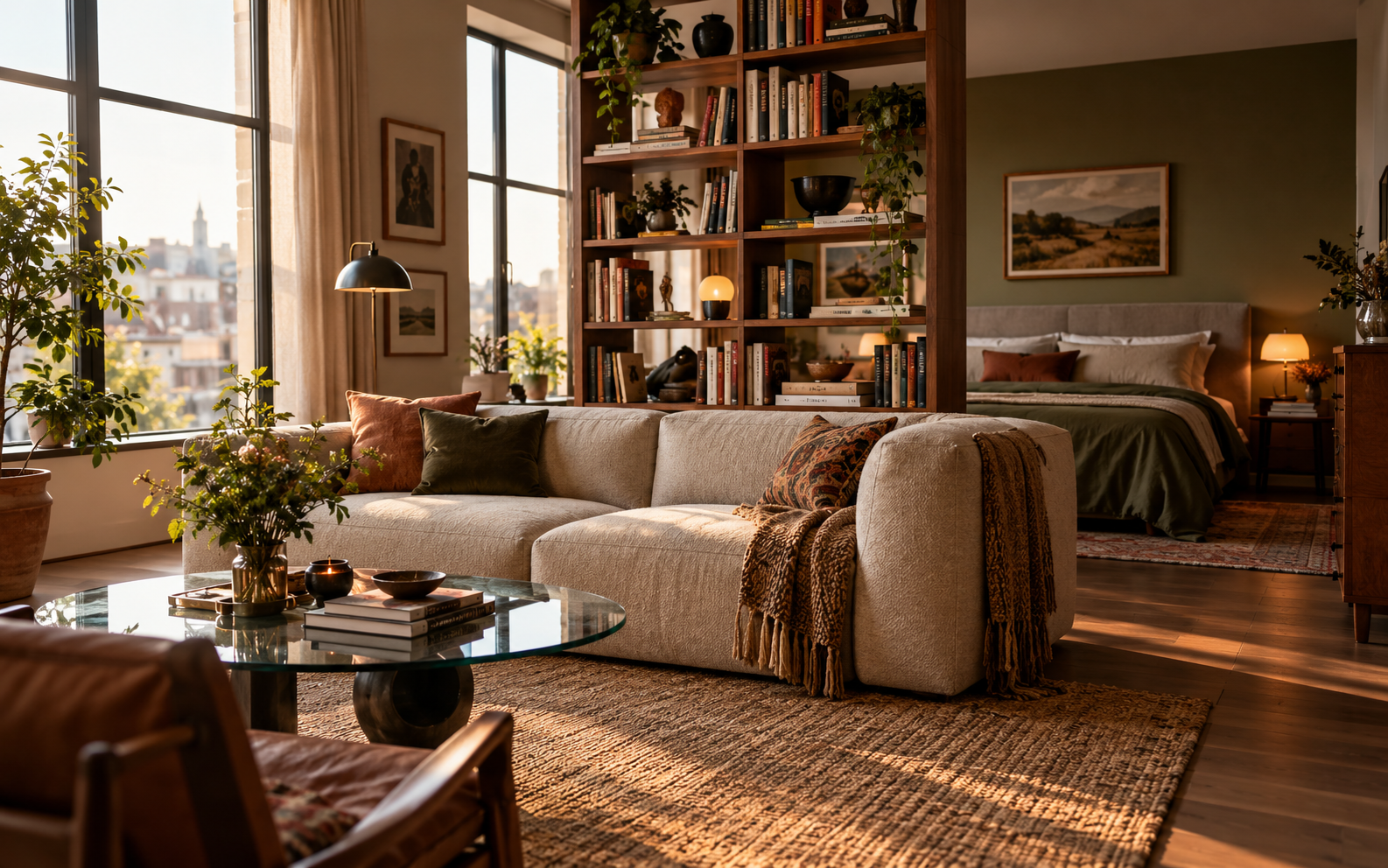
A clean, minimalist studio isn’t about owning less, it’s about every piece earning its place and every corner having a clear purpose. Here are 17 ideas that make a studio feel calmer without feeling empty.
1. Define Zones Without Walls
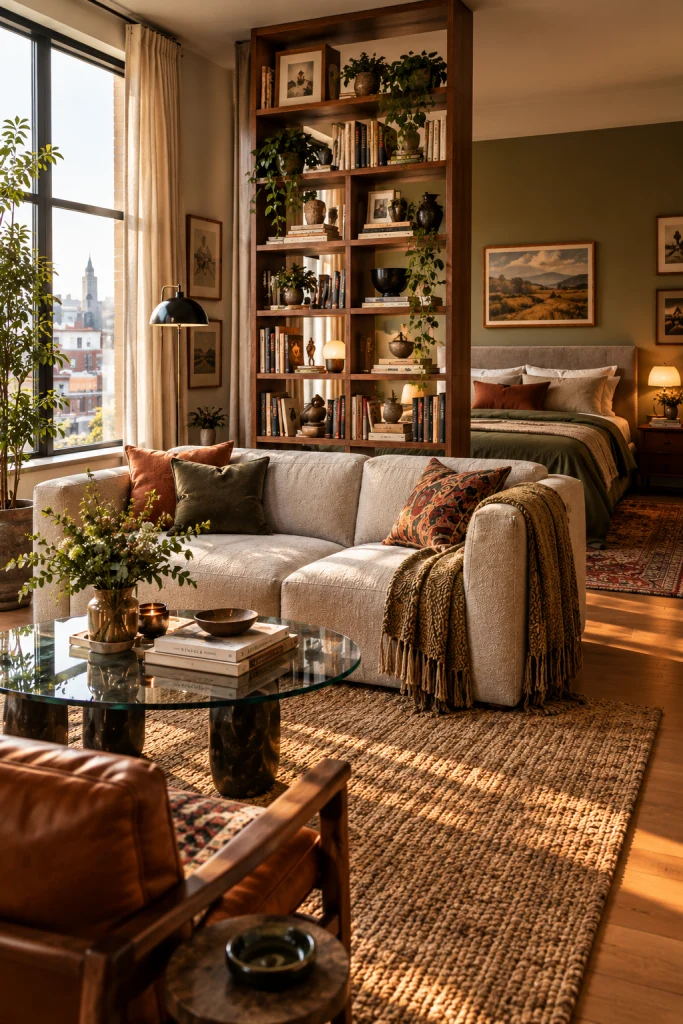
Treating a whole studio like one giant space is the most common mistake in small-space decorating. Positioning the sofa with its back to the sleeping area creates a living room without a single wall, and a glass coffee table keeps that boundary light and airy. A tall bookshelf on one side works as a soft architectural divider, snapping the zones into place.
Tip: A sectional with a chaise signals “living room” clearly while giving an actual place to stretch out.
2. Build a Gallery Wall That Tells Your Story
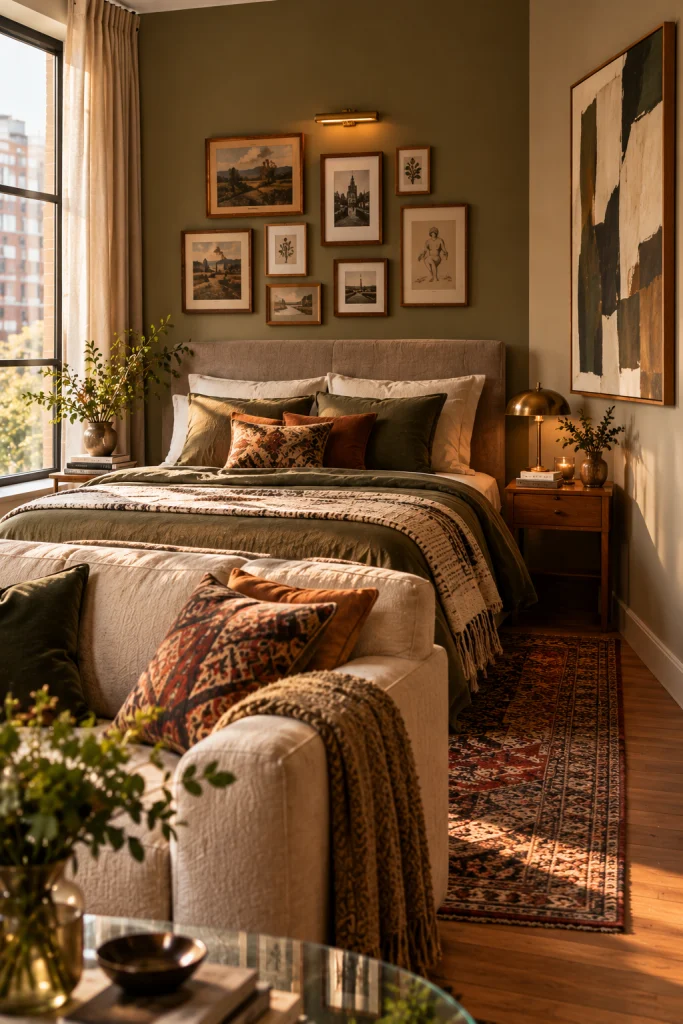
Walls are valuable real estate in a studio and shouldn’t stay blank. A cluster of small framed prints above the headboard creates a curated bedroom feel without using any floor space, and mixing geometric shapes with one abstract canvas on an adjacent wall adds contrast while warm wood frames keep everything cohesive.
Tip: Stick to two or three frame finishes maximum, since more than that starts reading as chaotic rather than collected.
3. Don’t Be Afraid of Color
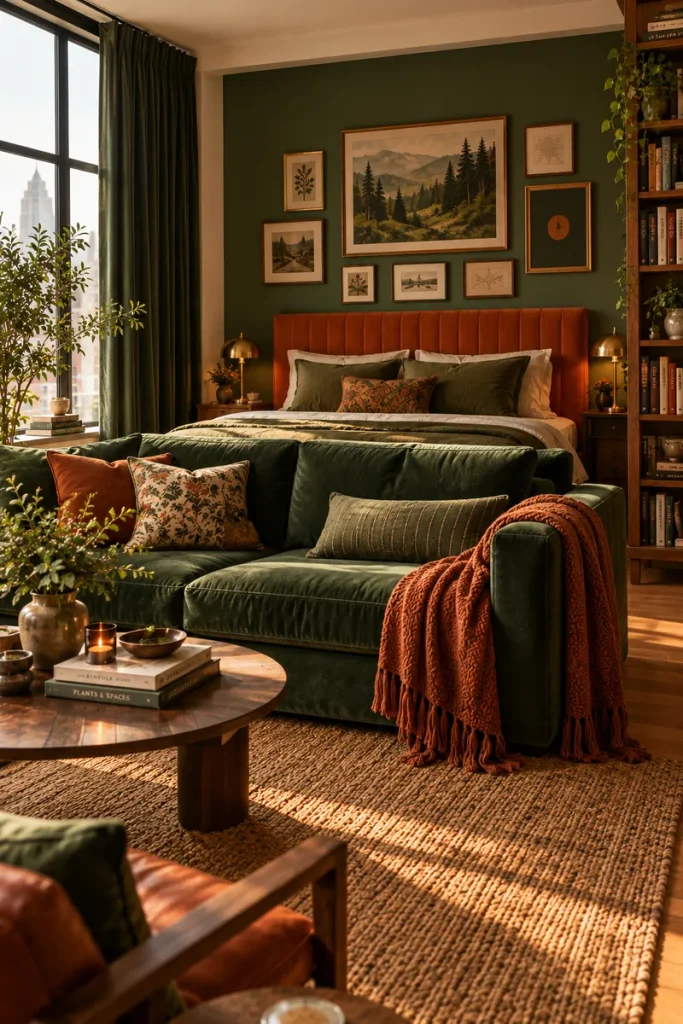
Minimalism doesn’t mean beige — a forest green sofa, an orange headboard, and matching green curtains create a bold, cohesive identity without feeling cluttered. Committing to a palette of two or three colors and repeating them deliberately is the trick, with a jute rug grounding everything so the palette doesn’t tip too loud. For more bold palette pairings like this, see beautiful studio apartment color schemes.
Tip: Curtains are the easiest place to start with color, since they’re removable, affordable, and make a large visual impact.
4. Use a Round Rug to Anchor the Sitting Area
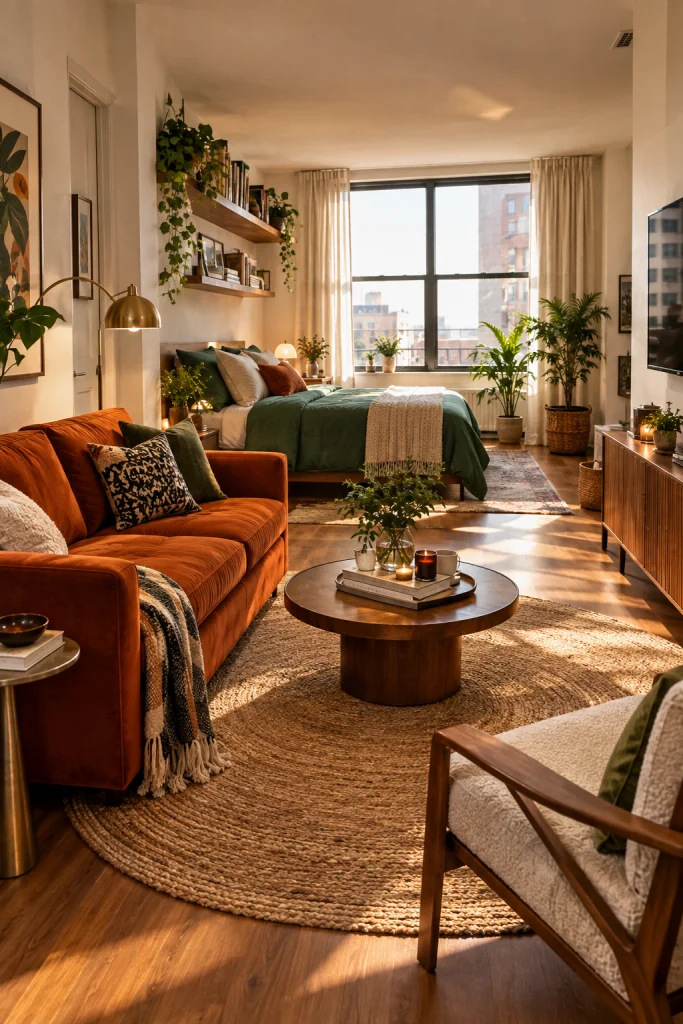
A round rug creates a clearly defined living zone that feels deliberate rather than default, something rectangular rugs rarely manage in a studio. Pairing it with a round coffee table echoes the shape, and jute works especially well here since it’s textured enough to add warmth while staying neutral enough to pair with almost anything.
Tip: Size up — a rug under 6 feet in diameter usually makes the zone it’s meant to define feel pinched.
5. Add a Personal Touch With a Photo Gallery Wall
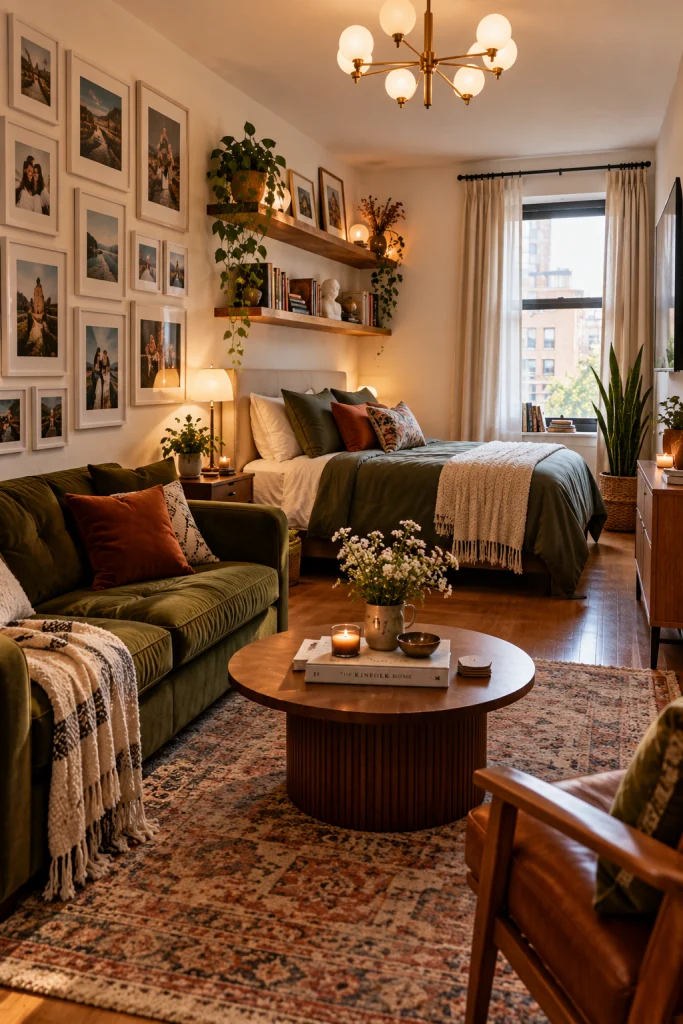
A gallery wall of personal photos is one of the fastest ways to make a studio feel like home rather than a furnished box. Matching white frames in varying sizes keep the look clean without competing with itself, and a narrow floating ledge above the bed holds a few curated objects like small vases or a single framed print, while a chandelier overhead adds an unexpected touch of glamour.
Tip: A uniform, affordable frame series makes a photo gallery look elegant at scale without a high cost per frame.
6. Mount Floating Shelves for Vertical Storage
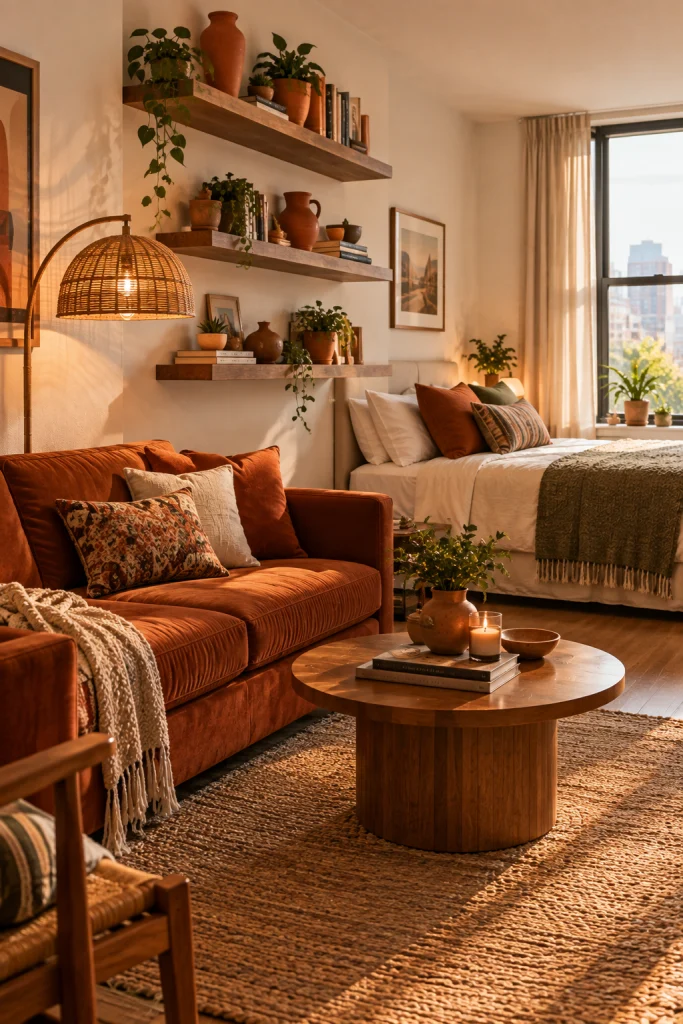
Going vertical matters when floor space is limited — three staggered floating shelves turn a bare wall into a display and storage zone that adds personality without crowding the room. A consistent color story, like terracotta vases and small plants repeating the warm tones in the bedding, makes the shelves feel like part of the design rather than an afterthought.
Tip: Save on the shelves themselves and spend more on what goes on them.
7. Warm It Up With Curtains and Botanical Art
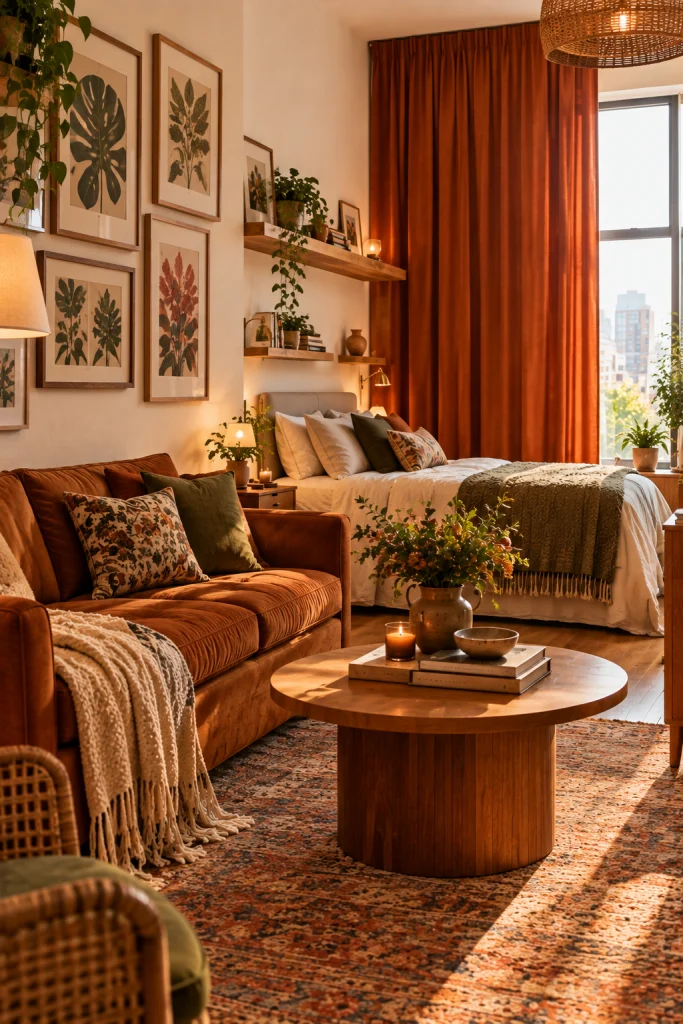
Curtains are one of the most underrated tools in a studio. Long, floor-to-ceiling panels in warm amber or burnt orange instantly make a room feel taller and cozier, especially paired with botanical art prints in matching wood frames, bringing the outdoors in without a single plant to water.
Tip: Hanging curtains close to the ceiling instead of at the window frame makes any room feel significantly taller.
8. Commit to a Mid-Century Minimal Palette
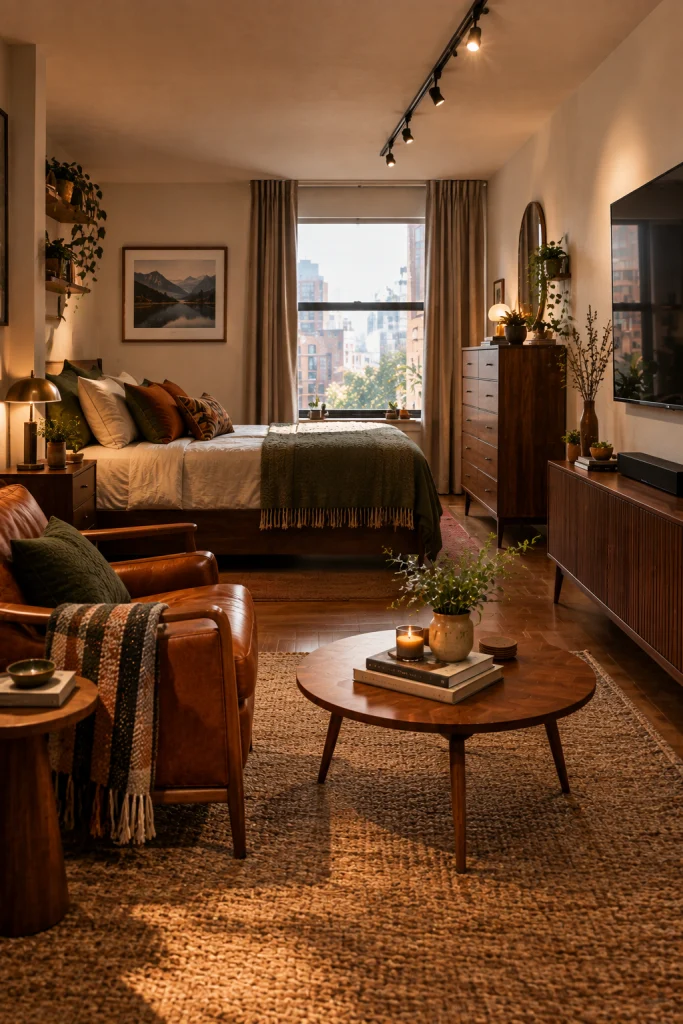
A studio feels effortlessly put-together when one wood tone runs through everything — dark walnut on the bed frame, the dresser, and the TV console creates a visual rhythm that reads as designed rather than assembled. A leather armchair and a single framed landscape photo keep the look grounded, and track lighting handles ambiance without floor lamps eating into space.
Tip: Mixing too many wood finishes reads as mismatched rather than eclectic, so one dominant tone works better.
9. Bring In Hanging Plants and a Lush Gallery Wall
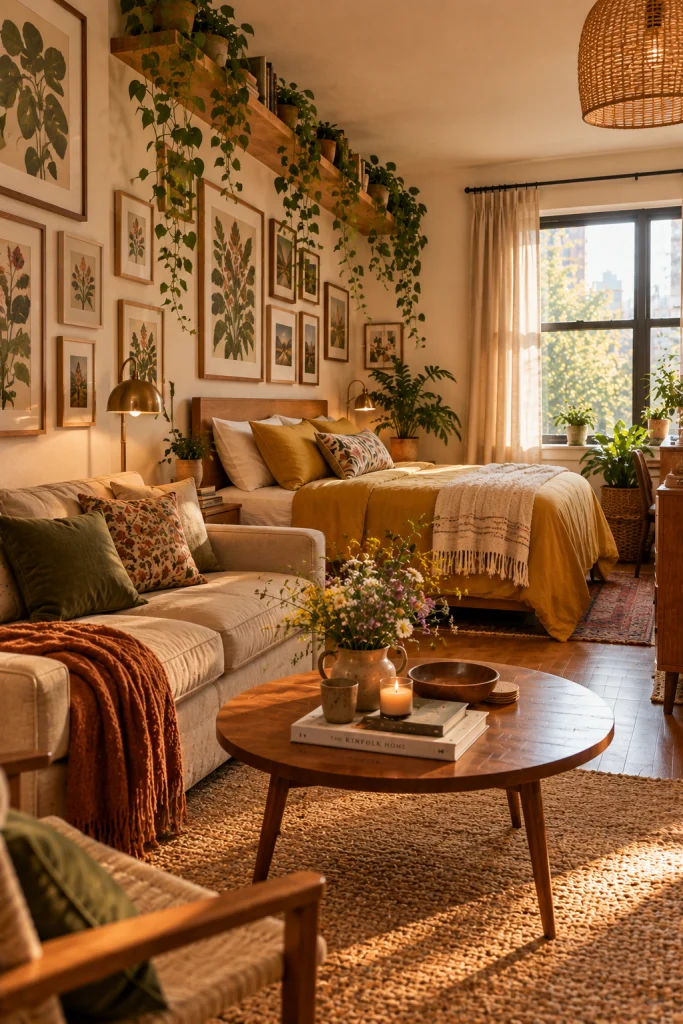
A hanging plant fills vertical space and draws the eye upward in a way no shelf plant can, making the ceiling feel higher. A trailing pothos in a hook above a gallery wall of botanical prints, paired with warm mustard linen bedding, gives the whole space a calm, nature-forward energy. For more plant styling ideas in a tight footprint, see mini studio apartment plant ideas.
Tip: Use a swag hook rated for at least 15 pounds, heavier than most people think they need.
10. Try an Accent Wall as a Bold Statement
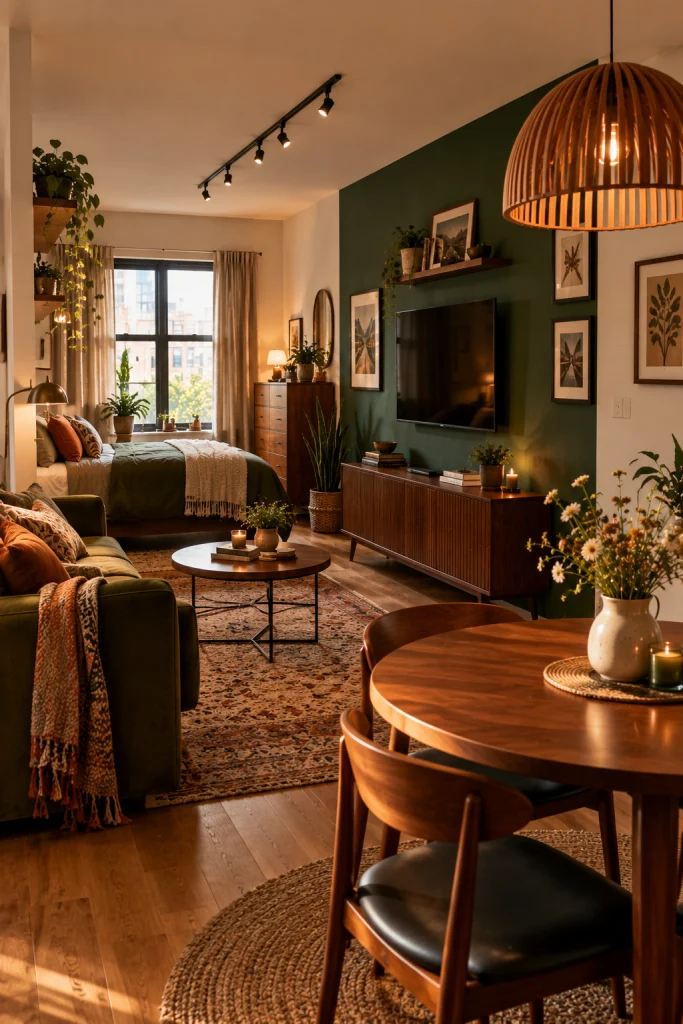
One painted wall can give a studio a completely different personality — a deep, saturated green behind the TV zone visually separates the living area from the sleeping space with no physical divider needed. Keeping the rest of the walls white lets the accent wall pop rather than overwhelm the room.
Tip: Peel-and-stick wallpaper panels in a matching color have gotten genuinely good and work well for renters.
11. Mix Pendant Lights to Set the Mood
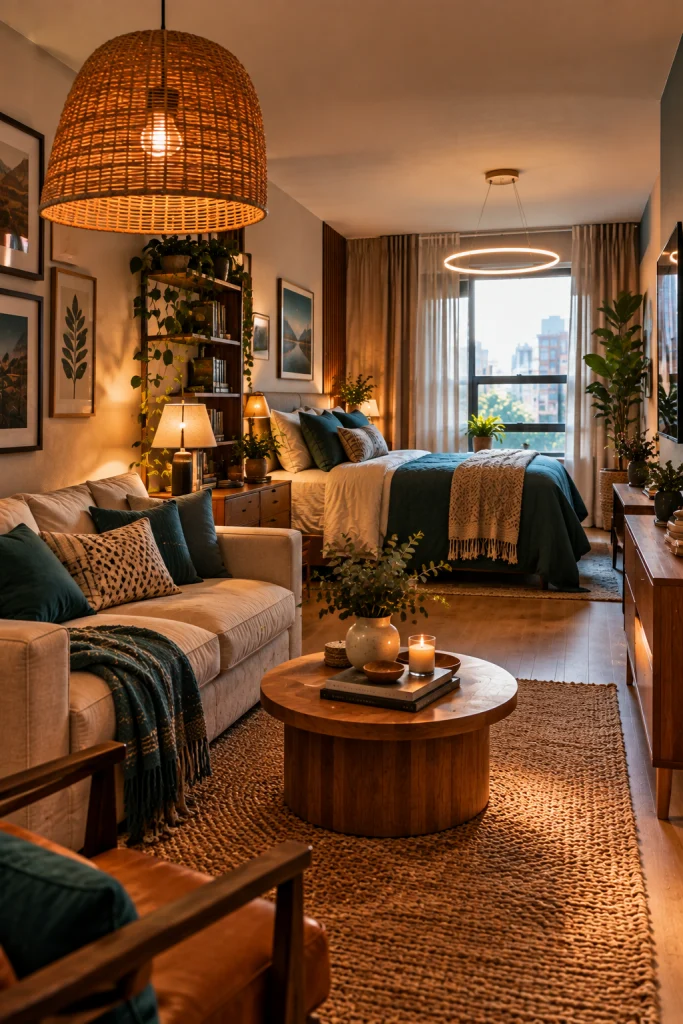
Most studios come with one ceiling fixture and zero personality, which layered pendant lighting fixes fast — a woven rattan pendant over the sofa area for warmth, and a modern LED ring pendant near the bed for a cleaner, contemporary feel. The contrast works because each pendant serves its own distinct zone.
Tip: Swapping the standard ceiling fixture for a plug-in pendant needs no electrician and stays fully renter-safe.
12. Use Open Shelving as a Soft Room Divider
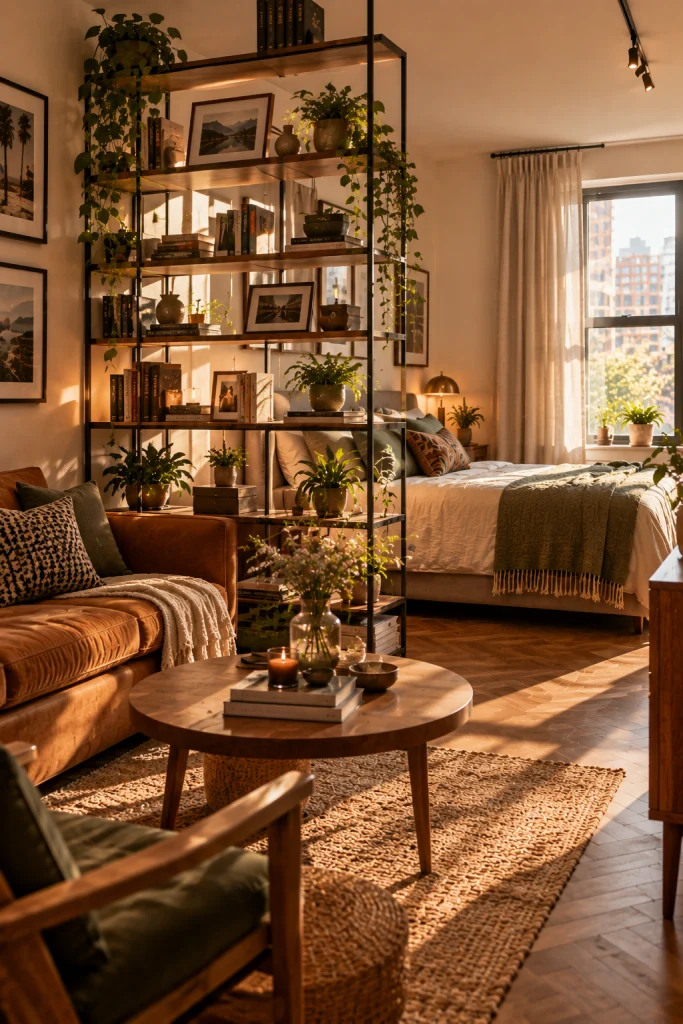
A wire-frame or open-back shelving unit beside the bed stores books and plants while creating a visual boundary between the sleeping and living areas, and unlike a solid bookcase, it lets light pass through so the room stays bright. For more on this exact divider type, see studio apartment open shelf divider ideas.
Tip: Leave some shelves intentionally empty, since breathing room is part of the design, not a gap to fill.
13. Make a Statement With One Pendant Light
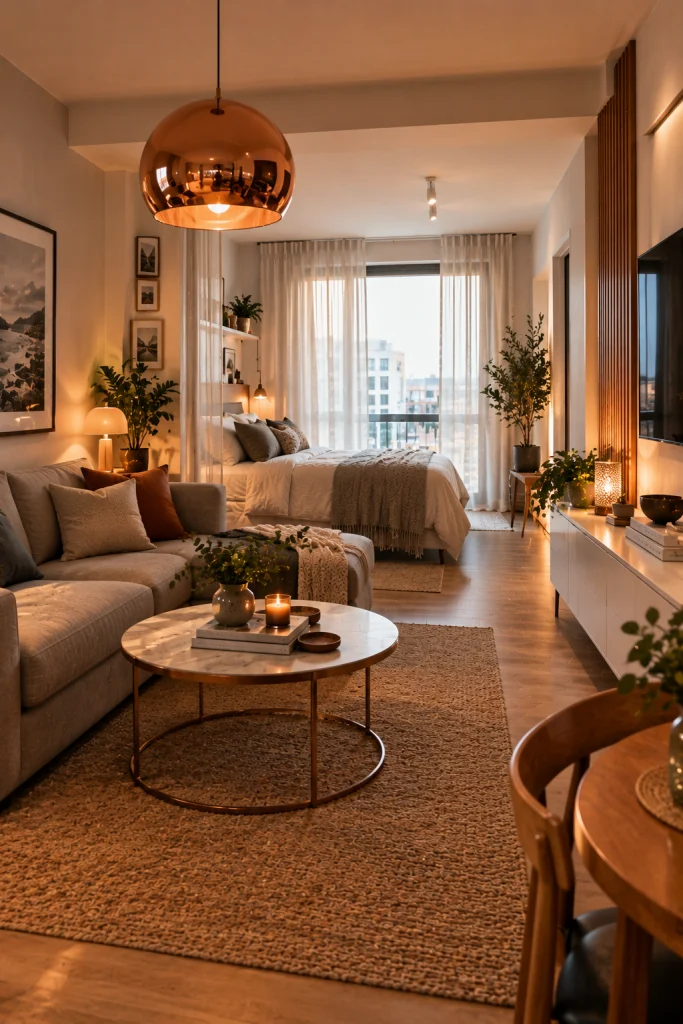
When the rest of the furniture stays neutral, a gray sectional, a white console, sheer curtains, one bold pendant light becomes the entire personality of the room. A polished copper globe overhead catches light from every angle and adds warmth that would otherwise feel cold and generic. For more on statement lighting like this, see studio apartment lighting decor ideas.
Tip: This is the one place worth splurging, since a great pendant light lasts a decade and defines the room.
14. Layer Plants Throughout the Space
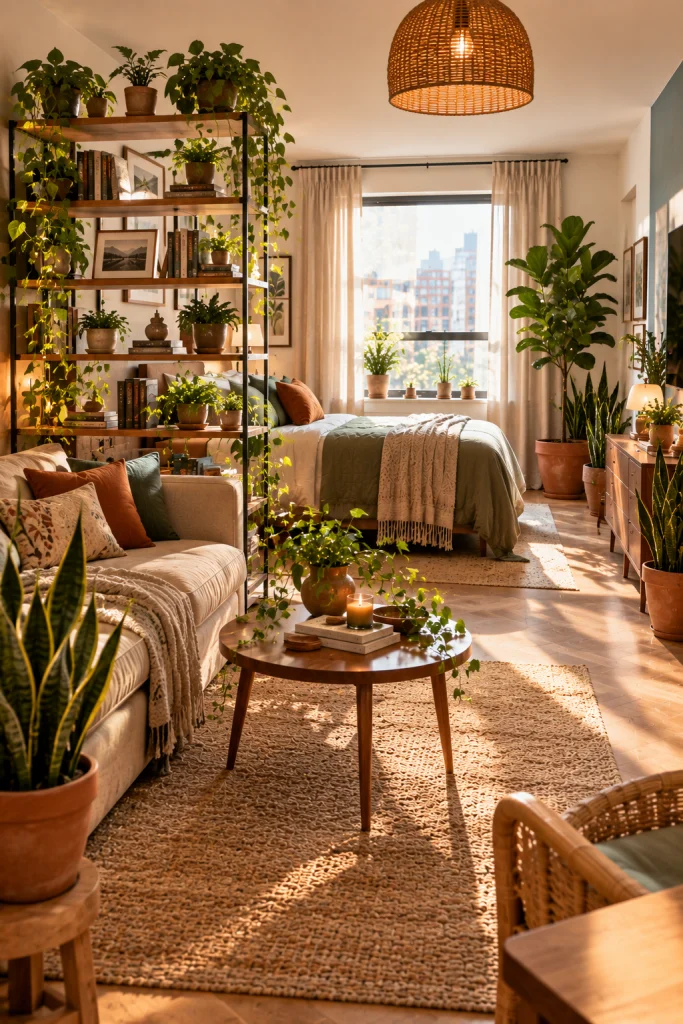
Plants are one of the cheapest forms of interior design available — snake plants in terracotta pots, trailing pothos on shelves, and a fiddle leaf fig in the corner make a studio feel alive in a way no throw pillow ever will. Distributing them throughout the space rather than clustering them in one spot is what makes every zone feel considered.
Tip: A snake plant is the place to start for anyone worried about killing plants, since it survives almost anything.
15. Build a Multi-Function Wall With Shelving and a Desk Nook
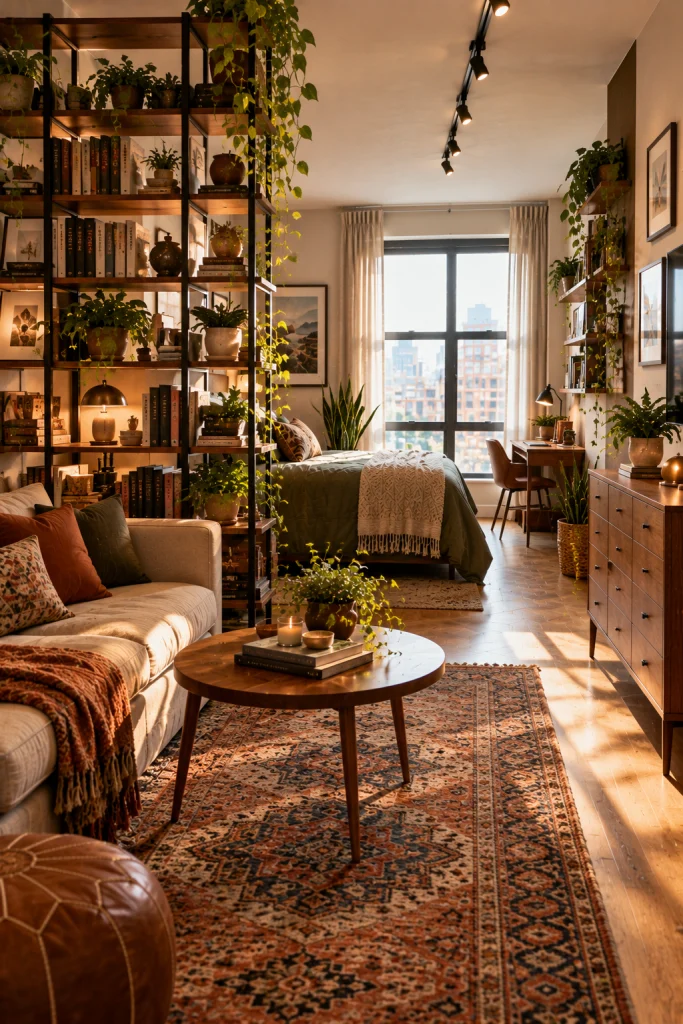
A floor-to-ceiling shelving unit along one wall handles books, decor, and storage, while a small desk tucked beside the window becomes a dedicated workspace without sacrificing the room’s flow. Track lighting overhead directs light exactly where it’s needed, and paired with a patterned rug and plenty of plants, the setup feels more like a library than a bedroom. For more ways to build a workspace into a studio, see studio apartment ideas with a home office corner.
Tip: A customizable, modular bookcase system stays sturdy even at full height and adapts to the wall it’s given.
16. Go Dramatic With LED Cove Lighting
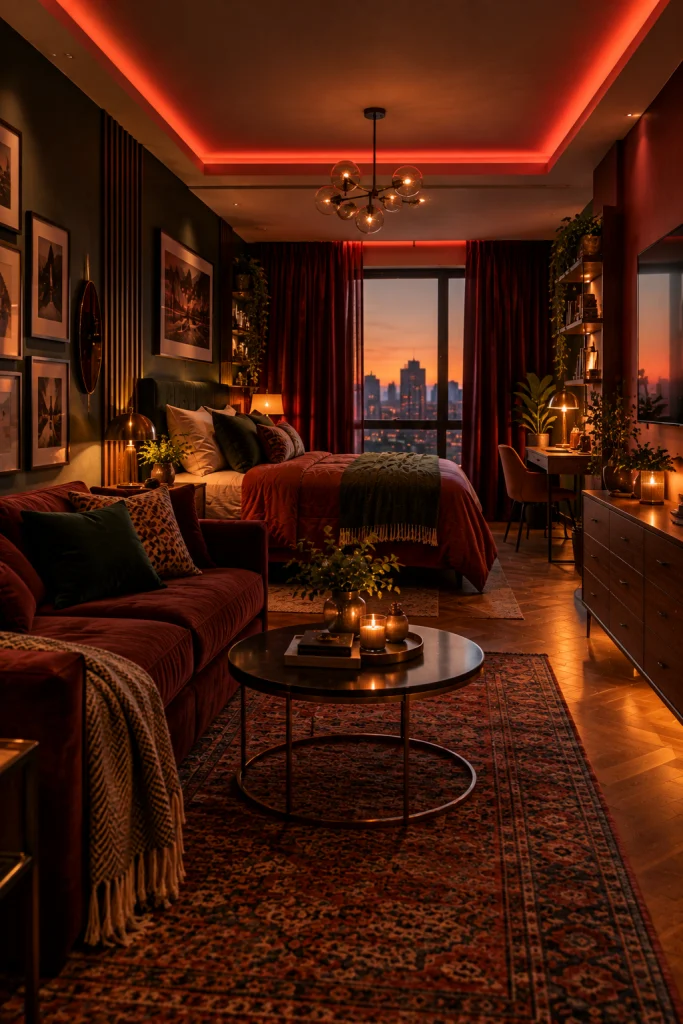
LED cove lighting tucked into a tray ceiling and set to a warm red transforms a studio completely after dark, leaning cinematic without going fully over the top. Pairing it with a deep accent wall and velvet curtains commits fully to the drama, which isn’t a minimalist move but makes the room genuinely unforgettable.
Tip: Smart LED strip lights that let the color be dialed in are worth the investment for this kind of effect.
17. Use a Sliding Door to Create Actual Privacy
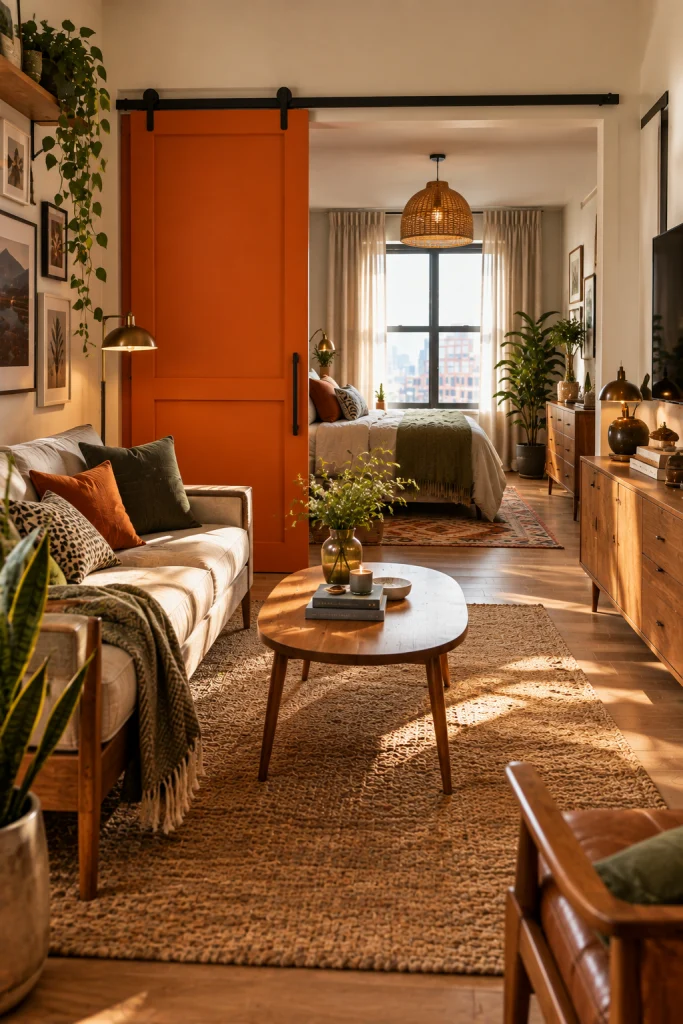
A sliding barn door is the closest thing to a real bedroom wall a studio can have without structural work. A bold orange door creates an actual visual and physical divide between the sleeping zone and the living area, reading as a design feature when open and delivering real privacy when closed.
Tip: A hollow-core door in a poor finish undercuts the whole look — a real wood panel or quality MDF option makes a noticeable difference.
Common minimalist studio mistakes
- Mixing too many wood finishes. One dominant wood tone across the major pieces reads as designed; several competing tones read as mismatched.
- Leaving walls completely bare. A gallery wall or floating shelf uses almost no floor space while adding real personality to a room that needs it.
- Treating one overhead fixture as enough. Layering two or three light sources, like a pendant and a lamp, does more for mood than a single ceiling light ever will.
Quick answers
Can a minimalist studio still use bold color?
Yes, minimalism is about restraint in quantity, not avoiding color entirely, so two or three committed colors repeated through textiles still reads as minimal.
What’s the easiest way to divide a studio without a wall?
Positioning the sofa with its back to the bed, or adding an open shelving unit between the two, both create a clear boundary without any construction.
Does a round rug work better than a rectangular one in a small space?
A round rug tends to define a sitting area more clearly in an open room, since it reads as a deliberate shape rather than a default rectangle.
How many light sources should a studio apartment have?
At least two or three, combining a ceiling fixture or pendant with a lamp or floor light, since one overhead source alone tends to flatten the room.
Is a sliding barn door a good privacy solution for a studio?
Yes, it offers close to the privacy of a real wall without structural changes, and reads as a design feature even when left open.
What’s the most budget-friendly way to add personality to a studio wall?
A gallery wall of personal photos in matching frames costs very little and makes a far bigger visual impact than a few scattered individual pieces.
Should every shelf in a studio be fully styled?
No, leaving a few shelves intentionally empty gives the room breathing room and keeps a styled shelf from reading as cluttered.
Final Thoughts
A clean, minimalist studio isn’t about removing everything, it’s about choosing pieces that earn their place and arranging them with real intention. Start with one idea, a statement pendant, a round rug, or a single accent wall, and let that one change show what the rest of the room needs next.