
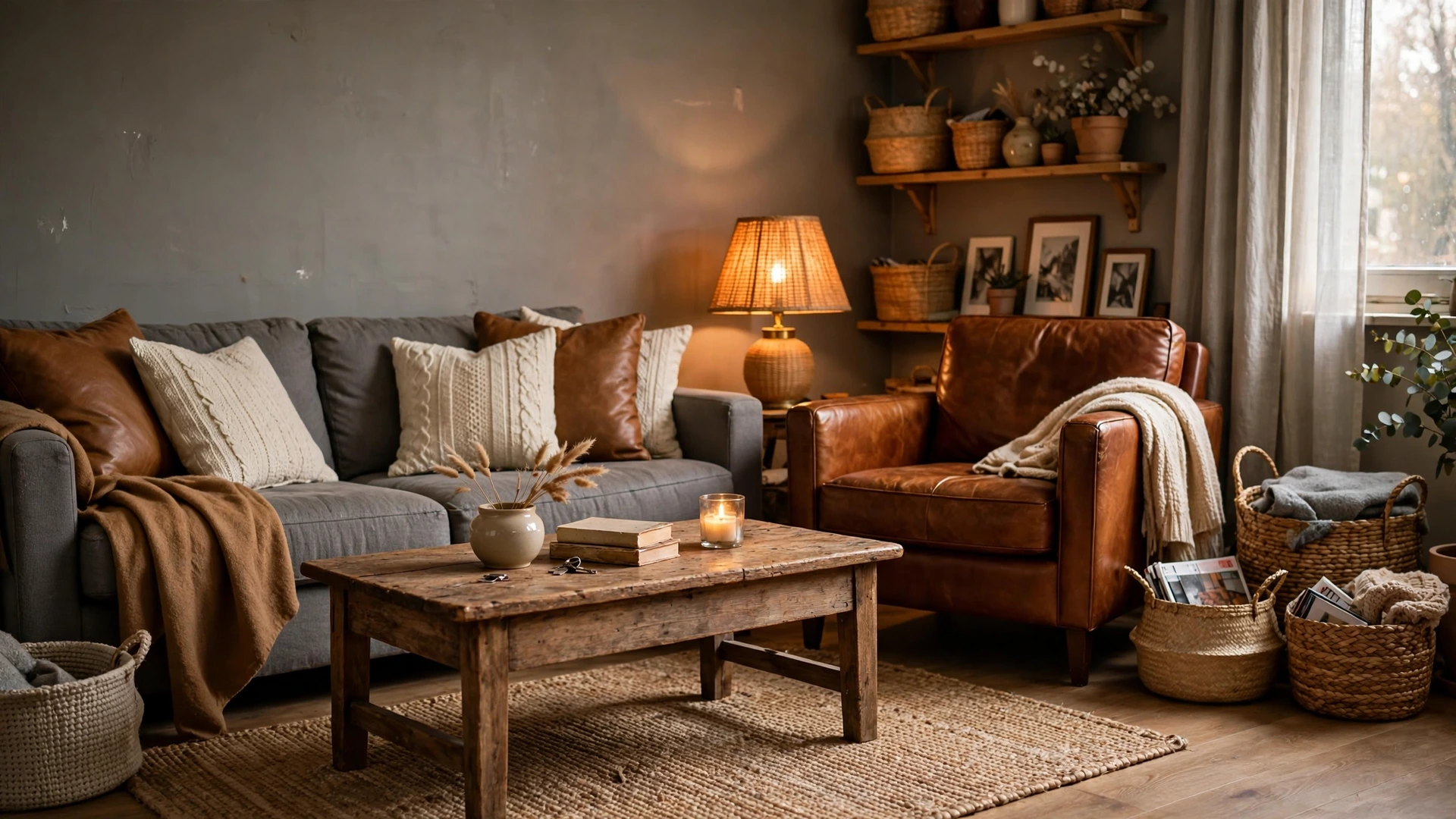
You can get a warm brown and grey living room on a budget with paint, thrifted wood and leather, pillow covers, a jute rug and warm bulbs. Spend on the big visible items first. Here are 21 ideas with tips and answers.
Brown and grey look expensive because they are quiet colors, so you do not need many pieces to make the room feel finished. The cheapest changes are paint, rearranging, covers and secondhand wood. Each idea below gives the short version first, then the detail and one tip. If you want more combinations, these brown and grey living room ideas are a good place to browse.
1. Paint the walls a warm grey
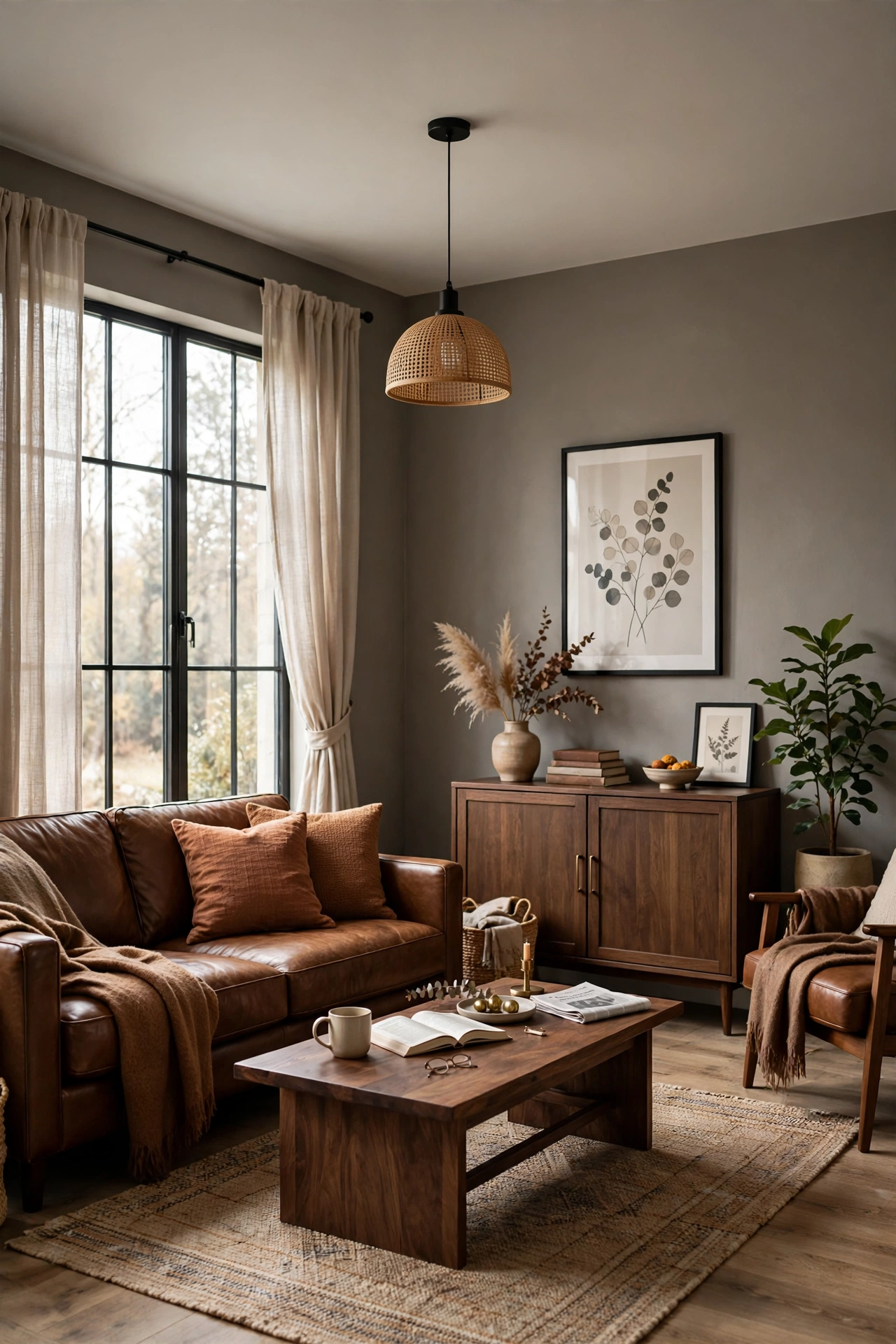
Paint is the cheapest way to change a whole room, and a warm grey sets the base for brown decor. Choose a grey with a slight beige undertone so it blends with wood and leather. Use a matte or eggshell finish, which hides wall flaws. Paint the ceiling a lighter shade or white to lift the room. One gallon often covers a small living room wall set, but check the label for coverage.
Pro tip: Test two samples on the wall and check them in the morning and evening, and ask your landlord before painting if you rent.
2. Rearrange before you buy anything
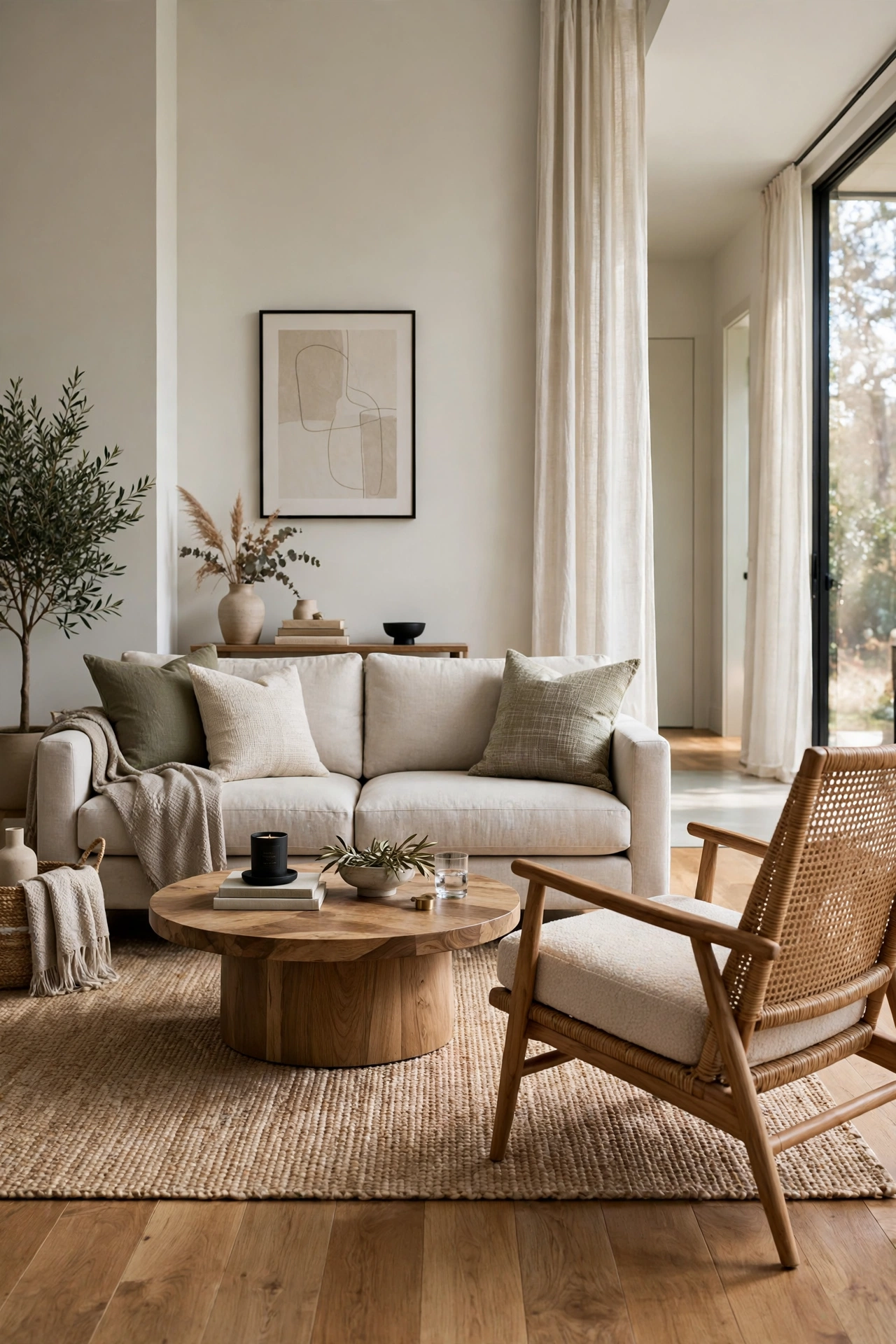
Moving furniture costs nothing and can change how the room feels. Pull the sofa a few inches off the wall, angle a chair and center the coffee table. Clear the walkway so the room looks larger. Move the best piece, such as a wood table or leather chair, to the focal point. Take a photo before and after to compare.
Pro tip: Keep about 30 inches of clear walkway, and try each layout for a day before you commit.
3. Thrift a wood coffee table and refresh it
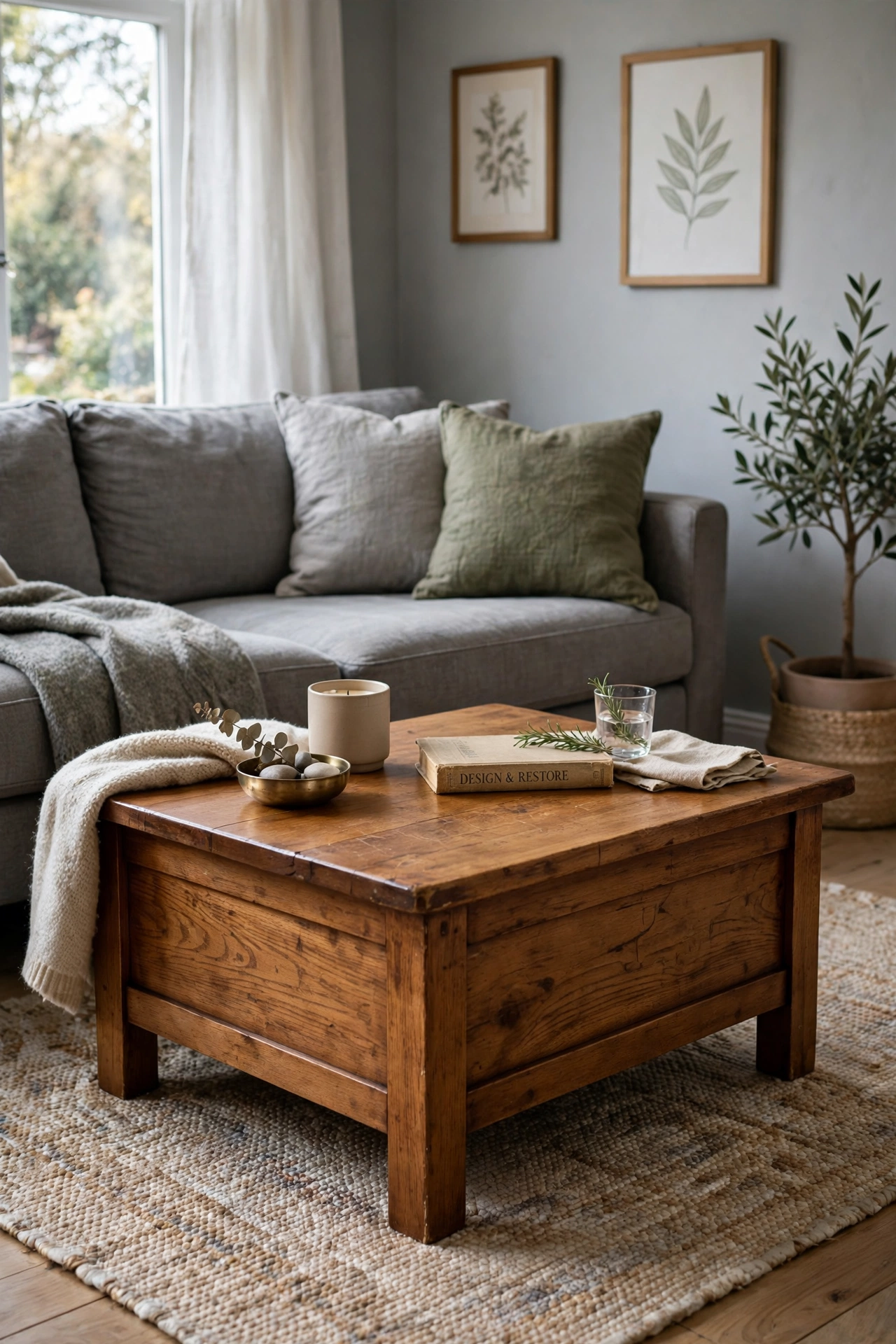
A secondhand wood coffee table adds brown at a low cost, and a light refresh makes it look new. Look for solid wood with a flat top and sturdy legs. Clean it, lightly sand scratches and apply a wood oil or wax. A warm walnut or oak tone suits a grey sofa. Keep the styling simple with a tray and a plant.
Pro tip: If the piece is old and painted, test for lead paint before sanding, wear a dust mask and sand in a ventilated area.
4. Use a slipcover to refresh an old sofa
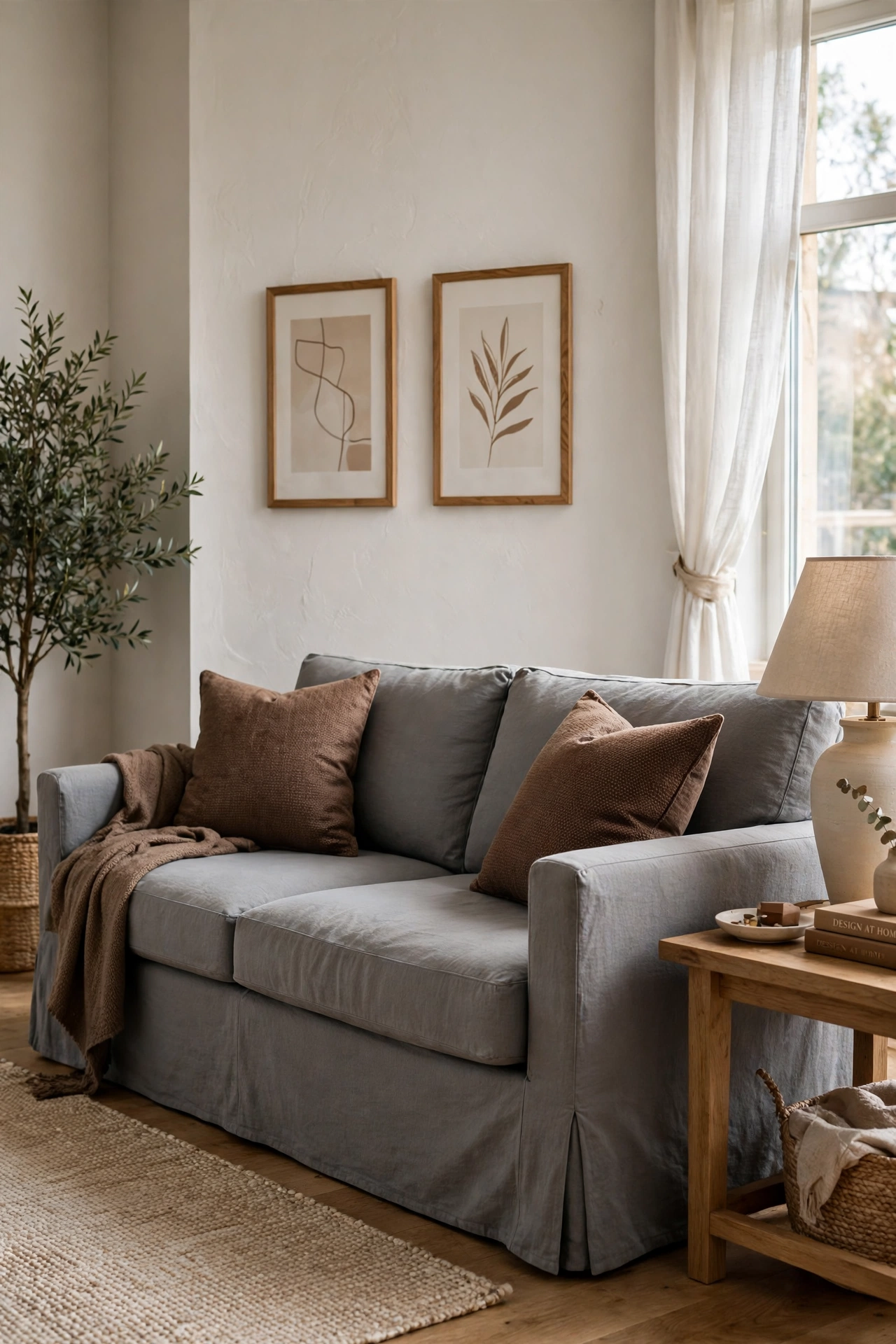
A slipcover in grey can make a worn sofa look new and costs far less than replacing it. Choose a fitted style in a textured fabric, and wash it before use so it softens. Pull the fabric smooth and tuck it into the seams for a tailored look. Add brown pillows on top. It also protects the sofa from wear and pets.
Pro tip: Measure the sofa length, depth and height before you buy, and check that the cover lists those sizes.
5. Swap pillow covers, not whole pillows
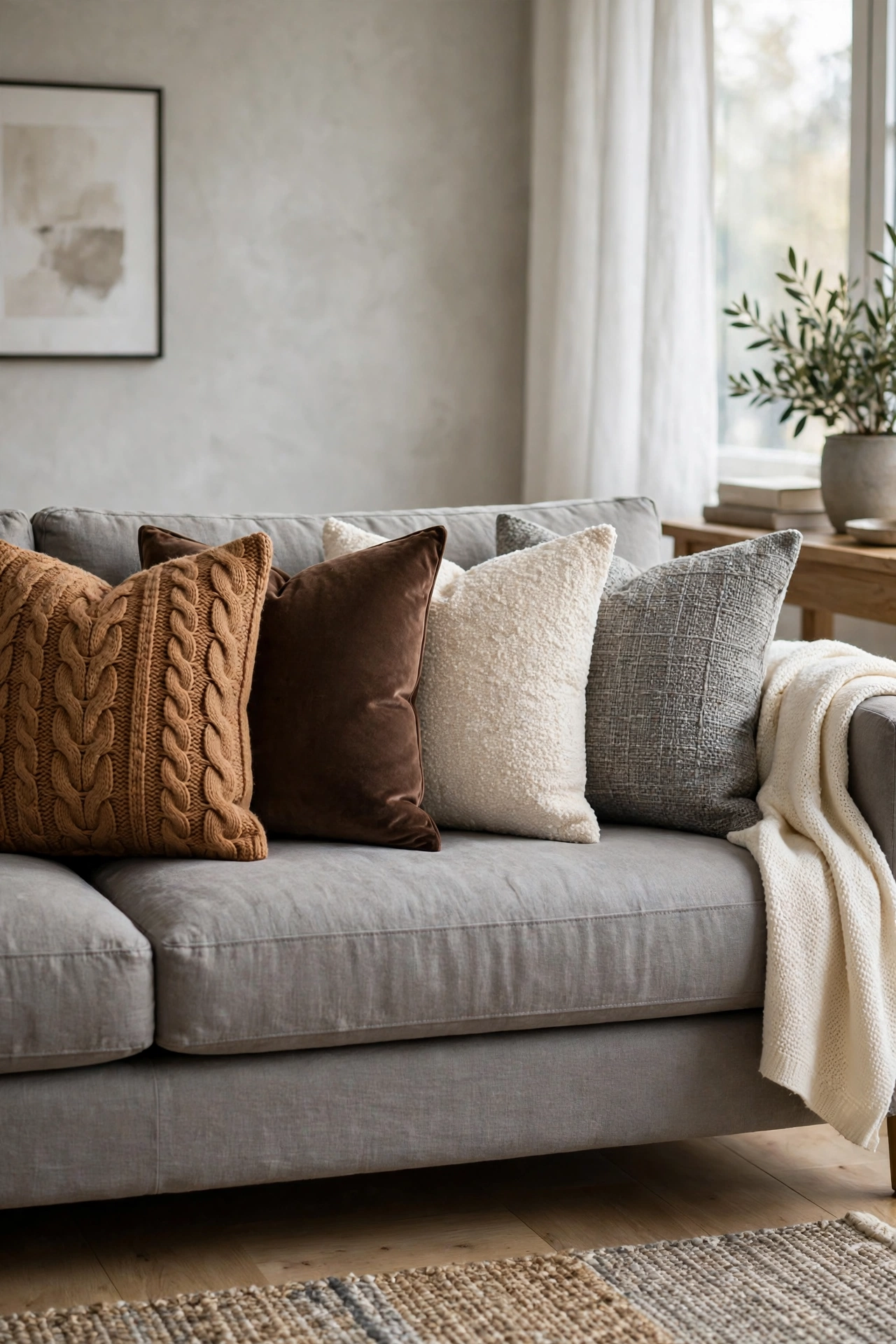
New covers cost less than new pillows and change the look at once. Use caramel, chocolate, cream and grey covers over your existing inserts. Mix textures like linen, knit and velvet. Keep the count at three to five. Washing the old inserts keeps them fresh.
Pro tip: Use an insert one size larger than the cover so the pillow looks full, and fluff it daily.
6. A jute rug for natural warmth
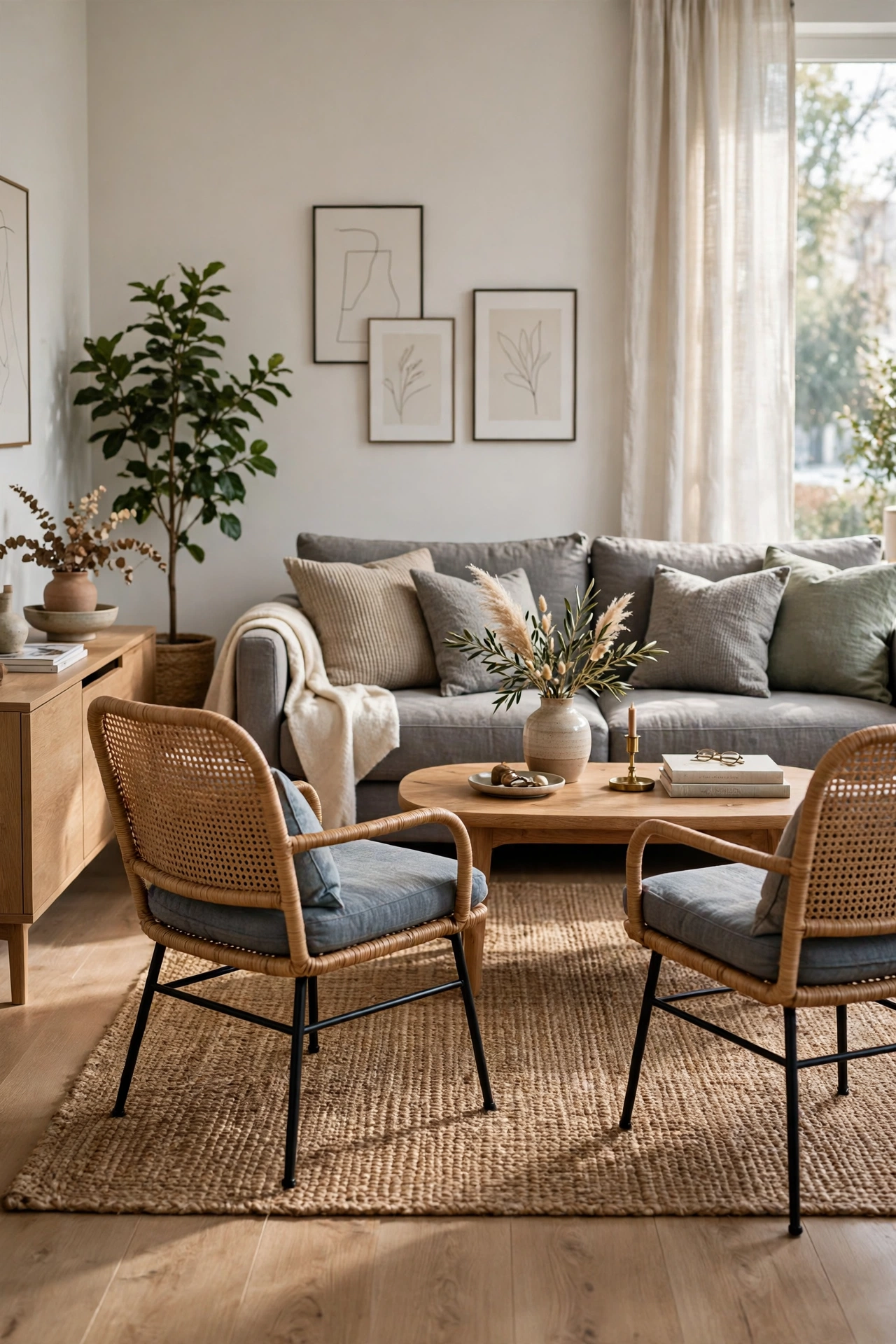
A jute rug is one of the most affordable ways to add brown texture. The golden fiber warms a grey floor and contrasts with soft sofa fabric. Choose a size that lets the front legs of the sofa and chairs sit on it. Layer a smaller secondhand wool rug on top for softness. It anchors the whole seating area.
Pro tip: Use a non-slip pad and keep jute dry, since moisture can stain and weaken the fiber.
7. Thrift a wood-framed mirror
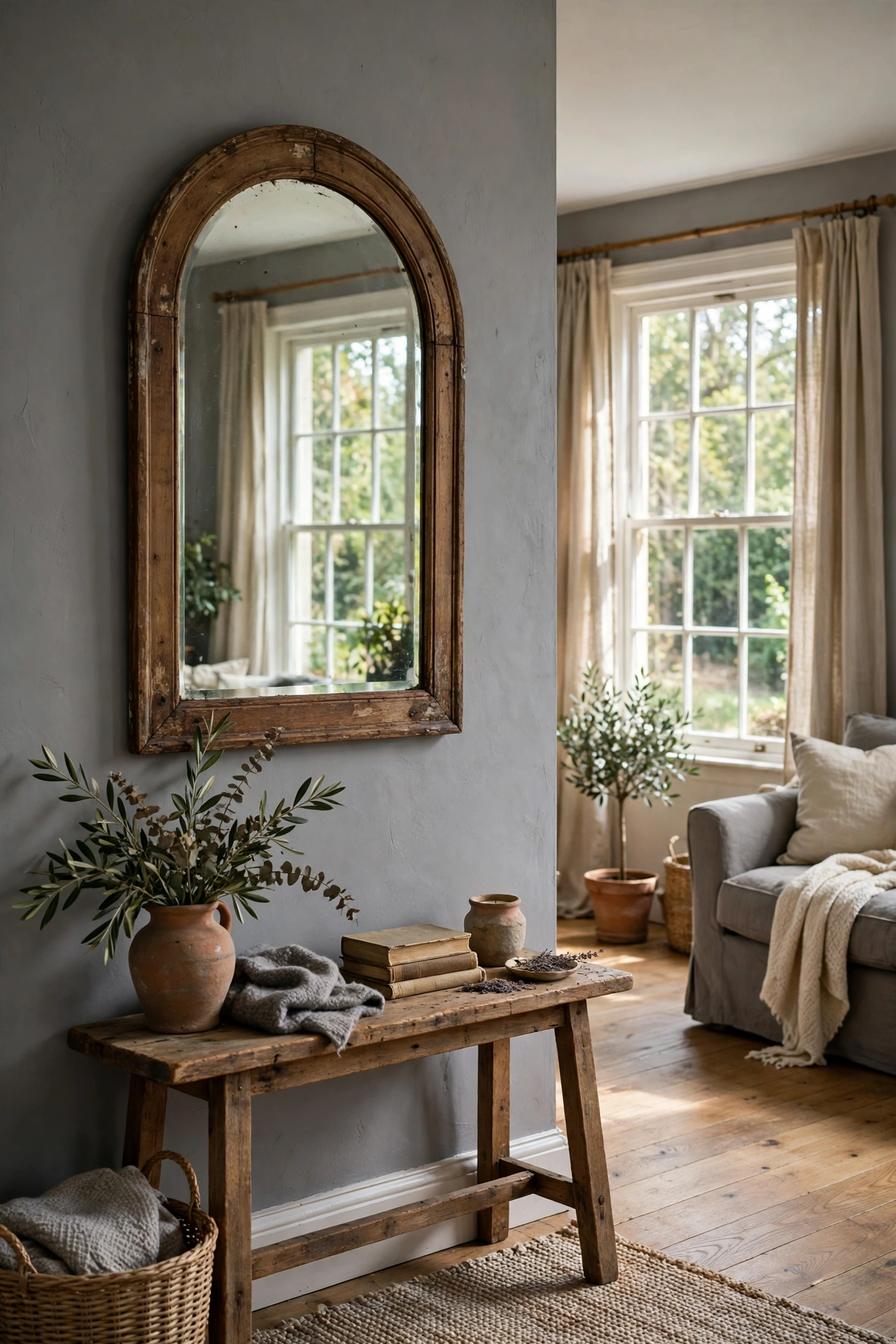
A thrifted wood-framed mirror adds a brown accent and doubles the light, and often costs little secondhand. Look for a solid frame with a clear glass. Clean it and touch up the frame with wax or a matching stain. Hang it opposite a window to reflect daylight. A round or arched shape softens the room.
Pro tip: Fix a heavy mirror into wall studs or use anchors rated for its weight, and use an anti-tip strap if you lean it.
8. Hang curtains high for a taller look
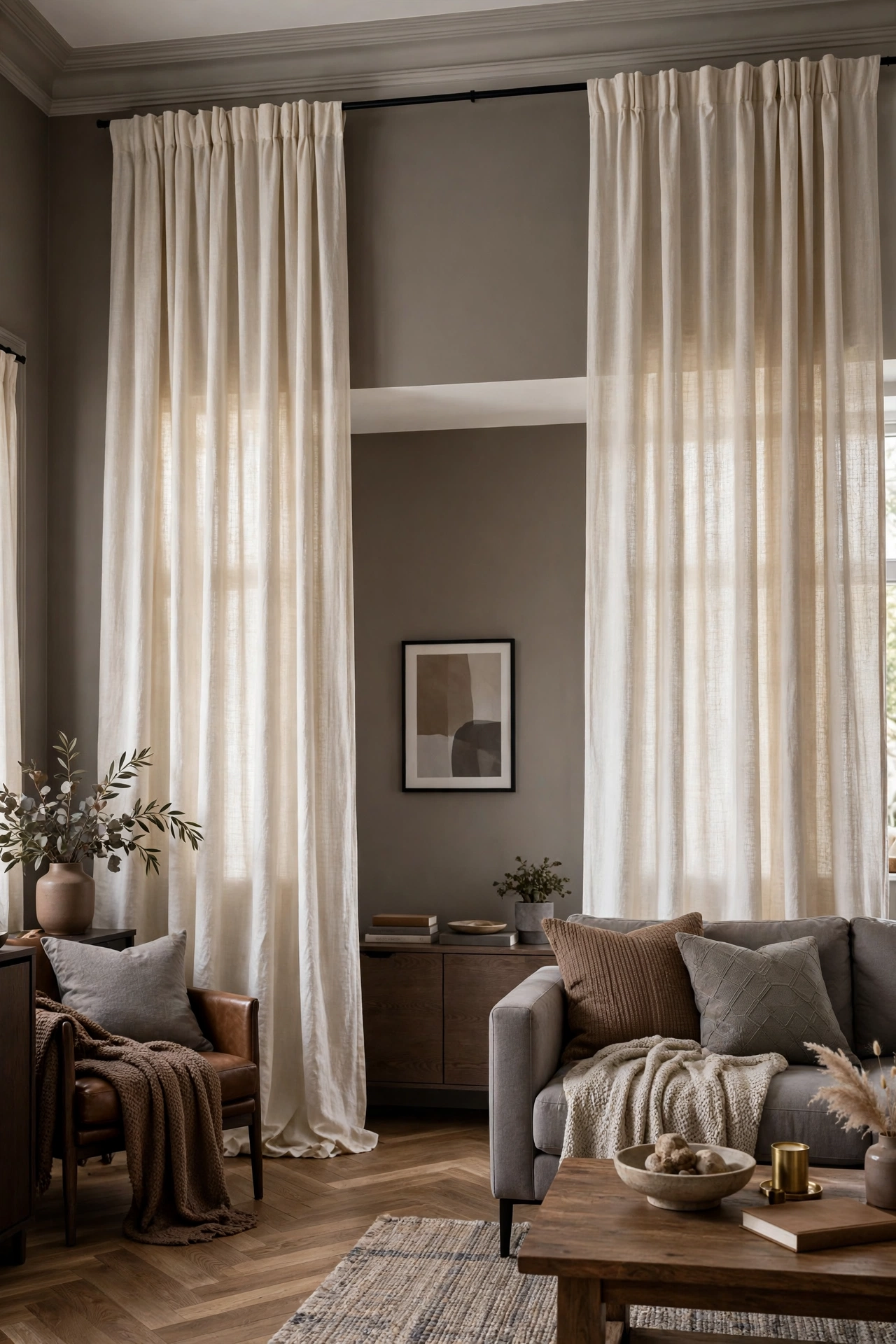
Curtains hung close to the ceiling make the room look taller, and it costs nothing extra to move the rod. Use simple linen-look panels in warm white or soft grey. Let them fall to the floor and skim it. A plain rod in black or wood finishes the look. Add sheers if you need privacy.
Pro tip: Hang the rod 4 to 6 inches above the window frame, and wash linen before hanging so the length stays accurate.
9. Peel-and-stick shiplap for renters
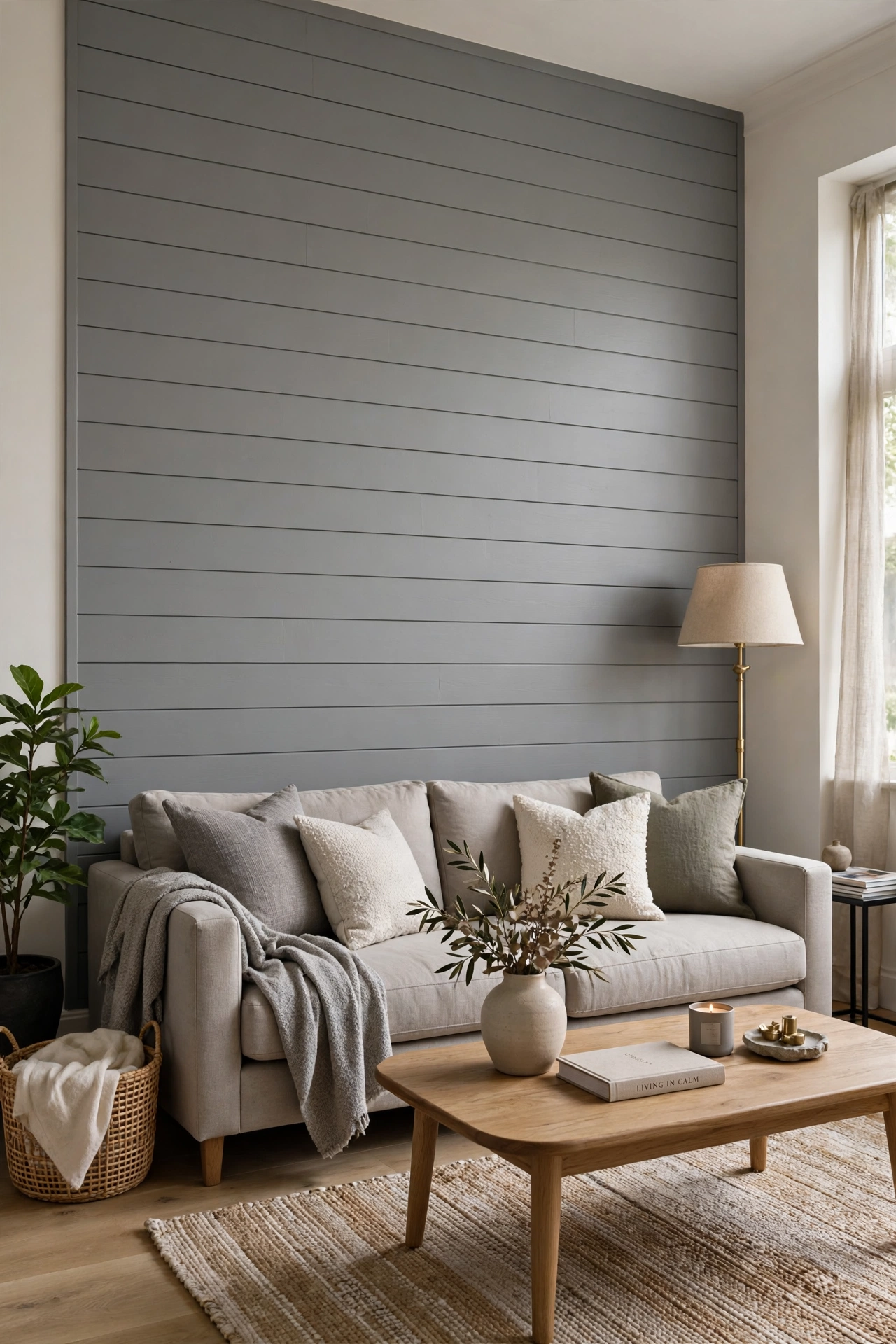
Peel-and-stick shiplap panels add farmhouse texture in grey without any tools. Use it on one wall behind the sofa or TV. The horizontal lines widen the room. Choose a matte grey finish, and press each panel firmly from the center out. It also removes more easily than nailed panels.
Pro tip: Test a small patch in a hidden spot first, since results vary by wall surface, and avoid textured or damp walls.
10. A DIY gallery wall with thrifted frames
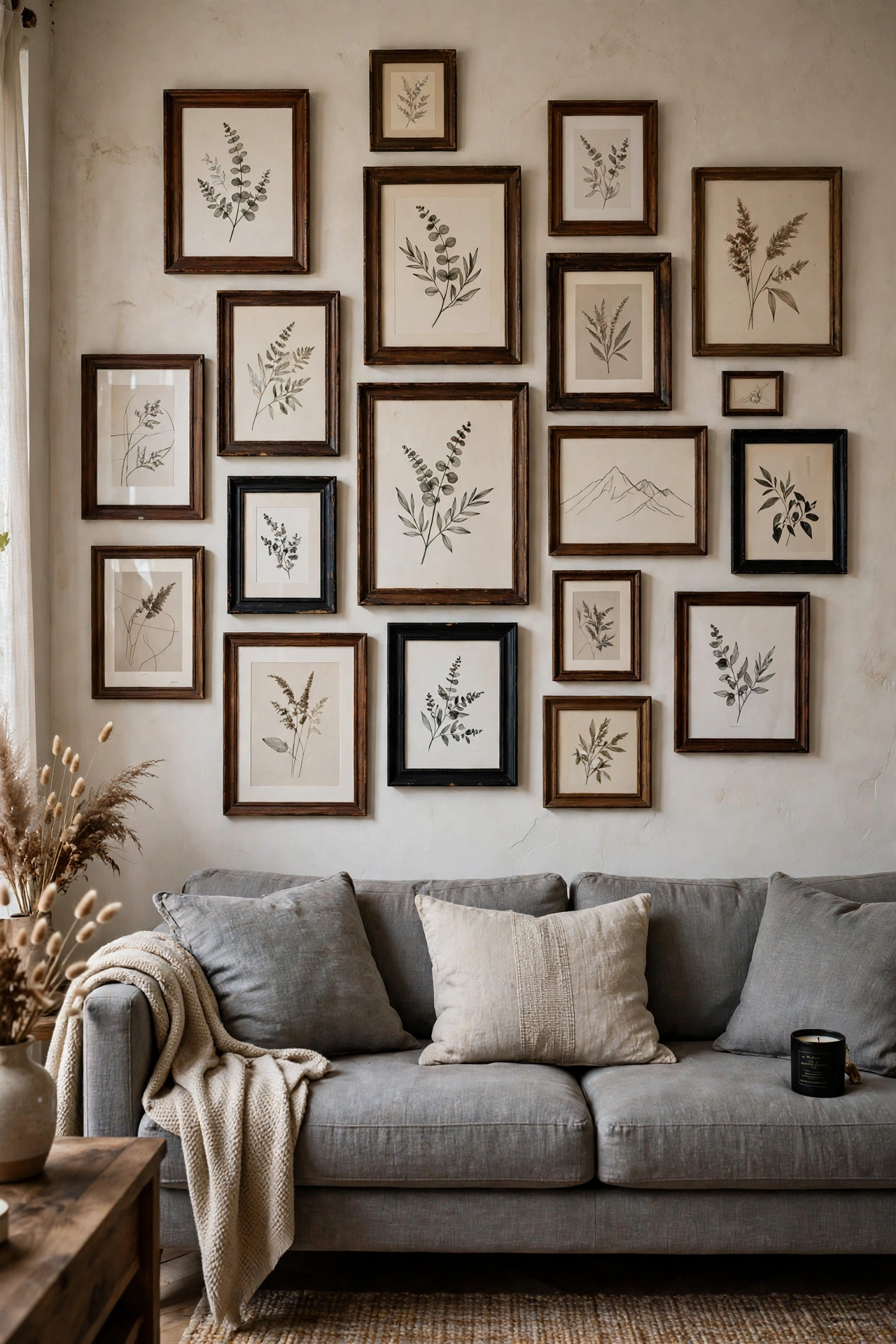
A gallery wall of thrifted wood frames and printed art is a cheap way to fill a blank wall. Paint mismatched frames the same brown or black for a cohesive look. Use black and white photos, sketches or free printable art. Keep the spacing even, about 2 to 3 inches. Place it above the sofa.
Pro tip: Lay the frames on the floor first and trace them on paper, so you hang each piece only once.
11. Thrifted baskets for storage
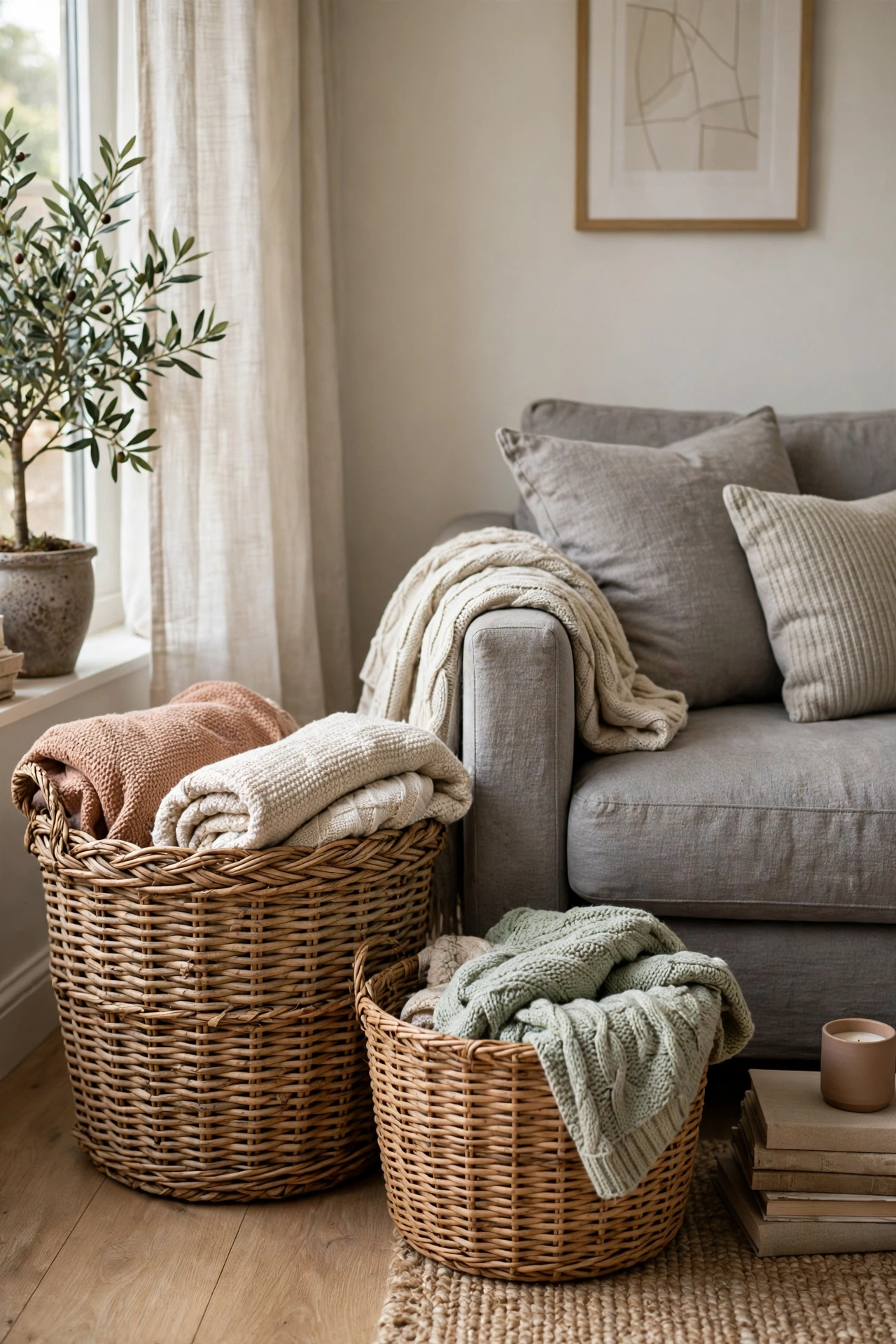
Thrifted woven baskets hide clutter and add brown texture. Use a large one for throws and smaller ones on shelves. Choose natural fiber in tan or light brown. Clean them with a dry brush and let them air out. Two or three sizes look collected.
Pro tip: Check secondhand baskets for loose fibers or odors, and line them with fabric so they do not snag throws.
12. A secondhand leather accent chair
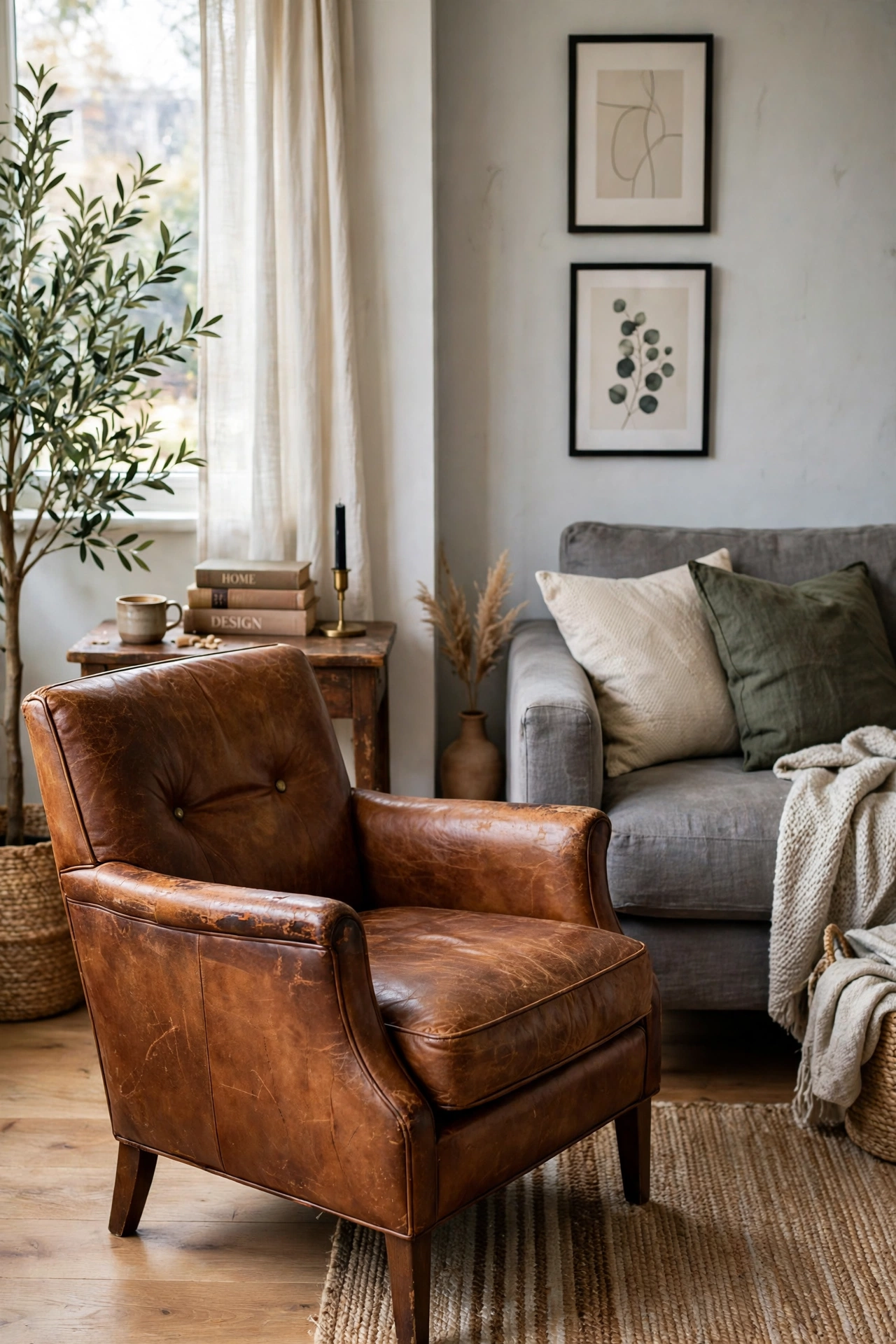
A secondhand leather chair adds a rich brown and gets better with age. Look for a solid frame and soft, supple leather. Clean it with a damp cloth and condition it. A cognac or chestnut tone suits grey. Place it at an angle to the sofa.
Pro tip: Sniff and inspect a used chair for odors, cracks and pests before you buy, and test that the frame does not wobble.
13. Thrifted lamps with warm bulbs
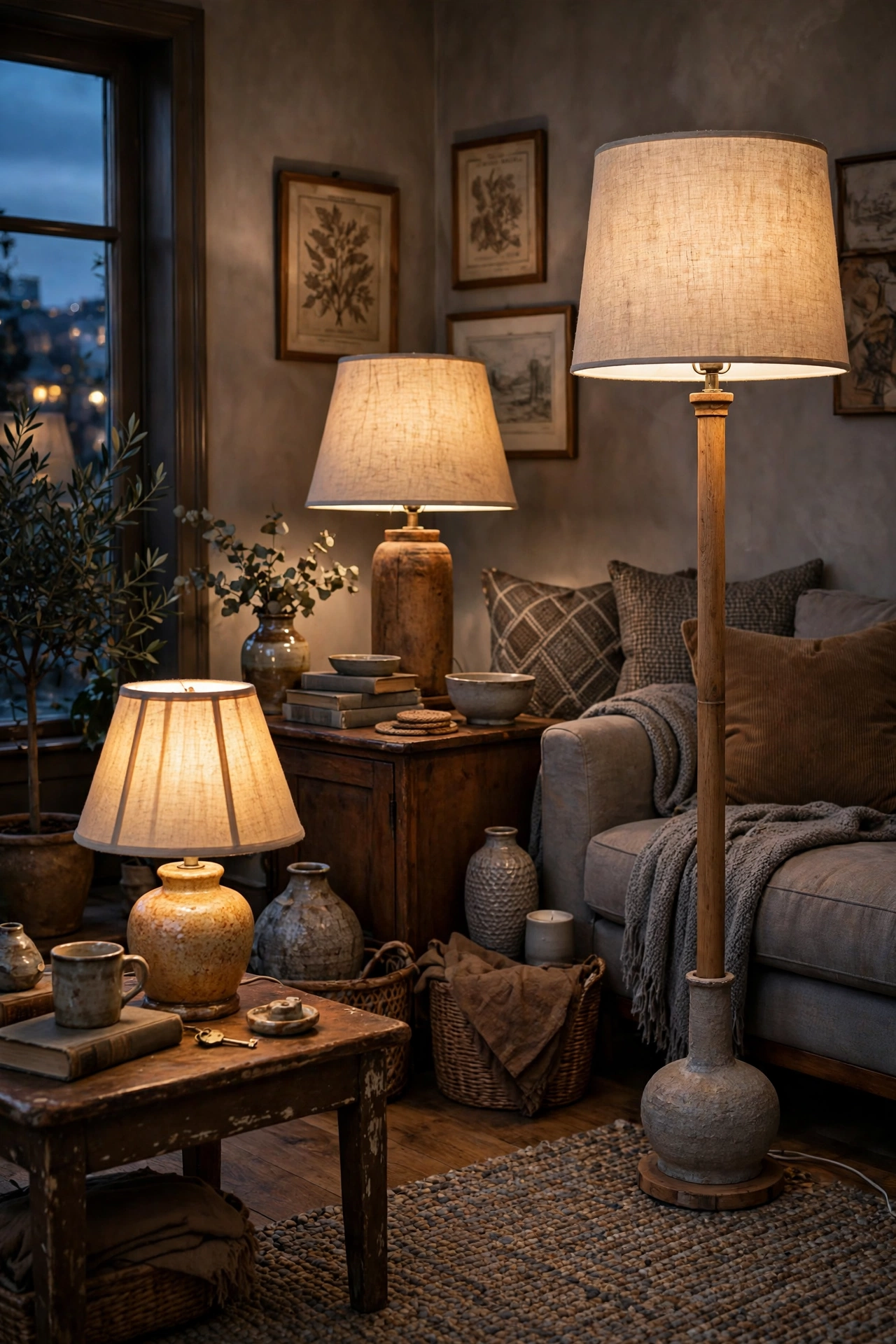
Thrifted lamps cost less than new ones, and warm bulbs make the room feel cozy. Look for wood, ceramic or brass bases and replace the shade with a linen one. Use warm bulbs around 2700K. Place lamps at different heights. Avoid one harsh overhead light.
Pro tip: Check the cord for cracks or fraying and replace it if worn, since old wiring can be a fire risk.
14. Free dried branches and stems
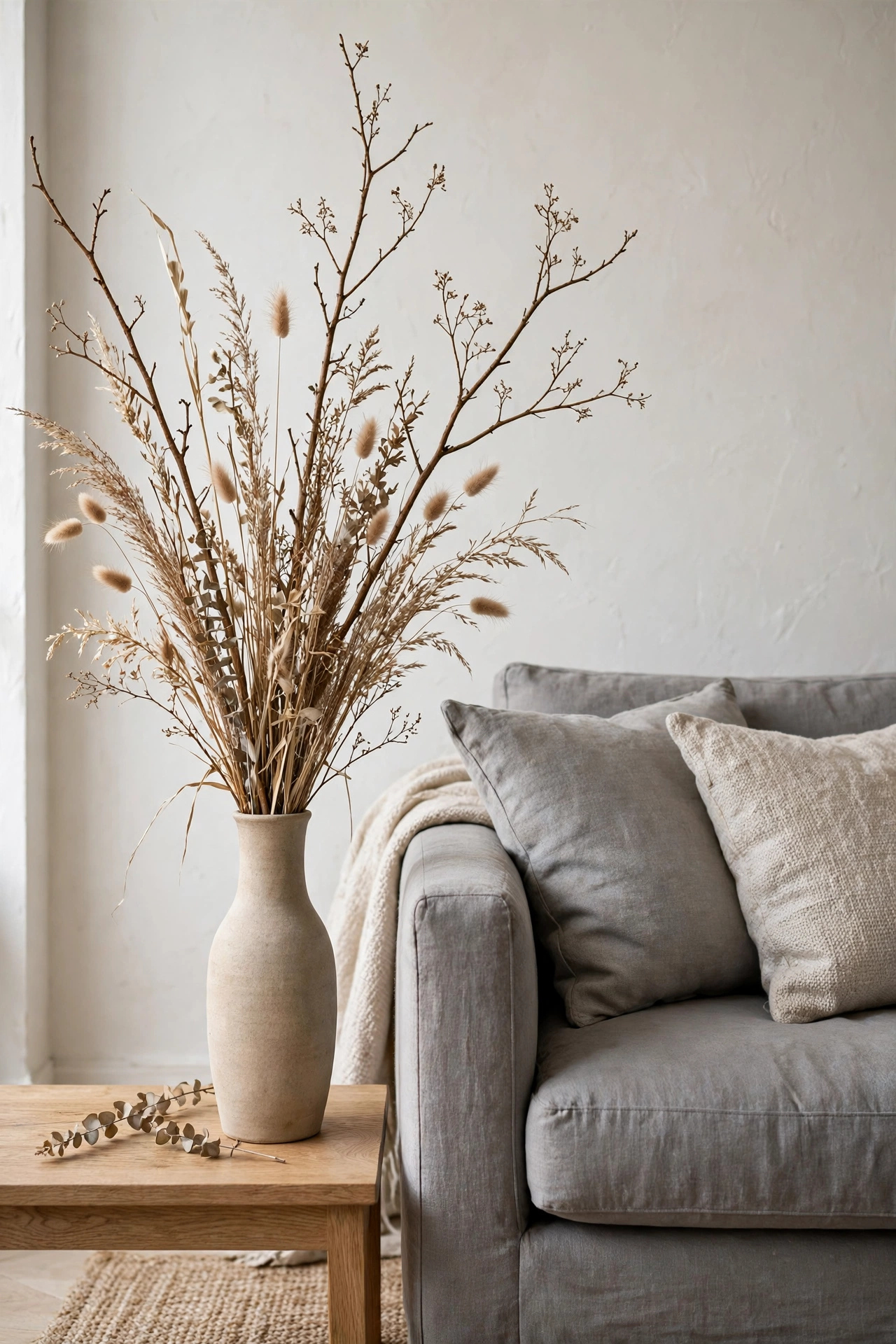
Branches and dried stems cost nothing and add height and softness. Cut a few branches from your garden, or gather dried grasses, and place them in a tall vase. Cream and tan tones suit brown and grey. They also add gentle movement to a still room. Replace them when they look tired.
Pro tip: Keep dried stems away from candles and heat vents, since they are dry and can burn.
15. A board and batten accent wall
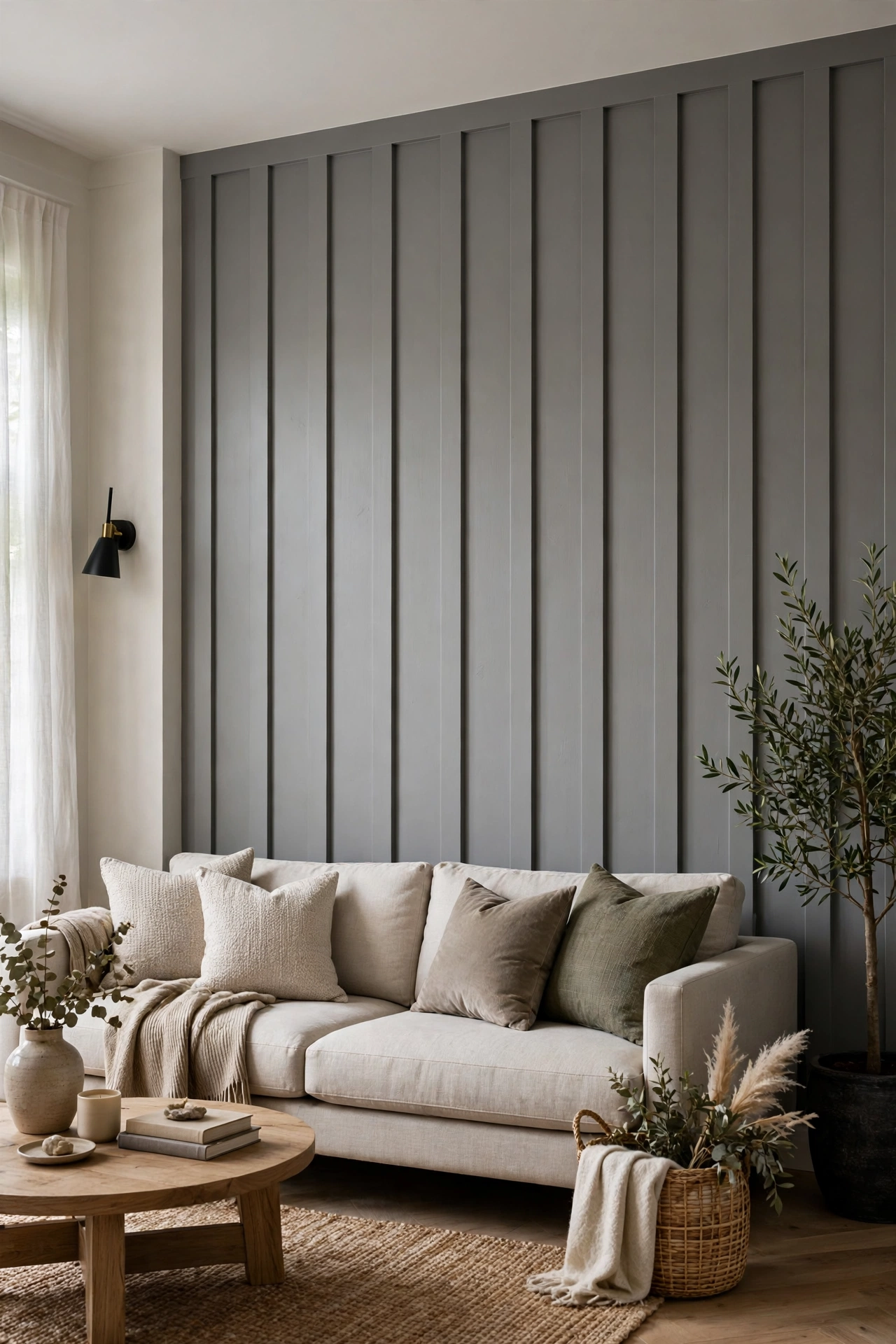
A DIY board and batten wall in grey adds depth for the cost of lumber and paint. Use thin wood strips and paint them the same grey as the wall. The vertical lines make the room look taller. Choose one wall only, such as behind the sofa. Measure and space the strips evenly.
Pro tip: Fix the strips with construction adhesive and small nails into studs where possible, and ask your landlord first if you rent.
16. Spray paint accents in matte black
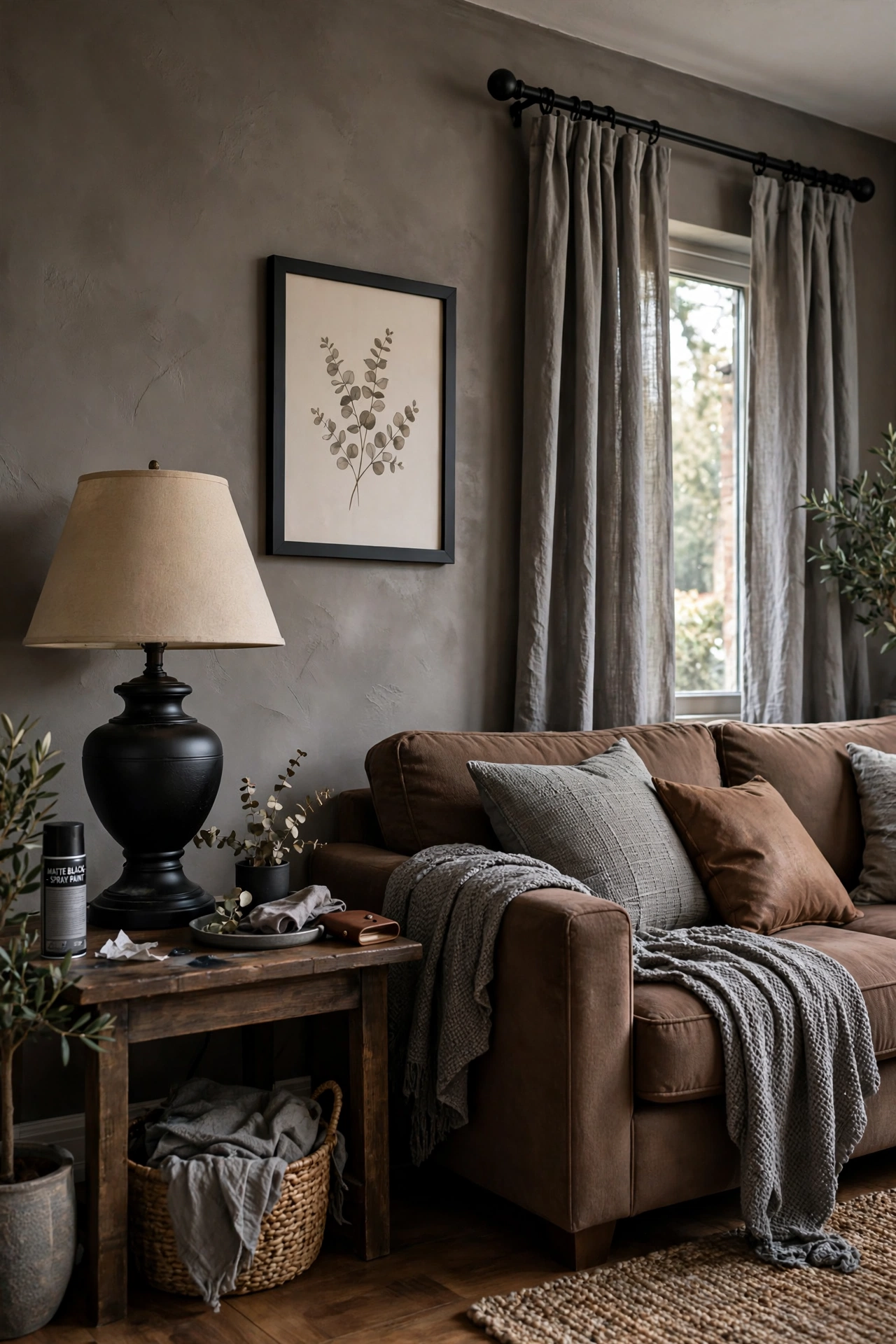
Matte black spray paint can refresh old lamps, frames and curtain rods for the cost of a can. Black adds a modern edge to brown and grey. Use it in three or four small places and repeat the same finish. Clean and lightly sand items first so the paint sticks. Apply thin coats.
Pro tip: Spray in a ventilated area outdoors, wear a mask and protect nearby surfaces, and let each coat dry fully.
17. A plaid throw for instant cozy
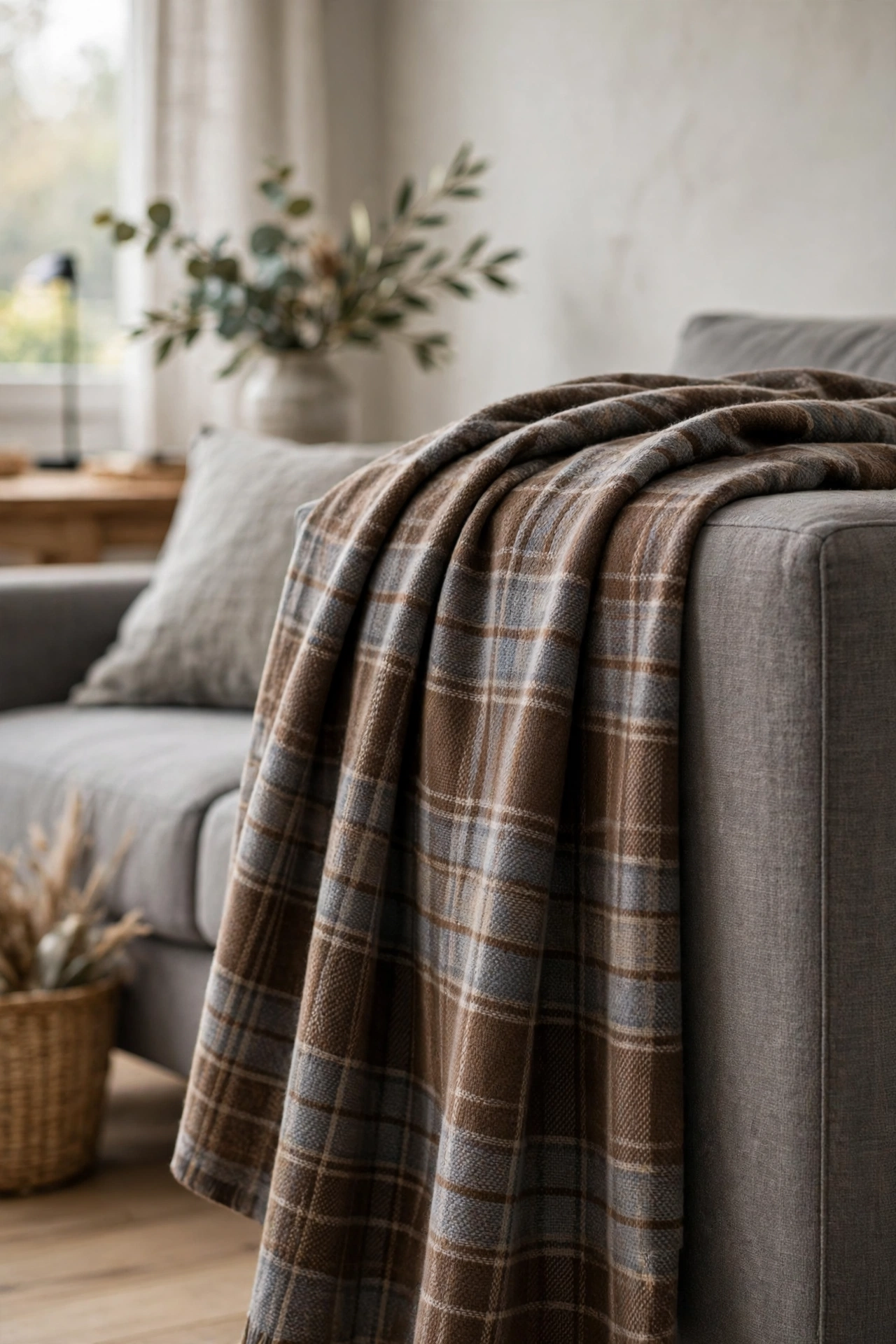
A plaid throw in brown and grey adds pattern and warmth to a plain sofa. Look for wool or cotton in a thrift store or sale. Drape it over one arm or fold it across the back. It also works as a real blanket. One plaid piece is enough.
Pro tip: Wash secondhand throws before use, and keep patterns to one or two so the room does not look busy.
18. Group thrifted vases in brown tones
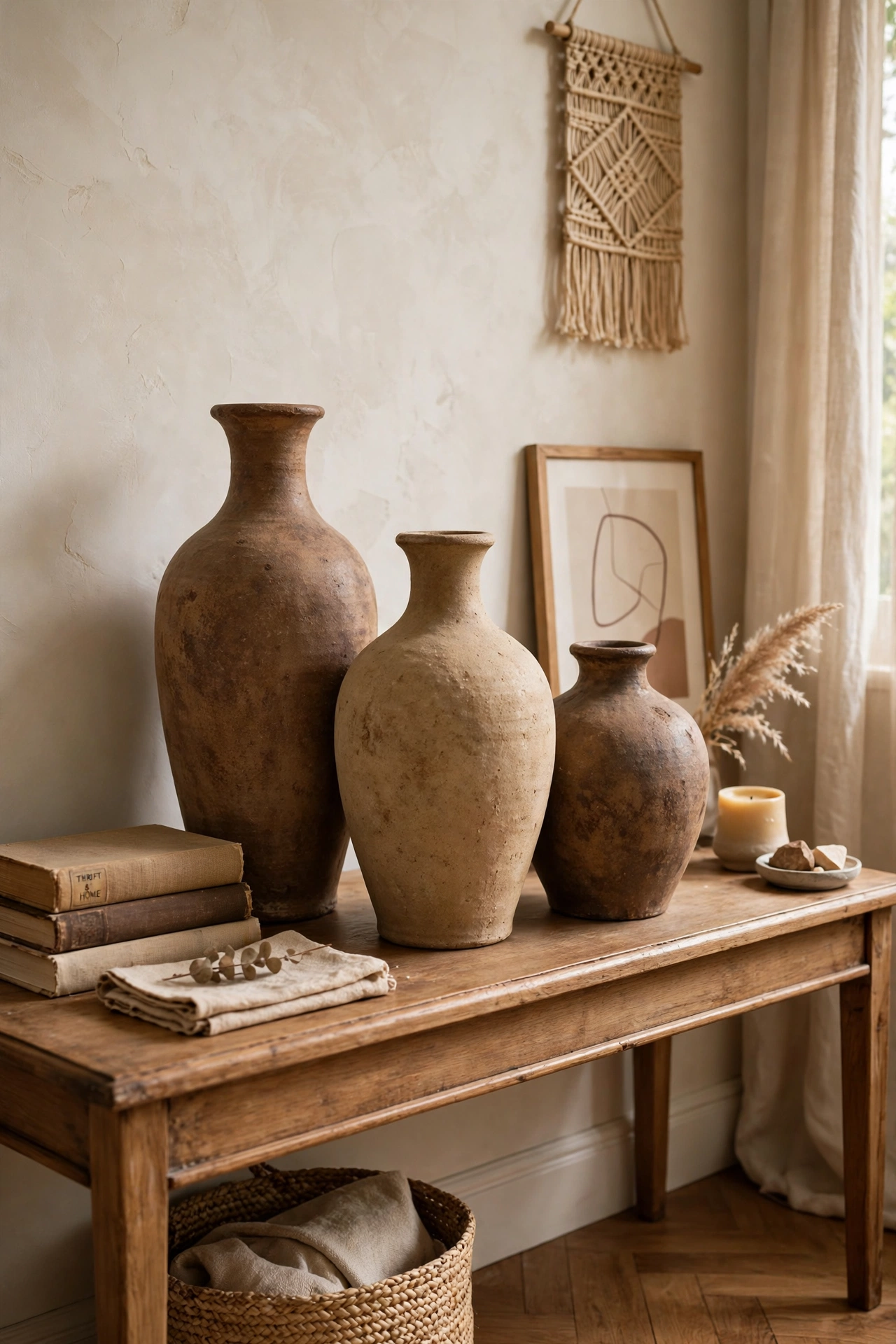
Thrifted ceramic vases in tan, brown and cream add quiet decor for little money. Group two or three in different heights on a console or shelf. Choose matte finishes. Add dried stems or leave them empty. The mix of shapes looks collected.
Pro tip: Group items in odd numbers and vary heights, and check each vase for cracks before use.
19. DIY floating shelves from lumber
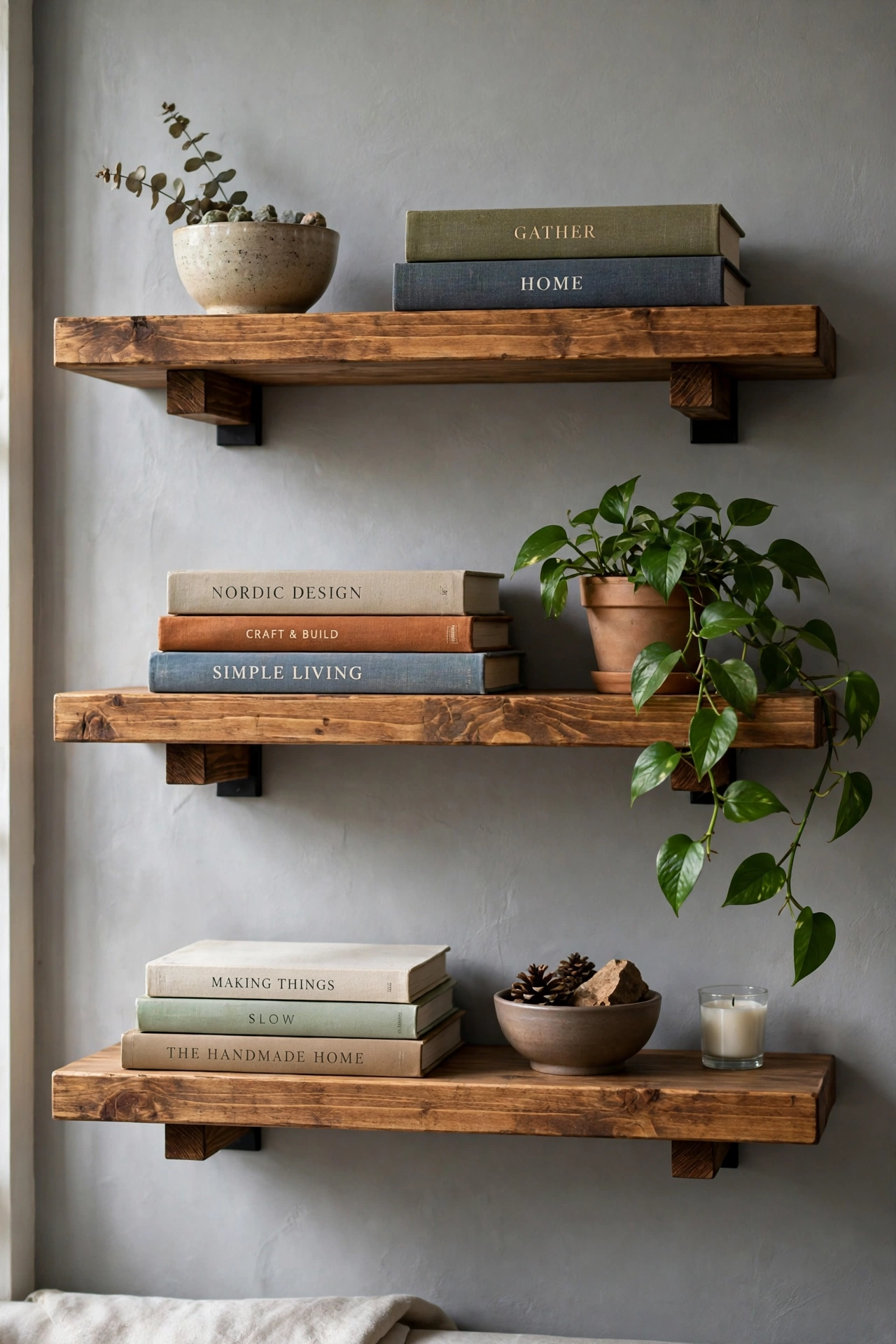
DIY floating shelves from lumber add brown wood and display space at low cost. Cut boards to length, sand and stain them to match your coffee table. Use proper brackets, not just screws. Style them with books, a bowl and a plant. Leave space around each item.
Pro tip: Fix shelves into studs or use anchors rated for the load, and keep heavy items on the lowest shelf.
20. Faux plants for green without upkeep
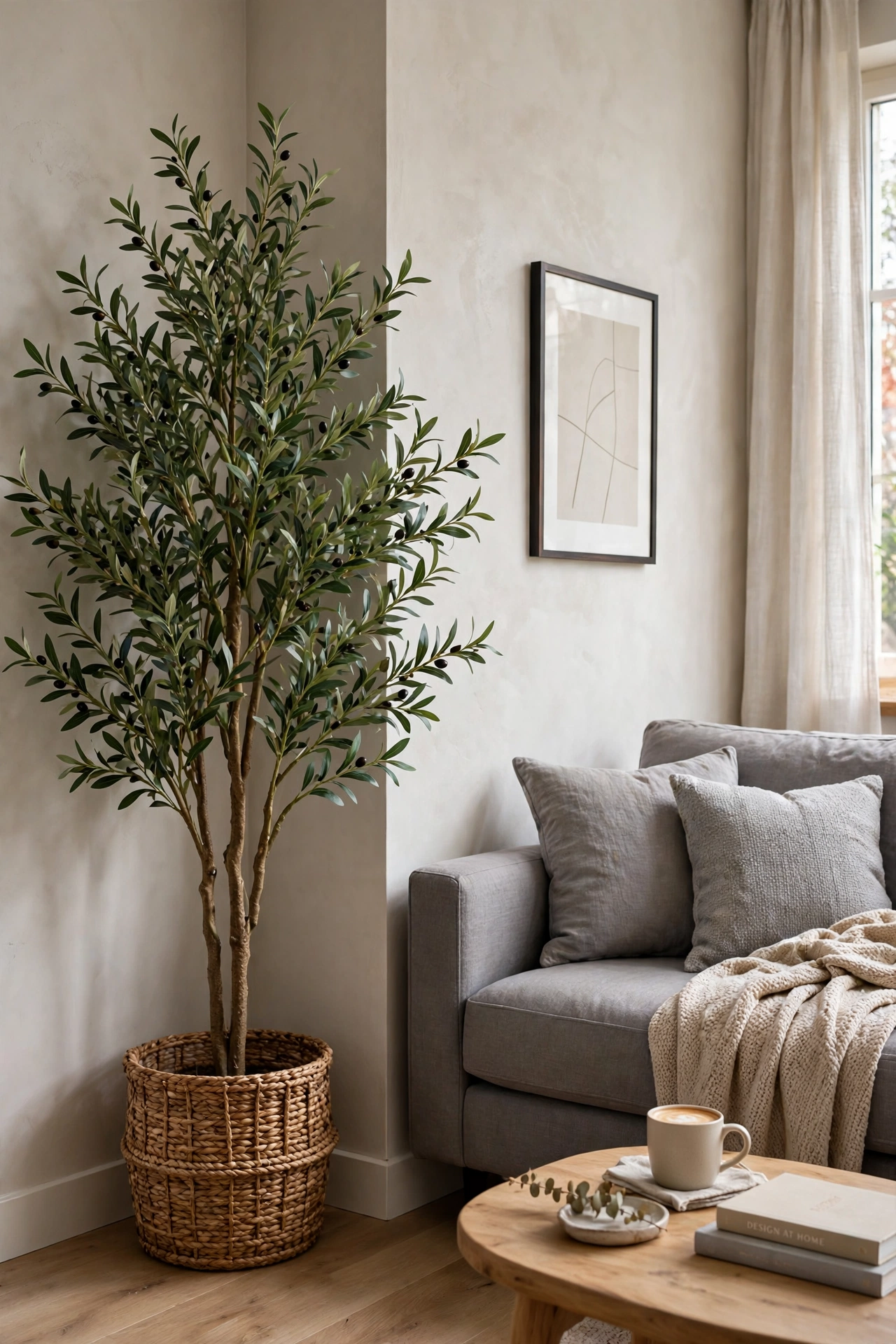
A good faux plant adds fresh green with no watering. Choose a tall one for a corner and a smaller one for a shelf. Pick textured leaves and a natural-looking pot. Dust them occasionally. The green softens brown and grey.
Pro tip: Choose faux plants with varied leaf shapes and sizes, which look more natural, and wipe them with a damp cloth.
21. Candles and a tray for a styled table
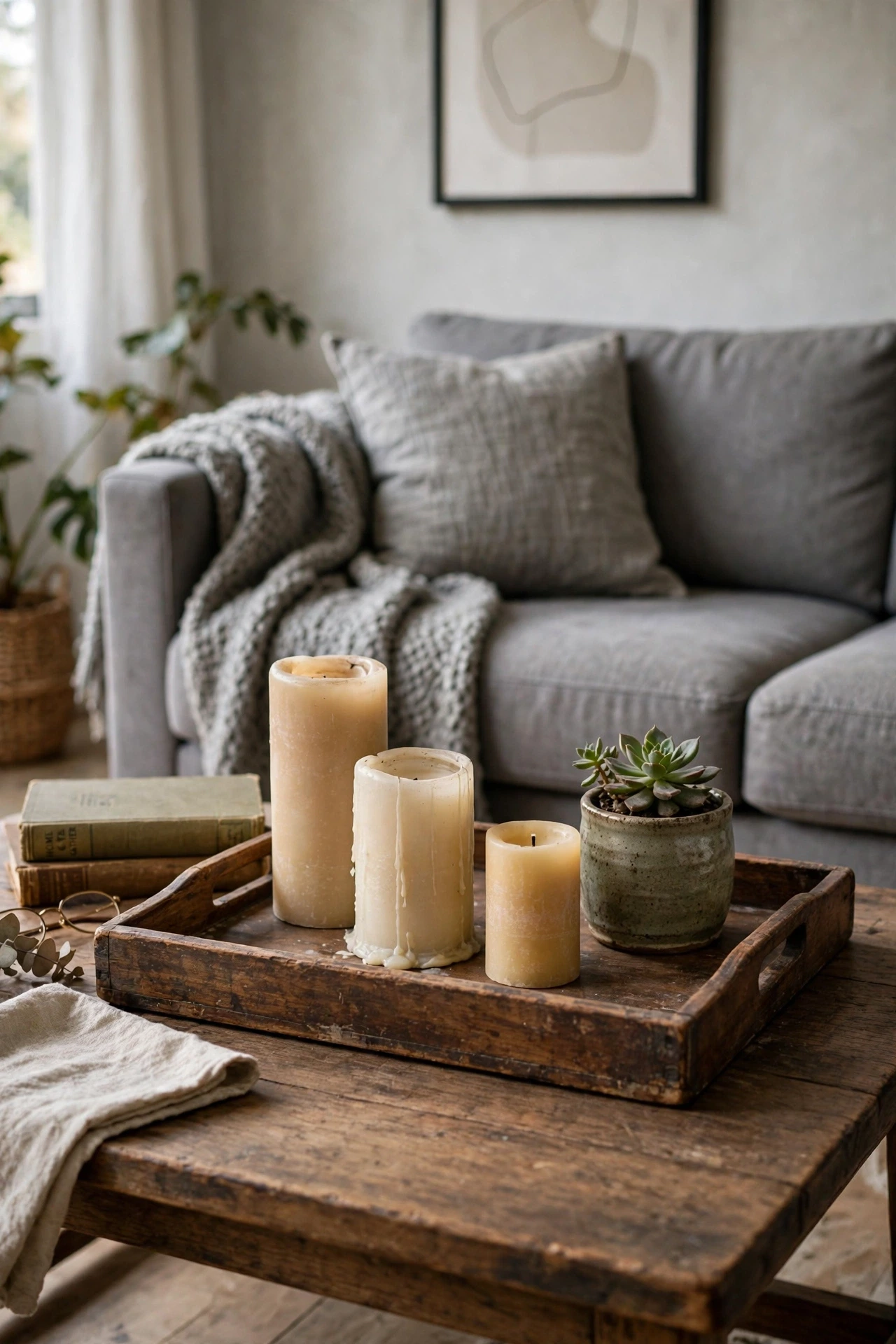
A tray with candles makes a coffee table look styled for almost no money. Use a thrifted wood or leather tray and group three candles of different heights. Add a small plant or a book. The warm light makes grey and brown feel cozy. Use flameless candles if you have pets.
Pro tip: Trim wicks to about a quarter inch and keep candles away from curtains and dried stems.
Quick answers
How do I decorate a brown and grey living room on a budget?
Paint the walls warm grey, thrift wood and leather pieces, add pillow covers and a jute rug, and use warm bulbs. Spend first on the most visible items.
What is the cheapest way to make a living room look expensive?
Paint, curtains hung high, a large rug and warm lighting have the biggest effect for the lowest cost. Fewer, larger pieces look richer than many small ones.
Where can I find cheap brown furniture?
Thrift stores, local resale groups, estate sales and garage sales often have solid wood and leather pieces. Check frames, cushions and odors before buying.
Is thrifted leather safe to use?
Yes if it is clean, supple and free of odors or pests. Wipe it with a damp cloth, condition it and test that the frame is sturdy.
Can renters do this look?
Yes. Use rugs, pillow covers, lamps, curtains, peel-and-stick panels and freestanding furniture. Ask your landlord before painting or drilling.
What should I spend money on first?
Spend on what you see and touch every day, such as the sofa, lamps and rug. Save on decor like vases, frames and trays.
How do I mix wood tones on a budget?
Choose one or two wood tones and repeat each at least twice. Use wax or stain to bring mismatched pieces closer together.
How do I keep thrifted items from looking messy?
Stay within one color family, repaint or restain mismatched frames, and keep the styling simple with space around each piece.
Final thoughts
A brown and grey living room does not need a big budget. Start with paint, rearranging and covers, then add thrifted wood, a jute rug and warm lighting. You do not need all 21 ideas. Pick four or five and build slowly. For more small-space ideas, see these small brown and grey living room ideas, and for tips on spending less in a compact home, see how to decorate a studio apartment cheaply. Once the basics are done, these grey sofa and brown accent decor ideas and these cozy living room ideas can add the finishing touches.
A warm room comes from good choices, not a big receipt.

Hi, I'm Wasif — welcome to The Homes Decors. I write about home decor: the ideas, choices, and small details that make a space feel considered rather than accidental. If you've ever wondered why a room works, not just what's in it, you're in the right place.