
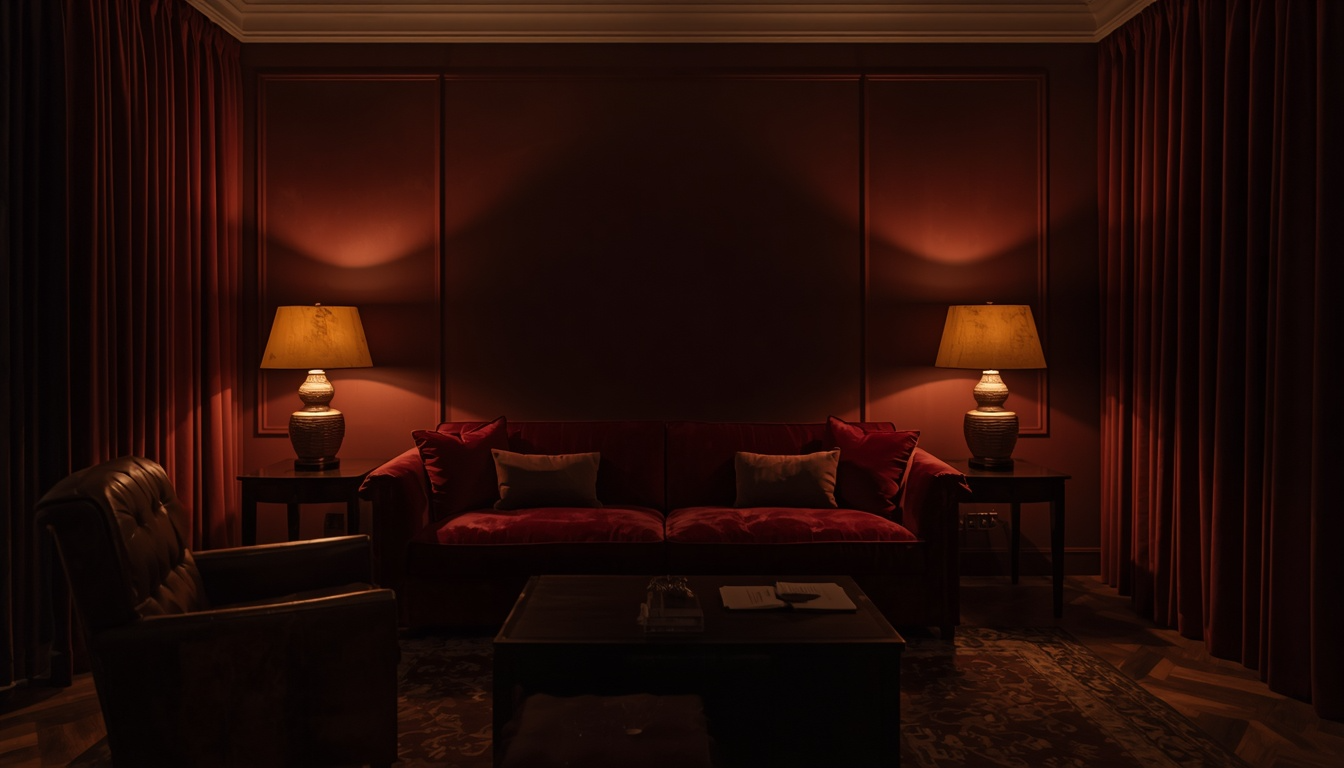
Moody decor is less about one dark color and more about layered lighting, rich texture, and deep saturated tones (burgundy, forest, navy, plum) working together instead of a single black wall doing all the work.
Below are 25 ways to build that atmosphere, sorted from full paint commitments down to small, swappable pieces that work in a rental.
Which moody color fits your room?
| Color | Undertone | Best for | Mood |
|---|---|---|---|
| Burgundy / oxblood | Warm, red-based | Rooms with a fireplace or leather furniture | Rich, warm, dramatic |
| Forest green | Cool, deep | Rooms with brass and wood accents | Grounded, enveloping |
| Navy / indigo | Cool, deep | Larger or south-facing rooms | Formal, calm-dramatic |
| Aubergine / plum | Cool-warm blend | Rooms wanting a jewel-tone statement | Sophisticated, unusual |
| Chocolate brown | Warm, earthy | Rooms with lots of natural wood already | Cozy, grounded |
Moody works best with at least one warm light source per color choice here. Even the coolest of these tones (navy, forest) needs a lamp or fireplace glow nearby, or the room can tip into feeling cold rather than cozy.
25 moody living room ideas
1. Paint one wall deep burgundy
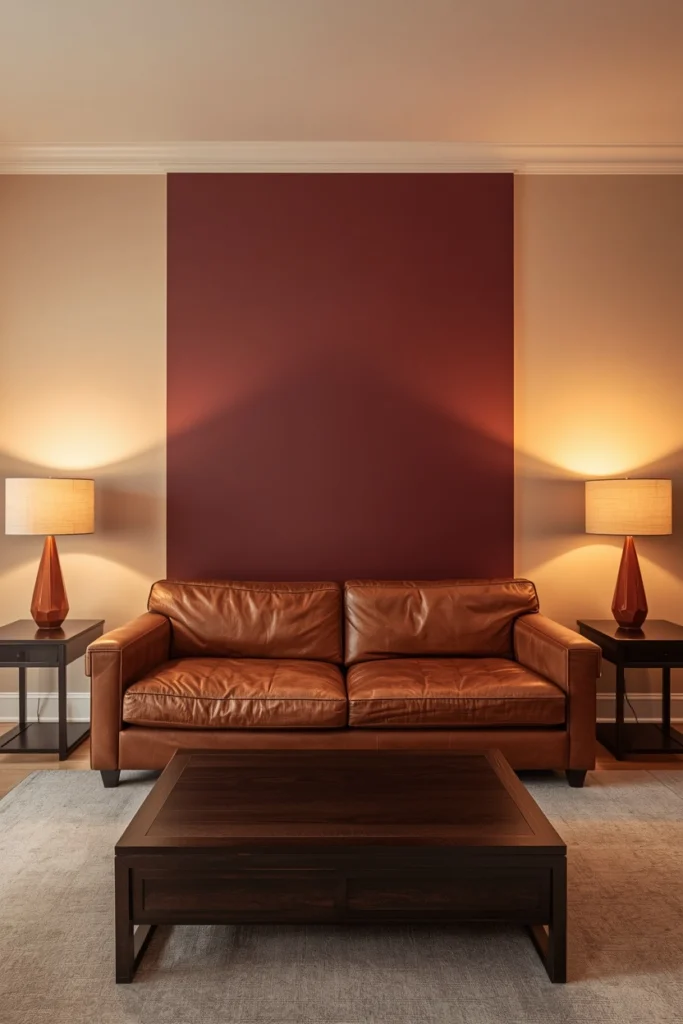
Pick the wall behind the sofa or the one visible from the entryway, and paint it a deep, warm burgundy while the rest stay a lighter neutral.
This gets you the full moody effect without darkening the whole room, and burgundy’s warm undertone keeps it from reading as cold the way a true black or navy sometimes can in low light.
2. Layer warm lamp light instead of one overhead fixture
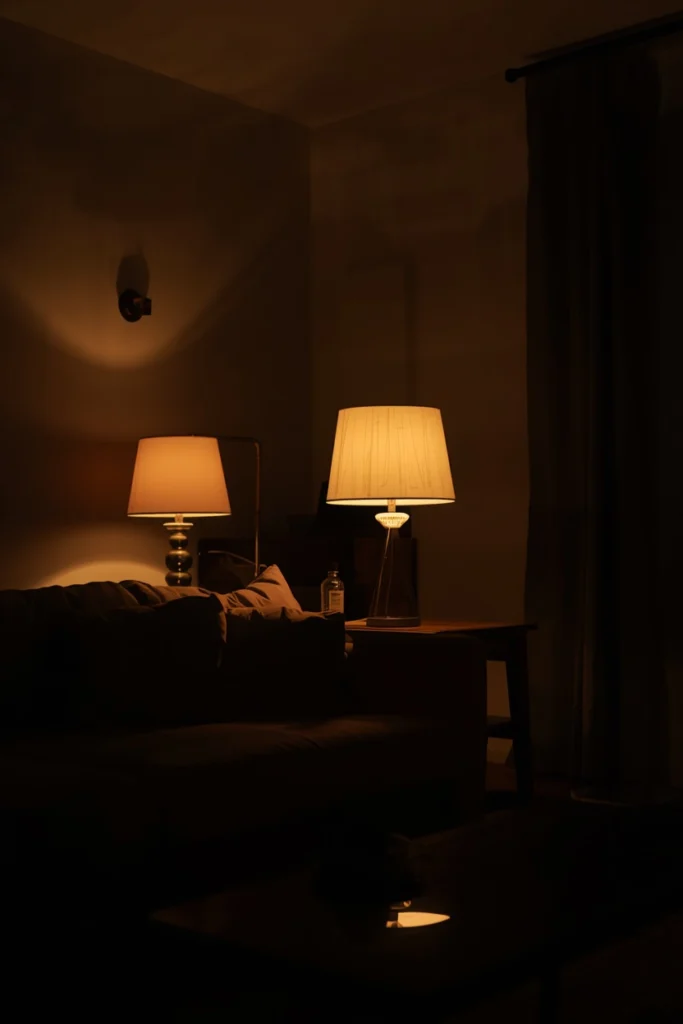
Turn off the main ceiling light and rely on two or three table and floor lamps with warm-toned bulbs instead.
This single change does more for a moody atmosphere than almost any paint color, since layered, low-angle light casts shadows and warmth that a single bright overhead fixture flattens out completely.
3. Choose a jewel-tone velvet sofa
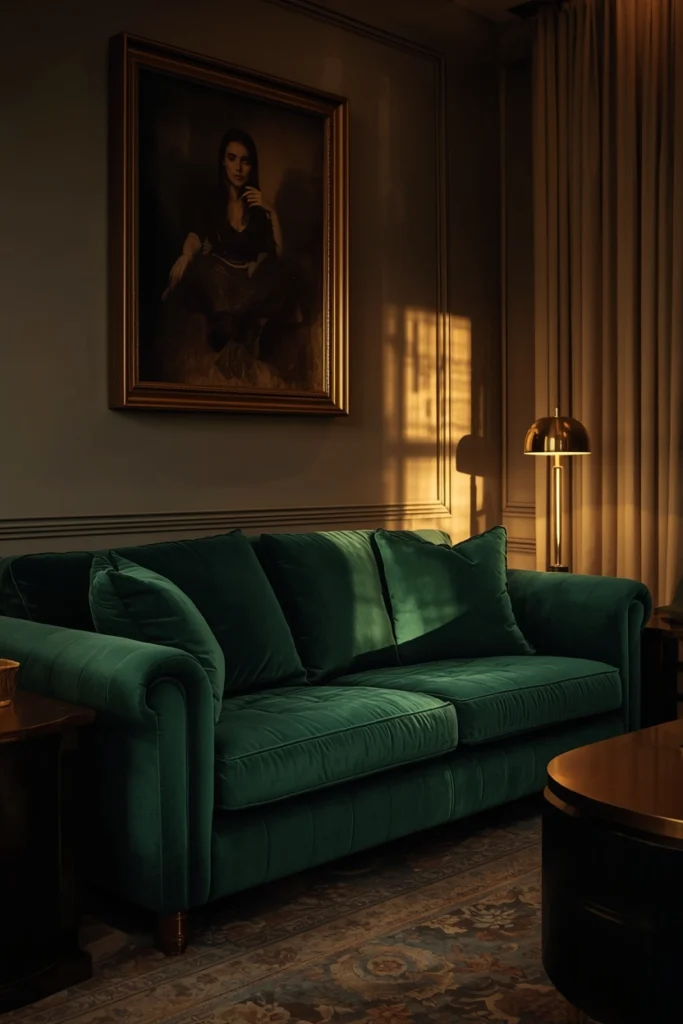
A single sofa in deep emerald, sapphire, or plum velvet carries the moody color without repainting anything, and it’s easier to change out later than a full room of dark paint.
Velvet in a deep color also catches light differently than a flat matte fabric, adding texture and depth even under simple lamp light.
4. Hang heavy floor-to-ceiling curtains
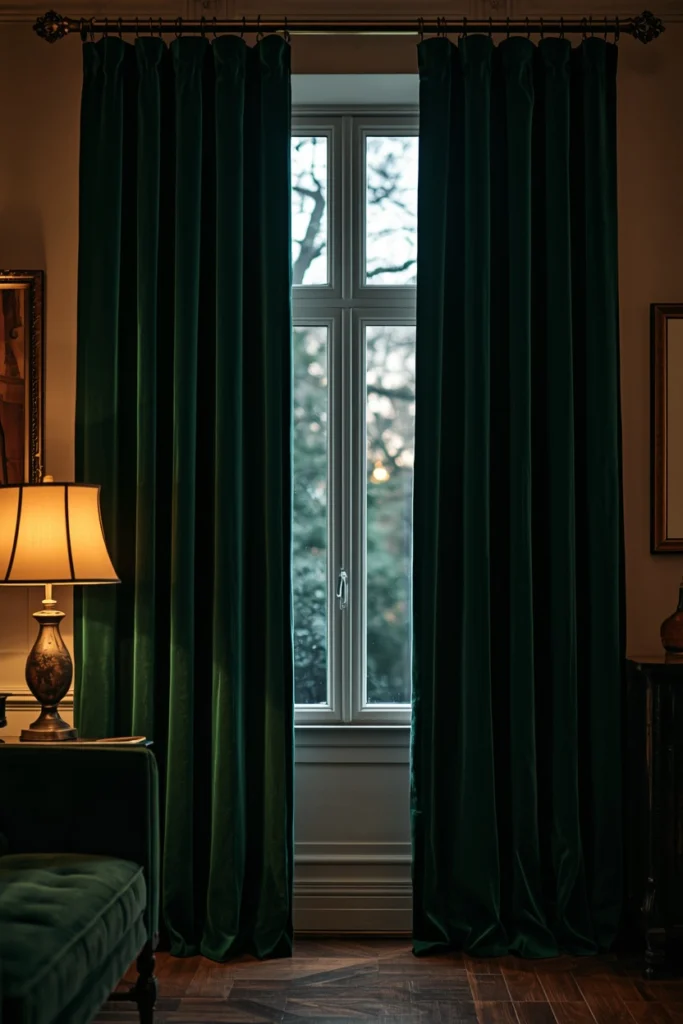
Thick velvet or heavy linen curtains in a deep tone, hung close to the ceiling and pooling slightly at the floor, add drama and also help control light and sound in a way sheer curtains can’t.
This is one of the more affordable ways to bring the moody feel to a room without touching the walls at all.
5. Add dark wood paneling or wainscoting
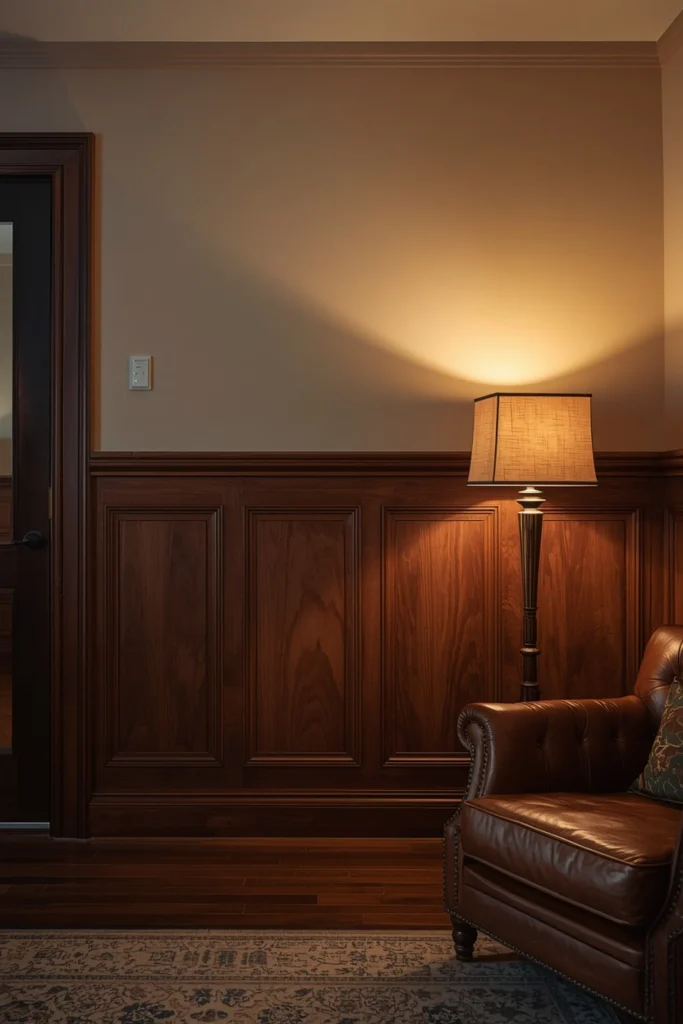
Dark wood paneling on the lower half of a wall, or a full wall of wood slats stained dark, adds texture and warmth that flat paint alone doesn’t have.
This is a bigger project than paint, so budget for material and installation time, and check that any wall you’re mounting into can support the added weight if it’s a solid panel rather than thin slats.
6. Add a leather armchair with visible patina
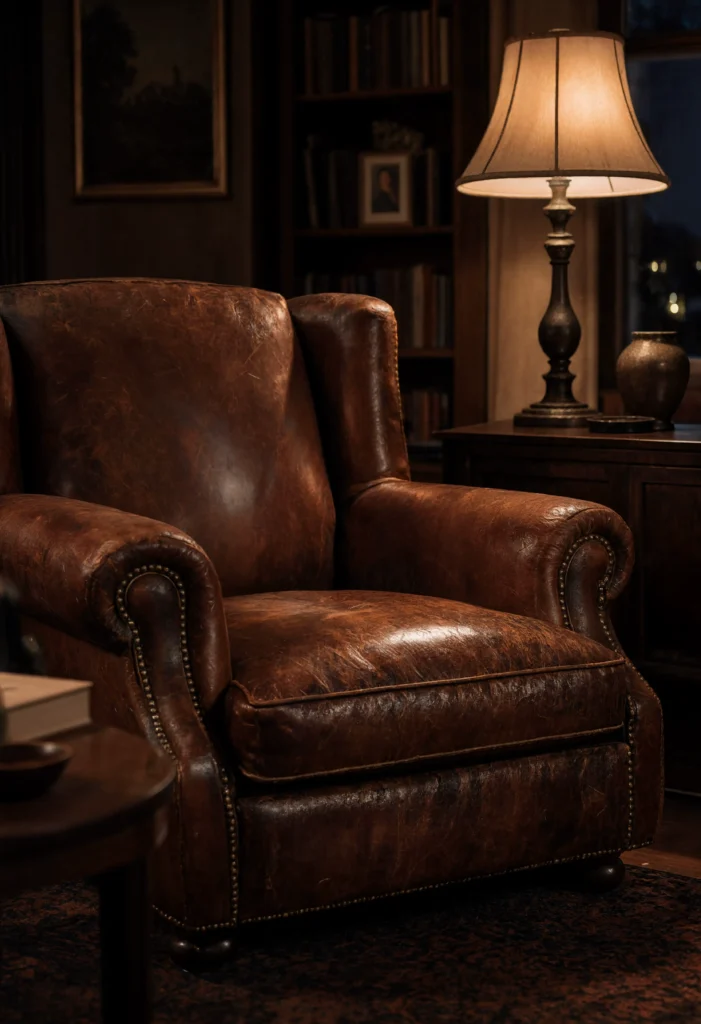
A leather chair, especially one that’s already broken in or intentionally distressed, brings warmth and history into a moody room that new, unworn furniture doesn’t have.
Leather does crack and dry out over time without conditioning, so factor basic leather care into the decision if you’re buying a real hide piece
7. Cluster candles on the mantel or coffee table
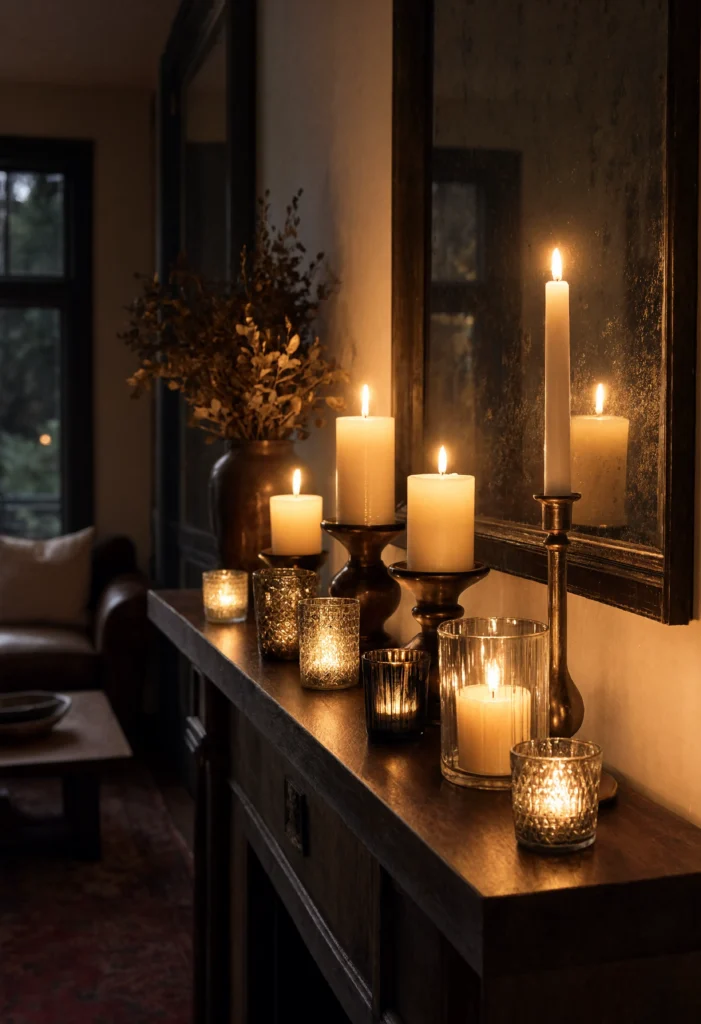
A grouped cluster of candles at varying heights adds flickering, warm light that no lamp fully replicates, and it’s one of the cheapest items on this list.
Never leave lit candles unattended, and keep them well clear of curtains or anything flammable, especially in a room already leaning on heavy drapery for the moody look.
8. Build deep green library-style shelving
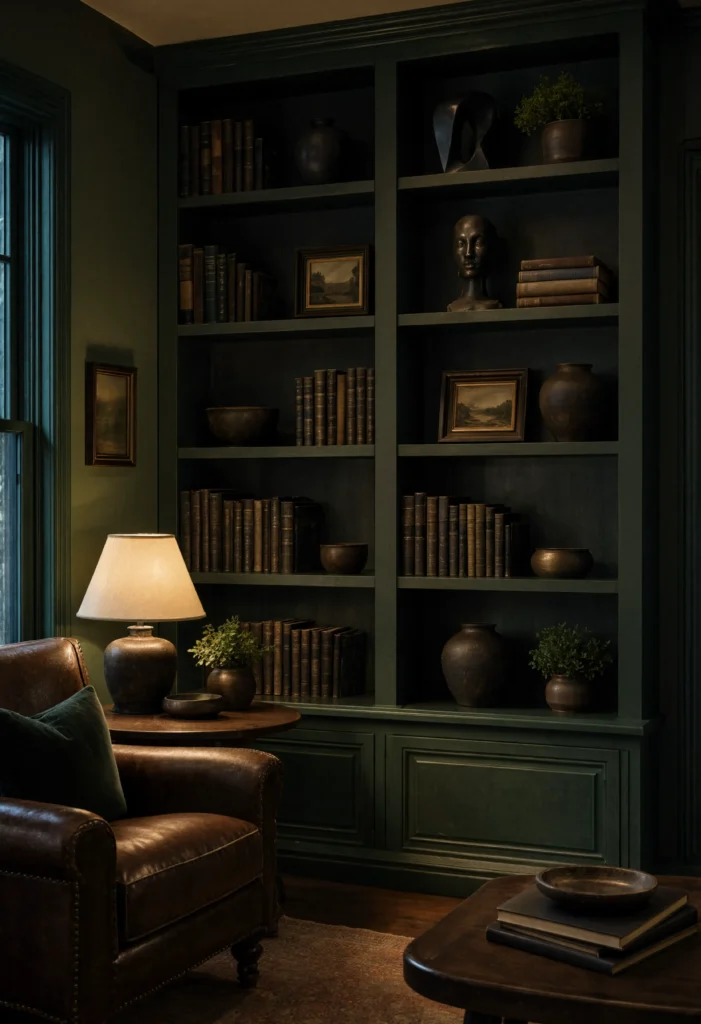
Built-in or freestanding shelving painted a deep forest green, filled with books and a few sculptural objects, creates a den or library feel that reads moody without needing dark walls at all.
This is a good option if you want the atmosphere without committing an entire wall to dark paint.
9. Build a gallery wall with ornate dark frames
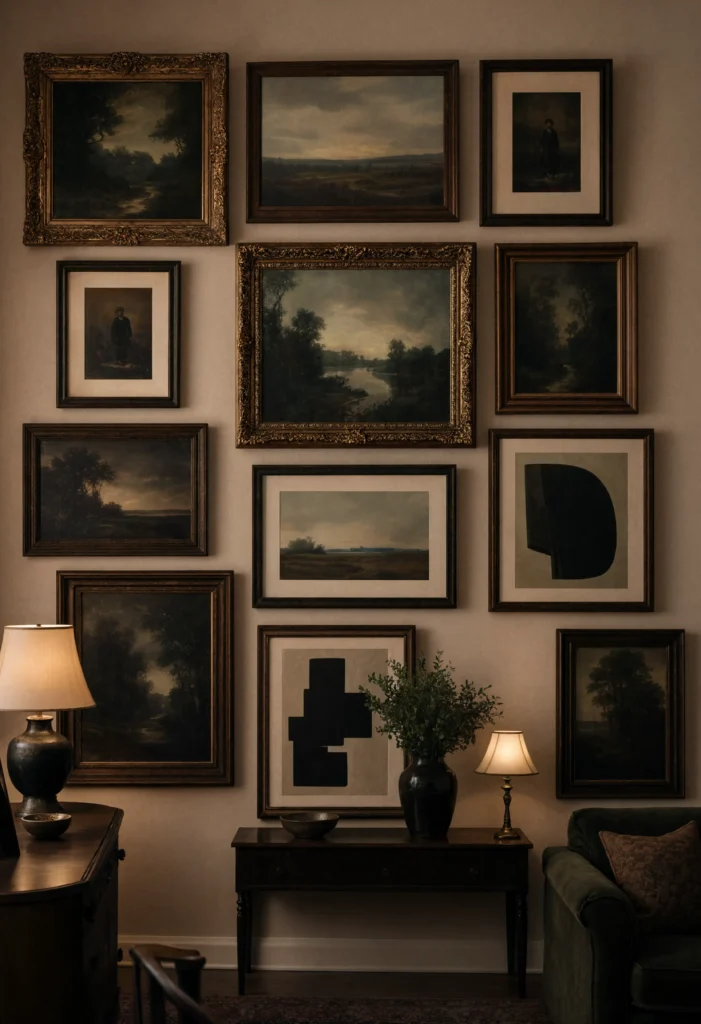
Dark wood or aged brass frames, rather than plain black or white ones, add an antique, collected feel to a gallery wall. Mix in a few oil-painting-style pieces (landscapes, still life, portraiture) alongside more modern prints for contrast.
Use a properly rated anchor for anything larger than a standard frame, especially on a wall without a stud directly behind it.
10. Style the fireplace as the room’s anchor
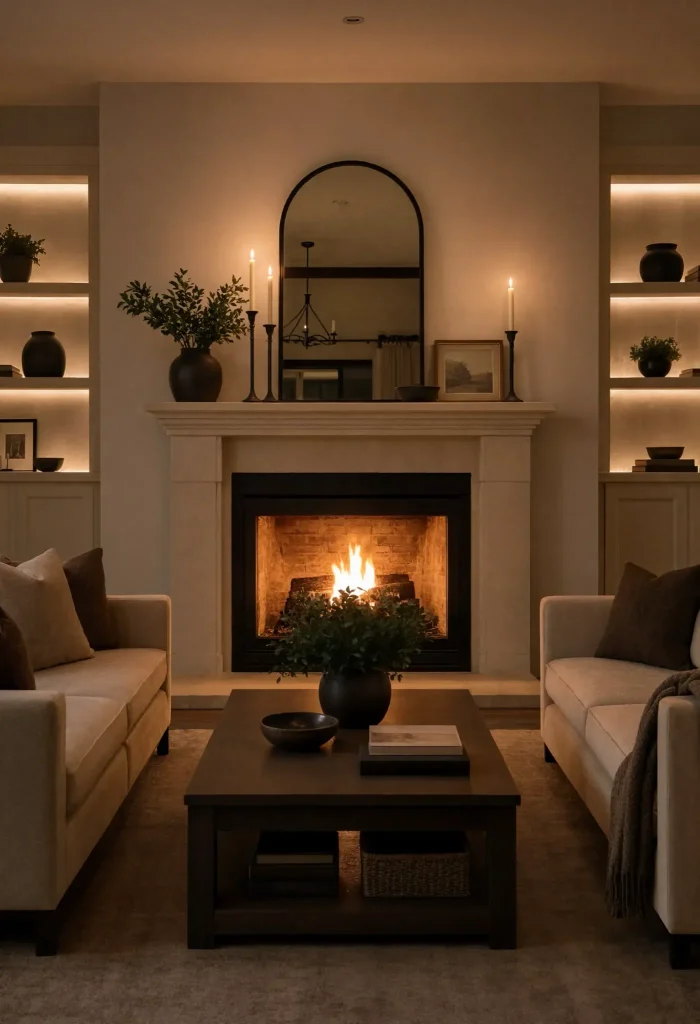
If you have a working or decorative fireplace, let it be the actual focal point rather than competing with a TV or gallery wall for attention.
Arrange seating to face it, and keep mantel styling simple, a mirror, a few candles, one piece of art, so the fireplace itself stays the visual center.
If it’s a working wood-burning fireplace, keep any decor a safe distance from the actual firebox opening.
11. Layer textured throws and blankets
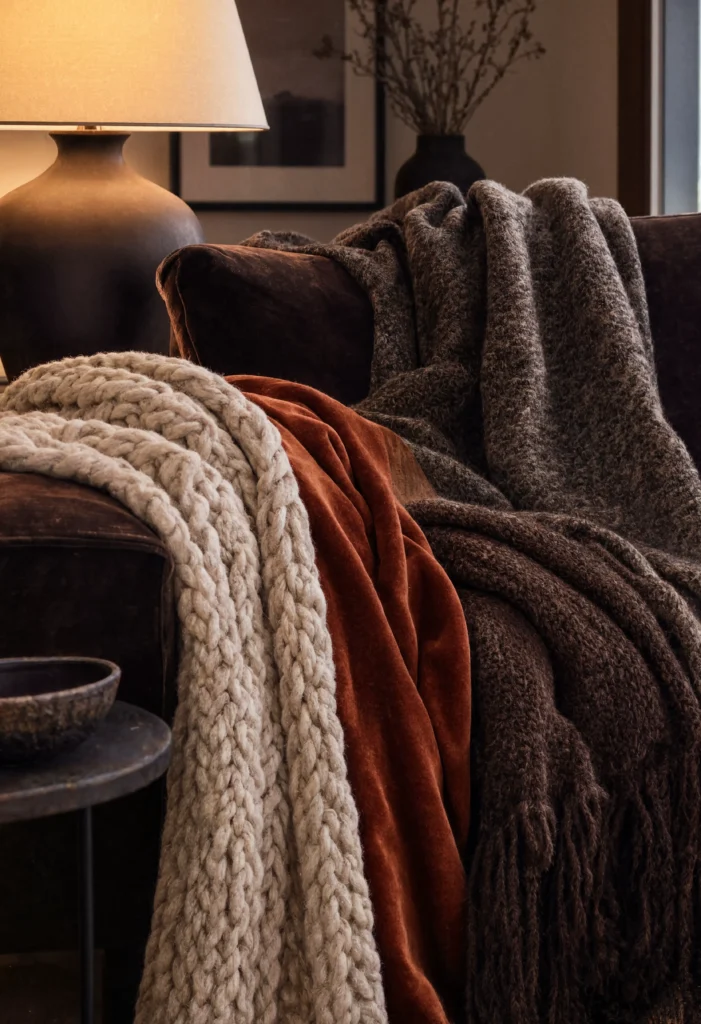
A mix of chunky knit, velvet, and wool throws layered on the sofa arm adds tactile richness that a single flat blanket doesn’t.
Vary the textures more than the colors, since too many competing patterns in a small area can look cluttered rather than layered.
12. Try a dark limewash or plaster wall finish
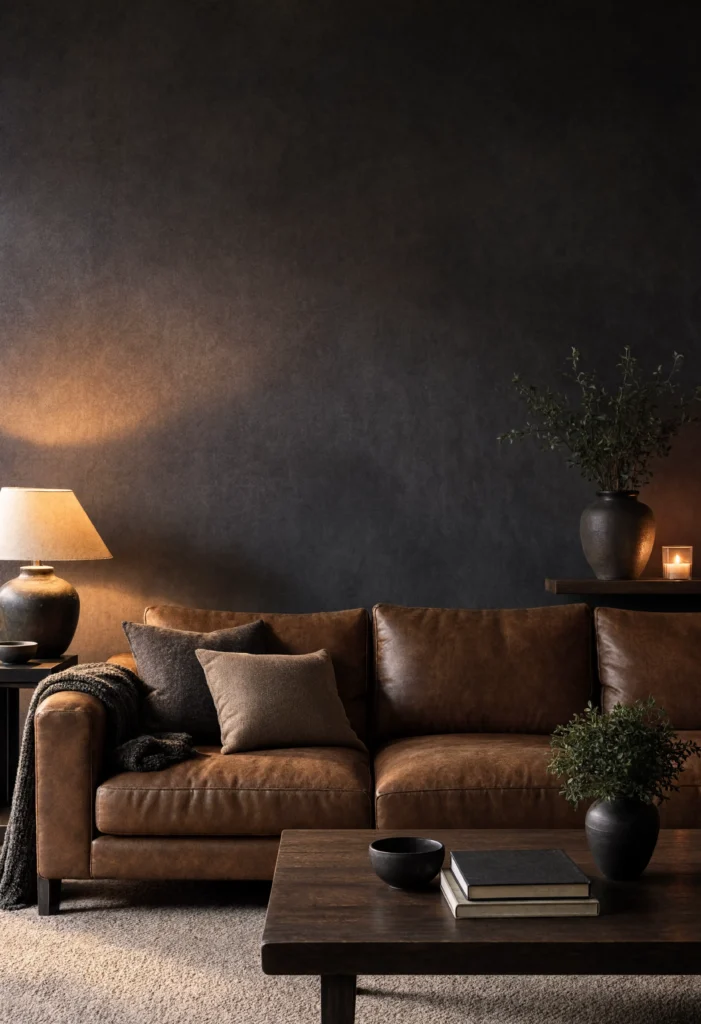
A limewash or Venetian plaster finish in a deep charcoal or espresso tone adds subtle texture and variation that flat dark paint doesn’t have, since the finish catches lamp light differently across the wall.
This is a pricier, more involved DIY than paint, so budget for both material cost and the extra time an even textured finish takes.
13. Mix brass and dark metal lighting fixtures
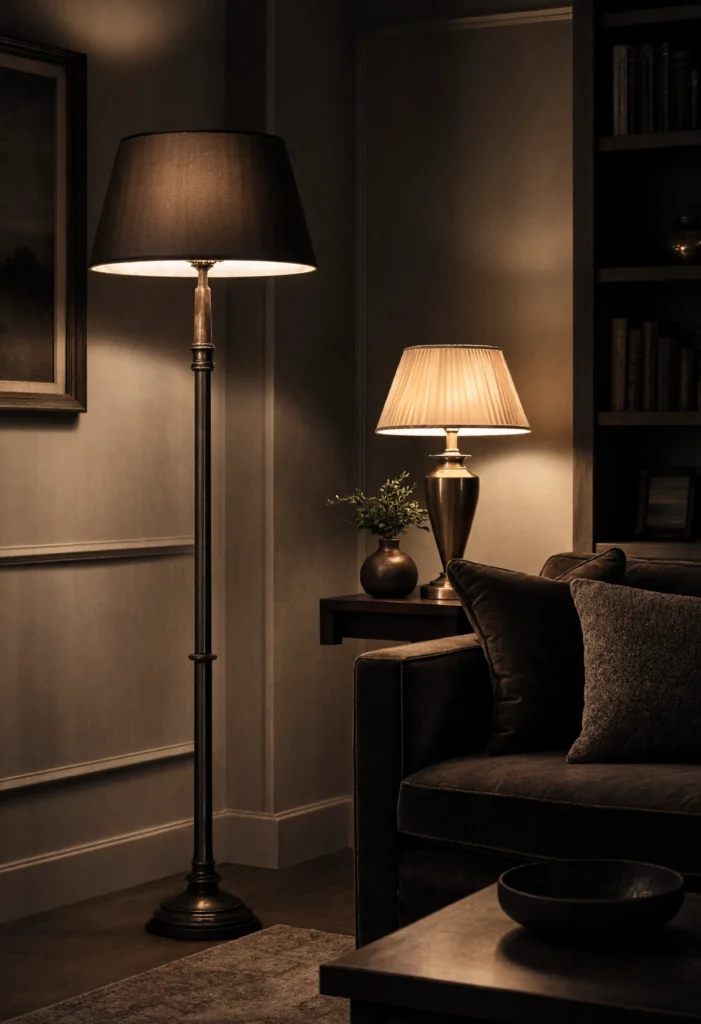
A dark bronze or black floor lamp paired with a brass table lamp gives you contrast in the lighting itself, rather than every fixture matching exactly.
This small detail adds visual interest to a room that’s otherwise built on deep, similar-toned furniture and walls.
14. Add a vintage-style rug in deep tones
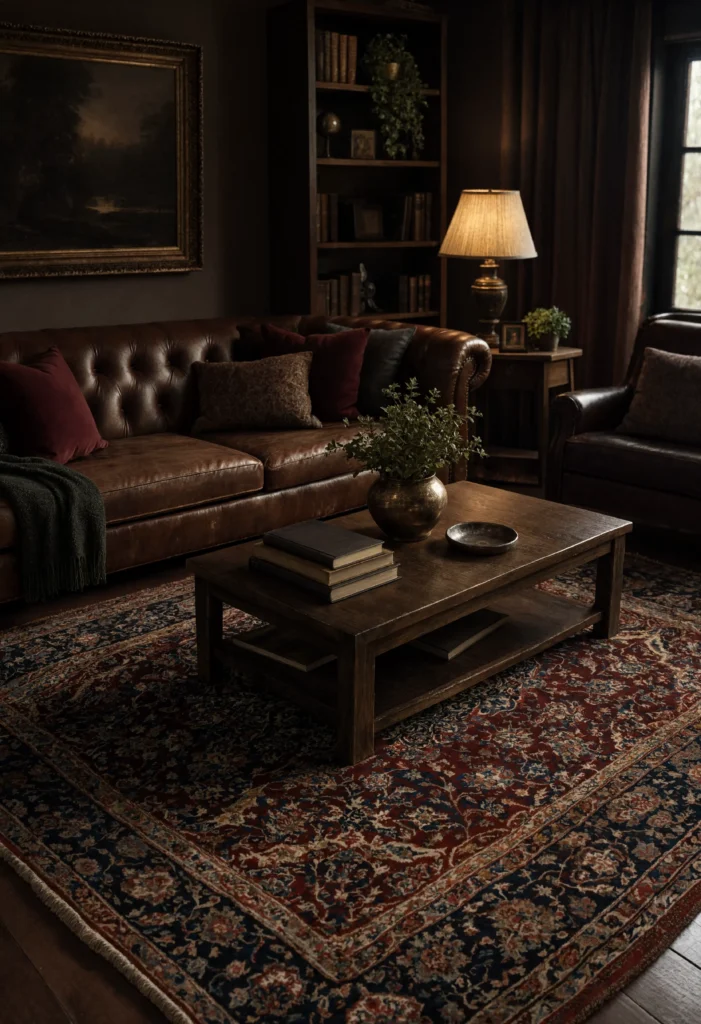
A Persian-style or other vintage-pattern rug in deep reds, blues, and browns anchors the floor with color and pattern that reads collected rather than newly bought as a matching set.
Shopping secondhand for this kind of rug often gets you a more convincing worn-in look at a lower cost than a new one styled to look vintage.
15. Hang one moody, dark-toned art piece
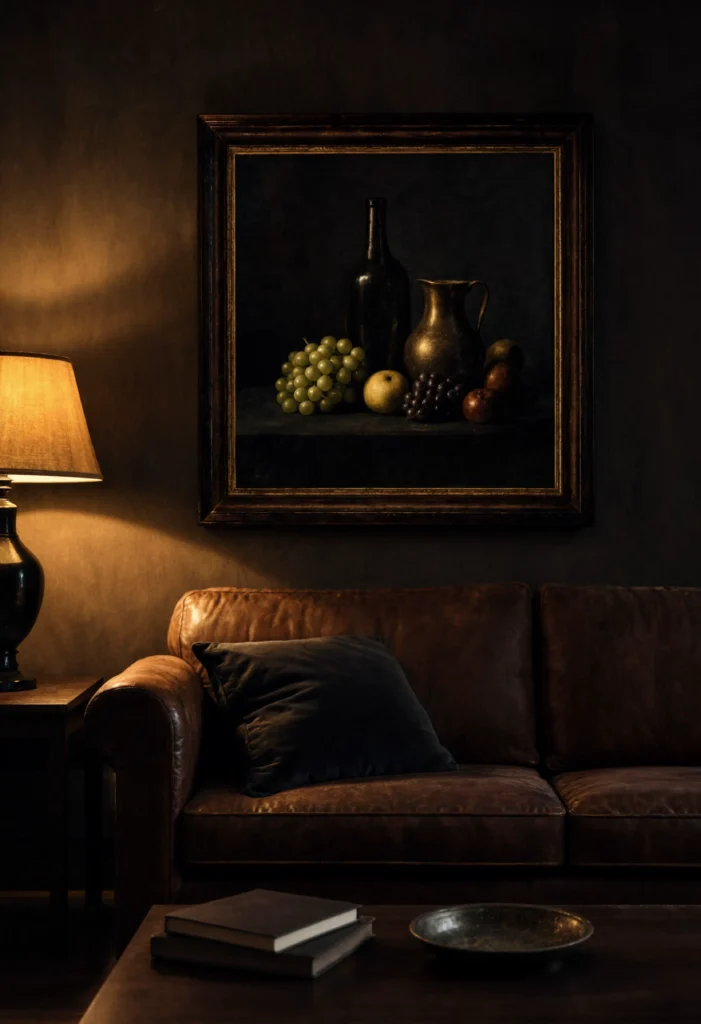
A single oil-painting-style piece, a dark still life, a moody landscape, or a portrait with a deep background, works better in this style than a bright, colorful print.
Look for one statement piece rather than several smaller ones if you want the room to feel curated instead of cluttered.
16. Paint window frames black with heavy drapery
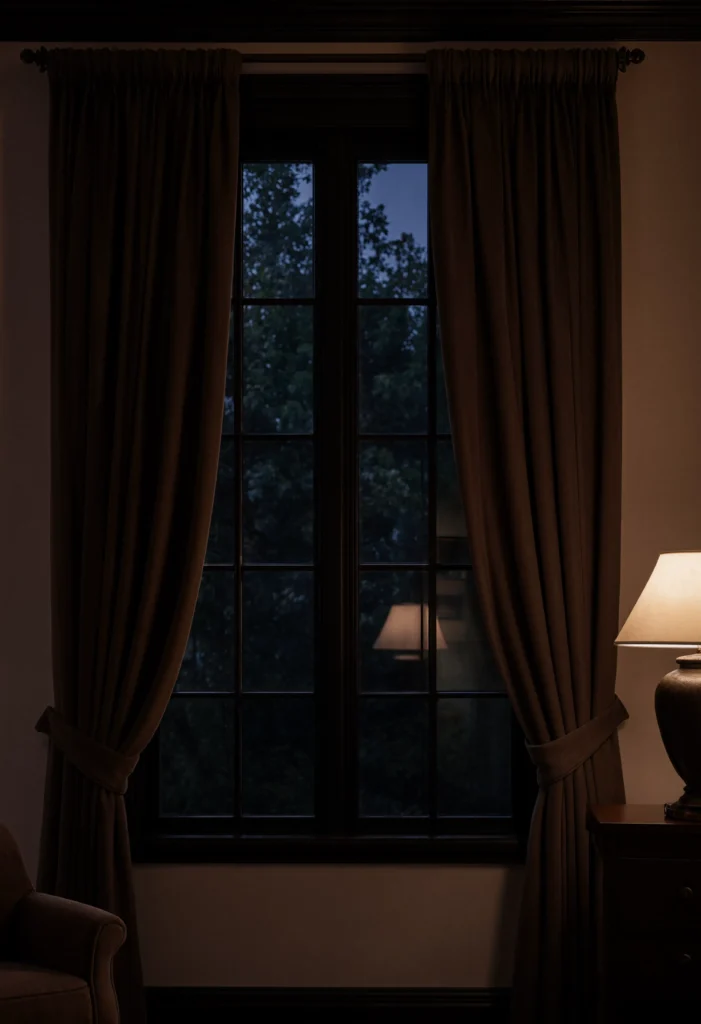
Black-painted window frames combined with heavy, floor-length drapery in a deep color frame the window as a dramatic architectural feature rather than just a light source.
This works especially well in a room that already has good natural light during the day, since the drama shows up mostly in the evening when the drapery is closed.
17. Combine leather and dark wood furniture
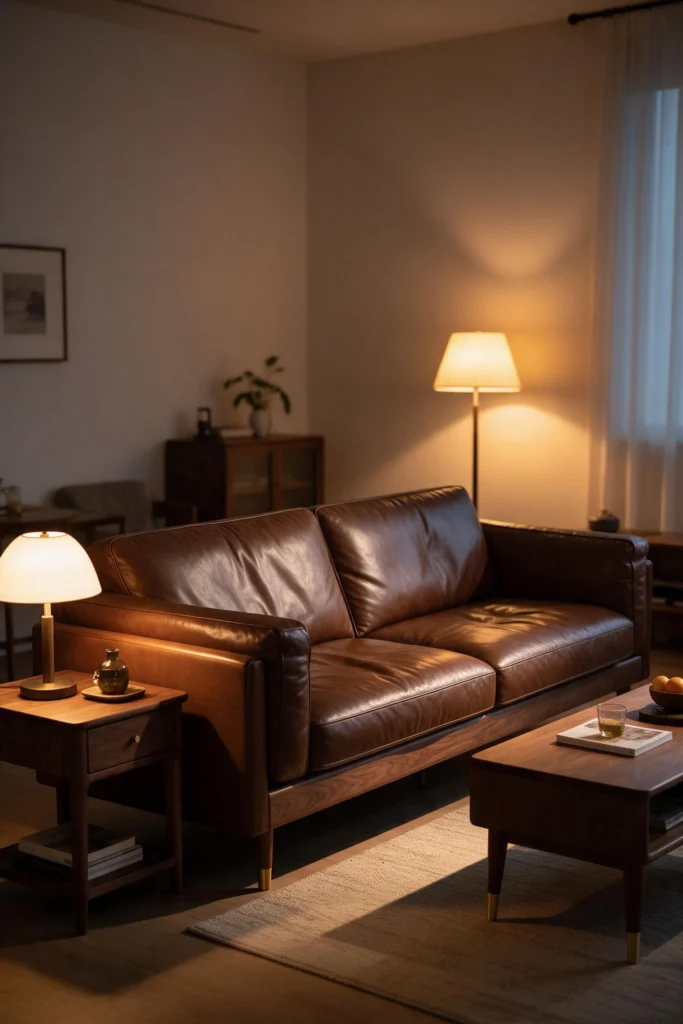
A leather sofa or chair paired with dark walnut or espresso-stained wood furniture keeps the room grounded and warm rather than cold, since both materials age and develop character rather than looking sterile.
This combination is one of the most classic moody pairings and works in almost any room size.
18. Paint the walls deep navy or indigo
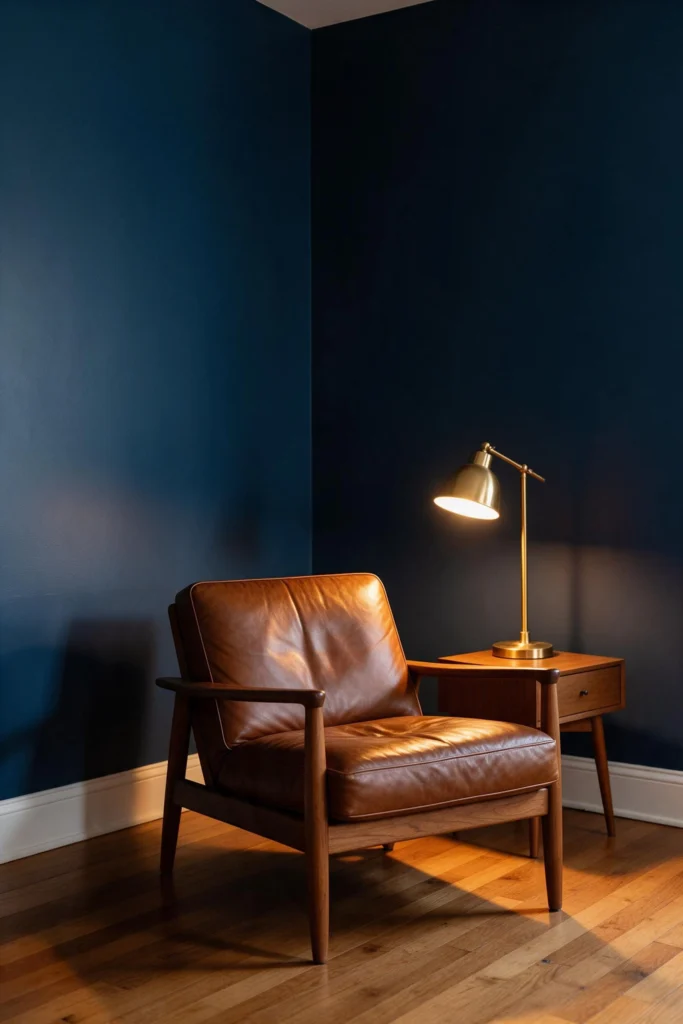
Deep navy or indigo walls read formal and calm-dramatic rather than as warm as burgundy or brown would, so this direction suits someone who wants moody without quite as much warmth.
Pair it with at least one warm lamp and some wood or leather furniture so the cooler wall color doesn’t tip the room toward feeling cold instead of cozy.
19. Style with vintage objects and curiosities
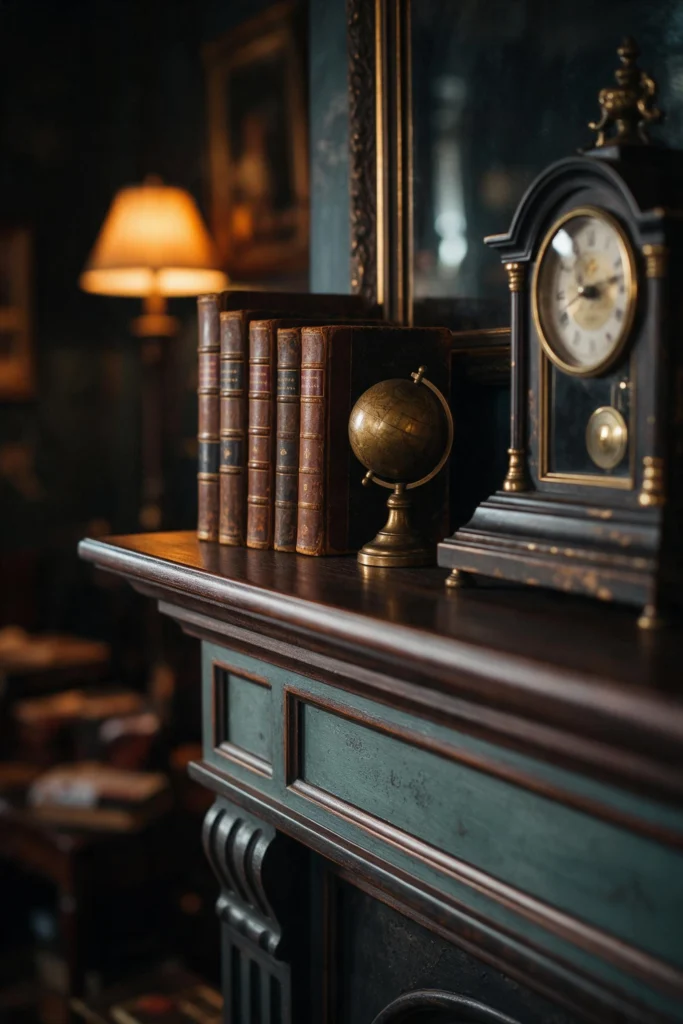
A shelf or mantel styled with old books, a vintage globe, small brass objects, or an antique clock adds a collected, storied feel that new decor alone doesn’t have.
Thrift stores and estate sales are usually the cheapest source for this kind of styling, and pieces with some wear actually work better here than pristine new versions.
20. Add a smoked glass or dark mirror accent
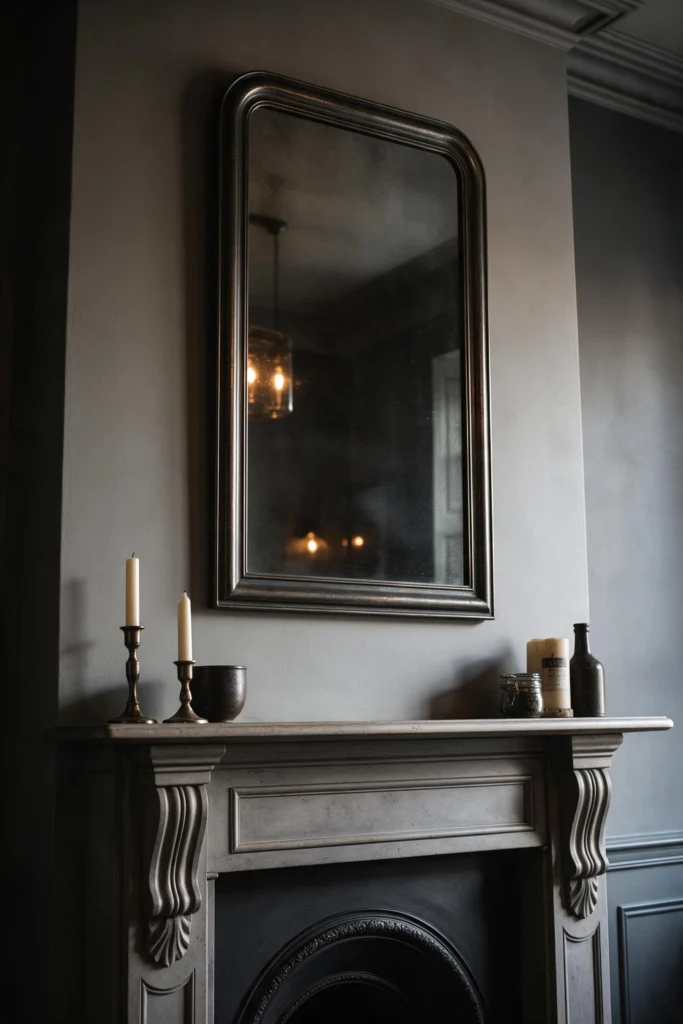
A mirror with a smoked or antiqued dark glass finish reflects light more subtly than a clear mirror, keeping the room’s warm, low-lit atmosphere intact instead of bouncing back a bright reflection.
This works well above a mantel or on a wall opposite a lamp rather than a bright window.
21. Layer two rugs in dark, complementary tones
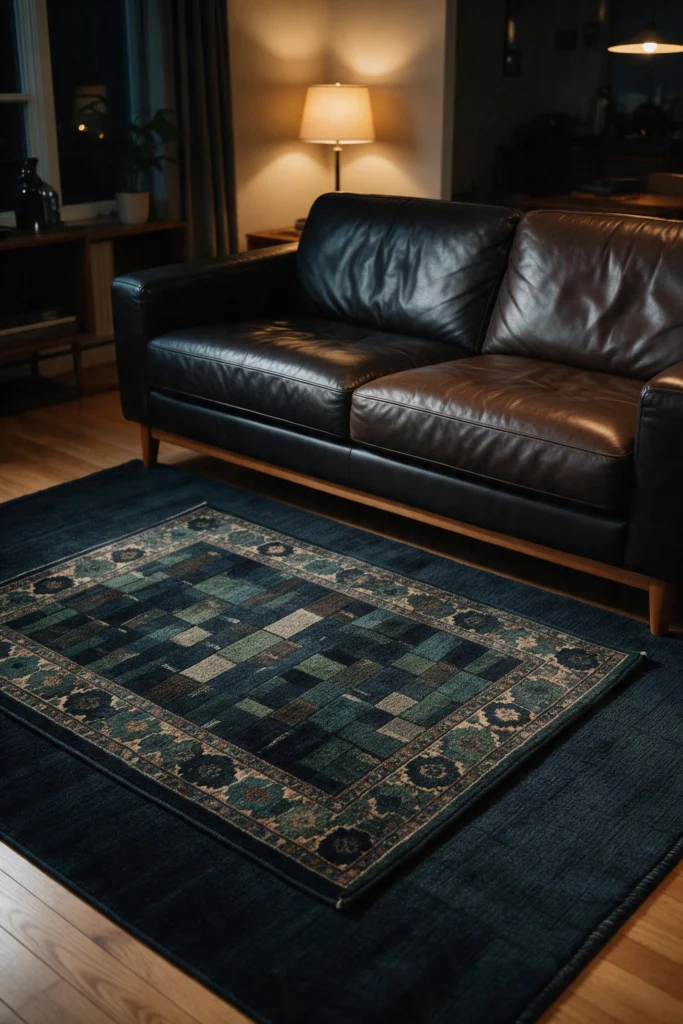
Instead of one flat rug, layer a smaller patterned rug in a deep tone over a larger solid darker base rug.
This adds visual depth at floor level the way layered lighting does overhead, and it’s a good option in a room where you want pattern without covering the whole floor in it.
22. Paint the ceiling a deep, moody color
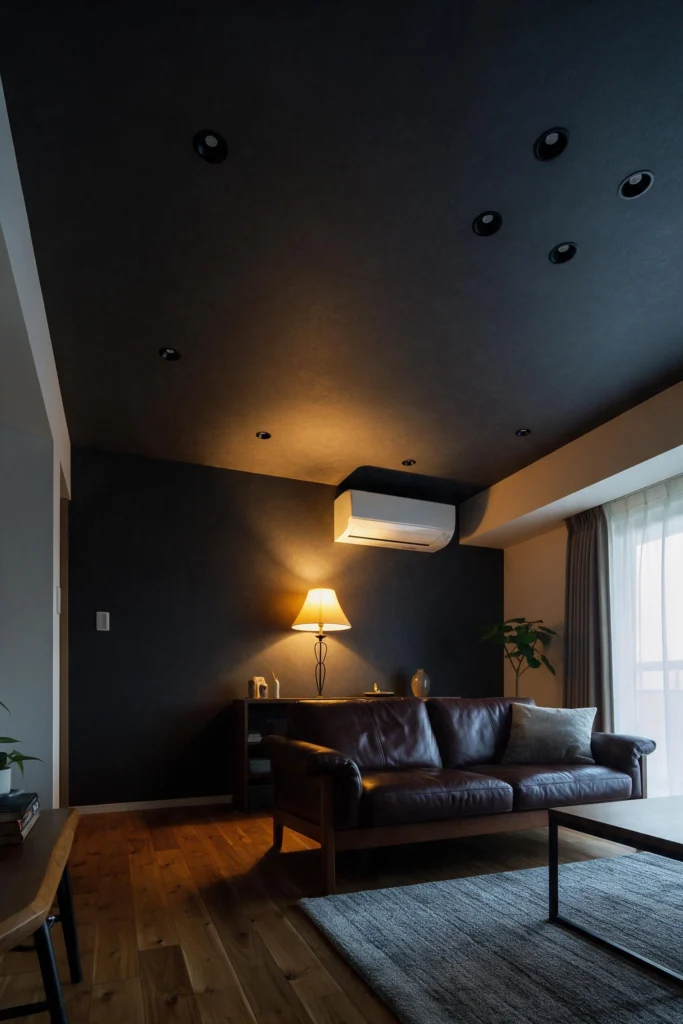
Painting the ceiling the same deep color as an accent wall, or even darker, wraps the whole room in the atmosphere rather than stopping at eye level.
This works best in a room with at least 9-foot ceilings and a reliable secondary light source, since a dark ceiling in a low room with poor lighting can feel oppressive rather than cozy
23. Add a wingback chair as a statement seat
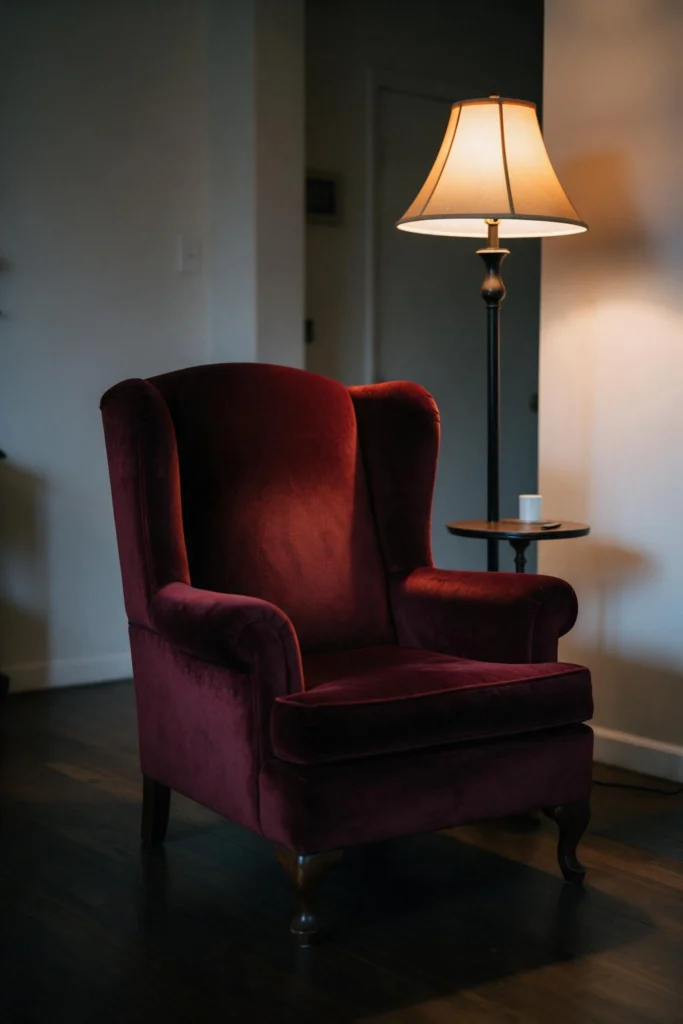
A wingback chair, especially in a deep velvet or leather, brings a slightly traditional, den-like silhouette that reads more moody than a standard low modern chair.
Position it near a lamp and a small side table so it functions as an actual reading nook rather than just a decorative seat.
24. Put your lamps on dimmers
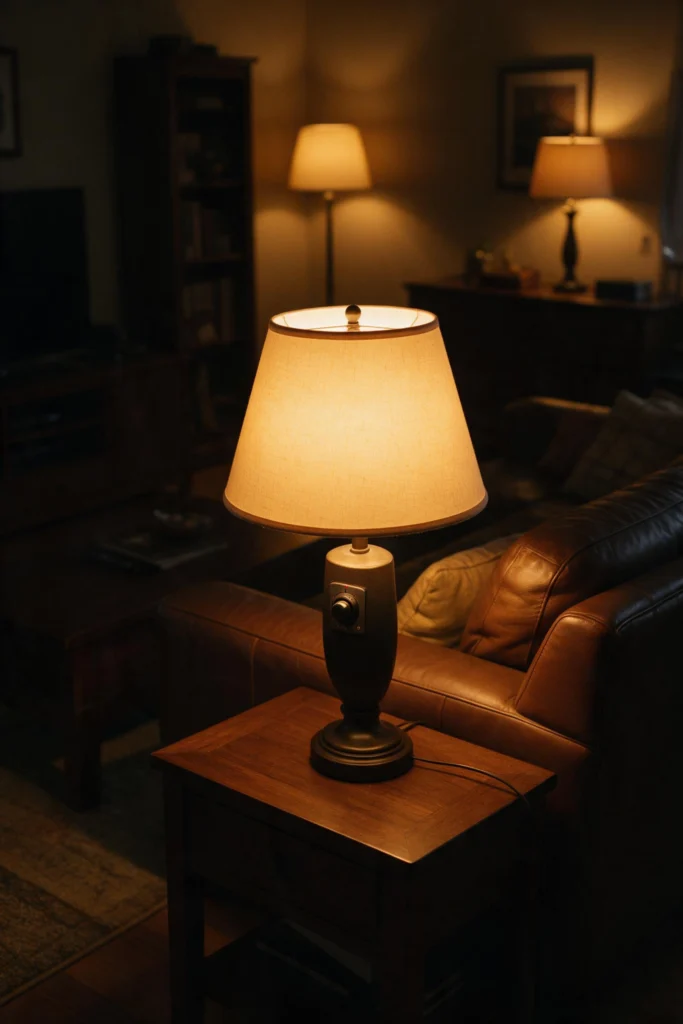
Dimmable warm-toned bulbs let you shift the same room from a brighter daytime setting to a deep, moody evening atmosphere without buying any new furniture or paint.
This is one of the cheapest, most flexible updates on this list, and it’s the difference between a room that only looks moody in photos and one that actually feels that way to sit in.
25. Keep it small-space friendly: one moody element, not the whole room
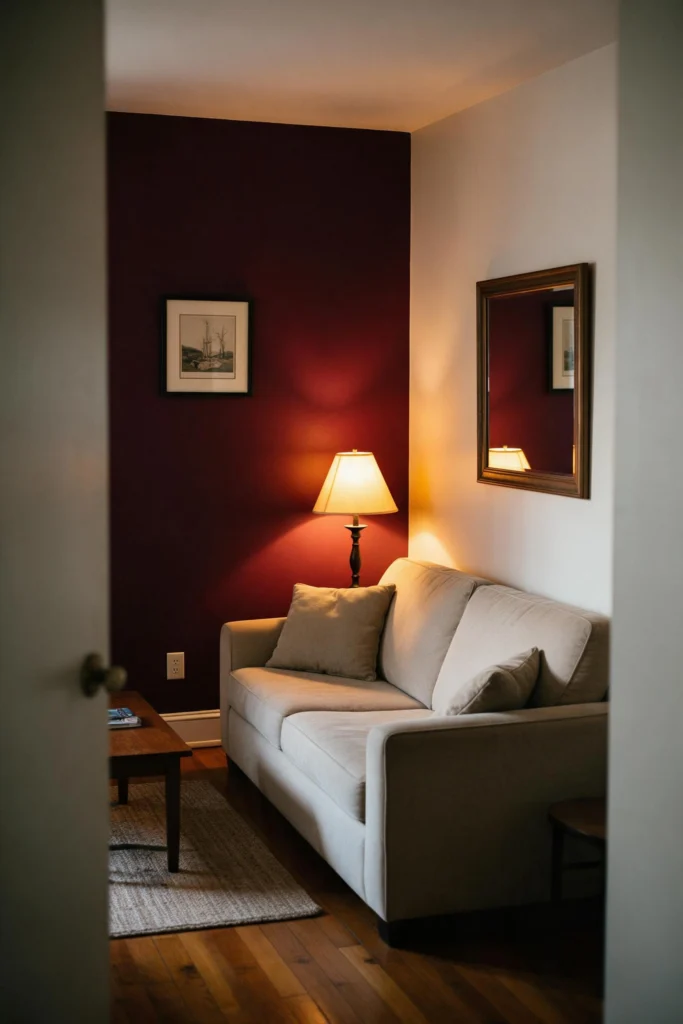
In a small living room, pick one moody element, a deep-colored accent wall, one velvet chair, or layered lamp lighting, rather than combining several dark elements at once, which can make a small room feel cave-like instead of cozy.
Balance the one dark choice with a mirror and at least one reliable light source so the room still feels usable after dark. For more layout-specific advice, the small living room ideas guide has more on working within a tight footprint.
How to build a moody atmosphere without making the room feel dark
- Start with lighting, not paint. Swap to warm-toned bulbs and add at least two lamps before deciding whether you also want a dark wall, since lighting alone gets you most of the way there.
- Pick one deep color as your anchor. Burgundy, forest, navy, or plum, choose one and let it lead rather than mixing several dark colors that compete with each other.
- Add texture through furniture and textiles. Velvet, leather, and layered throws do as much work as color in creating the atmosphere.
- Balance every dark choice with a light source. A lamp, a mirror, or a fireplace glow keeps the room feeling warm and lived-in instead of dim and closed off.
Common mistakes in a moody living room
- Relying only on overhead lighting. A single bright ceiling fixture undoes almost all of the atmosphere layered lamps and candles would otherwise create.
- Combining too many dark colors without a warm anchor. Navy walls, a black sofa, and dark grey flooring together with no wood, brass, or leather can tip from moody into just plain dim.
- Going full dark in a small, low-light room with no secondary lighting. Without lamps or a fireplace glow, a fully dark small room can feel cave-like rather than cozy.
- Skipping texture entirely. A room that’s all one flat dark paint color with no velvet, leather, or layered textiles reads as unfinished rather than intentional.
- Hanging heavy dark-framed art or a large mirror without checking the wall. Use a stud or a properly rated drywall anchor for anything over a few pounds.
Why I did this in my own living room
The apartment where I first tried a moody living room had terrible overhead lighting, a single bright bulb in the middle of the ceiling, and swapping that off in favor of two lamps did more for the atmosphere than the burgundy paint I’d been so focused on picking out.
I still love the wall color, but if I’d had to choose only one change to make, it would’ve been the lighting every time. The lesson that stuck: moody is a lighting decision before it’s a paint decision.
Quick answers
Does moody decor work in a small living room? Yes, but stick to one dark element (a wall, a chair, or the lighting) rather than combining several, and add a mirror and reliable lamp light so the room doesn’t feel cave-like.
What’s the difference between moody and dark decor? Dark decor usually refers to deep neutral colors like black, charcoal, or espresso brown as the base. Moody leans on layered warm lighting and texture as much as color, and often uses saturated jewel tones like burgundy or forest green rather than only true darks.
Can renters achieve a moody living room without painting? Yes. Layered lamp lighting, a deep-colored sofa or chair, heavy curtains, candles, and textured throws can carry most of the atmosphere without touching the walls at all.
Does moody decor need a fireplace? No, though a working or decorative fireplace helps. Layered lamp lighting and candles create a similar warm, flickering effect without one.
What colors work best for a moody living room? Burgundy, forest green, navy, plum, and chocolate brown are the most common choices, each paired with warm lighting and at least one leather or wood material to keep the room from feeling cold.
Is moody decor too dark for everyday living? Not if lighting is on a dimmer and there’s at least one bright option for daytime tasks. Moody is meant to be an evening atmosphere as much as a fixed color scheme, so flexibility in the lighting matters more than committing to permanent darkness.
Does moody decor date quickly? Layered lighting and texture-driven styling have stayed relevant for years since they’re based on atmosphere rather than a single trend color. Specific paint shades shift in popularity, but the underlying approach (warm light, rich texture, one deep anchor color) tends to hold up.
About this guide
This list comes from actual moody rooms I’ve built out in rented and owned spaces, not a staged shoot. If you want a version of this style built specifically around darker neutrals rather than jewel tones, the dark living room ideas guide covers that direction in more depth. For a deep red or burgundy sofa as the centerpiece specifically, the burgundy sofa living room ideas post goes further into that one piece, and the cozy living room ideas guide has more texture-layering tips that overlap well with this style.
6 thoughts on “25 Moody Living Room Ideas for a Cozy Atmosphere”