
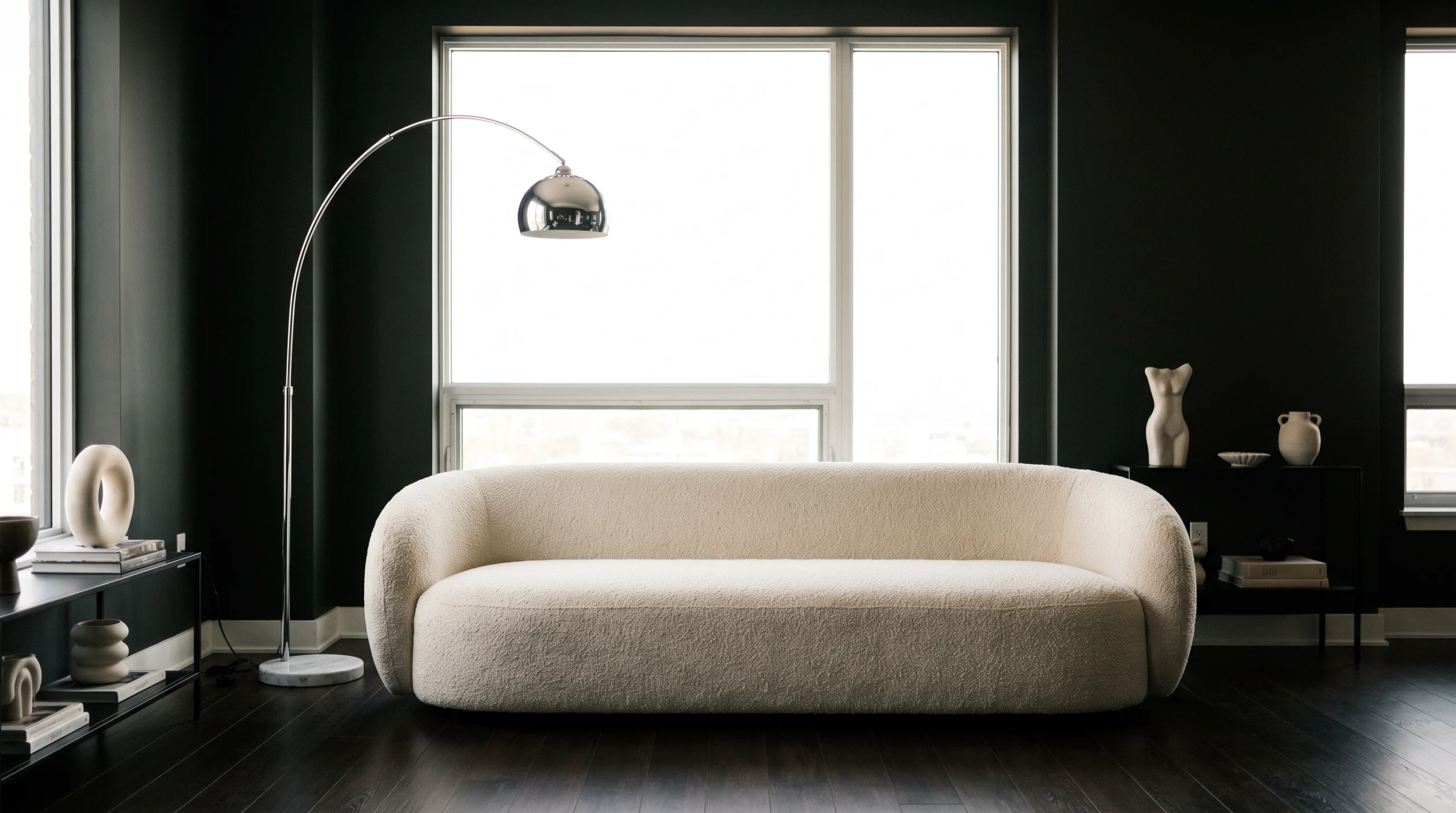
A dark living room reads dramatic rather than dim when the darkness is balanced against something light or reflective, a bright sofa, a big window, or metallic accents, so the room feels like a deliberate design choice instead of a room that simply lacks light.
Below are 20 ways to build that drama, from full architectural commitments down to smaller swaps that test the direction before you paint a whole wall.
How much natural light does each dark element need?
| Dark element | Minimum light needed | Risk if light is low |
|---|---|---|
| One accent wall | Low to moderate | Minimal risk, easiest starting point |
| Full room (walls, trim) | Moderate to high, at least one large window | Can feel dim rather than dramatic |
| Ceiling | High, 9-foot ceilings or better | Room can feel lower and heavier |
| Floor (dark wood or rug) | Low, floors read dark more easily without issue | Least risky of all the dark elements |
| All-dark room, walls plus ceiling plus floor | High, multiple light sources needed | Highest risk of feeling like a cave without careful balancing |
If your room only gets moderate light, start with a floor or one wall rather than committing to the full room at once.
20 dark living room ideas
1. Paint the walls charcoal and keep furniture light
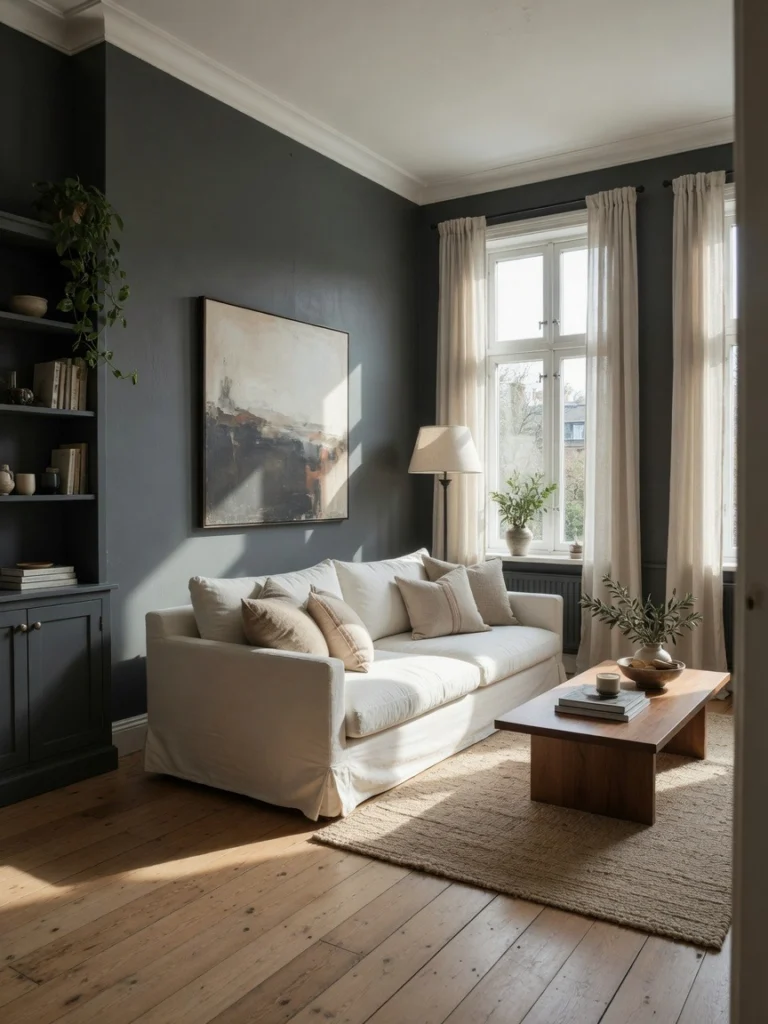
Charcoal walls against a light cream or white sofa create the highest-contrast version of this look, and the light furniture does the work of keeping the room from reading as dim.
This is more dramatic than pairing dark walls with dark furniture, since the contrast itself becomes the design feature.
2. Use dark espresso flooring instead of dark walls
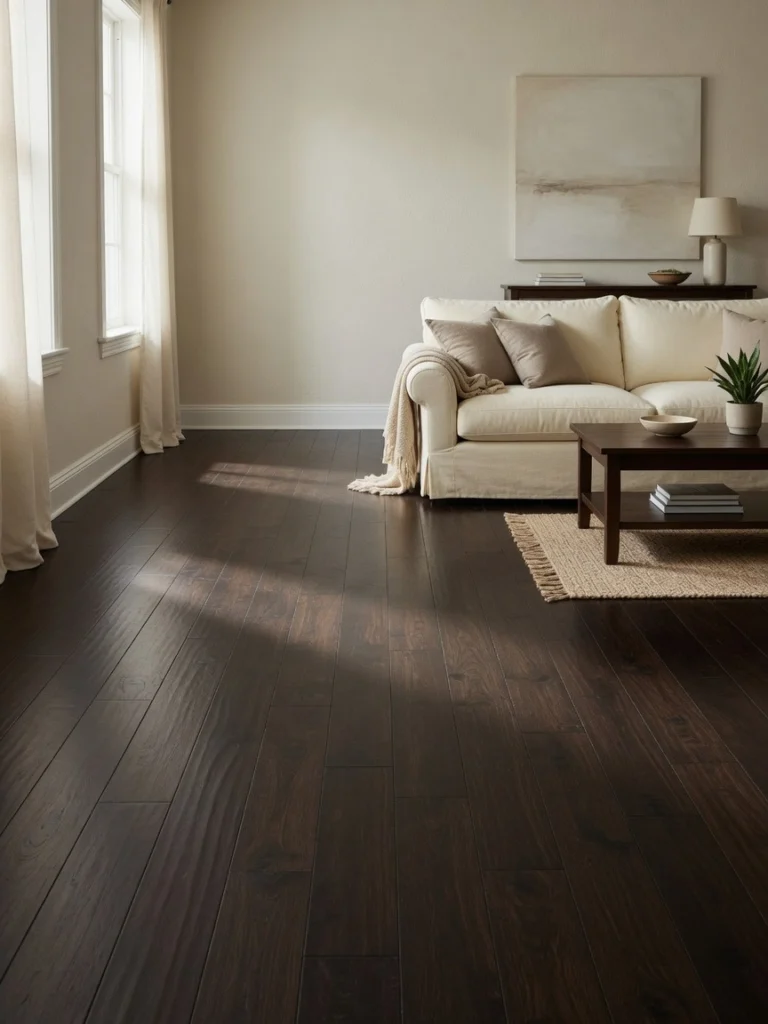
If you’re not ready to commit color to the walls, dark espresso-stained wood flooring gives you the same dramatic depth at ground level while the walls stay light and reflective.
Floors are also the lowest-risk dark element on this list, since a dark floor rarely makes a room feel smaller or dimmer the way dark walls or ceilings can.
3. Flip the usual pairing: dark ceiling, light walls, light floor
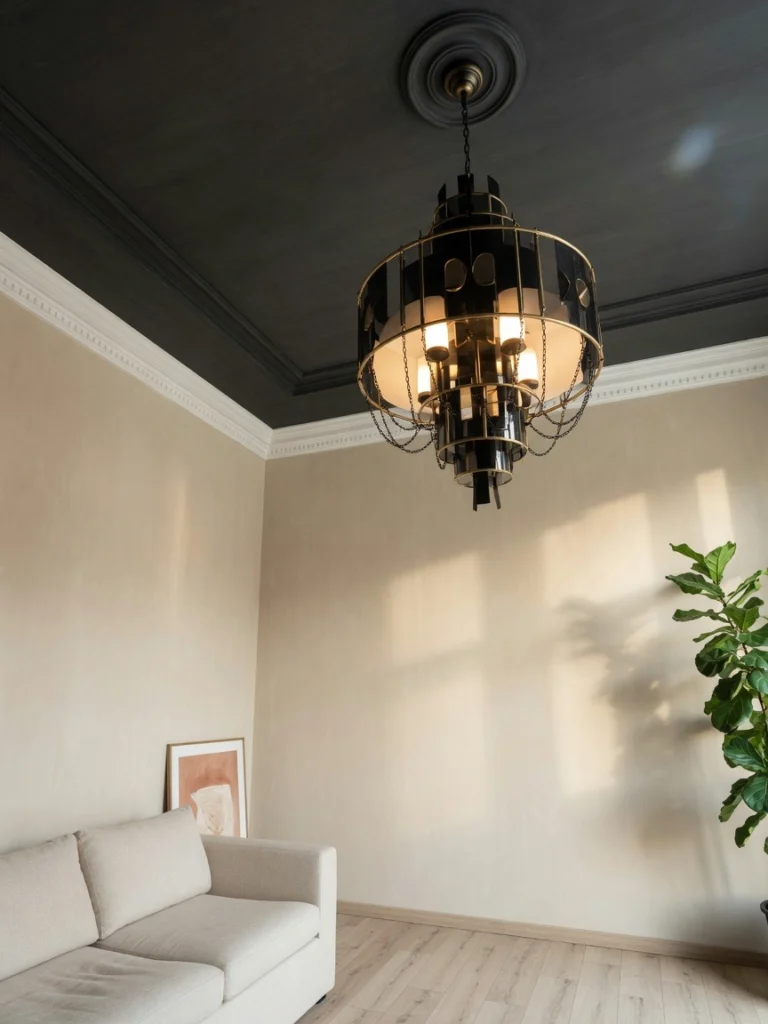
Painting only the ceiling dark while everything else stays light adds drama overhead without darkening the room’s main sightlines.
This works best in a room with ceilings 9 feet or higher; in a standard 8-foot room, a dark ceiling can feel lower than it actually is.
4. Use a large uncovered window to offset a fully dark room
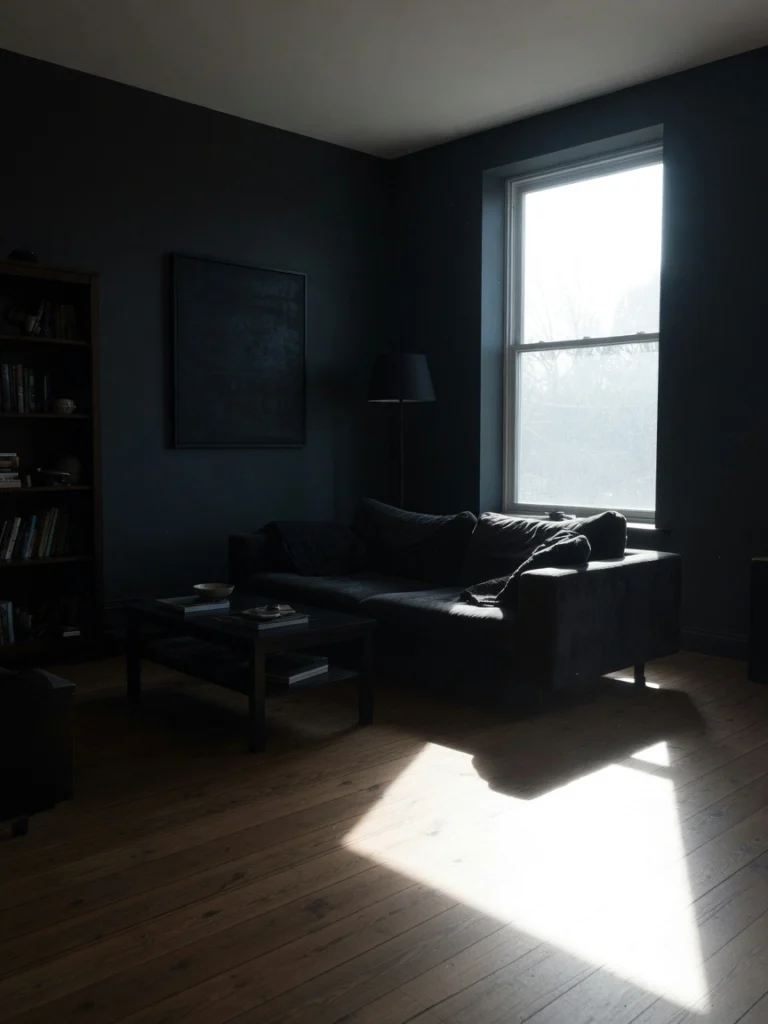
If you want the full commitment, dark walls, ceiling, and furniture, a large window left uncovered or dressed only in sheer curtains keeps enough daylight flooding in to prevent the room from feeling like a cave.
This is the highest-commitment idea on this list, so it’s worth testing with just one dark wall first before going all in.
5. Anchor the room with a dark greige-charcoal sofa
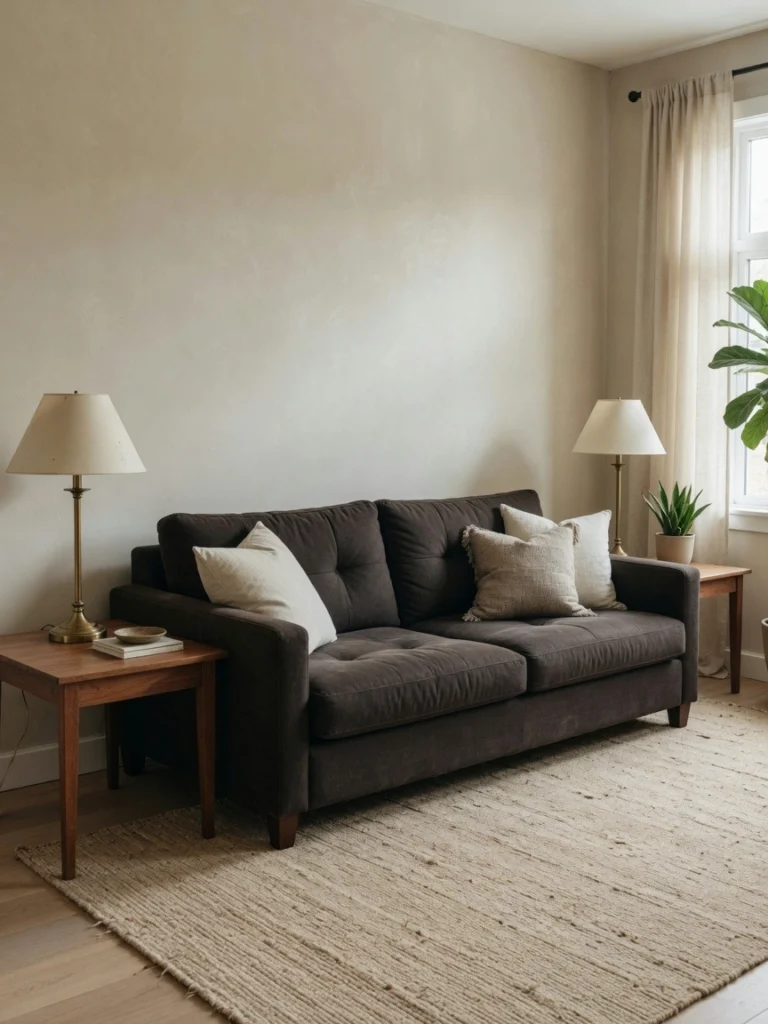
A deep charcoal-brown sofa against lighter walls gives you drama in the furniture rather than the architecture, and it’s far easier to swap out later if your taste changes than repainting a whole room.
Keep the rug and walls neutral so the sofa reads as the intended focal point.
6. Hang black-framed art or mirrors for graphic contrast
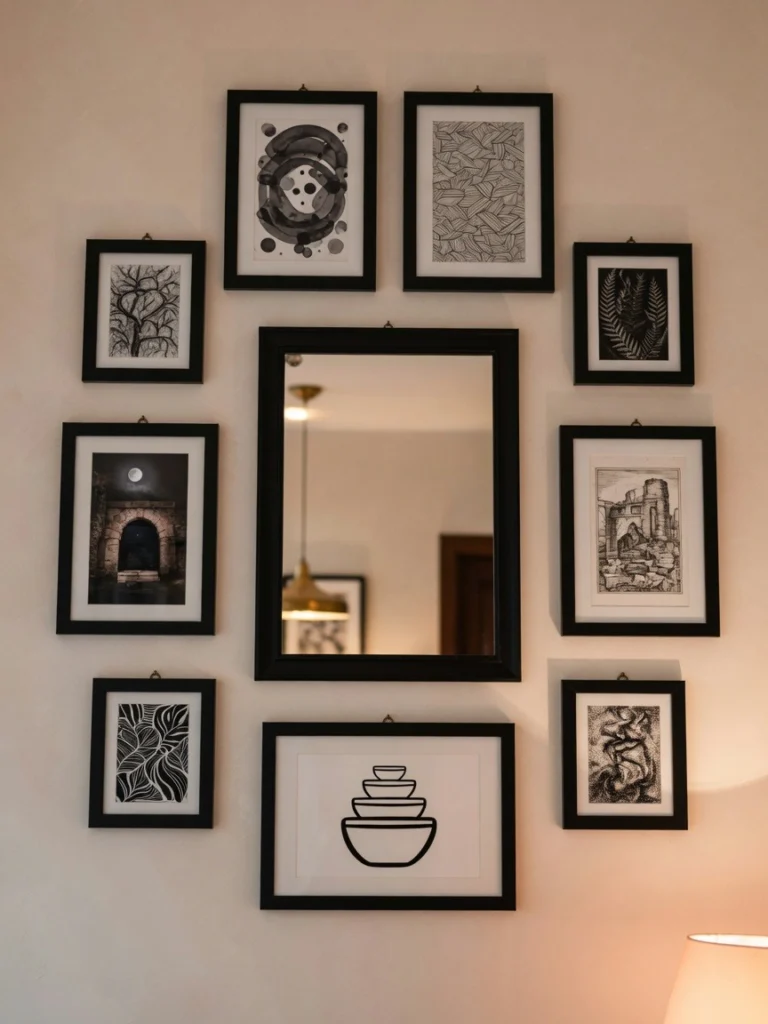
Black frames against a dark wall might disappear, but against a lighter wall they create a strong graphic line that reads intentional and architectural.
If you’re hanging into drywall without a stud, use a properly rated anchor for anything larger than a standard frame.
7. Add metallic accents for sparkle against dark surfaces

Chrome, polished nickel, or mirrored surfaces catch and bounce light in a way that matte dark walls and furniture don’t on their own, which keeps a fully dark room from feeling flat.
A chrome floor lamp or a mirrored side table does more visual work here than an equivalent piece in a warmer metal like brass.
8. Build a dark reading nook in one corner
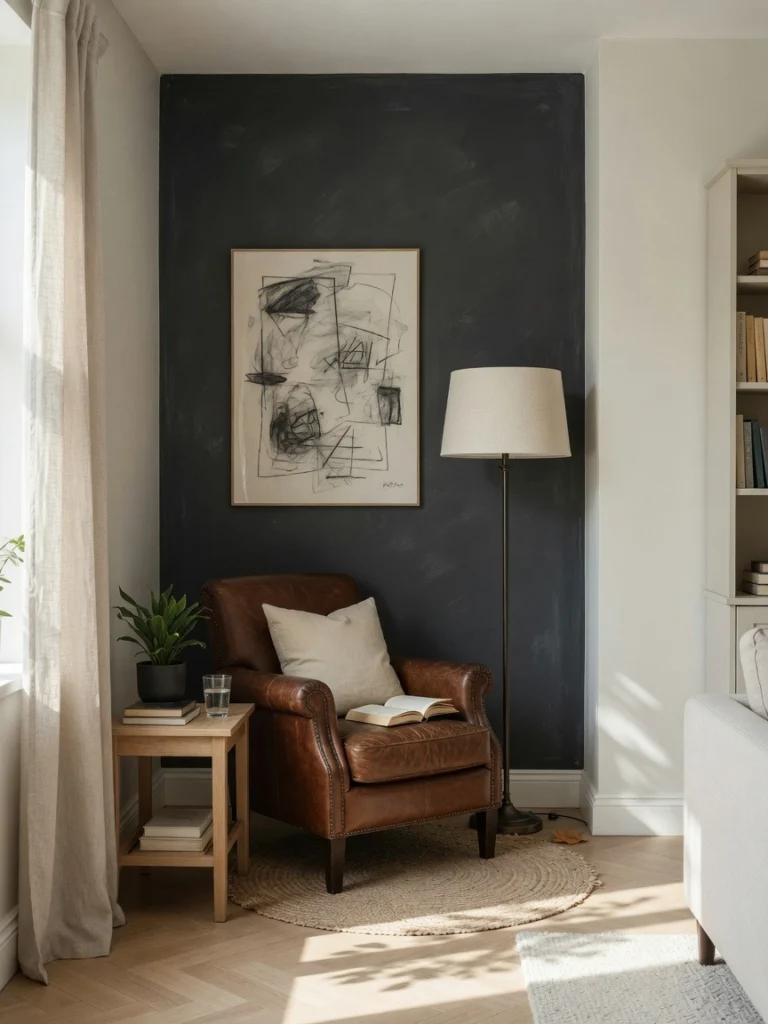
Rather than committing the whole room, paint or wallpaper just one corner in a dark tone and add a single chair and reading lamp there.
This gives you a contained, dramatic zone without needing to balance an entire room’s worth of light.
9. Add a dark accent wall visible from an open-plan kitchen
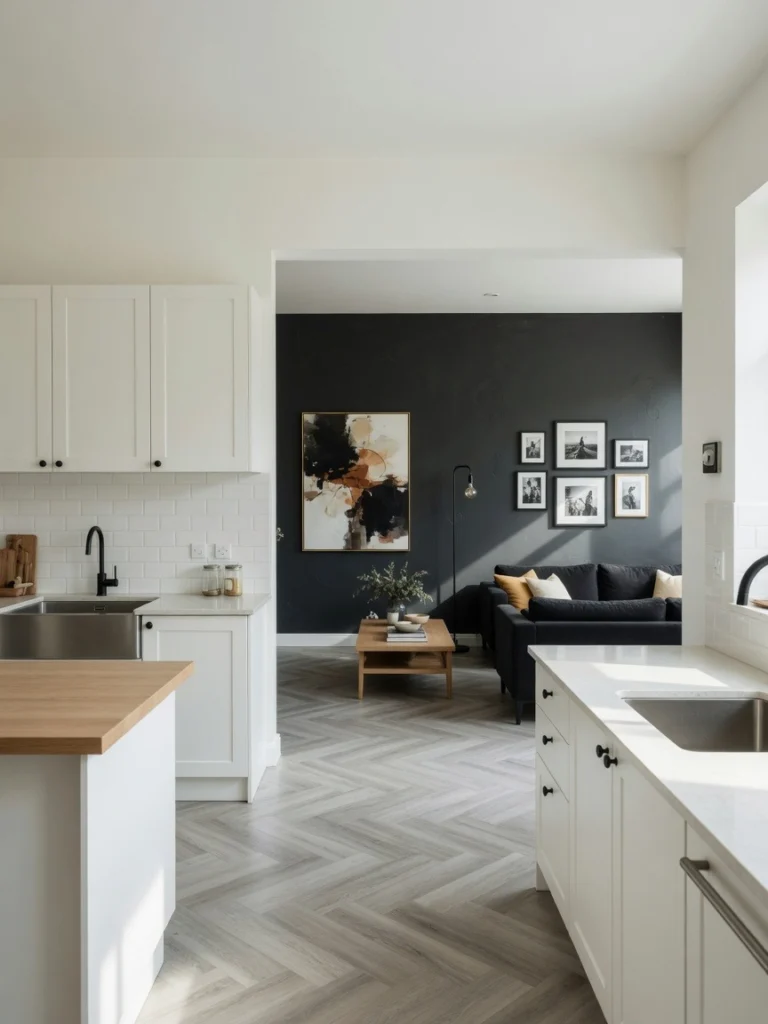
In an open floor plan, a dark wall in the living room visible from the kitchen creates a dramatic sightline between the two spaces without darkening the kitchen’s own work lighting.
This is a good option if you want drama in one zone of an open layout without committing the entire open space to a dark palette.
10. Highlight architectural beams in a dark stain
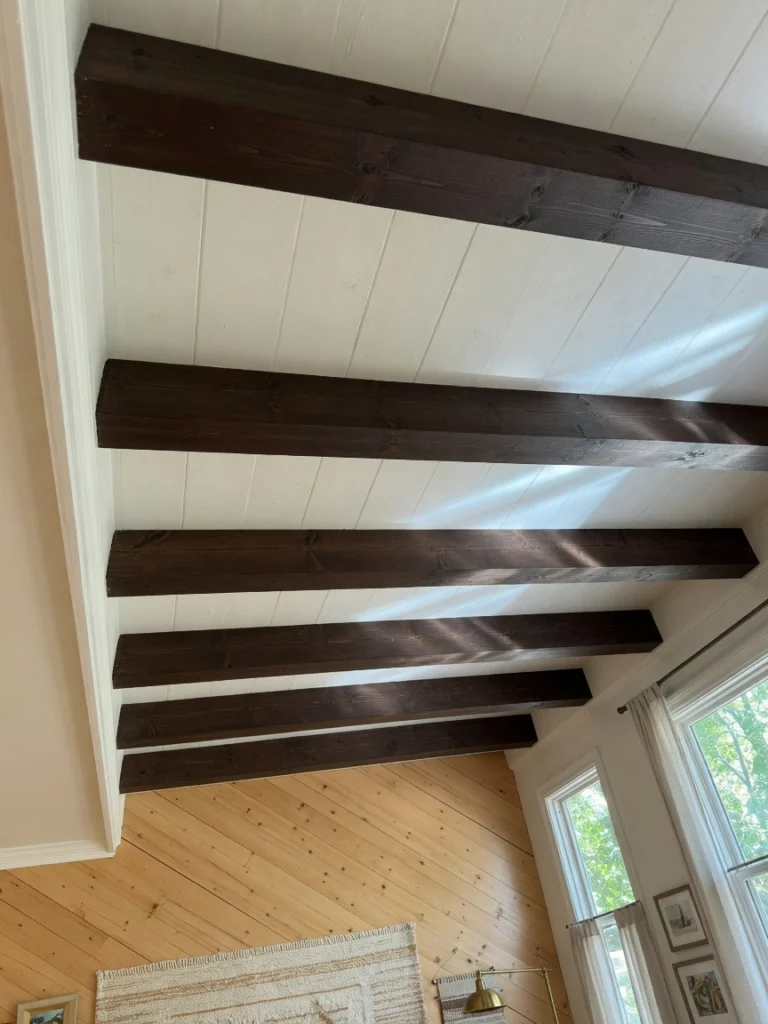
If your living room has exposed ceiling beams, staining them a dark espresso or near-black tone against a lighter ceiling gives you architectural drama without painting the whole ceiling.
This works especially well in rooms with existing wood beams you don’t want to hide, since it draws attention to a feature that’s already there.
11. Add textured dark grasscloth wallpaper
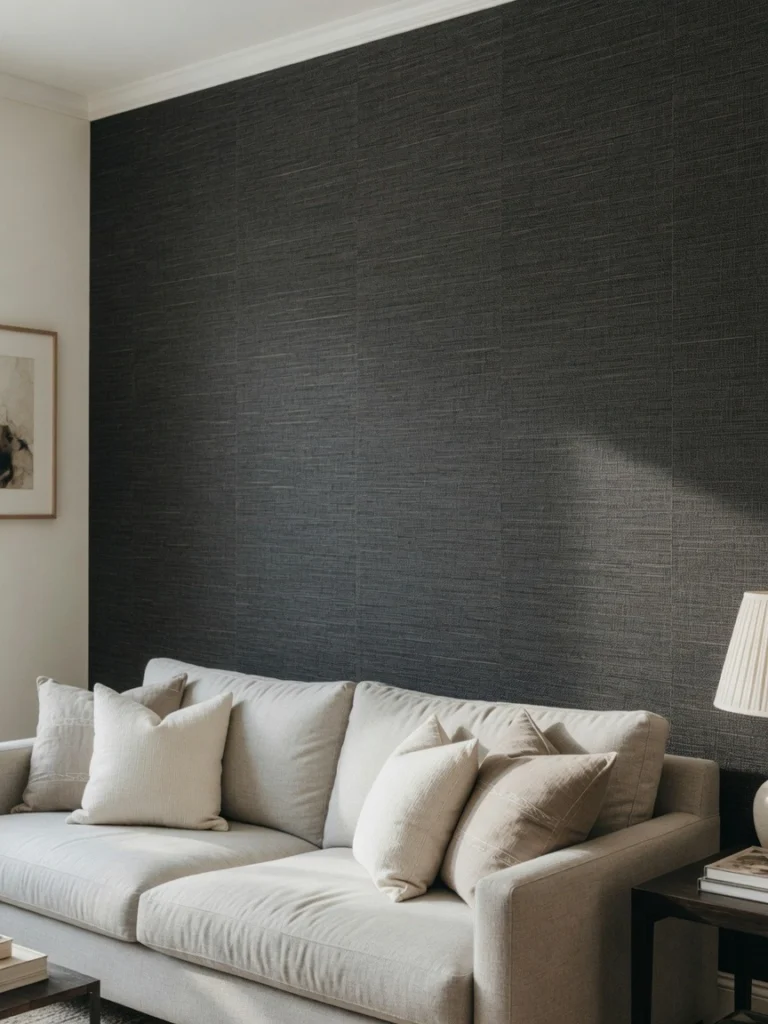
Grasscloth or textured woven wallpaper in a deep charcoal or espresso tone adds dimension that flat paint doesn’t have, since the natural fiber texture catches light differently across the wall.
Grasscloth can be tricky to remove cleanly, so check with a landlord before installing it in a rental, and consider a removable textured alternative if you’re not able to commit permanently.
12. Build a dark built-in media wall
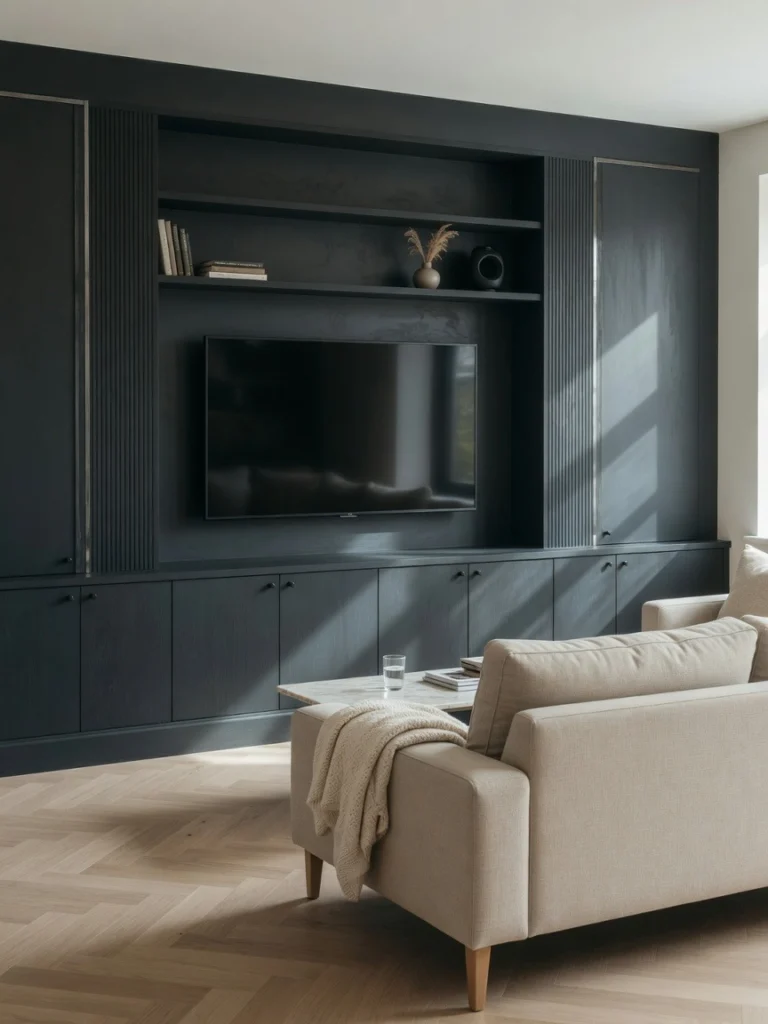
A media wall with dark cabinetry or paneling around the TV creates a defined, dramatic focal point and also hides cords and equipment behind closed doors.
This is a bigger investment than paint alone, but it solves the TV-on-a-plain-wall problem many living rooms have, since a dark surround makes the screen blend in rather than stand out as a black rectangle.
13. Layer multiple dark neutrals in one room
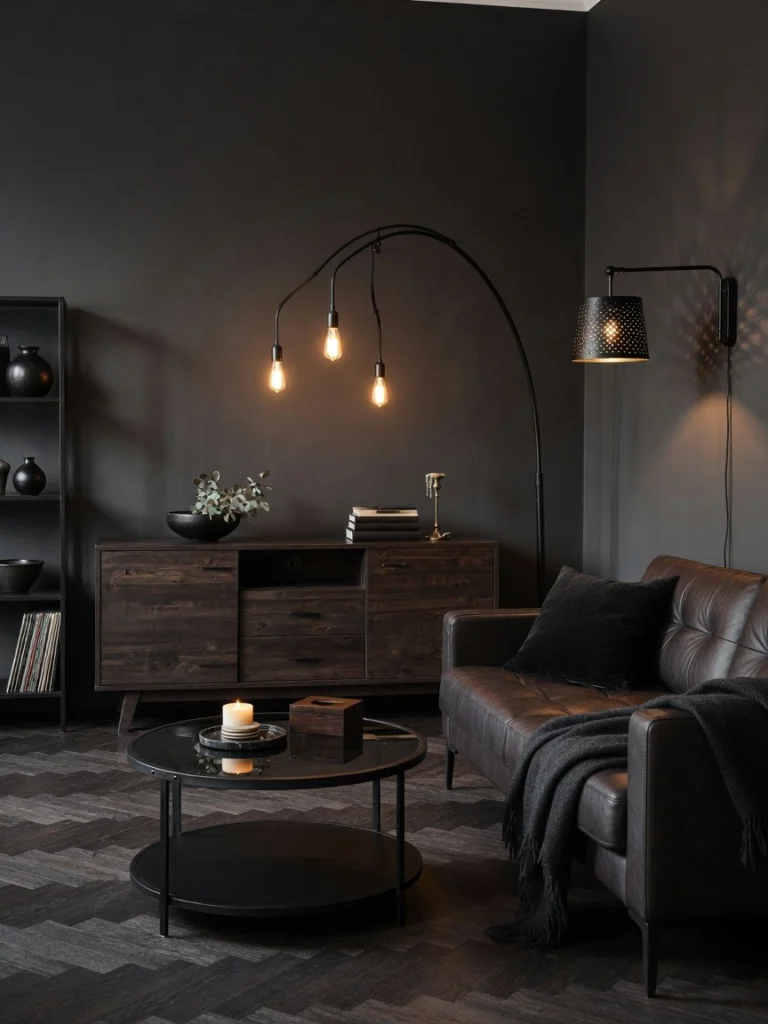
Instead of one flat dark color, combine charcoal walls, espresso wood furniture, and black metal accents, three different dark tones rather than a single repeated shade.
This tonal layering reads more intentional and collected than a room where every dark surface matches exactly.
14. Add a skylight to balance a fully dark scheme
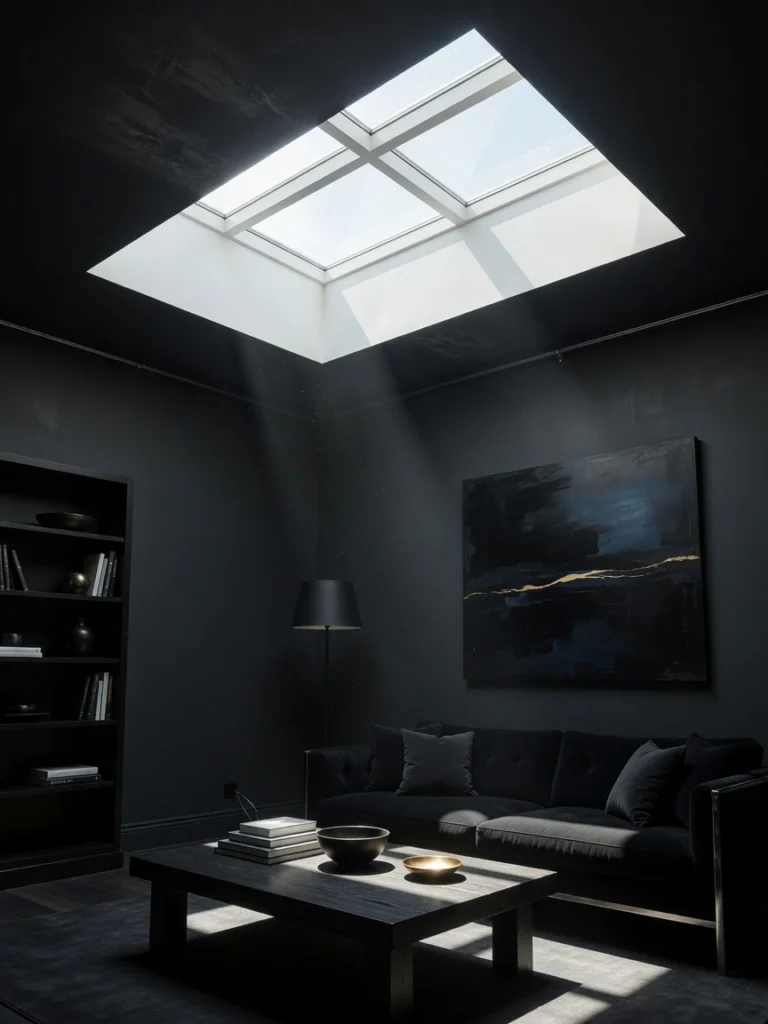
If you’re planning a full renovation and want to commit to dark walls and ceiling throughout, a skylight brings in overhead daylight that a standard window can’t always reach, especially in a room with limited wall space for windows.
This is a significant construction project requiring a licensed contractor, not a weekend DIY, so budget and plan accordingly if it’s the direction you want to go.
15. Pair a dark floor with a light, patterned rug
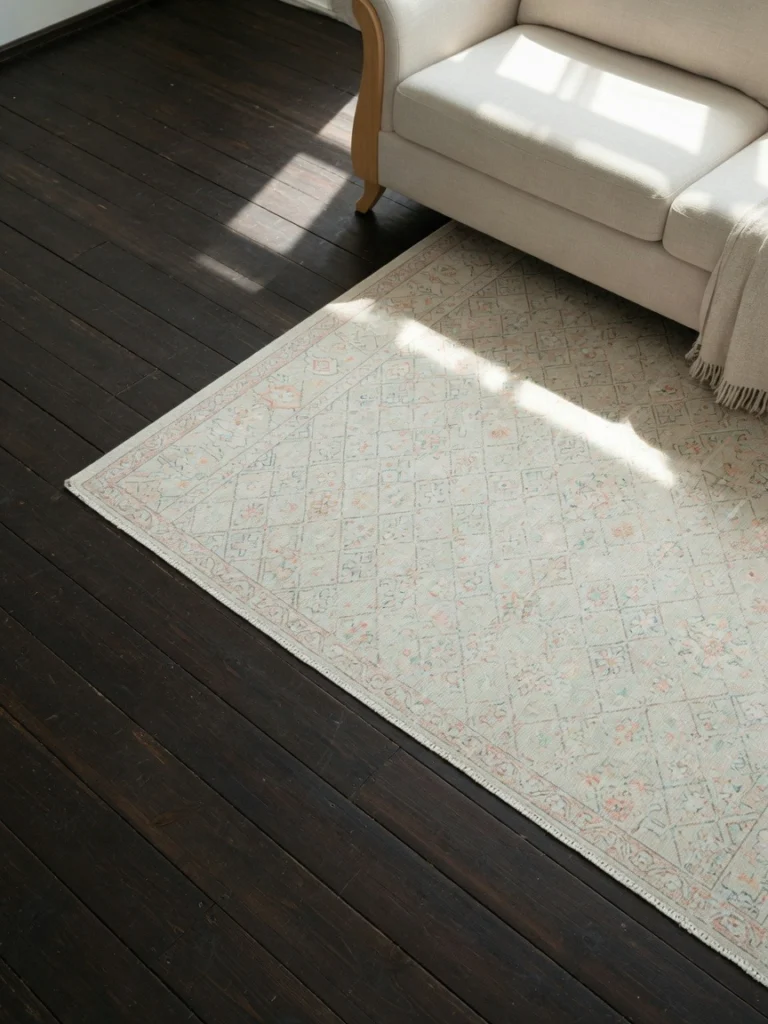
A dark wood or dark tile floor with a light-colored, patterned area rug on top creates contrast at ground level the same way a light sofa does against dark walls.
This also protects a dark floor from showing every scratch and scuff mark the way an unbroken dark floor surface would.
16. Add a dark accent pillar or half-wall
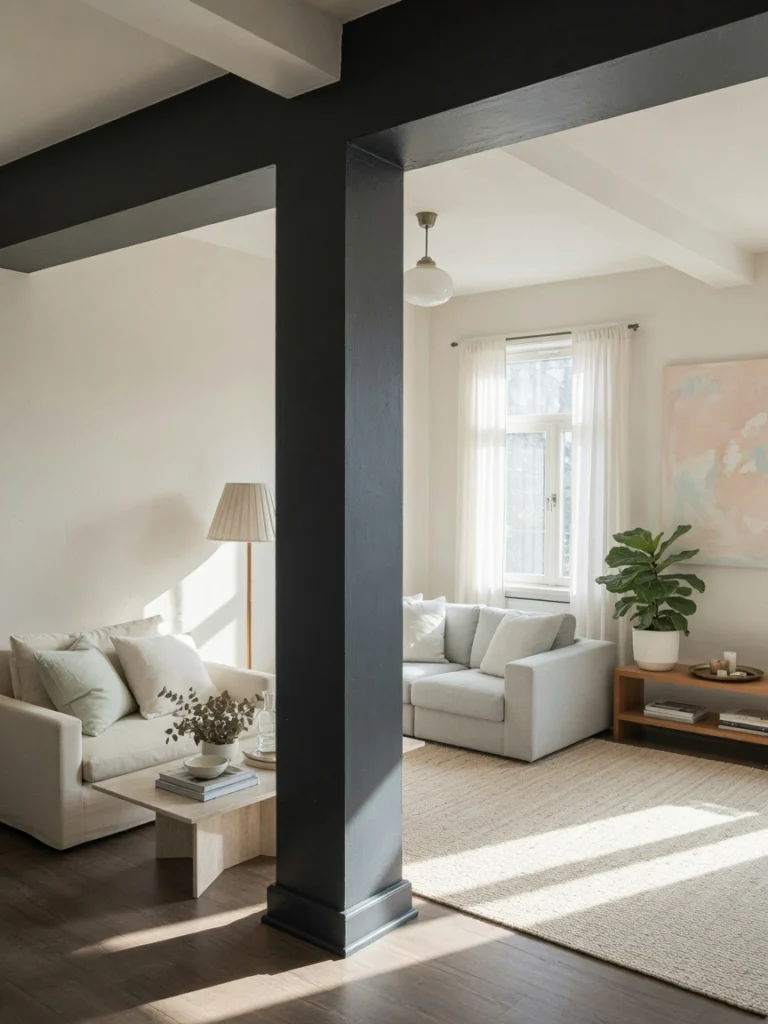
If your living room has a structural pillar or a half-wall dividing it from another space, painting just that element dark turns a purely functional architectural feature into an intentional design moment.
This is a smaller, contained project than a full wall and works well in open-plan homes with these kinds of dividing elements already built in.
17. Paint an interior door matte black
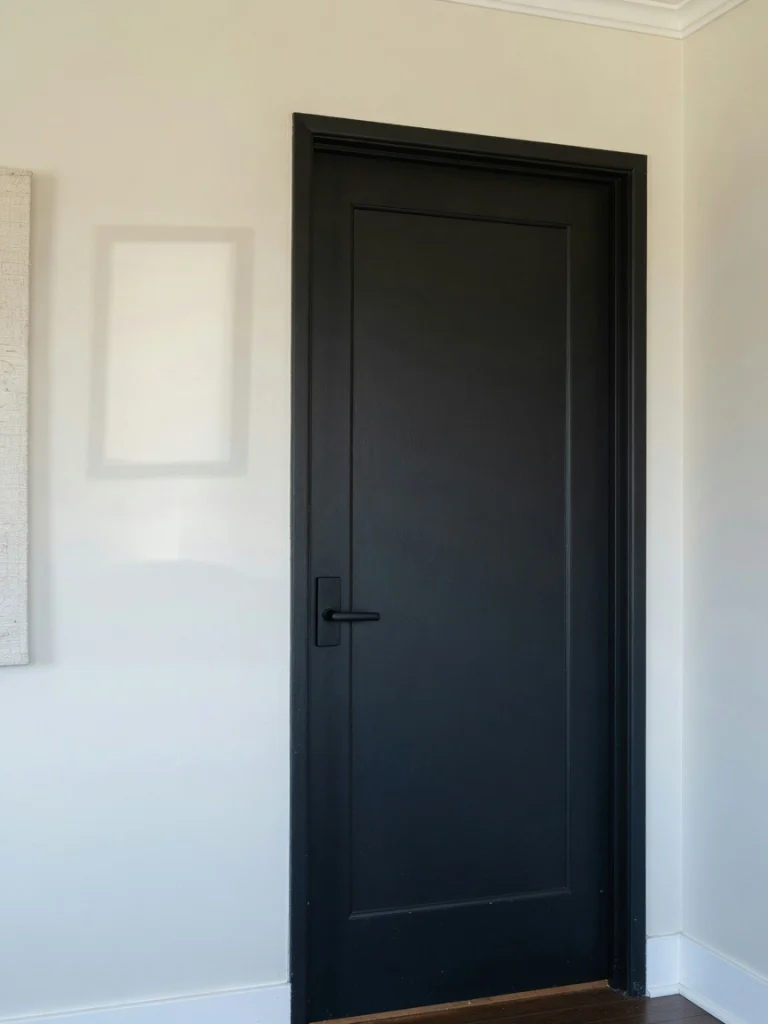
A matte black interior door leading into or out of the living room adds a small, contained dramatic moment without any wall commitment at all.
This is one of the cheapest and fastest projects on this list, usually a single afternoon with a quart of trim paint.
18. Combine a dark rug with dark, low furniture
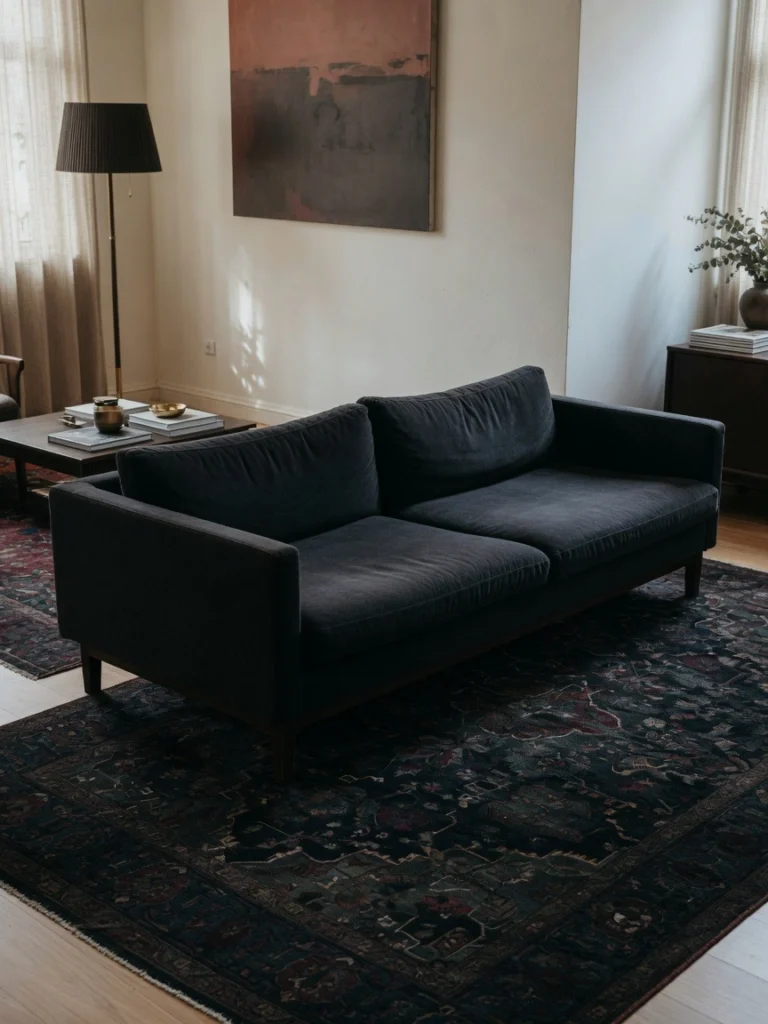
A dark area rug paired with low-profile dark furniture creates a grounded, dramatic seating zone while the walls stay light, which is a lower-risk way to get drama at floor and seating level without touching the architecture at all.
This version is fully reversible any time you want to lighten the room back up.
19. Keep it small-space friendly: one dark surface, not several
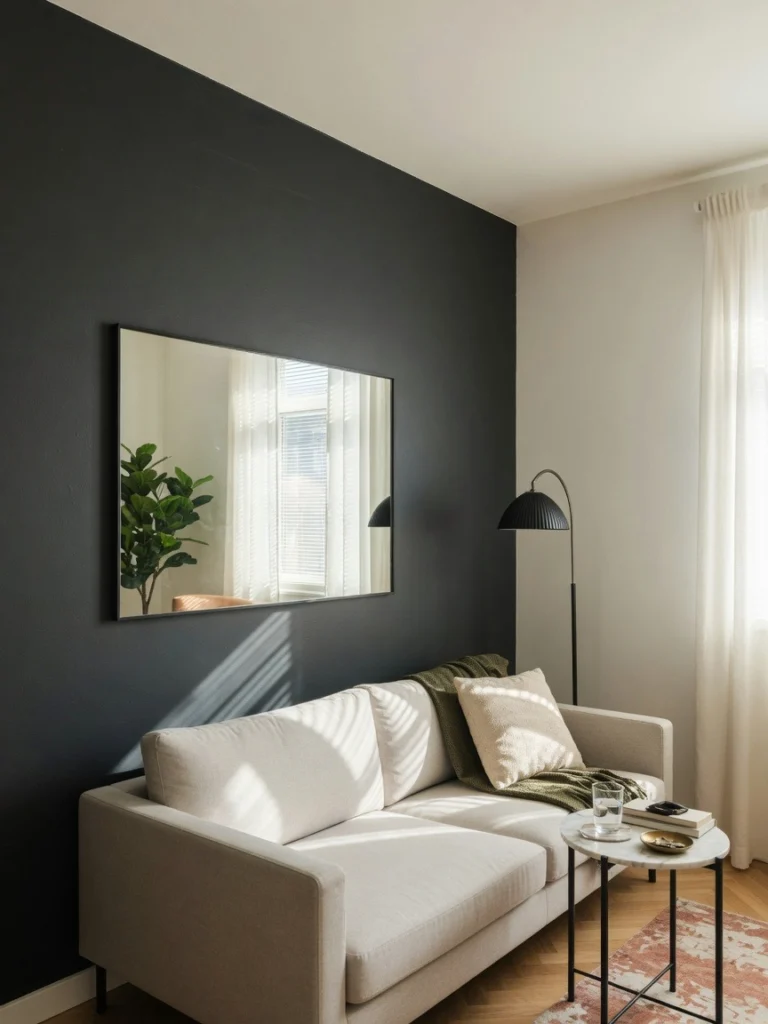
In a small living room, pick one dark surface, the floor, one wall, or the sofa, rather than combining several, since stacking multiple dark elements in a tight, low-light room risks feeling cramped instead of dramatic.
Pair the one dark choice with a mirror and strong task lighting so the room still functions well after dark. For more layout-specific advice, the small living room ideas guide covers furniture scale and placement in more depth.
20. Test the room’s light level before committing to a full dark scheme
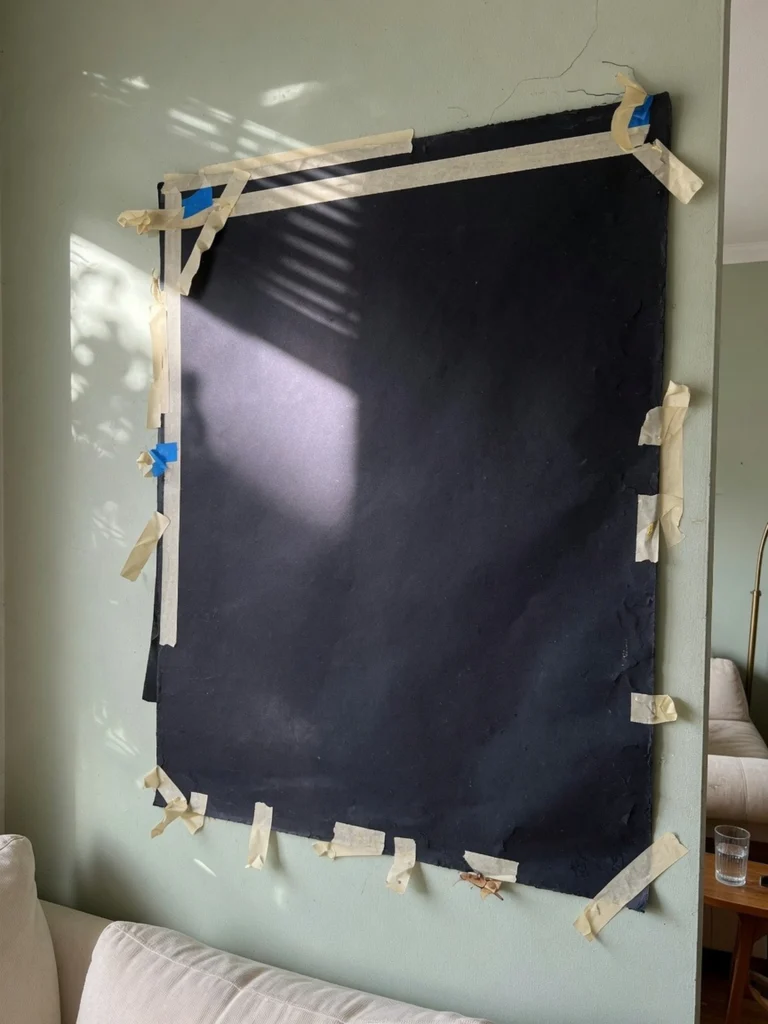
Before painting an entire room dark, tape a large piece of dark paper or fabric to the wall and observe it at different times of day for at least a week.
If the wall reads muddy or flat rather than rich under your room’s actual light, scale back to a single wall or a dark floor instead of committing the full room.
How to commit to a dark living room without regretting it
- Test before you paint the whole room. Tape a large sample to the wall and check it morning, midday, and evening for at least a few days.
- Start with the lowest-risk dark element. A floor or a single wall carries less risk of feeling too dim than committing walls, ceiling, and furniture all at once.
- Plan your light-balancing element before the dark one. Decide whether it’s a large window, a light sofa, or metallic accents doing the contrast work, and make sure that element is already in place or planned.
- Add task lighting regardless of natural light levels. A dark room still needs functional lamps for reading and daily use, separate from whatever ambient drama the color creates.
Common mistakes in a dark living room
- Committing the whole room before testing a sample. A dark color that looks rich on a paint chip can read muddy or flat once it covers every wall in your actual light.
- Pairing dark walls with dark furniture and no contrast element. Without a light sofa, a big window, or metallic accents, the room can read dim rather than dramatic.
- Skipping task lighting. Ambient drama and functional light for reading or daily tasks are two different needs; a dark room still needs both.
- Using a dark ceiling in a standard 8-foot room. This can make the ceiling feel lower than it is; reserve dark ceilings for rooms with more height.
- Installing grasscloth or textured wallpaper in a rental without checking removal rules. Some textured wallcoverings damage drywall on removal, which can affect a security deposit.
Why I did this in my own living room
I tried the full dark room, charcoal walls and dark furniture, in an apartment with only one small window, and it read dim rather than dramatic no matter how I lit it.
Repainting just the floor-facing half of the room light and keeping one wall dark fixed the problem completely. The lesson that stuck: dark needs something to bounce off of, and if your room doesn’t already have that, you have to build it in on purpose.
Quick answers
Does a dark living room need a lot of natural light? It helps, especially for a full-room commitment. A single dark wall or a dark floor works in almost any light level, while a fully dark room (walls, ceiling, and furniture) needs a strong light source like a large window to avoid feeling like a cave.
What’s the difference between a dark living room and a moody living room? Dark decor uses deep neutral colors, charcoal, espresso, near-black, as the base and typically relies on contrast with light or metallic elements for drama. Moody decor leans more on layered warm lighting, texture, and saturated jewel tones like burgundy or forest green for atmosphere.
Can renters try a dark living room without painting? Yes. A dark sofa, a dark rug, black-framed art, and a matte black interior door (if the lease allows repainting a door) can all add drama without committing the actual walls.
Does a dark floor make a room feel smaller? Not usually. Floors are the lowest-risk dark element since a dark floor rarely reduces the sense of space the way dark walls or a dark ceiling can in a low-light room.
What furniture works best against dark walls? Light-colored upholstery (cream, white, pale beige) creates the strongest contrast. Metallic accents like chrome or mirrored surfaces also help keep a dark-walled room from feeling flat.
Is a dark living room a lot of maintenance? Dark surfaces show dust and light-colored pet hair more visibly than light surfaces do, and matte dark paint can show scuff marks more than a satin or eggshell finish. Neither is difficult to manage, but it’s worth factoring into your cleaning routine.
About this guide
This list comes from actual dark rooms I’ve tested in both light-rich and light-limited spaces, not a staged showroom. If you want more direction specifically on black as the lead color, the black living room ideas guide covers that in more depth. For a warmer, more atmosphere-driven take on darker decor, the moody living room ideas post leans into lighting and texture rather than architectural contrast, and if a dark sofa specifically is what you’re after, the dark grey sofa living room ideas guide goes deeper on that one piece.
4 thoughts on “20 Dark Living Room Ideas for a Dramatic Look”