
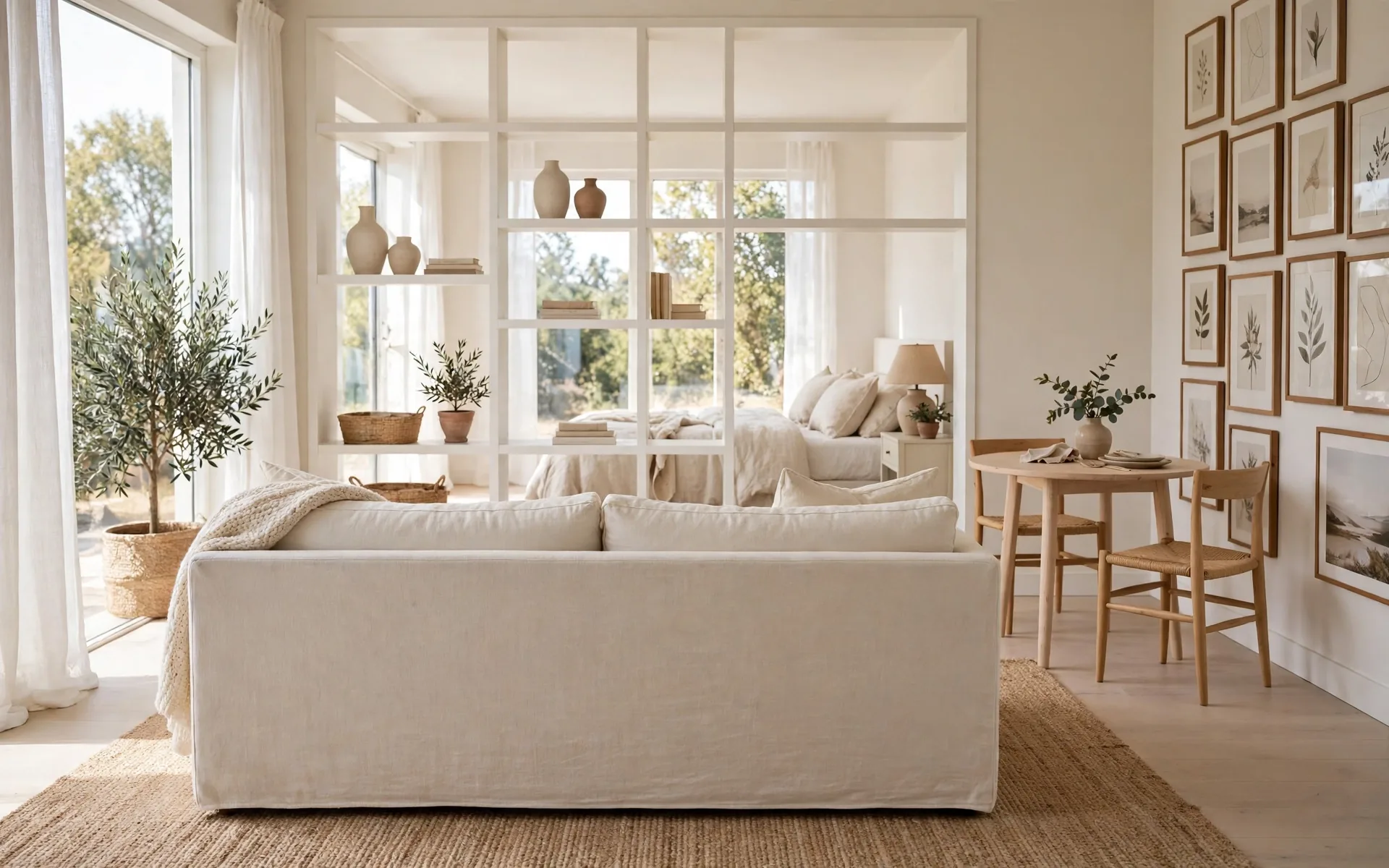
To make a studio apartment feel bigger, keep one calm color palette, use low furniture, mark zones with rugs and open shelves, and let light travel across the whole room. Tall art and a vertical gallery wall help the ceiling feel higher. Here are nine tricks, each with a practical tip.
Studio living gets a bad reputation, as if small must mean cramped and dark. A good studio feels intentional, with cozy corners and breezy ones. “Bigger” is rarely about square footage. It is about light, layout and a few choices that trick the eye. If you want more ways to plan a compact room, these small living room ideas are a useful companion.
1. Draw the eye up with a vertical gallery wall

When floor space is tight, the walls have to work harder. In a long, narrow studio, a stacked gallery wall pulls the eye up and back, so the room feels taller and longer than it is. Go vertical, not horizontal. Hang frames in a column or layered cluster that climbs toward the ceiling, mixing sizes and orientations so it looks collected, not staged. Keep the furniture underneath low, like a slim TV console, and let the wall do the visual lifting.
Pro tip: Lay your frames on the floor first and trace each one on paper. Tape the paper to the wall to check the layout before you make any holes, and renters can lean frames on a ledge instead.
2. Use an open shelf as a room divider

A solid divider chops a studio in half and steals light. An open shelf suggests separation without killing airflow or the view. A white shelf can split the living and sleeping zones while letting sunlight pass from the bedroom window into the lounge. Style it with books, plants and a few sculptural objects so it looks intentional from both sides, and it doubles as storage.
Pro tip: Tall shelves can tip. Anchor yours to a wall where you can, keep heavy items low, and ask your landlord first if you rent.
3. Carve out a tiny dining nook
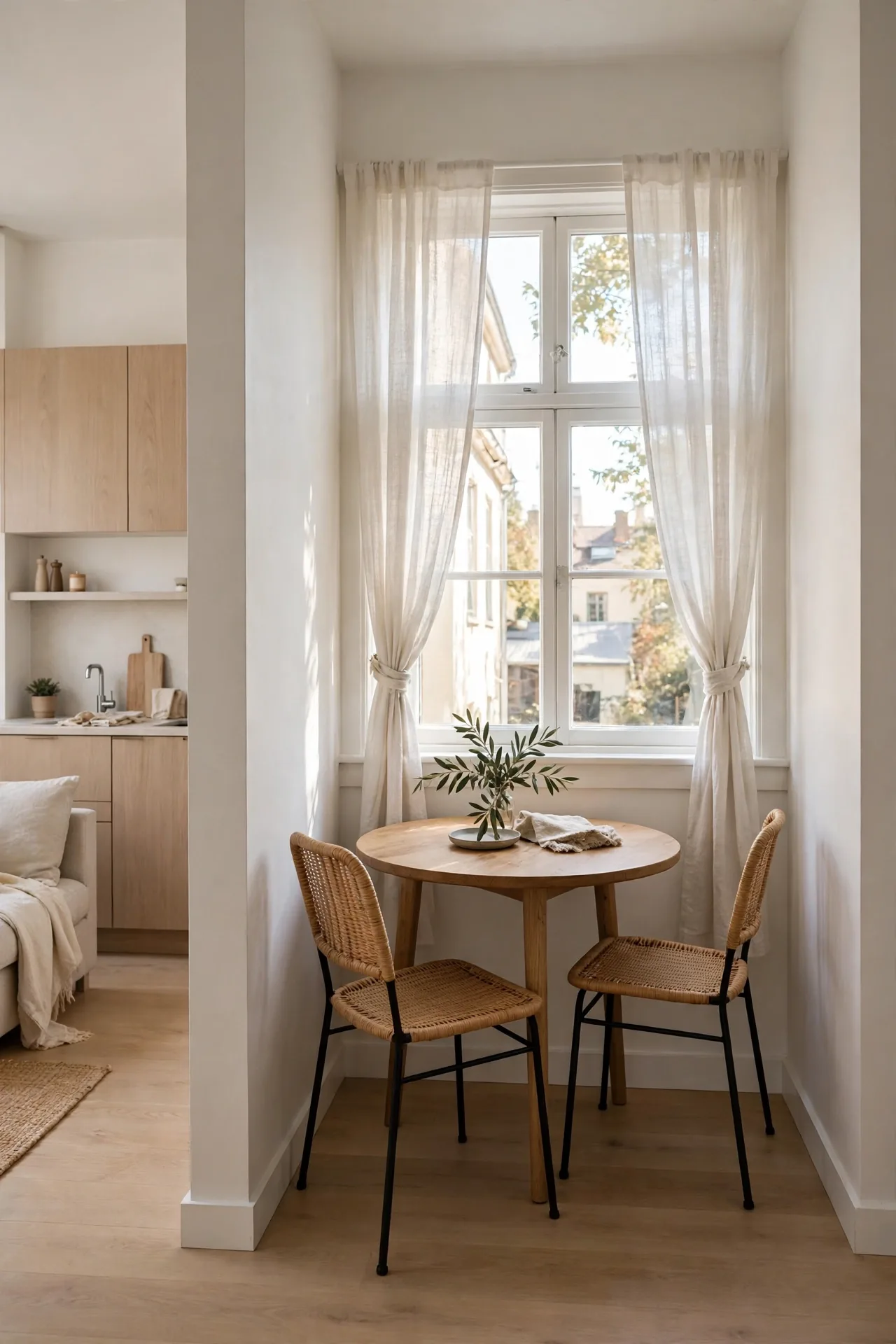
Most people skip a dining table in a studio because they assume there is no room. There almost always is, if you scale it. A small round table with two chairs tucked into a corner reads as a complete dining space without taking real estate. Suddenly the studio goes from a sleeping area with a couch to a full home. Round tables have no sharp corners and fit tight spots that square tables cannot.
Pro tip: Leave about 36 inches behind each chair so you can sit and stand without bumping into the wall.
4. Let your sofa be the bedroom wall

When you cannot add a divider, your sofa can do the job. Float it in the middle of the room with its back facing the bed, and your eye reads two rooms with nothing between them. A cream sofa anchors the living zone, and the bed sits quietly behind it like a separate space. Add a console table or slim bookcase behind the sofa to reinforce the line.
Pro tip: Choose a sofa with a finished back, and leave a few inches of gap so it does not scrape the bed frame.
5. Stick to one tight color palette

If you take one thing from this list, take this. A studio feels bigger the second you stop mixing competing color stories. When walls, sofa, rug, curtains and wood tones all sit in the same calm family, the eye glides instead of bouncing. Pick three or four shades that play well together, like greys, beiges, soft whites and warm wood, and commit. For more calm palettes, see these beige living room ideas.
Pro tip: Add warm lamp light at night, using bulbs rated around 2700K, so the neutral palette feels soft instead of flat.
6. Define zones with one anchor rug

In an open studio, the living area can blur into the bedroom until nothing has a clear job. Drop a generous rug under the sofa and coffee table to claim that corner as the lounge. It pulls the furniture into one tidy island and gives the eye a boundary. A neutral jute rug grounds the seating area without competing with anything else.
Pro tip: Go bigger than you think. Choose a rug large enough that at least the front legs of the sofa and chairs sit on it, since a small rug makes the zone look like an afterthought.
7. Use two rugs for two zones
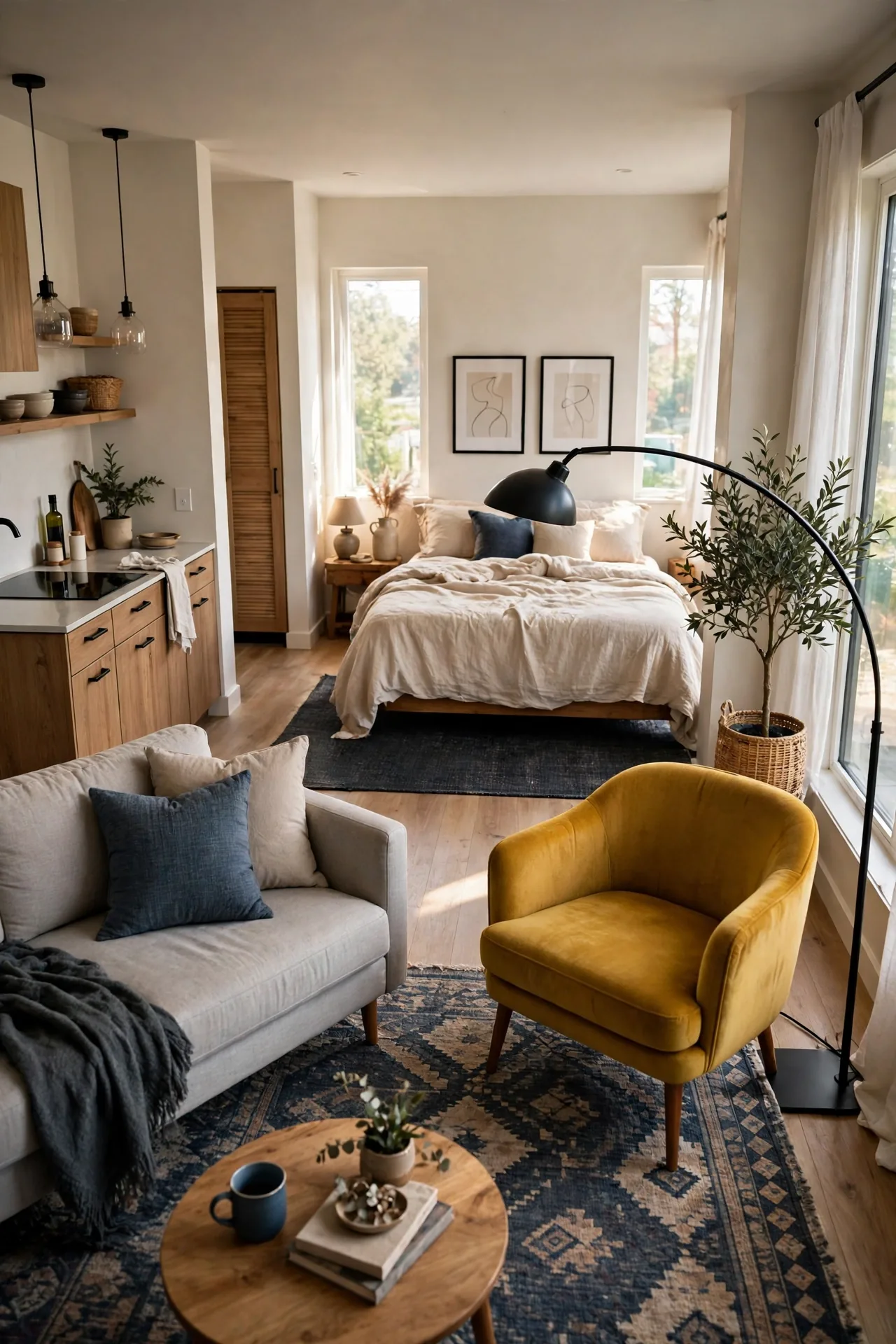
Here is where the last tip levels up. When you have the floor space, add a second rug under the bed and let the two rugs act as invisible walls. A darker rug under the bed and a patterned one under the living set, in the same color story, read as separate rooms instantly. A mustard chair and an arc lamp anchor the lounge, while the bed gets its own quiet identity.
Pro tip: Use a non-slip pad under each rug so the edges lie flat, and keep the two rugs a few inches apart so the zones do not collide.
8. Keep furniture low and let light through

Tall, bulky furniture eats a studio alive. Low sofas, slim coffee tables and a divider you can see over make the ceiling feel higher and the room airier. In a Scandi space like this, nothing blocks the window, the shelf stops well below the ceiling, and a monstera on top adds soft height. Pale wood floors and a light rug bounce daylight around. For more calm layouts, see these Scandinavian living room ideas.
Pro tip: Keep the window clear of tall furniture, and place the lowest pieces closest to it so daylight reaches the whole room.
9. Choose furniture that does two jobs
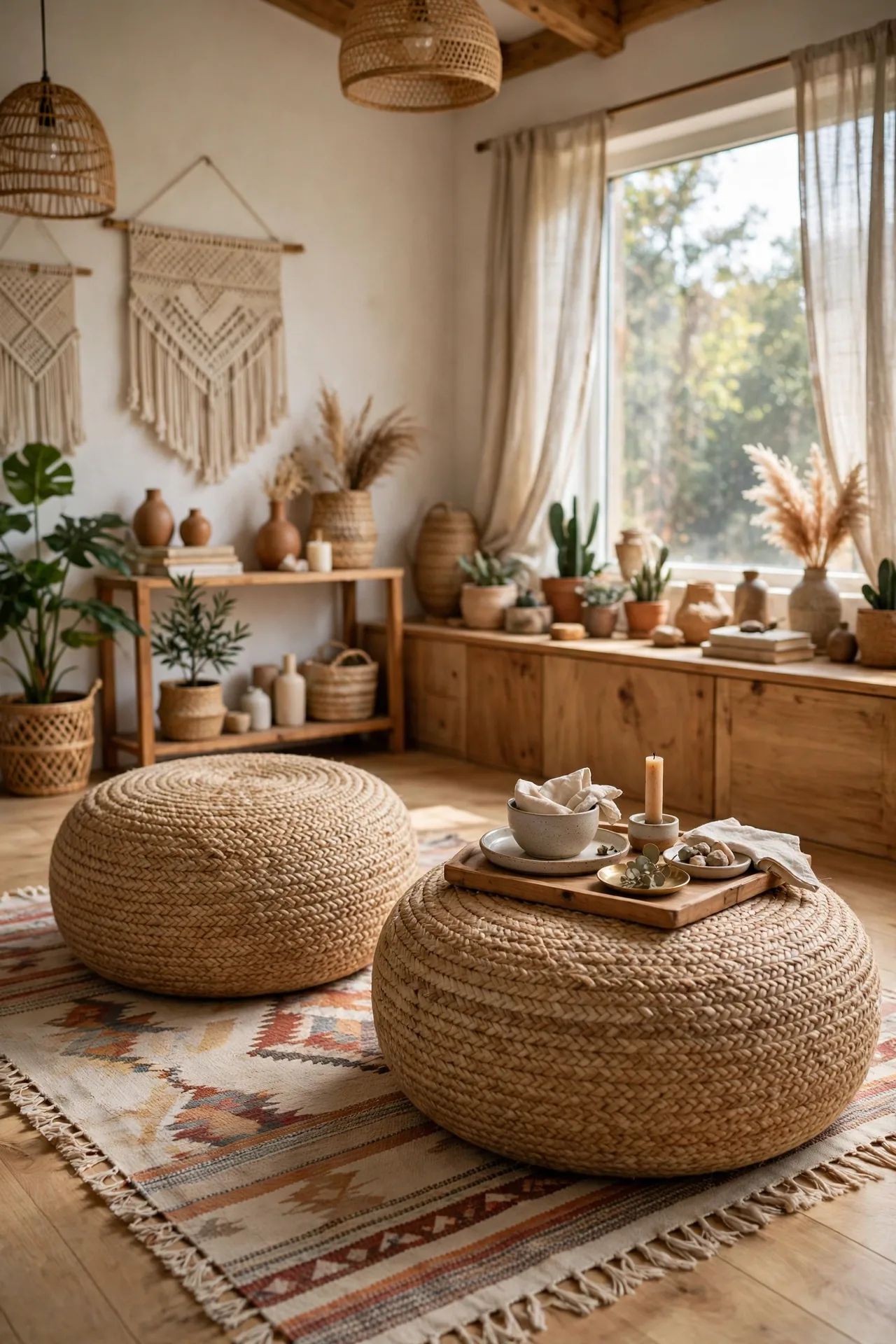
Every piece in a studio should pull double duty, and woven poufs are the unsung heroes. They work as a footrest, extra seating and a side table with a tray on top. Two large jute poufs can serve as main floor seating, with no bulky armchairs eating up the rug. Storage ottomans, nesting tables and lift-top coffee tables are worth their price twice over. If you like this relaxed look, see these modern boho living room ideas.
Pro tip: Choose poufs with a sturdy base and a firm top, so they work as a seat and a table, and store them under a console when not in use.
Quick answers
What color makes a studio apartment feel bigger?
Soft whites, beiges and light greys make a studio feel bigger, especially when walls, sofa and curtains share one palette.
How do I divide a studio without a wall?
Use an open shelf, a floating sofa, or two rugs. Each marks a zone without blocking light.
Does a mirror make a studio feel bigger?
Yes. A large mirror opposite a window reflects daylight and doubles the sense of depth. Secure heavy mirrors with proper fixings.
What furniture is best for a small studio?
Low-profile pieces with visible legs, plus multi-use items like poufs, storage ottomans and nesting tables.
How big should a rug be in a studio?
Large enough that at least the front legs of your sofa and chairs sit on it. A rug that is too small makes the room look choppy.
Can I fit a dining table in a studio?
Usually yes. A small round table with two chairs fits most corners and has no sharp edges to bump into.
How do I make a studio feel taller?
Use a vertical gallery wall, hang curtains close to the ceiling, and keep furniture low.
What lighting works best in a small studio?
Layer a ceiling light, a table lamp and a floor lamp, all with warm bulbs around 2700K.
Mirrors are the fastest way to make a studio feel bigger, but only when they reflect something worth seeing. Hang a mirror opposite a window so it bounces daylight across the room, not opposite a blank wall or a cluttered shelf. A large mirror over the sofa or beside the bed doubles the light in that corner, and a mirror leaned against the wall costs nothing to install. One good mirror beats three small ones scattered around the room.
Keep the floor visible. A rug that is too big for its zone swallows the floor and shrinks the room, while a rug that fits just under the sofa and coffee table leaves a border of bare floor around it. The same rule applies to furniture: pieces with legs show more floor than pieces that sit flat on the ground, and the eye reads visible floor as extra space. When you can see the floor from the door to the window, the studio feels longer than it is.
Edit the surfaces once a month. A studio feels bigger when the coffee table, the windowsill, and the shelf hold a few chosen objects instead of everything you own. Put the extra pieces in a basket or a drawer, and rotate them back in when you want a change. The room does not need to be empty — it needs to look like every object on display was chosen, not just left there.
Final thoughts
Making a studio feel bigger is not about expensive renovations or magic furniture. It is a handful of small, repeatable choices: one calm color palette, low pieces, defined zones and furniture that pulls more than its weight. Pick the one tip that fits your space right now and try it this weekend. When you are ready to make the whole room feel warm, these cozy living room ideas can help.
Your studio does not need more square footage. It needs a few smart decisions, and you can make every one of them today.

Hi, I'm Wasif — welcome to The Homes Decors. I write about home decor: the ideas, choices, and small details that make a space feel considered rather than accidental. If you've ever wondered why a room works, not just what's in it, you're in the right place.