
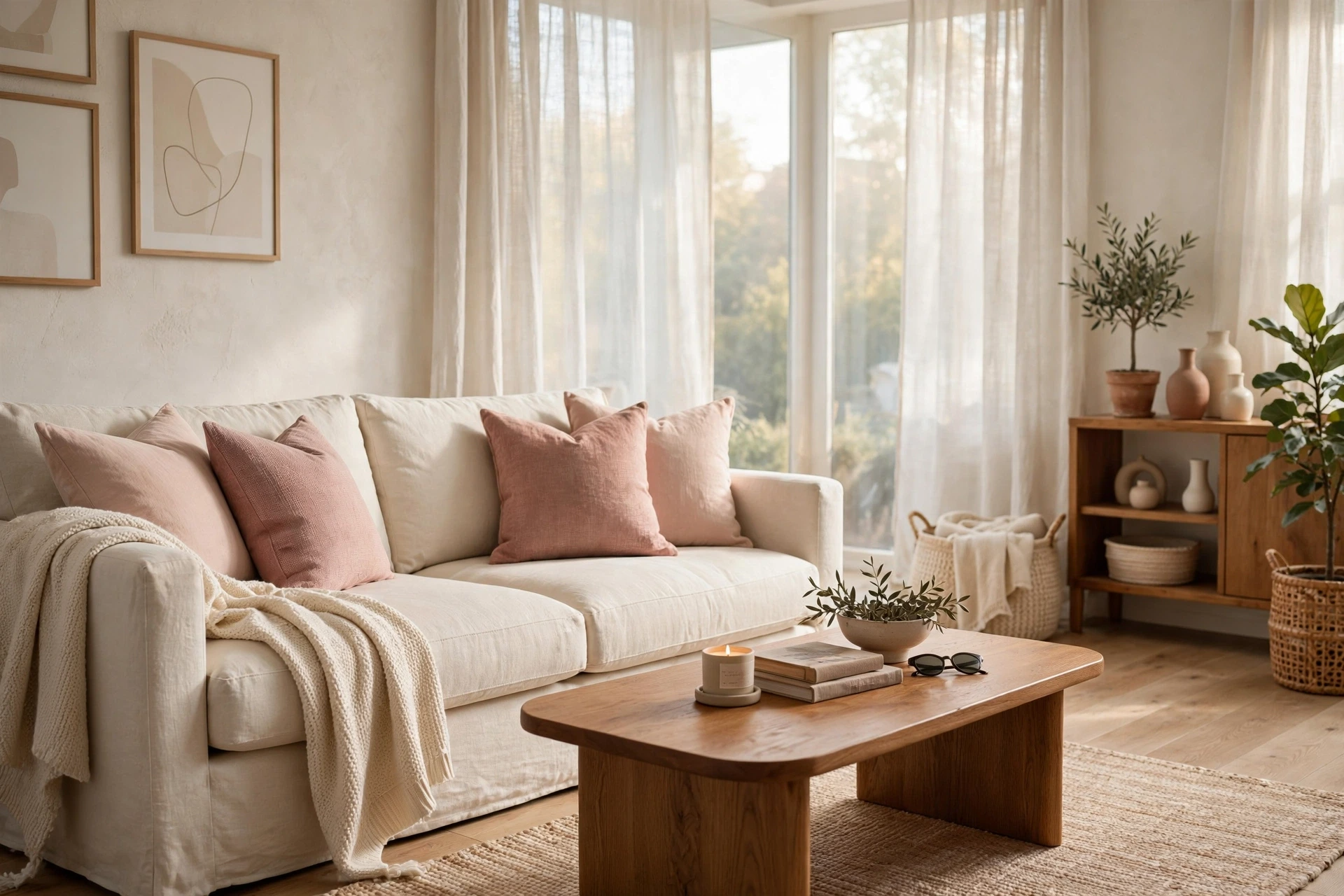
Pink works in a living room when it’s treated as a warm neutral, not a bold statement color. The rooms that pull it off best usually lean on one dusty, muted shade of pink and let texture — velvet, linen, wood, wool — do the rest of the work. Here are 20 ways to get that soft, cozy look without the room feeling like a nursery.
Blush vs dusty rose vs mauve: picking your pink
Not every pink reads the same in a living room. Blush is the lightest and softest, dusty rose sits in the middle with a muted, greyed-out quality, and mauve leans darkest with a hint of purple.
| Shade | Looks like | Works best with |
|---|---|---|
| Blush | Very pale, almost neutral | Cream, white, light wood, soft gold |
| Dusty rose | Muted, greyed pink | Sage green, warm beige, brass |
| Mauve | Deeper, slightly purple-grey | Charcoal, black accents, dark wood |
Picking one and staying mostly within it keeps a pink living room from tipping into overly sweet territory. A single accent wall or a few key pieces in one shade of pink reads as intentional; scattering three different pinks around the room usually just reads busy, the same way light color living room design relies on tonal restraint rather than variety.
20 pink living room ideas
1. Pair blush with warm cream walls
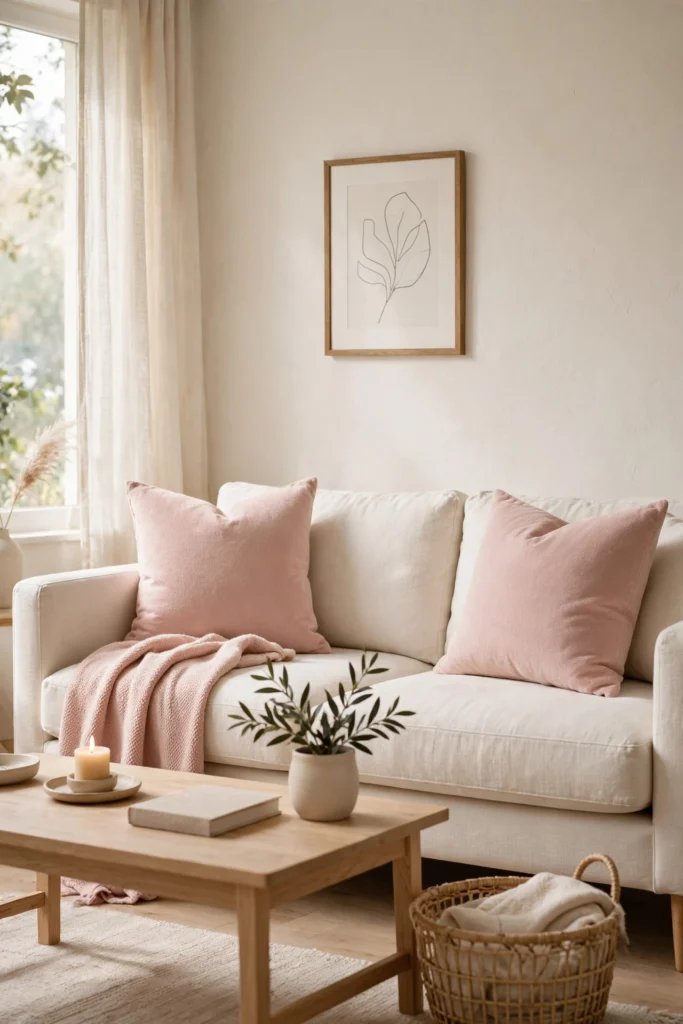
Blush pink needs a warm backdrop, not a stark white one, to avoid looking cold. Warm cream or off-white walls let the pink read as soft rather than pastel-sharp.
2. Add a dusty rose velvet accent chair
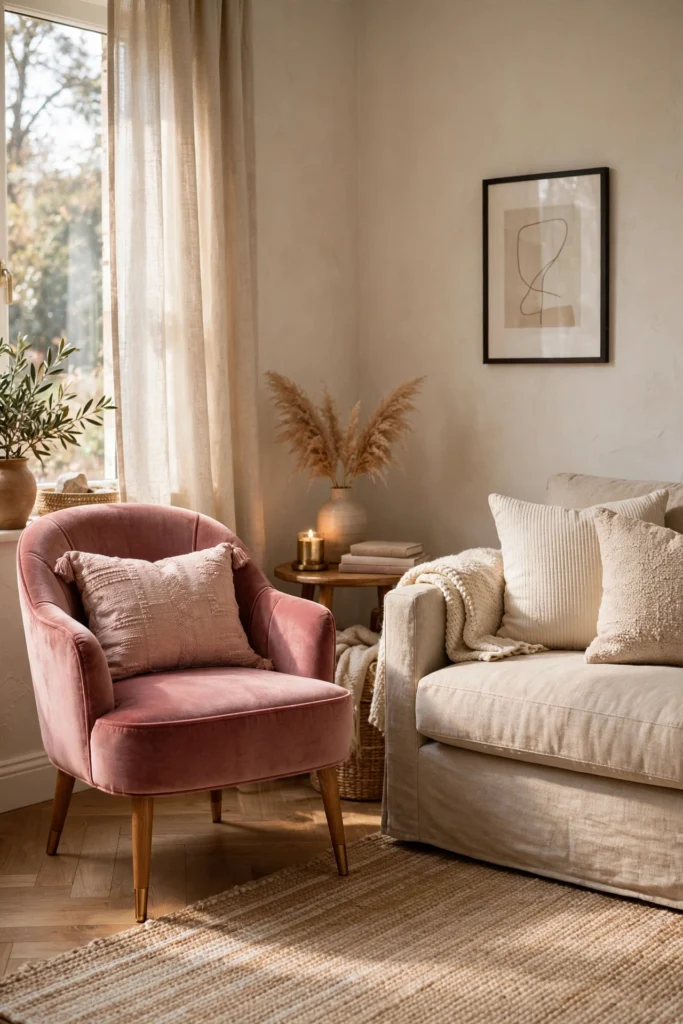
One statement chair in a muted pink velvet does more for the room than pink accessories scattered everywhere. Velvet also catches light in a way that keeps the color from looking flat.
3. Mix pink with sage green accents
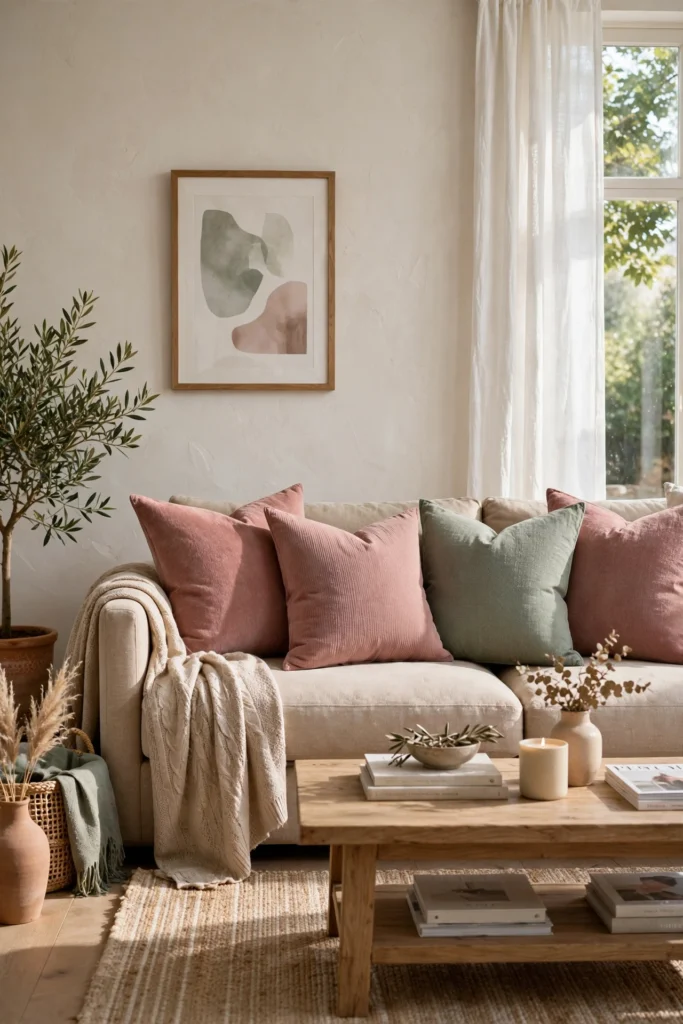
Dusty pink and sage green sit near each other on the color wheel and share the same muted, dusty quality, which is why this combination shows up constantly in sage green living room styling as a companion tone.
4. Use brass or gold hardware for warmth
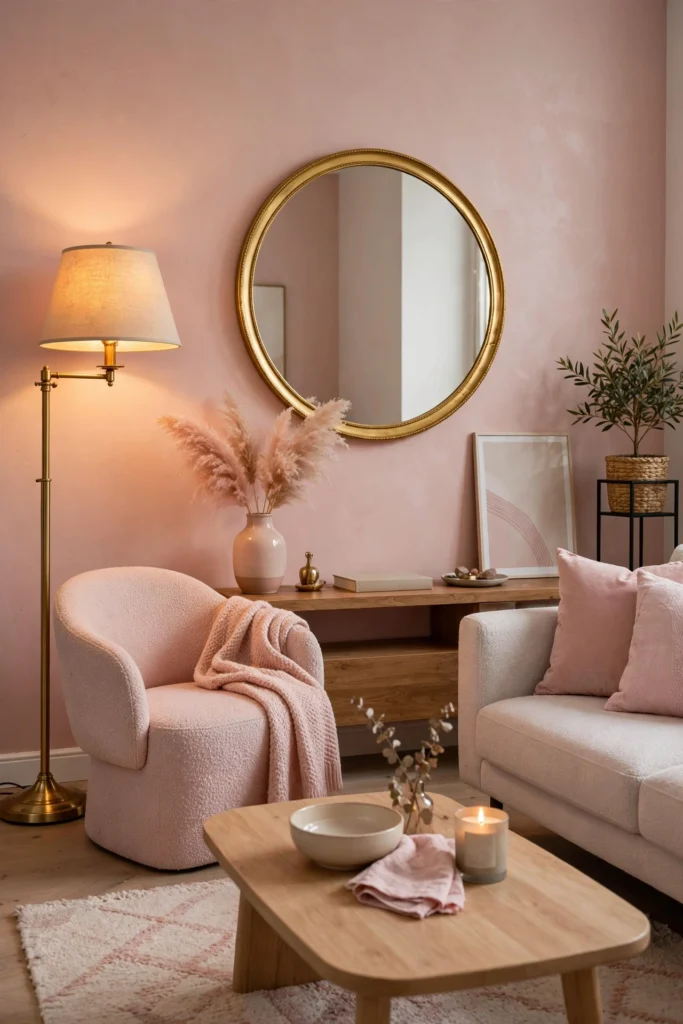
Cool-toned silver or chrome next to pink can read a little sterile. Brass lamp bases, gold picture frames, or warm-toned hardware pull the whole palette together.
5. Layer a chunky knit throw
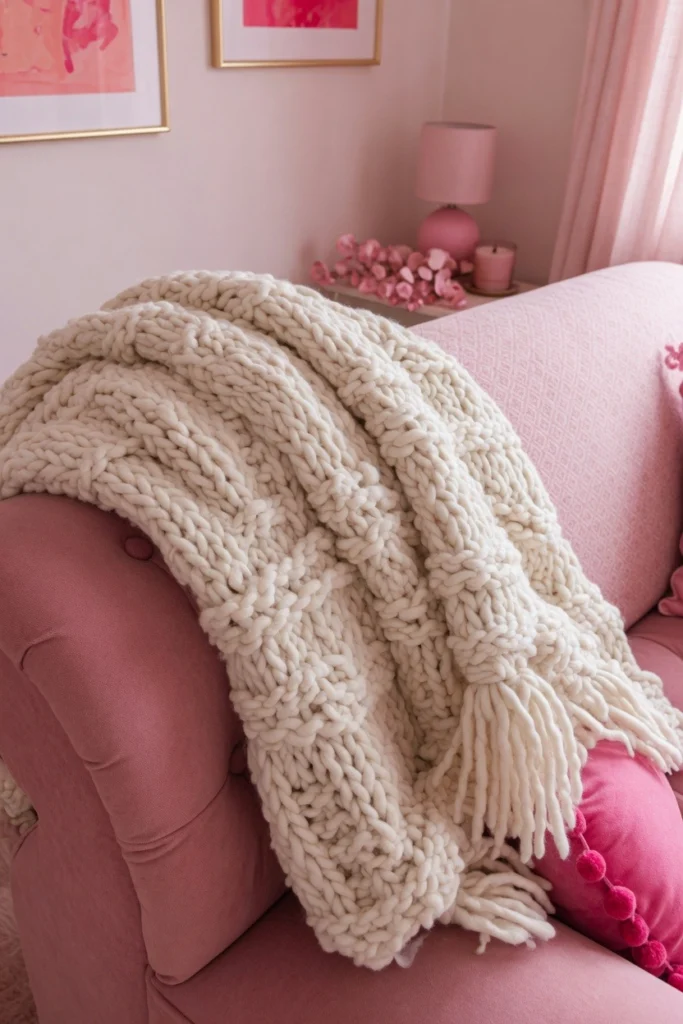
Texture matters more than color intensity when you’re working with pink. A cream or oatmeal chunky-knit throw softens the room and keeps the palette from feeling too polished.
6. Use a white or cream sofa as the base
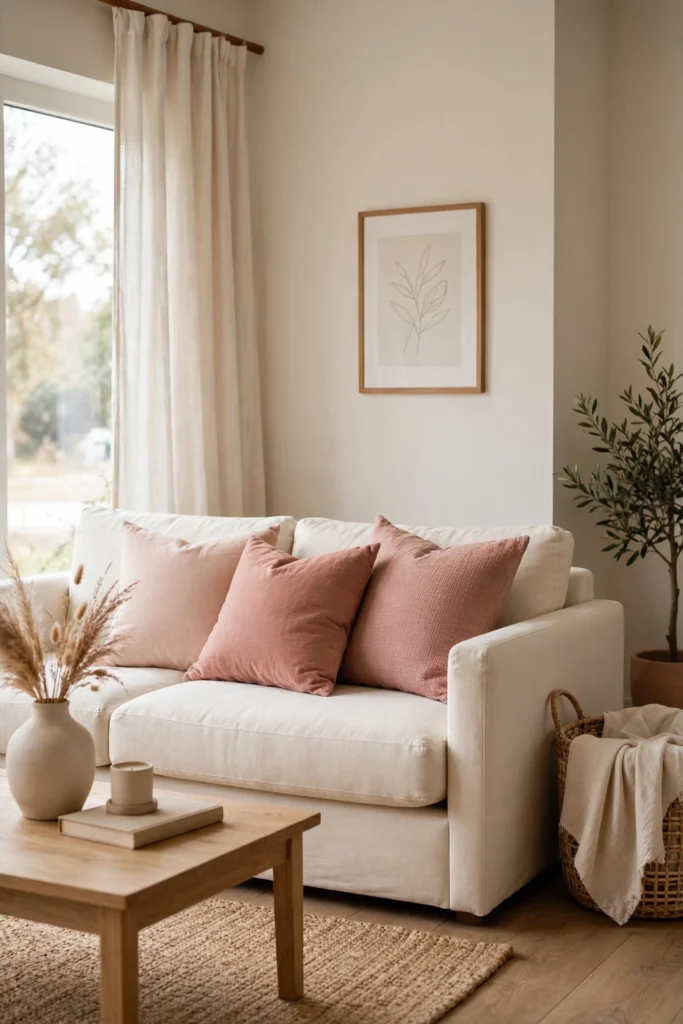
Starting with a neutral sofa and layering pink through pillows, throws, and art keeps the color changeable. This is the same approach behind most cream couch living room styling, just with a pink accent layer added on top.
7. Mix in terracotta and rust tones
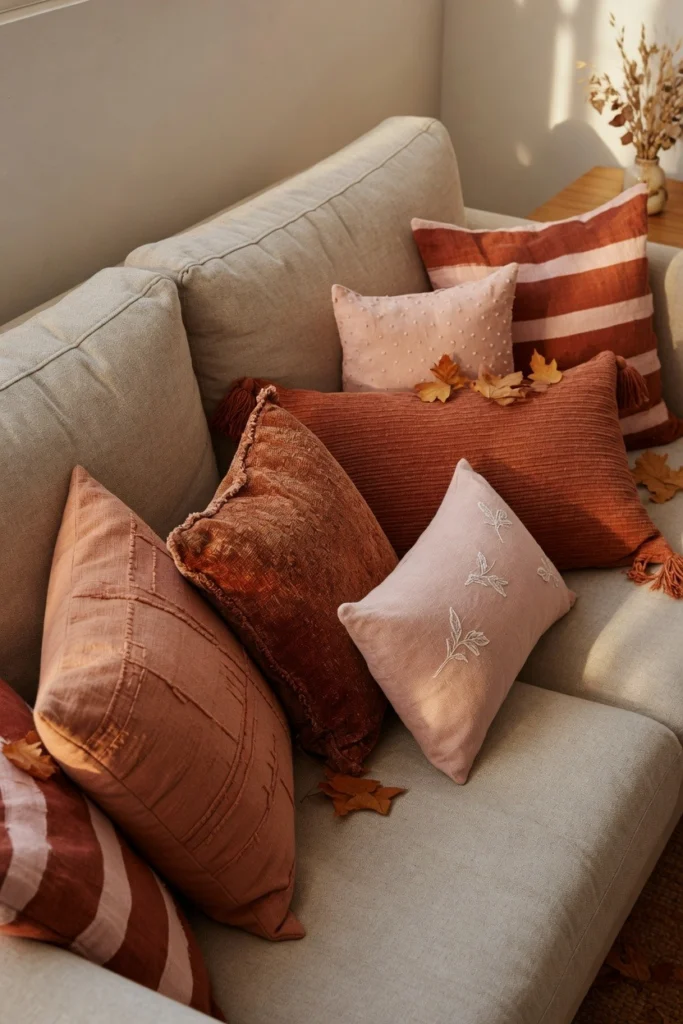
Pink alone can feel one-note. Adding terracotta or rust pillows into the same grouping gives the palette more depth without introducing a cool, competing color.
8. Add rattan and wicker for boho warmth
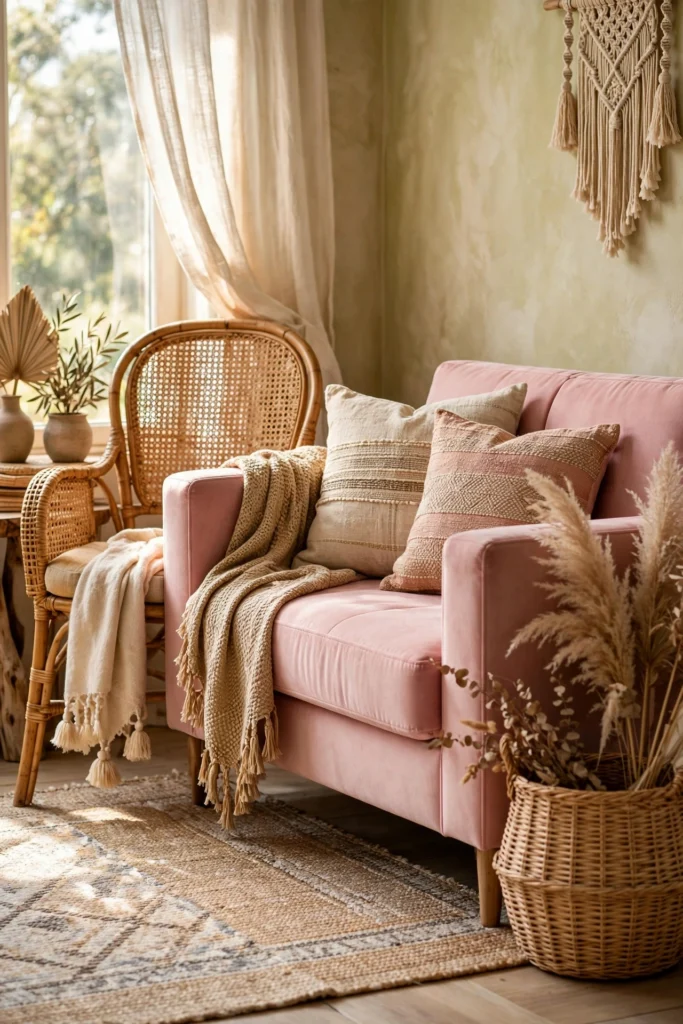
Natural woven textures ground a pink palette so it doesn’t read as too sweet. A rattan chair or a few wicker baskets add exactly that kind of texture, the same layered mix found in modern boho living room styling.
9. Use mauve for a deeper accent
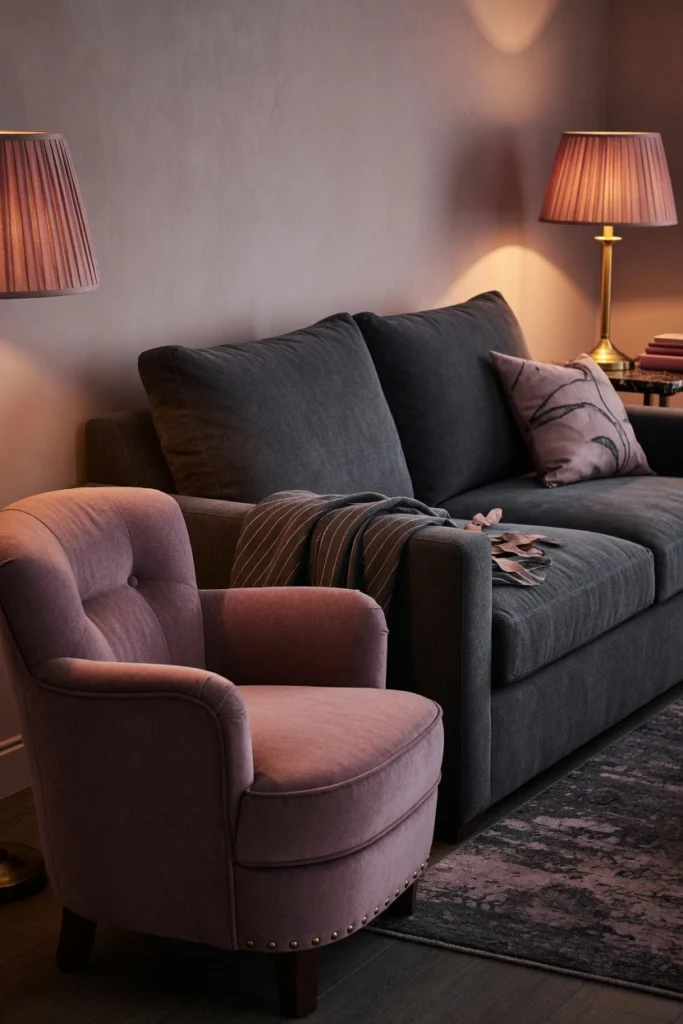
If blush feels too soft for your space, mauve gives you the same pink family in a richer, more grown-up tone. It pairs especially well with charcoal or black accents, similar to how a grey living room palette leans on deeper neutrals to stay sophisticated.
10. Add a jute or wool rug
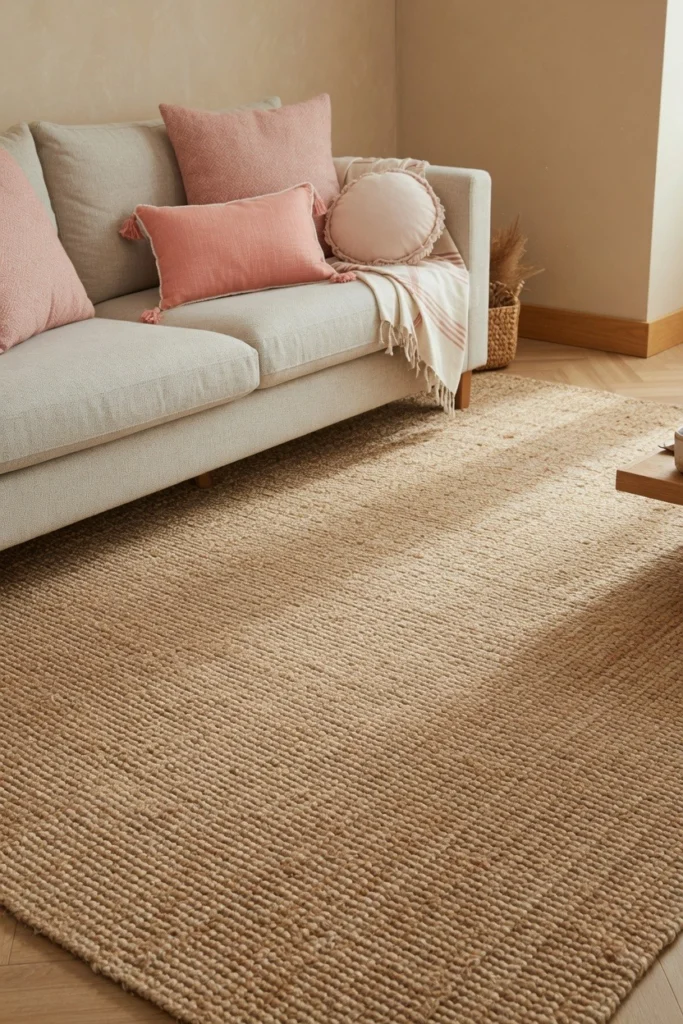
A natural-fiber rug keeps a pink-accented room from feeling too polished or precious. Wool holds up better than jute if you have pets, since jute frays and traps hair.
11. Build a gallery wall with soft pastel art
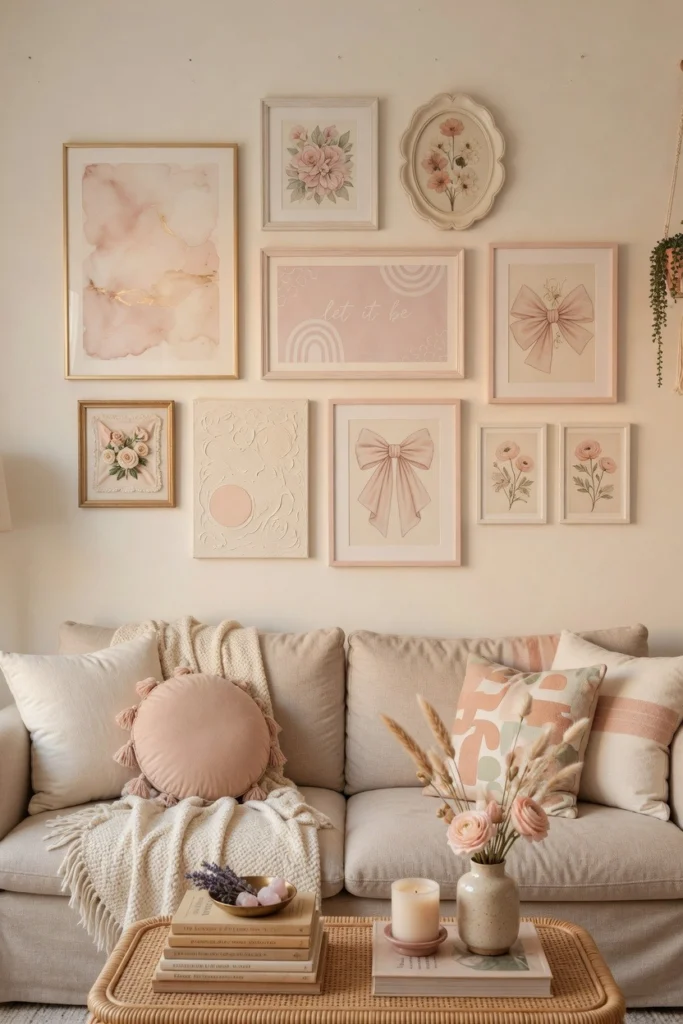
Framed art in blush, cream, and soft rust tones above the sofa extends the palette onto the walls without needing to paint anything. Vary the frame sizes for a collected, not-matchy look.
12. Pair pink with black for contrast
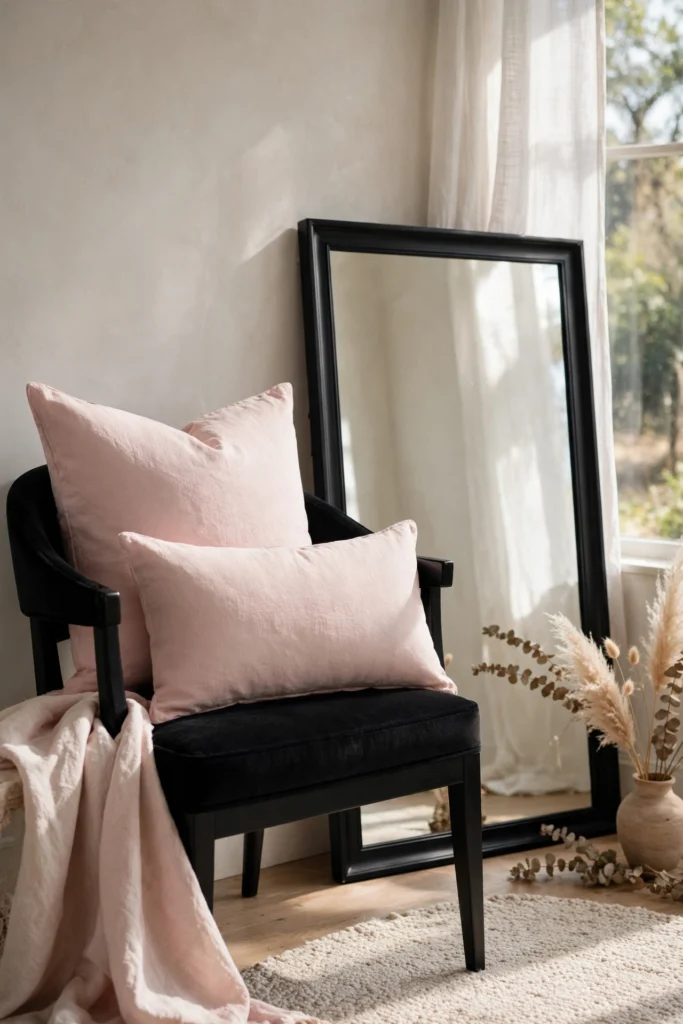
Black grounds pink and keeps it from reading as too soft or precious. A black-framed mirror, a black side table, or black picture frames all do the job, echoing the tonal contrast found in a black living room built around one bold accent.
13. Use sheer curtains for soft, diffused light
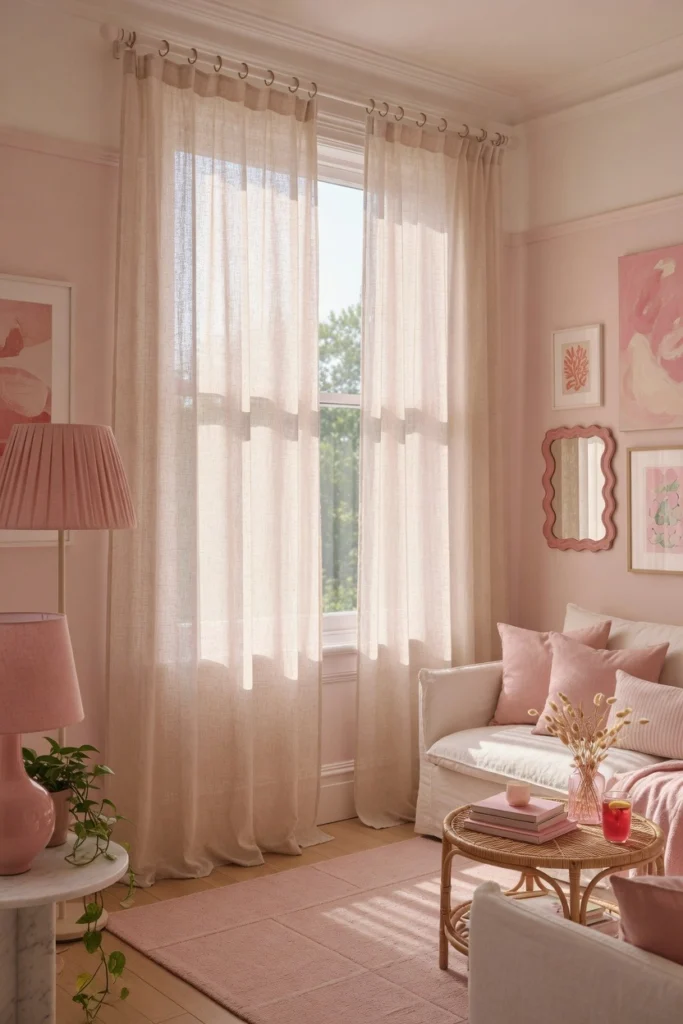
Heavy or dark curtains can make a pink palette feel muddy. Sheer or lightweight linen curtains let daylight filter in softly, which keeps blush and dusty rose tones looking fresh rather than dull.
14. Layer pink over a beige base
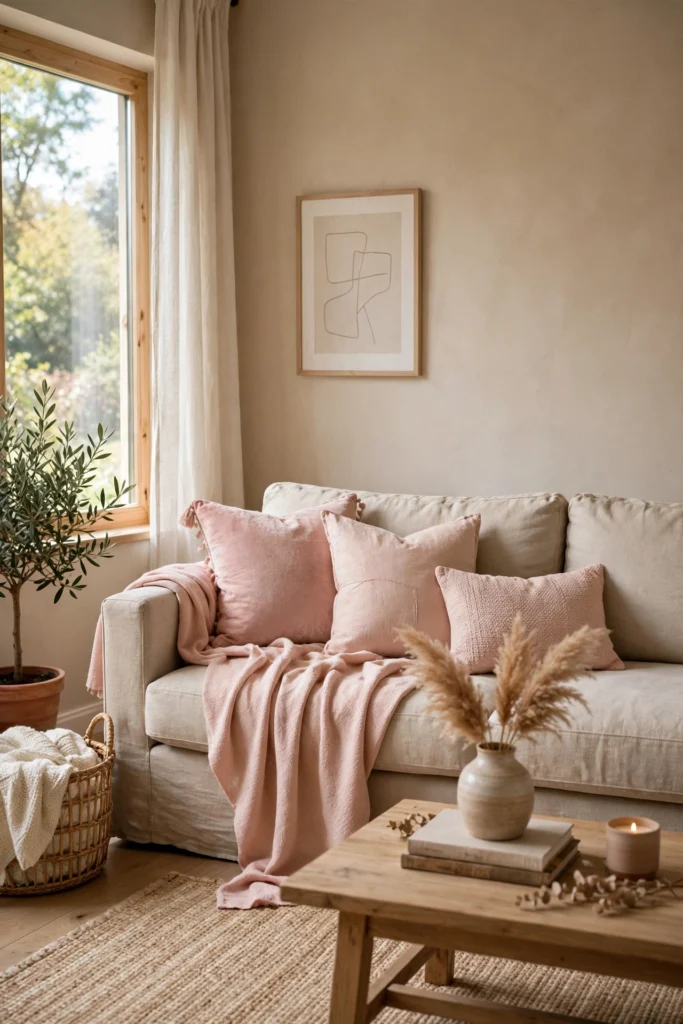
Treating pink as an accent on top of a warm beige foundation is the most forgiving way to use it. This layered-neutral approach is the same logic behind beige living room styling, just with a pink accent added rather than staying fully neutral.
15. Add greenery for organic balance
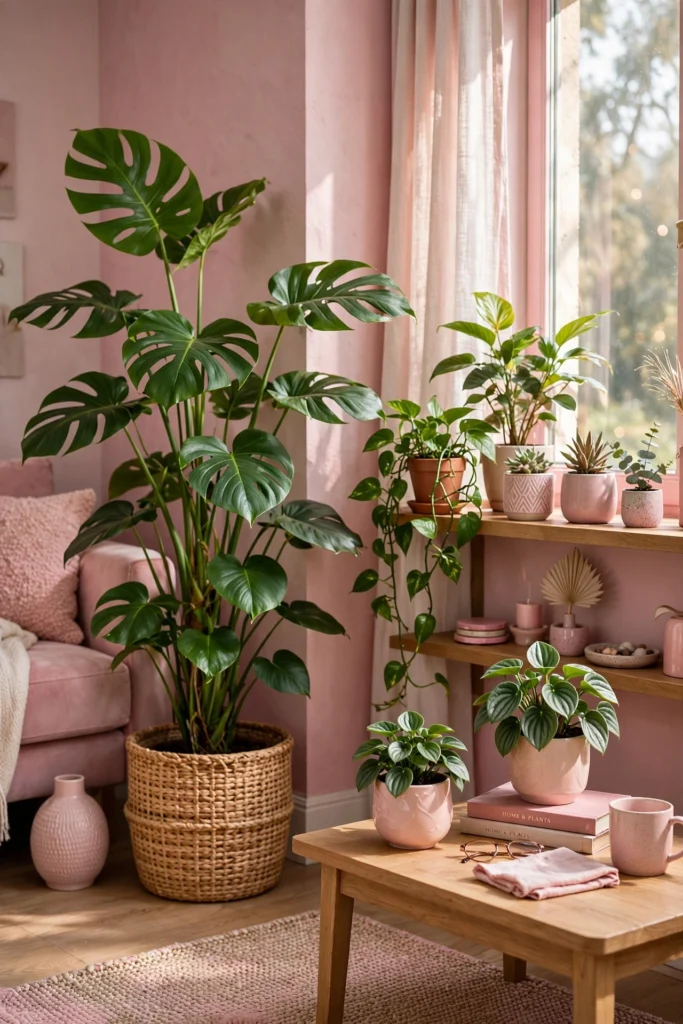
Plants keep a pink palette from feeling too soft or one-note. Group two or three at different heights rather than placing a single plant alone, so the green actually reads against the pink.
16. Try a dusty rose accent wall
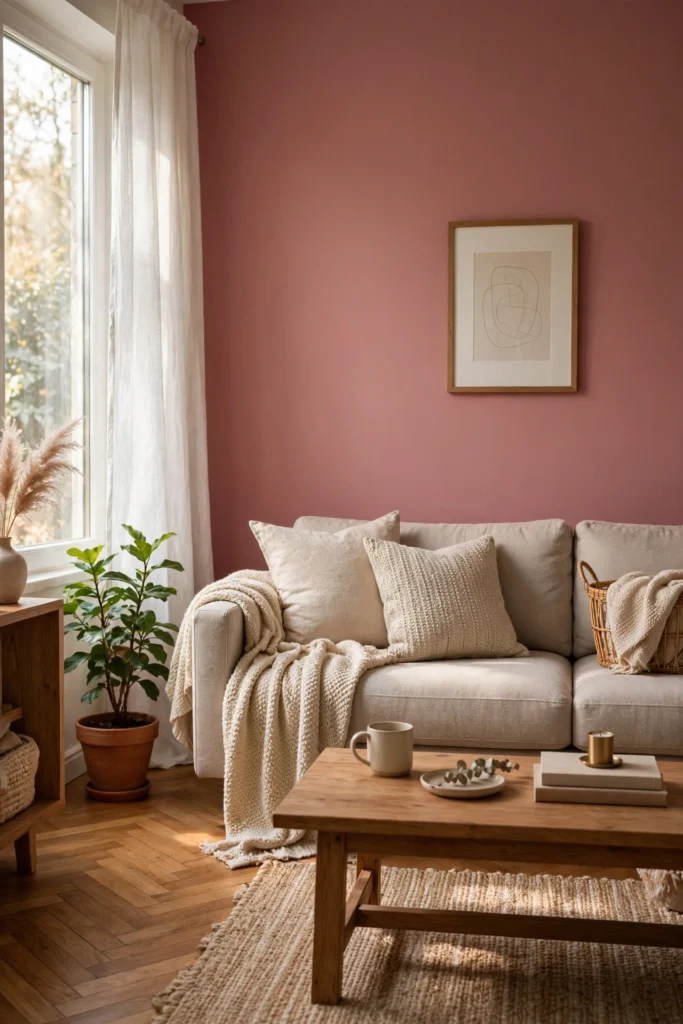
If you want more pink than pillows and throws can give you, one accent wall in a muted dusty rose commits to the color without covering every surface in it. Keep the rest of the room neutral to let the wall stand out.
17. Mix velvet, linen, and bouclé textures
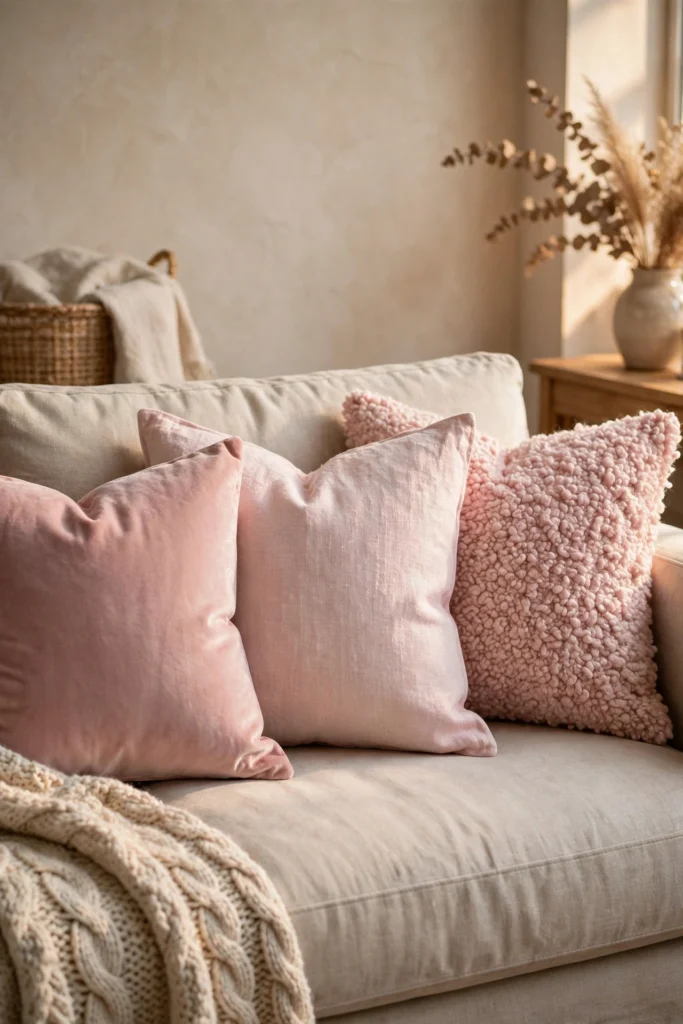
Using three different textures within the same pink family — a velvet pillow, a linen throw, a bouclé chair — keeps the palette from feeling flat, the same texture-first approach that runs through most cozy living room styling.
18. Use dimmable, warm-toned lighting
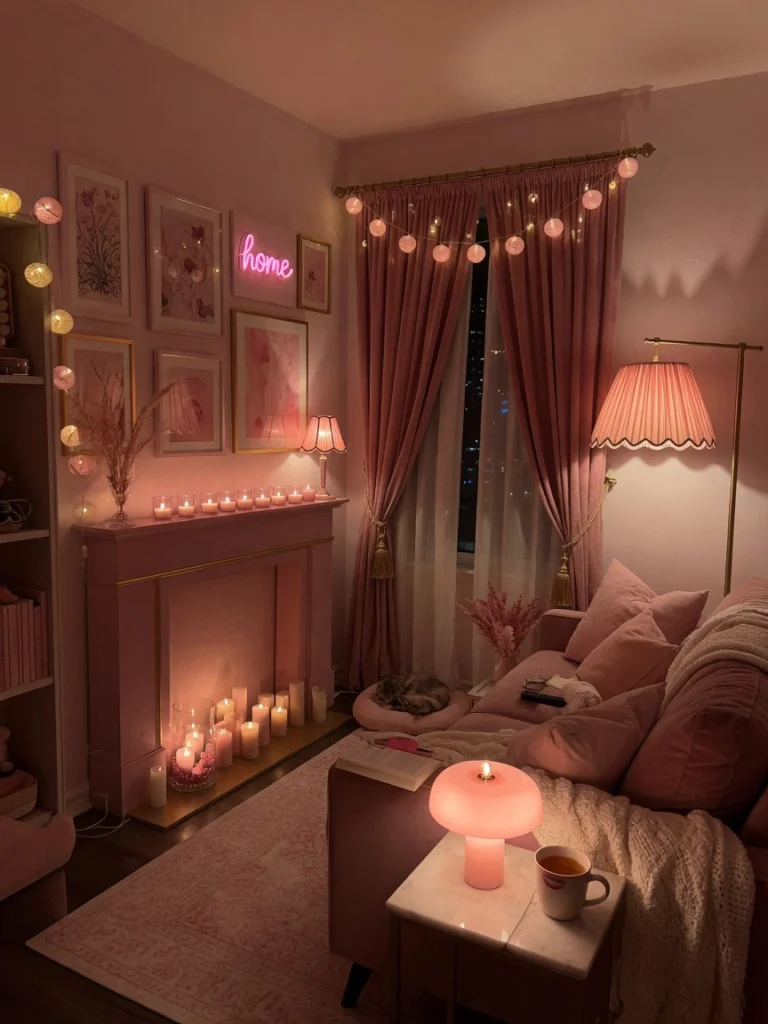
Cool white overhead light can wash out pink tones and make them look pale and flat. Warm bulbs around 2700K, layered across a floor lamp and table lamp, keep blush and rose tones looking rich after dark.
19. Add a patterned rug for movement
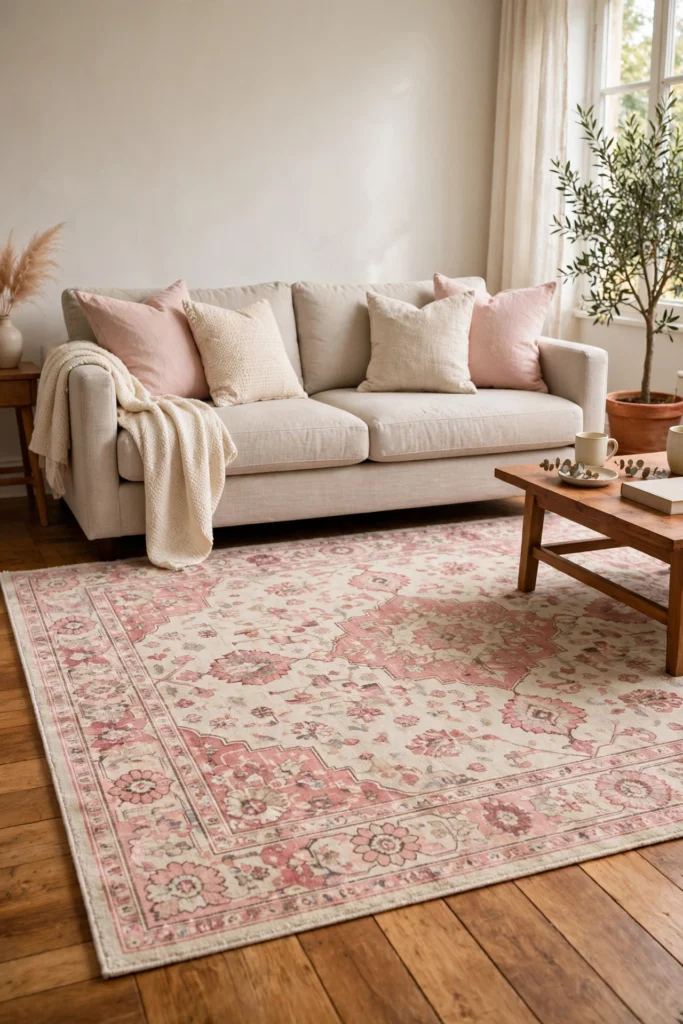
A rug with a soft geometric or vintage-style pattern in muted pink and cream tones adds visual interest underfoot without competing with a solid-colored sofa, a layering trick borrowed from scandinavian living room styling.
20. Keep the big furniture pieces neutral
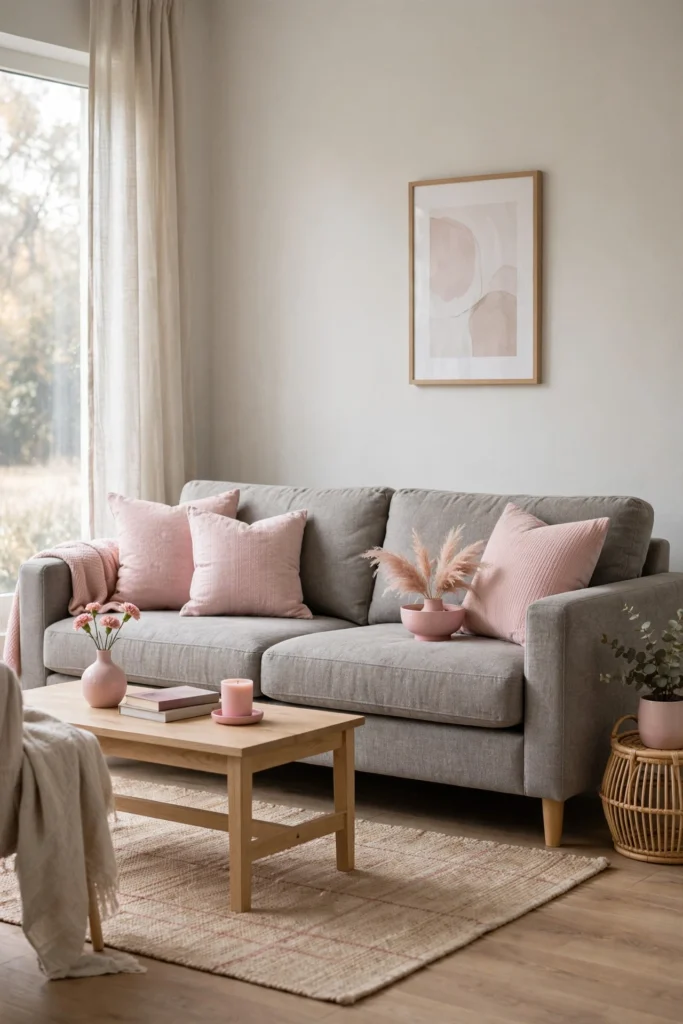
The easiest way to make pink work long-term is to keep the sofa, rug base, and walls neutral, then use pink only in pillows, art, and small accessories you can swap out.
It’s the same restraint that keeps a small living room from feeling overwhelmed by any one strong color.
Common mistakes with a pink living room
- Using more than one pink shade without a plan. Blush, dusty rose, and mauve together without a common thread usually reads busy instead of layered.
- Skipping texture. Flat, smooth pink fabric can look overly sweet. Velvet, linen, and knit textures keep it grounded.
- Pairing pink with only cool tones. Silver, chrome, and stark white can make pink feel cold instead of cozy — warm metals and neutrals work better.
- Committing every surface to pink. Walls, sofa, and rug all in pink tips into theme-park territory fast. One or two anchor pieces is plenty.
A quick real note
I was hesitant to add a dusty rose chair to my living room because I assumed it would read too soft, but paired with a black side table and a jute rug, it ended up being the piece guests ask about most. The contrast did more work than the color itself.
Quick answers
Does pink work in a living room without looking too feminine or juvenile? Yes, as long as it’s a muted shade like blush, dusty rose, or mauve rather than a bright bubblegum pink, and it’s balanced with neutral furniture and natural textures.
What color walls go best with pink furniture or accents? Warm cream, soft beige, or off-white all work well. Stark cool white can make pink tones look flat or overly pastel.
What other colors pair well with pink in a living room? Sage green, terracotta, warm beige, black, and brass all pair naturally. Avoid pairing pink with too many other bright or cool colors at once.
Is pink a good color for a small living room? Yes, especially in a muted shade used as an accent rather than the dominant color, the same principle that applies in any small living room layout where restraint matters more than boldness.
What fabric works best for a pink sofa or chair? Velvet and bouclé both hold pink tones especially well and add texture that keeps the color from looking flat. Linen works too, but reads a bit more casual.
Does pink go well with grey furniture? Yes — dusty rose and mauve in particular pair naturally with both light and charcoal grey, since the two tones share a similar muted quality.
How much pink is too much in a living room? As a general guideline, one or two anchor pieces (a chair, an accent wall, or a grouping of pillows) is usually enough. Covering the sofa, walls, and rug all in pink tends to overwhelm the room.
What lighting works best in a pink living room? Warm bulbs around 2700K at multiple heights keep pink tones looking rich rather than washed out, especially once natural light fades in the evening.
Can pink work in a modern or minimalist living room? Yes, especially blush or mauve used sparingly against a mostly neutral base — the restraint keeps it feeling modern rather than overly decorative.
Does pink clash with wood tones? No, warm wood tones like oak and walnut pair naturally with most shades of pink, since both read as warm rather than cool.
About this guide
This guide comes from actually living with and styling around pink accents, not a showroom catalog. Every idea here has been tested in a real room with real light, not just photographed under studio conditions.
2 thoughts on “20 Pink Living Room Ideas for a Soft and Cozy Look”