
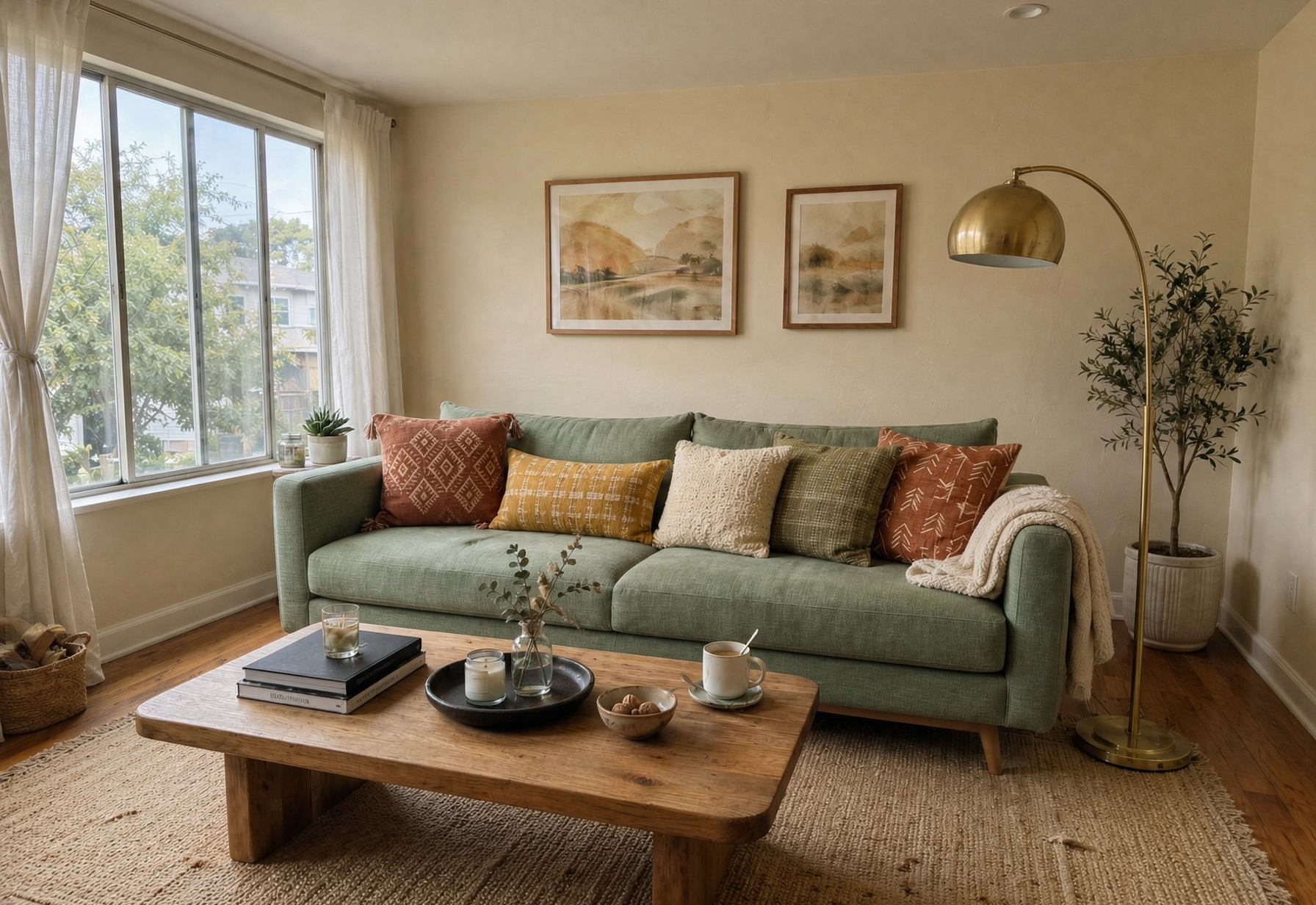
Brown and beige is about as close to a foolproof color combination as living rooms get, both tones sit close together on the warm side of the palette, so nothing here fights for attention. Here are 11 ways to put the two together for a room that feels warm and easy to live with.
Wall colors and backdrops
1. Warm cream walls
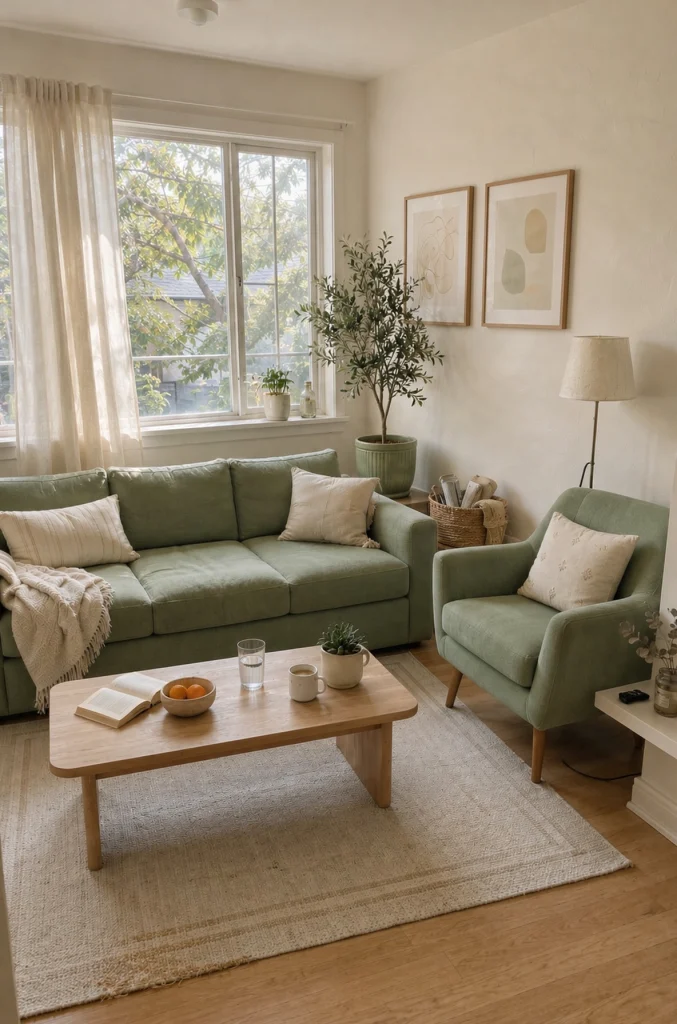
Pro tip: Paint the wall that gets the least natural light first — if the cream looks warm there, it will work everywhere.
Cream keeps the room bright while staying close enough in tone to beige and brown furniture that nothing feels out of place. It’s the safest starting point if you’re not sure how far to take the color story, similar to the base approach in our light color living room ideas guide. Cream walls keep the room bright while staying close in tone to beige and brown furniture, so nothing feels out of place. Choose a warm cream rather than a stark white, and test it next to the sofa in both daylight and lamplight before painting the whole room. A washable eggshell finish handles scuffs better than flat paint in a room that gets daily use.
2. Soft beige walls
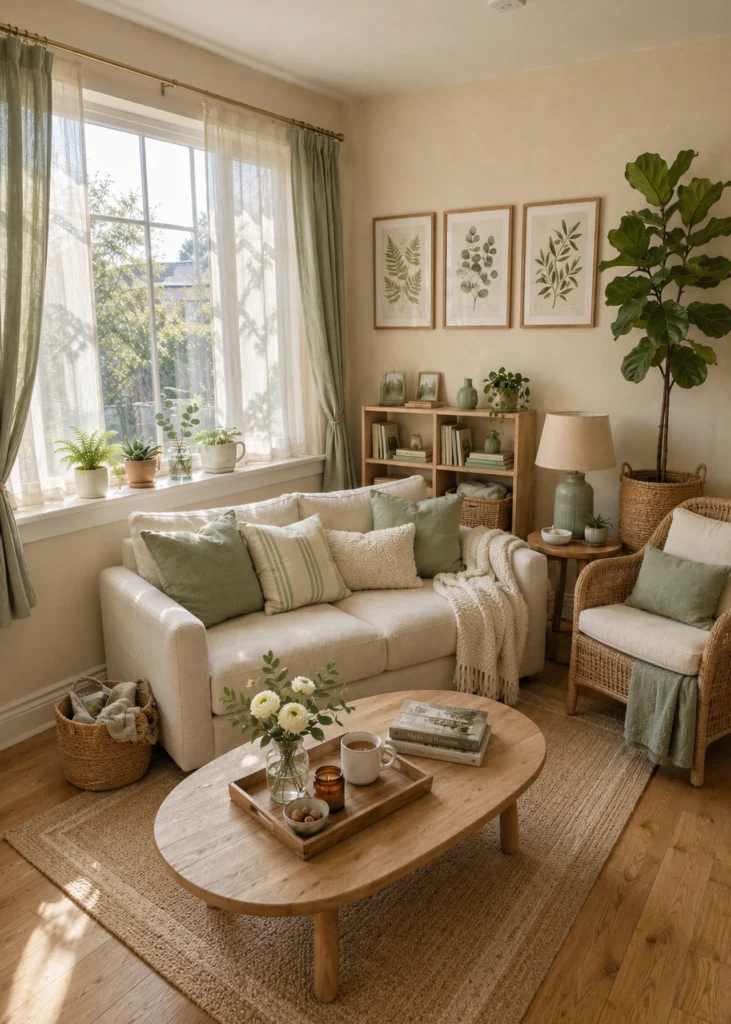
Pro tip: If the room starts to feel like one flat tone, add a darker element such as a walnut side table or a black-framed print to break it up.
Taking beige onto the walls as well as the furniture creates a more layered, monochromatic warmth, especially effective in a room with good natural light. Our beige living room ideas guide has more on picking the right undertone. Beige walls plus beige furniture create a layered, monochromatic warmth that works best in a room with good natural light. Keep the wall shade a touch lighter than the sofa so the furniture still stands out, and match the undertones, pink-beige with pink-beige, so the layers look deliberate. In a darker room, stick to the palest beige to avoid a heavy, closed-in feel.
Furniture and material pairings
3. A warm wood coffee table
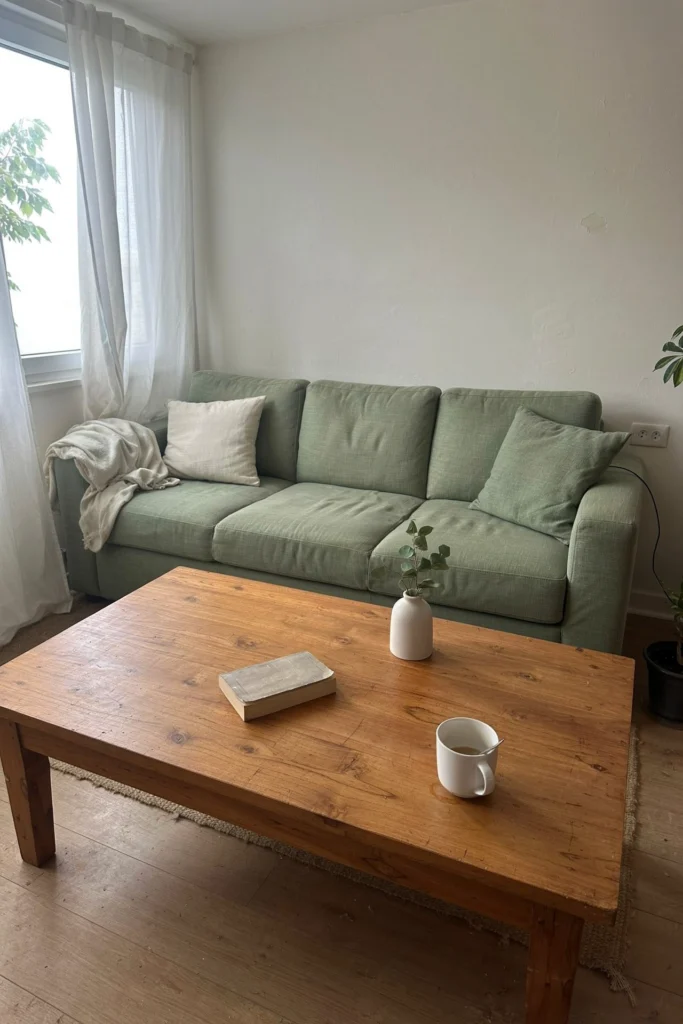
Pro tip: Style the table with one tall piece, like a vase, and one low stack of books — the contrast in height keeps the surface from looking flat.
Wood ties brown and beige together naturally since all three sit in the same warm family. A mid-tone wood keeps the room light; darker walnut adds richness if the rest of the space stays pale, the same mixed-tone thinking behind our brown and grey living room ideas guide. Wood ties brown and beige together naturally, since all three sit in the same warm family. A mid-tone table keeps the room light, while darker walnut adds richness if the rest of the space stays pale. Size it at about two-thirds the sofa’s length and leave roughly 40 cm of legroom. A lower shelf or drawer keeps remotes and magazines out of sight.
4. Rattan or wicker accent chairs
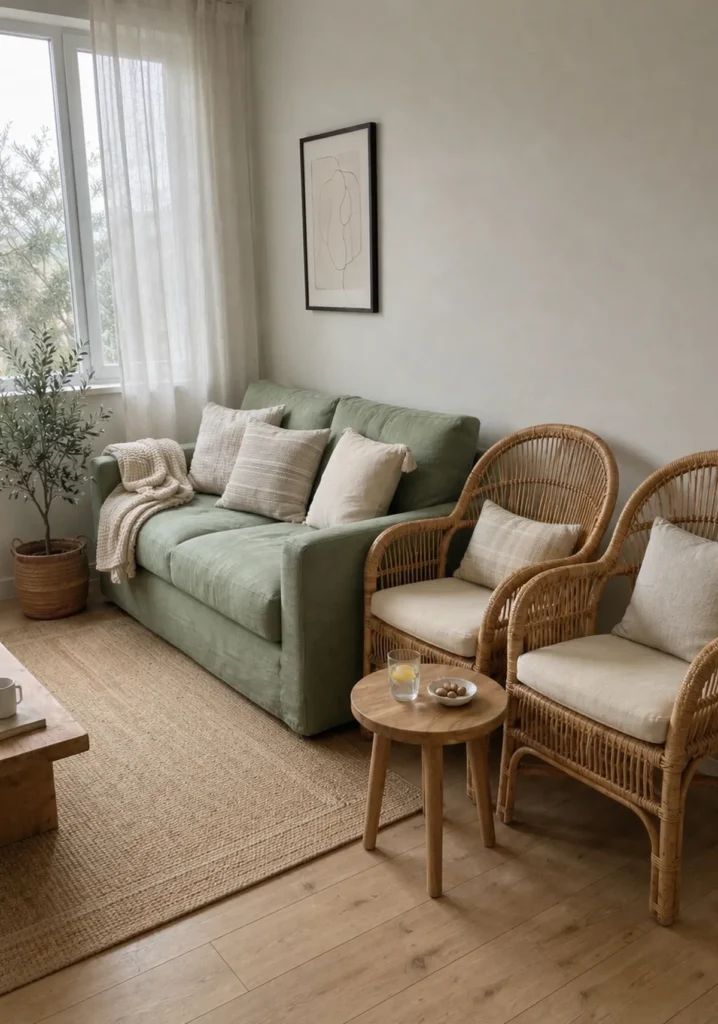
Pro tip: Angle the chair toward the sofa with a small side table beside it, so it becomes a real reading spot instead of just a decorative piece.
Woven texture adds dimension without introducing a new color, and it leans the room slightly relaxed and organic, a pairing that also shows up in our modern earthy living room ideas guide. Woven texture adds dimension without a new color and leans the room slightly relaxed and organic. Check for a tight, even weave and a sturdy frame, since loose wicker sags over time. A cushion in cream linen or muted rust makes the chair comfortable for longer sits, and keeping it out of harsh direct sun stops the fibers from drying out and cracking.
Rugs and textiles
5. A light, neutral jute rug
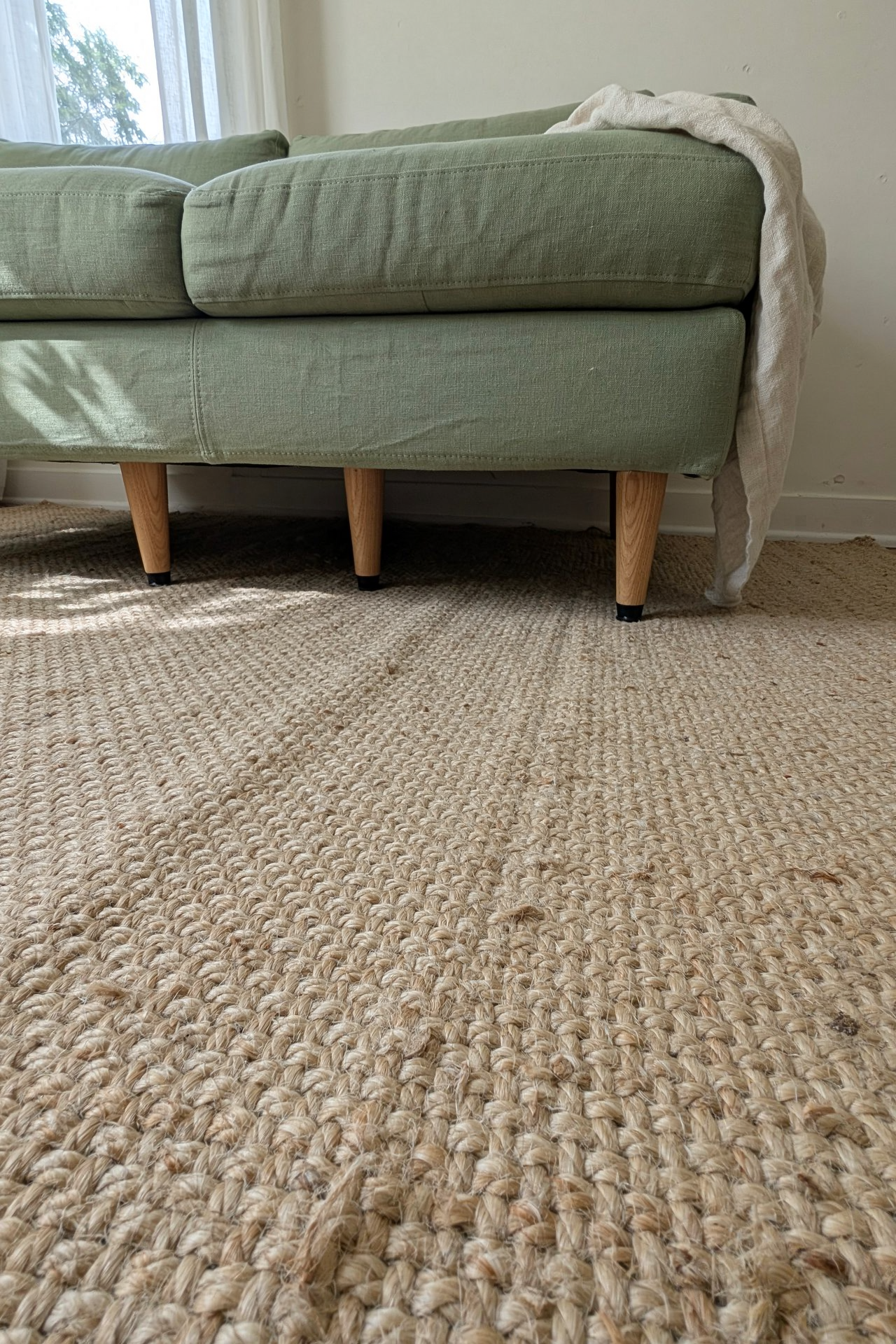
Pro tip: Keep the jute rug away from snack and drink zones, since jute stains easily and is hard to clean once marked.
Keeps the floor from feeling too heavy under all that warm brown and beige furniture, and it’s a good pick for a small living room where a busier rug could feel cramped. A light rug keeps the floor from feeling too heavy under warm brown and beige furniture. Choose one large enough for the sofa’s front legs to rest on it, with at least 20 cm of rug showing on each side. Flat-weave jute sheds less and is easier to vacuum than chunky braided styles, and a rug pad underneath stops slipping and adds softness underfoot.
6. Mixed-texture pillows in cream, rust, and tan
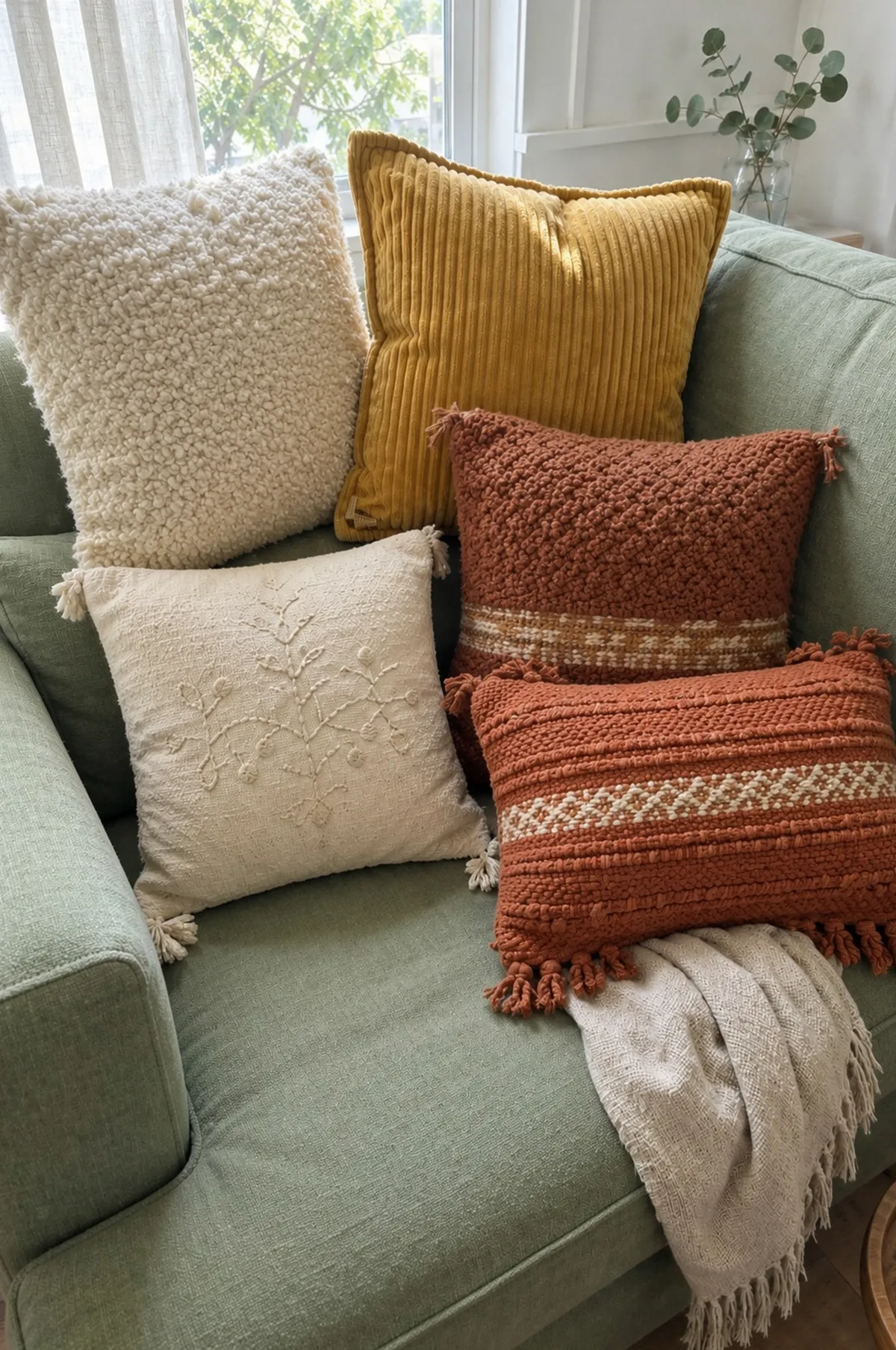
Pro tip: Arrange the largest pillow at the outer corner of the sofa and work inward with smaller ones — the group looks deliberate, not random.
Varying the texture, linen, bouclé, a woven stripe, does more for the room than varying the color would. Keep everything within the same warm family, the same restraint covered in our burnt orange sofa living room ideas guide. Varying the texture, linen, bouclé, a woven stripe, does more for the room than varying the color would. Keep everything within the same warm family and leave one pillow plain so the grouping does not feel busy. Feather-blend inserts hold their shape better than polyester fill and can be fluffed back into form after use.
Lighting and metal accents
7. Brass accents
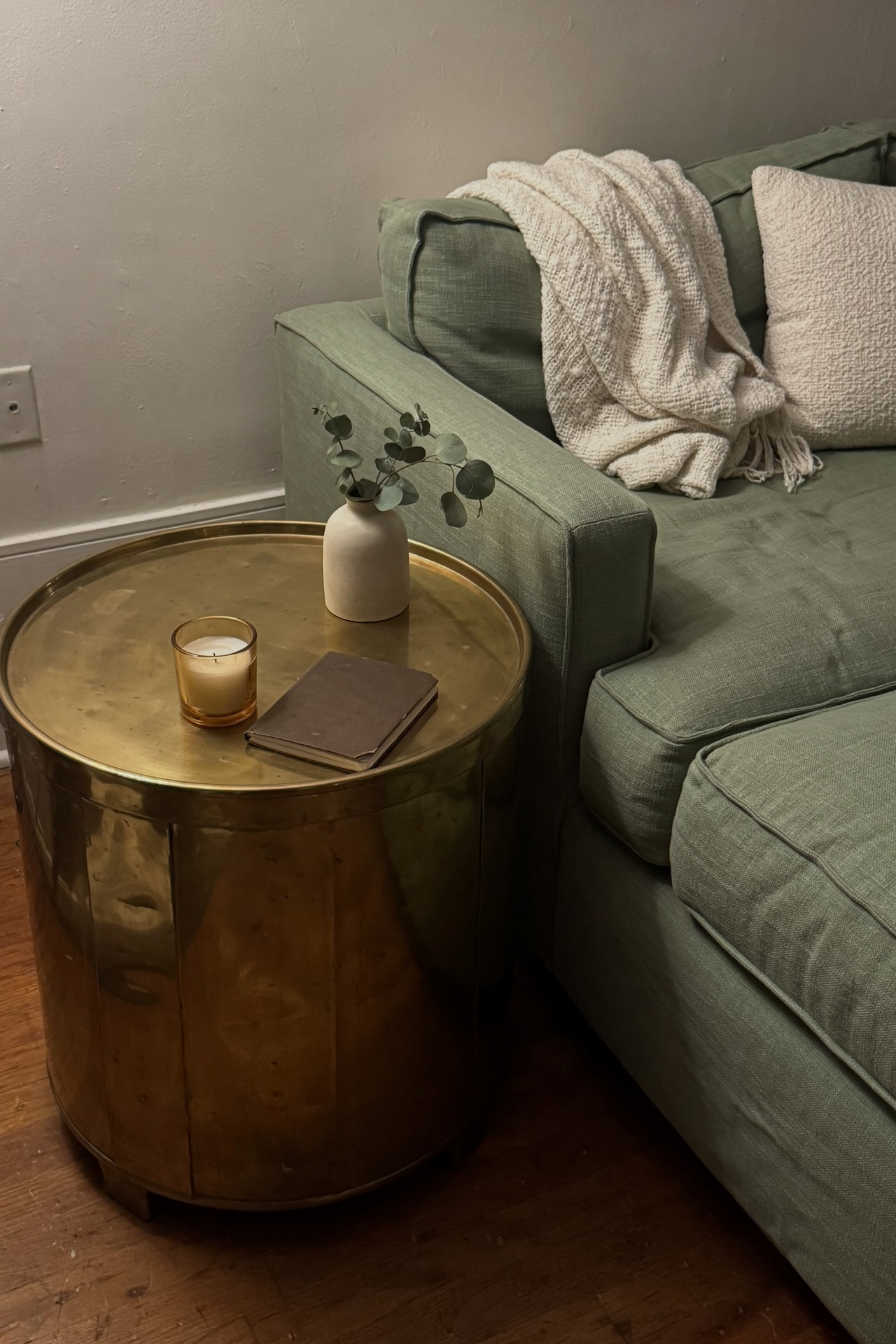
Pro tip: Set brass next to wood or rattan — the natural materials soften the shine and stop it from feeling formal.
A brass lamp base or side table adds shine and warmth that flat brown and beige upholstery doesn’t have on its own, similar to the metal pairing in our chocolate brown sofa living room ideas guide. A brass lamp base or side table adds shine and warmth that flat brown and beige upholstery lacks on its own. Limit it to two or three pieces spread at different heights so the room does not turn brassy. Unlacquered brass develops a soft patina that suits the palette, and a quick wipe with a dry cloth keeps fingerprints from showing.
8. Layered lighting across the room
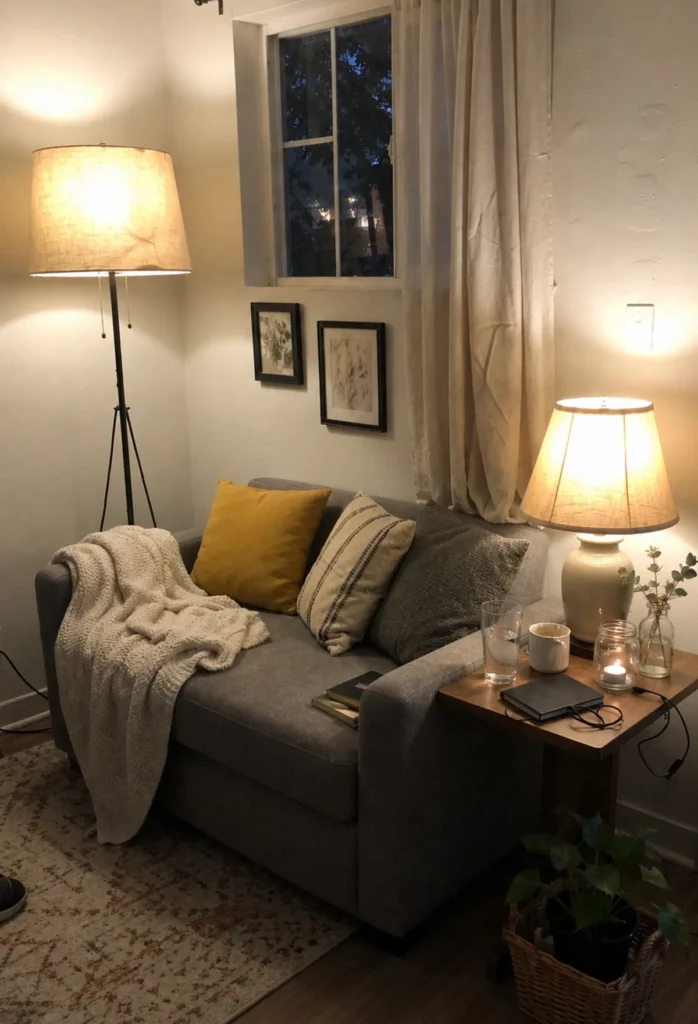
Pro tip: Put the floor lamp on the opposite side of the room from the main window to balance the light in the evening.
A single overhead light flattens warm tones like these. A floor lamp and table lamp with warm bulbs (2700K–3000K) keep the room glowing rather than looking dull once it’s dark, a detail covered further in our cozy living room ideas guide. A single overhead light flattens warm tones, so add a floor lamp and a table lamp at different heights. Warm bulbs in the 2700K–3000K range keep the room glowing rather than dull once it is dark. Dimmable bulbs are worth the small extra cost, and cream or linen shades keep the light warm as it passes through the fabric.
Styling and finishing touches
9. A gallery wall in warm, muted tones
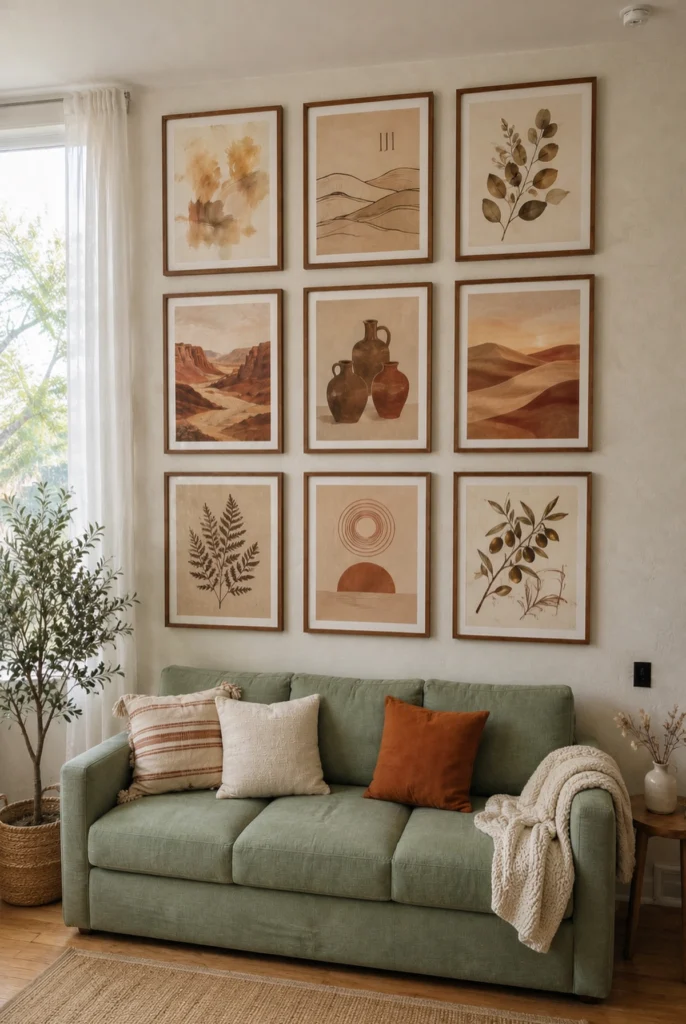
Pro tip: Leave one frame slightly different in size or shape — a perfectly uniform grid can look stiff, while one odd piece makes the wall feel collected.
Framed art in wood or black frames, mixing muted photography with a warmer print or two, ties into the room without breaking the palette. Layout tips in our black and white living room ideas guide apply well here too. Start with one larger central piece and add smaller frames around it, keeping gaps even at about 5 to 8 cm. Wood frames echo the room’s warm tones, while thin black frames add a little definition. Mix muted photography with one or two warmer prints, and lay the arrangement on the floor or tape paper templates to the wall before hammering any nails.
10. Plants and greenery
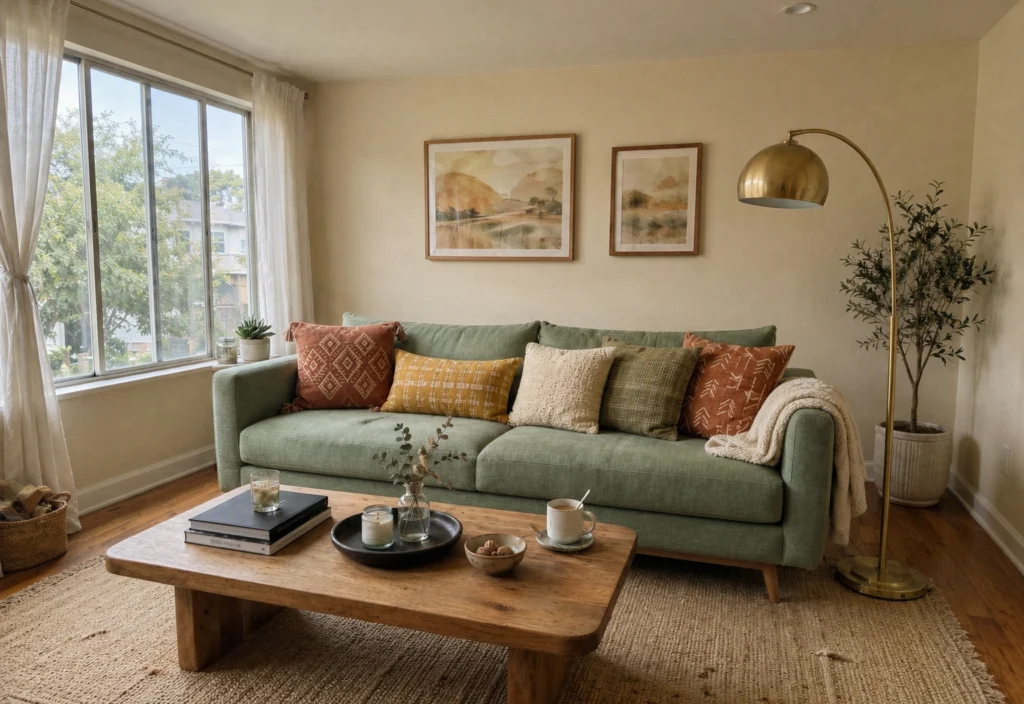
Pro tip: Place the tallest plant in a corner that feels empty — it fills dead space and makes the whole room feel finished.
Green is one of the easiest ways to break up an all-warm-neutral room without adding another beige or brown tone, the same relief covered in our green living room ideas guide. Green breaks up an all-warm-neutral room without adding another beige or brown tone. Two or three plants at different heights, a tall floor plant, one on a side table, and a trailing plant on a shelf, work better than a cluster of small pots in one spot. Pothos and snake plants are forgiving in indirect light, and terracotta or cream pots fit the palette. Water only when the top soil feels dry.
11. A woven storage basket
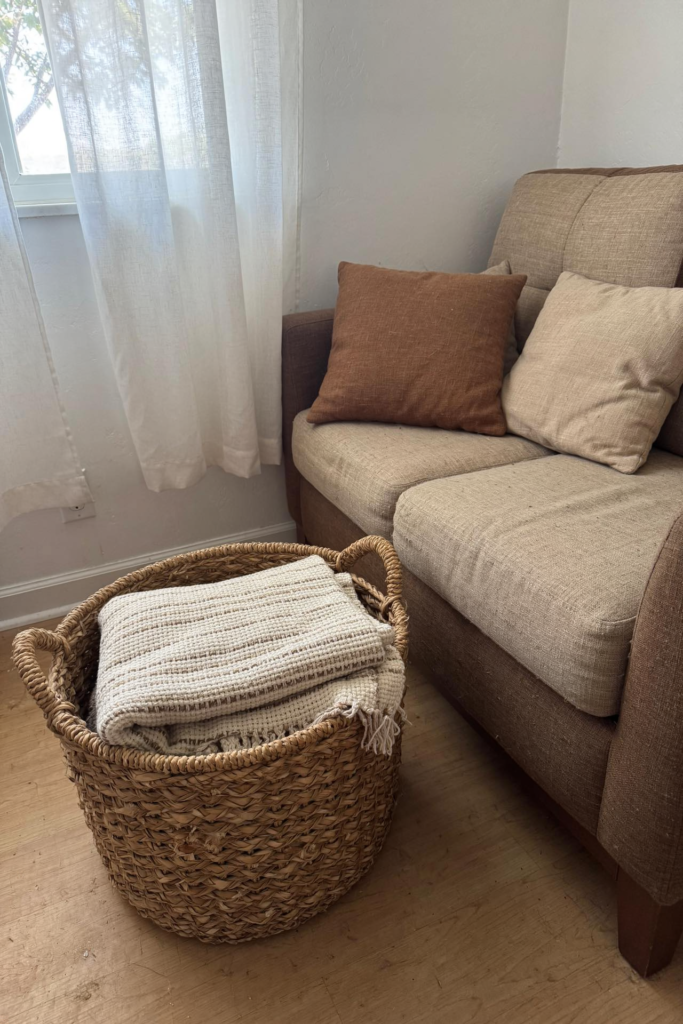
Pro tip: Tuck the basket beside the sofa or under a console table so it stays useful without blocking walkways.
A natural-fiber basket keeps clutter out of sight while adding one more texture to the mix, wood, leather, wool, jute, all sitting comfortably in the same warm family. A natural-fiber basket keeps clutter out of sight while adding one more texture to the mix. Choose a size that fits its job: a large basket for throws and blankets, a smaller one for remotes and magazines. Seagrass and water hyacinth are sturdier than thin wicker, and a basket with handles is easier to move when you clean. Keep it off damp floors to prevent mildew.
Common mistakes to avoid
- Letting the room go too monochrome. Without any texture variation, an all brown-and-beige room can start to blur together. Mix materials, not just tones.
- Skipping warm lighting. Cool white bulbs can wash out both colors. Warm-toned bulbs bring the richness back.
- Matching every brown and beige shade exactly. A little variation between pieces reads more intentional than a perfectly matched set.
- Forgetting a contrast color. A touch of green or black keeps the room from feeling flat, even in a mostly warm-neutral space.
Why this pairing rarely goes wrong
I’ve never seen a brown and beige living room look truly off, the two tones are close enough that mismatches barely register. What actually makes the difference is texture, a leather chair next to a linen sofa next to a jute rug reads a lot more finished than the same three pieces all in flat, similar fabrics.
Quick answers
Does brown and beige work in a small living room?
Yes, especially with a light rug and warm white or cream walls to keep the space from feeling too heavy.
What rug works best with brown and beige?
A light, neutral jute or wool rug keeps the floor from feeling as heavy as the furniture above it.
What metal finish pairs best with brown and beige?
Brass or warm gold complements both tones naturally. Black metal works too for more contrast.
Is brown and beige a dated color combination?
No, both function as neutrals rather than trend colors, which is why the pairing has stayed reliable for so long.
How do I keep a brown and beige room from feeling flat?
Mix textures, leather, linen, jute, wool, rather than relying on color alone to add interest.
About
I write thehomesdecors.com from actual rooms I’ve decorated, rented, repainted, and occasionally regretted, not a showroom or a brand deck. If something here didn’t work in my own place, I’ll tell you.

Hi, I'm Wasif — welcome to The Homes Decors. I write about home decor: the ideas, choices, and small details that make a space feel considered rather than accidental. If you've ever wondered why a room works, not just what's in it, you're in the right place.