
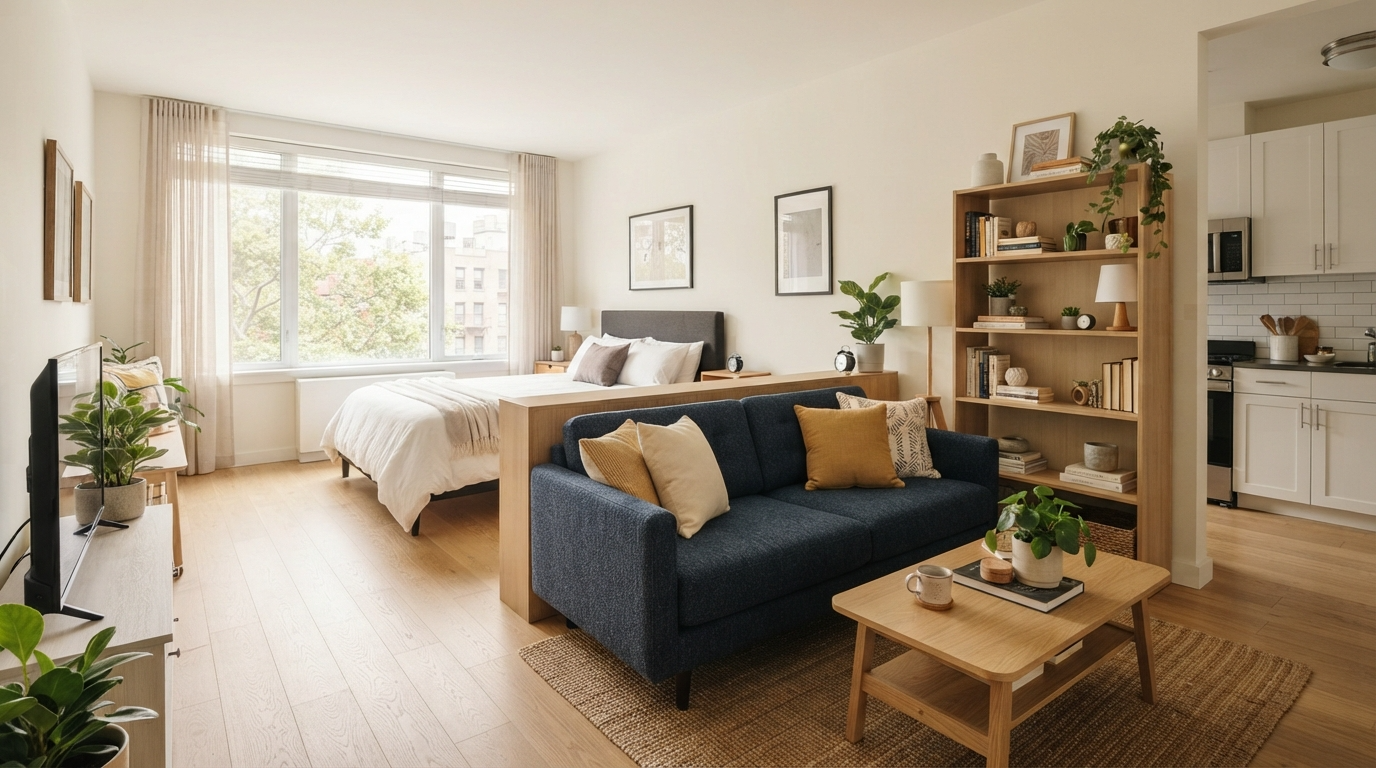
The right studio couch is compact, usually under about 84 inches long, with a finished back so it can divide the room, and a color that works with your bedding. Measure the wall before you shop, because a couch that fits the wall but blocks the walkway is the most common mistake. Here are 15 things to check before you buy.
1. Use It as a Room Divider, Not Just Seating
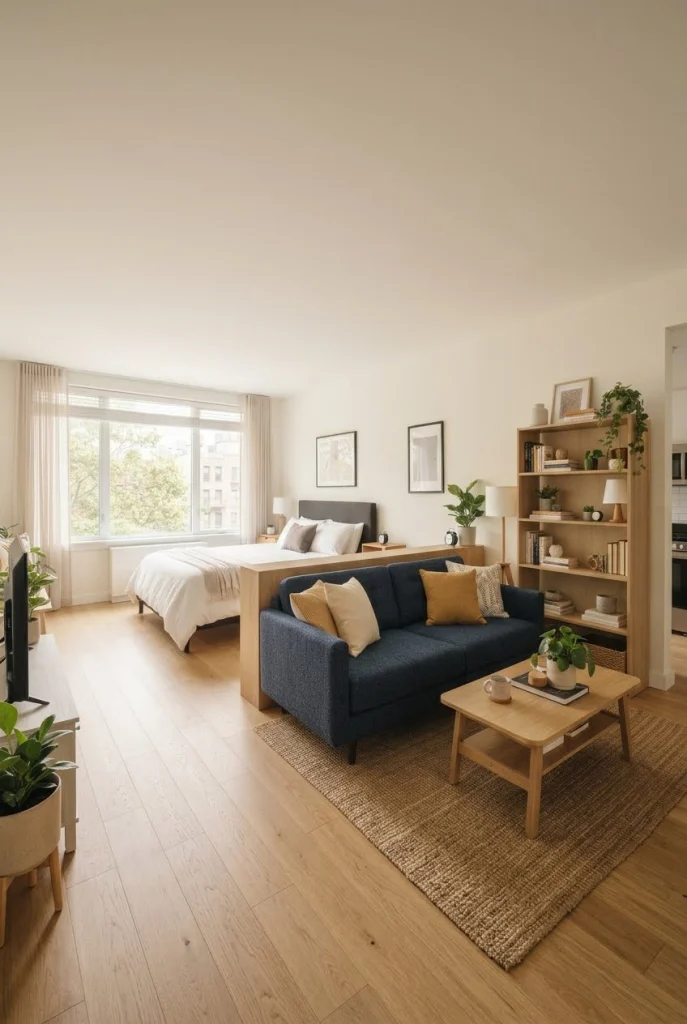
In a studio, the couch does double duty. Turned with its back toward the bed, it creates a living area and a sleeping area without a wall. This works best with a sofa that has a clean, finished back panel rather than exposed fabric, and pairing it with a bookshelf makes the boundary feel real. For more layouts that use this trick, see ways to fit a sofa in a tiny studio.
Tip: A sofa with a console-height back, around 30 to 33 inches, works as a divider without blocking light.
2. Match the Mood You Want to Live In
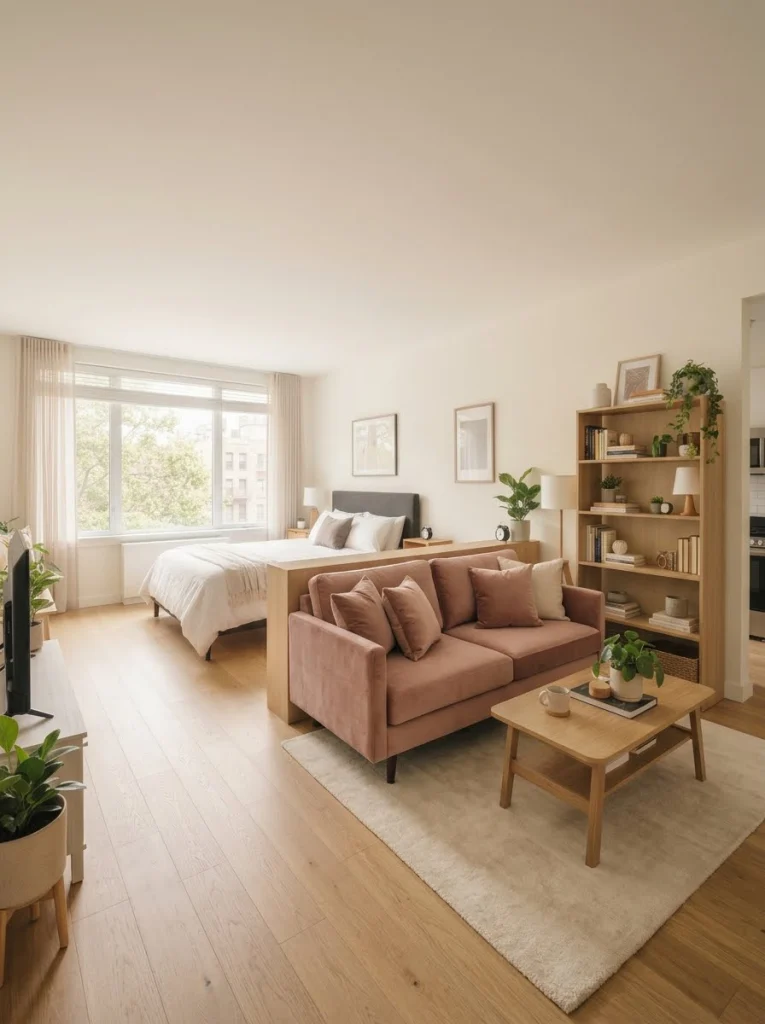
The couch sets the mood of the whole room. A blush velvet sofa feels soft and romantic, and a charcoal linen one feels calm and practical. Neither is wrong, but a studio has no second living room to redo if the mood is off, so pick a color and texture you’ll enjoy looking at every day. For help narrowing the color, see sofa color ideas for anyone living in a studio apartment.
Tip: Velvet shows pet hair and creases easily. It looks great, so just know the upkeep going in.
3. Don’t Be Afraid of a Bold Pattern
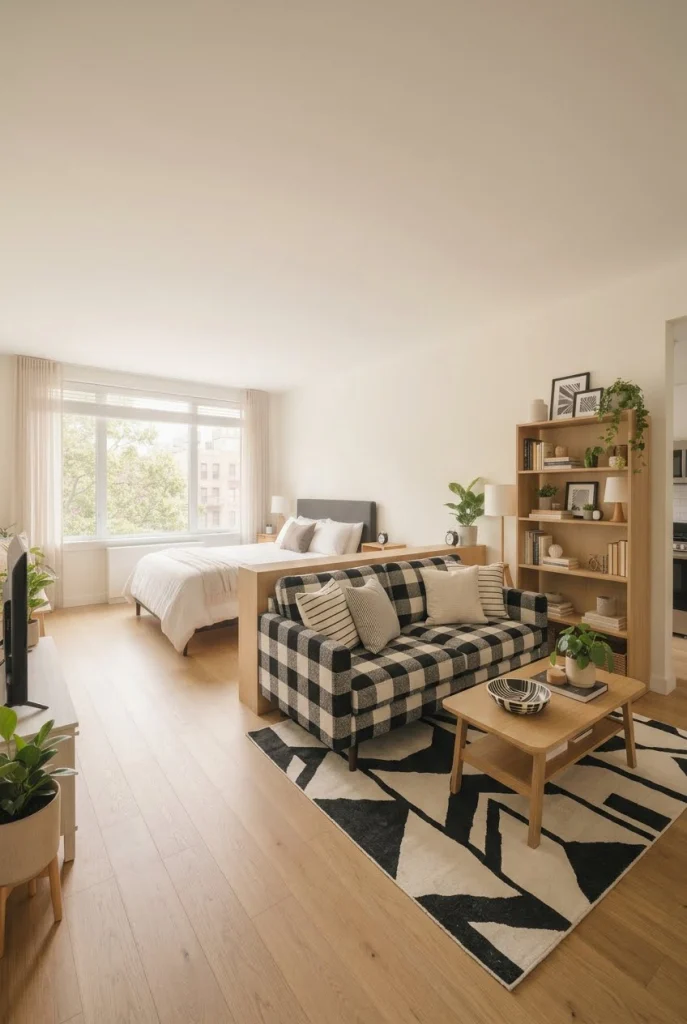
Most small-space advice says to stay neutral, but a bold pattern can work in a studio when you commit to it. A black-and-white plaid sofa works when the rest of the room shares the same graphic energy. The rule isn’t to go neutral, it’s to be intentional: one bold piece anchors the room, and several competing patterns create chaos.
Budget vs. splurge: Spend on the sofa if it’s the statement piece, and save on the pillows, since you’ll swap them seasonally anyway.
4. Pair a Compact Sofa with Smart Storage Around It
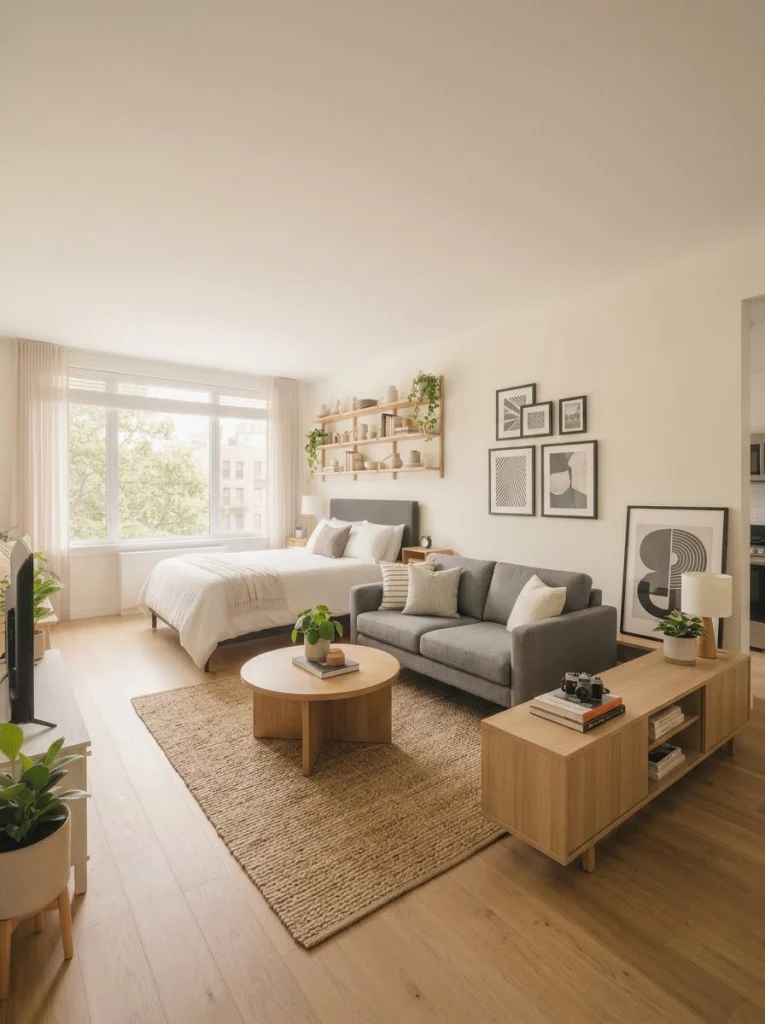
When square footage is tight, a compact two- or three-seater with a round coffee table is usually smarter than an oversized sectional. A gray sofa like this one is substantial enough to feel like real furniture and small enough to leave breathing room. A round table means no sharp corners to dodge, and wall shelves or a media console add storage without more floor-level furniture. For compact options, see best couches for studio apartments that save space.
Tip: Float the sofa a foot away from the wall. It makes the room feel larger and more intentional.
5. Neutral Sofas Give You Room to Grow
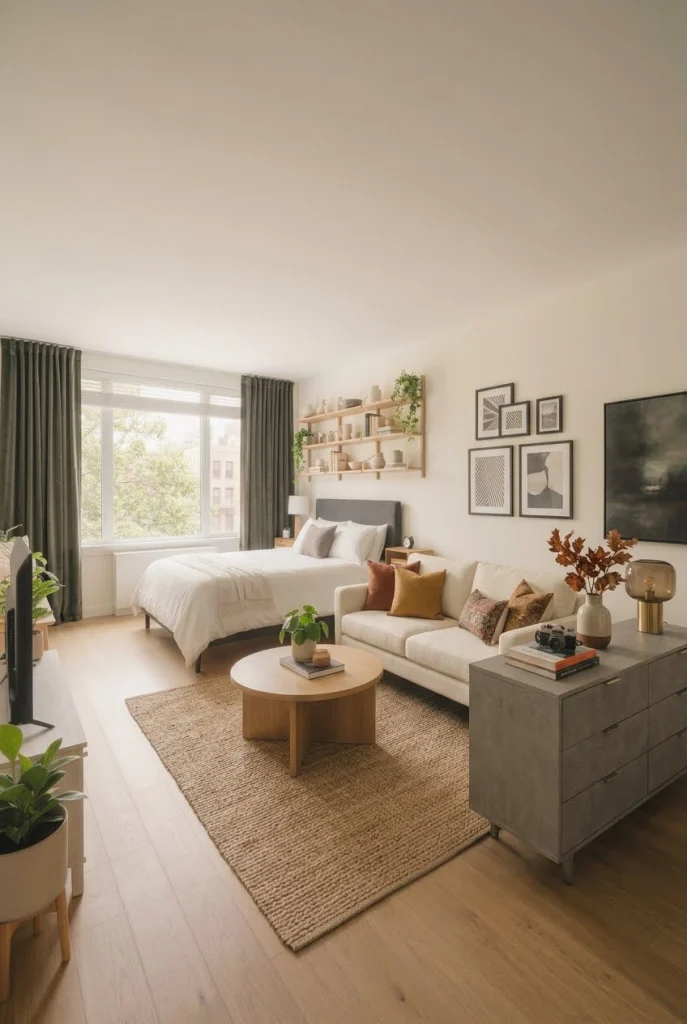
A white or off-white sofa is the blank canvas a studio needs. You can change accent colors with the seasons, dusty purple in winter and terracotta in fall, without the sofa fighting the room. Beside a gray dresser and moody curtains, a neutral sofa anchors the space without demanding attention.
Budget vs. splurge: Save on a neutral sofa with a washable slipcover, and spend on accent chairs where you want personality.
6. Scale the Sofa to the Room, Not Your Wishlist
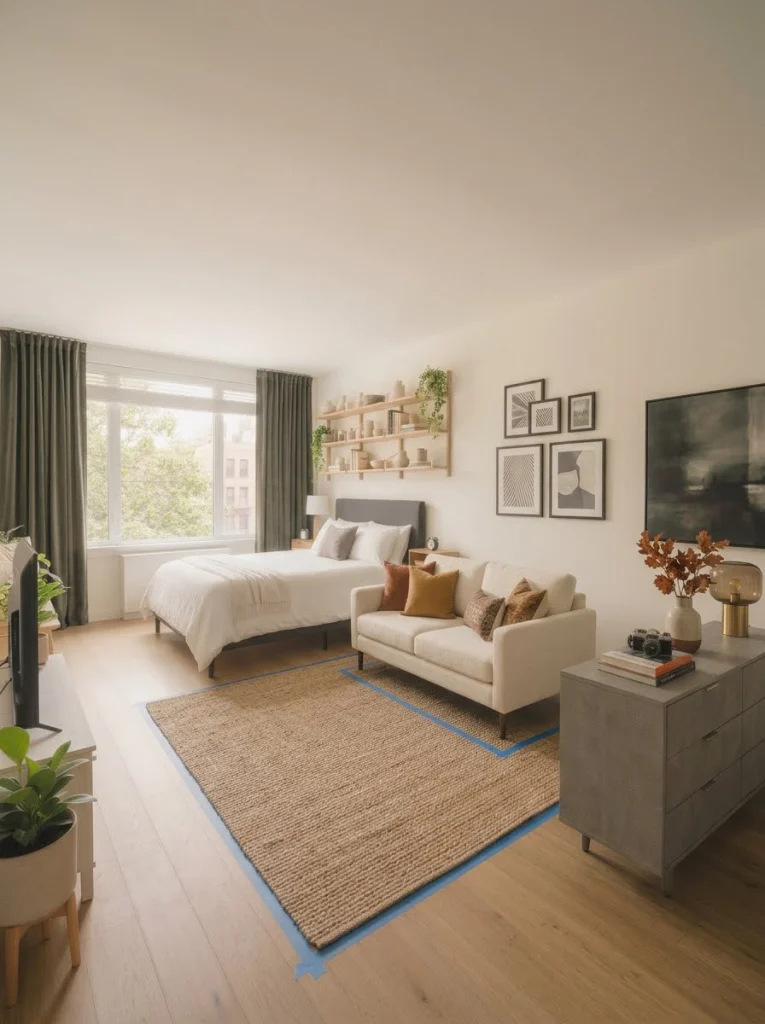
The biggest mistake in a small space is buying a sofa sized for the room you wish you had. In a studio under about 400 square feet, anything over roughly 84 inches long will likely feel overwhelming. Measure the wall, leave about 18 inches of walkable clearance on each side, and then shop.
Tip: Use painter’s tape on the floor to mark the sofa’s footprint before buying. It takes five minutes and can save real money.
7. Dark Sofas Can Make a Small Space Feel More Curated
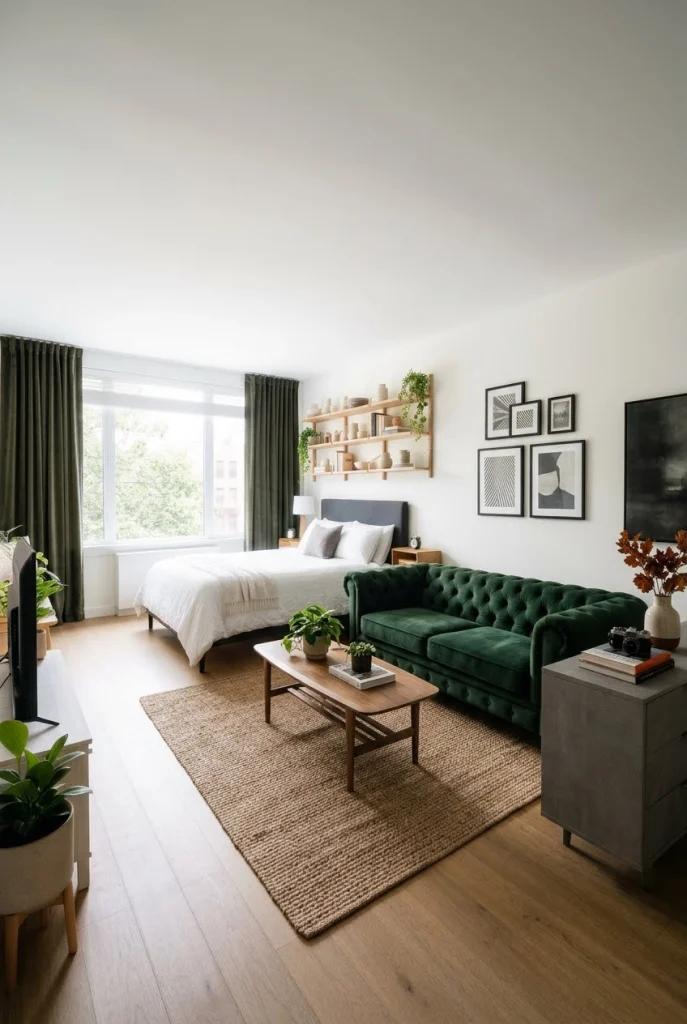
Dark furniture only makes a room feel smaller when the whole room is dark. A deep forest green tufted sofa against white walls and light wood floors anchors the space instead of shrinking it, and the contrast makes the room feel designed. The tufting adds texture and visual weight, so the room feels more substantial.
Tip: Dark velvet and tufting take more upkeep, but they’re worth it for a piece you’ll see every day.
8. Match Sofa Undertones to Your Existing Palette
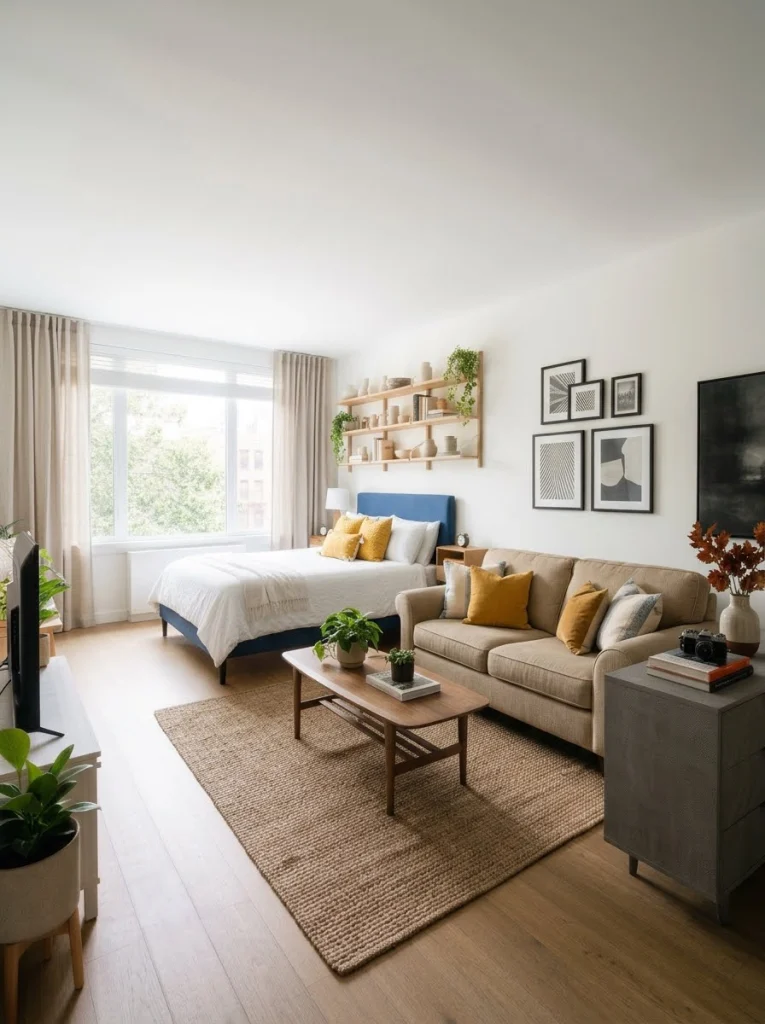
In a studio the sofa and the bed are always visible together, so their undertones need to coexist even if they don’t match. A warm beige sofa beside a cool blue bed frame works when yellow accent pillows bridge both temperatures. For more on pairing the two, see studio bed and couch layout ideas.
Tip: Bring a photo of your bedding when shopping and hold fabric swatches against it. A throw in a bridging color is the cheapest way to tie them together.
9. An L-Shaped Sectional Can Work, With Conditions
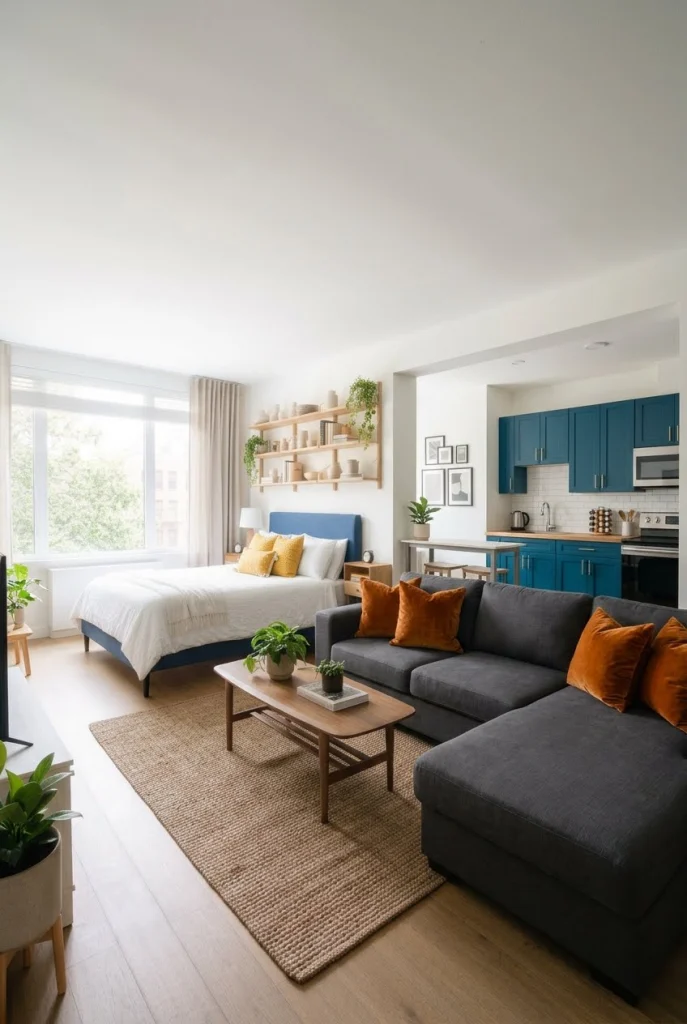
Sectionals get a bad reputation in small spaces, but in an open-plan studio that flows into the kitchen, a well-placed L-shape can define zones better than a standard sofa. A dark gray sectional anchors the living area, and orange velvet pillows tie it back to bold kitchen cabinetry. One side of the L should run parallel to a wall to keep traffic flowing, and sectionals that reach into the center of the room use up square footage fast.
Tip: Buy a quality frame, since cheap ones tend to warp, and save money on the throw pillows instead.
10. Simple Is Underrated in a Minimal Studio
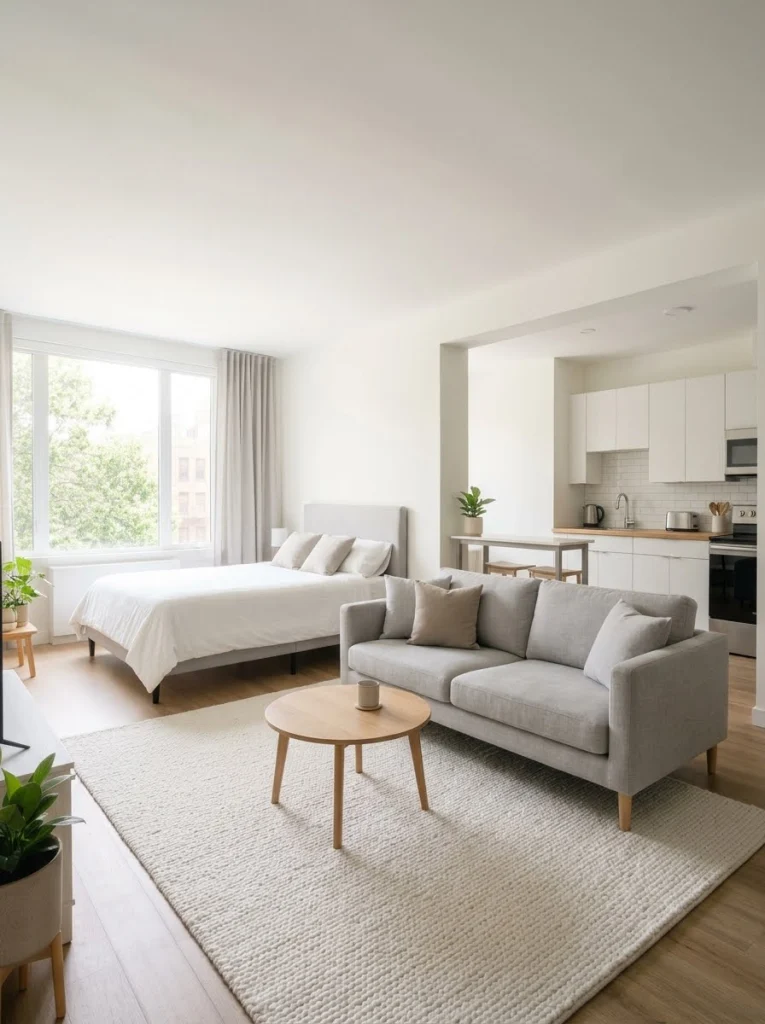
Sometimes the best sofa is the most boring one on paper: a clean-lined, light gray two-seater with no fuss. In a minimal studio with bare walls, a white rug, and a straightforward layout, the sofa doesn’t need to be interesting, because the room’s calm is the point. This suits anyone working from home who needs the space to feel mentally quiet.
Tip: A low profile, with a seat height under about 17 inches, keeps sightlines open and makes a small room feel airier.
11. Use a Wood Partition to Define the Sofa Zone
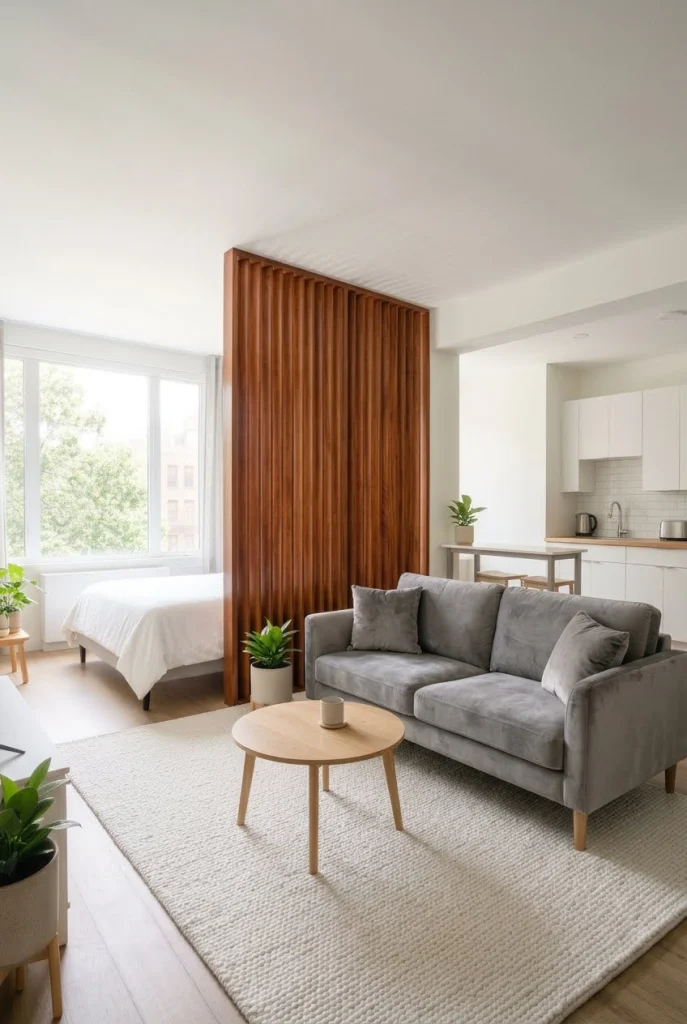
Not every studio divides the sofa zone with a bookshelf. A fixed element like a rich mahogany fluted partition can do the heavy lifting, and then the sofa’s job is simpler: bring comfort and complement the warmth of the wood. A gray velvet sofa sits softly against the grain without competing. For more partition styles, see studio apartment wood divider ideas.
Tip: If the studio has a built-in divider or half wall, choose a sofa that complements the material instead of trying to match it exactly.
12. Don’t Forget the Kitchen-Side View
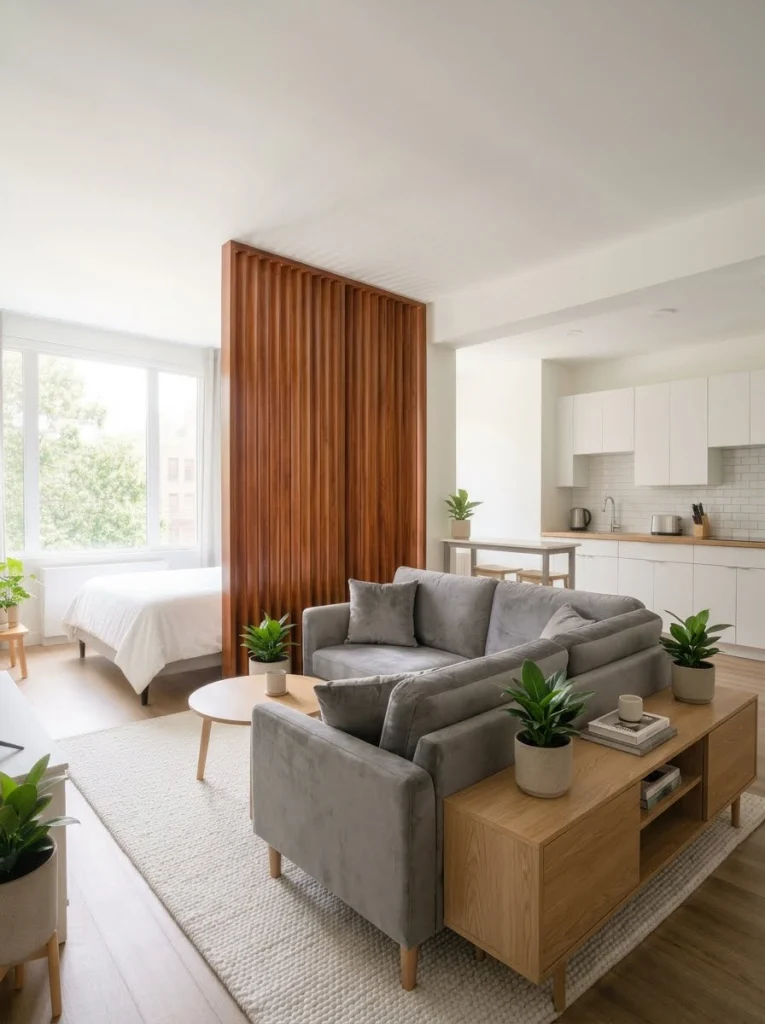
In an open-plan studio with a kitchen, the sofa’s back is often the first thing you see when you walk in, so the rear profile matters as much as the front. A sectional with a finished, clean back and no sagging fabric or raw seams looks intentional from every angle, including from the bar counter.
Tip: Before buying, crouch down and look at the sofa from behind. A sofa table pushed against the back finishes the look and adds surface space.
13. The Bookshelf-Backed Sofa Trick
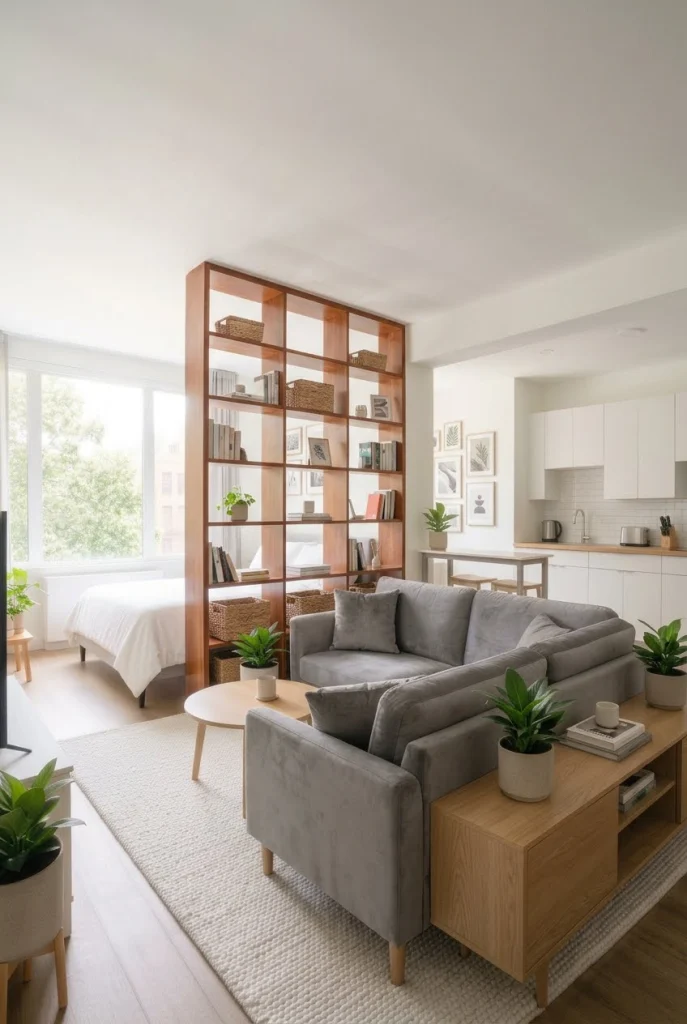
To divide a studio without losing storage, put the sofa against the back of an open bookshelf. The shelf faces the bedroom zone and holds books and baskets while the sofa faces the living area, which makes a clear visual and functional split. A gallery wall behind the sofa adds personality to what could otherwise feel like a corridor. For more layouts built this way, see studio apartment layout ideas using bookshelf room dividers.
Tip: Keep the top of the bookshelf clear or lightly styled, since a cluttered shelf top reads as visual noise from across the room.
14. Cognac Leather Is the Underrated Studio Choice
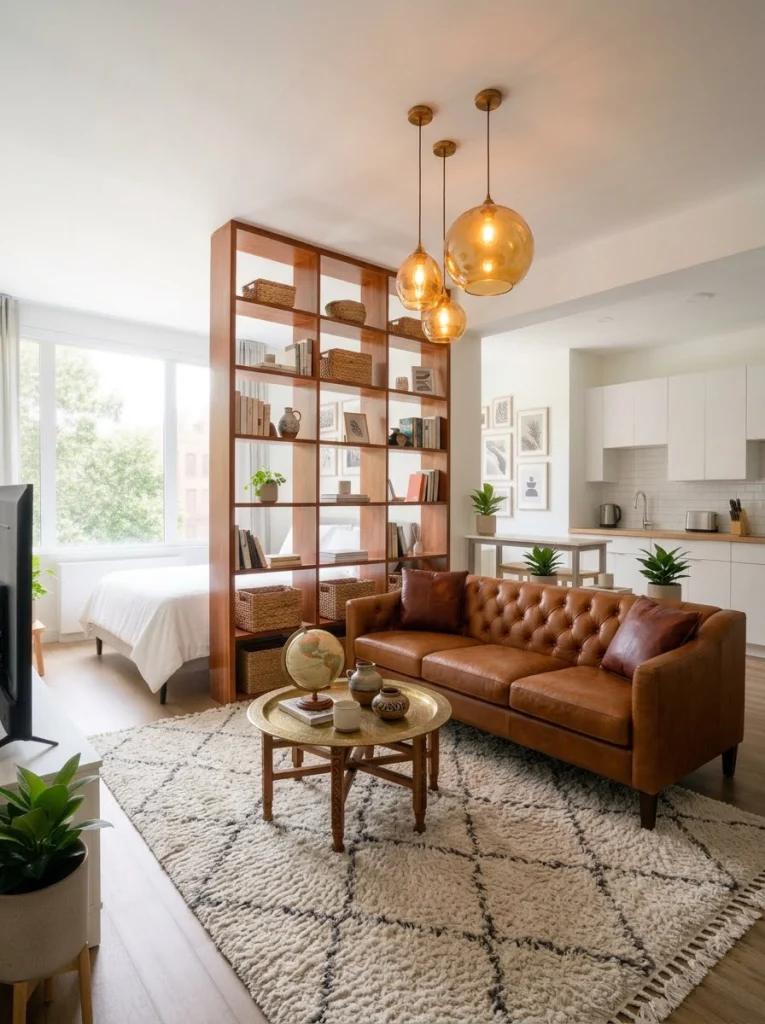
Cognac leather is warm without being heavy, ages well, and wipes clean, which matters when the sofa is also the dining chair, desk chair, and movie seat. A tufted cognac leather sofa on a cream Moroccan rug under warm pendant lighting gives a rental a cozy, curated look. Leather also doesn’t pill or hold odors the way fabric can.
Tip: Real leather costs more upfront but usually outlasts several fabric sofas, so think long-term.
15. An Ottoman Can Replace Your Coffee Table
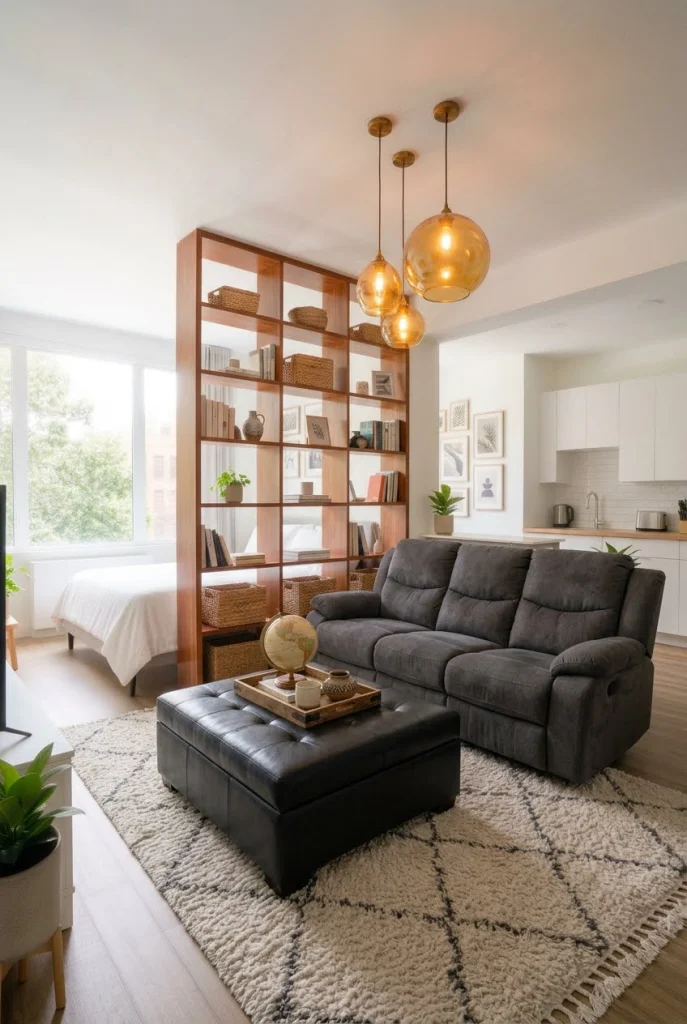
Swapping the coffee table for a large tufted ottoman frees serious floor space. It works as a footrest, a table with a tray on top, extra seating for guests, and sometimes hidden storage. A charcoal recliner sofa with a deep black tufted ottoman takes up no more room than a standard sofa-and-table setup but adds functions a coffee table can’t.
Budget vs. splurge: Good ottomans are easy to find at a modest price, so save there and spend on the sofa.
Common studio couch mistakes
- Buying for the room you wish you had. Measure the wall and the walkway first, since a couch that’s slightly too big is the most common regret.
- Ignoring the back of the sofa. In an open layout the back shows from the bed or kitchen, so a finished back panel matters.
- Skipping the undertone check. The sofa and the bed are seen together, so hold swatches against your bedding before you buy.
Quick answers
What size couch works best in a studio apartment?
A two- or three-seater under about 84 inches long, with roughly 18 inches of clearance on each side, works in most studios.
Should a studio couch be neutral or bold?
Either works. A neutral sofa gives flexibility to change accents, and a bold one works when the rest of the room supports it.
Can a couch work as a room divider in a studio?
Yes. Placing it with its back toward the bed splits the room into living and sleeping zones, as long as the back is finished.
Is a sectional too big for a studio?
Not always. A compact L-shape works in an open-plan studio if one side runs along a wall and it doesn’t reach into the center of the room.
Is a dark sofa a bad idea in a small studio?
No. A dark sofa against light walls and floors anchors the room instead of shrinking it.
Is leather a good choice for a studio couch?
It’s a strong choice, since it wipes clean, ages well, and doesn’t hold odors, which suits a sofa that does several jobs.
Do I need a coffee table in a studio?
Not necessarily. A large ottoman with a tray gives a surface, seating, and storage in one piece.
Final Thoughts
The right studio couch fits the wall, finishes cleanly from the back, and works with the bedding you already own. Measure first, tape out the footprint on the floor, and sit in it before you commit. A couch that passes those three checks will make the rest of the layout easier.