
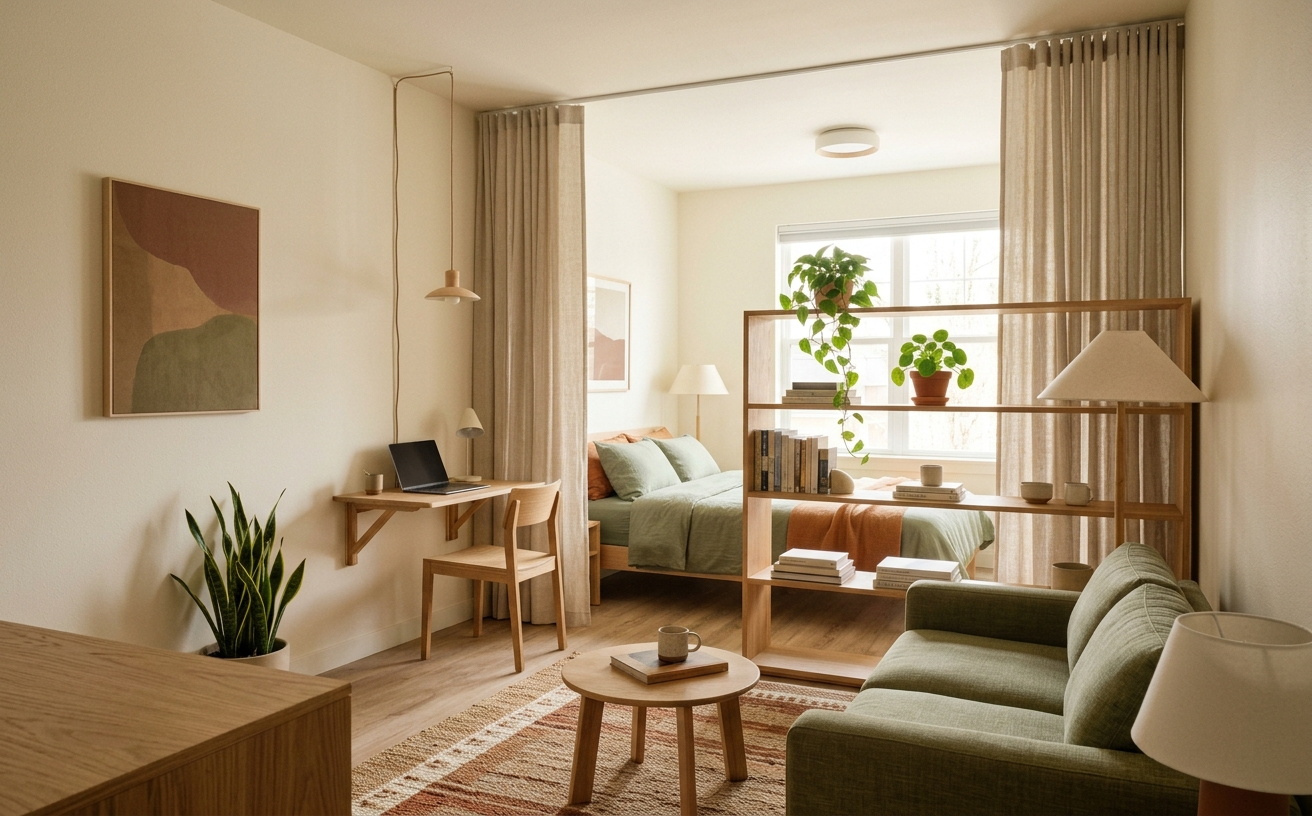
A mini studio apartment does not need to look plain just because the space is small. The best small studios use simple zoning, smart furniture, color, lighting, and a few strong decorative choices to make one room feel like several useful areas. These 15 mini studio apartment ideas show different ways to make a small space feel more personal, organized, and finished without filling every corner.
1. Create a Soft Bedroom With Ceiling-Mounted Curtains
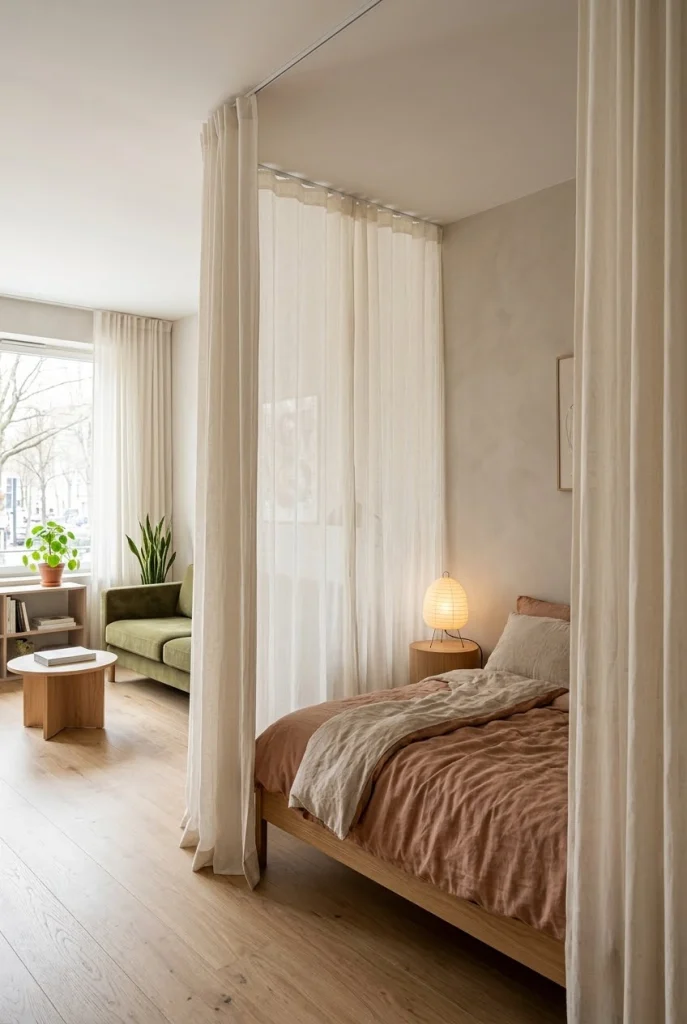
If your bed sits completely open in the middle of the studio, curtains can make it feel like a separate bedroom without adding a permanent wall. Floor-to-ceiling sheer or linen-look panels around the bed create privacy while still allowing light to move through the room.
Keep the curtains close to the wall color if the studio is very small. White, cream, beige, or soft gray panels will create separation without making the sleeping area feel boxed in. You can also use the same idea with a ceiling track when a traditional curtain rod would take up too much visual space.
Pro Tip: For a rental, look for tension or renter-friendly curtain-track options so you can create a bedroom zone without a major wall change.
2. Use One Bold Color Instead of Many
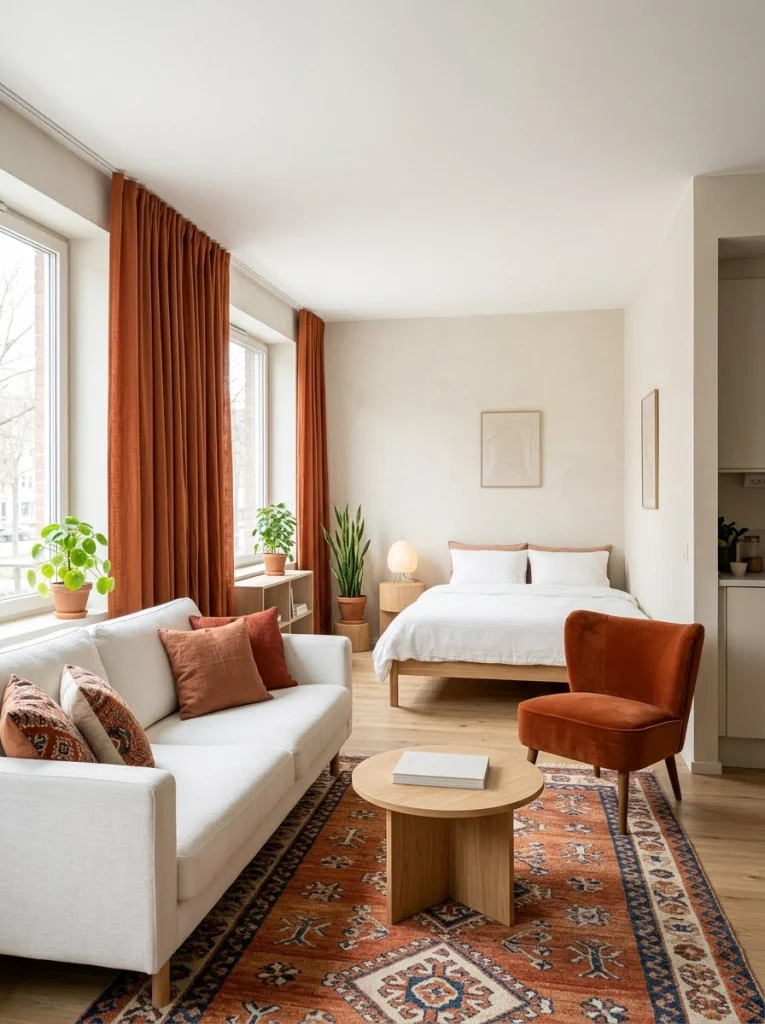
Small spaces can handle color, but using too many unrelated shades can make the room feel even smaller. Pick one dominant color and repeat it in a few places instead of adding a different accent to every corner.
Burnt orange, deep green, dusty pink, navy, or muted blue can work well against a neutral base. Use the color on curtains, one chair, a rug, artwork, or cushions, then leave the larger furniture relatively simple.
Pro Tip: If you are nervous about committing to a bold sofa or wall, start with removable pieces such as cushions, curtains, artwork, or a rug.
3. Make the Sofa and Bed Work as Two Clear Zones
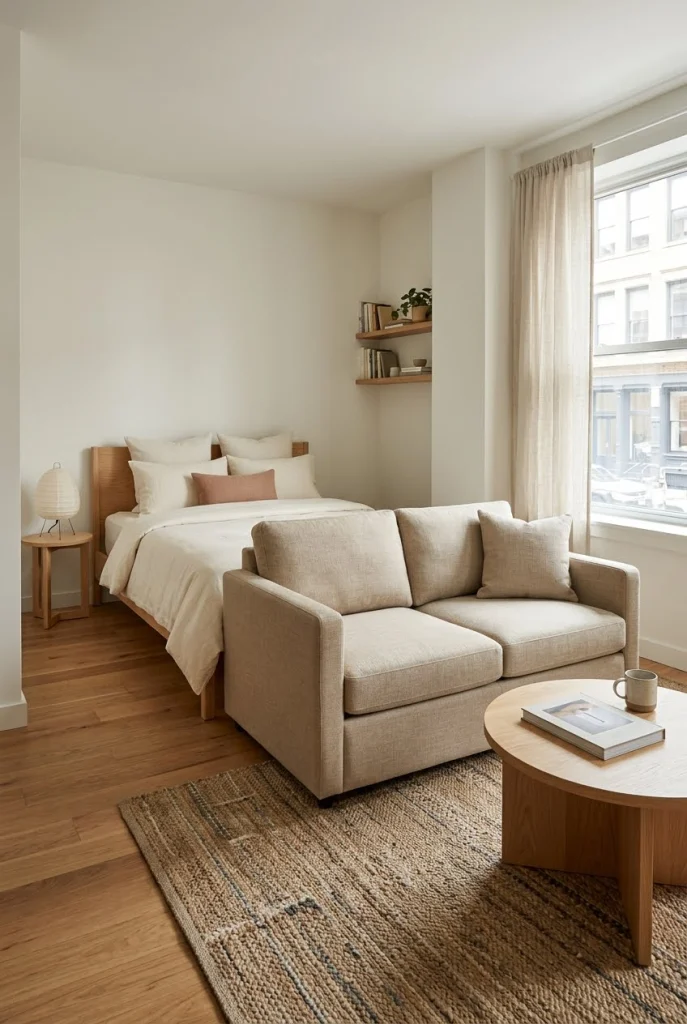
A sofa placed parallel to the bed can make a mini studio feel more like a small one-bedroom apartment. Instead of pushing every piece against the walls, use the sofa to visually separate the living area from the sleeping area.
A compact two-seat sofa works especially well because it creates a boundary without taking over the room. Add a rug under the sofa and coffee table so the living area has its own visual footprint. If you are choosing seating for this kind of setup, these small couch ideas for studio apartments can help you find a layout that keeps the room open.
Pro Tip: Leave a clear walking path beside the sofa instead of pushing it directly against the bed. A little breathing room makes both zones feel more intentional.
4. Separate the Bed With a Wood Slat Divider
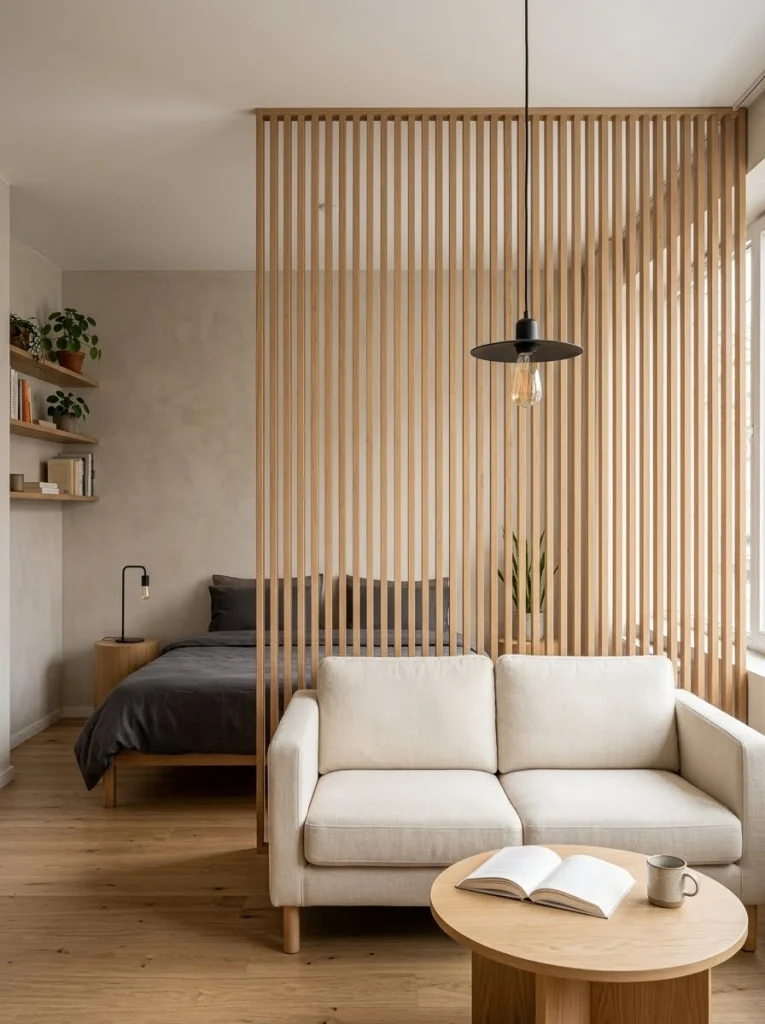
Vertical wood slats can give a mini studio stronger separation without completely blocking the room. The gaps between the slats allow light to pass through while still making the bedroom feel like its own area.
Natural oak or walnut tones work well with neutral furniture, while darker wood can create a more dramatic look. Keep the rest of the room fairly simple because the divider already acts as a strong architectural feature.
Pro Tip: A partial slat divider is often more useful than a full-height wall because it separates the bed without cutting off natural light.
5. Put a Real Workspace Behind a Bookshelf
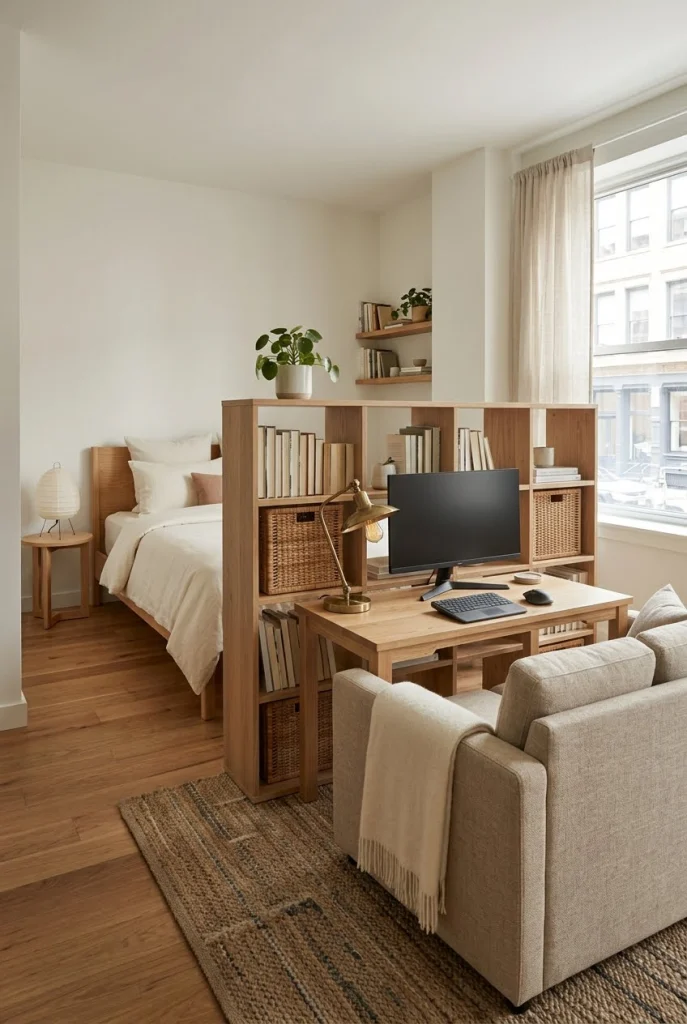
If you work from home, your desk deserves its own zone instead of becoming an extension of the bed or dining table. A half-height or open bookshelf can sit between the sleeping area and workspace to give the desk a clear boundary.
Keep the desk simple with one task lamp, a comfortable chair, and limited accessories. The shelf can hold books, baskets, plants, and work supplies while also hiding some of the visual mess from the rest of the studio.
Pro Tip: A divider around 40–48 inches high can create a useful visual boundary while still allowing daylight to reach the workspace.
6. Use a Soft Accent Wall With Natural Textures
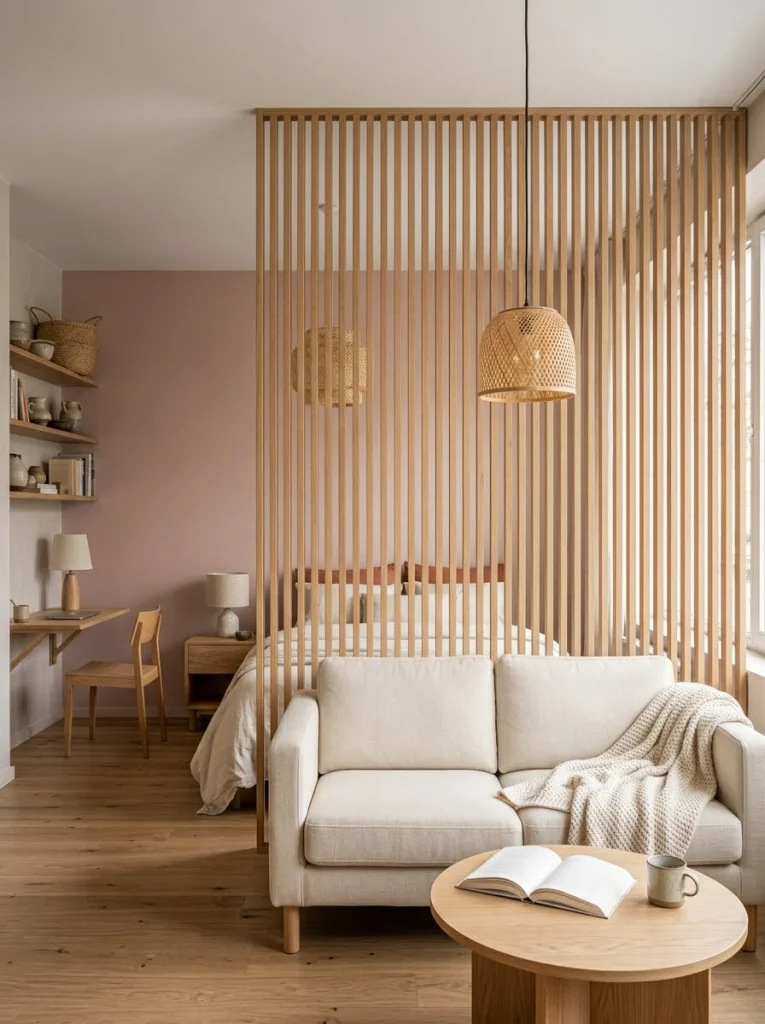
One painted wall can give a mini studio a stronger identity without requiring a full makeover. A dusty pink, muted sage, warm taupe, or soft blue wall behind the bed can make the sleeping area feel intentional.
Then bring in natural textures such as rattan, bamboo, linen, wood, cotton, or woven baskets. These materials keep the color from feeling flat and give a small studio more depth without adding more furniture.
Pro Tip: Paint the wall behind the bed rather than every wall if you want a strong effect without making the entire studio feel darker.
7. Go Glam With One Statement Piece
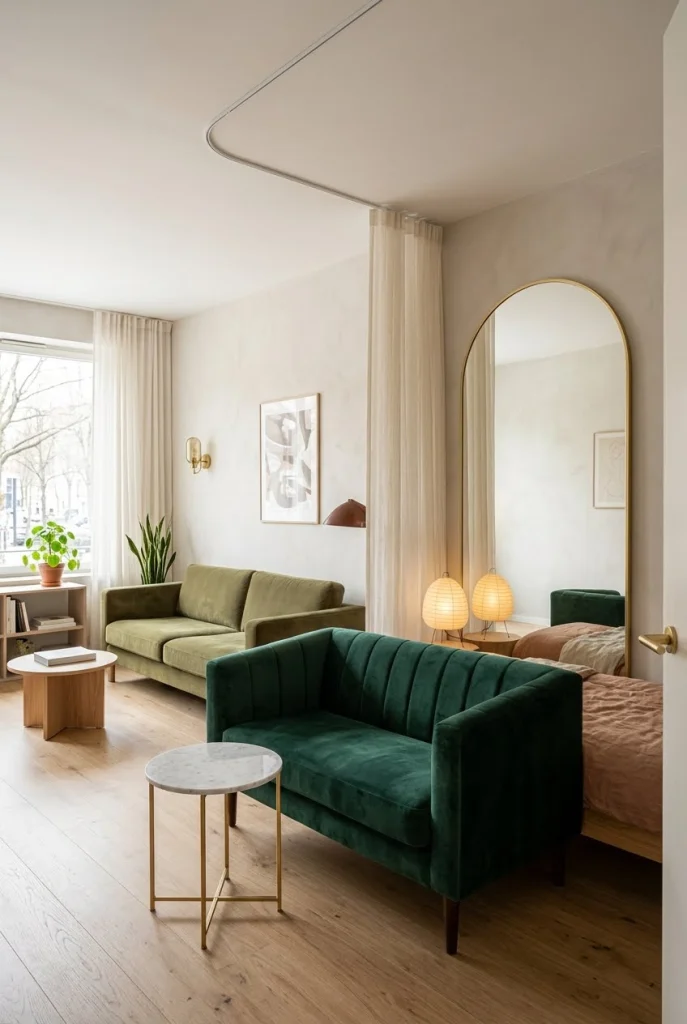
A tiny studio can still have a glamorous look, but the trick is choosing one or two strong pieces instead of decorating every surface. A velvet sofa, arched mirror, sculptural light, or marble-look coffee table can give the room a more polished appearance.
Keep the surrounding furniture simple. Cream, black, gold, and warm wood can create a strong palette without needing lots of different colors.
Pro Tip: Spend more on the one item that dominates the room and use affordable accessories for smaller details. One strong piece will have more impact than five average ones.
8. Keep a Classic Hotel-Inspired Look
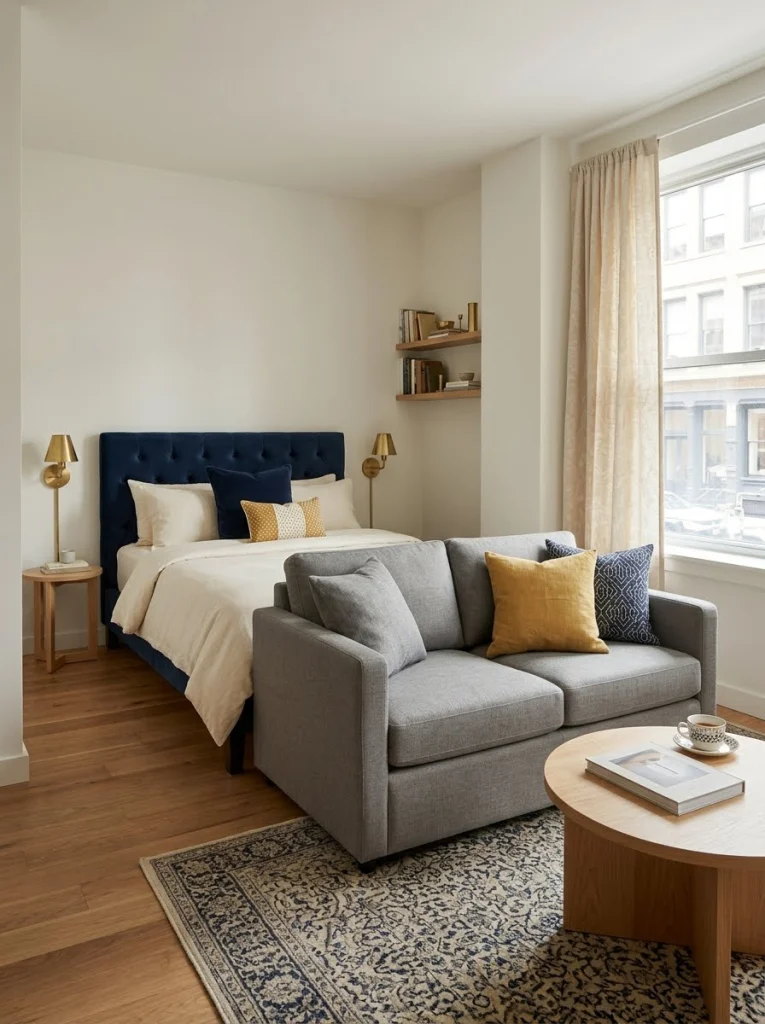
If modern or boho styles are not your thing, a classic hotel-inspired studio can work surprisingly well. A tufted bed, compact linen sofa, brass wall sconces, simple curtains, and a controlled navy-and-cream palette can make the room feel finished without requiring lots of decor.
The important part is scale. Avoid oversized chairs, large cabinets, or bulky tables that take away from the walking space.
Pro Tip: In a mini studio, skip extra seating if the sofa already does the job. The floor space is usually more valuable than another chair.
9. Try a Soft Minimalist Studio
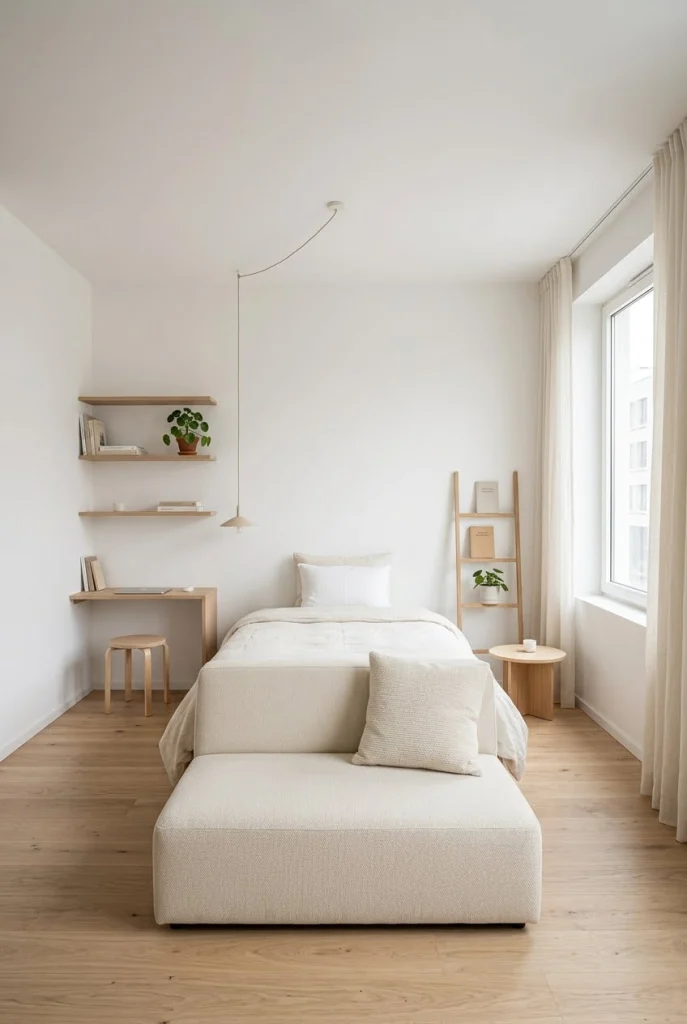
Minimalism works especially well when the studio is extremely small because fewer objects mean more visible floor and wall space. Use cream, white, soft gray, and natural wood as the base, then add only a few useful decorative pieces.
A narrow ladder shelf can display books and plants without visually weighing down the room. Keep surfaces mostly clear and use closed baskets or drawers for items that would otherwise stay visible.
Pro Tip: Minimalism is not about owning nothing. It is about keeping the things you use or genuinely like and giving them enough space around them.
10. Let a Bookshelf Do the Heavy Lifting
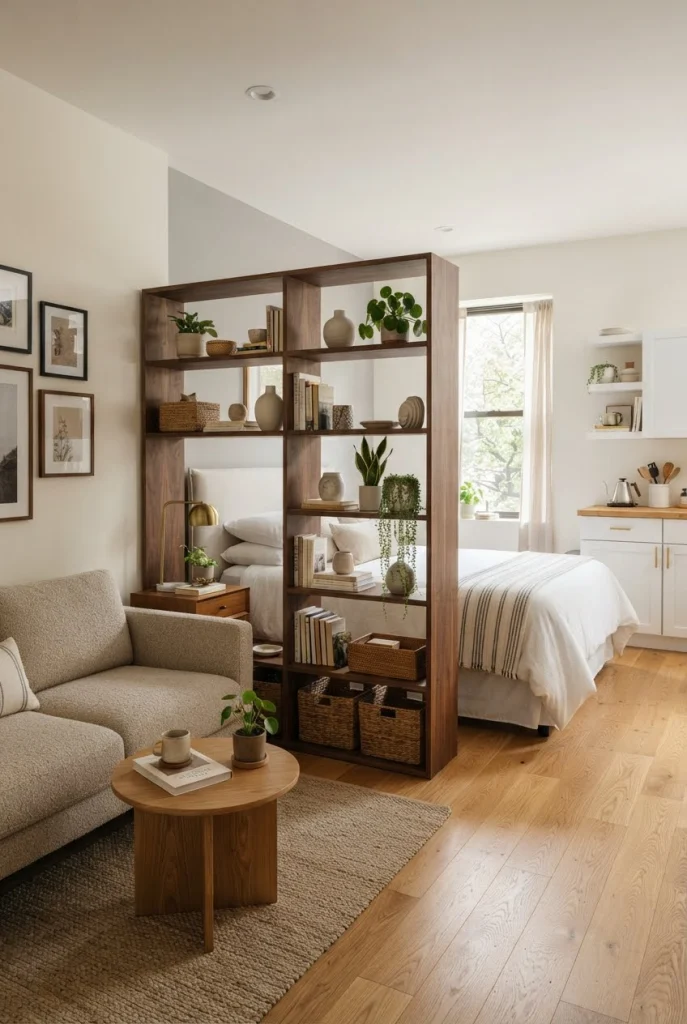
An open bookshelf is one of the most useful pieces in a mini studio because it can provide storage and separation at the same time. Position it between the bed and living area, then style both sides instead of treating the back as an empty surface.
Use baskets on the lower shelves, books and plants in the middle, and leave a few sections open. For more layout options, these studio apartment divider ideas for small spaces can help you choose between shelves, curtains, and other dividers.
Pro Tip: Do not fill every shelf. Empty sections are what keep an open bookshelf from looking heavy in a small room.
11. Use Ambient Lighting for a Moody Feel
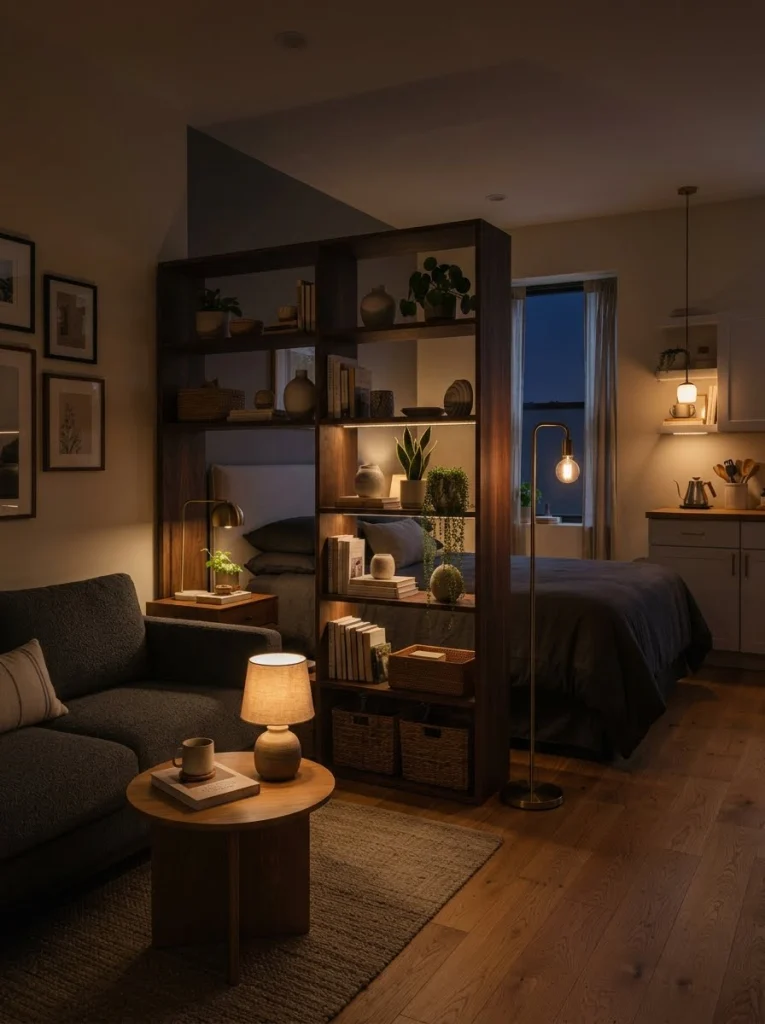
A small studio can look completely different at night depending on the lighting. Instead of using one bright ceiling fixture, combine a floor lamp, bedside lamp, table lamp, and small accent light to create several softer areas.
Warm light works particularly well with charcoal, deep green, brown, navy, and wood finishes. The room does not have to be dark everywhere; just create a few warm pools of light around the areas you use.
Pro Tip: Use the main ceiling light for cleaning and general tasks, then rely on smaller lamps when you want the room to feel more relaxed.
12. Use Shelves to Create an Industrial Loft Feel
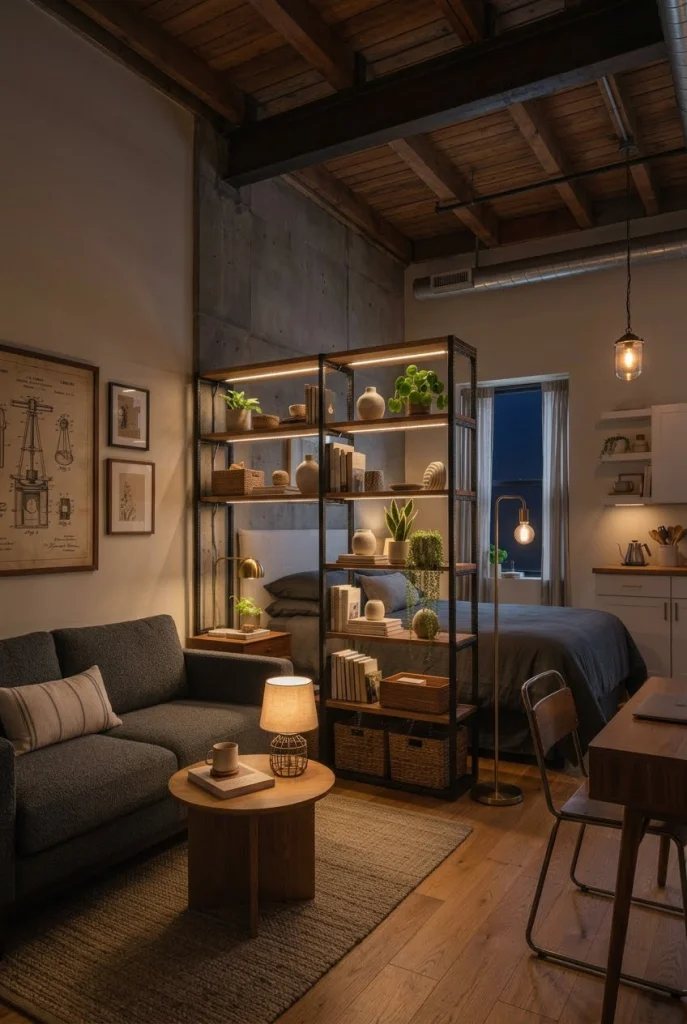
If your mini studio has high ceilings, use that height instead of focusing only on the floor. Tall open shelves, black metal furniture, warm wood, and simple industrial lighting can create a loft-style look without making the room feel crowded.
Use shorter furniture pieces underneath the taller shelving so the room still has visual balance. A few plants and woven materials can soften the harder metal finishes.
Pro Tip: In a high-ceiling studio, draw the eye upward with tall shelving or vertical artwork rather than adding more furniture to the floor.
13. Use Scandinavian Colors With a Curtain Divider
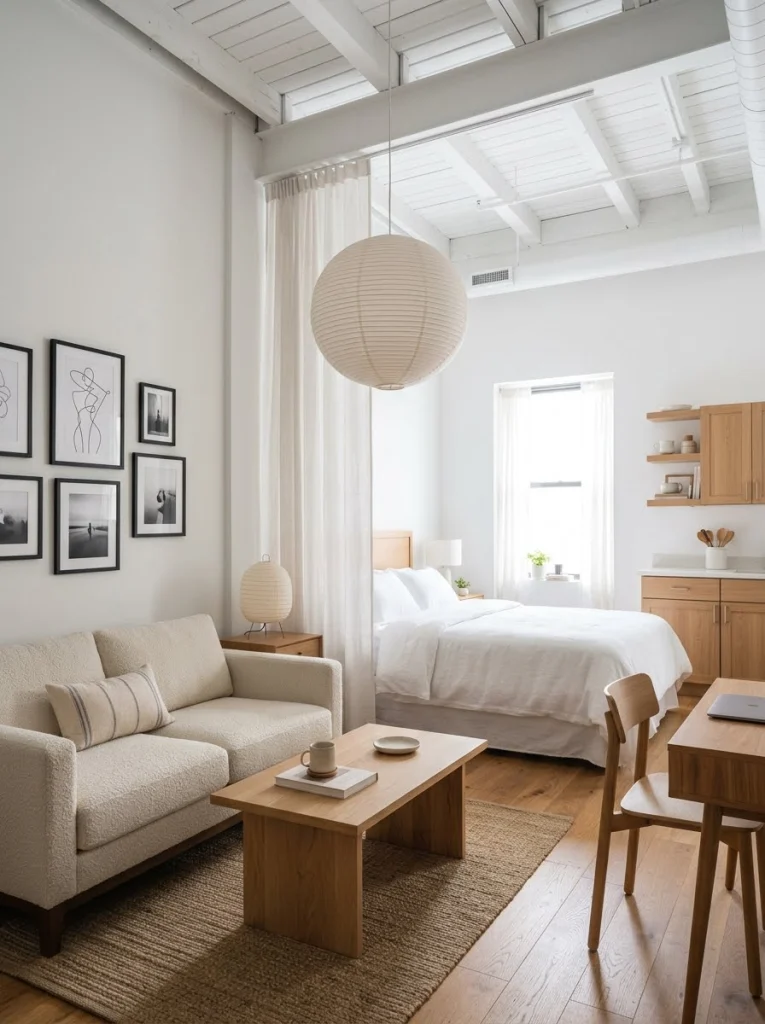
Black, white, and oak make a strong combination when you want a clean Scandinavian look. Keep the furniture simple, then use a ceiling-mounted white curtain to hide the bed when needed.
The curtain provides privacy without turning the studio into a series of closed boxes. A large paper-style pendant can also add interest without taking up any floor space.
Pro Tip: Choose a curtain that blends with the walls when you want the studio to feel larger and more open when the curtain is pulled back.
14. Add a Wicker Folding Screen for Warmth
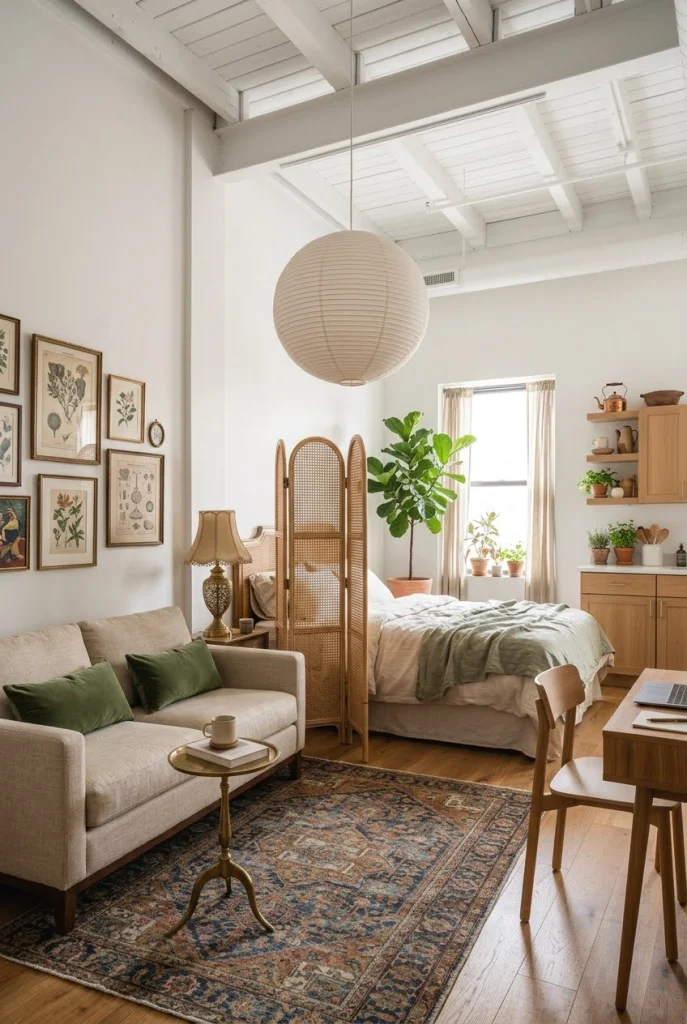
A folding screen is useful when you want separation without committing to a built-in divider. Rattan, wicker, cane, or carved wood screens add texture while taking up very little space when compared with a solid wall.
This works especially well with earthy colors, vintage furniture, linen fabrics, and plants. You can also fold the screen away when you want the studio to feel completely open.
Pro Tip: Choose a lightweight three-panel screen that can be moved easily. Flexibility matters in a room where the layout may need to change.
15. Give an Open Bookshelf Some Eclectic Personality
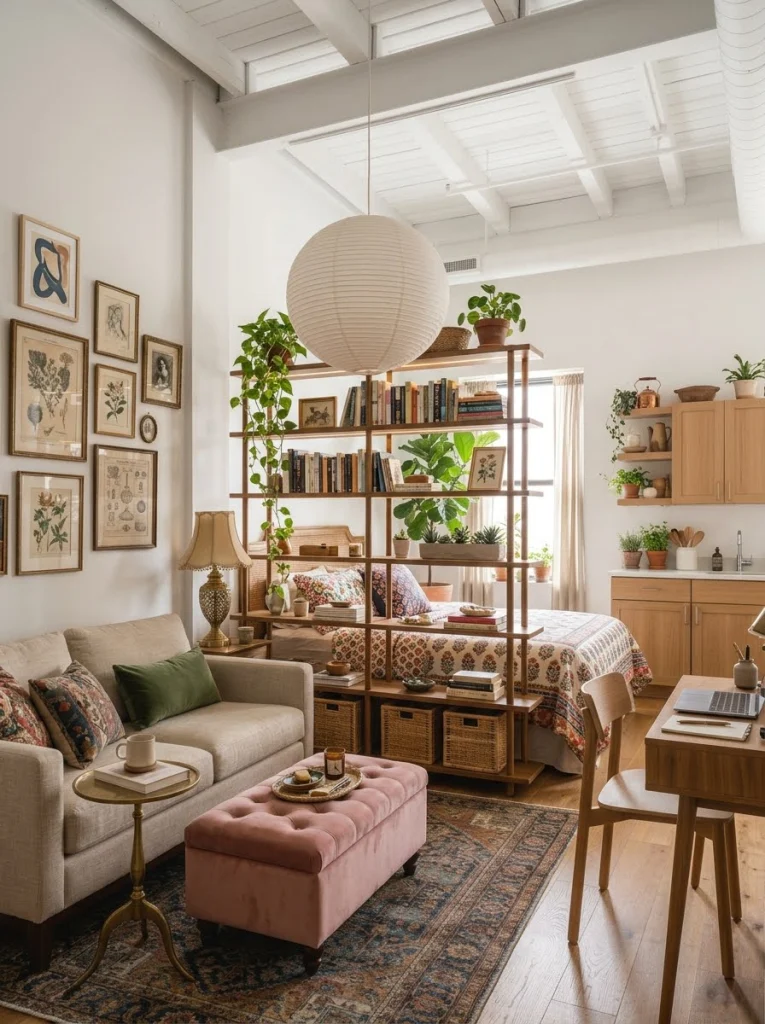
You do not need matching furniture to make a mini studio look cohesive. An open bookshelf can separate the bed from the living area while giving you a place for books, artwork, plants, baskets, and personal pieces.
Mixing furniture styles can actually make a small apartment feel more personal. The trick is repeating one or two colors or materials so the room still has some connection between the different pieces.
If you want to make the living zone more functional, choosing the right pieces matters; this guide to furniture that works best in a studio apartment is useful when deciding what deserves your limited floor space.
Pro Tip: Use the lower shelves for practical storage and the upper shelves for lighter decorative pieces. This keeps the divider useful without making it visually heavy.
FAQs
1. How can I make a mini studio apartment look bigger?
Keep the main walking paths open, avoid oversized furniture, use vertical storage, and choose visually light dividers. Mirrors, curtains, open shelves, and lighter colors can also help maintain an open feeling.
2. What is the best divider for a mini studio apartment?
An open bookshelf is one of the most practical options because it provides storage while separating the sleeping and living areas. Curtains and folding screens are useful when you want something lighter or movable.
3. Can I use bold colors in a tiny studio?
Yes. The easiest approach is to choose one dominant color and repeat it in a few places. Keeping the larger furniture neutral prevents the room from becoming visually chaotic.
4. How do I separate my bed from the rest of my studio?
You can use a bookshelf, curtain, wood slat divider, folding screen, sofa placement, or even separate rugs and lighting. The best option depends on how much privacy and storage you need.
5. What furniture should I avoid in a mini studio?
Avoid oversized sofas, bulky cabinets, large dining tables, and furniture that blocks walking paths. Choose pieces that fit the actual floor plan and provide a clear function.
6. How can I make a mini studio feel cozy without clutter?
Use texture instead of lots of objects. A rug, curtains, layered bedding, warm lighting, wood, woven materials, and one or two plants can add warmth without taking over the room.
7. Is a bookshelf safe to use as a room divider?
It can be, but a tall freestanding bookshelf should be properly secured against tipping, especially if it is placed where people walk or if children are around. Follow the manufacturer’s anchoring instructions.
8. What lighting works best in a mini studio?
Use a mix of general, task, and accent lighting. Warm bulbs are useful for evening atmosphere, while focused task lighting works better for desks, kitchens, and reading areas.
Final Thoughts
A mini studio does not need to follow one decorating style. You can make it soft and feminine, dark and moody, Scandinavian, industrial, boho, classic, or colorful. What matters is how well the furniture, lighting, colors, and zones work together.
Start with the biggest problem in your room. If the bed feels too exposed, try curtains or a divider. If the studio feels crowded, reduce bulky furniture. If it feels plain, work with color, texture, lighting, or one strong statement piece.
The best small studios are not the ones with the most decoration. They are the ones where every major piece has a clear purpose and the room still has enough open space to breathe.