
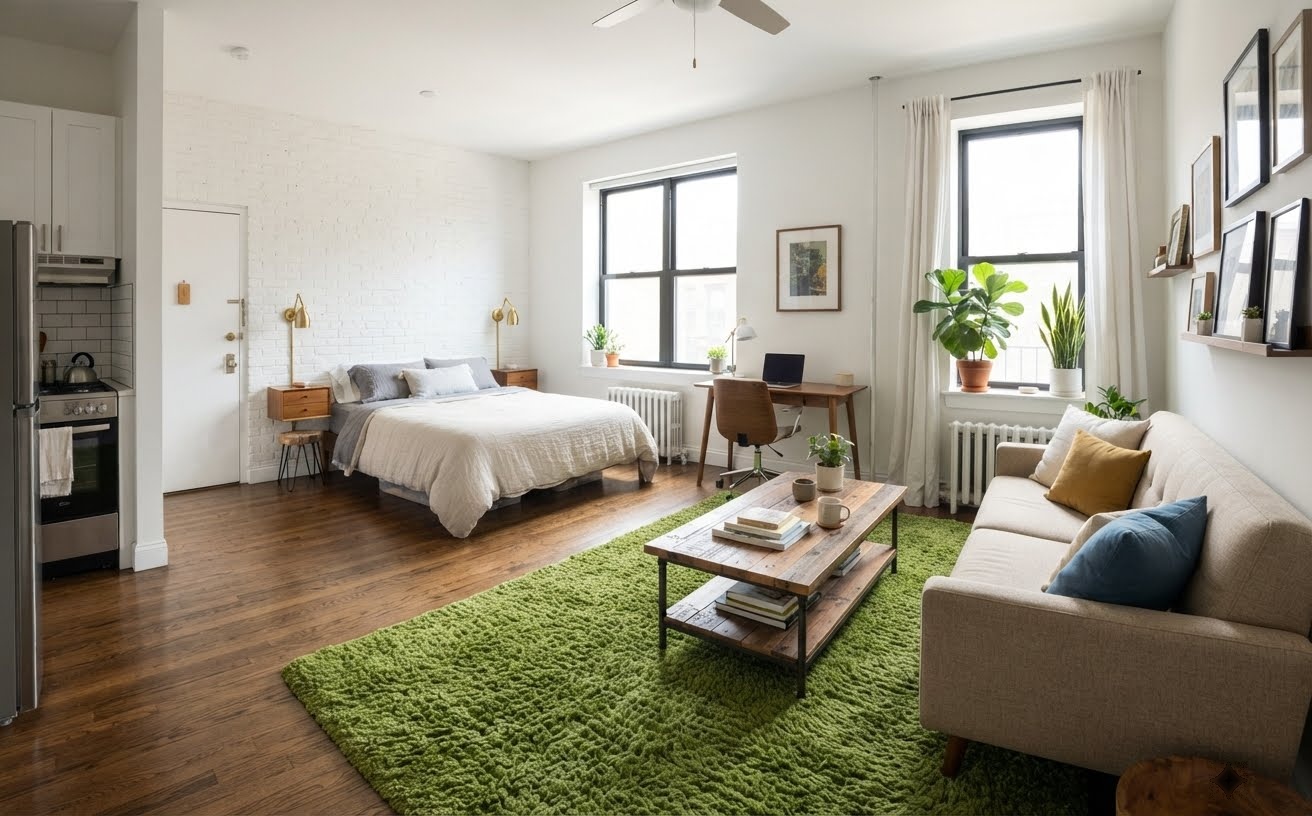
Clutter in a studio usually isn’t a stuff problem, it’s a structure problem — when every part of life shares one room, things need a visual home or they pile up everywhere at once. These 17 ideas build that structure without requiring anyone to get rid of what they own.
1. Use a Rug to Define Zones Without Walls
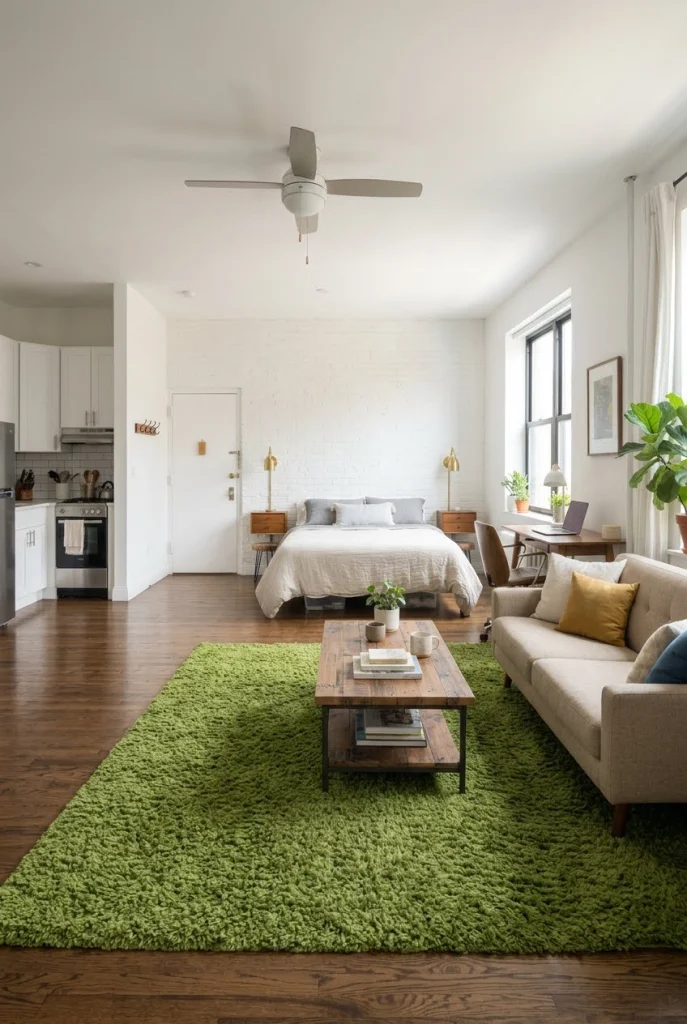
The rug should be the first purchase in any studio, before a single piece of furniture. A chunky shag rug under the sofa and coffee table tells the brain “this is the living room” instantly, and the bed behind it reads as a separate world with no walls needed. It also absorbs sound and adds warmth underfoot.
2. Pick a Two-Tone Palette and Actually Commit to It
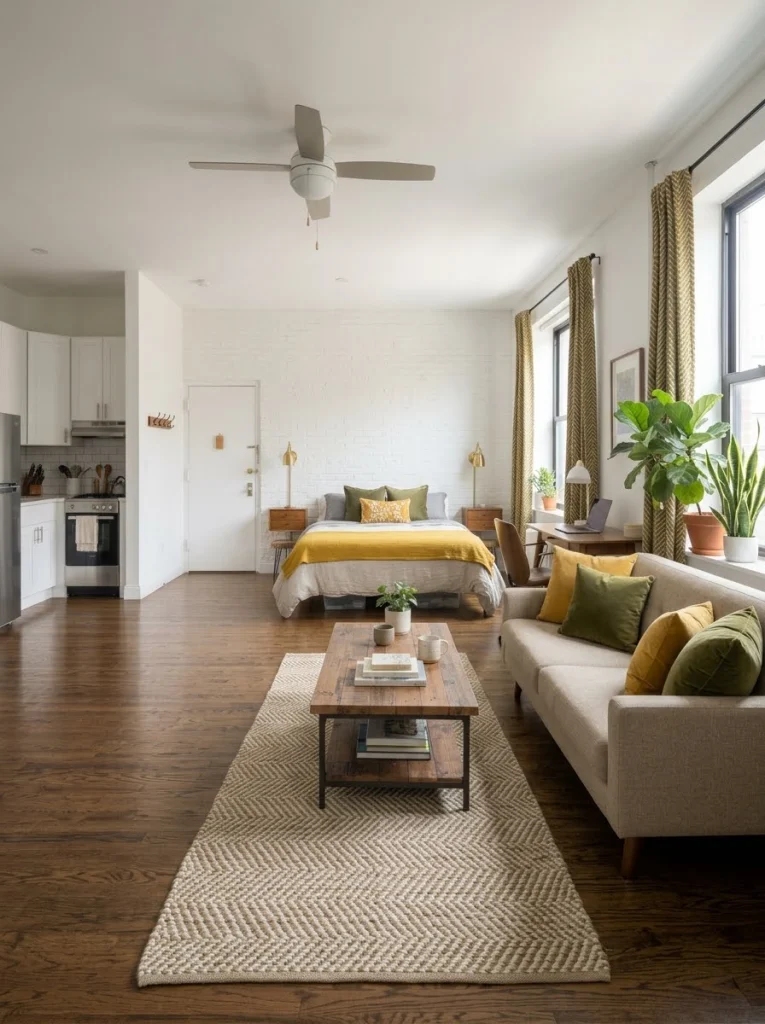
The clutter that bothers people most in a studio is often visual, too many colors fighting for attention at once. Olive green and mustard repeated across the sofa pillows, the bed throw, and the curtains creates cohesion for free, and a zigzag runner anchors the floor without introducing a third competing tone.
3. Add a Pendant Light to Fix That Dead Ceiling
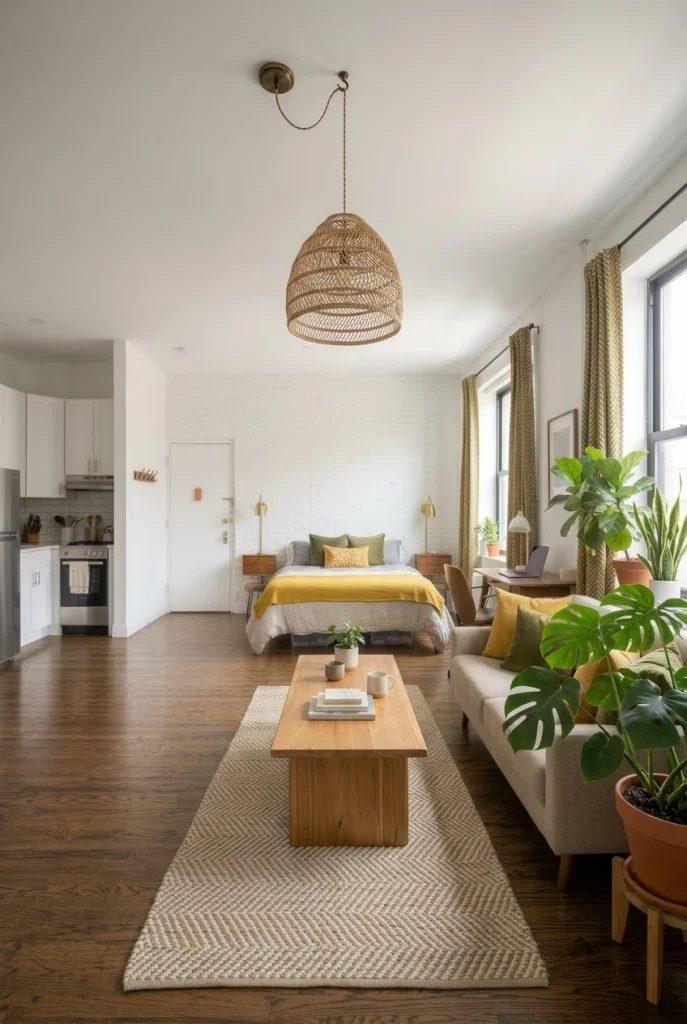
Most studios ship with one flat overhead light that lights everything equally, which means nothing feels special. A rattan pendant on a plug-in ceiling hook draws the eye up and adds instant warmth, and pairing it with a monstera and a low wood coffee table finishes the look without needing an electrician.
Tip: A plug-in bamboo pendant light installs in minutes with a ceiling hook and needs zero hardwiring.
4. Use a Shelf Unit as a Bed-Zone Divider
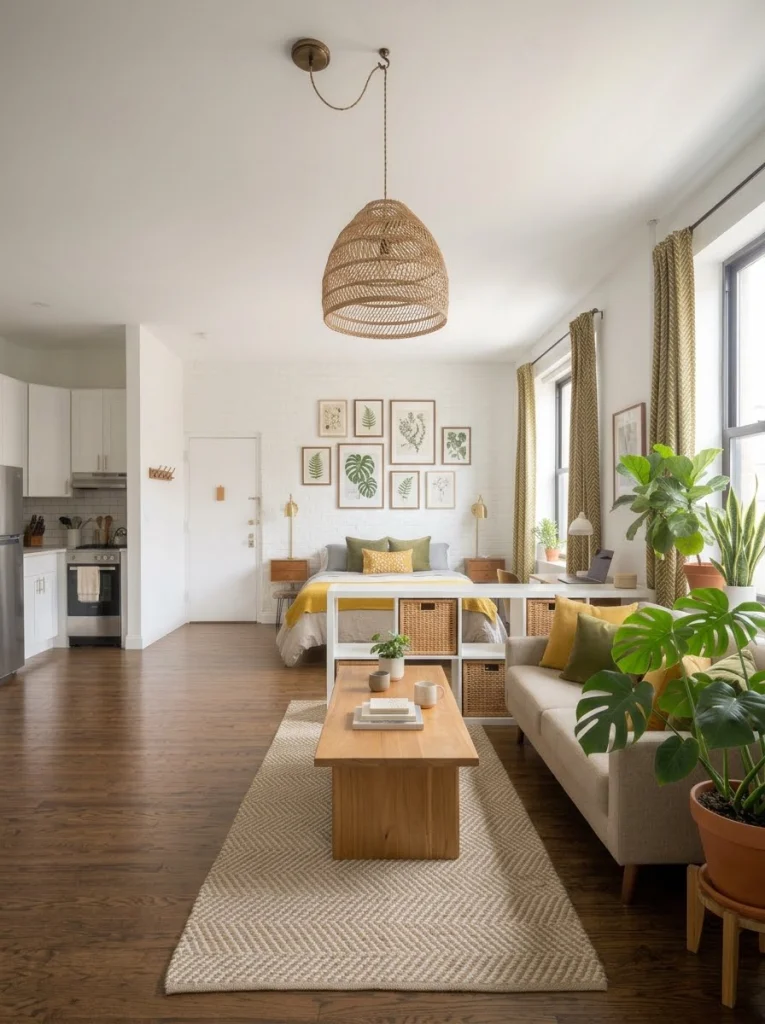
The bed is always visible in an open-plan studio, but a low shelf unit positioned behind the sofa or alongside the bed gives the sleeping zone a boundary without closing off the light. Wicker basket inserts hide storage, and a floating gallery wall of botanical prints above keeps the walls from feeling bare. For more on this exact divider type, see studio apartment open shelf divider ideas.
5. Embrace the “One Chair” Rule
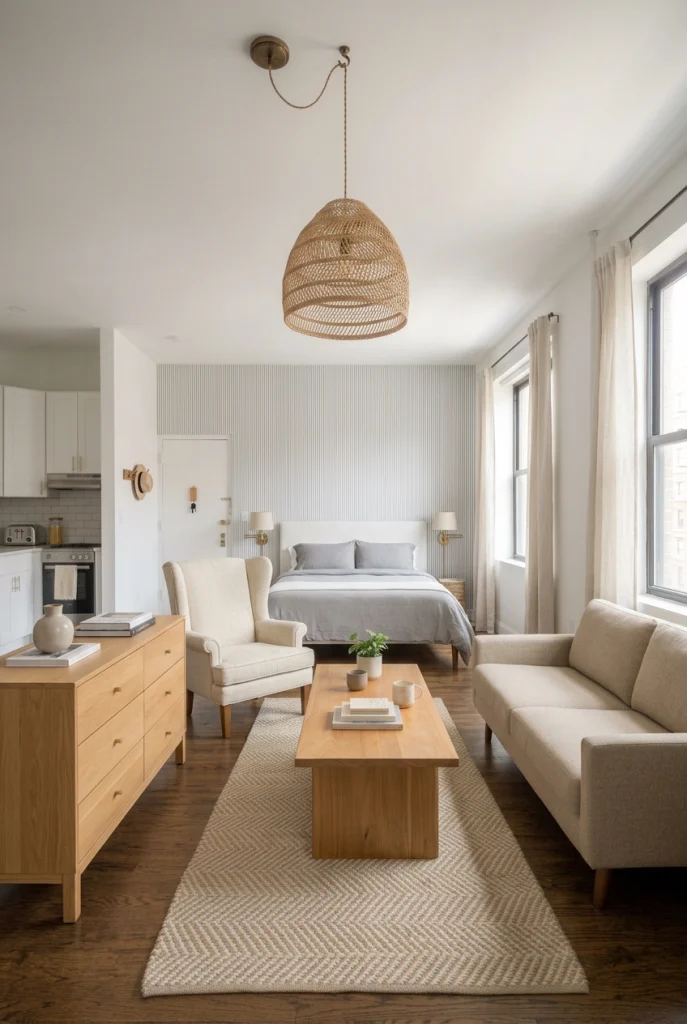
More seating doesn’t mean more comfort in a studio, it means more furniture eating floor space. A single wingback chair beside the bed, one bedside lamp, and a clean dresser read as quietly elegant, and textured striped wallpaper adds visual interest without adding another physical object to the room.
6. Layer Your Lighting to Ditch the Harsh Overhead
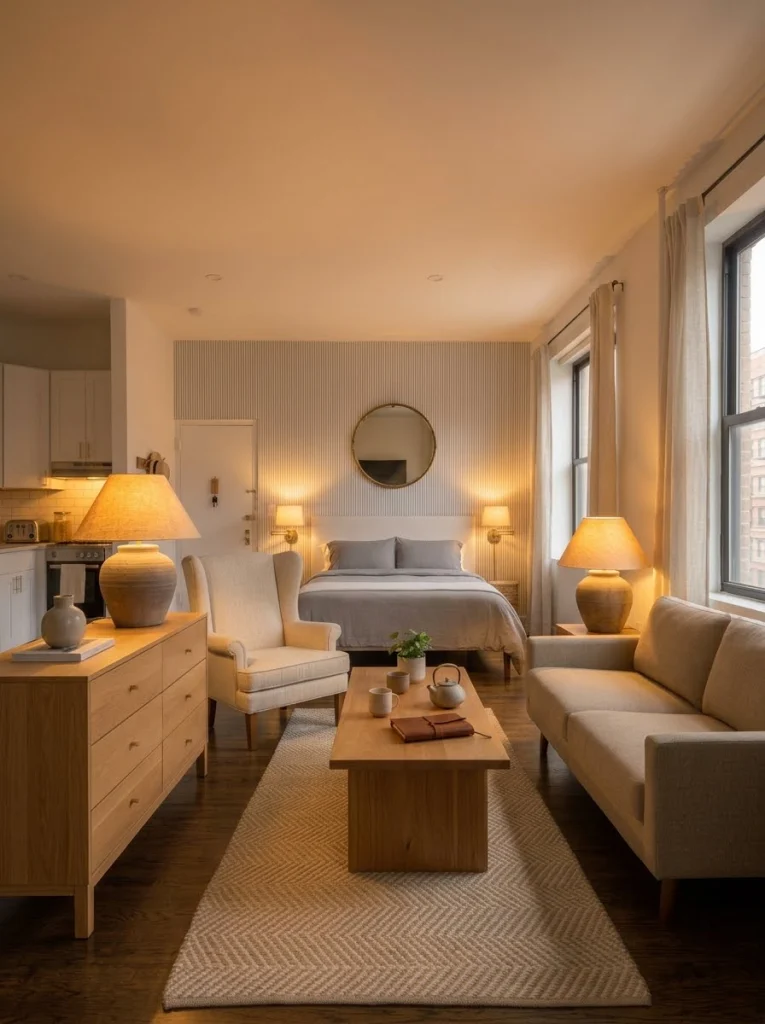
Skipping the overhead light entirely in favor of two warm table lamps, one beside the bed and one flanking the sofa, changes a room’s whole mood. A round mirror bounces light without adding furniture, and warm-toned bulbs make the space feel instantly more relaxed than flat overhead light ever could.
7. Let a Bold Rug Carry All the Pattern
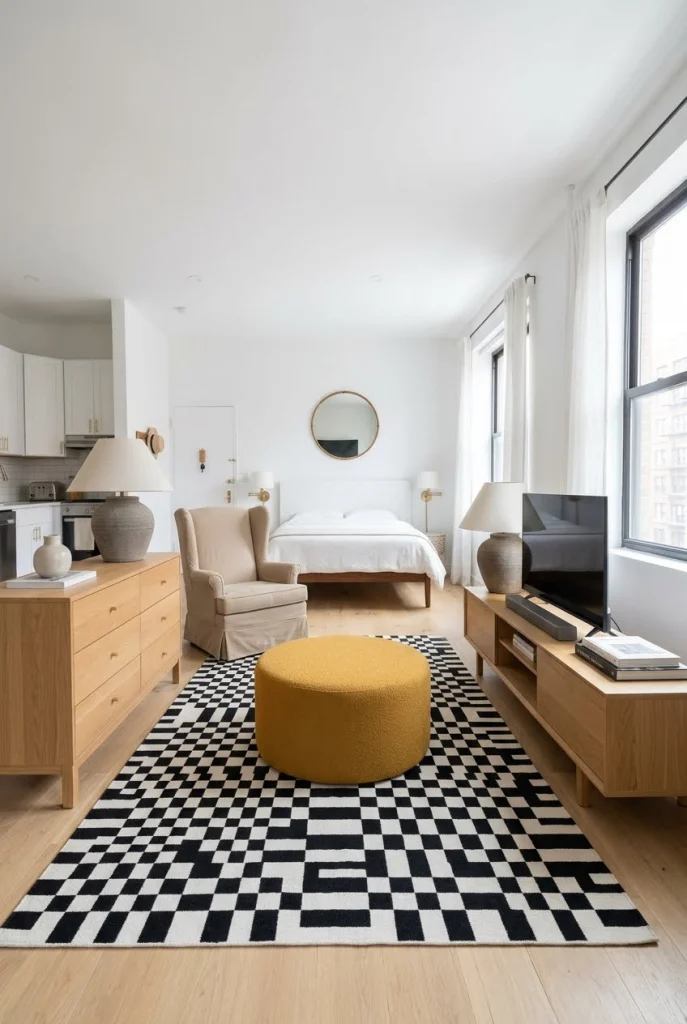
When walls are white and furniture stays neutral, a graphic rug becomes the entire personality of the room. White walls, light oak floors, and a simple low media console stay stripped back on purpose, letting a high-contrast geometric rug do all the visual work while a single mustard ottoman adds one pop of warmth.
Tip: Machine-washable graphic rugs make it easy to swap the pattern later without a big investment.
8. Divide With Open Shelving (Not a Wall)
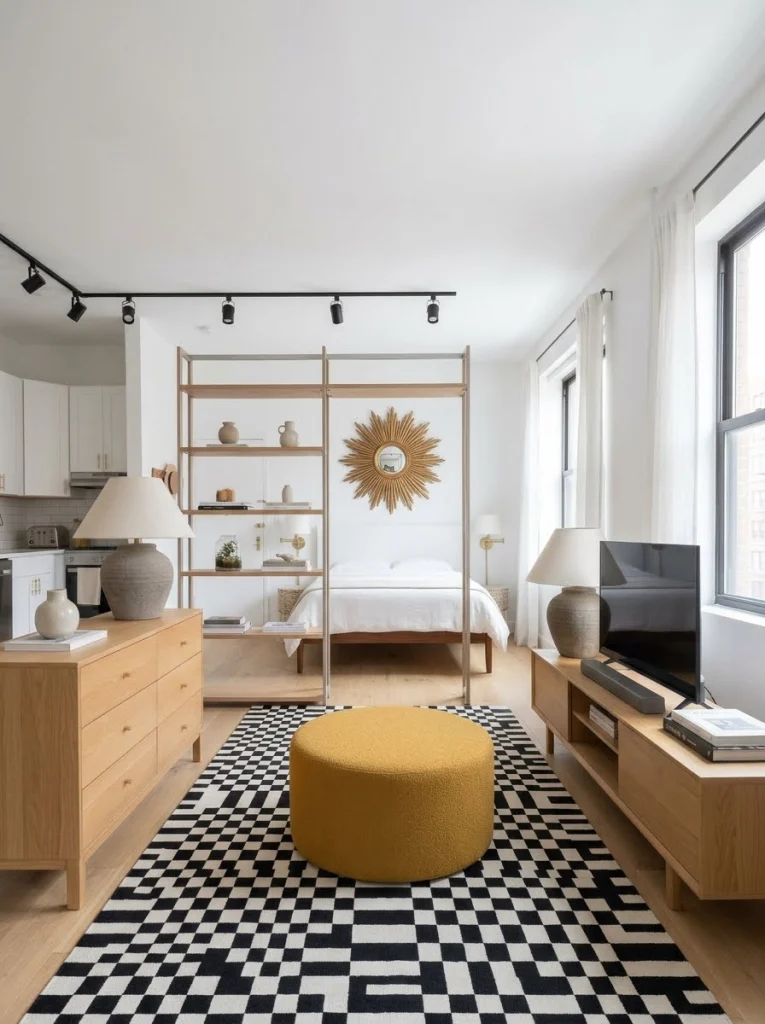
An open shelving unit separating the sleeping area from the living zone delivers visual separation, storage, and a place to display what’s actually loved, all without building a wall. Track lighting overhead keeps the room bright, and a sunburst mirror adds a decorative focal point that earns its wall space.
9. Trailing Plants + a Walnut Credenza = Instant Soul
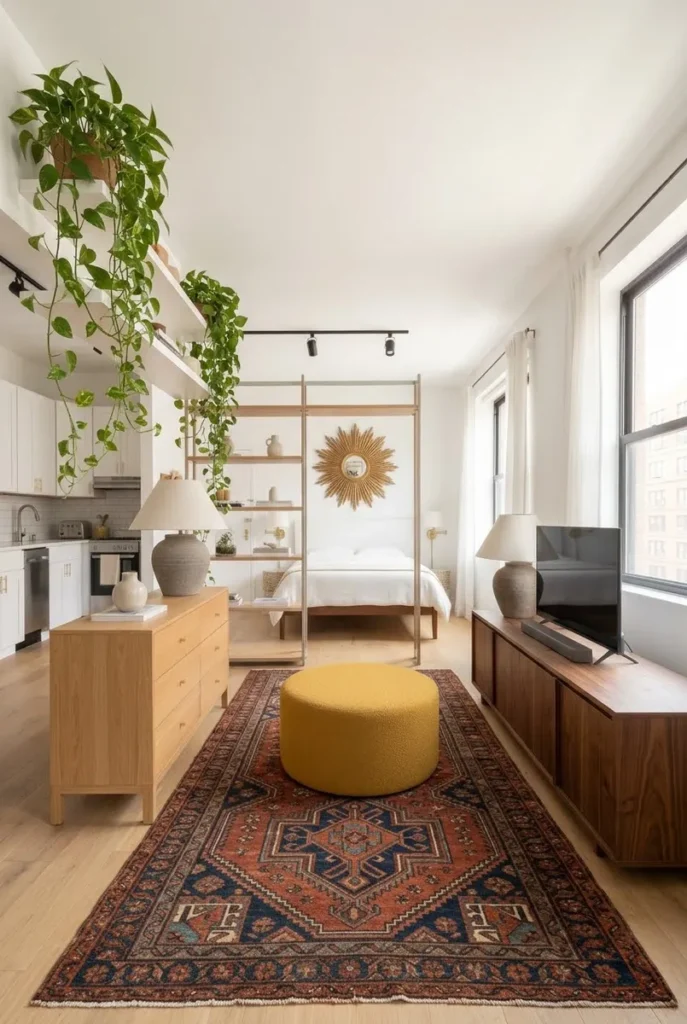
Every element in a well-packed narrow studio earns its place — trailing pothos cascading from high wall shelves add life without taking floor space, while a walnut credenza replaces a bulky TV stand and offers hidden storage below. A vintage kilim-style rug grounds the seating zone, proving clutter-free doesn’t mean empty, just intentional.
10. Paint One Accent Wall to Carve Out Zones
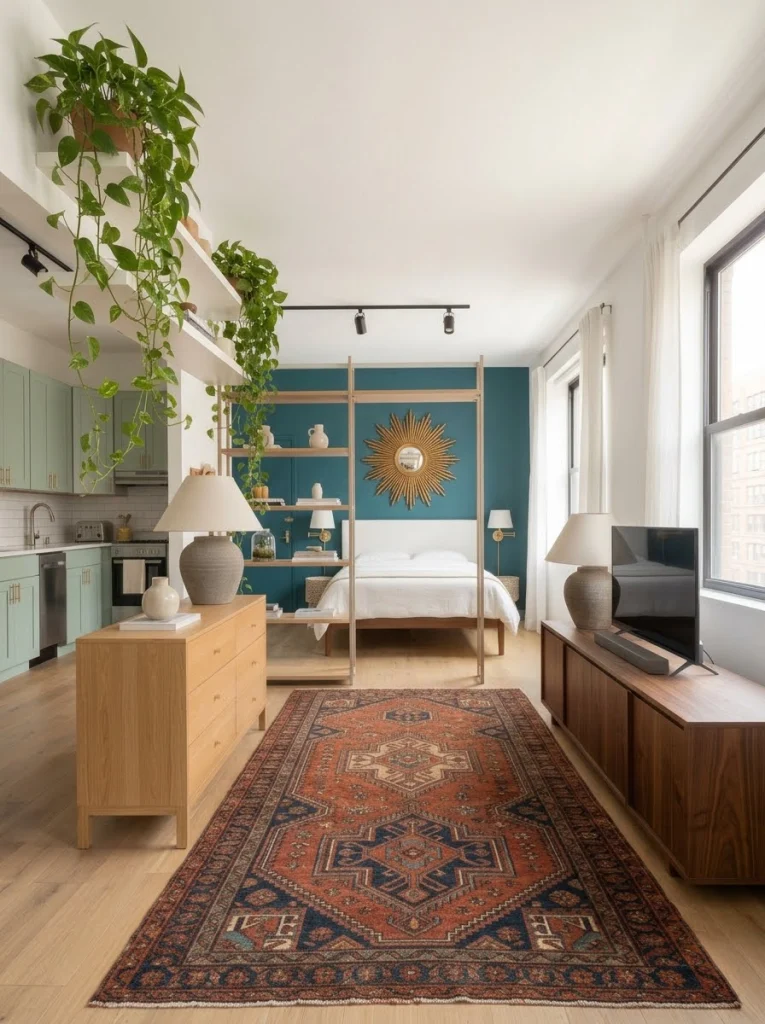
Color defines space on a budget in a way furniture alone can’t. Teal paint on the sleeping zone wall makes the bed feel like its own room without a single partition, while sage green kitchen cabinetry repeats the earthy-cool tone elsewhere, assigning two colors clearly to two zones so the brain reads them as separate spaces.
Tip: A small sample pot of paint usually covers one accent wall easily, keeping the test low-risk before committing.
11. Go Dark and Dramatic — Moody Beats Cluttered
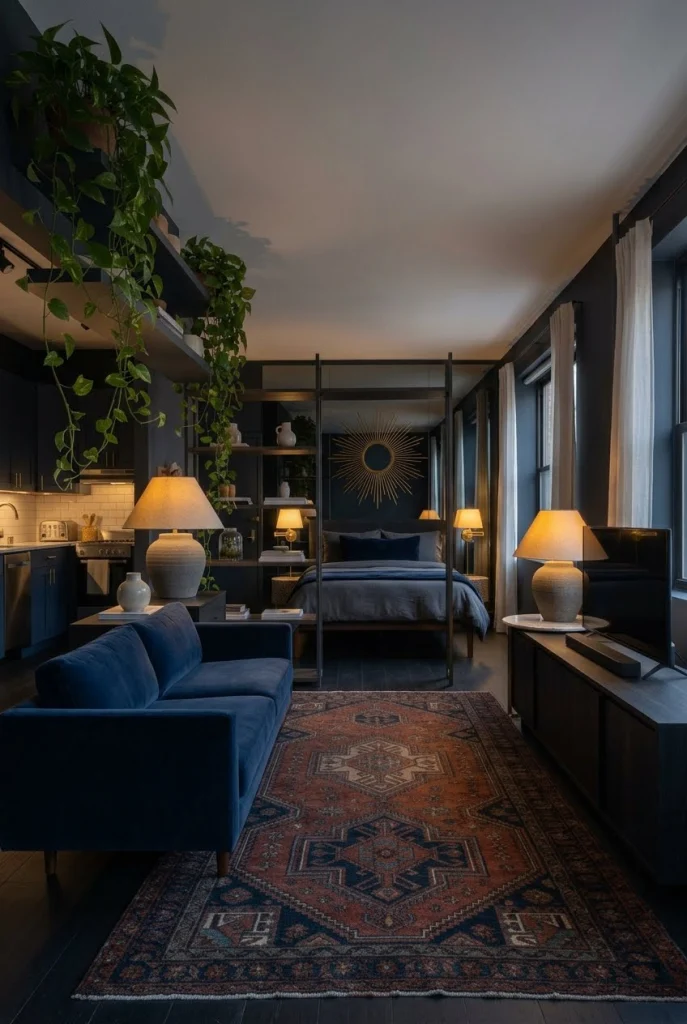
Dark rooms can feel less cluttered than bright ones, since the eye stops bouncing around and settles when walls, floor, and ceiling share a deep charcoal or navy tone. A floor-to-ceiling dark mirror panel sections off the sleeping area while reflecting candlelight beautifully, paired with a navy velvet sofa, a marble side table, and a few gold accents and nothing extra.
12. Floating Shelves Flanking the Bed = Storage Without Footprint
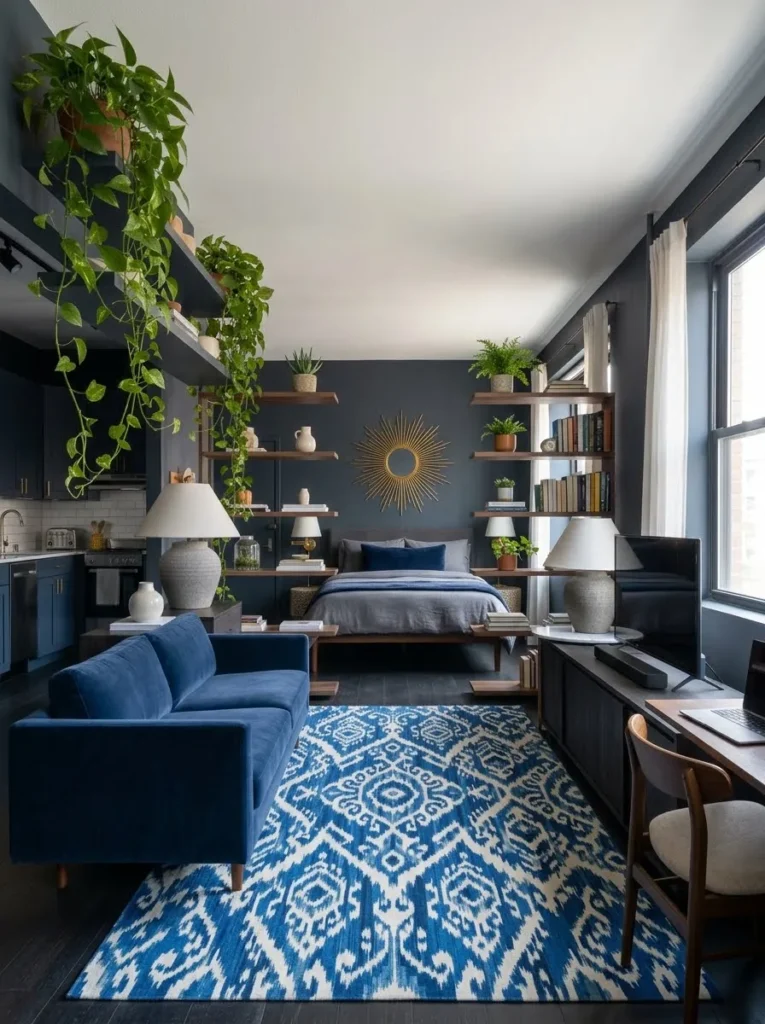
Floor space is precious in a studio, so floating shelves that go up instead of out make sense — flanking both sides of the bed creates a headboard effect that makes the sleeping zone feel finished. Books, plants, and small art fill the shelves, while a blue ikat rug adds personality at floor level and a compact corner desk handles work without dominating the room.
Tip: Weight-rated adhesive strips can hold floating shelves without any drilling, which matters for renters.
13. Ceiling Curtains as a Soft Room Divider
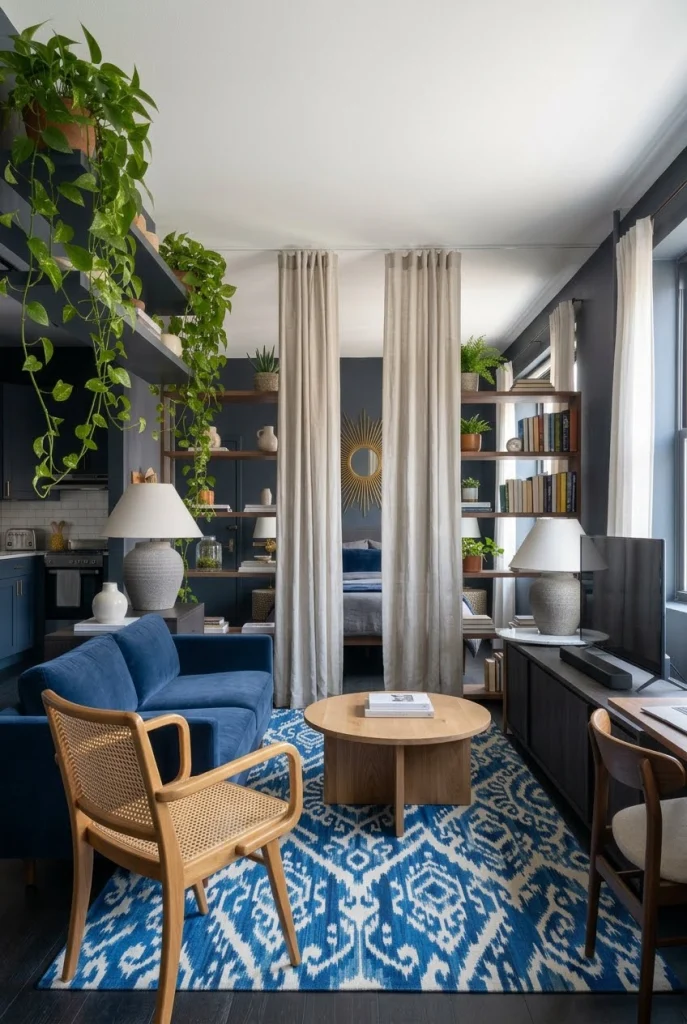
A ceiling-mounted curtain track across the room, with lightweight linen or cotton panels that slide open and closed, is soft, architectural, and renter-friendly with a tension track system. Open, the space flows together freely; closed, the bed is genuinely tucked away, and a cane chair with a round oak coffee table in the living zone feels like a proper sitting room rather than a bedroom with a sofa squeezed in.
14. Use Wallpaper on One Wall to Anchor the Bed
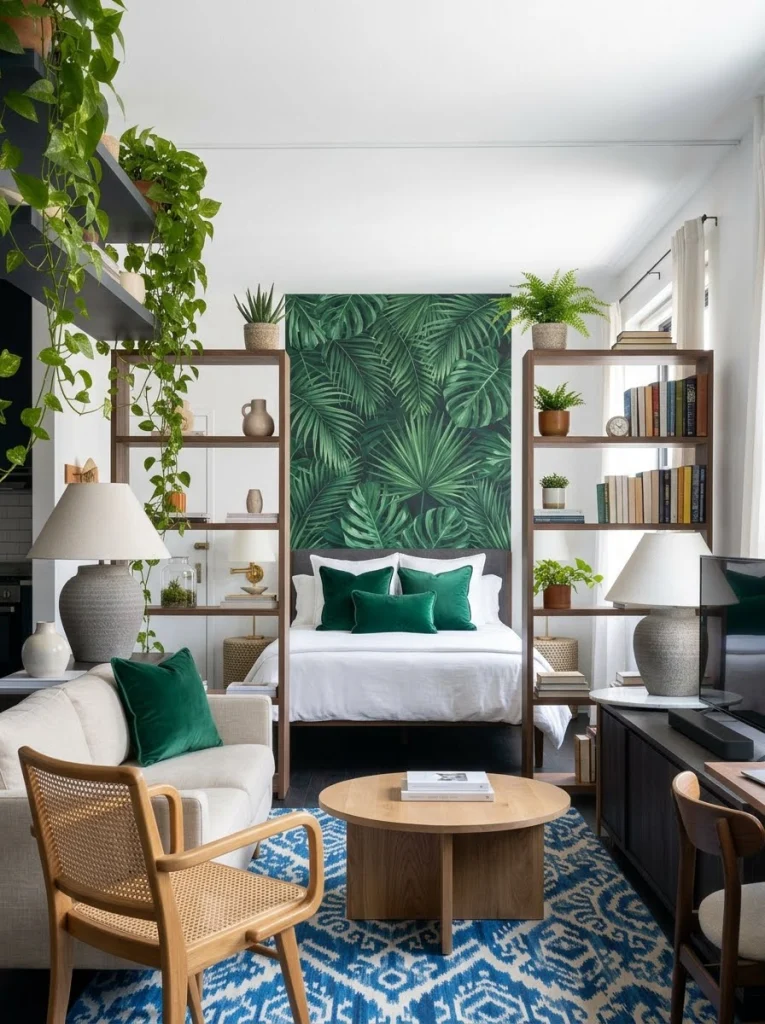
A single wallpapered wall behind the headboard acts like a room within a room. Tropical palm-leaf wallpaper turns a sleeping niche into a destination rather than a mattress pushed against a wall, with green velvet pillows echoing the foliage and white walls everywhere else keeping the look from feeling overwhelming.
Tip: Peel-and-stick wallpaper makes this achievable for renters without any lasting wall damage.
15. Bookshelf Divider = Privacy and Storage in One
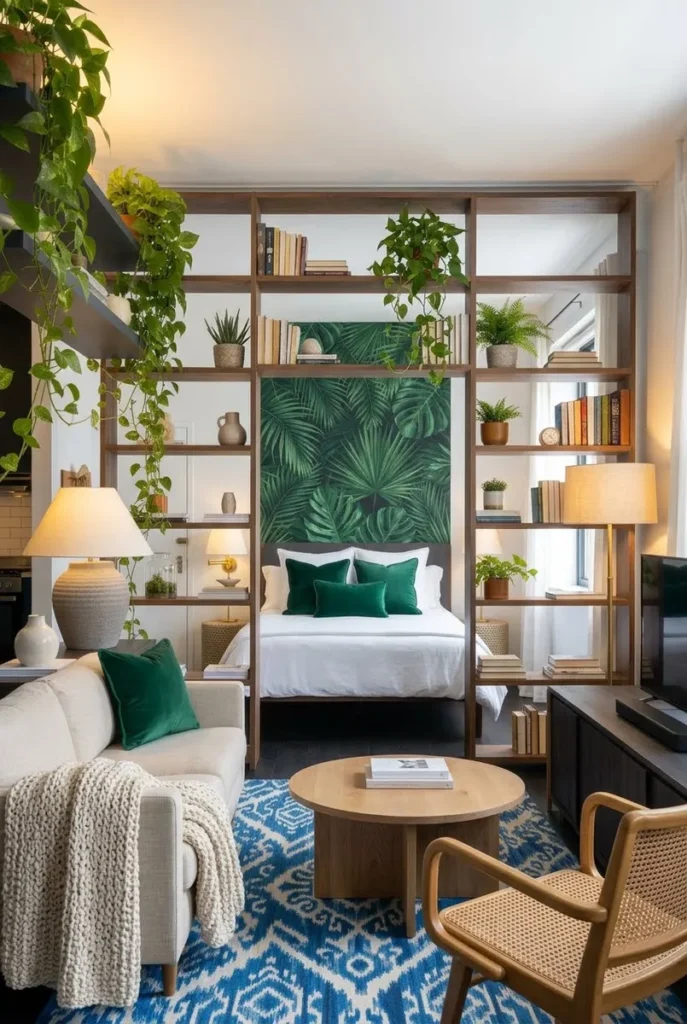
A tall open shelving unit solves three problems at once in a studio: it divides the bedroom zone from the living area, provides serious storage, and gives something genuinely beautiful to style. Books, trailing pothos, small ceramics, and a couple of framed photos fill it, while a corner floor lamp and a textured throw over the sofa finish the room without adding clutter. For more layout ideas built around this exact piece, see studio apartment layout ideas using bookshelf room dividers.
16. A Bold Accent Wall Does More Than a Gallery Wall Ever Will
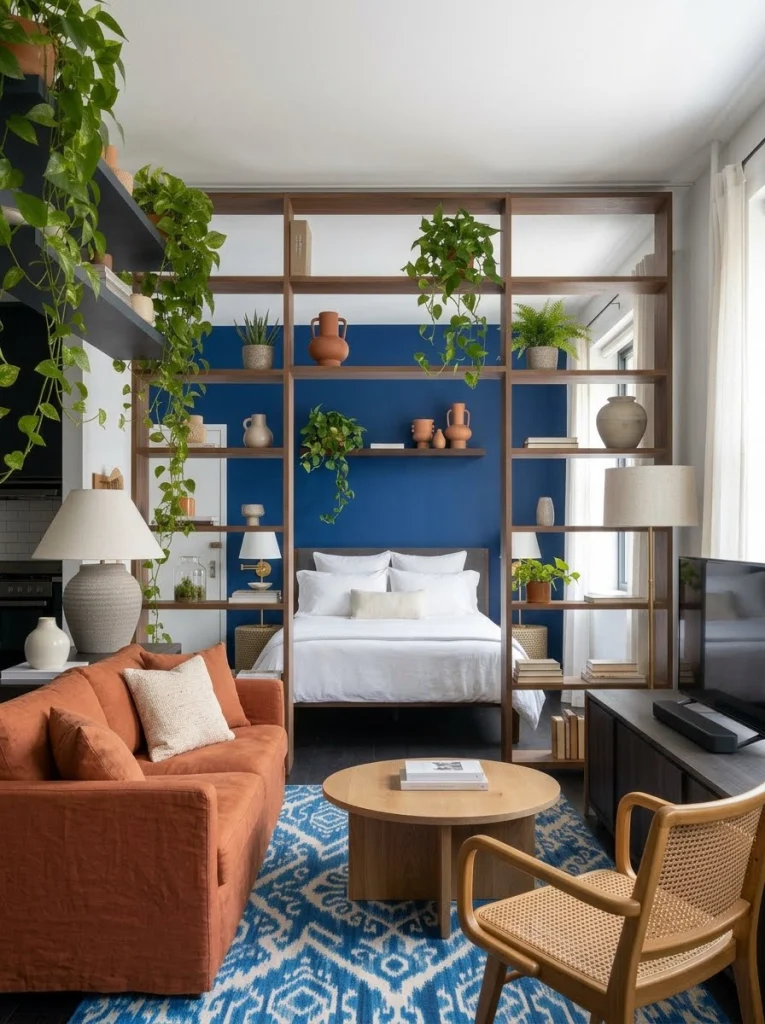
A gallery wall done without a cohesive plan becomes visual noise, while a single bold paint color does the job faster and better. Cobalt blue behind the bed is magnetic without needing dozens of frames to fill the wall, and a terracotta sofa picks up warmth from dark wood floors while a floating ledge holds just plants and one book.
Tip: A small peel-and-stick paint sample makes it easy to test a bold color like cobalt before committing to the full wall.
17. Stack Your Functions — Sofa Back as Bed Boundary
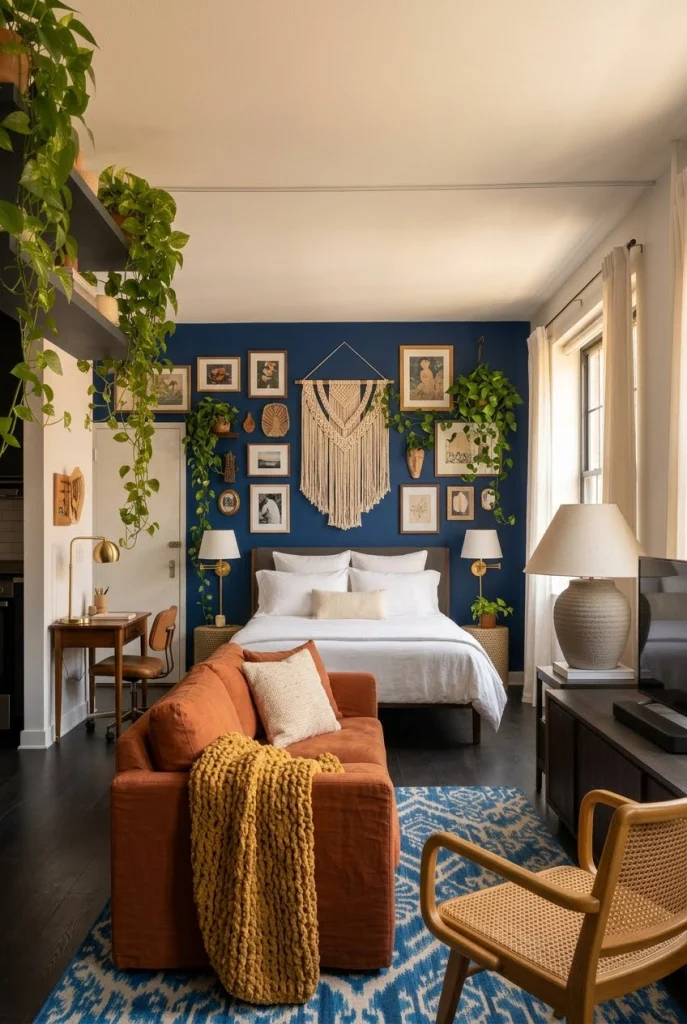
Placing a sofa with its back facing the bed is one of the oldest studio tricks and it still works every time, creating a clear boundary between sleeping and living without any partition. A gallery wall with macramé, trailing pothos, a desk tucked into the corner, and a mustard throw layer onto this boho setup, proving a full, layered room can still avoid feeling cluttered when everything has a place.
Common clutter mistakes in a studio
- Trying to own less instead of structuring better. Most studios don’t need fewer things, they need rugs, shelves, and lighting that give every item a clear place to belong.
- Relying on one overhead light. A single flat ceiling fixture makes a room feel undefined; layered lamps and pendants create actual zones.
- Starting with furniture instead of the rug. A rug placed first usually decides the whole layout; buying furniture before the rug often leads to awkward zoning later.
Quick answers
What’s the first thing to buy when furnishing a studio apartment?
A rug, since it defines where a zone begins and ends before a single piece of furniture gets placed.
How do I stop a studio from feeling cluttered without getting rid of things?
Give every item a clear visual home, like a shelf, a zone, or a rug boundary, instead of trying to own less.
Does a dark color palette make a studio feel smaller?
Not necessarily, a cohesive dark palette can actually feel less chaotic than a bright, busy one, since the eye has less to bounce between.
What’s the easiest renter-friendly way to divide a studio?
A ceiling-mounted curtain track with a tension system needs no drilling and still creates a real, closable boundary.
How many colors should a clutter-free studio stick to?
Two is usually enough, repeated consistently across pillows, throws, and curtains, so the palette reads as intentional rather than busy.
Can floating shelves really replace a dresser or nightstand?
Yes, when flanking the bed they handle books, plants, and small storage while taking up zero floor space.
Is a bold accent wall a good alternative to a gallery wall?
Often, yes, since one committed color does more visual work than a loosely curated gallery wall and avoids looking like visual noise.
Final Thoughts
The structure matters more than the stuff in a clutter-free studio, a defining rug, layered lighting, and a shelf that gives everything a place to live. Start with the rug if nothing else, since it tends to decide how the rest of the room gets zoned.