
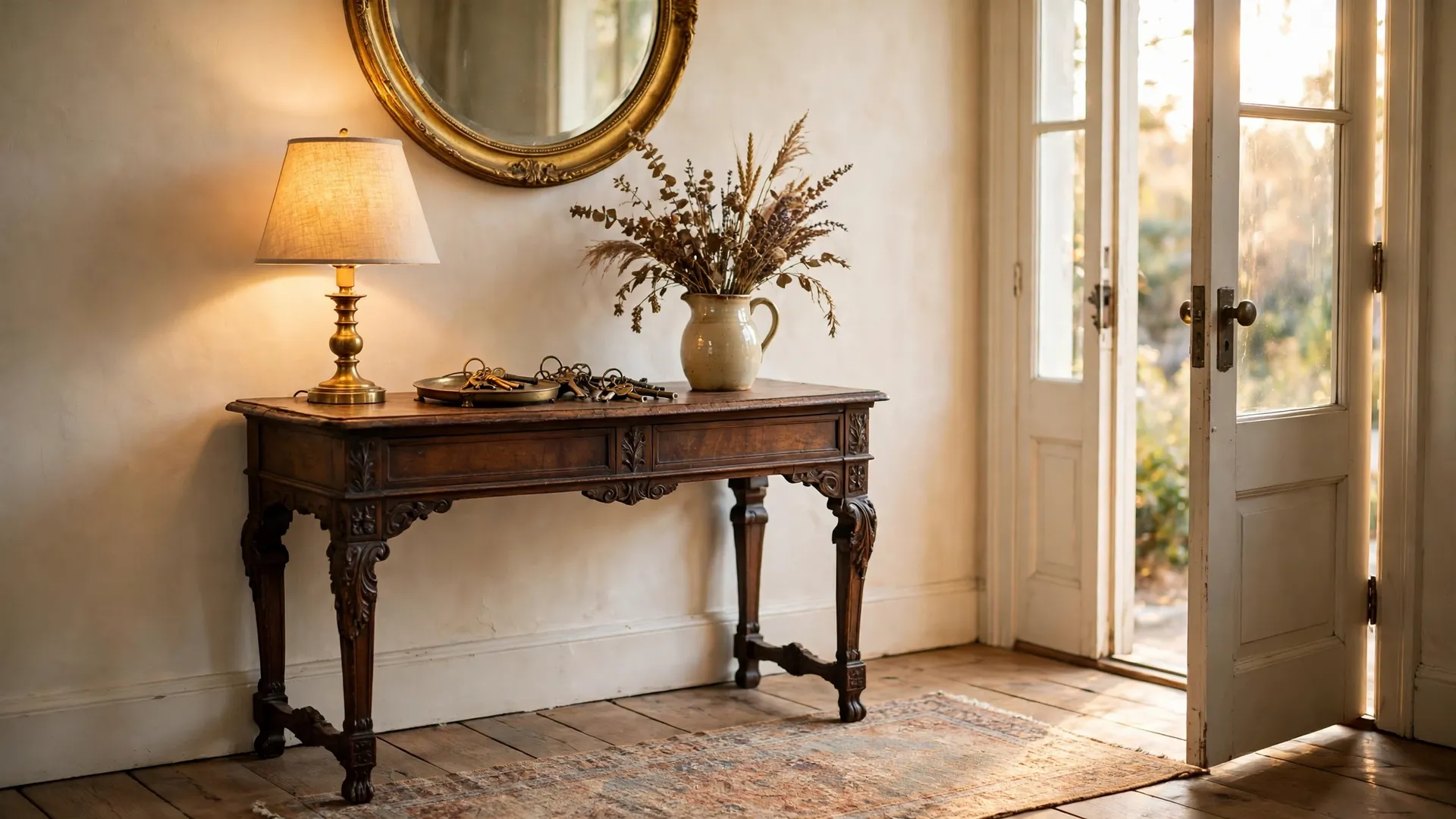
To style a vintage entryway table, start with a narrow table 10 to 14 inches deep, then add a mirror above it, a lamp for warm light, and one small tray for keys. Keep the surface to three objects at three heights so it looks collected, not crowded. Vintage pieces work best when the wood shows age, like a worn finish or carved legs, because that detail makes the corner feel chosen.
The entryway is the first thing you and your guests see, so even three feet of wall can set the tone for the whole home. These 15 ideas use thrifted and antique pieces, simple styling rules, and small-space fixes, with a tip for each.
1. Antique wood console with a gilded mirror

An antique wood console under a gilded mirror is the classic vintage entry. Dark walnut or mahogany with aged legs gives the wall weight, and the gold frame catches light from the door. Keep the table about 30 to 32 inches tall and 10 to 14 inches deep so it fits a normal hall. Add one lamp and one small tray, and leave the rest of the surface open so the wood stays the focus.
Pro Tips: Hang the mirror 4 to 6 inches above the table and make it about two thirds as wide as the table. That ratio looks balanced.
2. Narrow vintage console with a brass lamp

A narrow console with a brass lamp is the easiest way to make an entry feel warm at night. Brass develops a soft patina over time, which fits worn wood and old frames. Place the lamp off center and balance it with a small stack of books or a bowl on the other side. This setup works in halls only 30 inches wide. For more ideas on warm lighting at home, see these studio apartment lighting decor ideas.
Pro Tips: Use a fabric lampshade and a warm 2700K bulb. A dimmable bulb gives bright light in the morning and a soft glow late at night.
3. Thrifted dresser as an entryway table
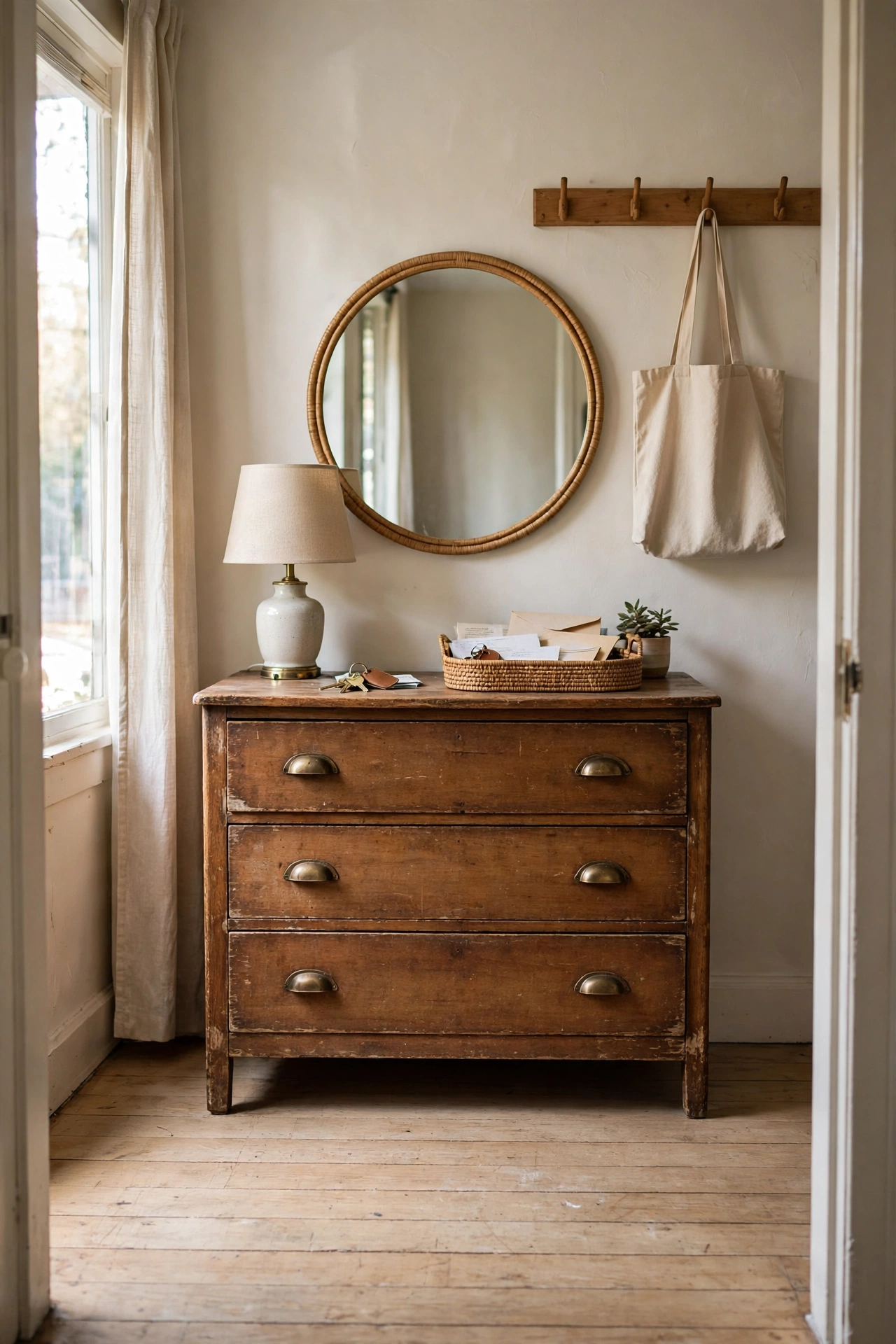
A thrifted dresser makes a good entryway table when you need storage as well as a surface. Drawers hold gloves, keys, and chargers, and the top fits a lamp and a mirror. Look for solid wood pieces with original pulls, since they cost less than new furniture and last longer. Wipe the top, replace damaged knobs, and leave the original finish if it looks even. If you are building a space from nothing, this guide on how to furnish a studio apartment from scratch helps you plan the budget.
Pro Tips: Measure the depth before you buy. A dresser deeper than 16 inches blocks the walkway in most entryways, so look for a much narrower piece.
4. Vintage trunk or chest as a low table
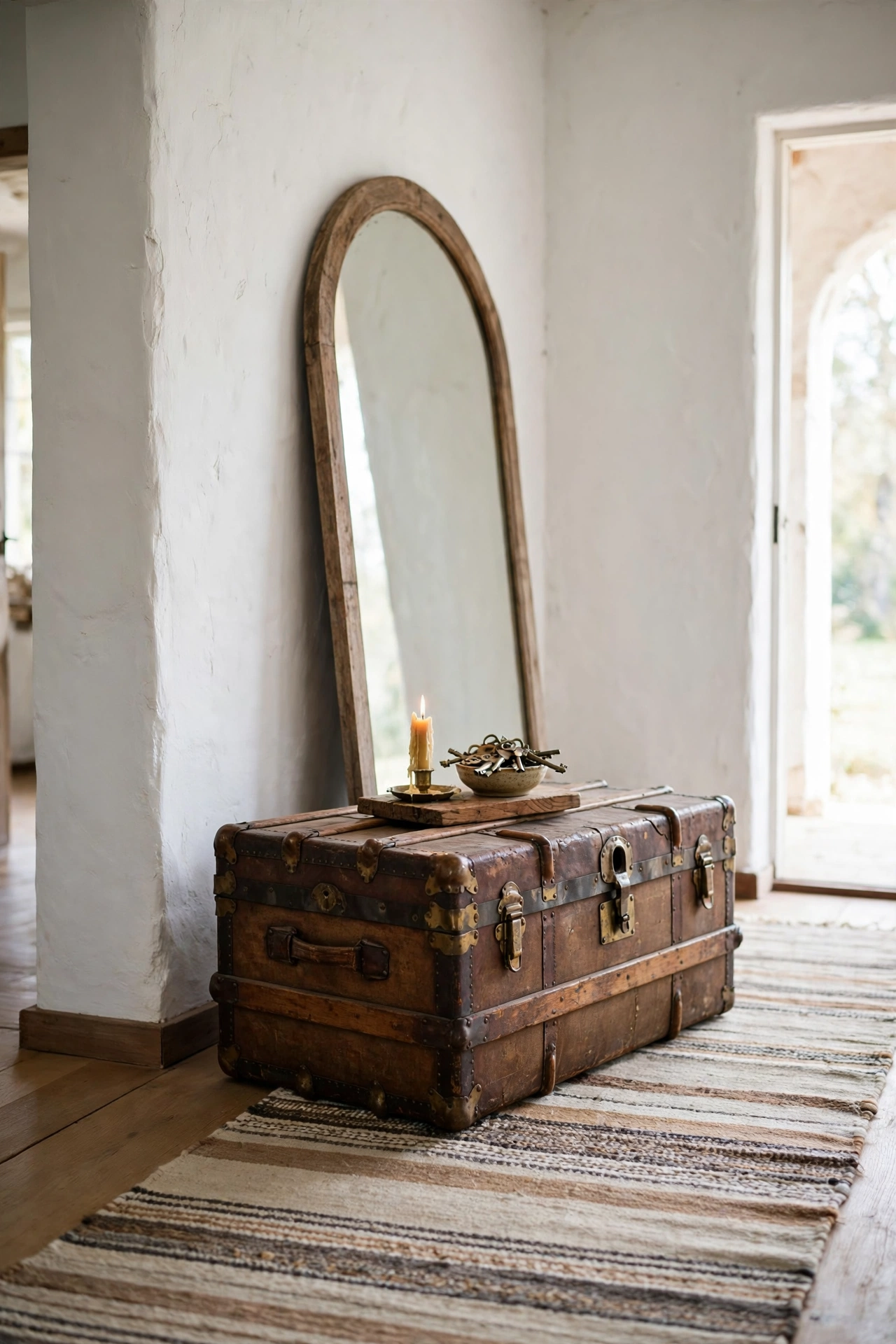
A vintage trunk works as a low entry table and hides storage inside. Leather and wood trunks with metal corners bring age and texture without much effort. Set a tray on top for keys, and a small lamp or candle at one end. A trunk fits best in wide entries, where its low height does not block a mirror hung above it. Choose one with sturdy hinges so it opens and closes smoothly.
Pro Tips: Put felt pads under the trunk and keep the lid clear. That protects the floor and lets you open it for winter scarves and gloves.
5. Rustic farmhouse table with a basket underneath
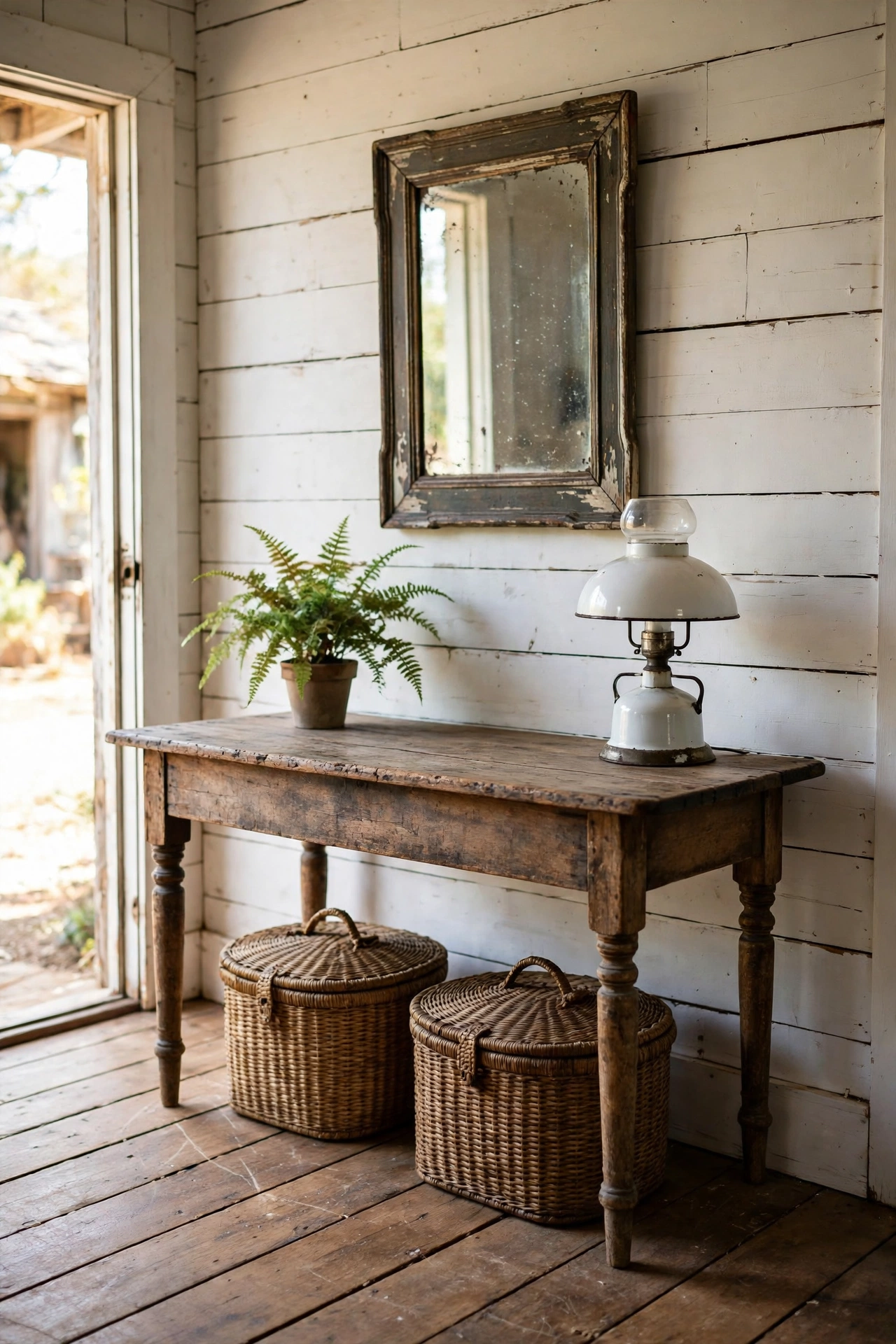
A worn farmhouse table has a relaxed, lived-in look that suits open entries and mudrooms. Thick plank tops and turned legs hold up to bags and shoes. Slide two woven baskets underneath for shoes and mail, and keep the top for a lamp and a small plant. Leave the wood scuffs as they are, since they add to the vintage look and hide new marks.
Pro Tips: Slide two baskets under the table for shoes and mail. Choose woven baskets with lids so the clutter stays out of sight from the door.
6. French provincial console with curved legs
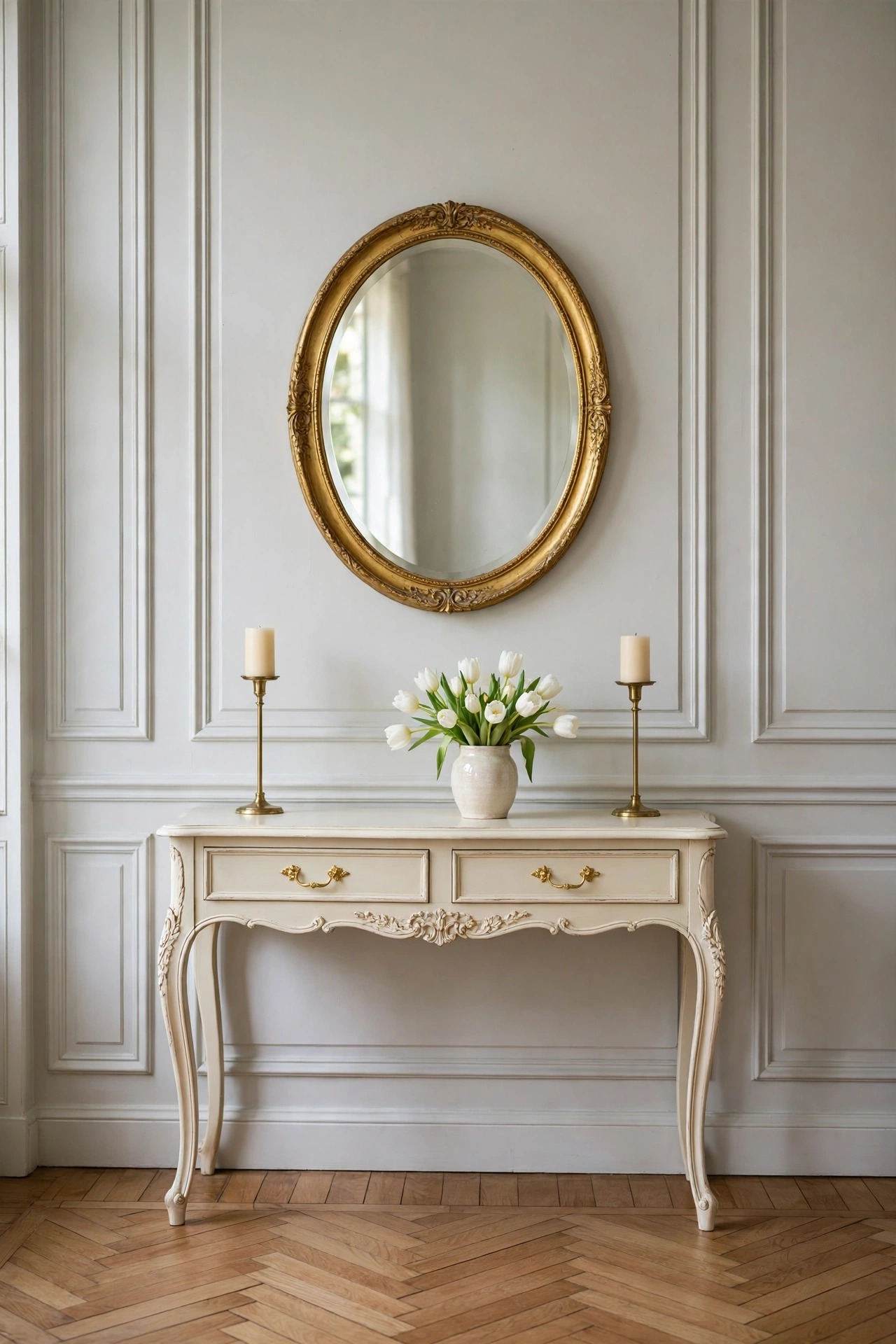
A French provincial console has curved legs, carved details, and a soft painted finish, so it looks elegant even in a small hall. Cream, gray, and pale blue finishes work best with white walls. Pair it with an oval mirror and a pair of small candlesticks for a balanced look. Keep other furniture simple, so the carved table stays the main detail. To pair it with other woods in the room, see this guide on how to mix wood tones in one room.
Pro Tips: Match the mirror frame finish to the table’s hardware. Gold with gold looks planned, while mixed metals can look random in a small tight entry.
7. Mid-century teak sideboard

A mid-century teak sideboard has clean lines and long legs, which keep a small entry from looking heavy. The warm teak grain adds color without paint or pattern. Use the sliding doors for storing hats and bags, and style the top with a lamp and a bowl. Mid-century pieces work best in entries with white or pale walls, where the wood stands out. Check the legs for wobble before you buy.
Pro Tips: Keep the top to three pieces: a lamp, a bowl, and one sculptural object. Teak has strong grain, so simple objects work much better here.
8. Wrought-iron table with a marble top

A wrought-iron table with a marble top gives an entry weight and a cool, old-world finish. The thin iron frame takes little visual space, and the stone top is easy to wipe. Place a ceramic bowl and a small plant on top for contrast with the hard materials. This pairing suits entries with stone floors or plain white walls. Use felt pads under any objects, since marble scratches.
Pro Tips: Always wipe marble with a soft damp cloth and dry it right away. Avoid lemon or vinegar cleaners, since acid dulls the surface over time.
9. Painted vintage table in sage or cream
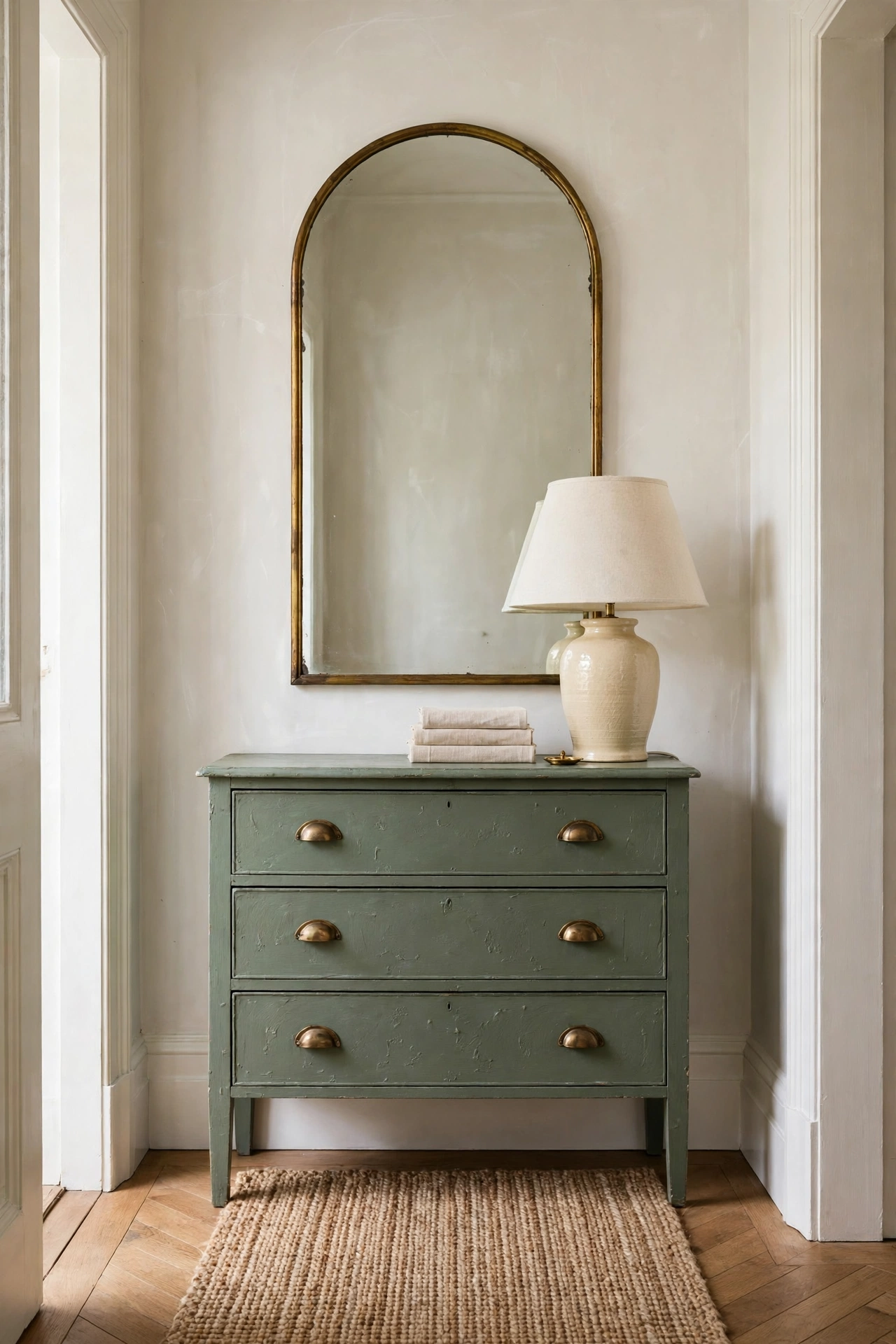
Painting a vintage table in sage, cream, or muted blue lets an old piece fit a modern entry. A matte or chalk finish keeps the look soft, and the shape still reads as old. Pick a color that matches your wall trim or front door, so the entry feels planned. Leave the hardware in brass or iron for contrast. This works best on tables with simple lines, as heavy carving can look busy when painted.
Pro Tips: Sand the old finish lightly and use a primer made for glossy surfaces. Skipping primer on a varnished table is a common reason paint peels.
10. Half-moon table for a tiny hall

A half-moon table, also called a demilune, fits a very narrow hall because the curved edge keeps corners out of the walkway. Choose a table about 8 to 10 inches deep with slim legs and a vintage finish. Hang a round mirror above it and add a small lamp. This setup suits apartments where the entry is only a few feet wide. For more layout help, see these small apartment layout rules.
Pro Tips: Pick a table 8 to 10 inches deep for a hall under 3 feet wide. That leaves enough room to walk past without turning sideways.
11. Surface styling with three objects at three heights

A vintage table looks best with a simple styling rule: use three objects at three different heights. A lamp stands tall, a stack of books sits in the middle, and a small bowl sits low. Leave empty space between them so each item stands out. Use objects with age, such as a brass bowl, a leather book, or a ceramic pitcher. Change one item each season, and the table stays fresh without a full restyle.
Pro Tips: Stack two or three books, place a small bowl on top, and leave open space on each side. Empty space makes the objects look chosen.
12. Gallery wall above a vintage table

A gallery wall above a vintage table frames the whole entry and makes a short wall feel taller. Mix thin wood frames, a gold frame, and one oval frame in similar colors. Keep the lowest frame 6 to 8 inches above the table so the group reads as one unit. Use black and white prints or old botanical drawings for a vintage look. Keep the middle of the arrangement at eye level.
Pro Tips: Lay the frames on the floor first to plan the layout. Keep about 2 inches between them so the wall reads as one clean group.
13. Bench tucked under the console
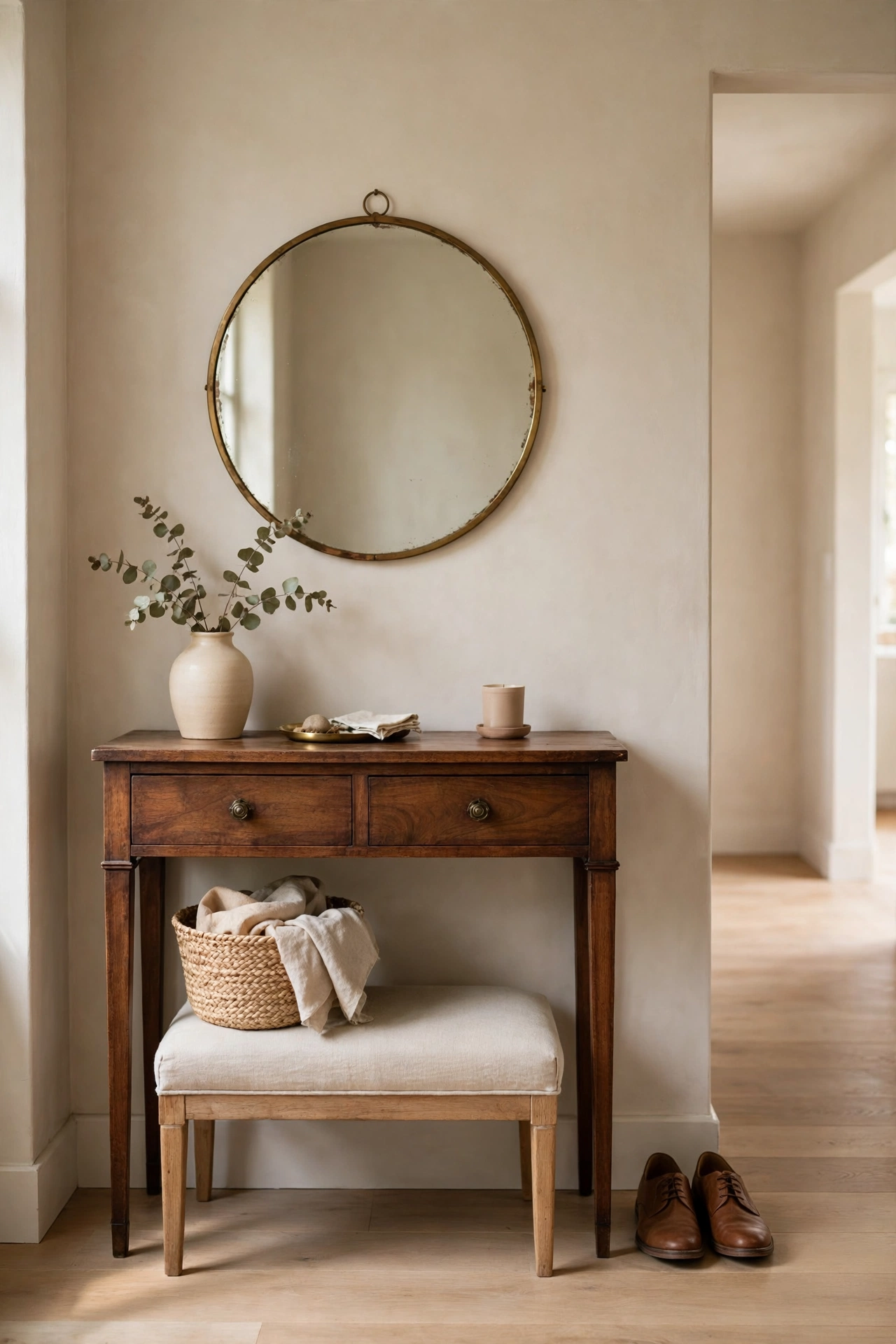
A small bench tucked under a vintage console gives you a seat for shoes without adding floor space. Choose an upholstered or wood bench in a tone slightly different from the table, so the two pieces do not blend into one. Pull it out when you need to sit, and push it back to keep the walkway clear. Add a woven basket on the bench for scarves.
Pro Tips: Choose a bench low enough to slide fully under the table. Leave a small gap above it so the seat does not scratch the apron.
14. Dried flowers and a vase
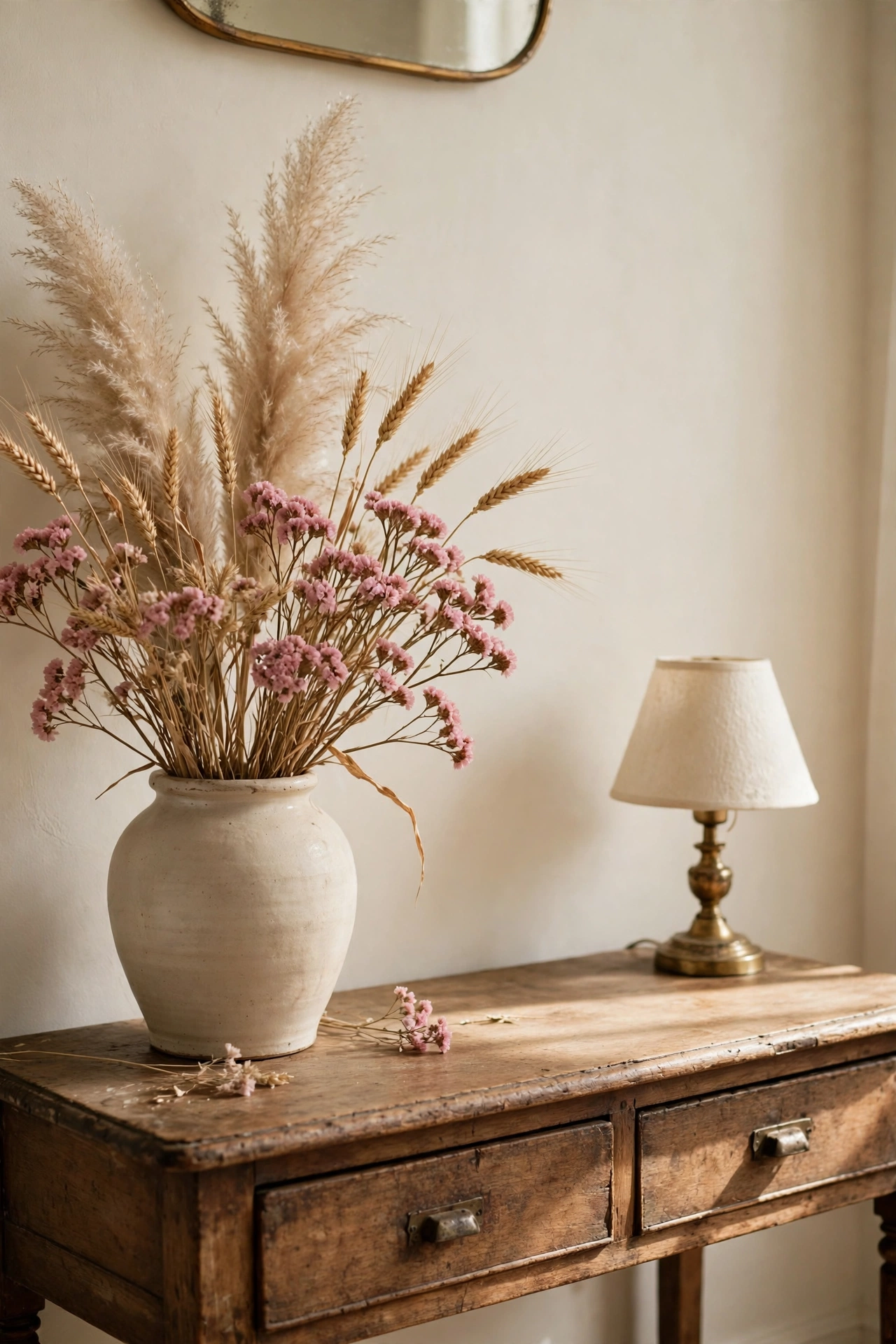
Dried flowers in a ceramic vase give a vintage table a soft, faded look that suits old wood. Pampas grass, lavender, and wheat stalks last for months and need no water. Use a vase with a narrow neck so the stems stand up. Place it at one end of the table, and add a lamp at the other for balance. Choose muted colors like cream, rust, and dusty pink.
Pro Tips: Use dried stems in a vase with a narrow neck, and change them each season. Dry flowers last for months, so this costs very little.
15. Holiday-ready vintage entry table

A vintage entry table works well for holidays because wood and brass look good with greenery and warm lights. Lay a garland along the back edge, add a few candles in brass holders, and tuck in pinecones or dried orange slices. Keep the same lamp and mirror, so the table still looks like itself. For ideas outside the door, see these Christmas porch ideas.
Pro Tips: Choose warm white lights on a thin wire and plug them into a timer. The timer turns them on at dusk without touching a switch.
FAQs
What goes on a vintage entryway table?
Use a lamp, a tray for keys, a small bowl, and a mirror or art above. Keep three objects at different heights and leave open space between them.
How deep should an entryway table be?
Most entries fit a table 10 to 14 inches deep. For halls under 3 feet wide, choose 8 to 10 inches so you can walk past easily.
How tall should an entryway table be?
Between 30 and 34 inches works for most people, since it sits at a comfortable height for placing keys and bags.
What size mirror goes above an entryway table?
Choose a mirror about two thirds the width of the table and hang it 4 to 6 inches above the surface.
Where can I find a vintage entryway table cheaply?
Check thrift stores, estate sales, and local marketplace listings. Look for solid wood, and test the legs and drawers before buying.
Final Thoughts
A vintage entryway table works when the piece has real age and the styling stays simple. Start with the table size that fits your hall, then add a mirror, a lamp, and one tray, and leave space around each item. Choose wood, brass, or painted finishes that match the rest of the home, and do not buy everything at once.
Thrift stores and estate sales often have better pieces than new stores. Pick one idea from this list, set it up this weekend, and change one object at a time until the corner feels right.

Hi, I'm Wasif — welcome to The Homes Decors. I write about home decor: the ideas, choices, and small details that make a space feel considered rather than accidental. If you've ever wondered why a room works, not just what's in it, you're in the right place.