
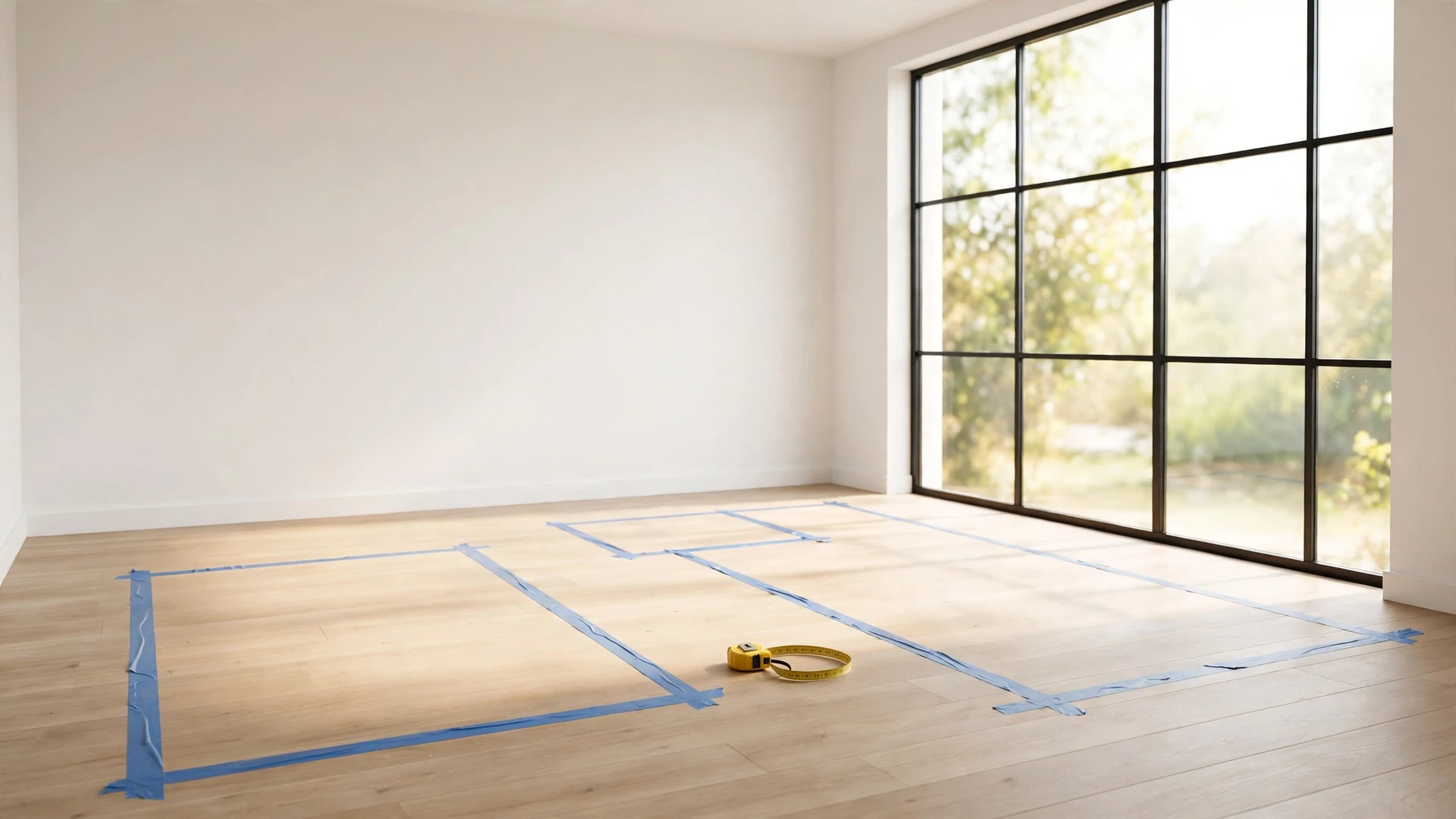
An empty studio is the hardest room to furnish, because every piece has to earn its floor space and there is no spare room to hide a mistake in. The order matters more than the budget: buy in the right sequence and the room comes together piece by piece, but buy out of order and you end up with a sofa blocking the door. This guide walks through the whole process, step by step.
Measure First: The 5 Measurements That Decide Everything
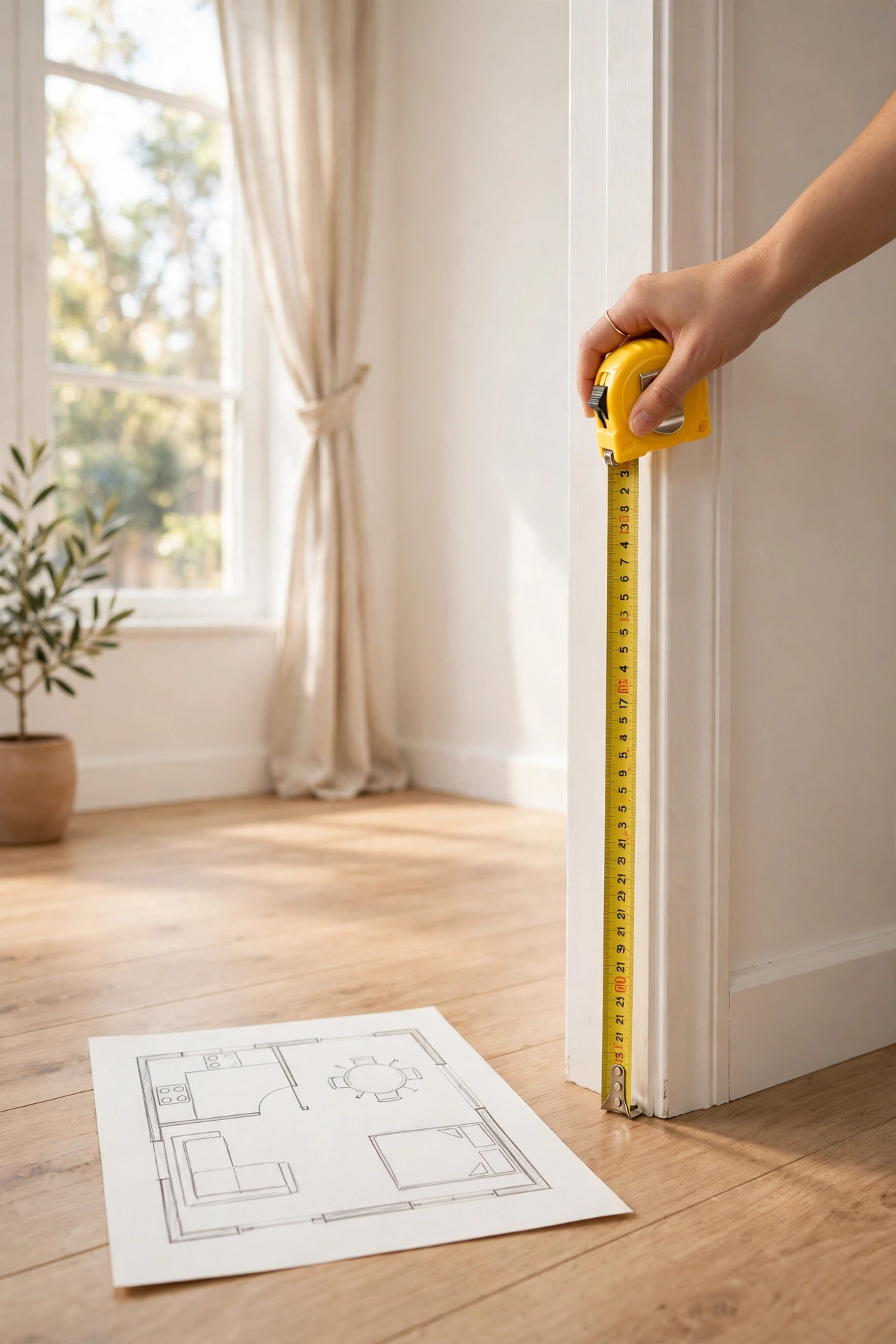
Furnishing starts with a tape measure, not a shopping list. Five measurements decide almost every choice that follows, and getting them wrong is the most expensive mistake in this guide.
First, measure the room itself: the length and width of each wall, floor to ceiling. Second, measure the door, the hallway, and the lift or stairwell. A sofa that fits the room perfectly is useless if it cannot get through a 70 cm door, and this is the measurement people forget most often.
Third, measure the ceiling height. It decides whether tall storage is an option and whether a floor lamp or a hanging light will fit without crowding the room. Fourth, note the window positions and the sill height. Furniture in front of a window blocks light, and a bed or desk that sits higher than the sill wastes the best light in the room.
Fifth, map the outlets. Walk the room and mark where each socket sits, because the bed, the desk, and the television all need power where they stand. A room with one outlet on the wrong wall forces extension cords across the floor, which is ugly and unsafe. Once you have the five measurements, sketch a simple floor plan on paper and tape out the footprint of the bed and sofa on the floor.
The Order to Buy In (Bed, Sofa, Storage, Table, Lighting, Decor)
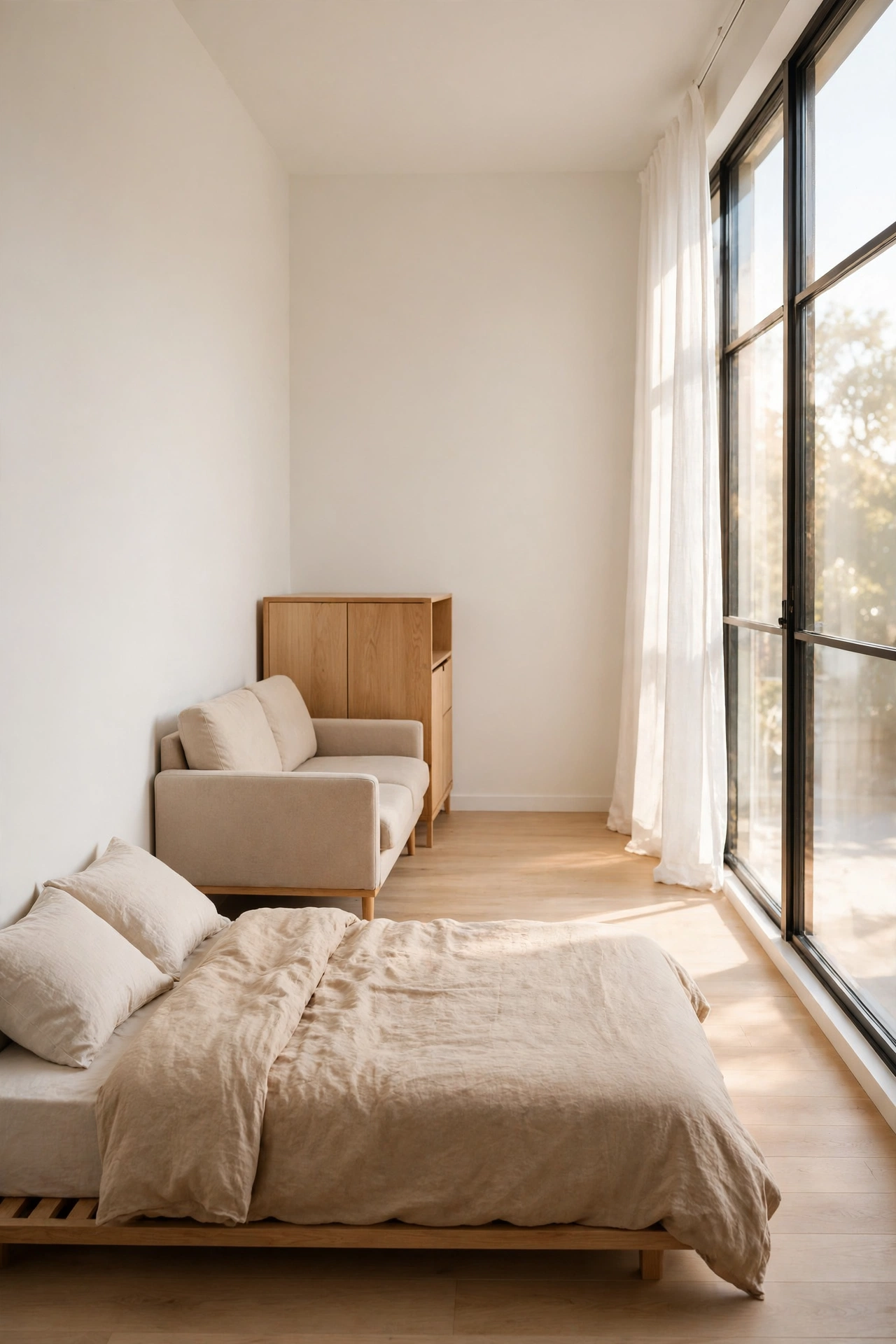
Buy in this order and the room builds itself.
Start with the bed, because you sleep there every night and it is the biggest piece in the room. Its size and position decide where everything else can go. Next, the sofa, which is the second-biggest piece and sets the shape of the living zone. These two pieces together take up most of the floor, so choose them before anything else.
Third comes storage. Before you buy a single decoration, make sure clutter has somewhere to go: a wardrobe, a chest of drawers, or a storage unit. A room with no storage fills up within a week, and no amount of styling fixes that. Fourth, the table — dining, work, or both, depending on how you live. Fifth, lighting, because lamps only make sense once the furniture is placed and you can see which corners are dark. Decor comes last: the rug, the art, the plants. These make the room feel finished, but they cannot fix a layout that does not work. What Furniture Works Best in a Studio Apartment
One Budget, Three Ways to Spend It (Tight / Mid / Comfortable)
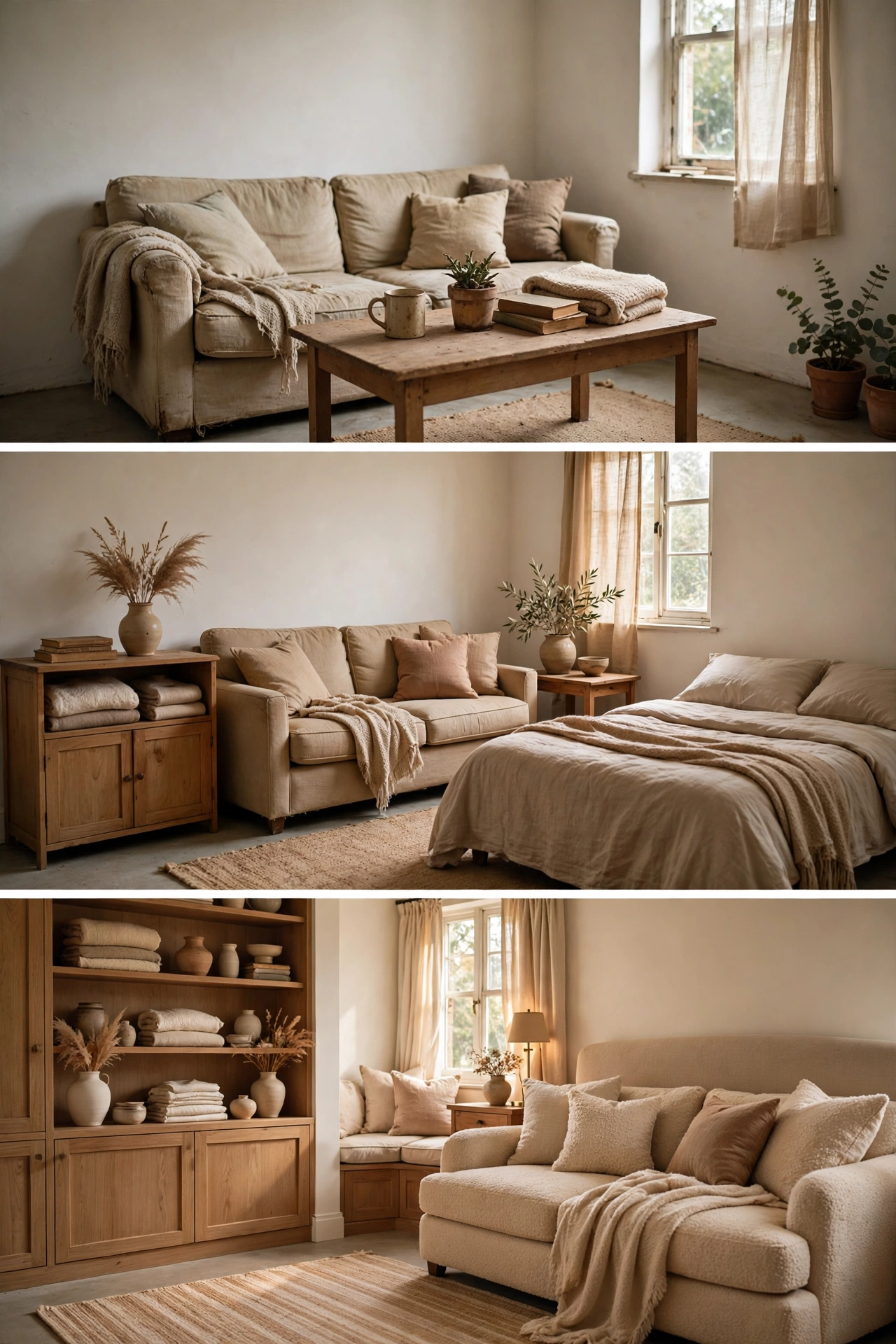
There is no single right budget for a studio, but there is a right way to split whatever you have. The rule is simple: never split the money evenly. The bed and the sofa should take about half the budget between them, storage and the table take the next share, and lighting and decor take the smallest share.
On a tight budget, buy the mattress new and almost everything else second-hand. A second-hand bed frame, a second-hand table, and thrifted storage do the job well, and the money you save goes into a good mattress and one decent sofa — the two things your body touches every day.
On a mid-range budget, buy the bed and mattress new, choose a mid-range sofa, add one proper storage unit, and a simple solid table. Spend a little on lighting at this level — two lamps and a desk light — because layered light is what makes a mid-range room look like it cost more.
On a comfortable budget, invest in quality where it lasts: a good bed, a well-made sofa, and storage that looks built in. Spend on a solid table and full lighting layers, and leave a small share for decor at the end. The mistake at this level is spending the extra money on decoration before the big pieces are right.
Choosing a Bed That Does Not Eat the Room
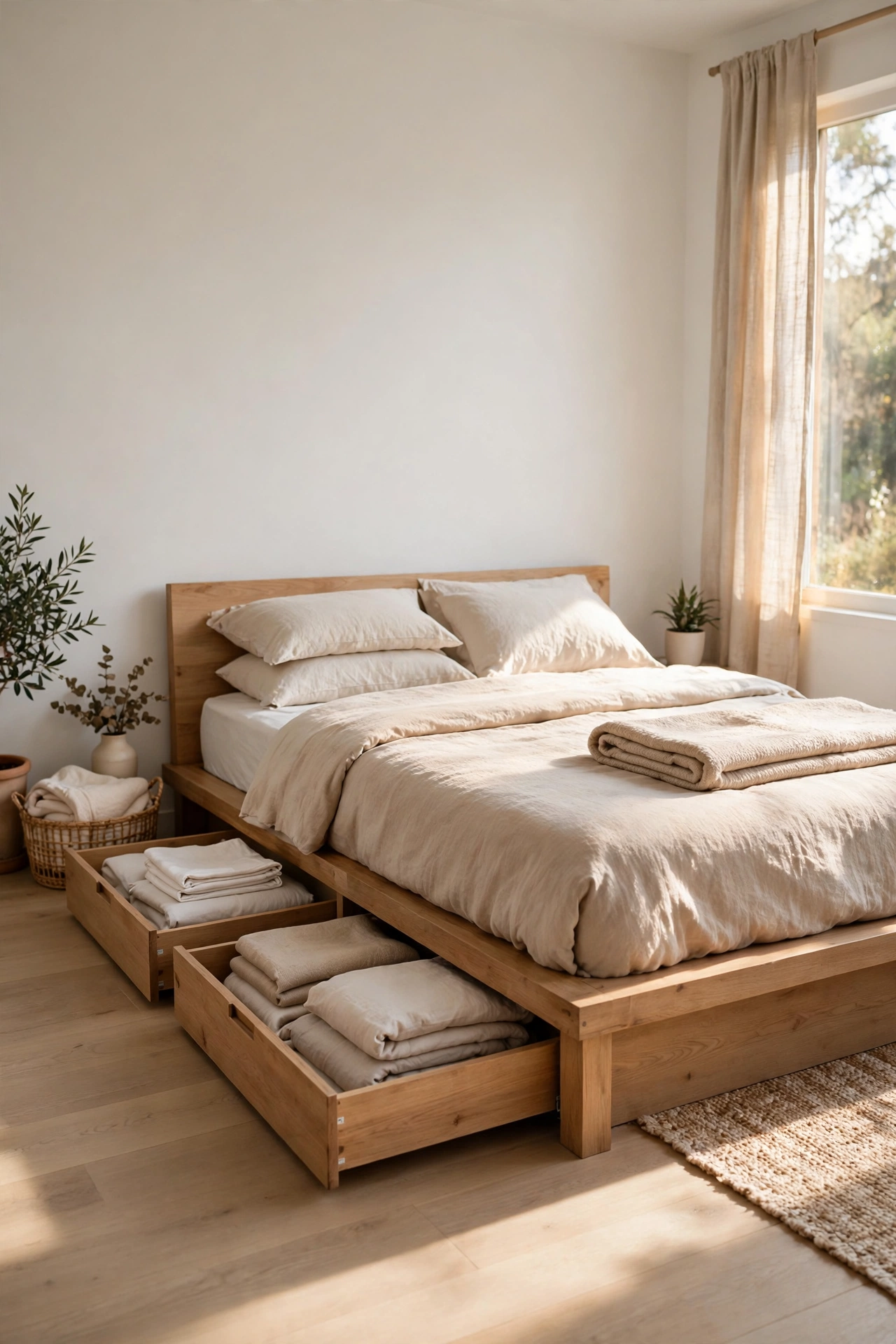
The bed is the largest single piece in a studio, so it deserves the most careful choice. Get it wrong and the room feels like a bedroom with furniture squeezed around it.
Size first. A double bed fits most studios and leaves room to walk around it. A queen works only if you can keep at least 60 cm of clear walking space on two sides of it — if the bed touches two walls, the room will feel cramped no matter how good the bedding is. Measure the footprint with tape on the floor before you buy.
Height matters too. A low platform frame makes the ceiling feel higher and the room feel bigger, while a tall frame with a deep mattress can dominate a small room. If floor space is tight, choose a frame with storage underneath: drawers or lift-up storage hold a surprising amount and cost no extra floor space. A headboard should be low or absent — a tall one eats visual space and makes the wall feel closer.
Position the bed against the longest wall, with the headboard on the wall, not floating in the middle of the room — unless the bed itself is doing the job of a divider, in which case a low frame with a shelf behind it works better than a tall one. How to Create a Bedroom Zone in a Studio Without Building a Wall
Sofa vs Daybed vs Futon: The Honest Trade-Offs
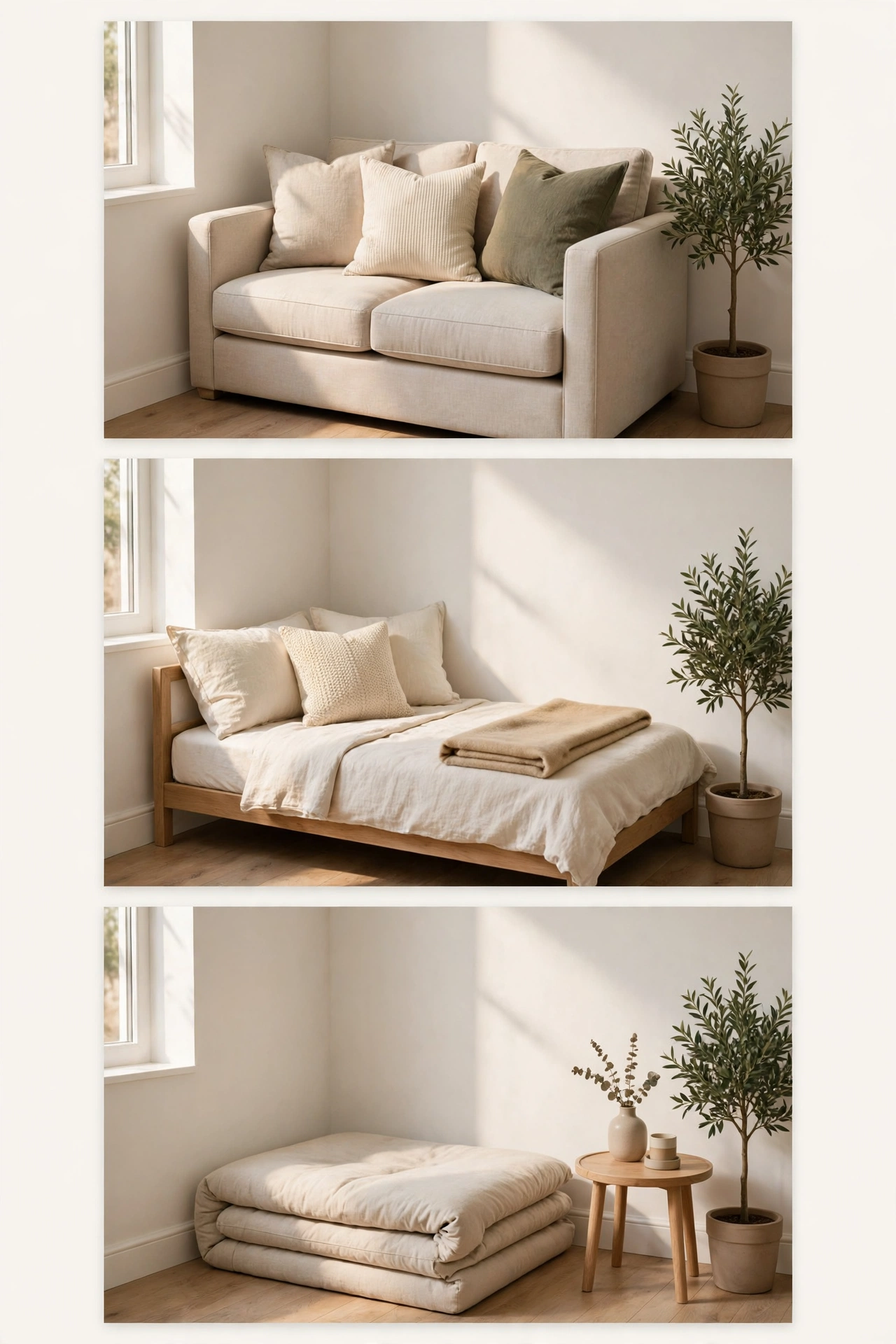
Three pieces do the same job in a studio, and each one trades comfort for space in a different way. There is no best choice, only the best choice for how you live.
A real sofa is the most comfortable option and the worst for floor space. It is the right pick if you sit for hours every day, watch television, or work from the sofa. A two-seater around 150 to 180 cm long suits most studios; anything bigger starts to swallow the living zone.
A daybed is a sofa by day and a bed by night, which makes it the smartest pick if guests stay over often or if the studio is too small for a separate bed and sofa. The trade-off is comfort: a daybed is fine for sitting and fine for sleeping, but rarely great at either. Look for one with a proper mattress rather than a thin pad, and keep the bedding simple.
A futon is the cheapest and the most flexible. It folds away, it moves easily, and it costs the least. The trade-off is long-term comfort: a futon is fine for a few months, but daily sitting and sleeping on one wears thin. I recommend a futon only when the budget is tight or the stay is short.
Storage That Hides: Under-Bed, Vertical, Multi-Use Furniture
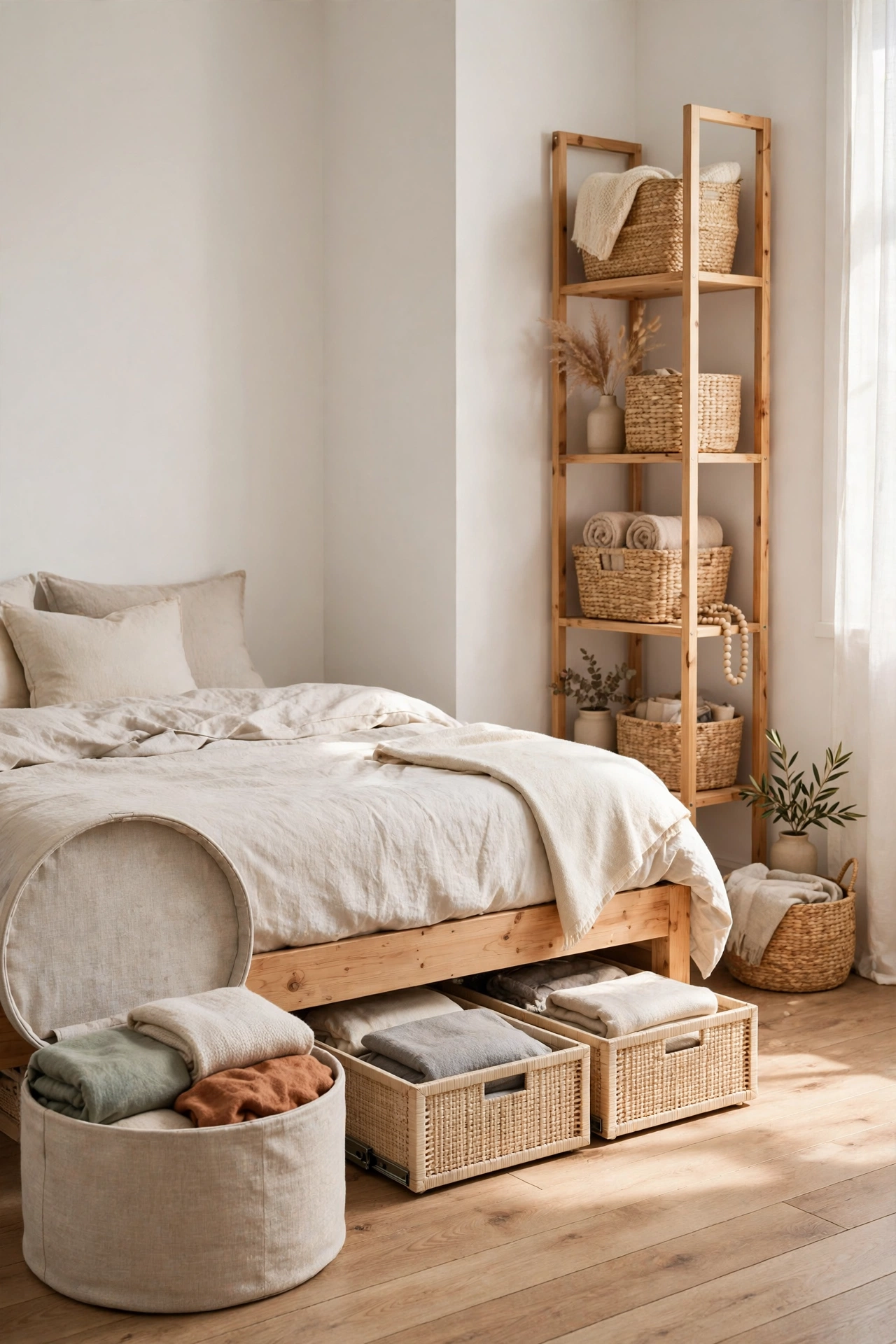
A studio has no spare cupboard and no hallway closet, so storage has to hide inside the furniture itself. The rule is simple: everything you own needs a closed home, or the room will always look messy.
Start under the bed. The space beneath a bed holds a full set of off-season clothes, spare bedding, and anything bulky you use rarely. Boxes with lids keep dust out, and drawers built into the frame are even better because you can reach them without lifting the mattress.
Then go vertical. Tall, narrow shelves use wall space that would otherwise sit empty, and they hold more than a wide low unit in the same floor area. Wall-mounted shelves above a desk or a door use space that furniture cannot reach. Over-door hooks on the bathroom and entrance doors add hanging space without a single screw in the wall.
Finally, choose furniture that does two jobs. An ottoman with storage inside holds blankets and hides clutter. A coffee table with a shelf underneath holds books and remotes. A bench by the door with shoe storage inside keeps the entrance clear. Aim for one closed storage unit per zone — sleeping, living, working — so every corner of the room has somewhere for things to disappear into. Open shelves are for display only — open storage in a studio reads as clutter within a week. 15 Studio Apartment Layout Ideas with Beautiful Room Dividers
The First-Week Checklist (What to Buy Before Moving In)
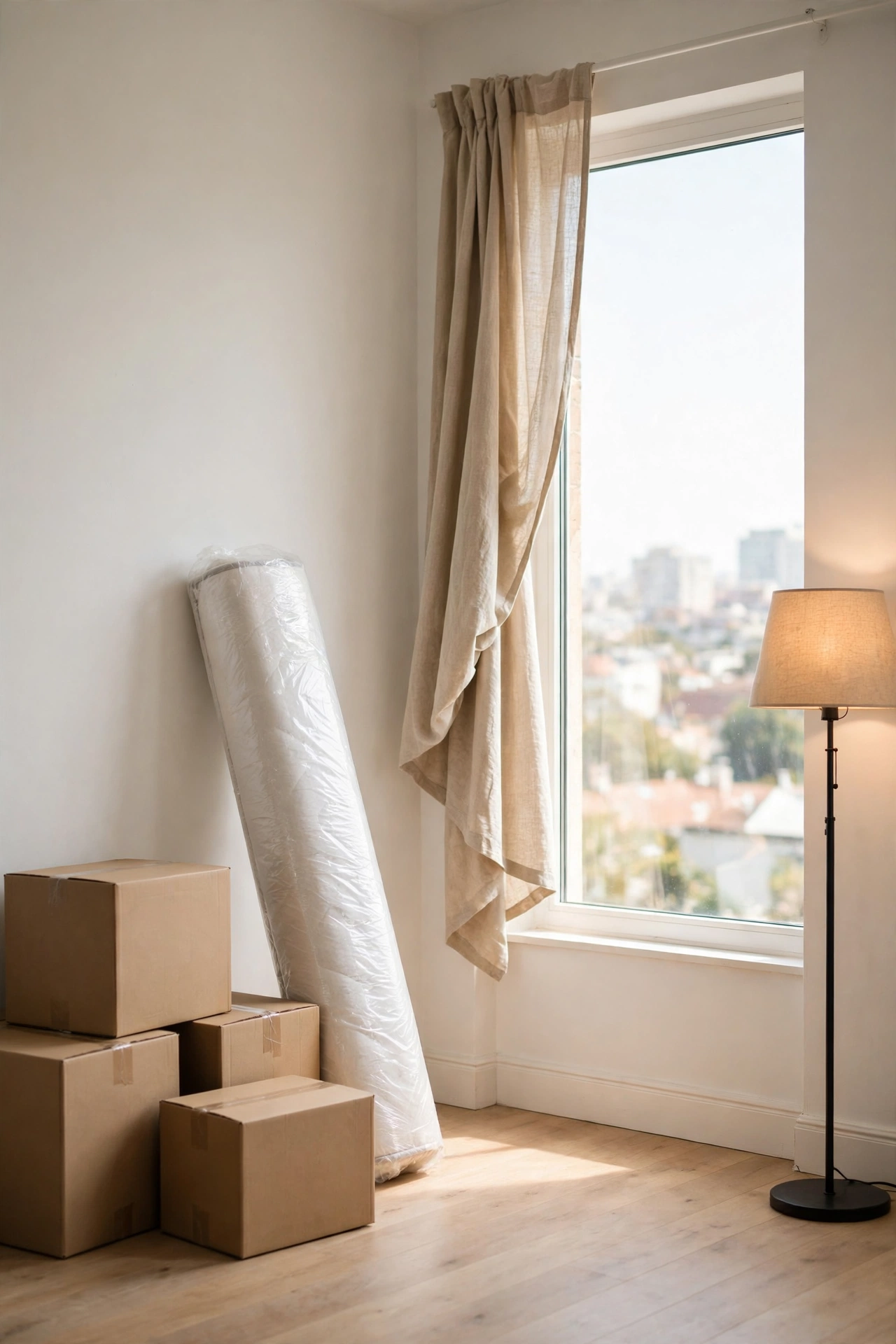
The first week in a studio sets the pattern for everything after it, so it helps to know exactly what needs to be there on day one and what can wait.
Before moving day, have these ready: the mattress and bed frame, one lamp, curtains or blinds, and basic kitchenware — a few plates, cups, cutlery, one pan, and a kettle.
In the first 48 hours, add seating and a surface: the sofa or daybed, a table, and storage boxes for the things still in bags.
By the end of week one, add the rug, a second lamp, and cleaning supplies — a broom, a mop, and a small vacuum if the floor is hard.
What can wait: art, plants, extra cushions, and anything decorative. Live in the room for two or three weeks first. By then you will know which wall feels bare, which corner stays dark, and where a plant would actually survive. Decor bought after living in the room always fits better than decor bought before moving in.
Mistakes First-Timers Make (and What to Do Instead)
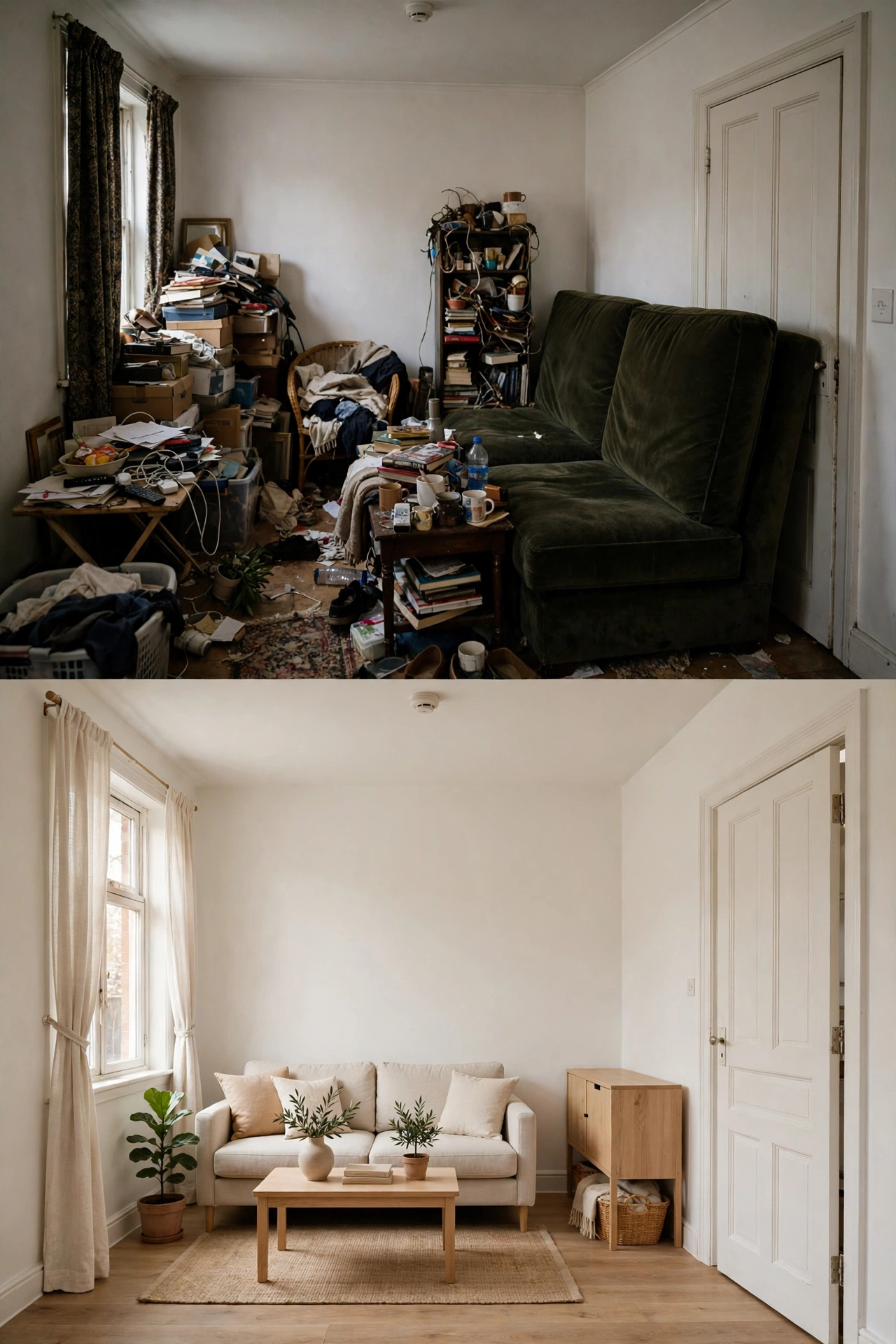
1. Buying the sofa before measuring. The most common and most expensive mistake. The sofa arrives, it does not fit through the door or it swallows the living zone. Measure the door, the hallway, and the room first, and tape the footprint on the floor before you order anything.
2. Buying everything at once. A studio furnished in one weekend looks like a showroom, not a home. Buy the bed and the sofa first, live with them for a week, and let the room tell you what it still needs.
3. Too many small pieces. Five small tables, three small shelves, and a dozen small decorations make a studio feel crowded, while two or three bigger pieces make the same room feel calm.
4. Ignoring the door swing and walkways. A wardrobe that blocks a door, or a chair that sits in the only path to the kitchen, makes a room annoying to live in. Keep 60 to 75 cm clear on every walkway.
5. No storage plan. Decor comes before storage in most first attempts, and the result is a pretty room that cannot stay tidy. Buy the storage first, and only then decide what decoration the room still needs. How to Make Your Studio Apartment Look Expensive
Quick answers
What should I buy first for an empty studio? The bed and the mattress. You sleep there every night, and the bed is the biggest piece, so its size and position decide where everything else goes.
How much of the budget should go on the sofa? The bed and the sofa together should take about half the total budget. The sofa is the second-biggest purchase and the piece your body uses most during the day.
Can I furnish a studio without buying new? Yes, with one exception: buy the mattress new. A second-hand bed frame, table, and storage work well and save a large share of the budget, but a used mattress is a false saving.
What size bed fits a studio apartment? A double fits most studios. A queen only works if you can keep at least 60 cm of clear walking space on two sides of it. If the bed touches two walls, choose the smaller size.
How long does it take to furnish a studio properly? A week for the essentials — bed, seating, table, storage, and light. A month to finish properly, because the last pieces should be chosen after living in the room for a few weeks.
Final thoughts
Furnishing a studio is a sequence, not a shopping trip: measure first, buy the bed and sofa before anything else, give everything a closed place to live, and let decor wait until the room works. Follow that order and the smallest studio feels considered and calm. Skip it, and even a generous budget ends up fighting the room instead of filling it.

Hi, I'm Wasif — welcome to The Homes Decors. I write about home decor: the ideas, choices, and small details that make a space feel considered rather than accidental. If you've ever wondered why a room works, not just what's in it, you're in the right place.