
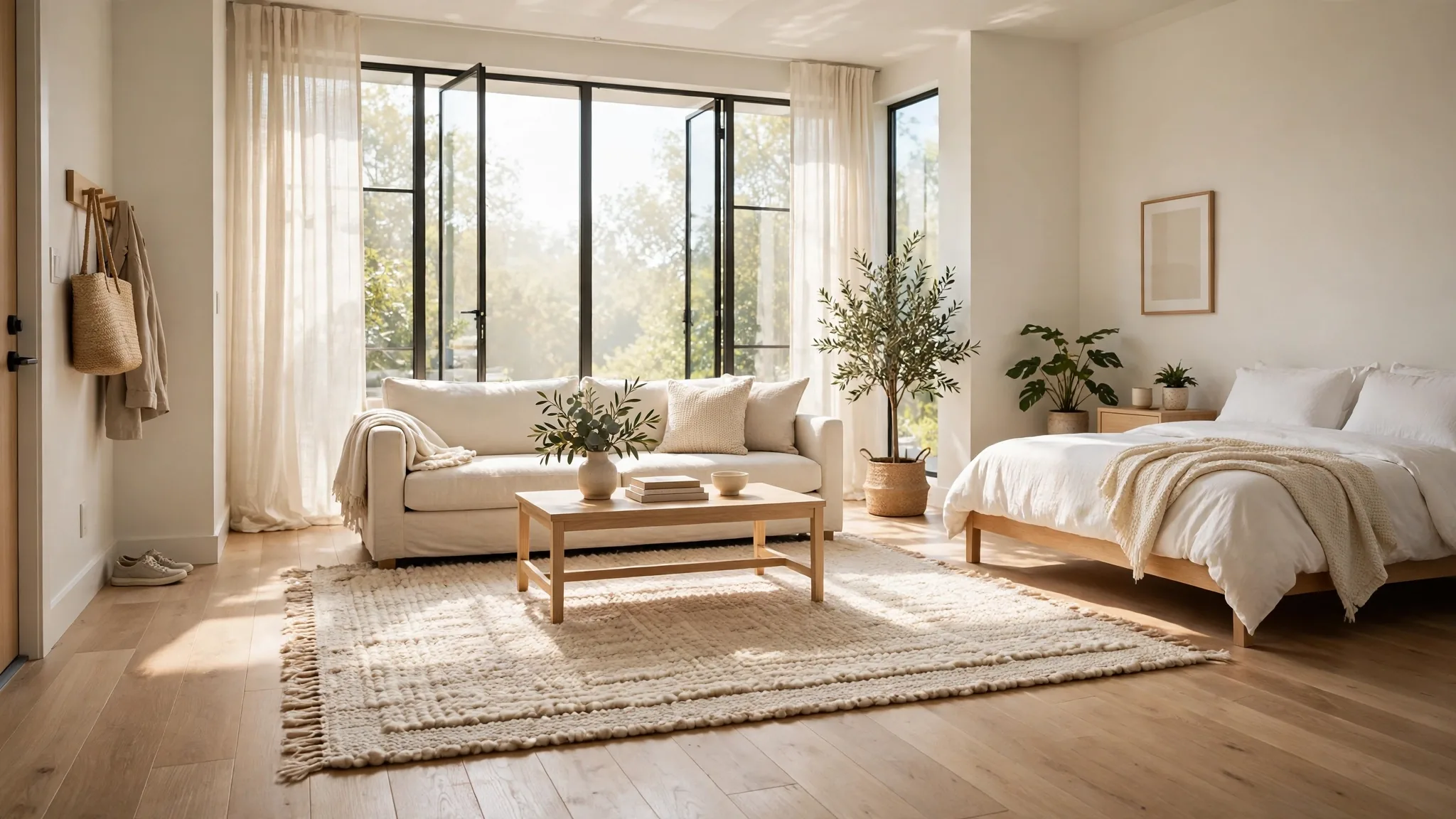
The best rug color for a studio is a warm neutral like oatmeal or natural jute, because it works with any sofa, wall color, or bed. Pick a darker or patterned rug if you want to hide stains and mark the living zone. These 14 rug colors show where each one works best.
1. Rust orange for instant warmth
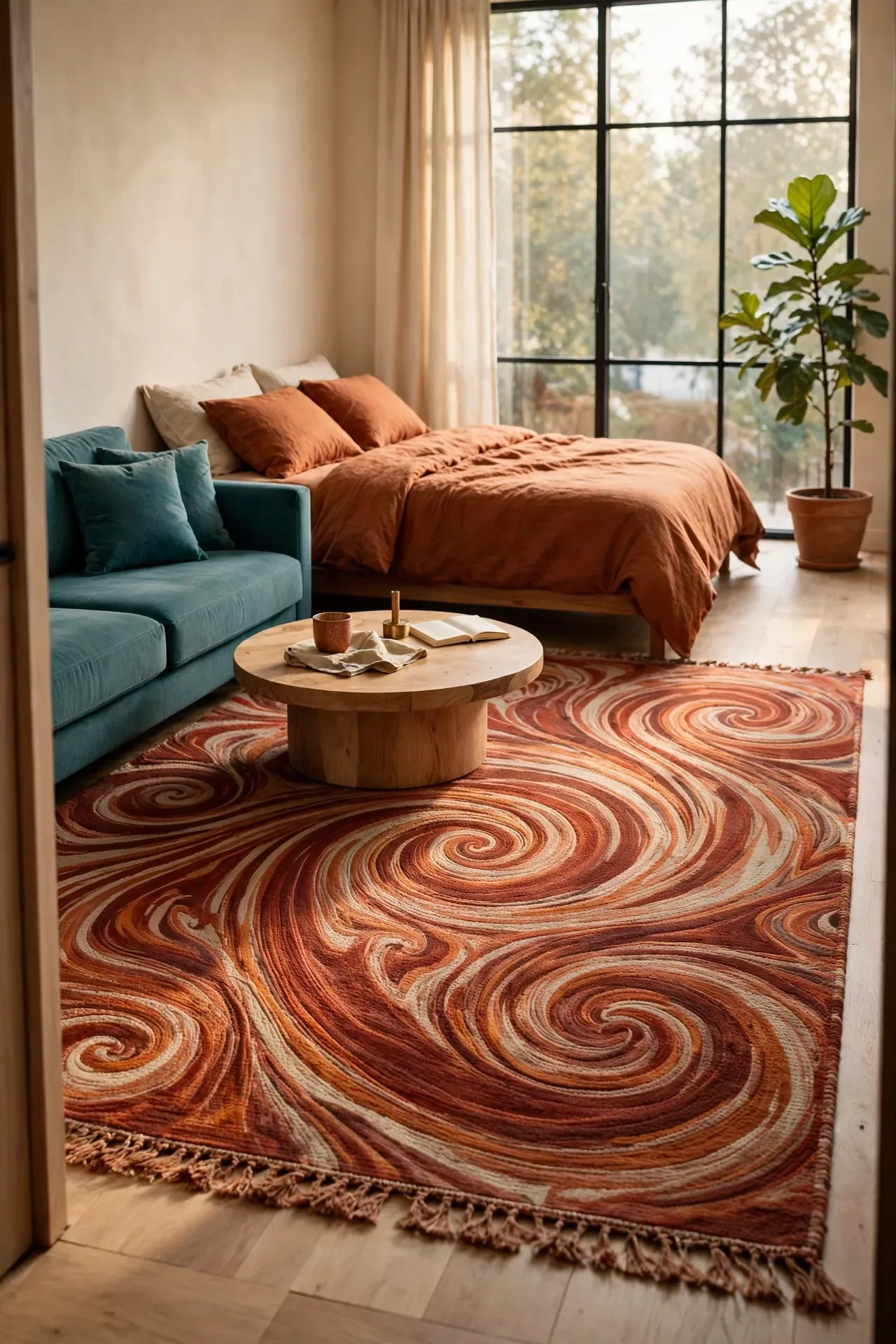
Rust orange warms a cold floor fast. A rust rug with terracotta swirls ties the bed, coffee table, and TV wall into one area, and it makes a white studio feel lived in. It works best with cream walls and natural woven wall pieces. Keep the furniture around it quiet so the floor stays the main color. Rust also looks richer under warm 2700K bulbs.
Pro Tips: Pick a rust with brown undertones, not bright orange. It stays warm in daylight and keeps looking calm when the lamps come on at night.
2. Brown and black geometric for grown-up depth
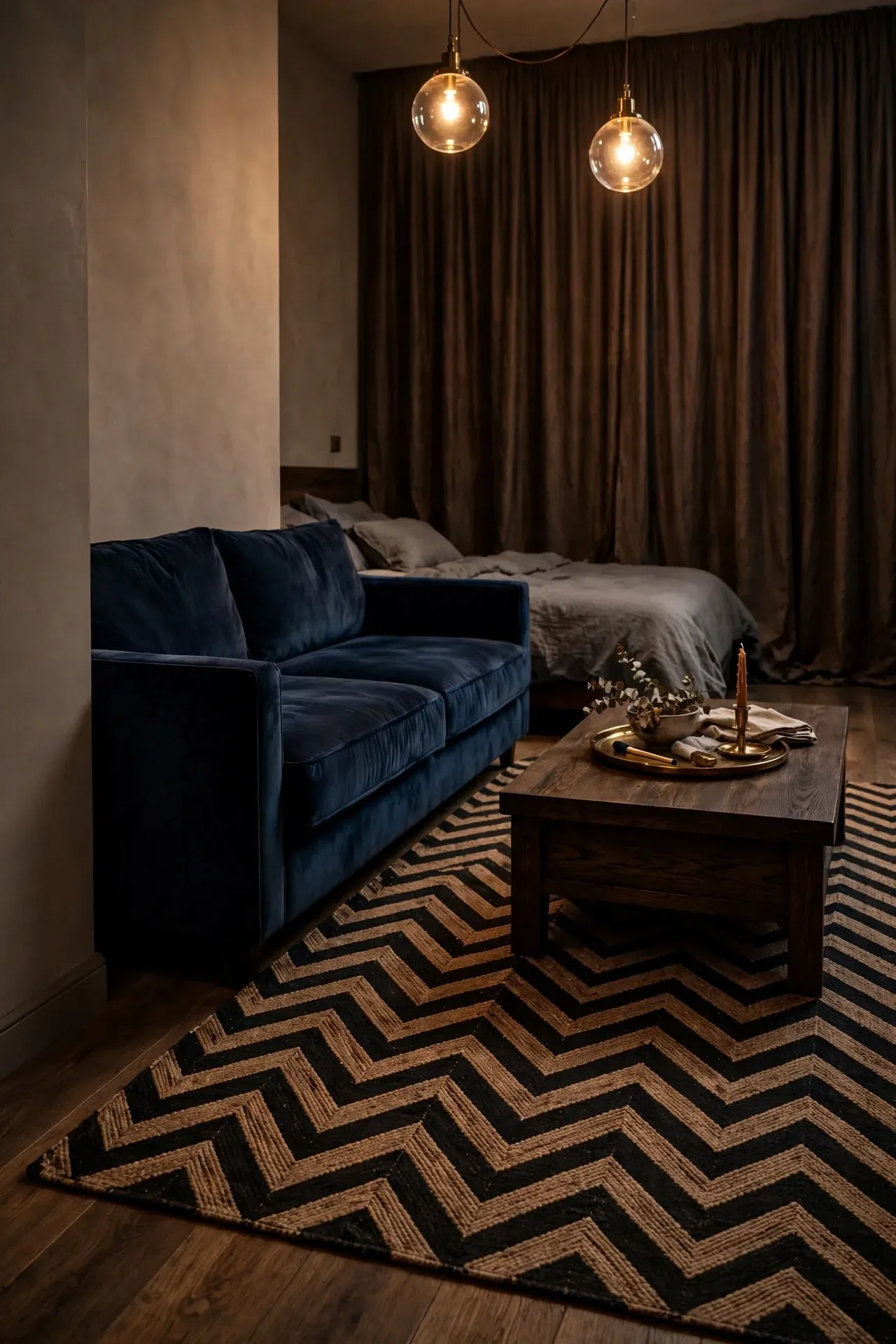
A brown and black geometric rug adds depth without drawing attention to itself. The pattern hides crumbs, dust, and pet hair, which matters in a room you use every day. Chevron or diamond shapes pair well with navy velvet, brown curtains, and warm pendant lights. If the studio holds a living area and a bed, the rug also marks the seating zone.
Pro Tips: Always choose a dark pattern with a small repeat, like chevron or diamonds. Small repeats hide crumbs and pet hair better than large shapes do.
3. Soft oatmeal for endless versatility
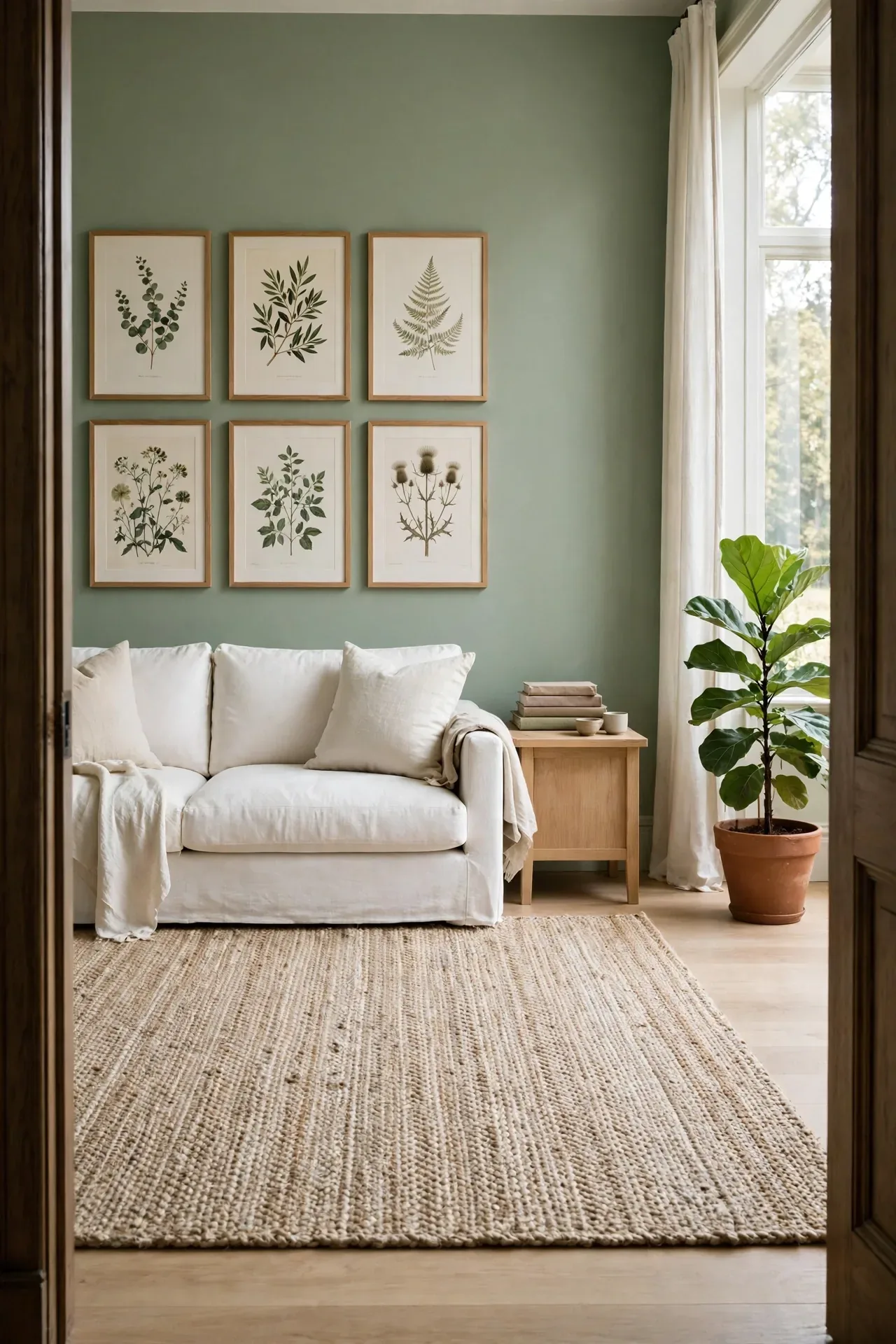
Oatmeal is the rug color you are least likely to regret. It is warm without being loud, and it works with every sofa, paint color, and layout you might try later. In a sage green studio, a woven oatmeal rug lets art and plants take the focus. If you move furniture often, it will not clash with a new arrangement. For more beige options, see these bedroom rug ideas for beige bedrooms.
Pro Tips: Choose wool or a jute blend over flat polyester. Natural fibers add texture, so a neutral rug looks rich, not blank, even beside white walls.
4. Deep charcoal shag for a grounded room
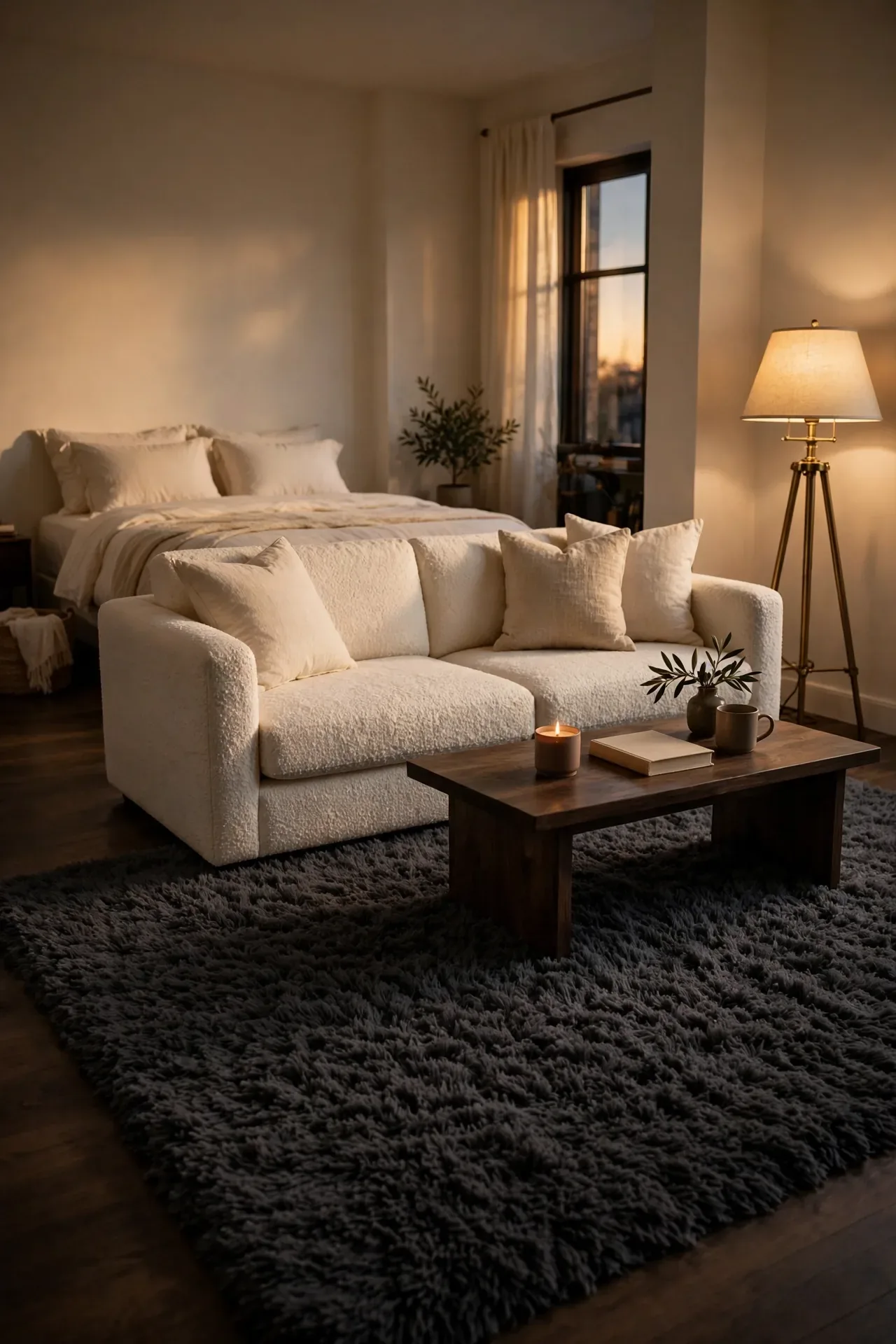
A deep charcoal shag rug anchors a studio that feels floaty. The dark gray pile balances pale wood and cream upholstery, and it dampens footsteps on tile or hard floors. The trade-off is cleaning: shag traps hair and crumbs, so it needs a gentle vacuum setting. Skip it if you have long hair or a shedding pet.
Pro Tips: Pick a medium pile, around half an inch, instead of deep shag. It feels soft, stays easier to vacuum, and muffles footsteps on hard floors.
5. Olive green patterned for a botanical feel
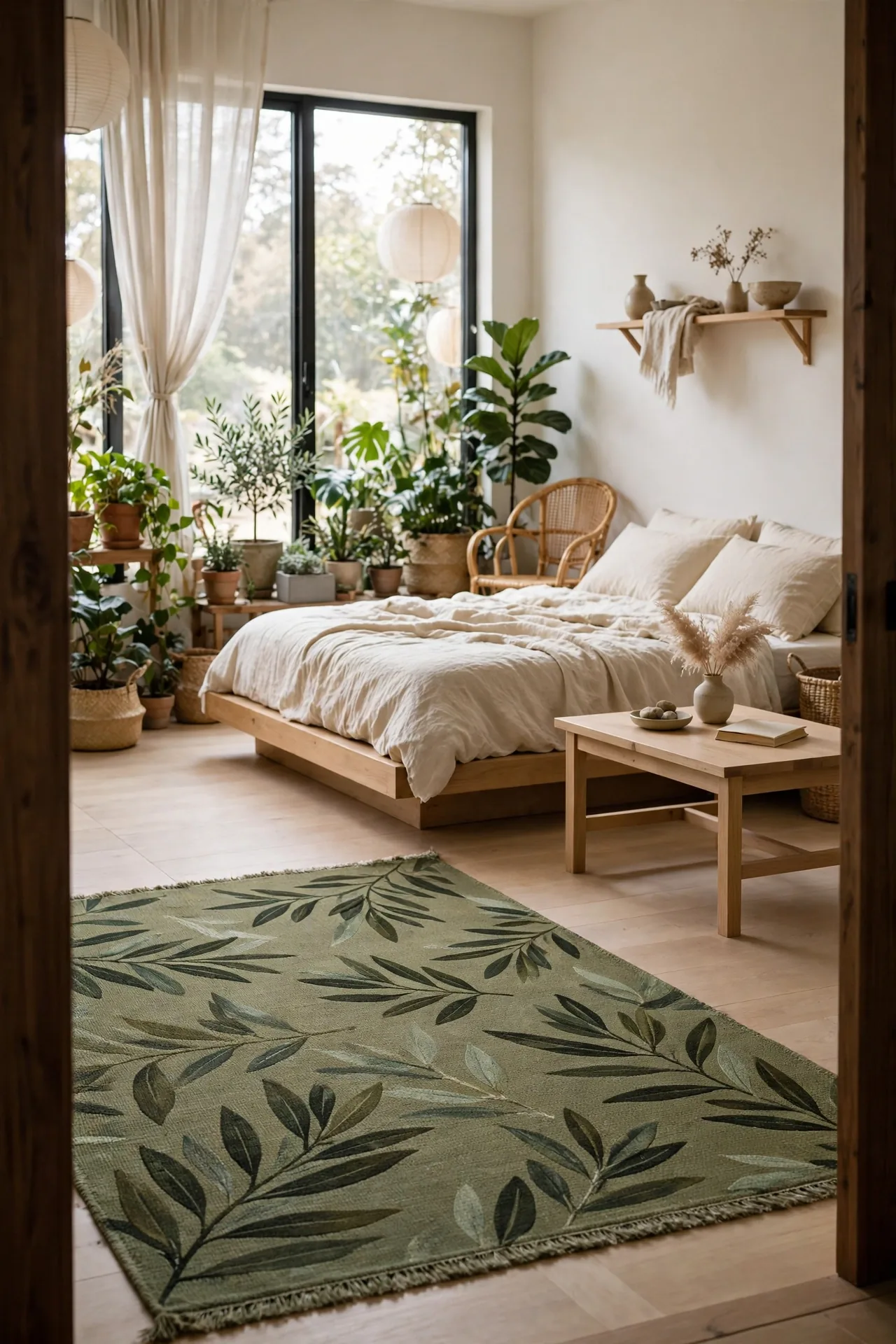
An olive green patterned rug gives a plant-filled studio a natural base. The leaf pattern repeats the greenery, the bed throw, and the accent pillows, so the room looks planned. Olive works best when you repeat it in two or three other places, or it looks like it landed alone. For more pairing ideas, see these green living room ideas.
Pro Tips: Buy two green pillows when you buy the rug. Repeating the color in two or three spots keeps the rug from looking out of place.
6. Cream and black Beni Ourain for a modern classic
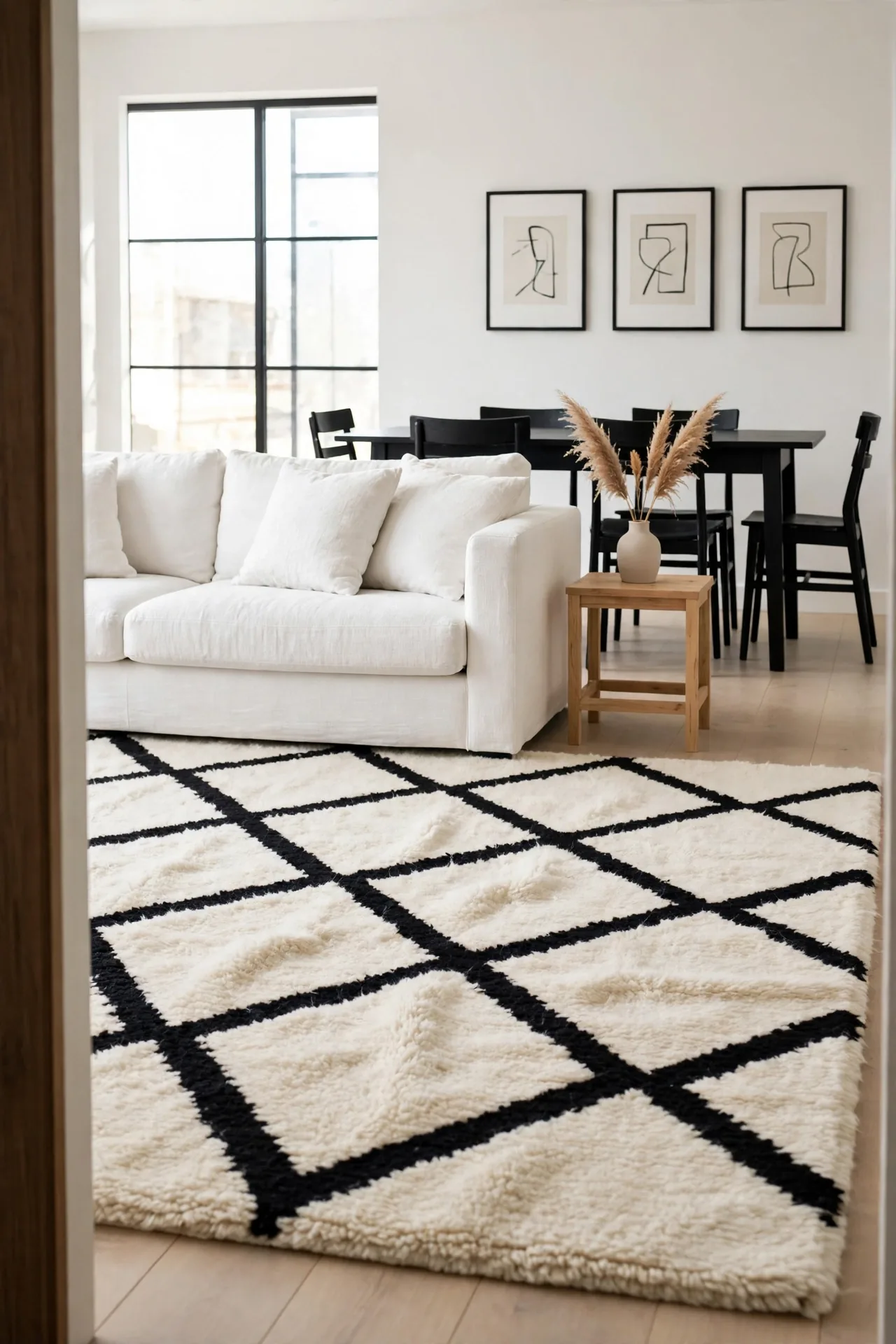
A cream rug with a black diamond pattern fits almost any color scheme. It feels soft underfoot and adds a little graphic interest without competing with art or textiles. In a bright Scandinavian studio it links black picture frames, black chairs, and metal table legs, so none of them look like a set. Choose a wide diamond spacing for a calmer look.
Pro Tips: Pick one with a thick, soft pile and a pattern spaced wide apart. Tight, busy diamonds clash with framed art, while wide ones stay quiet.
7. Cool gray geometric for quiet sophistication
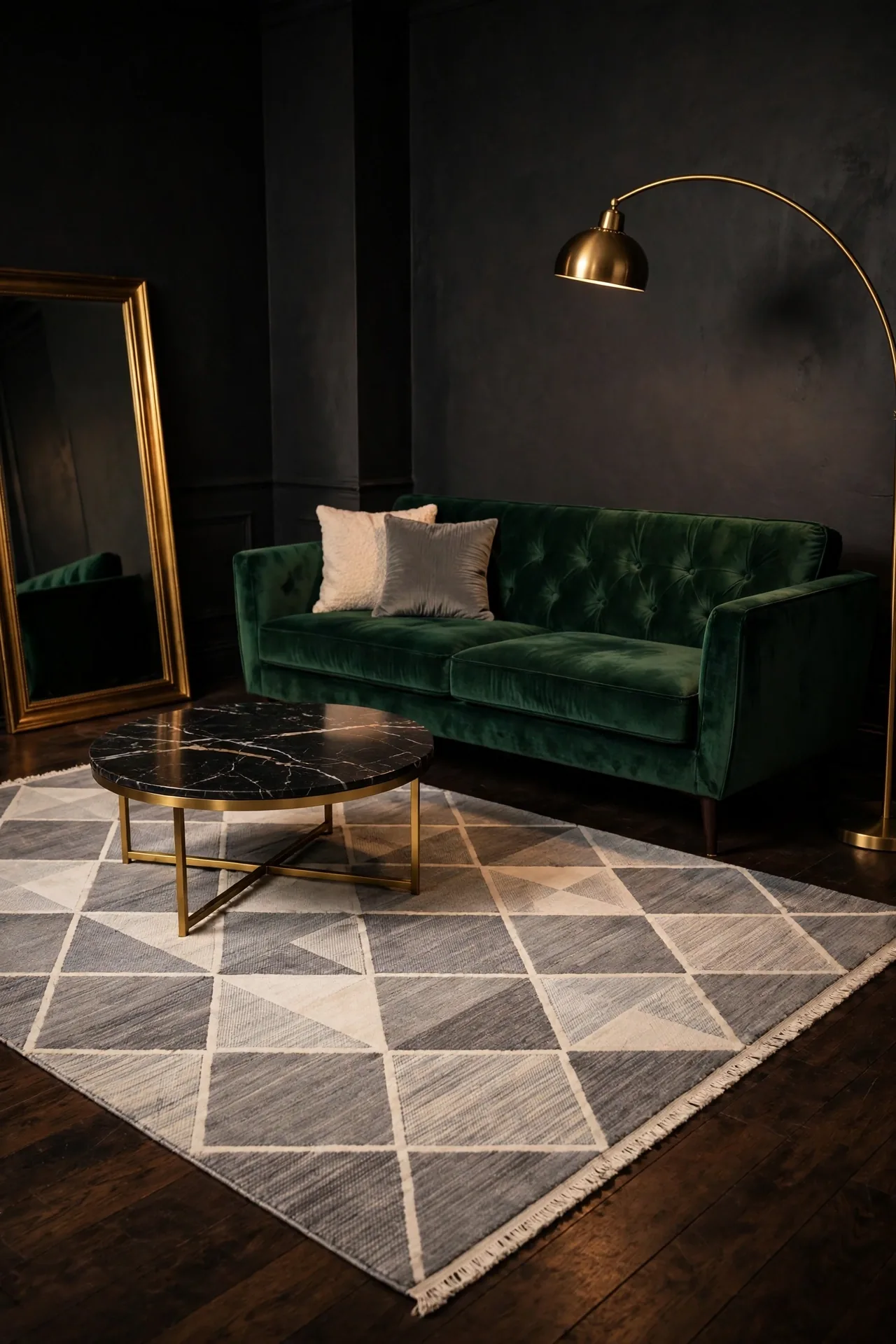
A cool gray rug with a quiet geometric pattern gives texture without commitment. Next to an emerald velvet sofa and a black marble table, it supplies enough pattern to look chosen and enough neutrality to avoid clutter. Gray also ages well, since it does not point to a specific trend year. It suits dark, dramatic studios best.
Pro Tips: If your floor is dark or scratched, layer a small gray patterned rug over a larger plain one. The pattern hides scuffs and daily wear.
8. Silver shag for soft, cozy glow
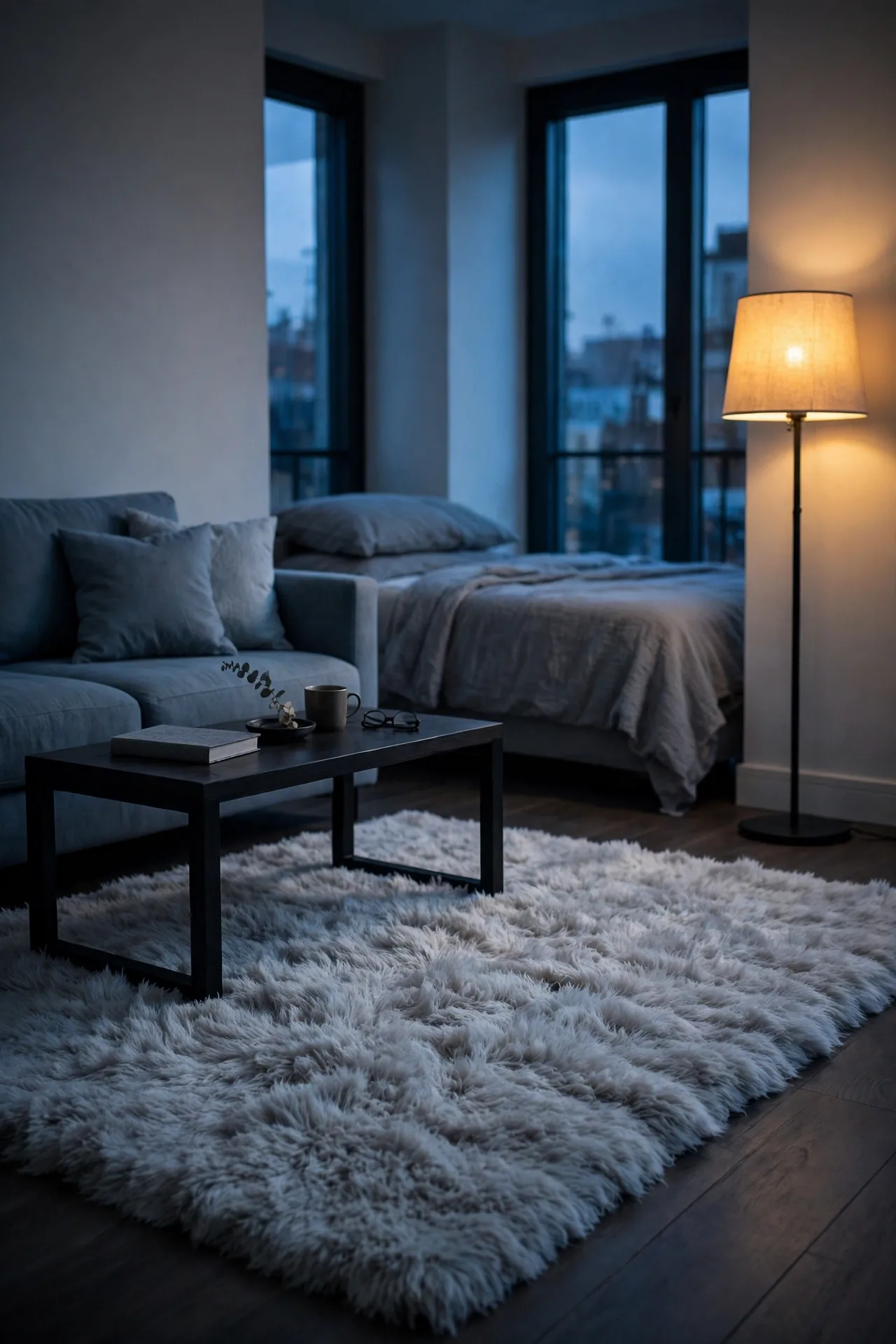
A silver or pale gray shag feels warmer than most cool-toned rugs. In a dim studio lit by blue evening light, the pale pile catches lamp light and keeps the room from feeling cold. If the studio faces north or gets little sun, a light shag lifts the floor and softens the room fast. It also gives bare feet a place to land.
Pro Tips: Skip cheap synthetic shag that flattens in a few months. Check that the pile springs back when pressed, and spend more if it does not.
9. Inky charcoal abstract for modern drama
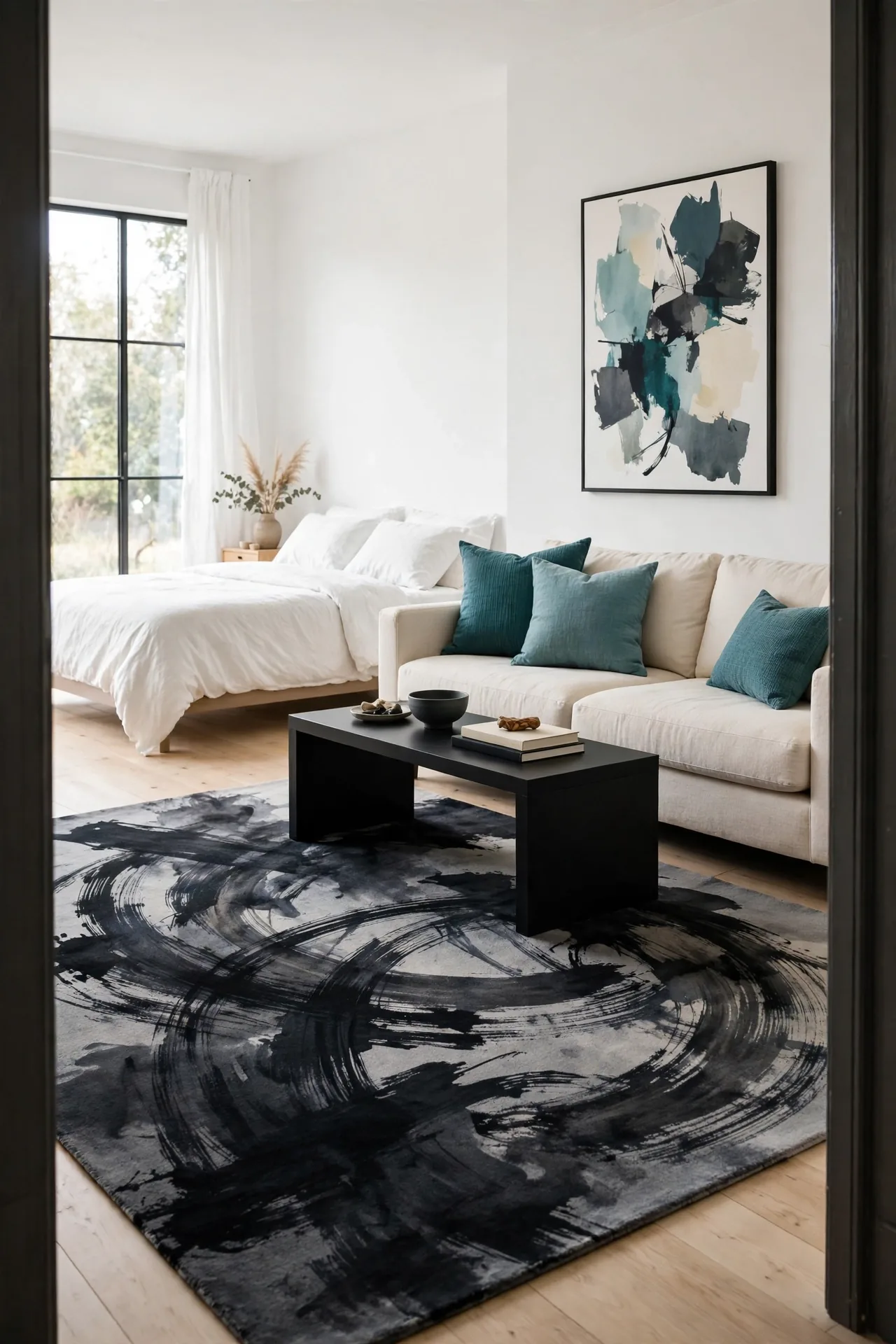
An abstract charcoal rug with soft brushstroke marks works like art on the floor. It pulls the eye away from bright white walls and into the seating area. In a studio with white or pale floors, a dark rug marks the living zone clearly and keeps the room from looking like an empty lobby.
Pro Tips: Always pair a dark abstract rug with one strong color, like teal, in pillows or art. One accent stops the dark rug from feeling heavy.
10. Navy blue with teal for a restful nook
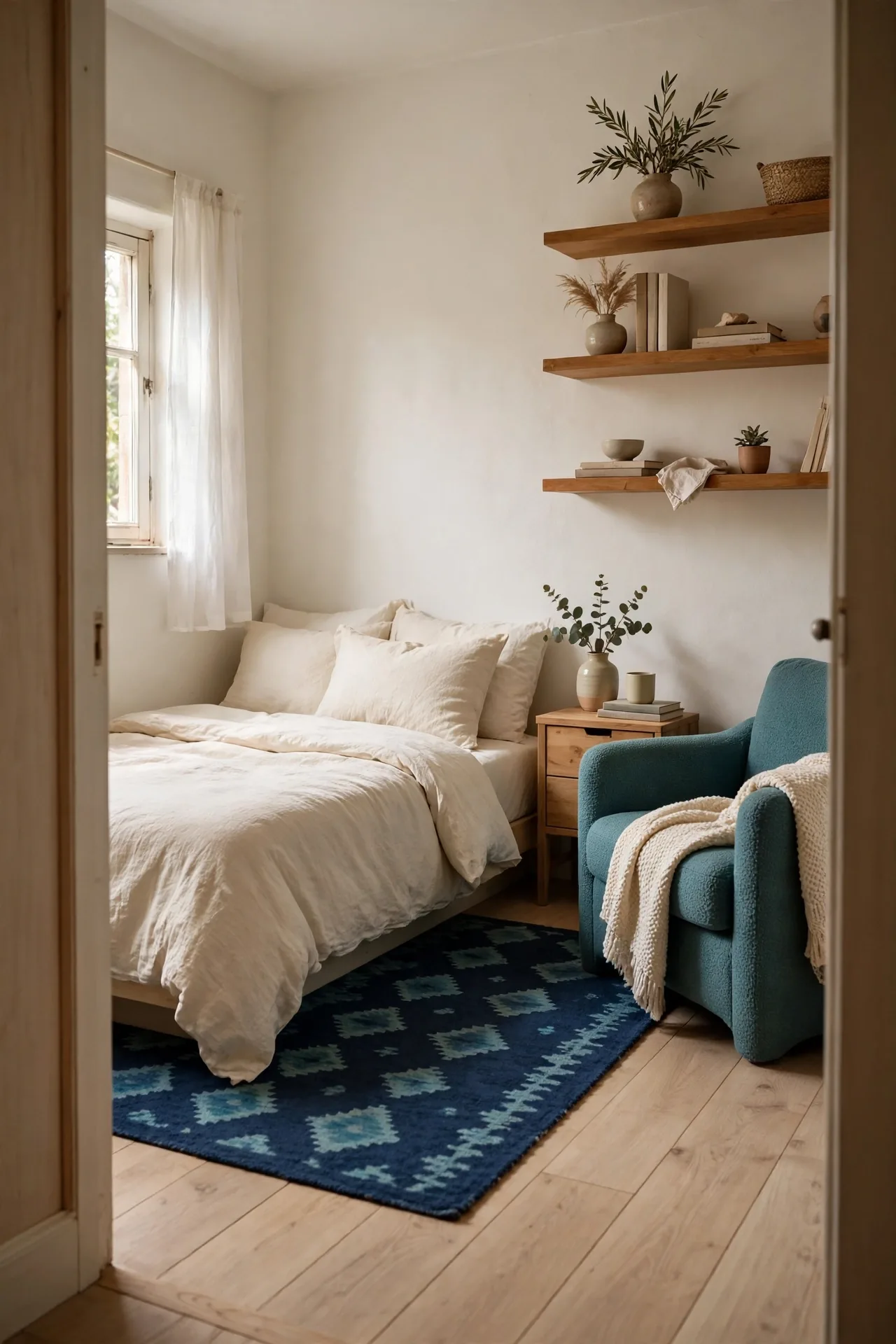
Navy is one of the calmest rug colors for a room that is also a bedroom. A navy rug with soft teal accents makes the sleeping area feel like its own corner, especially under sheer canopy curtains. Deep blue makes a small space feel restful instead of tight. Match it with warm wood or cream to avoid a cold look. These navy blue living room ideas show more combinations.
Pro Tips: Always pair navy with warm wood or cream bedding so the sleeping area stays cozy. Navy with cool gray bedding can feel cold at night.
11. Solid gray for minimalist restraint
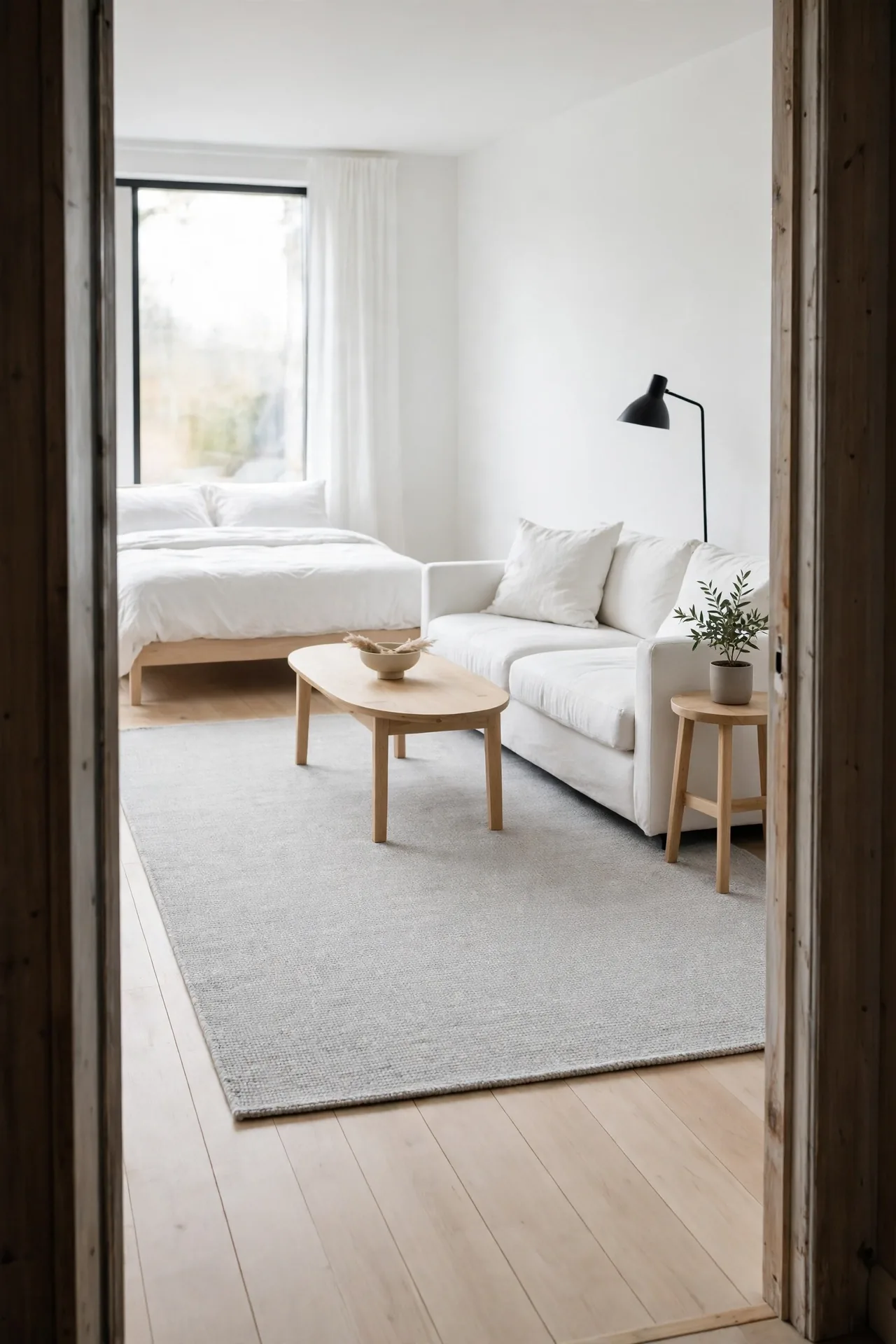
A plain gray rug does its job without calling attention to itself. In a Scandinavian studio, it anchors the sofa, separates it from the bed, and stays out of the way. If you own colorful pillows, patterned throws, or bold art, a solid gray rug lets them stand out. Choose a flatweave, which lies flat and stays easy to vacuum.
Pro Tips: Layer a smaller patterned rug on top of a plain gray flatweave. You get pattern where you sit and a calm base under the room.
12. Burgundy wine shag for jewel-tone drama

A burgundy wine shag adds warmth and a sense of luxury that a neutral rug cannot. In a cream and white studio, it brings in plum curtains and makes the room feel rich. If you like jewel tones but cannot paint a rental wall, a rug is the lowest-commitment way to get there. These burgundy sofa living room ideas show how the color works with other furniture.
Pro Tips: Choose a burgundy with a brown base rather than a pink one. It reads richer, and it sits well next to plum or brown curtains.
13. Natural jute for renter-friendly texture
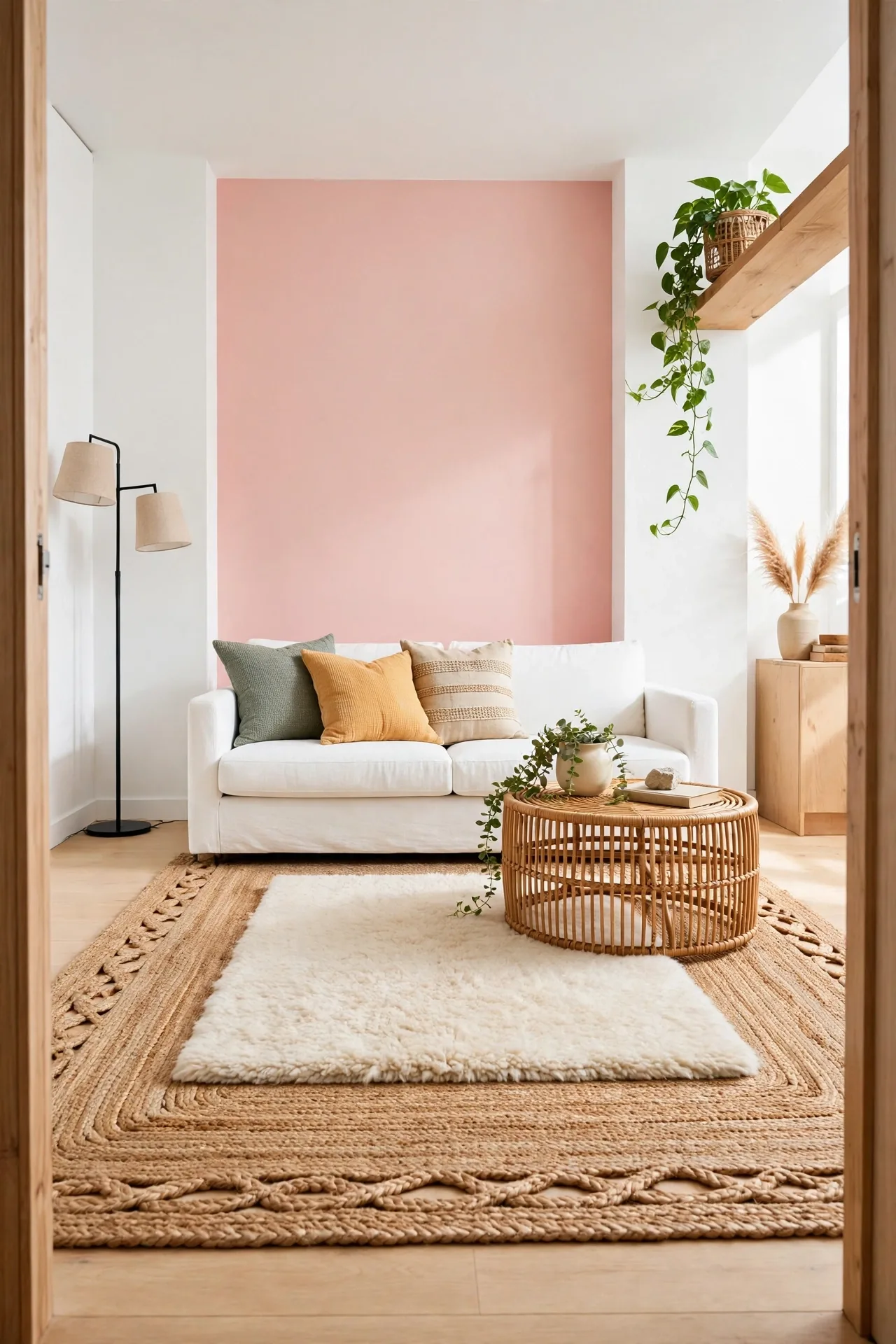
A natural jute rug is affordable, textured, and looks good with almost any color, including a pink accent wall. The weave is slightly rough underfoot, so add a soft rug on top where you sit and read. Jute also works well in rentals, because it is light, easy to move, and hides daily wear. For size help, see these mini studio apartment rug ideas.
Pro Tips: Buy the jute rug one size larger than you think. Rugs look smaller in a real room, and a bigger size ties the zone together.
14. Multicolor kilim for bold personality
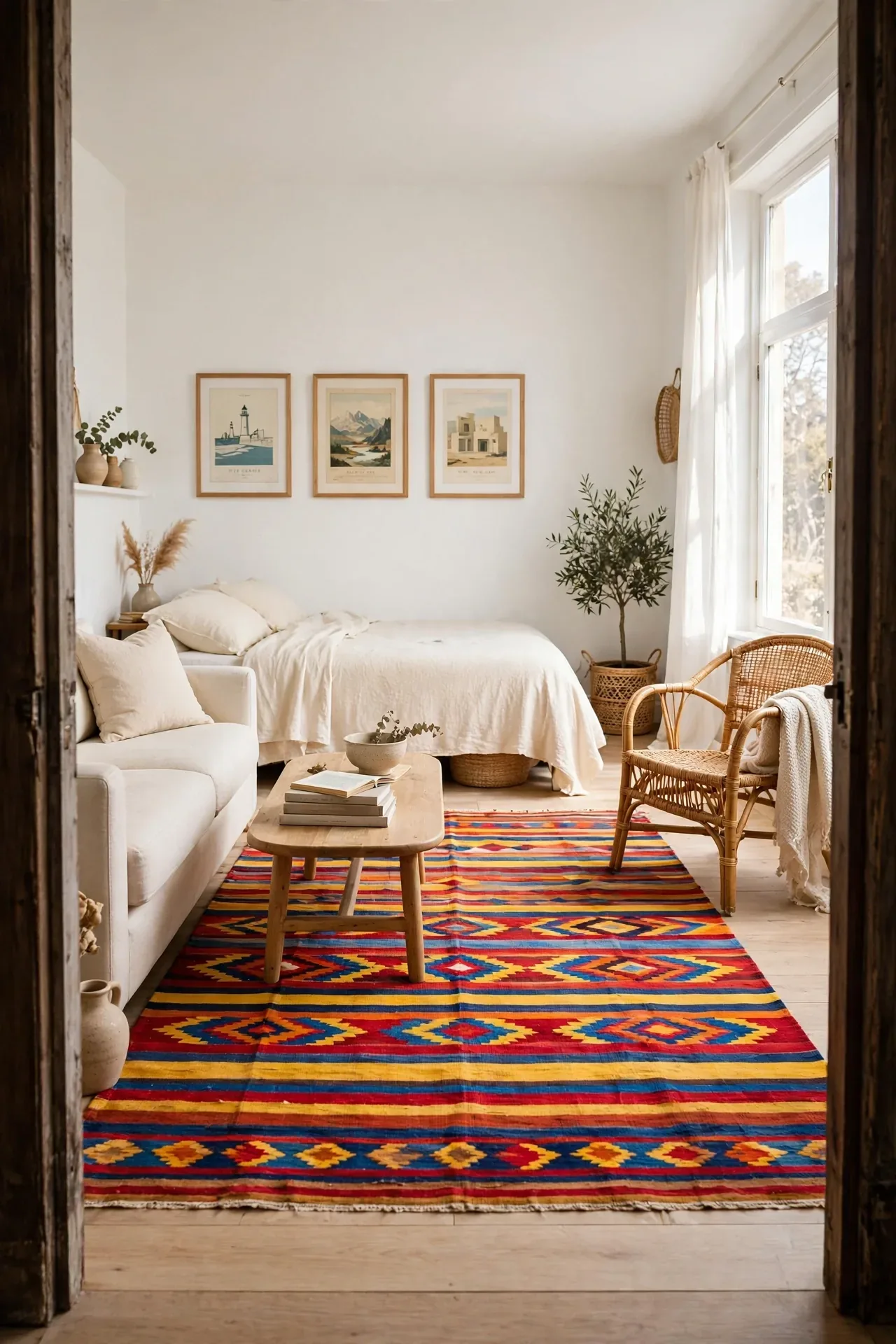
A multicolor kilim suits a studio with many collected pieces. Red, yellow, blue, and orange stripes on a warm wood floor feel lively and tie together a world map, plants, and a wood block coffee table. The rug becomes the one source for every color in the room. If your style is built from collected pieces, this rug will fit every layout you move into later.
Pro Tips: Keep the rest of the room calmer than the rug. Pull two colors from the stripes into pillows or art, and leave the walls neutral.
FAQs
What is the best rug color for a studio apartment?
Oatmeal, warm gray, and natural jute work best. They match most sofas, walls, and beds, and they do not show dirt as quickly as pure white.
What size rug should I get for a studio?
Pick a size large enough that the front legs of the sofa sit on it, usually 5 by 8 feet. Go one size larger if you are unsure.
Should a studio rug be dark or light?
Either works. A dark rug hides stains and marks the living zone, while a light rug makes the floor look larger. Choose based on your floor color.
Which rug color hides pet hair and crumbs best?
Patterned rugs in brown, gray, or charcoal hide crumbs and pet hair best, especially with a small repeat and a low or medium pile.
How do I use a rug to separate a bed and a seating area?
Put the rug under the sofa and coffee table only, and stop it before the bed. The edge of the rug becomes the line between zones.
Final Thoughts
Pick a rug color you will still like in three years, and choose a size that fits the zone, bigger than you think. Start with a warm neutral if you are unsure, and go bold only when the sofa and walls stay quiet.

Hi, I'm Wasif — welcome to The Homes Decors. I write about home decor: the ideas, choices, and small details that make a space feel considered rather than accidental. If you've ever wondered why a room works, not just what's in it, you're in the right place.