
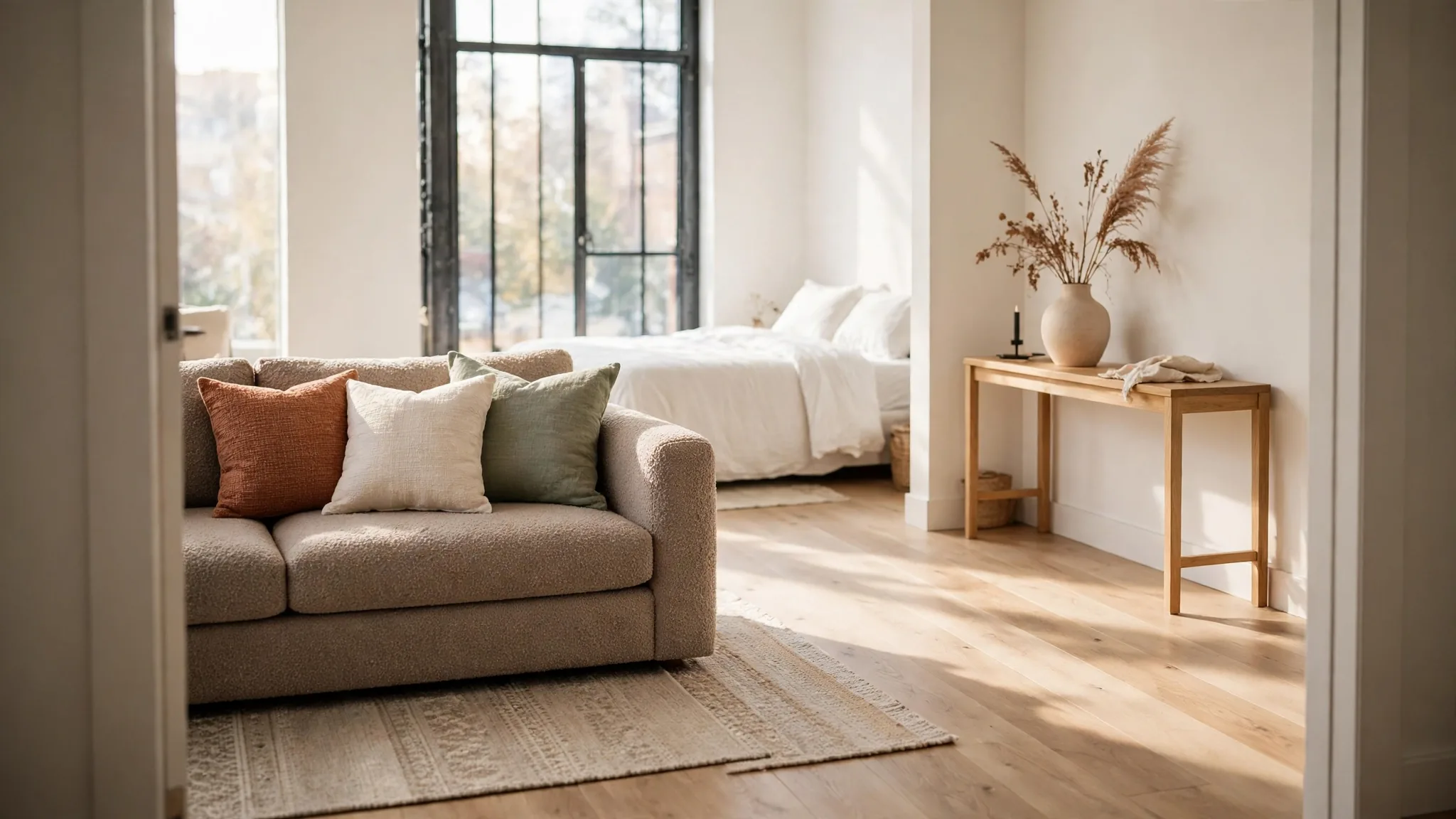
The safest sofa color for a studio is a warm gray, beige, or taupe, because it works with any wall color and lets you add color through pillows. Choose a bold color like teal or red only if the walls and floors stay light. These 13 sofa colors show how each one works.
1. Go bold with teal velvet
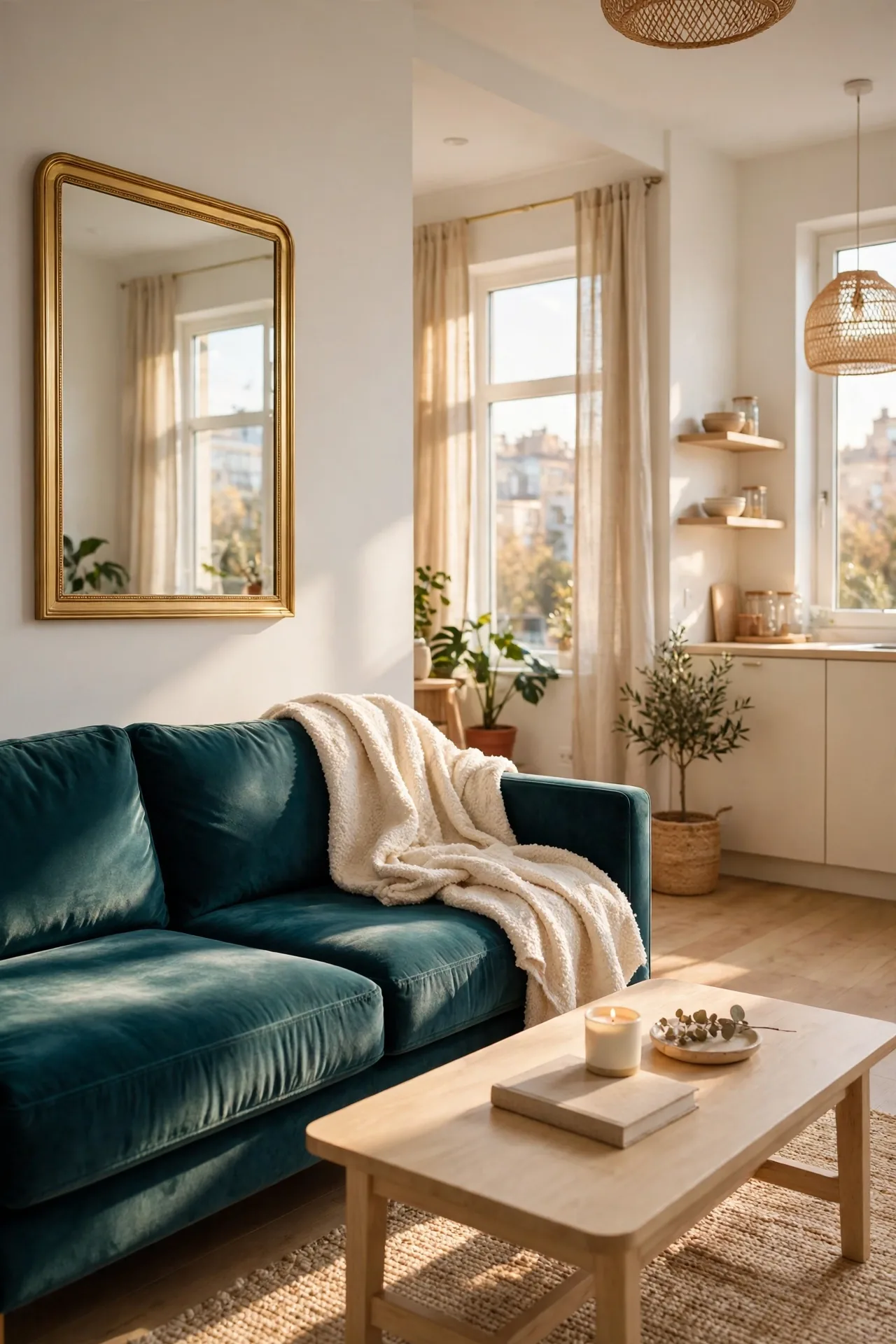
A teal velvet sofa against white walls gives a studio one strong focal point without making it darker. Velvet picks up light and shifts in shade through the day, so the color never looks flat. Pair it with warm wood and a neutral rug so the room stays balanced. Teal also reads calm, which helps when the sofa sits close to the bed. More pairings are in these teal living room ideas.
Pro Tips: Brush the velvet in one direction with a soft brush once every week. It keeps the pile even and stops dust from settling deep.
2. Lean into earthy brown for warmth
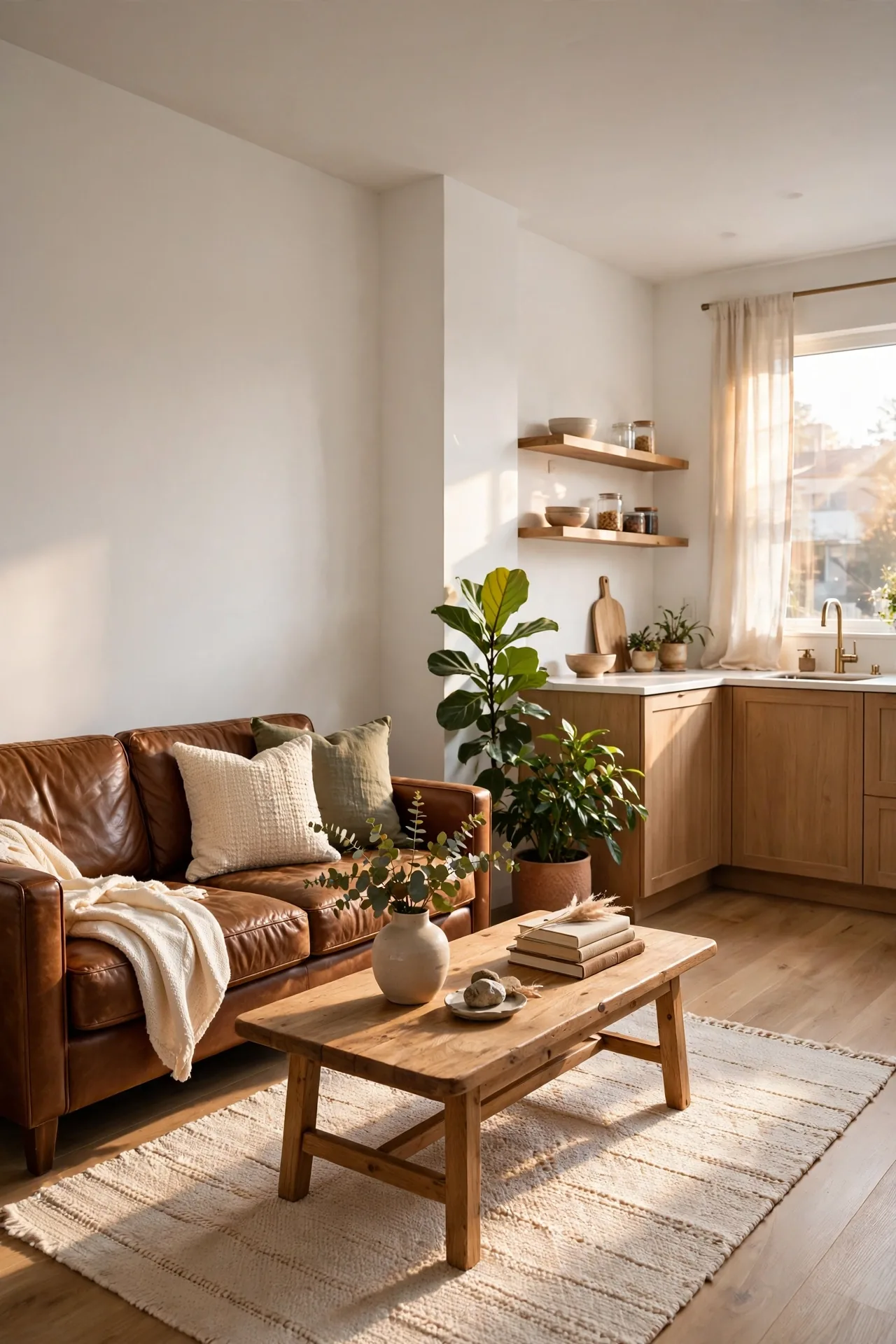
Brown is a grounding choice for a studio with beige walls and wood floors. A chocolate or coffee tone blends into the palette without disappearing, and it reads cozy instead of formal. Add teal or sage pillows for depth, but keep the rest of the room quiet. Brown also hides crumbs and marks better than light colors, and these brown couch decor ideas show more pairings.
Pro Tips: Pick a warm brown with red or orange undertones. Gray-leaning browns look flat beside beige walls and wood floors. Test a swatch at night.
3. Play it safe with neutral beige
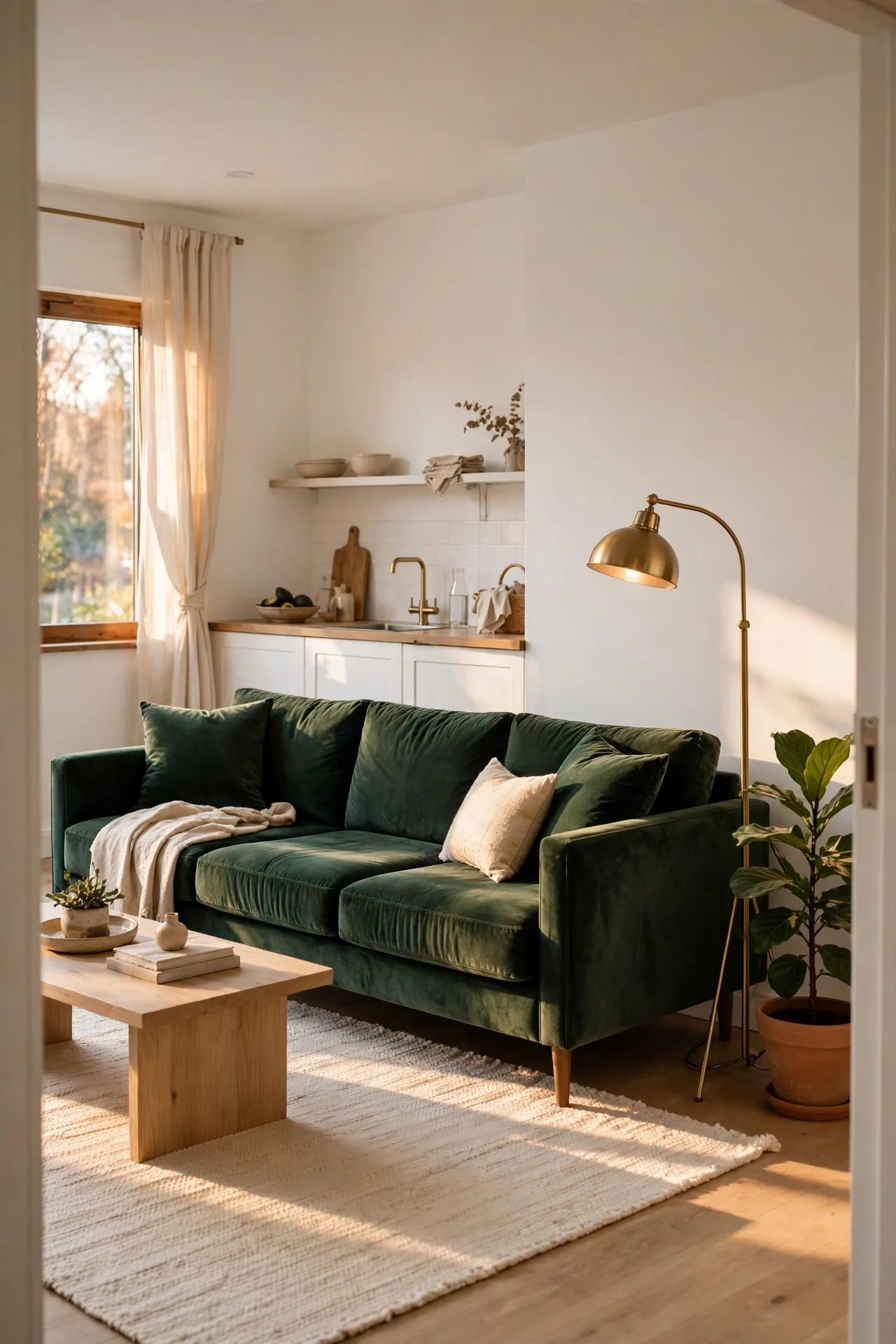
A large L-shaped sofa in warm beige keeps a studio airy because it does not compete with curtains, art, or bedding. You can change the look of the room by swapping pillows and throws, which helps renters who cannot repaint. Put the long side against a wall and keep the short side facing the open floor, so you still have a clear walking path.
Pro Tips: Always check the beige under your evening lamp, not just daylight. Warm undertones look inviting at night, while gray-leaning beige turns dull under yellow bulbs.
4. Choose turquoise for playful energy
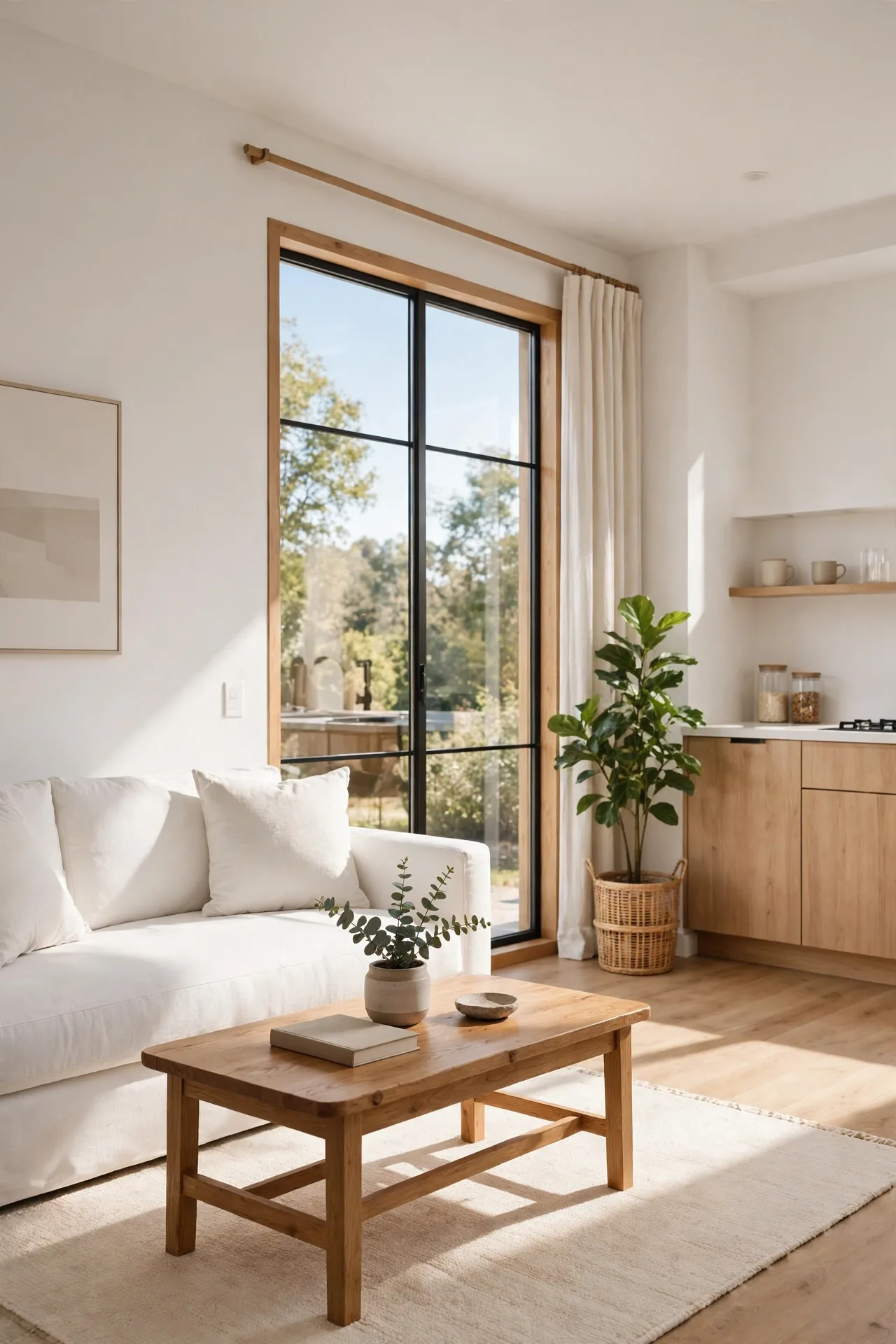
Turquoise adds energy to a studio with white walls and light wood floors. Keep everything around it simple: white cabinets, plain curtains, and minimal wall art. The sofa then reads as the one fun piece in the room instead of one of many. It is a good fit when a small space needs personality without clutter.
Pro Tips: Add mustard or orange pillows, but stop at just three. More than that turns a playful sofa into a crowded one in a small room.
5. Pick soft gray as your versatile anchor
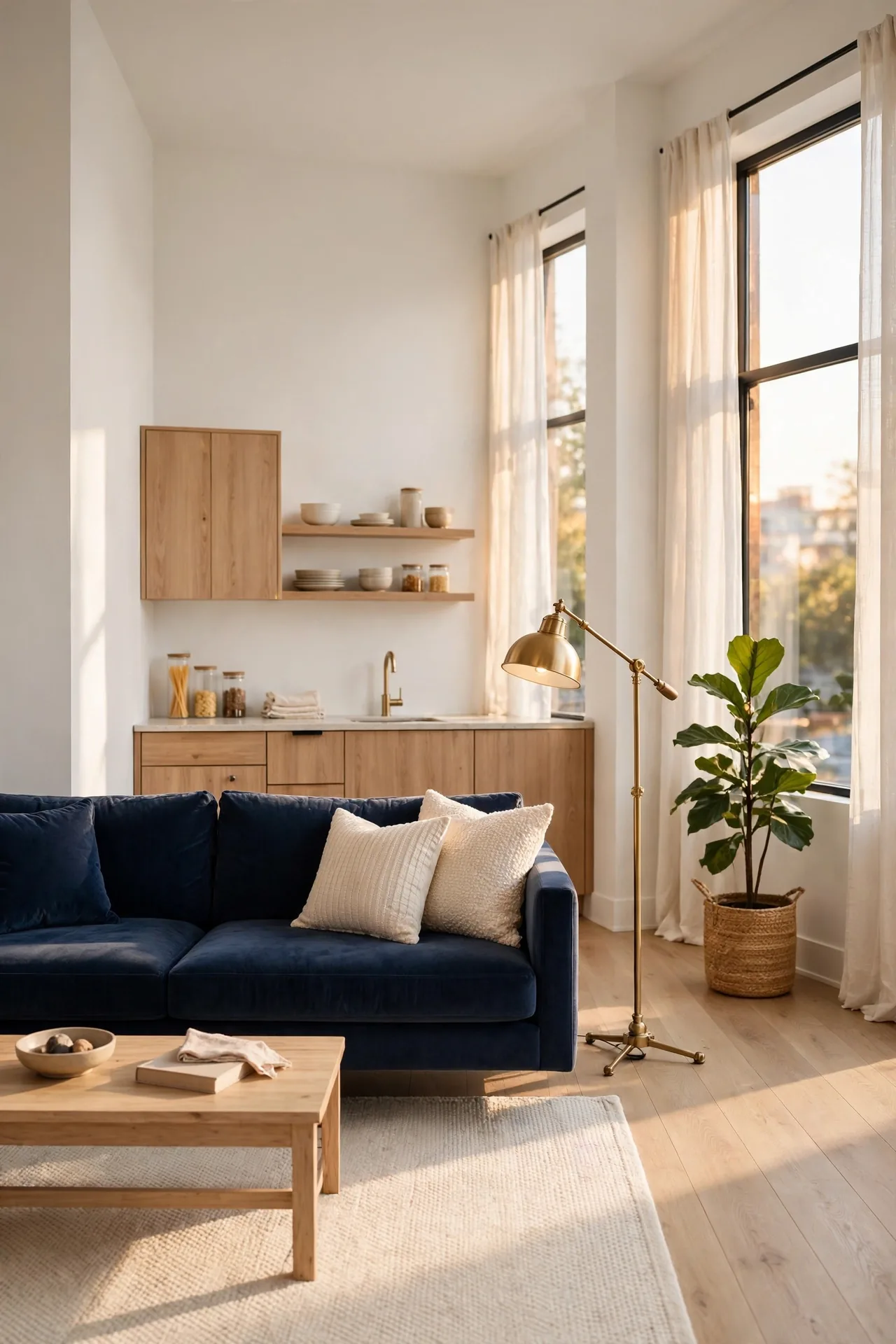
Gray goes with almost every color, from blue and pink to wood and black, so it is the easiest starting point. A soft, warm gray sofa stays in the background and lets a blue velvet ottoman or a textured rug carry the interest. If you are unsure which color to commit to, start here. For help with size, read this guide on how to choose a couch for a studio apartment.
Pro Tips: Choose a warm gray with a slight beige base. Cool blue-grays can look icy next to wood and make the whole studio feel much colder.
6. Try warm taupe for a tonal studio

Taupe is a darker, grayer cousin of beige. In an all-neutral studio it blends with warm walls, linen curtains, and oak furniture, so everything looks like one set. A single blush accent chair adds contrast without breaking the palette. This works best when natural light fills the room.
Pro Tips: Hold a taupe swatch against your wall and stay within one shade of it. A near match looks tonal, while a far one looks accidental.
7. Use a neutral sofa as a canvas for color
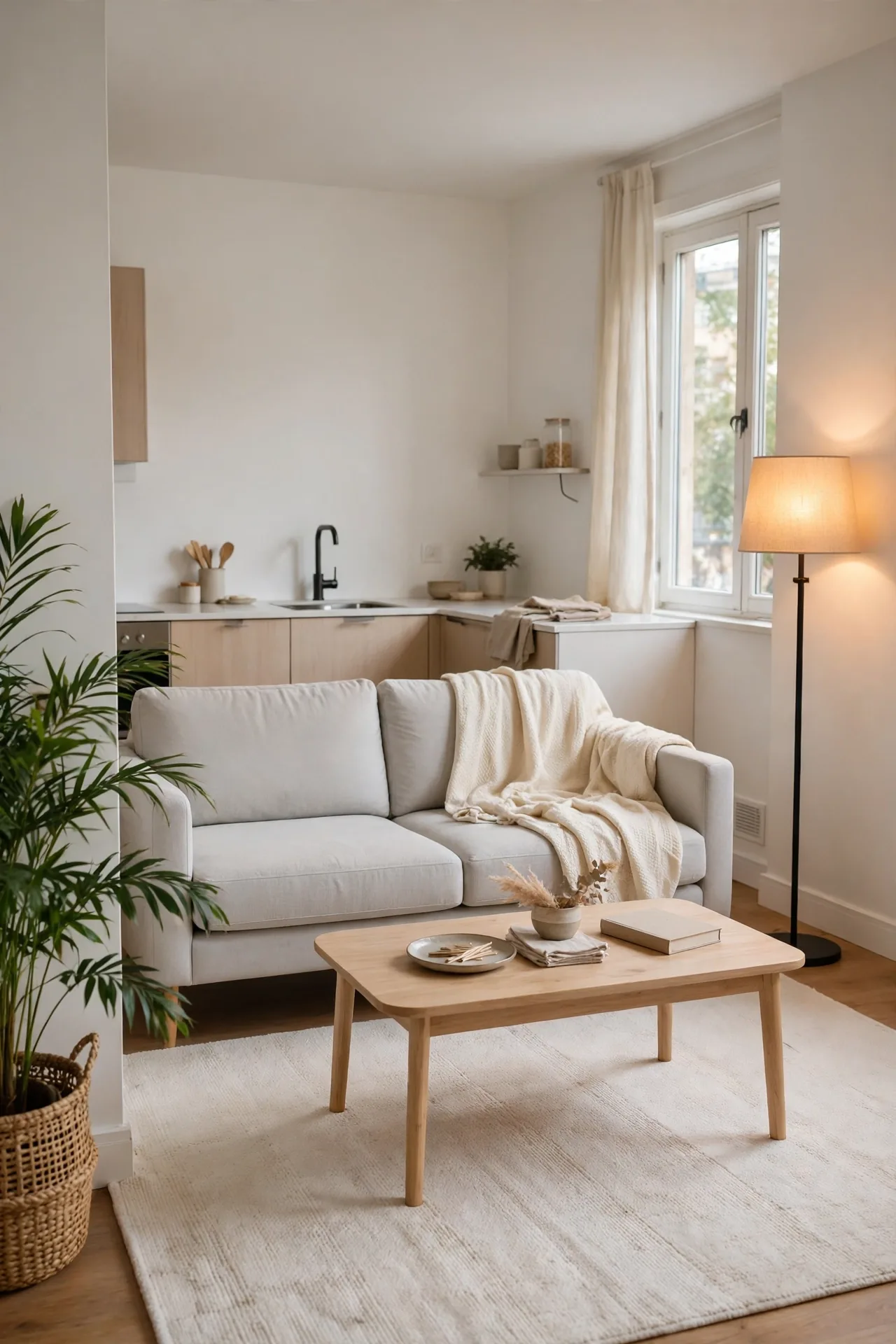
Buy a neutral sofa and bring in color through pillows and throws. A gray sofa looks calm with teal, sage, and beige cushions, then warmer with terracotta and mustard in the fall. In a studio, every large piece takes up visual space, so a neutral sofa lets you change the room without replacing furniture.
Pro Tips: Buy only pillow covers, not full pillows. Covers cost less, wash easily, and let you reuse the same inserts across all your seasonal color changes.
8. Consider a patterned sofa for subtle interest
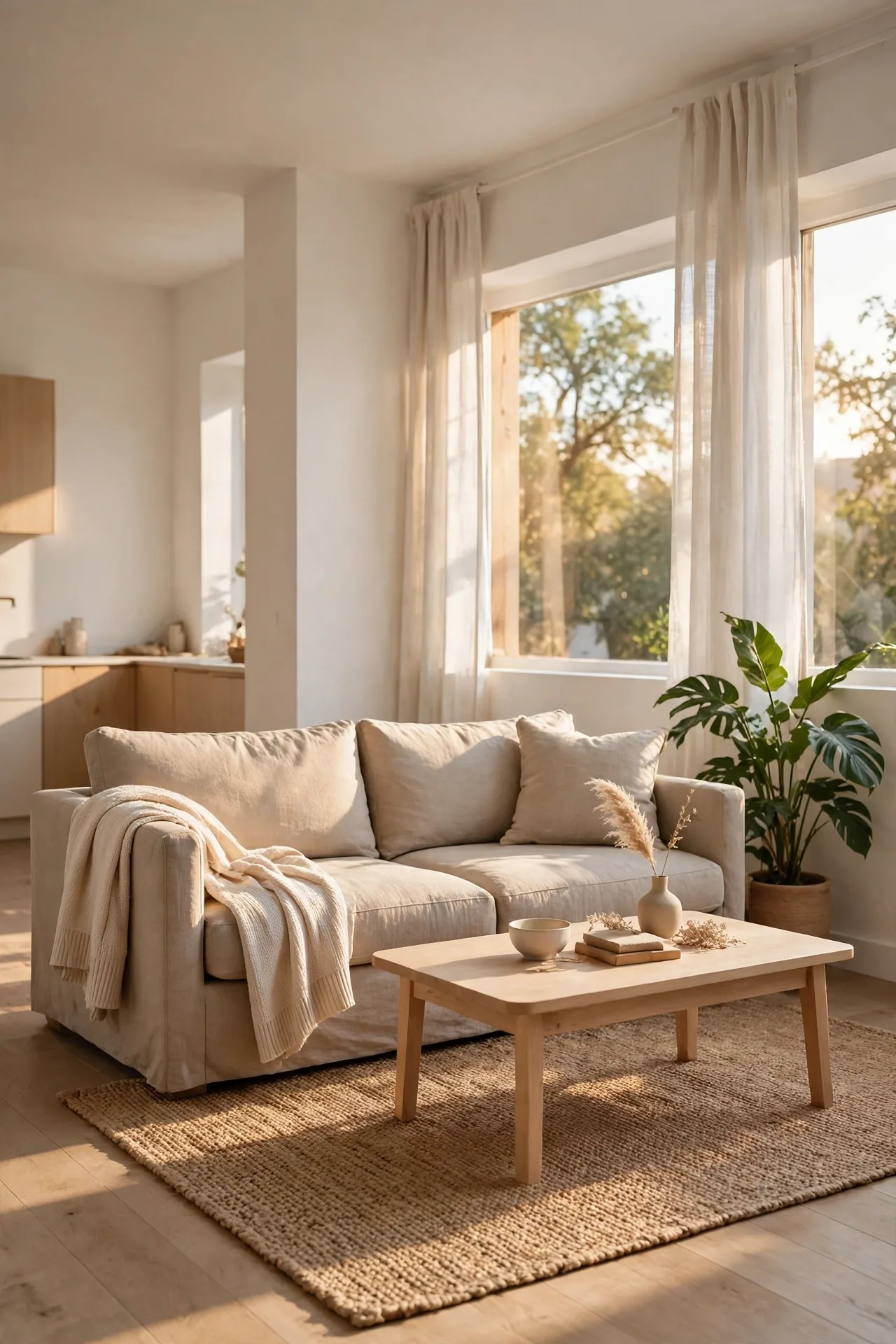
A patterned sofa adds texture without the commitment of a bold solid color. Gray plaid looks good against a soft blush wall because the muted tones keep the pattern calm. Plaid, herringbone, and small tweeds all work in a small room. Avoid large floral prints, which take over the room and go out of style quickly.
Pro Tips: Choose a small-scale pattern, like tweed or herringbone, in two close tones. Big bold prints pull the eye and make a small room feel smaller.
9. Go monochrome with gray and white
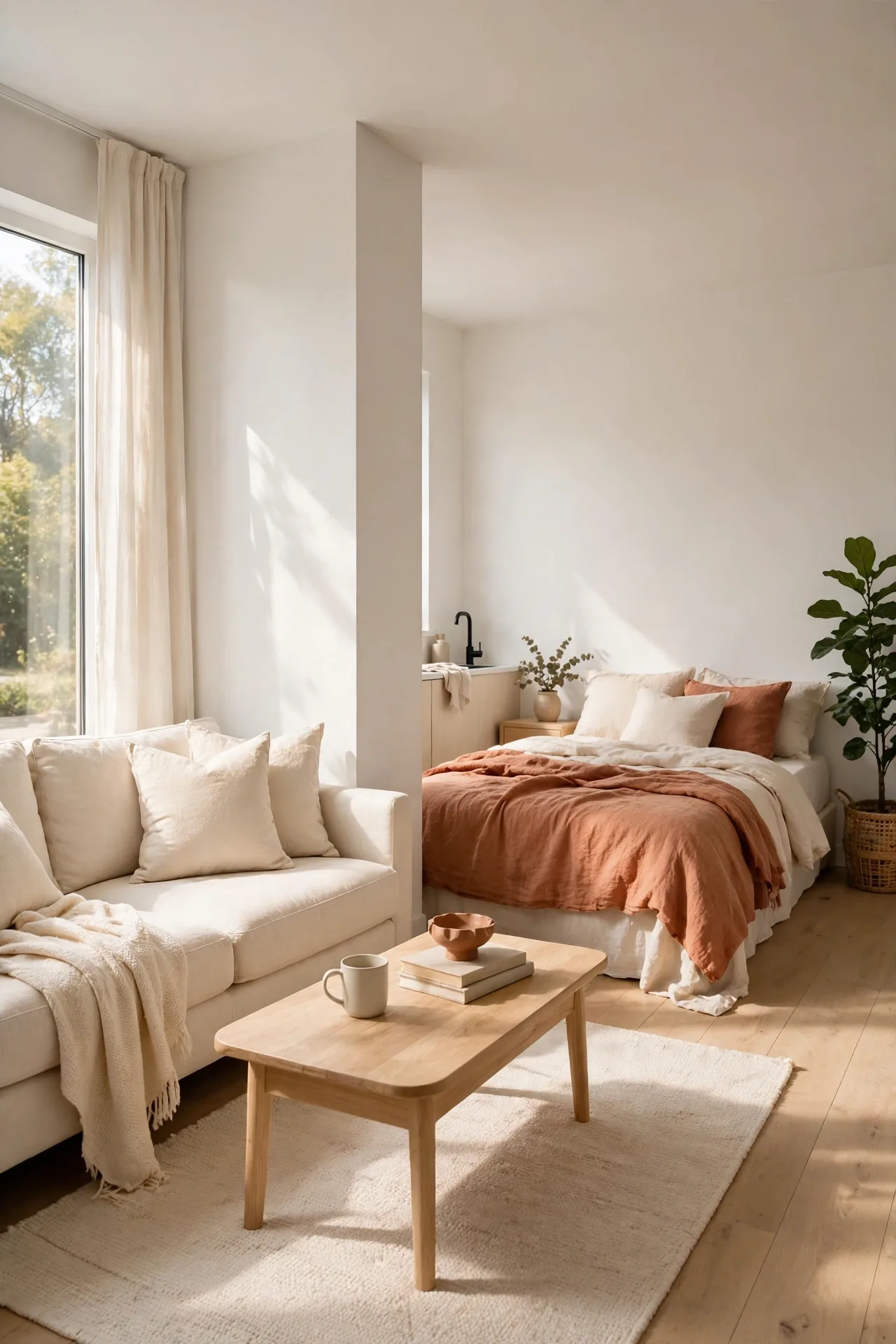
A light gray sofa against white walls with a geometric rug builds depth through texture, not color. Layer dove gray pillows, cream throws, and one or two charcoal pieces so the room does not look flat. One warm material, like a wood coffee table, keeps the palette from feeling cold.
Pro Tips: Always layer three shades such as dove gray, cream, and charcoal. One flat shade across everything makes a white studio feel like a waiting room.
10. Use a white sofa for maximum contrast
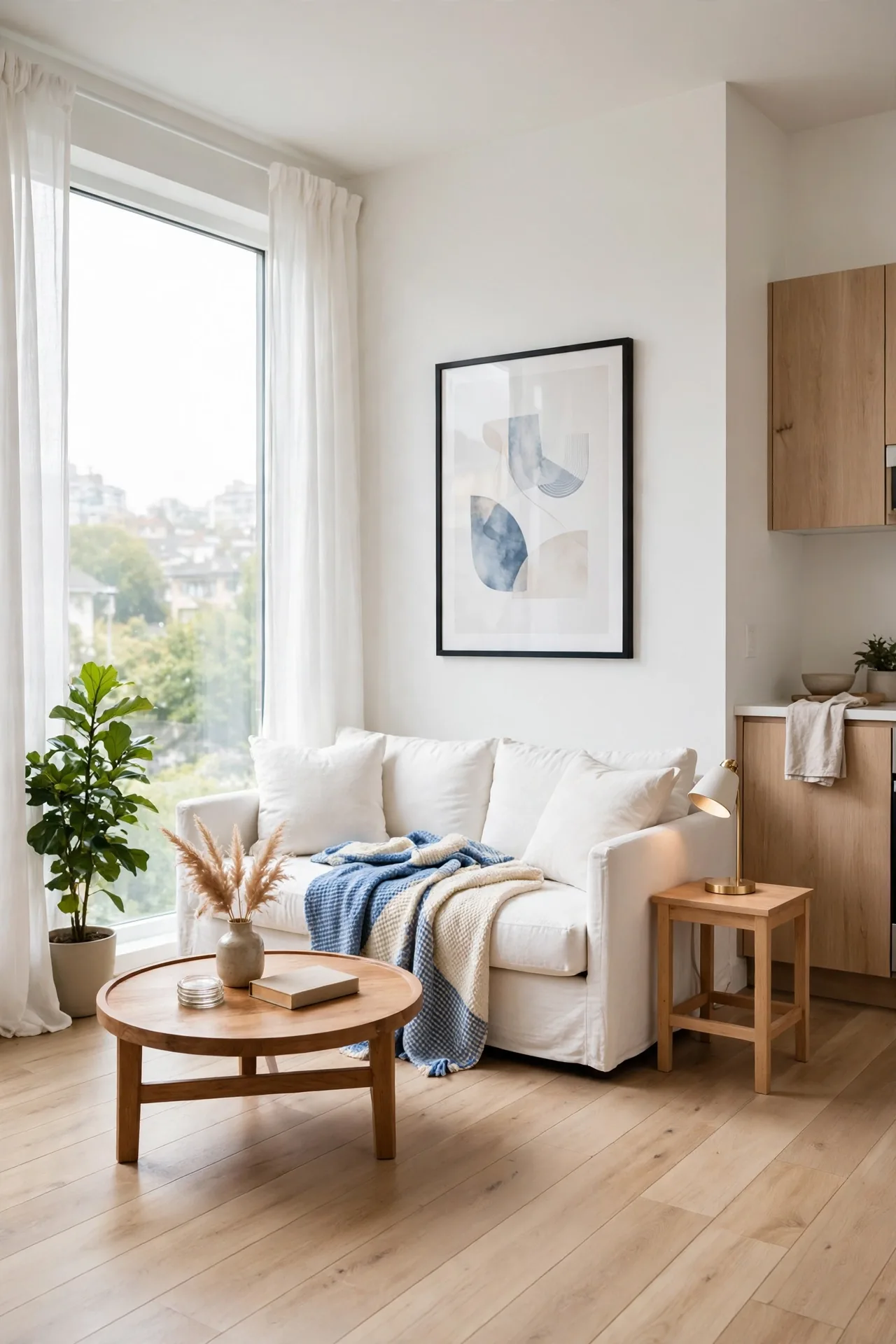
A white sofa looks sharp against warm materials like exposed brick and natural wood, and it makes both look richer. Coral pillows add warmth without clutter. White works best when the room already has a strong backdrop, such as textured walls or statement lighting. For more styling, see these white couch living room ideas.
Pro Tips: Choose a slipcover you can machine wash and check the care tag before buying. Wine, coffee, and denim dye all show quickly on white fabric.
11. Pair a cream sofa with a bold accent wall

When the wall carries the color, keep the sofa quiet. A cream sectional lets a teal accent wall behind the bed be the focal point, which also marks the sleeping area without a divider. The color sits where you sleep and the calm sits where you relax. This split makes a studio feel organized at a glance.
Pro Tips: Use peel-and-stick wallpaper in teal on one wall behind the bed if you rent. It gives the same color impact and usually comes off cleanly.
12. Try dark charcoal against a colorful wall

Charcoal has weight without swallowing the room. Against a blush or pink wall it looks moody and sharp, and mustard pillows tie the warm wall to the cool sofa. Dark furniture works in a studio when the walls and floors stay light enough to keep the room open. These dark grey sofa living room ideas show more combinations.
Pro Tips: Keep the floor and rug light when the sofa is charcoal. Dark sofa plus dark floor in a studio makes the room feel closed in.
13. Make a red sofa the room’s main character

A red sofa is the main character, so build the room around it. Pair coral red with teal curtains and an orange throw so the colors support each other. Do not fight it with competing neutrals. Red suits a confident look, and it works best in studios with strong daylight.
Pro Tips: Place the sofa where it gets daylight and use warm bulbs at night. Red looks rich in light but turns heavy in dim rooms.
FAQs
What is the best sofa color for a studio apartment?
Warm gray, beige, and taupe work best. They blend with most wall colors, look calm in an open room, and let you add color with pillows and throws.
Should the sofa match the wall color?
It can. A sofa within one shade of the wall gives a tonal, calm look. A sofa in a contrasting color gives a focal point instead, so choose based on the mood you want.
Which sofa color hides stains best?
Charcoal, mid-gray, and brown hide marks and daily wear best. A light sofa works if the cover is removable and machine washable.
Can I use a bold sofa color in a small studio?
Yes, if the walls and floors stay light and the sofa is the only strong color. Keep other furniture and curtains simple.
How do I test a sofa color before buying?
Order a fabric swatch and hold it against your wall and floor. Check it in daylight and under your evening lamp, because the color can change.
A sofa color should survive the room’s worst light, not just its best. Check the swatch on a grey afternoon as well as in morning sun, since a warm beige can turn muddy and a cool grey can turn blue when the light drops. The color that still looks right on a dull day is the one to buy.
The rug and the sofa should not match exactly. A rug one or two tones lighter or darker than the sofa gives the floor depth, while an exact match flattens the whole seating area into one block of color. The small gap between the two tones is what makes each piece read on its own.
Dark sofas show light dust and pet hair, while light sofas show spills and stains. Pick based on what your room actually produces — a home with a dog needs a mid-tone that hides both, while a home with small children needs a washable cover more than any particular color.
Final Thoughts
Pick the sofa color first, then match the walls, rug, and curtains to it. If you are unsure, start with a warm neutral and add color in pillows and throws. Choose a bold sofa only if the walls and floors stay light.

Hi, I'm Wasif — welcome to The Homes Decors. I write about home decor: the ideas, choices, and small details that make a space feel considered rather than accidental. If you've ever wondered why a room works, not just what's in it, you're in the right place.