
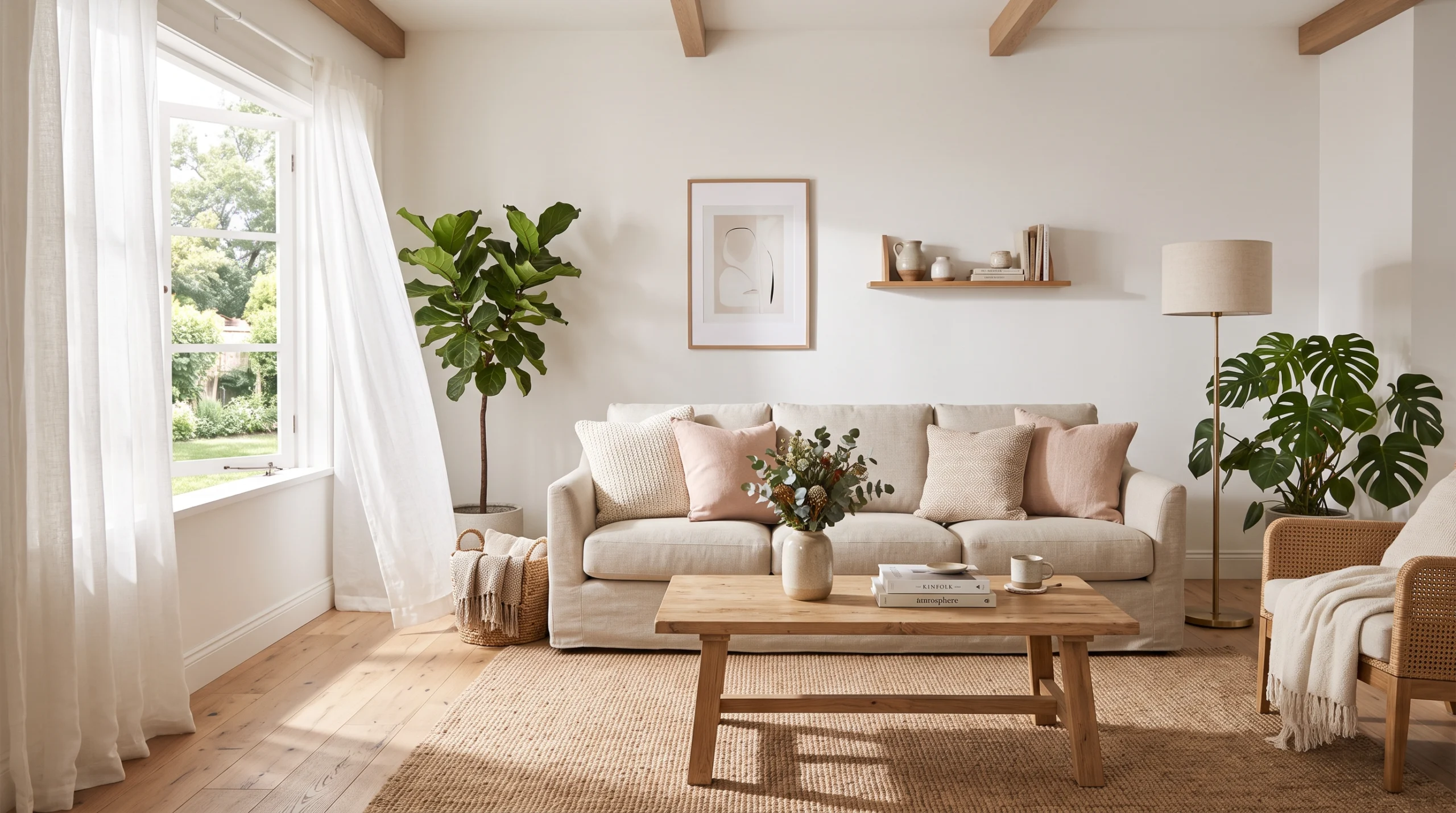
Light color living rooms work because pale walls and pale furniture bounce whatever daylight you have around the room instead of soaking it up. The fastest way to get one: paint walls in a warm white or soft beige, keep large furniture pieces in matching light tones, and add texture (linen, boucle, jute) so the room doesn’t read flat or cold.
If you’re a renter, you can get most of this look with paint-free tricks — light textiles, mirrors, and furniture swaps. If you own your place, wall paint and flooring changes open up more options. Either way, the goal is the same: less visual weight, more bounced light.
Which light palette actually fits your room?
| Your situation | Best light palette | Why |
|---|---|---|
| North-facing, low natural light | Warm white or cream (avoid cool grey) | Cool tones read flat and grey without sun hitting them |
| South-facing, lots of sun | Soft grey, pale blue, or greige | These can handle more light without looking washed out |
| Renting, no paint allowed | Light textiles + furniture swaps | Rugs, curtains, and slipcovers change the room without touching walls |
| Small living room | Monochrome light palette, ceiling to floor | One tonal family makes the room feel bigger, not choppier |
| Kids or pets in the house | Light with texture (boucle, performance fabric) over flat pale color | Texture hides everyday wear that flat pale fabric shows fast |
1. Warm white walls with cream furniture
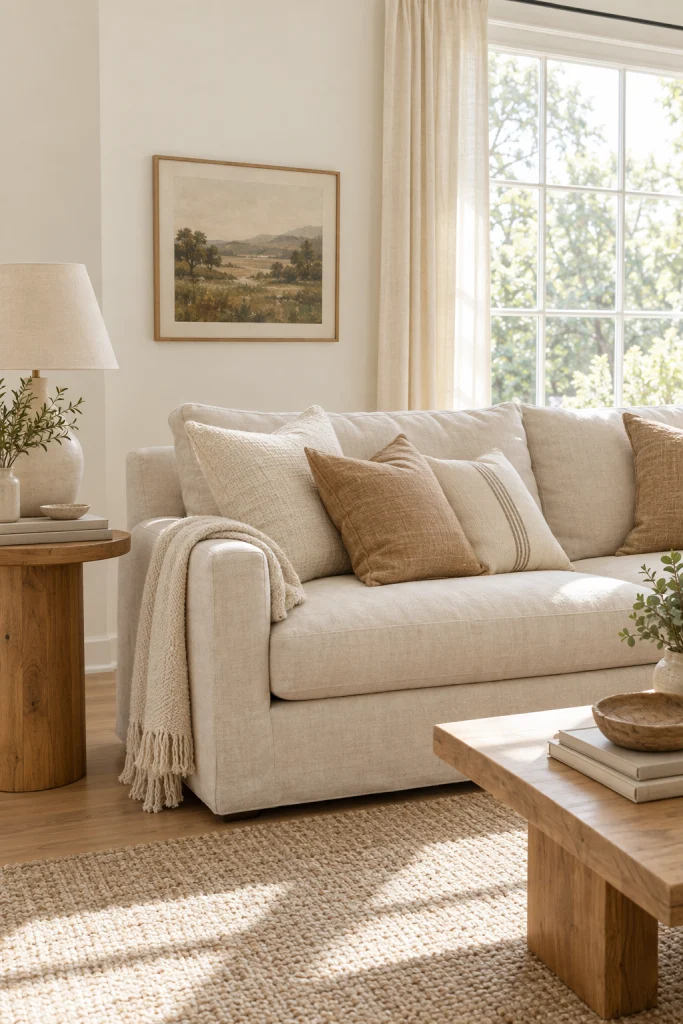
Skip stark, cool white — it can look clinical under artificial light at night. A warm white (one with a hint of yellow or beige undertone) keeps the room feeling soft during the day and cozy after dark.
Pair it with a cream sofa and one warm wood piece so the room doesn’t tip into an all-white, sterile look.
2. Soft beige palette layered with texture
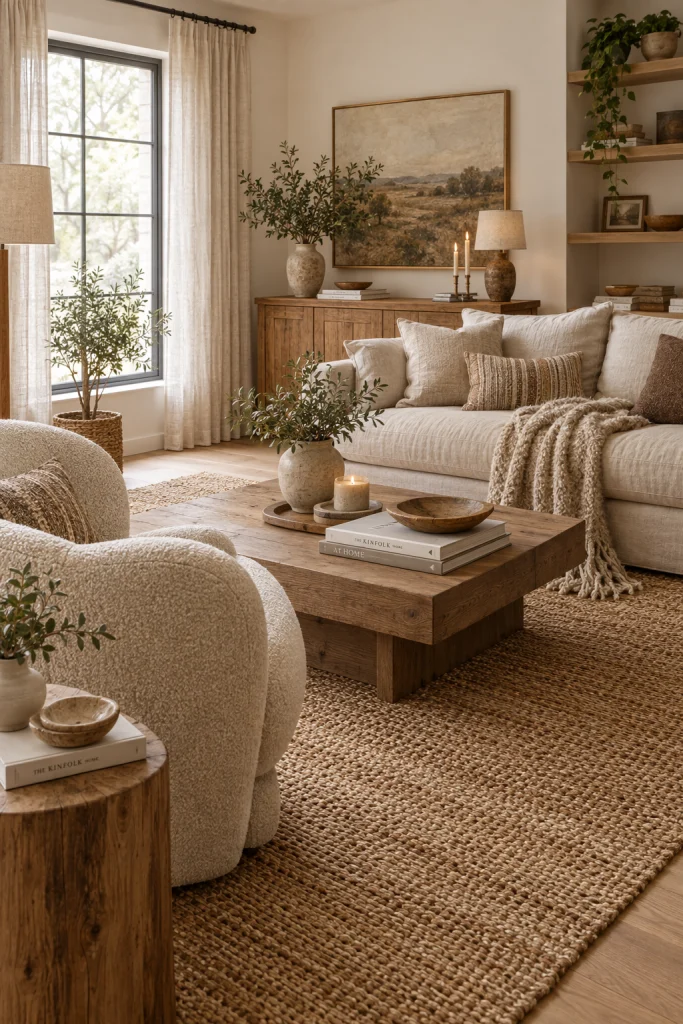
Beige gets a bad reputation for being boring, but it’s boring only when it’s flat. Layer three or four different beige and tan textures — a boucle chair, a linen sofa, a jute rug, a wool throw — and the room reads warm and expensive instead of blah.
This is the easiest palette to live with long-term because it hides dust, pet hair, and everyday mess better than pure white. For more direction on this exact palette, see our beige living room ideas.
3. Pale blue accent wall with a beige sofa
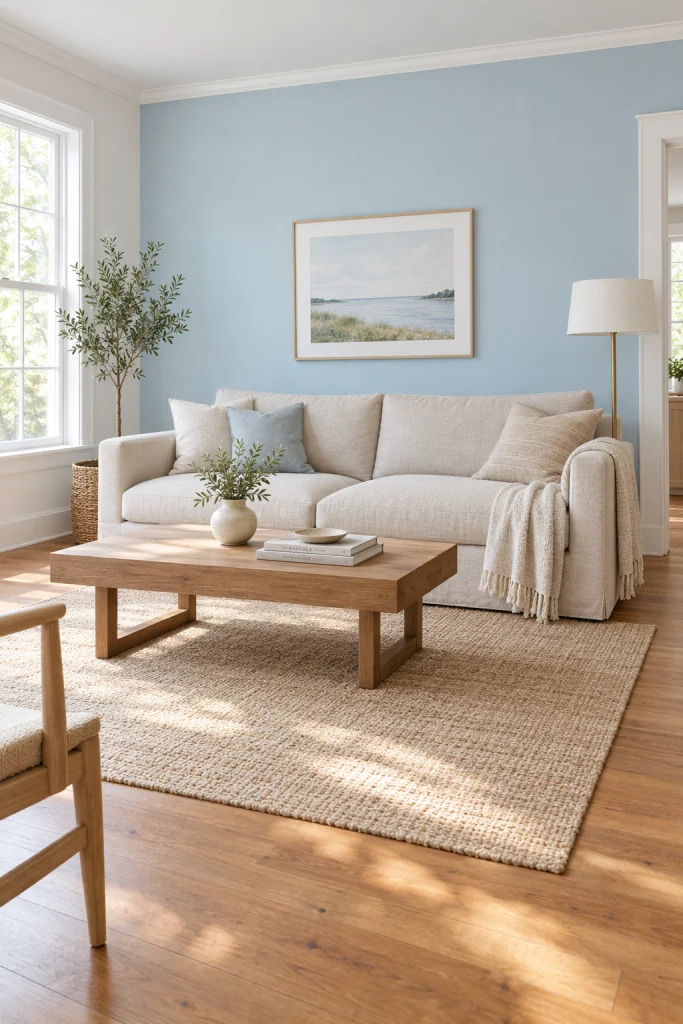
One pale blue wall behind the sofa adds color without turning the room cold. Keep the other three walls white or beige so the blue stays an accent, not the whole mood.
This combo works especially well in rooms with warm-toned wood floors, since the beige sofa bridges the cool wall and warm floor. For a full breakdown of the pairing, check our blue and beige living room ideas.
4. All-white Scandinavian minimalism
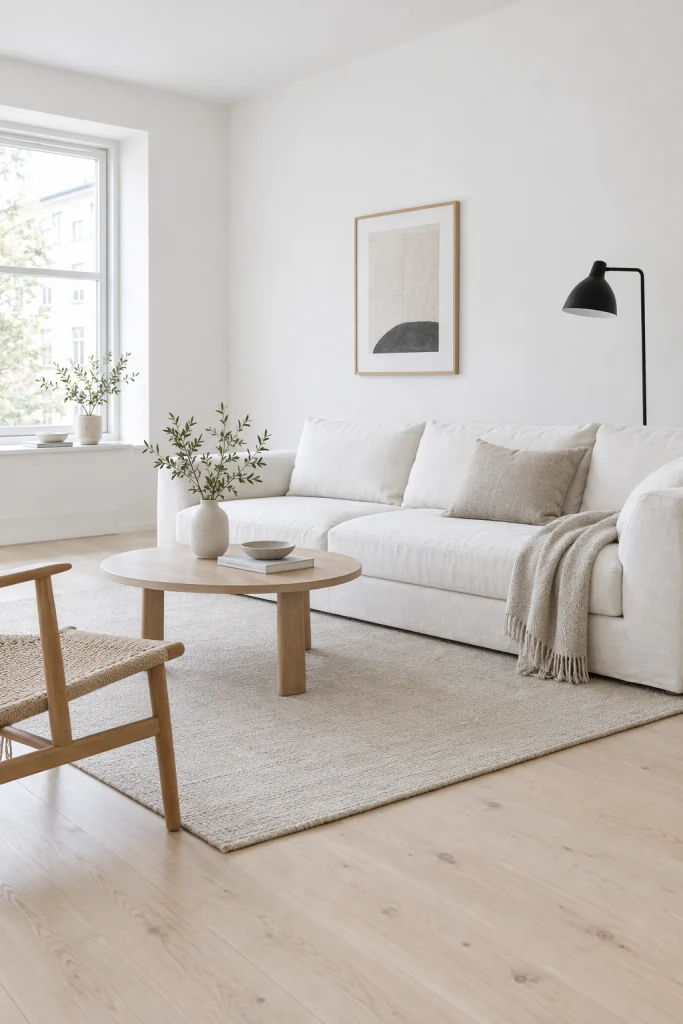
The Scandi look leans on white walls, pale wood floors, and just a few functional pieces instead of a packed room.
Add one black or dark wood detail (a frame, a lamp base) so the space doesn’t look unfinished — an all-white room with zero contrast can feel more like a waiting room than a living room. For the full approach, our Scandinavian living room ideas go deeper.
5. Cream boucle couch as the centerpiece
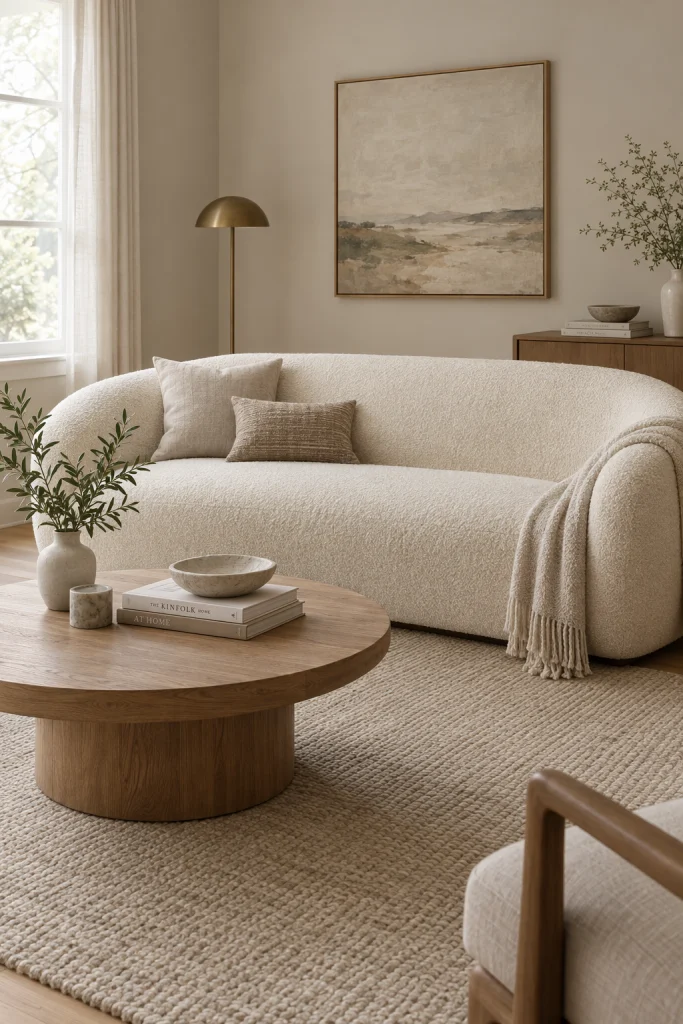
A cream boucle sofa does double duty: it’s light enough to brighten the room and textured enough to hide crumbs, pet hair, and everyday life better than a flat linen sofa in the same color.
Build the rest of the room around it in muted tones so the texture stays the star. See more in our cream couch living room ideas.
6. Light grey walls with warm wood accents
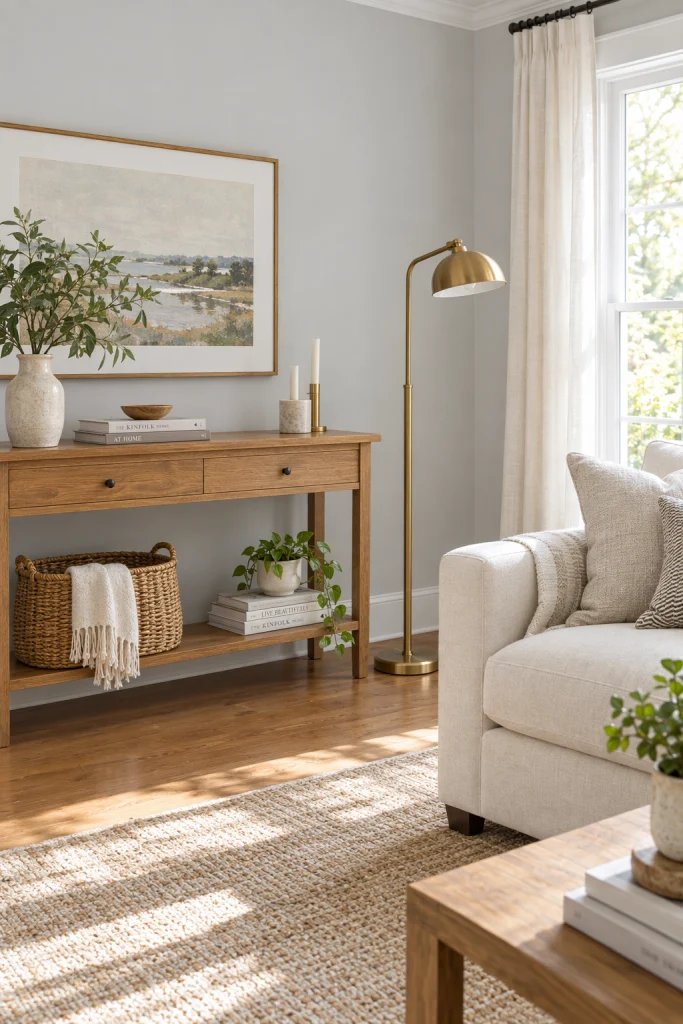
Grey can go cold fast, so pair it with warm elements — a wood console, rattan basket, brass lamp — to keep the room from feeling like a hospital waiting area.
Light grey is a solid pick for south-facing rooms that get a lot of direct sun, since it can handle brightness without washing out.
7. A whisper of sage green
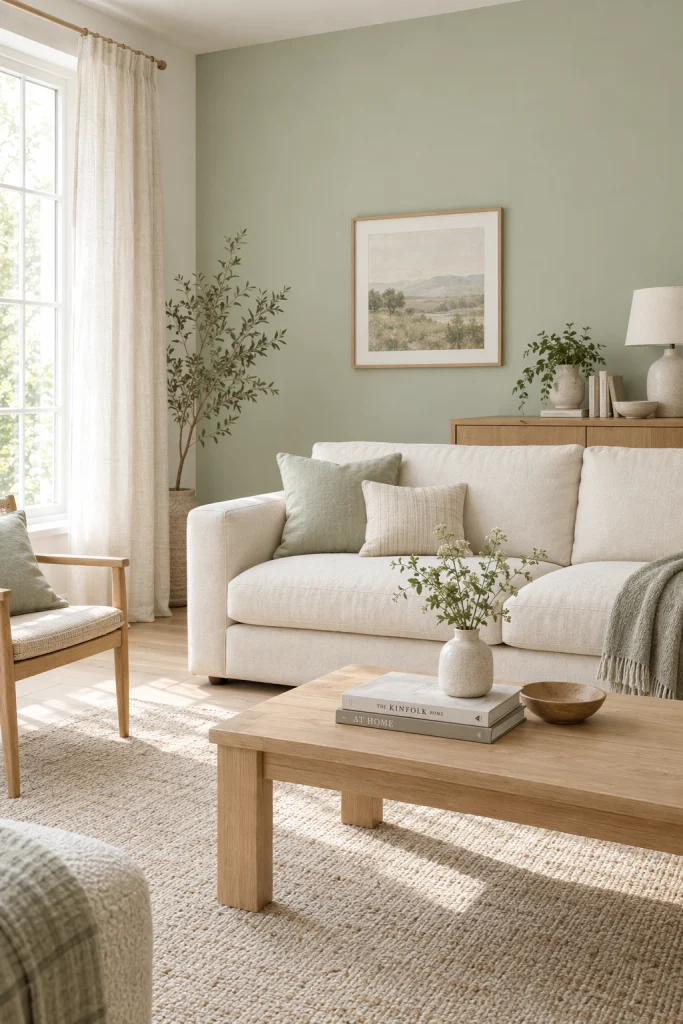
A muted, pale sage green (not a saturated forest green) works almost like a neutral. Use it on one wall or in curtains and pillows if you’re not ready to commit to a full wall.
It pairs naturally with cream, white, and light wood without fighting for attention. Our sage green living room ideas show more full-room versions.
8. A white couch grounded with a jute rug
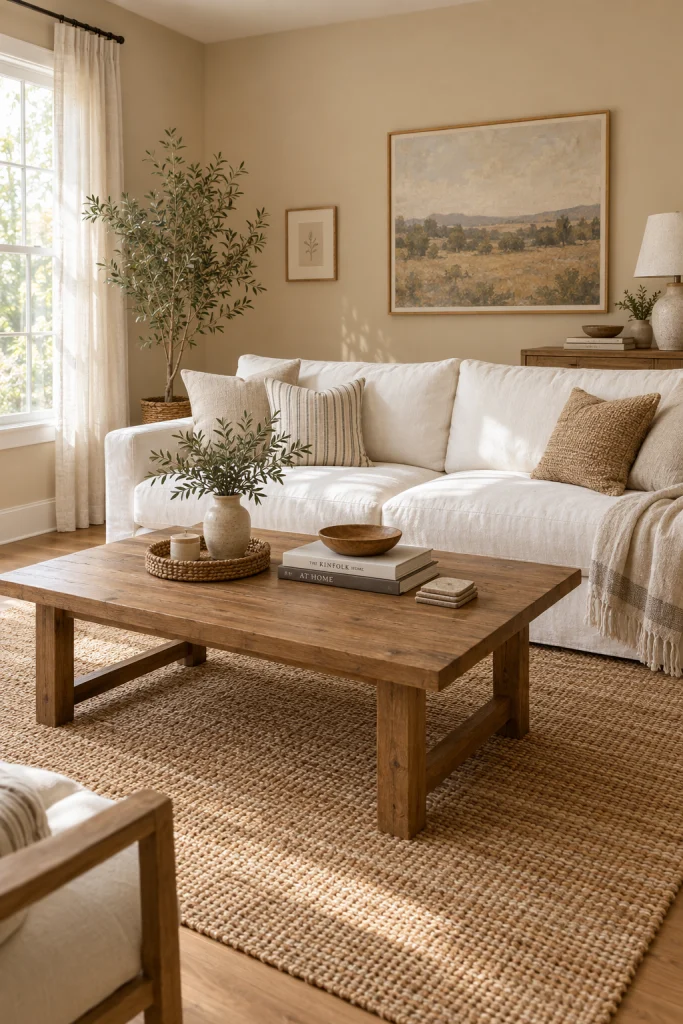
A white sofa reflects the most light of almost any furniture choice, but it can look like it’s floating in a pale room.
Ground it with a darker jute or wool rug so your eye has an anchor point. This is also the easiest fix if a white couch already feels “too much” in your space.
9. A blush pink accent chair
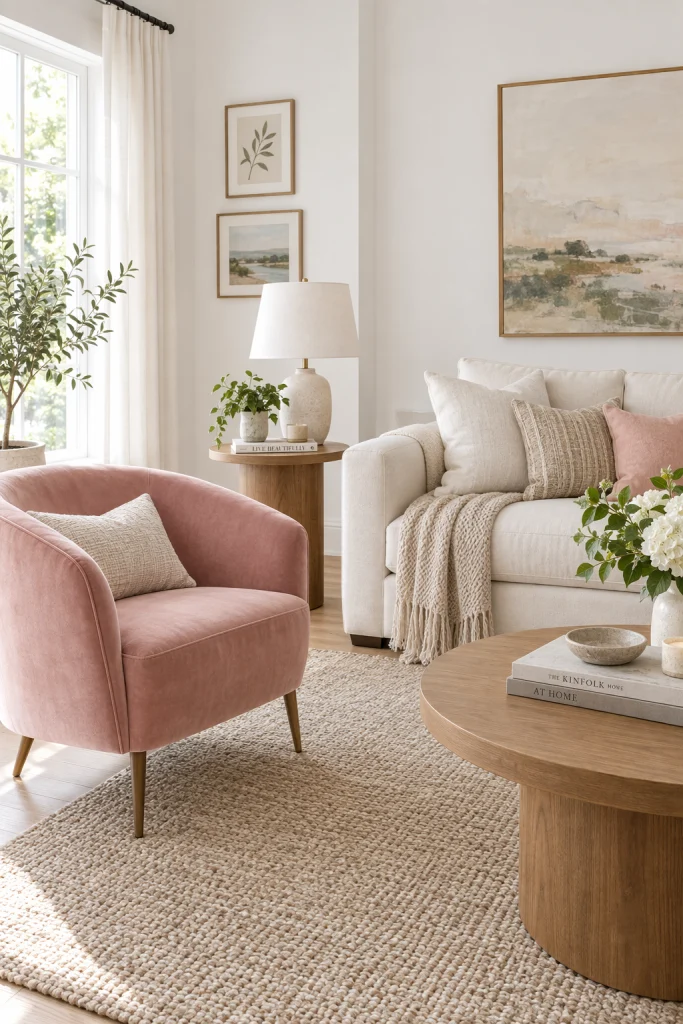
One blush pink accent chair in an otherwise neutral room adds color without overwhelming the space, and it’s an easy swap if you get tired of it later.
Keep the walls and sofa neutral so the chair stays the statement piece rather than fighting with the rest of the room.
10. Floor-to-ceiling ivory linen curtains
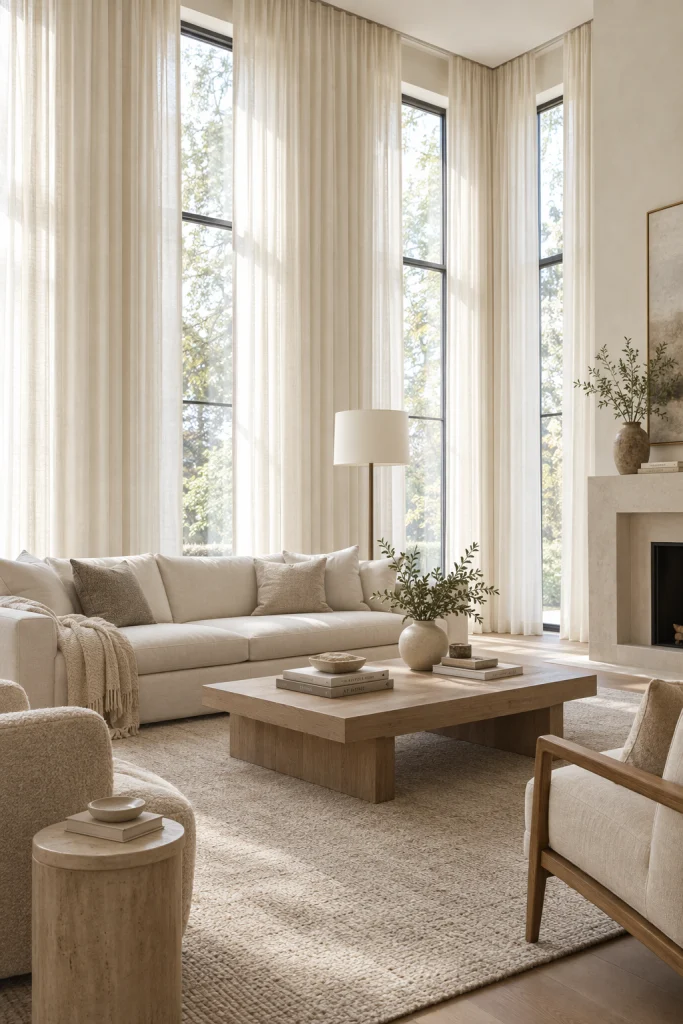
Hanging curtains close to the ceiling instead of right above the window frame makes windows — and the whole room — look taller. Ivory linen filters light softly during the day instead of blocking it, which keeps the room bright even with the curtains closed halfway.
11. Light oak flooring under white walls
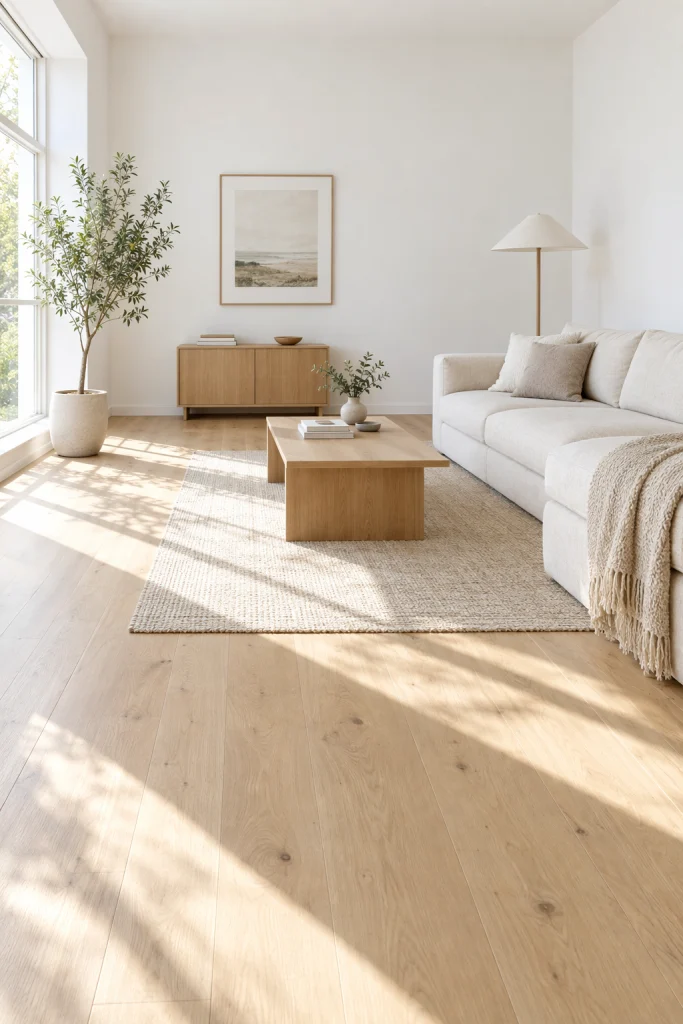
If you’re refinishing or replacing floors, light oak reflects more light back into the room than dark walnut or espresso tones.
Combined with white or cream walls, it keeps the whole base of the room bright, which matters most in rooms with only one or two windows.
12. Greige walls for warmth without stark white
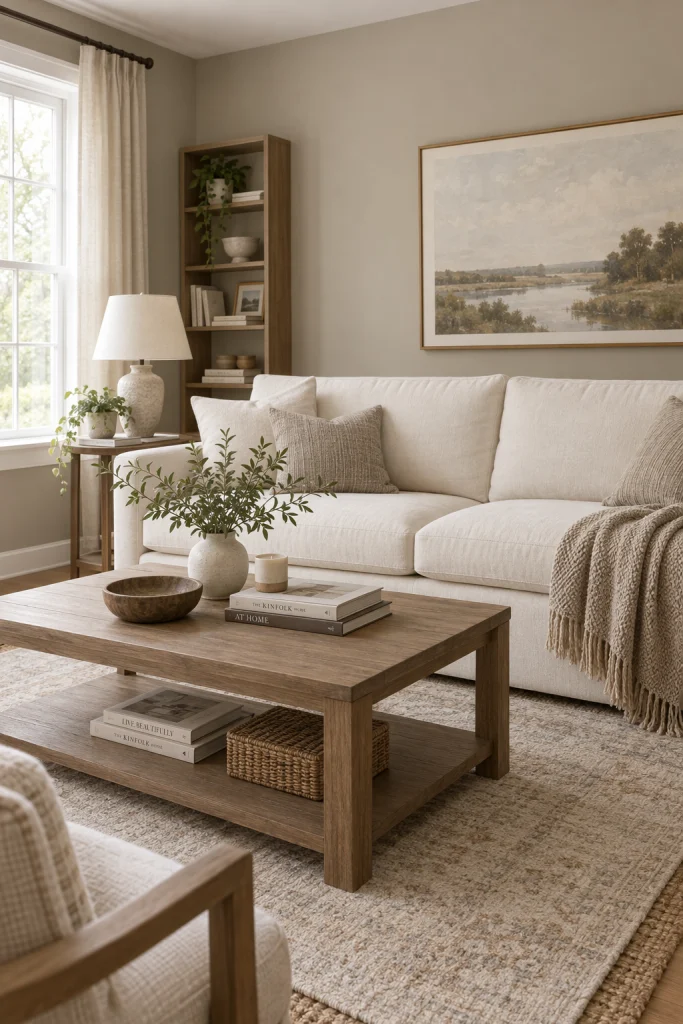
Greige — a grey-beige blend — splits the difference for people who find pure white too stark and pure beige too warm.
It’s a safe, resale-friendly choice if you’re painting a room you’ll eventually sell the house with. Our gray and beige living room ideas has more combinations if this palette fits.
13. Pale yellow throw pillows for a cheerful pop
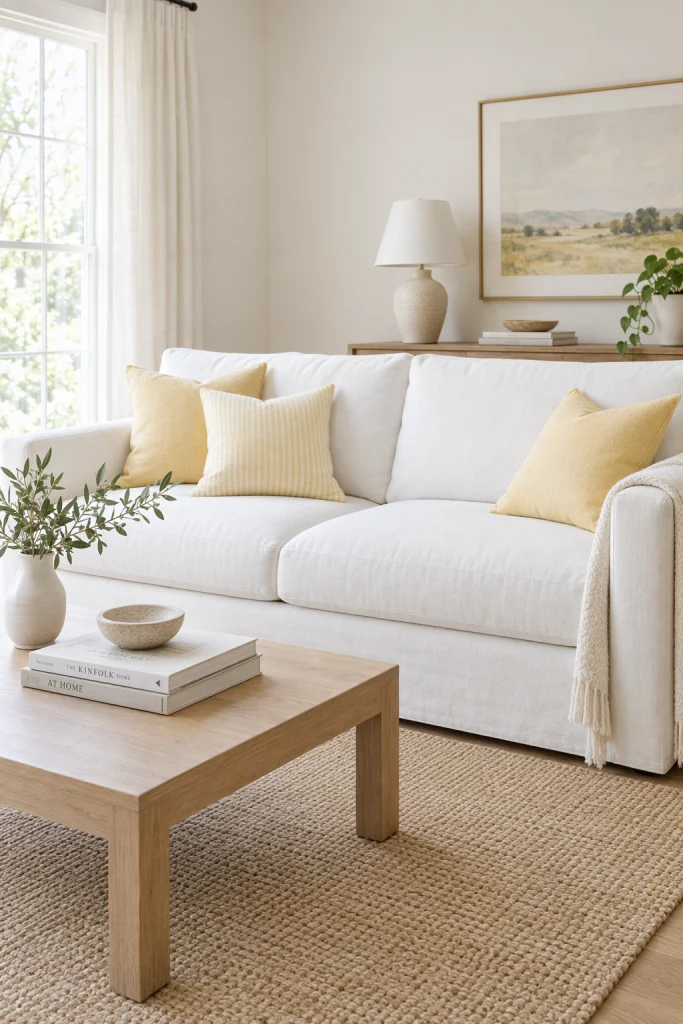
A couple of pale, buttery yellow pillows on a white or cream sofa read cheerful without turning the room into a nursery.
It’s a low-cost, low-commitment way to test whether you actually like color in the room before painting anything.
14. A whitewashed brick fireplace
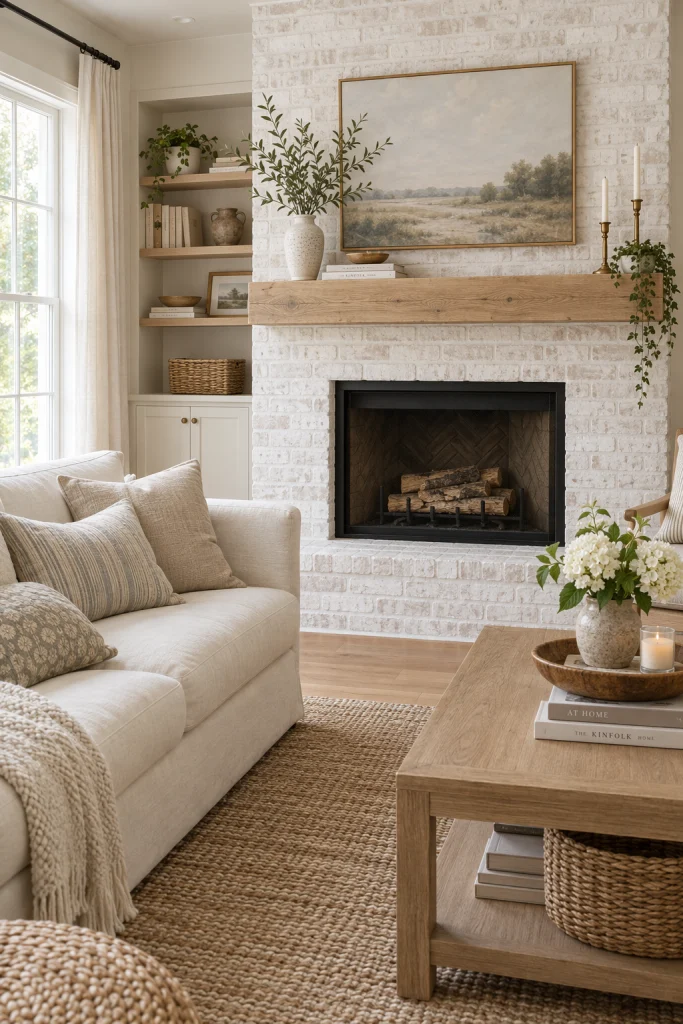
If you have exposed brick, whitewashing it (a diluted paint wash that lets some brick texture show through) lightens the whole wall without fully painting over the texture. It’s a good middle ground between keeping the original brick and going full white paint.
15. A large mirror to double the light
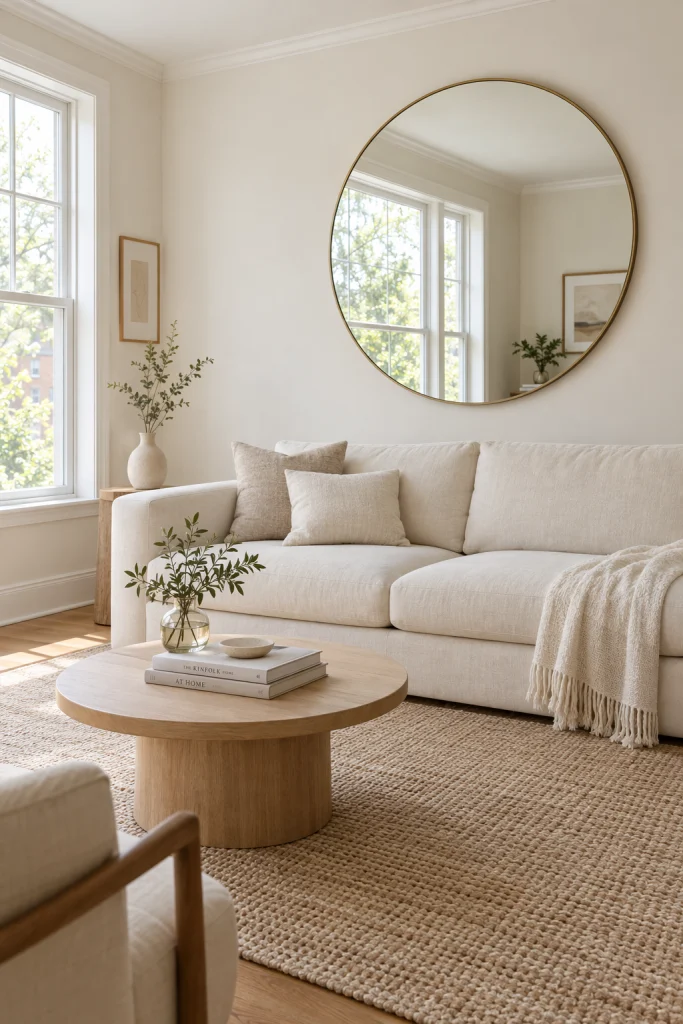
Hang a large mirror directly across from your main window and it reflects daylight back into the room, which noticeably brightens even a small or dim living room.
If you’re hanging it on drywall, use the right anchors for the weight — a heavy mirror on plastic drywall anchors alone is a real safety risk.
16. Sheer linen curtains instead of heavy drapes
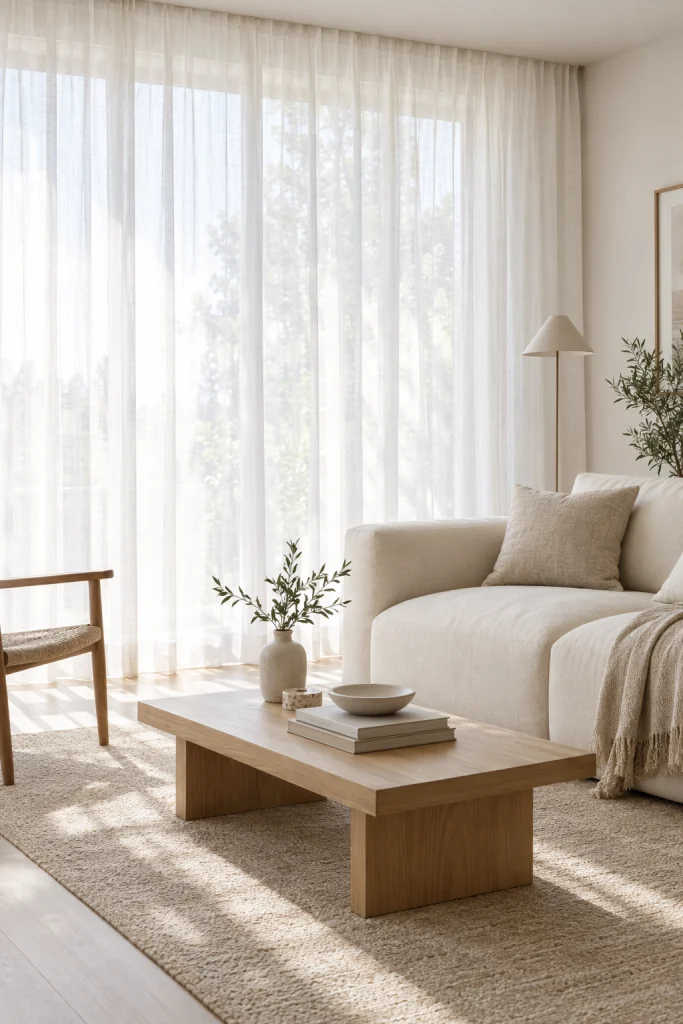
Heavy blackout drapes have their place in a bedroom, but in a living room they block daylight even when open, since the fabric stacks up and shadows the window edge.
Sheer or lightweight linen curtains let daylight filter through even when closed, which keeps the room brighter all day.
17. Monochrome tonal layering
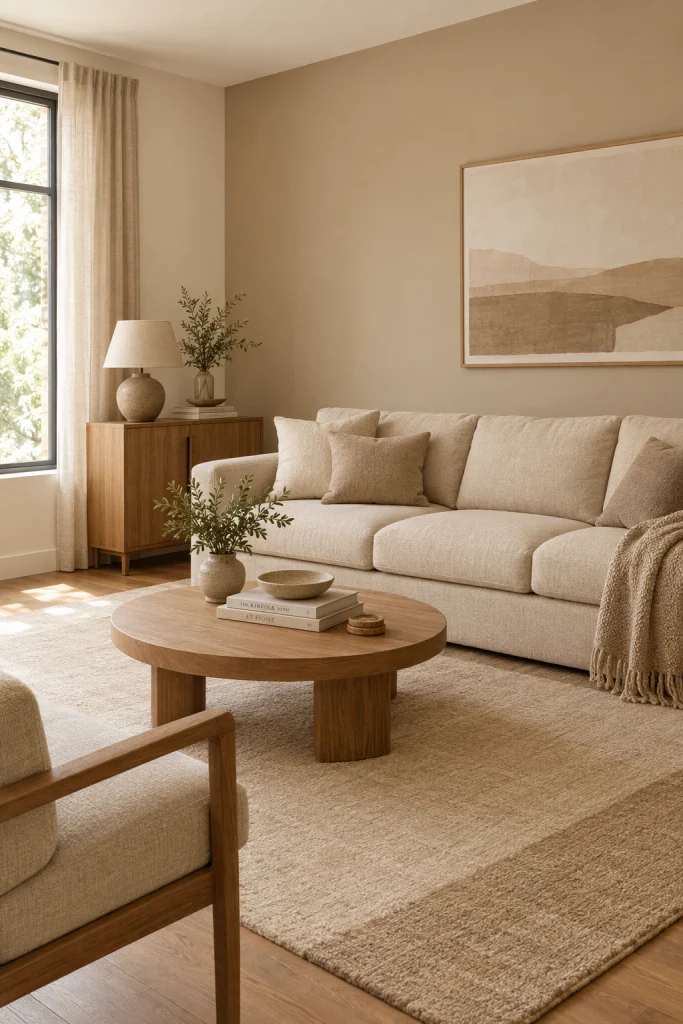
Instead of picking one light color and one accent color, stay in a single family — three or four shades of beige, or three shades of grey — for walls, sofa, and rug.
It reads intentional and calm instead of matchy, and it’s the fastest way to make a room feel pulled-together without adding actual color.
18. A light wool or jute area rug
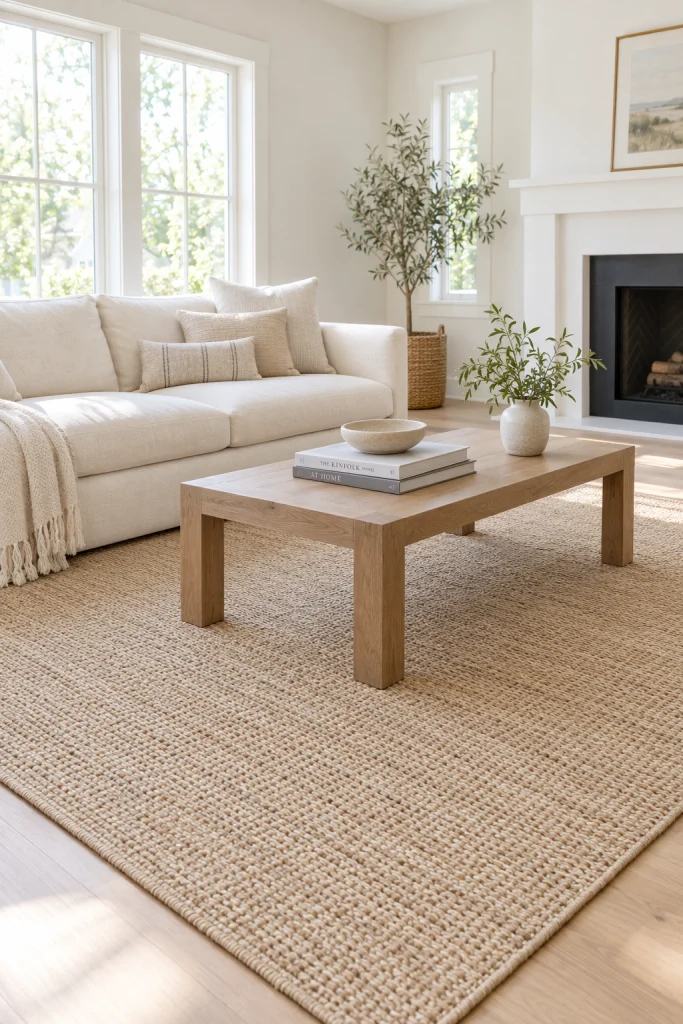
A pale rug keeps the floor from becoming a dark, heavy anchor in an otherwise light room. Jute is the cheaper, more durable option for high-traffic rooms; light wool is softer underfoot but shows stains more easily, so it’s a better fit for lower-traffic formal living rooms.
19. Light color, ceiling to floor, for small rooms
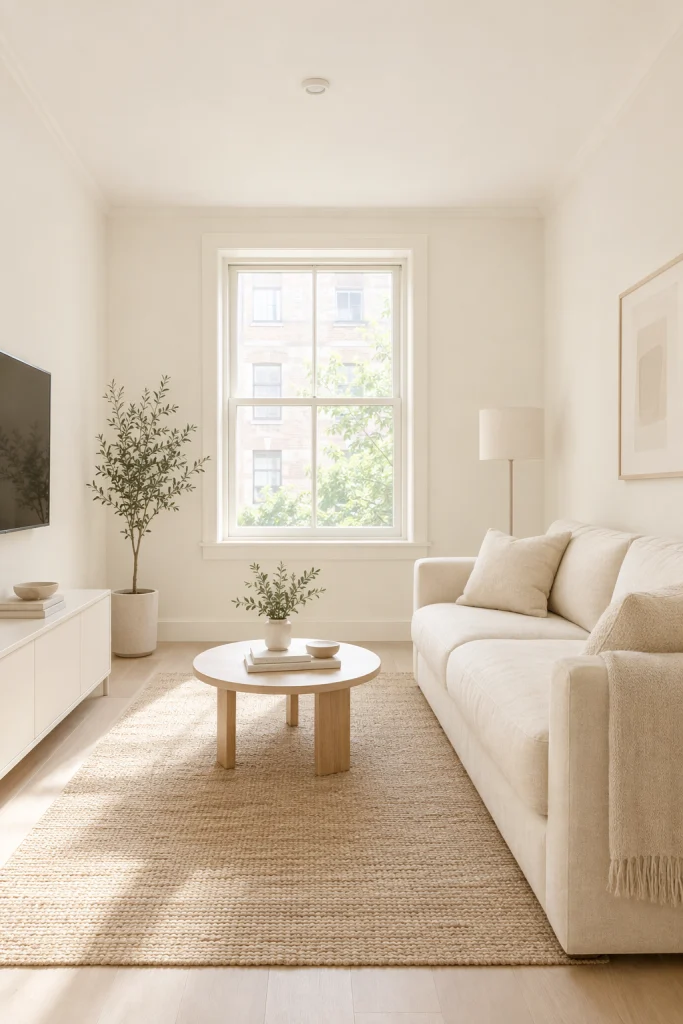
In a small living room, carrying one light color across the walls, trim, and ceiling removes the visual lines that make a room feel chopped up and smaller than it is.
Skip a contrasting white ceiling here — it draws a hard line at the top of the room and actually lowers it visually. More small-space specific tricks are in our small living room ideas.
20. Light lavender for an unexpected soft accent
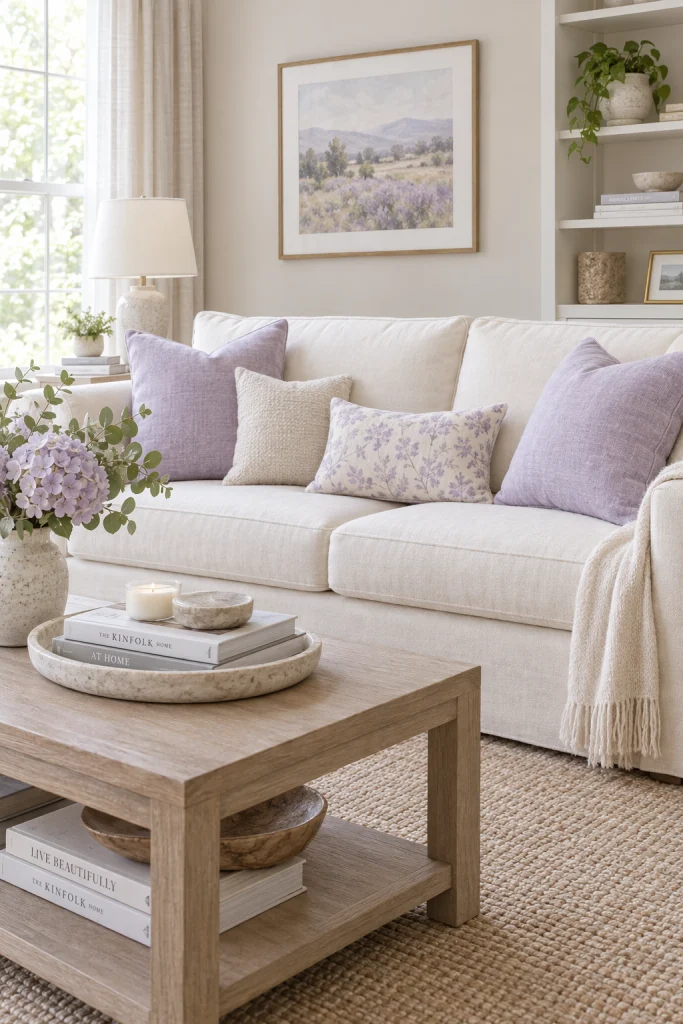
A very pale, greyed-out lavender reads more neutral than purple from across the room, which makes it an easy accent color for people who want something different from beige or blue without going bold. Use it on pillows or a single chair before committing to a wall.
21. Natural rattan and light wood furniture
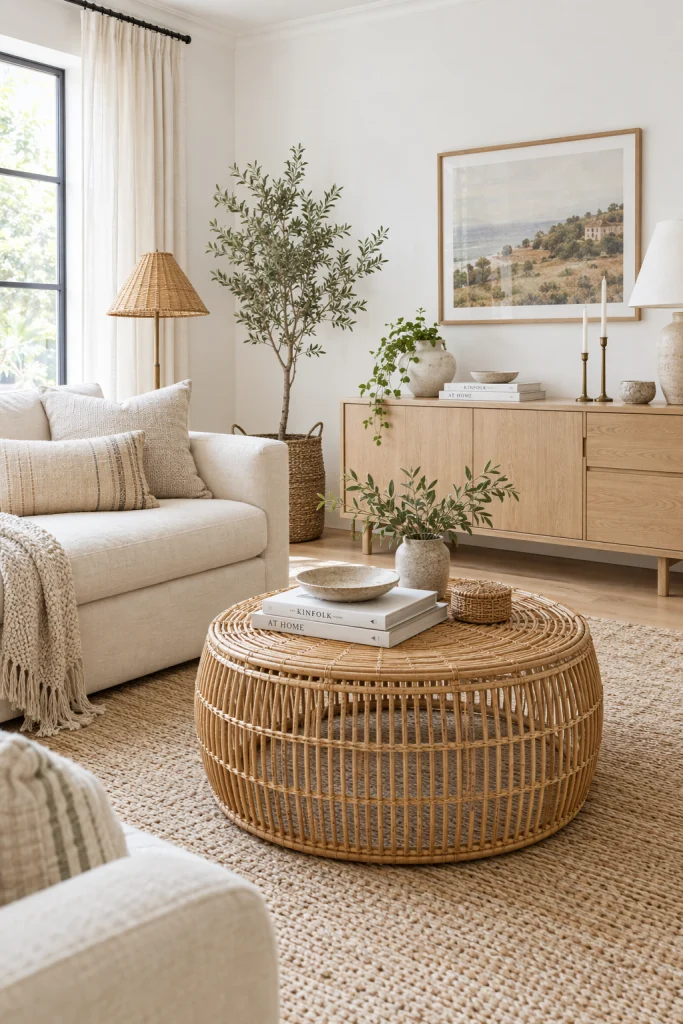
Swap a dark wood coffee table or media console for rattan or light oak, and the whole room instantly feels lighter, even if the wall color hasn’t changed.
Rattan also adds texture without adding visual weight, which matters in a room that’s already light and could otherwise look flat.
22. Off-white built-in shelving
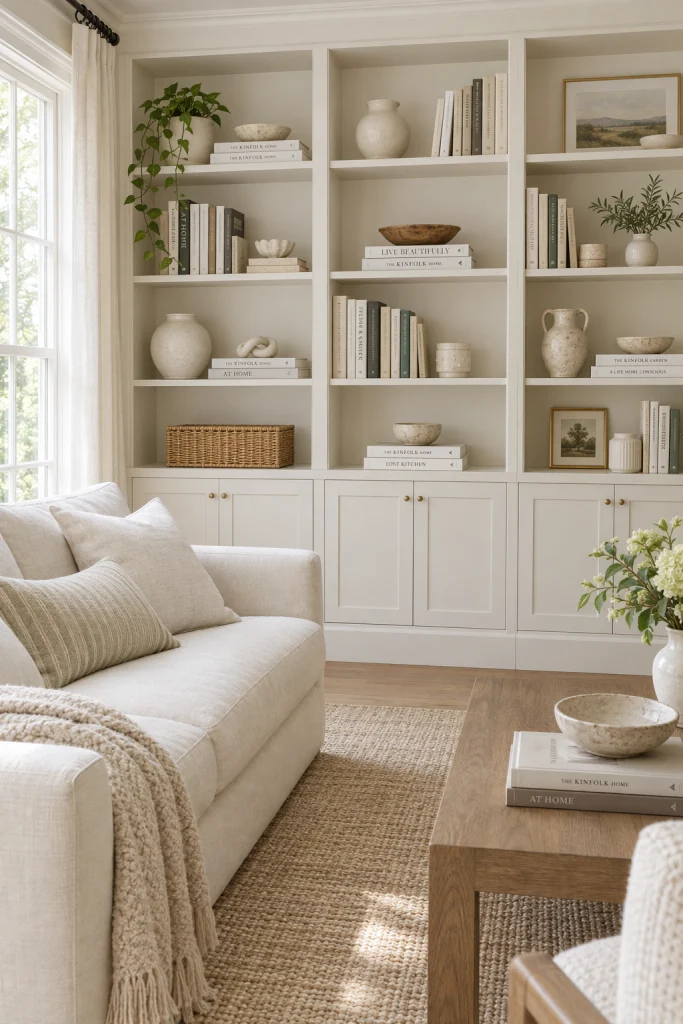
If you have built-ins, painting them a warm off-white instead of leaving them wood-toned or painting them a bold color keeps the whole wall feeling open.
Style them with a mix of books, light-colored ceramics, and empty space — packed shelves cancel out the airy effect you’re going for.
23. Cozy layered neutrals over flat color
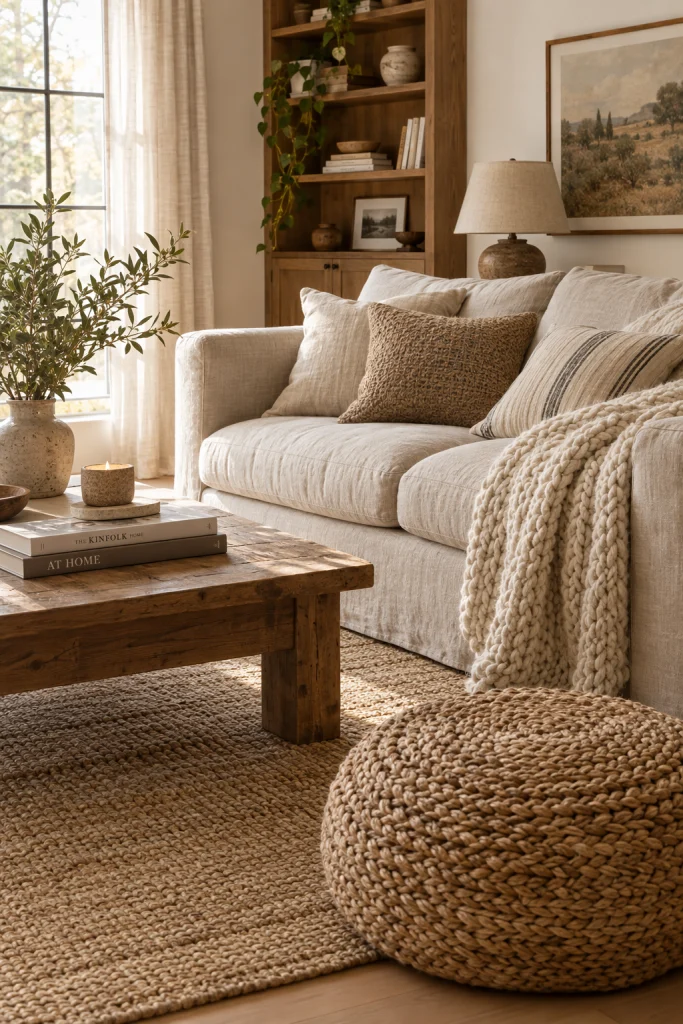
A common mistake is picking one flat light paint color and stopping there, which can end up looking unfinished.
Layer in different textures — a chunky knit throw, a woven pouf, a linen sofa — in the same light color family, and the room feels warm and cozy instead of bare. Our cozy living room ideas covers this layering approach in more depth.
24. Glass coffee table to keep the floor visible
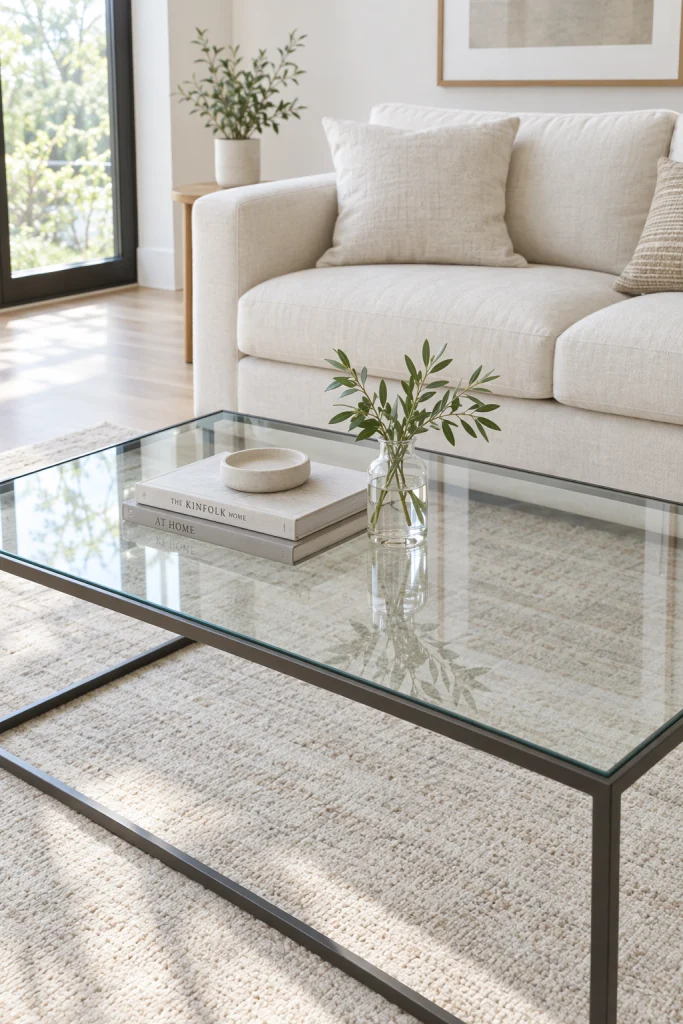
A glass-top coffee table takes up visual space without blocking your view of the floor beneath it, which keeps a light room feeling open instead of cluttered.
It’s a particularly good pick for small living rooms where every solid piece of furniture eats into how open the room feels.
25. Light color with one deep, deliberate accent
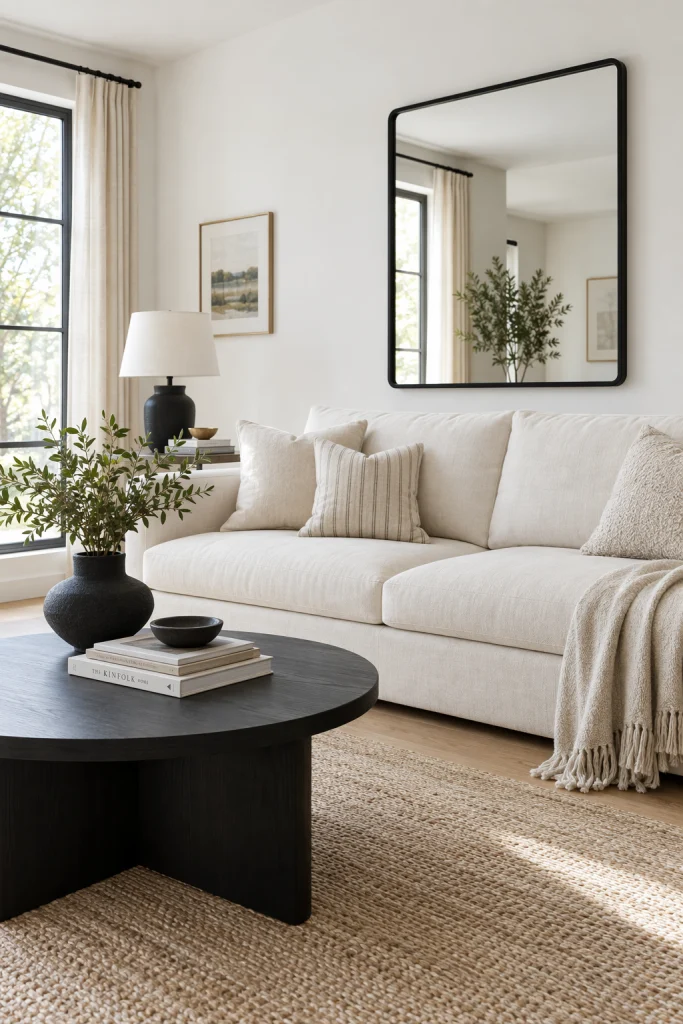
An all-light room can start to feel flat with nothing to anchor the eye. One deliberately darker piece — a black-framed mirror, a dark wood bookshelf, a charcoal throw — gives the room contrast and keeps it from reading washed out or unfinished in photos.
Common mistakes that make a light living room look flat instead of bright
- Using only one texture. Flat paint, flat linen, and a flat rug in the same tone reads dull, not airy. Mix boucle, wool, jute, and wood.
- Skipping contrast entirely. A room with zero darker elements can look washed out in photos, even if it feels fine in person.
- Choosing cool white in a dark room. Cool, blue-toned white needs real daylight to look good. In a north-facing or dim room, it just looks grey and flat.
- Painting the ceiling stark white in a low-ceiling room. It draws a hard line and can make the ceiling feel lower, not higher.
- Hanging a heavy mirror or shelf with the wrong hardware. If you’re not hitting a stud, use a rated drywall anchor built for the weight — a light color room won’t matter if a mirror comes off the wall.
Why I did this in my own apartment
My old apartment had one window facing a brick wall next door, so half the “light and airy” advice online just didn’t apply — there wasn’t much actual light to bounce around. What worked was ditching my dark walnut coffee table for a light rattan one and swapping heavy curtains for sheer linen. The room didn’t get brighter, exactly, but it stopped feeling like it was absorbing what little light it had. Sometimes the fix isn’t more light, it’s less stuff soaking it up.
Quick answers
What is the best light color for a living room with little natural light? Warm white or cream, not cool grey or cool white. Cool tones need daylight to look good; without it, they read flat and grey.
Do light color living rooms show dirt more than dark ones? Yes, especially on flat fabric sofas. Textured fabrics like boucle and performance weaves hide everyday wear better than smooth linen in the same light color.
Is white or beige better for resale value? Beige and greige are generally considered safer, more neutral choices for resale than stark white, which can read cold or clinical to some buyers.
Can renters get a light living room look without painting? Yes. Swap curtains, add a light rug, bring in light-colored furniture and a large mirror. These changes cover most of the visual impact of a wall color change.
Does a light color room need a dark accent? It helps. Without at least one darker element, an all-light room can look washed out or unfinished, especially in photos.
What rug works best in a light color living room? Jute for durability and high-traffic rooms, light wool for a softer feel in lower-traffic formal rooms. Both keep the floor from becoming a dark visual anchor.
Is a white sofa a bad idea with kids or pets? It’s higher maintenance. A performance fabric or a boucle texture in white or cream holds up better than smooth linen if you have kids or pets.
How do I keep a light room from looking boring? Layer textures, not just colors. Mix a knit throw, a woven basket, a linen curtain, and a wood table even if they’re all in the same light color family.
About the author
This guide was put together by a home decorator who’s actually lived with these choices — repainted walls that didn’t work, returned a rug that looked different in person, and learned the stud-finder lesson the hard way. Nothing here is a brand partnership or a press release; it’s what’s actually worked in small apartments and starter home
7 thoughts on “25 Light Color Living Room Ideas for a Bright Space”