
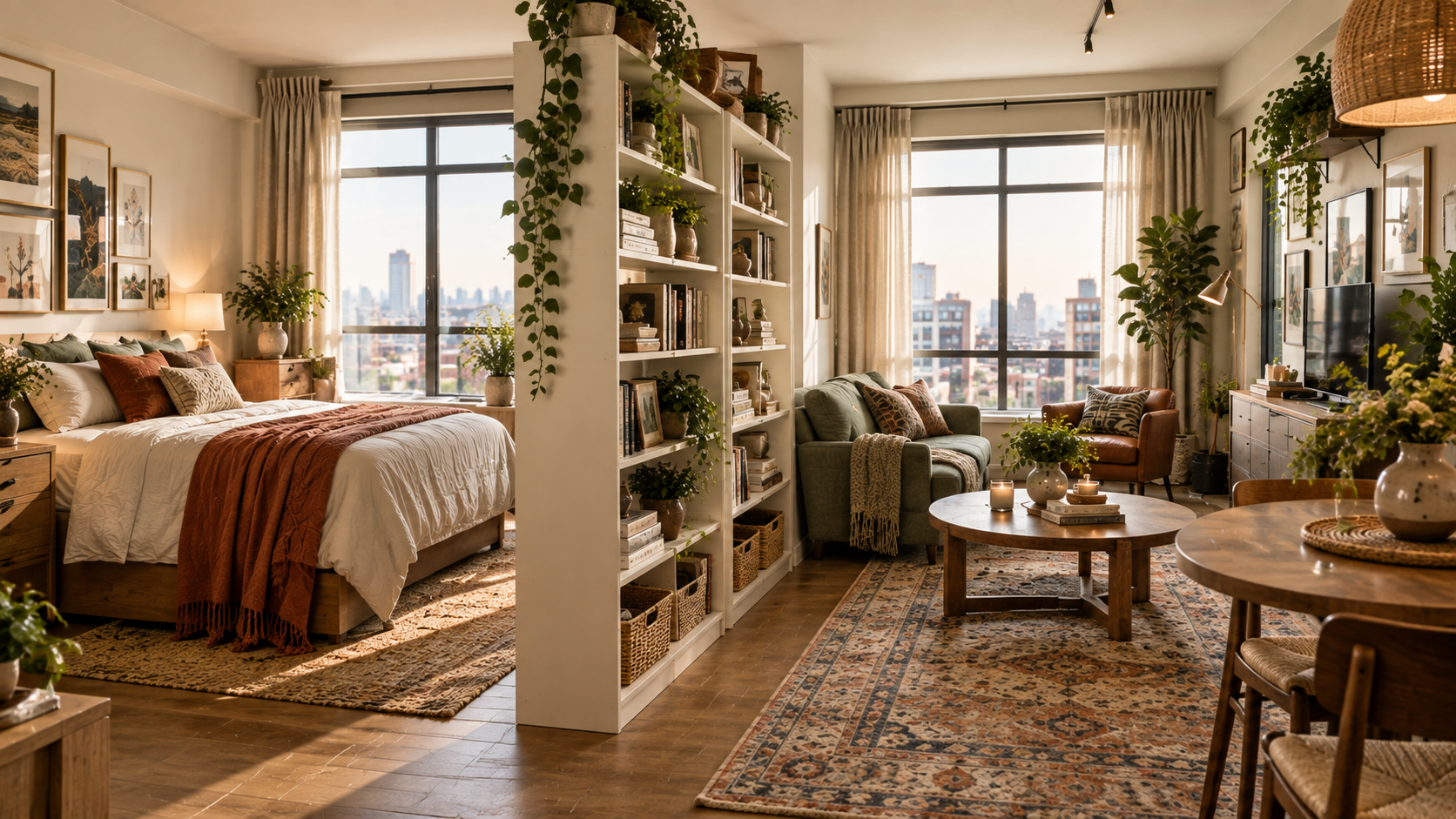
A bookshelf earns its space in a studio when it does two jobs at once — storage and room division. The fastest way to split a studio without a wall is two tall open shelves placed back-to-back, or one waist-height shelf if you want the zones to stay visually connected. Below are 13 ways to use a bookshelf as a divider, a display, or both.
Quick reference: which bookshelf idea fits your studio
| Idea | Best for | Height |
|---|---|---|
| Back-to-back full divider | Full privacy between bed and living zone | Floor to ceiling |
| Skinny corner shelf | Awkward corners beside the bed | Tall and narrow |
| Gallery-topped shelf | Adding personality without more books | Any |
| Shelf + floating shelves above | Book collectors low on floor space | Extended to ceiling |
| Basket-mixed shelf | Hiding clutter, not just books | Any |
| Low waist-height shelf | Keeping light and sightlines open | Waist height |
| Pottery-display shelf | Non-readers who still want a divider | Mid-height |
| Skinny gap-filler shelf | Dead space beside a window or radiator | Tall and narrow |
| TV-built-in shelf | Combining storage, divider, and TV stand | Floor to ceiling |
| Mixed storage compartments | Studios that need real organization | Cube-style |
| Floating shelves only | Zero floor space to spare | Wall-mounted |
| Twin symmetrical shelves | Serious book collections | Floor to ceiling |
| Curated display shelf | Styling over storage | Any |
If your studio also needs help with the layout question behind the divider decision, see studio apartment layout ideas using bookshelf room dividers before you buy anything — where you zone the room decides which shelf height actually works.
1. Two Shelves, Back-to-Back, as a Full Divider
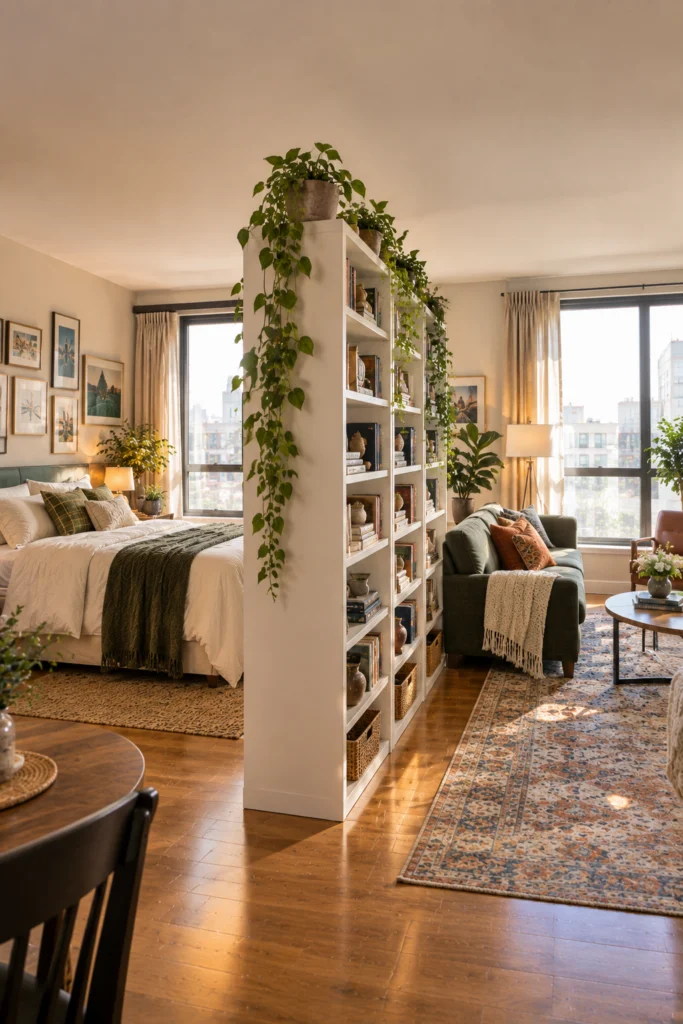
Two tall open shelves placed back-to-back create a floor-to-ceiling divider between the bed and the rest of the studio, with books facing both directions so neither side looks like the “storage side.”
Anchor both units to the wall or to each other — a loaded six-foot shelf that isn’t secured is a real tip-over risk in a room this size, not a small detail to skip. For more ways to split a studio with furniture instead of drywall, see studio apartment open shelf divider ideas.
2. A Skinny Shelf in the Corner Beside the Bed
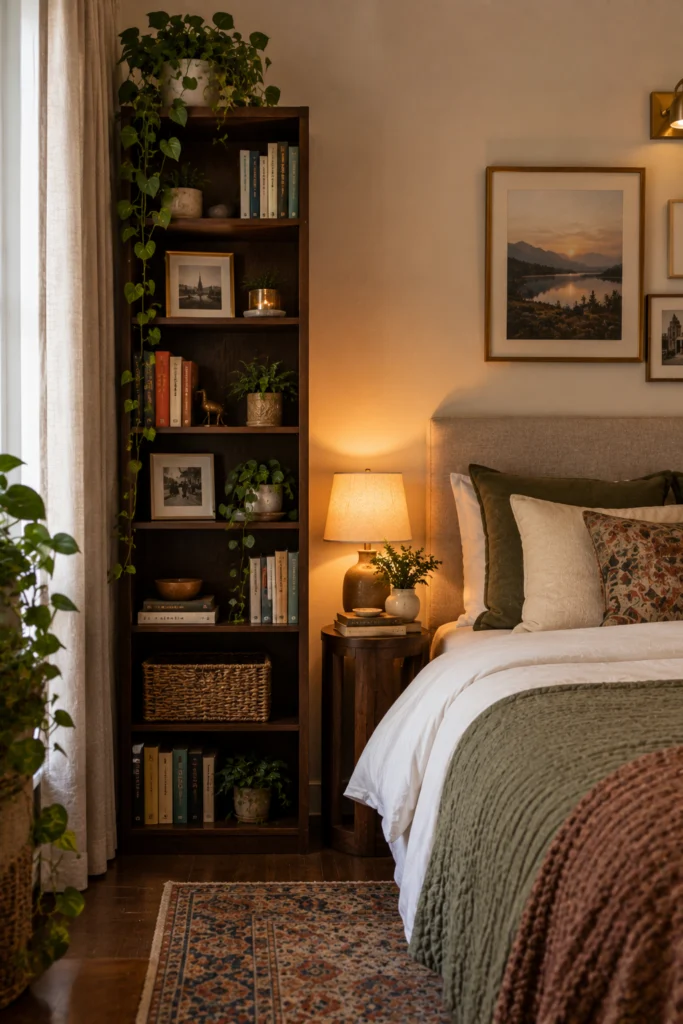
A tall, narrow shelf tucked into the corner next to the bed uses vertical space most studios waste. Match the wood tone to your other furniture and it reads as built-in rather than added on — dark wood shelves don’t look dated, they just need warm lighting and a couple of plants to feel current instead of heavy.
3. Style the Top as a Mini Gallery
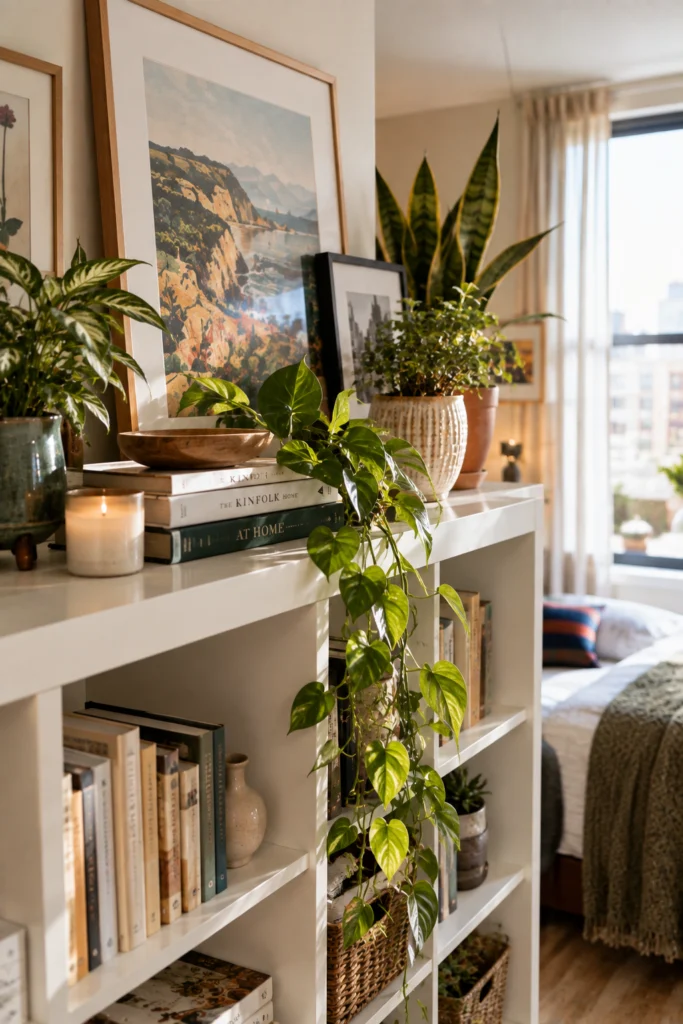
The top of a divider shelf is usually left empty, which wastes the most visible surface in the room. Lean one framed print against the wall, cluster three or four plants at different heights, and let one trail down over the books below.
Vary the heights of what you place there — three tall objects in a row reads flat, but one tall, one medium, one short gives your eye something to follow.
4. Stack Floating Shelves Above It
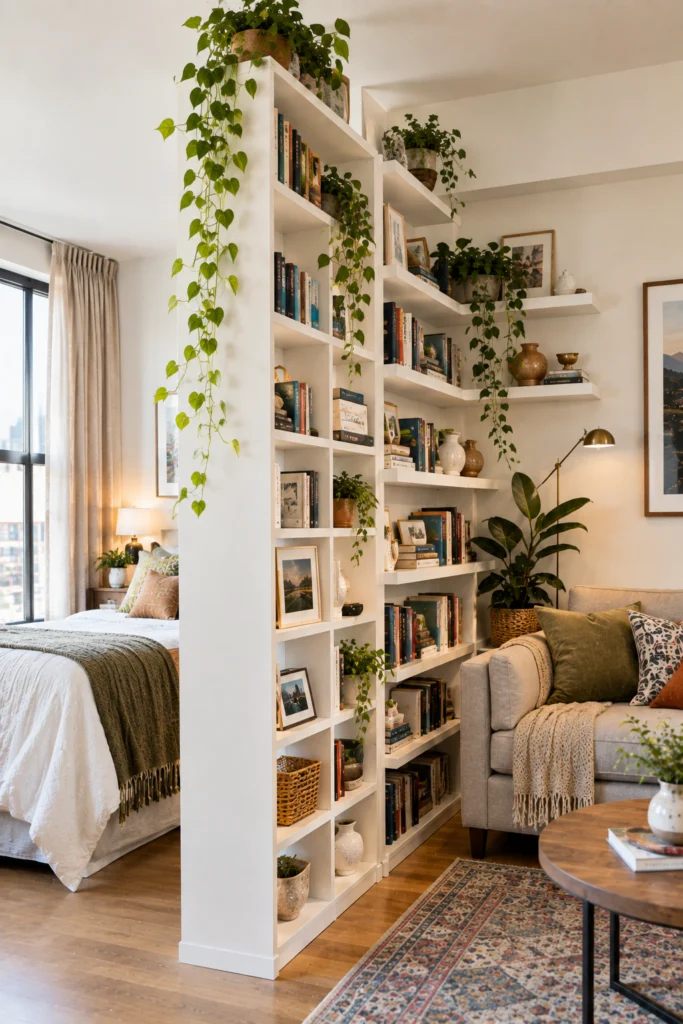
When a bookshelf runs out of room before your books do, add matching floating shelves directly above it in the same finish, so the whole thing reads as one tall unit instead of two mismatched pieces. This adds storage without taking a single extra inch of floor space — useful in a studio where floor space is the one thing you can’t make more of.
Spend less on the shelves themselves and more on solid anchors; heavy books on weak brackets is a repair bill waiting to happen. If floor space is your real constraint, these mini studio apartment shelving ideas lean even further into wall-mounted storage.
5. Mix Books with Woven Baskets
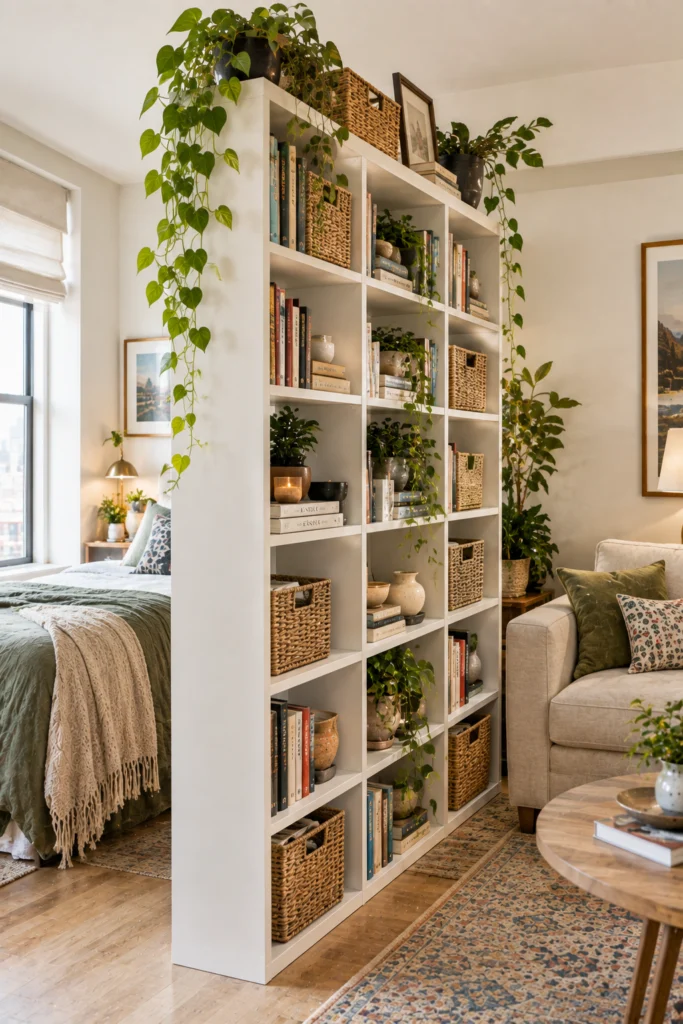
A shelf used as a divider doesn’t have to be all books. Slot in a few woven baskets to hide chargers, extra bedding, and clutter, while the open cubes still show off your favorite reads and plants. Seagrass or water hyacinth baskets add texture against a dark shelf and read as more expensive than they usually cost.
6. Keep It Low to Protect Sightlines
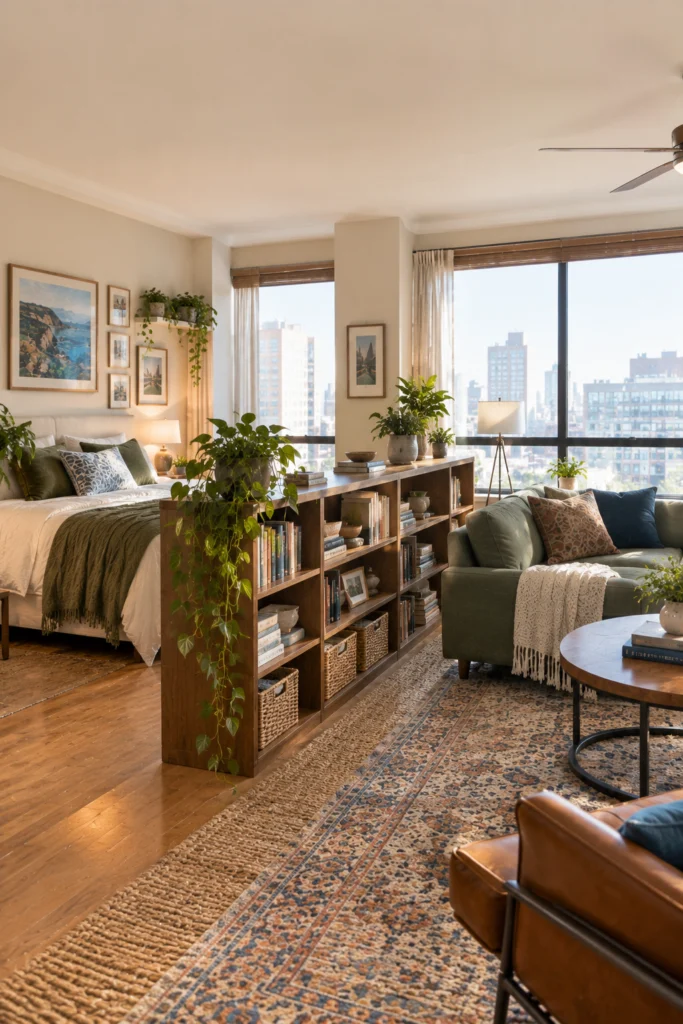
A full-height divider isn’t always the right call — in a smaller studio, a waist-height shelf suggests separation without blocking light or making the room feel cut in half. You get distinct zones without losing the open feeling that makes a small studio livable.
It’s also the easiest renter-friendly option: no drilling, no landlord conversation, just slide it into place. For more no-drill options in this size range, check studio apartment divider ideas for small spaces.
7. Style It Like a Pottery Display Instead of a Library
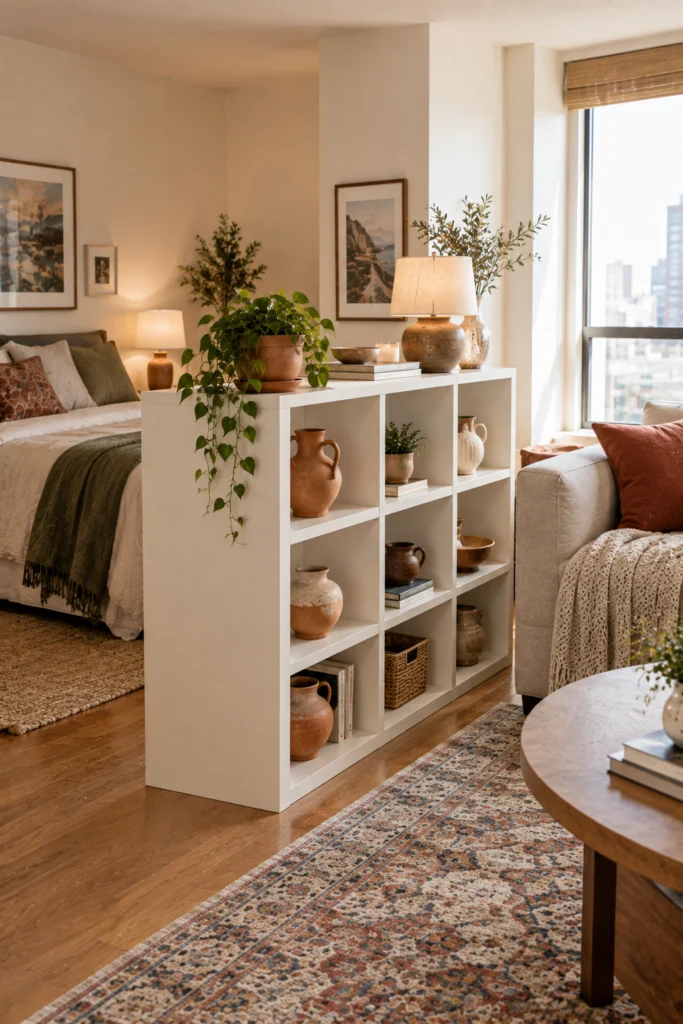
If you’re not filling a shelf with books, don’t force it. Style the top and upper cubes with terracotta pots, a plant, and a few ceramic vases, and tuck whatever books you do own into the lower cubes. Group pottery in odd numbers — three or five pieces reads intentional, pairs read accidental.
8. Fill the Dead Gap Beside a Window or Radiator
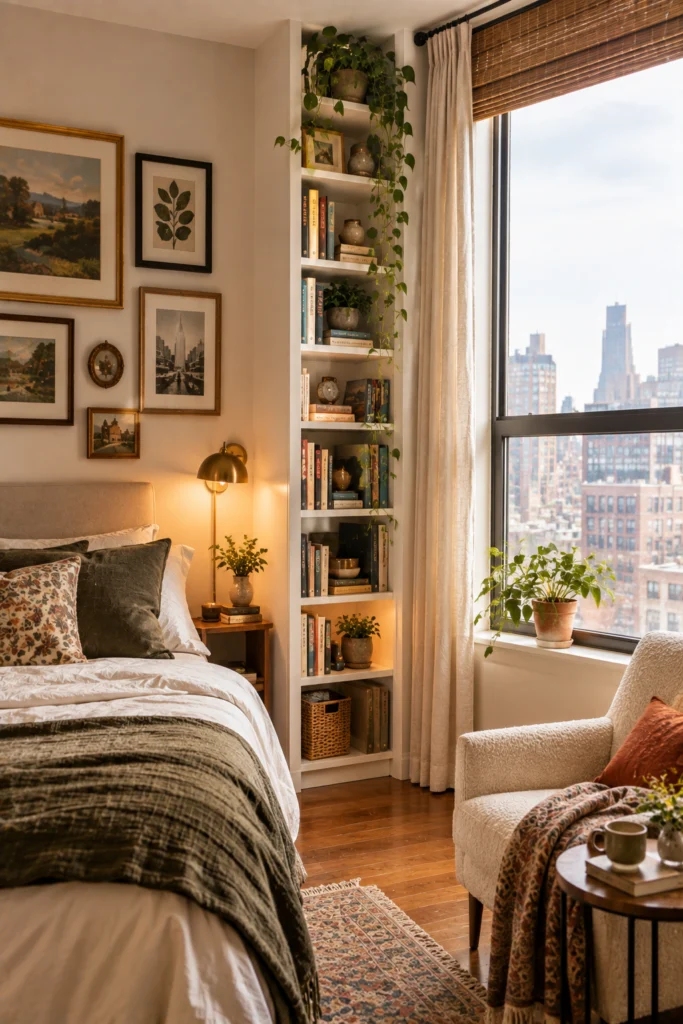
Every studio has one leftover gap — beside a window, next to a radiator, between the bed and the wall. A tall, skinny shelf turns that dead space into real storage, sometimes holding an entire book collection in under two feet of floor space. Skip ornate, curved shelf designs; plain vertical lines hold more books and cost less.
9. Build the TV Into the Shelf
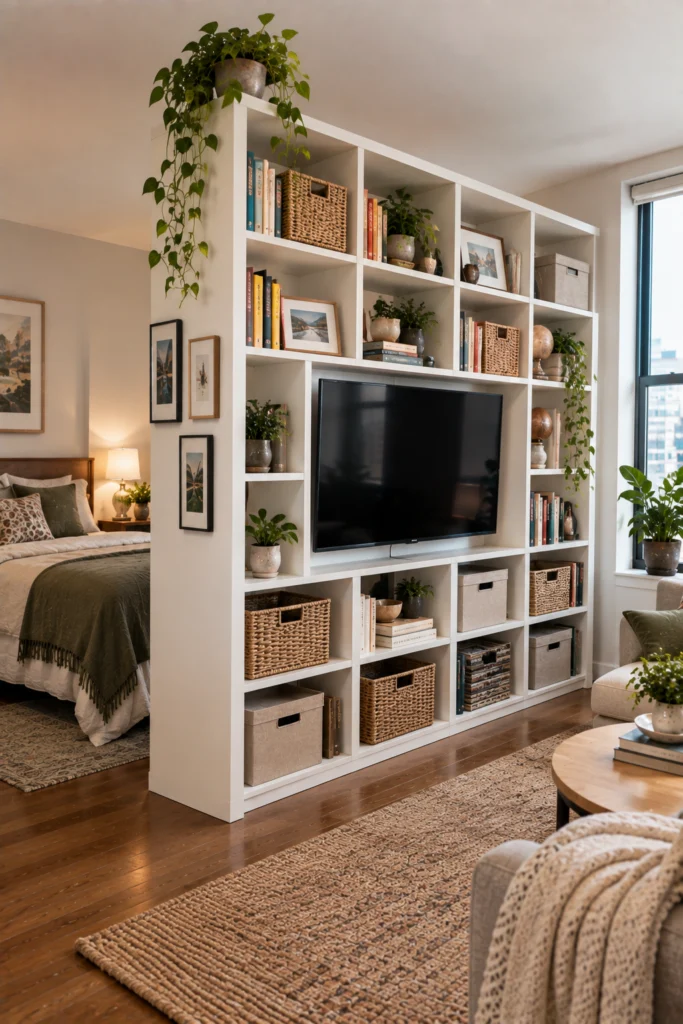
A room-dividing cube shelf can mount a TV in its center opening, facing the living area, with the bed on the other side. Storage boxes fill the lower cubes and books and decor fill the upper ones, so one piece of furniture does the job of three.
Measure the shelf’s depth, not just its width, before buying — some cube shelves are too shallow for a flat screen with a wall bracket attached. If the TV is the main sticking point in your layout, these TV placement ideas for a studio apartment cover it beyond just the shelf option.
10. Split the Cubes Between Storage and Display
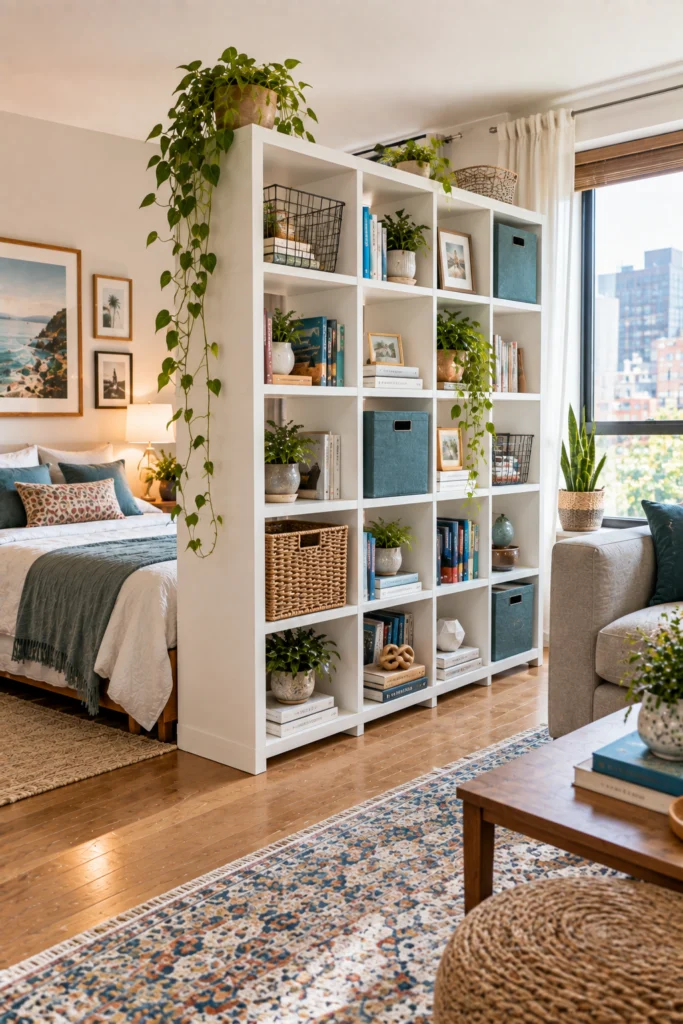
A cube shelf gives you sixteen to twenty compartments — use them differently instead of filling every one with books. Mix wire baskets, a couple of bright fabric bins, small plants, and a few open cubes of books, and alternate visual weight so two heavy or two empty cubes never sit side by side. Leaving a few cubes empty on purpose is what keeps the whole thing from looking sterile.
11. Skip the Floor Entirely with Floating Shelves
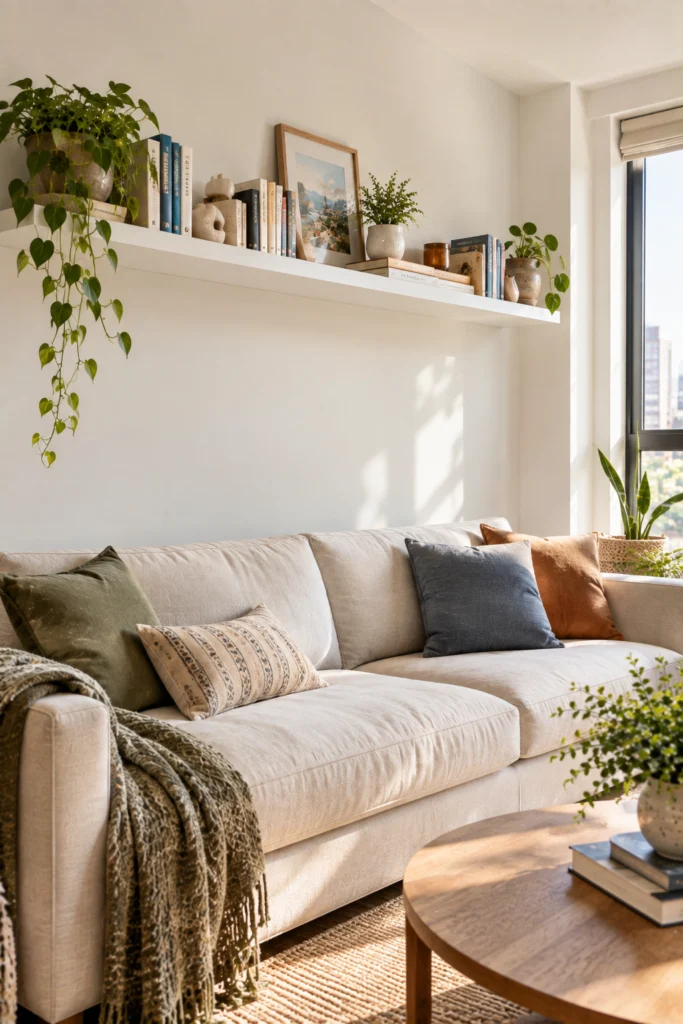
When floor space is truly non-negotiable, mount one or two long floating shelves above the sofa or bed instead of adding a standing unit. It holds books, plants, and small decor without crowding the room, and it draws the eye upward, which makes a small studio feel taller than it is.
Hang the shelf twelve to eighteen inches above eye level so the wall doesn’t feel top-heavy. For more ways to style a shelf once it’s up, see studio apartment shelf decor ideas.
12. Frame the Room with Two Matching Shelves
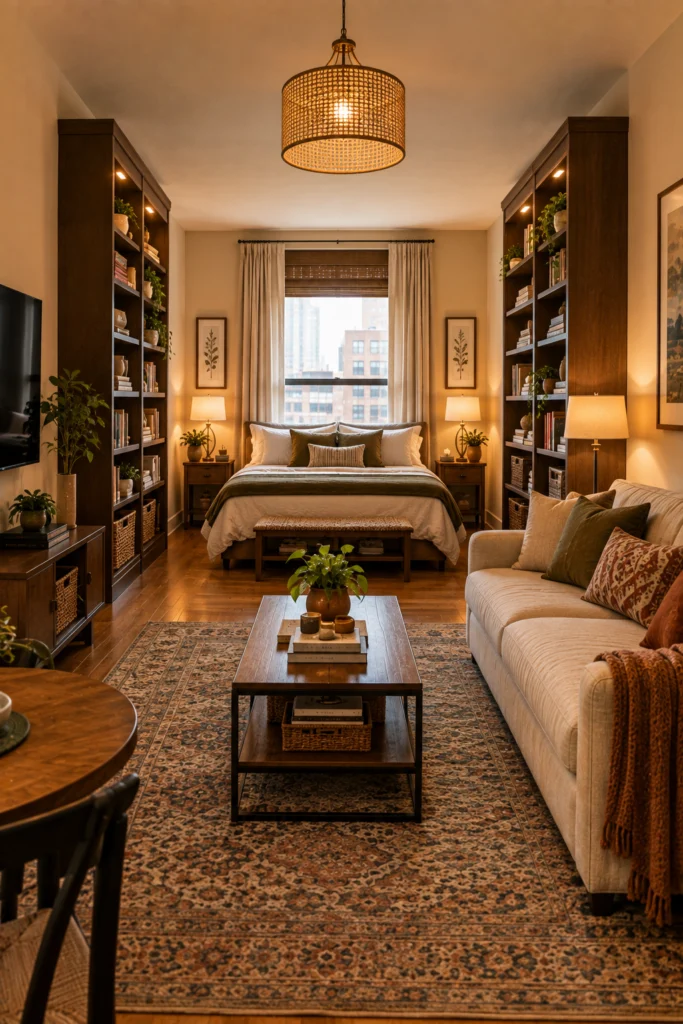
For serious book collectors, one shelf is never enough — two tall shelves on opposite walls create a symmetrical, library-like frame around the bed and living area that reads as designed rather than cramped. The two shelves don’t need to be identical; matching them in color and roughly in height gives the same effect for less.
13. Style It as a Curated Display, Not a Library
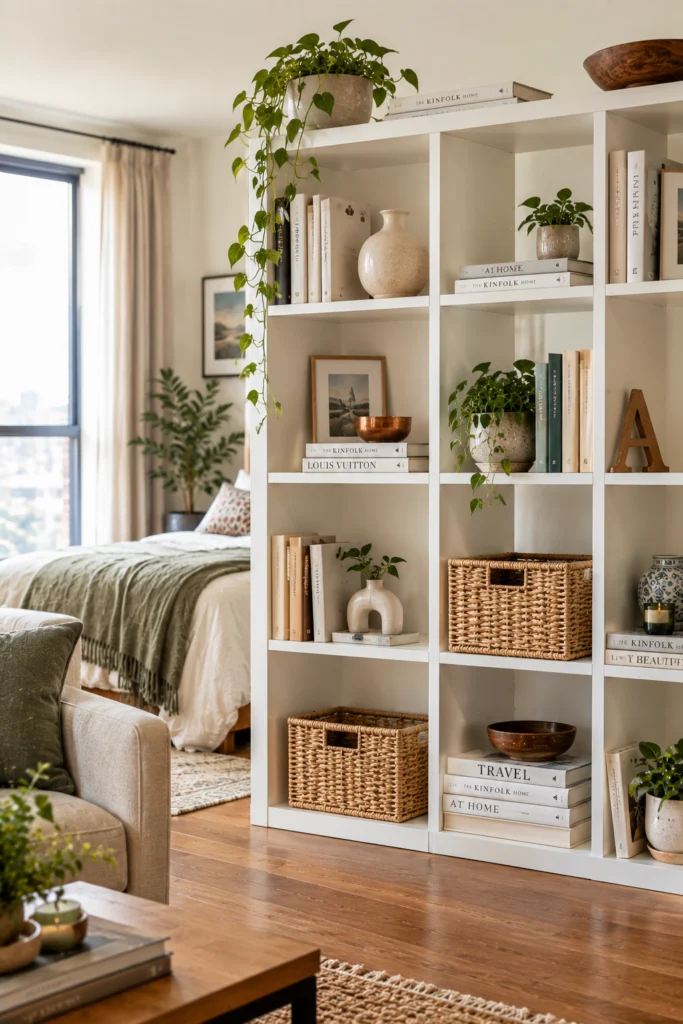
Not every divider shelf needs to hold a full book collection. Style it with a few books stacked flat, a few standing upright, a copper bowl, ceramic vases, and one bold decorative letter — the empty cubes carry as much weight as the filled ones. Mixing flat-stacked books with upright ones gives your eye a resting point and a surface to set an object on.
Common bookshelf-divider mistakes
- Loading a tall shelf and skipping the anchor. A floor-standing divider over waist height needs to be secured to the wall or to its matching unit — this isn’t optional in a room where the bed sits right next to it.
- Filling every cube the same way. Alternating books, baskets, and empty space is what reads as styled; uniform cubes read as storage.
- Choosing height before zoning. Decide how separated you want the bed and living area to feel first, then pick a shelf height — waist-height for open sightlines, floor-to-ceiling for real privacy.
Why this works in a real studio
My first studio had a single skinny shelf jammed into a corner that held books and nothing else, and the room still felt like one undivided box. The fix wasn’t a bigger shelf — it was turning two matching shelves into a back-to-back divider, which did in one move what the corner shelf never could. If you’re only trying one idea from this list, start with the divider height question before the styling. If you’re still deciding where the bed zone should even sit, start with creating a bedroom zone in a studio without building a wall.
Quick answers
What’s the best bookshelf height for dividing a studio apartment?
Floor-to-ceiling if you want real visual privacy between the bed and living area, waist-height if you want to keep sightlines and natural light open across the room.
Do I need to anchor a bookshelf used as a room divider?
Yes, if it’s taller than waist height and loaded with books — secure it to the wall or to a matching second shelf so it can’t tip.
Can a bookshelf divider work in a rental with no drilling allowed?
Yes — a low, freestanding shelf needs no wall anchor for stability at waist height and can be repositioned any time without landlord approval.
How do I stop a cube bookshelf from looking cluttered?
Alternate what fills each cube — books, a basket, a plant, then an empty cube — instead of loading every compartment the same way.
Can a bookshelf divider hold a TV?
Yes, if the shelf’s center opening is deep enough for a wall-mounted screen and bracket — measure depth, not just width, before buying.
What should I put on top of a bookshelf divider?
A mix of heights works best — one taller object like a framed print, a plant at medium height, and one small item, rather than several same-height objects in a row.
Is a dark wood bookshelf too heavy for a small studio?
Not with the right styling — warm lighting, a couple of plants, and personal photos keep a dark wood shelf from reading as dated or heavy.