
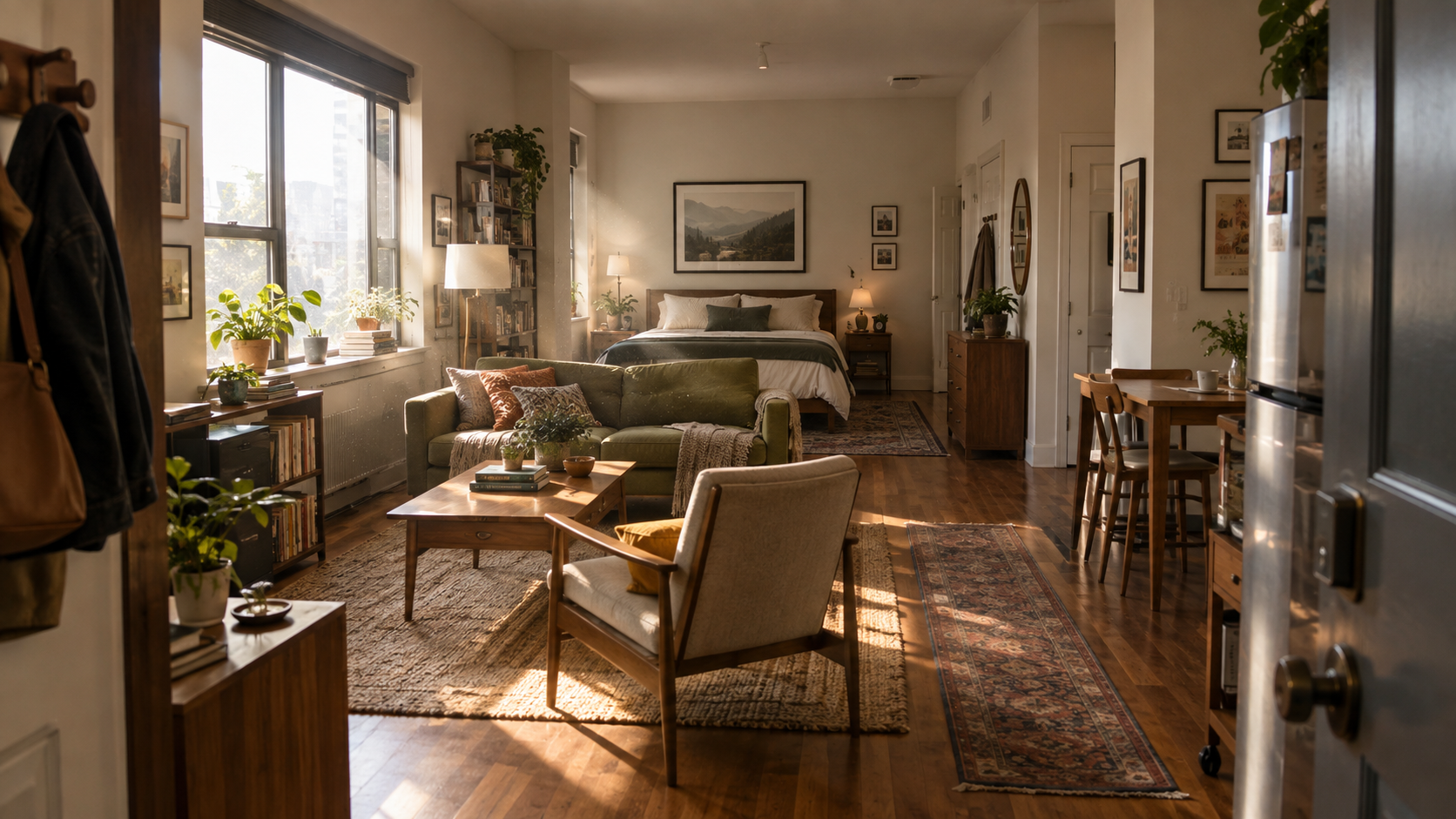
Comfort in a studio often comes from taking things away, not adding them. A room with one divider, one repeated color, and one statement light feels calmer than a room filled wall to wall — the eye rests, the light reaches further, and the space you have left feels like it belongs to you.
These 14 ideas follow that simple rule, pairing one easy change with one comfort upgrade in each part of the room. They are cheap to try, quick to undo, and they work in any size of studio. Remove one thing that is not earning its place, add one thing that is, and feel the difference. Calm is a feature, not an empty room: keep the pieces that earn their place, and let the light do the rest of the work.
Which comfort approach fits your studio?
| Approach | Main Tool | Best For |
|---|---|---|
| Curtain divider | Ceiling-mounted track | Renters wanting a closable bedroom |
| Accent wall zoning | One painted wall behind the bed | Studios that can’t add furniture |
| Monochromatic commitment | One color across every soft good | Studios wanting a cohesive, calm look |
| Open bookshelf divider | Freestanding open-back unit | Rooms needing storage + separation |
| View-led minimalism | Low-profile furniture, big windows | Studios with strong natural light |
1. Use a Curtain Divider to Create a Bedroom
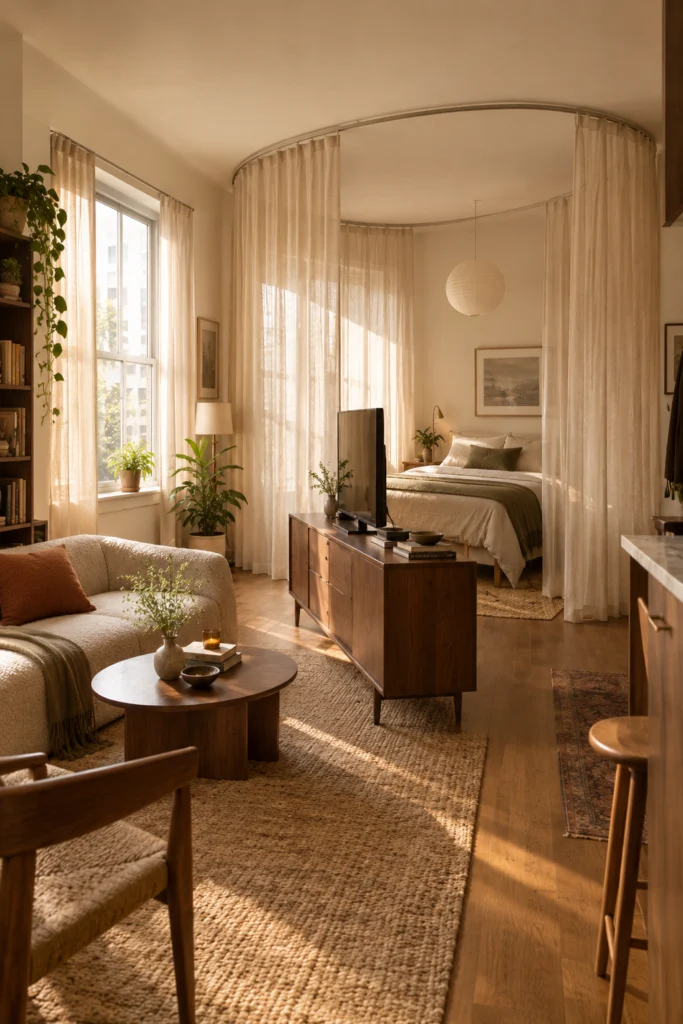
A ceiling-mounted curtain track gives a studio a genuinely separate bedroom without any construction or landlord approval, which matters more than almost any other single change a renter can make — a technique covered further in these studio apartment curtain divider ideas.
Pro tip: A curved track lets the curtain wrap fully around the bed area instead of just covering one side, which matters for actual privacy, not just the look of it.
2. Go Mediterranean with Warm Wood and Patterned Textiles
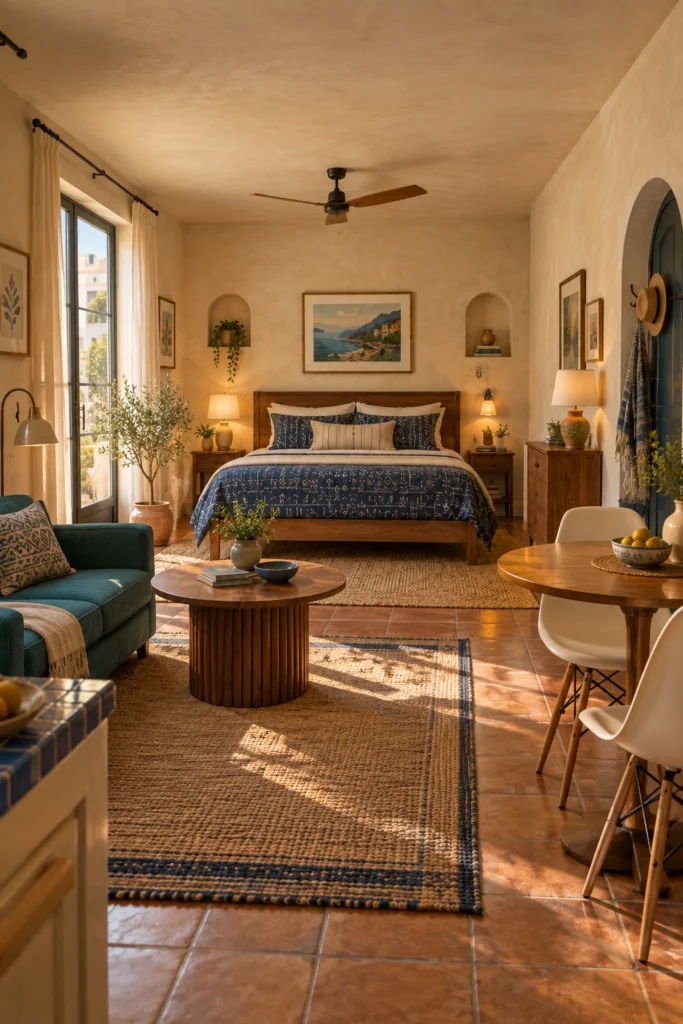
Textured plaster walls do more to create a lived-in, vacation-rental feel than paint ever could, especially paired with a solid wood bed frame rather than an upholstered one. A single teal loveseat against an otherwise warm, earthy palette ties the whole room together with one confident color choice instead of several competing ones.
3. Build a Gallery Wall to Add Personality
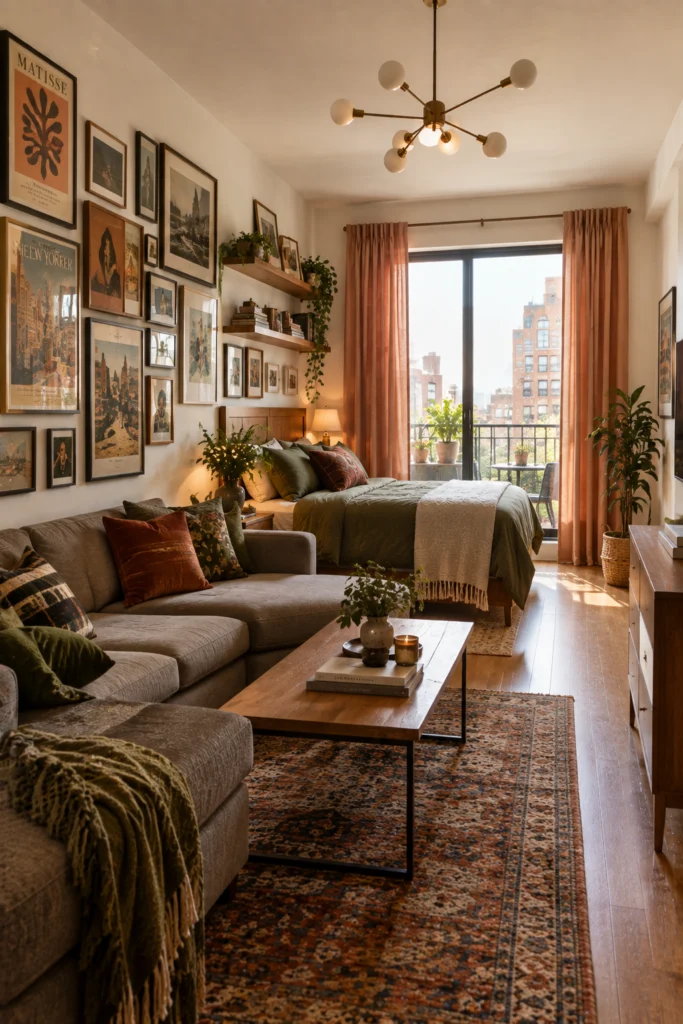
A gallery wall turns a rental’s biggest blank canvas — the walls — into the room’s main source of personality, for close to nothing compared to new furniture, an approach explored further in these studio apartment wall art ideas.
4. Define Zones with an Accent Wall and Smart Storage
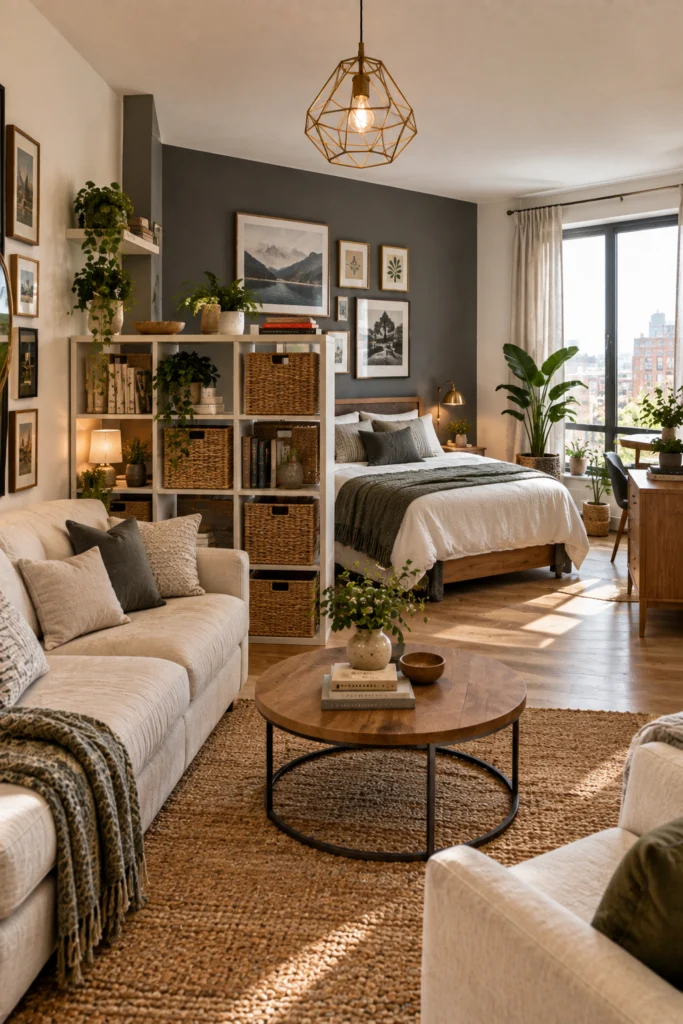
Woven baskets tucked into open cube shelving keep storage tidy while staying visible, which reads more intentional than everything hidden behind closed cabinet doors, similar to the approach in these cozy studio apartment ideas with smart storage.
5. Lean Into a City View with Minimal Furniture
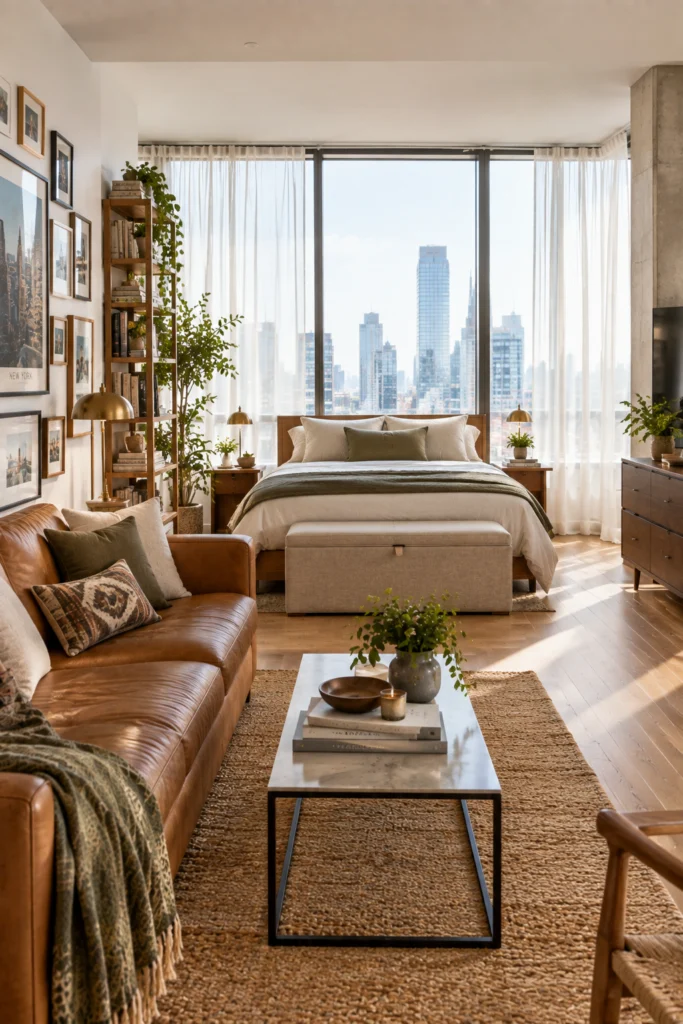
When a studio has genuinely great windows, the smartest move is staying out of their way rather than competing with the view through heavy furniture or bold color. Keeping every piece low-profile — a slim coffee table, a storage ottoman instead of a bulky bench — lets the skyline stay the room’s obvious focal point.
6. Layer Warm Neutrals for a Quiet, Elegant Feel
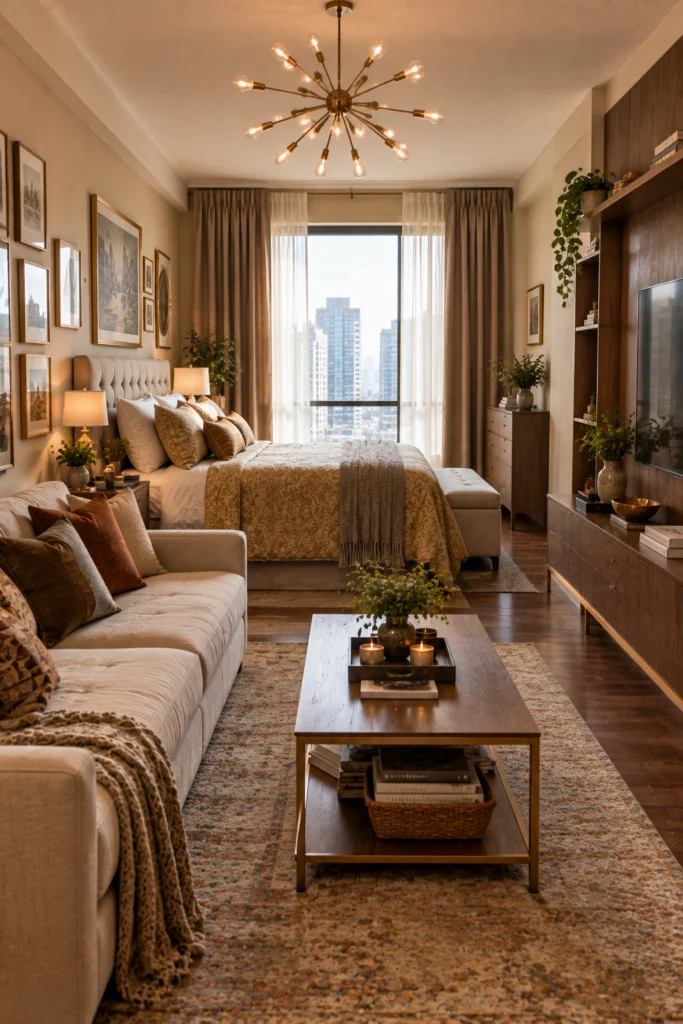
A neutral studio only reads as boring when every surface sits at the same flat shade — layering beige walls, taupe curtains, and a tufted linen headboard at slightly different tones gives the eye texture to register even without color. A single sputnik light fixture adds enough visual interest overhead to keep the calm palette from feeling empty.
7. Match Your Curtains to Your Color Story
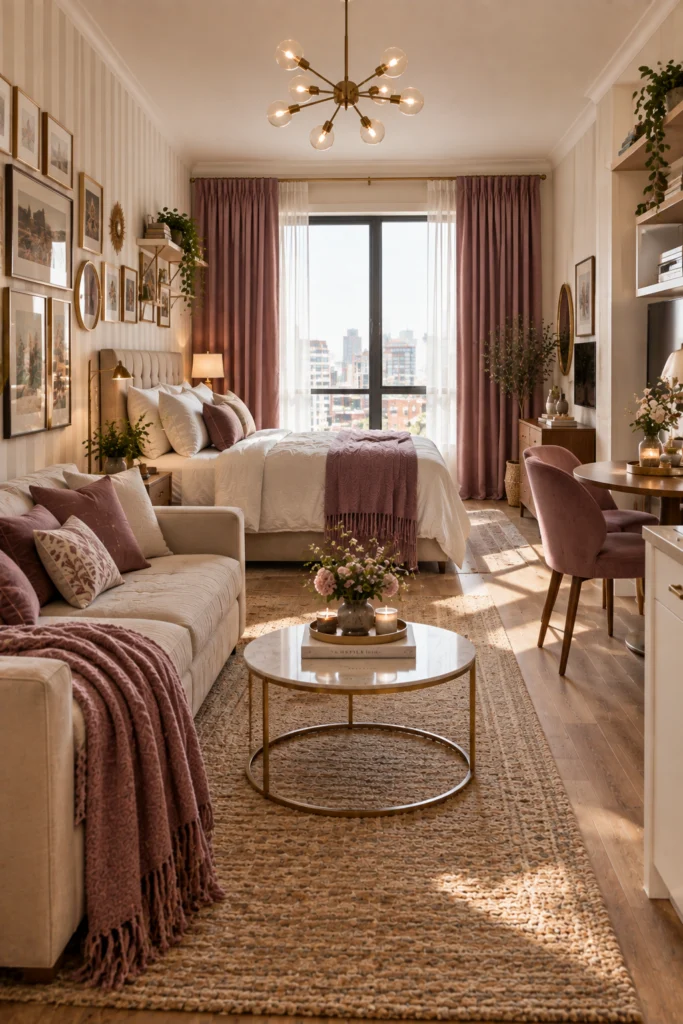
Committing to one color story and carrying it through curtains, dining chairs, and soft furnishings is what makes a small studio read as designer-planned rather than assembled piece by piece. White bedding against the mauve keeps the palette from tipping too soft, giving the eye somewhere neutral to rest.
8. Go Bohemian with Warm Textures and a Statement Light
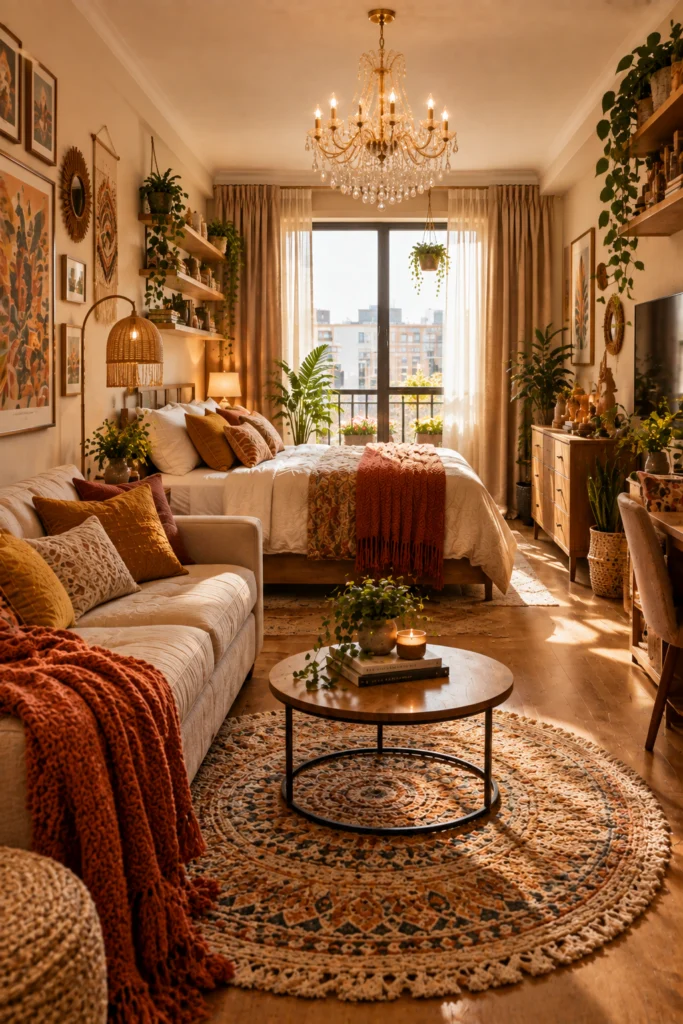
An unexpected fixture, like a crystal chandelier in an otherwise relaxed boho room, makes the whole space feel special without requiring a full redesign around it. Plants tucked into corners and shelves rather than placed on the floor add life without eating into the room’s already-limited walkway space.
9. Use Soft Pink and Blue-Grey for a Calming Retreat
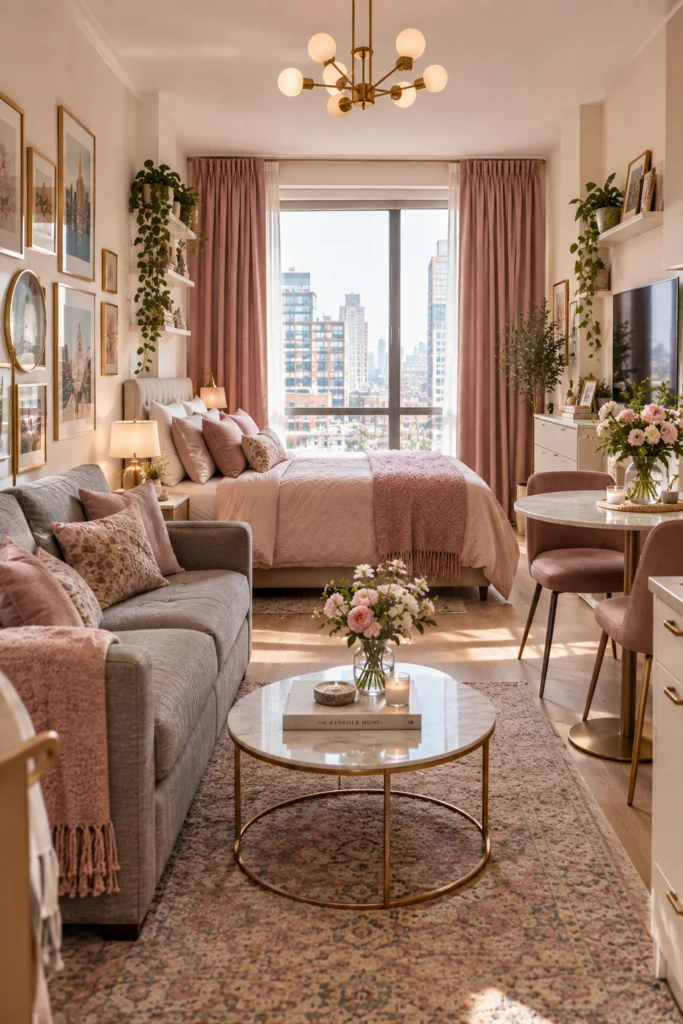
Dusty pink and blue-grey together read as calming rather than sweet once the pink repeats consistently between the curtains and bedding, tying the sleeping zone to the window. A small detail, like fresh flowers on the dining table, does more to make a studio feel cared for than any larger furniture purchase would.
10. Use a Low Bookshelf as a Room Divider
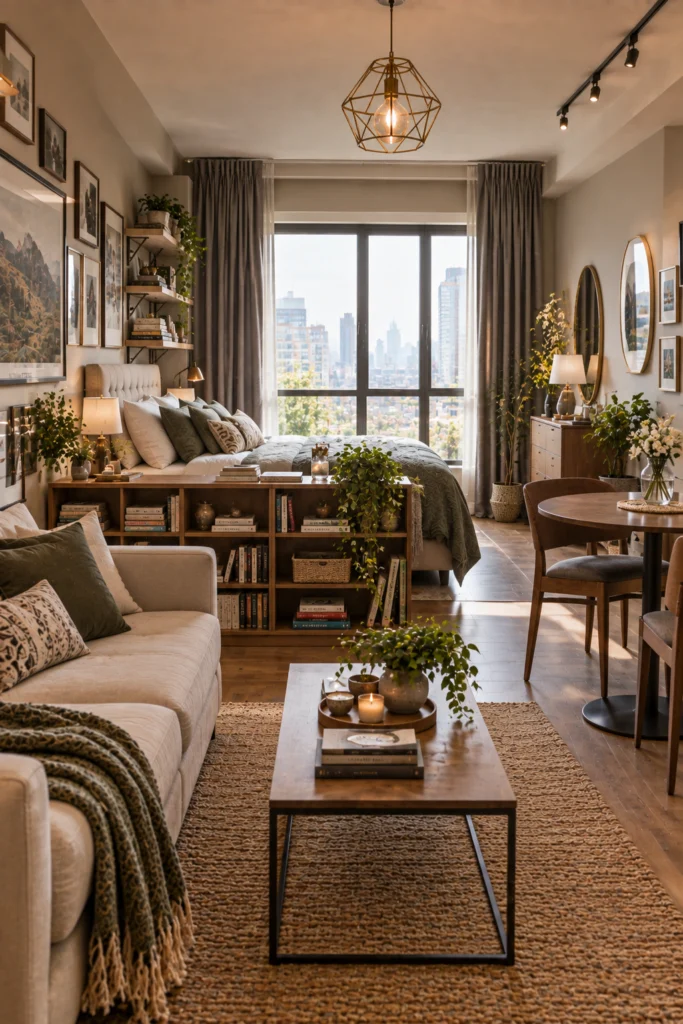
A low bookshelf placed at the foot of the bed separates the sleeping and living zones without blocking light or sightlines the way a taller divider would. Styling it with books, plants, and a few objects rather than leaving it bare keeps the divider functioning as decor, not just storage.
11. Keep It Monochromatic in Dusty Rose
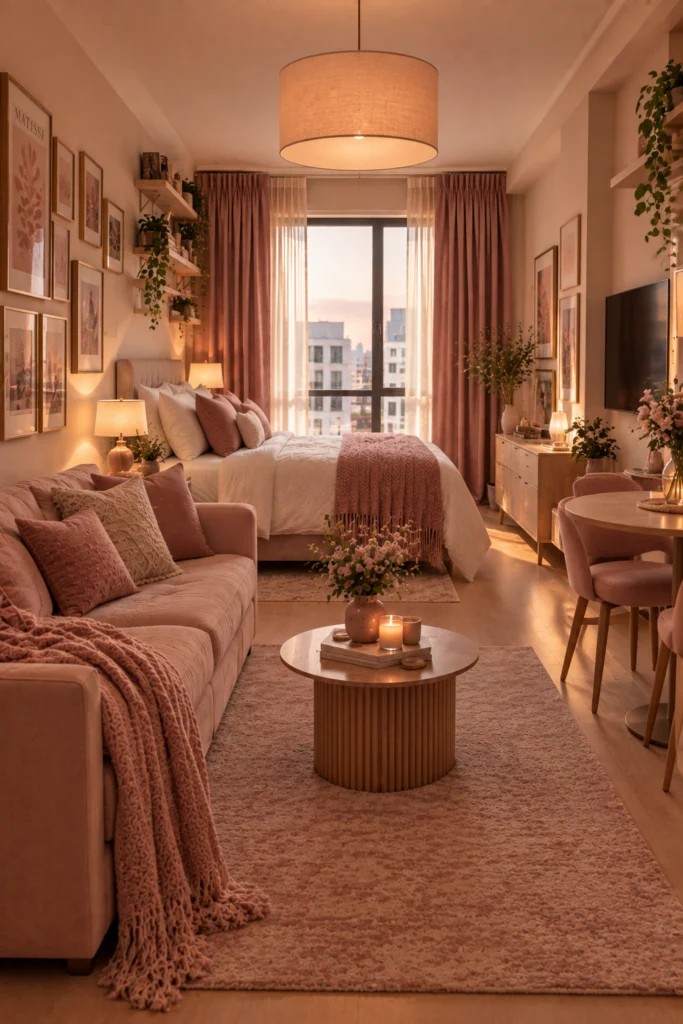
Committing an entire room to one soft color family, like dusty rose, is a genuinely bold move that pays off specifically because nothing has to be coordinated separately — it’s already one palette. White bedding and light wood floors keep the monochromatic scheme from tipping into overwhelming, giving the eye a neutral break between pink elements.
12. Add Industrial Pendants for Character
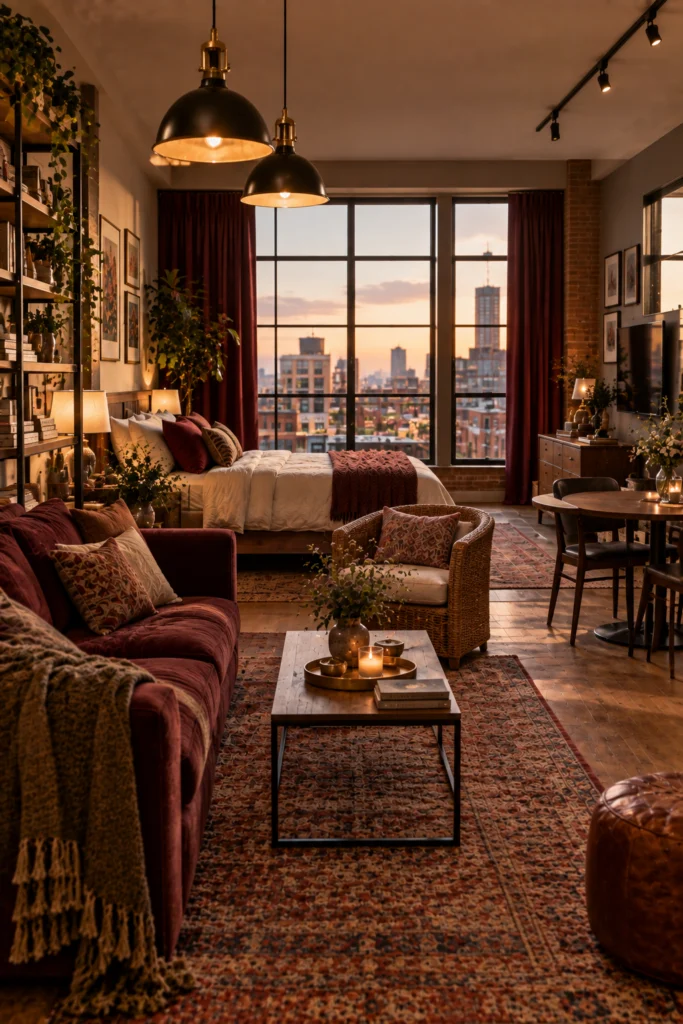
Industrial pendant lights add real character to a studio without taking up a single inch of floor space, a fixture-led approach worth pairing with these studio apartment lighting decor ideas.
13. Go Coastal with Teal, Navy, and Natural Wood
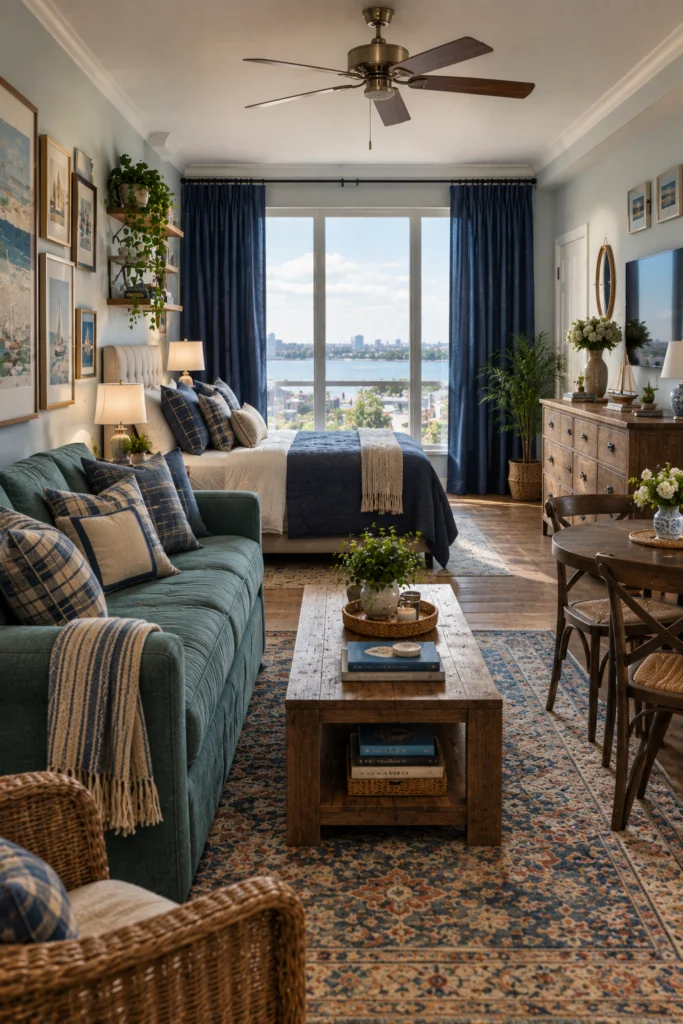
Coastal style works in a studio without leaning into literal beach decor — teal, navy, and rustic wood together create the relaxed feeling on their own. A ceiling fan reinforces the breezy mood functionally as well as visually, which matters in a studio without much room for a separate cooling solution.
14. Divide with an Open Bookshelf for Airy Separation
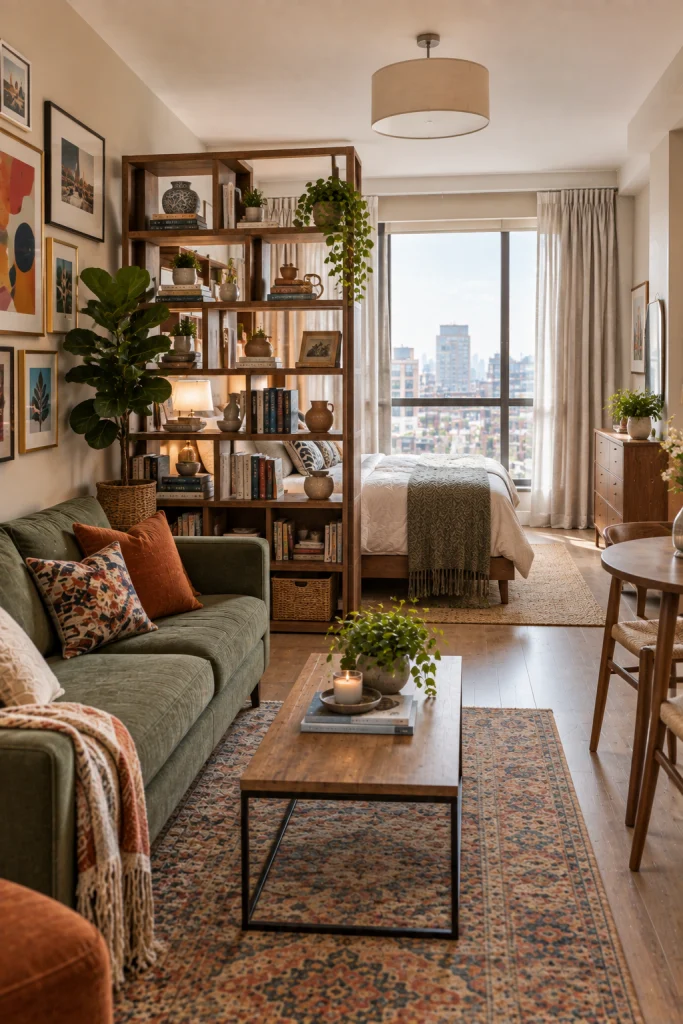
An open-back bookshelf creates genuinely distinct zones without stealing light or making the room feel smaller, since sightlines pass straight through the open shelving. A colorful gallery wall on the living side gives that half of the room its own identity separate from whatever’s styled on the shelf itself.
Common comfort-studio mistakes to avoid
- Choosing a straight curtain track when a curved one would actually wrap the bed area. A straight track leaves gaps at the sides that undercut real privacy.
- Filling every wall with matching decor instead of one gallery wall. A single curated wall does more personality work than scattered smaller pieces.
- Keeping a neutral palette at one flat shade. Layering slightly different tones of the same neutral family — beige, taupe, cream — reads intentional; one flat tone reads unfinished.
- Placing heavy furniture in front of a great window view. Low-profile pieces let the view stay the room’s focal point instead of competing with it.
- Overcommitting to a divider taller than the room needs. A low bookshelf at the foot of the bed often separates zones just as effectively as a full-height unit, without blocking light.
Quick answers
What’s the easiest divider for a rented studio apartment?
A ceiling-mounted curtain track requires no construction or landlord approval and closes off a genuine bedroom at night.
Does a monochromatic color scheme work in a small studio?
Yes — committing fully to one color family, like dusty rose, often reads more cohesive than mixing several coordinated colors.
Can industrial lighting work in a soft, non-industrial studio?
Yes — a pair of brass-and-black pendants adds character without clashing, especially when paired with a warm color like burgundy to balance the harder metal tones.
How do I keep a neutral-toned studio from feeling boring?
Layer several shades within the same neutral family — beige walls, taupe curtains, cream bedding — rather than using one flat tone throughout.
Is a low bookshelf a good room divider for a small studio?
Yes, especially at the foot of the bed — it separates zones without blocking light or making the ceiling feel lower the way a tall divider can.
What’s the best way to decorate a studio with floor-to-ceiling windows?
Keep furniture low-profile and let the view do most of the visual work rather than adding bold color or bulky pieces that compete with it.
The smallest change that made the biggest difference in my own studio was switching a straight curtain rod for a curved track — same fabric, same bed, but it finally wrapped around instead of just hanging flat.
Comfort in a studio is built from small, repeated choices rather than one big purchase. A curtain that matches the bedding, a rug that warms the floor by the bed, and a lamp that glows the same warm color as the pendant — these small repeats are what make a room feel settled. Pick one color and one texture, repeat them in three places, and let the rest of the room stay plain. The repetition is what the eye reads as calm.
Pay attention to what your feet and hands touch first. A soft rug beside the bed, a throw within reach of the sofa, and a curtain that moves easily all make a studio feel cared for in a way that wall art cannot. Hard floors and bare surfaces look clean in photos, but a room you live in needs soft places to land. Start with the rug and the throw, and the rest of the comfort follows from there.
Keep the surfaces calm. A studio feels comfortable when the eye can rest, so leave some shelf space empty and keep the coffee table to three objects at most. Clutter is not the same as personality — a few chosen pieces on a clear surface say more than a crowded one. When every surface has breathing room, the whole studio feels bigger and quieter at the same time.

Hi, I'm Wasif — welcome to The Homes Decors. I write about home decor: the ideas, choices, and small details that make a space feel considered rather than accidental. If you've ever wondered why a room works, not just what's in it, you're in the right place.