
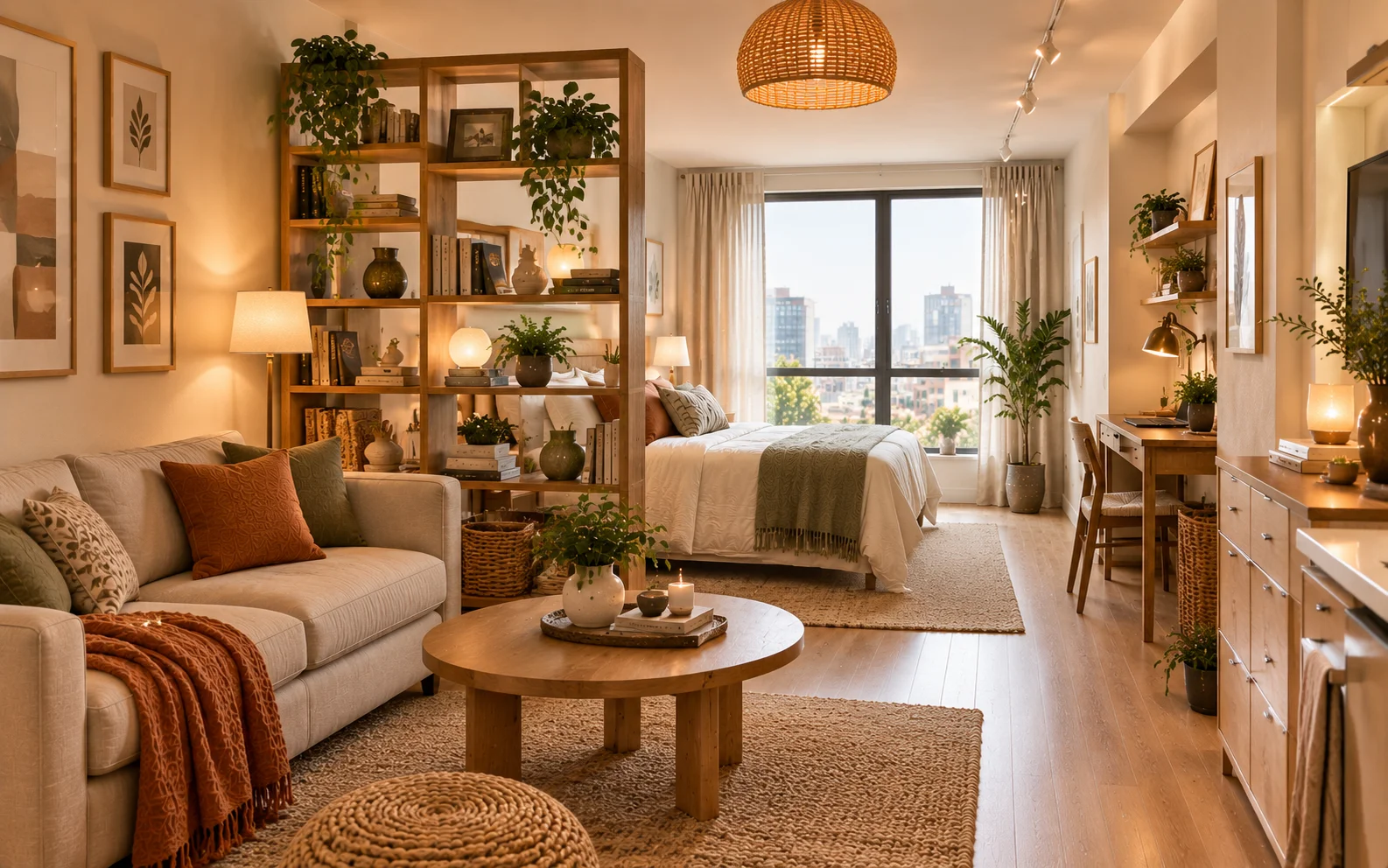
A studio apartment can look completely different with a few smart changes. You do not need a bigger floor plan or a full makeover. The studios that look the most put-together usually use simple ideas for separating zones, adding warmth, choosing the right furniture, and making better use of light and walls. These 21 studio apartment ideas are practical, easy to adapt, and worth saving if you are trying to make one room work harder.
1. Keep the Base Neutral and Add Warmth
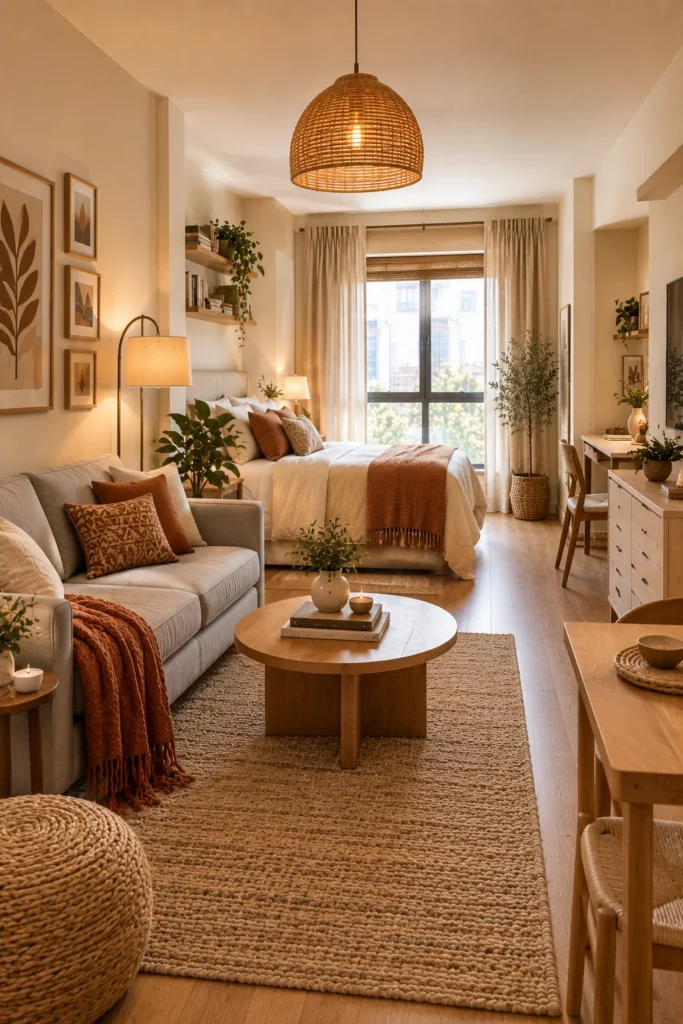
A neutral studio gives you more freedom with furniture and accessories, but too much white, gray, or beige can make the room feel flat. The easiest fix is to keep the large pieces simple and add warmth through one or two materials.
Try a wood coffee table, woven pendant, terracotta cushion, warm rug, or linen throw. You do not need several accent colors. One warm material repeated around the room can make the neutral base feel much more finished.
What to steal: Keep the walls and large furniture calm, then use texture and warm materials for contrast.
2. Use a Bookshelf as a Room Divider
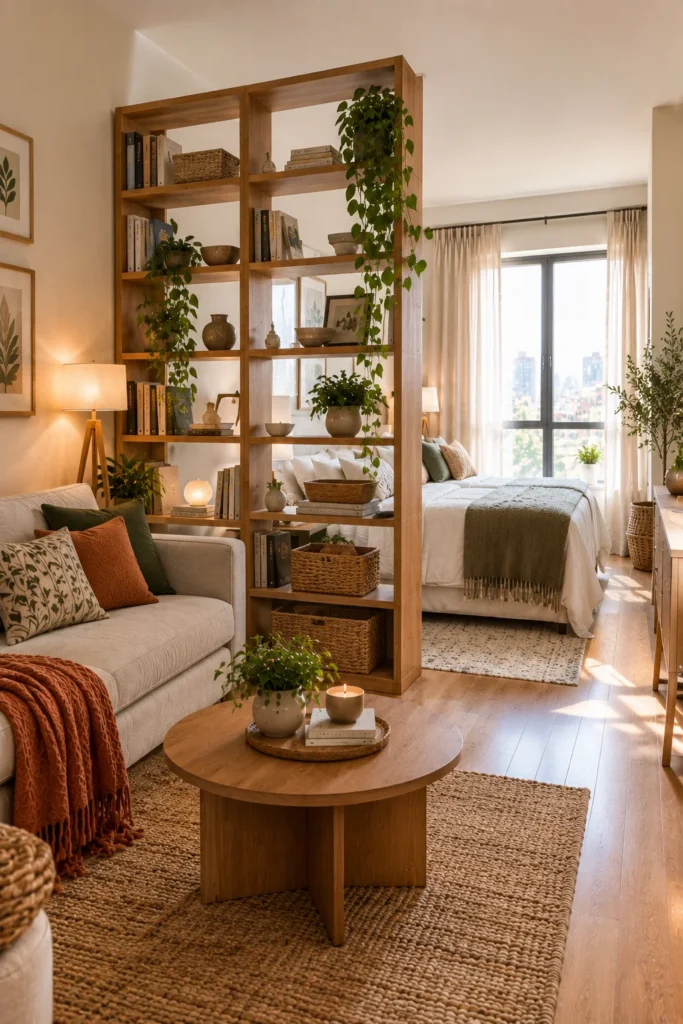
An open bookshelf is one of the easiest ways to create separate sleeping and living areas without building a wall. Place it perpendicular to the wall between the bed and sofa so it creates a visual boundary while still allowing light through.
Keep some shelves open instead of filling every section. A mix of books, baskets, plants, and empty spaces makes the divider look intentional rather than like a storage unit placed in the middle of the room. If you want more options, these studio apartment divider ideas for small spaces cover several ways to separate a small layout.
What to steal: Use one piece of furniture to provide storage and create a bedroom boundary at the same time.
3. Give Your Workspace Its Own Zone
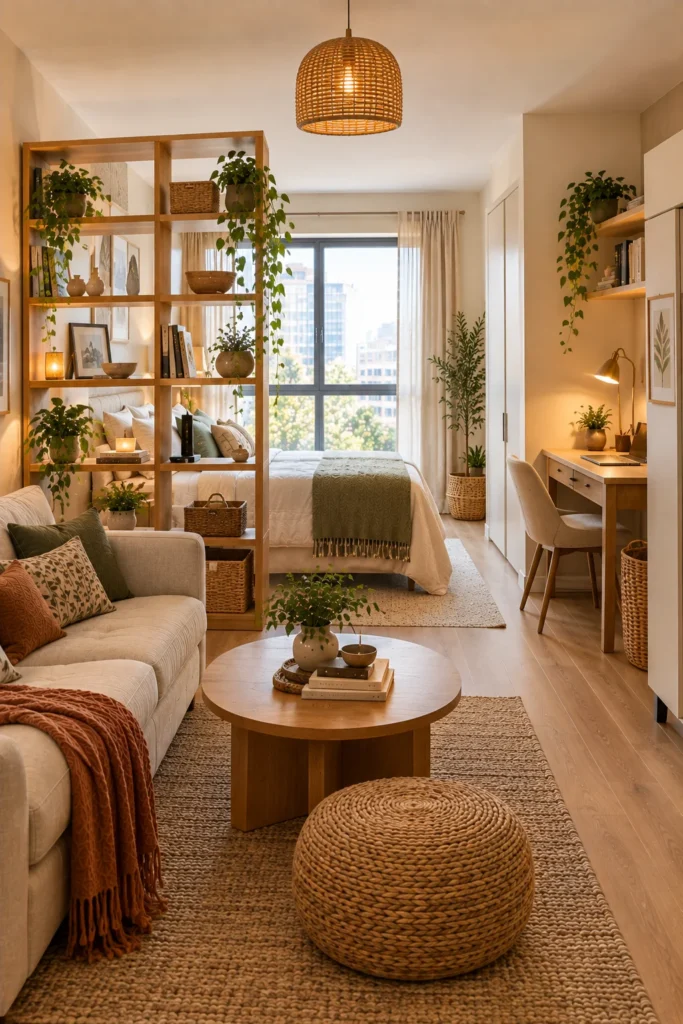
Working from the same room where you sleep can make the whole studio feel like one continuous space. A separate desk area does not need a wall. It just needs enough visual difference for it to read as its own zone.
Place the desk near a window or against a clear wall, then add a dedicated lamp, small rug, artwork, or shelf above it. Keeping work-related items in one area also makes it easier to keep the rest of the studio visually calm when the workday ends.
What to steal: Give your desk its own lighting and visual background instead of treating it like another piece of furniture.
4. Use Rugs to Define Different Areas
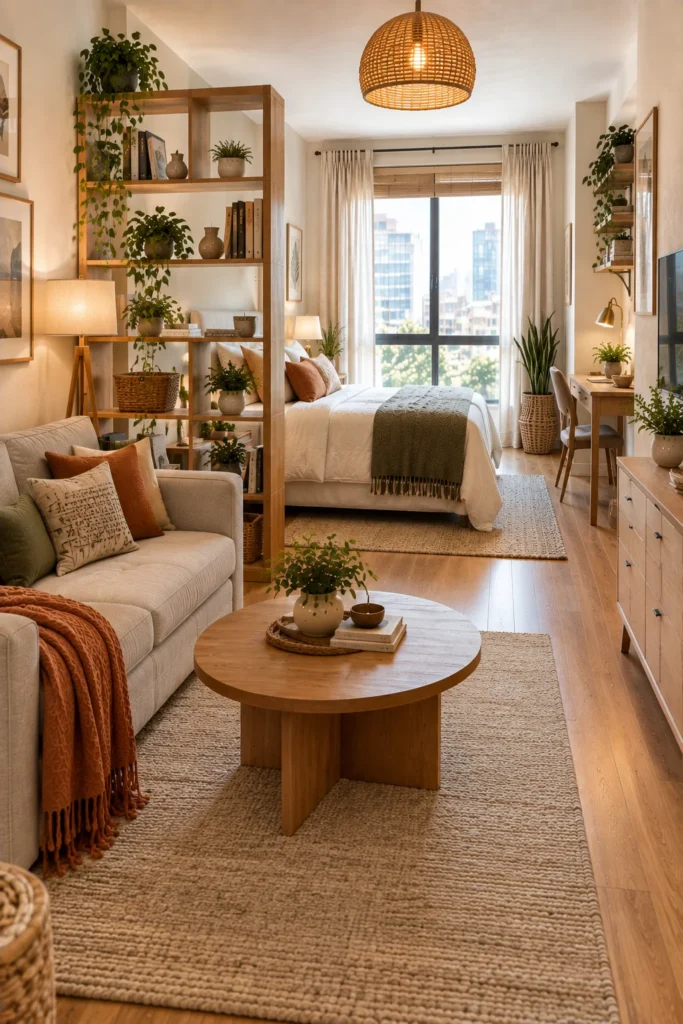
In a studio, rugs can work almost like invisible walls. A larger rug under the sofa and coffee table can establish the living area, while a smaller rug near the bed can make the sleeping zone feel separate.
The rugs do not have to match exactly. Keep one shared color or material between them so they feel connected. This approach is especially useful when you cannot install a physical divider.
What to steal: Use separate rugs to tell the eye where one zone ends and another begins.
5. Keep Open Dividers Light and Uncluttered
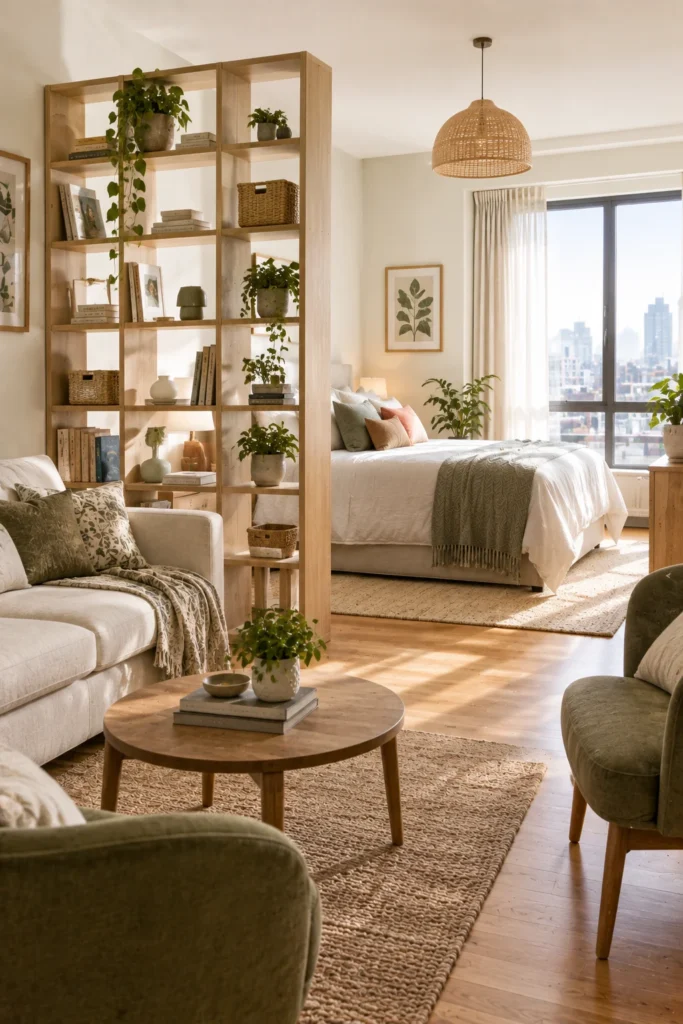
An open shelf works best when it separates the room without becoming another wall of clutter. Leave some sections empty and use only a few baskets, books, plants, and decorative objects.
Style both sides if the shelf divides your bed from the living area. The living-room side can hold books and display pieces, while the bedroom side can provide baskets or small storage. The goal is separation without blocking the room’s visual flow.
What to steal: Empty shelf space is useful. It keeps a divider from making the studio feel smaller.
6. Try a Warm and Moody Color Scheme
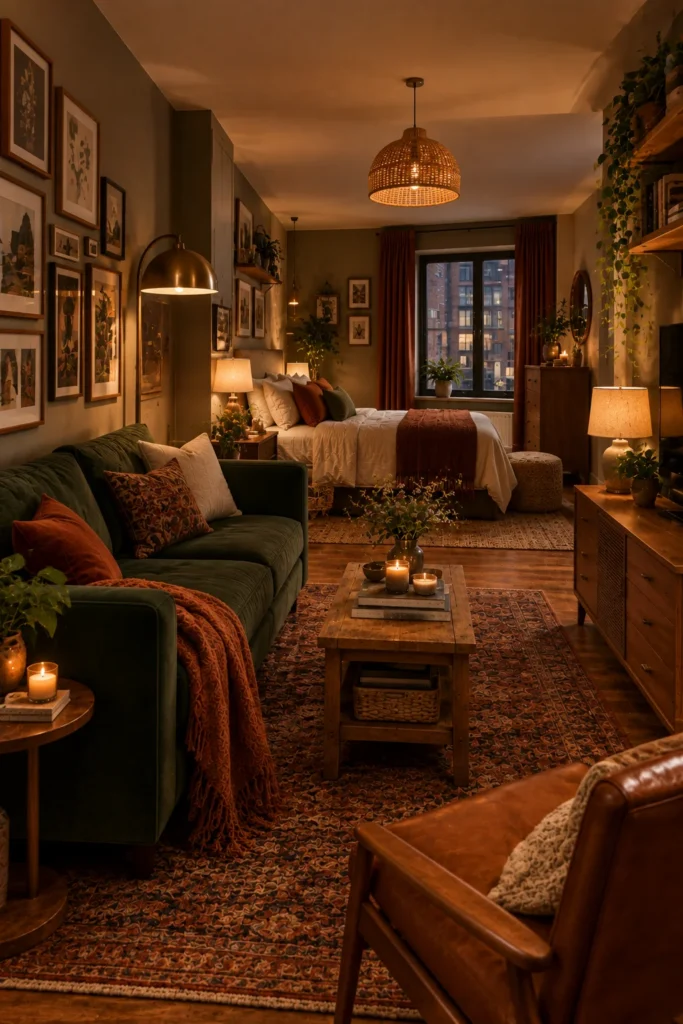
A studio does not have to be white and bright. Deep green, rust, brown, cream, and warm wood can create a cozy atmosphere when the colors are used consistently.
The key is lighting. Use several warm lamps instead of one strong overhead fixture so the darker colors look rich rather than dull. A warm-toned sofa, earthy rug, and small gallery wall can give the room plenty of personality without filling it with decoration.
What to steal: If you like dark colors, use warm lighting to support them instead of fighting the palette with harsh white light.
7. Go Full Boho if It Fits Your Style
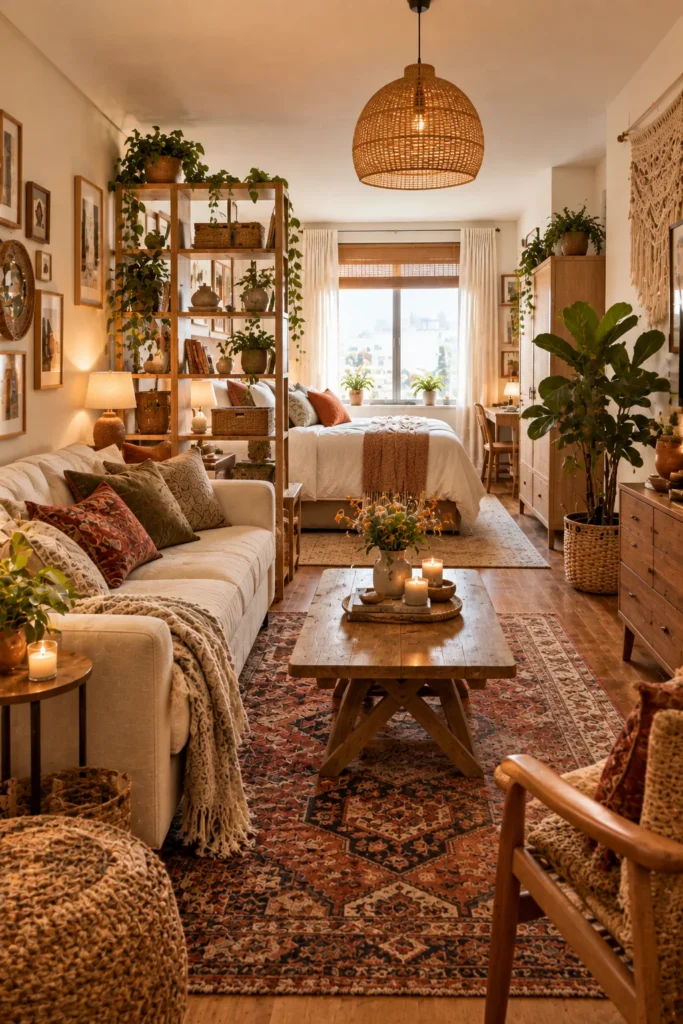
A small studio can handle a lot of personality when the larger pieces stay simple. Use a light sofa, cream walls, and simple furniture as the base, then add rattan lighting, patterned rugs, woven baskets, plants, and layered textiles.
The trick is keeping the visual weight under control. If every surface has a pattern and every corner has an object, the room will feel crowded. Let the walls and main furniture provide some breathing room.
What to steal: Use texture and natural materials to create a boho look without filling every inch of the studio.
8. Use Japandi in a Long, Narrow Studio
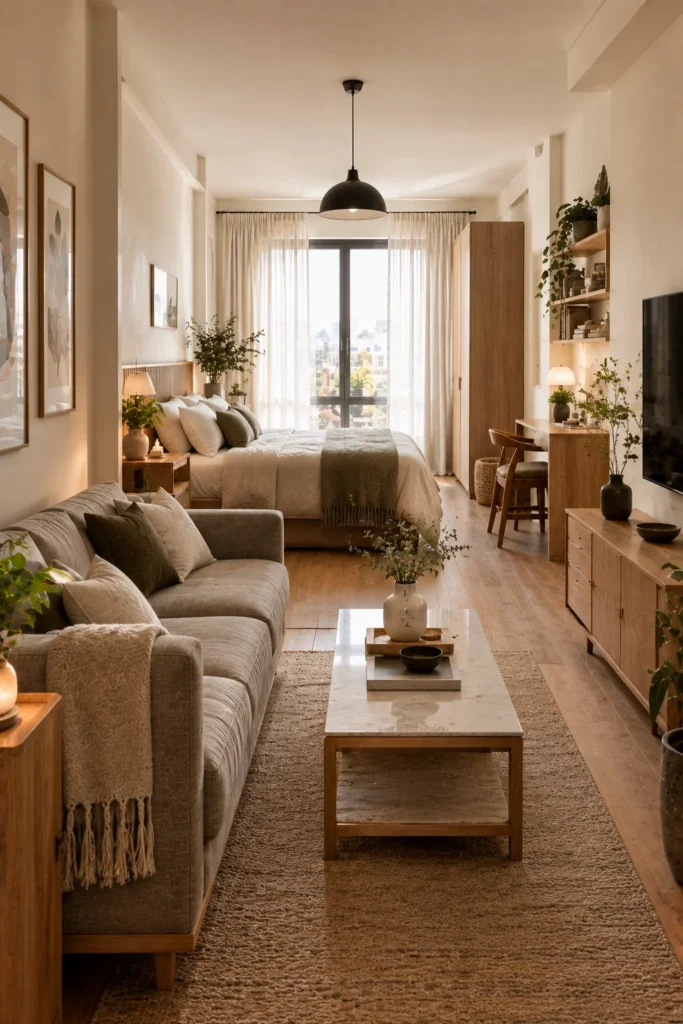
Long studios can easily start to feel like hallways when all the furniture is pushed against the walls. Instead, create a central living zone with a low sofa and place the bed behind it while keeping a clear path through the room.
Japandi style works particularly well because it combines simple furniture with warm wood and restrained colors. Light curtains, low furniture, natural materials, and minimal decoration help the narrow layout feel open rather than crowded.
What to steal: Keep furniture low and avoid filling both long walls with bulky pieces.
9. Try a Darker Studio Palette
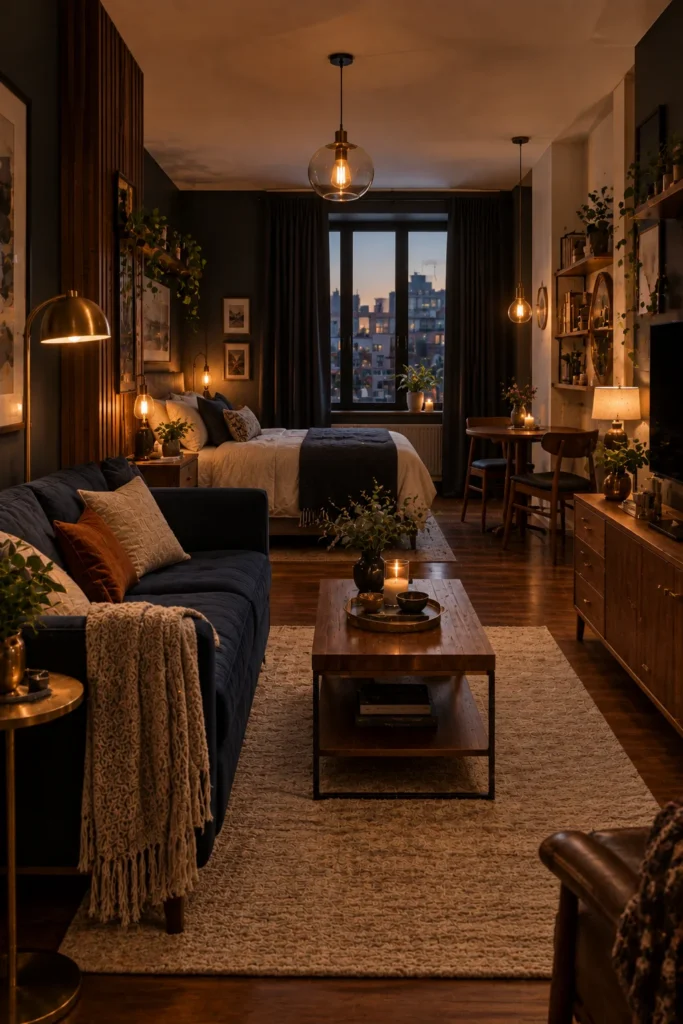
Dark furniture and curtains can work in a small studio when the floor and lighting provide enough contrast. Navy, charcoal, walnut, and warm brown can make the room feel intimate rather than cramped.
Use a lighter rug or bedding to keep some visual balance. Warm lamps around the sofa, bed, and dining area will also create smaller pools of light instead of illuminating the whole room from one harsh source.
What to steal: Pair dark furniture with lighter flooring, rugs, or bedding so the room still has visual contrast.
10. Build Storage Up the Wall
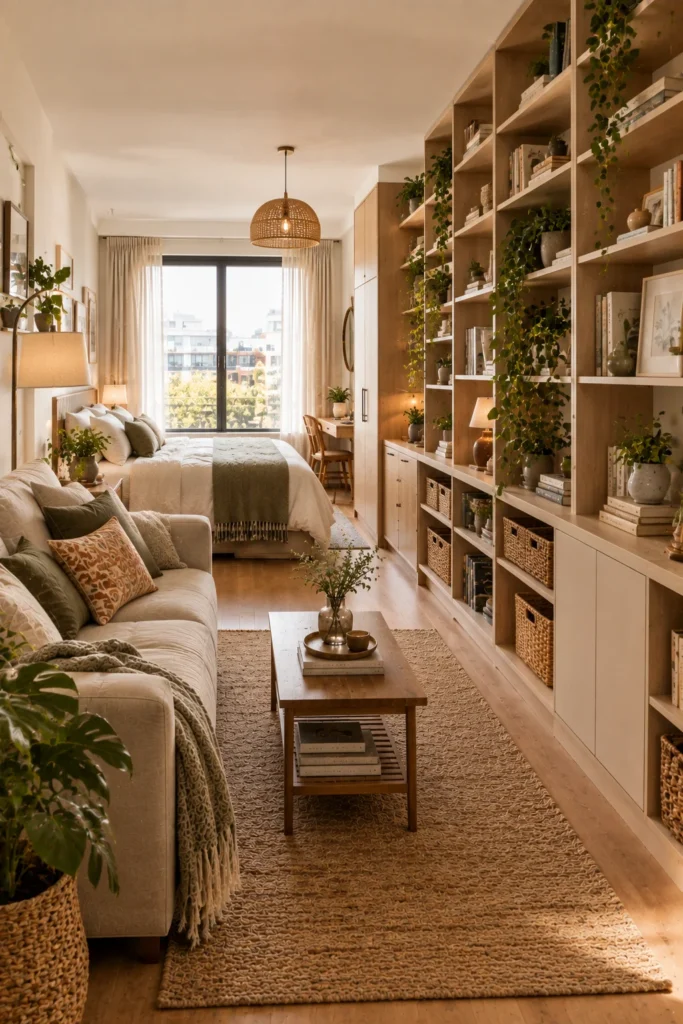
When floor space is limited, vertical storage becomes more useful than another low cabinet. Floor-to-ceiling shelves can hold books, baskets, plants, and everyday items while making use of wall space that would otherwise stay empty.
Keep the lower shelves for storage and use the upper sections for lighter objects. A few open areas will prevent the wall from looking too heavy. This is also a good approach when choosing furniture that works best in a studio apartment because every piece needs to earn its floor space.
What to steal: Build upward before adding another storage cabinet to the floor.
11. Make the Bed the Main Feature
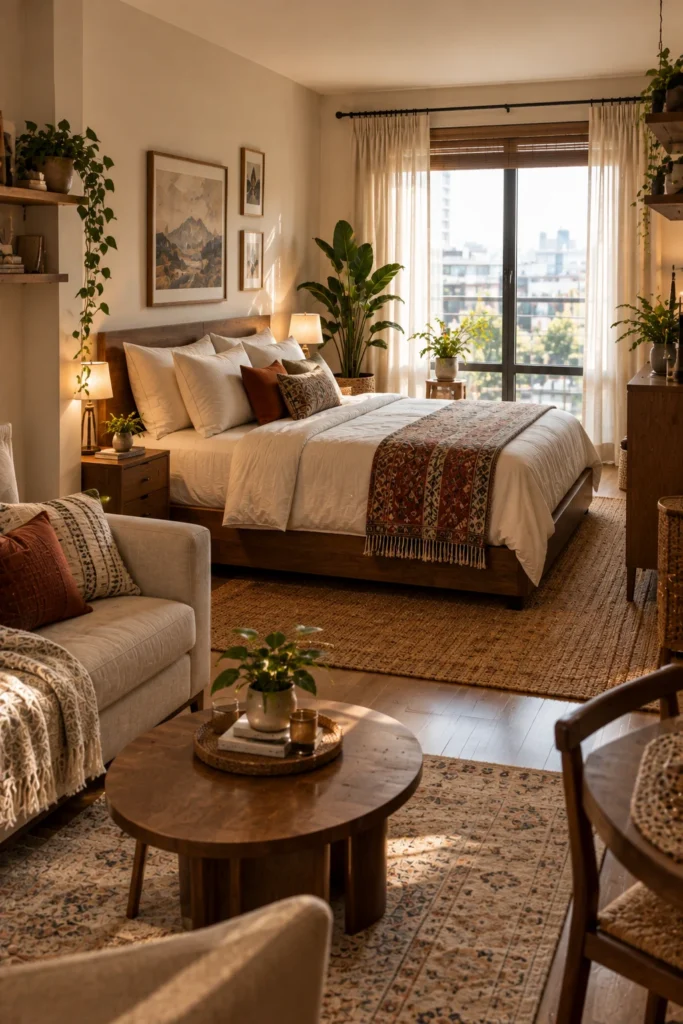
The bed is usually the largest item in a studio, so trying to hide it is not always the best approach. Instead, make it look intentional with a strong bed frame, good bedding, a rug, and simple lighting.
You do not need a complete matching bedroom set. One attractive frame with layered bedding can make the sleeping area feel like a designed part of the apartment rather than furniture that was simply placed there.
What to steal: Style the largest piece in the room instead of trying to make it disappear.
12. Use Cream and Caramel for Warmth
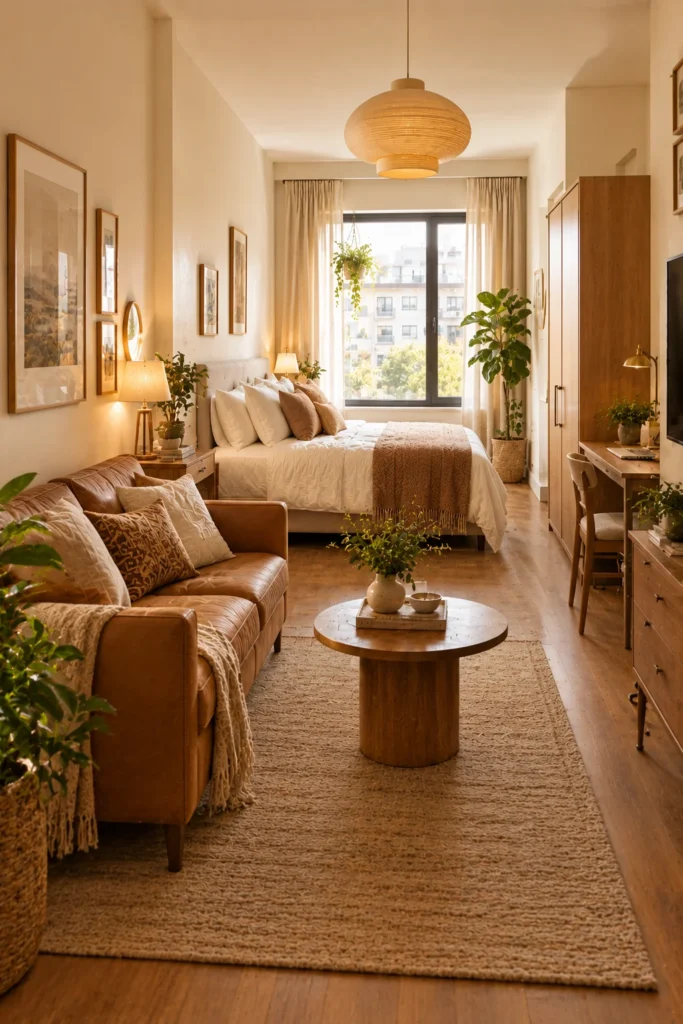
Cream and caramel are easy colors for a studio because they add warmth without making the room visually busy. A tan loveseat, cream walls, warm white bedding, and light wood furniture can create a comfortable look with very few decorative pieces.
Keep the undertones consistent. Warm cream works better with caramel, tan, beige, and natural wood than with very cool gray or blue-white finishes. This small detail can make the whole room feel more connected.
What to steal: Keep your whites and neutrals in the same warm family.
13. Mix Earthy Colors With Natural Materials
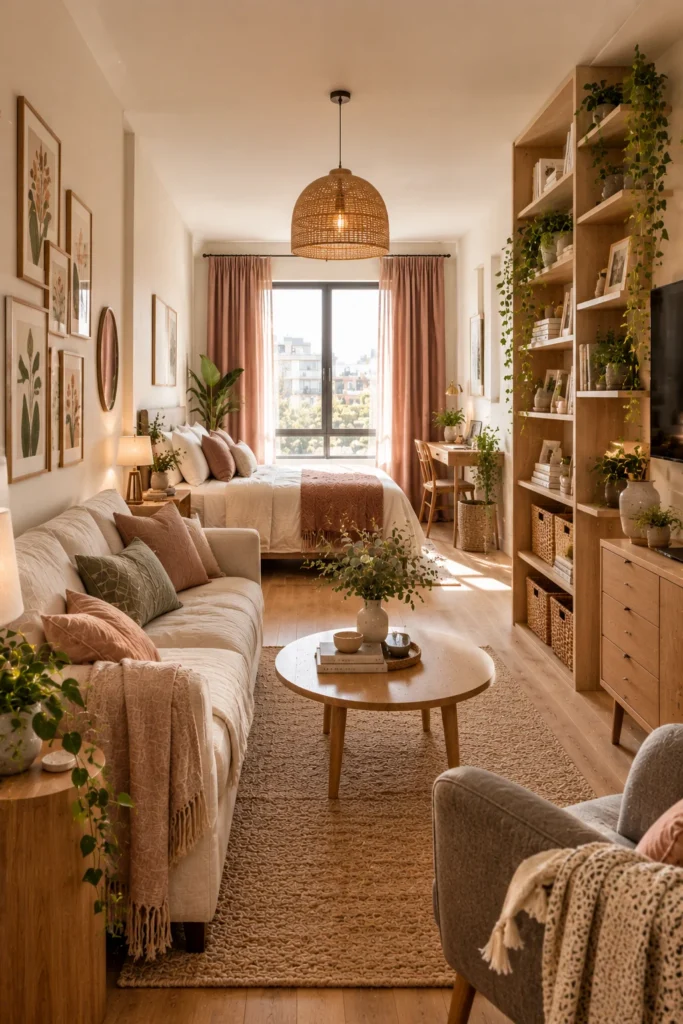
A Scandinavian-inspired studio does not have to be plain white. Dusty rose, muted gray, cream, natural oak, linen, rattan, and cotton can create a warmer version of the style.
The materials matter as much as the colors. When the room uses several natural textures, it gains depth without needing lots of decoration. A woven pendant or oak shelf can also become a visual feature while remaining practical.
What to steal: Use natural materials to add interest when you want to keep the color palette muted.
14. Go Glam in a Small Space
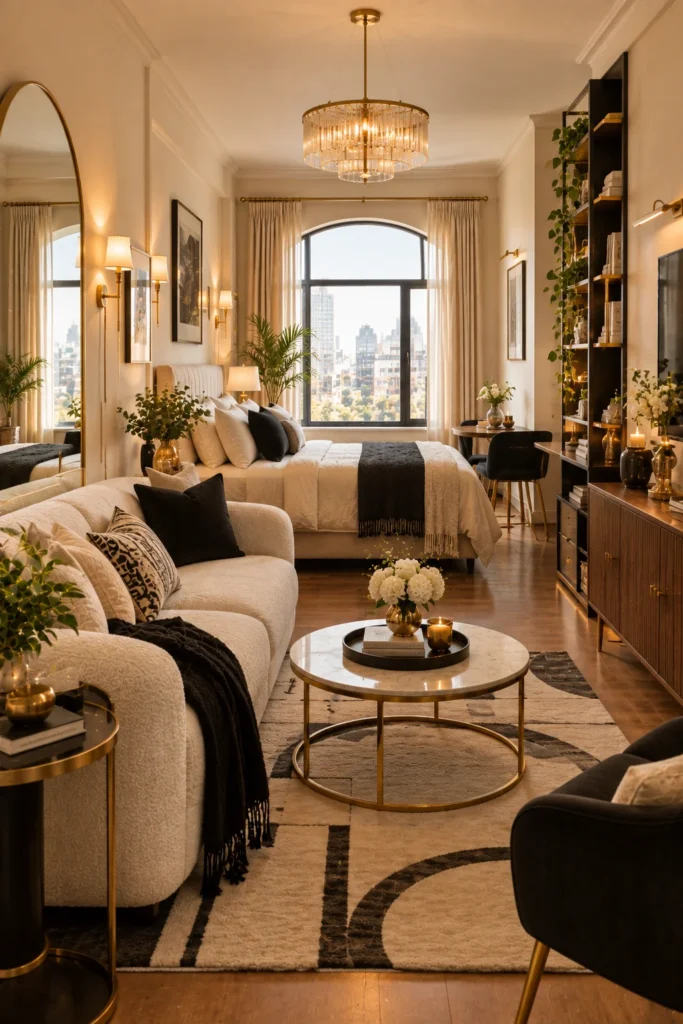
A studio can handle a glamorous look if the palette stays controlled. Cream, black, and gold are enough to create a strong style without adding too many competing colors.
An arched mirror can reflect light and add height, while a statement pendant or chandelier gives the ceiling more presence. Keep the rest of the furniture simple so the larger decorative pieces remain the focus.
What to steal: Choose a small number of glam finishes and repeat them instead of mixing several metallic colors.
15. Let Lighting Create the Mood at Night
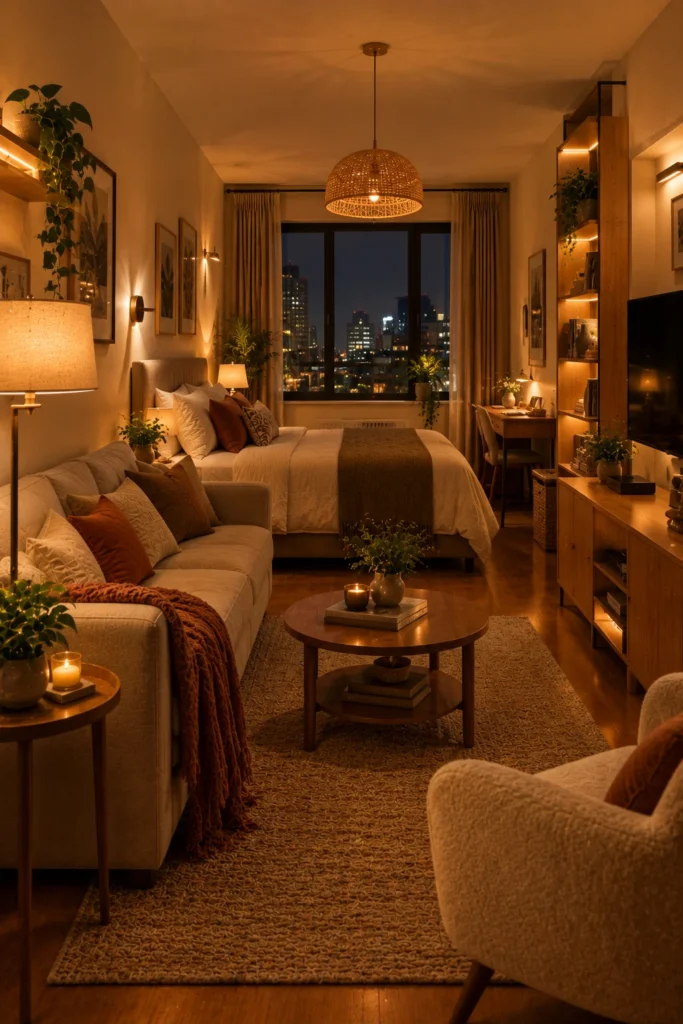
A studio can look great during the day and completely different at night if all the lighting comes from one ceiling fixture. Use a table lamp beside the bed, floor lamp near the sofa, and smaller accent lights to create separate pools of light.
Warm bulbs around 2700K–3000K can make the room feel softer than cool white lighting. The goal is not simply more light; it is putting light where you actually need it.
What to steal: Turn off the main ceiling light at night and let several smaller lamps handle different areas.
16. Make the Bedroom Corner Feel Separate
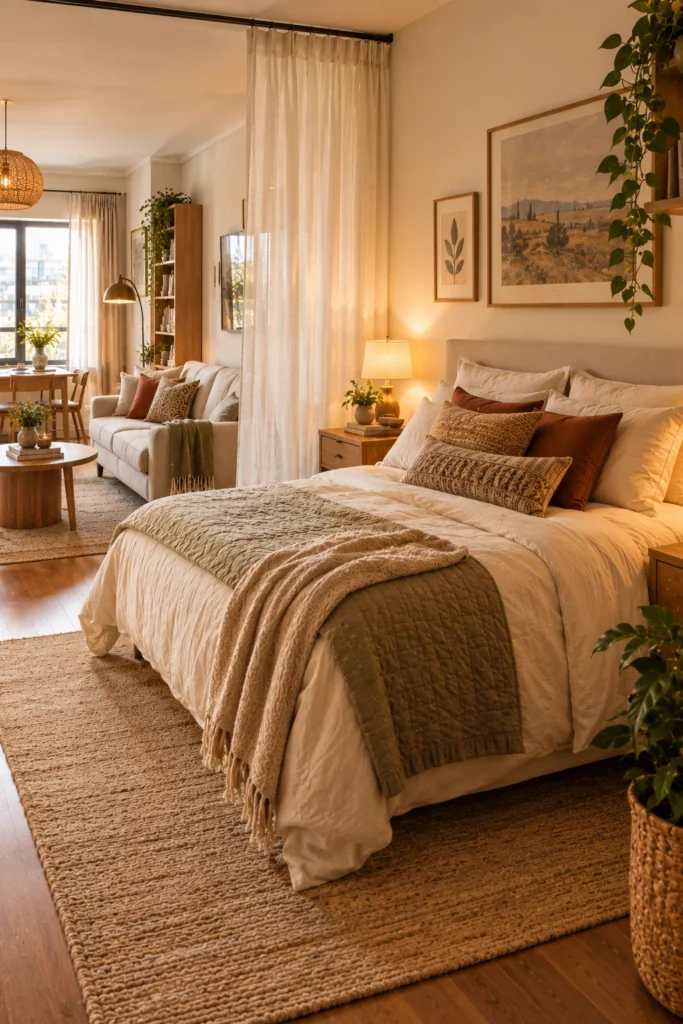
Even without a wall, the bed can feel like its own zone. Start with layered bedding, a rug that extends beyond the bed, one bedside light, and a simple piece of artwork or mirror above the sleeping area.
Curtains can add another layer of separation if the bed sits in an exposed position. For more layout ideas around the sleeping and living zones, you can also look at TV placement ideas in a studio apartment because the TV position often affects how the entire room is divided.
What to steal: Give the bed its own rug, lighting, and visual focal point.
17. Keep the Sleeping Zone Light and Airy
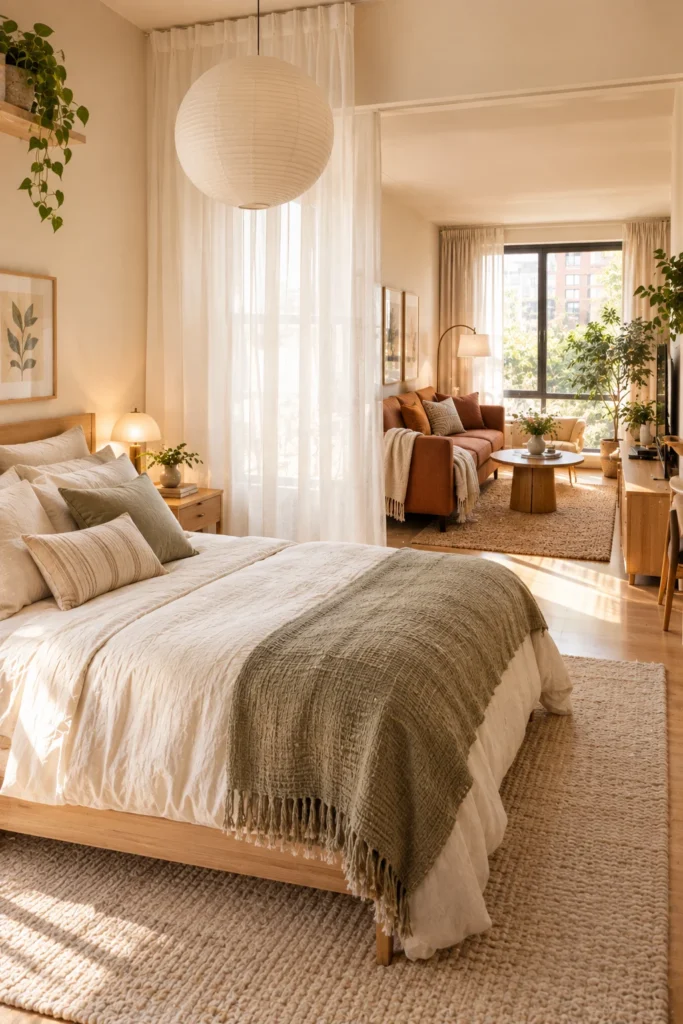
The sleeping area does not always need the same color intensity as the living area. Light bedding, sheer curtains, pale wood, and soft lighting can make the bed feel calmer while the living zone uses deeper colors or stronger textures.
This creates separation without a physical divider. Your eye starts reading the different materials and colors as different functions even though everything remains in one room.
What to steal: Use lighter fabrics and softer colors around the bed to make the sleeping area feel distinct.
18. Use String Lights Carefully
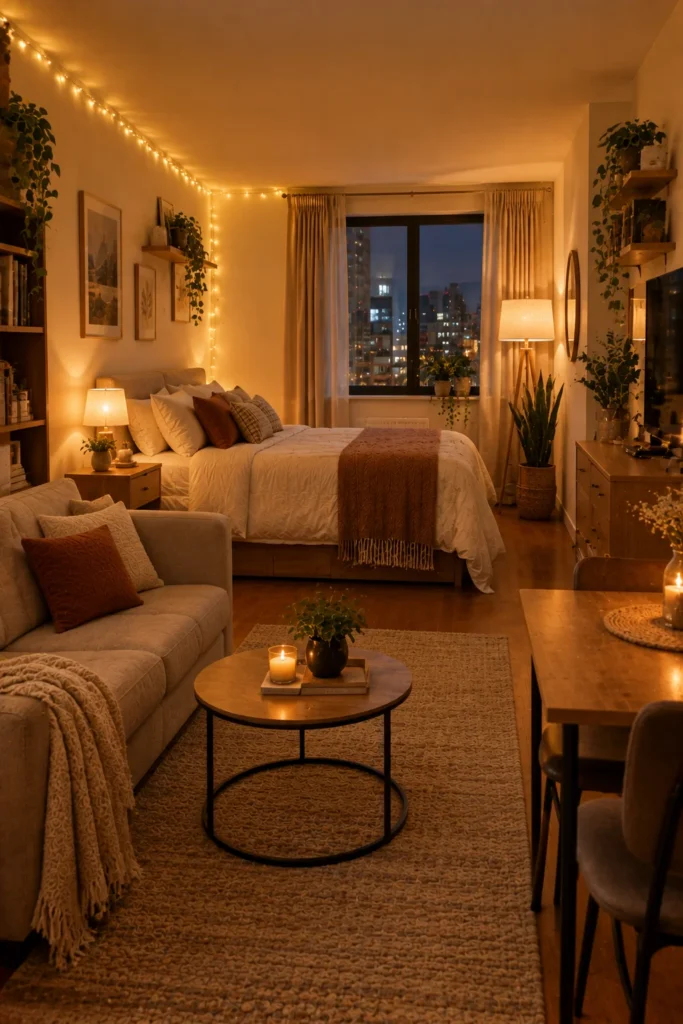
String lights can still work in a studio when they are treated as lighting rather than random decoration. A single warm-white strand along the top of a wall or around a defined sleeping area can provide a soft evening glow.
Avoid mixing bright colors or placing strands on every wall. One carefully positioned strand combined with a floor or table lamp looks much more intentional and keeps the room from feeling visually busy.
What to steal: Use one warm-white strand to add low-level ambient light rather than covering the whole room.
19. Let the Studio Show Your Personality
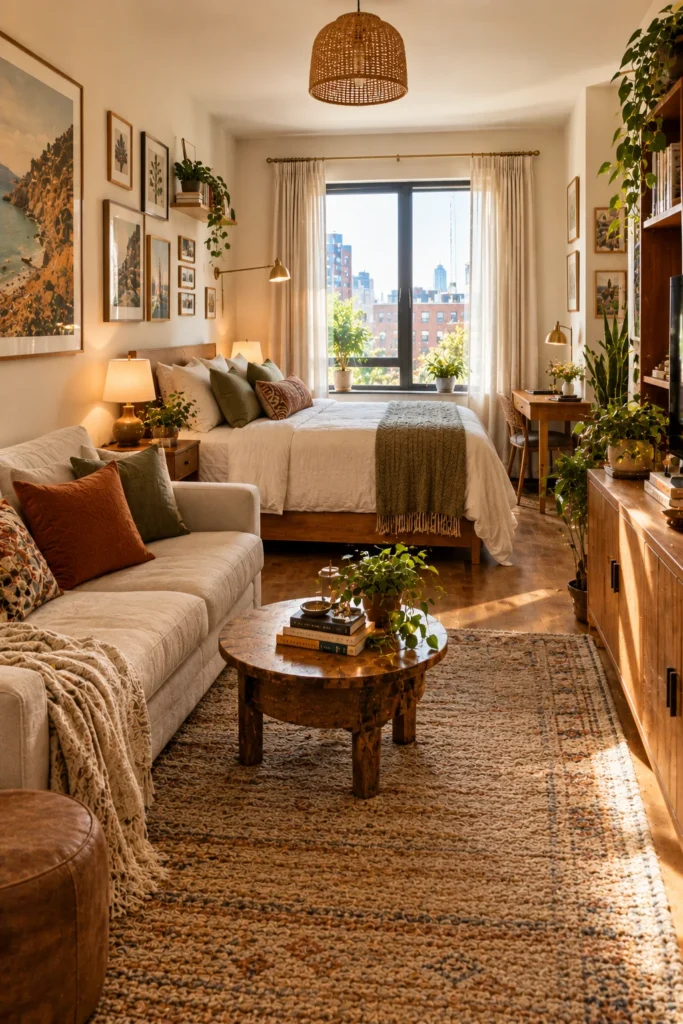
A studio can look polished without looking like a showroom. A few personal objects, framed artwork, travel finds, favorite books, photographs, or a unique chair can make the space feel connected to the person living there.
The key is editing. Choose a few things you genuinely like instead of displaying everything at once. Personal pieces work best when they are given enough space to be noticed.
What to steal: Keep the practical furniture simple and let a few personal objects provide the character.
20. Try an Industrial Moody Studio
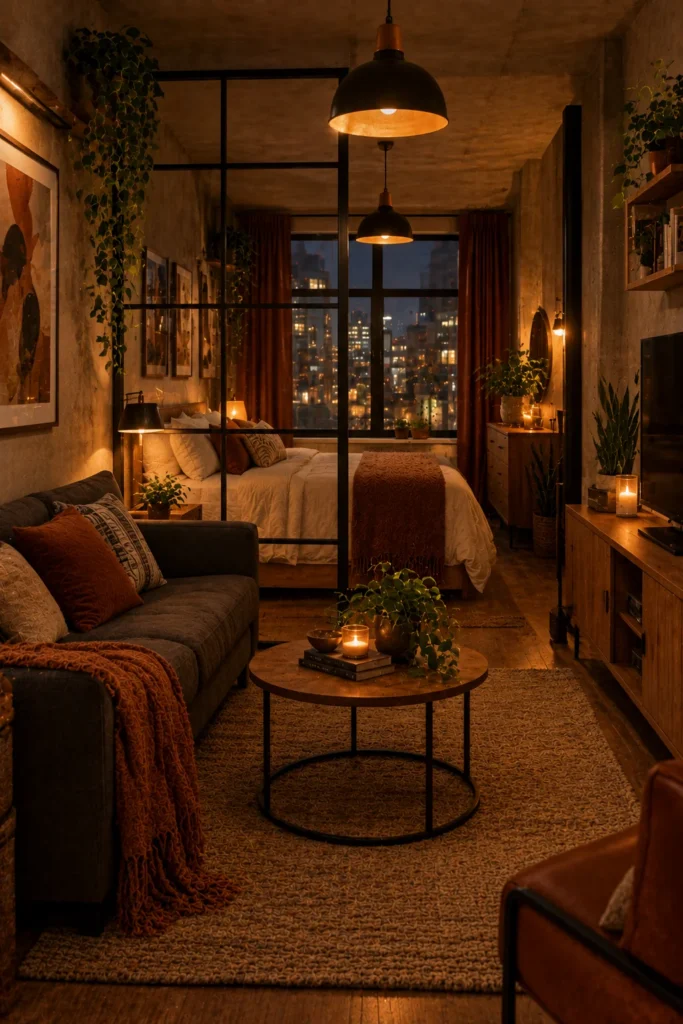
Raw materials can give a studio a strong look without needing lots of decoration. Concrete-style walls, black metal, warm wood, rust tones, and amber lighting create contrast while keeping the furniture simple.
A black steel grid partition can separate the bed from the living area without completely closing it. Add warm textiles and a few plants to soften the harder materials and keep the space comfortable.
What to steal: Mix industrial materials with warm fabrics and lighting so the room does not feel cold.
21. Use Layered Lighting to Create Zones
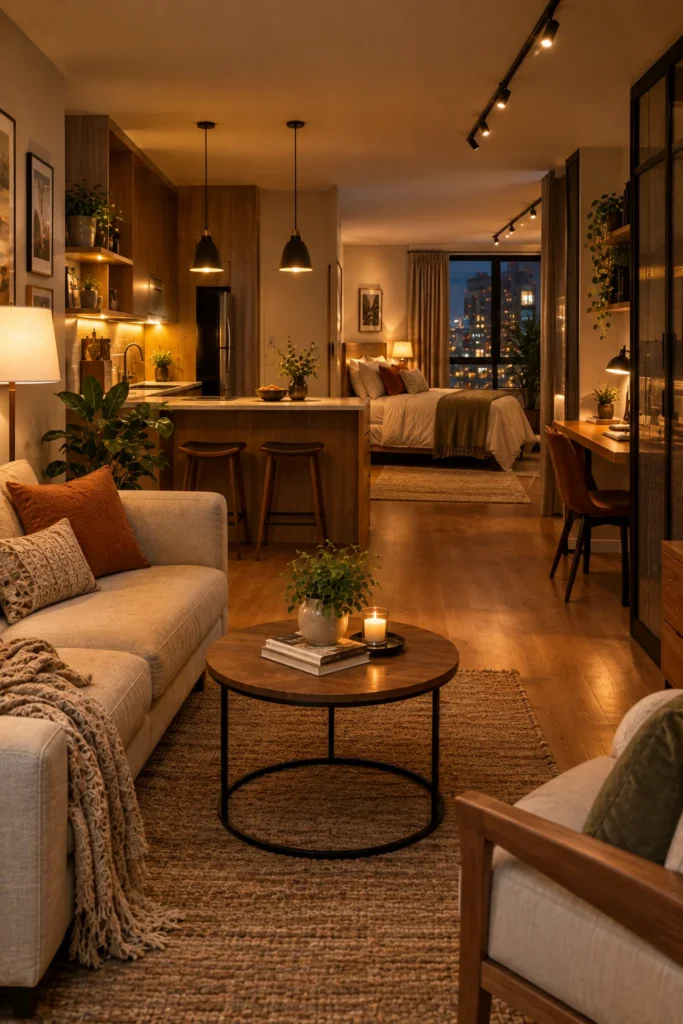
Lighting can separate a studio almost as effectively as furniture. Use a ceiling or track light for general illumination, a task lamp for the desk or kitchen, and accent lighting near shelves, the sofa, or the bed.
This creates several smaller visual zones inside one room. It also means you do not have to light the entire studio when you are only using one area. If your sofa is part of the main living zone, choosing the right placement can also help; these small couch ideas for studio apartments can help with layouts that keep the walking space open.
What to steal: Give every important zone its own useful light source.
Final Thoughts
The best studio apartment ideas are not necessarily the ones that add more decoration. They are the ones that make the existing space work better. A bookshelf can become a wall, a rug can define a room, lighting can separate zones, and one strong color can give the whole apartment direction.
Start with the problem you notice most. If the studio feels like one large room, work on zoning. If it feels cold, add warm materials and lighting. If it feels crowded, reduce furniture and use the walls for storage.
You do not need to copy one complete style from this list. Take one idea that fits your space and build around it. A few clear decisions will usually make a bigger difference than filling the studio with more things.
FAQs
1. How can I make my studio apartment look bigger?
Keep walking paths open, avoid oversized furniture, use light colors where helpful, and take advantage of vertical storage. Mirrors and open dividers can also help maintain a sense of space.
2. What is the best way to divide a studio apartment?
An open bookshelf is one practical option because it separates zones while allowing light to pass through. Curtains, rugs, furniture placement, and open shelving can also create boundaries without permanent walls.
3. How do I separate my bedroom from my living room in a studio?
Place the sofa, bookshelf, or another low piece of furniture between the two areas, or use curtains around the bed. A separate rug and lighting setup can make the sleeping zone feel even more distinct.
4. What colors work well in a studio apartment?
Neutral colors, warm whites, beige, cream, muted green, earthy tones, and controlled darker palettes can all work. The important part is keeping the colors connected instead of using too many unrelated shades.
5. How can I decorate a studio without making it feel cluttered?
Start with the furniture you actually need, then add only a few decorative pieces. Use shelves and walls for storage, leave some surfaces empty, and avoid filling every corner simply because there is space.
6. What type of lighting is best for a studio apartment?
A combination of ambient, task, and accent lighting works well. Warm bulbs around 2700K–3000K can create a softer atmosphere, while focused lamps can make individual areas more functional.
7. Can a studio apartment have different decorating styles in different areas?
Yes. You can make the bedroom calmer and lighter while keeping the living area warmer or darker. Repeating one or two materials or colors helps the zones still feel connected.
8. What furniture should I prioritize in a small studio?
Prioritize pieces that fit the floor plan and serve a clear purpose. A compact sofa, useful bed, practical storage, and appropriately sized table are usually more valuable than extra decorative furniture.