
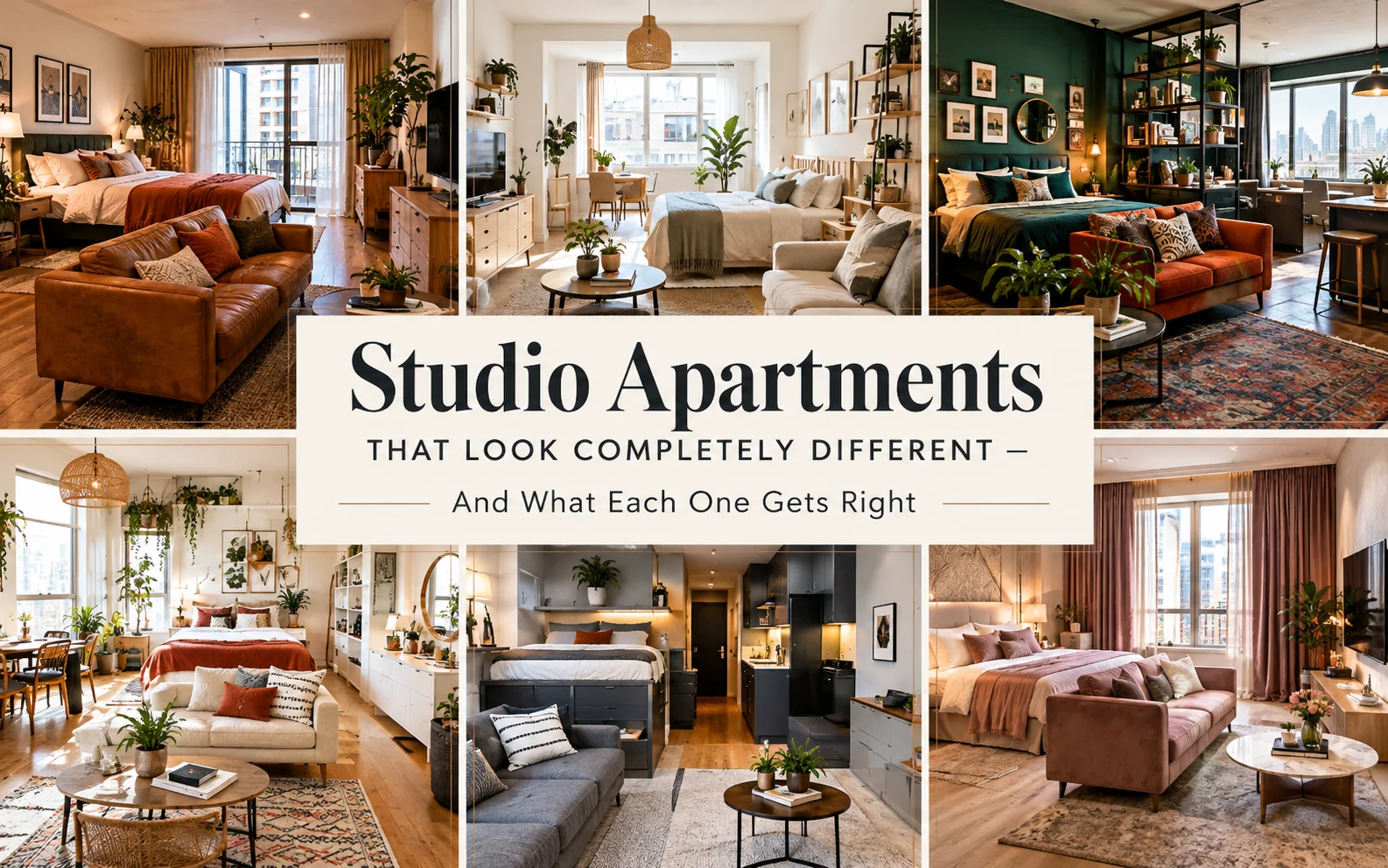
Two studios can have almost the same size and still feel completely different. One can look calm and open, another warm and layered, while a third feels bold and full of personality. The difference usually comes down to a few clear choices in layout, color, lighting, furniture, and storage. Here are 19 studio apartment styles and the practical idea each one gets right.
1. The Clean Modern Split
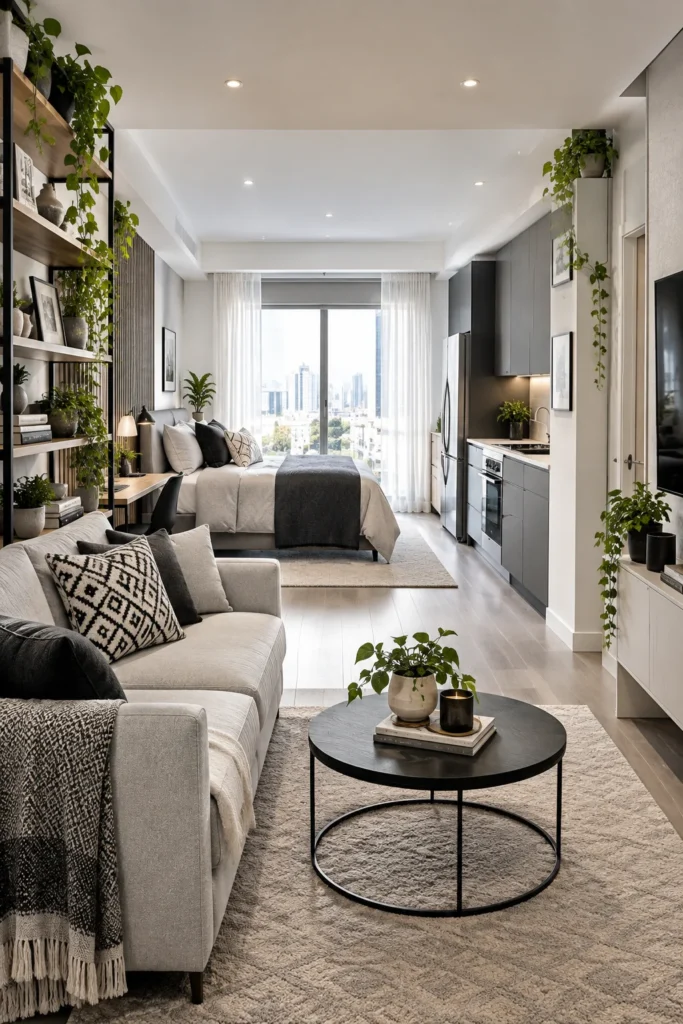
A monochrome studio can work well when the room has enough texture to stop the colors from feeling flat. White, gray, and black furniture create a clean base, while textured bedding, a soft rug, plants, and a rounded coffee table keep the space from looking too hard.
The round table is especially useful in a small room filled with straight furniture. Its curved shape breaks up all the sharp lines and makes the seating area feel less boxy. If your studio needs a sofa that fits this kind of layout, start with compact options rather than oversized seating.
What to steal: Use one rounded piece of furniture in a room where most of the shapes are square or rectangular.
2. The Bookshelf Room Divider
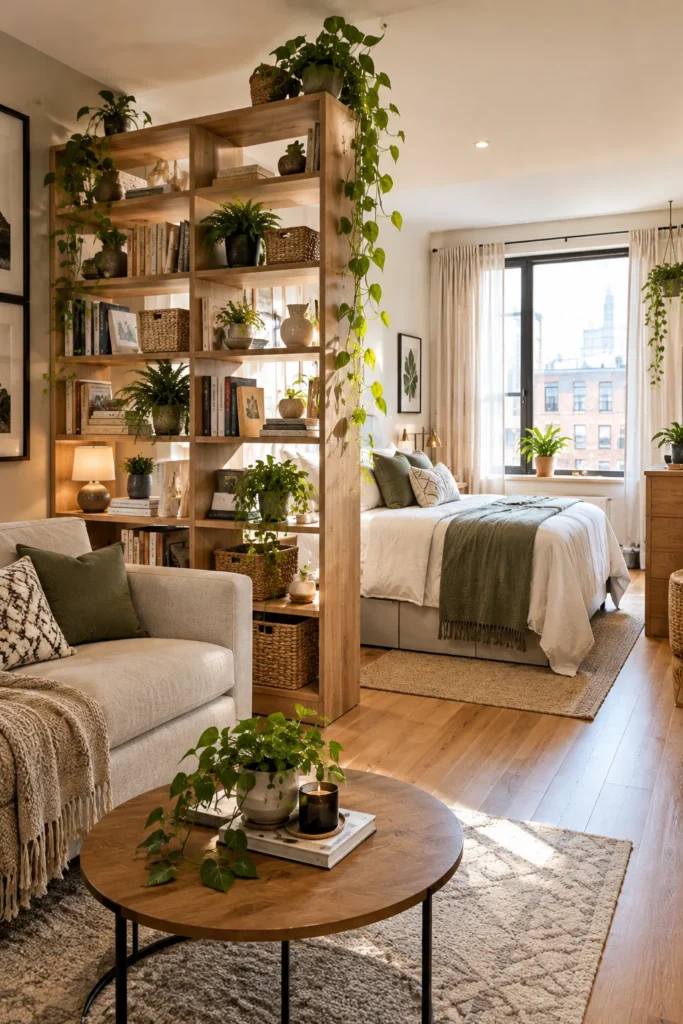
A tall open bookshelf can make a studio feel like it has separate rooms without completely closing the space. Position it between the bed and living area, then use books, baskets, plants, and a few decorative objects to make the divider useful from both sides.
The open design matters because it lets light move through the room. It also gives you storage without adding another bulky cabinet. For more ways to separate different areas, these studio apartment divider ideas for small spaces are useful when planning the layout.
What to steal: Use an open shelf as both storage and a visual wall.
3. The Soft Neutral With Warm Light
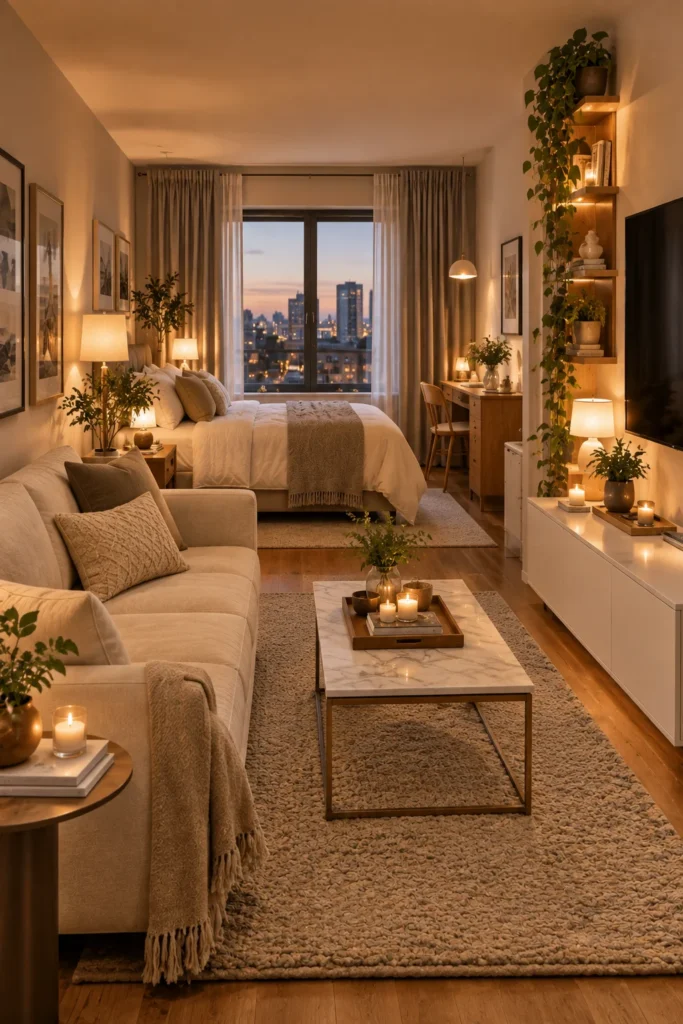
Soft white, beige, gray, and natural wood can make a studio feel calm without looking empty. The key is not using one shade everywhere. Mix a textured rug, soft curtains, wood furniture, warm lighting, and different fabric finishes so the neutral colors have some depth.
A low media console also helps because it leaves more visible wall and floor space above and below it. That can make the room feel less crowded even when all the necessary furniture is there.
What to steal: Keep large pieces neutral, then create interest through texture and warm lighting.
4. The Industrial-Meets-Warm Studio
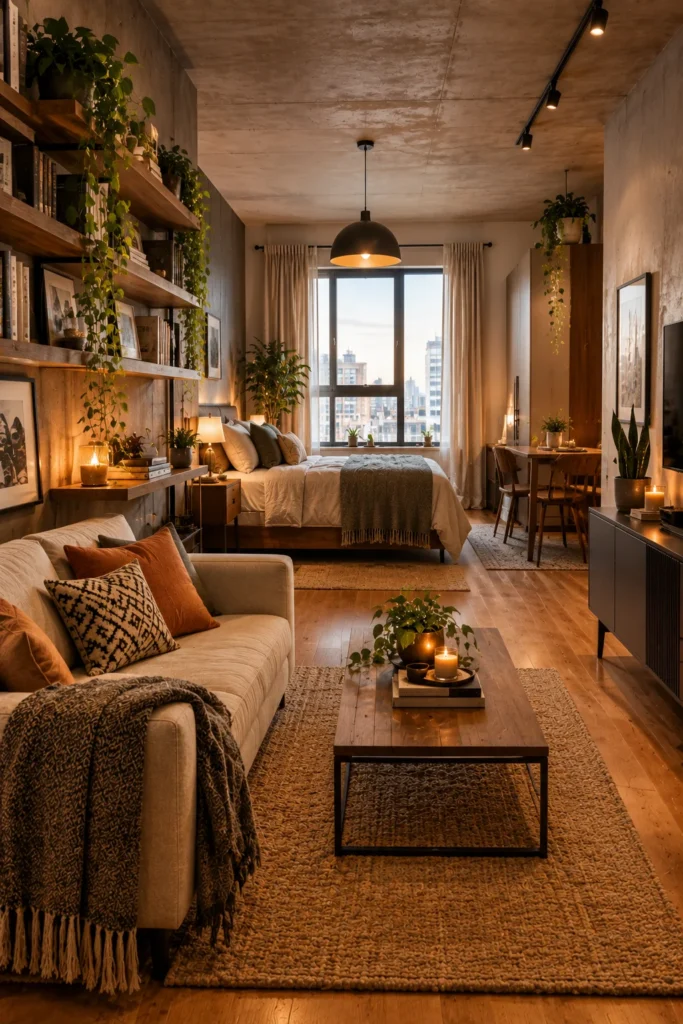
Industrial details do not have to make a studio feel cold. A concrete-style wall becomes much warmer when it is combined with honey-colored wood floors, walnut shelving, warm pendant lighting, and plants. The mix of hard and soft materials gives the room more character.
Low furniture also works well here. Keeping the sofa, coffee table, and bed closer to the floor leaves more open wall above them and helps the studio feel taller.
What to steal: Balance one hard finish, such as concrete or metal, with warm wood and soft textiles.
5. The Scandinavian Studio With a Work Zone
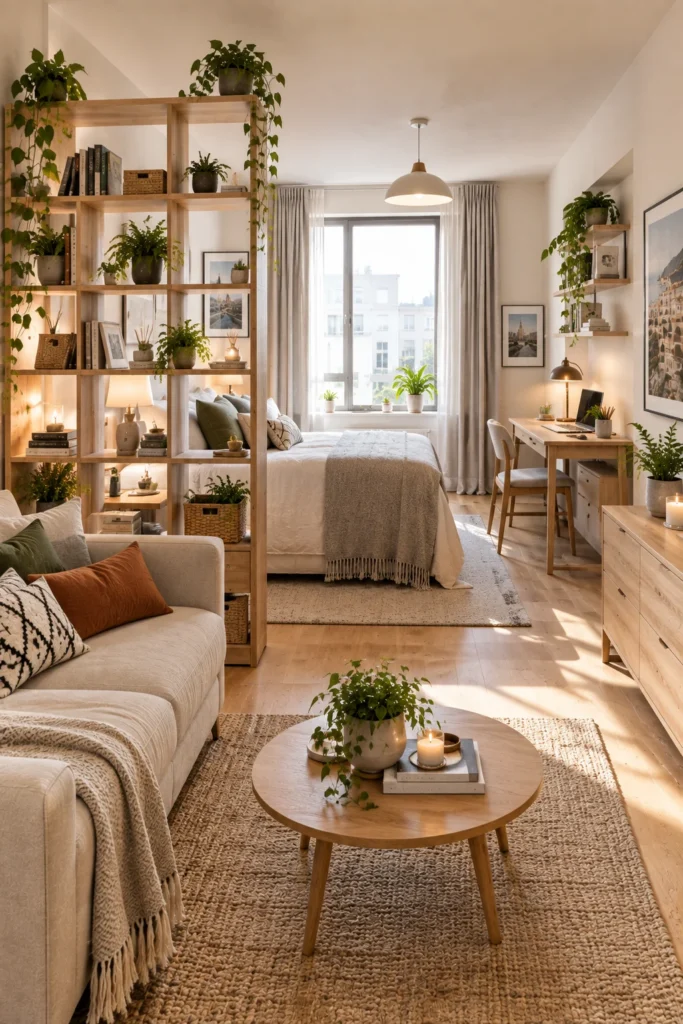
A studio that needs to handle sleeping, relaxing, and working can still feel organized when each function has a defined area. A simple open bookshelf or partial divider can separate the desk from the bed and sofa without blocking the room.
Natural wood, cream furniture, simple artwork, and a textured rug keep the Scandinavian look clean without making it plain. If you are choosing furniture for a similar setup, focus on pieces that serve more than one purpose and do not overwhelm the floor plan.
What to steal: Give your desk its own visual zone instead of placing it directly beside the bed.
6. The Soft Pink Studio
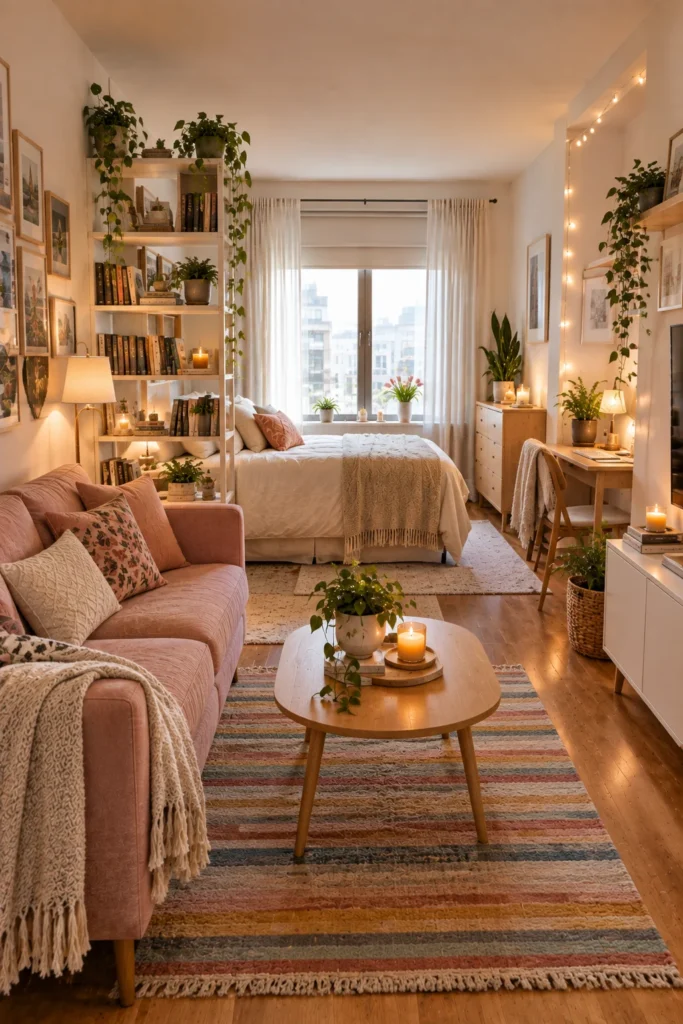
Pink does not have to dominate a room to make an impact. A blush sofa can become the main color while white walls, warm wood flooring, neutral bedding, and a patterned rug keep the rest of the studio balanced.
The same idea works if you are not ready for a large pink piece. Add the color through cushions, a throw, artwork, or a small chair and repeat it once or twice around the room. This gives you the look without making every surface part of the same color story.
What to steal: Let one soft color lead the room and keep everything around it simple.
7. The Studio Built Around Layered Lighting
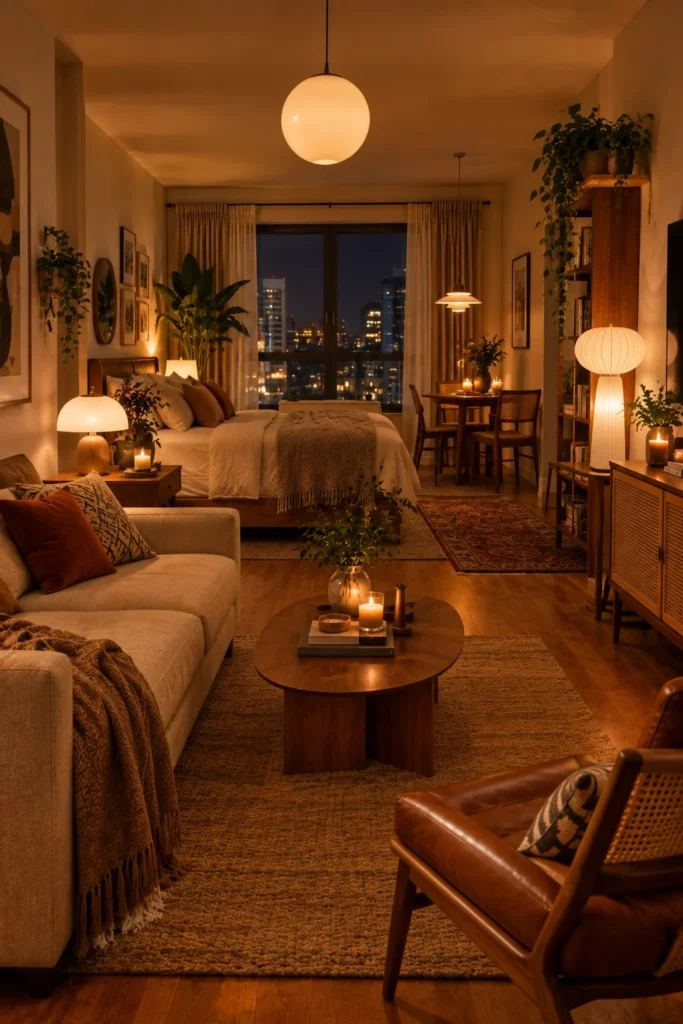
A single ceiling light can make even a nicely decorated studio feel flat at night. A better approach is to use several smaller light sources at different heights, such as a pendant, table lamp, floor lamp, and small accent lights.
Warm lighting also changes how neutral and wood finishes look after dark. Instead of making the room brighter everywhere, place light where you actually use the space: beside the sofa, near the bed, and around the dining or work area.
What to steal: Use several warm light sources instead of relying on one bright overhead fixture.
8. The Plant-Filled Studio
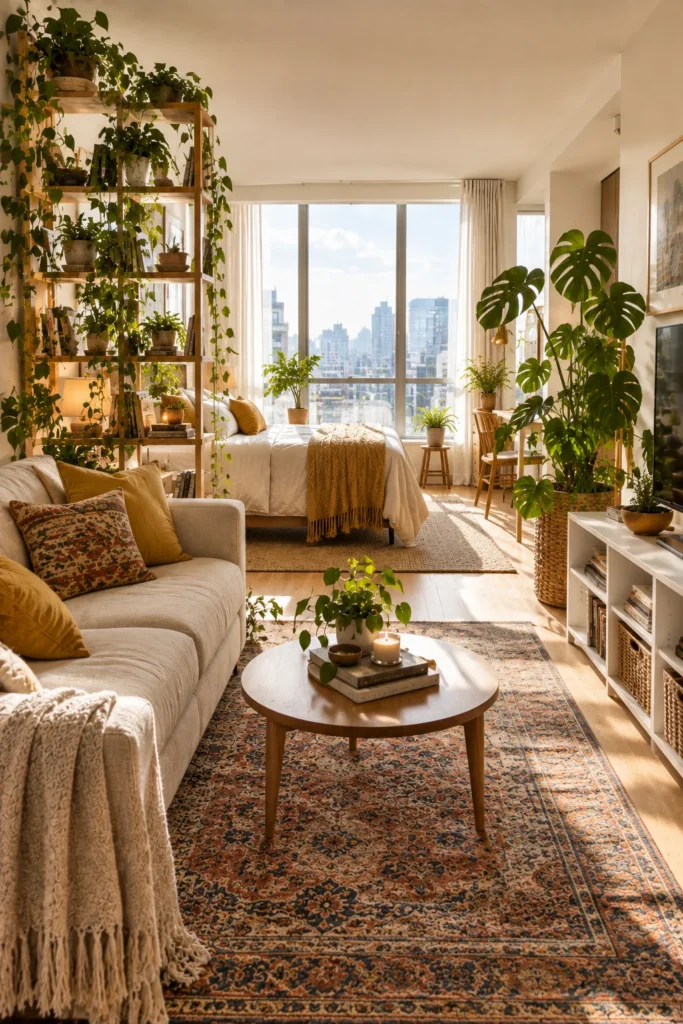
Plants can add color and texture without needing more furniture. A large plant in an empty corner can fill vertical space, while smaller plants on shelves or a windowsill add detail without taking over the floor.
The important part is placement. Use plants to fill awkward corners or soften shelves instead of scattering them randomly across every surface. A simple neutral sofa and rug can provide a quiet background for the greenery.
What to steal: Use one large plant to fill an empty corner instead of adding another piece of furniture.
9. The Eclectic Studio With One Bold Piece
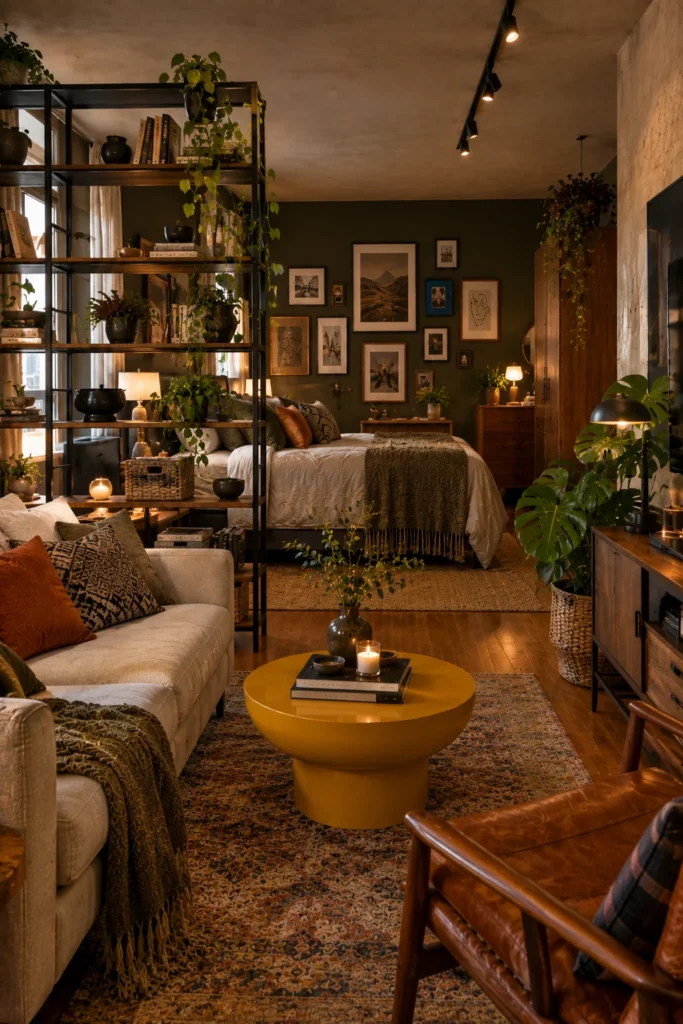
An eclectic studio does not need every piece to match. A dark sofa, gallery wall, metal shelving divider, bold coffee table, plants, and different textures can work together when there is one clear visual direction.
The trick is to give the eye somewhere to land. A yellow table, rust-colored chair, or cobalt vase can do that against a darker or neutral background. Keep the rest of the colors controlled so the statement piece actually stands out.
What to steal: Choose one unexpected color or object and let it become the focal point.
10. The Warm Earthy Studio
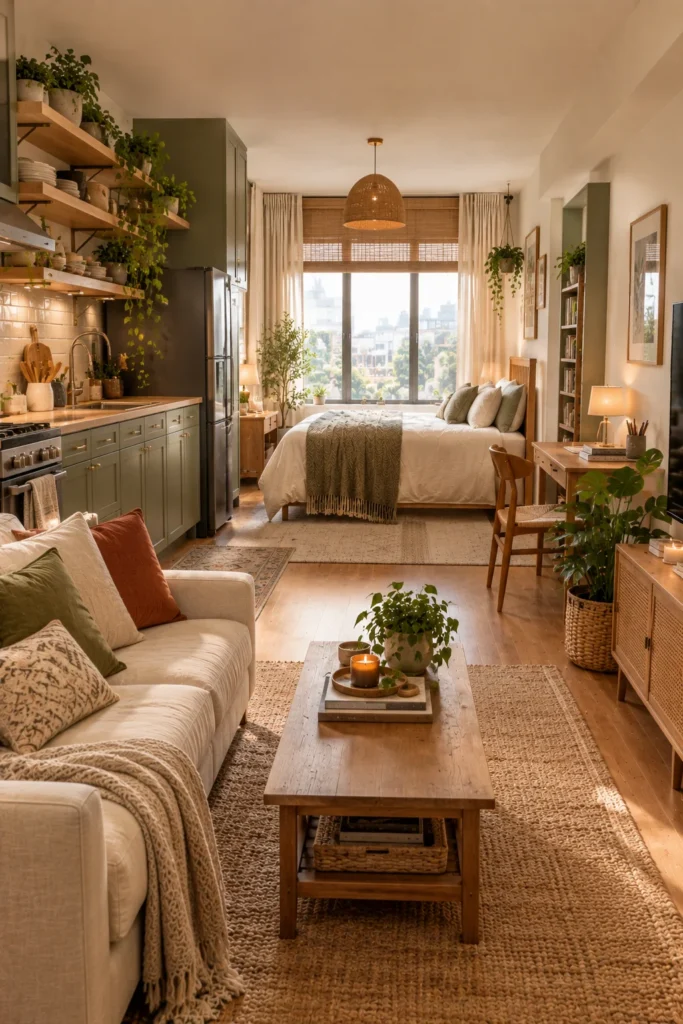
A studio with a kitchen, bed, living area, and workspace can easily look busy, so using one connected color palette helps. Sage green, warm beige, natural wood, jute, and muted cream can carry through each zone and make the whole room feel like one space.
Open kitchen shelving should also have some breathing room. A few ceramics, plants, and useful pieces look more intentional than shelves packed from end to end. The same approach works for the living area: choose fewer pieces and give each one enough space around it.
What to steal: Repeat the same warm colors and materials across different zones.
11. The Layered Light-Filled Open Plan
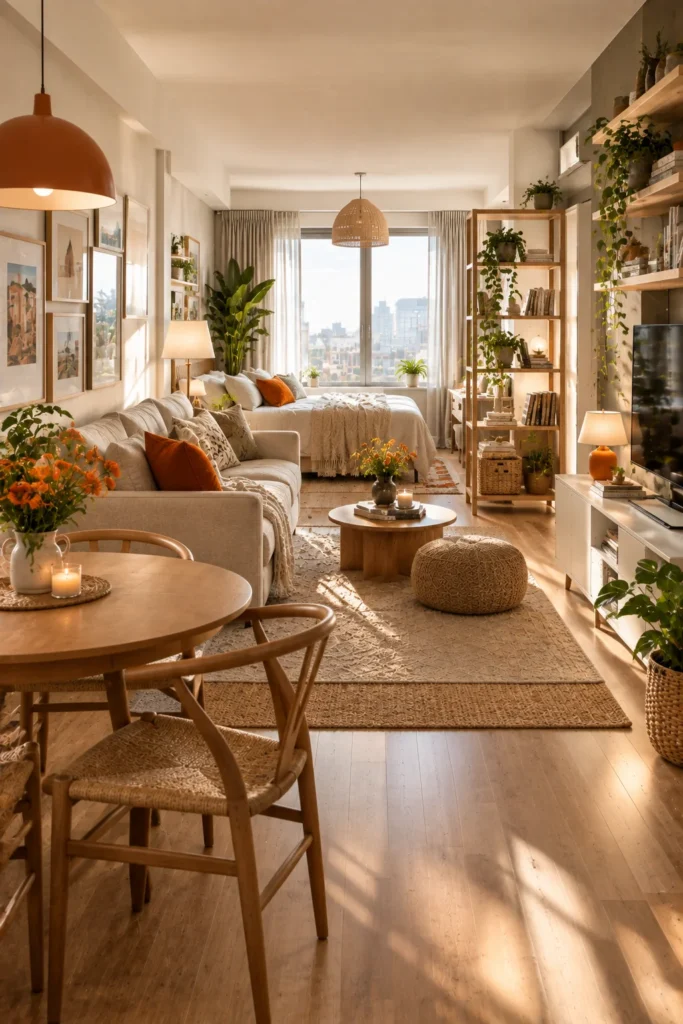
A studio can have a proper dining area and living zone without looking overcrowded if the furniture is arranged around clear paths. Keep larger pieces against the walls where possible and use rugs and lighting to separate each function.
Here, lighting does much of the visual work. Ceiling fixtures, table lamps, and natural daylight create different layers so the room does not depend on one light source. A few seasonal cushions or flowers can also change the color without replacing the main furniture.
What to steal: Use rugs and lighting to define zones instead of adding physical walls.
12. The Moody Studio With a Clear Zone Split
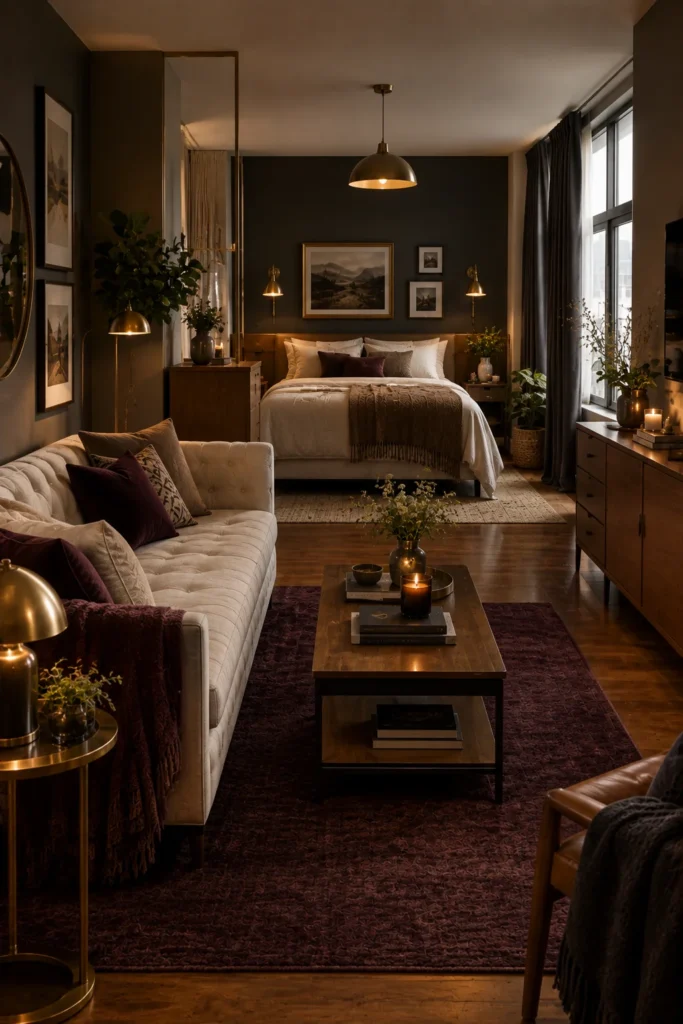
Dark colors can work surprisingly well in a studio when they are used to define one area instead of covering everything. A charcoal wall behind the bed can anchor the sleeping zone, while a lighter sofa and darker rug establish the living area.
Rugs are especially useful here because they visually create boundaries without taking up physical space. If you cannot change the wall color, artwork or removable wall treatments can create a similar focal point.
What to steal: Give each main zone one visual anchor, such as a dark wall, sofa, or rug.
13. The Fresh Green and Natural Wood Studio
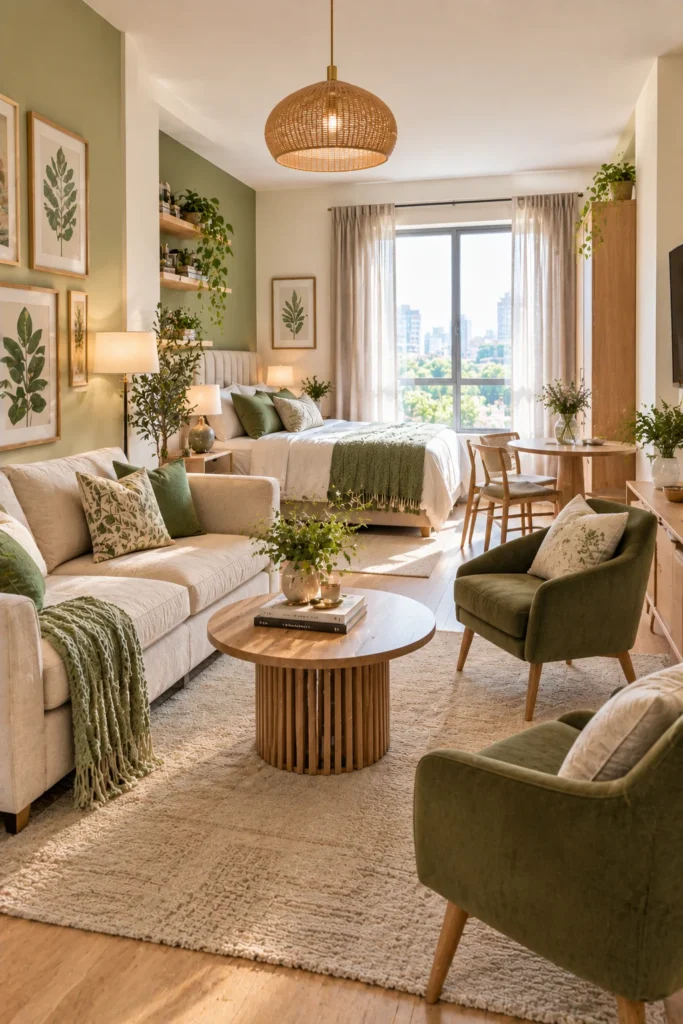
Sage green, cream, and natural wood create a fresh palette without making the studio feel overly colorful. Matching green chairs or cushions can connect the living area, while botanical artwork reinforces the natural theme without adding more furniture.
Look upward as well as around the room. A ceiling detail, pendant light, tall plant, or vertically hung artwork can draw attention toward the ceiling and make the studio feel taller.
What to steal: Use one natural color family and repeat it through furniture, textiles, and artwork.
14. The Full Bookshelf Divider Studio
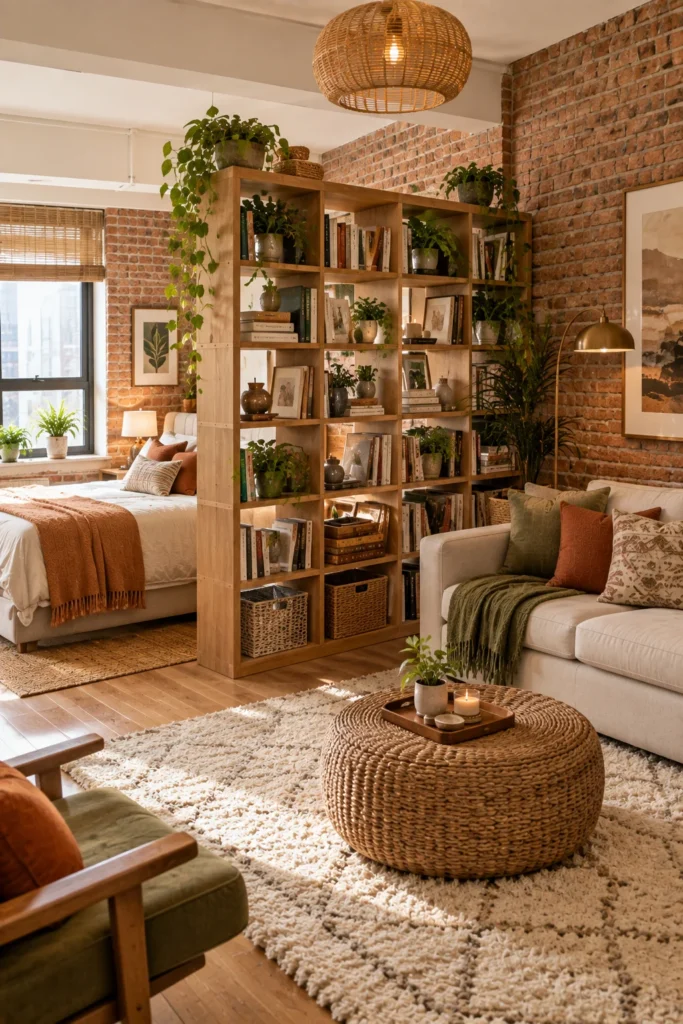
A larger bookshelf can work almost like a wall when the studio needs stronger separation. Use both sides of the shelf instead of treating the bedroom-facing side as an afterthought. Books, baskets, plants, and a few personal objects can make the divider feel like part of the architecture.
The open shelves also keep the room connected visually. This is especially useful when the sleeping area would otherwise sit in a dark corner. If you are comparing furniture options for this kind of setup, choosing pieces that provide storage and separation at the same time can save valuable floor space.
What to steal: Style both sides of a room-divider bookshelf so it looks finished from every angle.
15. The Clean Gallery-Wall Studio
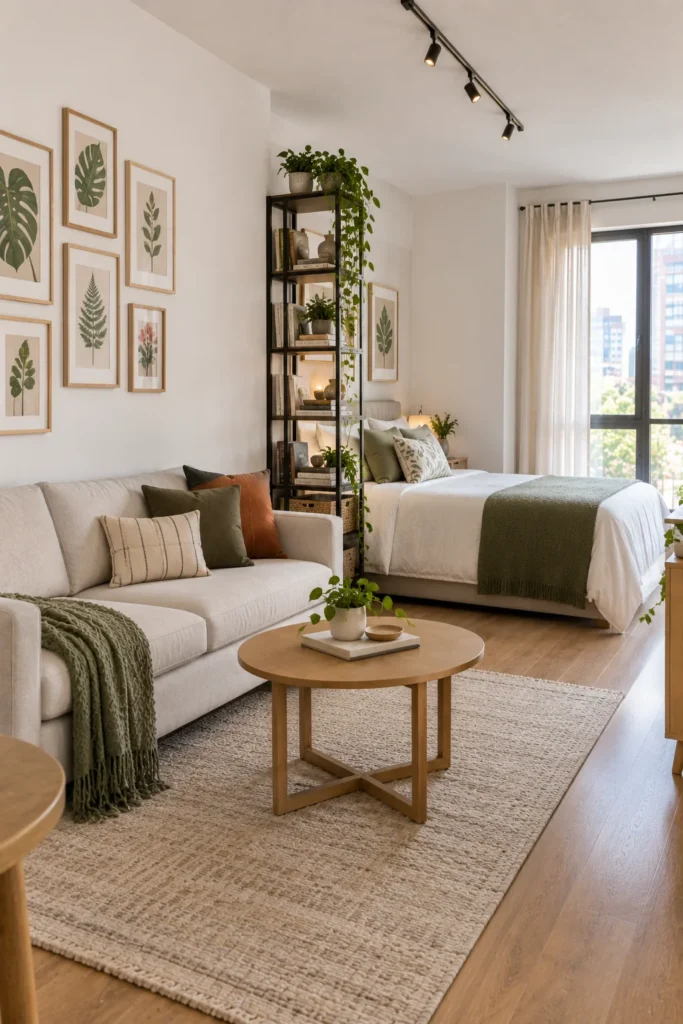
Minimal does not have to mean empty. A clean studio can use a small number of carefully chosen objects, such as a botanical gallery wall, one tall shelf, a compact coffee table, and a single plant.
The trick is leaving enough empty space around those pieces. Too many small decorations can make a studio look cluttered quickly, while a few larger or well-grouped objects create a stronger visual structure.
What to steal: Give every decorative object enough space to be noticed.
16. The Golden-Hour Studio
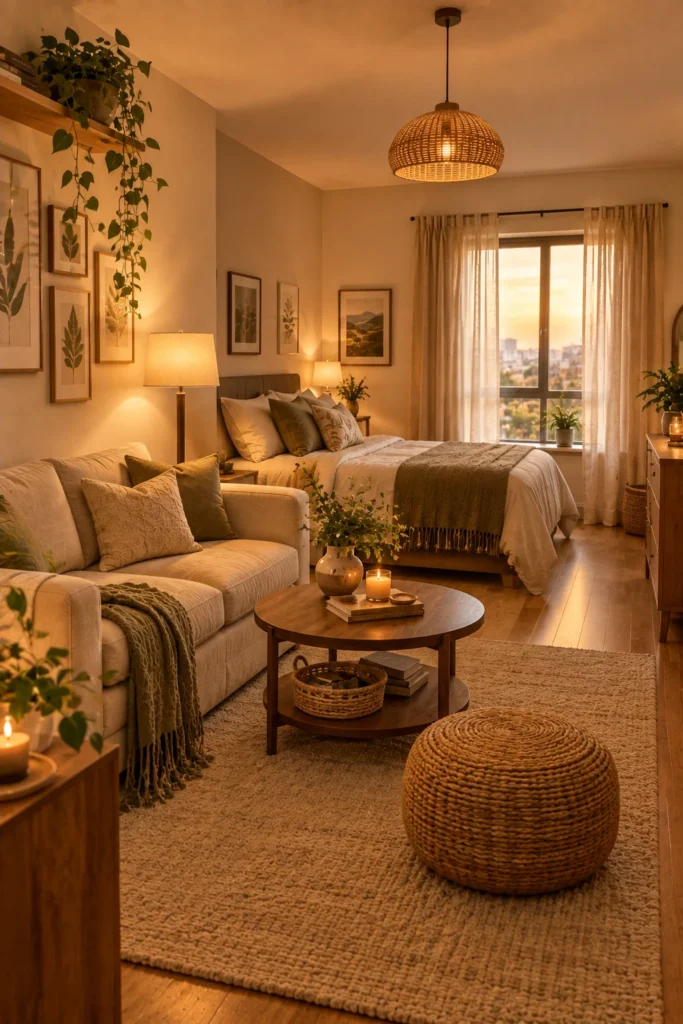
The warm feeling of a golden-hour studio can be created with more than sunlight. Warm lamps, cream walls, light curtains, and natural wood can produce a similar effect after dark. Bulbs around 2700K–3000K generally give a warmer appearance than cooler white lighting.
Rounded furniture also helps soften a small room. A round coffee table, curved chair, or woven pouf can break up the straight lines created by walls, beds, and cabinets.
What to steal: Use warm lighting and rounded furniture to soften a boxy studio.
17. The Scandinavian Studio With a Dining Nook
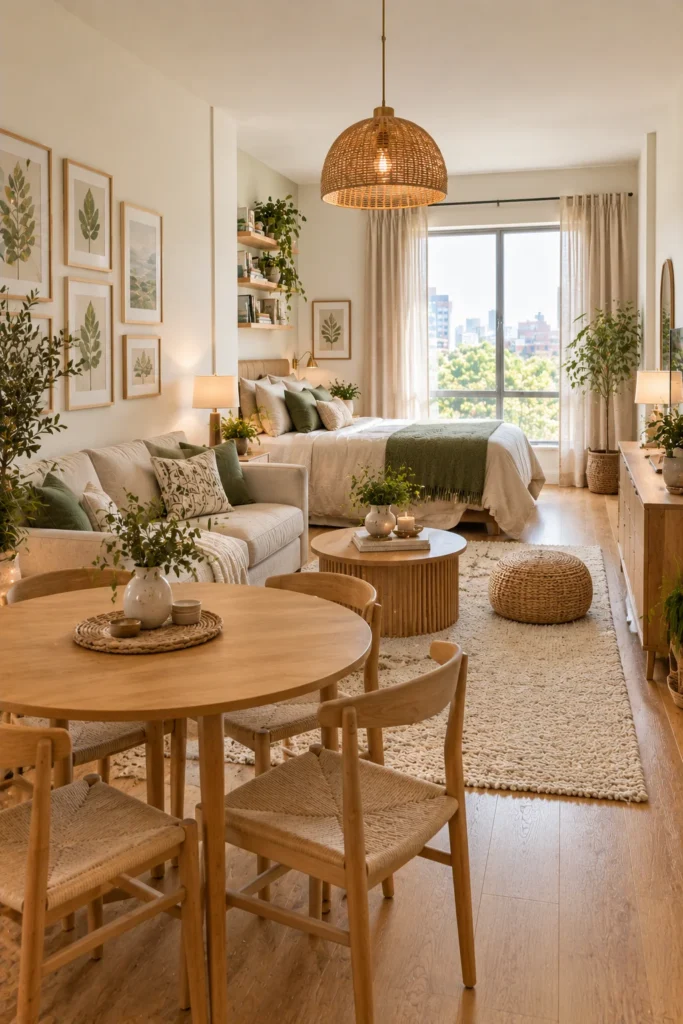
A small round dining table can make a studio dining area easier to move around than a large rectangular table. Pair it with natural oak, cream textiles, green accents, and a woven pendant for a simple Scandinavian look.
Texture is what keeps this palette from becoming plain. A woven light shade, textured rug, patterned cushion, and natural placemats can all add interest while keeping the colors quiet. If the dining area shares space with the living room, keeping the furniture light and visually simple helps preserve the open feel.
What to steal: Let texture do the decorating when the color palette is simple.
18. The Boho-Coastal Light Studio
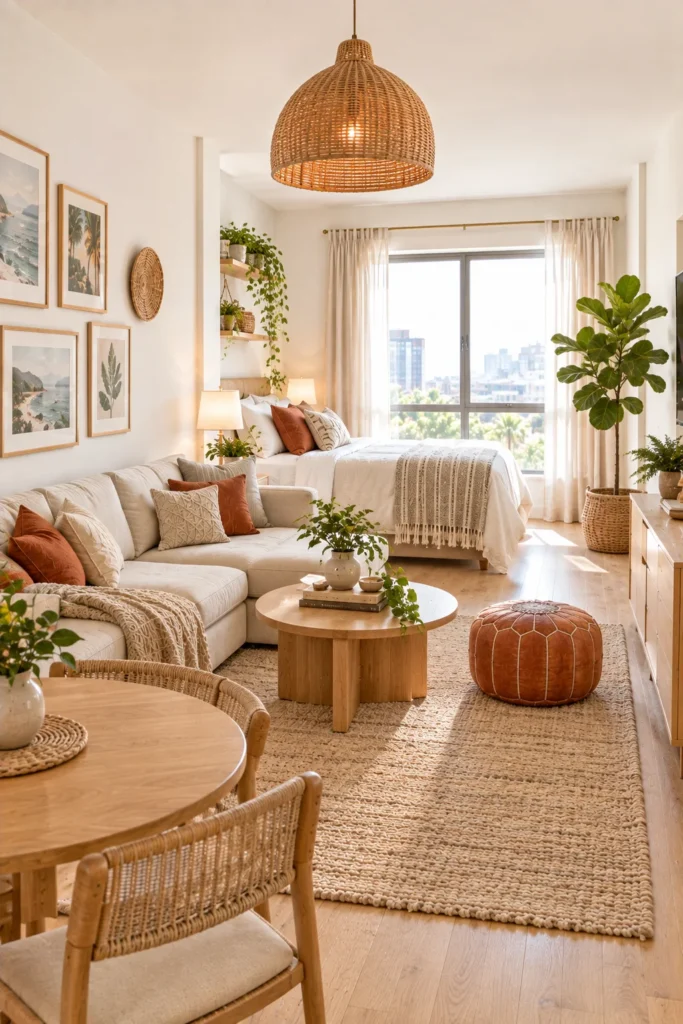
A light studio can feel relaxed without becoming completely white. Cream walls, light wood, a neutral sofa, woven lighting, and one terracotta accent create warmth while keeping the room visually open.
Natural materials do much of the decorating here. Woven baskets, linen curtains, a textured rug, and a tall plant provide enough detail without covering every surface. The result works because there is still plenty of open space between the objects.
What to steal: Use natural materials and one warm accent color to stop an all-light room from feeling washed out.
19. The Warm Neutral Studio Where Every Detail Has a Job
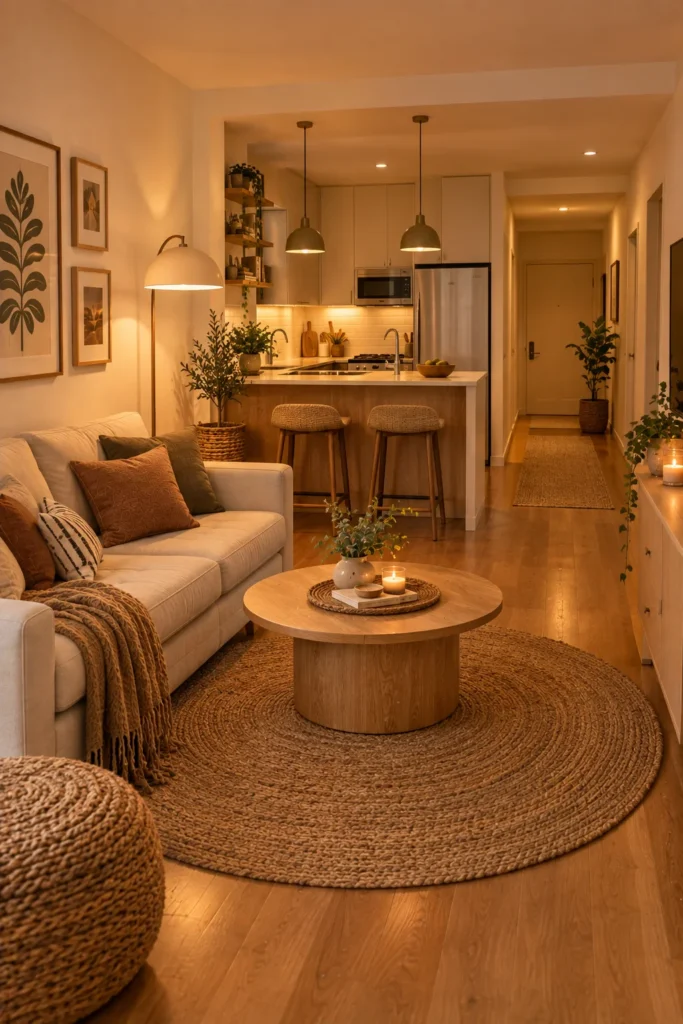
The strongest warm-neutral studios usually do not have a lot of decoration. Instead, each piece contributes something: a round rug defines the living area, a floor lamp fills a dark corner, a plant adds height, and a small piece of wall art gives the room personality.
This is also where furniture placement matters most. Keep walking paths open and avoid filling every empty corner simply because there is room. A well-placed sofa and rug can do more for the layout than several extra decorative pieces. For more furniture-planning ideas, see these furniture ideas that work best in a studio apartment.
What to steal: Before adding another item, ask whether the room actually needs it.
Final Thoughts
These 19 studios show that there is no single way to make a small apartment work. One relies on a bookshelf divider, another on layered lighting, another on color, while others use plants, texture, or carefully chosen furniture to create a completely different feeling.
The useful part is not copying an entire look. Pick the idea that solves the problem your own studio has. If the room feels like one big space, define zones. If it feels flat, work on lighting and texture. If it feels crowded, remove pieces instead of adding more.
A small studio does not need one perfect style. It needs a layout, color palette, and set of furniture choices that work together. Once those decisions are clear, even a very different decorating style can make the same small space feel intentional.