
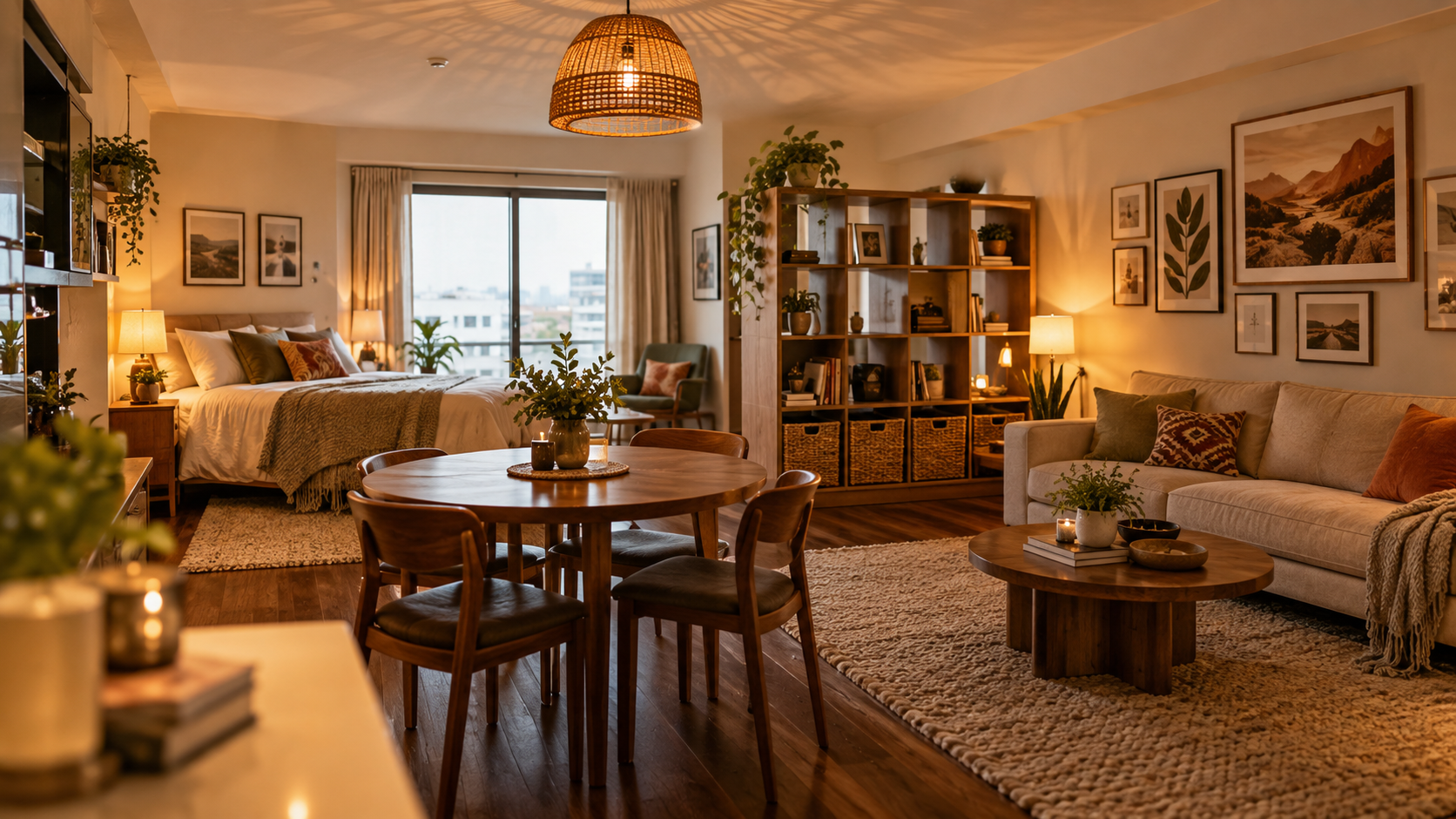
Cozy in a studio apartment comes down to lighting and texture more than square footage — layered warm light sources and a few tactile materials do more than any amount of extra furniture. Here are 13 studios that get the formula right.
Which cozy-studio approach fits your space?
| Approach | Main Tool | Best For |
|---|---|---|
| Layered lighting | Multiple warm lamps, no overhead light | Any studio, any budget |
| Texture-forward | Wool, boucle, rattan, exposed brick | Minimal or neutral palettes |
| Bold accent color | One saturated color repeated 2-3 times | Studios that already feel finished |
| Vintage/thrifted pieces | Secondhand furniture with character | Budget-conscious decorating |
| Gallery wall | Framed photos or prints | Adding personality without clutter |
1. Warm Layered Lighting Sets the Whole Mood
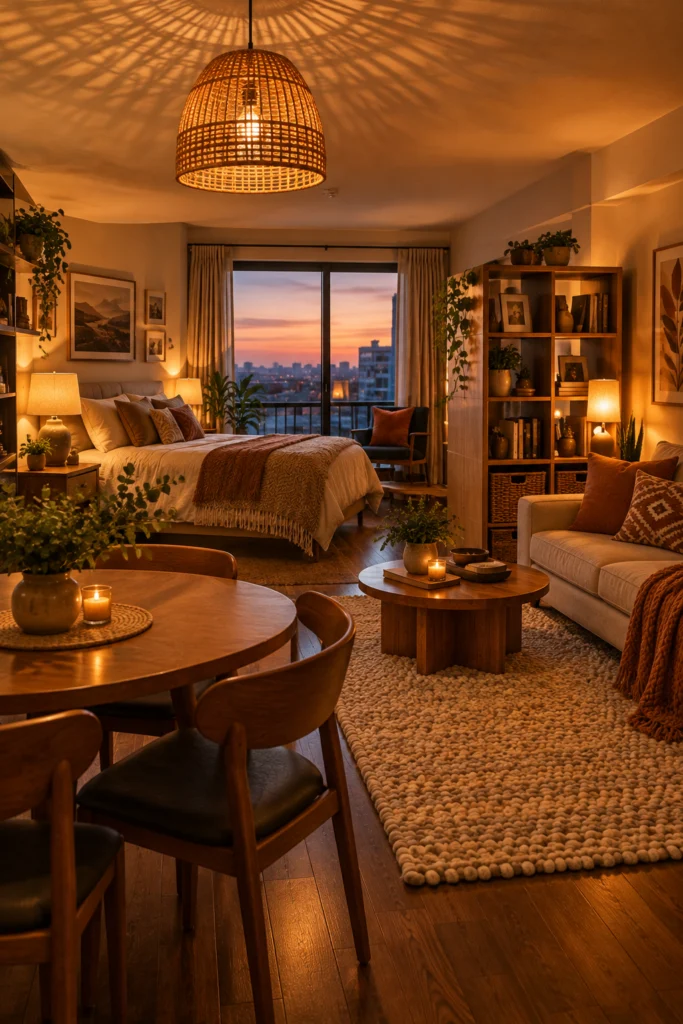
Lighting does most of the work in making a studio feel cozy rather than furnished — a single overhead fixture flattens a small room the same way it would a hotel hallway. Layering light at three different heights (a pendant, a table lamp, a floor lamp) gives the eye somewhere warm to land no matter where you’re sitting.
Pro tip: Skip the overhead ceiling light entirely after sunset. Lamps at staggered heights turn a studio from an office into a hideaway in one switch.
2. Traditional Warmth with Vintage Touches
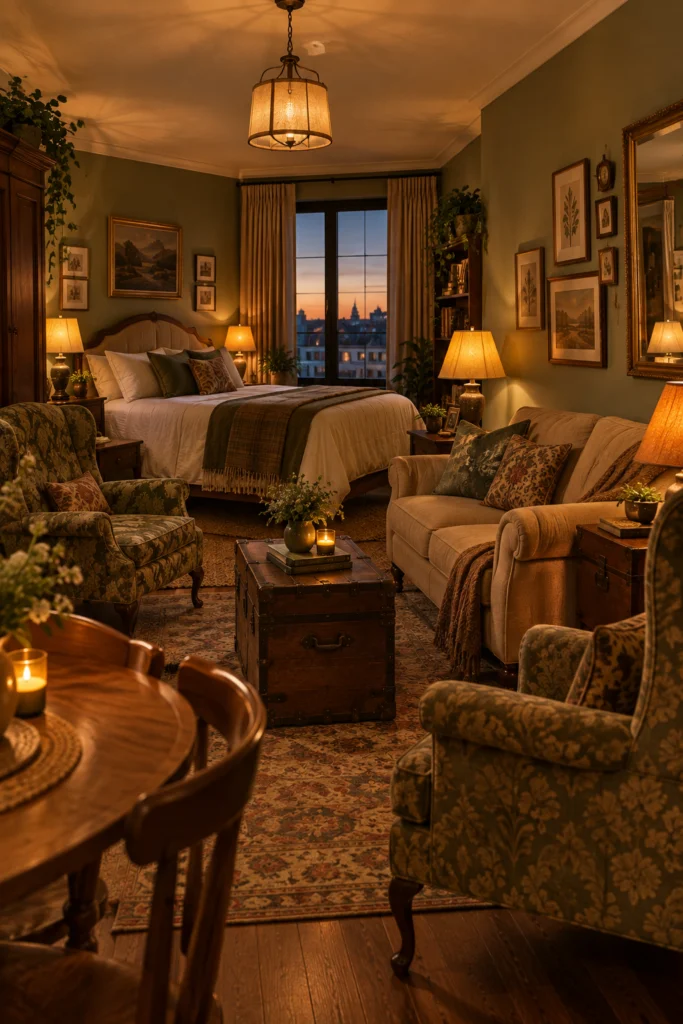
A single antique or thrifted piece, like a trunk doing double duty as storage and a side table, adds more character to a studio than an equivalent amount spent on new furniture. Sage-green walls give the traditional pieces a soft, current backdrop so the whole room doesn’t read as a period set.
My honest take: Vintage pieces almost always cost less than their new equivalents and instantly add soul — a secondhand trunk beats a flat-pack storage bench for both looks and price.
3. Soft Neutrals with Nature Accents
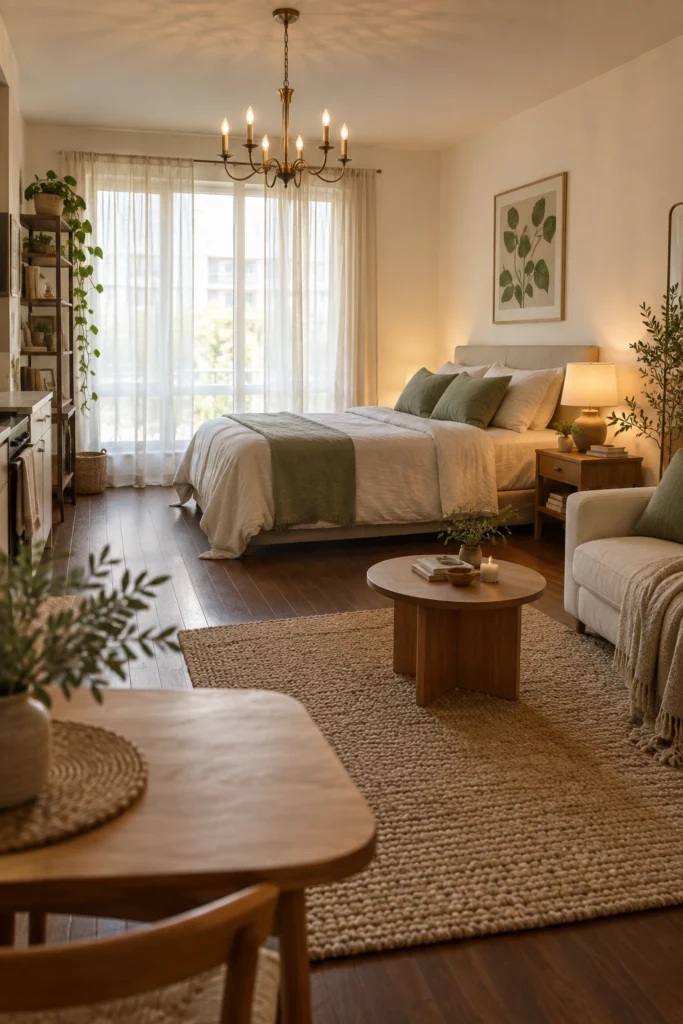
A soft neutral base with just two or three nature-inspired accents — a green pillow, a botanical print — calms a studio faster than any single bold design move. Sheer curtains let daylight in without sacrificing privacy, which matters in a room where the bed is visible from the door.
My favorite move: Layering sheer white curtains underneath heavier drapes gives you both privacy at night and soft glowing light in the morning, for the cost of two curtain rods.
4. Rich Wood Tones for Timeless Warmth
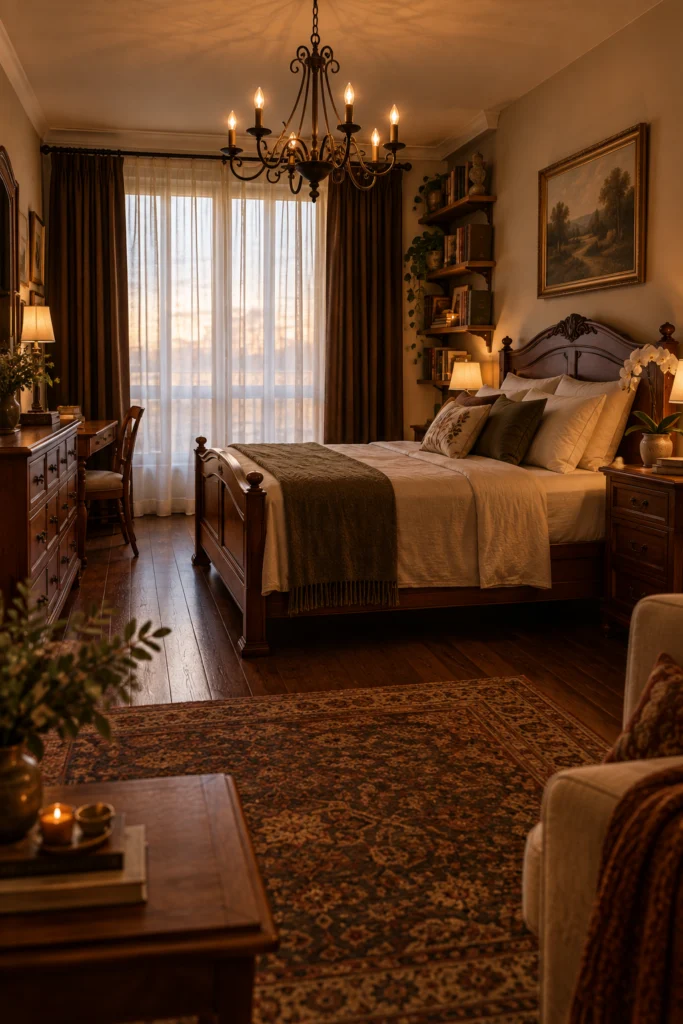
Matching wood tones across the bed, dresser, and shelving does the same visual-tying work a paint color would, without needing to touch the walls at all. One small living detail — a single plant on the nightstand — keeps a heavily wood-toned room from feeling like a furniture showroom.
Budget vs. splurge: Save on the light fixture — thrift and vintage stores are full of striking chandeliers for a fraction of retail. Splurge on a solid wood bed frame, since it’s the one piece worth keeping for decades.
5. Minimal Palette, Maximum Texture
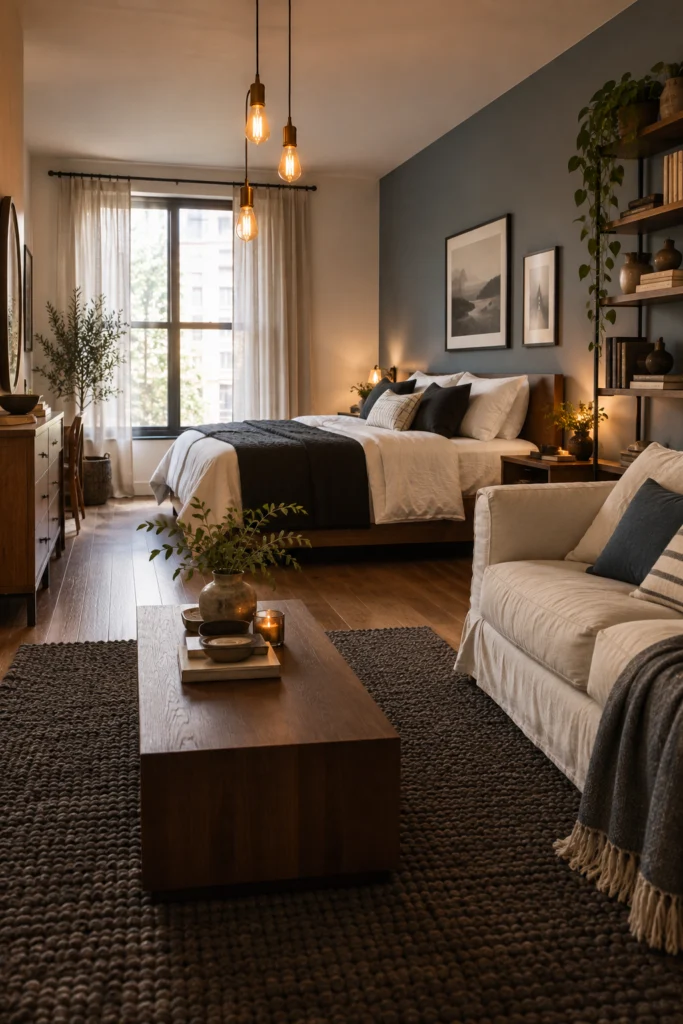
A minimal color palette doesn’t have to feel cold as long as texture is doing the work color usually would — a chunky wool rug against a slipcovered sofa creates depth without adding a single new hue to the room. One muted accent wall keeps the whole space from reading flat while staying within a tight, neutral palette.
Renter-friendly alternative: Can’t paint an accent wall? A large piece of dark textured art or a hanging tapestry creates the same visual depth, with no deposit at risk.
6. Define Zones with a Real Dining Nook
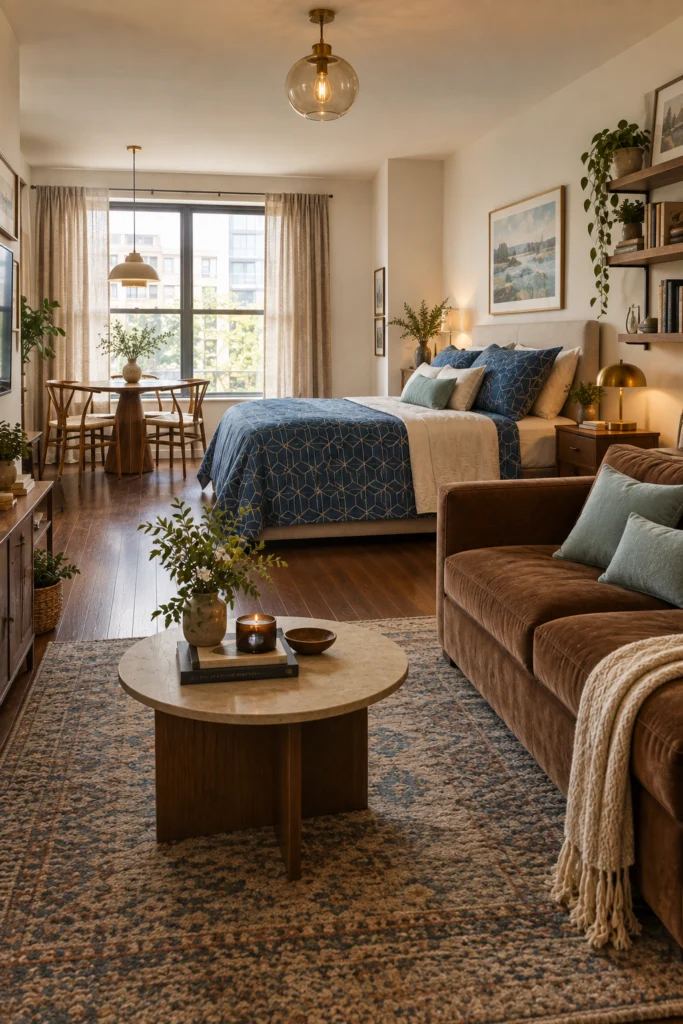
Giving every function in the studio its own dedicated spot — even a small two-person dining table — makes the whole room read as bigger than its square footage, since each zone has a clear job. Echoing one bedding color in a small sofa accent, like aqua pillows picking up a blue bedspread, ties the two zones together without them looking like separate rooms.
My tip: A dining table in a studio rarely stays a dining table — it becomes a desk, a coffee spot, and an evening wine table, which is worth factoring in before choosing its size.
7. Bold Color Accents Bring a Room to Life
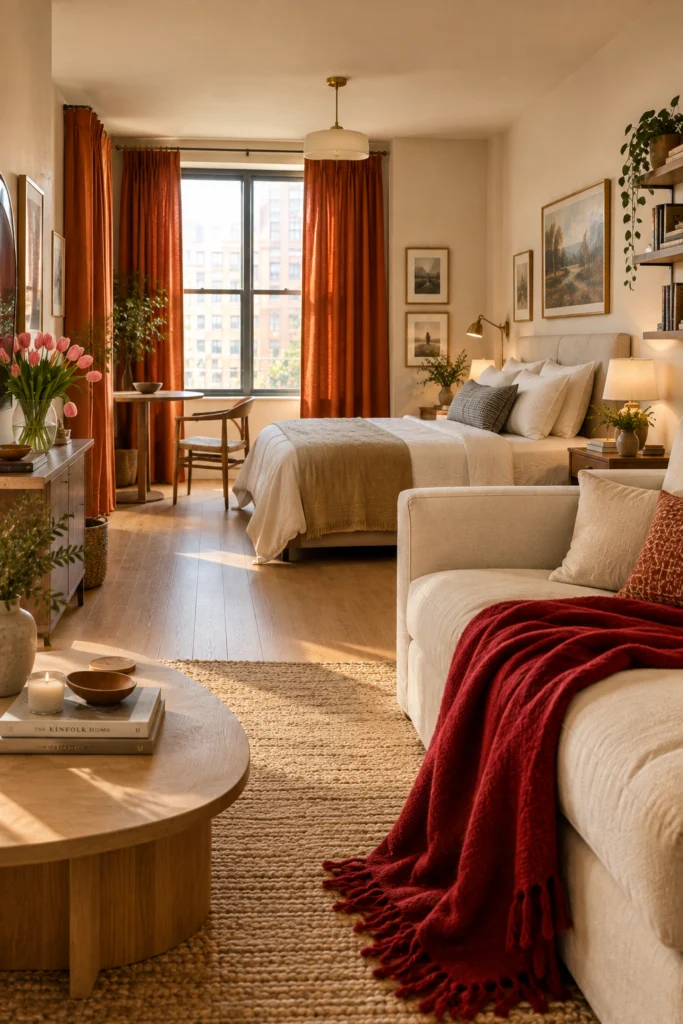
One high-contrast accent object — a single bold throw blanket — pulls the eye across an entire neutral room and warms up the whole palette without a single wall being repainted. Keeping the surrounding furniture strictly neutral is what makes the accent color feel intentional instead of scattered.
I’ve tested this: One bold throw blanket does more visual work than three new pillows, and it’s the easiest seasonal swap in the room — deep red for winter, blush for spring.
8. Playful Color Blocking with Confidence
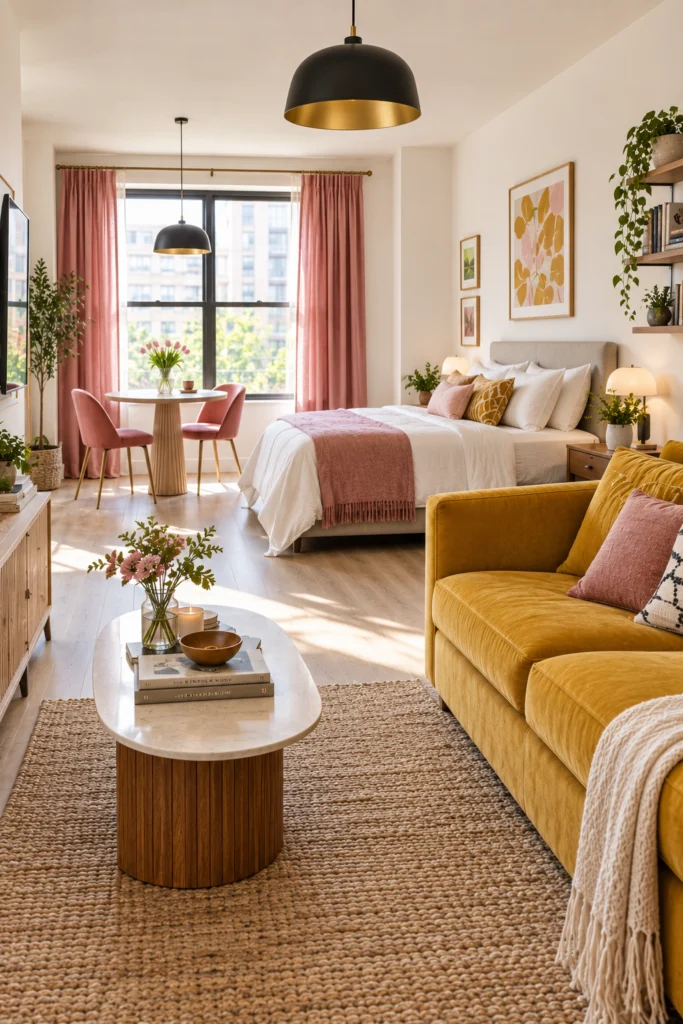
Combining several bold colors in one small room only works when the walls and floors stay neutral enough to give each color room to breathe — white walls and pale wood are what keep mustard and pink from clashing here. Two matching black light fixtures anchor an otherwise playful palette so the room still reads coordinated.
Skip the trend chasing: Build the room around one bold color you’ll still love in five years, not whatever a paint brand is promoting this season.
9. Sage Green + Warm Wood = Instant Cozy
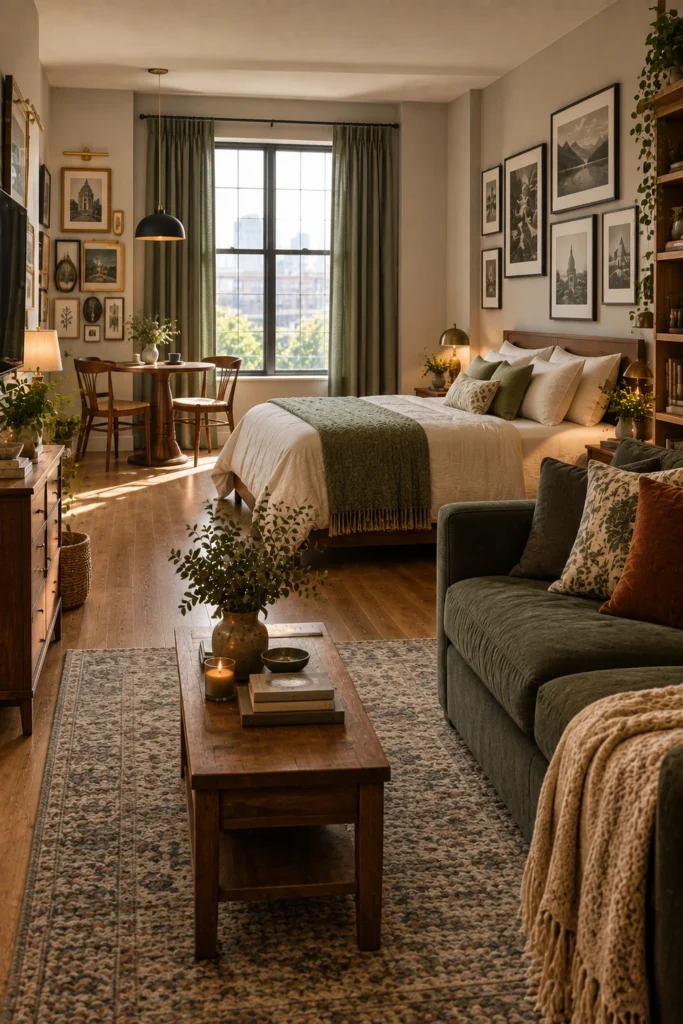
Sage green and warm walnut wood pair well because neither one competes with the other — the green stays muted enough to let the wood’s warmth carry the room. Repeating the same accent color in two separate spots, like a throw on the bed and a sofa across the room, visually stitches the two zones together.
Pro tip: Repeating one accent color in two different places does more zoning work than a physical divider would, for the cost of one throw blanket.
10. Soft Lavender Walls for Quiet Elegance
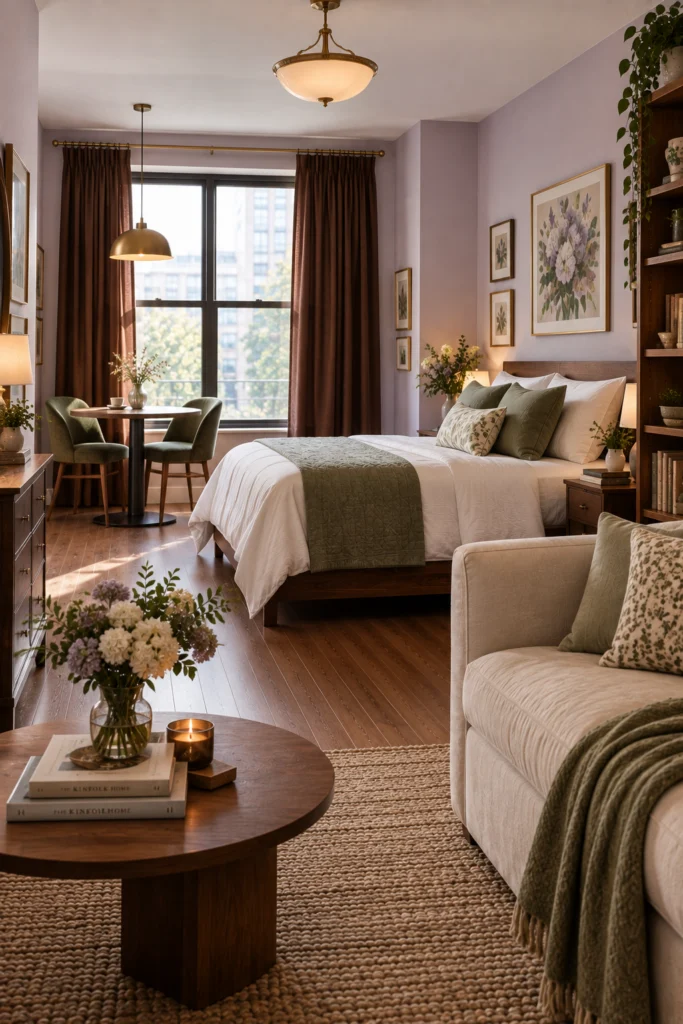
Pastel walls read sophisticated rather than juvenile once they’re paired with dark, warm accents — chocolate curtains and wood floors keep a lavender wall from tipping sweet. A small dining nook tucked by the window gives the room a hotel-suite feel that a pastel wall alone wouldn’t achieve.
Honest take: Pastel walls get an unfair reputation, but paired with warm wood tones and dark accents, they’re one of the more sophisticated color choices available in a small room.
11. Monochromatic Warmth in Every Shade of Beige
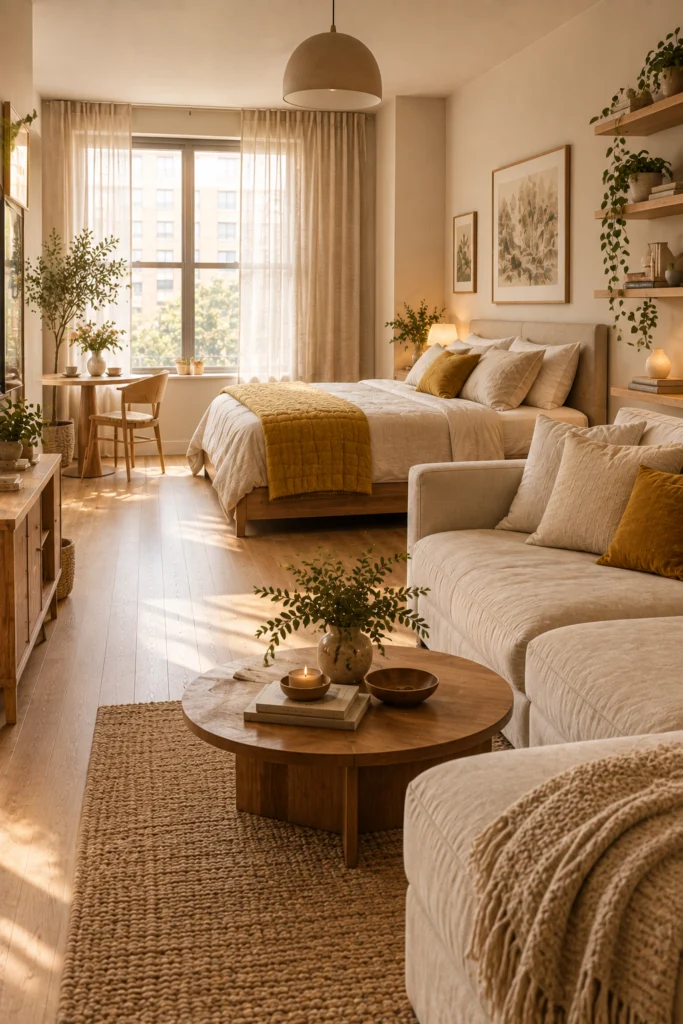
Staying within one tonal family — beige, cream, warm oak — reads intentional rather than boring as long as one small contrast element keeps the eye moving, like a single mustard throw across an otherwise beige bed. Floating shelves styled with a few small plants prevent an all-neutral room from reading flat or unfinished.
My favorite touch: One warm-yellow accent in an all-beige room is the smallest possible change that makes the biggest difference, turning quiet into genuinely cozy.
12. Traditional Coziness with Wicker and Warm Golds
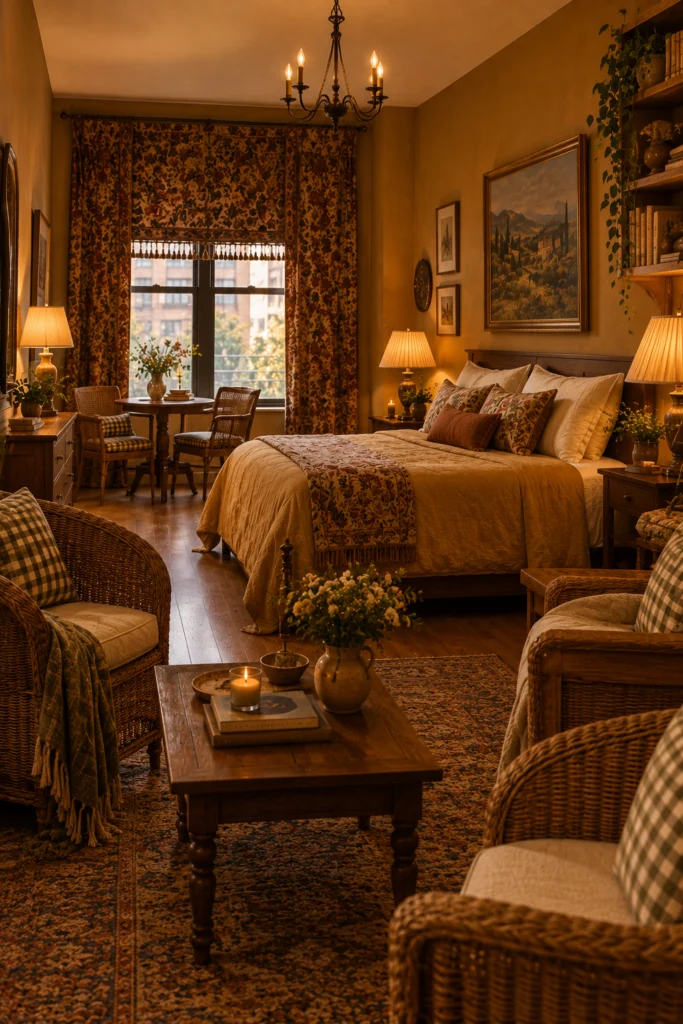
Committing fully to a warm, old-world palette — mustard walls, golden bedding, wicker textures — creates a “slow down” feeling that a more trend-driven room rarely achieves. Layered table lamps rather than overhead lighting are what push this look from themed into genuinely lived-in.
Renter-friendly alternative: Can’t paint the walls a rich mustard? A large gold or amber tapestry hung behind the bed delivers the same warmth with zero paint fumes and a fully intact deposit.
13. Gallery Walls Add Personality Without Clutter
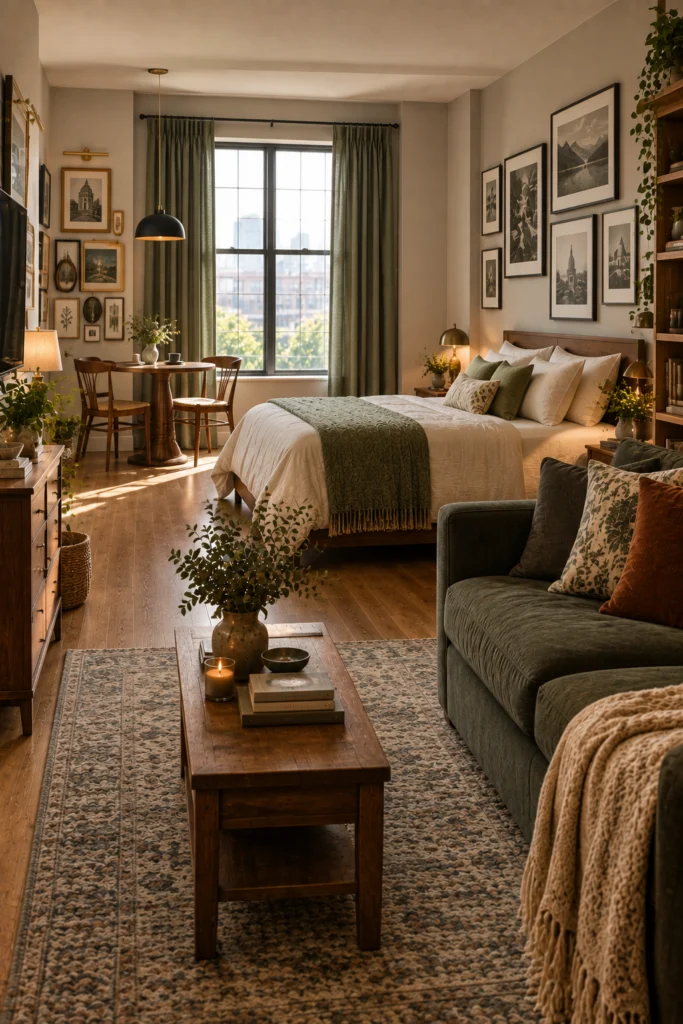
Two smaller gallery walls, one per zone, give each part of the studio its own visual identity faster than almost any other decorating move, and they cost far less than new furniture. Mixing frame styles rather than matching them exactly keeps the wall feeling collected over time instead of bought all at once.
Budget vs. splurge: Save on frames — thrift stores and budget retailers have plenty of good options. Splurge on printing your own photos, since that’s what actually makes the wall feel personal rather than decorative.
Common cozy-studio mistakes to avoid
- Relying on one overhead light for the whole evening. Layered lamps at different heights do more for coziness than any single fixture, no matter how nice it looks.
- Buying all-new furniture when vintage pieces would add more character for less. A single thrifted piece often reads warmer than a matching new set.
- Choosing a bold color scheme without a neutral base to anchor it. Even confident color blocking needs white walls or pale floors to keep it from feeling chaotic, as covered in these cozy studio apartment color palette ideas.
- Skipping texture in an all-neutral room. Color isn’t the only tool for warmth — rugs, throws, and rattan do the same job without adding a single new hue.
- Overlooking soft textiles as a fast, renter-friendly upgrade. Curtains, throws, and rugs change a room’s mood faster than furniture, a point worth exploring in these studio apartment textiles and soft decor ideas.
Quick answers
What makes a studio apartment feel cozy instead of cramped?
Layered warm lighting and texture matter more than square footage — a single overhead light flattens a room, while lamps at different heights and tactile materials like wool or rattan do the opposite.
Are vintage or thrifted pieces actually good for a small studio?
Yes — a single antique or secondhand piece, like a trunk used as a side table, often adds more character than an equivalent new furniture purchase for less money, and these budget-friendly ways to decorate a studio apartment cover more of the same approach.
Can pastel wall colors work in a small studio?
Yes, as long as they’re paired with warm, dark accents like wood floors or chocolate-toned curtains to keep the palette from feeling too sweet.
What’s the fastest way to add personality to a studio without buying furniture?
A gallery wall using thrifted frames and your own printed photos personalizes a room faster and cheaper than almost any furniture purchase, especially paired with these studio apartment lighting decor ideas for the right ambiance.
How many accent colors should a cozy studio have?
Usually one, repeated two or three times across the room — more than that starts competing for attention in a small space.
Does a studio need a dedicated dining spot to feel complete?
Not necessarily, but even a small two-person table gives the room an extra function and often doubles as a desk or workspace.
The lighting swap changed my own studio more than any furniture purchase — three lamps at different heights, zero overhead light after dark, and the room stopped looking like an office the second the sun went down.