

To organize a tiny studio, give each zone a clear boundary with a shelf, a rug, or a curtain, and edit down to what you actually use. One room has to do the work of four, so the layout and the way light moves through it matter more than owning less. Here are nine ideas from real studios.
1. Split the Room with a Tall Bookshelf
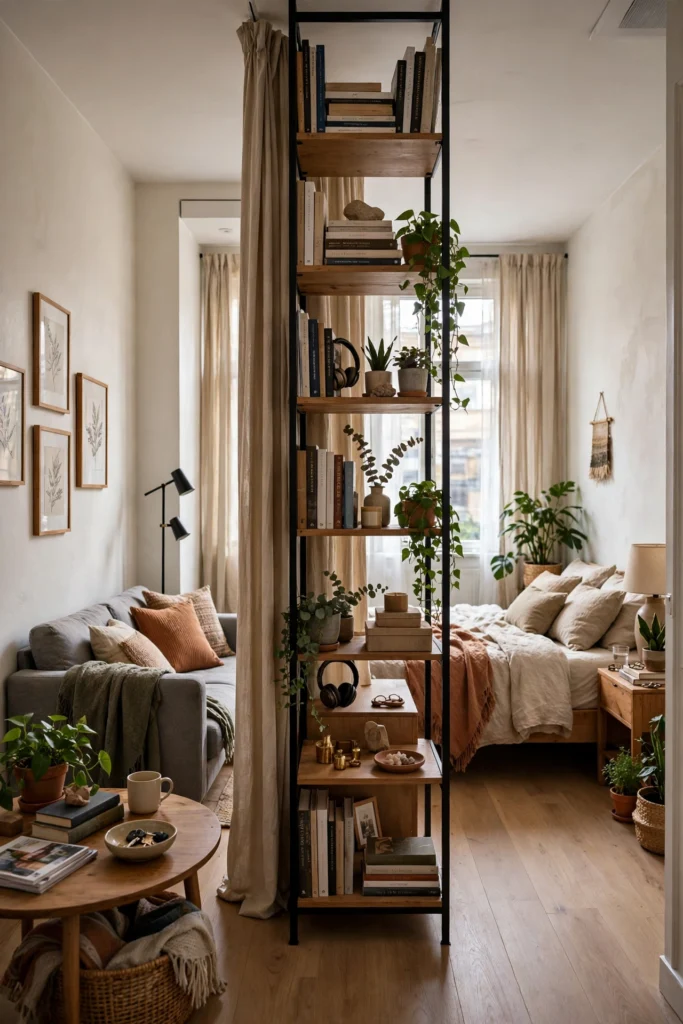
A tall open-back bookshelf quietly changes a long, narrow studio. It draws a clear line between the living area and the bed without sealing off either side from light, and you get storage on both faces, a soft visual separation, and a place for books, plants, and personal objects. Long curtains behind the shelf make the bed feel like its own little room. For more layouts built this way, see studio apartment layout ideas using bookshelf room dividers.
Tip: Style both sides of the shelf, since the bed side gets seen as much as the living side.
2. Define Each Zone with a Rug
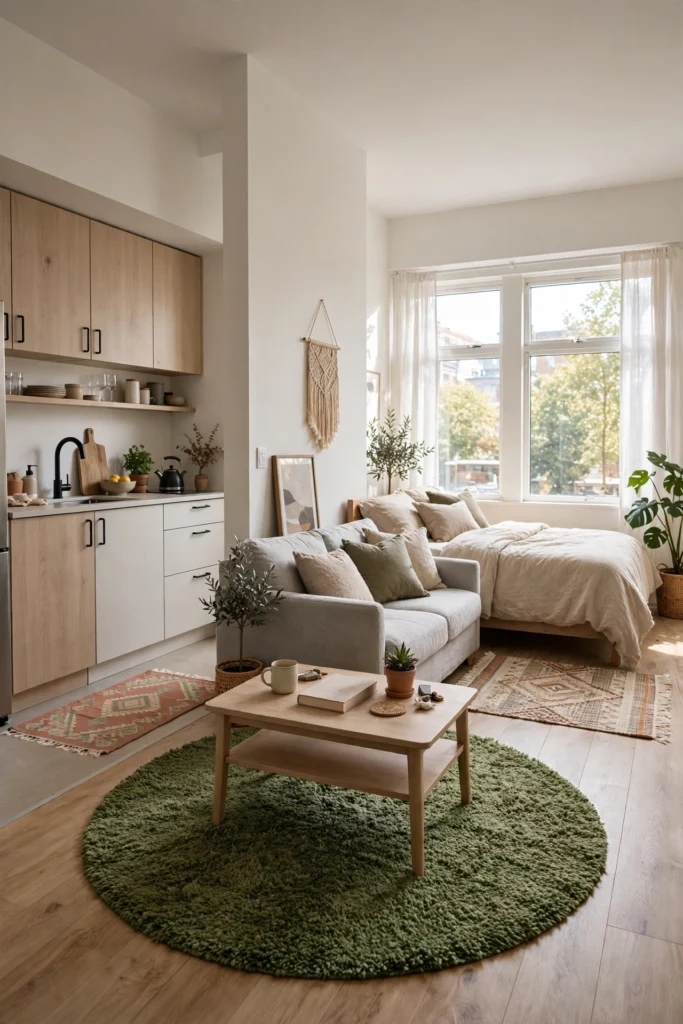
Rugs are the secret weapon of small spaces. A round green shag under the coffee table tells the brain “this is the living room,” even with the bed three feet away. Use one rug for each zone you want to define: one under the sofa and coffee table, another at the foot of the bed if there’s room, and maybe a small one by the kitchen. For more options, see mini studio apartment rug ideas.
Tip: The rugs don’t have to match. They just need to share a family of colors and textures, which is the step most people skip.
3. Curtain Off Your Bed for Instant Privacy
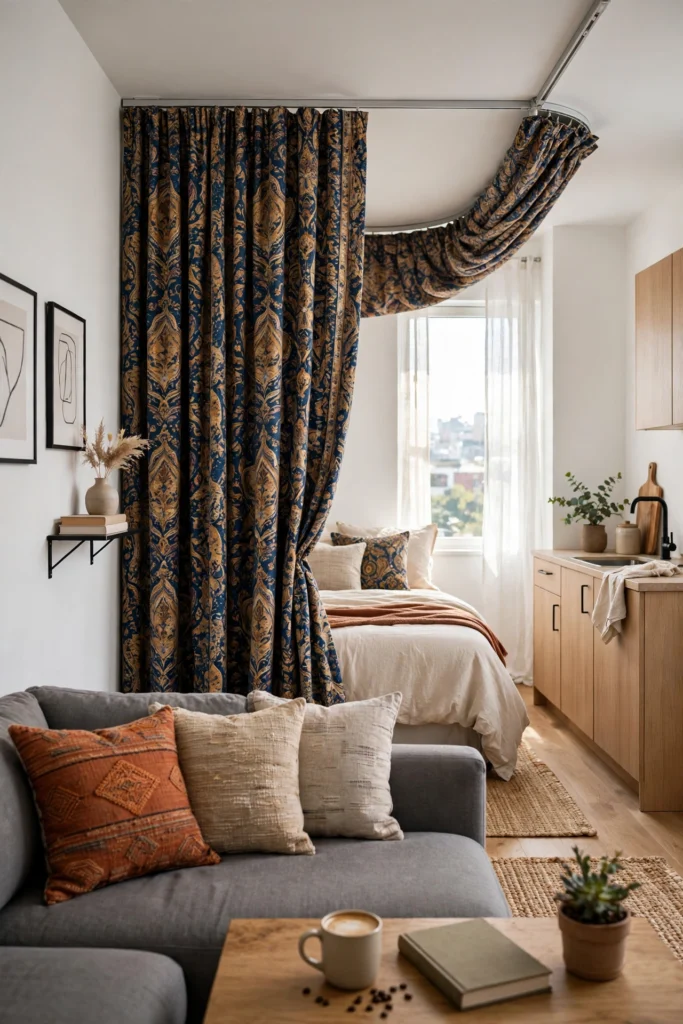
If a full bookshelf divider feels too bulky, a hanging curtain panel does the same job for far less money. Mount a ceiling track or tension rod, hang a heavy patterned curtain in damask, linen, or velvet, and you’ve built a removable wall. Open it during the day and close it at night or when guests come over, and the bed disappears. It also softens the acoustics, a bonus you notice right away. For more options, see studio apartment curtain divider ideas.
Tip: A tension rod needs no screws or hardware, so it’s easy to put up and easy to take down.
4. Go Vertical with a Ladder Shelf
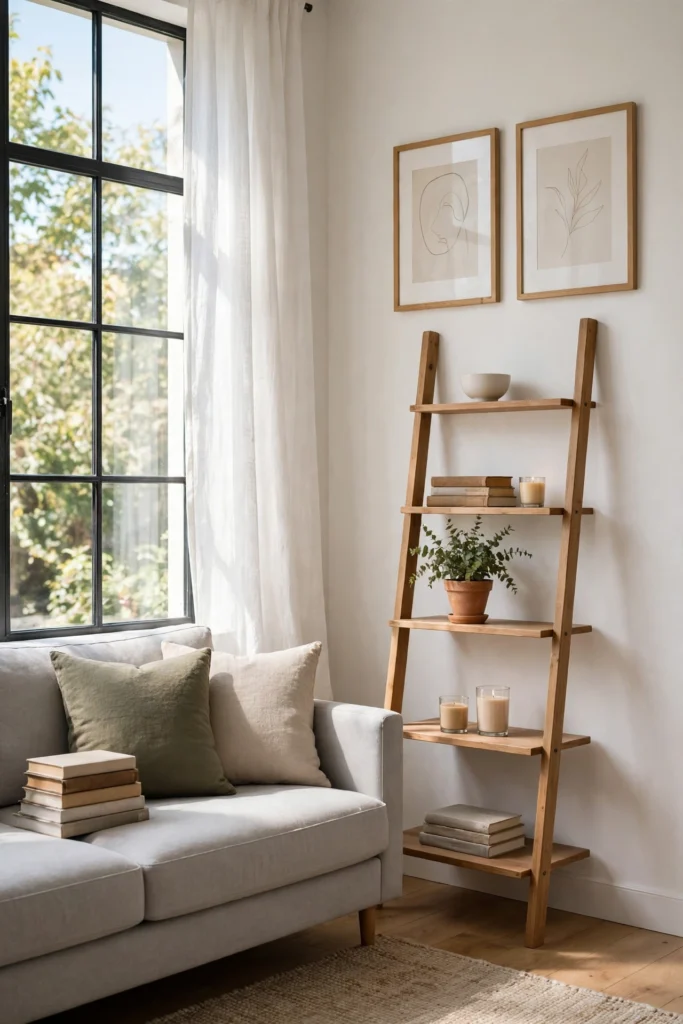
When floor space runs out, look up. A leaning ladder shelf takes almost no footprint but adds four or five tiers for books, candles, framed art, and small plants. Most lean against the wall with no drilling, so they work in rentals, and they suit a spot next to a sofa or a tight corner that would stay empty. For more small-footprint storage, see mini studio apartment shelving ideas.
Tip: Keep the styling loose, with a stack of books here and a single plant there, and leave the top shelf nearly bare so the room can breathe.
5. Edit Down to What You Actually Use
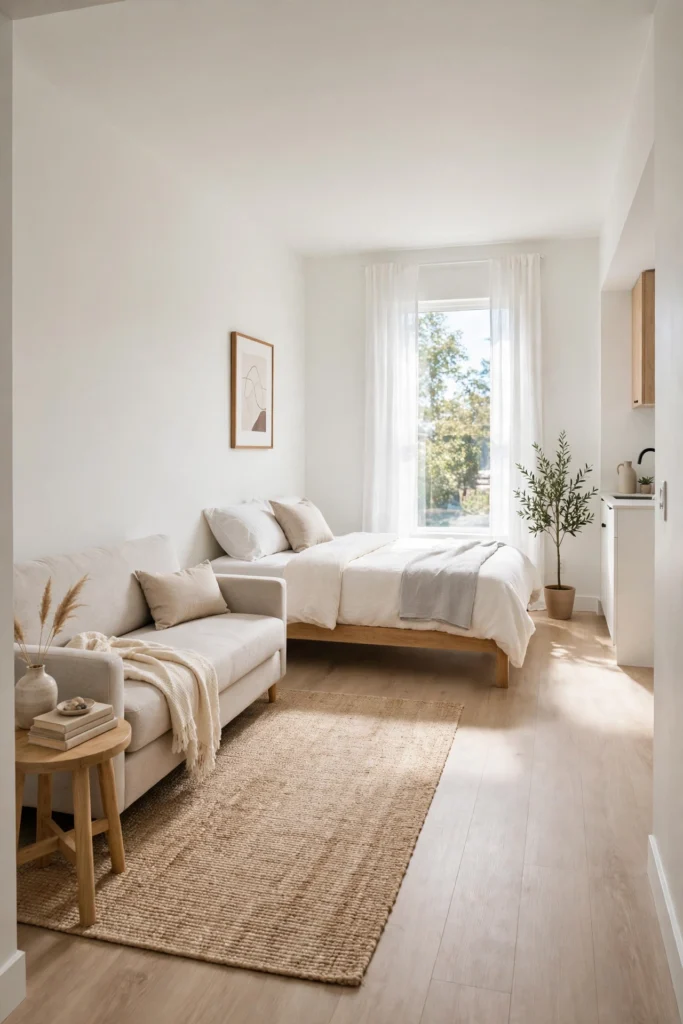
The beautiful studios usually belong to people who own less. One sofa, one side table, one rug, a bed, and a few good objects is often enough, and if there’s furniture in the way when you walk in, there probably is. Pull one thing out for two weeks, like the ottoman you trip over, the third lamp, or the chair nobody sits in, and see if you miss it.
Tip: Most of the time you won’t miss it, and editing isn’t deprivation. It gives the things you love room to breathe.
6. Use a Low Divider Where Light Needs to Travel
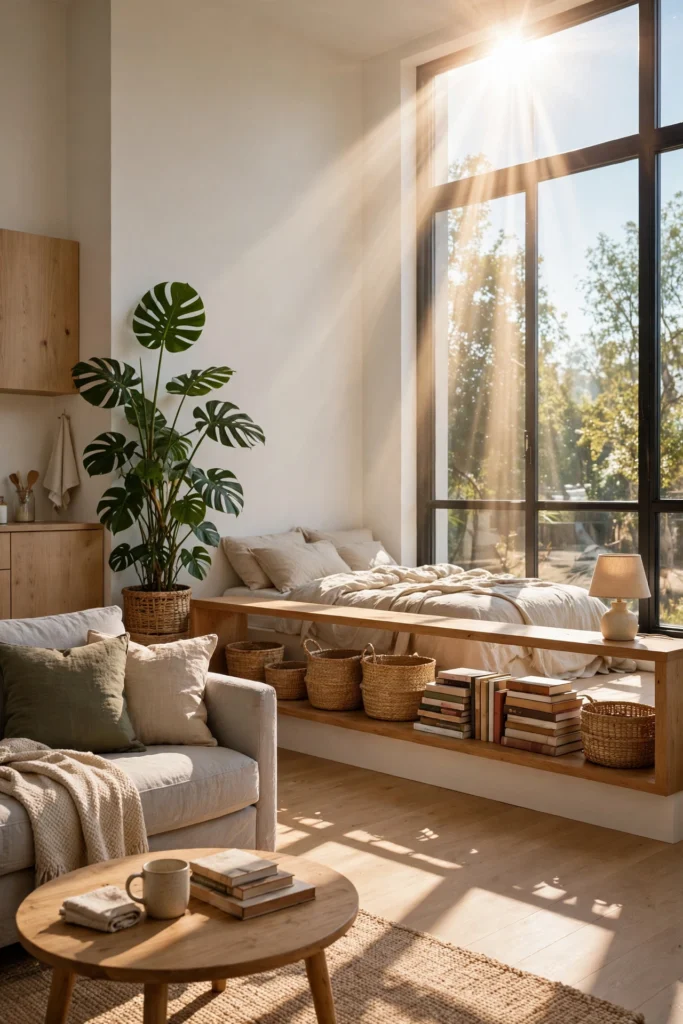
Tall dividers are great until they block the one good window. A low shelf or console, waist height or shorter, does the separating without killing the light. It marks the edge of the sleeping zone, gives a surface for books, baskets, and a small lamp, and lets sunlight pour over the top into the living area. A tall plant on top, like a monstera or snake plant, adds a soft suggestion of height without a visual wall.
Tip: In a studio with one big window, protect that natural light first, since it’s worth more than any piece of furniture.
7. Stick to a Light, Tight Color Palette
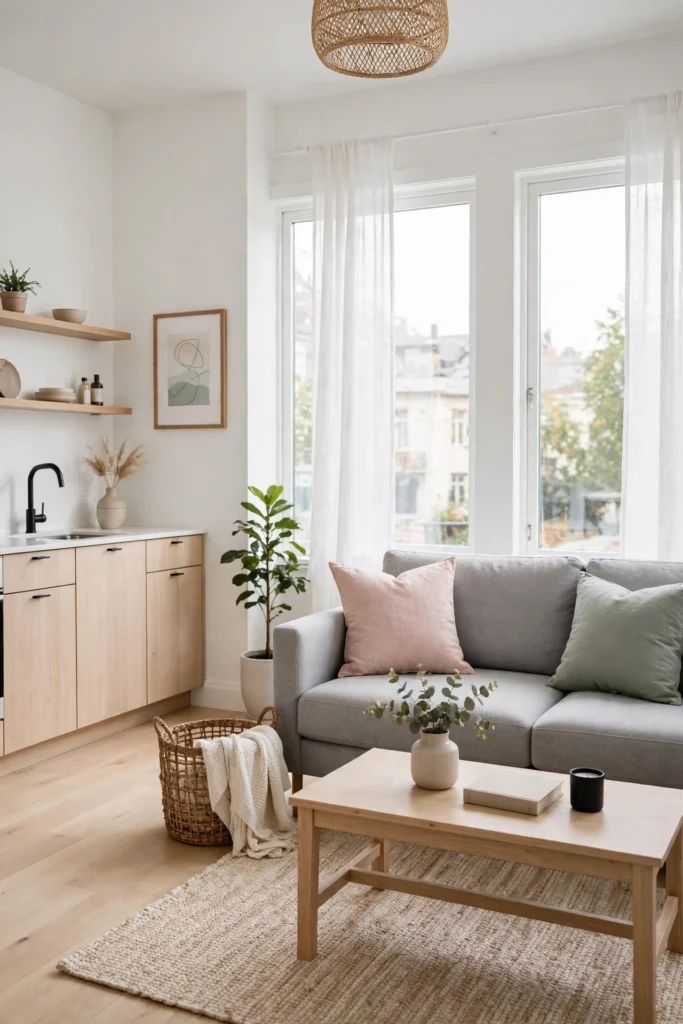
A studio feels bigger when nothing competes for the eye. Pick a tight palette of three or four colors, such as white walls, light wood floors, soft grays, and one or two accent tones like pink, sage, or dusty blue. The repetition makes the whole space read as one calm room instead of a series of mismatched corners. For help choosing, see how to pick a cozy color palette for your studio apartment.
Budget vs. splurge: Save on accent pillows and throws, which you’ll swap seasonally, and spend on a good neutral sofa and quality bedding, since your eye lands on them every day.
8. Pick a Divider That Earns Its Keep
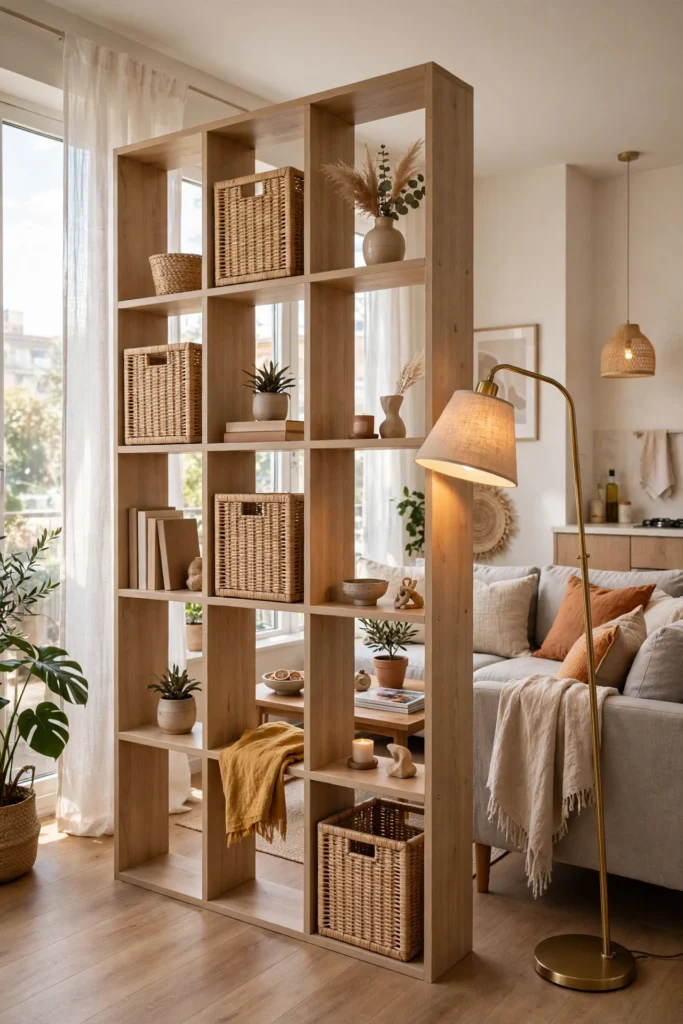
A divider that only divides is a wasted opportunity. The best ones store something, like toys, books, baskets of cables, or a pottery collection. Open cube shelves work because each square holds a different thing without looking chaotic: baskets in the cubes to hide, and open cubes for the pretty items. A warm-toned floor lamp beside it softens the corner. For more ideas, see smart room dividers with storage for studio apartments.
Tip: Measure your ceiling height first, since tall units sometimes need to be anchored to the wall for safety.
9. Style Your Storage Cubes Like a Display
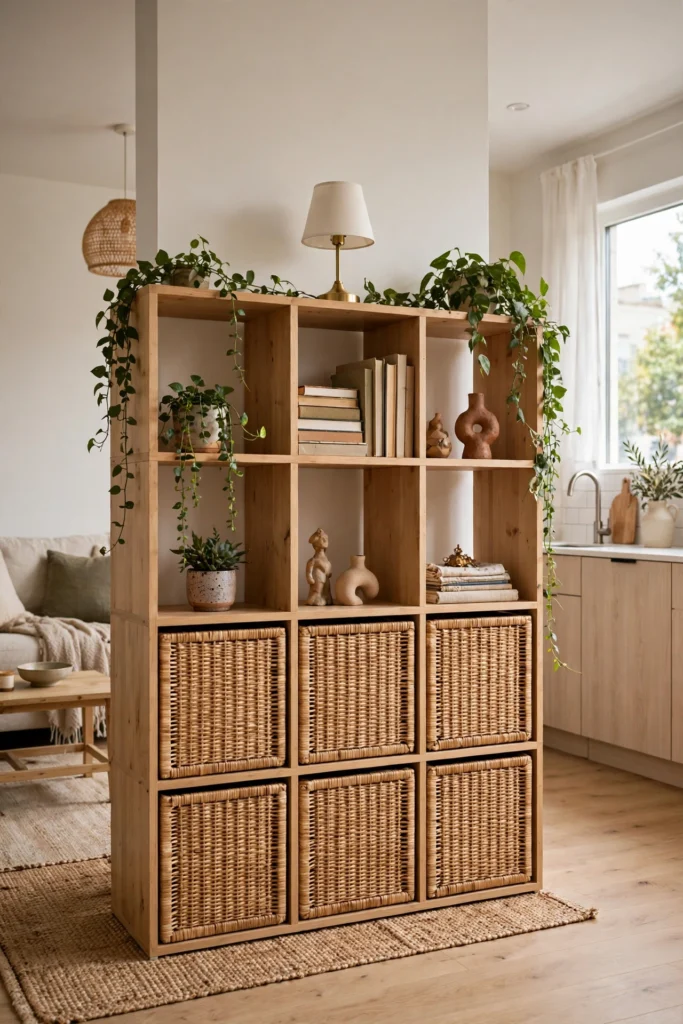
A cube shelf doesn’t have to look like a dorm. Treat each square as a small vignette: one plant, one stack of books, one wicker basket, one decorative object, then repeat. Mixing open and closed storage hides the less photogenic items, like chargers and paperwork, and a small table lamp on top adds warmth and breaks up the rigid grid. Plants trailing down the sides soften everything, so the storage reads as decor that happens to be useful.
Tip: Keep half the cubes closed with baskets and the other half open, so the display stays calm instead of crowded.
Common studio organizing mistakes
- Buying storage before editing. Remove what you don’t use first, then choose storage for what’s left.
- Using one rug for the whole room. A rug per zone defines the space, and a single rug leaves the room as one confused box.
- Blocking the window with a tall divider. A low shelf or a curtain keeps the light moving and the room open.
Quick answers
How do I organize a tiny studio apartment?
Define each zone with a shelf, a rug, or a curtain, use vertical storage, and edit down to what you actually use.
What’s the best divider for a small studio?
A low open shelf or a curtain on a ceiling track, since both separate zones without blocking light.
How do I add storage without losing floor space?
Use ladder shelves, tall bookshelves, and cube units with baskets, all of which go up instead of out.
Do I need a rug for every zone?
Yes, even a small one. Rugs do the boundary work that walls used to, and they should share a color family.
What color palette works best in a tiny studio?
Three or four colors at most, such as white, light wood, soft gray, and one or two accent tones.
How many things should I keep out in a tiny studio?
Only what you use and love, usually one sofa, one side table, one rug, a bed, and a few good objects.
How can I divide a studio as a renter?
Use a freestanding shelf, a tension rod curtain, or a leaning ladder shelf, none of which need drilling.
A tiny studio stays organized when everything has one home and nothing lives on a surface by accident. Give each category a spot — keys by the door, chargers on one shelf, cleaning supplies under the sink — and put things back in that spot every night. The habit matters more than the storage. A five-minute reset before bed keeps a small room from sliding into clutter by the end of the week.
Group like with like instead of spreading things across the room. Books on one shelf, not three. Throws in one basket, not draped over every chair. When similar things live together, you can see what you actually own, and you stop buying duplicates of things you already have. A studio with clear groups looks calm even when it is full, because the eye reads a few clusters instead of a hundred loose objects.
Edit the room once a season. Open every drawer and shelf, pull out what you have not used in three months, and let it go. A tiny studio has no spare corners, so anything that stays should earn its place by being used or loved. The edit is also the fastest way to find space: most studios gain a free shelf or a clear surface after one honest pass, with no new furniture needed.
Final Thoughts
Tiny studios reward patience more than money. The good ones come from clear choices about where the shelf sits, how the rugs zone the floor, which colors repeat, and what got edited out. Start with one change, such as a rug under the living zone or a low divider by the window, and see how the room reads before adding more.

Hi, I'm Wasif — welcome to The Homes Decors. I write about home decor: the ideas, choices, and small details that make a space feel considered rather than accidental. If you've ever wondered why a room works, not just what's in it, you're in the right place.
1 thought on “How Do I Organize a Tiny Studio Apartment? 9 Smart Ideas”