
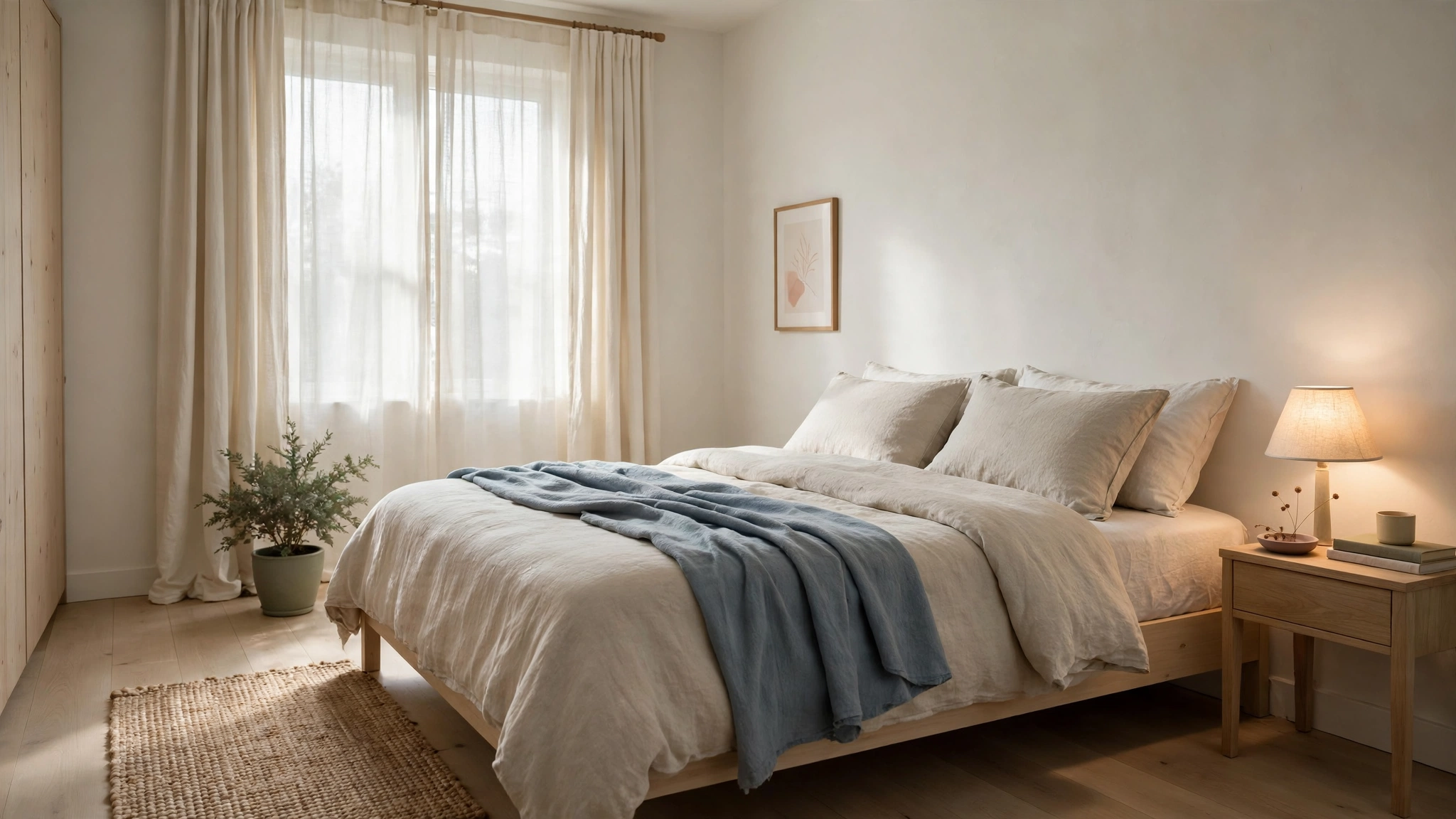
A calm one bedroom apartment starts with a tight color palette and warm, low lighting. Arrange furniture so each zone has one job, and keep surfaces mostly clear. You don’t need a renovation or a designer budget to get there. Sometimes it’s a curtain color, a smarter layout, or one well-placed throw. These 15 ideas show how, with options for renters, small budgets, and rooms where the bed shares space with a sofa. Updated October 2026.
1. Dusty blue and cream bedding
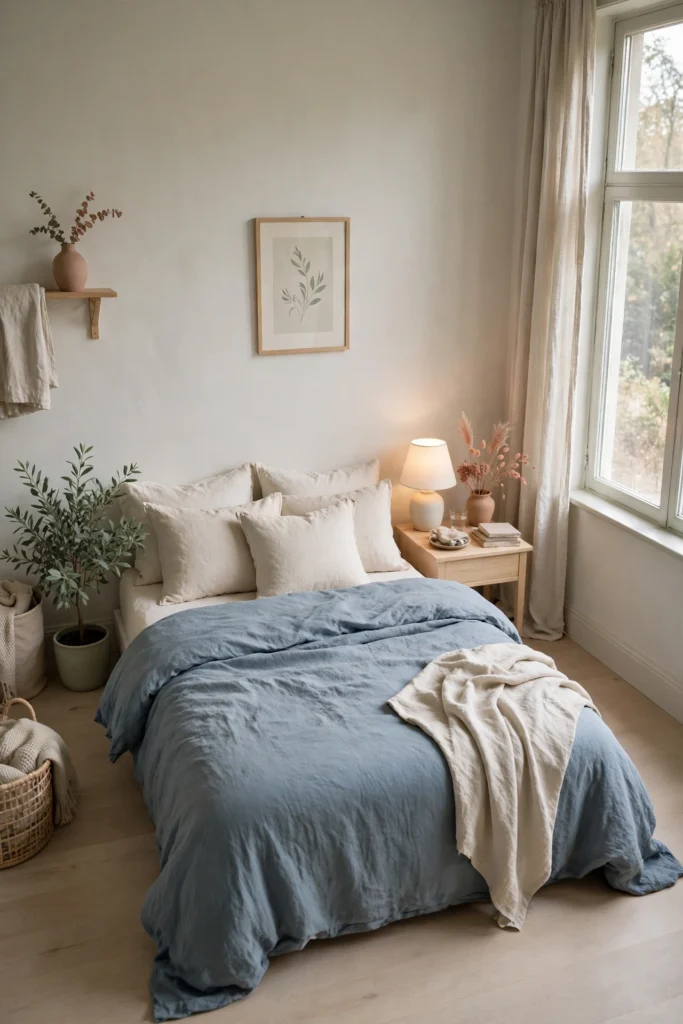
Blue lowers the visual temperature of a room, which is why it reads as restful the moment you walk in. Here, a dusty blue duvet sits against pale walls, with cream pillows breaking up the color so the bed doesn’t look flat. A wood nightstand and one small lamp finish the corner. Nothing fights for attention, and that’s the point. If you can only change one thing, start with the bedding and let the color build from there.
Pro tip: Stick to one color family in three shades. The eye settles faster when nothing competes.
2. A sofa as the divider between bed and living area

When one room does everything, placement matters more than square footage. Put the sofa with its back toward the bed and you cut the sightline without building a wall. A small round coffee table on the sitting side keeps the walkway easy, and a neutral rug under the sofa marks that zone as its own. The bed stays calm because it’s no longer the first thing you see from the couch. For more layouts like this, see our small living room ideas.
Pro tip: Choose a sofa back that sits lower than the headboard, and leave about 30 inches of walkway on each side.
3. Warm white walls with oatmeal linen

White walls are a blank canvas, and a warm white with a hint of yellow feels gentler than a stark one. Pair it with oatmeal linen bedding, a wood bench at the foot of the bed, and sheer curtains that let daylight through. The result is quiet and bright without feeling cold. It’s also the easiest base for renters who can’t repaint, since every change comes from fabric and furniture you can take with you.
Pro tip: In a north-facing room, pick a warm white over a cool one. Cool whites turn gray and flat there.
4. A sage green accent wall

Sage sits between green and gray, so it relaxes the room without making it dark. Paint only the wall behind the bed and keep the other three walls pale. White bedding and a light wood frame stand out against the green, and one small botanical print above the headboard is enough decoration. The accent wall gives the bed a clear focal point, which is exactly what a restful bedroom needs.
Pro tip: Renting? Removable wallpaper in a sage tone gives the same effect and peels off cleanly.
5. Lamps instead of overhead light
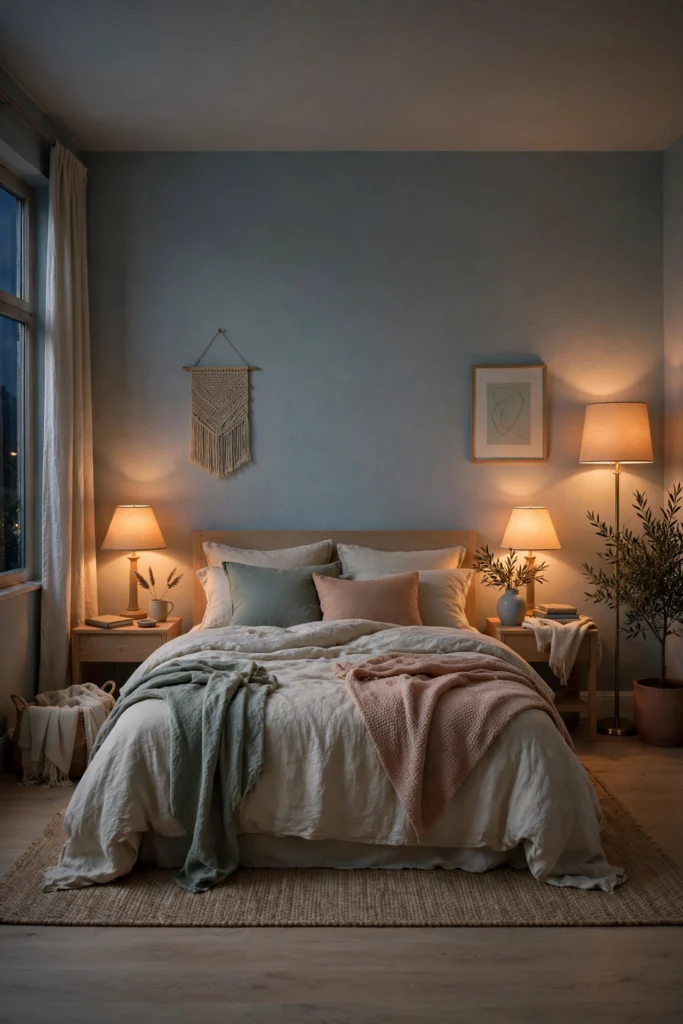
Harsh ceiling light keeps your brain in daytime mode long after sunset. Switching it off and using two bedside lamps plus one floor lamp creates pools of light at different heights. The room feels deeper, softer, and more like a hotel suite than an office. Fabric shades help too, since they spread the glow instead of pointing it straight down. This is one of the cheapest changes on the list, and it works in every apartment.
Pro tip: Use 2700K bulbs. The number is on the box, and it’s the warm, candle-like range.
6. Curtains hung high and wide

Curtains do more than cover glass. Hung high and wide, they make a ceiling look taller and a window look bigger. Choose a soft cream fabric in a heavier weight and add a sheer layer underneath for daytime. At night, the heavy layer blocks streetlight, which helps sleep. The fabric should stack against the wall at the sides, not sit in front of the window, so you keep as much daylight as possible.
Pro tip: Mount the rod 4 to 6 inches above the window frame, and let the curtains skim the floor. A hem that hovers an inch short looks like a mistake.
7. Texture instead of pattern
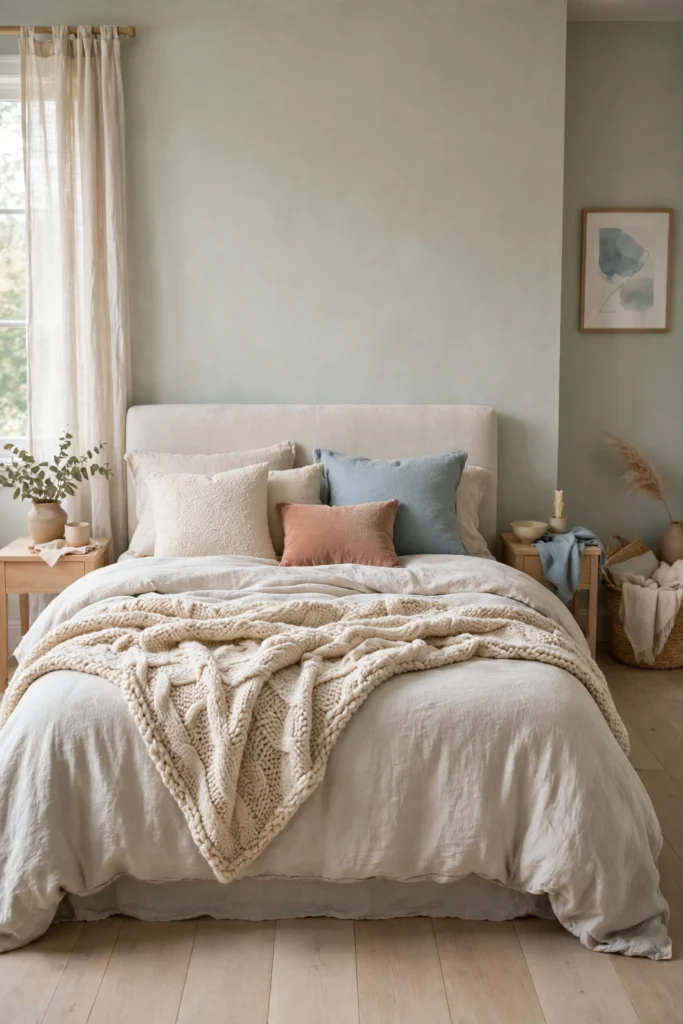
When the palette is quiet, texture does the work. A chunky knit throw, a washed linen duvet, and one boucle pillow add depth you can feel without adding visual noise. All three sit in cream and sand, so the bed looks layered but still calm. It’s the same trick behind the best cozy living room ideas, just scaled down for a bedroom. Pattern can come later, once you know the base works.
Pro tip: Vary the fabrics, not the colors. Three textures in one shade look expensive.
8. A desk that doesn’t face the bed

If you work from your bedroom, the desk placement matters. Point it at a wall, not at the bed, and keep it slim so it doesn’t eat the floor. A small lamp, a simple chair, and one plant are enough. When the bed sits behind your back instead of in your line of sight, it’s easier to treat the two areas as different spaces. Your brain gets the signal that one is for work and one is for rest.
Pro tip: Close the laptop and cover the desk with a simple tray at bedtime. A cleared surface signals that work is over.
9. Blush pink accents

Blush works in small doses: two pillows, a dusty rose throw, and one vase of fresh tulips on the nightstand. Against white bedding and light floors, the pink adds warmth without making the room feel sweet. The key is keeping it muted. Bubblegum shades read loud, while dusty rose reads soft. If you like where this is heading, browse these pink living room ideas for ways to carry the palette further.
Pro tip: Buy pillow covers, not new pillows. Swapping covers each season costs a fraction of redecorating.
10. Terracotta and burnt orange warmth

Earthy oranges feel like a sunset, which suits a room built for winding down. A pair of terracotta curtains and one burnt orange throw on a cream bed are all it takes. The rest of the room stays neutral, so the color feels deliberate. Golden hour light makes the whole thing glow. If you like the rusty tone, these burnt orange sofa ideas show how it pairs with other colors.
Pro tip: Limit the orange to two items. A third one tips the room from warm to loud.
11. A dark, moody wall behind the bed

Dark color in a small bedroom sounds risky, but it often works better than white. A deep navy wall behind the bed pushes the wall back visually and wraps the room like a cocoon. White bedding stands out sharply against it, and a pair of brass wall sconces adds soft light without using nightstand space. The moody living room ideas page has more ways to use dark shades safely.
Pro tip: Test a large paint sample on the wall for a week. Dark shades change a lot between morning and night.
12. Plants and natural wood

Plants soften straight lines and make a room feel lived in. A snake plant in the corner handles low light and rarely needs water, which suits a bedroom. A small pothos on a floating shelf adds a trailing green line near the bed. Pair them with a light wood frame and white linen, and the room feels like a quiet morning outdoors. It’s a calm look that costs very little.
Pro tip: A 6-inch pothos on a shelf fills empty wall space without blocking light.
13. A rug that anchors the bed
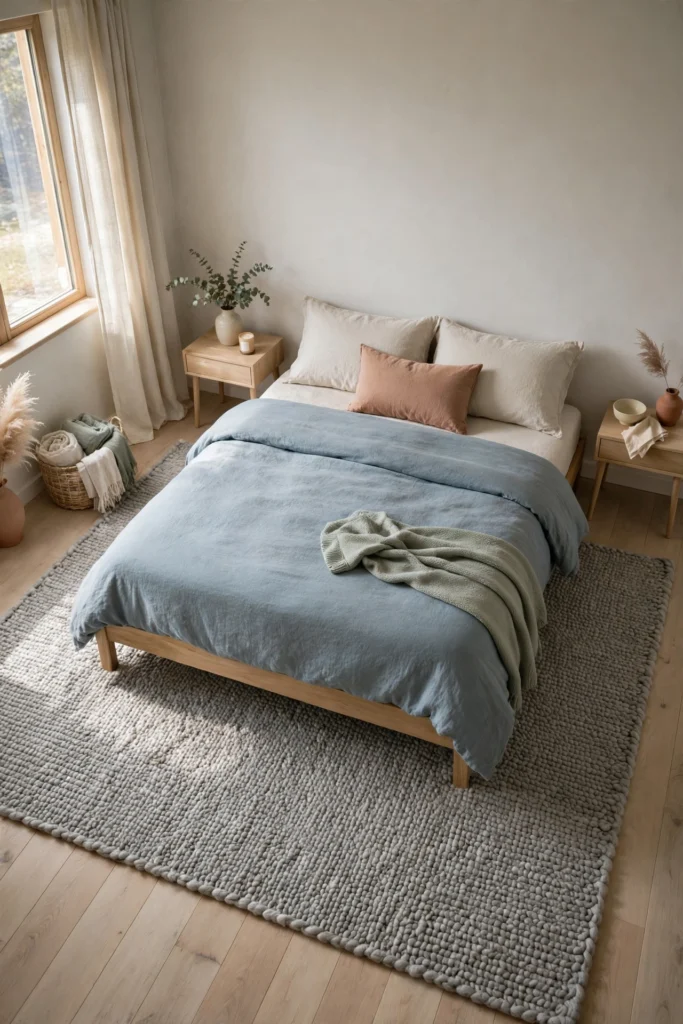
A rug under the bed ties the whole room together and gives your feet something soft in the morning. A woven wool rug in soft gray works with almost any palette, and it makes the bed look grounded instead of floating on bare floor. Place it so it sits under the lower two thirds of the bed, with the rest peeking out at the sides and foot. On cold tile or hard wood, the difference is immediate.
Pro tip: For a queen bed, an 8 x 10 rug usually extends about 24 inches on each side. Measure before you buy.
14. Closed storage to cut clutter
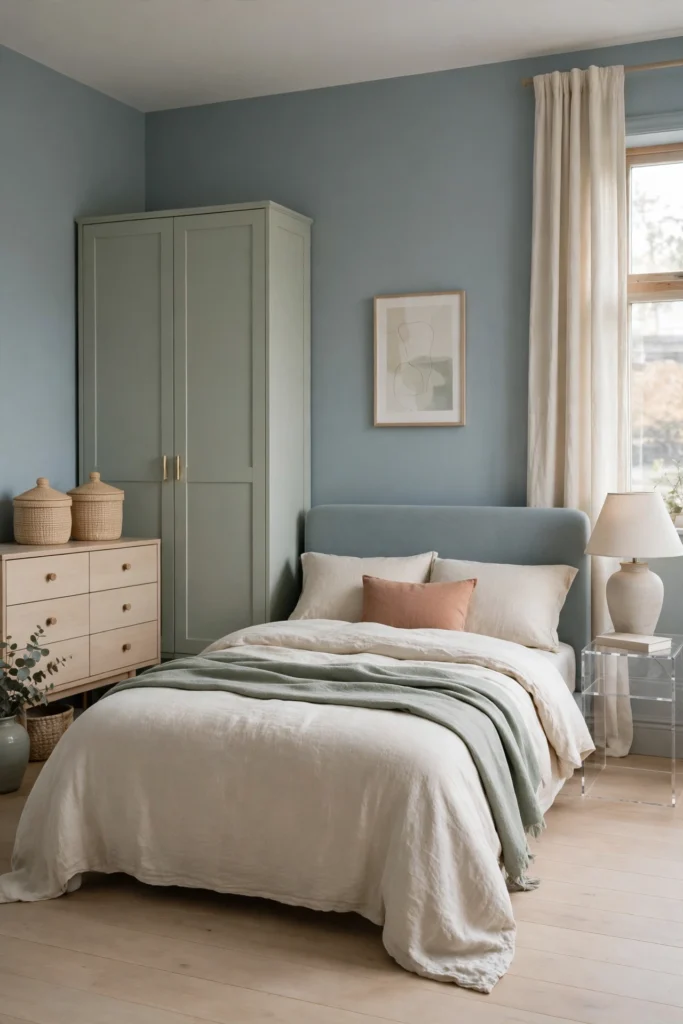
Visual clutter is the fastest way to lose a calm feeling. A low dresser topped with two lidded baskets, a wardrobe with closed doors, and a nightstand holding only a lamp and one book keep the room quiet even when you live there full time. Open shelves look good in photos, but in a small apartment they collect daily mess. Hide what you use, and display only a few things you love.
Pro tip: Keep the nightstand to a lamp, a book, and a glass of water. Everything else gets a home elsewhere.
15. One large piece of art over the bed

One big piece reads calmer than a busy gallery wall. Choose a soft landscape or an abstract print in colors already in the room, like greens and creams, and center it above the headboard. Symmetrical lamps on both sides keep the look balanced. The art becomes the single focal point, so the rest of the room can stay simple. It’s a small choice with a big effect on how settled the space feels.
Pro tip: Hang the center about 57 inches from the floor, or 6 to 10 inches above the headboard. For anything heavy, use a stud or a proper wall anchor.
Quick answers
What color is best for a calm bedroom?
Soft blues, sage greens, warm whites, and muted pinks are the most relaxing. Avoid bright, saturated shades.
How do I separate the bed from the living area?
Use a sofa with its back toward the bed, or a low bookshelf. Both mark zones without a wall.
Can I do this as a renter?
Yes. Bedding, curtains, lamps, rugs, and removable wallpaper change the room without touching the walls.
What lighting is best?
Warm lamps at 2700K, at different heights, instead of a single overhead light.
How many colors should I use?
One main color family plus one accent keeps a bedroom calm.
How do I make a small bedroom feel bigger?
Hang curtains high, use a large rug, and keep surfaces clear.
Final thoughts
A calm bedroom comes from a few good choices, not a big budget. Pick the idea from this list that speaks to you most and start with one change: a lamp swap, new curtains, or a rearranged sofa. Add the next one when the first feels settled. That’s all it takes.

Hi, I'm Wasif — welcome to The Homes Decors. I write about home decor: the ideas, choices, and small details that make a space feel considered rather than accidental. If you've ever wondered why a room works, not just what's in it, you're in the right place.