
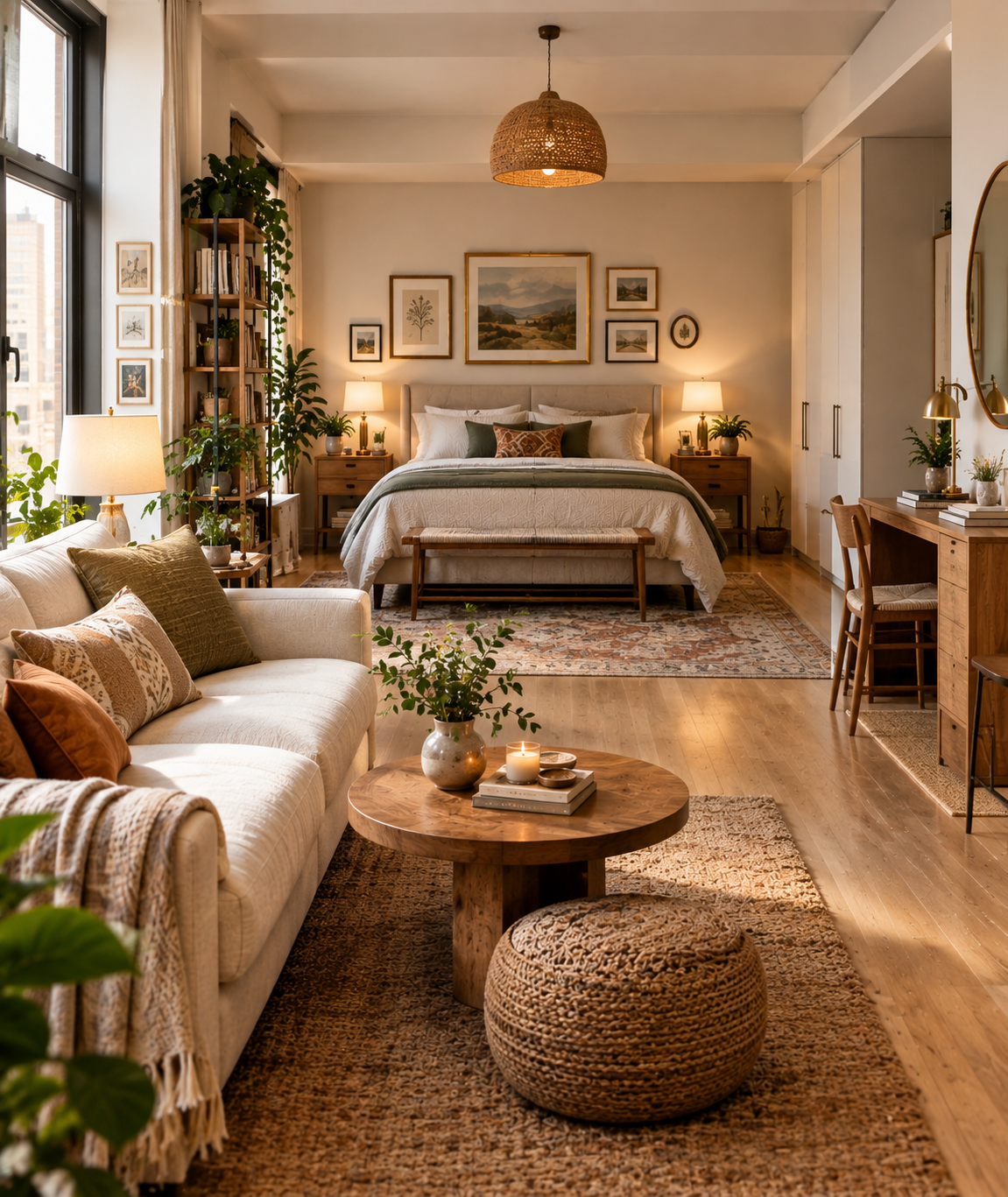
A clutter-free studio comes down to zoning and restraint: define each area with a rug or a shelf, keep furniture scaled to the room, and let vertical storage do the work floor space can’t. Here are 12 modern layouts that prove it.
1. Cozy Symmetry
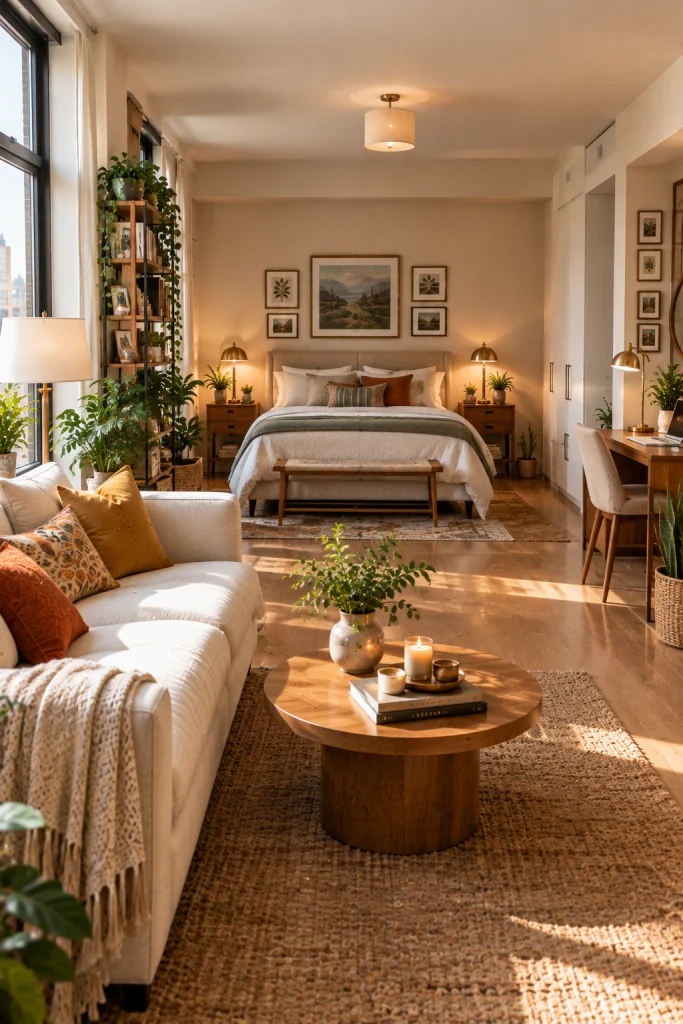
Pro tip: Leave at least 60 cm of clear walkway between the bed and the sofa so the two zones feel separate, not cramped.
Centering the bed against the far wall and flanking it with soft lighting makes the sleeping area feel intentional rather than cluttered. A neutral cream sofa paired with a warm jute rug defines the living zone, while the desk sits tucked neatly to the side instead of competing for attention. Match the bedside lamps — same height, same shade — so the symmetry reads from the doorway. Choose a jute rug at least 15 cm wider than the sofa on each side, and keep the desk no deeper than 50 cm so it never eats into the walkway.
2. Elevated Views
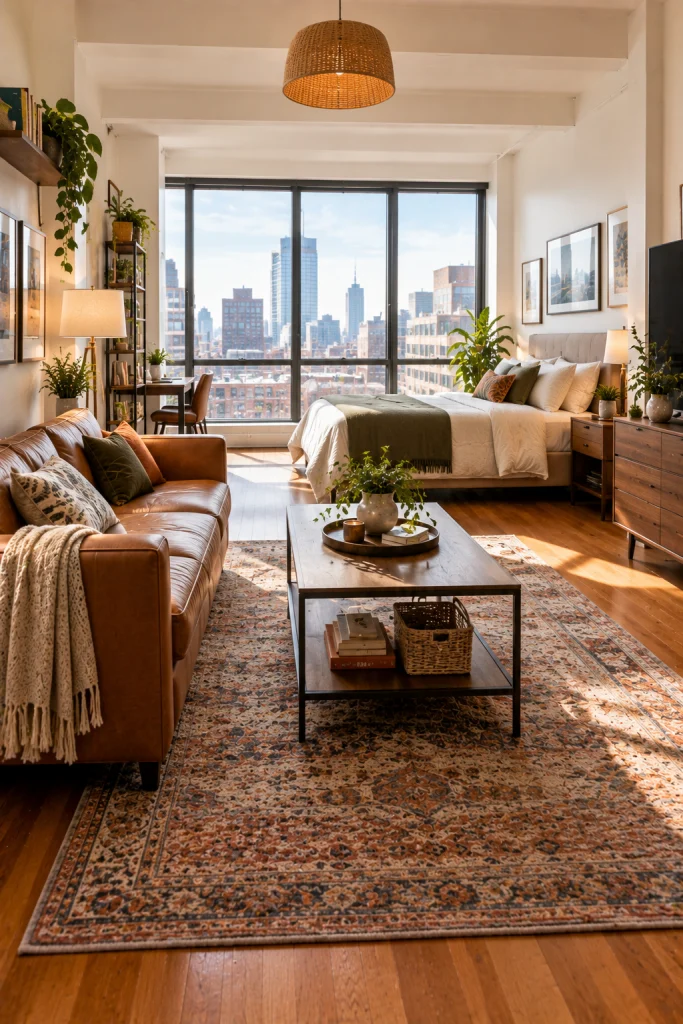
Pro tip: Keep the window wall free of tall furniture — anything above sill height cuts the view and shrinks the room.
A standout window deserves to be the focal point, and here a leather sofa bridges the gap between the sleeping area and the city view beyond it. An open-frame coffee table keeps sightlines clear, and a large patterned rug anchors the furniture while adding texture to the hardwood floors. Keep the sofa back low enough that the window stays visible from the bed, and choose a glass or slim-metal coffee table frame so it never blocks the view. A rug with one dark tone and one light tone ties the leather and the hardwood together without competing with the skyline.
3. Smart Dividers
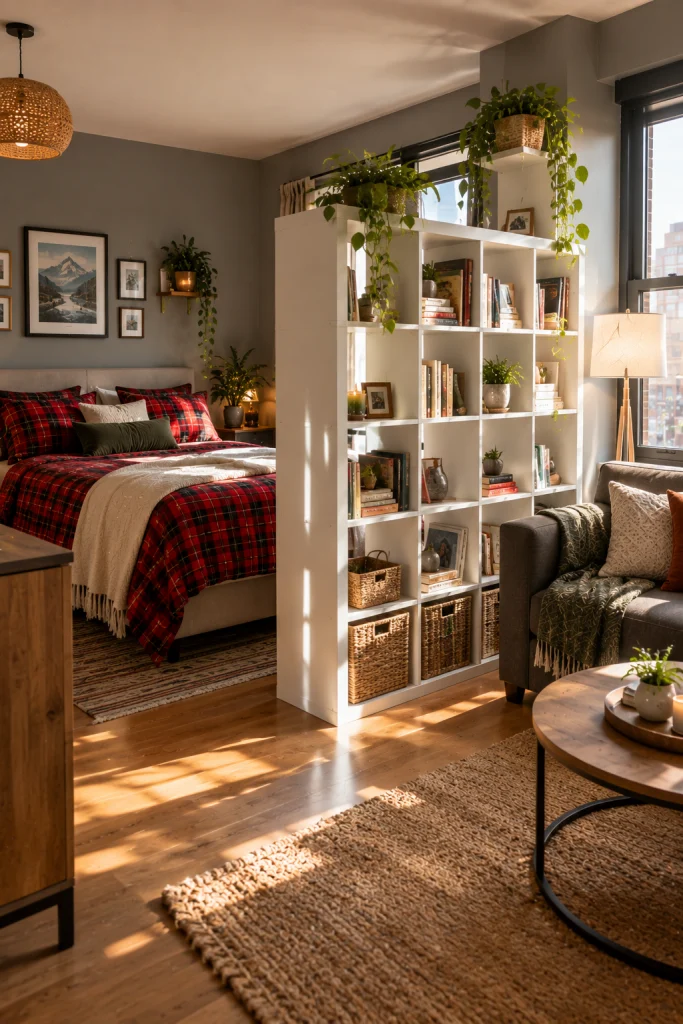
Pro tip: Anchor the shelf with a small rug on the living side so the divider reads as a deliberate zone, not a piece of furniture pushed into the middle.
A cubby bookshelf works as a porous wall, separating the bed from the living area while still letting light pass through. A pop of red plaid on the bedding adds personality against crisp grey walls, and the shelf handles storage and zoning in one piece of furniture. For more on this exact divider type, see studio apartment open shelf divider ideas. Choose a cubby unit no taller than chest height if the bed needs daylight, and style the bed-facing cubes with closed baskets so the sleeping side looks calm. Keep the red plaid to one throw or one pillow set — a little goes a long way against grey walls.
4. Natural Sanctuary
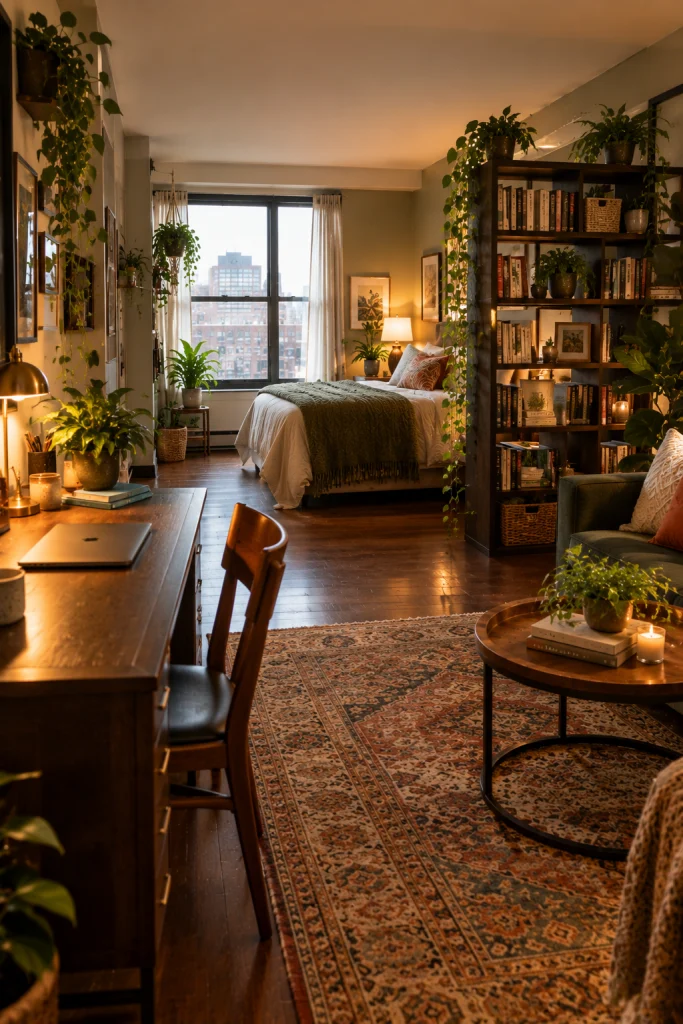
Pro tip: Rotate the plants toward the window every couple of weeks so they grow evenly and the corner stays full on all sides.
Plants add life and vertical interest in a room that could otherwise feel flat, and a dark wood desk with vintage-style rugs creates a grounded, scholarly mood. Placing the bed in a corner screened by a bookshelf turns the sleeping area into its own private nook, with warm desk lamp lighting making the whole space feel inviting at the end of the day. Use two or three plants in different heights — one trailing from the shelf, one on the floor — so the greenery fills the vertical space without crowding the desk. Keep the desk lamp warm white, around 2700K, so the corner feels restful after dark.
5. Bold Accents
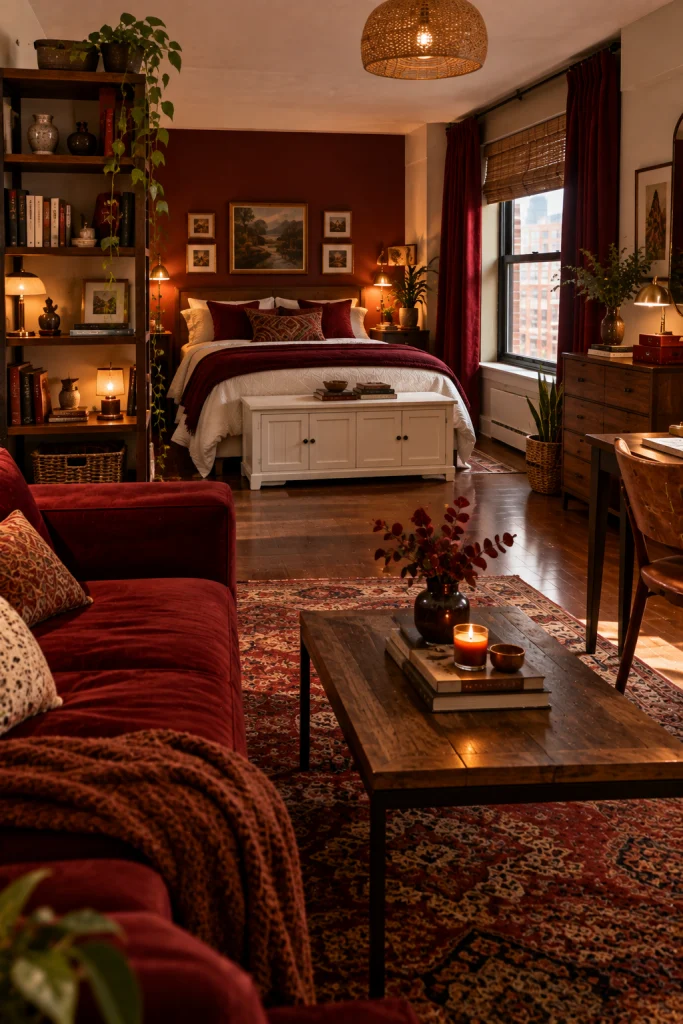
Pro tip: Choose a bench with a flat, firm top so it can hold a folded throw or a tray without wobbling.
Deep reds and rich wood textures create a high-end look without needing a full redesign. A white storage bench at the foot of the bed adds organization without the bulk of a heavy dresser, keeping the transition between the sleeping and living areas clean. For more bold color pairings like this, see beautiful studio apartment color schemes. Keep the bench about 10 cm narrower than the bed on each side so it never sticks out into the walkway, and use it for out-of-season bedding rather than daily items. Repeat the red once more on the living side — a single cushion or book spine — so the two zones feel connected.
6. Graphic Contrast
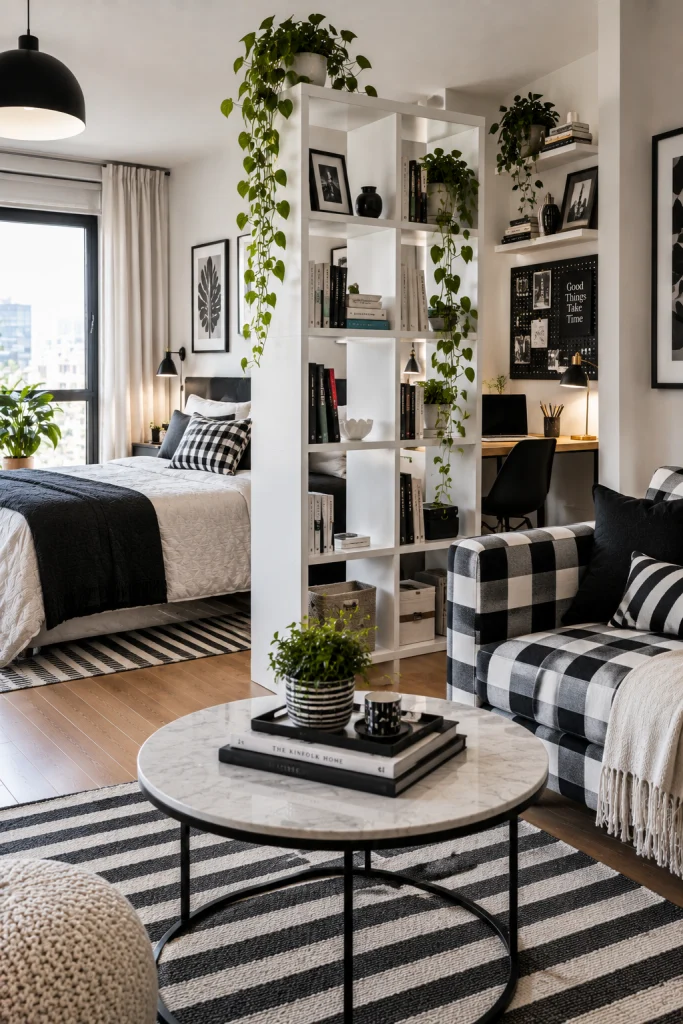
Pro tip: Steam the check sofa covers before styling — wrinkles show up fast on bold black-and-white fabric.
Black and white patterns sharpen a small space fast — a buffalo check sofa and a striped rug create a distinct living zone that feels separate from the sleeping area. A tall white shelf acts as a divider while holding books and decor to keep the eye moving, and a simple desk tucked into the corner proves there’s always room for a home office. Black and white patterns need one quiet surface to rest the eye, so keep the desk and the shelf in plain white with no pattern of their own. Run the striped rug in the same direction as the sofa so the lines pull the zone together, and pick a solid-colour desk chair.
7. Industrial Texture
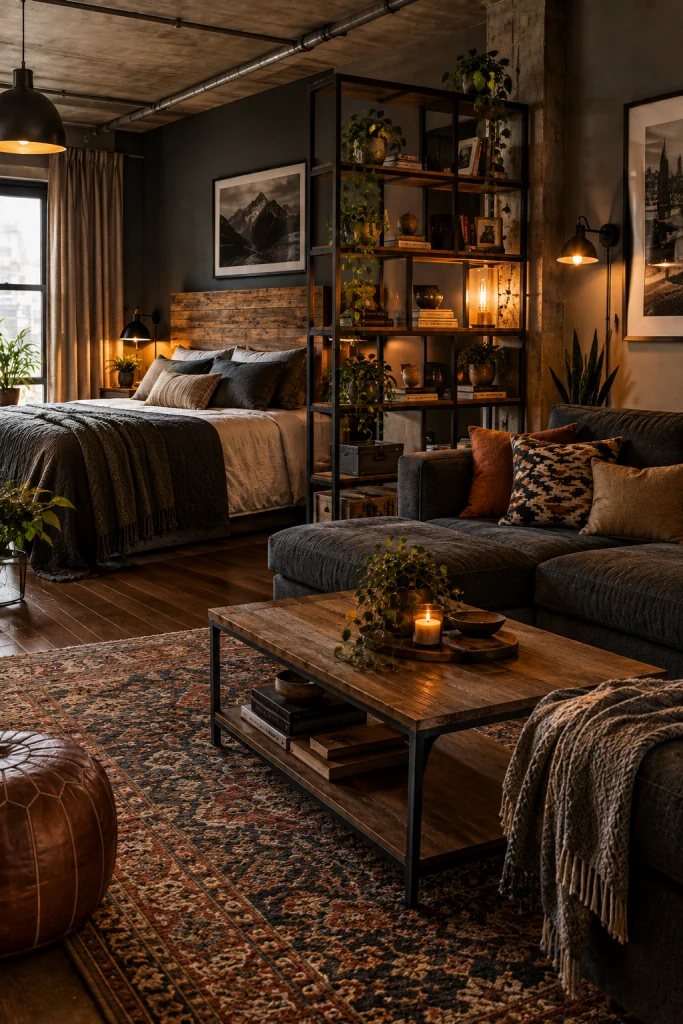
Pro tip: Vacuum the ornate rug with the beater bar off — raised patterns wear down fast under aggressive suction.
A reclaimed wood headboard and a charcoal sectional lean into a boho-industrial mood, with the sofa’s deep, moody color making the space feel expensive rather than cramped. A large, ornate rug extending under the sofa defines the lounge area clearly, proving that large-scale furniture can work in a studio when the layout supports it. Seal a reclaimed wood headboard with a clear matte finish so it never snags bedding or sheds dust onto the pillows. Let the rug extend at least 20 cm past the sofa’s front legs so the sectional looks grounded, and add one warm wood or brass accent so the charcoal doesn’t read as flat grey.
8. Minimalist Flow
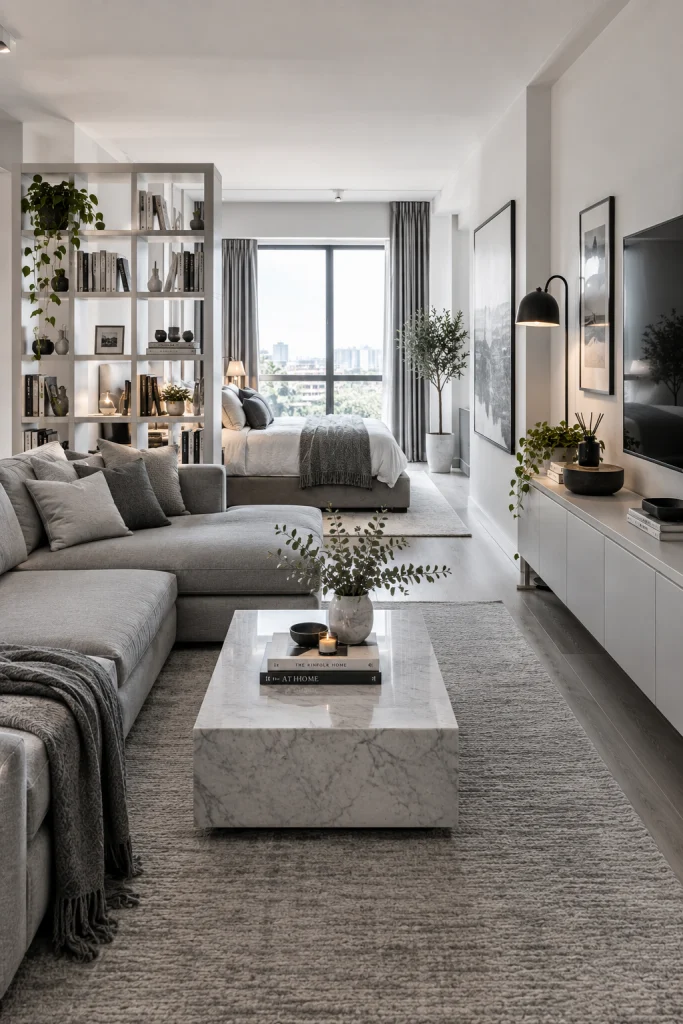
Pro tip: Use coasters on marble every time — water rings and coffee marks etch the surface and are hard to remove.
A monochromatic grey and white palette keeps this room feeling airy, with a low-profile L-shaped sofa and a marble coffee table doing most of the work. Mounting the TV on a long, low console instead of a tall stand keeps the wall from looking cluttered, and the overall effect is a room that feels nearly twice its size. Keep the marble coffee table about 40 cm from the sofa so there’s room to walk around it without squeezing past. Store remotes and cables inside the console drawers — one stray cable is enough to break the clean look this layout depends on.
9. Moody Luxury
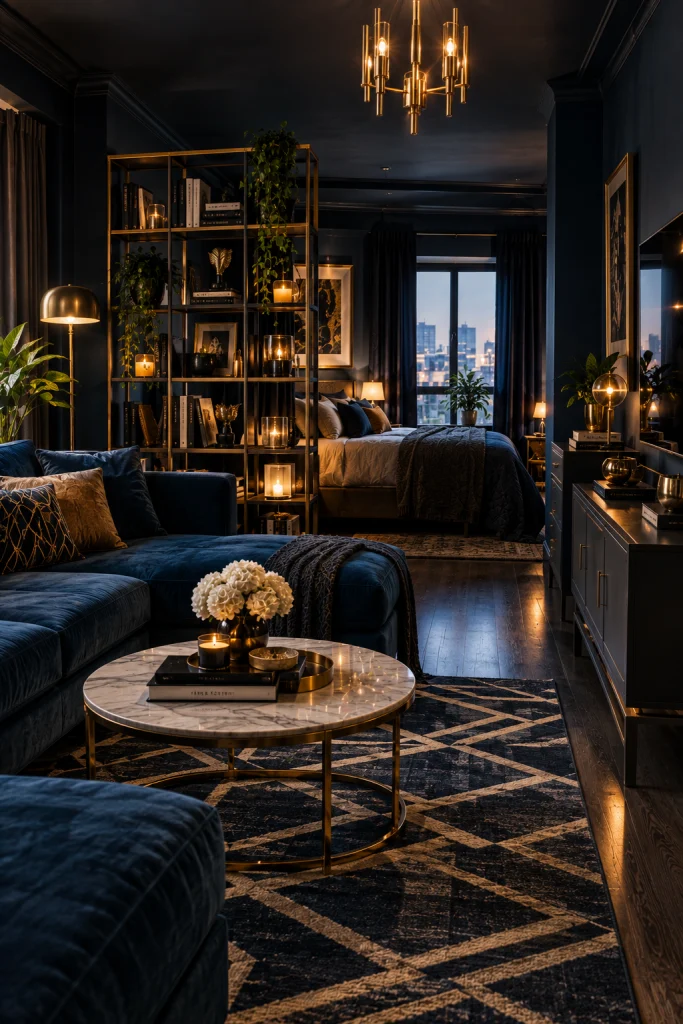
Pro tip: Brush velvet with a dry sponge to lift marks — water leaves spots on velvet that are hard to fix.
Deep navy walls and gold accents bring a sense of luxury, and the dark palette actually makes the room’s boundaries feel like they recede rather than close in. A velvet blue sofa and a geometric rug create a high-fashion look that suits a studio with real presence. Navy walls need at least two warm light sources, or the corners go flat and the room feels smaller than it is. Keep gold accents small and repeated — a frame edge and a lamp base — and choose a rug with a cream or ivory thread so the dark floor doesn’t swallow the sofa.
10. Vertical Storage
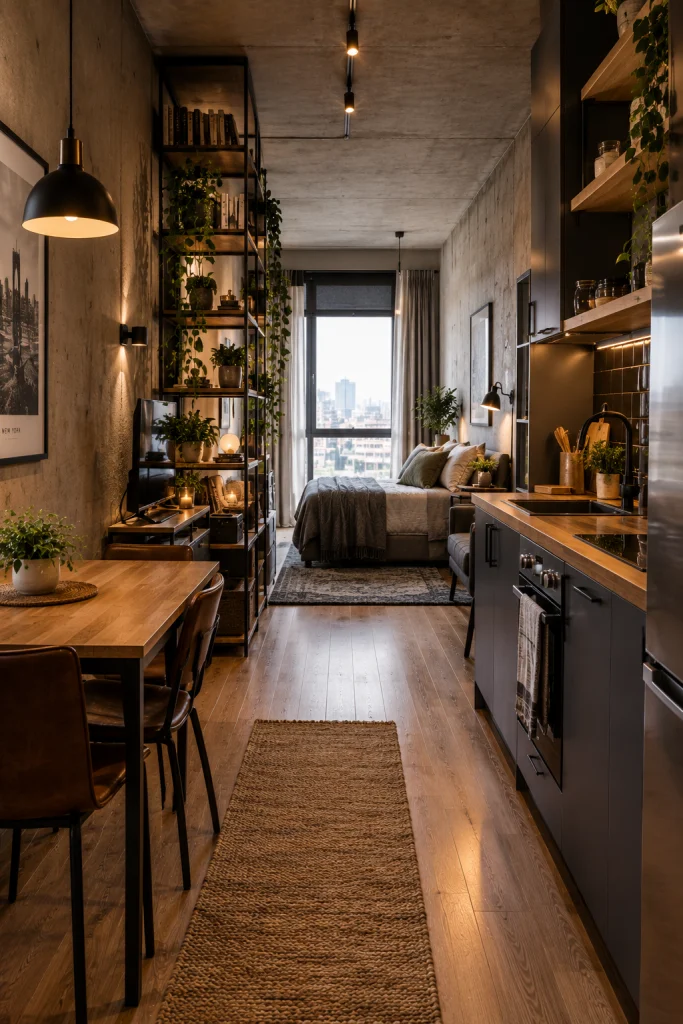
Pro tip: Label the inside of the top-shelf baskets so everyone puts things back in the right place.
When floor space runs out, the solution is to look up — high shelving keeps the floor clear while the kitchen, dining, and sleeping areas line up along one wall, staying distinct through careful rug and wall art placement. Light wood floors and concrete-style walls give the whole layout a trendy, urban loft feel. For more vertical storage ideas in a tight footprint, see mini studio apartment shelving ideas. Put everyday items on shelves between waist and shoulder height, and reserve the top shelves for things used once a month. A rug under the dining chairs should extend at least 60 cm past the table edge so chairs stay on the rug when pulled out.
11. Eclectic Charm
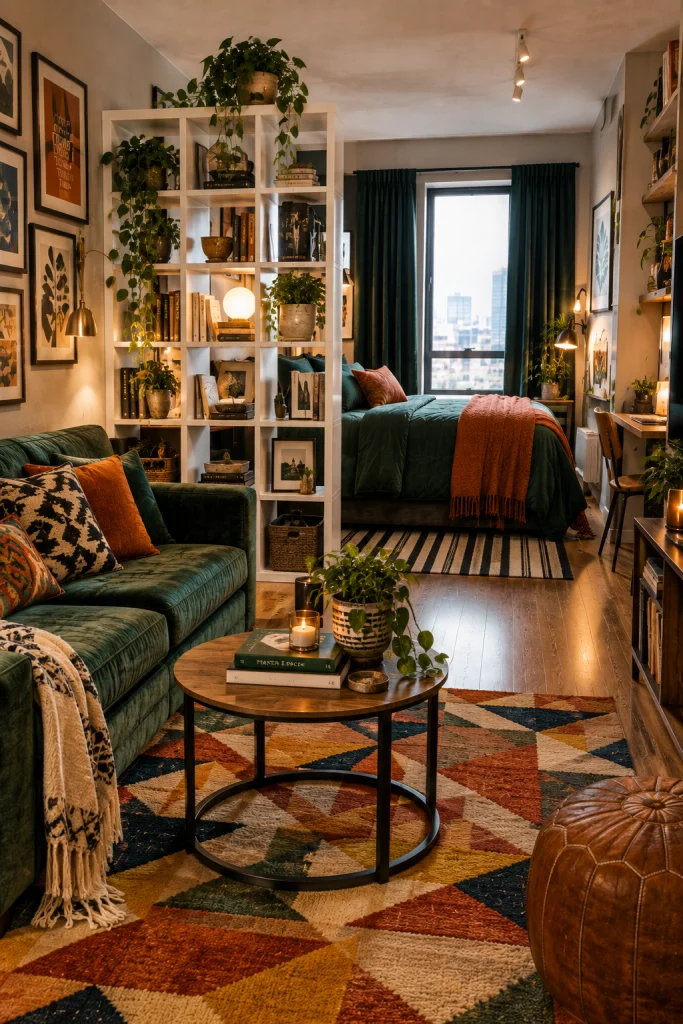
Pro tip: Shake out and rotate both rugs every few weeks — heavy-traffic areas flatten first and the pattern wears unevenly.
A mix of bold, colorful rugs anchors different areas here, with a vibrant geometric rug in the lounge and a classic stripe near the bed. Rich forest green bedding paired with a burnt orange throw adds a cozy, grounded feel, while white cubby shelving works as both storage and a room divider that keeps the space open rather than chopped up. Two bold rugs can share one studio as long as they share one colour — here the warm orange thread ties them together — and the white cubby shelf gives the eye a neutral break. Fold the throw at the foot of the bed rather than draping it across the pillows, so the green bedding stays the star.
12. Sleek Simplicity
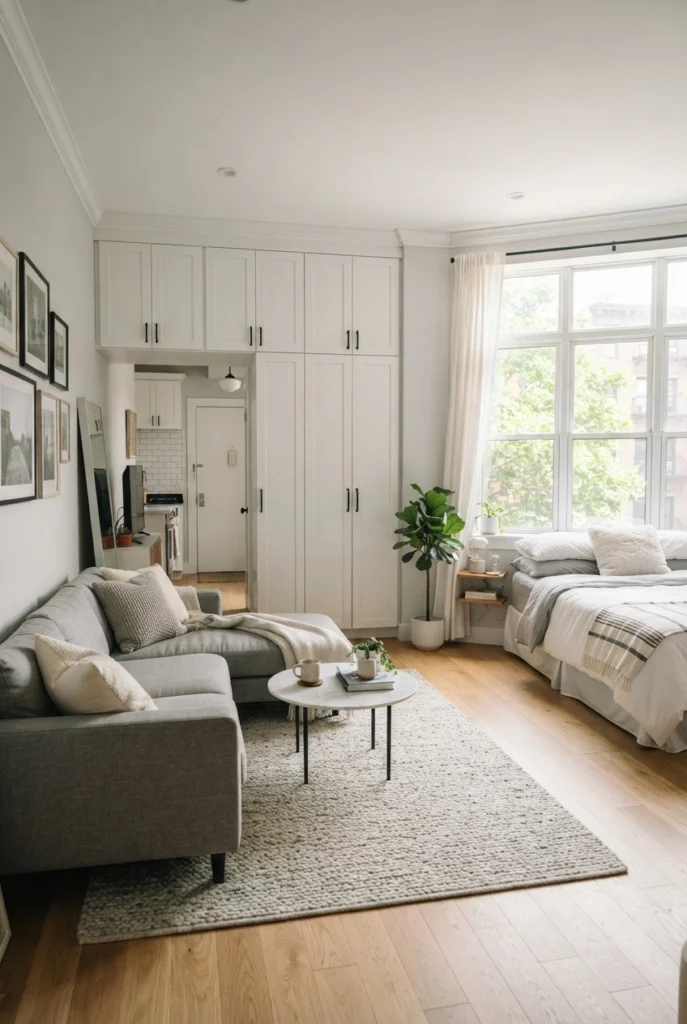
Pro tip: Leave the top 30 cm of the wardrobes for rarely used items — overstuffed built-ins bulge and the doors stop closing flush.
A palette of soft greys, whites, and light wood makes this room feel far larger than its actual footprint. A low-profile grey sectional and a round white coffee table keep sightlines clear, the bed sits tucked by the window to soak up natural light, and built-in floor-to-ceiling wardrobes hide clutter while keeping the whole layout seamless. Floor-to-ceiling wardrobes in a pale finish blend into the wall, but add slim vertical handles so they don’t look like blank panels. A round coffee table is the right call in a tight lounge because there are no corners to bump into, and a light-filtering blind keeps morning sun off the pillows.
Common clutter mistakes in a modern studio
- Choosing furniture without legs. Pieces that sit flush on the floor make a room feel heavier; legs let the eye travel underneath and read the floor as more open.
- Skipping vertical storage. A tall shelf or wall-mounted cabinet clears the floor in a way a wide dresser never will.
- Letting zones blur together. A rug, a light source, or a shelf boundary for each area keeps the room from reading as one undefined space.
Quick answers
How do you maximize space in a studio apartment?
Use multi-functional furniture, like a bed with built-in storage or a desk that doubles as a dining table, and keep the layout open with tall vertical storage instead of wide pieces.
What colors make a studio look bigger?
Light, cool colors like white, soft grey, and pale blue reflect light and make walls feel like they recede, while dark tones work best as an accent or a single feature wall.
What’s the best furniture for a small studio apartment?
Pieces with visible legs and items that serve two purposes, such as nested tables, wall-mounted desks, and sofa beds, all help a small space feel less crowded.
How do I divide a studio without building a wall?
An open bookshelf or cubby unit creates separation while still letting light through, which keeps the room from feeling chopped into two smaller spaces.
Does a monochromatic palette make a studio feel smaller?
No, sticking to one tonal family, like grey and white, usually makes a small room feel larger since nothing competes for attention.
Is a sectional sofa ever a good fit for a studio?
Yes, as long as the layout supports it — a sectional works when a large rug anchors the zone it sits in, keeping the room from feeling off-balance.
What’s the easiest way to add storage without adding bulk?
A storage bench, a bed frame with drawers, or floor-to-ceiling built-ins all add capacity without taking up extra floor space the way a dresser would.
Final Thoughts
A clutter-free studio isn’t about owning less, it’s about choosing furniture that does two jobs at once and giving each zone its own visual boundary. Start with one rug or one shelf that defines a space you’ve been avoiding, and build the rest of the layout from there.

Hi, I'm Wasif — welcome to The Homes Decors. I write about home decor: the ideas, choices, and small details that make a space feel considered rather than accidental. If you've ever wondered why a room works, not just what's in it, you're in the right place.