
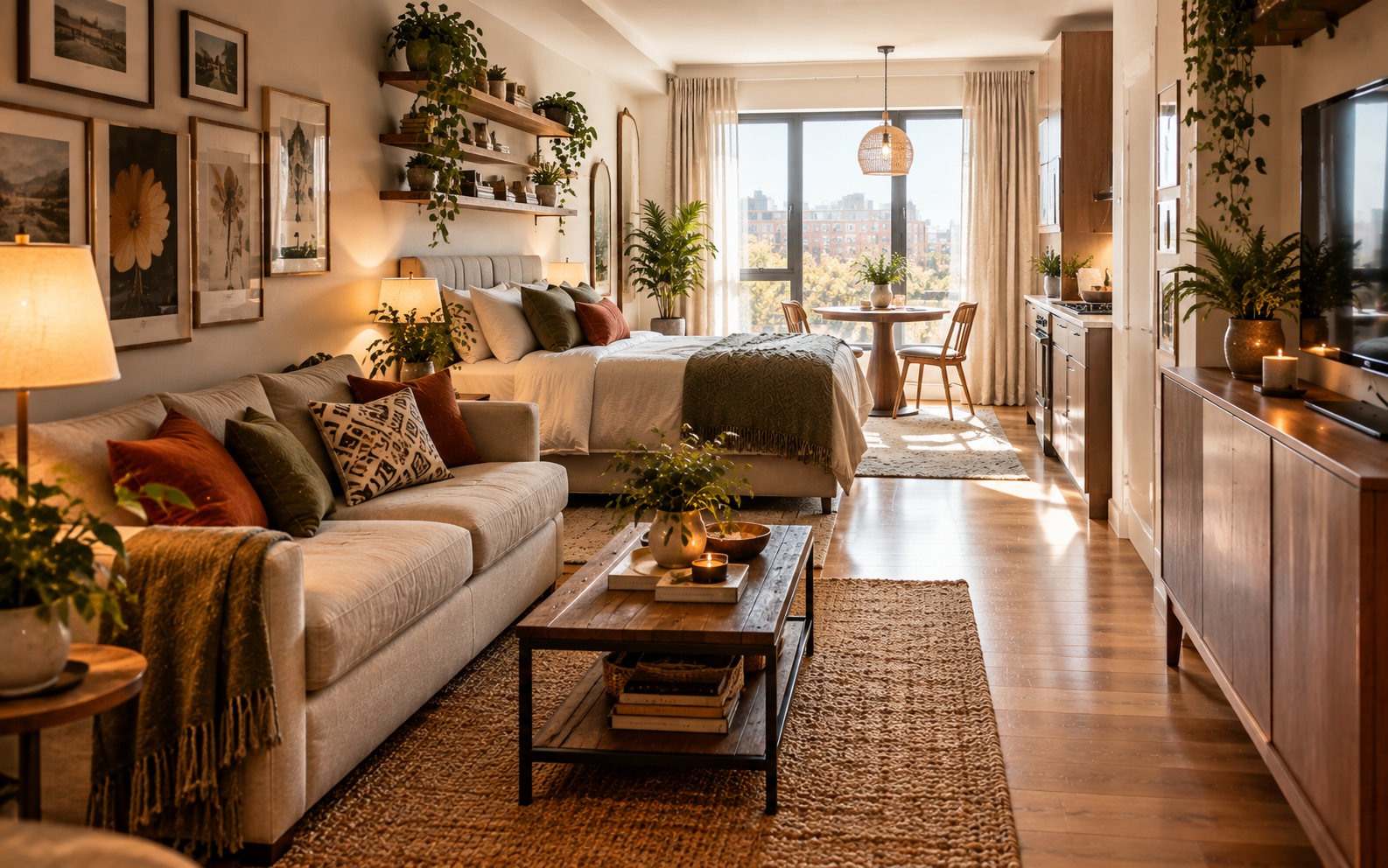
A modern studio feels designed, not crammed, when each zone gets a clear boundary — a rug, a divider, or even just a wall the furniture lines up against. Here are 13 real layouts that make that happen.
1. Line Everything Along One Long Wall
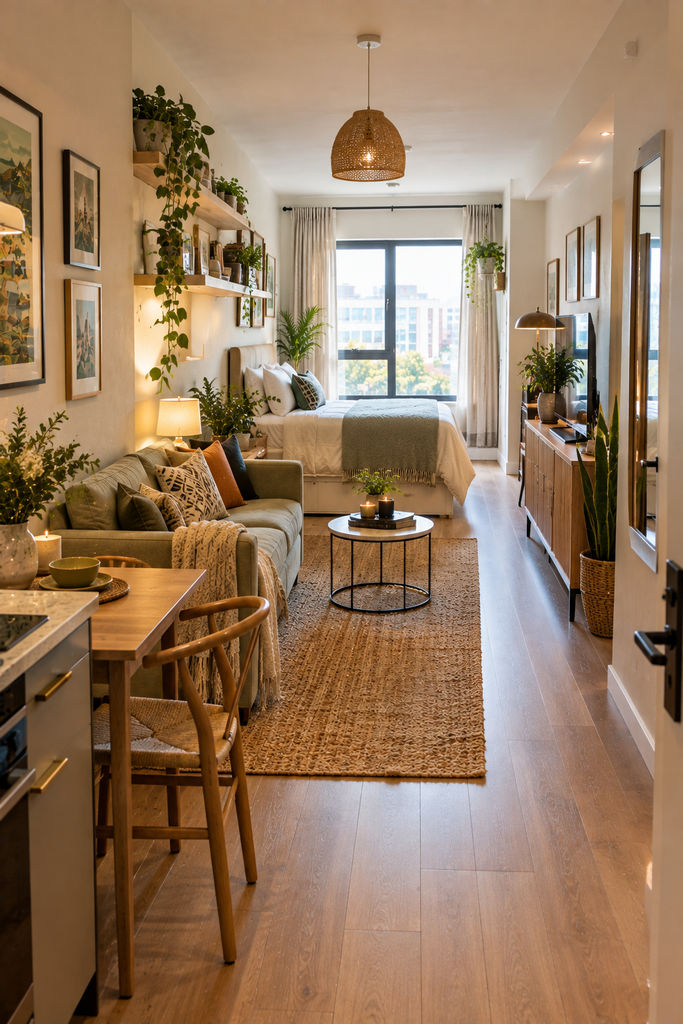
A long, narrow studio works best when it stops fighting its shape. Running zones down one side in sequence — a dining table by the window, the bed in the middle, a sofa near the kitchen — keeps the floor open and the walkway clear, so the room reads as intentional instead of crammed. A jute rug under the sofa quietly marks where the living zone begins.
Tip: Keep rug tones warm and natural across the zones so the separate areas still feel like one cohesive space.
2. Use a Bookshelf as a Room Divider
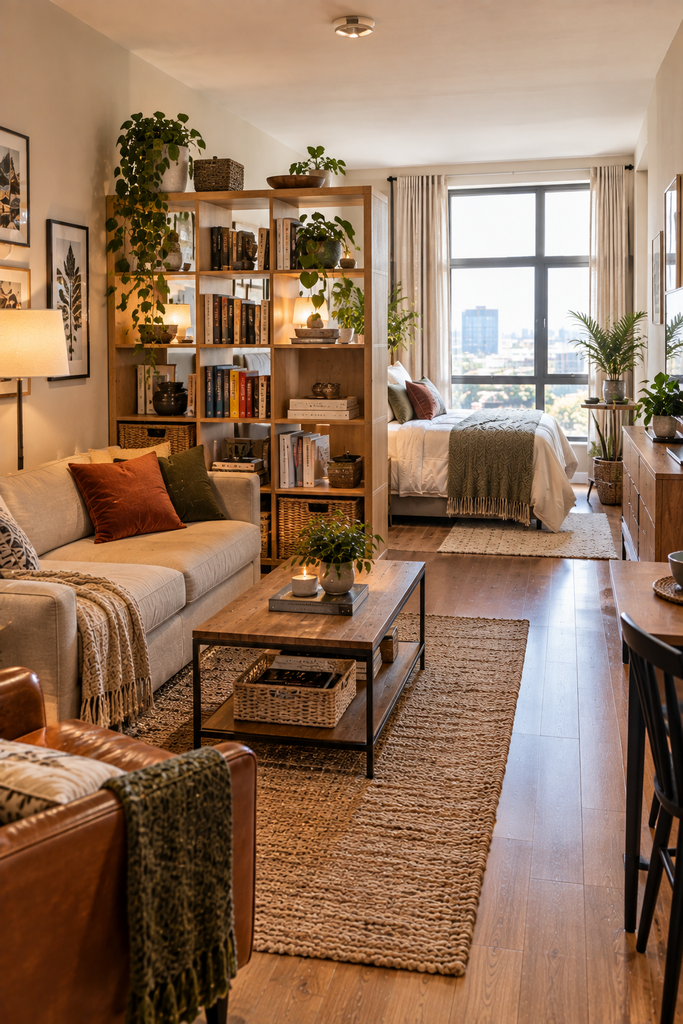
A cube shelf is the renter’s best friend in a studio. Placed between the bed and sofa, it splits the room into sleep and lounge zones without blocking a drop of light, giving storage on both sides and a low psychological wall that tucks the bed into its own space. For more on this exact divider, see studio apartment open shelf divider ideas.
Tip: No drilling, no permanence — just slide an open shelving unit into place and move it whenever needed.
3. Add a Slatted Wood Partition
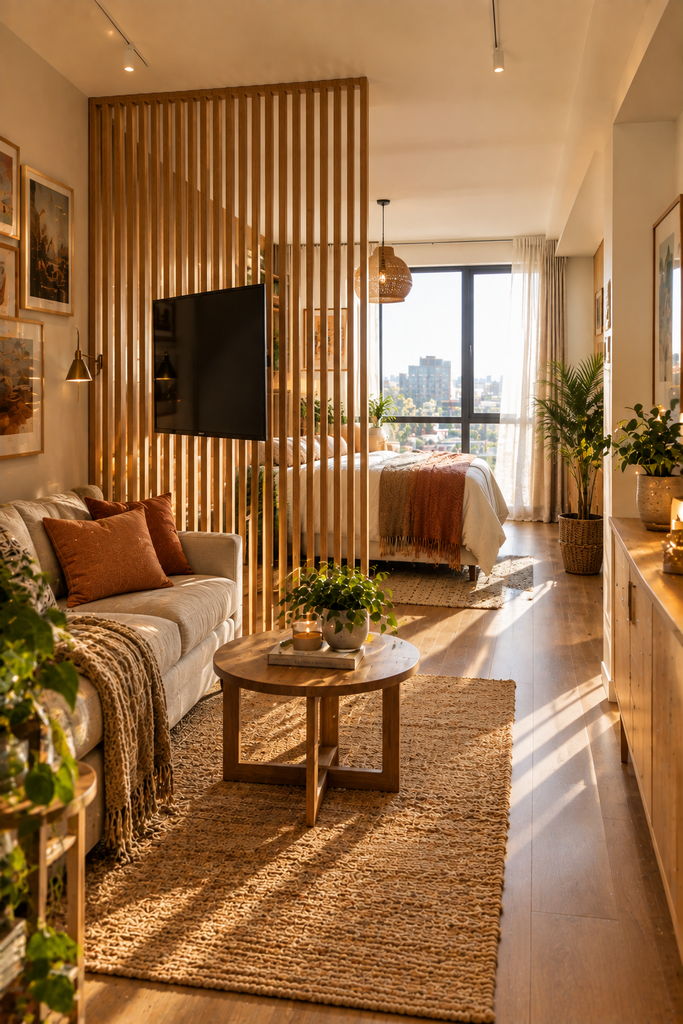
Slatted wood partitions screen the bed from the living area while still letting light pass through the gaps, so nothing feels boxed in or dark. Mounting a TV on the living-room side turns the partition into a double-duty divider that earns its footprint, and a warm oak tone keeps the whole space feeling soft and grounded rather than chopped in half.
4. Treat It Like a Hotel Suite
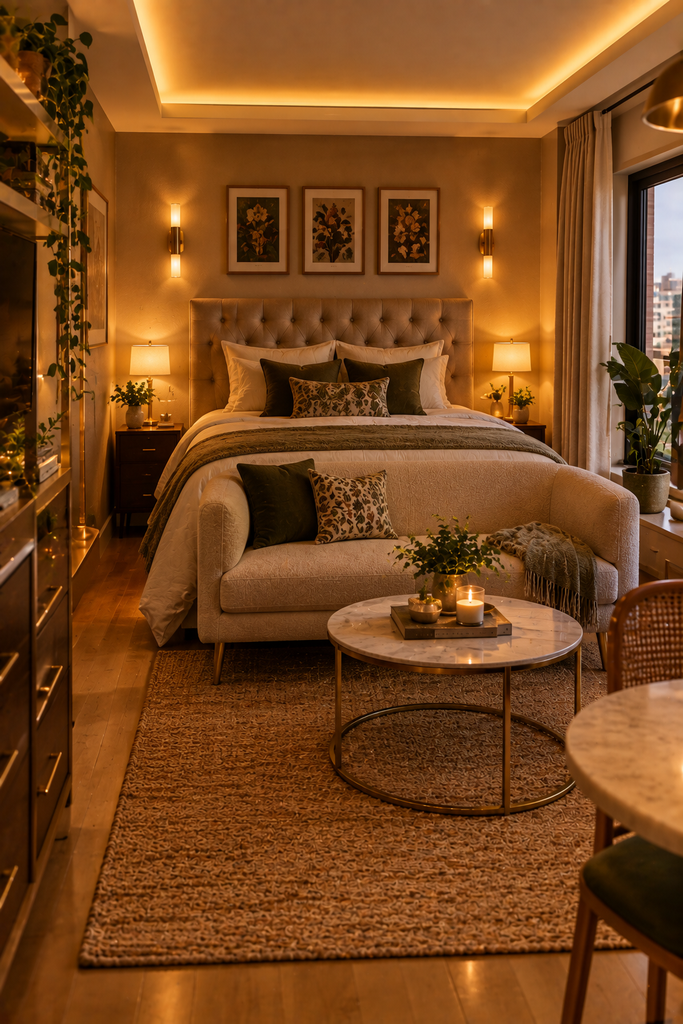
A studio can borrow the hotel-suite playbook — a statement tufted headboard, a small settee at the foot of the bed, and warm layered lighting from sconces and lamps. That seating area gives somewhere to land that isn’t the mattress, which instantly makes the room feel bigger, and cove lighting overhead wraps the space in a golden, restful glow at night.
Tip: Save on the lamps and spend more on the headboard, since it’s the piece that sets the entire mood.
5. Anchor the Bed With an Accent Wall
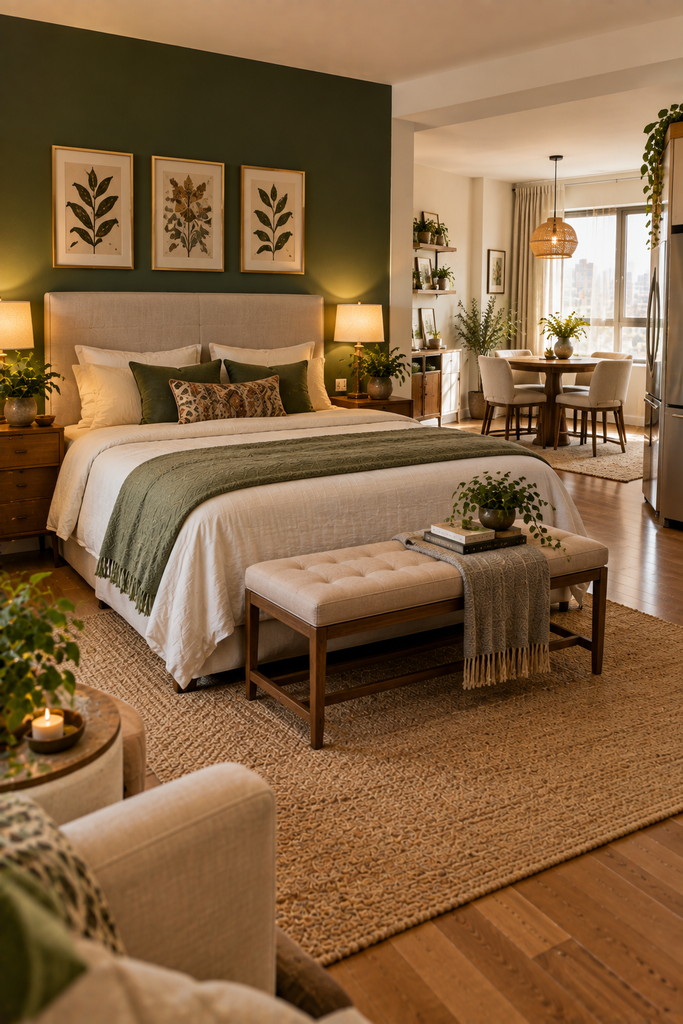
A single painted accent wall behind the headboard gives the bed a job to do — it defines the sleeping zone instantly, so the bed looks placed on purpose rather than parked wherever it fit. Flanking it with matching nightstands and a couple of plants adds symmetry, while keeping the kitchen and dining side neutral gives the color room to breathe. For more color pairing ideas like this, see beautiful studio apartment color schemes.
Tip: One bold wall does more for a studio than a whole gallery of small art.
6. Build a Real Living Room Up Front
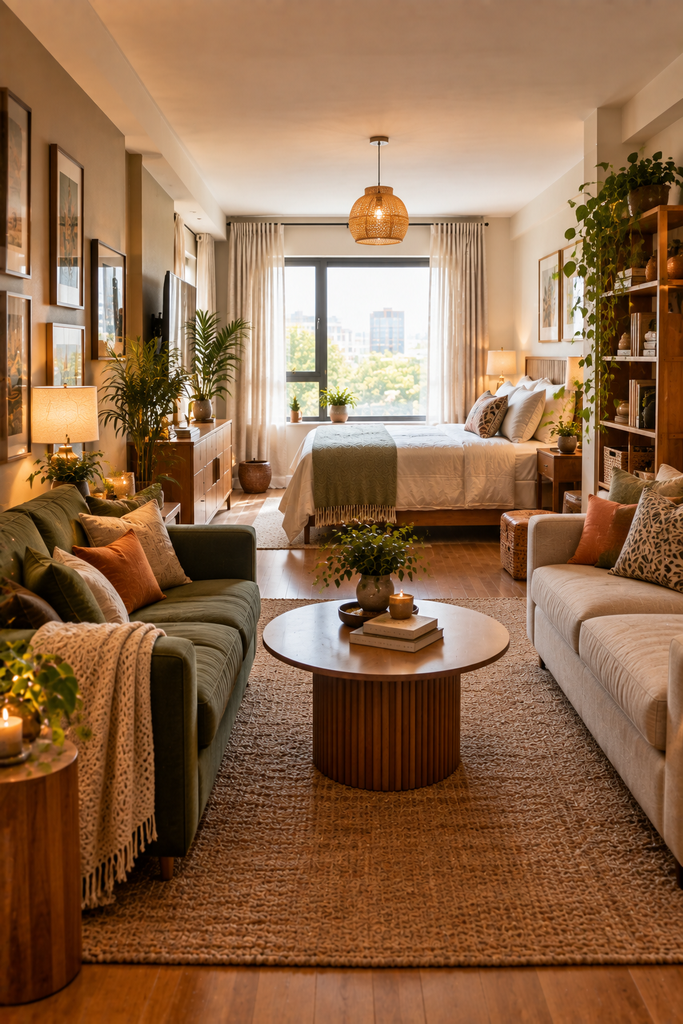
Pushing the bed to the far wall under the window and giving the front of the room to a proper lounge changes how the whole studio reads. Two sofas around a coffee table create a real conversation area that makes guests forget they’re standing in a bedroom, and the bed becomes a quiet backdrop instead of the star of the room.
Tip: A round coffee table keeps traffic flowing in a tight footprint, with no sharp corners to dodge.
7. Float the Sofa to Zone the Room
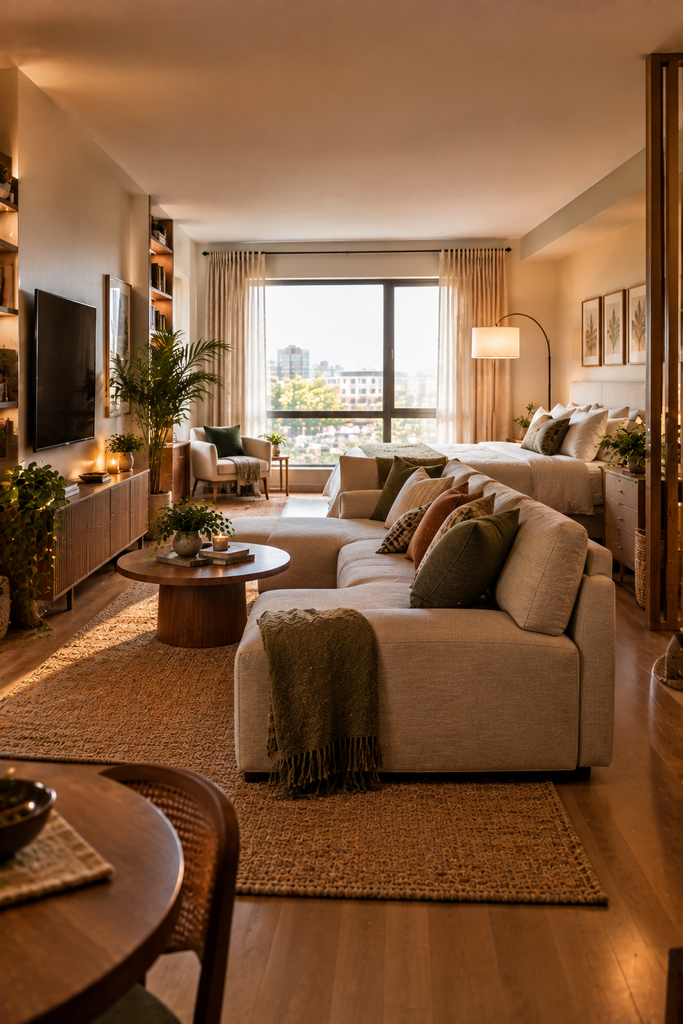
A sofa doesn’t have to hug a wall — floating a sectional in the middle of the room with its back to the bed draws an invisible line between living and sleeping. A TV console anchors the lounge zone while a floor lamp by the bed creates a separate pool of light for winding down, and the shift in flow is bigger than it sounds.
Tip: Floating furniture feels wrong until it’s tried, then it’s hard to go back to pushing everything against the walls.
8. Put the Sofa Back-to-Back With the Bed
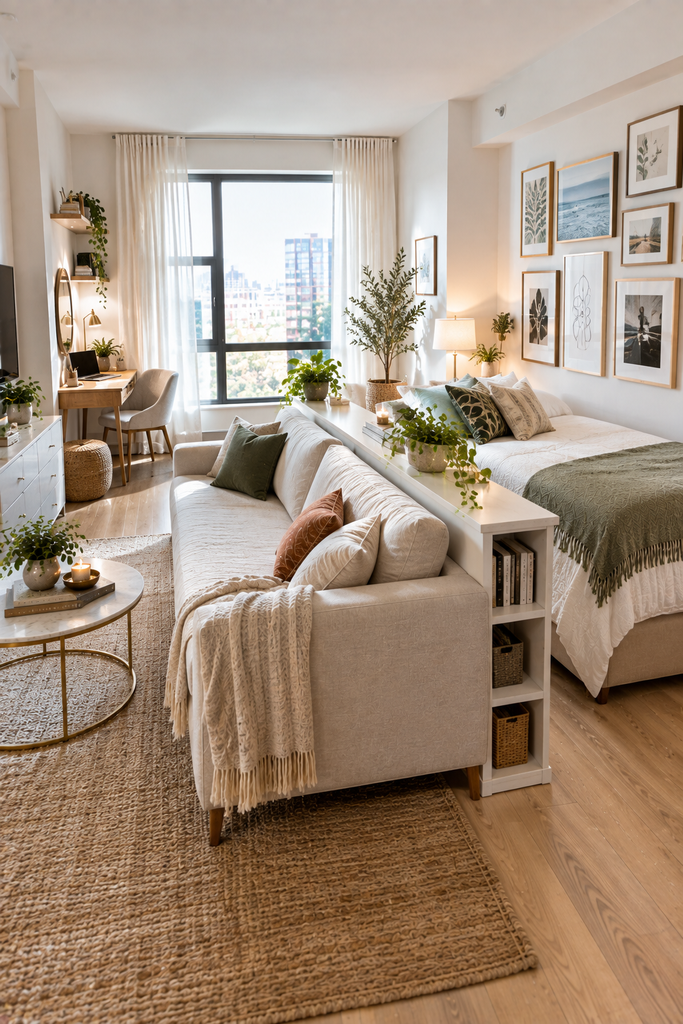
Lining the sofa up directly behind the bed turns the backrest itself into the divider — zero wasted floor, two clear zones. A slim desk tucked into the corner adds a work-from-home nook, and keeping the palette bright white helps everything feel open despite the tight footprint. A gallery wall adds personality without eating into the space.
Tip: Skip bulky partitions here — the furniture is already doing the dividing work.
9. City Studio
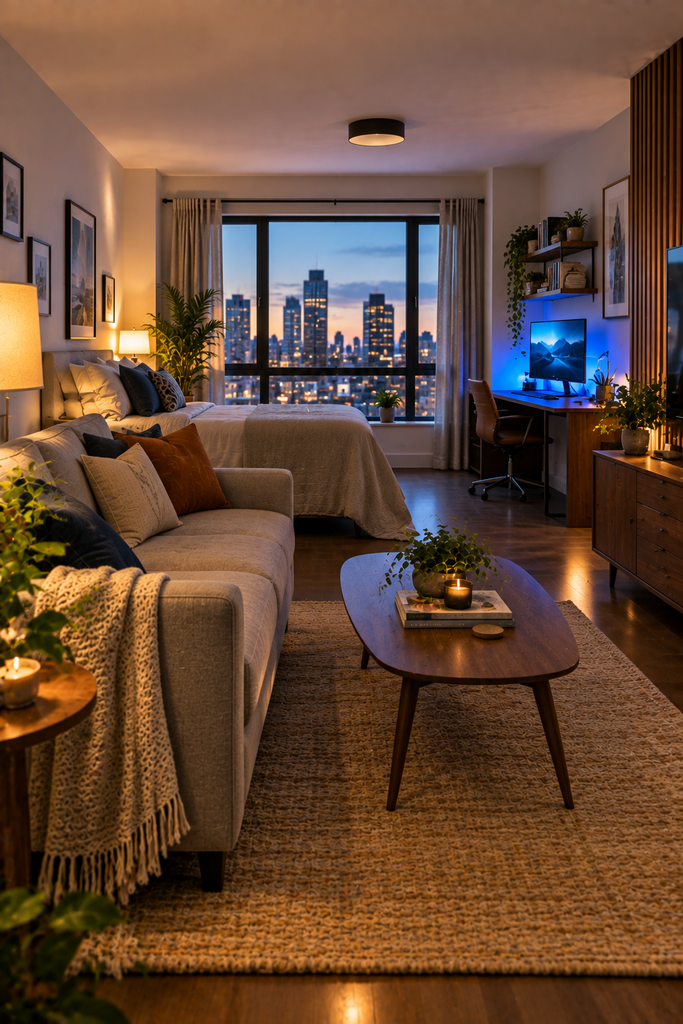
A sleek, light grey sofa facing the center of the room separates the lounging area from the sleep space, with a dark wood mid-century coffee table anchoring the zone. A minimalist wooden desk against the wall with a blue LED monitor backlight adds a cool, modern contrast against warm table lamps, and keeping window treatments minimal lets a city skyline do the talking.
10. Pattern Play
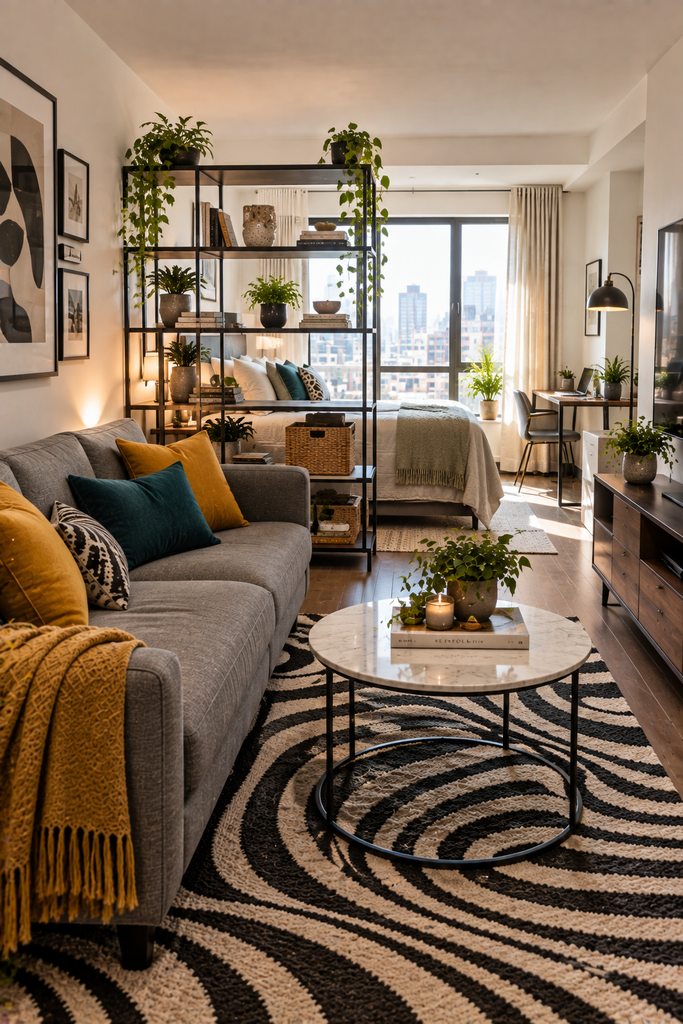
A bold black-and-white swirl rug defines the main living area instantly, with a mid-grey sofa dressed in mustard yellow and teal throw pillows sitting right at its center. A tall, open-backed black metal shelving unit divides the bedroom from the living space without blocking light, filled with potted plants and a curated run of books, and a round marble-topped coffee table softens the geometric lines.
11. Industrial Edge
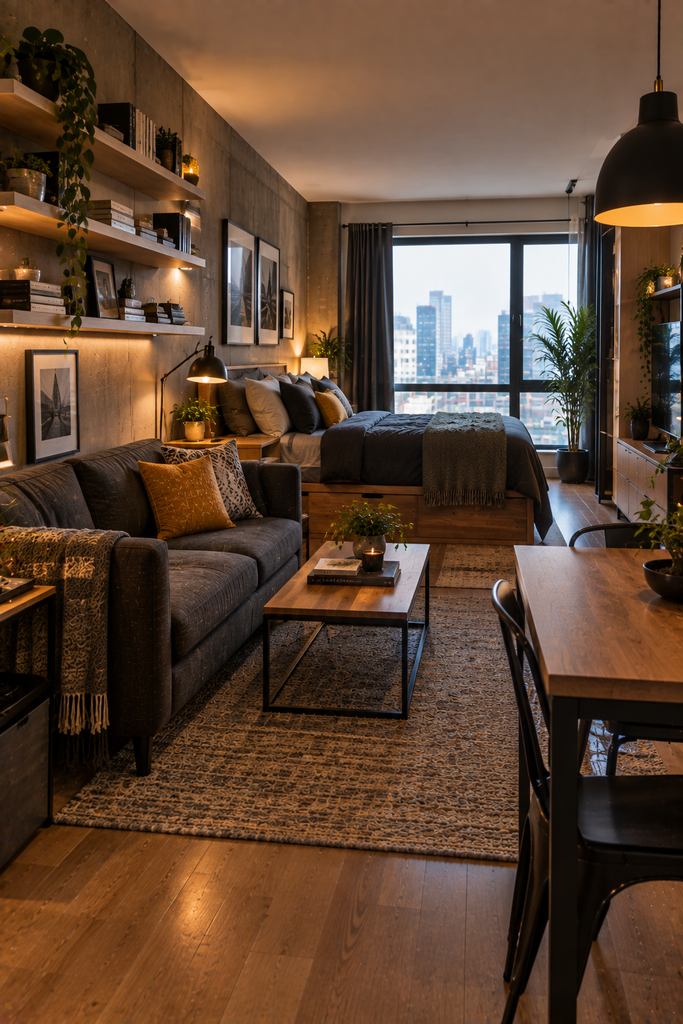
A concrete accent wall takes center stage here, with long light-wood floating shelves above the seating area showing off books and framed art. A tailored charcoal grey loveseat anchors the living zone, a minimalist wooden bed frame dressed in dark linens matches the moody industrial mood, and a matte black pendant light over a small dining table bridges the kitchen and living space.
12. Glossy Minimal
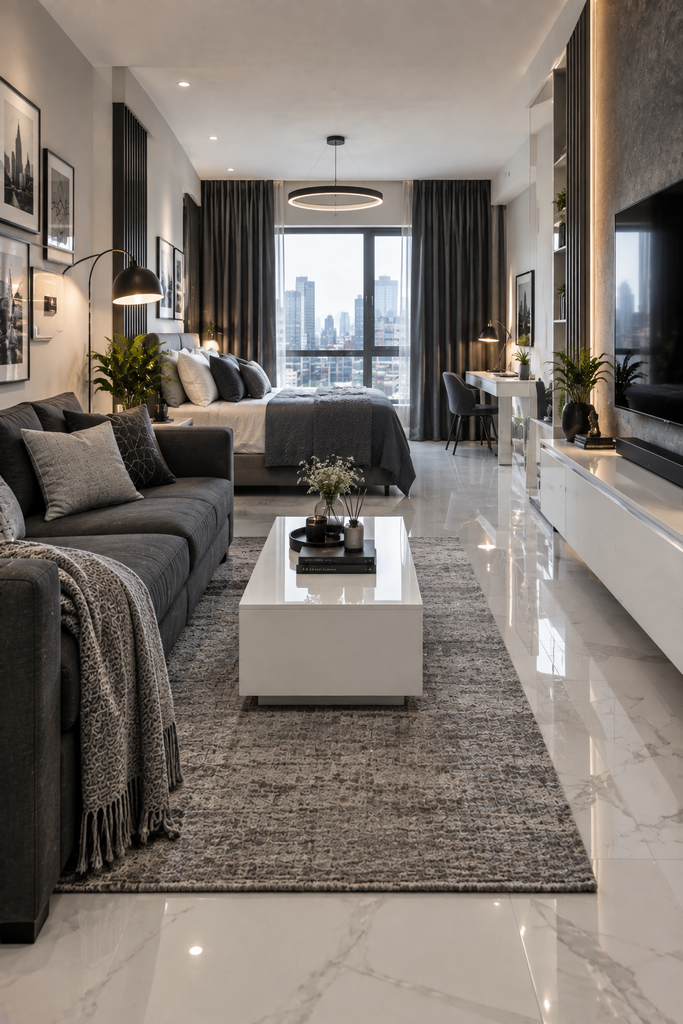
High-gloss white marble tile floors create an ultra-modern, airy sanctuary, with a clean-lined dark grey sofa facing a sleek, low-profile white TV console for a balanced lounge area. Heavy charcoal grey floor-to-ceiling curtains frame large windows and add dramatic height, while a simple white coffee table and a strictly monochromatic palette keep the whole space feeling calm and uncluttered.
13. Bright Divider
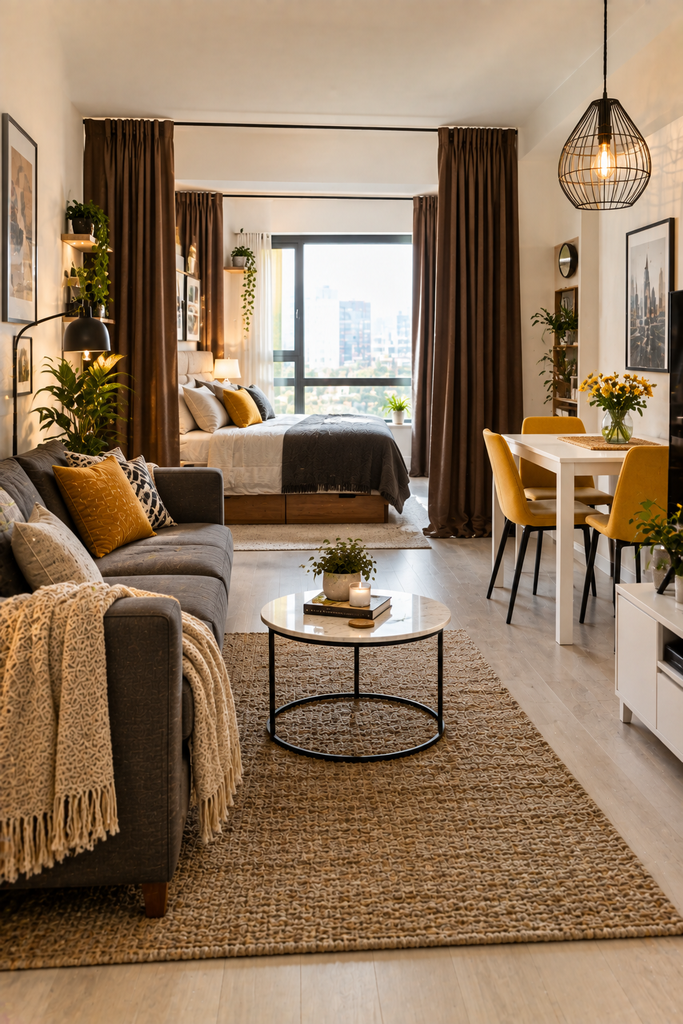
Thick chocolate-brown curtains section off a sleeping alcove for instant privacy, while a crisp white dining table by the kitchen surrounded by vibrant yellow chairs injects a cheerful pop of color. A compact dark grey loveseat anchors the main living area with a playful cactus-print pillow, and a wire-caged pendant light overhead adds geometric flair without cluttering the visual space. For more closable divider options, see studio apartment curtain divider ideas.
Common modern studio design mistakes
- Fighting an awkward room shape instead of working with it. A long, narrow studio reads better with zones lined along one wall than forced into a square layout that doesn’t fit.
- Pushing furniture against every wall. Floating a sofa or bed even a few inches into the room usually makes zoning clearer, not messier.
- Choosing a divider before deciding how much privacy is needed. A slatted partition suits light and airflow; thick curtains suit real nighttime privacy.
Quick answers
How do I make a small studio feel larger?
Use a lighter wall color, furniture with visible legs, and clear materials like glass or acrylic for tables, and hang curtains floor-to-ceiling to draw the eye upward.
What’s the best way to divide a long, narrow studio?
Line the zones down one long wall in sequence, rather than trying to split the room across its width, which usually leaves awkward leftover space.
How important is lighting in a studio apartment?
Very — layering task, ambient, and accent lighting instead of relying on one overhead fixture is one of the fastest ways to make a small space feel warm.
Can a sofa work as a room divider on its own?
Yes, floating it with its back to the bed, or placing it directly behind the headboard, creates a clear zone boundary without adding any extra furniture.
What’s the easiest way to mix design styles in one room?
Stick to a cohesive color palette and let one style dominate about 80% of the room, using the rest for accent pieces from a second style.
Does a slatted wood partition block light the way a solid wall would?
No, the gaps in the slats let light pass through while still screening the bed from view, which is why it works well in studios with only one window.
Is an accent wall worth it in a small studio?
Yes, especially behind the bed, where it defines the sleeping zone and gives the room a focal point without needing a gallery of smaller art.
Final Thoughts
Every layout here solves the same problem in a different way: giving each zone a clear job so the room reads as designed instead of crammed. Pick the one constraint your studio actually has — a long shape, one window, a tight footprint — and start with the idea built for that, rather than trying all 13 at once.