
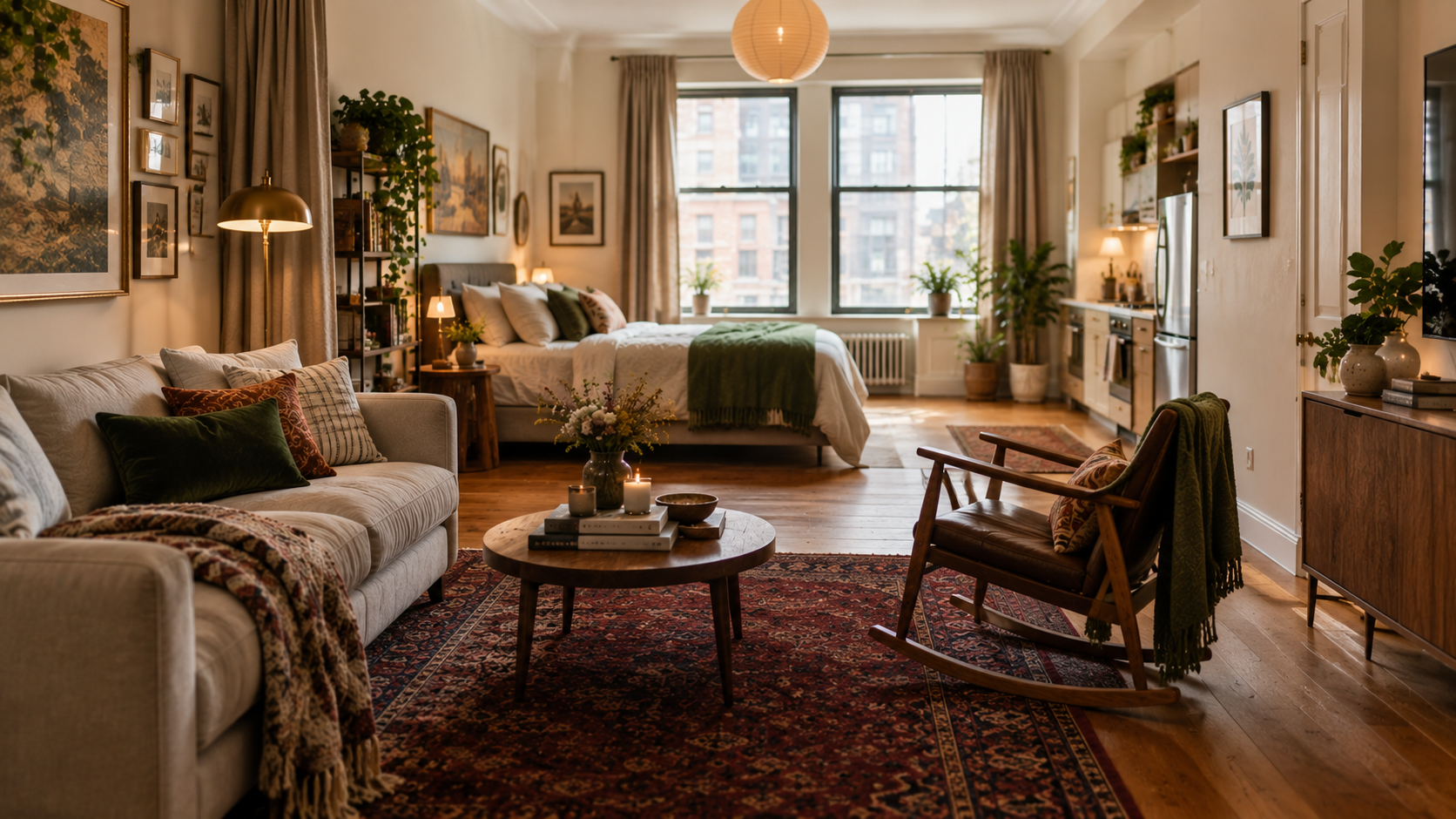
A studio apartment feels intentional when every zone has a job, not when it has more square footage — a rug, a curtain, or one committed color choice can do the work a wall usually would. Here are 17 practical ways to make one room feel like a full home.
Which cozy technique fits your studio?
| Technique | Main Tool | Best For |
|---|---|---|
| Rug zoning | Bold area rug | Open-plan studios |
| Curtain divider | Ceiling-mounted fabric | Renters, no drilling allowed |
| Furniture-defined corners | Low shelving, placement | Studios needing 3+ zones |
| Lighting-led coziness | Cove lighting, lamps | Any studio, low-cost fix |
| Statement piece | One oversized art/decal | Studios that feel too plain |
1. Anchor the Space with a Bold Area Rug
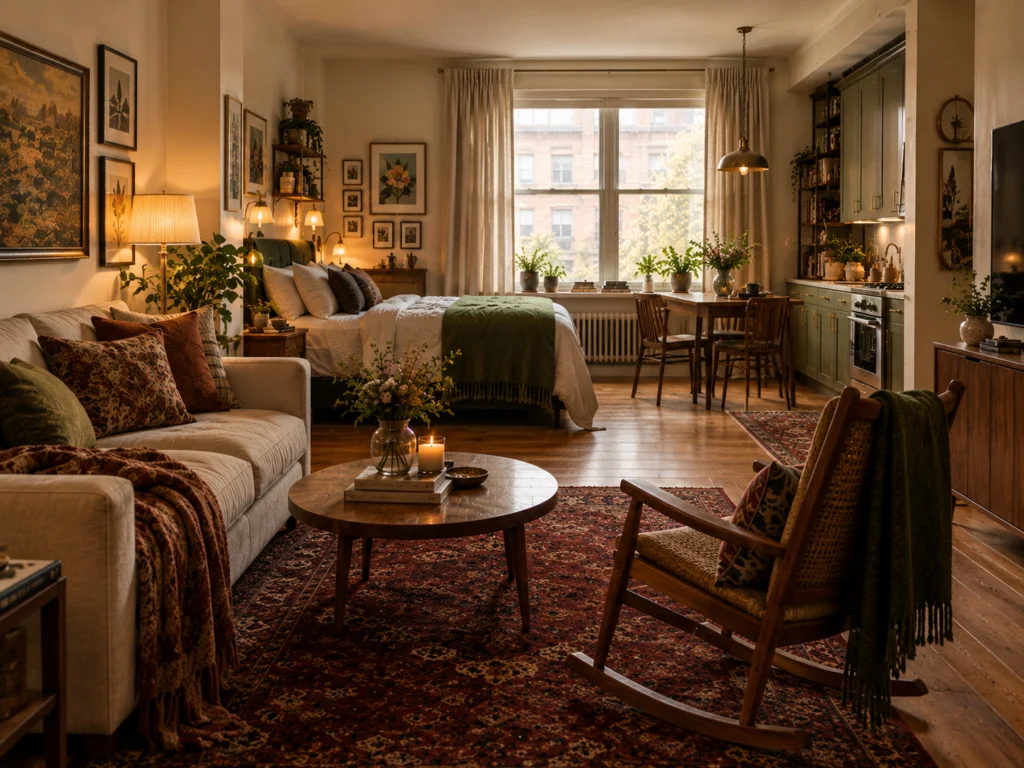
A rug does more than warm bare floors — it draws a visible line around a living zone that the eye respects even from across the room. Pulling the couch, coffee table, and an accent chair all onto the same rug reads as one deliberate “room” instead of scattered furniture, even with the bed only a few steps away.
2. Fill a Tall Bookshelf with Plants and Books
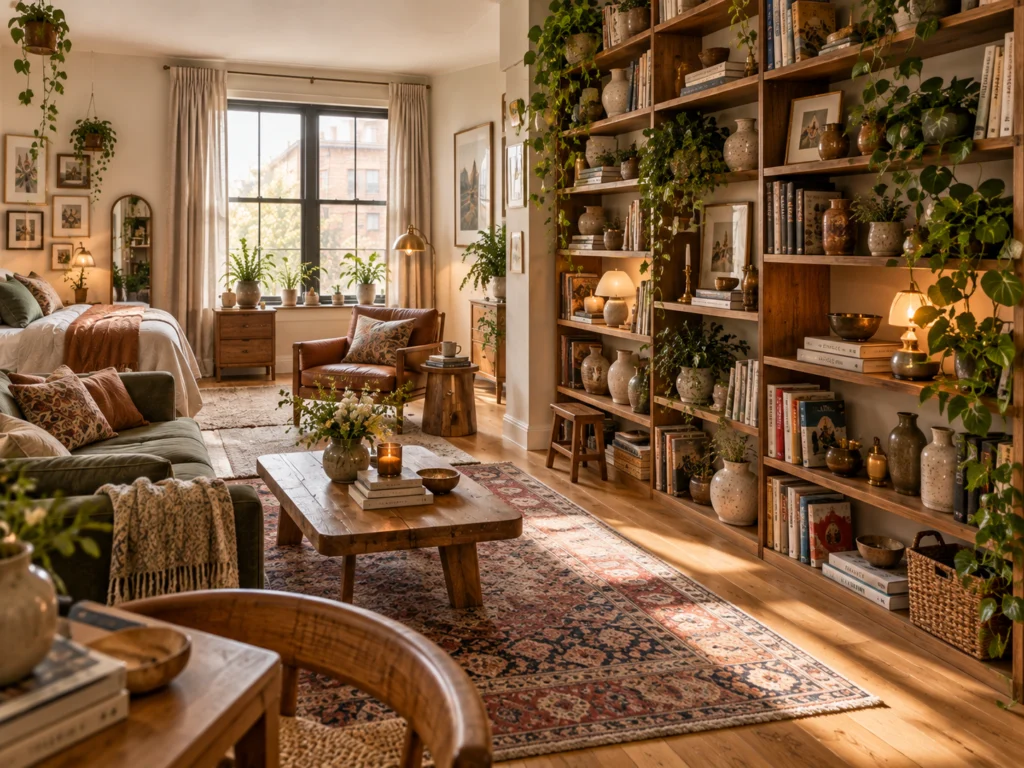
A tall bookshelf earns its footprint by doing three jobs at once — storage, plant display, and a visual anchor for the eye to land on in an otherwise open room. Mixing books, ceramics, and one trailing plant per shelf gives it a collected look, similar to the approach in these studio apartment shelf decor ideas.
Pro tip: Leave a little breathing room on each shelf — a fully packed bookcase reads heavy, while a slightly gappy one reads curated.
3. Use a Curtain to Separate Sleeping and Living Zones
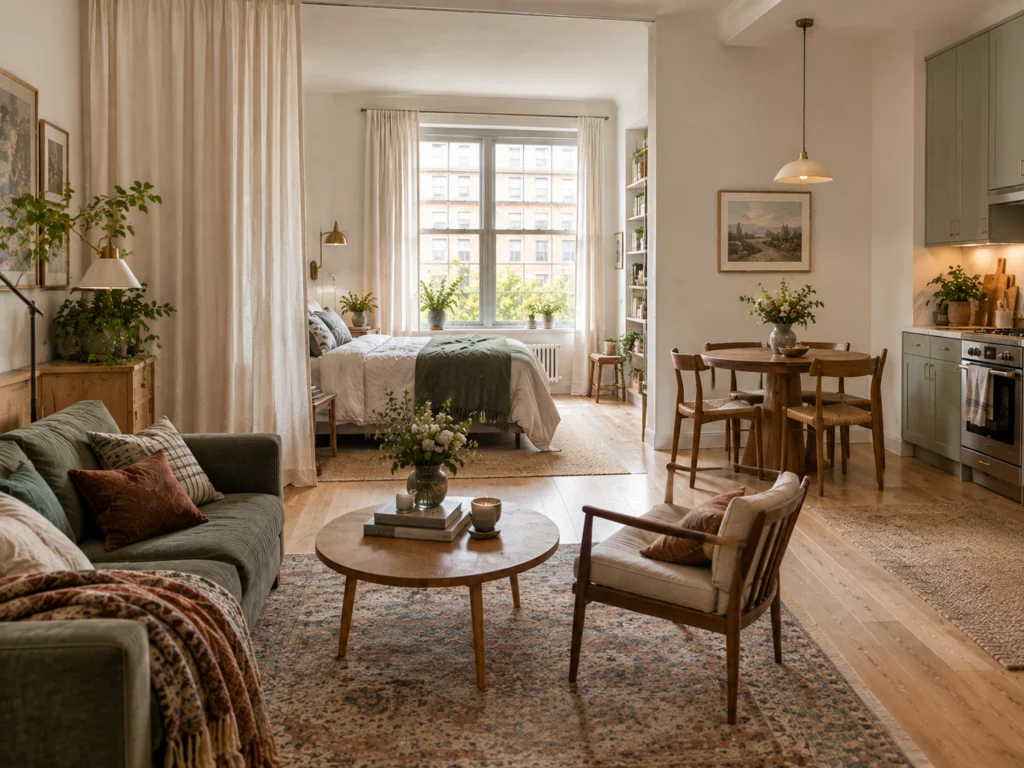
A ceiling-mounted curtain remains the cheapest real divider available to a renter — no drilling, no wall damage, and it draws shut for privacy or pulls back to let the whole studio breathe. Choosing a cream linen close to the wall color lets it disappear visually during the day, an approach covered further in these studio apartment divider ideas for small spaces.
4. Give Every Function Its Own Corner
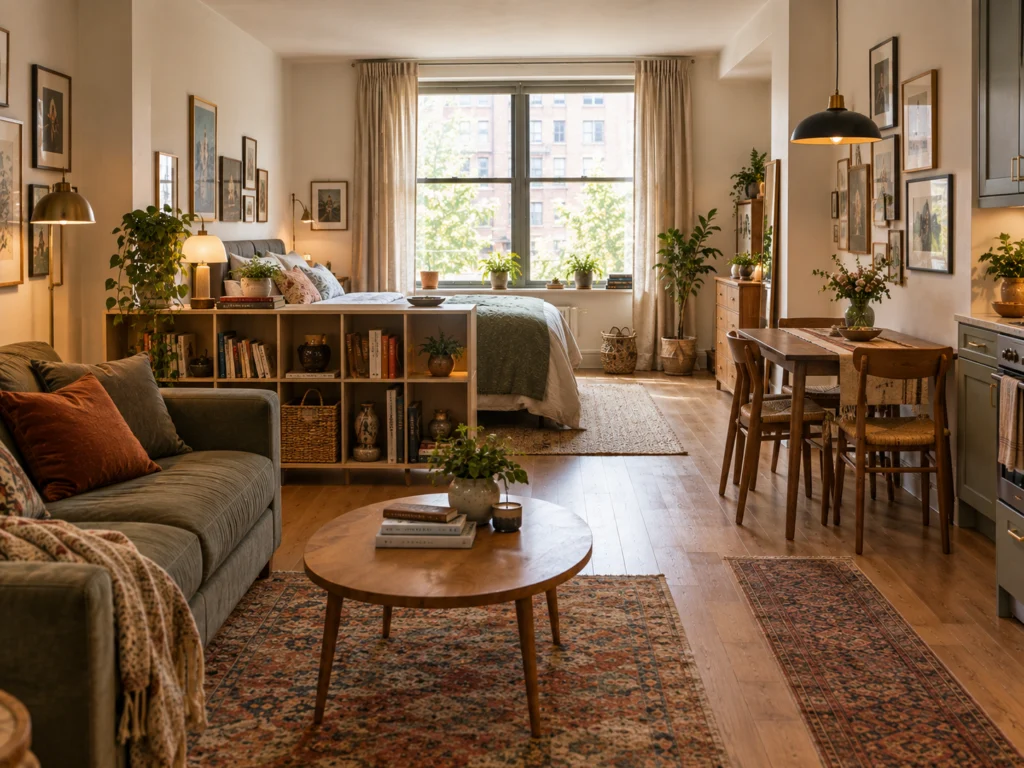
Pushing every piece of furniture flat against the walls is the most common studio mistake, since it leaves the middle of the room undefined. A low shelf placed between the bed and sofa gives each zone a boundary without blocking light or sightlines, the same way it functions in these functional studio apartment layout ideas.
5. Commit to One Color Story
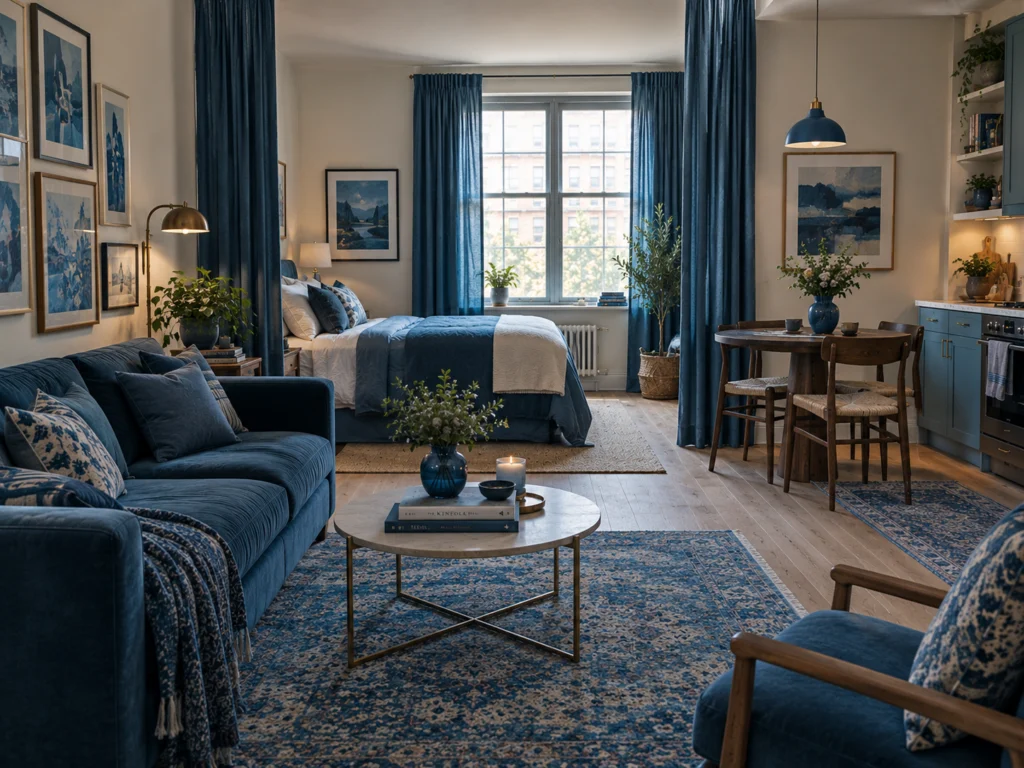
A scattered palette makes a small room feel busier than its actual square footage — picking one color and echoing it in the curtains, sofa, art, and rug reads as intentional rather than chaotic. The eye processes a single-color room as calm and considered, which is the fastest way to make a small space feel designer-planned.
6. Balance Cool Walls with Warm Curtains
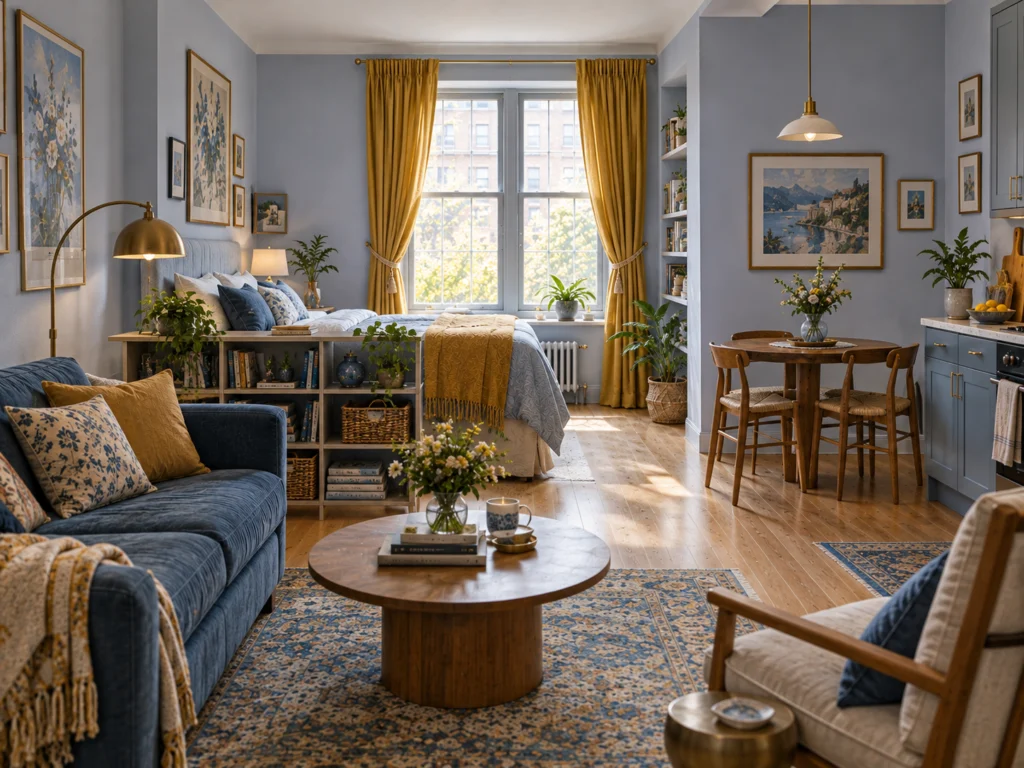
Cool wall colors like periwinkle can tip a small room toward feeling clinical, but warm-toned curtains fix that instantly without repainting anything. Golden drapery softens the blue and adds a sunny glow to the room even on overcast days, an old but reliable trick for balancing a cool base palette.
7. Add a Wood Slat Accent Wall
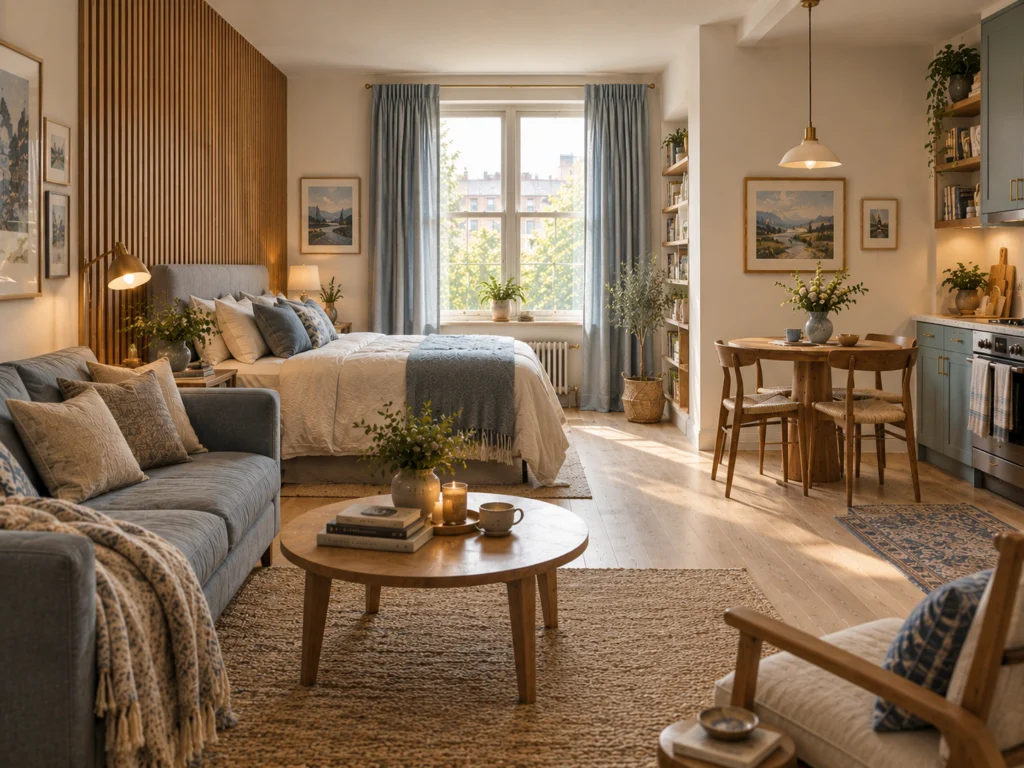
A slat wall adds texture and warmth that flat drywall can’t, and peel-and-stick versions make it achievable even for renters who can’t commit to a permanent installation. Anchoring it behind the TV or headboard turns it into the room’s clear focal point rather than a random accent.
8. Install Cove Lighting for Ambient Glow
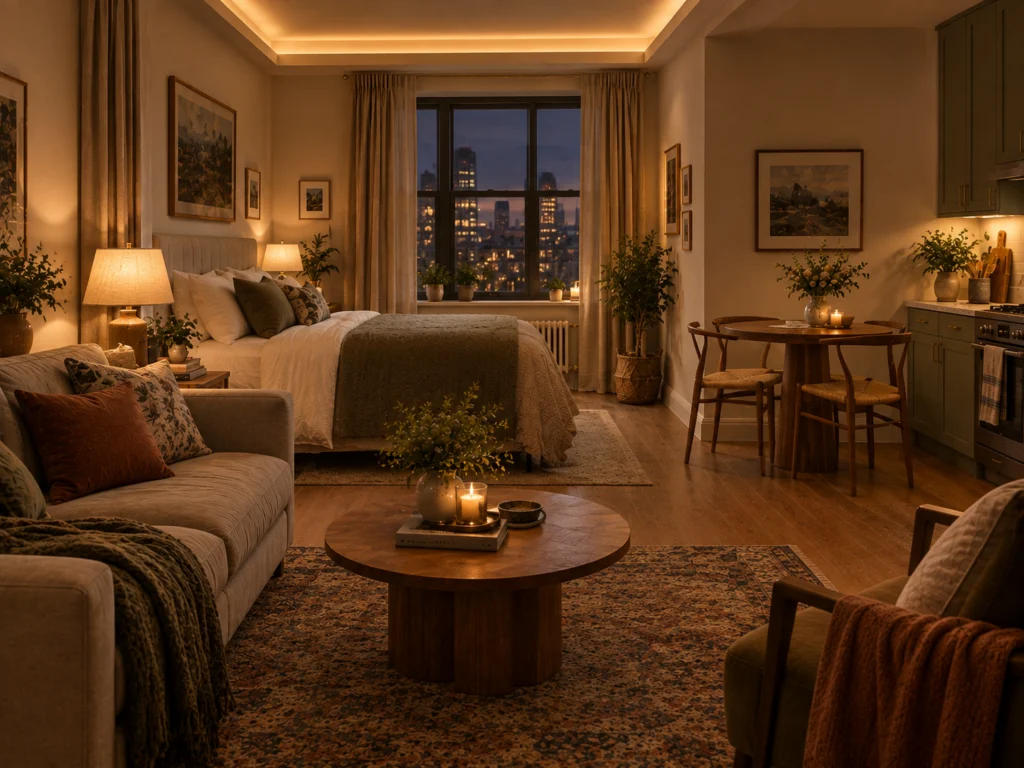
Overhead lighting flattens a small room the way a single fluorescent tube would in an office — cove lighting solves that by washing the ceiling in soft, indirect light instead. Pairing it with a couple of table lamps at warm-white settings makes even a compact studio feel like a boutique hotel suite at night.
My favorite: Set the cove lighting to warm white for evenings and let the table lamps do the rest — no overhead fixture needed after dark.
9. Create a Living Room Facing the Windows
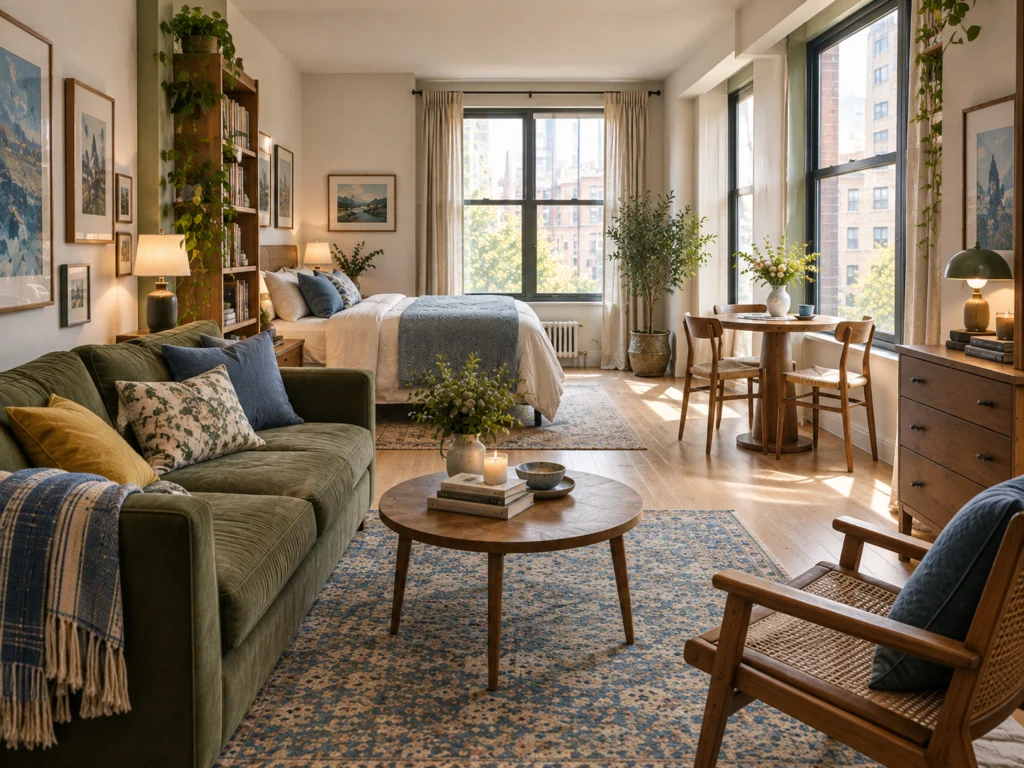
Long, narrow studios read best when the living zone faces the light instead of competing for it — pushing the sofa toward the windows and the bed to the back wall changes the whole feel of the room. A small round table in the window nook becomes a dedicated coffee spot, which shifts the layout from “bedroom with a couch” to something closer to a real apartment.
10. Hang One Oversized Piece
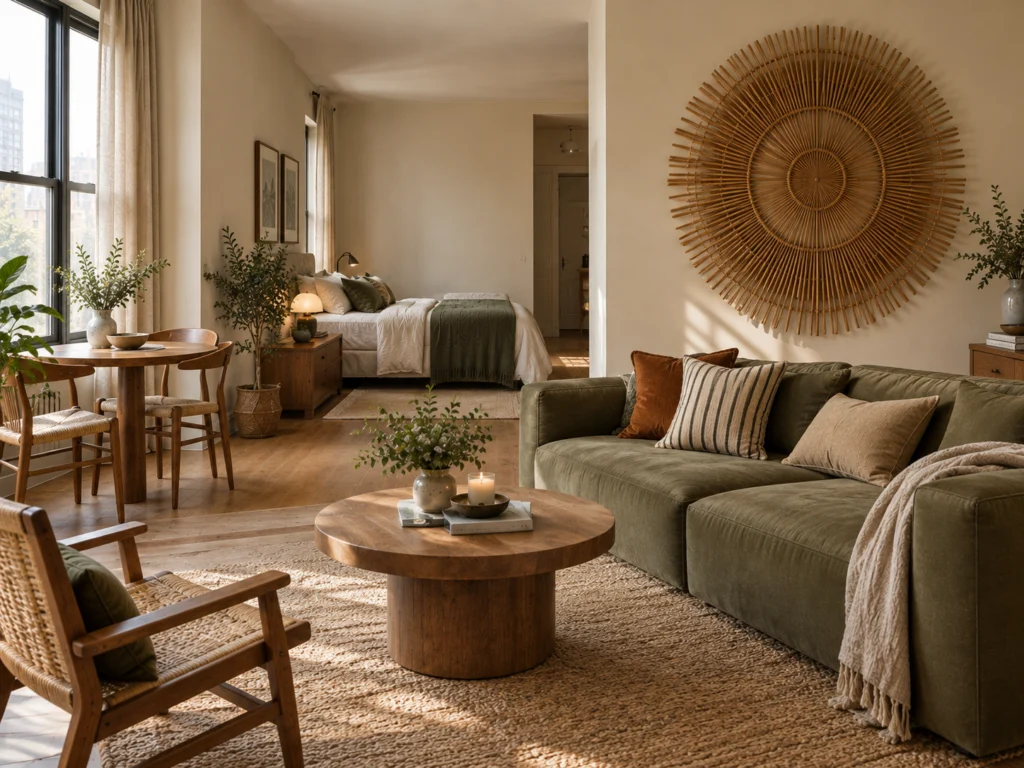
One massive statement piece does more for a small wall than five smaller frames ever could — it gives the eye a single, clear focal point that a scattered gallery can’t match. Oversized woven or rattan pieces specifically read as art while staying visually light, which matters when the wall itself is already carrying a lot of visual weight in a small room.
Pro tip: Look for lightweight woven or rattan art pieces — they read as substantial without weighing the wall down visually.
11. Add Personality with a Wall Decal
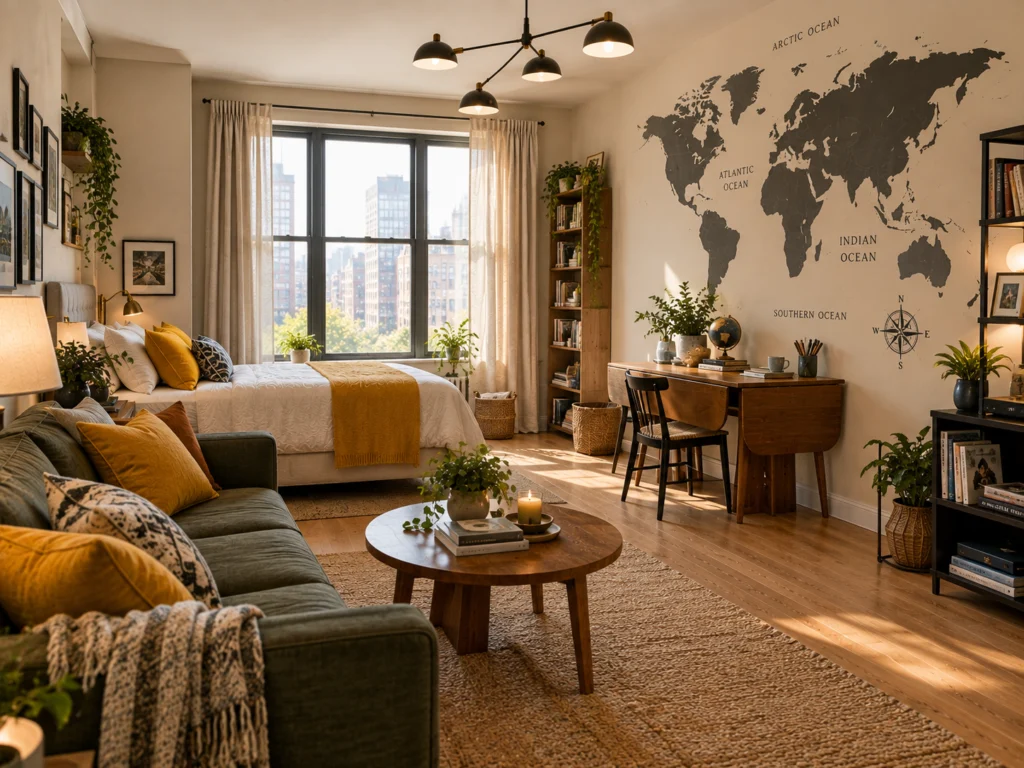
A wall decal adds real character to a rented studio and removes cleanly at move-out, which matters more than paint or wallpaper for anyone who can’t commit to either. Pairing an oversized decal with a drop-leaf desk means the same wall can support a functional workspace and reclaim floor space once the desk folds away.
12. Use a Tall Wardrobe as a Zone Divider
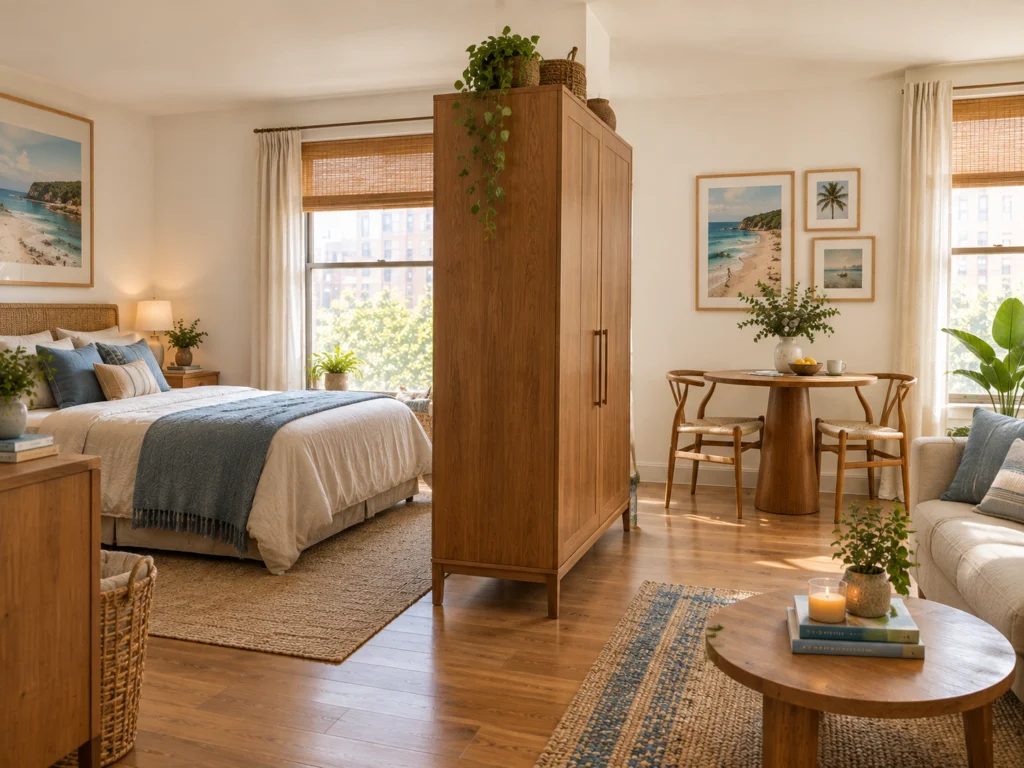
A freestanding wardrobe pulls double duty as storage and a room divider when a studio has no closet at all — placing it perpendicular rather than flush against a wall creates a soft visual break between two zones. A warm wood tone against otherwise crisp white surroundings keeps the divider from reading as purely functional.
13. Tuck Your Bed Into an Alcove
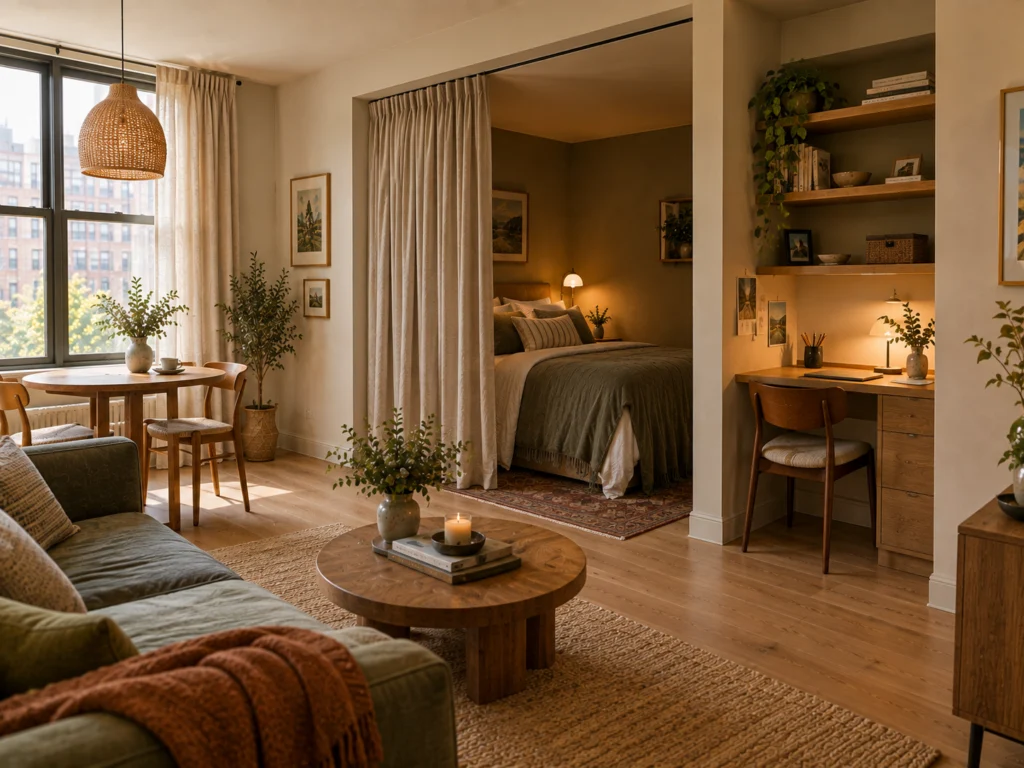
Any recessed nook, even a shallow one, makes the best possible bed spot in a studio because the architecture is already doing the separating work for free. Adding a curtain that pulls across for privacy and a small desk beside it turns one alcove into a bedroom, office, and lounge all in a single open room, similar to the layouts in these minimalist studio apartment ideas.
14. Go Black, White, and Nothing Else
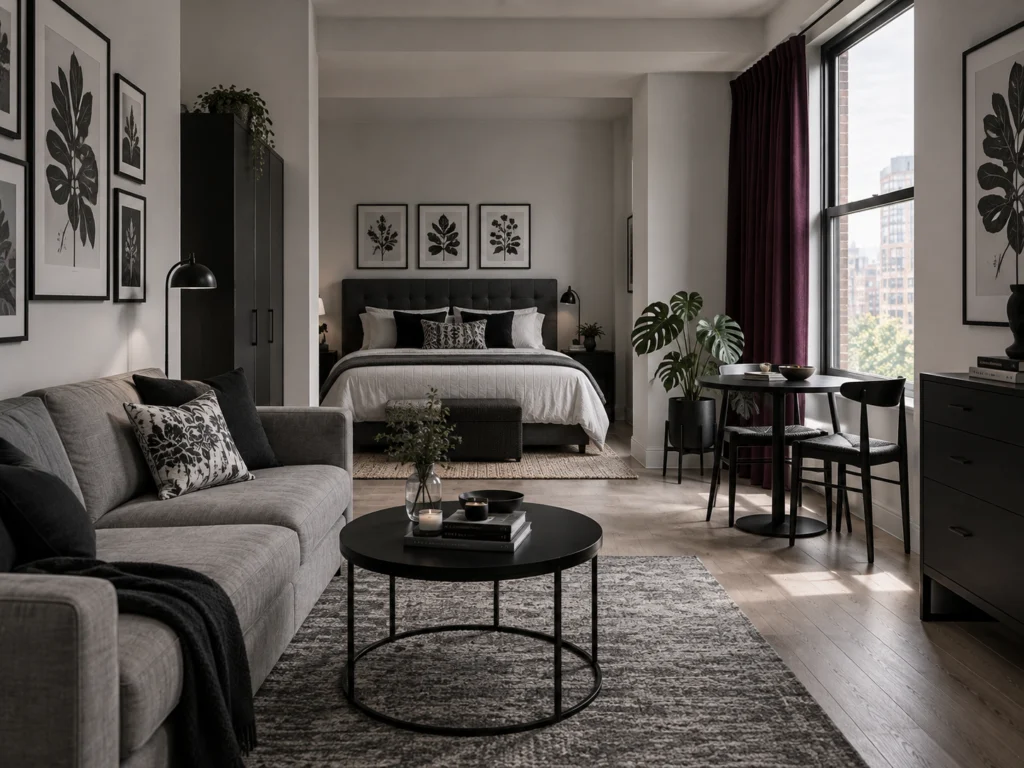
A black-and-white palette is close to a cheat code for making a small room look intentional, since every element sits in the same tonal family without any coordination effort. One plant and a single deep-colored curtain keep the strict palette from reading flat, adding just enough contrast to stay warm rather than sterile.
15. Use Warm Lamp Lighting Instead of Overheads
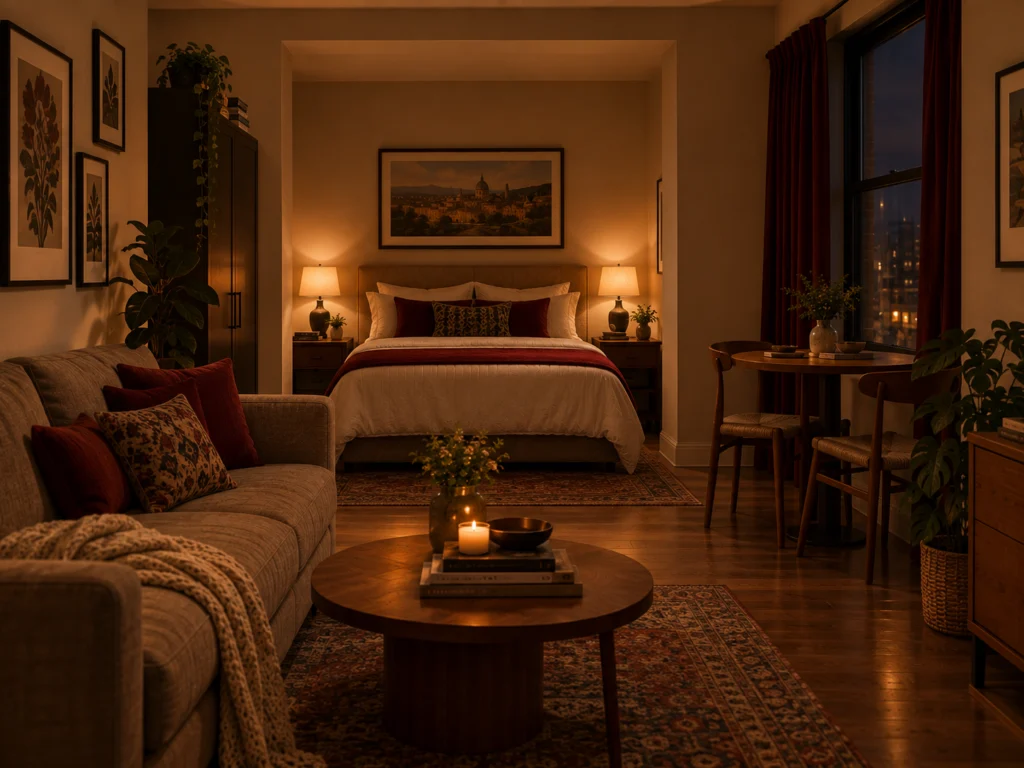
Overhead lighting is convenient but reads like a hotel lobby the moment the sun goes down — two matching table lamps with warm bulbs fix that instantly and add a sense of symmetry that feels intentional. A single red accent, whether a runner, lampshade, or throw, gives the lamp-lit room personality without any extra effort, a principle covered further in these studio apartment lighting decor ideas.
16. Make the Bed Your Focal Point
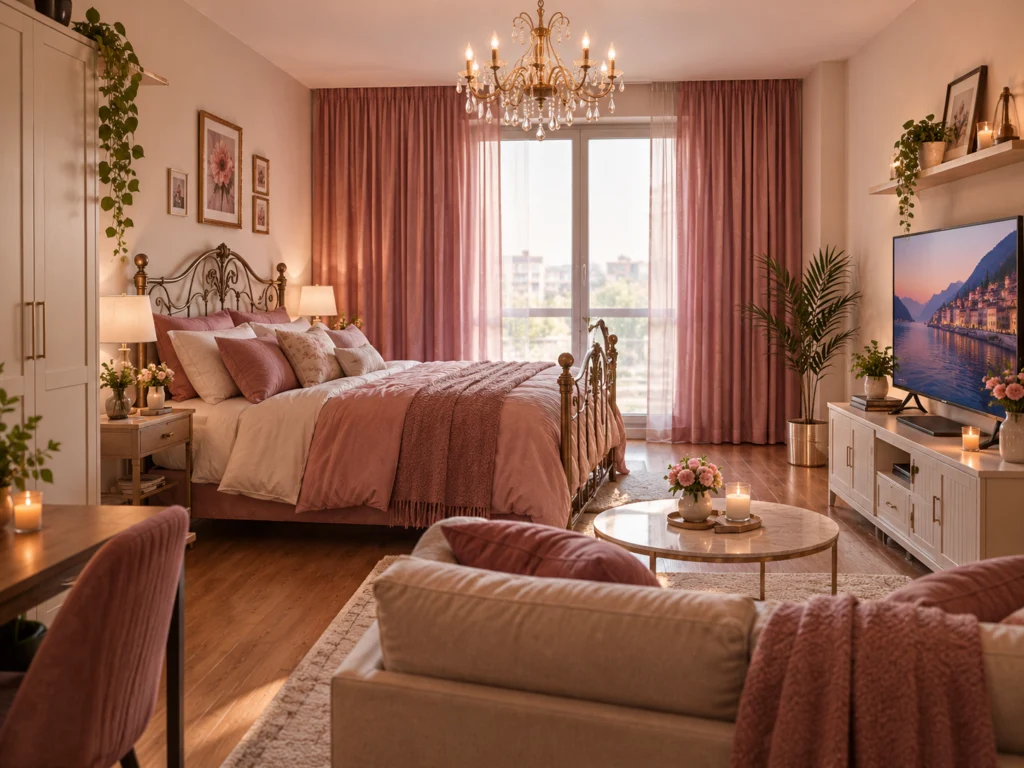
The bed is visible in a studio no matter what, so leaning into it as the centerpiece — an ornate frame, a chandelier overhead — works better than trying to hide it. Facing the sofa away from the bed toward the TV keeps the two zones psychologically separate even though nothing physically divides them.
17. Balance Warm Wood with Crisp White
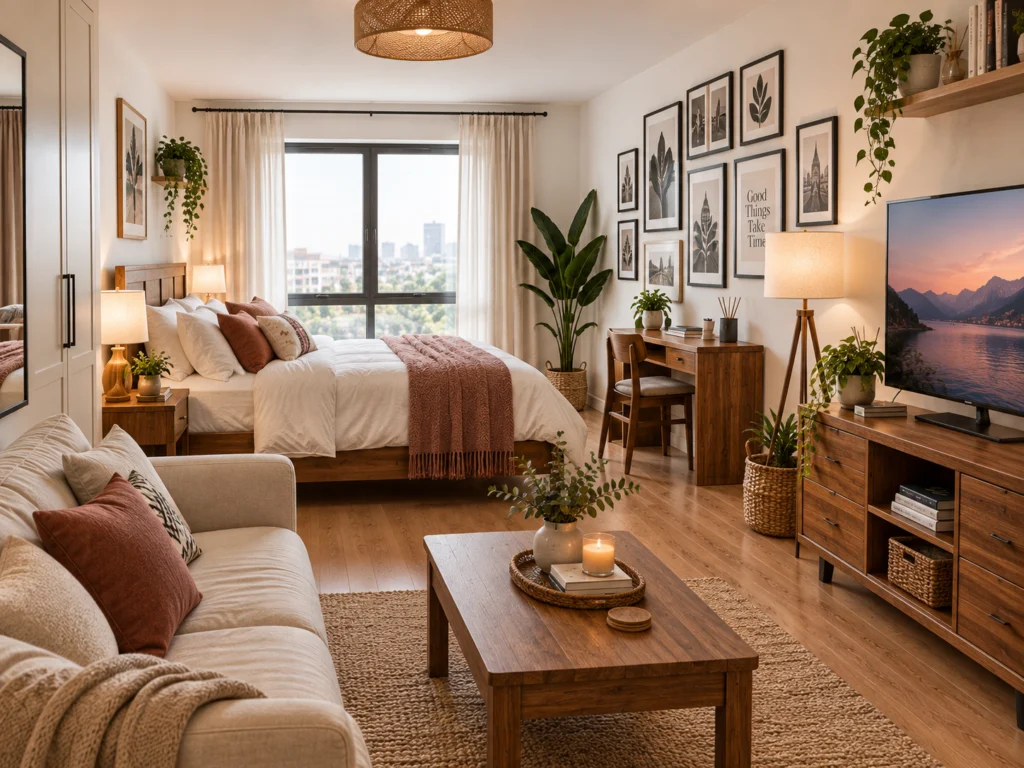
Warm wood furniture against white bedding and walls is one of the most reliable combinations for making a studio feel inviting without trying too hard. A tightly hung gallery wall adds just enough contrast to the neutral base, giving the eye something to focus on beyond the wood-and-white palette.
Common cozy-studio mistakes to avoid
- Pushing every piece of furniture flat against the walls. The middle of the room needs a job too — use a low shelf or rug to define it, as covered in these cozy studio apartment ideas with smart storage.
- Scattering too many colors across the room. One committed color story reads calmer and more intentional than five competing accent tones.
- Relying only on overhead lighting. Cove lighting or table lamps do more for a cozy evening mood than a single ceiling fixture ever will.
- Hanging several small frames instead of one statement piece. A single oversized art piece gives a small wall a clear focal point a scattered gallery can’t match, unless you’re specifically going for a gallery-wall look like these studio apartment wall art ideas.
- Trying to hide the bed instead of designing around it. In most studios the bed stays visible regardless — making it a deliberate focal point works better than fighting it.
Quick answers
What’s the cheapest way to divide a studio apartment into zones?
A ceiling-mounted curtain costs less than any wall and requires no drilling, making it the most renter-friendly divider available.
Does a studio need overhead lighting to feel functional?
No — cove lighting or a couple of warm table lamps provide enough ambient light for evening use while feeling considerably cozier than a single overhead fixture.
How many colors should a small studio commit to?
One dominant color story, echoed across curtains, upholstery, and a rug, reads calmer and more intentional than a scattered multi-color palette.
Is a wood slat accent wall renter-friendly?
Yes — peel-and-stick wood slat panels now exist specifically for renters who want the texture without a permanent installation.
Should the bed be hidden or made a focal point in a studio?
Since the bed is visible in most studio layouts regardless, making it a deliberate centerpiece — with a chandelier or statement frame — tends to work better than trying to disguise it.
What’s the best layout for a long, narrow studio apartment?
Facing the living zone toward the windows and keeping the bed along the back wall makes the most of natural light in a narrow footprint.
The cheapest change that made my own studio feel finished was swapping overhead lighting for two matching lamps — same furniture, same room, but evenings suddenly felt intentional instead of just lit.