
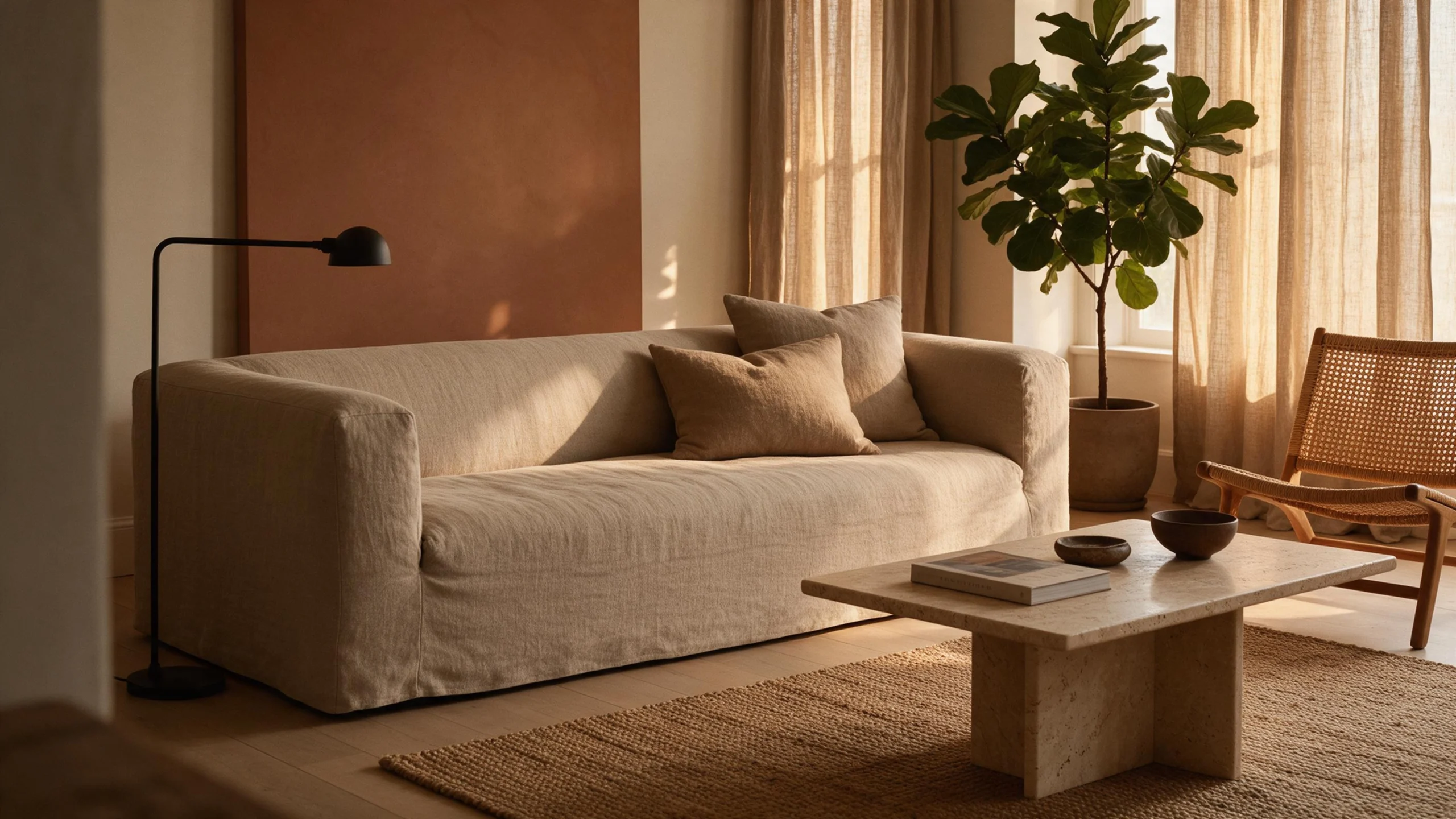
A modern earthy living room mixes clay, wood, and stone tones with simple, current furniture shapes, so the space feels grounded and warm instead of stark or overly rustic.
The look leans on natural materials and a muted, sun-baked color palette rather than bright accent colors. Here are 21 specific ways to build it, room by room, wall by wall.
Which earthy direction fits your room?
| If you want… | Lean into… | Why it works |
|---|---|---|
| A soft, calm base | Sage green and warm neutrals | Reads earthy without heavy color commitment |
| Bold contrast | Terracotta or burnt orange accents | Warms up a room with cool light or grey floors |
| A rental-friendly version | Rugs, textiles, and rattan furniture | No paint or drilling required |
| A cozy, textured feel | Wool, sheepskin, and jute layered together | Adds warmth through touch, not just color |
| A minimal, current look | Curved furniture and one stone surface | Keeps earthy from tipping into rustic-cabin territory |
1. Paint one wall in a warm terracotta tone
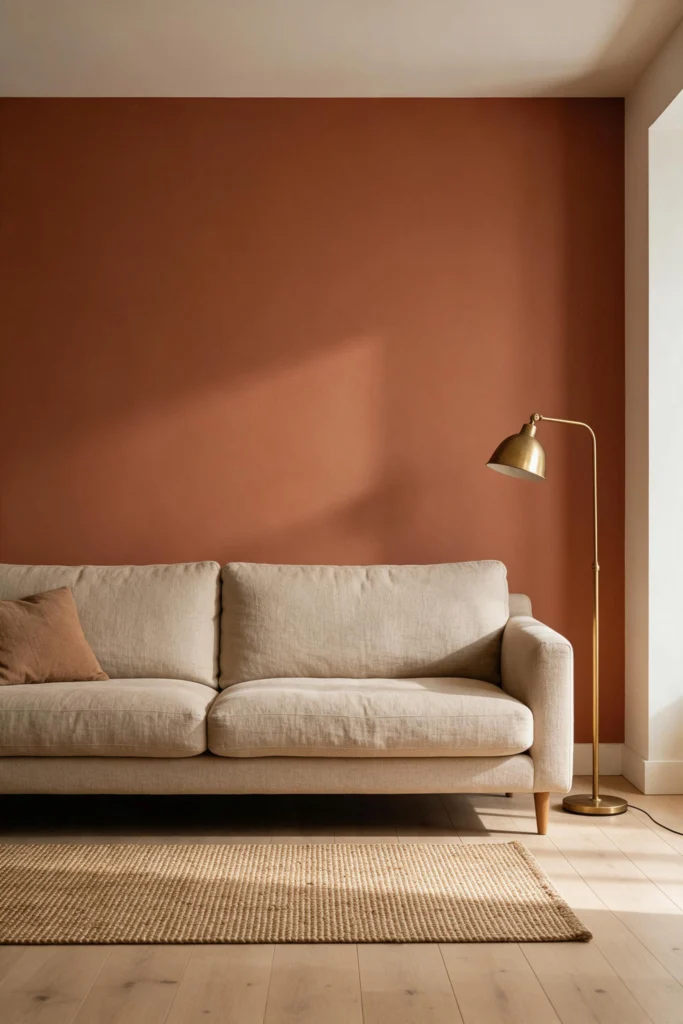
Terracotta is a muted, clay-based orange-red that reads as earthy rather than bright, which is why it works as a full accent wall instead of just a small pop.
Paint just the wall the sofa backs up against, not the whole room, so the color stays grounding instead of overwhelming. It’s a bigger commitment than a rug or pillow swap since it means painting, so check with your landlord first if you’re renting.
2. Bring in rattan and wicker furniture
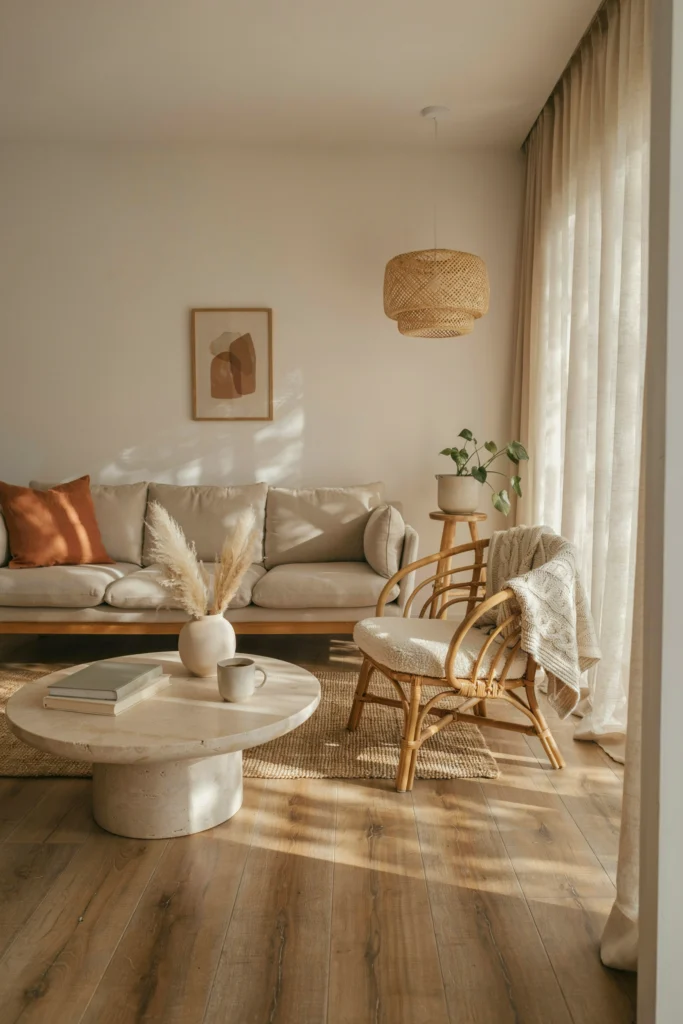
Rattan and wicker add visible, natural texture that flat painted walls and smooth fabric can’t, and a single rattan accent chair or a woven pendant light is usually enough to read as intentional.
It’s lightweight, so it works well in a small apartment where heavier wood furniture would feel cramped. The trade-off is rattan can dry out and get brittle in very low-humidity climates over several years.
3. Layer a jute or sisal rug underfoot
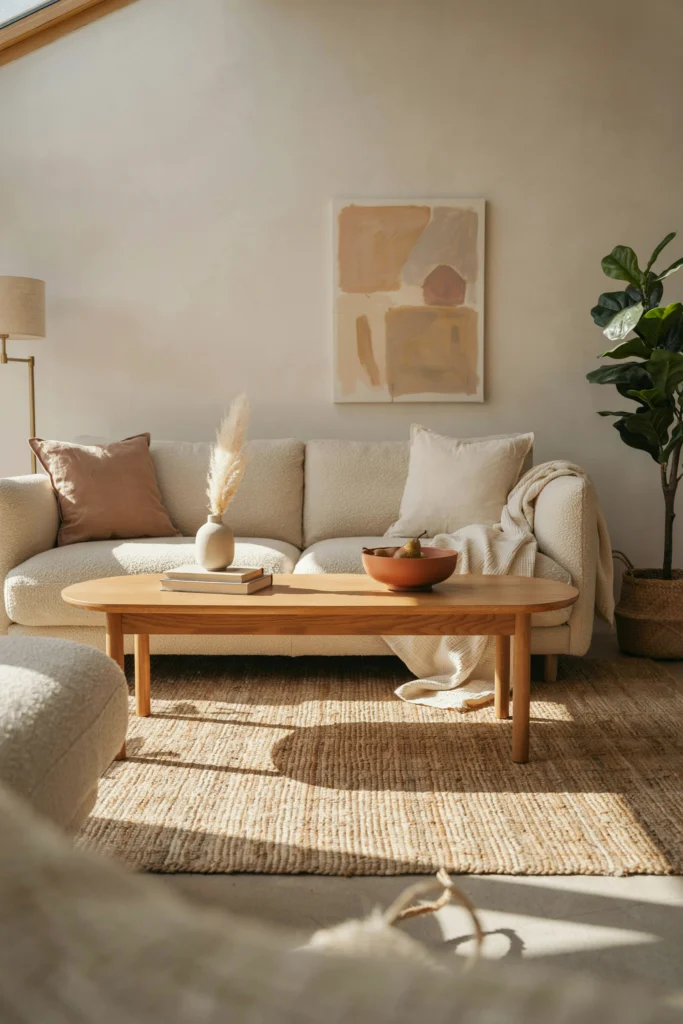
A jute or sisal rug in a natural tan tone grounds a light wood floor and gives the seating area a visible boundary without adding another color into the room.
It has a coarser texture than wool, which some people find scratchy underfoot, so a lot of people layer a smaller, softer rug on top near the seating area if bare feet are involved often.
4. Choose warm wood tones over cool grey wood
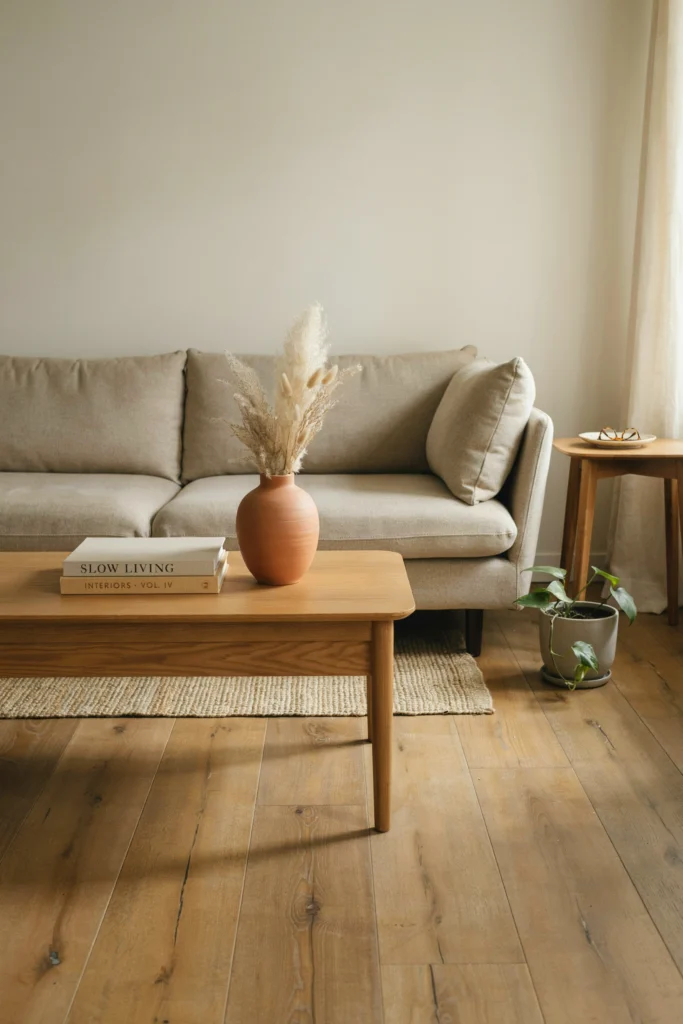
Grey-washed wood was the dominant trend for a while, but it fights against an earthy palette instead of supporting it.
Walnut, warm oak, or a honey-toned wood coffee table sits better against terracotta, olive, and clay tones because the undertones match instead of clash. If your existing floor is a cool grey wood, lean your furniture warmer to balance it rather than trying to match it exactly.
5. Add a deep olive or dark green accent
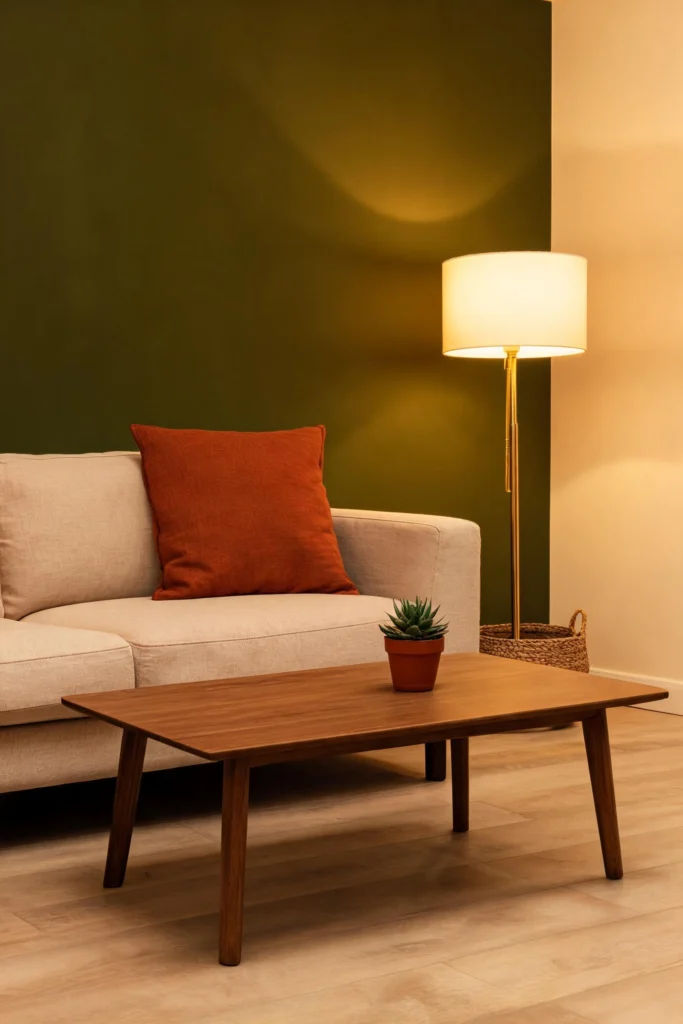
Olive and dark green read as more grounded and less playful than a bright green, which is why they pair so naturally with clay and wood tones.
A dark green accent wall, a velvet throw pillow, or a large leafy plant all work, and this color holds up well under warm lamp light in the evening, unlike some cooler greens that can look flat once the sun goes down. See dark green living room ideas for a full room plan built around this color.
6. Use burnt orange for a bolder pop of warmth
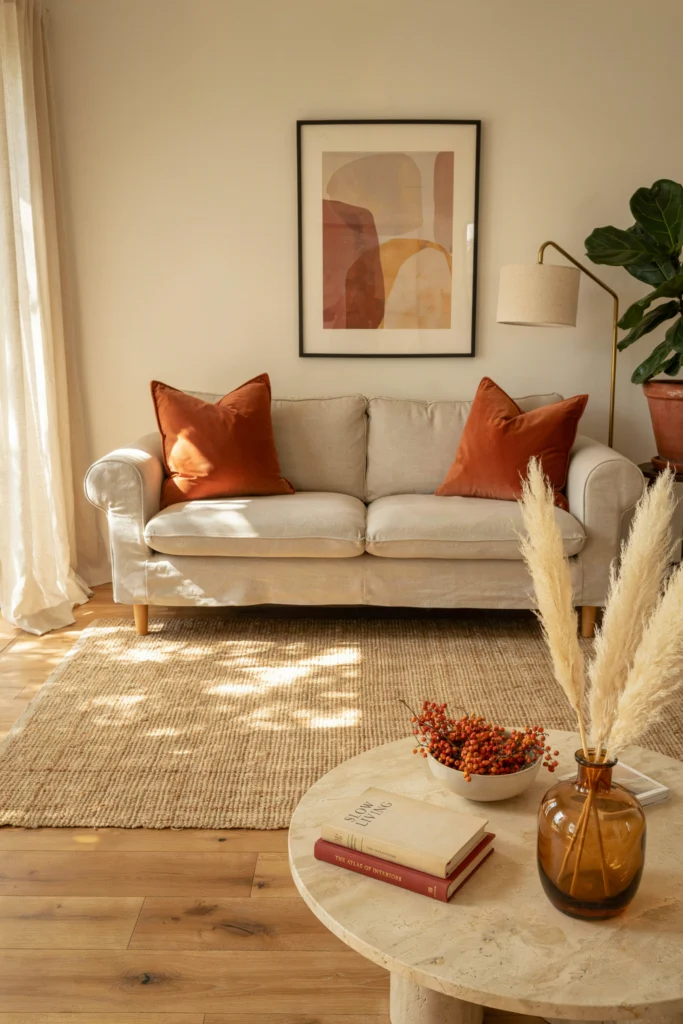
Burnt orange is more saturated than terracotta and works well as a smaller accent rather than a full wall, one or two pillows, a ceramic vase, or a piece of art.
It’s one of the most confident color choices on this list, and it holds its warmth under both daylight and lamp light, which makes it a reliable pick if your room doesn’t get much natural sun. For a full room plan, see burnt orange sofa living room ideas.
7. Build the palette around rust and clay tones
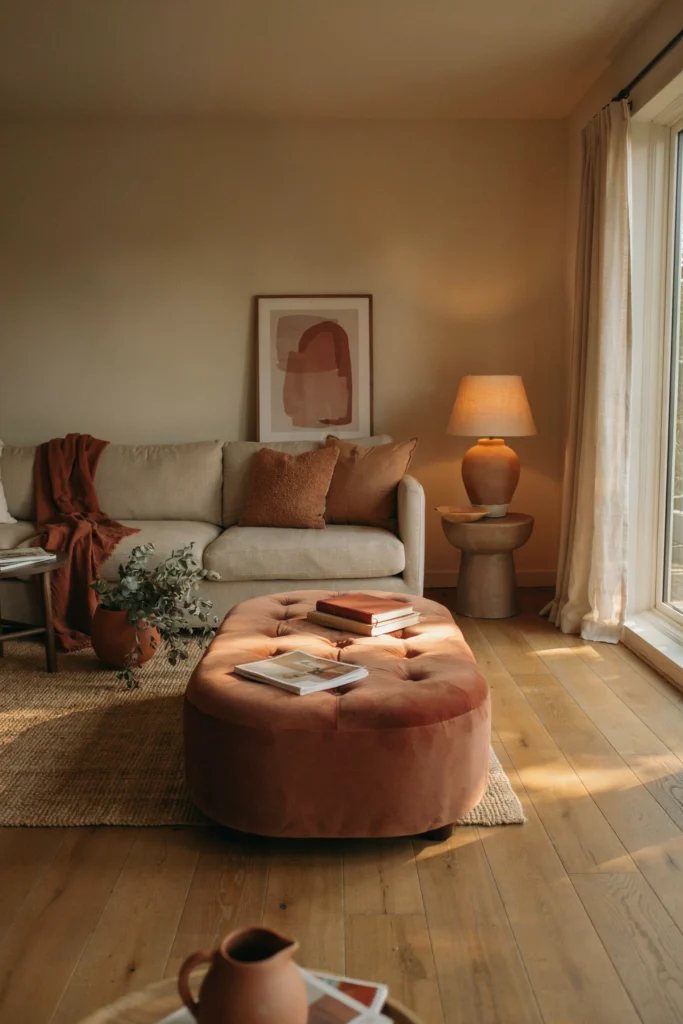
Rust and clay sit between terracotta and brown, muted and dusty rather than bright, and using them as the dominant color rather than just an accent gives a room a cohesive, sun-baked feel.
Keep the finishes matte, not glossy, glossy rust-colored decor reads more industrial than earthy. A rust-toned ceramic lamp base or ottoman is an easy way to introduce it without repainting.
8. Add a natural stone coffee table
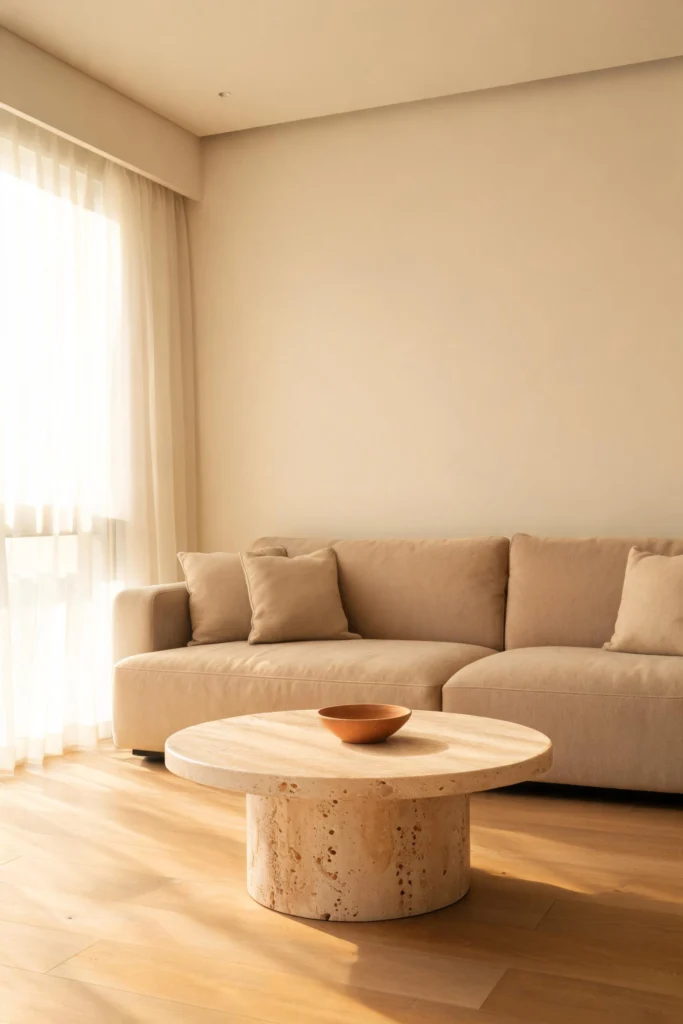
A travertine, marble, or raw-edge stone coffee table brings in a material earthy rooms often miss, since wood and textiles cover most of the palette otherwise.
Travertine specifically has visible natural pitting and veining that photographs well and adds texture without adding another color. It’s heavier and pricier than a standard wood table, so measure your doorway and stairwell before ordering one, not just the room.
9. Hang a woven wall hanging or macrame piece
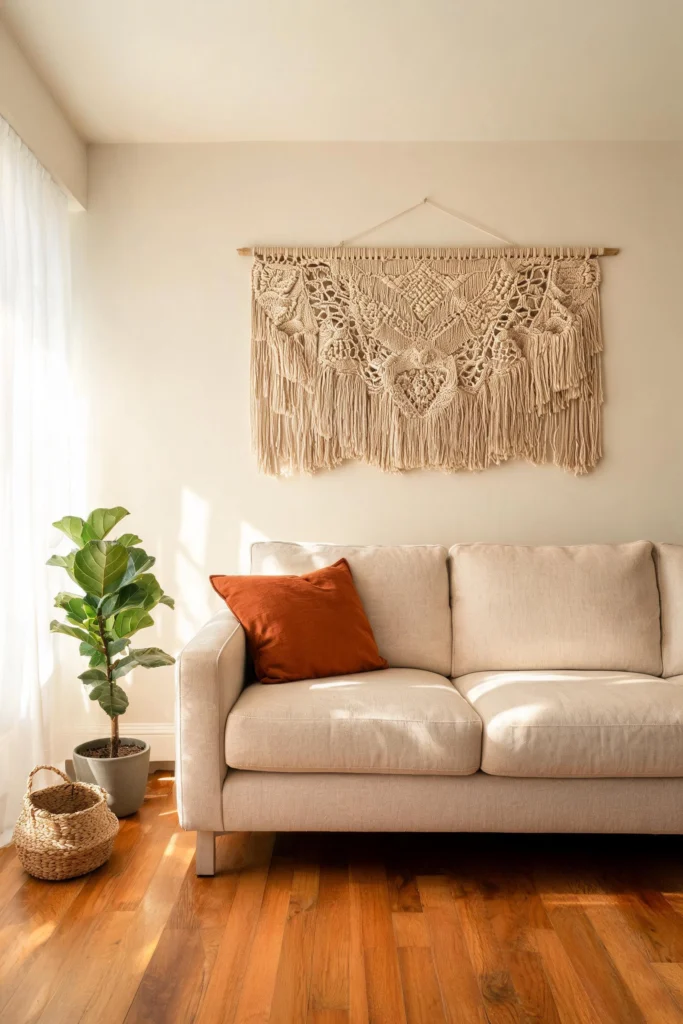
A woven wall hanging adds texture and a handmade feel above a sofa without the commitment of paint or the cost of large-scale art.
Look for one in natural, undyed cotton or jute tones rather than bright dyed colors to keep it earthy rather than boho-costume. Use adhesive picture-hanging strips rated for the piece’s weight if you’re renting, most woven hangings are light enough not to need a wall anchor.
10. Layer two neutral rugs for texture
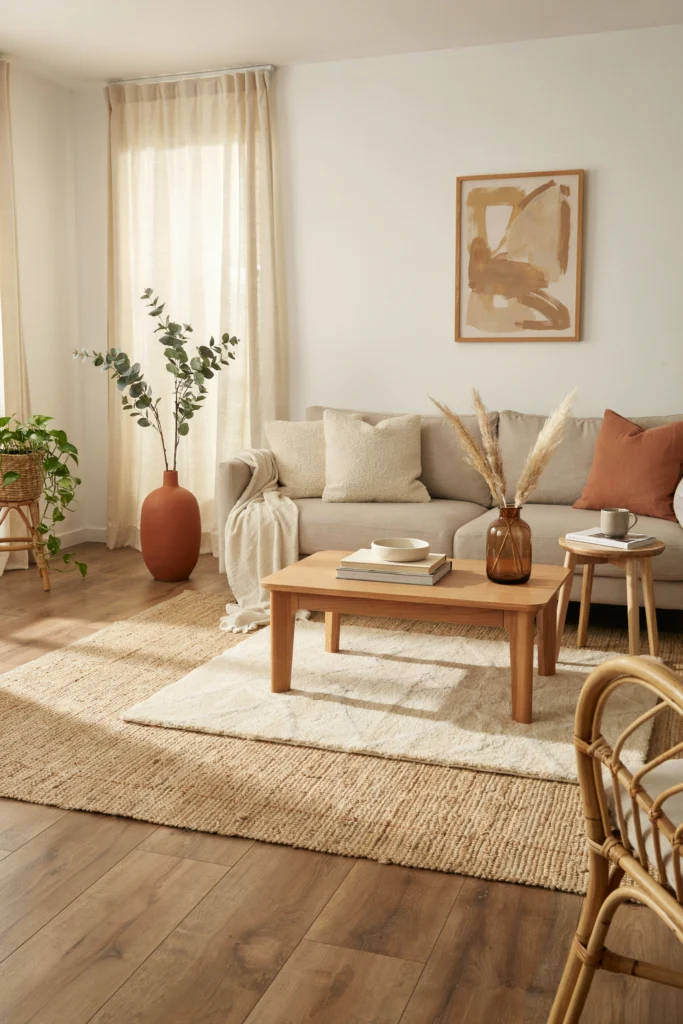
Two rugs, a larger jute or sisal base layer with a smaller, softer wool or Berber rug on top, gives the floor visible texture and depth without introducing a new color.
It also solves the comfort issue since bare jute can feel rough underfoot. Keep both rugs in the same warm neutral family, oatmeal, sand, and cream work together, so the layering reads intentional instead of mismatched.
11. Add sculptural, hand-thrown ceramic vases
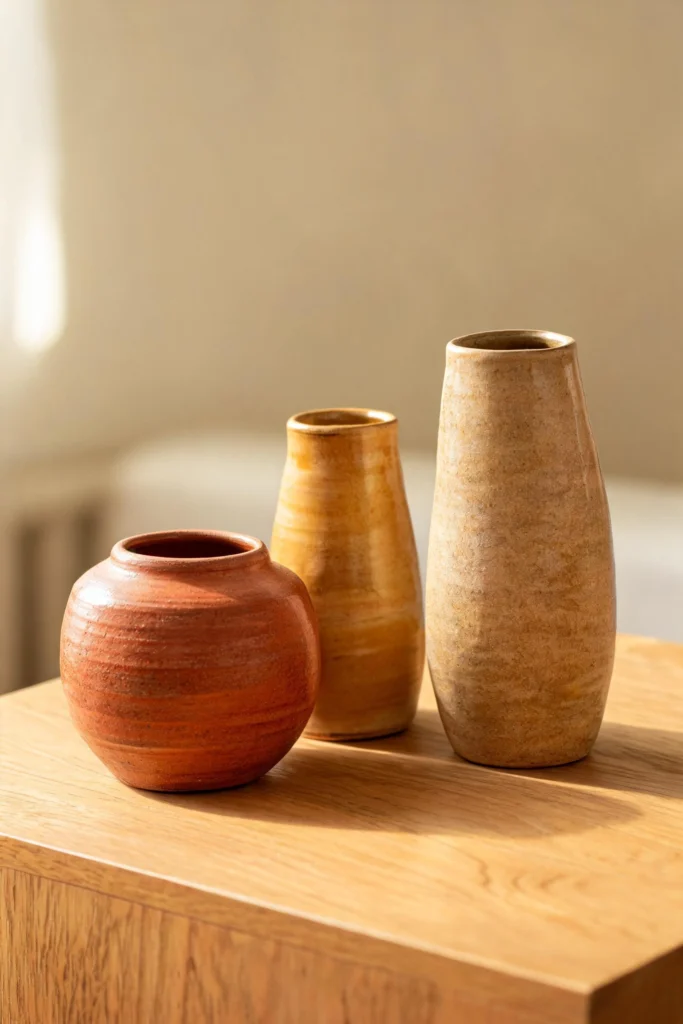
An irregular, hand-thrown ceramic vase in a warm clay or sand glaze reads as more earthy than a smooth, factory-perfect one because the visible imperfections match the natural, organic feel of the rest of the room.
Group two or three in different heights on a shelf or coffee table rather than scattering single pieces around the room, grouped objects read more curated.
12. Mix in brown leather furniture
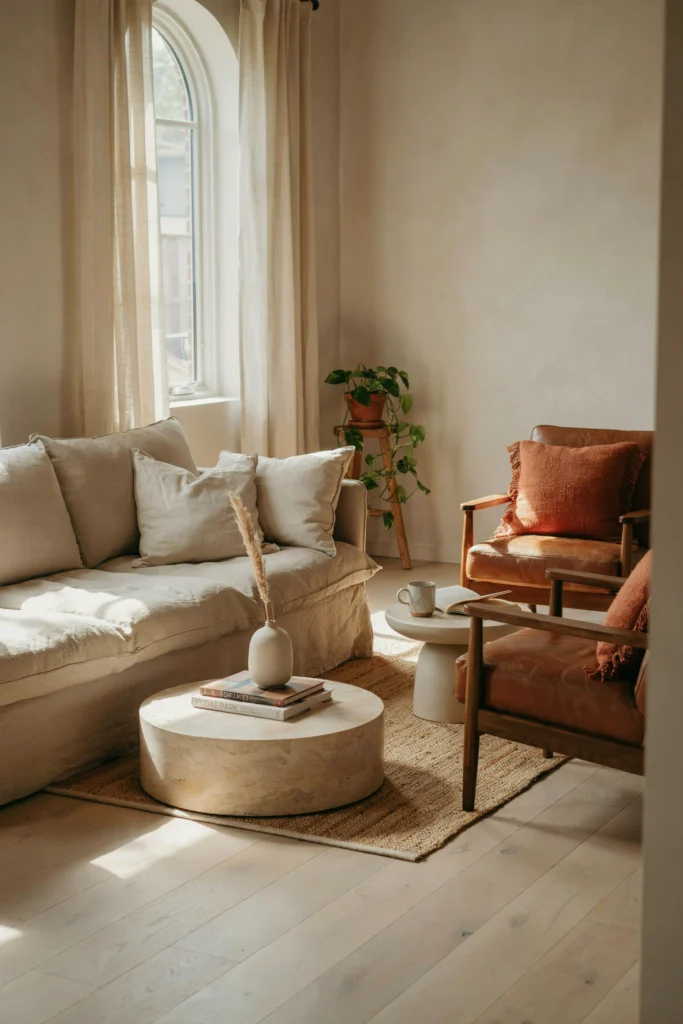
A brown leather accent chair or ottoman adds warmth and durability, and it ages into a richer patina over time instead of just wearing out, which suits the lived-in feel an earthy room is going for.
It runs colder to sit on than fabric and shows scratches from pets more visibly, so weigh that against the durability if you have a cat that likes furniture. See brown living room ideas for a full room plan built around this material.
13. Try a curved, organic-shaped sofa
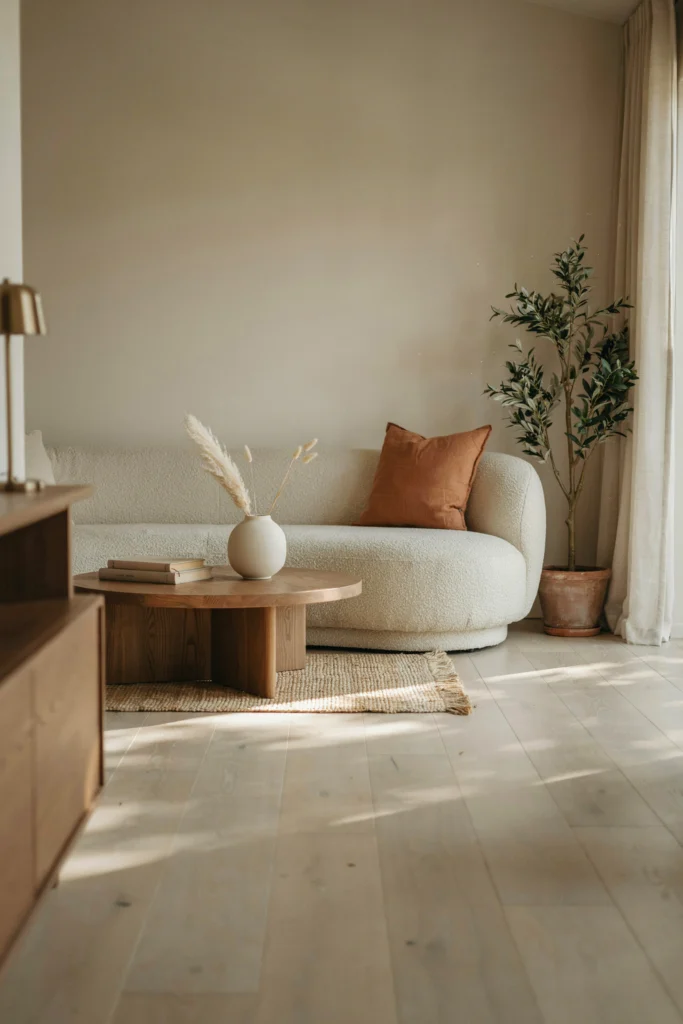
Curved sofas, with rounded arms and a soft C or S-shaped back, suit an earthy room particularly well because the soft, organic lines echo the natural materials elsewhere in the space instead of fighting them with hard right angles.
They need more floor space to look intentional than a standard square-arm sofa, so this works best in a room over roughly 200 square feet.
14. Choose brass and matte black fixtures over chrome
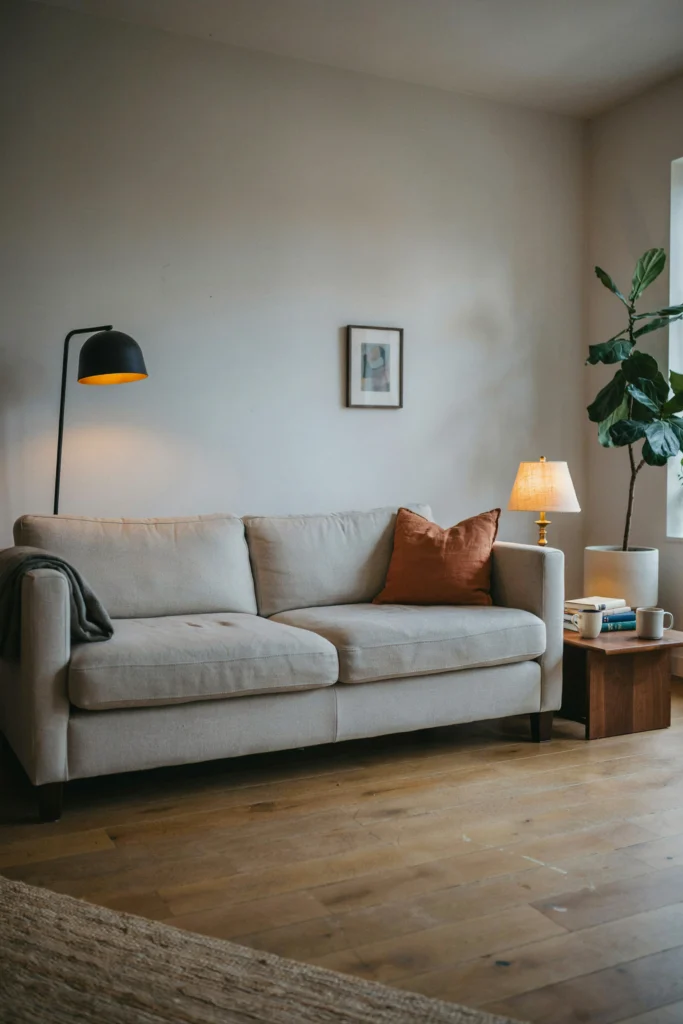
Chrome and polished nickel read cool and reflective, which works against a warm earthy palette. Brass, aged brass, and matte black all sit better with clay and wood tones because they don’t bounce cool light back into the room.
Swap out cabinet hardware, light fixtures, or lamp bases gradually if a full renovation isn’t in the budget, even one or two pieces changes how the room reads.
15. Bring in plants for biophilic warmth
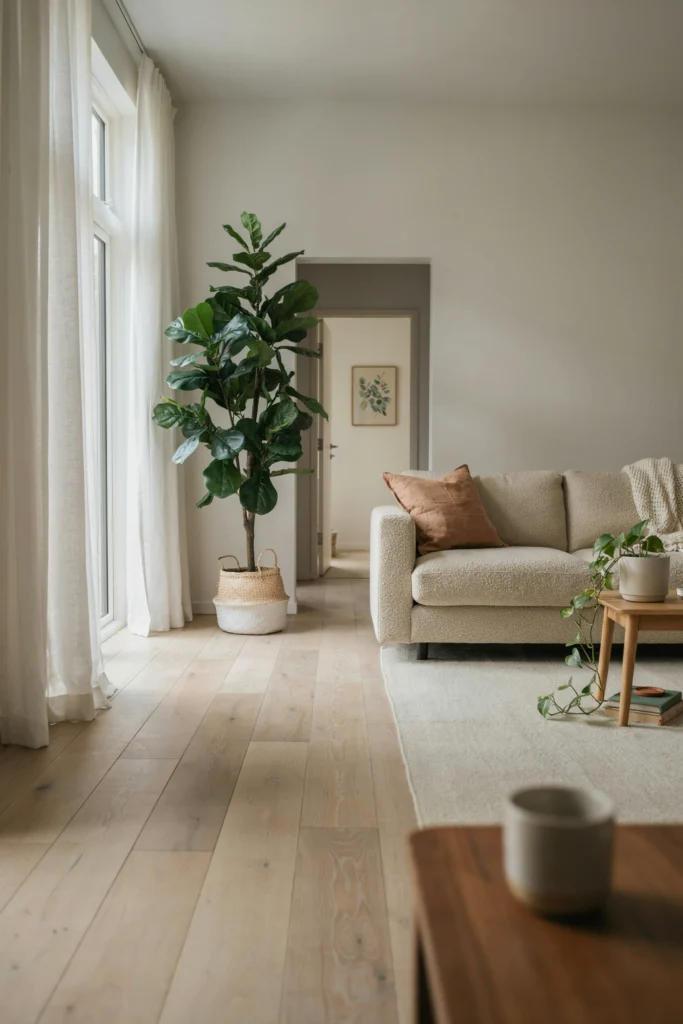
Biophilic design means bringing natural elements like plants and natural light into a space so it feels connected to the outdoors. In an earthy room, plants do double duty, they add the green tone the palette often needs, and their organic shapes soften all the straight furniture lines.
A 6-inch pothos on a shelf fills a bare corner without blocking light, while a larger fiddle leaf fig or rubber plant works near a window for height.
16. Add wood slat paneling to one wall
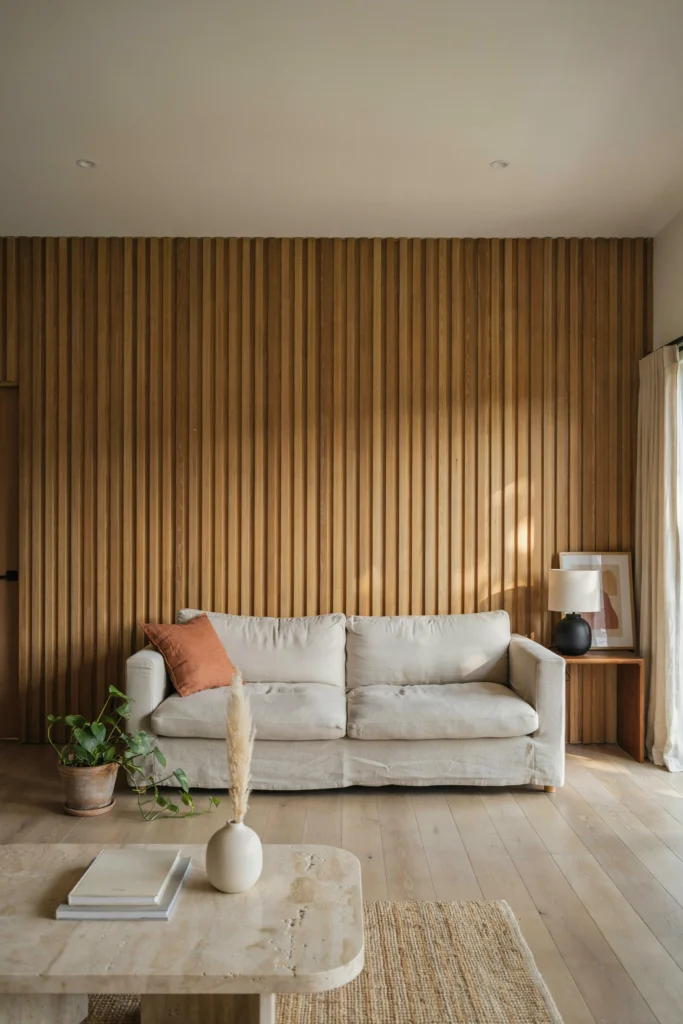
Vertical wood slat paneling, thin strips of wood mounted with visible gaps between them, adds texture and a warm, architectural feel behind a sofa or TV wall.
It’s a bigger DIY project than paint, usually involving furring strips and a level, and it does add weight to the wall, so use appropriate anchors if you’re hanging anything on top of it later. Rentals can sometimes get a similar look with a freestanding wood slat room divider instead.
17. Try a textured limewash or plaster wall finish
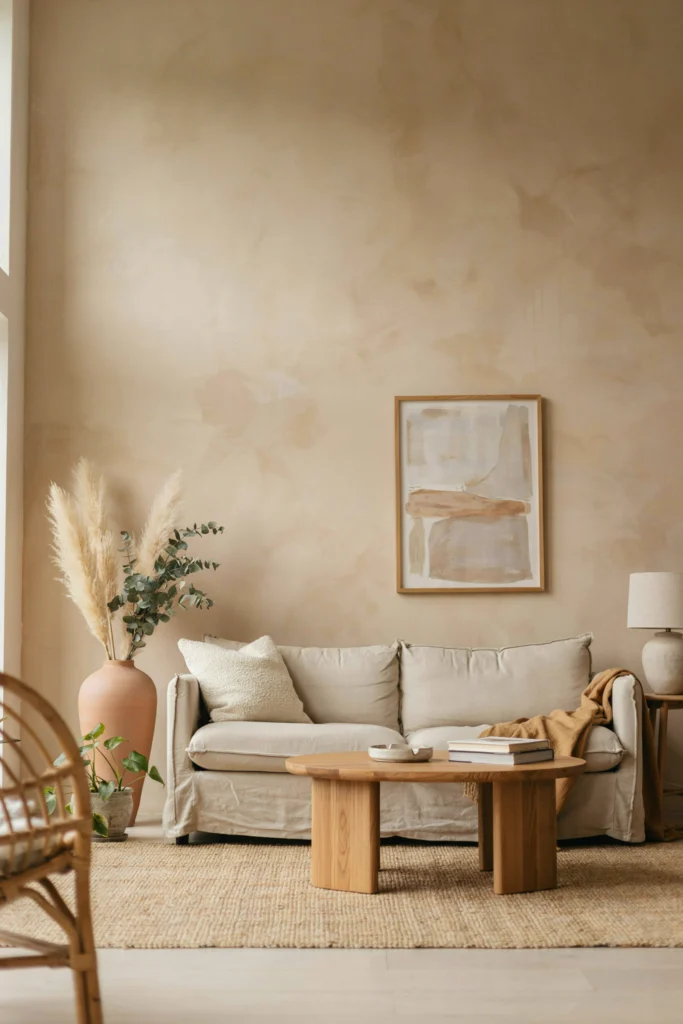
Limewash and plaster finishes have a soft, cloudy, hand-applied texture instead of the flat, uniform look of regular paint, which suits an earthy room’s emphasis on natural, imperfect materials.
It’s more involved to apply than rolling on standard paint and usually costs more per square foot, so it suits a smaller accent wall better than a full room for most budgets.
18. Mix two or three wood tones intentionally
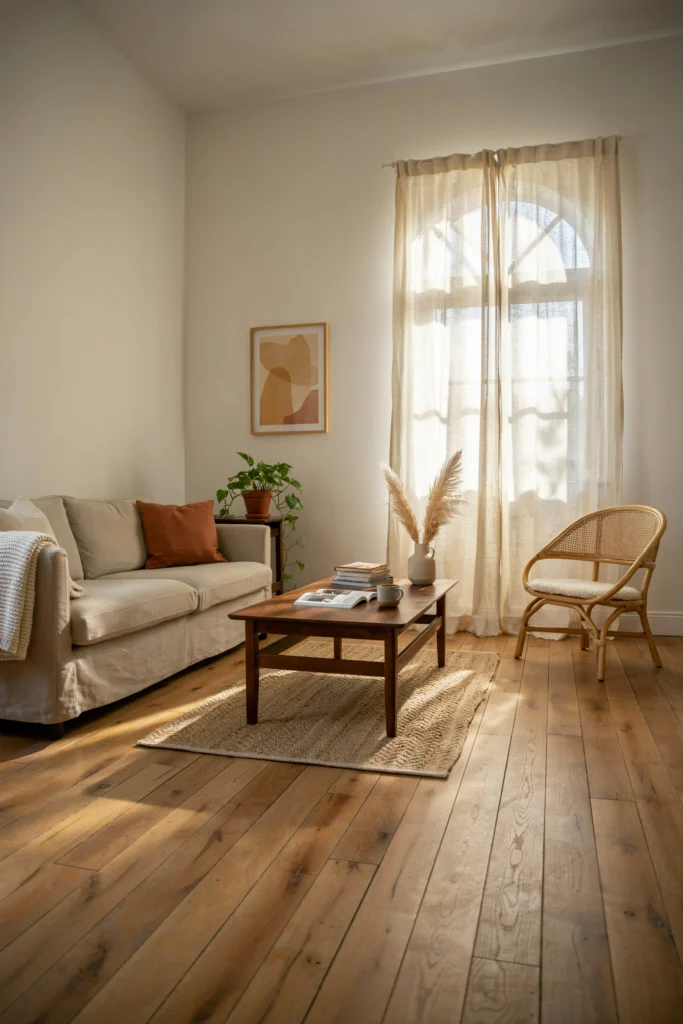
The old rule of matching every wood piece in a room to the exact same finish makes an earthy room look flat instead of layered. Mixing a warm walnut coffee table with a lighter oak floor and a mid-tone rattan chair reads intentional as long as the undertones are all warm, not a mix of warm and cool.
If you’re unsure, keep the largest piece (usually the floor) as your anchor tone and choose furniture within one or two shades of it.
19. Layer a sheepskin or wool throw for texture
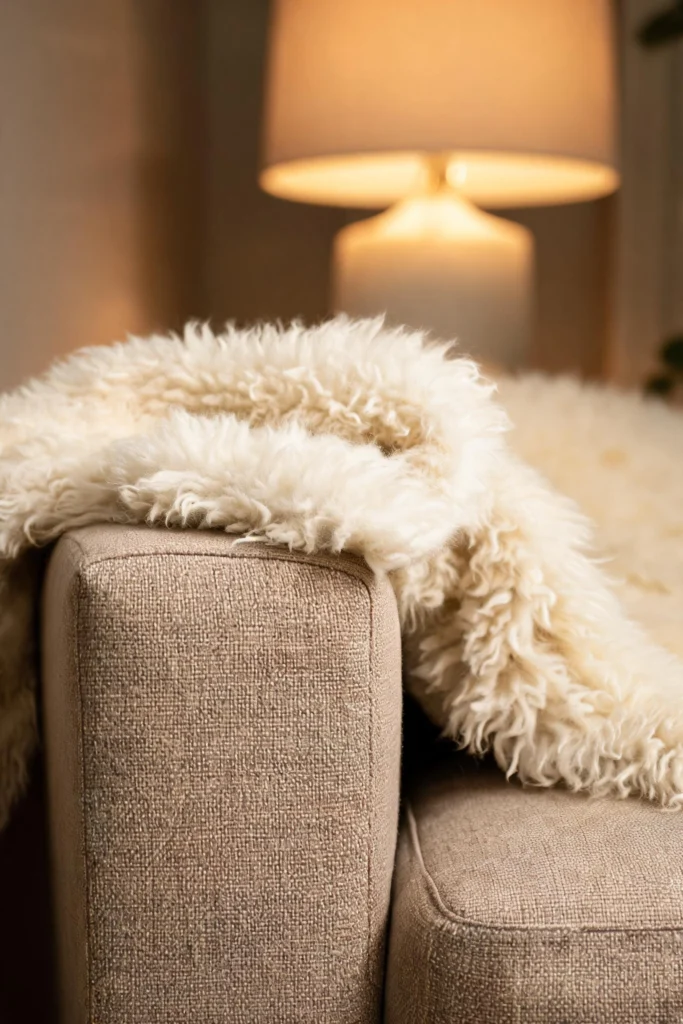
A sheepskin rug draped over one arm of the sofa or a chunky wool throw adds a soft, tactile layer that balances out all the harder natural materials, stone, wood, ceramic, elsewhere in the room.
Drape it loosely rather than folding it flat, a loosely draped throw reads like it’s actually used, a folded one reads staged for a photo.
20. Combine earthy tones with boho textures
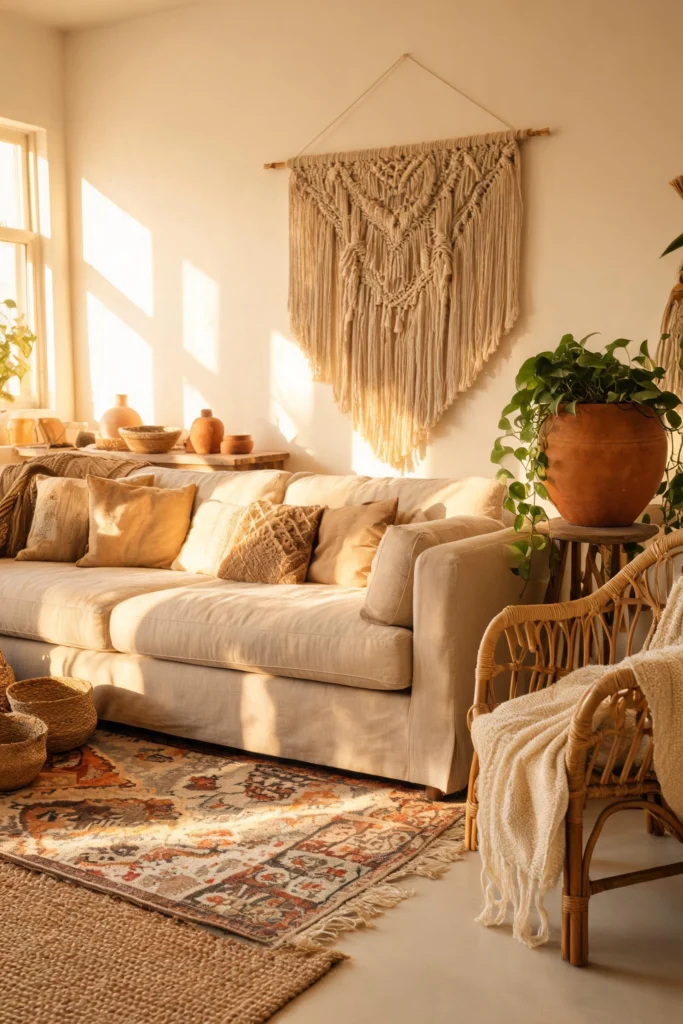
An earthy palette and a boho layout share a lot of DNA, natural materials, warm tones, handmade-looking pieces, so combining them means adding woven textures, layered rugs, and a slightly more relaxed, less symmetrical furniture arrangement than a strict modern room would have.
The line between the two blurs fast, which is part of why the combination works so well. See modern boho living room ideas for a fuller room plan built around this mix.
21. Use sage green for a softer earthy accent
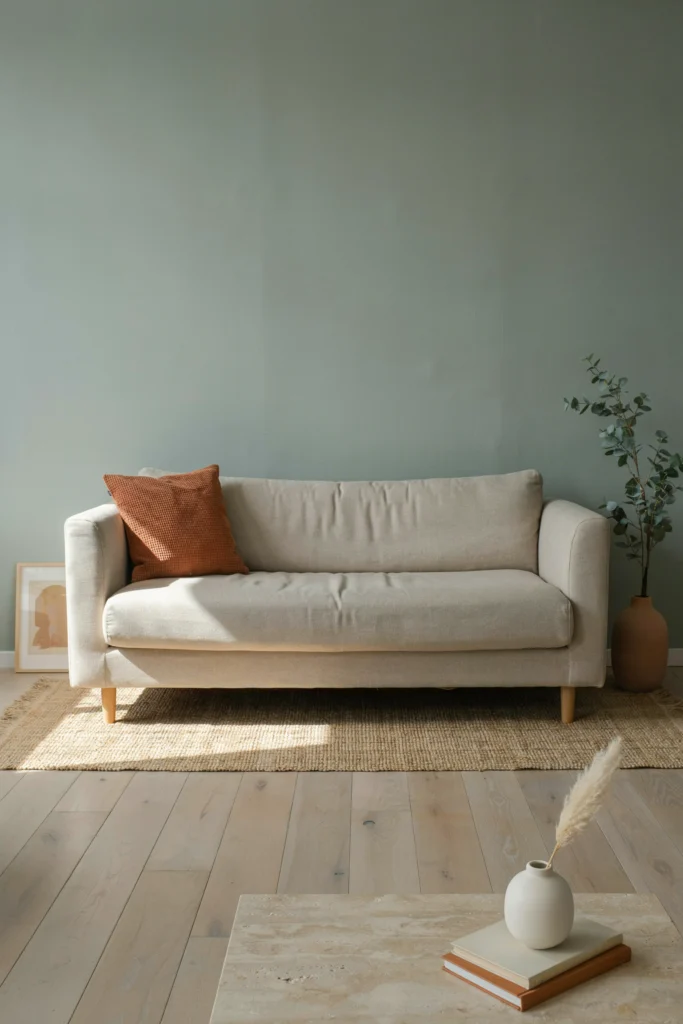
If terracotta and rust feel too bold for your space, sage green is a softer entry point into an earthy palette, it reads calm and grounded rather than dramatic, and it pairs easily with the wood and clay tones already in the room.
A sage green accent wall or a set of sage throw pillows is enough to shift a neutral room toward earthy without a full overhaul. See sage green living room ideas for more on this direction.
How to build a modern earthy living room, step by step
- Pick one dominant clay or terracotta tone first. Choose it as a wall color, a rug, or a large piece of furniture before adding smaller accents, so everything else has a color to work around.
- Add at least two natural materials besides wood. Stone, jute, rattan, or ceramic each bring a different texture that wood and paint alone can’t.
- Warm up your metal and light fixtures. Swap chrome or nickel for brass or matte black wherever it’s an easy change.
- Layer one soft texture last. A sheepskin throw, a wool rug, or a chunky knit blanket keeps all the natural, harder materials from feeling too rustic-cabin.
Common mistake: using too many different wood tones with mismatched undertones. Two or three woods in the same warm family reads layered, five different woods in warm and cool tones reads chaotic.
Why I did this in my own home
I redid my living room over a single weekend using nothing but a terracotta accent wall, a jute rug I already had, and a few thrifted ceramic pieces, no new furniture at all. The room read completely different by Sunday night, not because anything expensive changed, but because the wood tones I already owned finally had a warm wall behind them instead of a flat white one.
Common mistakes in a modern earthy living room
- Going too rustic-cabin instead of modern-earthy — pair natural materials with clean-lined, current furniture shapes, not heavy carved wood pieces.
- Mixing warm and cool wood tones — a grey-washed floor with a warm walnut table fights itself instead of blending.
- Skipping texture for color — an earthy room needs jute, wool, and stone as much as it needs terracotta and rust.
- Using glossy finishes — shiny ceramics and glossy paint read more contemporary-cold than earthy-warm; matte finishes hold the mood better.
- Forgetting a soft layer — an all-hard-surface room (stone, wood, ceramic) with no throw or rug can feel cold despite the warm colors.
Quick answers
What colors count as modern earthy? Terracotta, rust, clay, olive, sage green, and warm browns are the core palette, all muted, sun-baked tones rather than bright or cool colors.
Is modern earthy the same as boho? They overlap heavily but aren’t identical. Boho leans more layered and eclectic, while modern earthy keeps furniture shapes cleaner and simpler with fewer patterns.
What materials define an earthy living room? Wood, jute, rattan, natural stone, and ceramic are the core materials, ideally two or three of them combined rather than relying on wood alone.
Can I get an earthy look while renting? Yes. Rugs, textiles, rattan furniture, and ceramic decor create most of the look without any paint or drilling required.
Does an earthy room need an accent wall? No, but it helps. A rug, a large piece of furniture, or layered textiles can carry the same warm tone without committing to paint.
What metal finishes work best in an earthy room? Brass and matte black read warmer than chrome or polished nickel, which suits the muted, natural palette better.
Is terracotta or burnt orange better for a small room? Terracotta as a full wall can work in a small room since it’s more muted, while burnt orange is more saturated and usually works better as a small accent in tight spaces.
How do I keep an earthy room from looking too rustic? Stick to clean-lined, current furniture shapes and matte finishes rather than heavy carved wood or overly rough textures.
A quick note before you shop
Some links in this article may be affiliate links, which means thehomesdecors.com may earn a small commission at no extra cost to you if you make a purchase.
About this guide
This guide comes from real, hands-on decorating experience, not a brand catalog or a press release. The trade-offs mentioned here, rattan durability, stone table weight, wood undertone matching, come from actually living with these materials, not just photographing them for one shot.
4 thoughts on “21 Modern Earthy Living Room Ideas for a Warm Look”