
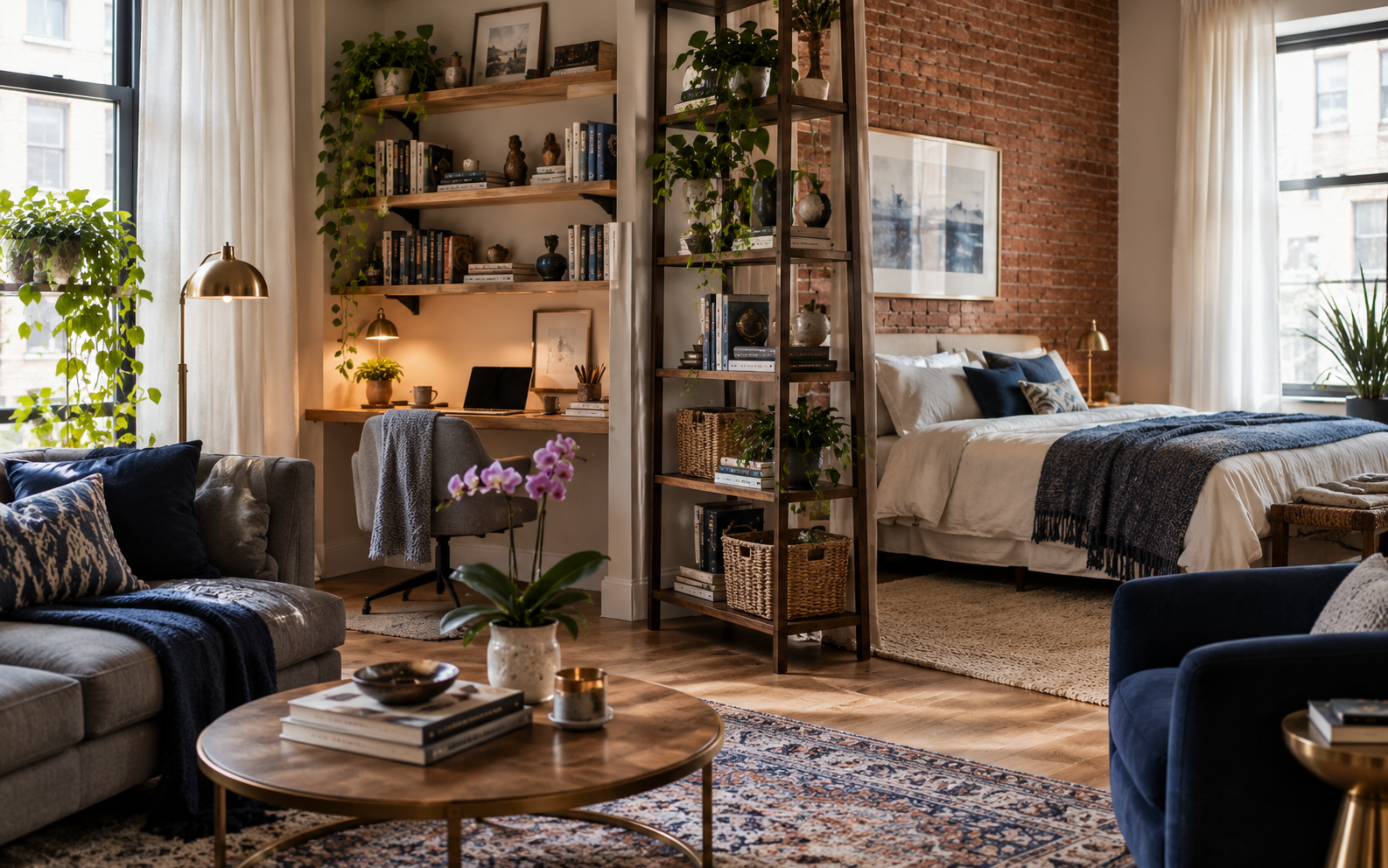
A studio has to do the work of four rooms, and most small-space advice is written by people who clearly have a guest bedroom. Here’s the thing: a studio can feel calm and entirely yours without endless storage hacks or a Pinterest-perfect aesthetic. It just needs the right choices in the right places. These 12 ideas are pulled from studios that get it right, and every one of them is doable this weekend.
1. A Built-In Desk Nook Makes Any Studio Feel Custom
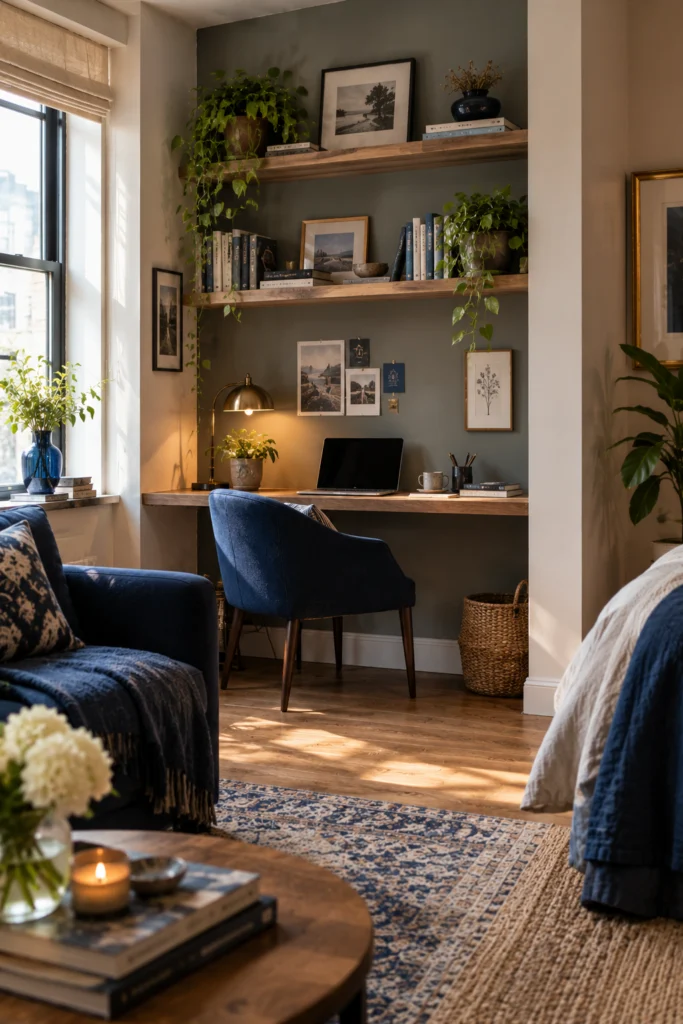
A built-in desk tucked into a recessed wall nook, with floating shelves above for books and plants, turns dead corner space into the most functional zone in the room. A grey accent wall behind it frames the workspace so it reads as its own room-within-a-room, and navy accents on the blind, throw, and cushions tie the workspace to the sleeping zone without a single extra decorating move.
I’ve tested this: A wall-mounted floating shelf at desk height replicates this exact built-in look for a fraction of the cost. Add a floating shelf above it for books and plants, and the whole nook feels intentional.
2. A Ladder Shelf Between Sofa and Bed Is a Room Divider That Also Stores Things
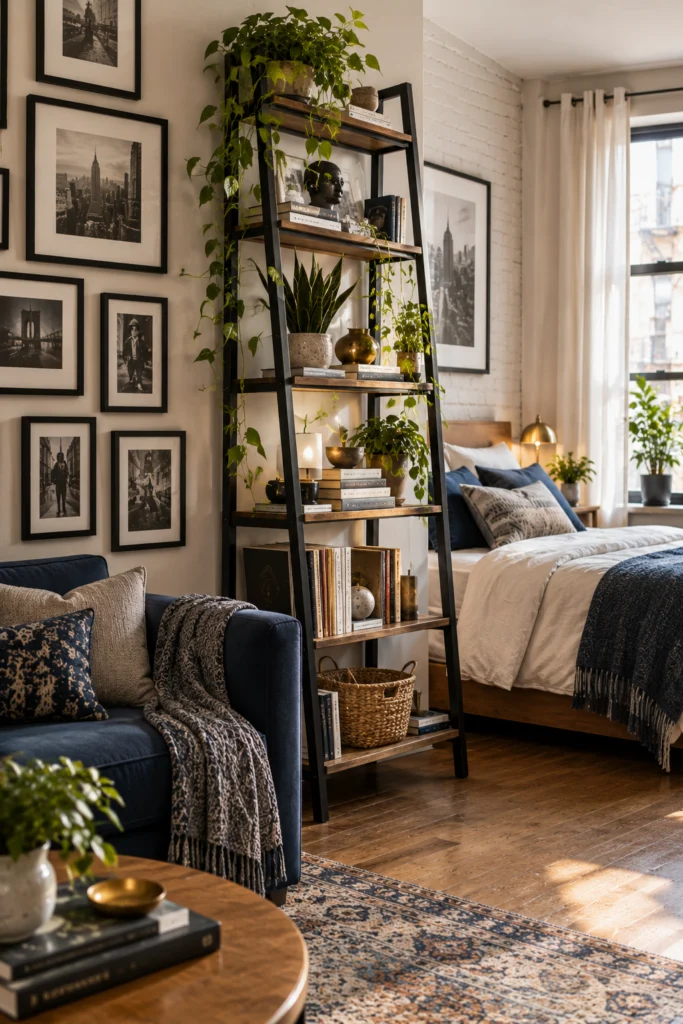
A black metal ladder shelf between the sofa and bed does what a full bookshelf divider does, separating zones and holding things, but in a fraction of the footprint. The leaning angle keeps it light and open instead of blocking the room, and a gallery wall beside it fills the space without needing any furniture underneath. For more low-footprint divider ideas, see studio apartment open shelf divider ideas.
My tip: A ladder shelf works best when the object heights vary across each rung, tall at the bottom, medium in the middle, small on top. Uniform heights read as storage; varied heights read as styled.
3. Use Color on the Bed Itself as Your Main Statement
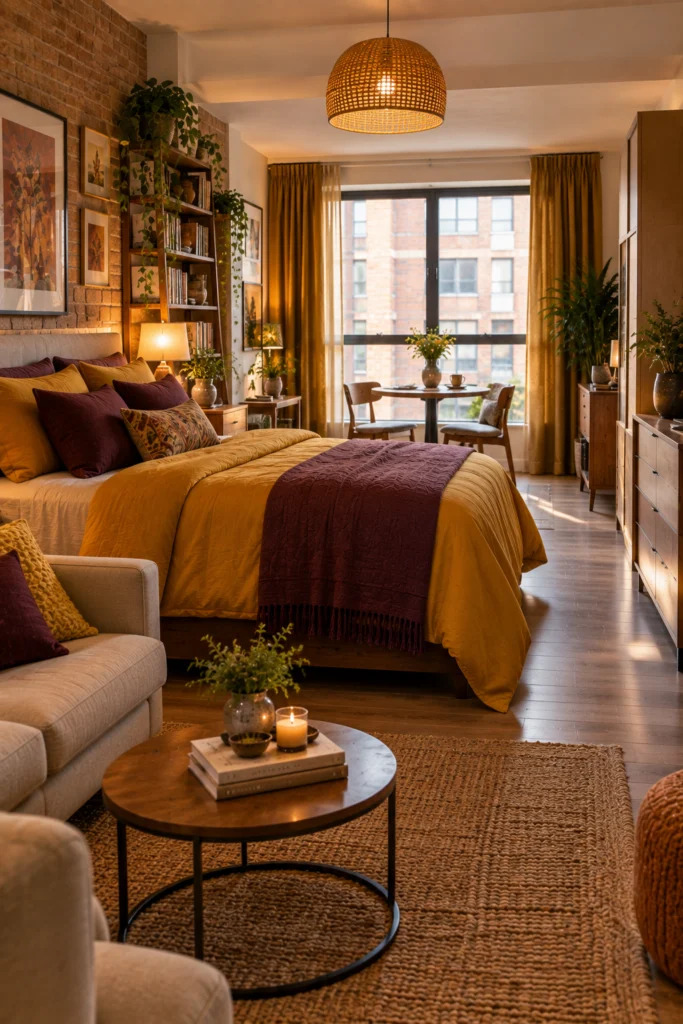
In a studio, the bed is roughly 40% of the visual field, so treating it like an afterthought wastes the biggest piece of real estate in the room. A bed dressed in mustard yellow and deep aubergine can carry the entire personality of the apartment while the brick, wood floor, and neutral curtains stay calm on purpose so the bed can lead. New bedding is the cheapest, easiest, and most visible decor upgrade available in a small space. For more on picking that anchor color, see beautiful studio apartment color schemes.
4. Carve Out a Real Work Zone (Even If It’s Tiny)
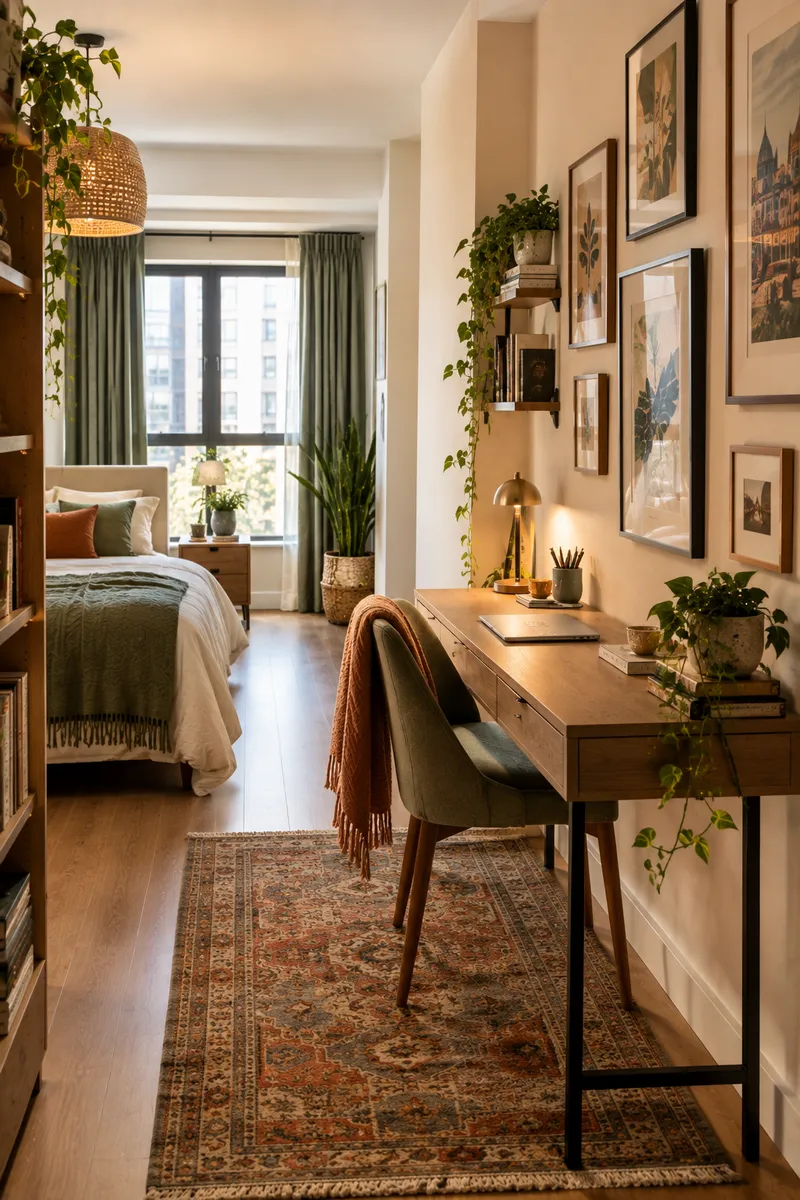
Working from bed sounds fine until the back gives out and sleep suffers, so even 300 square feet can spare a corner for a proper desk. The longest stretch of open wall usually fits a narrow desk, and a real chair, a small lamp, and one piece of art above it is enough to read as an office.
The visual separation matters as much as the physical distance — a desk with its own light source and its own rug reads as a second room even when it sits just a few feet from the bed. See more on this exact zoning trick in studio apartment ideas with a home office corner.
5. Use a Single Bold Color to Tie It Together
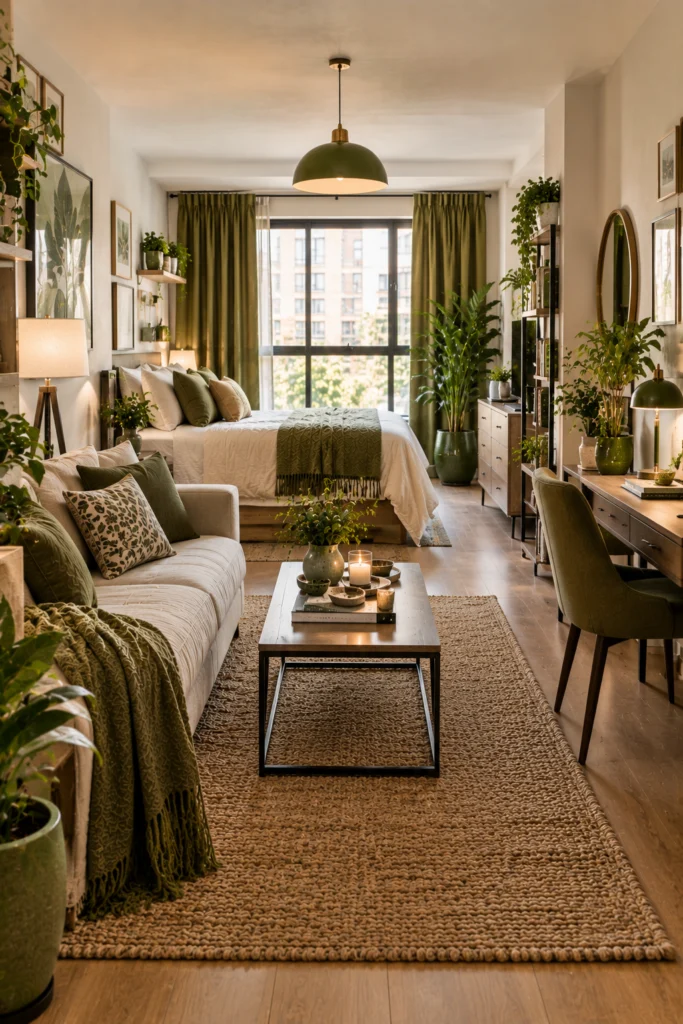
Treating every zone like its own room with its own color story is one of the easiest mistakes to make in a small space, and the result is chaos in thirty square meters. Picking one accent color and letting it travel through the apartment — olive on the curtains, a chair, and a few plant pots, or terracotta on a rug, a cushion, and a bowl — is what makes a space feel cohesive instead of matchy. Skip a painted feature wall in a studio; there isn’t enough breathing room for it, and it usually makes the space feel smaller. Textiles and decor carry color better here.
6. Divide the Space With an Open Shelf
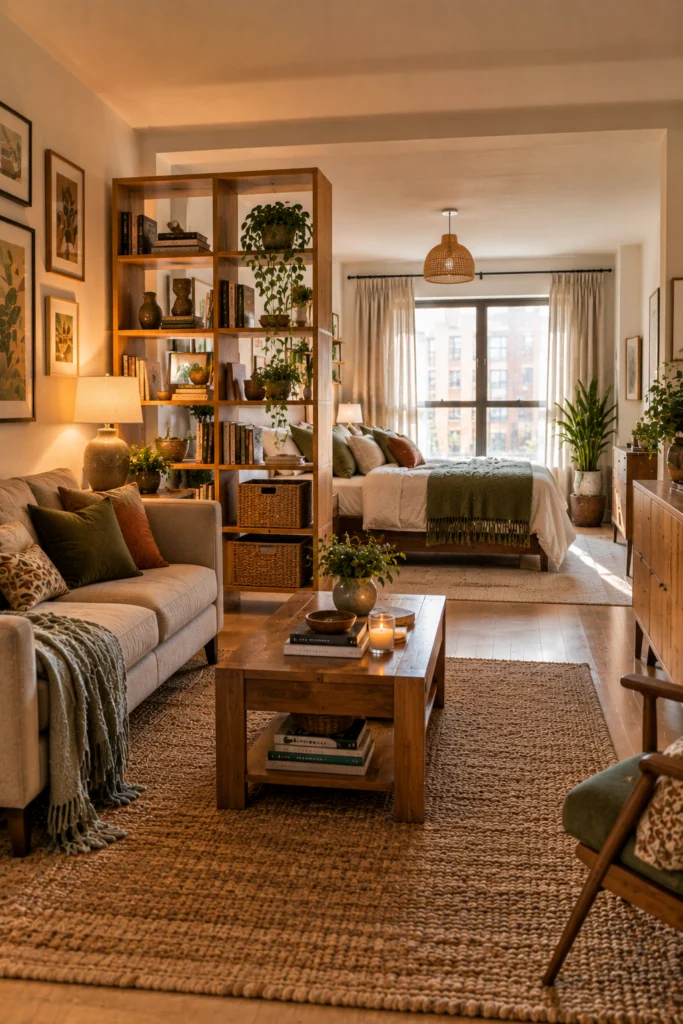
A solid wall kills the light and a curtain can feel like a dorm room, so an open shelving unit used as a room divider is the middle path. It separates the sleeping zone from the living zone visually, doubles storage, and still lets light pass through both sides — books and a lamp facing the living room, baskets and personal items facing the bed.
Leave the top two cubes mostly empty so light keeps flowing, anchor the unit to the wall since even open shelves can tip, and style only about 70% of the cubes so the whole thing reads as decor and not storage. For more layout ideas built on this exact piece, see studio apartment layout ideas using bookshelf room dividers.
7. Choose Furniture With Legs
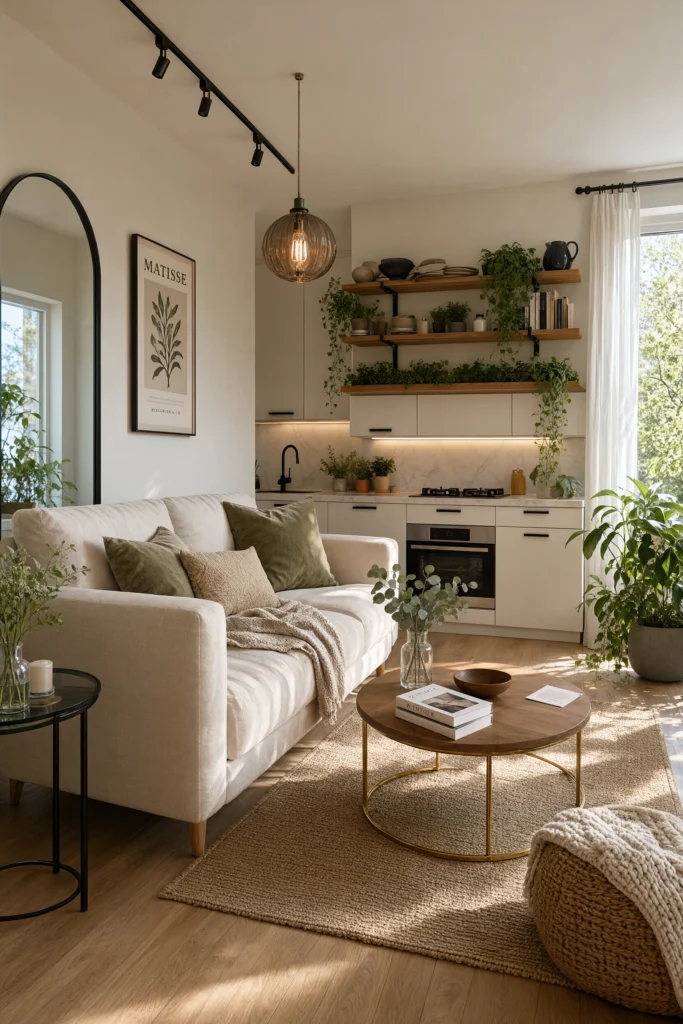
Furniture that sits flush on the floor, like upholstered ottomans or boxy storage sofas, makes a room feel heavy and stuck, which is exactly why so many studios feel cramped without an obvious cause. Furniture with visible legs lets the eye travel underneath it, so the floor reads as bigger — a sofa on tapered wood legs, a coffee table with a slim metal base, or a bed frame with airy supports all add up to a room that breathes.
Budget vs. splurge: Save on side tables and the coffee table, since they’re easy low-cost wins. Spend more on the sofa, because it’s the largest piece in the room and the one you’ll touch every day for years.
8. Layer Lighting So You Can Change the Mood
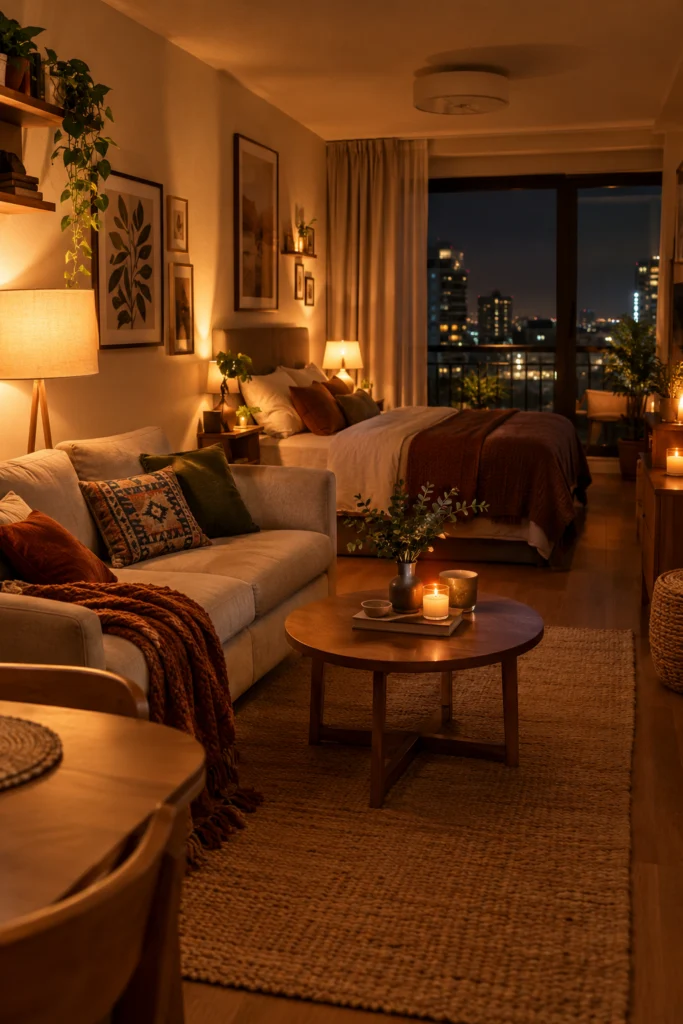
A single overhead light flattens a studio and gives it exactly one mood, so the fix is layering three or more light sources at different heights, all on warm bulbs rather than the bluish tone most rentals come with. That usually means one ceiling fixture used sparingly, a floor lamp near the sofa for evening reading, a bedside lamp on a dimmer or low-watt bulb, and a candle or two on the coffee table for ambient warmth. Turning off the overhead light around evening and switching to lamps changes a room’s whole mood.
9. Build in Smart Storage Without Losing Square Footage
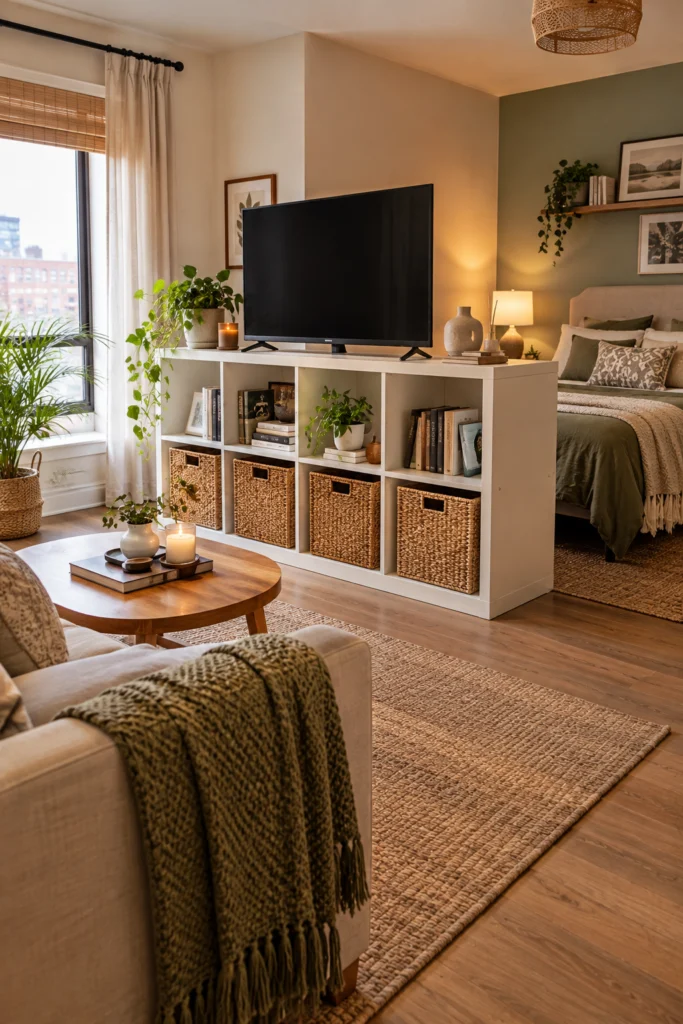
Storage in a studio has to earn its keep twice, holding actual belongings and looking good doing it, since every piece stays on display. A low cube unit running perpendicular to the wall doubles as a soft room divider, a TV stand, and storage for books, baskets, and cables, and three or four matching woven baskets in the lower cubes create instant tidiness.
Stacks of plastic bins, exposed shoe piles, and cords running across the floor read louder in a small space than they would in a larger room, so lidded boxes that match the palette work better if there’s no room for extra furniture.
10. Let the Plants Do the Work
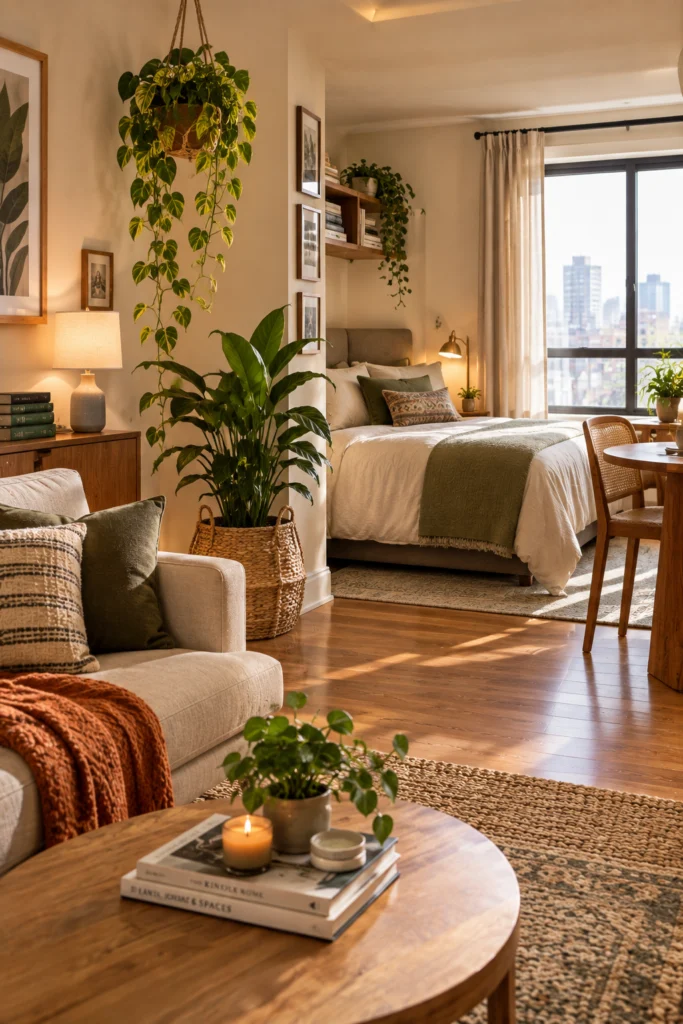
A few good plants soften a small apartment in a way hard surfaces and rental-beige walls never will, adding height, color, and life all at once. Pothos, snake plants, and ZZ plants all tolerate low light and inconsistent watering, while a monstera needs a bit more light but rewards the effort with large architectural leaves.
Grouping plants in odd numbers, usually three, at varying heights — one on the floor, one on a shelf, one hanging — is the trick behind most studios that look effortlessly styled. Swapping a plastic nursery pot for a textured ceramic or woven planter makes even a supermarket plant look intentional. For more plant ideas sized for a small footprint, see mini studio apartment plant ideas.
11. Make the Bedroom Zone Feel Like a Hotel
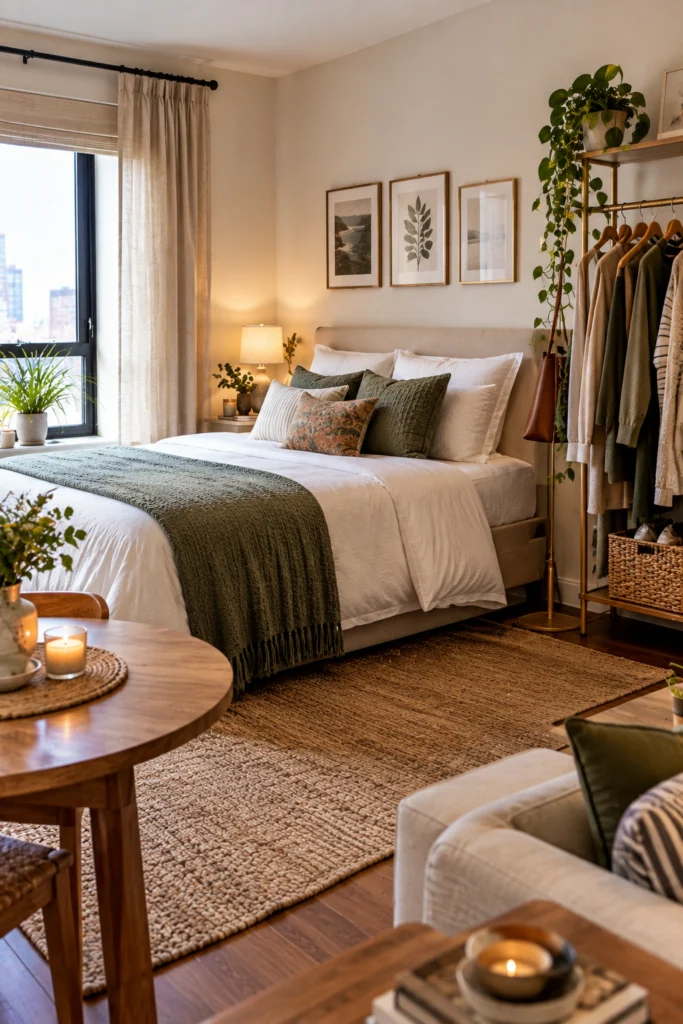
The bed in a studio gets seen from the couch, the desk, and the front door, so it’s worth treating like a feature rather than an afterthought. White or cream bedding as a base always reads clean, one textured throw at the foot in an accent color like sage, terracotta, or mustard adds warmth, and two or three pillows in mixed textures finish the look.
Making the bed every morning is genuinely the highest-impact habit for how a studio looks and feels at the end of the day. A freestanding clothing rack with matching wooden hangers can work as a styling element too, if there’s no closet to hide clothes in.
12. Embrace the Bed-as-Furniture Layout
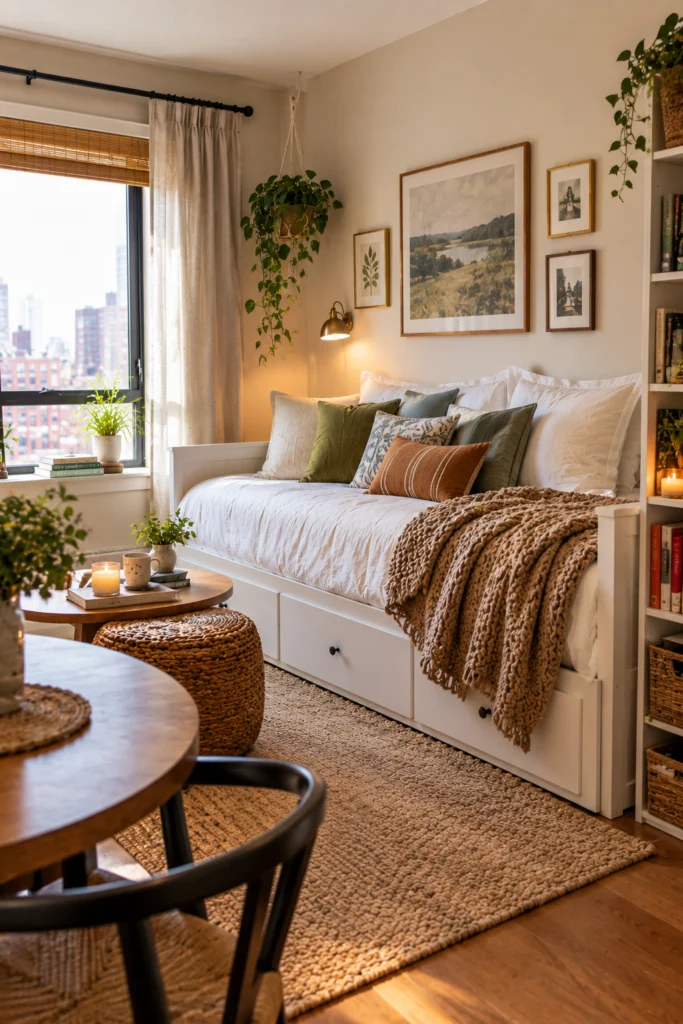
The bed is the hardest thing to design around in a studio, since it’s large, always visible, and pretending it isn’t a major design element usually backfires. Treating it like a daybed or extra seating zone instead, with crisp white linens and a chunky knit throw at the foot, turns “the bed in my living room” into an actual feature of the space. A bed styled and used this way often ends up as the most-used surface in the apartment, for sitting, working, and hosting, and that’s exactly the point.
Common space-saving furniture mistakes
- Choosing furniture without legs. Flush-to-the-floor pieces make a small room feel heavier and more cramped than the same piece raised on visible legs.
- Filling every shelf cube the same way. Leaving some cubes empty or styled sparingly is what keeps a divider from reading as pure storage.
- Treating the bed as an afterthought. It’s the largest visual element in the room, so plain bedding wastes the studio’s biggest design opportunity.
Quick answers
What furniture makes the biggest difference in a small studio?
A room divider that also stores things, like an open shelf or ladder shelf, since it solves zoning and storage in one piece instead of two.
Does furniture with legs really make a room look bigger?
Yes, visible legs let the eye travel under the furniture, which reads as more open floor space even when the actual square footage hasn’t changed.
How much should a studio’s decor budget go toward the sofa?
More than most other pieces, since it’s the largest item in the room and the one touched daily for years, while side tables and coffee tables are easier places to save.
Is one overhead light enough for a studio apartment?
No, a single ceiling fixture flattens the room. Layering it with a floor lamp, a bedside lamp, and candles creates a warmer, more adjustable mood.
How many plants does a small studio actually need?
Around three, grouped at different heights, is usually enough to make a noticeable difference without crowding the room.
Can the bed double as seating in a studio apartment?
Yes, styled with crisp linens and a few mixed-texture pillows, a bed works well as a daybed for guests and everyday use.
Should every storage cube in a divider shelf be filled?
No, leaving some empty or lightly styled keeps the piece reading as decor rather than a storage unit.