
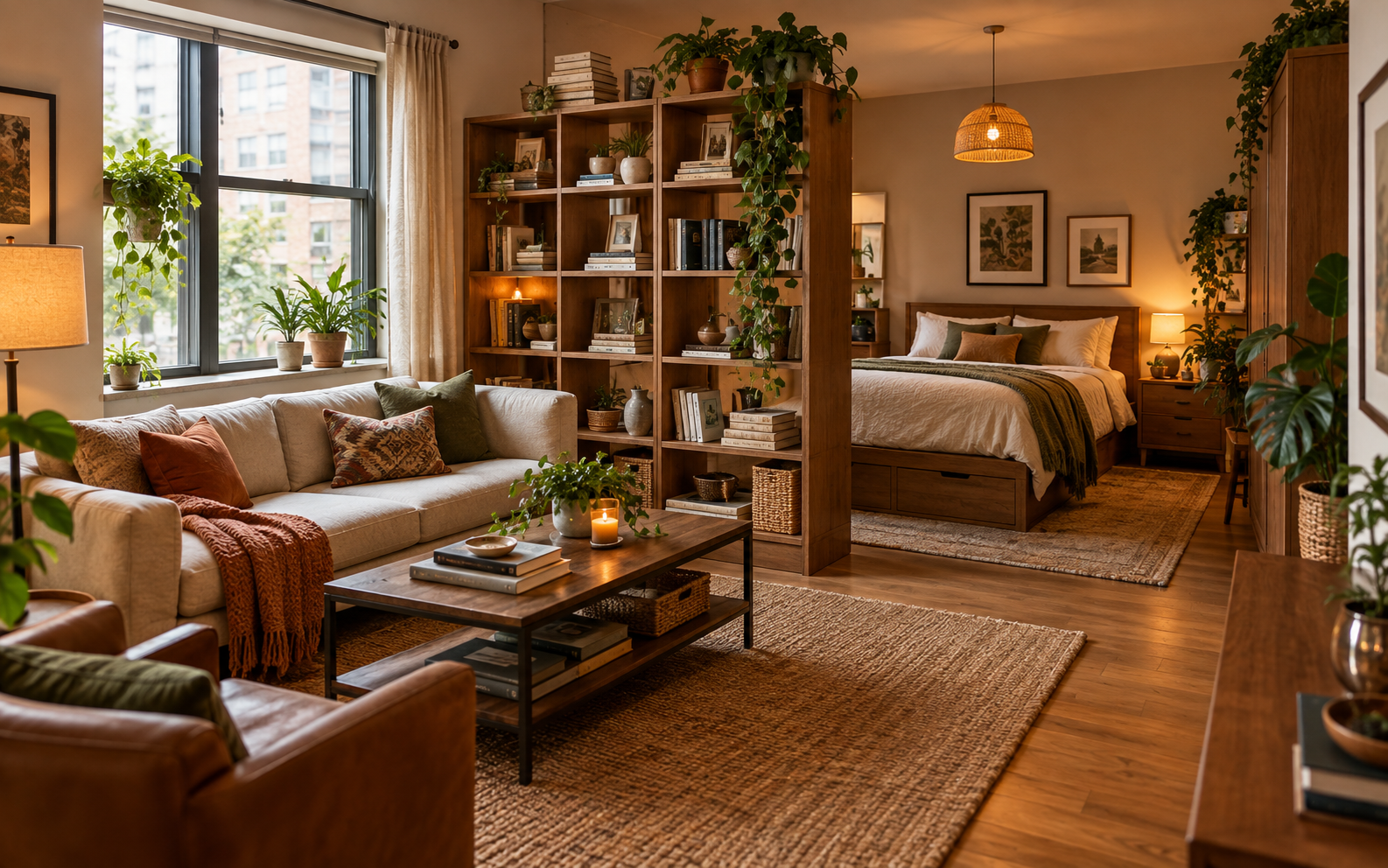
A studio apartment has to sleep, eat, work, relax, and entertain in one room, and that’s a lot to ask of a single space. If yours currently feels cramped or like you gave up and shoved a bed in the corner, the fix isn’t a renovation — it’s ten specific moves that make a small room read as considered instead of crowded. Here’s exactly how to make that happen.
1. Use a Bookshelf as Your Room Divider
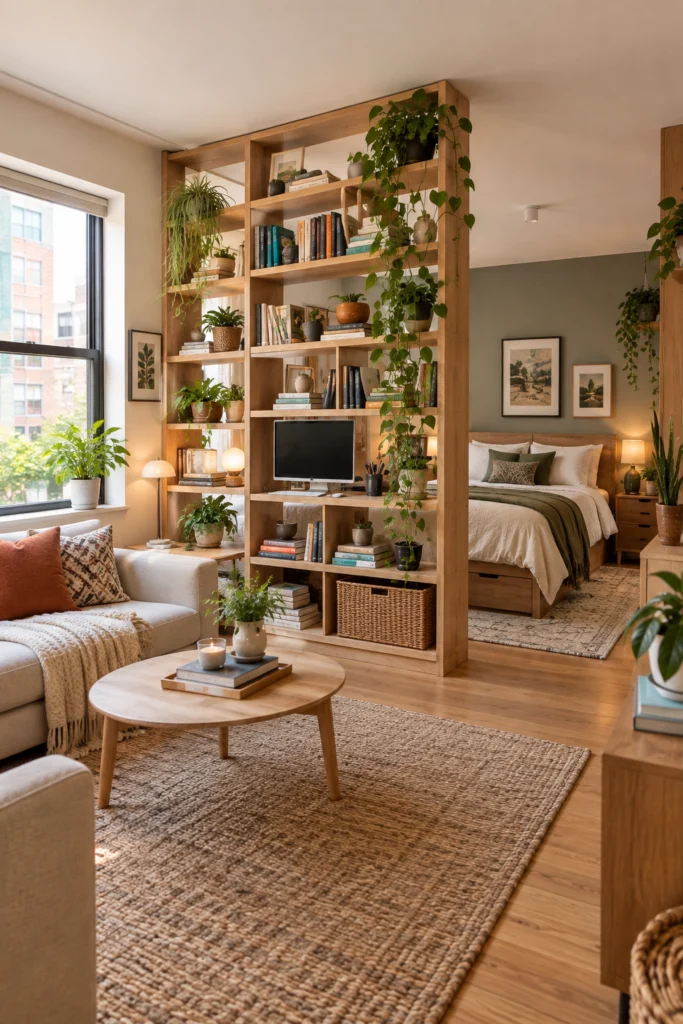
A tall, open bookshelf is the smartest divider a studio can have because it does three jobs at once: it splits the space, adds storage, and gives you something to style. Style both sides of it and you get a living room on one side and a bedroom on the other, even in a room small enough to touch both walls with your arms out.
A light wood unit holding a monitor, books, and plants creates a natural boundary between sleeping and living areas without closing the room off entirely, and the openness of the shelves keeps everything feeling airy. You don’t need to anchor it to the wall if you keep it under about six feet and avoid overloading the top shelves, but weight distribution is still worth thinking through. For more ways to build a layout around this exact divider, see studio apartment layout ideas using bookshelf room dividers.
2. Let a Statement Rug Anchor the Whole Room
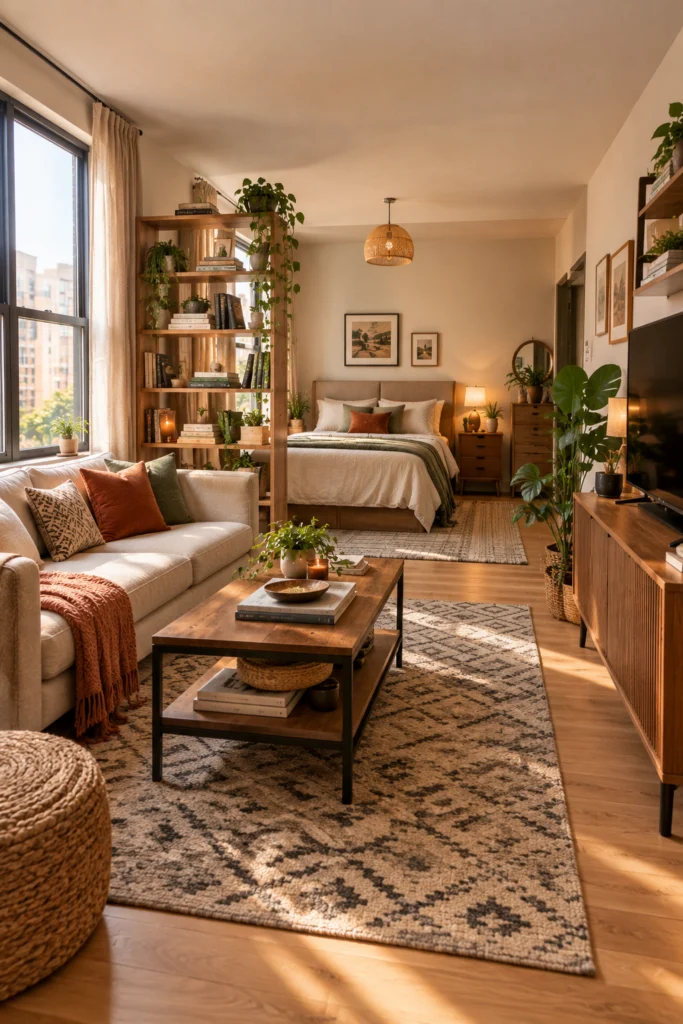
A patterned rug is not too much for a small studio — done right, it’s the piece that makes the whole room click. A softly patterned, diamond-weave rug works well because it carries texture and pattern without loud color, adding personality while everything else stays calm.
The sofa, coffee table, and TV console can orbit around that rug so the bed sits just beyond it, and the rug essentially tells the eye “living room ends here.” The rug doesn’t need to match the sofa or cushions exactly, just live in the same tonal family — creams, warm neutrals, soft greens — and a simple repeating pattern usually reads better than anything loud or geometric. For more on choosing that tone, see rug color ideas for a studio apartment.
3. Maximize Natural Light — Don’t Sacrifice It for Privacy
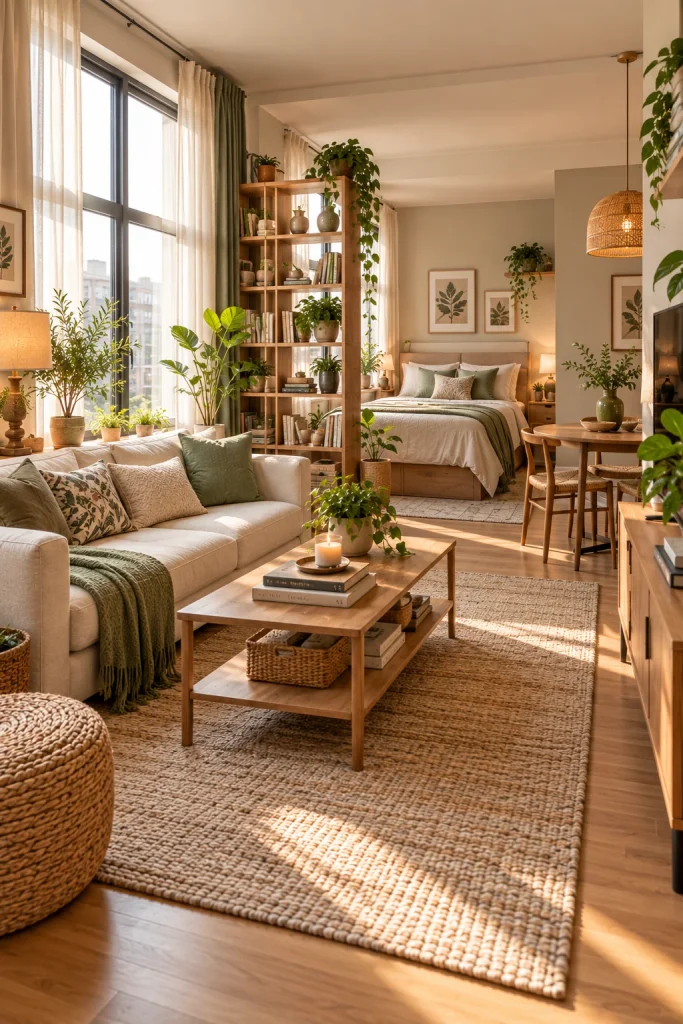
Natural light is the one resource a studio can’t get more of, so blocking it for privacy is a mistake most people make once and then undo. Sheer curtains in linen, voile, or cotton gauze filter light softly without cutting it off entirely, giving daytime privacy along with a warm, diffused glow that makes a small room feel bigger than it is.
Floor-to-ceiling sheers framing a city view keep a room flooded with soft daylight, and a warm white, sage, and natural wood palette does the rest of the work. For anyone who needs full blackout for sleep, a blackout blind layered behind the sheers and rolled up during the day gets both. Hang the curtain rod as high as possible, ideally at ceiling height, and let the fabric pool slightly on the floor — it makes the windows look taller and the ceiling feel higher.
4. Use One Bold Color and Commit to It
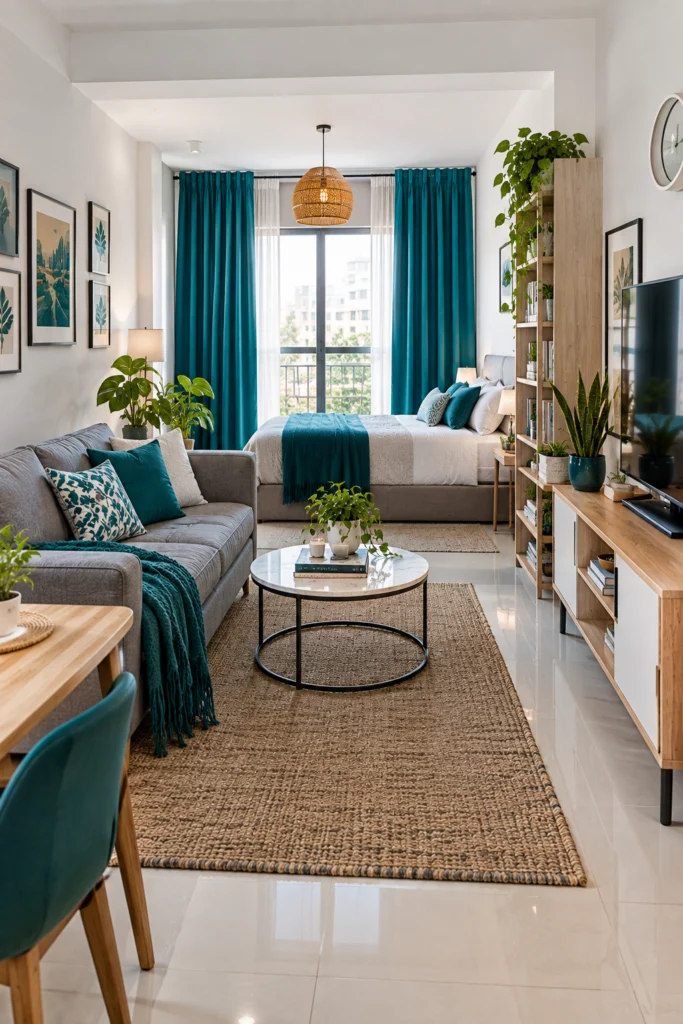
Neutral isn’t always the answer — sometimes a studio needs one committed pop of color to give the room a point of view. A single bold curtain color can carry the entire personality of a space while a gray sofa, white walls, and light tile simply let it lead.
One strong color used consistently reads as far more intentional than several colors used nervously, so pick a color with some warmth — teal, terracotta, sage, mustard — and repeat it in two or three places: curtains, a throw pillow, a small vase, maybe a candle. That repetition is what makes it look like a decision rather than an accident, and none of it requires painting a wall.
5. Hang a Curtain to Create a “Bedroom”
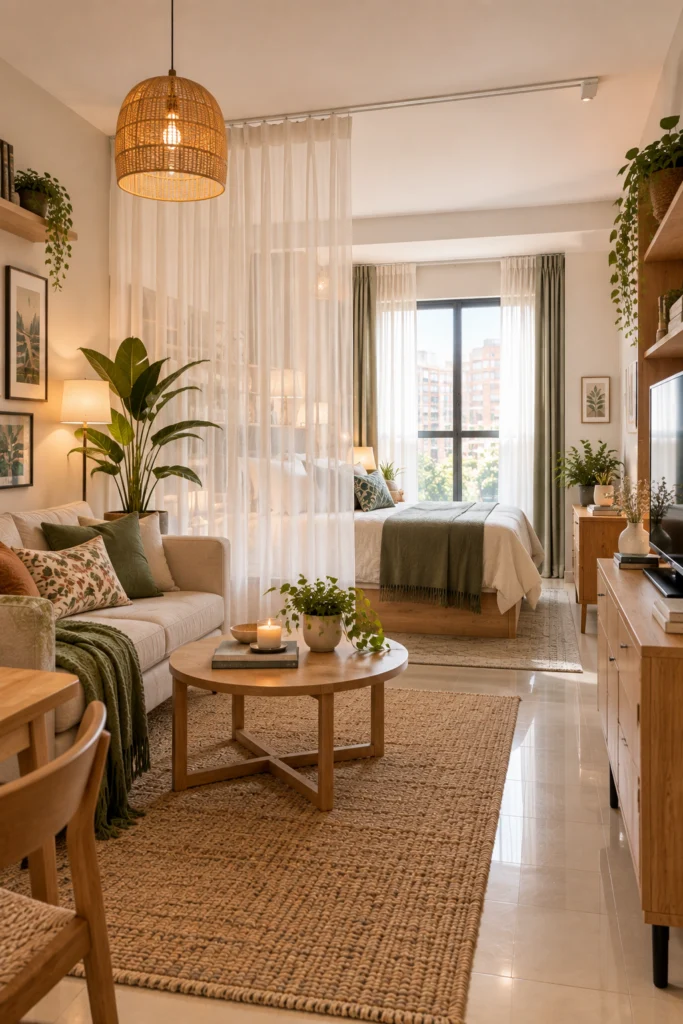
A ceiling-mounted curtain track is one of the most renter-friendly, budget-friendly ways to carve out a sleeping area in a studio, and running it across the room with a sheer or semi-sheer curtain lets you close off a bedroom at night.
A rattan pendant light and a sheer white curtain panel separate the sleeping area from the living space without blocking light entirely, which keeps the room from feeling chopped up while still creating a real visual boundary between the two zones.
Ceiling curtain track systems are widely available and need minimal installation, and most landlords consider them a totally acceptable, reversible addition. Hang the curtain all the way to the ceiling if you can — a curtain that stops at mid-height looks like an afterthought, while floor-to-ceiling reads as a design choice. For more closable divider options, see studio apartment curtain divider ideas.
6. Fill It with Plants — Seriously, More Than You Think
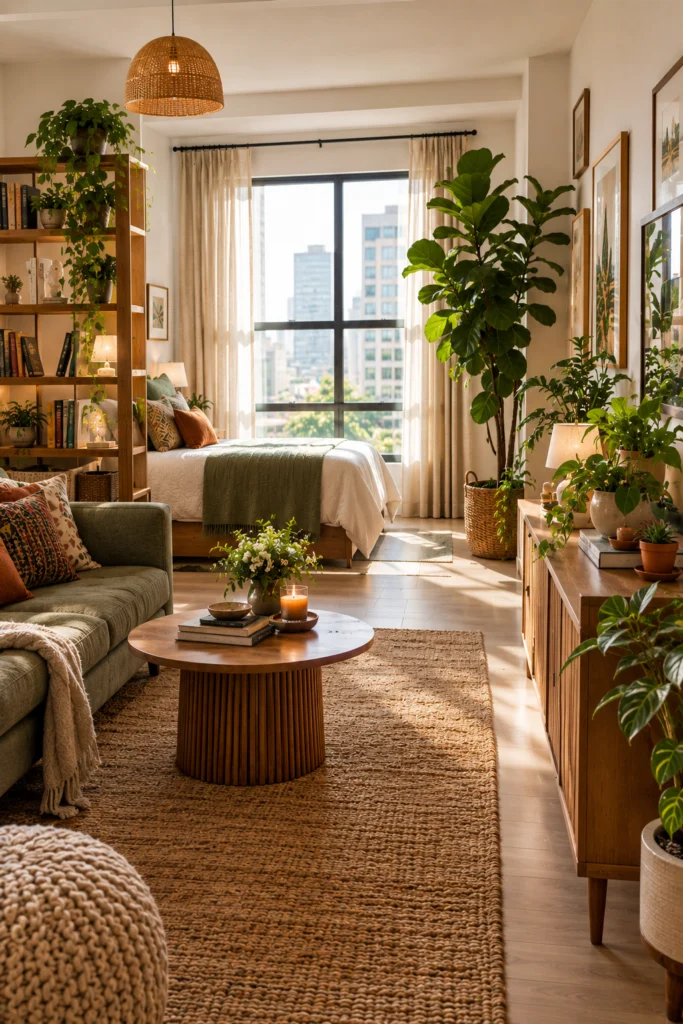
Plants do something no piece of furniture can in a studio: they make the space feel alive, adding texture, scale, and movement alongside the furniture that just sits there. A studio with five plants reads warmer and more welcoming than one with none, even if everything else in the room is identical.
A tall bird of paradise or fiddle leaf fig in the corner adds height and draws the eye upward, which visually raises the ceiling, while grouping smaller plants together on a console or windowsill reads as a design moment rather than something scattered.
For anyone worried about keeping plants alive, a pothos, a ZZ plant, or a snake plant thrives on neglect, which is genuinely their best quality. For more plant ideas sized for a small footprint, see mini studio apartment plant ideas.
7. Let the Layout Work Harder Than the Decor
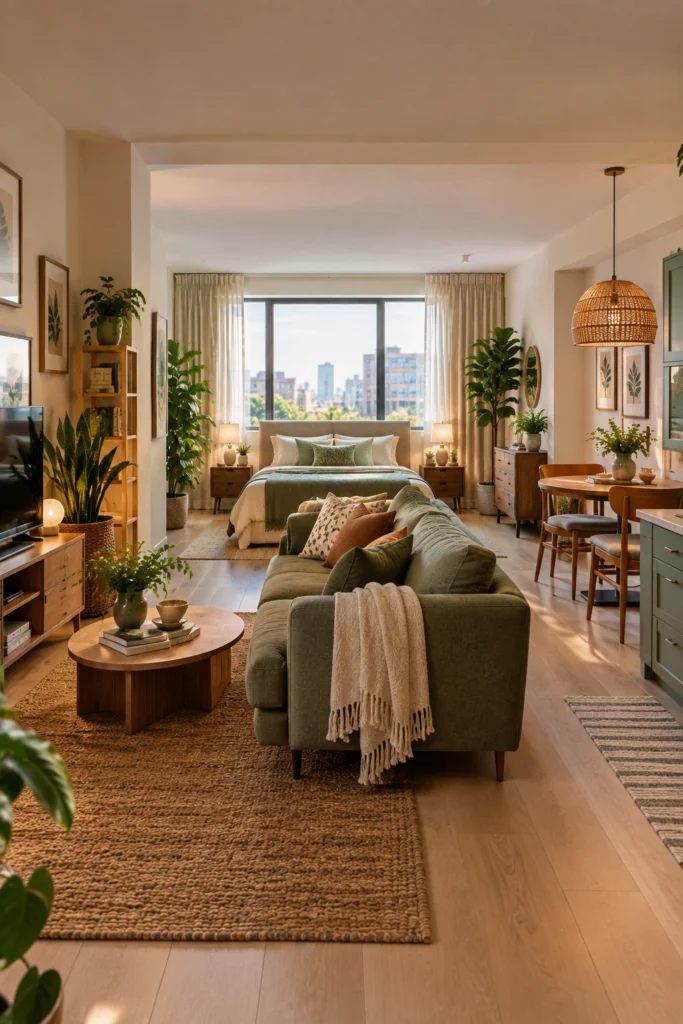
Most people redecorate when what they actually need is to rearrange, and in a studio, furniture placement matters more than almost anything bought new. Pushing everything against the walls is the biggest mistake, since it creates dead space in the middle and makes the room feel like a waiting room rather than a home.
Pulling the sofa away from the wall by even eight inches, or floating the bed so there’s space on both sides, lets the furniture breathe and the room read as intentional.
A confidently arranged open-plan space works because the sofa faces into the room, the coffee table anchors the seating zone, and a dining area beyond an archway stays distinct without being closed off — and the same visual separation is achievable with just a pendant light over a dining table or a change in rug texture between zones, even without an archway.
8. Put Art on the Walls — Your Walls, Your Story
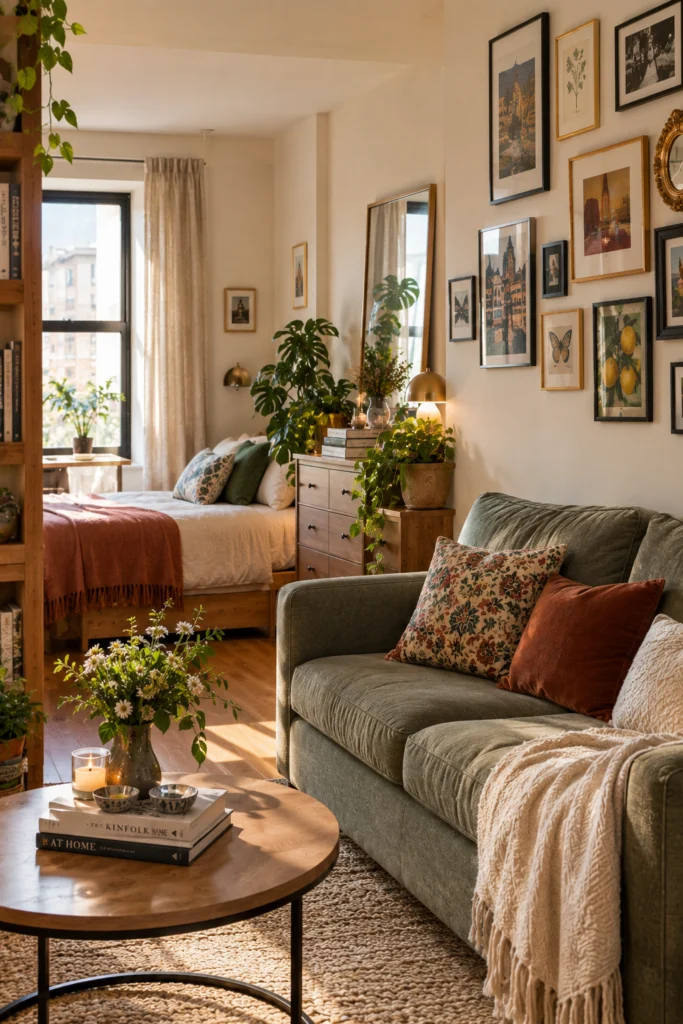
Bare walls make a studio feel like a hotel room someone checked out of in a hurry, while art, even a single framed print propped on a shelf, signals that a real person with real tastes lives there. Expensive originals aren’t the point — intentionality is.
A print, a cluster of small frames, or a photo collage all work as long as it’s something actually loved rather than chosen because it matches the sofa, since art picked purely to coordinate always ends up feeling slightly depressing. Starting with one wall, one piece, or one shelf moment is usually enough to see how much it changes the room, and the rest tends to follow naturally from there.
9. Define Zones with a Jute or Sisal Rug
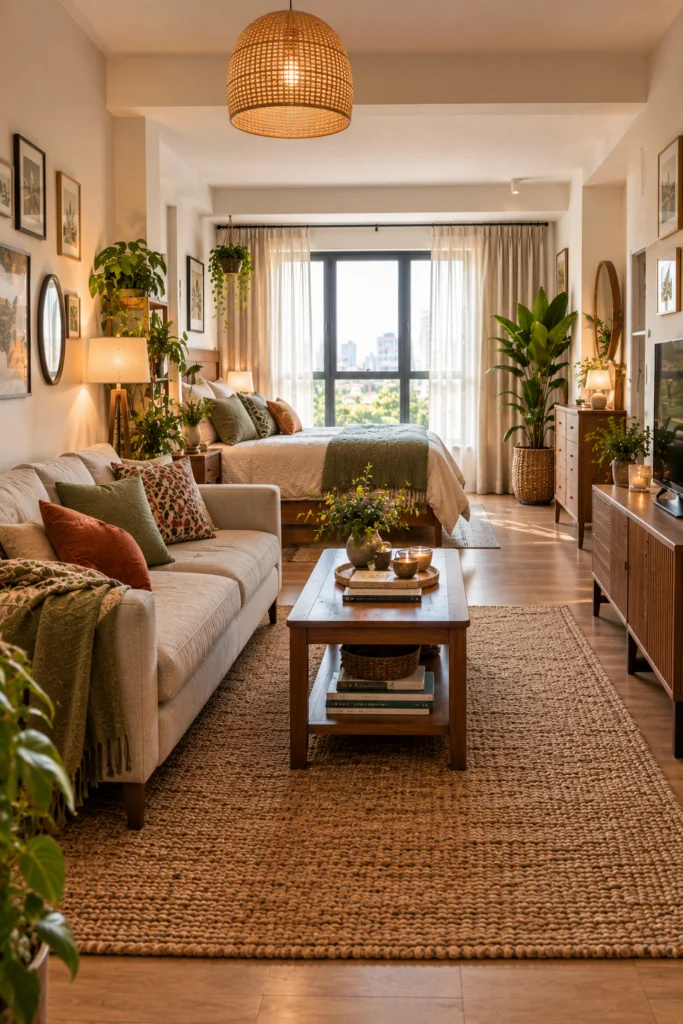
In an open-plan studio, zones don’t have walls, so rugs create them instead — a rug under the sofa and coffee table tells the eye “this is the living room,” even if the bed sits just six feet away. It’s one of the cheapest and most effective tricks in small-space decorating.
Natural fiber rugs like jute, sisal, and seagrass work especially well here because they’re affordable, durable, and grounding without competing with anything else in the room, and size matters more than most people expect — a rug that only fits under the front legs of the sofa isn’t doing its job, so all four legs should sit on or near it.
10. Layer Your Lighting Like a Pro
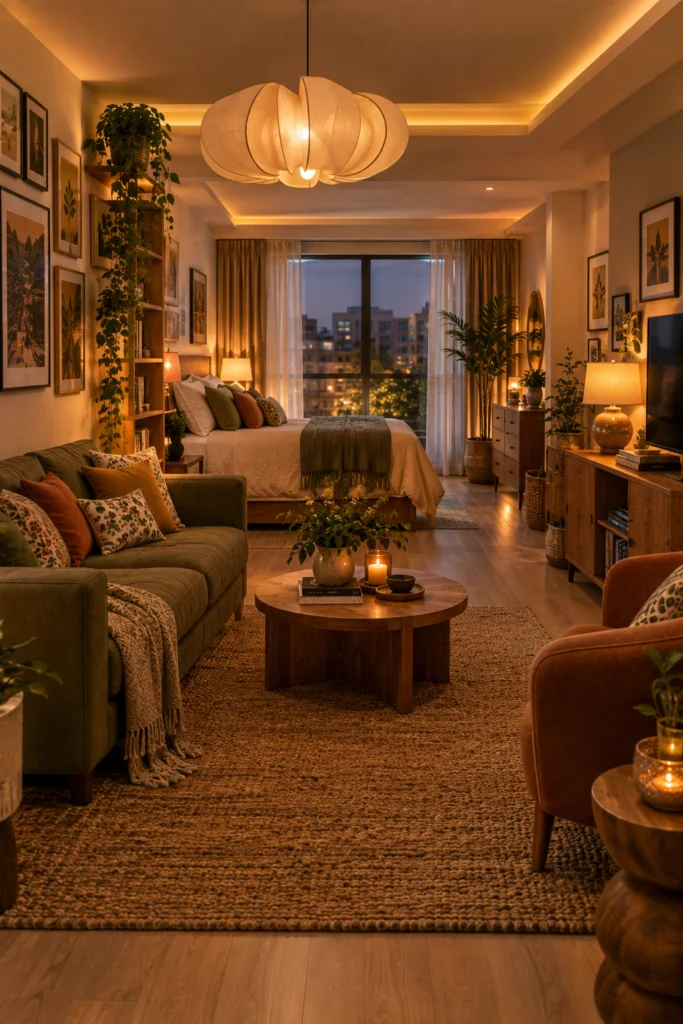
Overhead lighting is the enemy of cozy, and a single ceiling fixture washing the whole room in flat, harsh light does more damage to a studio’s vibe than mismatched furniture ever could. The fix is layering three types of light: ambient (the ceiling fixture), task (a desk or reading lamp), and accent (LED strips behind furniture, a small table lamp tucked in a corner).
A sculptural pendant overhead, cove lighting along the ceiling edge, and warm accent lamps underneath create depth and drama without adding a single piece of furniture, and for renters who can’t touch the ceiling, plug-in pendant lights and warm-temperature smart bulbs in the 2700K to 3000K range do the same job. For more on getting this layering right, see studio apartment lighting decor ideas.
Common cozy studio mistakes
- Relying on one ceiling fixture. A single overhead light flattens a room; layering ambient, task, and accent lighting is what actually makes a studio feel warm.
- Blocking natural light for privacy. Sheer curtains give daytime privacy without sacrificing the light a small room depends on to feel bigger.
- Pushing all the furniture against the walls. Floating pieces even a few inches into the room removes the dead space that makes a studio feel like a waiting room.
Quick answers
What’s the fastest way to make a studio apartment feel cozy?
Layer the lighting — add a warm table lamp or two alongside the ceiling fixture, since flat overhead light is the single biggest reason studios feel clinical.
Do rugs actually help define zones in an open studio?
Yes, a rug under the sofa and coffee table visually marks the living area even without a wall, as long as all four sofa legs sit on or near it.
Is it okay to block windows with a divider in a studio?
Better to use something that filters light, like sheer curtains or an open shelf, rather than a solid partition that cuts off natural light a small room needs.
How many plants does a studio need to feel more alive?
Around five is enough to notice a real difference, mixing one tall plant for height with a few smaller ones grouped together.
What’s the easiest renter-friendly way to add a bedroom feel?
A ceiling-mounted curtain track with a floor-to-ceiling panel, since it needs minimal installation and is fully reversible when moving out.
Should furniture be pushed against the walls in a small studio?
No, floating the sofa or bed even a few inches from the wall usually makes the room feel more considered instead of more cramped.
Does one bold color work better than a full neutral palette in a studio?
Either can work, but one strong color repeated in two or three spots, like curtains and a pillow, reads as more intentional than several colors used sparingly.