
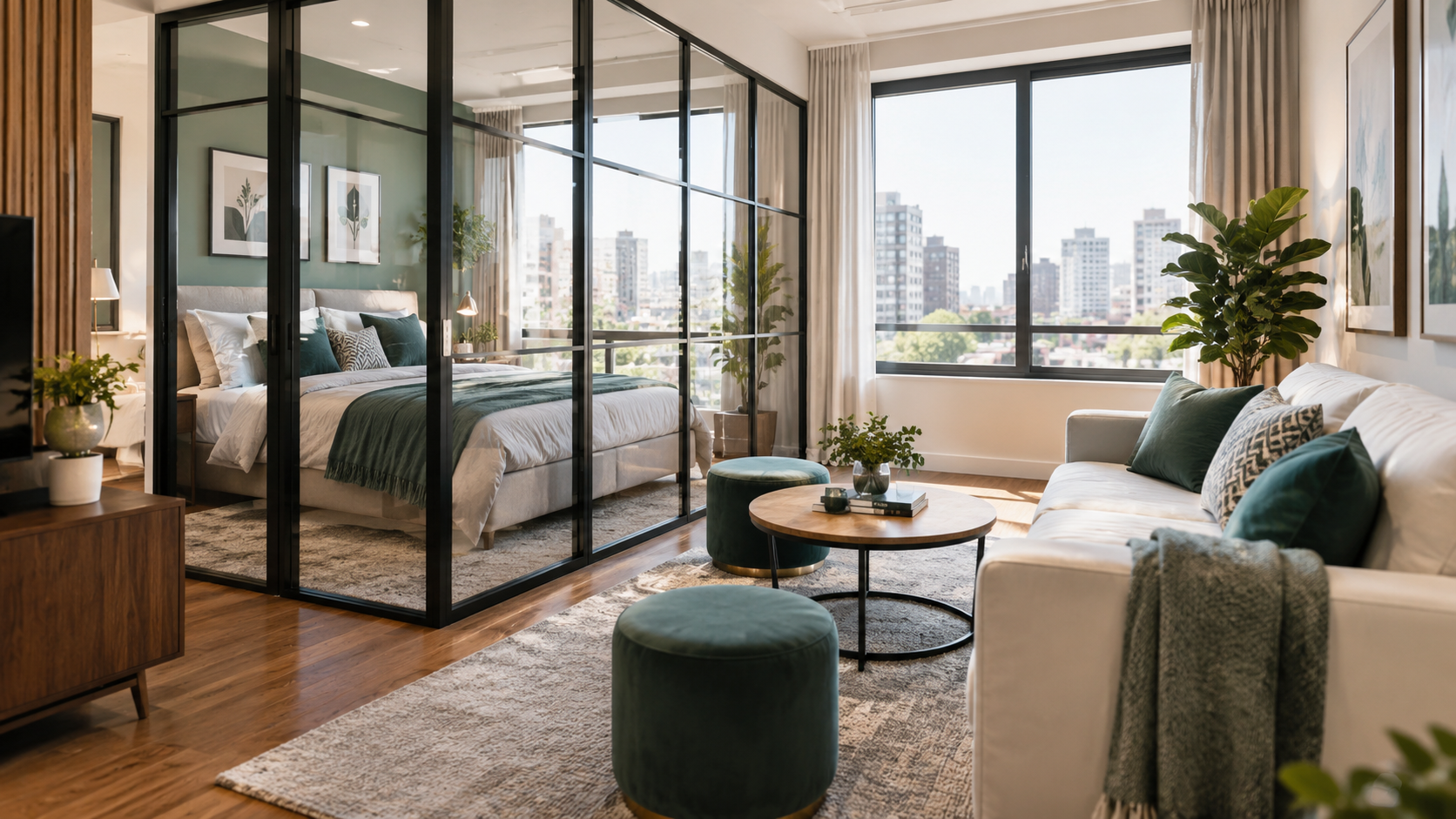
A creative studio doesn’t need extra square footage to feel like a real home — a divider that doesn’t block light, one tightly edited color palette, or a single vintage piece can do the work a bigger floor plan would. Here are 13 studios that get it right.
Which creative approach fits your studio?
| Approach | Main Tool | Best For |
|---|---|---|
| Glass partition | Black-framed steel divider | Studios with limited natural light |
| Scandinavian neutral | Tight white/cream/grey palette | Calm, low-clutter taste |
| Wardrobe divider | Furniture as a physical wall | Renters needing storage + separation |
| Vintage/collected | Persian rug, leather, mixed eras | Studios wanting a lived-in feel |
| Bold workspace | Black-and-white + graphic pendant | Work-from-home studios |
1. Use a Glass Partition to Define Your Bedroom
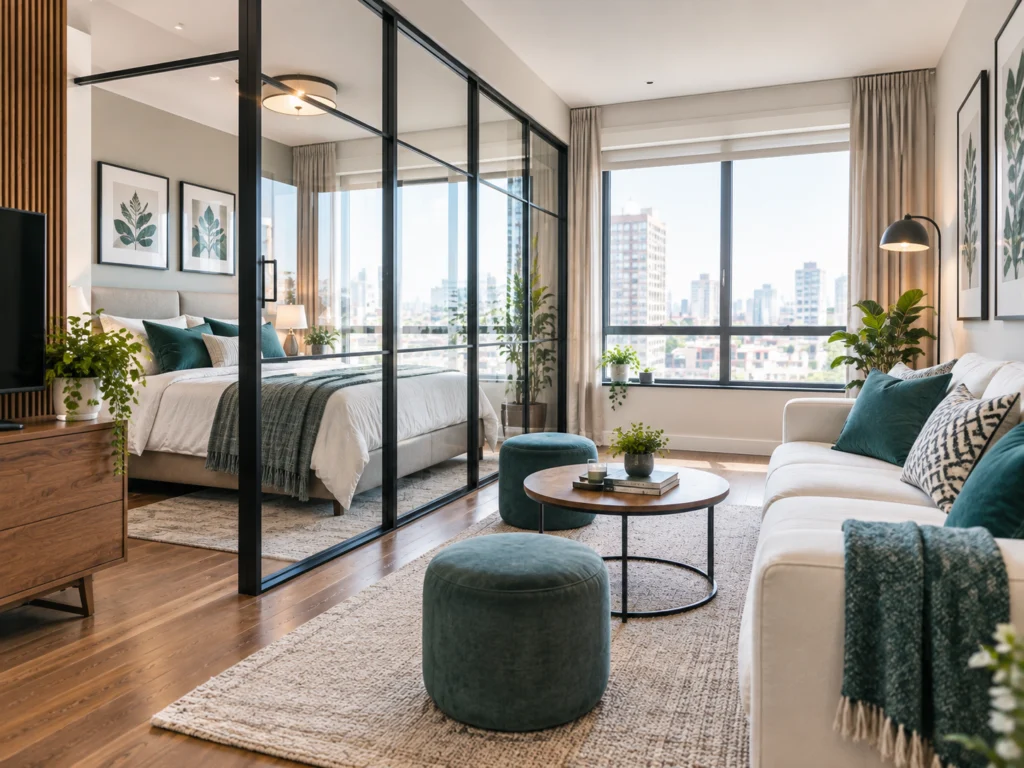
A glass partition separates a sleeping area from the living room without stealing a single ray of light or shrinking the room visually, which a solid divider almost always does to some degree. Keeping both sides in the same color family, rather than styling each independently, is what makes the split read as one cohesive apartment instead of two mismatched halves.
Pro tip: Match the color palette on both sides of the glass so the whole studio reads as one considered space, not two separate rooms.
2. Go Full Scandinavian With a Neutral Palette
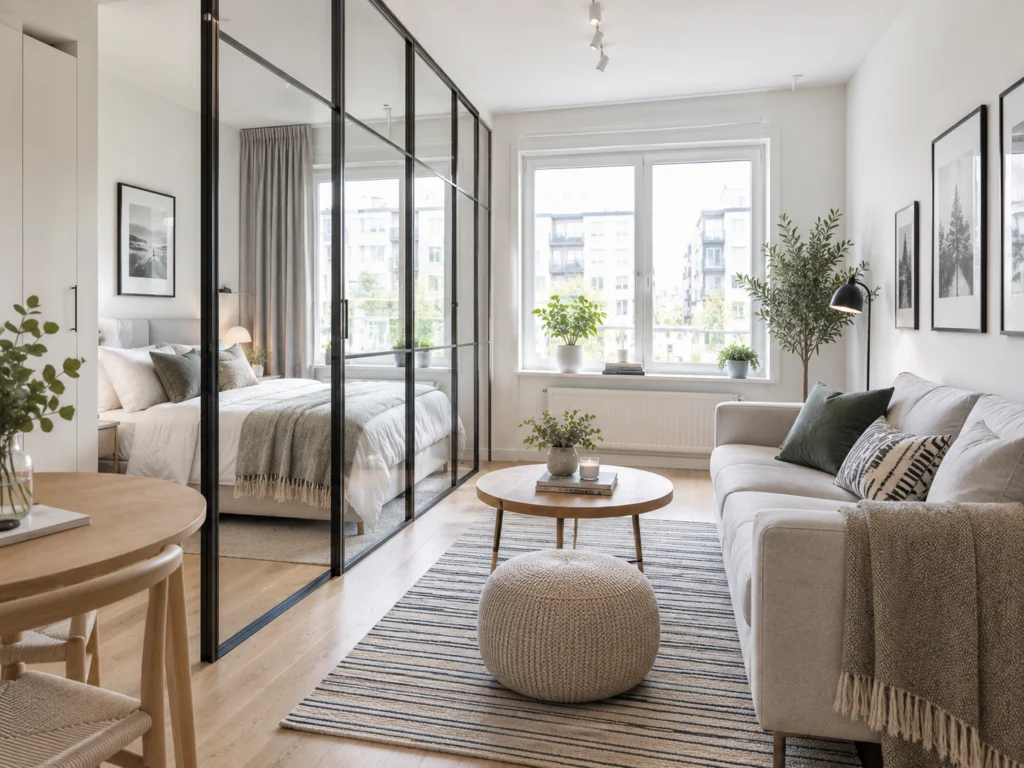
Sticking to a genuinely tight palette — white, cream, grey, natural wood — is what makes a Scandinavian studio feel calm rather than simply plain. A striped rug under the seating area gives the living zone a clear boundary without introducing a single color outside that restrained range.
3. Let a Tall Wardrobe Do Double Duty as a Divider
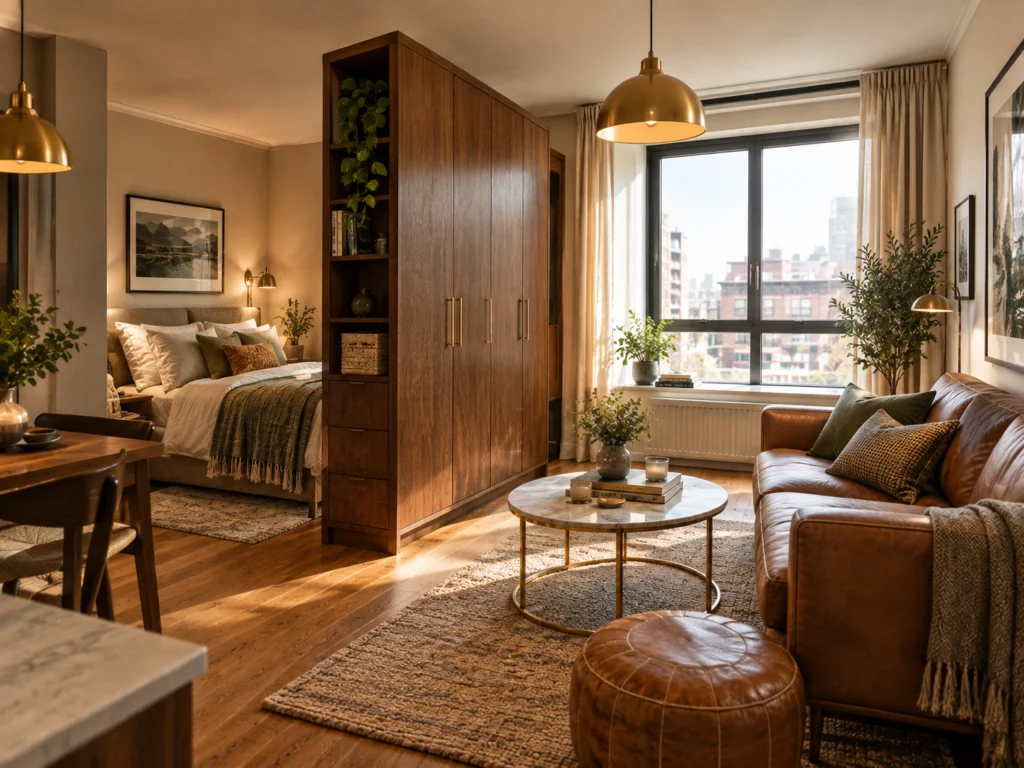
Placing a wardrobe between the bed and sofa solves storage and visual separation with one piece of furniture, without blocking the airflow or light a solid wall-to-wall unit would. Walnut wood paired with brass pendant lighting gives the whole arrangement a boutique-hotel warmth that a plain white wardrobe wouldn’t achieve on its own.
4. Mix Scandinavian Warmth With Industrial Lighting
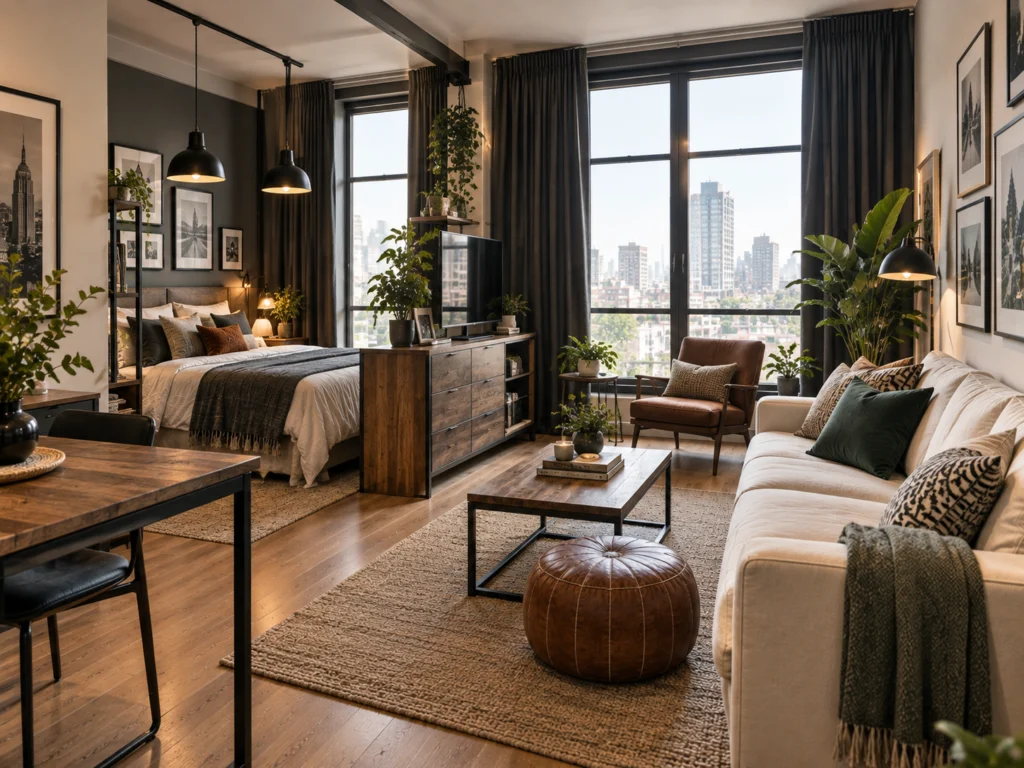
Dark curtains against a mostly white studio sound counterintuitive but actually frame tall windows beautifully rather than competing with the light coming through them. Industrial pendants hung specifically over the bed zone add character without taking up any of the room’s already-limited floor space.
5. Create Warmth With a Tonal Camel-and-Grey Palette
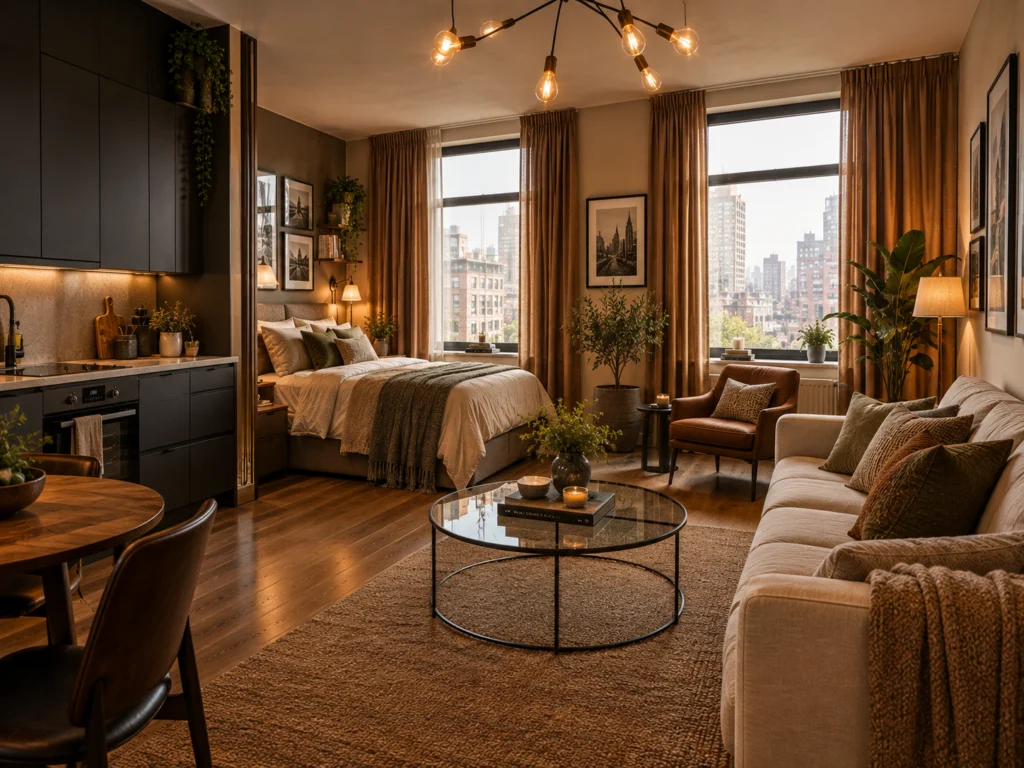
Leaning into an existing kitchen wall rather than fighting it, with dark matte cabinets against warm camel textiles, creates a layered look that reads expensive without a full renovation. A statement fixture, like a spider chandelier with visible bulbs, is what makes the whole room feel deliberately designed rather than simply furnished.
Trust this one: Warm neutrals — camel, grey, matte dark tones — consistently outperform bright color in small spaces.
6. Use Curtains and Color to Create Flow Between Rooms
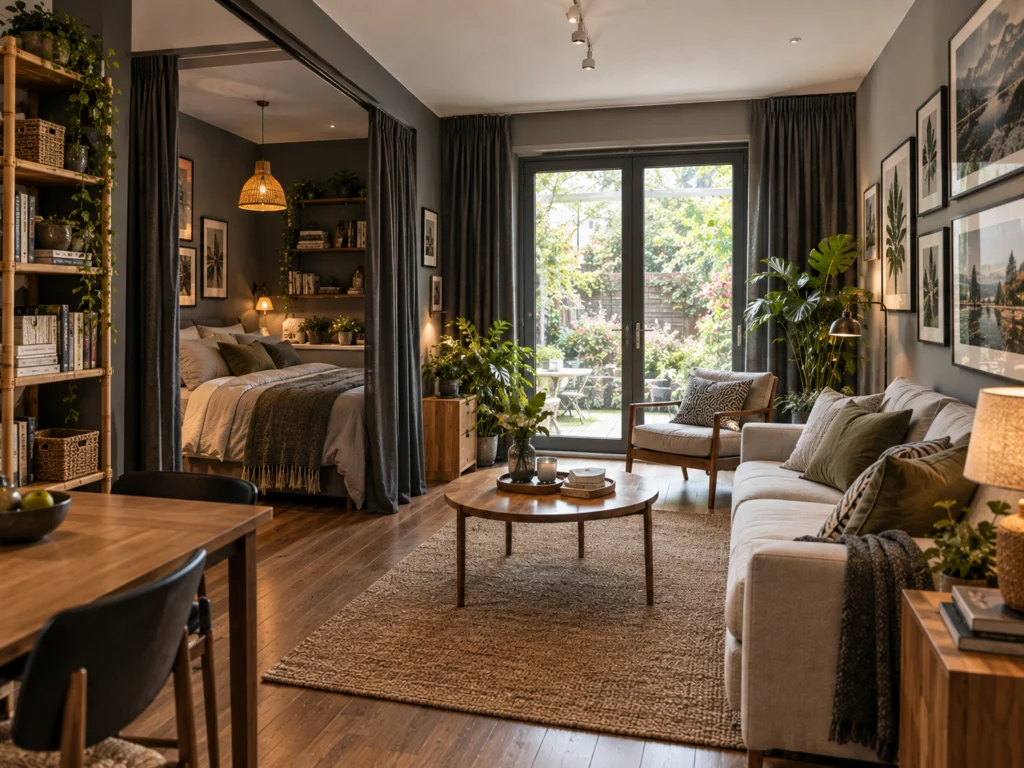
Even a studio with a genuine bedroom alcove benefits from tying the two spaces together through repeated color and material choices, rather than treating each room as fully separate. An open bamboo bookshelf adds storage and display without blocking the sightline between the alcove and the main room.
7. Keep It Simple With a Sofa-Bed-Table Layout
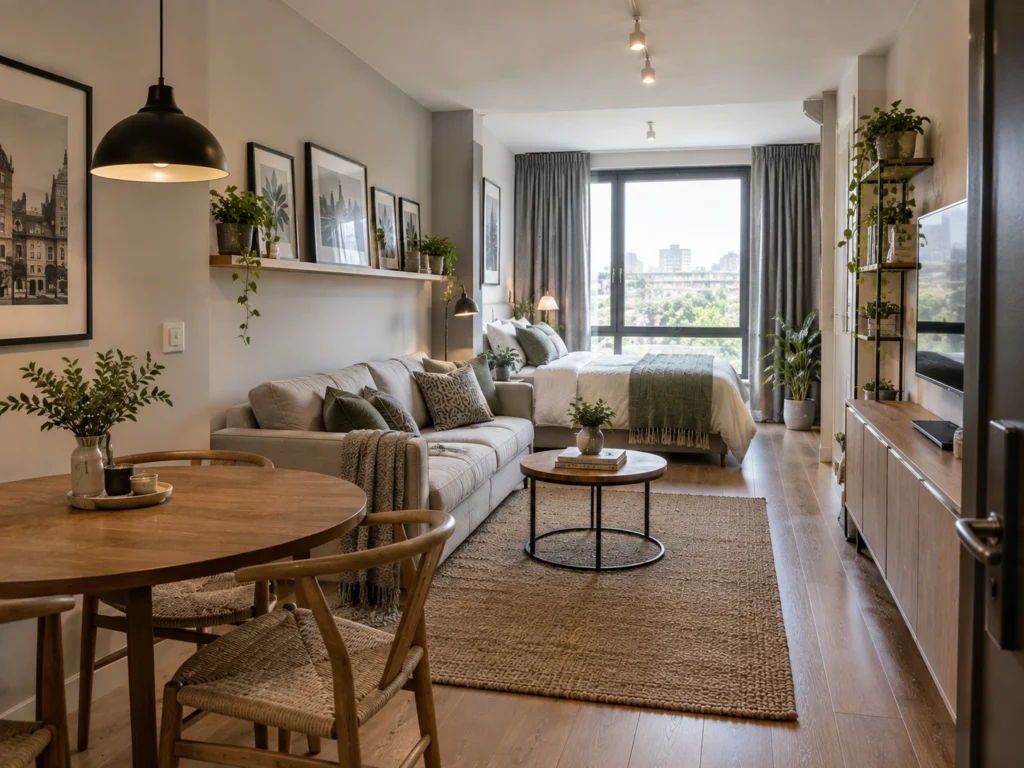
Sometimes the simplest layout — dining near the door, sofa in the center, bed by the window — works precisely because each activity gets its own zone without needing a single divider. A jute rug under the sofa is the only real “zoning” element in the entire layout, and it’s enough.
8. Go Moody With Grey Walls and a Dark Bed Frame
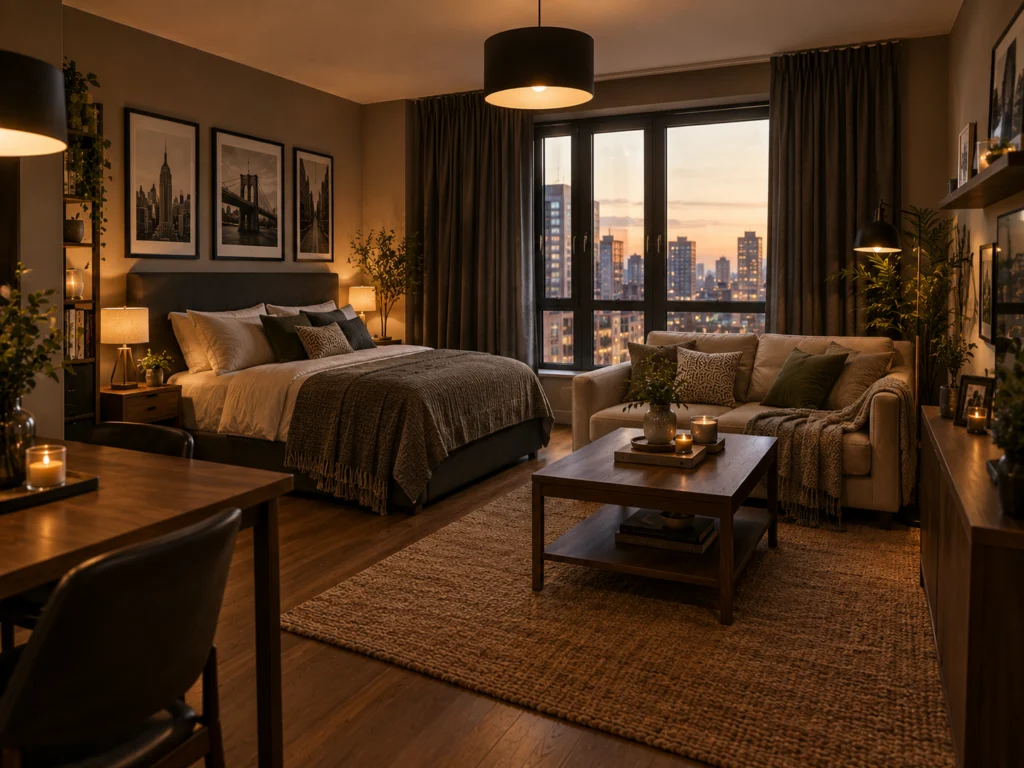
A studio doesn’t have to default to all-white to feel calm — warm grey walls paired with a charcoal bed frame create a genuinely restful, grown-up atmosphere instead. A jute rug and walnut coffee table add just enough warmth to keep the darker palette from reading cold.
9. Embrace Vintage Character With a Persian Rug and Leather
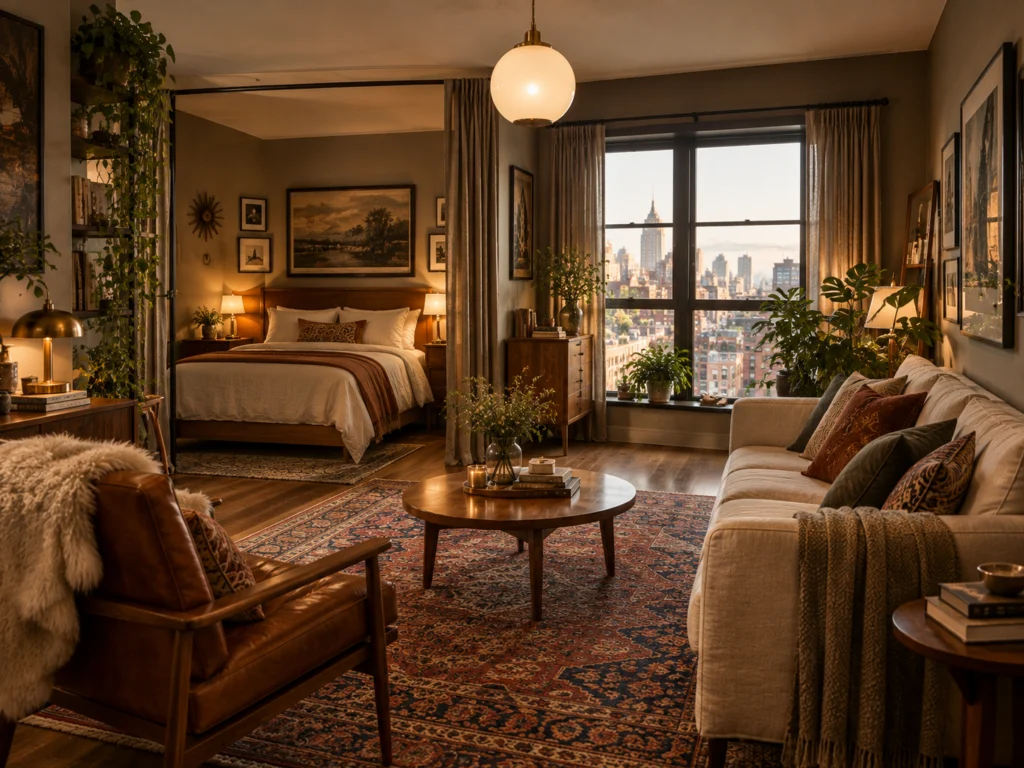
A genuinely good vintage rug can single-handedly make a studio feel collected rather than newly furnished, especially paired with leather that develops character over time instead of staying pristine. Mid-century teak nightstands flanking the bed extend that same collected feel into the sleeping zone without needing to match the rug exactly.
10. Build a Warm Sanctuary With Botanical Touches
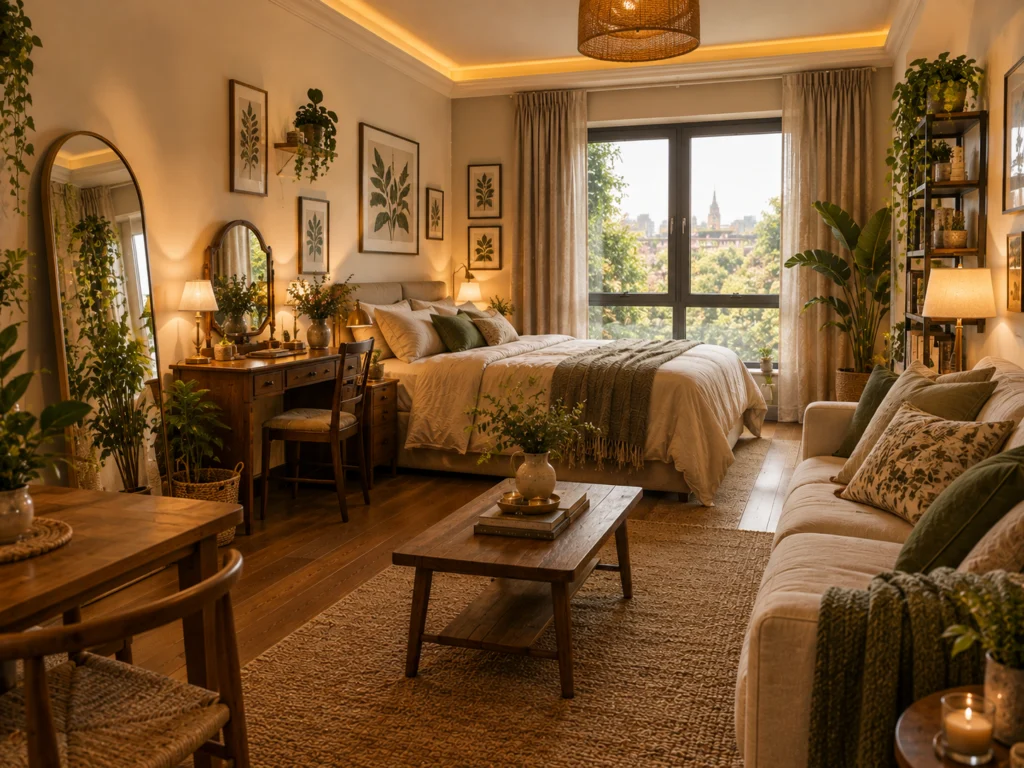
An arched floor mirror bounces light around a small room while also functioning as a design piece in its own right, doing more visual work than a flat wall mirror in the same spot. An antique vanity doubling as both nightstand and workspace solves two furniture needs without adding a single extra piece to the room.
11. Try a Coastal-Minimalist Vibe With Soft Blue Curtains
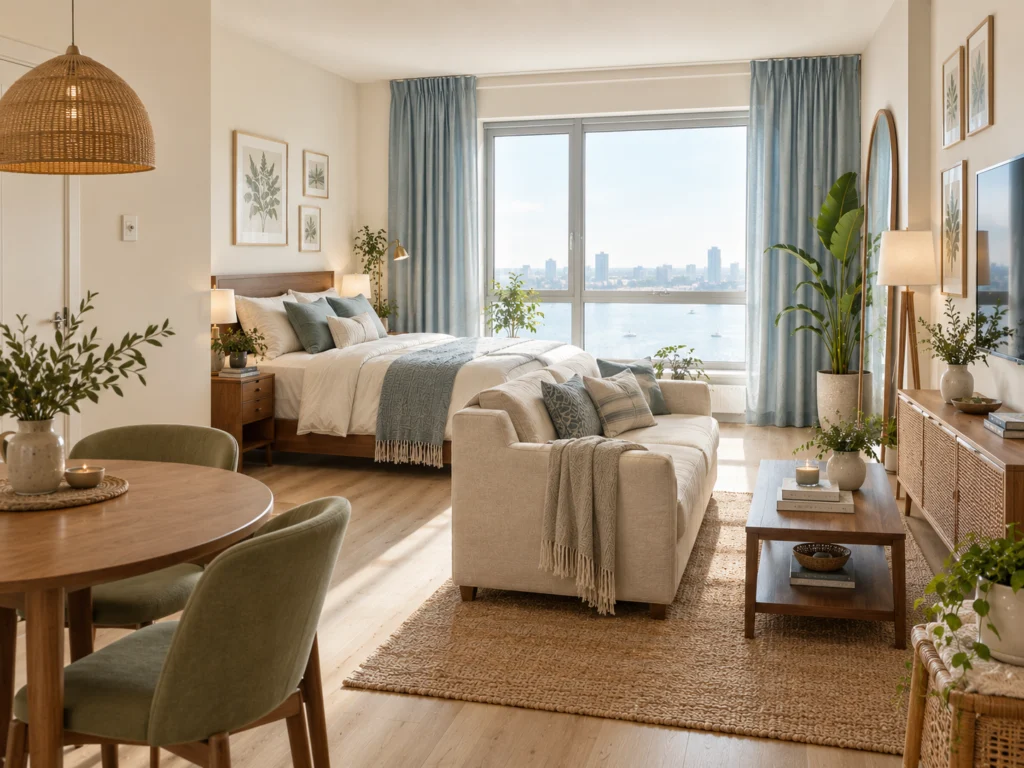
Blue curtains against an otherwise cream-toned studio add just enough color to feel fresh without tipping into a loud, themed room. Natural textures — jute, rattan — do the same grounding work a bolder pattern would, while staying within the soft, edited palette the coastal look depends on.
12. Go Bold With a Black-and-White Workspace Studio
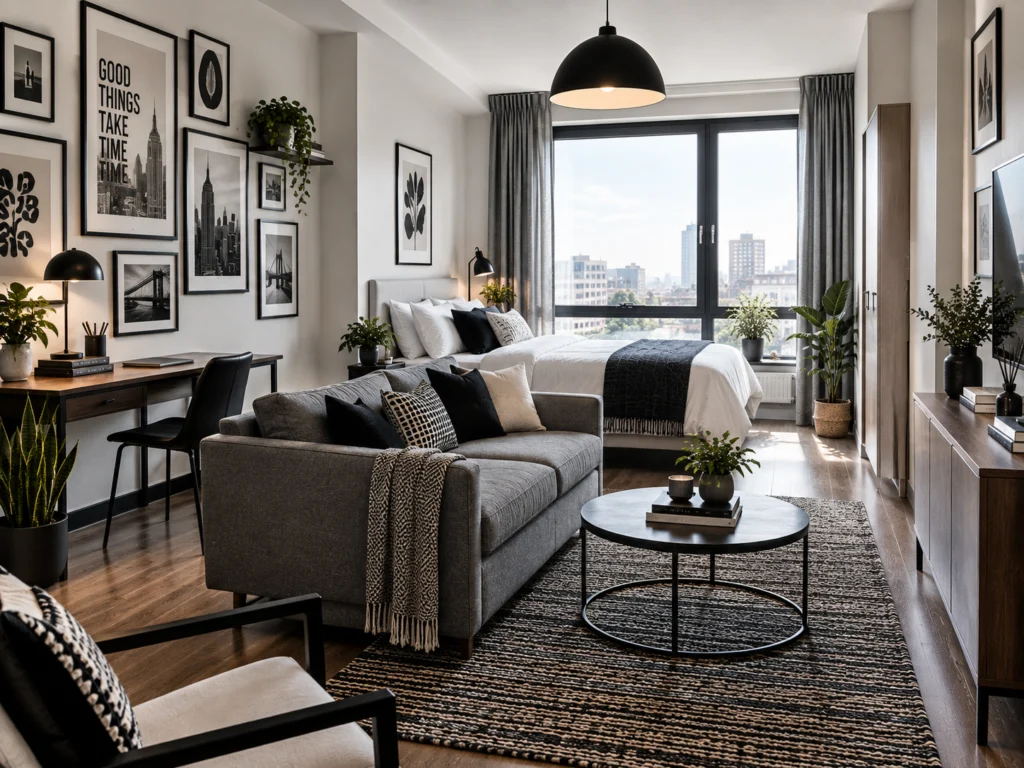
Pushing a desk against the wall and hanging a gallery wall above it turns a work-from-home setup into part of the room’s personality instead of an afterthought, a placement covered further in these studio apartment home office ideas. A grey sofa and white bed balance an otherwise stark black-and-white palette so the room doesn’t tip into feeling cold.
13. Go Full Boho With a Bookshelf Divider and Warm Tones
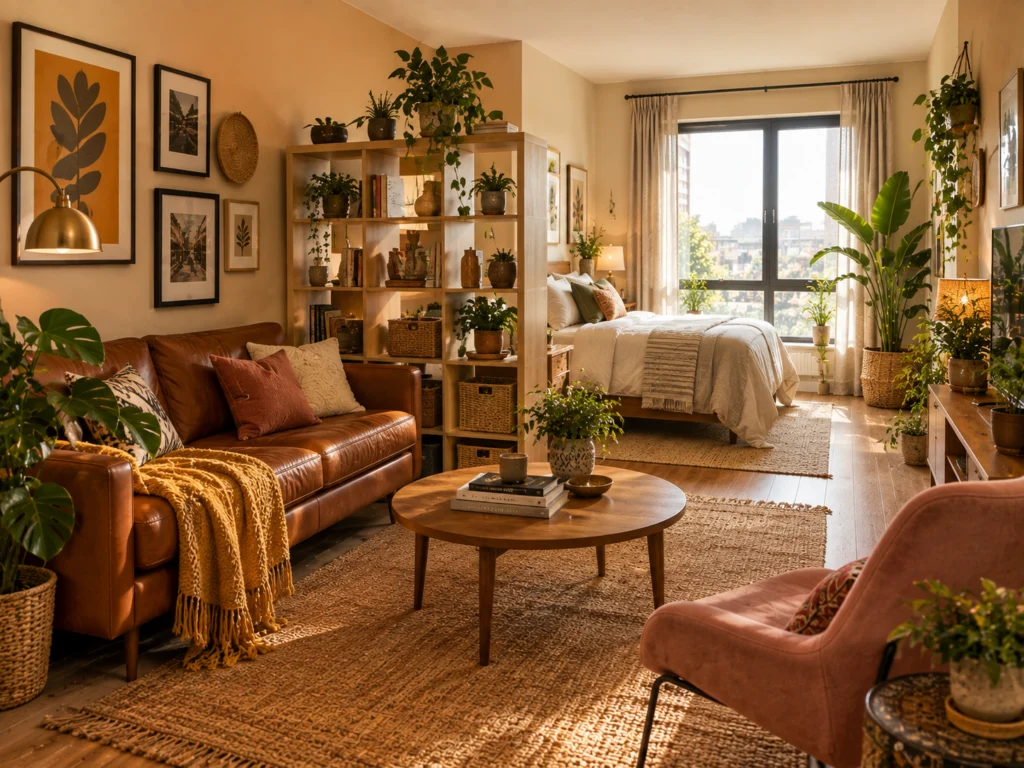
Turning a cube bookshelf sideways so it functions as a divider gives a studio real separation plus storage and display space for books, baskets, and plants all in one piece. A cognac leather sofa against warm sandy walls anchors an otherwise busy boho mix of textures and colors, keeping the room from reading cluttered.
My favorite trick: A sideways cube bookshelf divider consistently does more zoning and storage work than any single-purpose furniture piece in a studio.
Common creative-studio mistakes to avoid
- Styling both sides of a glass partition differently. Matching the color palette across the divide keeps the studio reading as one space rather than two disconnected rooms.
- Choosing an all-white palette without a genuine restraint on materials. Scandinavian calm depends on staying within white, cream, grey, and natural wood — straying from that range breaks the effect.
- Skipping vintage or secondhand pieces in favor of an all-new furniture set. A single well-chosen vintage rug or leather chair adds a collected feel new furniture can’t replicate.
- Placing a desk as an afterthought instead of designing around it. A desk against the wall with a gallery wall above it becomes part of the room’s personality rather than a functional eyesore.
- Overloading a boho palette without one grounding neutral. Warm sandy walls or a leather sofa keep a busy mix of pattern and plants from reading chaotic, a balance also worth checking against these earth-tone studio apartment ideas.
Quick answers
Does a glass partition work in a studio with limited natural light?
Yes — a glass partition is specifically one of the few dividers that adds privacy without blocking any of the light a studio already has.
Can a wardrobe function as a room divider?
Yes — placing a tall wardrobe between the bed and sofa provides storage and visual separation in one piece of furniture, without blocking airflow the way a solid wall would.
Is a vintage rug worth the investment in a small studio?
Often, yes — a genuinely good vintage rug can make a studio feel collected and intentional in a way new furniture alone rarely achieves.
How do I keep a work-from-home desk from looking like clutter in a studio?
Push the desk against a wall and hang a gallery wall or shelf above it so the setup reads as part of the room’s design rather than an afterthought.
Can a moody, dark palette work in a small studio?
Yes, as long as it’s balanced with at least one warm material — a jute rug or walnut furniture — to keep the room from feeling cold.
What’s the easiest way to zone a studio without buying a divider?
A rug under the seating area or one consistent color repeated across zones can define separate spaces just as effectively as a physical divider.
The change that surprised me most in my own studio was matching the palette on both sides of a room divider — same furniture, same layout, but it suddenly read as one apartment instead of two mismatched halves.