

A blue sofa can make a living room feel polished without being difficult to decorate around. Whether you choose a soft dusty blue, deep navy, or a richer teal, blue works surprisingly well with warm wood, cream, beige, white, and natural textures.
The trick is to let the sofa be the main color while using the rest of the room to support it rather than compete with it. Here are 15 ways to style a blue sofa for a room that feels comfortable, balanced, and current.
Wall colors and backdrops
1. Warm white walls
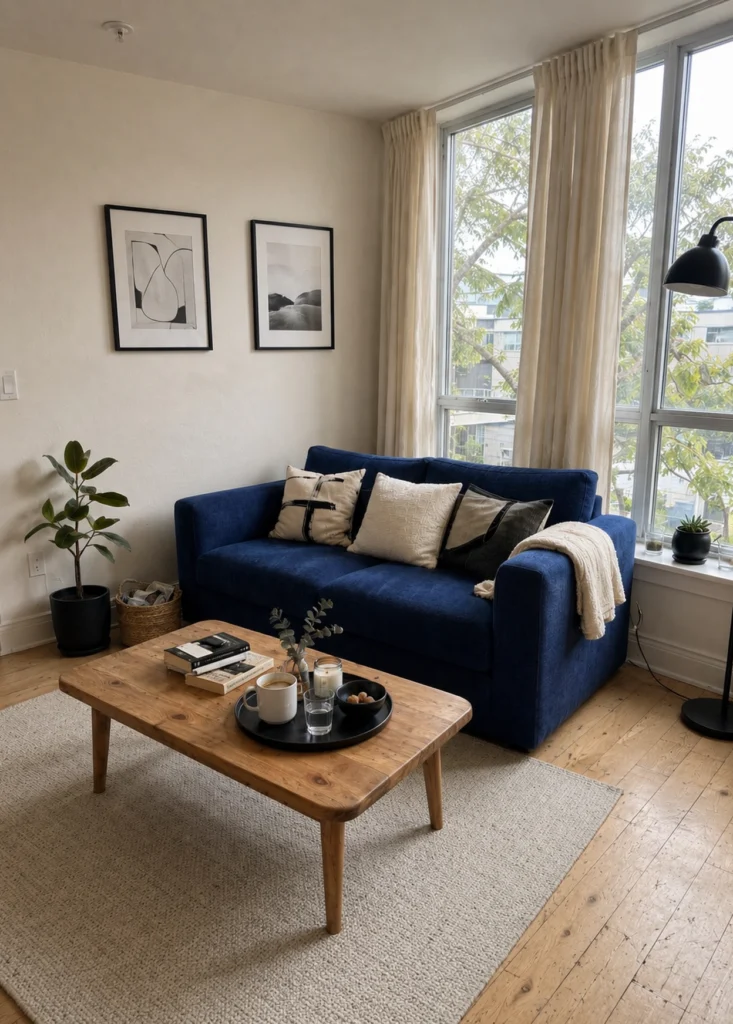
Warm white is one of the easiest choices behind a blue sofa. It keeps the room bright while giving the blue upholstery enough contrast to stand out. A slightly warm white also prevents the space from feeling too cold, especially when the sofa is navy or another deep shade.
2. Soft beige or cream walls
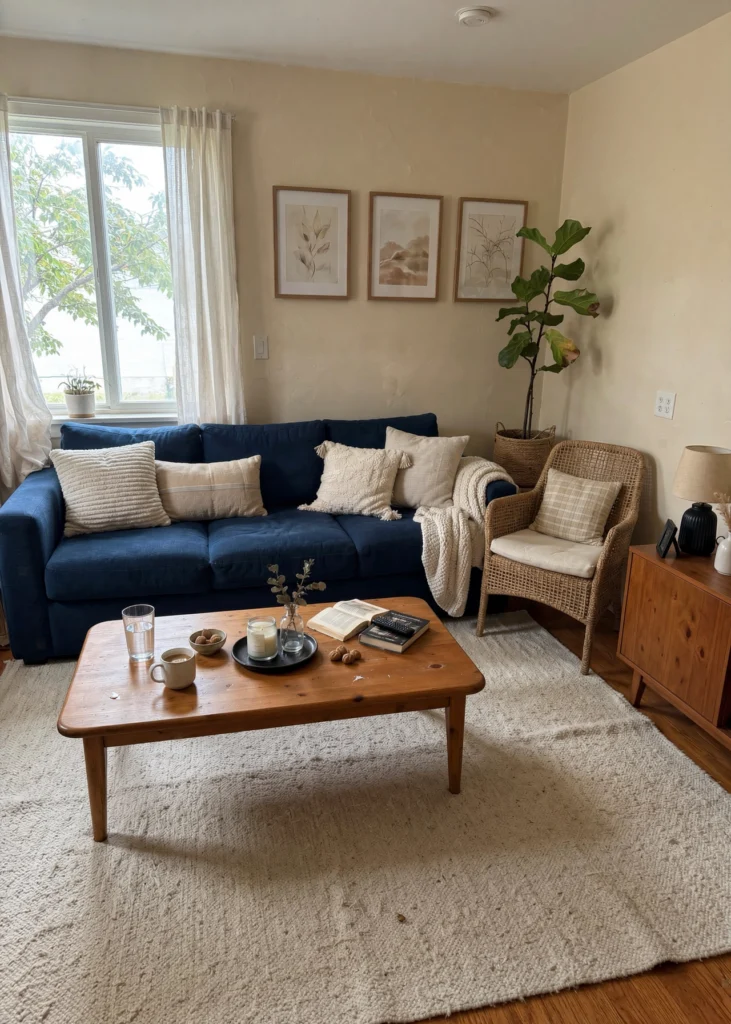
Cream and beige walls bring warmth to a blue sofa and create a softer overall look than bright white. This combination works particularly well with natural wood furniture, woven accessories, and neutral rugs.
3. Light grey walls
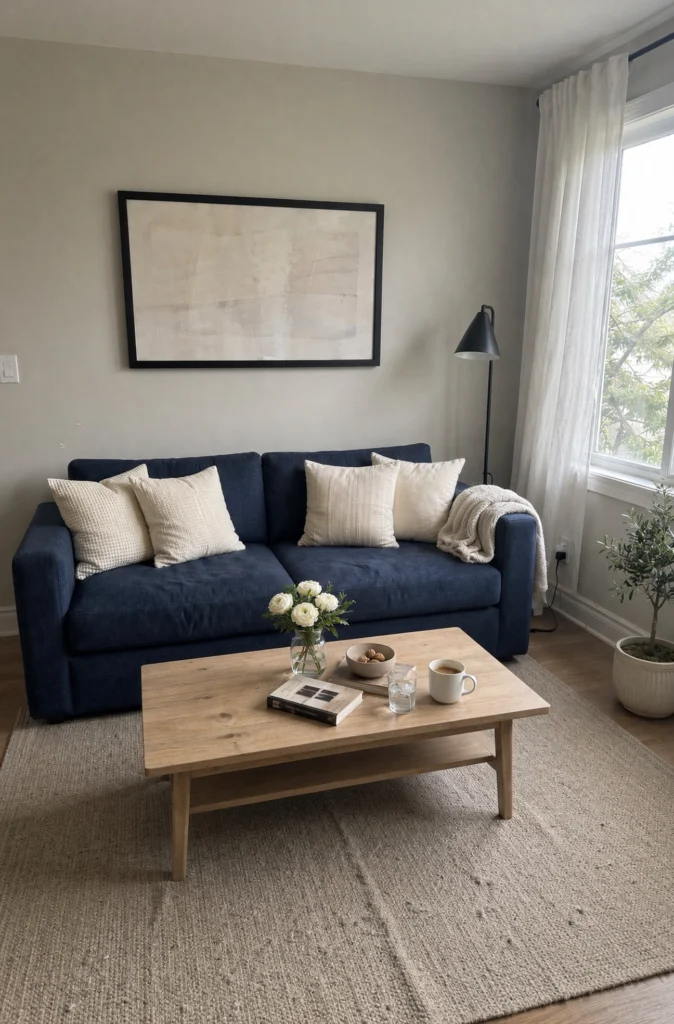
A pale grey wall can make a blue sofa feel more sophisticated and contemporary. Keep the grey relatively warm or neutral if you want to avoid a room that feels too cool, and add cream textiles or wood accents to balance the combination.
Furniture and material pairings
4. A warm wood coffee table
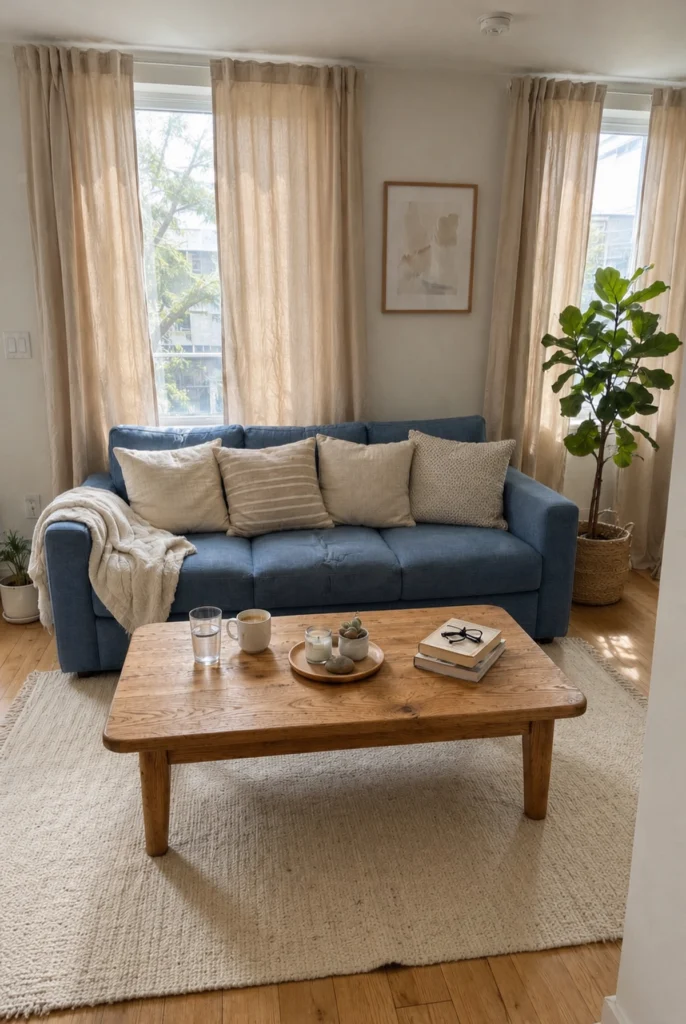
Warm wood is an easy match for blue because it adds the warmth that cooler blue upholstery sometimes lacks. Oak, walnut, or medium-toned wood can make the seating area feel more grounded without taking attention away from the sofa.
5. Cream or beige accent chairs
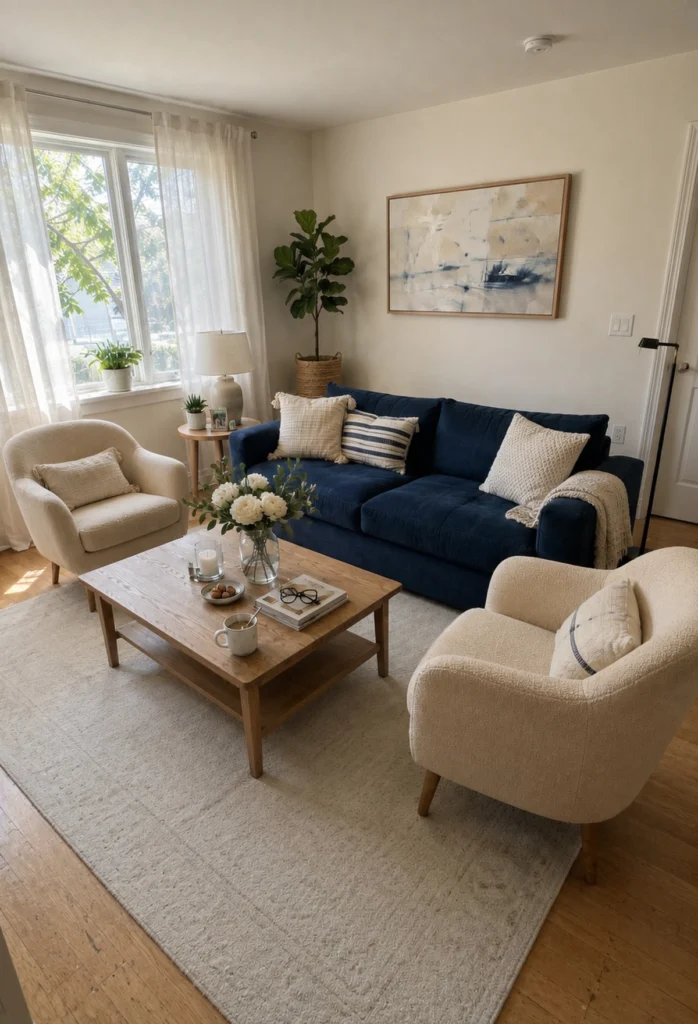
A pair of cream or beige chairs can balance a blue sofa while keeping the room light. This is especially useful if the sofa is a dark navy because the lighter chairs prevent the seating arrangement from becoming visually heavy.
6. Rattan or cane furniture
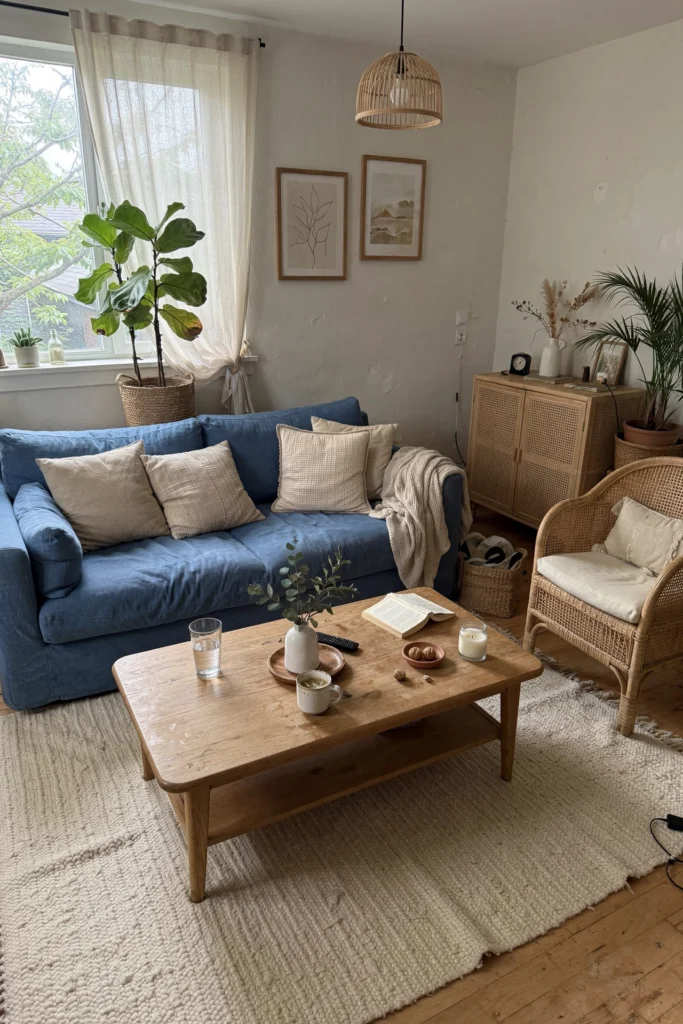
Natural woven furniture gives a blue sofa a more relaxed, organic feel. A rattan accent chair, cane cabinet, or woven bench can soften a formal navy sofa and work particularly well with coastal, Scandinavian, or modern earthy interiors.
7. A black coffee table for contrast
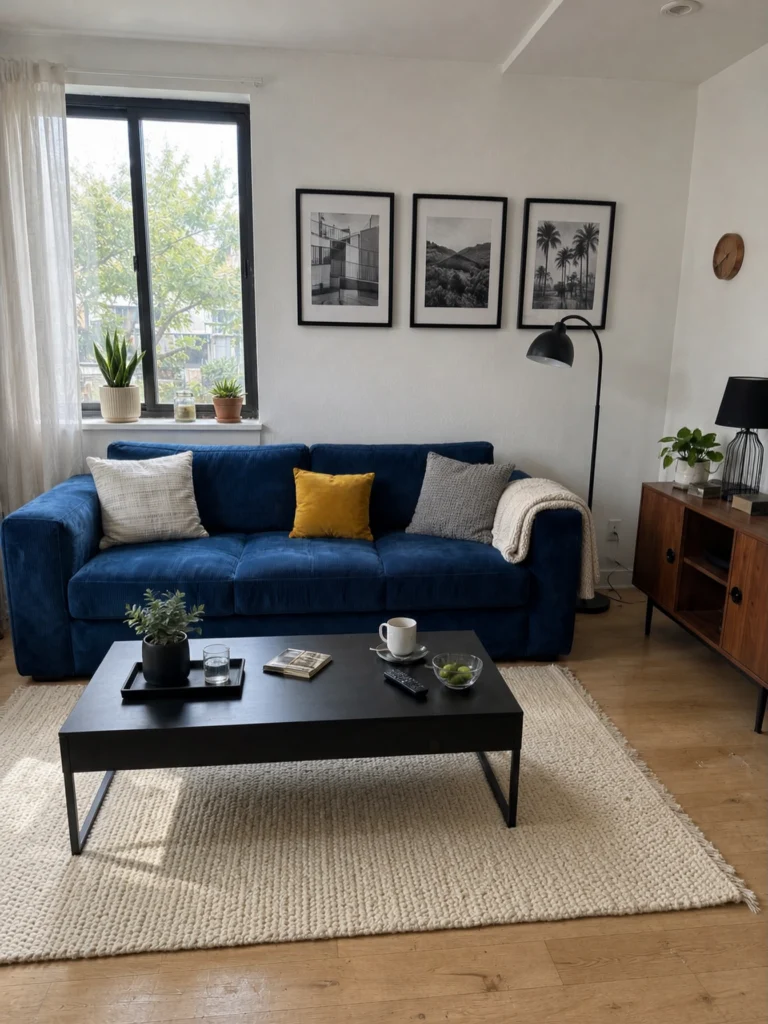
If you want a sharper, more contemporary look, pair the blue sofa with a simple black coffee table. Repeat the black in small details such as picture frames, lighting, or side tables so the contrast feels intentional rather than random.
Rugs and textiles
8. A light neutral rug
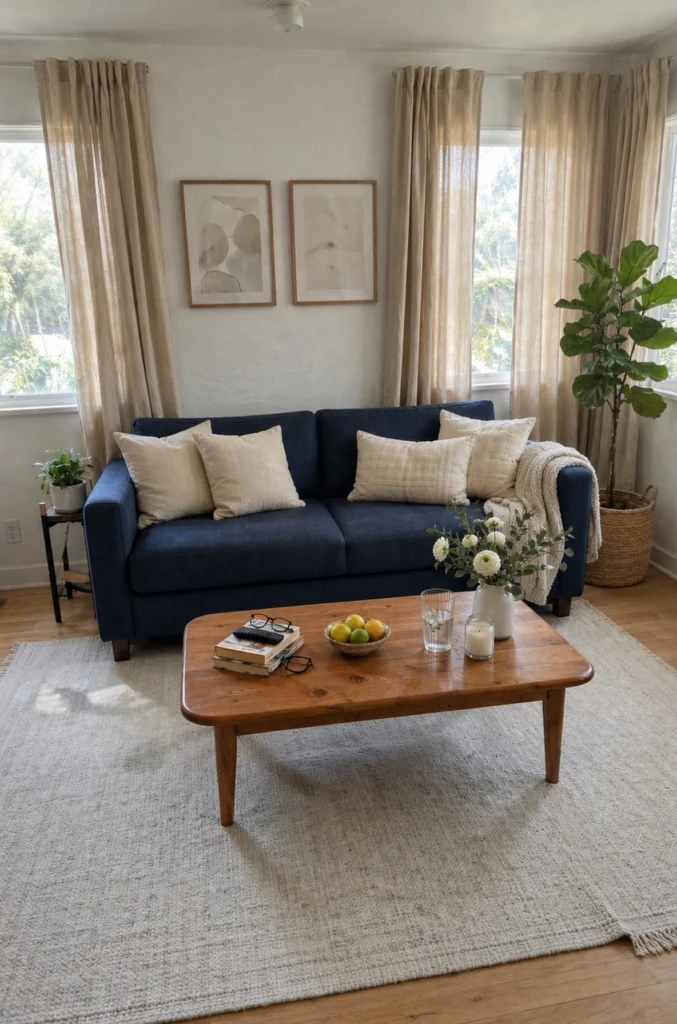
A cream, ivory, or light beige rug gives a blue sofa a soft foundation. It also helps brighten the floor area when the sofa itself is a darker shade. A simple texture is often enough if the sofa already has a strong presence.
9. A blue and neutral patterned rug
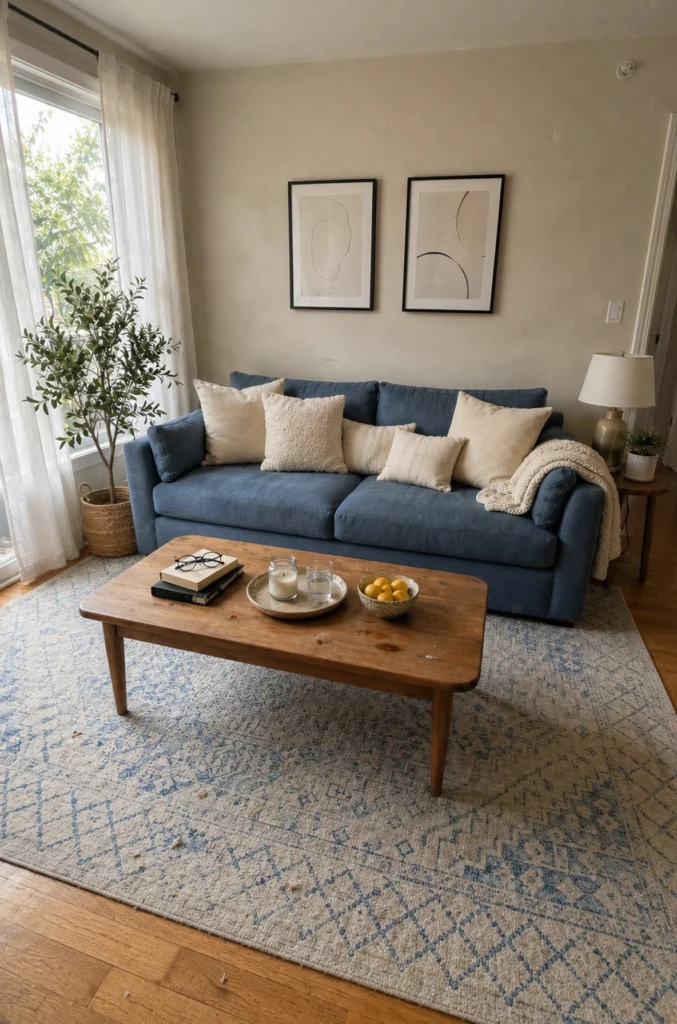
A rug that includes blue alongside cream, beige, or grey can visually connect the sofa to the rest of the room. Stripes, subtle geometric patterns, and faded traditional designs work well without making the space feel overly coordinated.
10. Layered cream and blue pillows
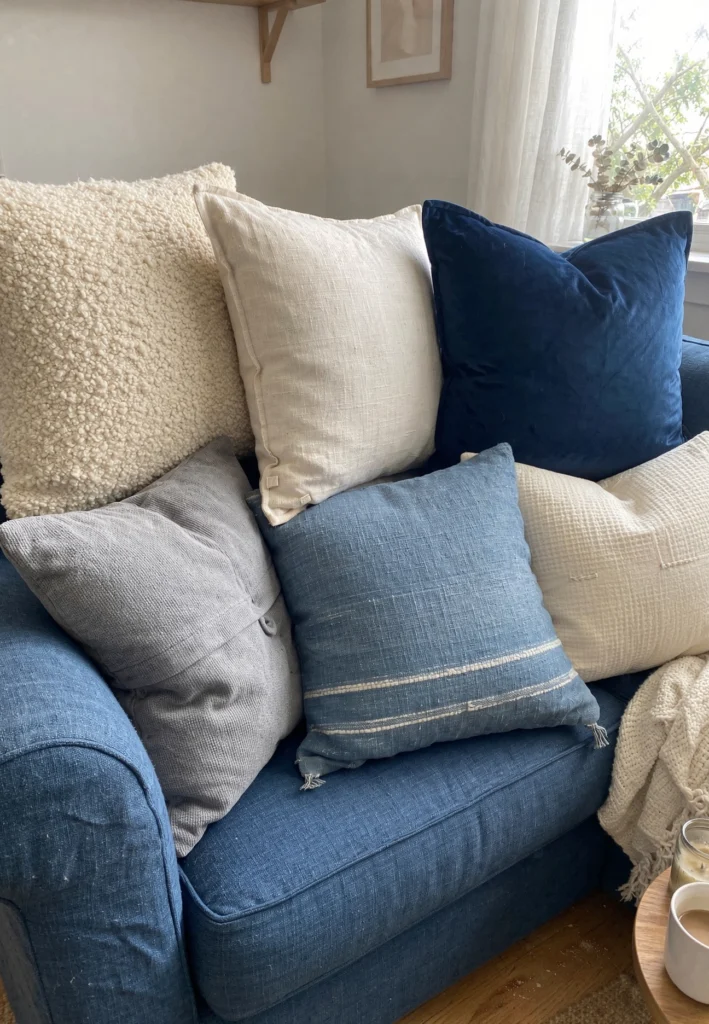
Mix different shades of blue rather than trying to match the sofa exactly. Navy, dusty blue, pale blue, cream, and soft grey pillows can create depth while keeping the color story connected. Different textures such as linen, cotton, bouclé, and velvet make the arrangement feel more relaxed.
Lighting and metal accents
11. Warm brass lighting
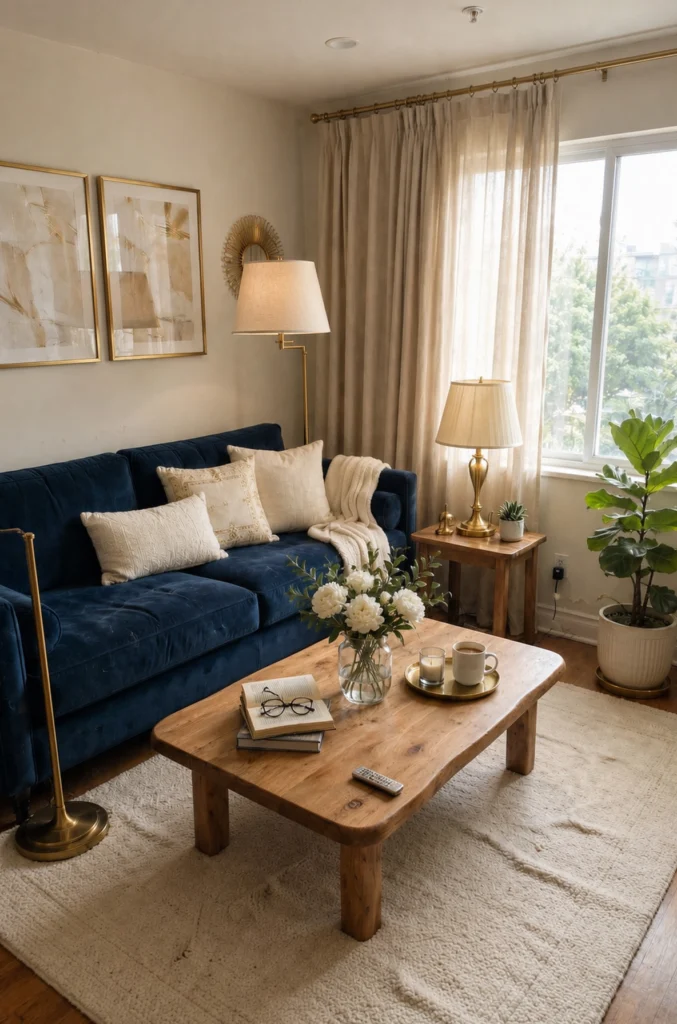
Brass is particularly useful with blue because its warm metallic tone creates contrast against cooler upholstery. A brass floor lamp, table lamp, or pendant can make a navy or royal-blue sofa feel richer and more sophisticated.
12. Layered warm lighting
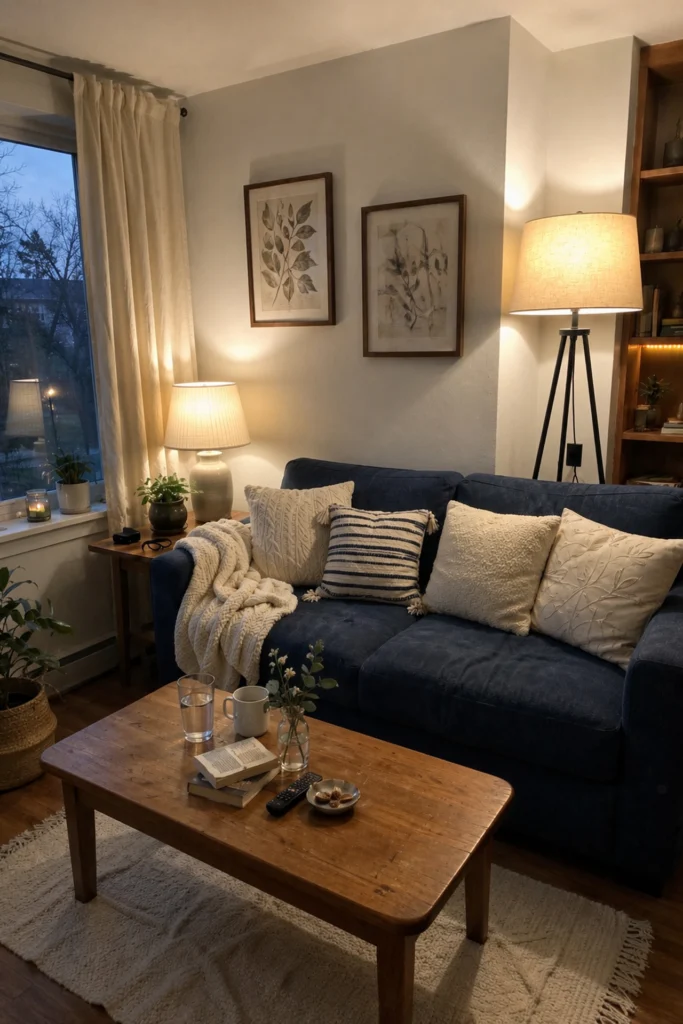
Blue can look much darker under poor evening lighting, so don’t rely on one ceiling fixture. Combine a floor lamp, table lamp, and smaller accent lights with warm bulbs around 2700K–3000K. The layered glow helps the sofa retain its depth without making the room feel gloomy.
13. Natural pendant lighting
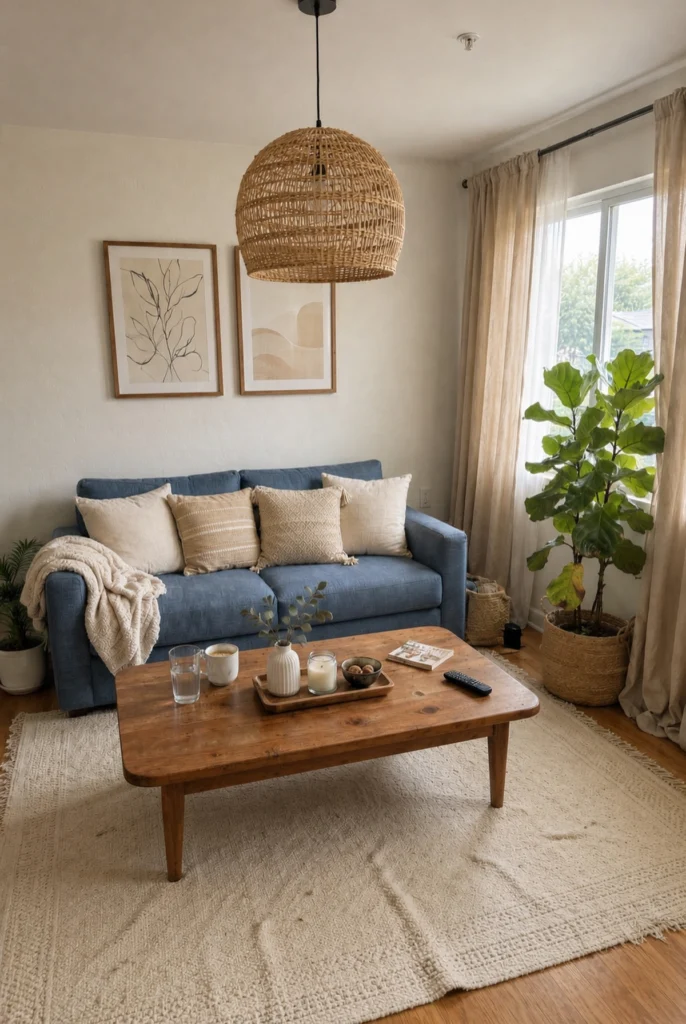
A woven rattan or natural-fiber pendant can soften the stronger visual effect of a blue sofa. The texture adds warmth without introducing another strong color, particularly when the room already has beige, cream, or wood elements.
Styling and finishing touches
14. Artwork in complementary neutral tones
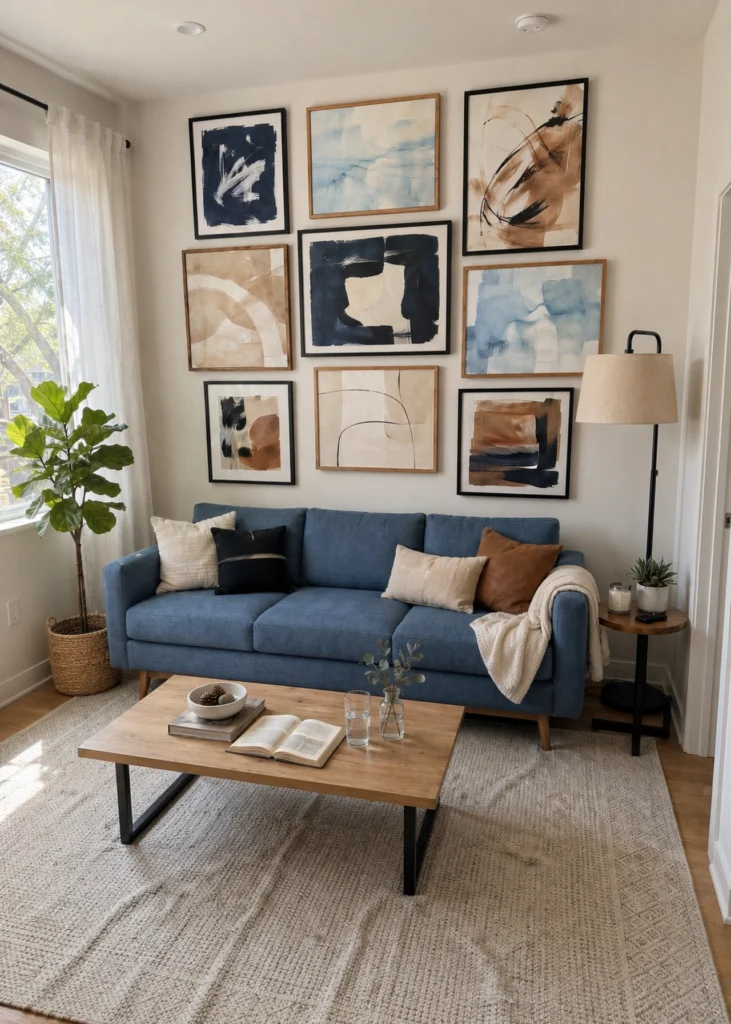
Artwork is an easy way to repeat the sofa’s color without making every accessory blue. Choose prints with small amounts of navy, soft blue, cream, black, or warm brown, and use simple wood or black frames to tie everything together.
15. Plants and natural greenery
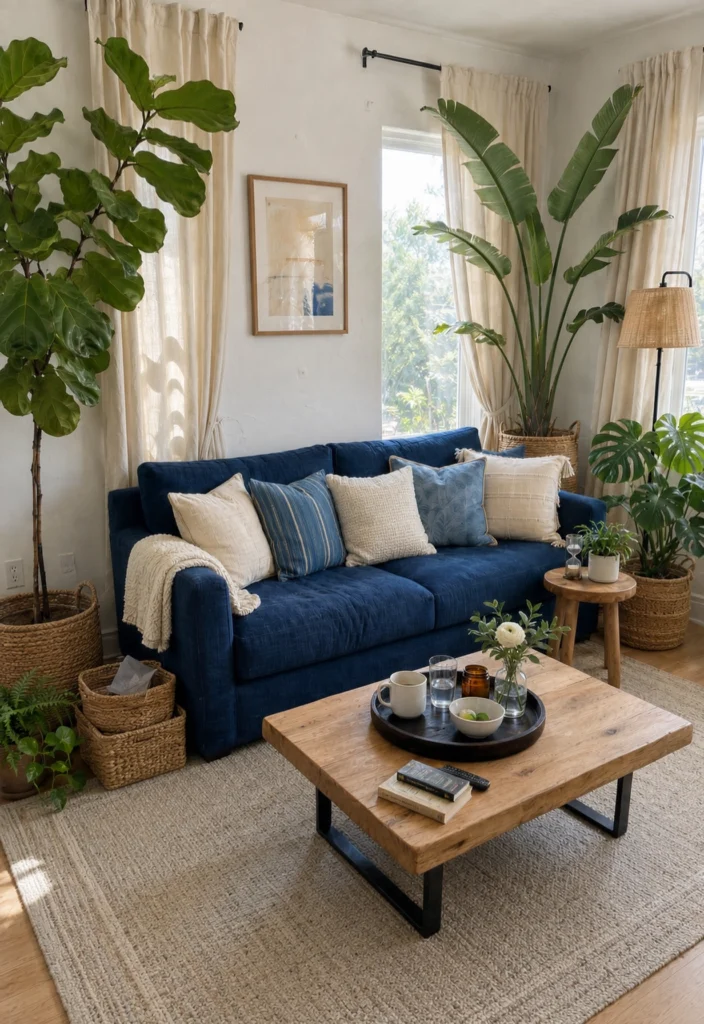
Greenery brings a natural contrast to blue and prevents the room from feeling overly color-coordinated. A large leafy plant beside the sofa, smaller plants on a shelf, or a simple branch arrangement can add life while working with almost any shade of blue.
Common mistakes to avoid
- Matching everything to the sofa. A room full of identical blue accessories can feel too themed. Repeat the color selectively instead.
- Using too many cool tones. Blue walls, blue furniture, grey flooring, and silver accessories can make the room feel cold. Add warm wood, cream, beige, or brass.
- Choosing a rug that is too dark. A very dark rug underneath a navy or deep blue sofa can make the seating area feel heavy. Lighter rugs usually create better balance.
- Ignoring the sofa’s shade. Pale blue, navy, teal, and cobalt have very different effects. The lighter or brighter the blue, the quieter the surrounding colors should generally be.
- Forgetting texture. A blue sofa can look flat if everything around it has the same smooth finish. Mix linen, wool, jute, wood, woven materials, and other tactile surfaces.
Why a blue sofa works in so many living rooms
Blue sits in a useful middle ground between bold and neutral. A pale blue sofa can feel soft and relaxed, while navy can look tailored and sophisticated. Because blue works with both warm and cool neutrals, you can change the personality of the room without replacing the main piece of furniture.
The easiest approach is to build around three supporting elements: a warm neutral, a natural material, and one darker accent. For example, a navy sofa with a cream rug, oak coffee table, and black lighting already gives you a balanced foundation. From there, pillows, artwork, plants, and accessories can add personality without making the room feel busy.
Quick answers
What wall color goes best with a blue sofa?
Warm white, cream, beige, and light grey are all reliable choices. The best option depends on the shade of blue and how much natural light the room receives.
What colors go well with a blue sofa?
Cream, beige, white, warm wood, soft grey, brass, black, and natural green all pair well with blue.
What rug works best with a blue sofa?
A light neutral rug is the safest choice, especially with a dark blue sofa. A patterned rug containing blue and cream can also work if you want more visual interest.
How do I make a navy sofa feel cozy?
Add warm lighting, cream or beige pillows, a textured rug, natural wood, and soft materials such as linen, wool, or bouclé.
Can I use blue with grey furniture?
Yes. Blue and grey create a calm, contemporary combination, but adding warm wood, cream, or beige helps keep the room from feeling too cool.
What metal looks best with a blue sofa?
Brass and warm gold are especially effective because they add warmth and contrast. Black metal works well if you prefer a more modern, graphic look.
About
I write thehomesdecors.com from actual rooms I’ve decorated, rented, repainted, and occasionally regretted, not a showroom or a brand deck. If something here didn’t work in my own place, I’ll tell you.
1 thought on “15 Blue Sofa Living Room Ideas for a Stylish Space”