
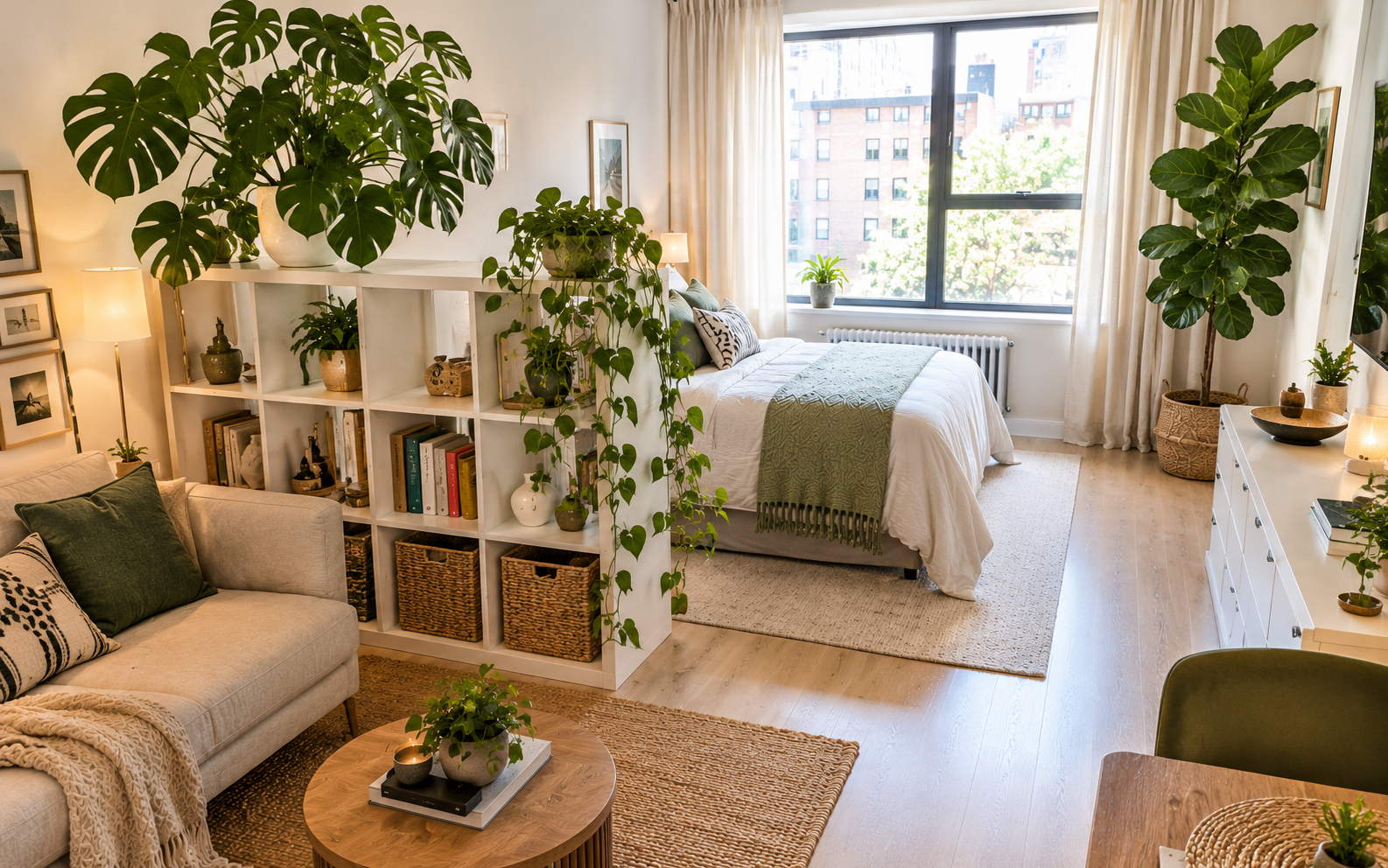
Plants make a studio feel like a home instead of a room you sleep in, and even one well-placed pot changes how a small space feels. The trick is finding spots for them when every surface already has a job. Here are 15 plant ideas that work in a studio, no greenhouse required.
1. Fresh Flowers and Windowsill Greenery
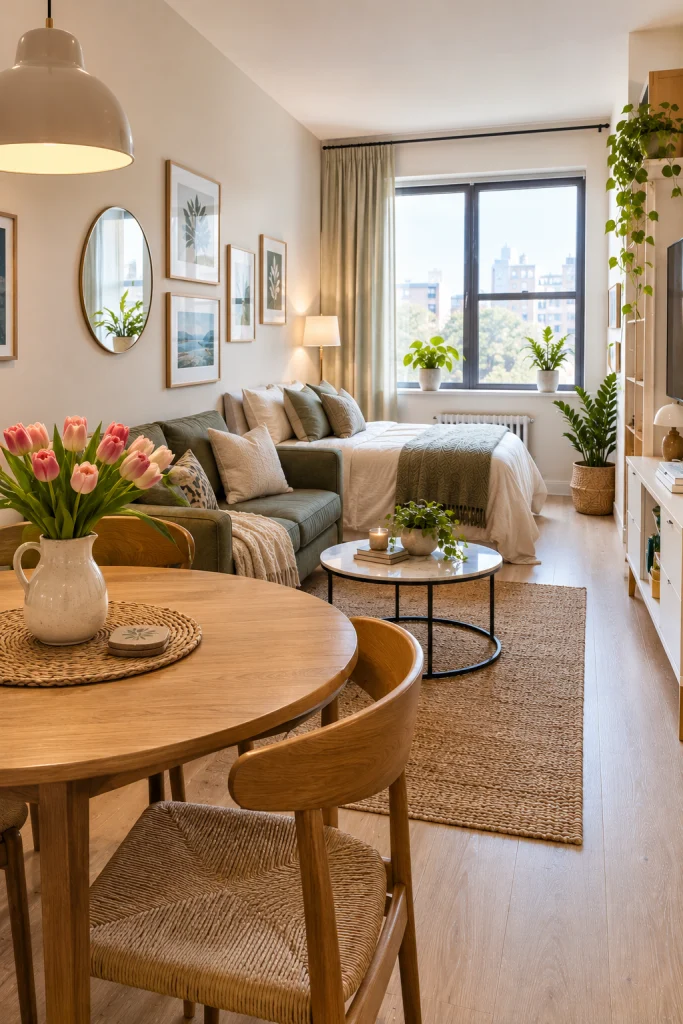
A dozen pots aren’t needed to bring life into a studio. A simple ceramic vase of fresh flowers on the dining table plus a couple of small potted plants on the windowsill is enough. The flowers soften hard surfaces, and the windowsill plants catch natural light without using any floor space.
Tip: Ranunculus and tulips last longer than most people expect and look good in a simple round vase.
2. Crown Your Room Divider with a Statement Plant
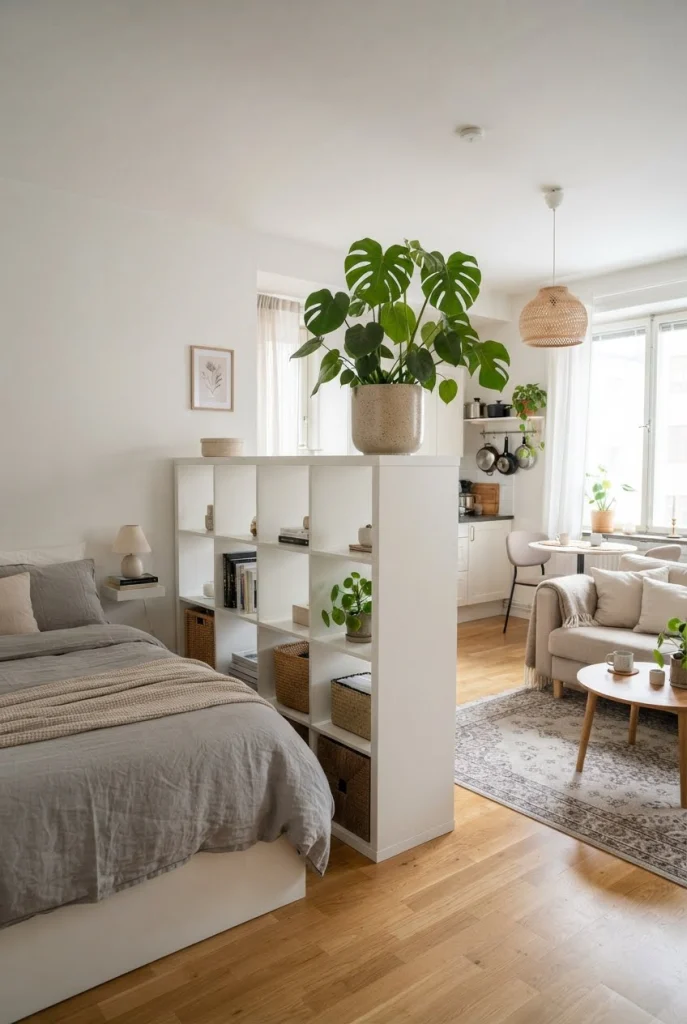
A large monstera on top of a cube shelf divider adds height and visual weight, so the divider feels more like a real wall. The big leaves soften the boxy grid of the shelving and create a canopy effect that makes both sides of the room feel more enclosed and intentional. For more ways to use a shelf this way, see studio apartment open shelf divider ideas.
Tip: A monstera in a neutral ceramic pot is the sweet spot between dramatic and low-maintenance.
3. Create a Window Plant Wall
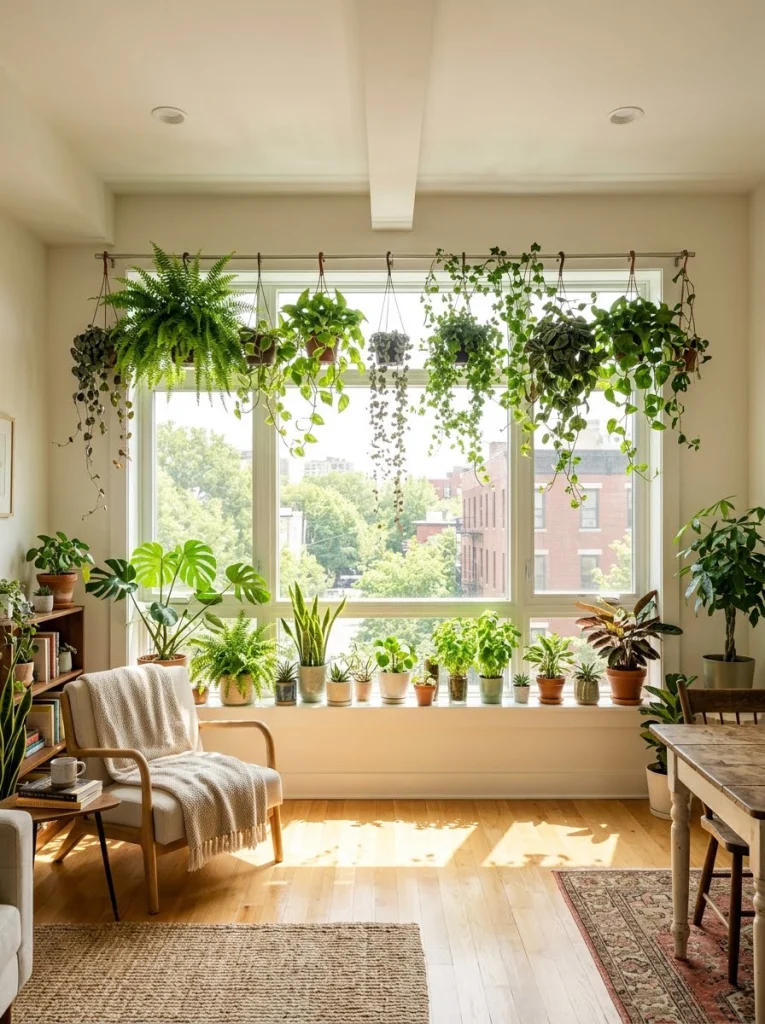
Big windows are worth using. Line the sills with potted plants, hang ferns and trailing vines from hooks above the frame, and let it all grow together into a green wall. It also works as a natural privacy screen, since neighbors see leaves instead of your couch. This works best with south- or west-facing windows, where plants get enough light to thrive.
Tip: Adhesive ceiling hooks hold lightweight hanging planters without any drilling.
4. Tuck Plants into Your Shelf Divider
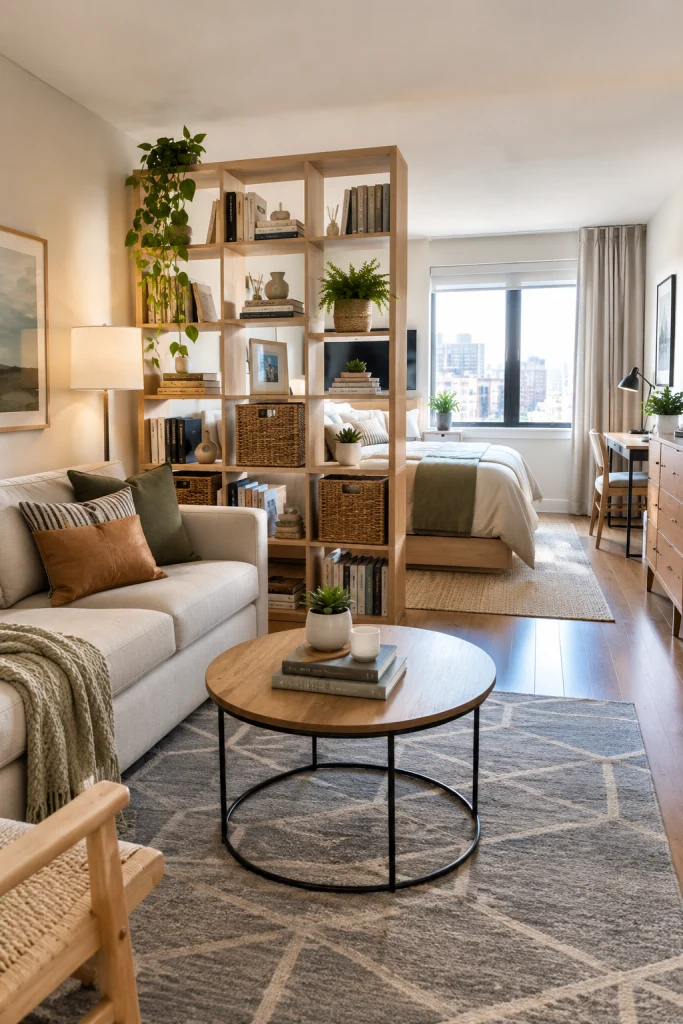
An open shelf divider isn’t only for books and bins. A few small plants scattered across different cubbies, like a tiny succulent in one and a small fern in another, break up the density of books and decor and add a living element to furniture. The key is restraint: two or three small pots spread across the whole unit looks intentional, not cluttered.
Budget tip: A grocery-store pothos grows just as well as a pricey one from a plant boutique, so save your money on the plants themselves.
5. Use a Tall Bookshelf as a Plant Stand
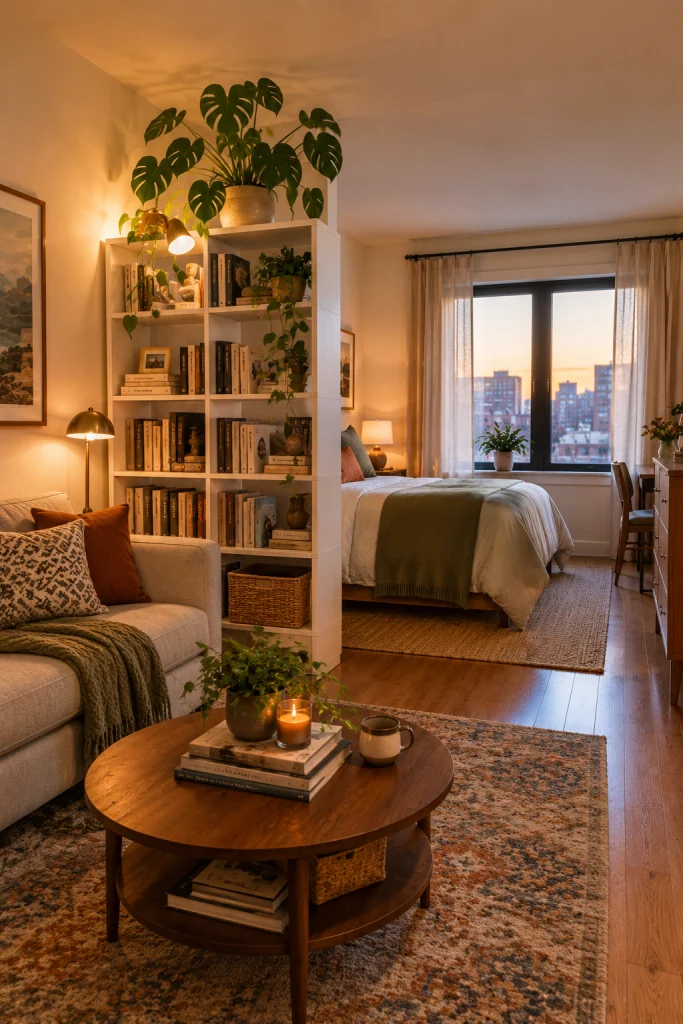
A tall bookshelf gives a studio the vertical space it needs, and the top is prime plant territory. A large monstera or philodendron up there draws the eye to the ceiling and makes the room feel bigger. A small lamp nearby lights the leaves at night, which makes a plain bookshelf feel almost architectural. For more on lighting around plants, see studio apartment lighting decor ideas.
Tip: Plants on top of a tall shelf get soft, indirect light, which many leafy houseplants prefer.
6. Add Trailing Plants to a Compact Shelf Unit
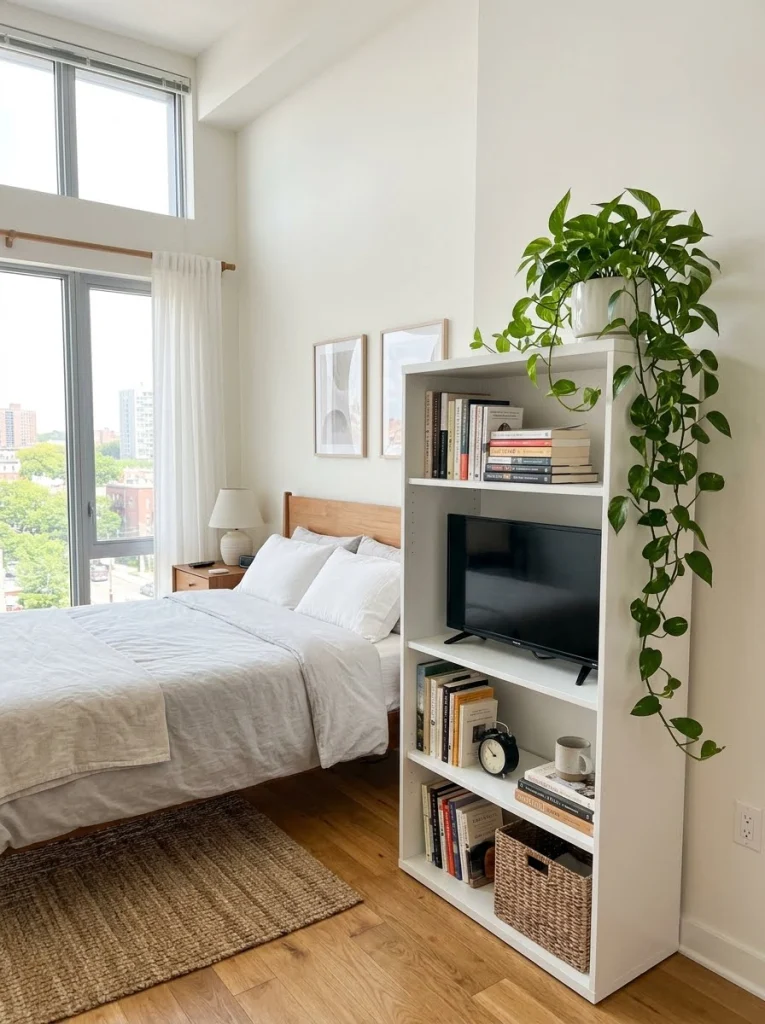
A small shelf unit beside the bed or desk does more than hold a TV and books. It’s a good home for trailing plants. Pothos or heartleaf philodendron draped over the edge adds movement and life without using extra space, and the green looks especially good against white shelving. For more compact storage ideas, see mini studio apartment shelving ideas.
Tip: Rotate trailing plants a quarter turn every week so they grow evenly and don’t get leggy on one side.
7. Anchor a Corner with a Fiddle Leaf Fig
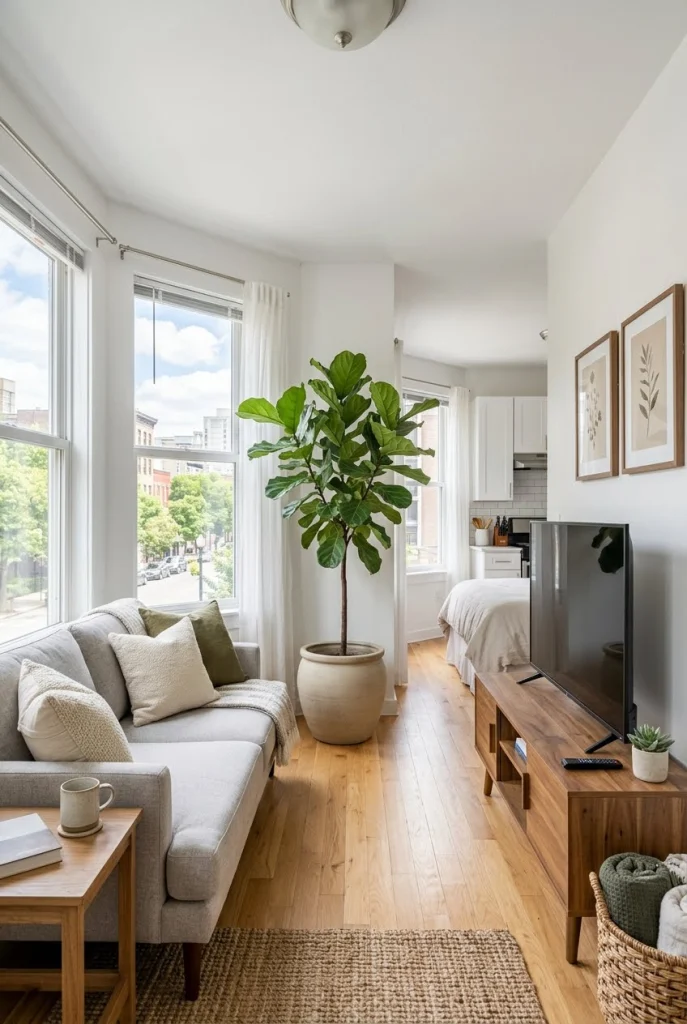
One tall plant in the right corner does more than five small ones scattered around. A fiddle leaf fig beside the TV stand or sofa creates a vertical focal point that makes the room feel taller and more finished. It fills an empty corner without any furniture.
Tip: Fiddle leaf figs are picky about light and drafts. In a dark studio, a rubber plant gives similar impact with less fuss.
8. Go Full Plant Jungle
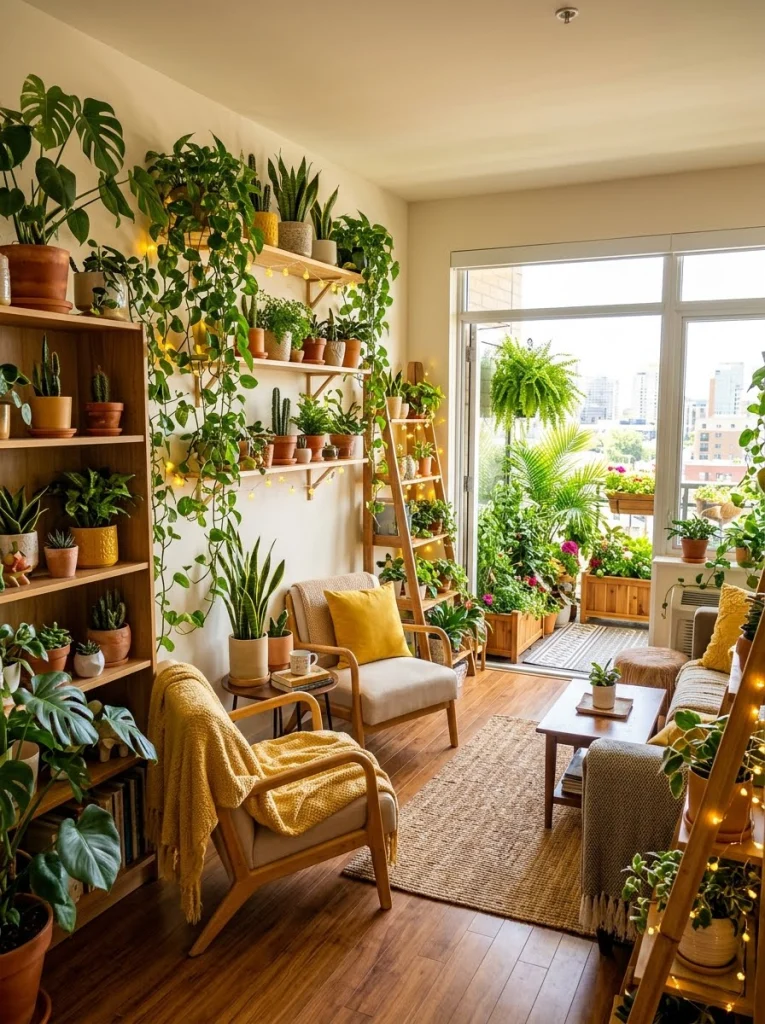
If you love plants, lean all the way in. Fill every shelf, line the bookcase, drape vines from fairy lights, and let the balcony overflow. A plant jungle works in a studio because it gives the space a strong identity: it’s not just small, it’s lush. Keep a loose color palette so it feels curated instead of chaotic, and greens with warm yellows and natural wood work well together.
Tip: Boston ferns on the top shelf of a bookcase cascade nicely and add softness above eye level.
9. Bring Plants to Your Workspace
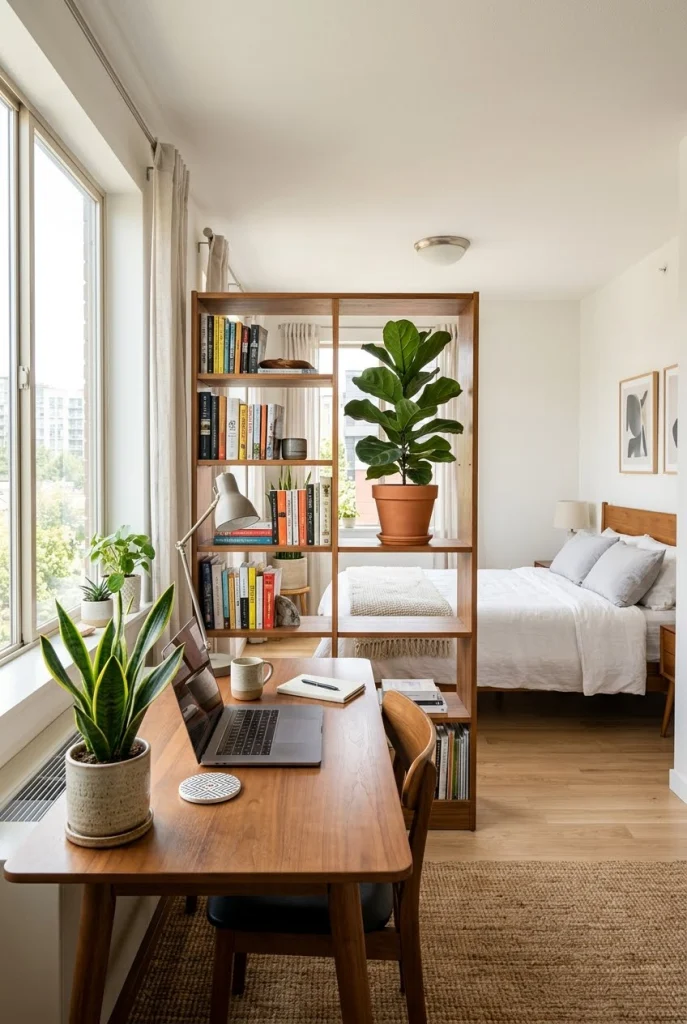
When the desk is three feet from the bed, plants help separate work from rest. A small plant on the desk and a bigger one on the bookshelf behind it creates a visual buffer between work mode and rest mode. It’s a small psychological trick, and greenery around a screen also makes long workdays feel less draining. For more on building a workspace into a studio, see studio apartment ideas with a home office corner.
Tip: A snake plant handles low light, infrequent watering, and almost no attention, which makes it ideal for a desk.
10. Pair a Statement Plant with a Floor Planter
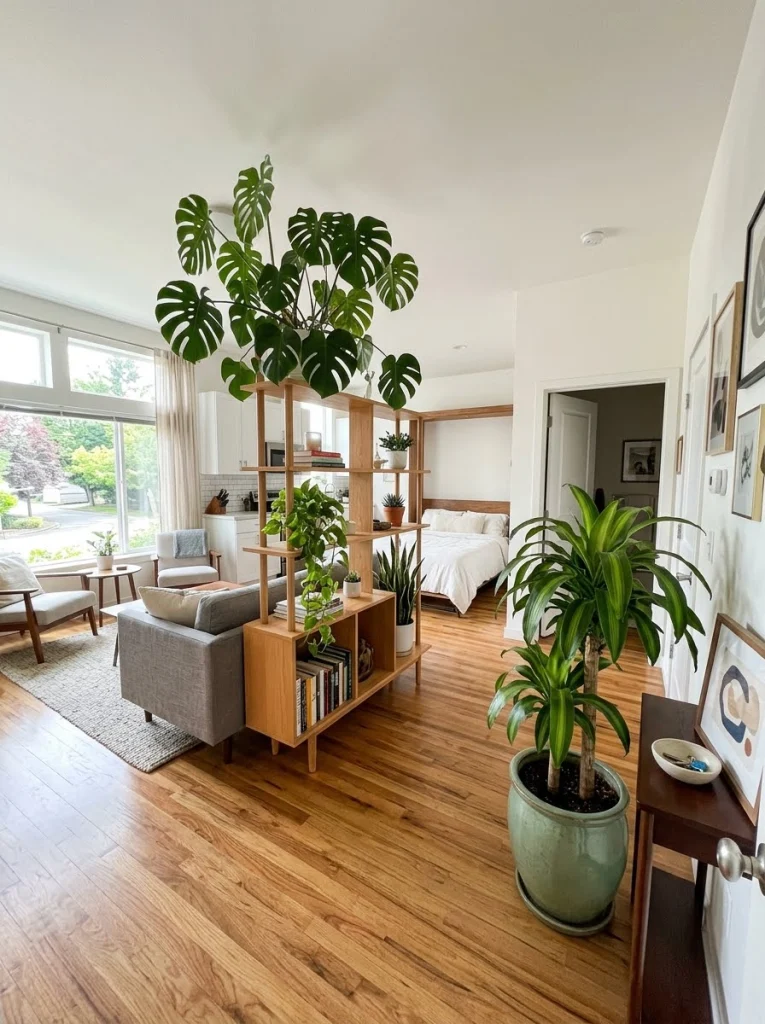
Sometimes two plants are all a room needs. A monstera on top of the shelf divider and a tall dracaena in a floor planter near the entrance make a green frame for the whole room. Pick different shapes, one broad and leafy and one tall and spiky, so they complement each other instead of competing. A ceramic planter in sage or cream ties it together.
Budget vs. splurge: Save on the plant and spend on the planter. A modest dracaena in a beautiful pot reads as a designer choice.
11. Mount a Floating Shelf for Trailing Vines
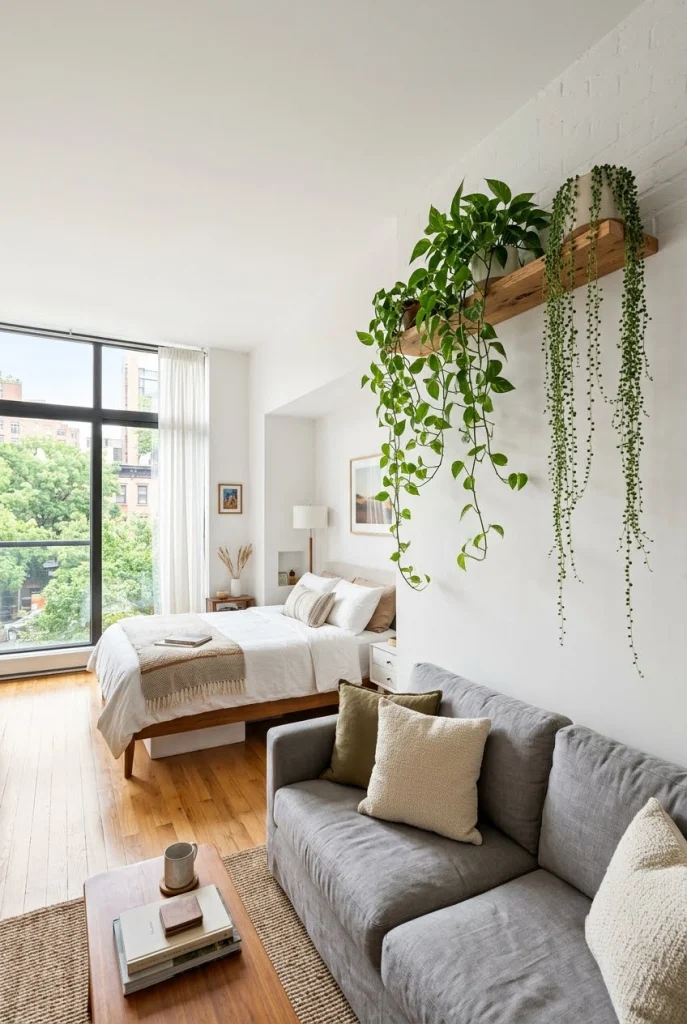
A wall-mounted shelf works as a perch for a trailing plant. One pothos or string of pearls on a high shelf sends vines down the wall, adding texture and movement without touching the floor, which is useful in a studio where every square foot counts. The trailing effect makes bare walls feel finished and lived-in. For styling a shelf once it’s up, see studio apartment shelf decor ideas.
Tip: Adhesive-strip shelves can hold small, lightweight pots, but check the weight limit before loading them.
12. Top Your Storage with Ferns
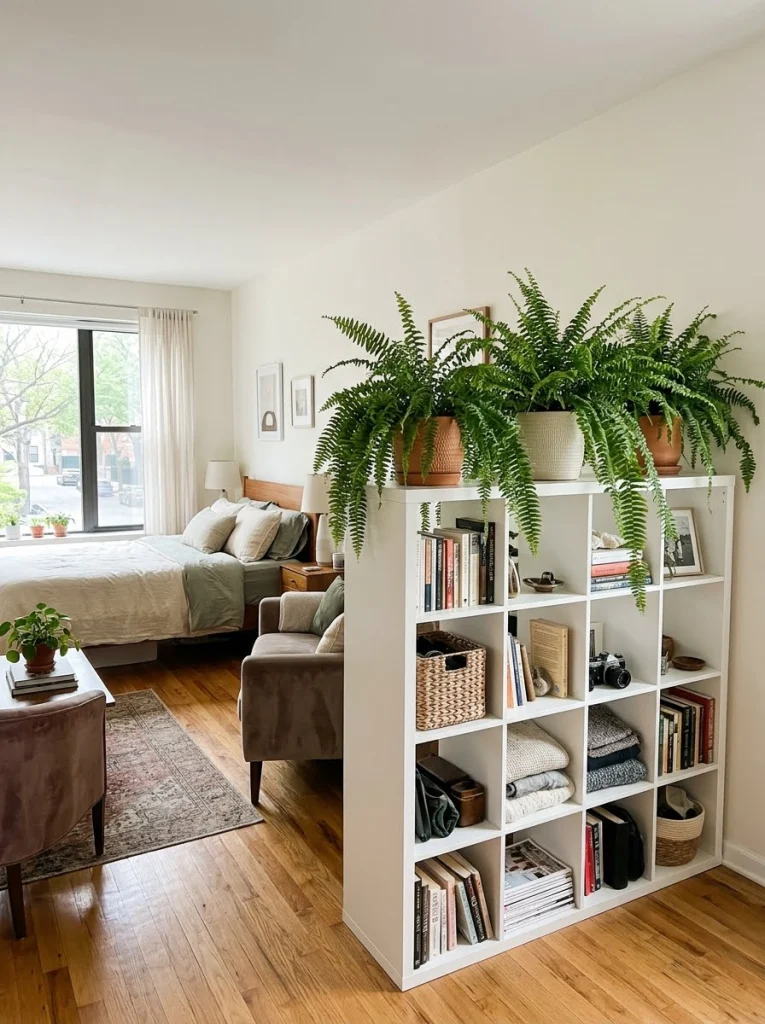
Ferns have a wild quality that softens even the most structured furniture. A couple of Boston or sword ferns on top of cube storage, with their fronds spilling over the edges, turn a basic unit into something like a living garden wall. The contrast between a structured grid and untamed ferns is what makes it look good.
Tip: Ferns like humidity, so mist them once a week or keep a small tray of water nearby.
13. Layer Plants at Different Heights
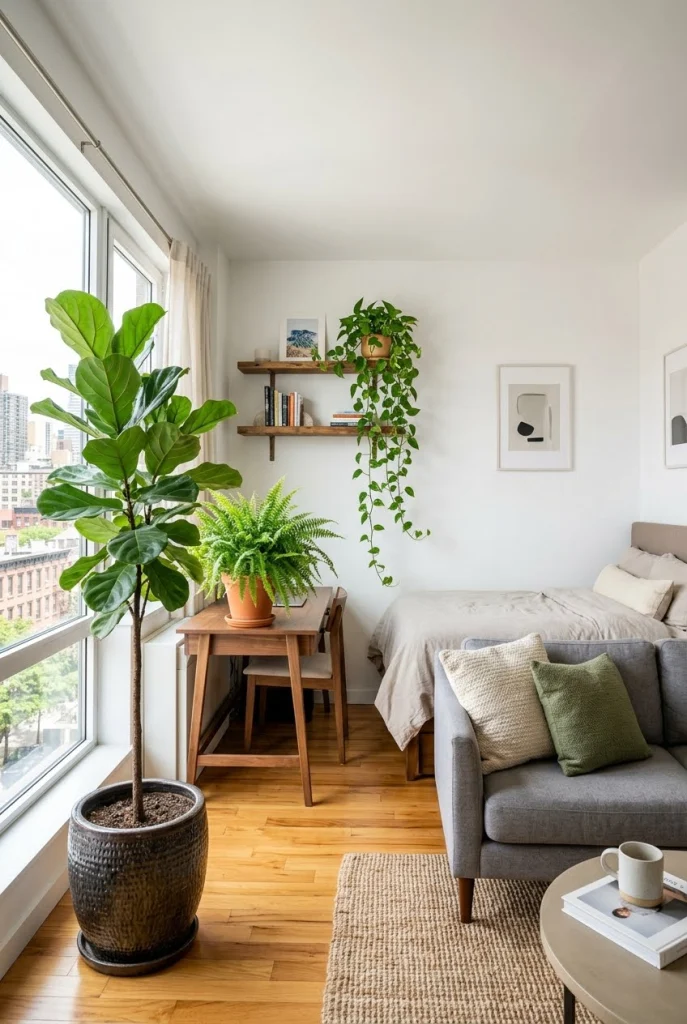
Height variation is what makes plants look intentional instead of random. A tall fiddle leaf fig on the floor, a mid-size fern on the desk, and trailing pothos on wall shelves above lead the eye from low to high, which makes the room feel bigger and more dynamic. Three plants at three levels do more for a studio than ten plants on one surface.
Tip: A wooden plant stand raises a floor plant by 8 to 10 inches and instantly makes it look more deliberate.
14. Mix Trailing and Upright Plants for Drama
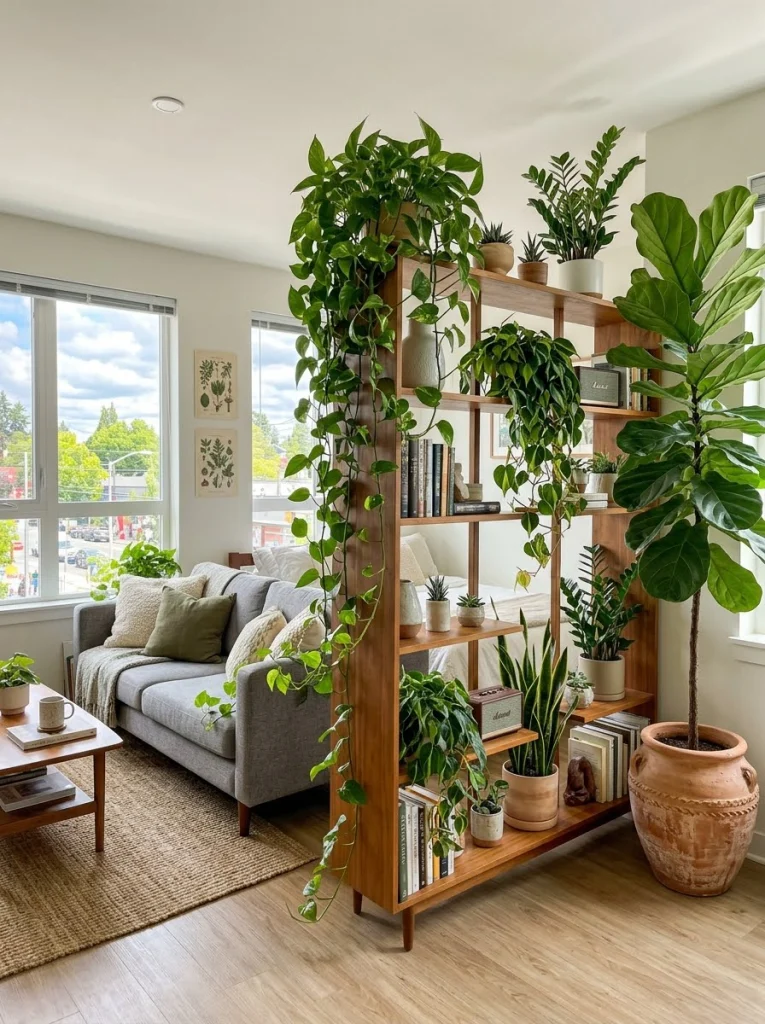
For high impact with little effort, pair trailing plants with upright ones. Pothos draping from a shelf divider with a tall fiddle leaf fig in the corner gives softness and movement alongside structure and height. Together they create a layered, almost gallery-like effect that reads as designed instead of accidental.
Tip: Three to five well-chosen plants, placed with thought, do more than twenty scattered ones.
15. Trail Plants Down from High Shelves
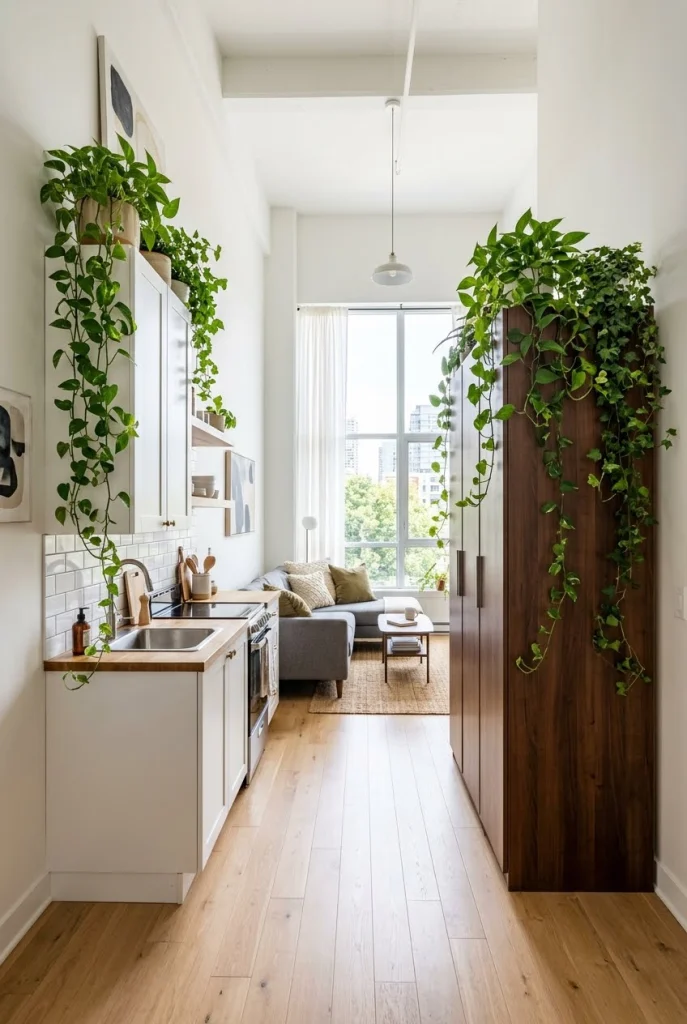
When floor space is tight, go vertical. Trailing plants like pothos or English ivy on top of kitchen cabinets or a tall wardrobe let their vines cascade down, drawing the eye upward and making the ceilings feel taller. You barely notice the plant until someone walks in and says the apartment looks like a magazine.
Tip: Pothos is hard to kill and forgives a missed watering, even two weeks without one.
Common studio plant mistakes
- Putting every plant on one surface. Mixing floor, desk, shelf, and hanging heights makes the room feel bigger and more deliberate.
- Choosing plants that don’t match the light. A fiddle leaf fig in a dark corner struggles, while a snake plant or rubber plant handles it easily.
- Skipping the planter. A plain nursery pot makes even a healthy plant look temporary, and a ceramic or woven planter fixes it right away.
Quick answers
What are the best plants for a small studio?
Pothos, snake plants, and monsteras are the easiest, since they handle indoor light and forgive missed watering.
How many plants does a studio need?
Three to five well-placed plants at different heights make more impact than a crowd of small ones on one surface.
Where should I put plants in a studio with no floor space?
On windowsills, on top of bookshelves and cabinets, on floating shelves, and hanging from ceiling hooks.
Can plants work as a room divider?
Yes, a tall plant on top of a shelf divider or a row of plants along a window adds height and a soft sense of separation.
What plants work in a low-light studio?
Snake plants, ZZ plants, and pothos tolerate low light better than fiddle leaf figs, which need bright, steady light.
How do I hang plants without drilling?
Adhesive ceiling hooks and adhesive-strip shelves hold lightweight planters without any holes in the wall.
Should I use fake plants in a studio?
They can fill dark corners where real plants struggle, but real ones add the movement and softness that makes the biggest difference.
Final Thoughts
Plants are one of the cheapest ways to make a studio feel alive, and you don’t need a big collection to get there. Start with one trailing pothos on a high shelf or one tall plant in a bare corner, then build out from there by varying the heights.