
When a studio looks almost right but still feels flat, the missing piece is usually under your feet. A good rug anchors zones, adds warmth, and makes a small space read as more intentional.
Here are 15 rug ideas that work in a small apartment.
1. Go Bold with a Green Shag Rug
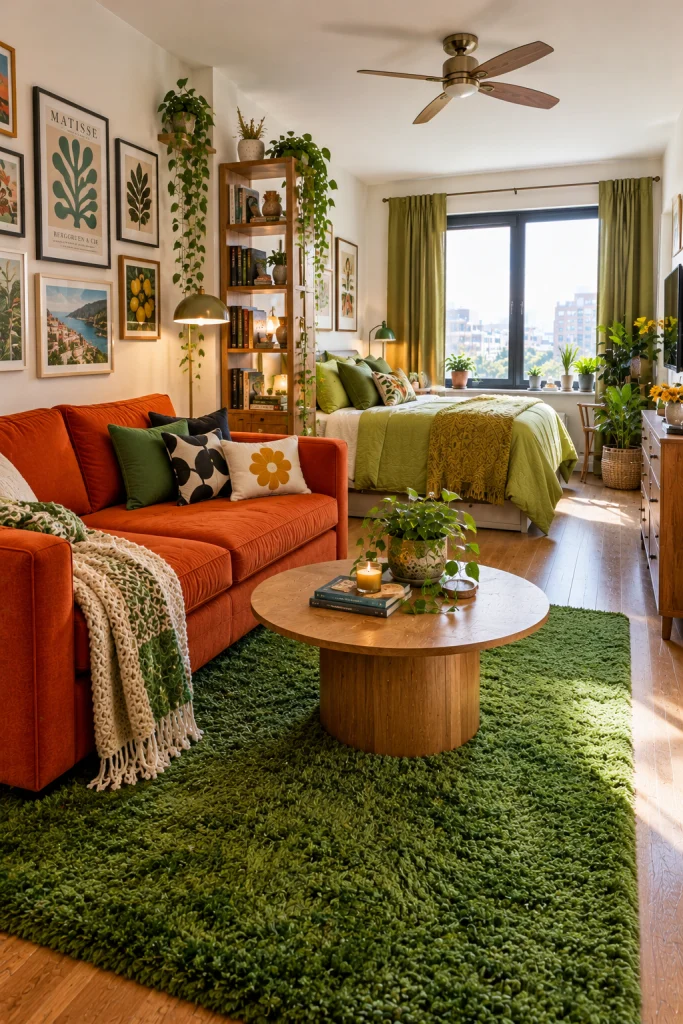
A saturated green shag rug sounds risky, but it works when the rest of the room has clean lines. Paired with a bold orange sofa and lime bedding, it shows how color confidence pays off in a studio. The rug defines the living area without any furniture rearranging. Drop it, center the coffee table, and the lounge zone is clear. For help choosing the right tone for your room, see rug color ideas for studio apartments.
Tip: Stick to one high-pile rug. Two will make a studio feel cluttered instead of cozy.
2. Anchor Your Space with a Vintage Persian Rug
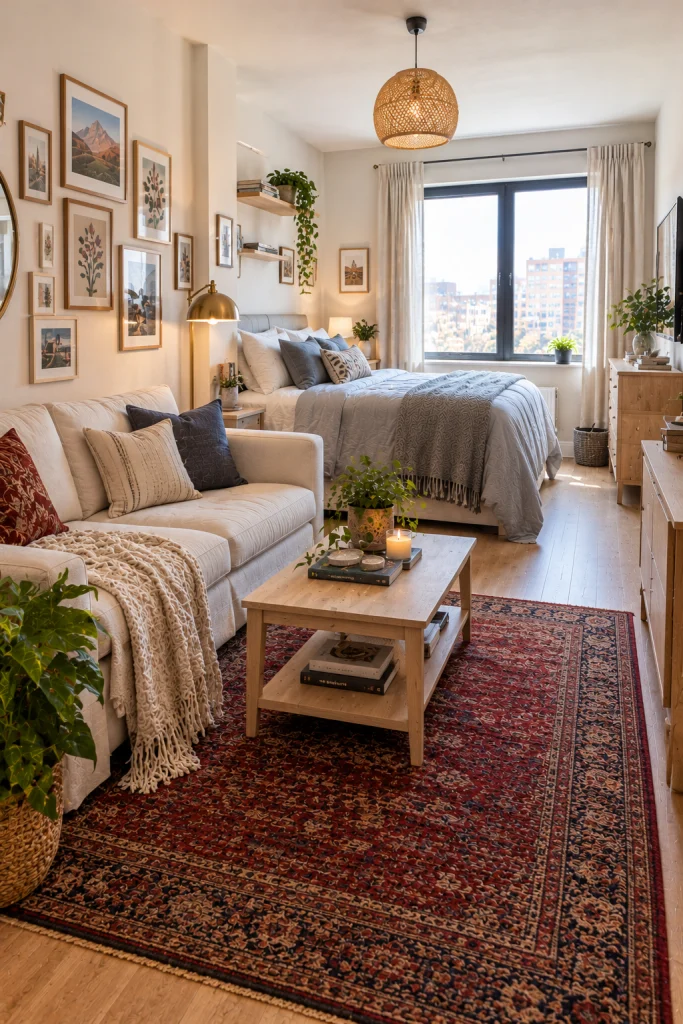
A deep-red Persian rug adds character no throw pillow can replicate. Used to ground the living area while the rest of the room stays light, with a white sofa, pale wood, and soft gray bedding, it becomes a focal point that draws the eye down and keeps the room feeling calm and spacious. The contrast is what makes it work.
Tip: Real vintage rugs hold their value better than trendy ones, and a secondhand find will outlast most fast-decor pieces.
3. Keep It Calm with a Neutral Textured Rug
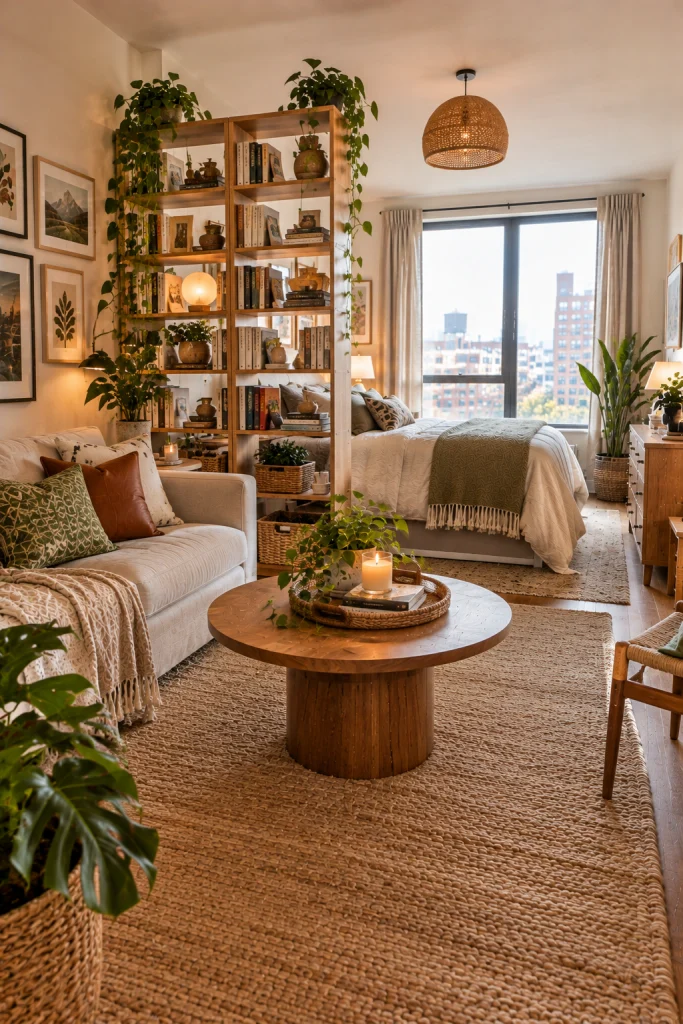
If a studio already has a lot going on, like a bookshelf divider, plants on every surface, and mixed textures, a neutral rug is the smartest move. A woven rug in cream and beige stays quiet underfoot while adding warmth and dimension, and it lets the furniture do the talking. Sometimes the best choice in a small space is knowing when not to compete for attention. For more layouts that pair well with a quiet rug, see studio apartment layout ideas using bookshelf room dividers.
Tip: Flatweave and low-pile neutral rugs won’t leave marks on hardwood, and they roll up easily when you move.
4. Define Zones with a Geometric Pattern Rug
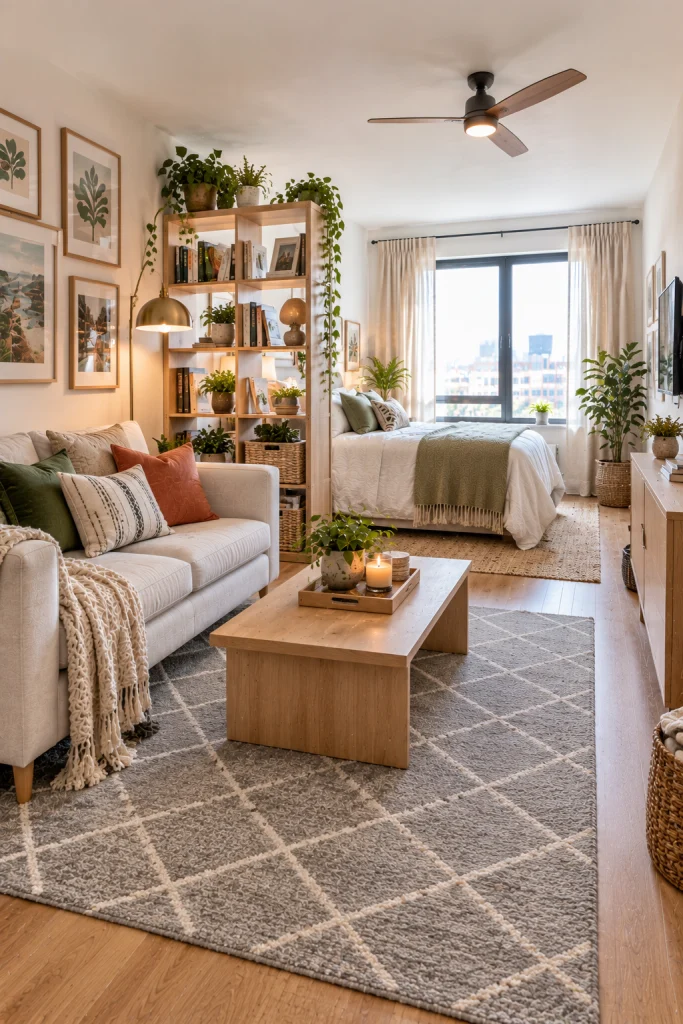
Geometric rugs are a studio’s secret weapon. The repeating pattern creates a visual boundary between the living area and the bed with no physical divider. A light gray diamond design keeps the room open and airy while signaling that the sofa zone is its own space, and low-profile furniture completes a Scandinavian-minimalist look. For more on splitting the room without walls, see how to separate sleeping and living areas in a studio apartment.
Budget vs. splurge: Save on the geometric rug, since good options come in at a modest price. Spend on the sofa instead.
5. Add Warmth with a Terracotta Kilim Rug
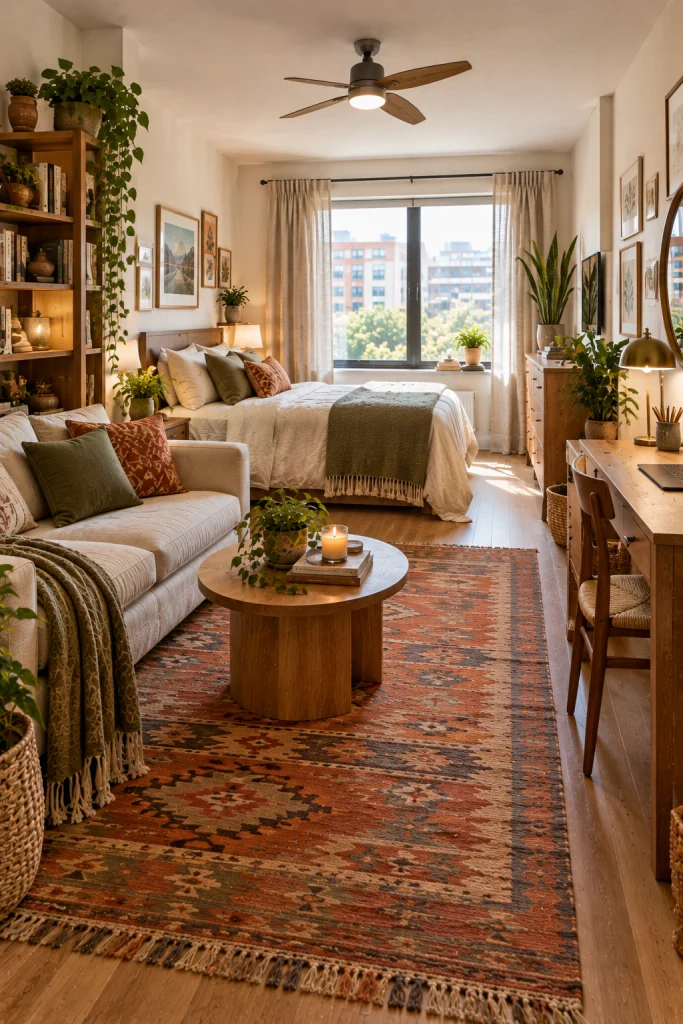
A kilim in warm terracotta tones moves a studio from rented room to curated home. This flat-woven rug works well between the bed and the desk, connecting two zones with one warm thread. The earthy palette pairs naturally with wood furniture, green plants, and linen bedding.
Tip: Kilims are flat enough for a rolling office chair to move on them with no rug pad drama.
6. Make a Statement with a Checkerboard Rug
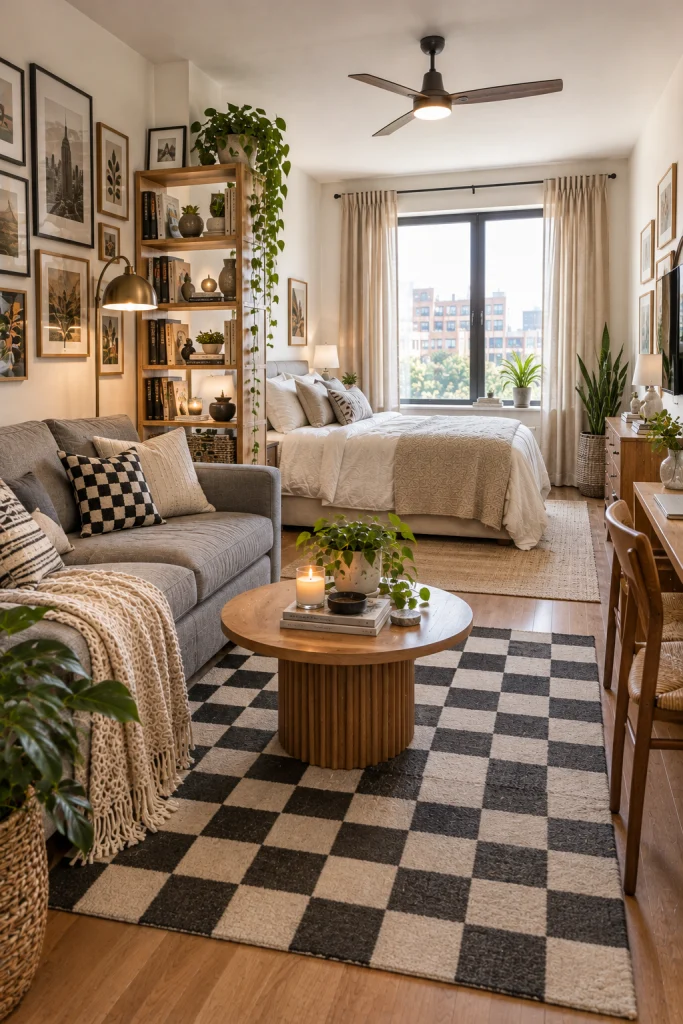
Checkerboard is having a moment and it works in studios. The high-contrast pattern draws the eye and creates a strong anchor for the seating area. With the rest of the room kept muted, a gray sofa, beige curtains, and white bedding, the rug does the heavy lifting. It’s a way to try a trend without committing to a wall treatment.
Tip: A black-and-white checkerboard pairs with almost any color palette, which makes it the most versatile bold choice.
7. Ground the Room with a Dark Woven Rug
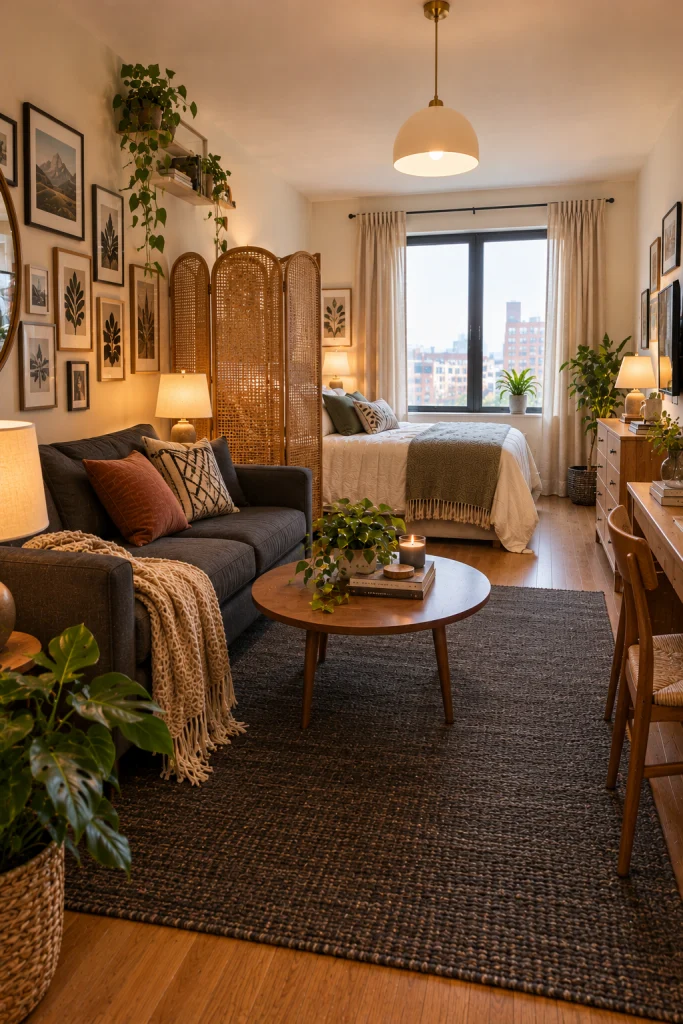
Dark rugs get a bad reputation in small spaces, but a charcoal woven rug under a dark sofa grounds the room and makes the lighter walls and ceiling feel taller by comparison. Warm wood floors peeking out at the edges, a white pendant light overhead, and glow from table lamps keep it balanced. Dark doesn’t mean heavy when everything around it breathes.
Tip: A rattan folding screen with a dark rug is a cozy, fully removable way to divide a studio.
8. Bring Nature In with a Jute Rug
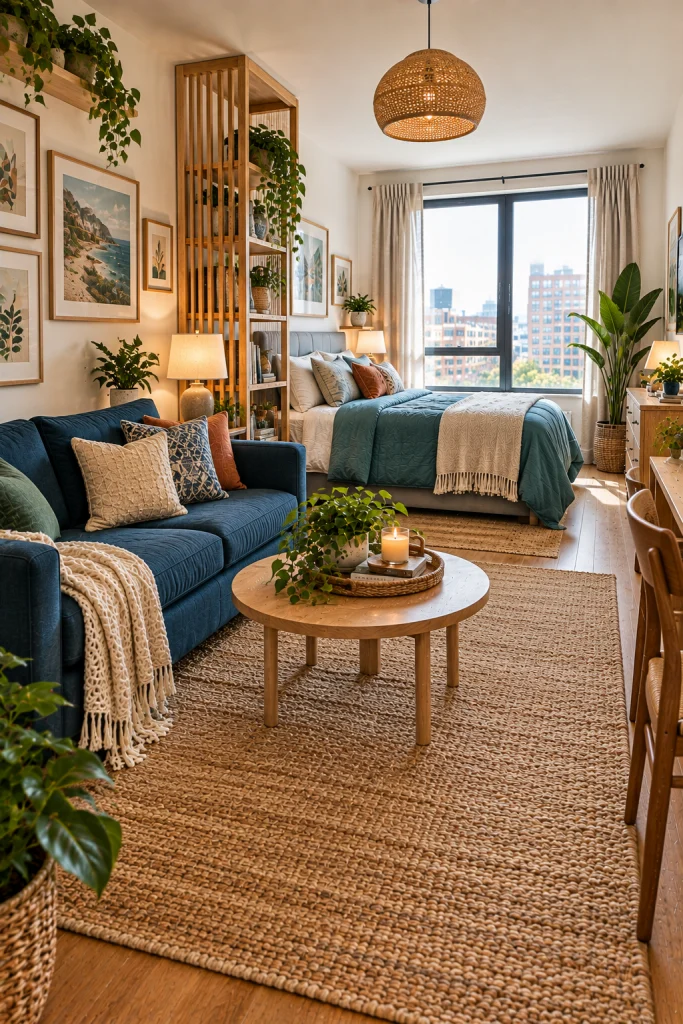
Jute rugs are the unsung hero of small-space decorating. They’re affordable, neutral enough for anything, and add warmth without visual clutter. Under teal bedding and a blue sofa, a simple jute rug stays out of the way while softening hard floors and absorbing sound, which matters when the sleeping and living areas share a wall.
Tip: Choose a tight, flat-woven jute. Thick, loose weaves shed heavily and collect crumbs.
9. Brighten Up with a Plush White Rug
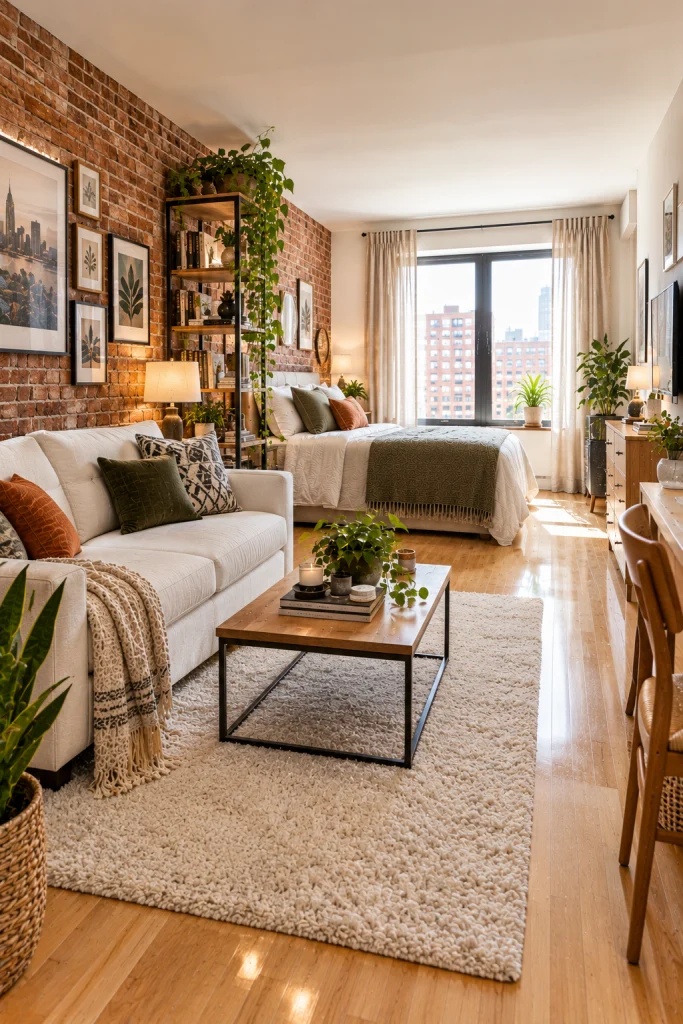
A plush white rug is one of the fastest ways to make a small studio feel luxurious. It bounces light off the floor and visually expands the room, especially against exposed brick and light wood. White rugs need more upkeep, but in a studio where you control the traffic it’s manageable: shoes off at the door and quick spot-cleaning.
Tip: Apply a stain-repellent spray right away. One coat buys months of worry-free living.
10. Use a Rug to Tie Bold Furniture Together
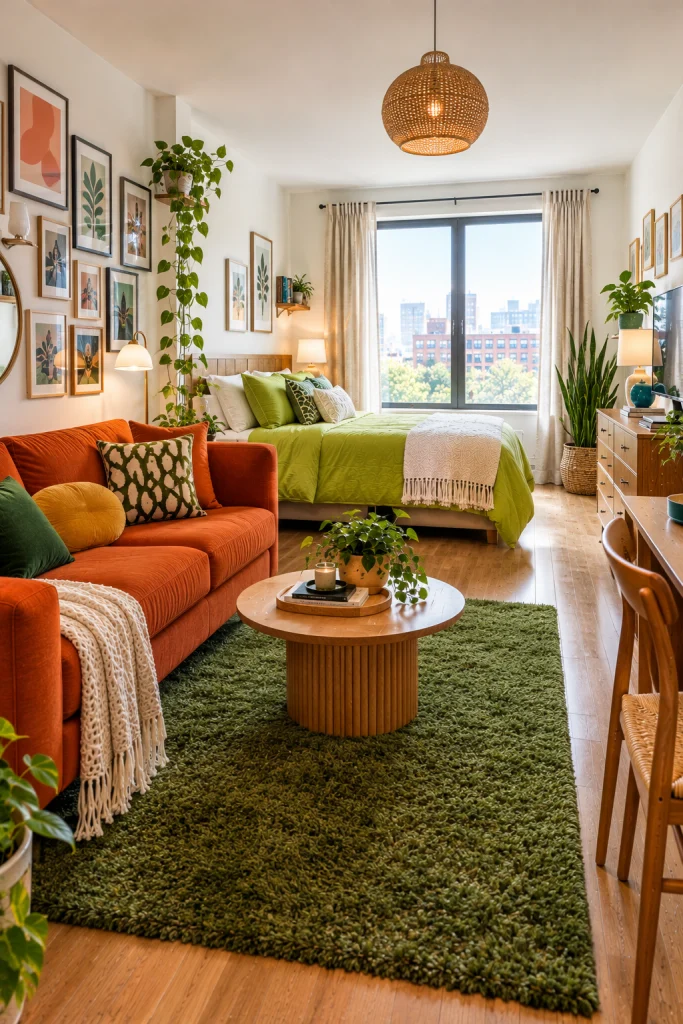
With bold furniture colors like an orange sofa and a lime green bed, the rug becomes the glue. A green shag rug sitting between both pieces creates visual continuity that keeps the room from looking scattered. Without it the colors fight for attention, and with it they feel curated. For more on picking a color that works with bold furniture, see how to pick the right rug color for your studio apartment.
Tip: Bold furniture plus a bold rug only works with neutral walls. Keep it to two statement pieces, and count the rug as one.
11. Try a Slim Runner for a Long Layout
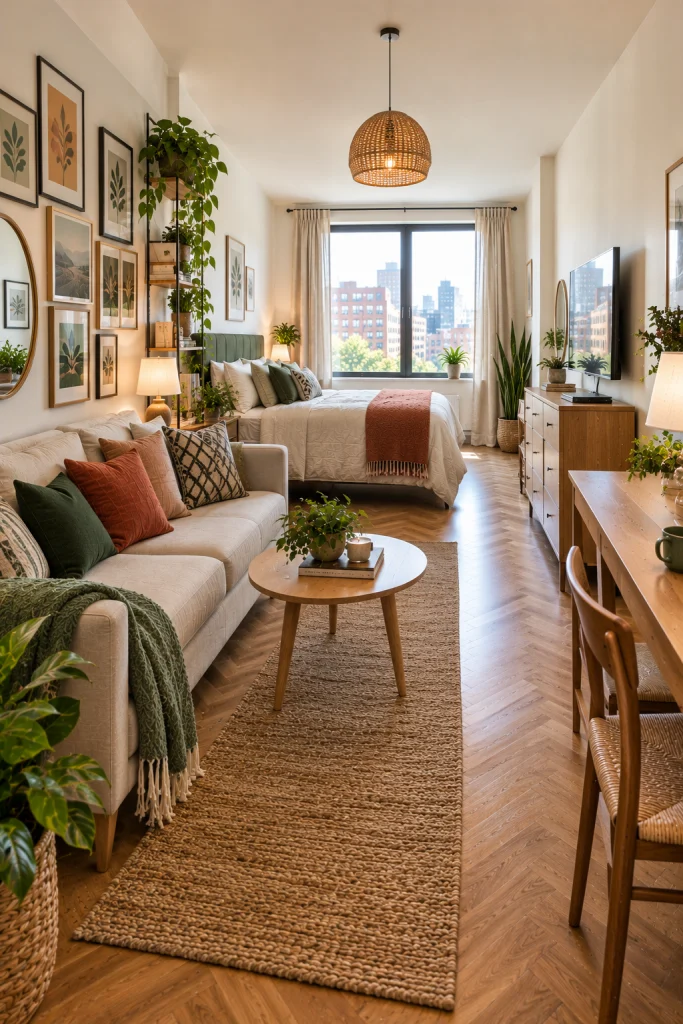
Not every studio can handle a big area rug. In a long, narrow layout, a slim runner does the same job in less space. A jute runner between the sofa and bed creates a visual pathway without covering a herringbone floor entirely. Runners cost less, roll up easily for cleaning, and leave enough exposed floor to keep the room feeling open.
Budget tip: Runners take heavy foot traffic and get replaced more often, so save here rather than splurging.
12. Go Big with an Oversized Area Rug
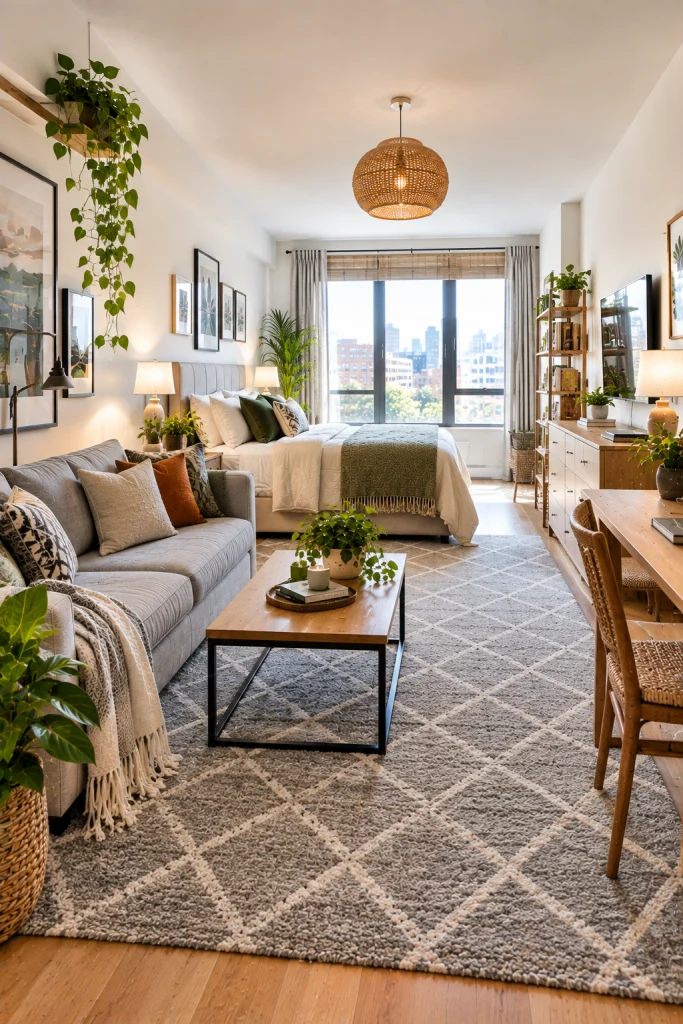
In a studio, a rug that’s too small looks worse than one that’s slightly too big. An oversized gray-and-white diamond rug running from the sofa nearly to the bed makes the whole space feel unified instead of chopped up. When one rug covers most of the floor, the room reads as one zone rather than a set of furniture islands.
Renter-friendly alternative: An oversized rug covers ugly flooring completely, needs no modifications, and goes with you when you leave.
13. Pair a Vintage Rug with a Soft Room Divider
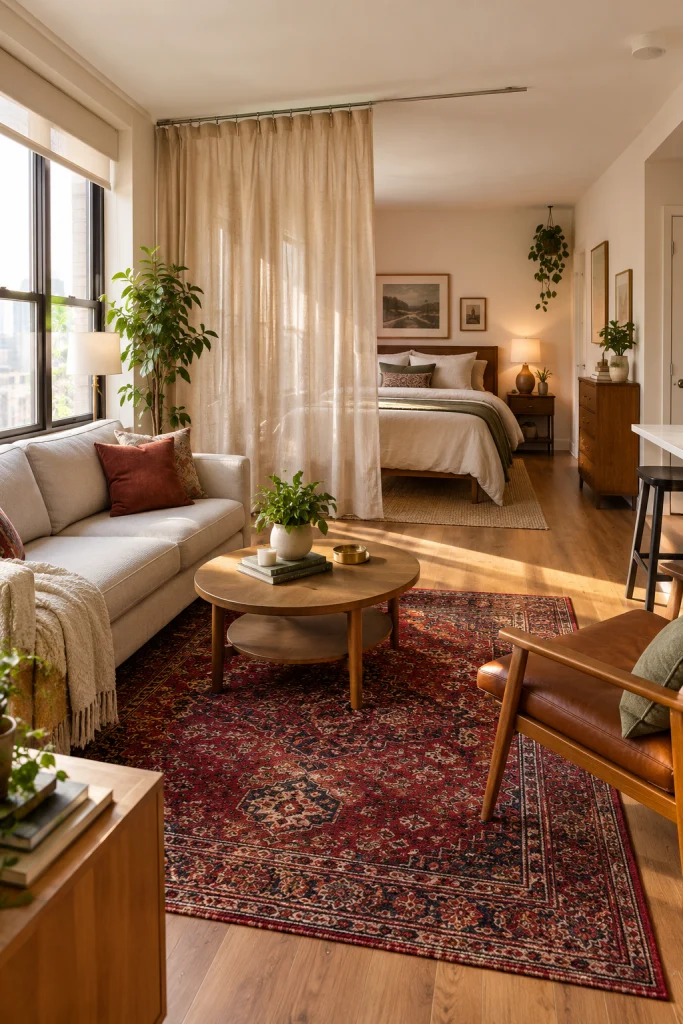
A deep red vintage rug anchors the living side while a soft linen curtain separates the sleeping area behind it. The rug tells the eye where the living room starts and the curtain tells it where the bedroom begins, creating rooms within a room without a permanent wall or bulky furniture. For more closable divider ideas, see studio apartment curtain divider ideas.
Tip: A ceiling-mounted curtain track with a vintage rug underneath is one of the cheapest two-room illusions you can create.
14. Keep It Airy with a Light Geometric Rug
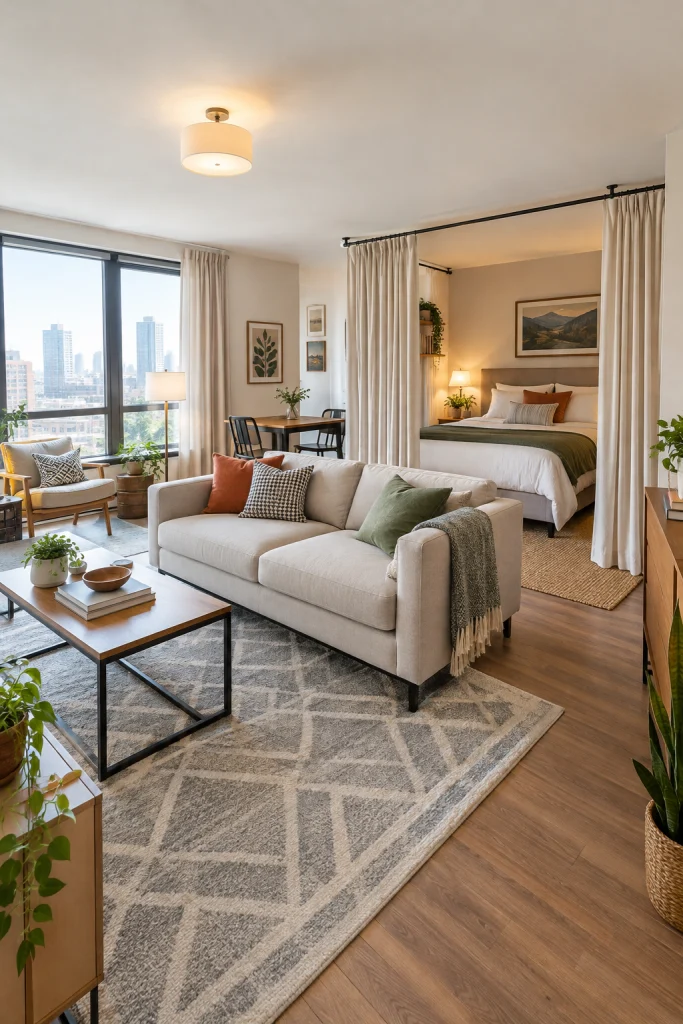
When a studio gets good natural light, a light geometric rug in soft gray keeps that brightness going all the way to the floor. Placed under a clean-lined sofa with a curtain-enclosed sleeping nook behind it, the subtle diamond pattern adds interest without feeling sterile and keeps the room open and airy.
Tip: In a light-floored studio, match the rug tone to the floor. It visually extends the floor space and makes the room feel bigger.
15. Layer Personality with an Eclectic Kilim Rug
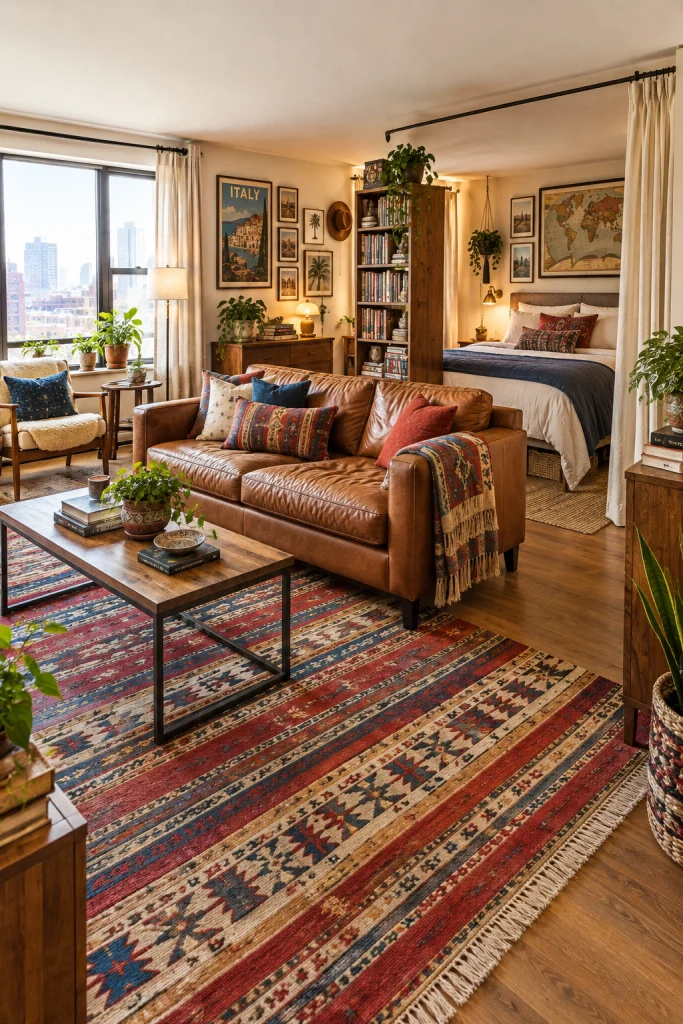
A richly striped kilim in warm reds, blues, and creams suits a studio full of books, plants, travel art, and mixed textures. It tells a story before anyone sits down. In a space where every square foot counts, a rug with this much character means you need less decor everywhere else.
Tip: Vintage kilims and new reproductions often cost about the same, but vintage ones develop a lived-in patina that new ones can’t.
Common rug mistakes in a studio
- Buying a rug that’s too small. A rug under a sofa should hold all four legs, or at least the front two, or the zone won’t read clearly.
- Using two statement rugs in one room. One bold rug anchors the space, two make it feel cluttered.
- Ignoring the floor color. A rug close to the floor tone extends the space, while a strong contrast defines a zone, so decide which effect you want first.
Quick answers
What size rug works best in a mini studio?
Large enough that the front legs of the sofa sit on it, and oversized if you want one unified zone rather than separate furniture islands.
Can a rug really define a zone without a divider?
Yes, a rug with a distinct pattern or color creates a clear visual boundary between the living and sleeping areas on its own.
Are dark rugs a bad idea in a small studio?
No, a dark rug can ground the room and make lighter walls feel taller, as long as the rest of the space has light and breathing room.
What’s the best rug material for a studio?
Tight, flat-woven jute or low-pile flatweave rugs are the easiest to live with, since they lie flat, clean easily, and don’t shed heavily.
Can a white rug work in a small apartment?
Yes, with shoes off at the door and a stain-repellent spray, a plush white rug brightens and visually expands the room.
Is a runner enough for a narrow studio?
Yes, a slim runner defines a pathway between zones and leaves more of the floor exposed, which keeps a narrow room feeling open.
Should the rug match the sofa?
No, it should complement it. A neutral rug lets bold furniture shine, and a bold rug works best with neutral furniture.
Final Thoughts
A rug is the easiest upgrade in a studio. It needs no tools and no landlord permission, and it gives a wall-free room real structure. Start by deciding which zone needs the most definition, then size the rug to that zone first and choose the pattern second.